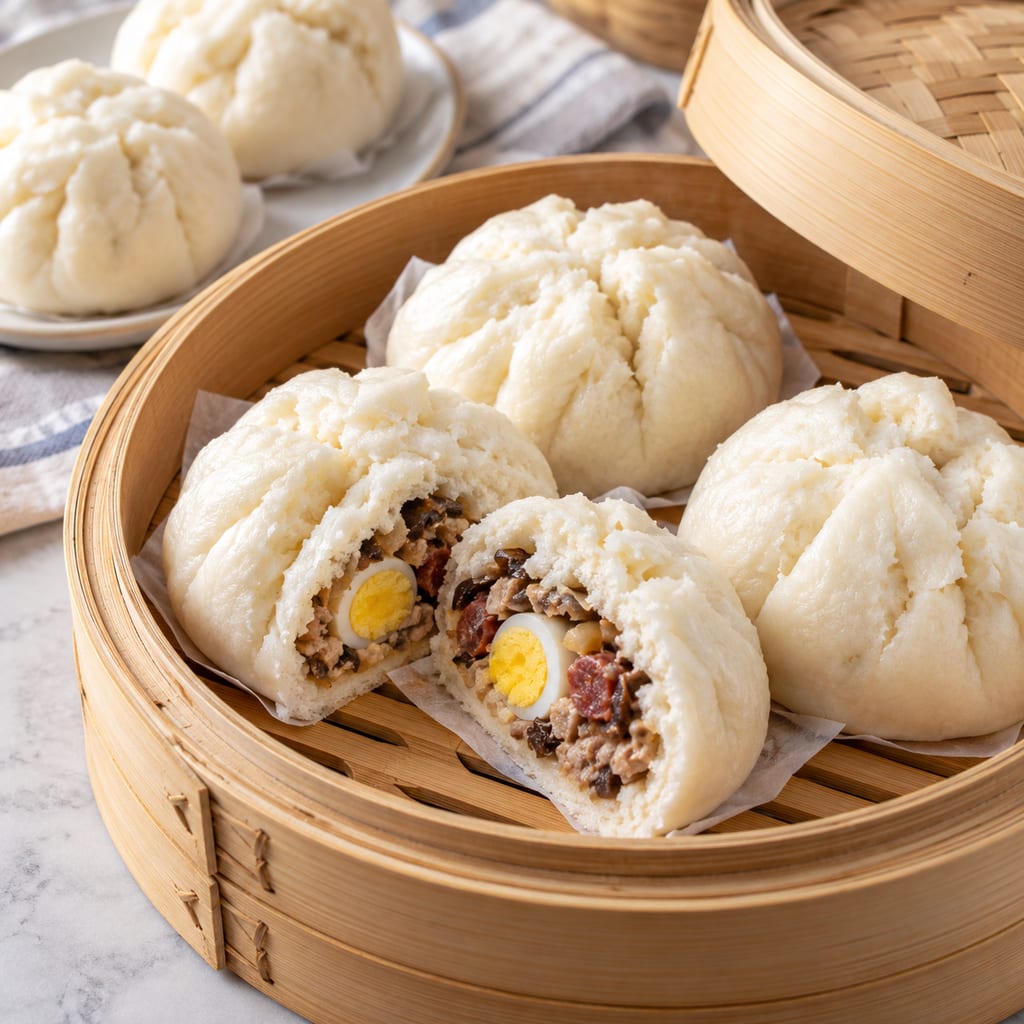
Bánh bao
Vietnamese steamed wheat buns wrapped around seasoned pork, mushrooms, Chinese sausage and hard-boiled quail eggs. This from-scratch version uses yeast and self-rising flour.
 FermenteaWhere food goes to change
Modern adaptation
Bánh tiêu is a lightly sweet Vietnamese fried bread coated with sesame. A yeast-raised dough with baking powder is rolled into small rounds and fried until puffed and golden.
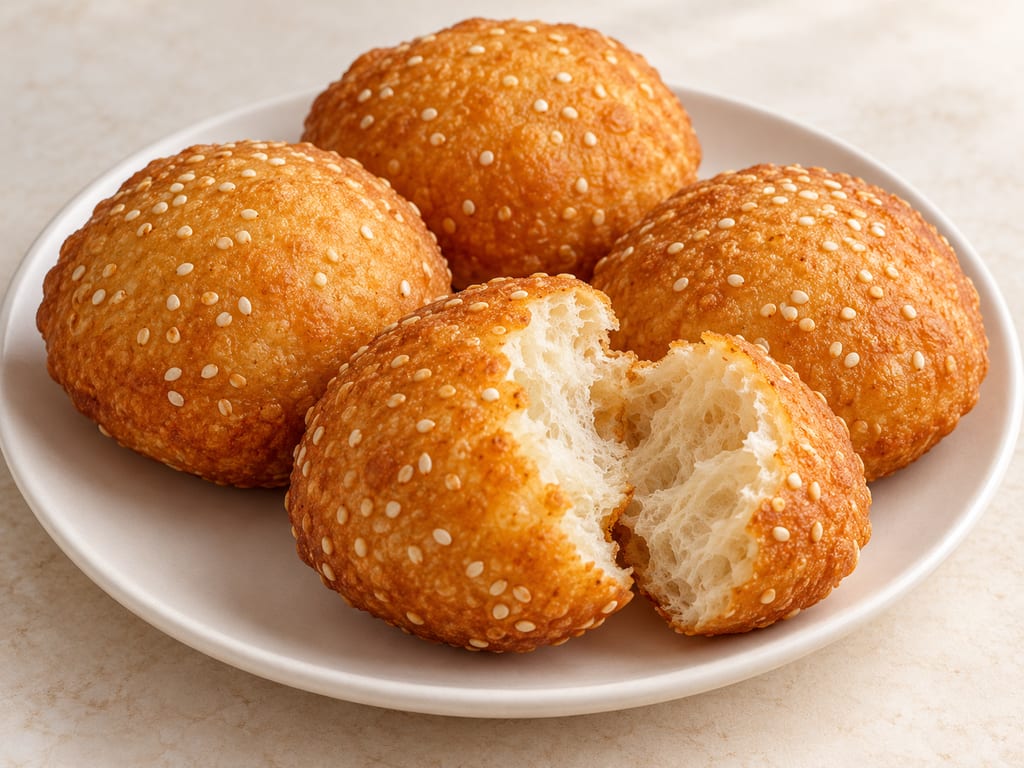
Interflour Vietnam presents bánh tiêu as a Vietnamese cake and publishes a measured version that adds egg to the dough. This formula combines yeast and baking powder, then coats the small rounds in sesame before frying. The source gives a specific weight range for each piece and a target oil temperature, which makes this version reproducible at home.
The dough and shaping influence how much the rounds expand, while this recipe's 3–4 mm thickness and 180°C oil temperature come from the chosen source. The atlas describes airy or hollow centres as a familiar result, but the source recipe does not guarantee every piece will form a complete pocket.
Bánh tiêu contains wheat, egg and sesame. Sesame and eggs appear in the dough and coating respectively; the FDA recognizes sesame as a major food allergen. Raw flour and egg also mean that uncooked dough should not be tasted, and the fried centre should be cooked through.
Interflour Vietnam describes bánh tiêu as a traditional Vietnamese cake and says its published version adds egg. It gives no date for the first attestation or precise place of origin; this record represents that measured egg-enriched method.
Scaling: source batch only
Uncooked flour and egg can carry harmful germs; raw dough should not be tasted and the pieces must be cooked through.
Hazard sourceOil at 180°C can cause severe burns or ignite if overheated or left unattended.
Hazard sourceThe sesame coating is a major food allergen.
Hazard sourceDo not taste raw dough. Cook the egg-containing centre to at least 71.1°C (160°F), checked with a clean food thermometer. Wash hands, bowls, utensils and surfaces after handling raw flour or egg.
Control sourceStay beside the fryer; keep a lid or baking sheet nearby. If oil smokes, turn off the burner. If it catches fire, turn off the burner, cover the pan without moving it, and never use water.
Control sourceThis recipe contains sesame; people with sesame allergy should avoid it and check packaged ingredient labels.
Control sourceContains wheat, egg and sesame. Do not taste raw dough. Fry at the source-specified 180°C and cook the centre fully; sesame can brown quickly.
The recipe publisher identifies the dish as Vietnamese and provides no more precise location.
Vietnamese steamed wheat buns wrapped around seasoned pork, mushrooms, Chinese sausage and hard-boiled quail eggs. This from-scratch version uses yeast and self-rising flour.
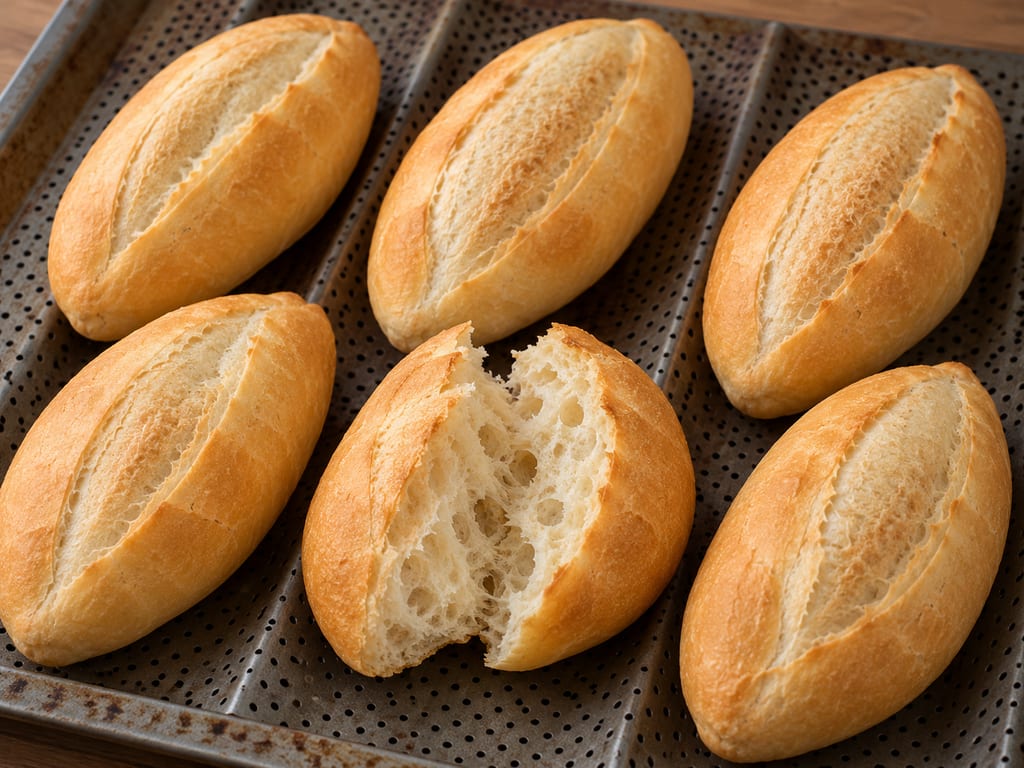
Six light baguettes with a thin crust and airy crumb, made from a Vietnamese home formula with bread flour, yeast, egg and butter.
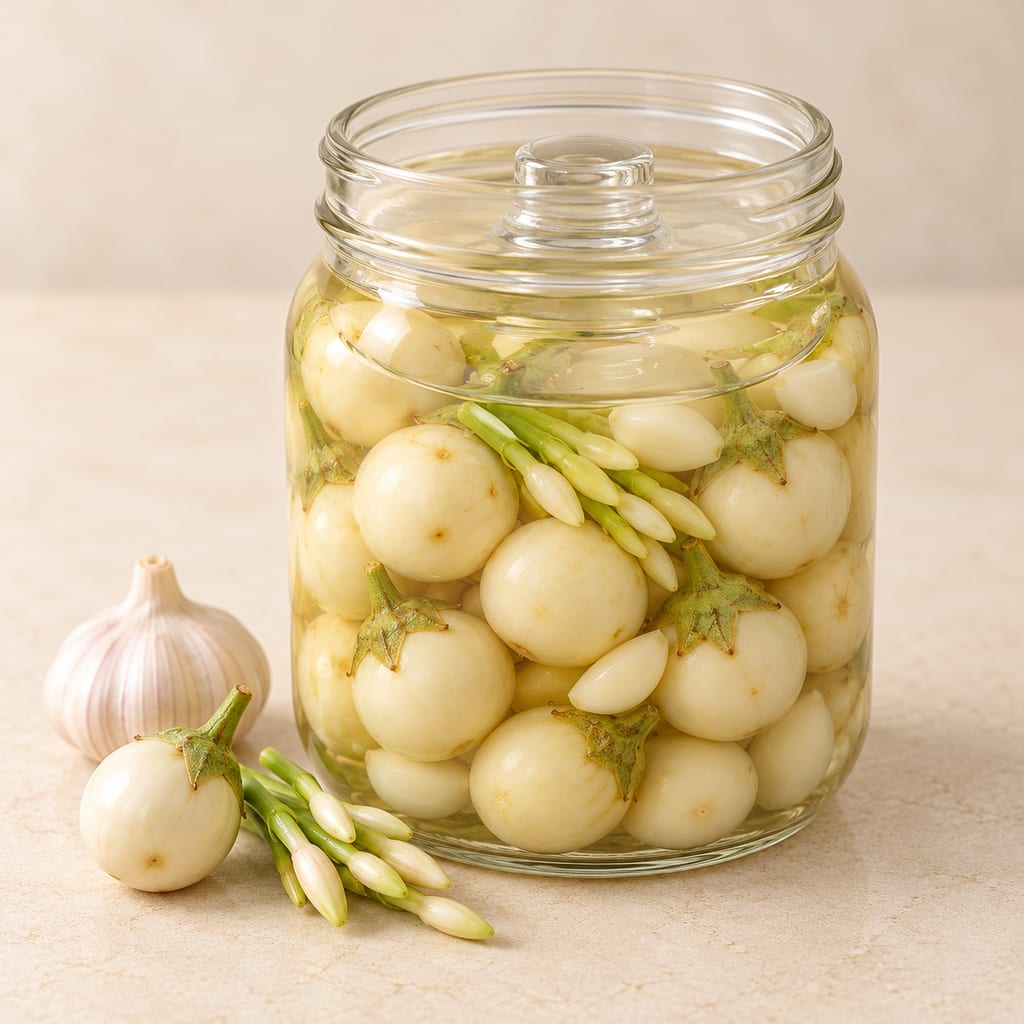
Vietnamese salted and fermented small eggplant, dried on the day of purchase, then held submerged in warm salty water with garlic and galingale flower for a week or longer.
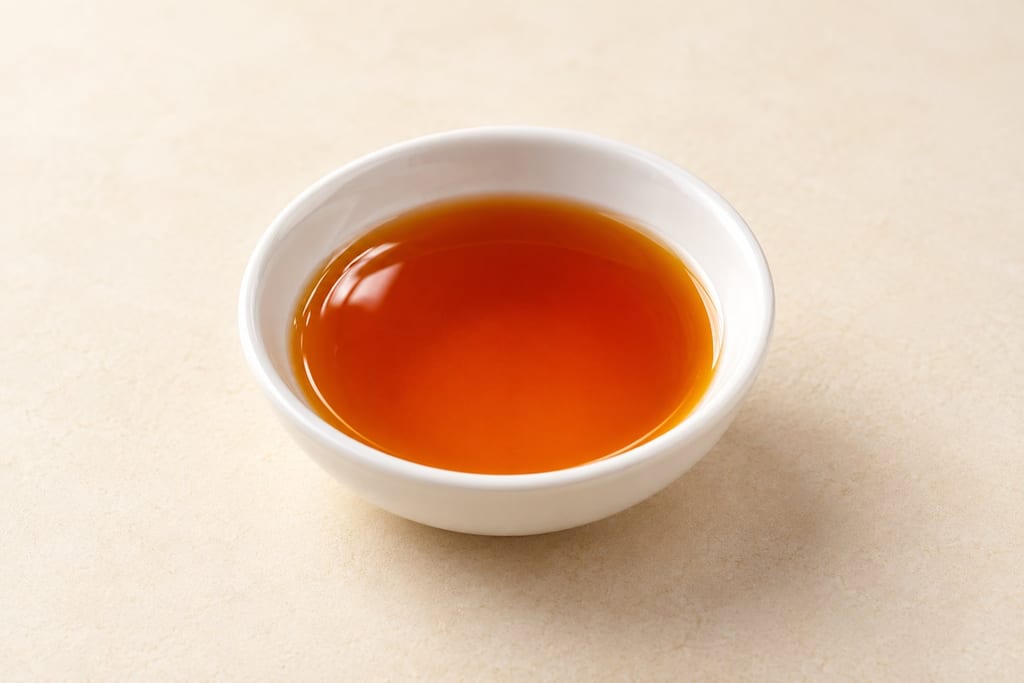
Fish sauce is a clear, salty seasoning made by maturing fish with salt and drawing off the liquid. The broad family includes distinct regional sauces rather than one interchangeable method.
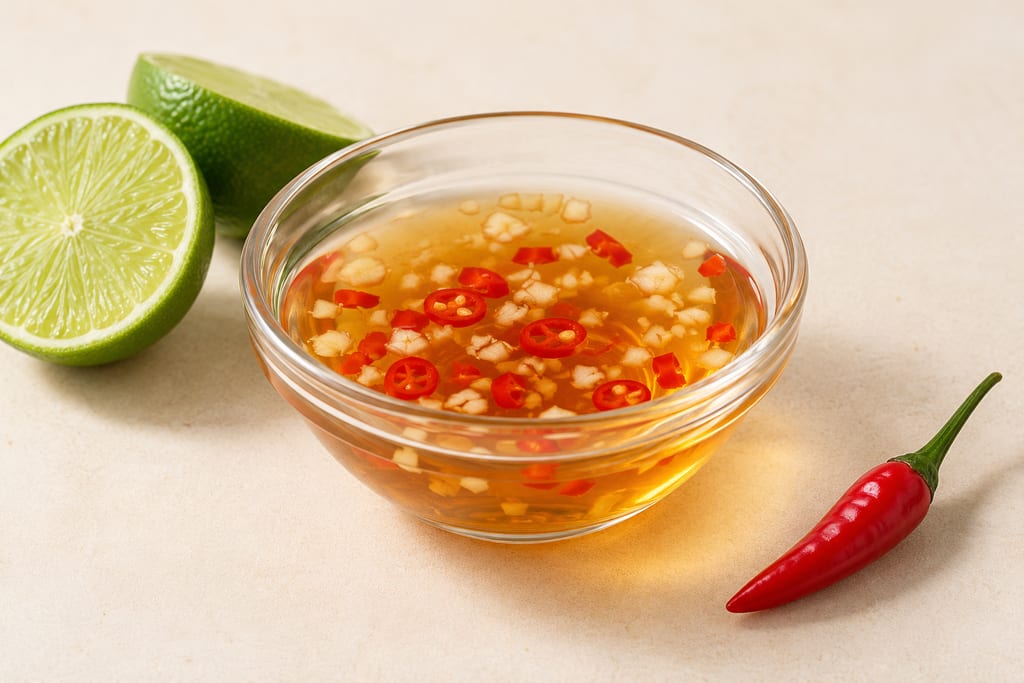
Nuoc cham is a Vietnamese fish-sauce dipping sauce. This untested development ratio starts with water, lime and sugar, then adds fish sauce, garlic and chilli.
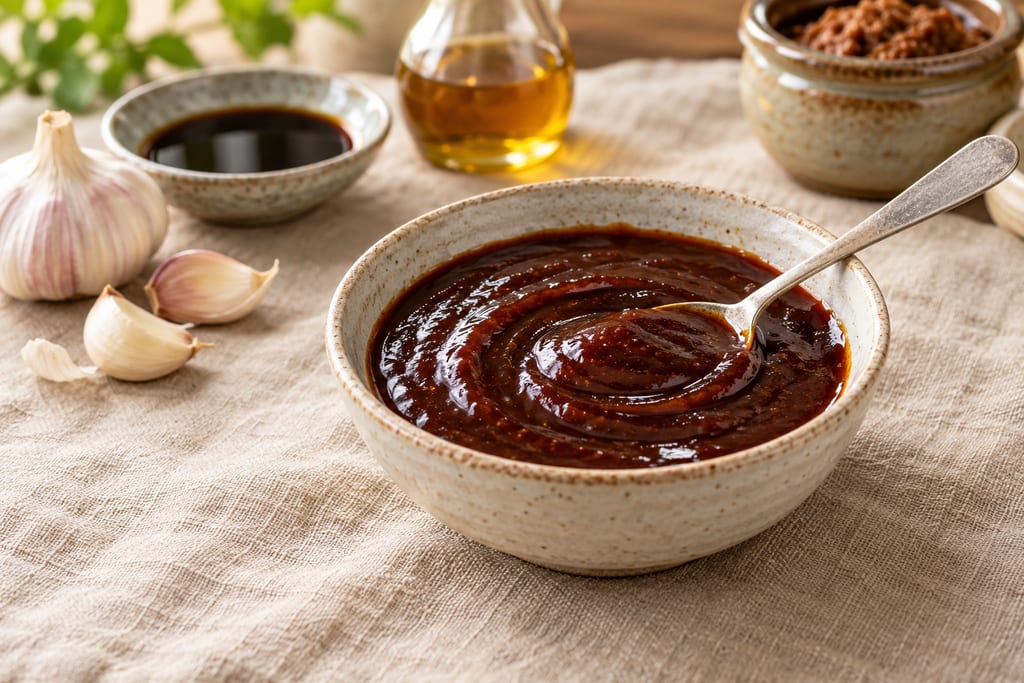
A thick, dark, sweet-salty Chinese condiment built on fermented soybean paste. This page gives one quick home version and records how commercial formulas differ.
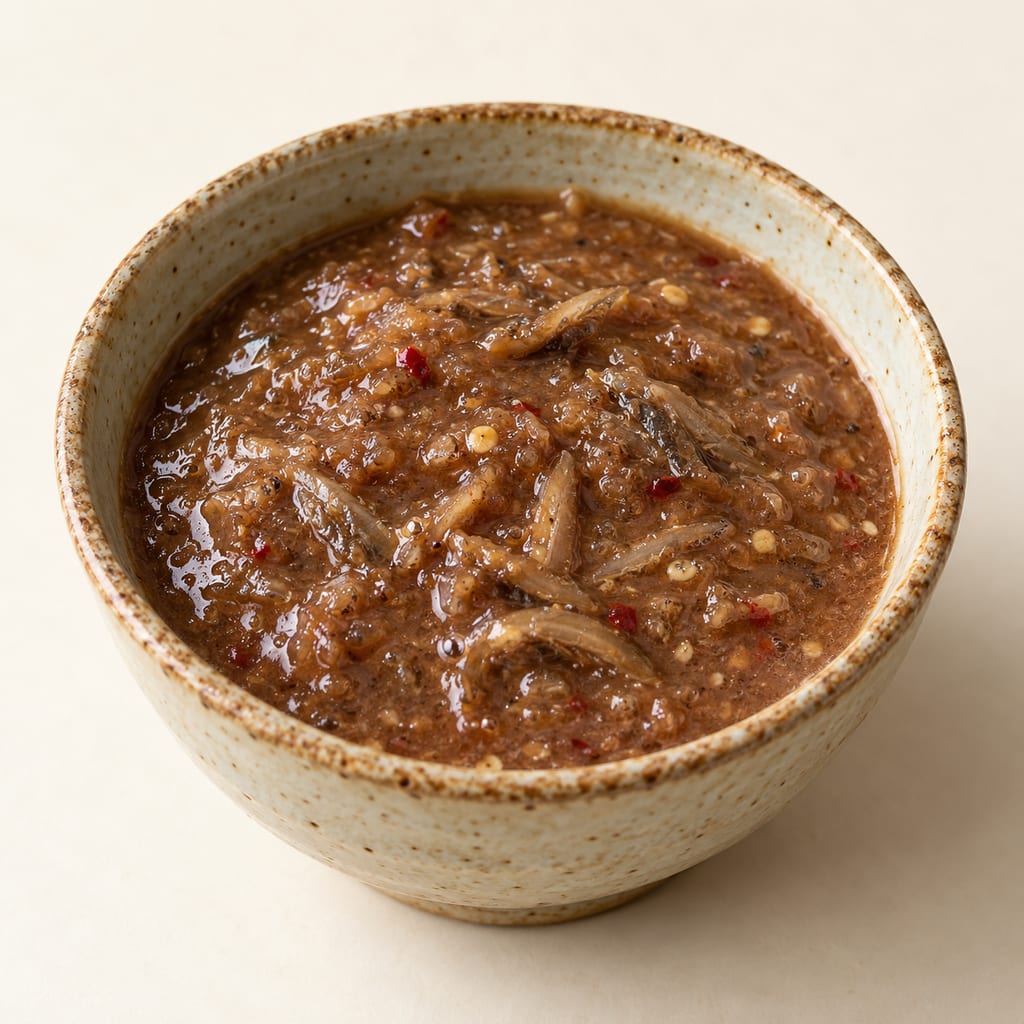
A documentary account of mắm nêm, a pungent Vietnamese fermented fish condiment and dip base. The cited cookbook describes a method, but omits essential process details; this page does not provide a home fermentation recipe.
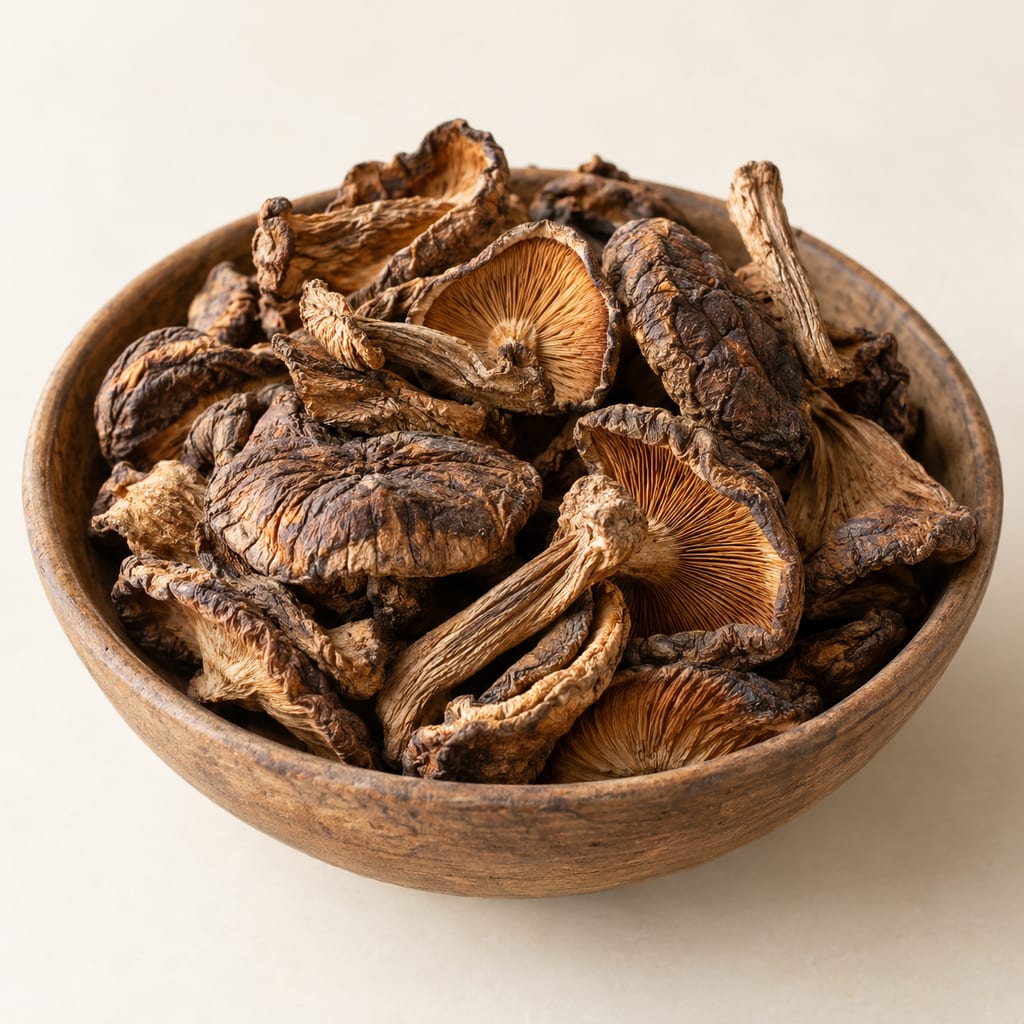
Hearth-dried mushrooms are dried on shelves above a cooking fire, so heat and smoke reach them. Tanzanian records describe the method; a Vietnamese study tested smoke-dried shiitake for fuel-dependent contaminants.
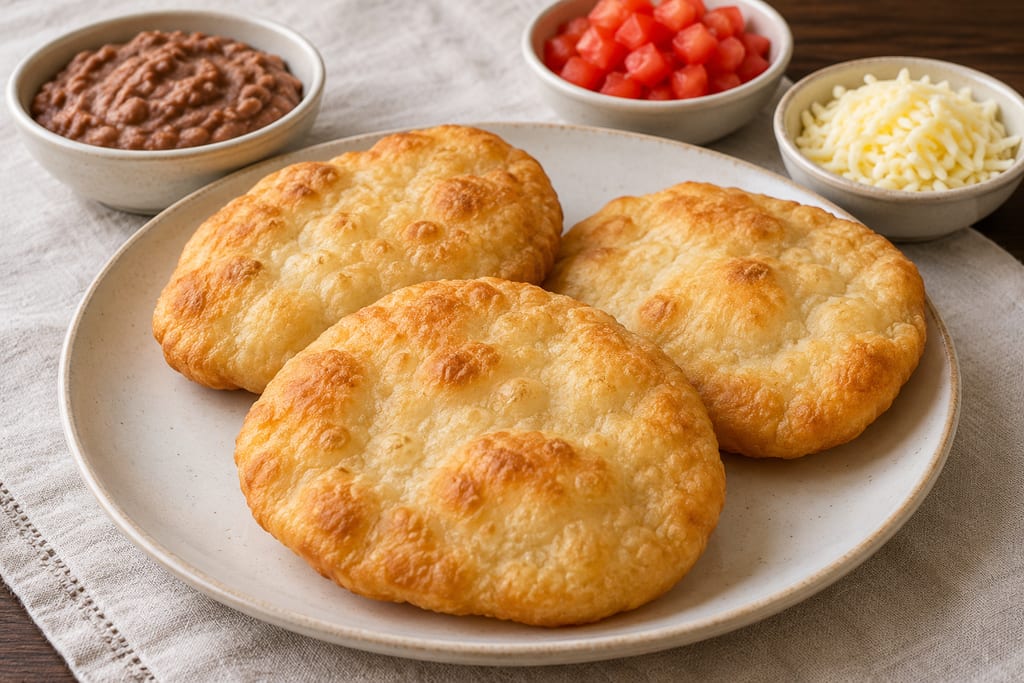
A Belizean fried breakfast bread made from baking-powder dough with evaporated milk, shaped into rounds and fried until golden.
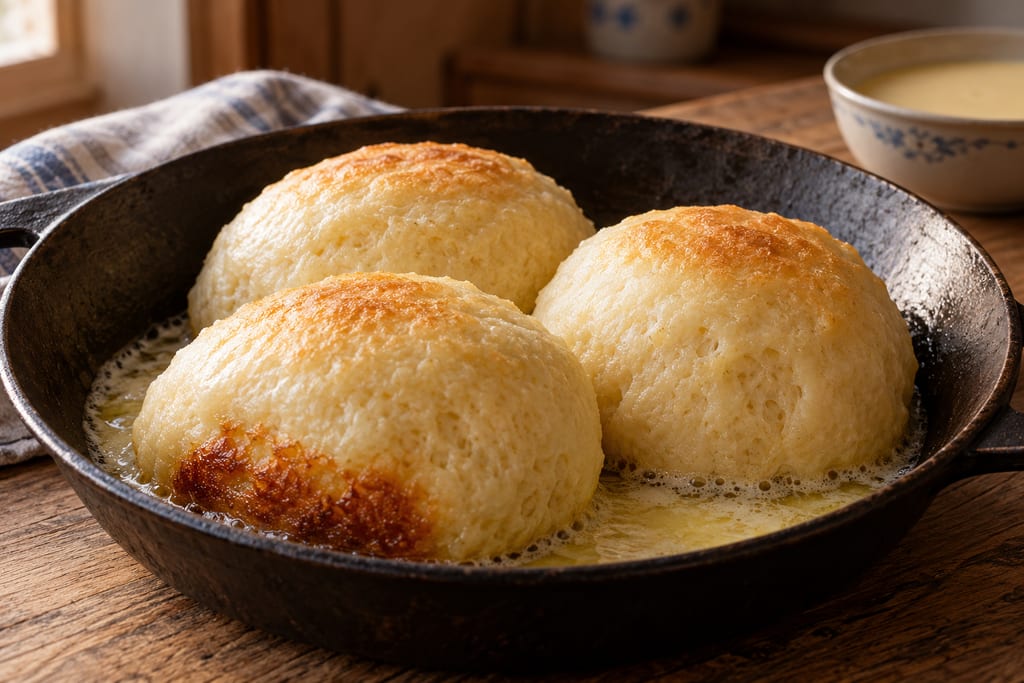
Allgäu Dampfnudeln are enriched wheat buns proofed in a covered casserole and cooked in milk and butter until the liquid nearly cooks away.
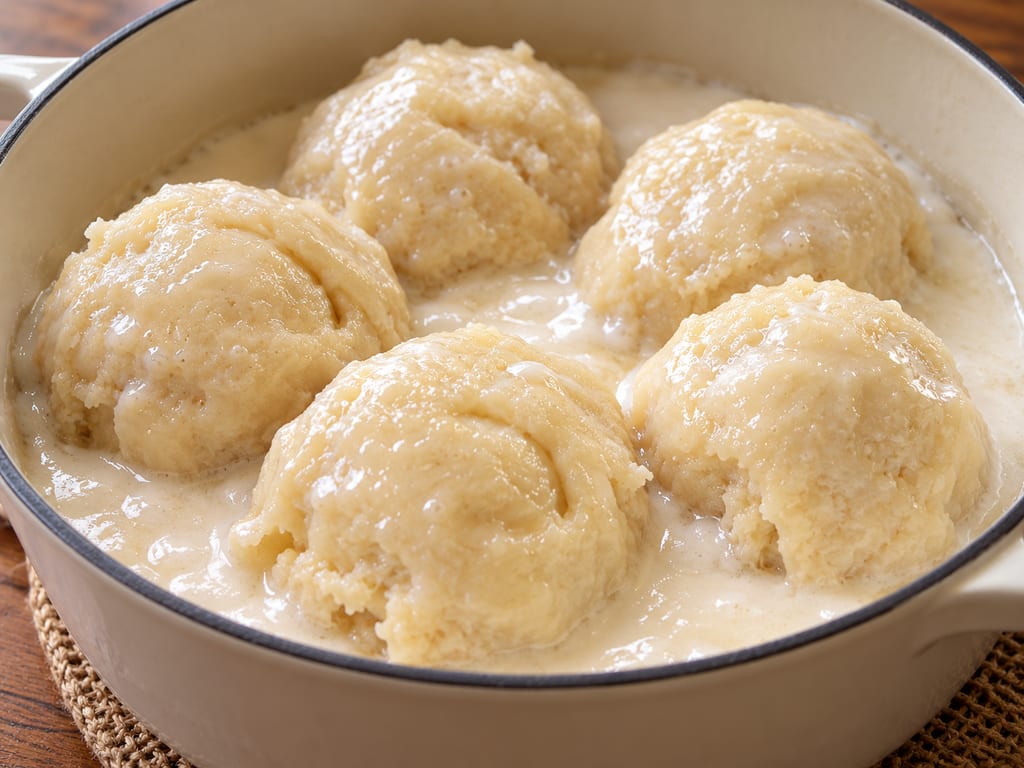
Soft yeast buns shaped by hand and simmered covered in coconut cream diluted with water in a deep pot. This Fijian home version uses a clean knife or fork inserted into the center as its doneness cue.
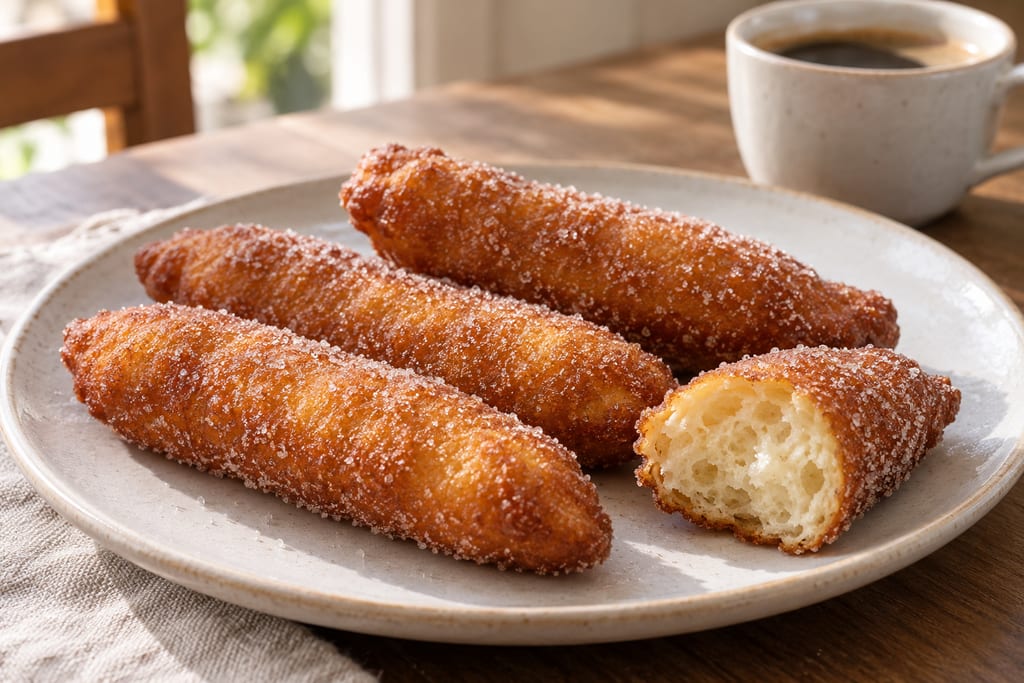
Firi firi is a yeast-raised coconut doughnut piped into long pieces and deep-fried at 170°C, traditionally eaten for breakfast or dessert in Tahiti.
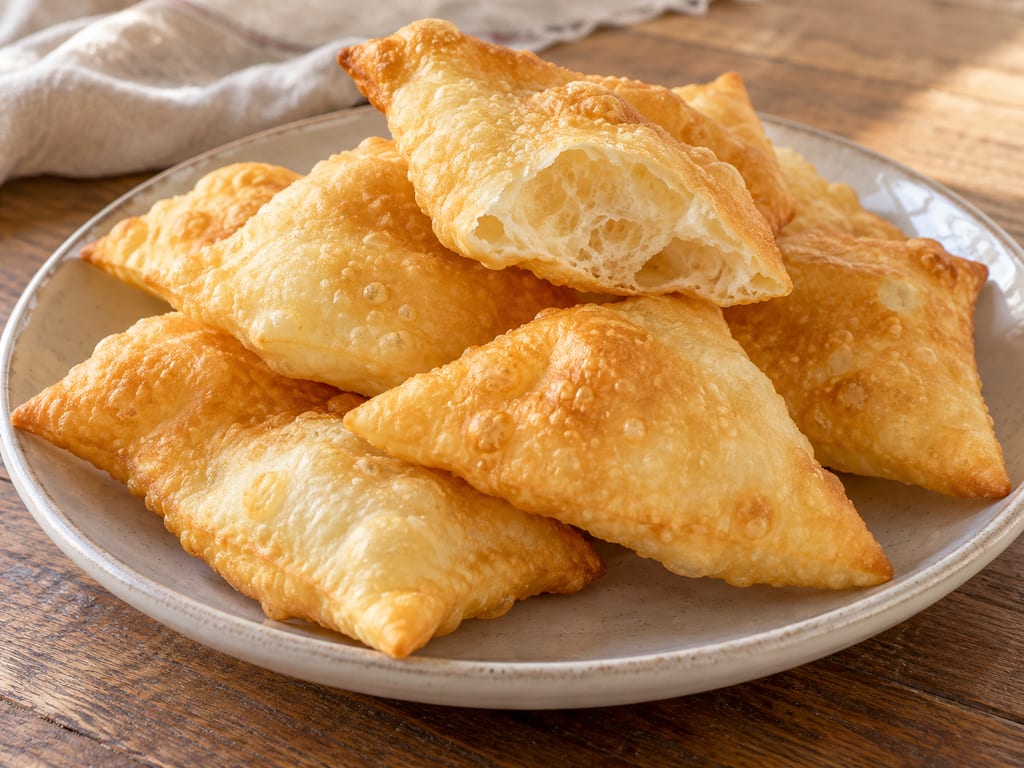
This Emilia-Romagna home version uses a measured flour-and-milk dough with yeast, shapes it into small diamonds or squares, and fries them in peanut oil.
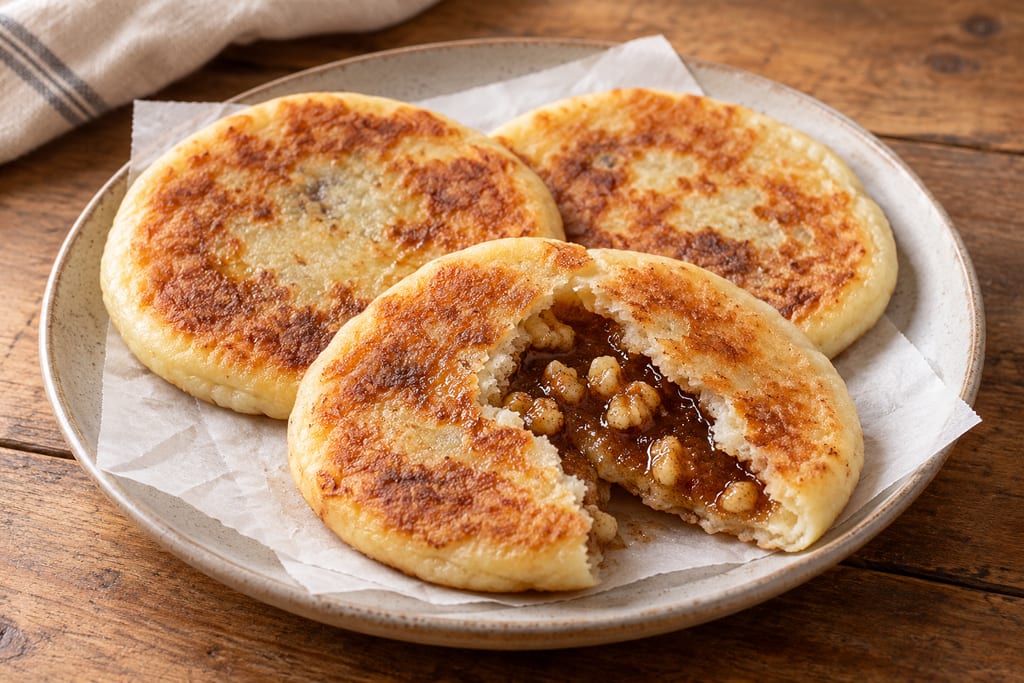
Maangchi’s eight-piece hotteok wraps a brown-sugar, cinnamon and walnut filling in yeast dough, then fries and presses the parcels in a pan.
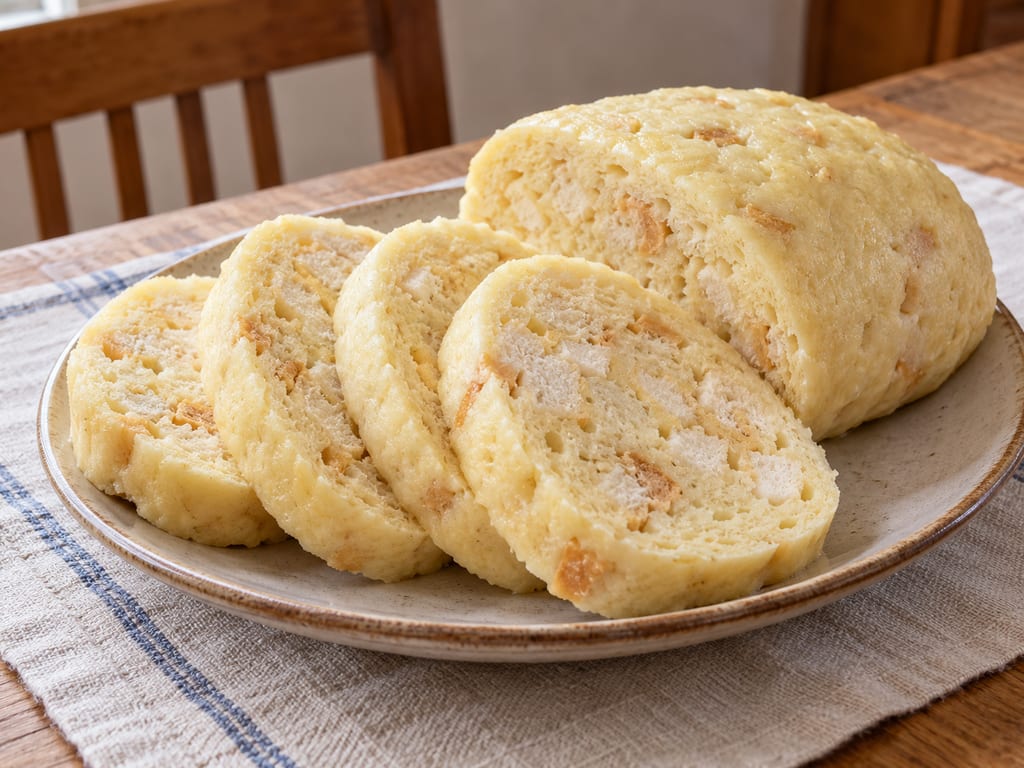
Czech houskové knedlíky are yeast-raised flour dumplings studded with stale white roll cubes, shaped as logs and steamed until tender for serving with sauce.
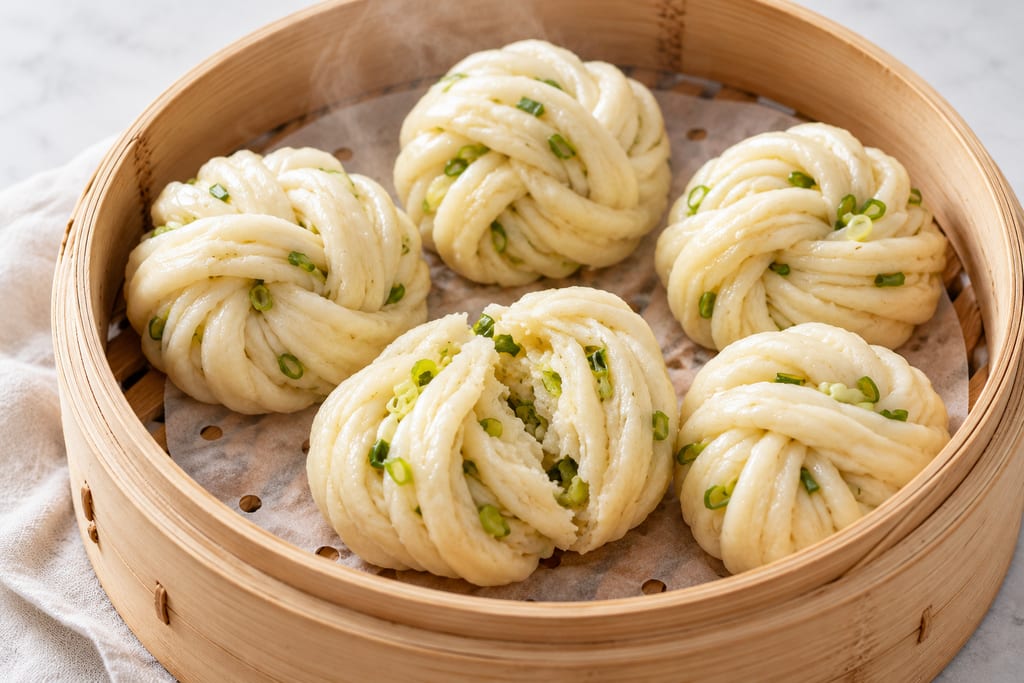
Hua juan are layered wheat rolls shaped into knots and steamed. This version folds scallions and five-spice between the dough layers and makes eight savory buns.
No community contributions have been published for this entry yet.
Sign in to contribute. Published comments and photos are free to read.
Interflour VietnamMethod · Geography
Bánh TiêuThe publisher describes bánh tiêu as a Vietnamese cake and says its version adds egg to a traditional preparation.
Measured ingredients: 500 g all-purpose flour, 1 g high-sugar dry yeast, 7.5 g baking powder, 110 g sugar, 230 g water, 50 g egg, 3 g salt and 50 g sesame.
Rest the dough 60–90 minutes, portion 40–60 g pieces, coat with sesame, rest 10 minutes, roll 3–4 mm rounds, and fry at 180°C for 2–3 minutes, turning until golden.
The final source step says to remove the fried pieces, let them cool, drain the oil and enjoy.
Cited in: Vietnamese sesame fried bread
Centers for Disease Control and PreventionSafety
Raw Flour and DoughRaw flour and raw eggs can carry germs; do not taste raw dough, and wash hands, bowls, utensils and surfaces after handling flour, eggs or dough.
Cited in: Vietnamese sesame fried bread
USDA Food Safety and Inspection ServiceSafety
By what methods can you cook eggs safely?Egg dishes should reach 160°F (71.1°C), measured with a food thermometer.
Cited in: Vietnamese sesame fried bread
U.S. Food and Drug AdministrationSafety
Food AllergiesFDA recognizes sesame as a major food allergen.
Cited in: Vietnamese sesame fried bread
U.S. Fire AdministrationSafety
Cooking Fire SafetyDo not leave frying unattended; turn off the burner if leaving or if oil smokes. Keep a lid or baking sheet nearby; cover a pan fire after turning off the burner, do not move the pan, and never use water.
Cited in: Vietnamese sesame fried bread