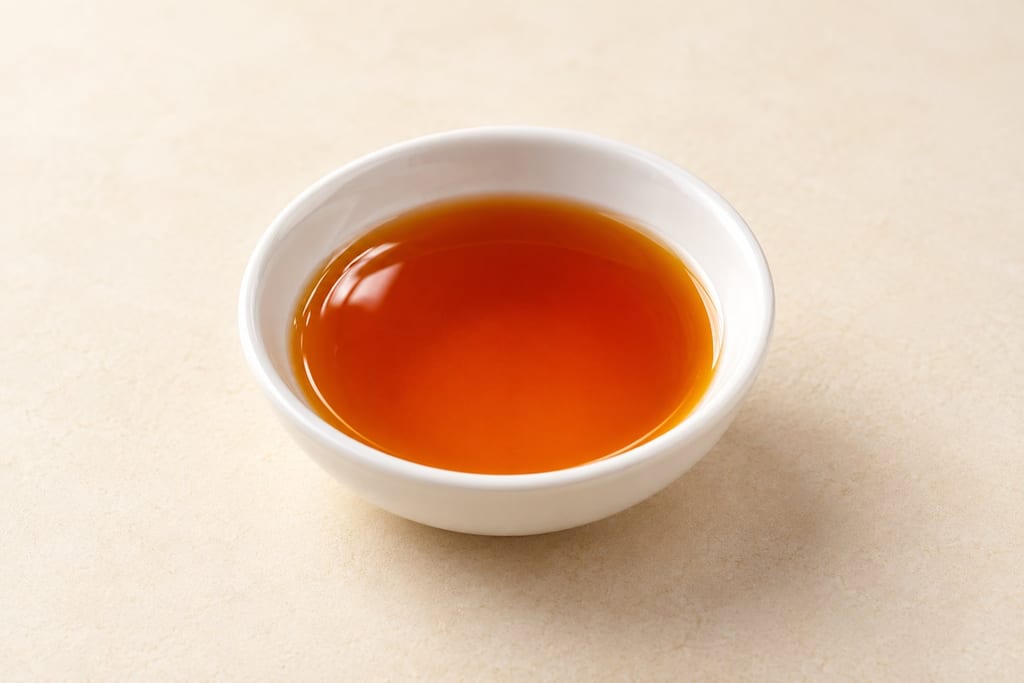
Fish sauce
Fish sauce is a clear, salty seasoning made by maturing fish with salt and drawing off the liquid. The broad family includes distinct regional sauces rather than one interchangeable method.
 FermenteaWhere food goes to change
Nước chấm · Nước chấm · Nước mắm pha · Nuoc mam pha
Nuoc cham is a Vietnamese fish-sauce dipping sauce. This untested development ratio starts with water, lime and sugar, then adds fish sauce, garlic and chilli.
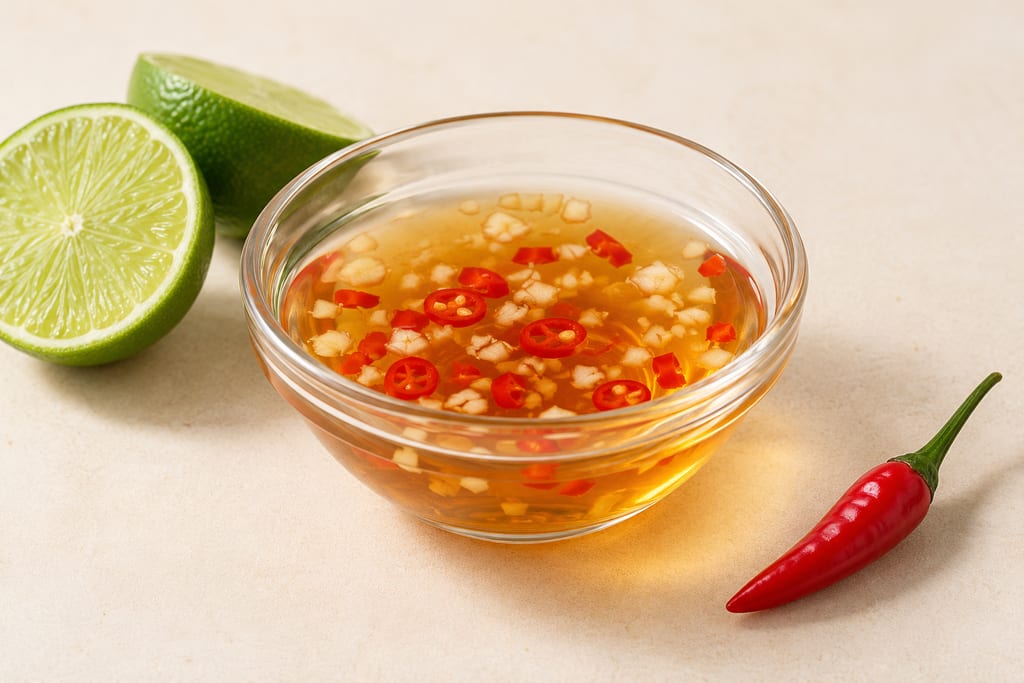
Nuoc cham is a Vietnamese dipping sauce used to bring sour, sweet, salty and spicy notes together at the table. Andrea Nguyen describes it as a sauce that accompanies many dishes rather than a fixed flavour that every bowl must share. The fish sauce differs by maker and even by batch, and the food beside the bowl changes how strong the sauce should taste.
Nguyen's article draws on her own family cooking and presents a contemporary method. It was published in 2008 and revised in 2025. Those dates belong to the article and its formula; neither establishes when nuoc cham began or a precise place of origin. This entry records a country-level Vietnamese association and leaves the origin date unknown.
Nước chấm is a broad Vietnamese term for dipping and table sauces, and nước mắm pha, diluted or mixed fish sauce, is one part of that family. A 2013 Vietnamese-language newspaper account separates several members. Straight fish sauce is served with fresh chilli or citrus. Sweet-sour diluted nước mắm is the form closest to this page's formula. Ginger fish sauce and tamarind fish sauce are further forms. Each has its own names and uses, and none of them is the single true version of the others.
The same account ties the sauces to dishes and regions. In the south it records raw fish sauce with snakehead sour soup. In the centre it records chilli fish sauce with boiled vegetables and as a seasoning for bún bò. In the north it records fish sauce with boiled meat or vegetables, sometimes with chilli and lime or kumquat. These are the practices of one dated newspaper article, not a regional census.
For the sweet-sour sauce the article describes adjusting the balance to the food. A sourer sauce suits fried foods. A sweeter, less sour sauce goes with cơm tấm, broken rice. Pickled vegetables may be added to the bowl. The point for a cook is the one this page already makes: the proportions below are a starting point, and the dish decides where to end up.
A MICHELIN Guide article gives one Hanoi chef's version of nước chấm. It is one restaurant cook's formula and should be read beside the family described above, not as a replacement for it. In every version the mixed sauce is assembled fresh from fish sauce and the other ingredients; the fermentation belongs to the fish sauce made upstream. The sources give no storage interval for the fresh mixtures.
This entry keeps the supplied report's untested development ratio: 80 g water, 40 g fish sauce, 40 g lime juice, 30 g sugar, 5 g garlic and 5 g chilli. The ingredient masses total about 200 g before transfer loss. These are the report's own weights. They are not converted from, or a transcription of, Nguyen's different published proportions.
The report's sequence follows a useful principle in Nguyen's recipe: make a tart-sweet base, add fish sauce, then add the fresh aromatics. Stirring the sugar into water and lime juice first helps dissolve it before the salty ingredient goes in. Add fish sauce gradually and stir between additions. Nguyen notes that fish-sauce brands and batches vary; using the sauce with its intended food gives a better flavour check than judging it alone.
Finely chopped garlic adds pungency and chopped chilli adds heat. Both stay in the bowl, so their pieces distribute unevenly and each spoonful may carry a different amount. The chilli weight is not a reliable measure of heat because cultivars vary. The supplied formula does not identify a cultivar or state a heat target. It has not been tested for a consistent sensory result.
Nguyen describes using nuoc cham with foods wrapped in lettuce or herbs. The supplied report also proposes noodle dishes, fried rolls and salads. These are serving contexts, not claims that one ratio belongs to every dish. A bowl intended for crisp greens may need a different balance from one served with a salty fried roll.
Serve a small amount in a clean bowl and spoon it onto the meal as you eat. The sauce should lift the food, not replace the seasoning in every other component. If the first spoonful is too strong for a particular dish, adjust a small serving for flavour. A flavour adjustment does not establish that a mixture is safe to store.
Optional additions in Nguyen's article include chilli, garlic, and crisp vegetables such as carrot, kohlrabi or green papaya. They are choices described alongside her recipe, not ingredients silently folded into this six-line development formula. The report's ratio here includes garlic and chilli as measured ingredients, so leaving them out would change this particular formula.
The ingredients are stirred together and served without an additional fermentation stage. The fish sauce is already a prepared seasoning; mixing it with fresh lime, garlic and chilli does not create a newly fermented product. This recipe is classified as a non-fermented condiment.
The supplied report does not measure pH, test a preservation process or establish a shelf life. Lime juice supplies flavour here, but its presence is not evidence that the sauce is shelf-stable. This formula is not a canning recipe and is not approved for storage at room temperature.
Nguyen's page contains an advance-preparation note for her own recipe. That note is not transferred to this separate, untested weight ratio. Do not infer a holding time for the report formula from the ingredients or proportions in another recipe.
FoodSafety.gov advises washing produce under running water, cleaning food-contact surfaces and utensils, and refrigerating perishable foods within two hours, or within one hour when the surrounding temperature is above 90°F (32°C). It recommends a refrigerator at or below 40°F (4°C). These are general handling instructions; they do not validate a fixed storage duration for this recipe.
Fish sauce means this recipe contains fish. The U.S. Food and Drug Administration lists fish among the major food allergens. Check the fish-sauce label and do not serve this formula to someone who must avoid fish.
Nguyen's article supports a Vietnamese culinary association, not a specific hometown. It records a contemporary method and the author's family cooking context, but it does not state the earliest attestation of nuoc cham. The period remains unknown rather than treating the article date as the condiment's origin.
The six measured ingredients and their weights are the world-condiments report's own development formula. Nguyen's page supports the method principle and culinary use; it does not validate these weights, the resulting taste, or storage. The report states that this formula has not been kitchen-tested, sensory-validated or shelf-life tested.
Andrea Nguyen's article, published in 2008 and revised in 2025, documents a contemporary Vietnamese dipping-sauce method and describes its use with foods wrapped in lettuce or herbs. It does not establish when nuoc cham began or identify a precise place of origin. The ingredient weights here are the separate, untested development ratio in the supplied report.
Yield 200 g · Scaling: source batch only
Fish sauce is an ingredient; FDA identifies fish as a major food allergen.
Hazard sourceGarlic, chilli and lime are handled raw, and no validated preservation or shelf-life process is supplied.
Hazard sourceWash produce under running water and clean food-contact surfaces and utensils before preparation.
Control sourceKeep the prepared sauce cold. FoodSafety.gov advises refrigerating perishable food within 2 hours, or within 1 hour when exposed to temperatures above 90°F (32°C), and keeping the refrigerator at or below 40°F (4°C). These are general handling guidelines, not a validated shelf life for this formula.
Control sourceCheck the fish-sauce label and do not serve this formula to someone who must avoid fish.
Control sourceThis is an untested development formula. It has not been kitchen-tested, sensory-validated or shelf-life tested.
The report's lime juice is a flavour ingredient, not a measured acidification or preservation process. The recipe is not approved for room-temperature storage or home canning.
The formula contains fish sauce and therefore fish.
No recipe-specific storage duration is established. Keep it cold and do not use taste, smell or appearance to decide whether stored food is safe.
A country-level Vietnamese culinary association documented by a contemporary recipe page; no exact birthplace or origin date is established.
Fish sauce is a clear, salty seasoning made by maturing fish with salt and drawing off the liquid. The broad family includes distinct regional sauces rather than one interchangeable method.
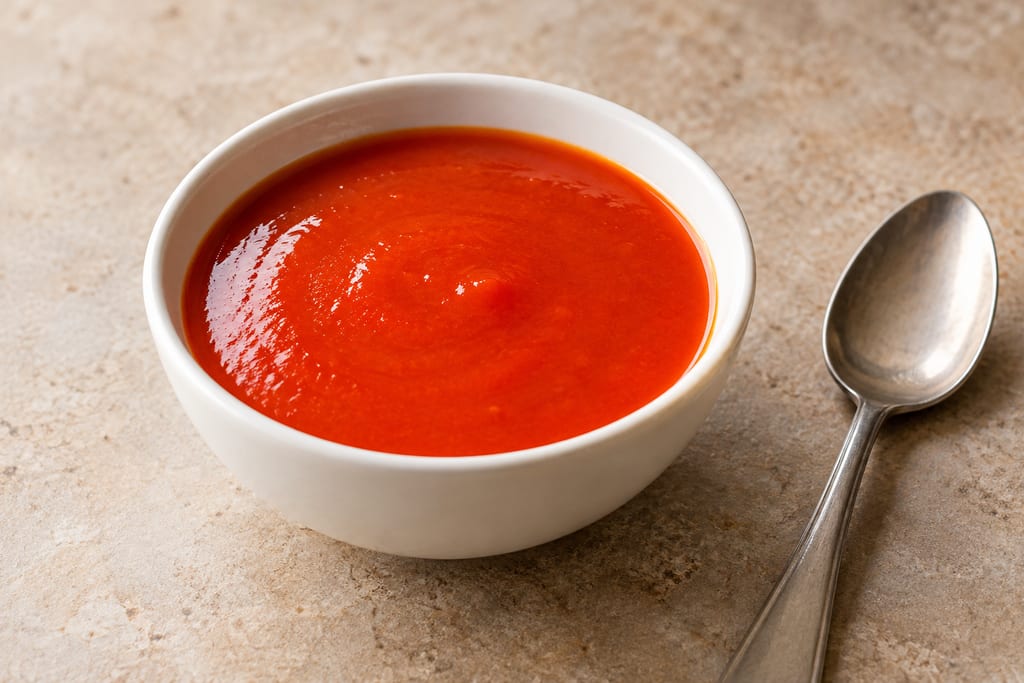
This cooked Vietnamese chilli sauce uses fresh chillies, garlic and tomato for a pourable, sweet-spicy condiment; heat varies with the chillies and how many seeds are removed.
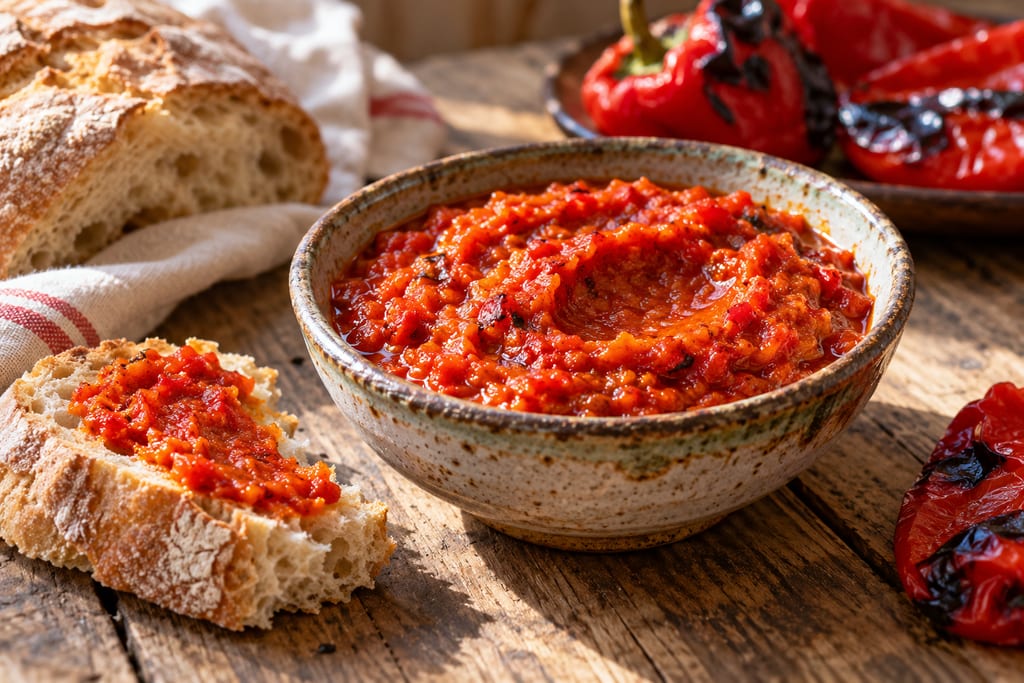
Ajvar is a cooked Balkan pepper preserve built around roasted red peppers, peeled, drained, ground and slowly fried with oil and seasoning. Leskovac’s protected version is a pepper specialty; regional versions vary.
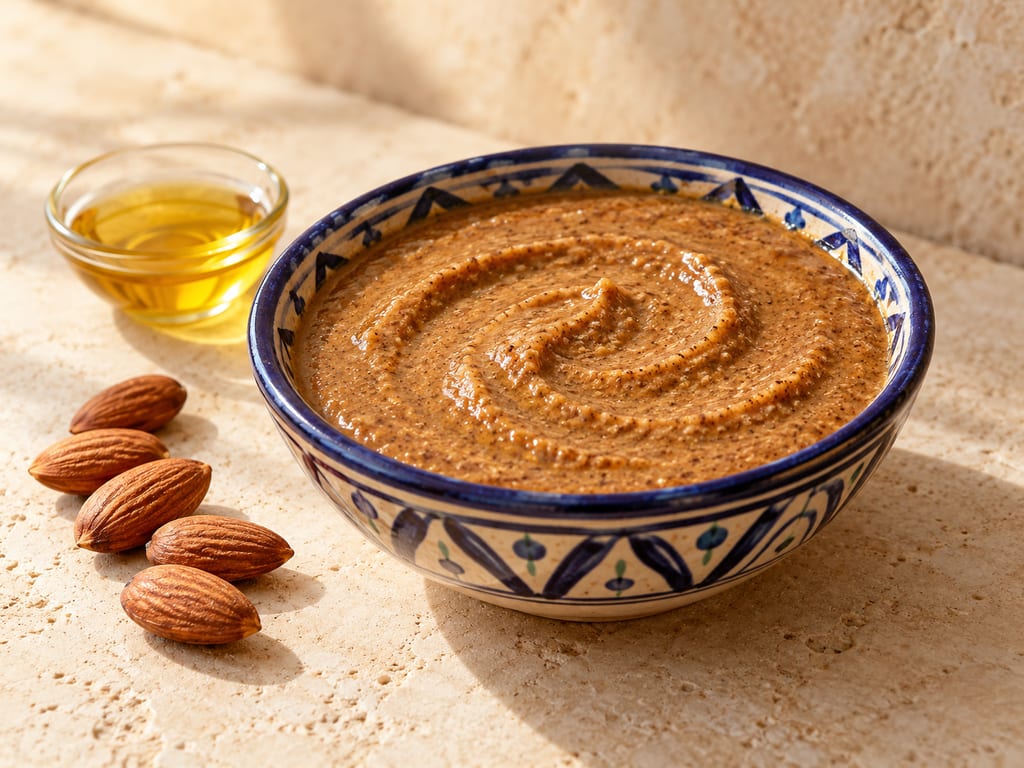
Amlou is a nutty, lightly sweet Moroccan spread of roasted almonds, culinary argan oil and honey. The almonds are ground first, then loosened with oil and sweetened; the balance can range from a thick spread to a dip.
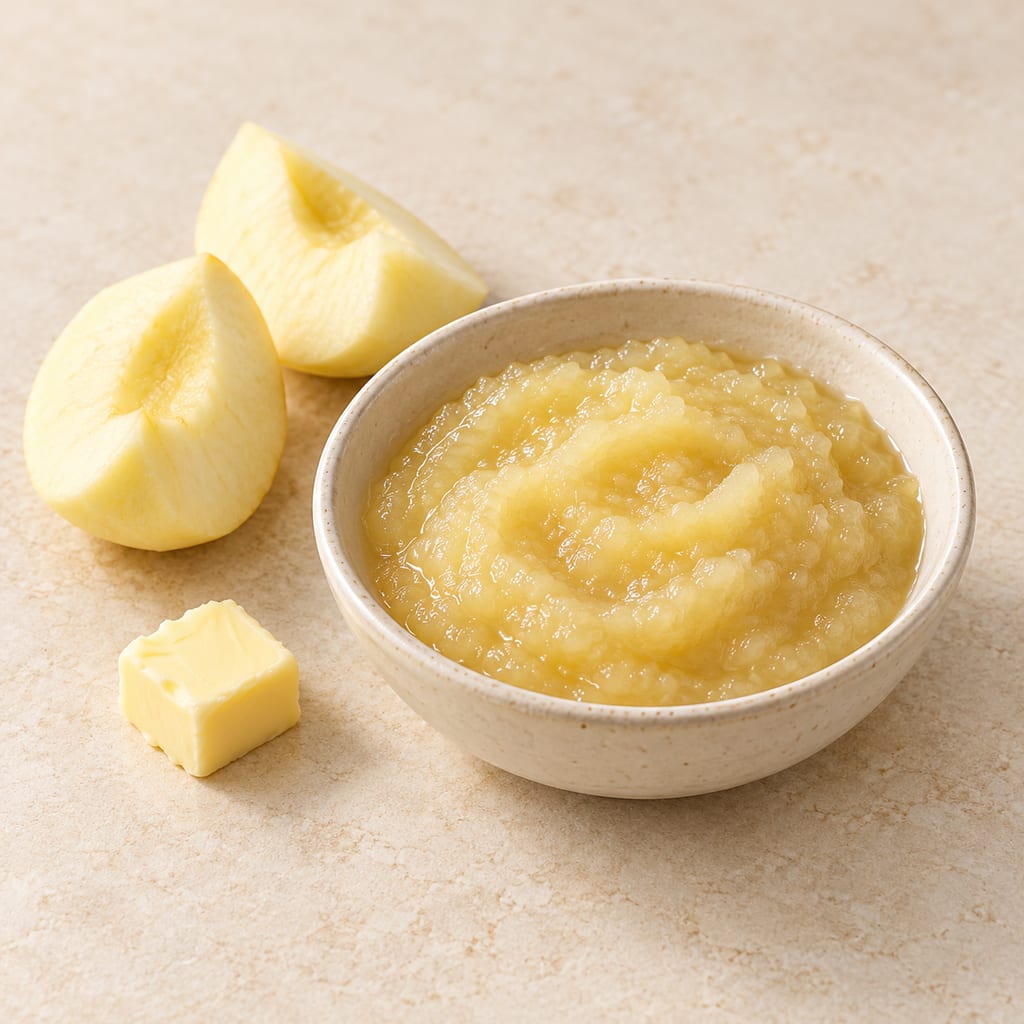
Apple sauce for goose and pork is a plain English accompaniment: cooked apples pulped with water, then sweetened with sugar and finished with a little butter.

A warm dip of garlic, anchovy and olive oil, often enriched with butter, that Piedmont serves over a flame with raw and cooked vegetables and bread.
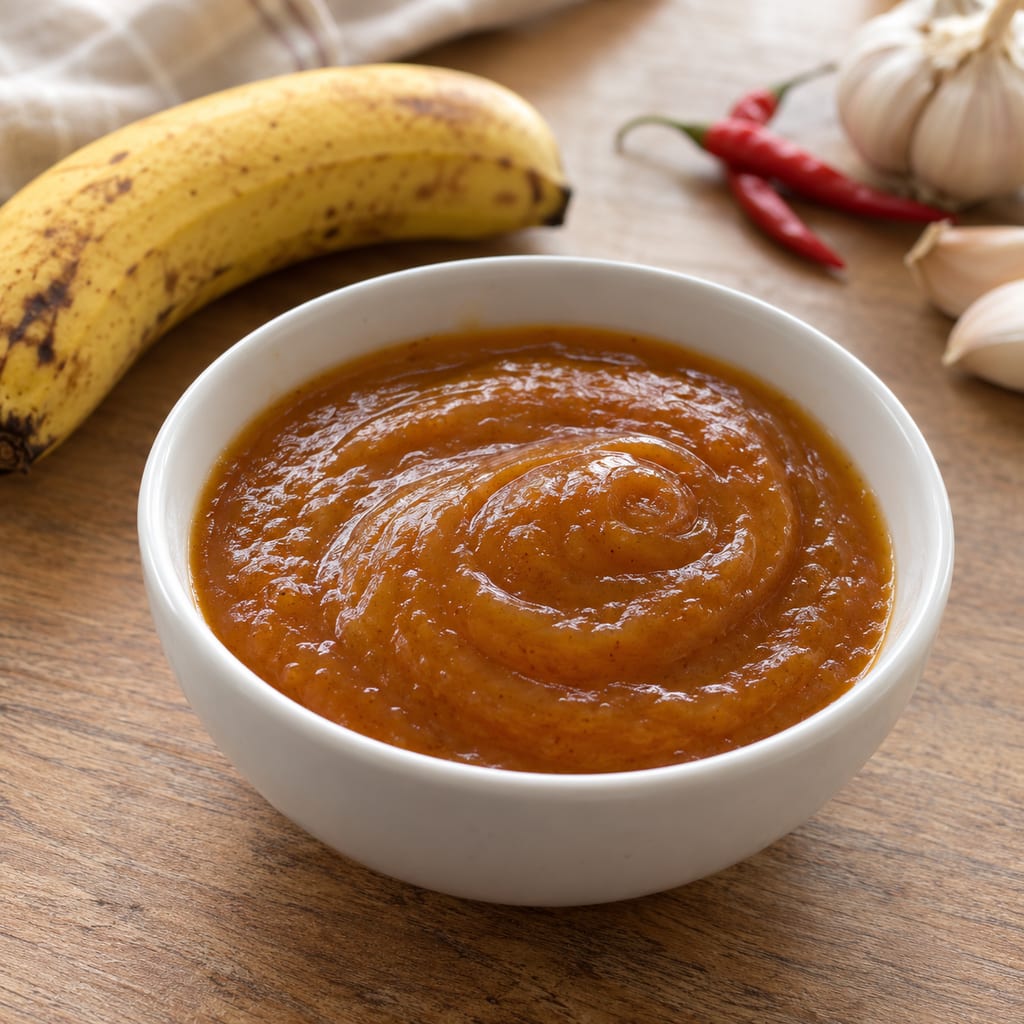
A sweet-hot table sauce of ripe banana simmered with vinegar, sugar, onion, garlic and fresh chilli, in the manner of Philippine banana ketchup. An untested development batch of about 500 g.
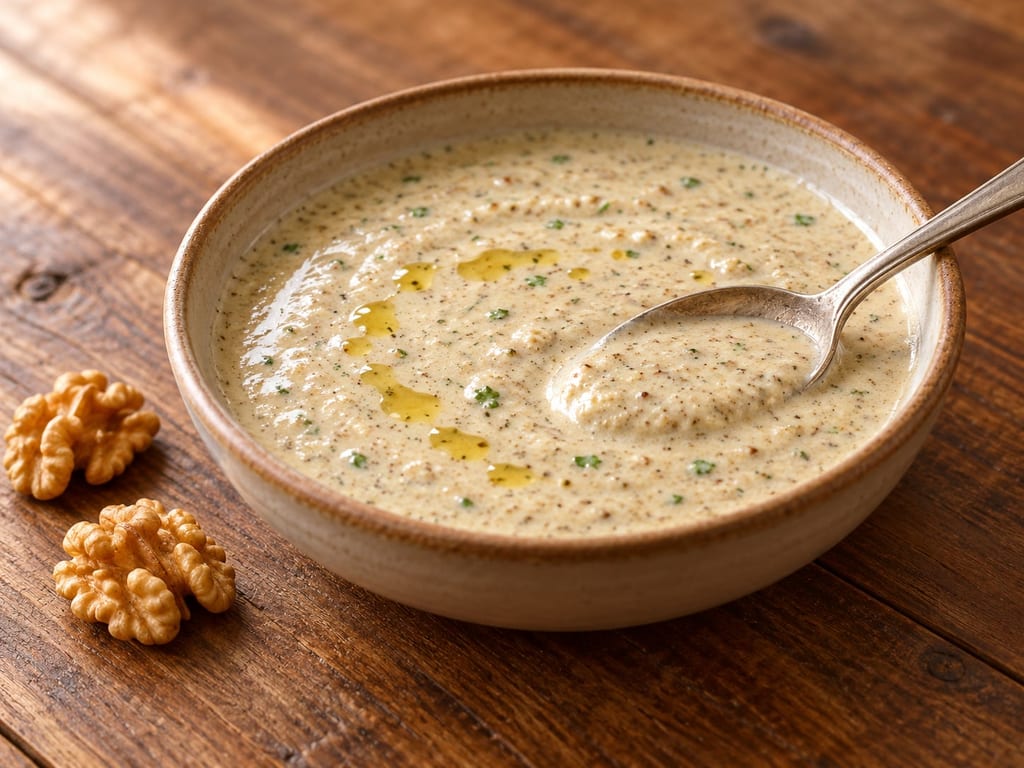
A Georgian walnut sauce of ground walnuts, garlic, vinegar and spices, thinned with water or broth. It is served with poultry, vegetables and bread, and is the sauce of the dish satsivi.
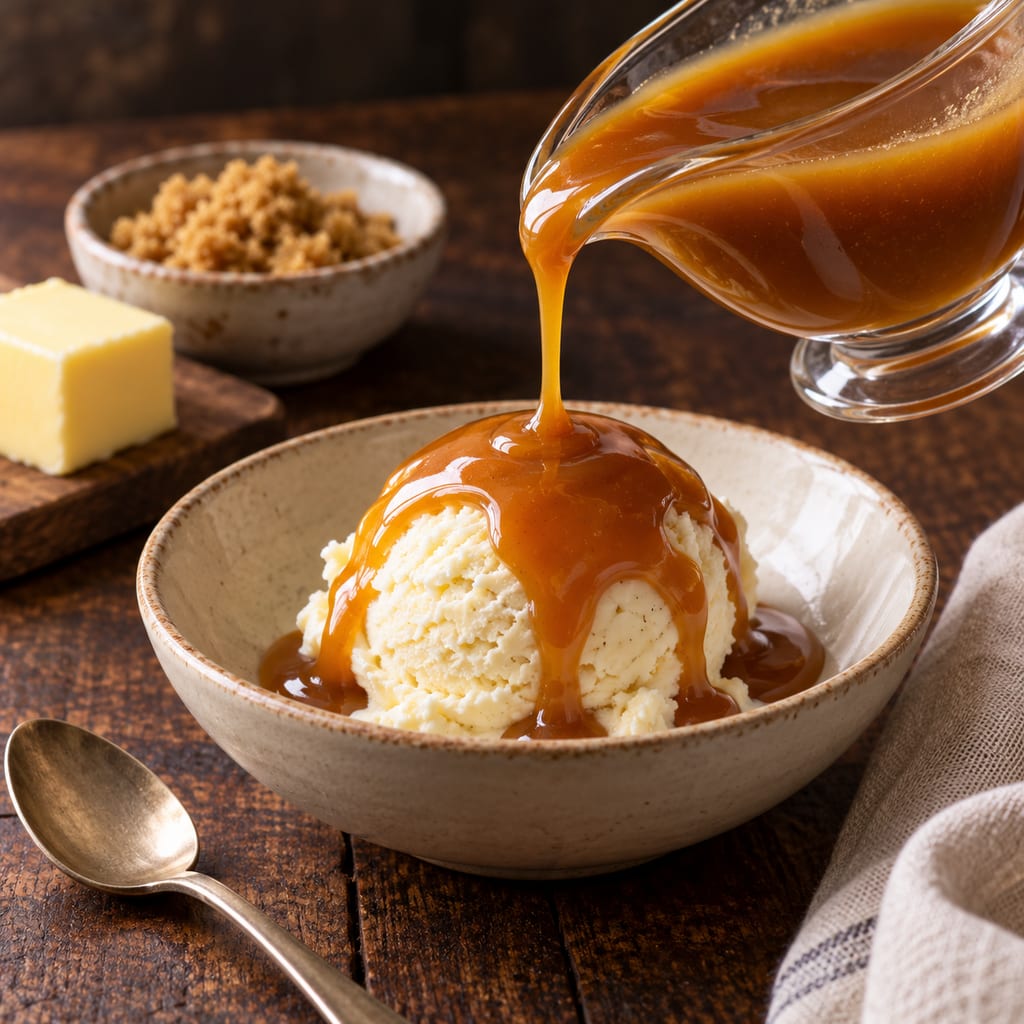
A pourable dessert sauce of brown sugar, butter and cream, with a little corn syrup and salt. It is the sauce form of the butterscotch confection and is made without water, unlike caramel.
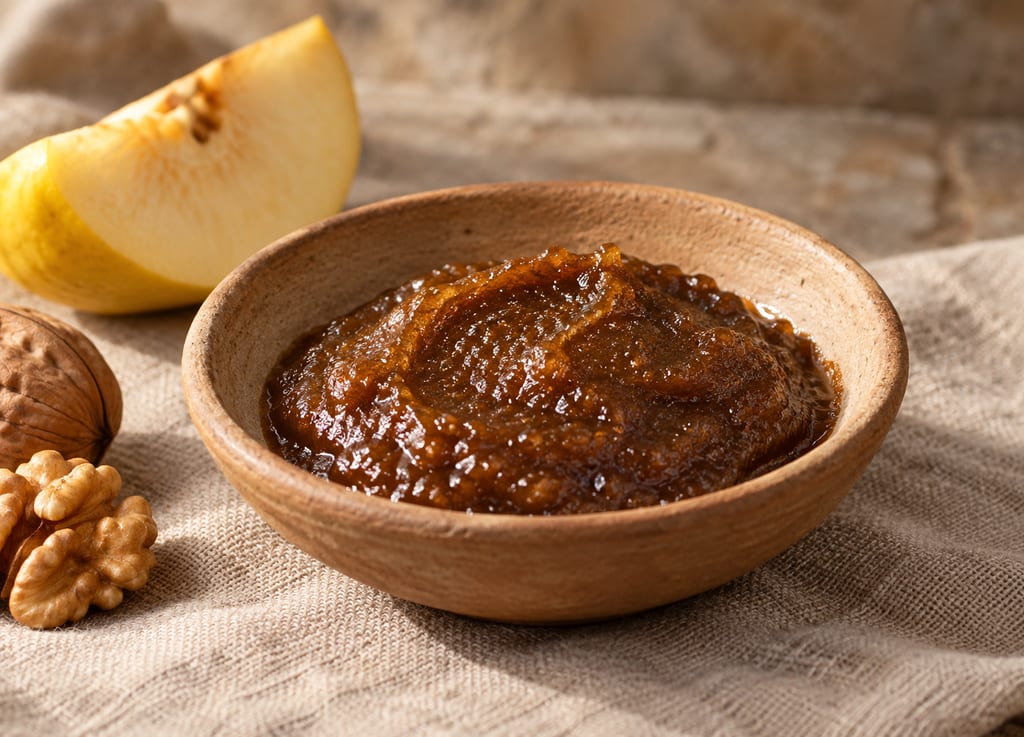
Byzantine murrī is a cooked imitation of murrī from the medieval Arabic repertoire, made from scorched honey, toasted bread, walnuts, quince, carob and spices rather than from a long grain fermentation.
No community contributions have been published for this entry yet.
Sign in to contribute. Published comments and photos are free to read.
Viet World KitchenInspiration · Process · Geography · History · Use
Nuoc Cham -- Vietnamese Dipping Sauce RecipeThe page identifies nuoc cham as a Vietnamese dipping sauce and reports its publication in 2008 and modification in 2025.
Nguyen establishes a lime, sugar and water base before adding fish sauce, then adds optional garlic, chilli and other additions.
The page describes serving sauce with wrapped foods and discusses adjustment for different fish-sauce brands.
The source's quantities differ from this report's untested development weights; no historical origin date is given.
Cited in: A Vietnamese dipping sauce; Build the base before the fish sauce; Serve it with the meal; A fresh mixture, not a preserved sauce; What this record can date
FoodSafety.govSafety
4 Steps to Food SafetyWash produce under running water and clean hands, utensils and surfaces.
General guidance says refrigerate perishable foods within two hours, or within one hour above 90°F (32°C); refrigerators should be at or below 40°F (4°C).
These handling recommendations do not establish a recipe-specific shelf life.
Cited in: Handling and allergy information
U.S. Food and Drug AdministrationSafety
Food AllergiesFDA identifies fish as one of the major food allergens.
Cited in: Handling and allergy information
VnExpress Đời sốngVariants · Use · Geography
Cách dùng nước chấm cho từng loại thức ănDistinguishes straight fish sauce served with fresh chilli or citrus from sweet-sour diluted nước mắm, ginger fish sauce and tamarind fish sauce.
Records southern raw fish sauce with snakehead sour soup, central chilli fish sauce with boiled vegetables and bún bò seasoning, and northern fish sauce with boiled meat or vegetables, sometimes with chilli and lime or kumquat.
Describes nước mắm pha chua ngọt adjusted by dish: sourer for fried foods, sweeter and less sour with cơm tấm; pickled vegetables may be added.
Cited in: A family of table sauces, not one formula
State Committee for Overseas Vietnamese AffairsContext
Nước chấm "nhỏ mà có võ" trong ẩm thực ViệtCultural account of nước chấm as a broad family of Vietnamese dipping sauces.
Cited in: A family of table sauces, not one formula
MICHELIN Guide VietnamVariants
How to Make a Vietnamese Dipping Sauce Like a MICHELIN RestaurantGives one Hanoi chef's version of nước chấm.
Cited in: Other published versions