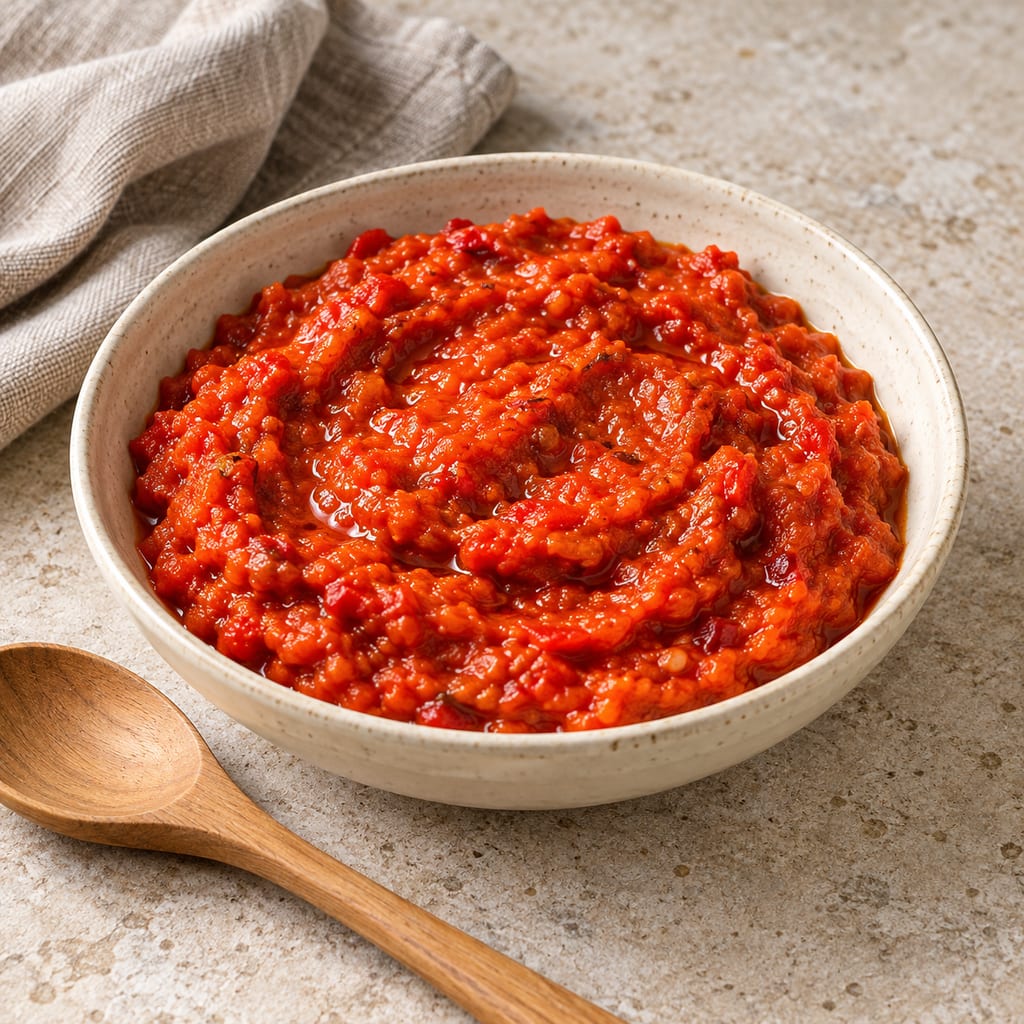
Small-batch ajvar-style relish
A small roasted red-pepper and eggplant relish with sunflower oil, wine vinegar, garlic and salt. It is a modern ajvar-style trial, not a validated winter preserve or a copy of a commercial formula.
 FermenteaWhere food goes to change
Ајвар · Айвар · Ајвар
Ajvar is a cooked Balkan pepper preserve built around roasted red peppers, peeled, drained, ground and slowly fried with oil and seasoning. Leskovac’s protected version is a pepper specialty; regional versions vary.
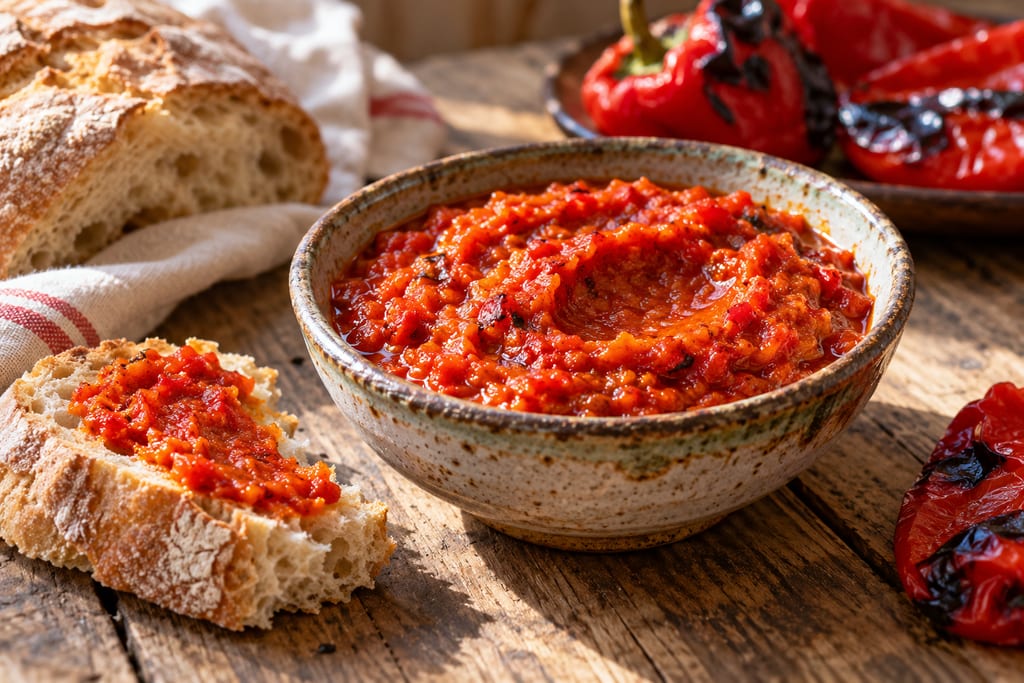
Ajvar is a cooked pepper preserve served as a spread, relish or salad-like side. The name is shared across a wide region, so it does not point to one universal formula. A Serbian legal definition begins with thermally processed pepper that has been chopped or ground; the product may be plain pepper or include permitted additions. The Leskovac appellation is more exact: a red, thick, spreadable product made with its local pepper tradition, and its own specification excludes the additions common in other versions.
The Leskovac registration describes a uniform consistency without separated liquid, a typical red color, and the aroma of baked and fried red pepper. A mild or hot version is possible. The product is not defined by a fermentation culture or a period of aging. Its central changes come from heat and moisture loss: peppers roast until their skins blister and char, the softened flesh is separated from skin and seeds, and the ground pulp is fried until it thickens.
That distinction explains why ajvar is not simply pepper sauce. Roasting concentrates flavor and adds browned, smoky notes; peeling removes the bitter, dark skin; draining reduces water that would otherwise dilute the spread; and long stirring over heat concentrates the pulp and disperses oil through it. The final texture depends on the amount of water removed and the cook’s judgment of thickness, not on an invisible microbial transformation.
The pepper itself came to southeastern Europe through the post-Columbian movement of American crops. Miladina Monova’s study of household preserving in Macedonia traces peppers in this part of the Ottoman Empire to the sixteenth century onward. Before ajvar became a preserve, she describes seasonal ‘smashed peppers’ eaten fresh and red peppers strung up to dry for winter. These older practices made the crop useful beyond its harvest, but they should not be collapsed into a single origin story for ajvar.
Monova locates ajvar’s rise as a public dish in the interwar Kingdom of Yugoslavia. It appeared at urban festivities, restaurants, official celebrations and religious feasts, shaped by different peasant preparations. A 1949 encyclopedia described it as a grilled pepper-and-eggplant salad, while accounts from the period remember versions based on green peppers and sometimes hot-pepper sauce. By the early socialist period, the dish had spread through restaurants and cookbooks across the federation.
The now familiar red-pepper preserve took shape alongside postwar changes in agriculture and household cooking. Monova describes the spread of kurtovska kapija, a Bulgarian hybrid developed for high-yield processing, and sunflower oil as a domestic cooking fat. The pepper was adopted for industrial processing and also became associated with household ajvar in Serbia and Macedonia. This history complicates the idea that today’s recipe is an unchanged ancient rural custom: its ingredients and household role were shaped by seed systems, factories, markets and socialist-era food policy.
A separate regional designation now makes one local identity legible. Leskovački domaći ajvar is registered as an appellation for the Jablanica District, and its product specification ties the name to local red pepper varieties, a defined process and characteristic quality. Its peppers include domestic kanija, kurtovska kapija and palanačko čudo. This protection is for a named product and place; it does not mean all ajvar must come from Leskovac or use only those peppers.
The harvest season is part of the method. Ajvar is associated with autumn peppers at full red maturity, when local growers and households can process a large crop at once. For families who prepare it at home, the work is divided into repeated tasks: washing and roasting, covering hot peppers so their skins loosen, peeling and deseeding, draining, grinding, and tending a pan for a long cook. In Leskovac, the producers’ association describes the practice as inherited knowledge built around choosing pepper, judging ripeness and managing each stage slowly.
Monova’s fieldwork gives the labor a social frame. Households gathered produce, purchased peppers through familiar growers and suppliers, and treated the preserve as a reserve for winter meals. Ajvar-making could bring relatives and neighbors together, pooling time and practical skill. The work does not fit neatly into a story of isolated self-sufficiency: produce, labor, markets, kinship and local identity all meet in the kitchen.
Large-batch cooking also explains the conspicuous scale of some recipes. Marta Dilparić’s family account uses ten kilograms of sweet peppers alongside eggplants, hot peppers, sunflower oil, sugar, salt and garlic. Its scale is meaningful as a household preserving event, but not a tested conversion chart: the final yield and cooking behavior change with pepper variety, moisture, pan width and heat. A small domestic pan cannot simply be assumed to behave like the large vessel used for a seasonal batch.
The source recipes begin with sound, ripe peppers, washed and dried before roasting. Leskovac’s producer association notes that locally used peppers are selected for their red maturity and suitability for roasting on a flat heated surface. In a household version, charcoal or an oven can roast the skins until they blacken and the flesh softens. The char is on the peel; the peel is removed before the edible pulp is ground.
Covering warm vegetables after roasting lets steam loosen the skins. Peeling by hand is slow, but it also gives the cook a chance to remove seeds, cores and dark skin. A family recipe includes roasted eggplant flesh, while the Leskovac specification does not. That one ingredient changes both the flavor and water balance: eggplant makes the paste softer and rounder, so versions that include it require their own proportions and cannot be treated as the protected Leskovac formula.
Draining is a crucial bridge between roasting and cooking. The pulp contains water released by heat; letting it drain reduces the amount the pan must evaporate. The Leskovac process includes a separate draining stage, and Slow Food describes the peppers resting overnight before grinding. A wetter starting pulp takes longer to thicken and requires more attention to prevent sticking. Grinding creates a uniform or coarse texture depending on the screen and the producer’s preference.
The ground vegetables are then stirred in a wide pan as oil is added gradually. Oil carries aroma and gives the finished spread a soft, glossy texture, while the continuous movement keeps the dense mixture from catching on the base. Slow Food documents hand stirring with a long wooden spoon for around two hours in one Leskovac production account; the family recipe describes about two hours for its ten-kilogram pepper batch. These are source-specific observations, not a universal time for every batch.
Salt, sugar and vinegar are additions in some formulations, not proof that ajvar is fermented or that it can be stored safely at room temperature. In the protected Leskovac ingredient list, vinegar can be wine or apple vinegar, with oil, salt and sugar; the family recipe includes garlic and an unspecified acetic-acid step for its jars. Since the family page does not give a measured acid dose or a validated preservation schedule, this version records the cooking stages only and does not reproduce its pantry-storage claim.
The word ajvar travels across national borders and across household kitchens, and its recipes vary. Serbian legal rules allow eggplant up to a stated share of the product and list other permitted additions such as garlic, oil, sugar, spices and vinegar. The Leskovac appellation follows a narrower route: its raw materials are red pepper, salt, sugar, edible oil and wine or apple vinegar, and it is prepared without eggplant. Its registered identity is defined by both the local raw material and the way that pepper is treated.
Macedonian households have their own ajvar practices, documented by Monova through fieldwork in Prilep and Skopje. There, the preserve’s meaning includes kin and neighborhood cooperation and the work of stocking a household pantry. The chapter distinguishes Macedonian ajvar from Bulgarian lyutenitsa: it identifies roasted red pepper as central to both, but describes eggplant as a second ingredient in the former and tomato as a larger component in the latter. Bulgarian households may roast peppers with an electric chushkopek, while Leskovac’s producers describe roasting on an open flame or heated plate.
These are related preparations, not interchangeable recipes. Some versions use eggplant, hot pepper, garlic, tomato or carrot; others keep the pepper flavor alone. A smoother grind and longer reduction produce a more spreadable paste, while a coarser chop leaves visible pieces. Mild and hot versions are recognized in the Leskovac designation, but their exact pepper ratios are not supplied in the sources cited here.
Ajvar is served as a meze, spread or side relish. The National Tourism Organisation of Serbia pairs it with scrambled eggs and white cheese; the Leskovac and Slow Food accounts place it alongside grilled meats. Marta Dilparić describes eating it with bread and sandwiches and using it beside other dishes such as burek. Its concentrated pepper flavor can bring sweetness, acidity and smoky depth to a table without a complex preparation of its own.
Winter storage is a central part of its cultural history, but a homemade jar should not inherit shelf-life claims by association. The Leskovac production specification includes a commercial packaging and pasteurization stage; it is not a household canning recipe. The family page’s oven-and-acid instructions do not establish a validated process. This page therefore provides no room-temperature storage directions or shelf-life promise. For a household batch made from the described cooking steps, cool and refrigerate leftovers; a safe duration is not established by these sources.
The food’s history is visible in its everyday roles. It began as a public dish in modern urban life, became an important household preserve, and now appears as a protected regional specialty and a widely sold condiment. Those layers can coexist: a jar may carry a name tied to a region, a family method shaped by local practice, and a contemporary use alongside eggs, cheese, meat or bread. Ajvar’s significance lies in that combination of seasonal crop, skilled work and shared eating.
Descriptions of ajvar’s labor are not merely romantic accounts of people gathered around a fire. They explain why preparation is tied to a crop, a season and a cooking vessel. Peppers are bulky and perishable; roasting softens them but also releases water, so a maker must move quickly through peeling, draining and grinding before beginning the concentrated pan cook. When several households share the work, one person can roast while others clean and prepare the next batch. Monova records this as householding and reciprocity, placing the preserve among the ways families and neighbors organize time, food and mutual help.
Industrial production changes the rhythm without removing the same basic operations. The Leskovac specification records receipt and washing of peppers, roasting, peeling, grinding, draining, frying, filling and pasteurization. A commercial line can standardize containers and heat treatment, while a household pan depends more directly on the cook’s repeated stirring and visual judgment. Both reduce roasted pepper to a dense preserve, but only the registered process and controlled packaging support the protected product’s defined qualities; a cook’s spoon cue is a texture judgment, not a preservation test.
That difference is especially useful when reading recipes online. Some describe a meal-sized relish for eating soon; others describe a seasonal preserve for jars. Their ingredient lists may look similar, while their storage assumptions are not. The family recipe behind this account gives a distinctive large batch and detailed cooking sequence, but its subsequent jar handling does not provide a measured acid balance or validated thermal process. The written method therefore ends with the cooked spread. It preserves the flavor-making stages without turning uncertain shelf-storage directions into a recommendation.
A Macedonian household study traces peppers in the region to post-Columbian exchange and describes ajvar's emergence in urban festivities in the Kingdom of Yugoslavia before its later prominence as a winter household preserve. Leskovac's protected product has its own local pepper and process specification.
Scaling: not established
Do not treat the source's oven-held jars, surface acetic acid or six-month storage statement as a validated home-canning process.
This is a cooked, non-fermented vegetable preparation; roasting and frying do not make it a fermentation.
This place row is for the registered Leskovac variant only; it does not claim that all ajvar is made in Leskovac.
The study documents specific Macedonian household practices, not a single national recipe or exclusive origin.
A small roasted red-pepper and eggplant relish with sunflower oil, wine vinegar, garlic and salt. It is a modern ajvar-style trial, not a validated winter preserve or a copy of a commercial formula.
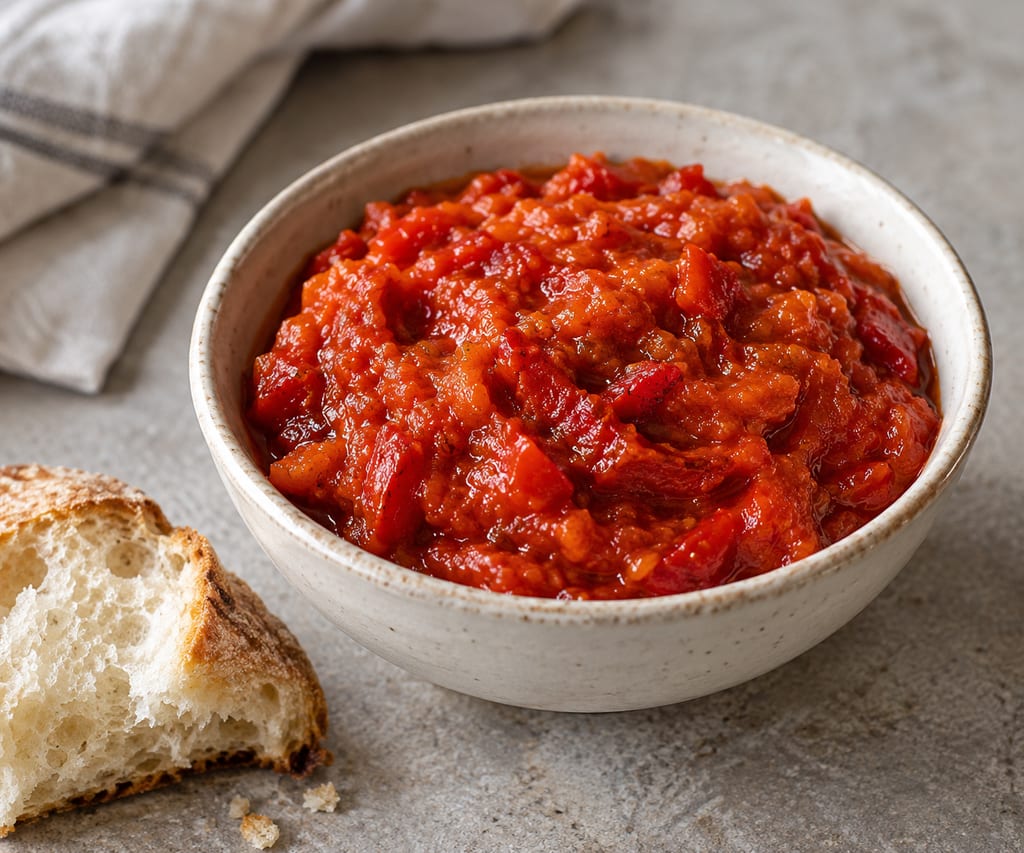
A Balkan relish of cooked peppers, tomatoes, aubergine and garlic in oil, sometimes made hot, served cold and named for its spiciness.
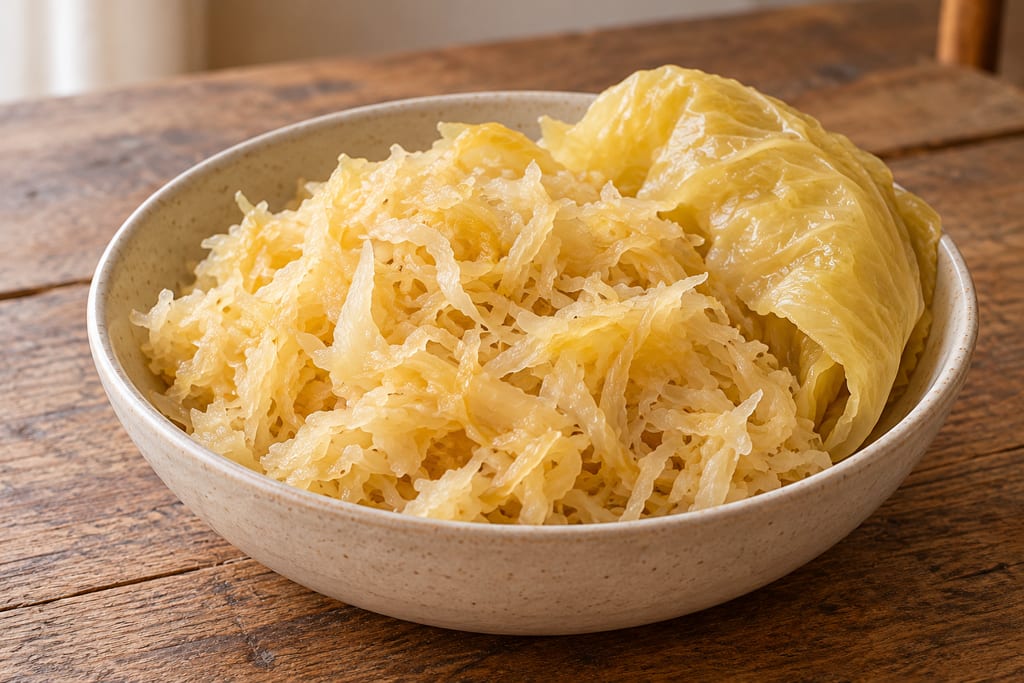
Serbian sour cabbage from the Futog area, made from the autochthonous Futoški cabbage population and registered as a protected product in 2008. It is a subset of general Serbian kiseli kupus.
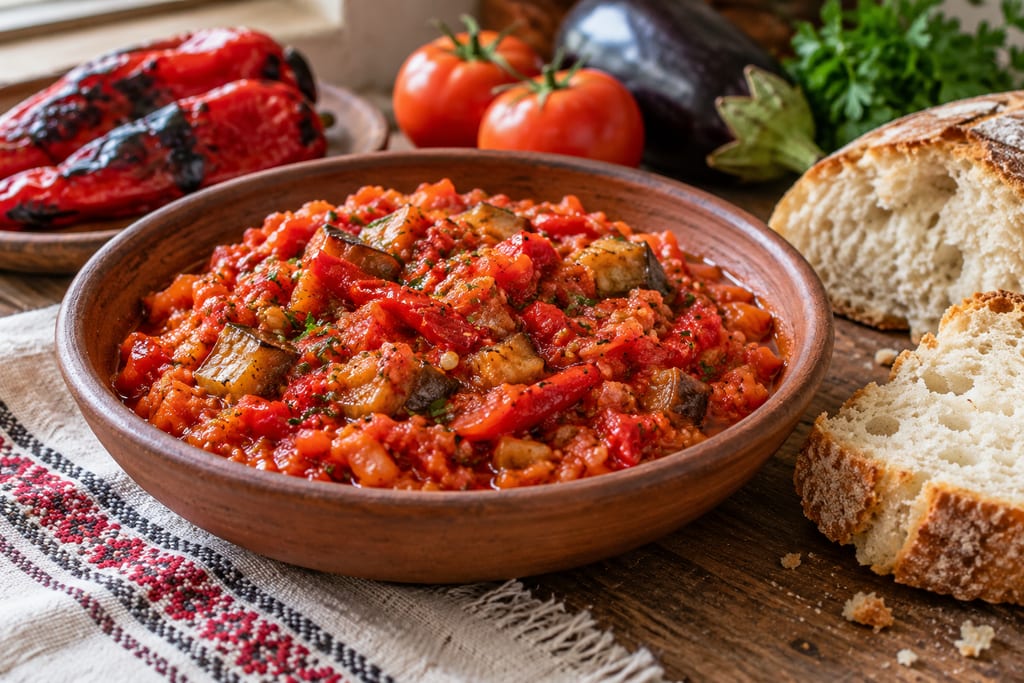
A Balkan relish of roasted red peppers and tomatoes, often with aubergine and garlic, cooked down into a spread for the winter store.
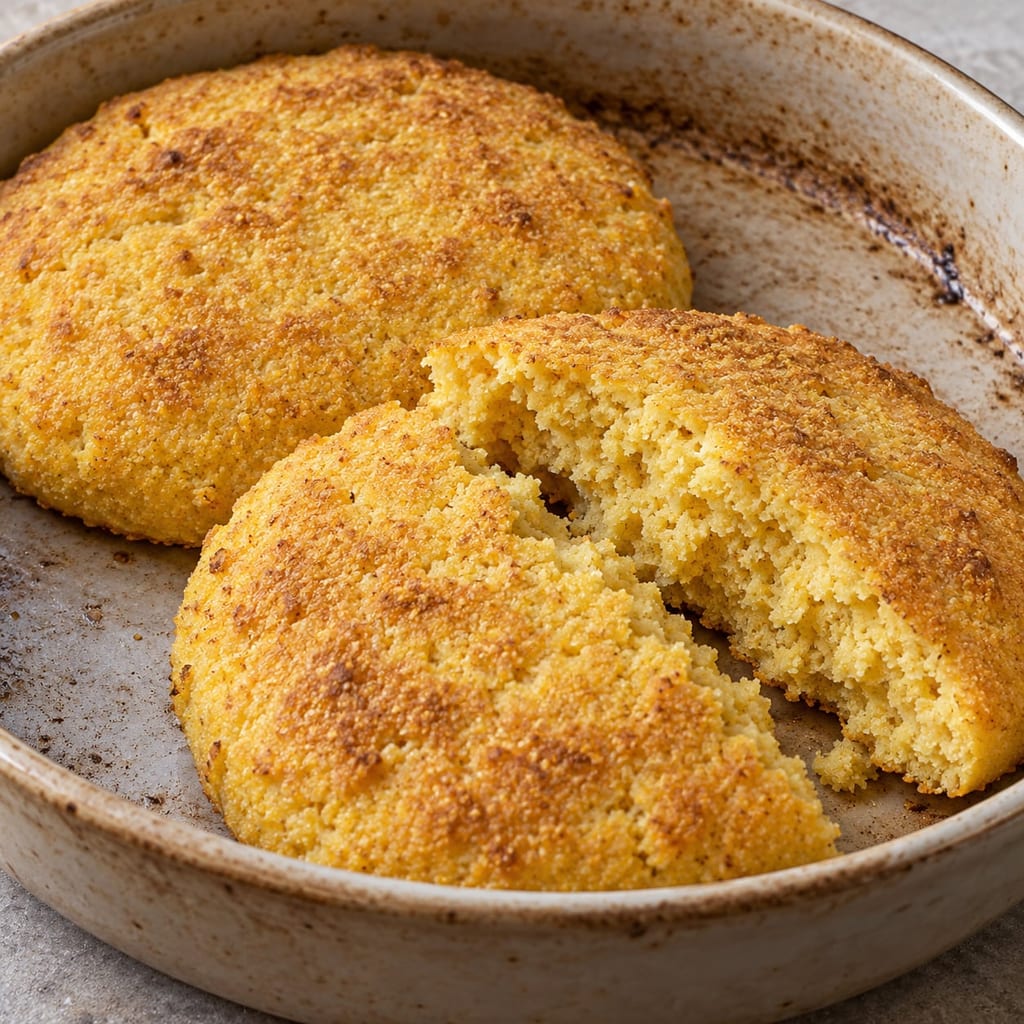
A plain Serbian cornmeal bread made with heated water and salt, shaped into low rounds and baked in a preheated shallow dish. This home method keeps the simple cornmeal form separate from richer dairy-filled projara.
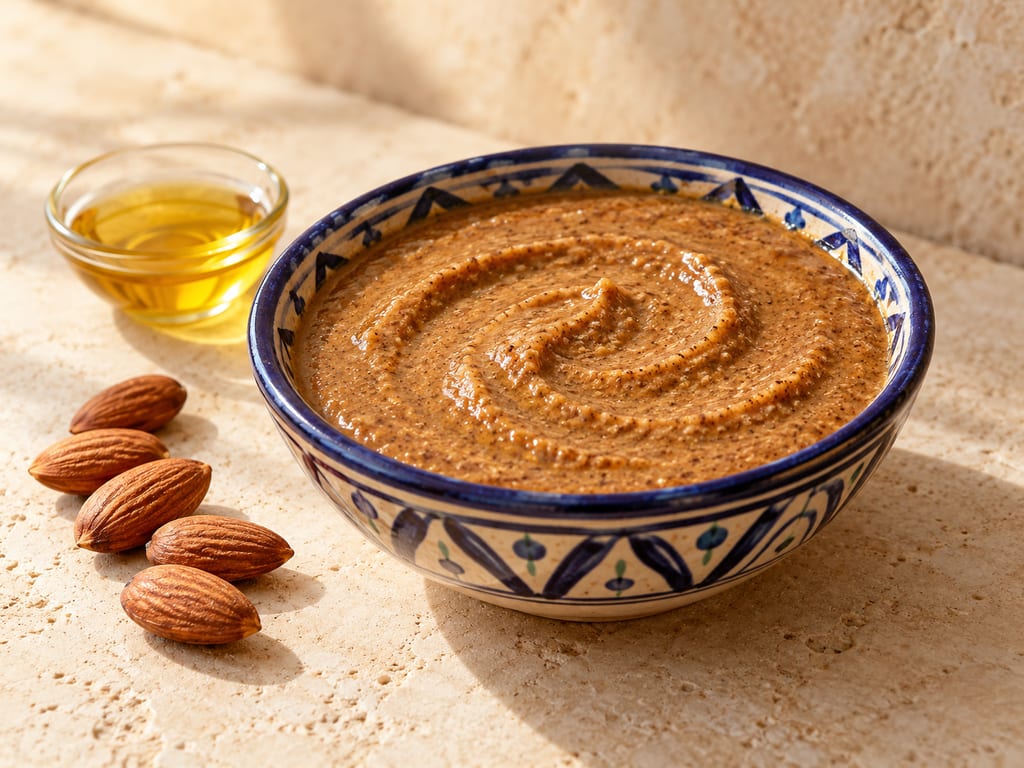
Amlou is a nutty, lightly sweet Moroccan spread of roasted almonds, culinary argan oil and honey. The almonds are ground first, then loosened with oil and sweetened; the balance can range from a thick spread to a dip.
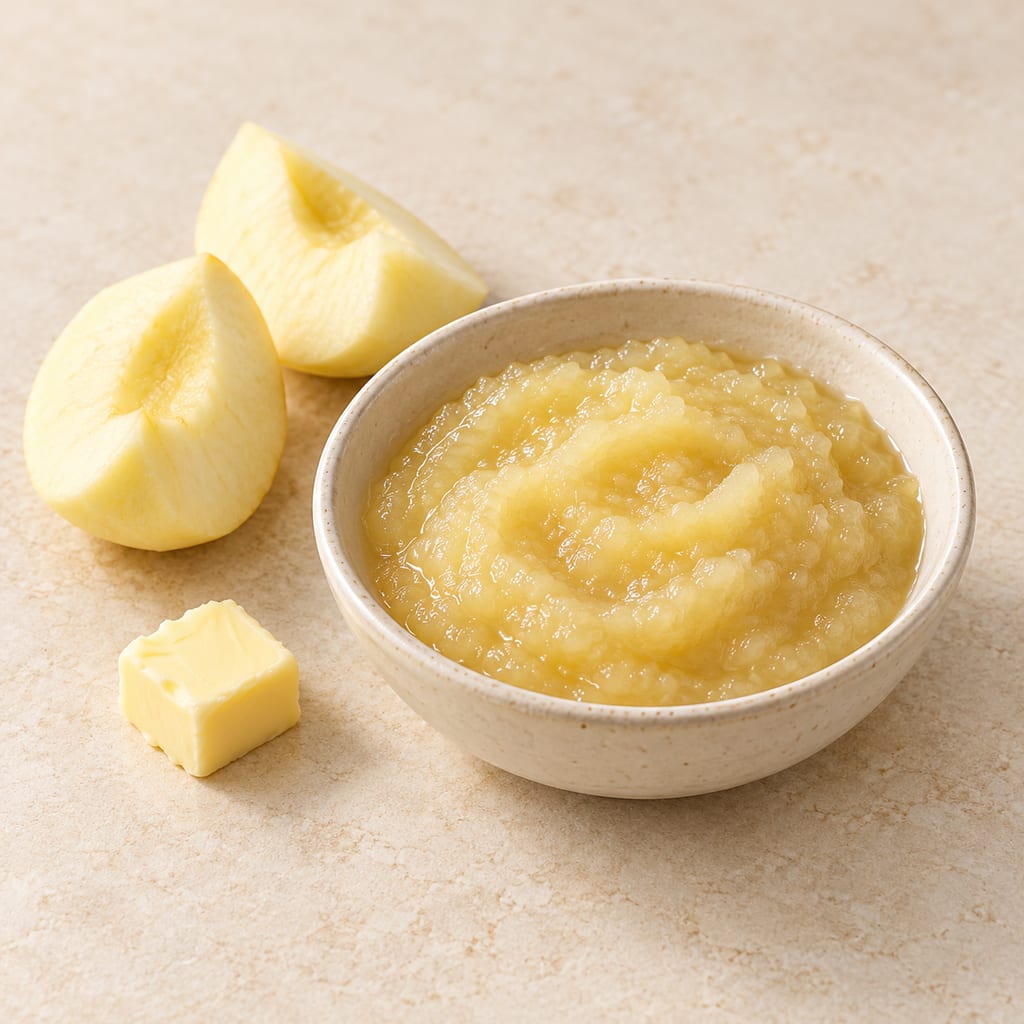
Apple sauce for goose and pork is a plain English accompaniment: cooked apples pulped with water, then sweetened with sugar and finished with a little butter.

A warm dip of garlic, anchovy and olive oil, often enriched with butter, that Piedmont serves over a flame with raw and cooked vegetables and bread.
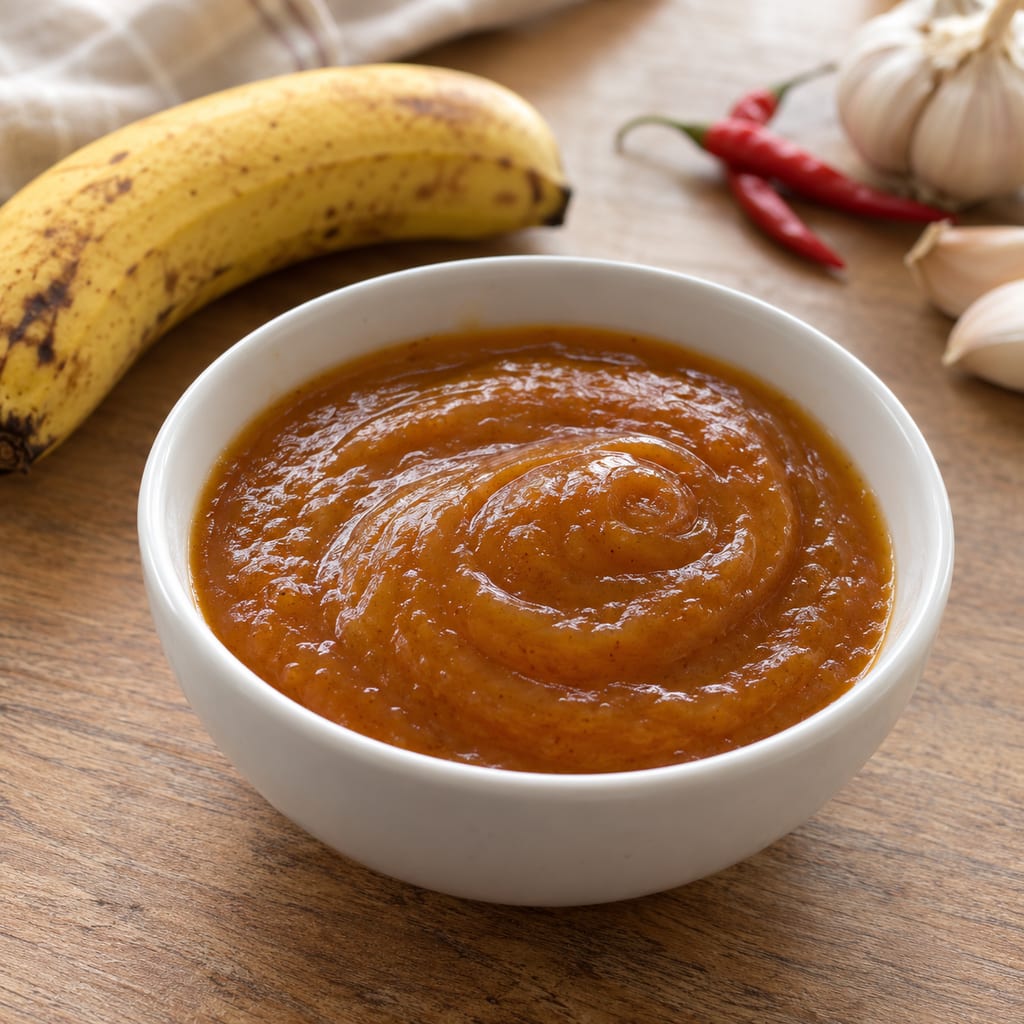
A sweet-hot table sauce of ripe banana simmered with vinegar, sugar, onion, garlic and fresh chilli, in the manner of Philippine banana ketchup. An untested development batch of about 500 g.
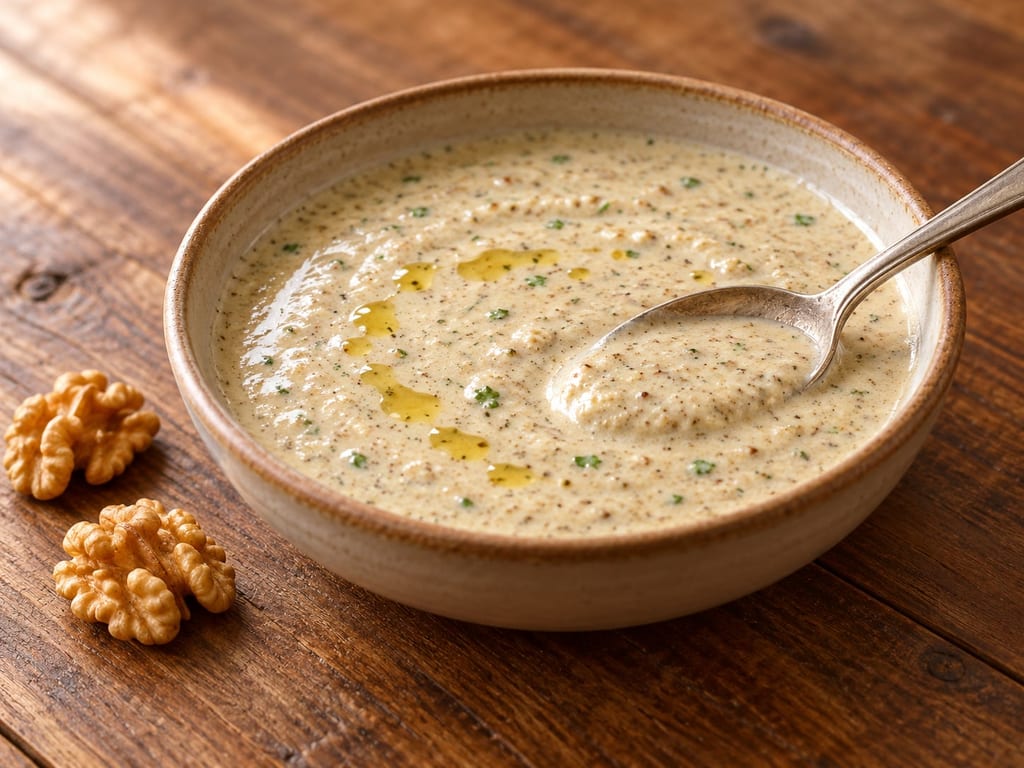
A Georgian walnut sauce of ground walnuts, garlic, vinegar and spices, thinned with water or broth. It is served with poultry, vegetables and bread, and is the sauce of the dish satsivi.
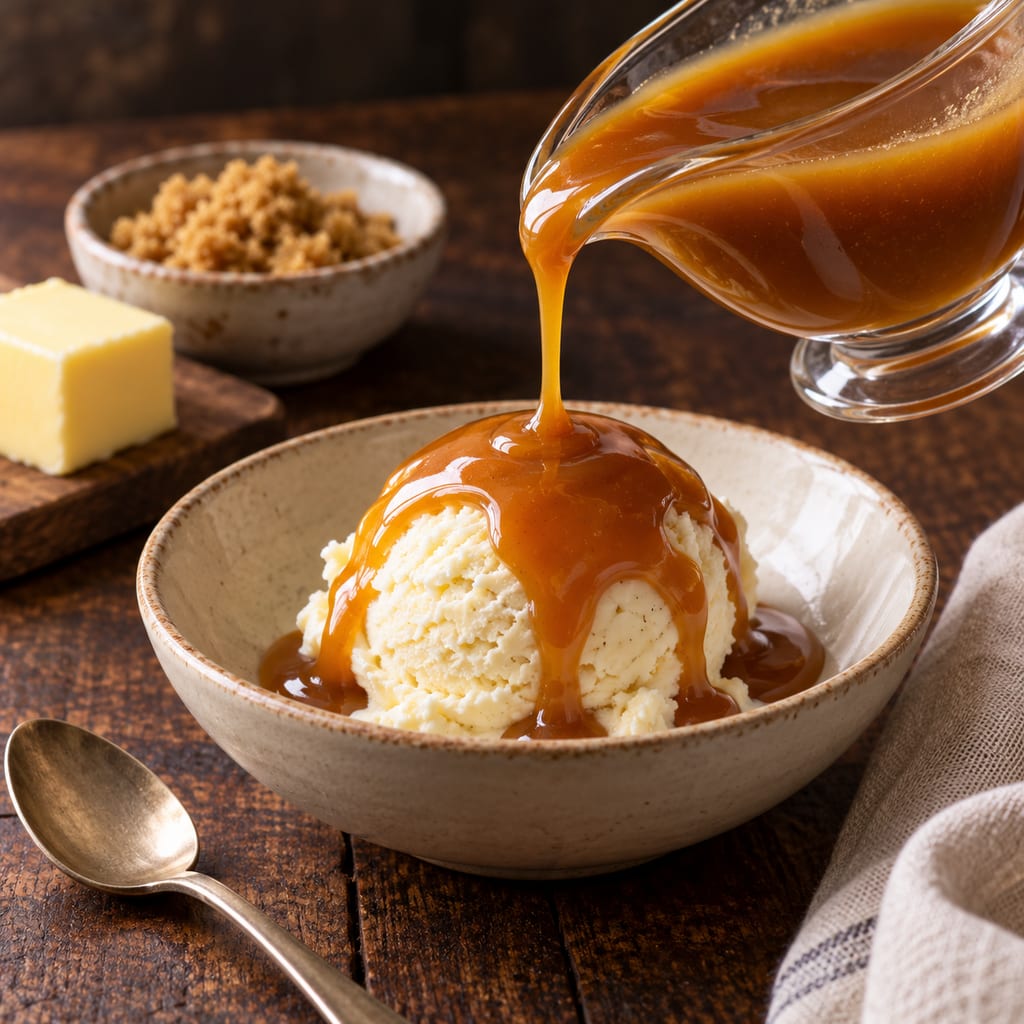
A pourable dessert sauce of brown sugar, butter and cream, with a little corn syrup and salt. It is the sauce form of the butterscotch confection and is made without water, unlike caramel.
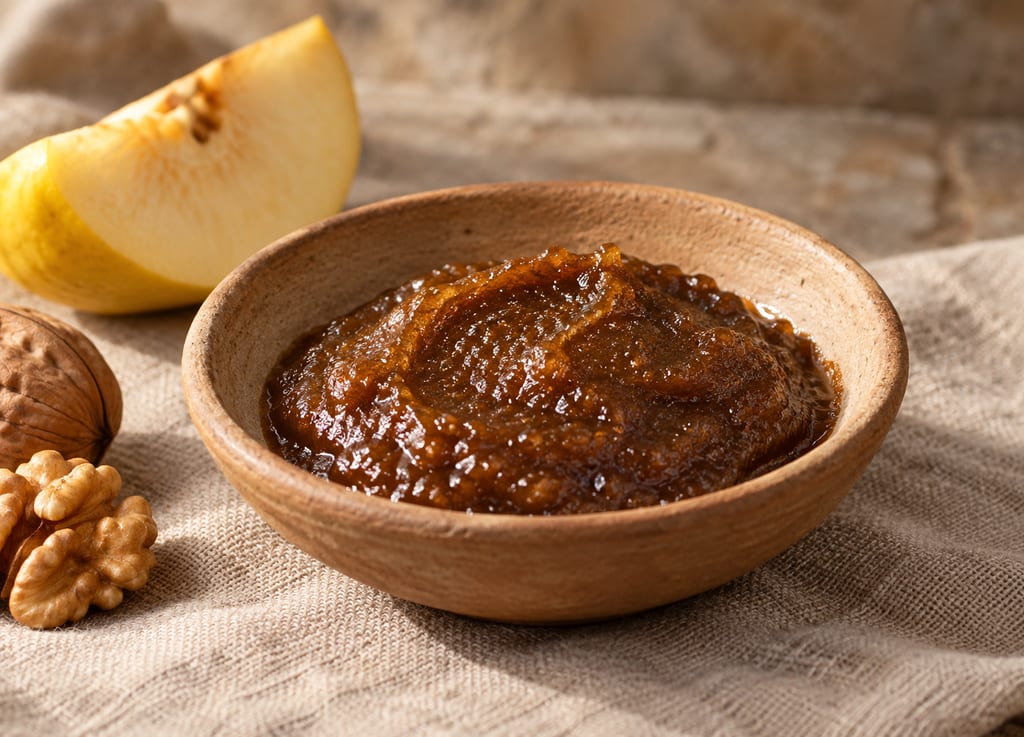
Byzantine murrī is a cooked imitation of murrī from the medieval Arabic repertoire, made from scorched honey, toasted bread, walnuts, quince, carob and spices rather than from a long grain fermentation.
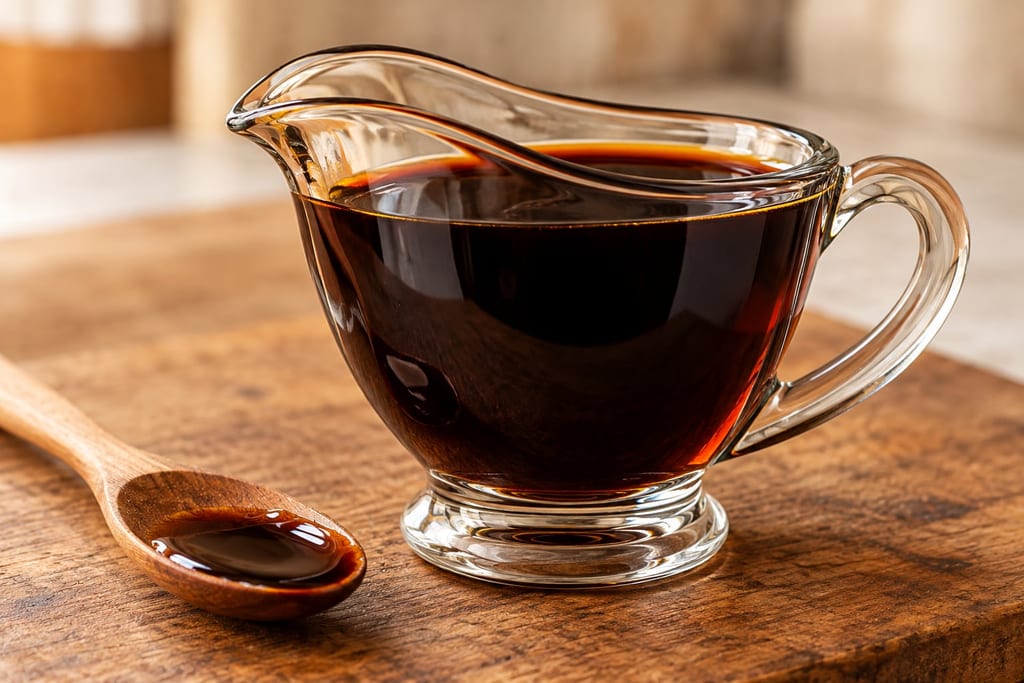
Caribbean browning is a dark liquid of deeply caramelised sugar, used in small amounts for colour and a smoky, bitter-sweet flavour in stews and black cake.

Soft, spreadable Calabrian pork sausage made with a great deal of red chilli and fatty pork, stuffed into natural casings, sometimes smoked and matured while staying soft.

A way to add independent temperature logging to an existing food dehydrator without changing its built-in controls or protections. It is a monitoring method, not a rewiring plan.

Pleurotus cystidiosus is the abalone mushroom, a cultivated oyster-type fungus with dark brown caps that grows more slowly and is more demanding than other Pleurotus species.

A dark, balanced vinegar from Emilia-Romagna made by combining cooked or concentrated grape must with wine vinegar, then acetifying and refining it in wood under a protected specification.

A living dairy inoculum that starts controlled cream fermentation, developing acidity and aroma before sour cream or cultured butter is finished.

A small electric incubator holds jars at a selected temperature for yogurt and other documented warm food preparations. Controls, capacity and vessel arrangement vary by model.

Adygean salt is a seasoned table salt associated with Adygea and the wider North Caucasian culinary tradition. Salt is blended with garlic and a variable selection of herbs and spices; the exact mix depends on the named style and maker.

The African Caesar-group mushroom, Amanita masasiensis, is a wild ectomycorrhizal species of central and southern African woodlands, eaten locally. The genus contains deadly poisonous species, so identification needs care.
No community contributions have been published for this entry yet.
Sign in to contribute. Published comments and photos are free to read.
Intellectual Property Office of the Republic of SerbiaIdentity · Geography · Ingredients · Method · Quality
Leskovački domaći ajvar — product specificationThe registered Leskovac product's red-pepper raw material, traditional operations, quality features, packaging and pasteurization are specified.
The production area and product name are tied to the Leskovac designation.
The specification separates the Leskovac formula from added-eggplant or other ajvar variants.
Cited in: A spread built from pepper, heat and time; What roasting, draining and frying do; Regional families, not one Balkan recipe
Intellectual Property Office of the Republic of SerbiaIdentity · Geography · Sensory description
Ajvar (paprika delicacy) from Leskovac — registration summaryDescribes the red color, uniform thick consistency, baked-and-fried red pepper aroma, mild or hot versions, and Jablanica District production area.
Cited in: A spread built from pepper, heat and time
Berghahn Books / Max Planck Institute for Social Anthropology; chapter by Miladina MonovaHistory · Household use · Regional variation
When the Household Meets the State: Ajvar Cooking and Householding in Postsocialist Macedonia, in Oikos and MarketTraces pepper dishes and ajvar's historical emergence, the role of urban festivities and socialist-era mass food systems, household production, and the work and reciprocity involved in winter preserving.
Compares Macedonian ajvar, Yugoslav forms, and Bulgarian lyutenitsa without treating them as one recipe.
Describes ajvar as household winter food and a shared labor practice in the field sites.
Cited in: Peppers, trade and the making of a Yugoslav winter food; Autumn work and household cooperation; Regional families, not one Balkan recipe; At the table and in the pantry; A recipe is also a record of local work
Grandmas Project; recipe by Marta Dilparić, film by Ivana BarišićMethod · Ingredients · Household variation · Use
AjvarDocuments a family batch using 10 kg sweet red peppers, eggplants, hot peppers, sunflower oil, sugar, salt and garlic.
Describes charcoal or oven roasting, peeling and deseeding, mincing, gradual oil addition, continuous stirring and roughly two hours of cooking for that batch.
Describes bread and sandwich uses; its jar-storage advice is not adopted as a validated shelf-stable process.
Cited in: What roasting, draining and frying do; At the table and in the pantry
Udruženje Leskovački ajvarGeography · Method · Ingredients · Quality
Ukus Juga and Dugotrajan ručni radDescribes mature red local pepper varieties, the protected pepper-only ingredient list, mild and hot forms, and roasting, peeling, grinding, draining and frying as labor-intensive stages.
Cited in: Peppers, trade and the making of a Yugoslav winter food; What roasting, draining and frying do
Legal Information System of the Republic of SerbiaDefinition · Quality · Regulation
Rulebook on the quality of fruit and vegetable productsDefines ajvar in Serbian regulation as thermally processed, chopped or ground pepper, with or without additions.
Permitted additions include eggplant up to 25% by mass, edible oil, salt, sugar, garlic, spices, vinegar and permitted acids.
Cited in: A spread built from pepper, heat and time; Regional families, not one Balkan recipe
National Tourism Organisation of SerbiaUse · Serving
Authentic Tastes of SerbiaDescribes ajvar as a traditional paprika spread or salad served with scrambled eggs and white cheese.
Cited in: At the table and in the pantry
Slow Food Foundation for Biodiversity, Ark of TasteMethod · Geography · Use · Varieties
Ajvar from LeskovacDocuments local pepper types, fire roasting, draining, grinding, hand stirring, sunflower oil and vinegar, production scale and serving as meze or with grilled meats.
Cited in: Autumn work and household cooperation; A recipe is also a record of local work