
Aceto Balsamico Tradizionale di Reggio Emilia
Protected Italian vinegar made only from cooked grape must, fermented and aged in a battery of wooden barrels for at least 12 years: sweet, sharp and syrupy.
 FermenteaWhere food goes to change
Traditional method
Balsamic Vinegar of Modena PGI
A dark, balanced vinegar from Emilia-Romagna made by combining cooked or concentrated grape must with wine vinegar, then acetifying and refining it in wood under a protected specification.

Aceto Balsamico di Modena IGP is a regional vinegar whose darkness and rounded sweetness come from grape must combined with wine vinegar. In the glass it is clear and glossy, deep brown, and fluid enough to pour; its aroma may suggest fruit and wood, while its taste balances sweetness with sharp acidity. “Balsamic” on an ordinary bottle is not by itself a guarantee that it is this protected product. The name Aceto Balsamico di Modena is registered as a protected geographical indication (IGP in Italian, PGI in English), which ties the product to a defined area and specification.
The product should also be distinguished from Aceto Balsamico Tradizionale di Modena PDO and Aceto Balsamico Tradizionale di Reggio Emilia PDO. The traditional PDO vinegars are separate designations with their own rules. This page concerns the IGP vinegar, whose blend includes wine vinegar alongside grape must and whose legal minimum wood refinement is 60 days. A bottle's “aged” class may describe longer maturation, but it does not turn the IGP into a PDO product.
The EU specification names the provinces of Modena and Reggio Emilia in Emilia-Romagna as the production area. It defines eligible grapes, minimum proportions, permitted acetification options, refining and finished-product characteristics. The designation entered the EU PGI register in 2009. This legal framework gives the name geographic meaning while leaving individual makers room to formulate their own compliant blends.
The history behind the name stretches beyond the present IGP rules, but those layers should not be collapsed into one recipe. The Modena consortium connects cooked grape must with sapa, a Roman preparation made by slowly boiling must and used in cooking as a sweetener and condiment. It also recounts a 1046 episode in which Boniface of Tuscany presented an “excellent vinegar” to Henry III while the emperor travelled through the Po Valley. That story, preserved in a medieval account, is evidence of vinegar's prestige in the area; it does not identify the liquid as the modern IGP blend.
The Consortium describes vinegar making at the Este court after the court moved to Modena in 1598. It reports that Modena's vinegar gained recognition beyond Italy during the nineteenth century, as producer families emerged and methods were gradually codified. In 1933, a ministerial act officially recognized the distinctive Balsamic Vinegar industry of the Modena area. The first production specifications followed in 1965, setting out composition and preparation methods that formed the basis for today's protected specification.
The European registration in 2009 is a modern legal milestone, not a claim that the product was invented that year. Conversely, the Roman and medieval stories are not proof that an IGP-style vinegar was made then. Keeping those distinctions intact lets the recipe describe a living regional tradition without assigning today's ingredients or legal classes to evidence that predates them.
The grape must comes only from seven named varieties: Lambrusco, Sangiovese, Trebbiano, Albana, Ancellotta, Fortana and Montuni. A producer may use one or a blend; the list is a boundary on raw material, not a prescribed recipe. The must may be cooked, concentrated, or both. The legal minimum requires that cooked and/or concentrated must account for at least one fifth of the volume sent for processing. When the must is concentrated, its density must reach at least 1.240 at 20°C. That temperature is the density reference point; it is not a fermentation-temperature recommendation.
Wine vinegar supplies at least ten percent of the blend. A further portion of vinegar aged for at least ten years is required, but the specification does not set one universal quantity for it. The recipe is therefore deliberately expressed as legal minima rather than a formula with a guessed ratio. The final balance can vary with grape must, vinegar character and the producer's blending decisions while staying inside the product rules.
Caramel may be used only to stabilise colour and only up to two percent of the finished volume. The specification prohibits other added substances. This narrow allowance matters because a dark appearance alone does not reveal the composition: in a compliant product, colour is principally associated with the must and the processing history, while caramel remains a limited optional stabiliser rather than a sweetness ingredient.
The assembled must and wine vinegars are acetified before refinement. The specification recognises the use of selected bacterial colonies, slow surface acetification, and slow acetification with wood chips. These routes describe alternative production systems; they are not interchangeable instructions for an unmonitored jar. Acetic acid bacteria oxidise ethanol into acetic acid in the presence of oxygen, which is why vinegar production depends on suitable contact with air. The general microbiology explains the transformation, while the legal product rules define which processing approaches may be used for this designation.
After acetification comes refinement. The vinegar is kept in wooden containers—barrels, vats or casks—made from woods such as oak, chestnut, mulberry or juniper. At least 60 days must pass from assembly of the raw materials and the start of processing. The consortium describes this as a period that can be followed by additional ageing. Refinement and ageing are not identical claims: the minimum sixty days is required, while longer ageing is an optional extension that changes the label class only when its rules are met.
The sources do not prescribe a universal bacterial strain, temperature, vessel dimensions, oxygen-transfer rate, acetification duration, blend ratio for the aged vinegar or final home-scale endpoint. Those omissions are meaningful. A recipe writer should not fill them with familiar vinegar-making numbers from another product, because those figures may not match this protected process or a particular producer's validated controls.
Once the minimum refinement is complete, a producer may continue ageing the product. The current consortium describes “Invecchiato” (aged) for vinegar aged more than three years and “Riserva” (reserve) for more than five years. These words refer to classifications within the IGP system; they are not ingredients and do not replace the protected name. The label terms are especially easy to confuse with the separate Traditional Balsamic Vinegar PDO designations, so a reader should check the full designation rather than rely on a single ageing word.
Ageing can round the taste and deepen wood-derived aromas, but the sources do not give a linear conversion from years in wood to sweetness, viscosity or acidity. The legal specification includes analytical and sensory characteristics for the finished vinegar, and compliance is assessed under the product's certification system. Age alone cannot certify quality or guarantee that a vinegar belongs to the IGP.
In the kitchen, use the vinegar as a finishing condiment rather than treating every bottle as a syrup. Its sweet-sour balance can sharpen a salad dressing, bring lift to vegetables, or add a bright accent to a rich plate. The Modena Consortium's own pairing catalogue ranges from hard cheeses and Parmigiano Reggiano to tomato and fennel salads, roast vegetables, fish, beef, fruit and desserts. A small pour is often enough to make the sweet acidity noticeable without masking the food.
Try it over Parmigiano Reggiano, stirred into a vinaigrette, or dotted onto roasted vegetables. Lighter, younger IGP bottlings suit everyday dressing and marinades; more extensively aged examples are often used in small finishing portions. That is a practical distinction rather than a strict rule: individual products differ, so taste the vinegar and adjust the dose to the dish.
Fruit and dairy desserts are also documented pairings. A few drops can accent ripe strawberries, peaches, panna cotta or ice cream, where acidity balances sugar and fat. With hot foods, add a finishing splash near the end so aroma and acidity remain clear. The dish suggestions are uses of the finished vinegar; they do not imply that it is made by fermenting those foods.
A useful tasting exercise is to compare a few drops on a neutral bite such as bread or mild cheese before deciding how much to use in a dish. The vinegar's sweetness can make a dressing seem rounder, while its acidity can cut through richness; on fruit or custard, it works as a small aromatic accent. The Consortium's pairing list is broad rather than prescriptive, spanning seafood, vegetables, hard cheeses and sweets. It is a guide to culinary range, not a claim that each pairing is traditional or that every bottle suits every preparation.
The ordered steps record the product's documented stages—select compliant must, combine it with wine vinegars, acetify by a permitted route, refine in wood, and certify the result. They are not a kitchen-scale procedure. A source-defined batch size, total yield, acetification temperature and timing are absent, and the law sets thresholds rather than a fixed formula. Attempting to convert the percentage minima into a domestic batch would create false precision.
The main practical lesson is to separate what the specification fixes from what producers choose. The seven varieties, minimum must and wine-vinegar shares, aged-vinegar requirement, optional caramel ceiling, available acetification methods, 60-day minimum refinement and geographic boundary are specified. Exact blend proportions, chosen microbiological route and any extended ageing schedule are not universal. A commercial maker must work from the full current rules and the applicable certification process; an enthusiast can appreciate the flavour and compare labels without treating the outline as a validated home fermentation protocol.
The finished vinegar should present a clean, bright appearance and a deep brown colour, with a delicate aroma and balanced sweet-and-sour taste. Those sensory characteristics frame the style, but they do not replace laboratory analysis or official conformity assessment. For practical use, choose the product according to how it tastes and how you intend to serve it; for legal use of the IGP name, rely on the current specification and certification.
The protected area covers the provinces of Modena and Reggio Emilia, in the broader Emilia-Romagna landscape between the Po plain and the Apennine foothills. The Consortium presents the area's seasons—cold winters, humid summers, misty autumns and mild springs—as part of the product's setting, alongside the region's vine-growing and vinegar-making knowledge. These accounts describe the place as a production context; they do not establish a single cellar climate that every producer must use or a temperature schedule for fermentation.
The specification's geography is more precise than a general claim that a vinegar is Italian or made somewhere in Emilia-Romagna. For the IGP name, production must be tied to the designated provinces and the applicable product rules. Grape must and wine vinegar sit at the centre of this regional chain: the Consortium describes farms, vineyards, must processors and vinegar producers as parts of a network that supplies the makers who blend and refine the finished product. That division of work helps explain why a recipe page cannot provide one universal vessel volume or a single house ratio.
The protected name therefore joins agricultural raw materials, a defined production territory and a regulated method. It does not promise that every bottle tastes identical. One producer's balance may be sharper or fruitier, another's sweeter or more wood-scented, while both remain within the specification. The most useful comparison is the ingredient panel and the producer's stated class, followed by tasting the vinegar in the role intended for it.
Modena's vinegar tradition is often connected with earlier accounts: the Consortium recounts a 1046 presentation of an excellent vinegar in the Po Valley and describes cooked grape must, known in ancient Rome as sapa. These references establish regional historical context, not the identity of today's IGP recipe. The Consortium dates formal production specifications to 1965 and European PGI registration to 2009; the protected modern recipe must be kept distinct from Traditional Balsamic Vinegar of Modena PDO and other historic vinegars.
Scaling: source batch only
The specification describes commercial vinegar production but does not supply a universal home-scale control plan or endpoint.
Hazard sourceUse a validated, professionally controlled vinegar process and confirm compliance with the applicable product specification before sale.
Control sourceThis is an account of a protected commercial product specification, not a validated household fermentation protocol.
Do not infer an acetification temperature, duration, acidity endpoint or shelf life from the legal ingredient minima.
The IGP product's defined production area; this does not claim that every earlier balsamic-style vinegar originated within the same legal boundary.
Protected Italian vinegar made only from cooked grape must, fermented and aged in a battery of wooden barrels for at least 12 years: sweet, sharp and syrupy.
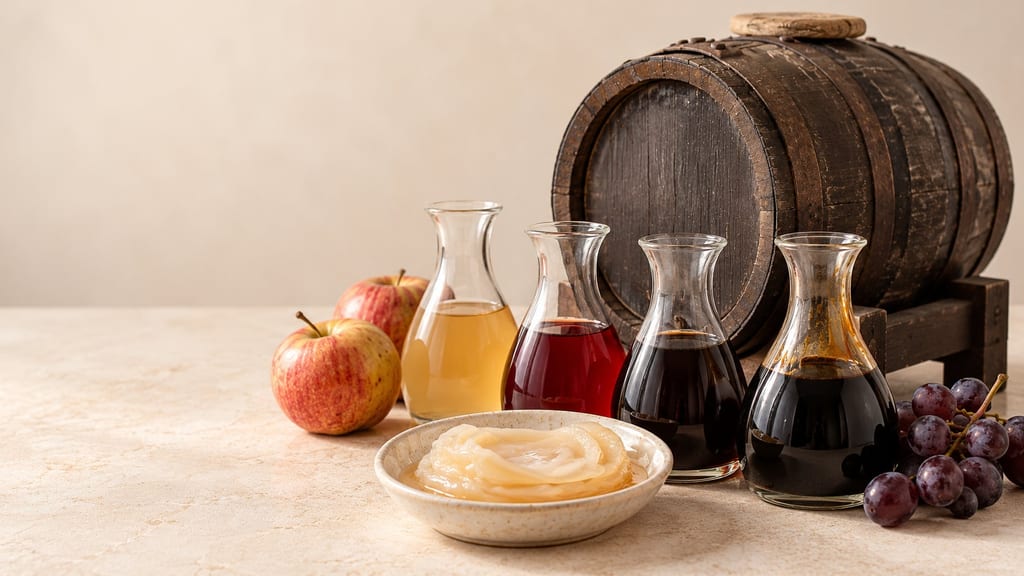
A bottle of vinegar can carry the flavour of wine, rice, dates, palm sap or an orchard harvest. Its name becomes useful when you can tell what was fermented, how the acid developed, and what the maker added or changed afterward.
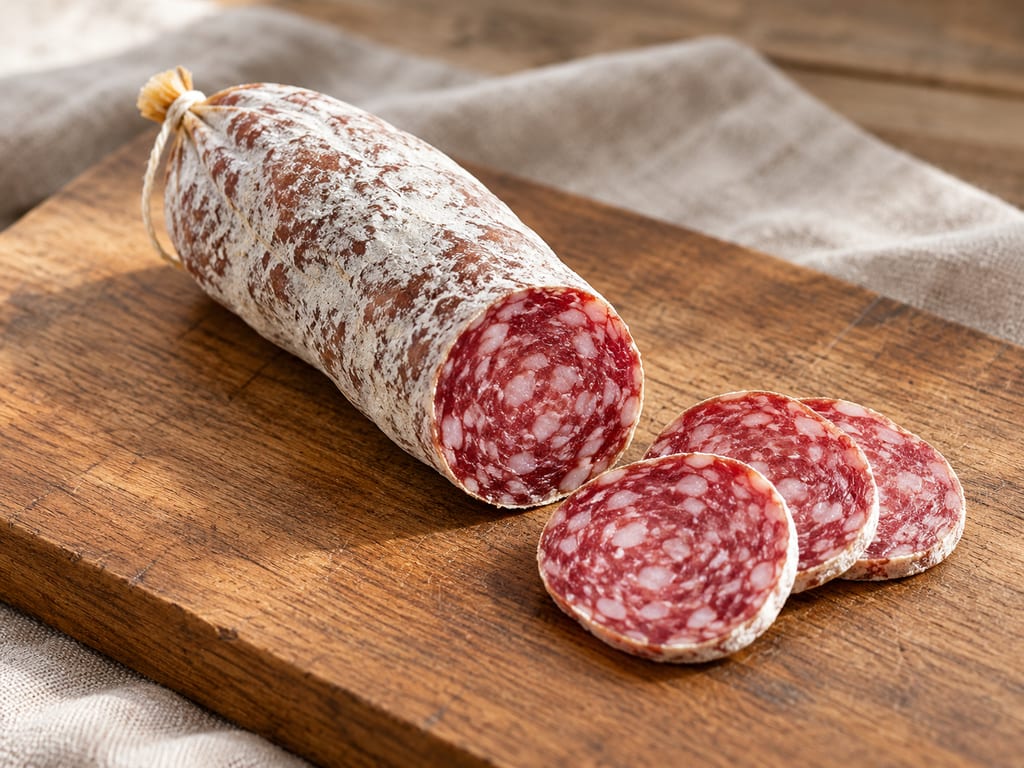
Small Italian hunter-style salami of lean pork, firm fat, salt, pepper and garlic, mildly acidified and dry-matured; protected as Salamini Italiani alla Cacciatora DOP.

Ferrara’s paired bread twists have four pointed horns joined at a soft centre. This VisitFerrara home recipe uses type 0 flour, water, oil, lard, malt and a choice of sourdough or yeast.

Small Modenese yeast breads cooked between hot plates and served warm.

This Emilia-Romagna home version uses a measured flour-and-milk dough with yeast, shapes it into small diamonds or squares, and fries them in peanut oil.
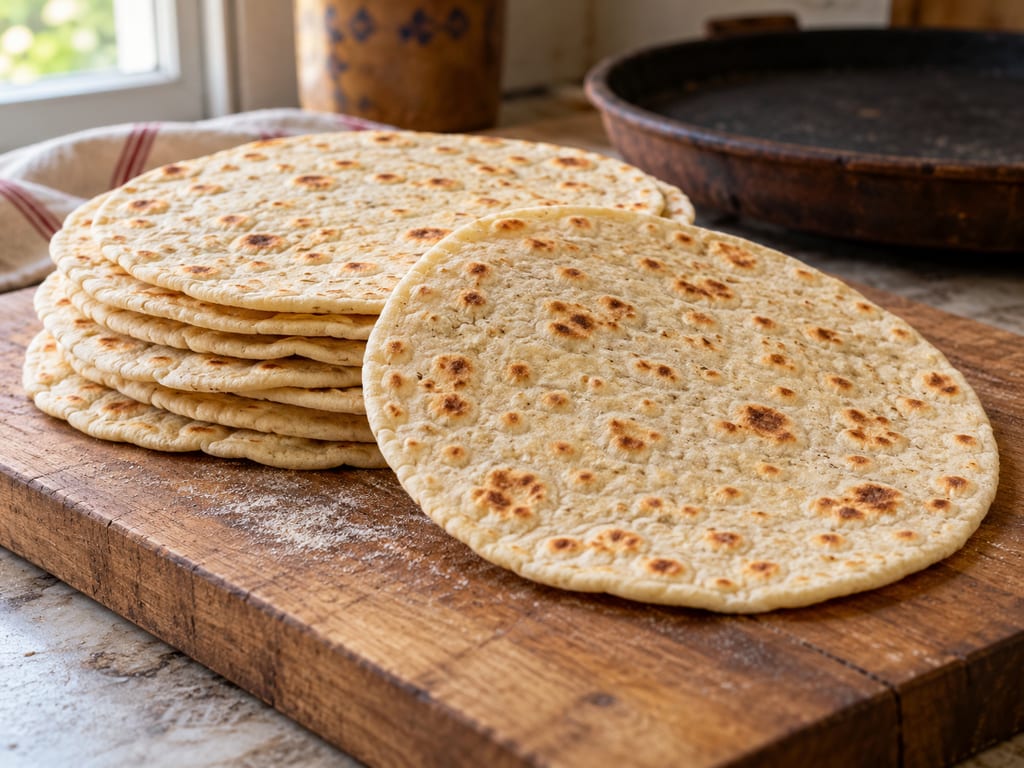
Eight soft Romagna-style flatbreads made from type 00 wheat flour, lard, honey, baker's yeast, milk and salt. Rest the dough for an hour, roll 3–4 mm rounds and cook them quickly on a hot griddle or heavy pan.
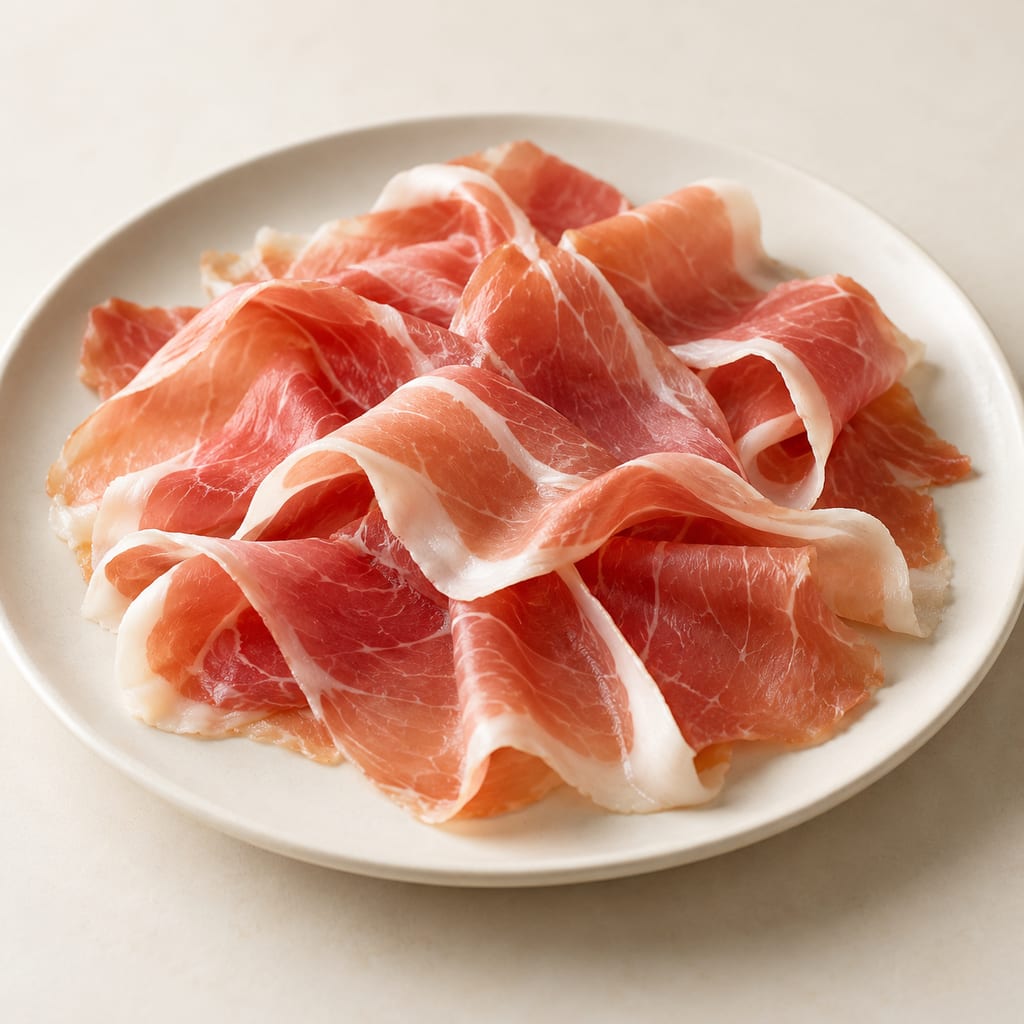
Prosciutto di Parma is a dry-cured, unsmoked ham from the Province of Parma, made from fresh pork legs salted with sea salt and matured for at least 14 months under the protected designation.
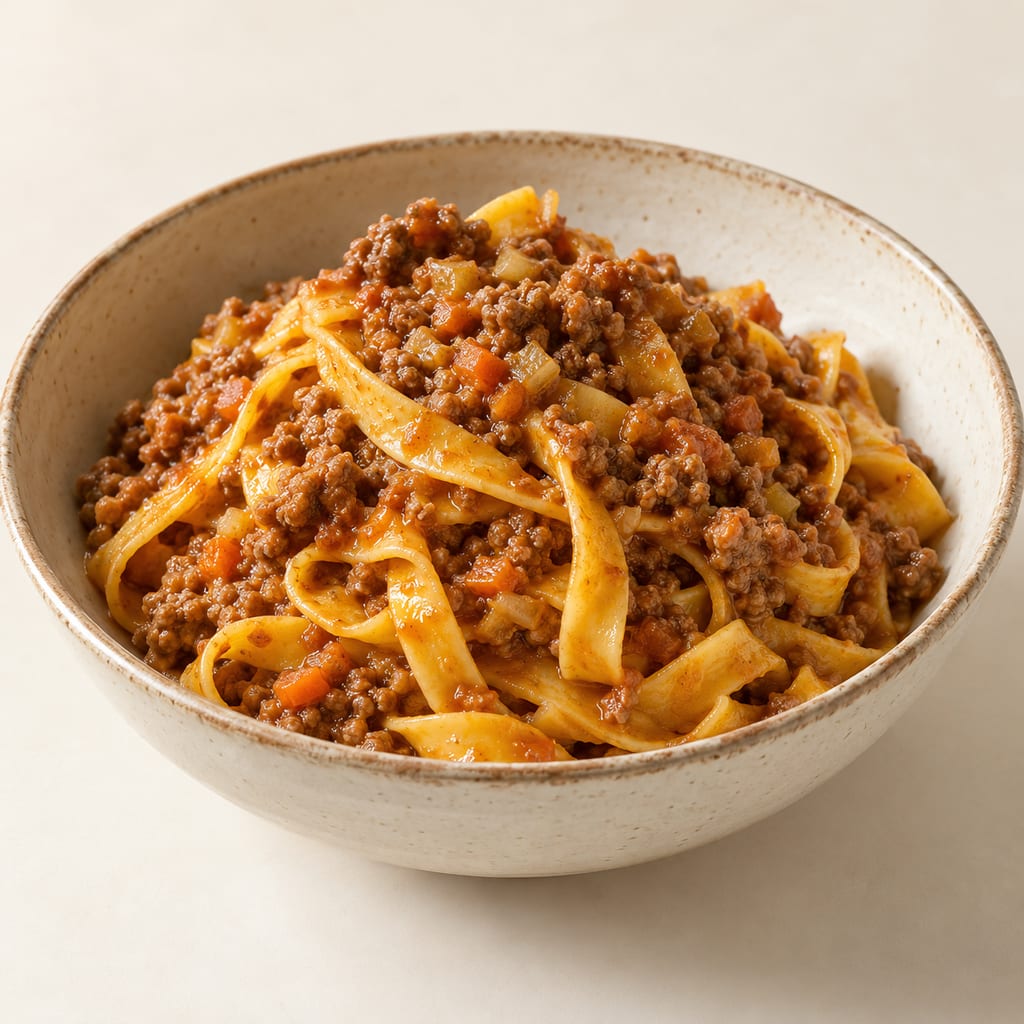
Ragu alla bolognese is a slow-cooked meat sauce of minced beef and a little pork, cooked with soffritto, white wine, milk and a little tomato, served with fresh tagliatelle in Bologna.
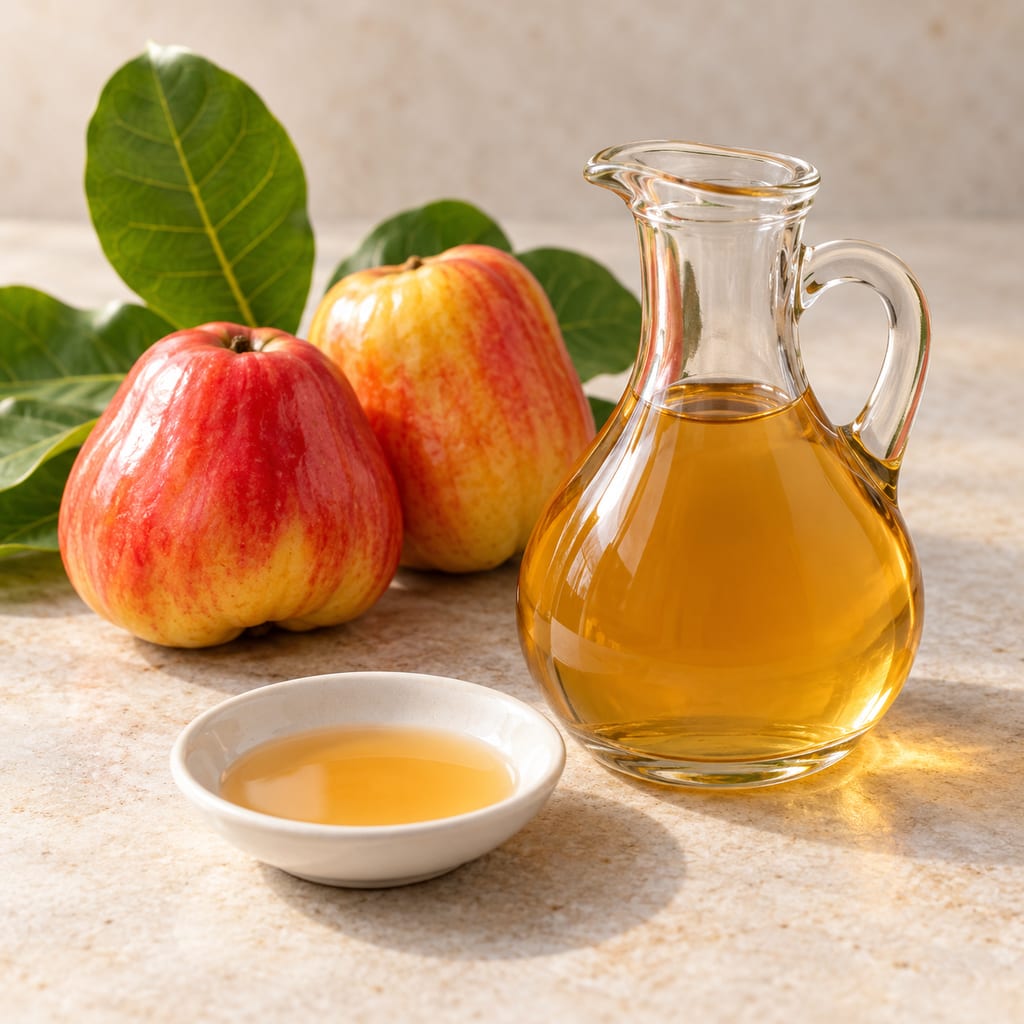
Vinagre de caju is made by fermenting cashew-apple juice into an alcoholic base, then aerating it so acetic bacteria can convert ethanol into acid. Brazilian guidance records the sequence, but not a complete home-scale formula.
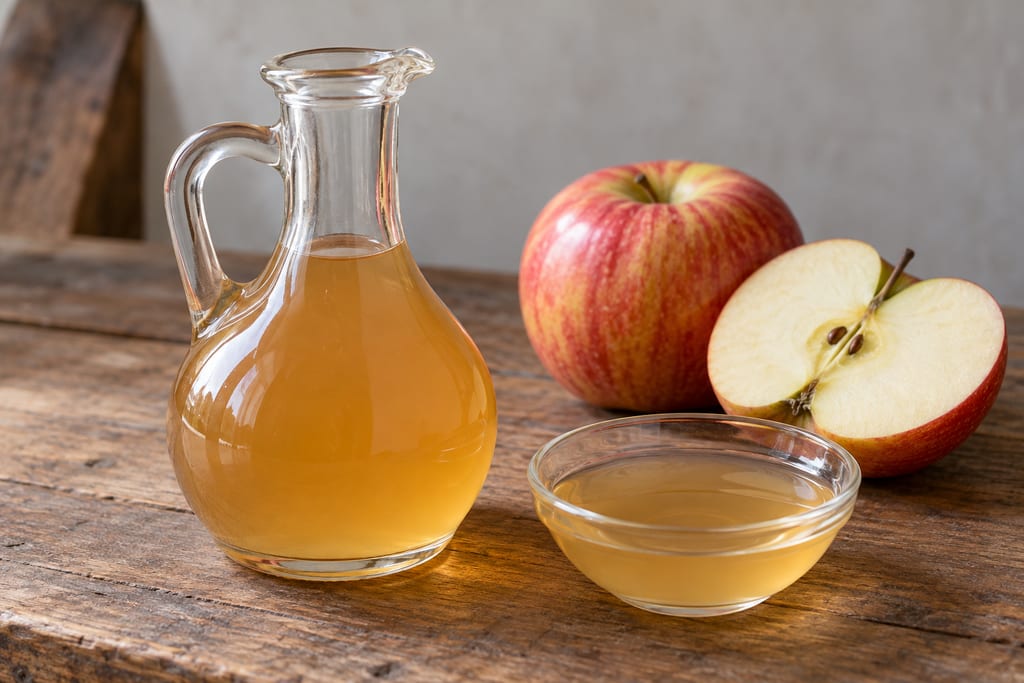
Cider vinegar is made when acetic-acid bacteria use oxygen to turn the alcohol in dry apple cider into acetic acid. This historical cask method begins with fermented cider and differs from apple-scrap vinegar made with sugar and water.
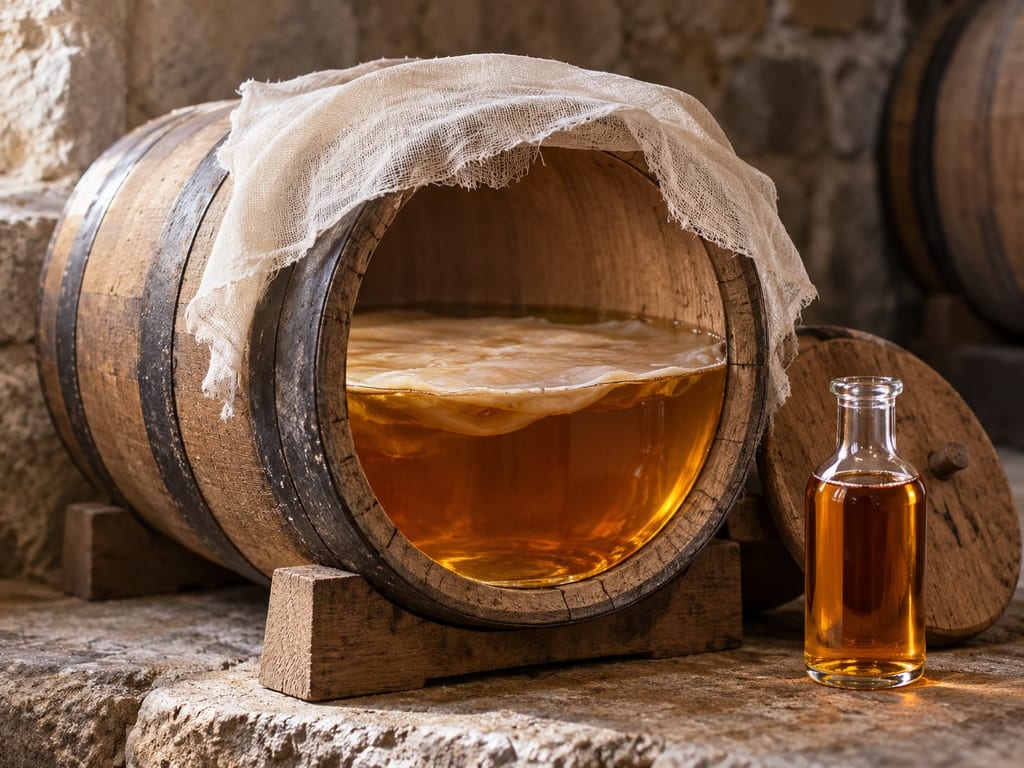
Fruit wine turned into vinegar by acetic acid bacteria at the surface of a half-filled, air-vented vessel. The Orleans method takes one to three months for a 9% wine.

Japanese vinegar from ripe persimmons: yeast turns the fruit sugar to alcohol and acetic bacteria turn that to acid; made at home in a month and by makers in Wakayama and Nagasaki over several years.

Soft, spreadable Calabrian pork sausage made with a great deal of red chilli and fatty pork, stuffed into natural casings, sometimes smoked and matured while staying soft.

A way to add independent temperature logging to an existing food dehydrator without changing its built-in controls or protections. It is a monitoring method, not a rewiring plan.

Pleurotus cystidiosus is the abalone mushroom, a cultivated oyster-type fungus with dark brown caps that grows more slowly and is more demanding than other Pleurotus species.

A living dairy inoculum that starts controlled cream fermentation, developing acidity and aroma before sour cream or cultured butter is finished.

A small electric incubator holds jars at a selected temperature for yogurt and other documented warm food preparations. Controls, capacity and vessel arrangement vary by model.

Adygean salt is a seasoned table salt associated with Adygea and the wider North Caucasian culinary tradition. Salt is blended with garlic and a variable selection of herbs and spices; the exact mix depends on the named style and maker.

The African Caesar-group mushroom, Amanita masasiensis, is a wild ectomycorrhizal species of central and southern African woodlands, eaten locally. The genus contains deadly poisonous species, so identification needs care.
Ghanaian sour cassava dough fermented with traditional inoculum and drained during fermentation. It is used as a base for cooked foods such as banku and akple; process variants and safety outcomes differ.
No community contributions have been published for this entry yet.
Sign in to contribute. Published comments and photos are free to read.
European Commission / EUR-LexMethod · Geography · Legal specification · Safety
Commission Regulation (EC) No 583/2009 entering “Aceto Balsamico di Modena” in the register of protected geographical indicationsPGI registration in 2009; geographic area includes Modena and Reggio Emilia.
Seven permitted grape varieties, cooked and/or concentrated must minimum, density, wine vinegar minimum, aged-vinegar requirement and optional caramel ceiling.
Permitted acetification methods, wooden vessel refinement minimum, product characteristics and certification requirements.
Cited in: A vinegar with a protected name; Modena's longer vinegar history; Grapes, must and a measured blend; Acetification and wood refinement; What “Invecchiato” and “Riserva” mean; How to read the method as a recipe; Place, cellar and production network
Consorzio Tutela Aceto Balsamico di Modena IGPMethod · Ingredients · Age classifications
Come si produce (How Aceto Balsamico di Modena is made)Permitted grape varieties and minimum must/wine-vinegar proportions.
Selected bacterial colonies or slow surface/wood-chip acetification, followed by at least 60 days in wooden containers.
Consortium account of Invecchiato and Riserva age classes.
Cited in: A vinegar with a protected name; Grapes, must and a measured blend; Acetification and wood refinement; What “Invecchiato” and “Riserva” mean; How to read the method as a recipe; Place, cellar and production network
Consorzio Tutela Aceto Balsamico di Modena IGPHistory · Geography
HistoryConsortium historical account of sapa, the 1046 vinegar presentation, Este court tradition, 1933 official recognition, 1965 specifications and 2009 PGI registration.
Cited in: Modena's longer vinegar history
Consorzio Tutela Aceto Balsamico di Modena IGPCulinary uses · Pairings
PairingsThe Consortium's pairing catalogue includes hard cheeses, salads, roast vegetables, fish, beef, fruits and desserts.
Cited in: Serving it: a condiment with range; How to read the method as a recipe
Food Technology and BiotechnologyMicrobiology · Process context
Role of Acetic Acid Bacteria in Food and BeveragesGeneral role of acetic acid bacteria and aerobic oxidative conversion of ethanol into acetic acid; used only as general context, not as an ABM-specific strain claim.
Cited in: Acetification and wood refinement
Consorzio Tutela Aceto Balsamico di Modena IGPGeography · Regional context
Why Modena?The consortium describes the Modena and Reggio Emilia territory, its seasonal climate, vine-growing and regional production network.
Cited in: Place, cellar and production network