
Aceto Balsamico Tradizionale di Reggio Emilia
Protected Italian vinegar made only from cooked grape must, fermented and aged in a battery of wooden barrels for at least 12 years: sweet, sharp and syrupy.
 FermenteaWhere food goes to change
Ragù alla bolognese · Ragu · Bolognese sauce · Ragu per i maccheroni · Il Ragu del Cardinale
Ragu alla bolognese is a slow-cooked meat sauce of minced beef and a little pork, cooked with soffritto, white wine, milk and a little tomato, served with fresh tagliatelle in Bologna.
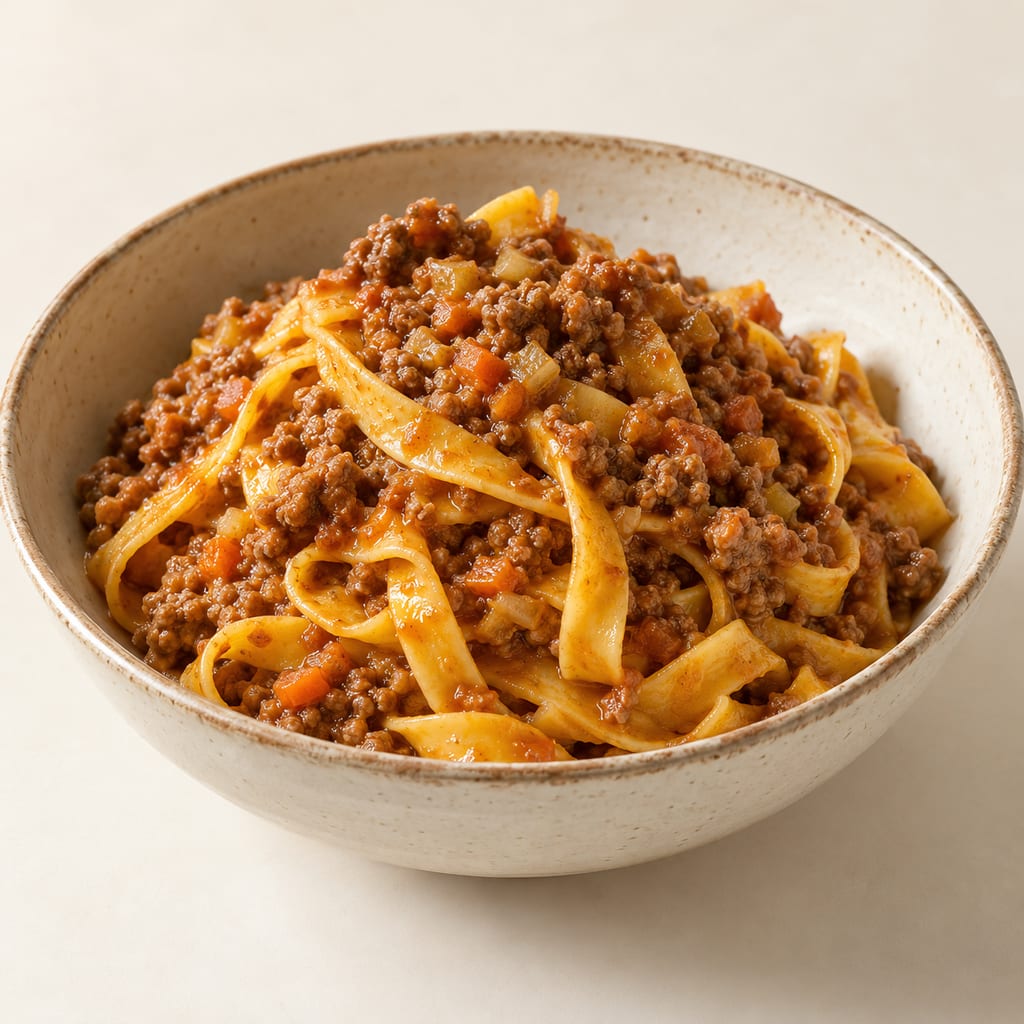
Ragu alla bolognese is a slow-cooked sauce of minced meat, usually beef with a little fatty pork, braised with soffritto, wine, milk and a small amount of tomato. Northern versions use tomato sparingly, so the result is closer to a meat stew than to a tomato sauce.
The word ragu comes from the French ragout, a stew of small pieces that was popular in the eighteenth century. Its Italian form reached Emilia-Romagna in the late eighteenth century; the sources links this to the French invasion of 1796 only as a possibility.
The earliest documented pasta ragu is in the Cardinal's kitchen at Imola, attributed to Alberto Alvisi, and later published as Il Ragu del Cardinale. Pellegrino Artusi's 1891 recipe is often cited as a Bolognese ragu, but the sources marks that claim as needing a citation.
The Accademia Italiana della Cucina recorded a classic Bolognese recipe with the Bologna Chamber of Commerce in 1982 and published an updated version in 2023. No single definitive version exists; Felicity Cloake is quoted saying so.
The method is sweating and sauteing the soffritto of onion, celery and carrot, browning the meat, then braising with white wine and milk before a small amount of tomato paste or sauce is added. Fresh tagliatelle is now the usual pasta, and tomato is a later addition to the recipe.
The sauce is gently simmered at length until it is thick; the sources give no duration. Southern versions use large whole cuts of beef and pork and serve the meat separately, and the sources also names ragu alla barese and tomatoless ragu d'anatra from Veneto.
Northern meat sauces may use beef, chicken, pork, duck, goose, lamb, veal, game or offal. A tomatoless ragu in bianco exists. The sources read do not cover seafood or fish ragu, so a seafood version is not described here and is recorded as a gap.
The sources give no storage, freezing or food-safety advice. A batch that is kept needs a tested method that this page does not supply.
The word ragu comes from the French ragout and reached Emilia-Romagna in the late 18th century, perhaps after Napoleon's 1796 invasion; the link is uncertain. Recipes appear often in Emilia-Romagna cookbooks after the early 1830s. In the late 19th century heavy meat sauces on pasta were reserved for feast days and Sundays among wealthier Italians.
Scaling: source batch only
A meat sauce with milk and wine is a high-protein dairy-and-meat food, and slow cooling or warm holding supports bacterial growth; the sources give no cooling or holding advice.
Hazard sourceUse a tested cooling, refrigeration or freezing method for any batch that is kept
Control sourceThe sources give no storage, freezing or food-safety advice for ragu. Do not treat the simmer as a holding method.
The earliest documented ragu served with pasta, attributed to Alberto Alvisi, cook to Cardinal Barnaba Chiaramonti.
Recipes appear in Emilia-Romagna cookbooks after the early 1830s; the sources gives no date for the Bologna name.
Protected Italian vinegar made only from cooked grape must, fermented and aged in a battery of wooden barrels for at least 12 years: sweet, sharp and syrupy.

A dark, balanced vinegar from Emilia-Romagna made by combining cooked or concentrated grape must with wine vinegar, then acetifying and refining it in wood under a protected specification.
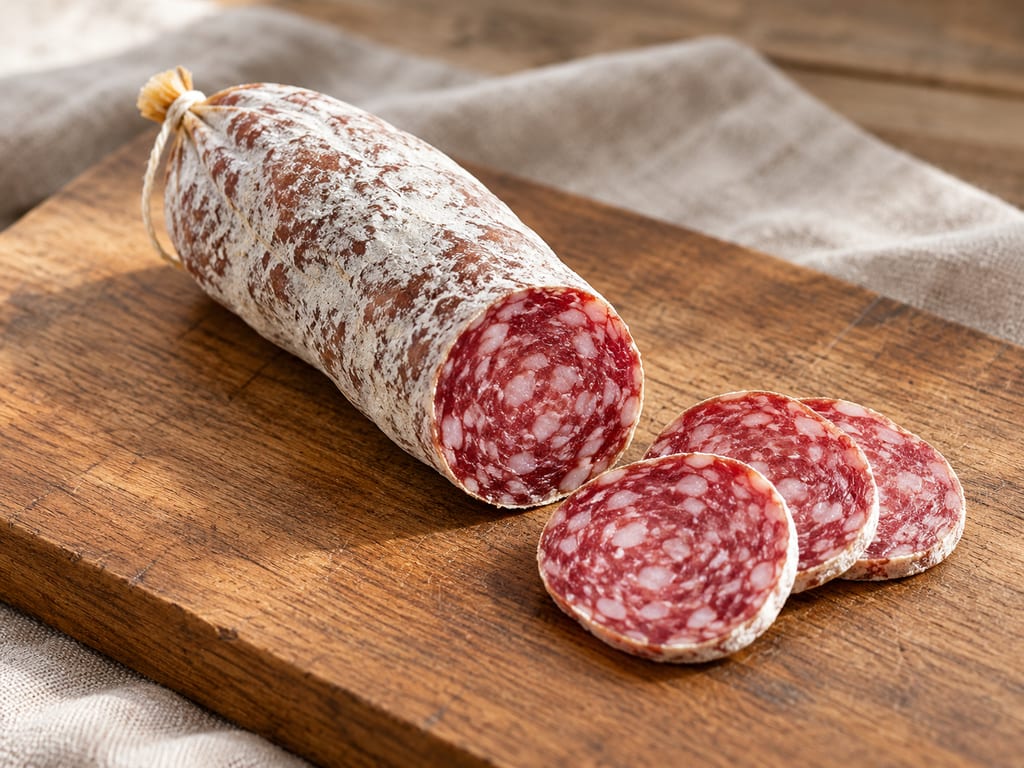
Small Italian hunter-style salami of lean pork, firm fat, salt, pepper and garlic, mildly acidified and dry-matured; protected as Salamini Italiani alla Cacciatora DOP.

Ferrara’s paired bread twists have four pointed horns joined at a soft centre. This VisitFerrara home recipe uses type 0 flour, water, oil, lard, malt and a choice of sourdough or yeast.

Small Modenese yeast breads cooked between hot plates and served warm.

This Emilia-Romagna home version uses a measured flour-and-milk dough with yeast, shapes it into small diamonds or squares, and fries them in peanut oil.
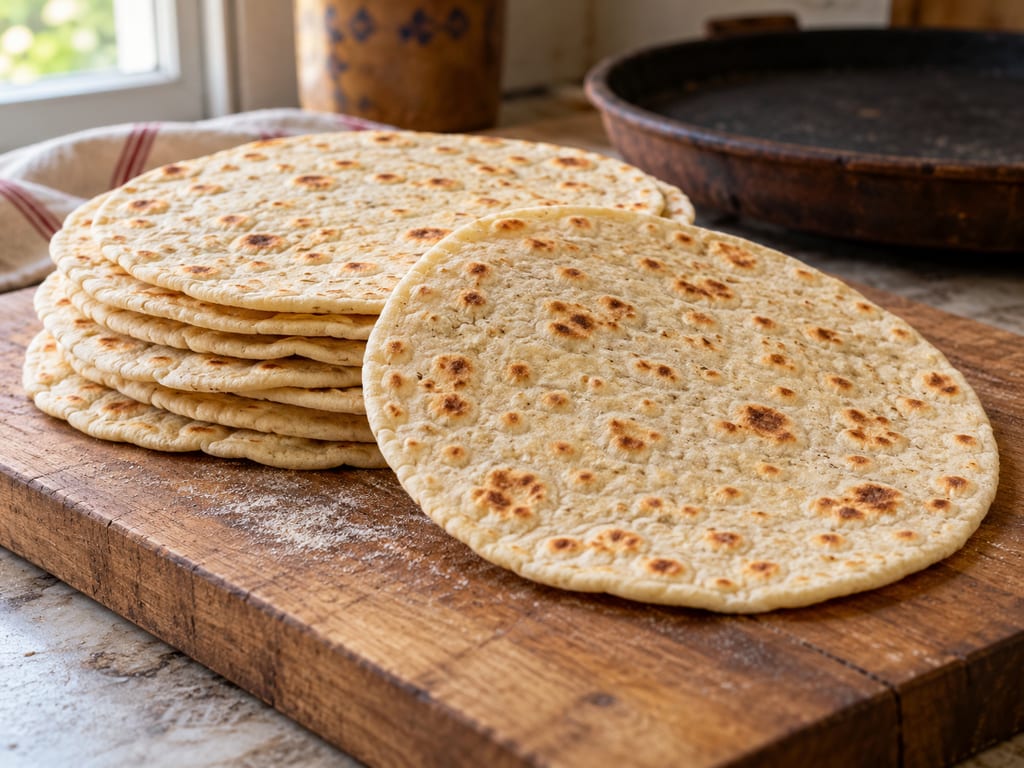
Eight soft Romagna-style flatbreads made from type 00 wheat flour, lard, honey, baker's yeast, milk and salt. Rest the dough for an hour, roll 3–4 mm rounds and cook them quickly on a hot griddle or heavy pan.
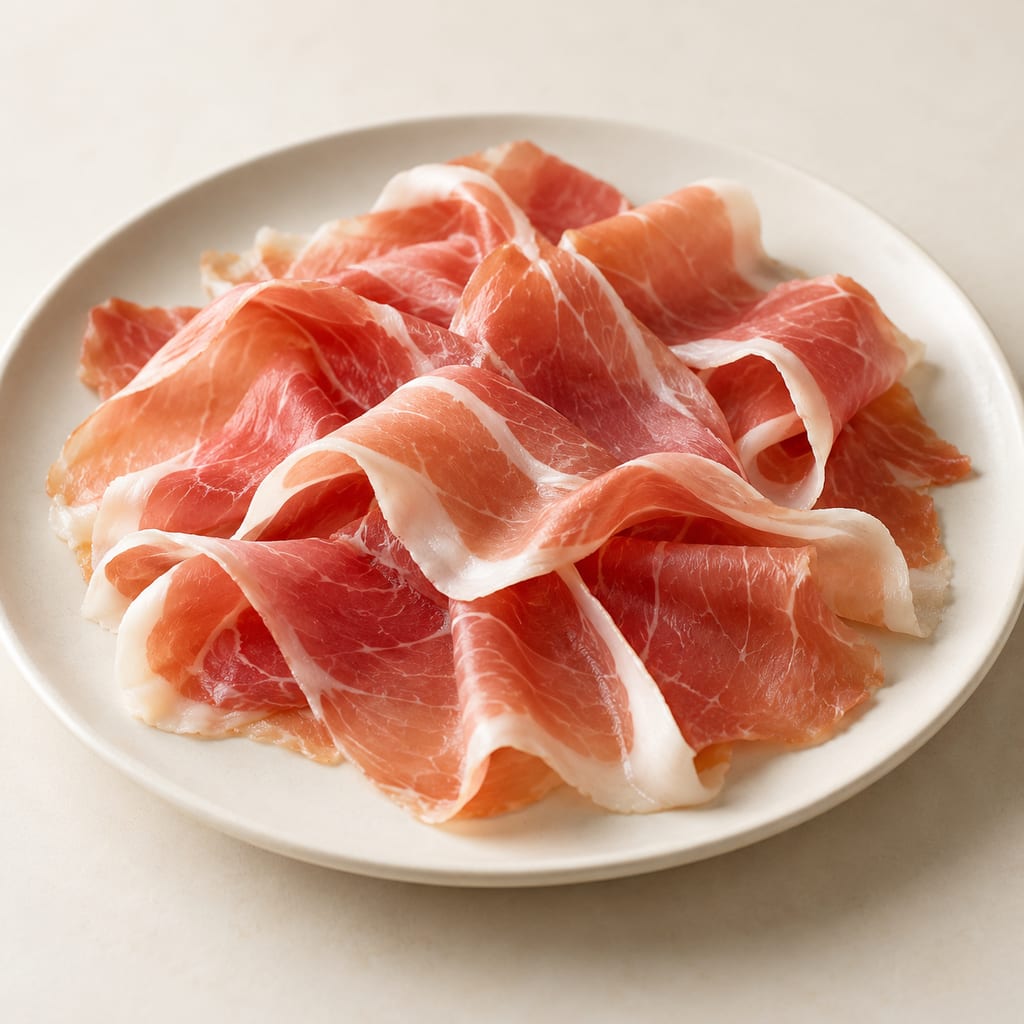
Prosciutto di Parma is a dry-cured, unsmoked ham from the Province of Parma, made from fresh pork legs salted with sea salt and matured for at least 14 months under the protected designation.
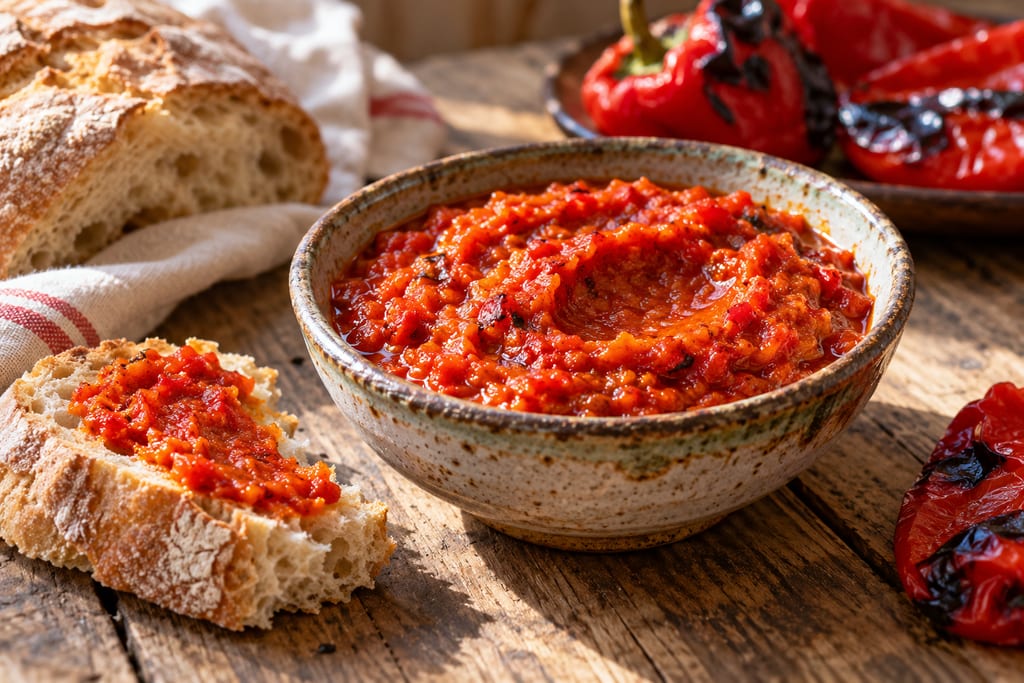
Ajvar is a cooked Balkan pepper preserve built around roasted red peppers, peeled, drained, ground and slowly fried with oil and seasoning. Leskovac’s protected version is a pepper specialty; regional versions vary.
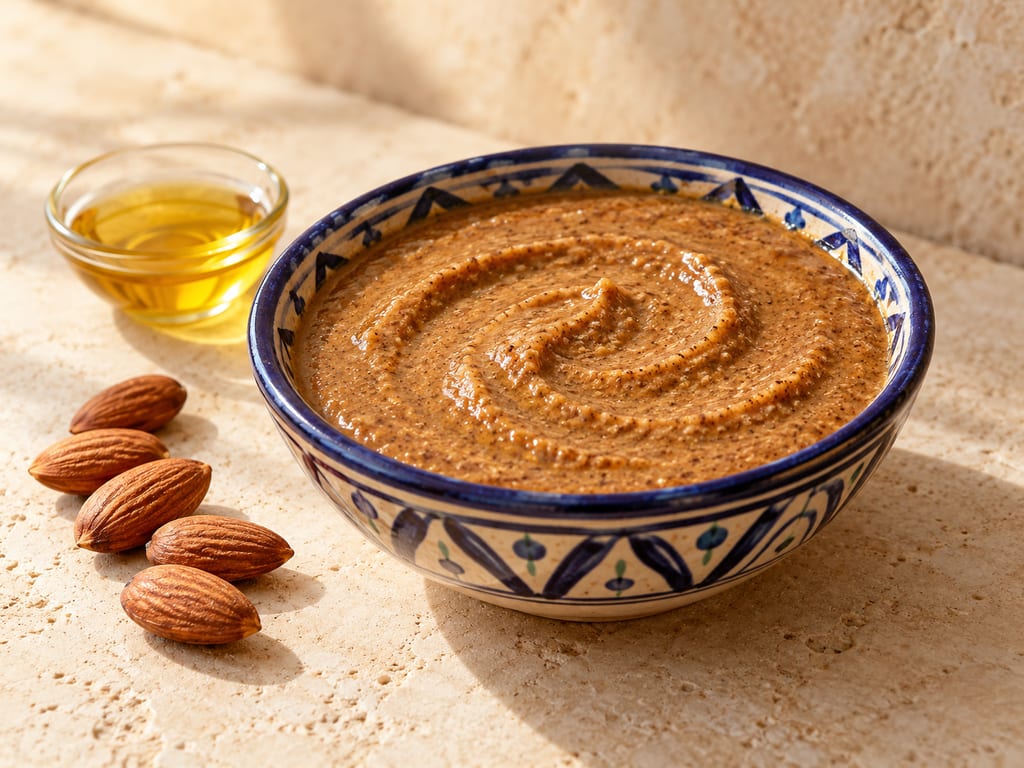
Amlou is a nutty, lightly sweet Moroccan spread of roasted almonds, culinary argan oil and honey. The almonds are ground first, then loosened with oil and sweetened; the balance can range from a thick spread to a dip.
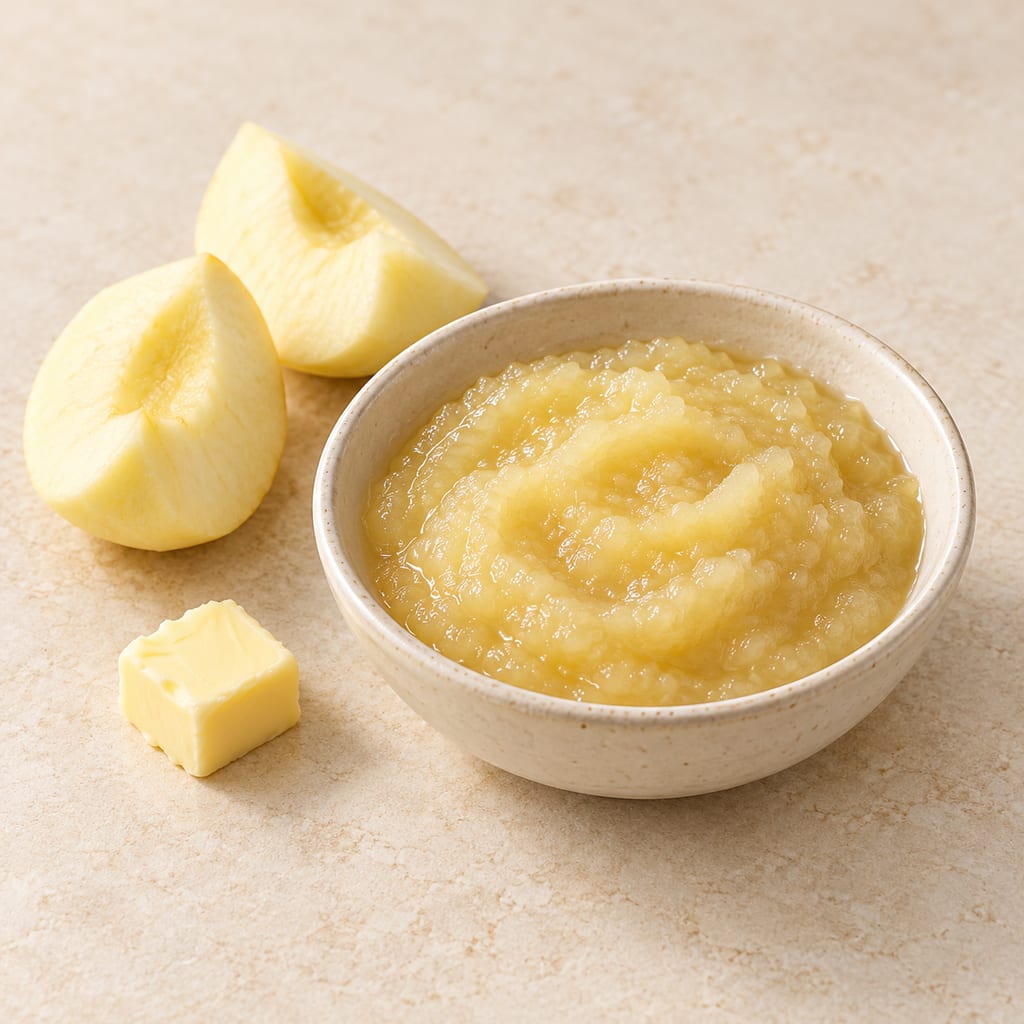
Apple sauce for goose and pork is a plain English accompaniment: cooked apples pulped with water, then sweetened with sugar and finished with a little butter.

A warm dip of garlic, anchovy and olive oil, often enriched with butter, that Piedmont serves over a flame with raw and cooked vegetables and bread.
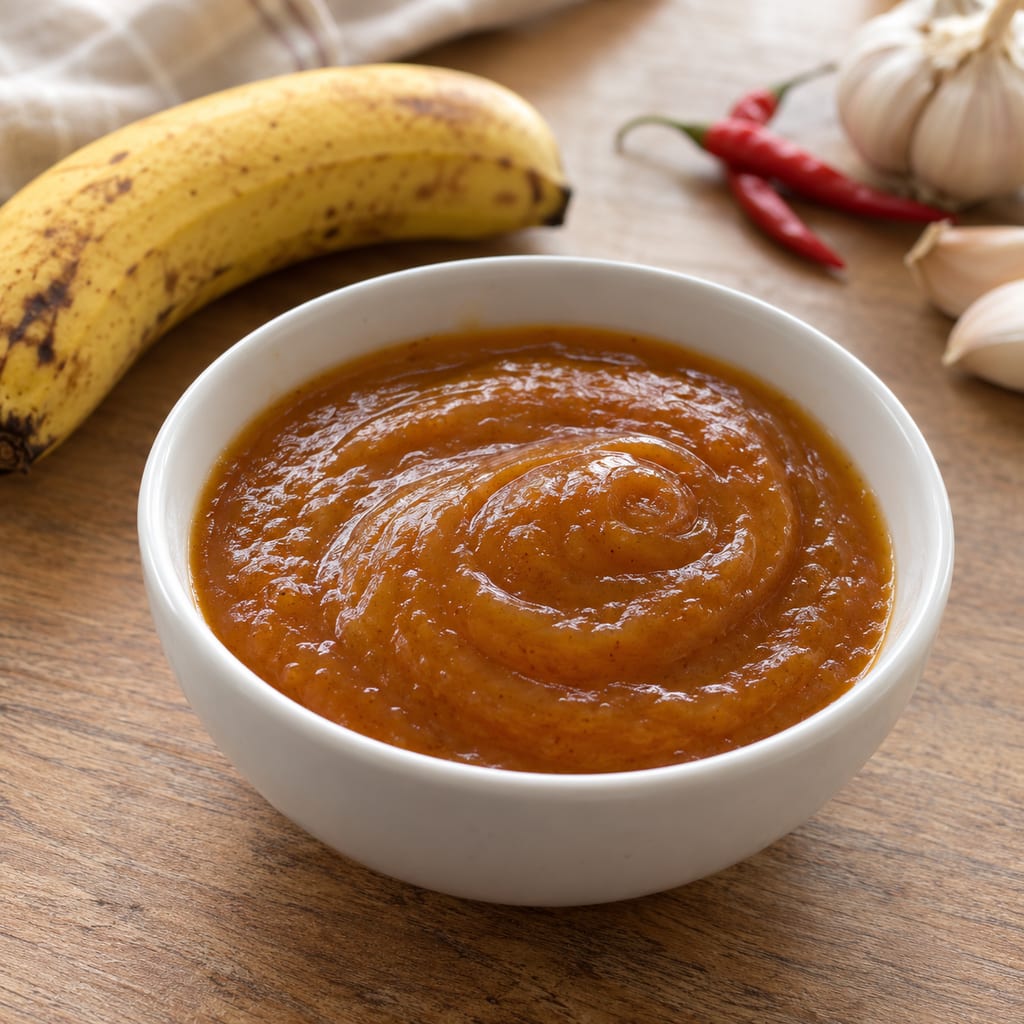
A sweet-hot table sauce of ripe banana simmered with vinegar, sugar, onion, garlic and fresh chilli, in the manner of Philippine banana ketchup. An untested development batch of about 500 g.
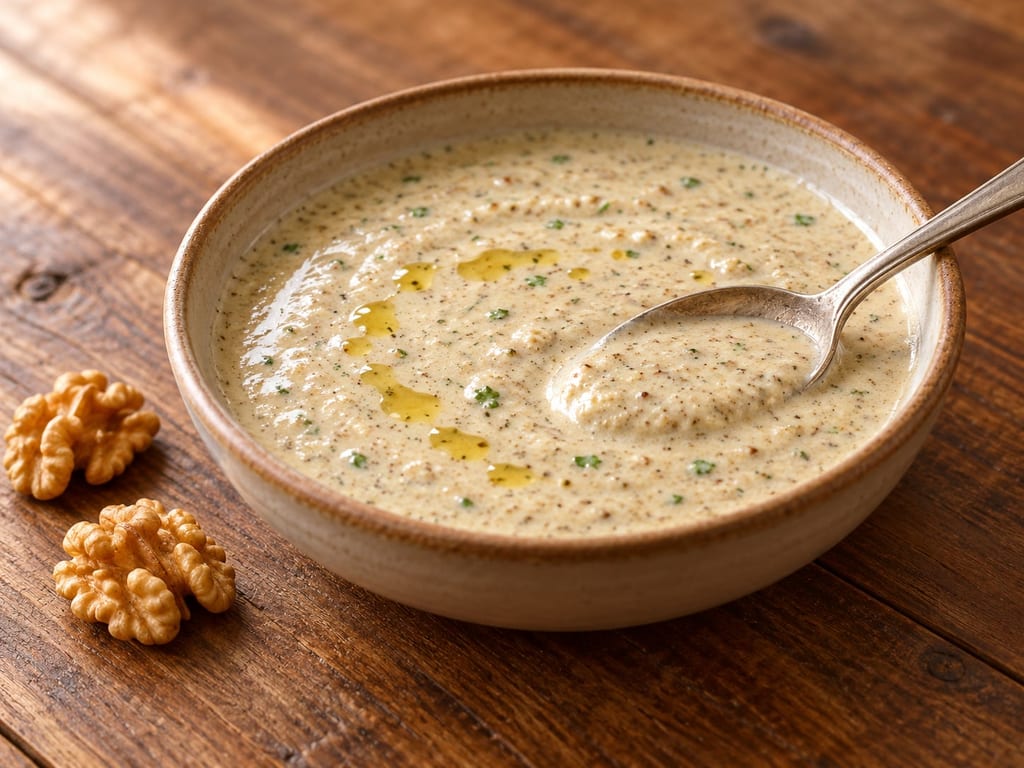
A Georgian walnut sauce of ground walnuts, garlic, vinegar and spices, thinned with water or broth. It is served with poultry, vegetables and bread, and is the sauce of the dish satsivi.
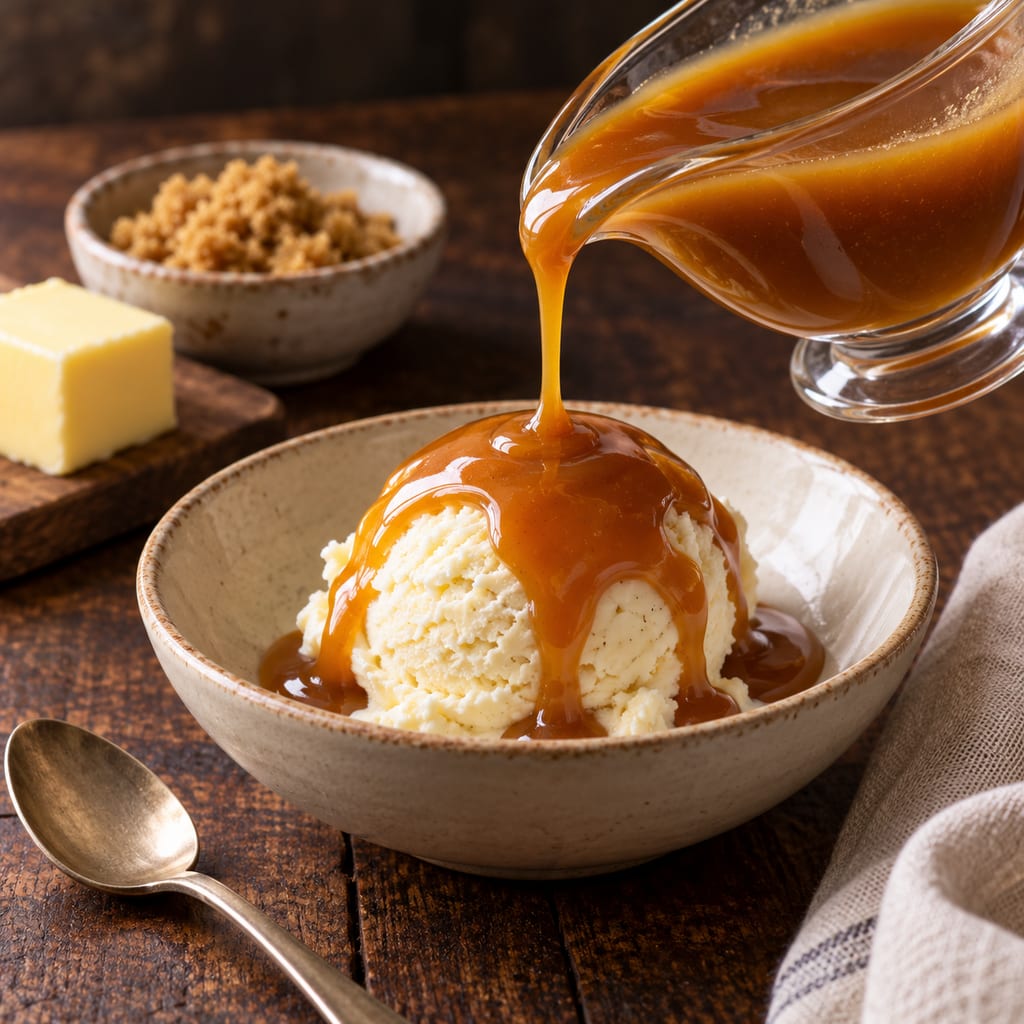
A pourable dessert sauce of brown sugar, butter and cream, with a little corn syrup and salt. It is the sauce form of the butterscotch confection and is made without water, unlike caramel.
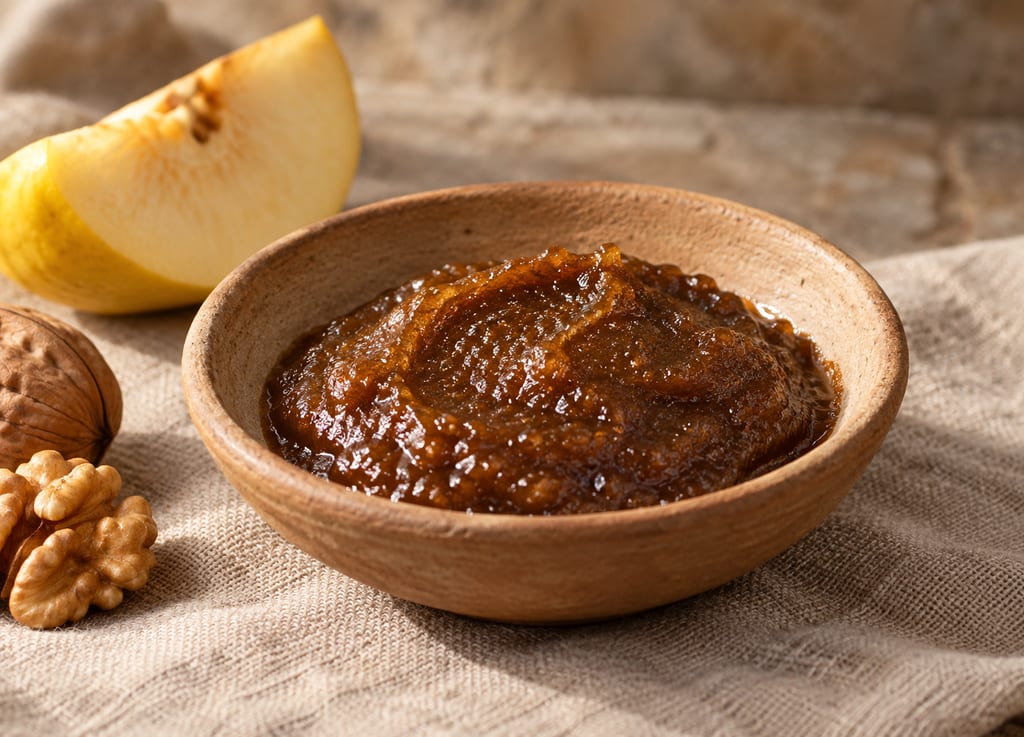
Byzantine murrī is a cooked imitation of murrī from the medieval Arabic repertoire, made from scorched honey, toasted bread, walnuts, quince, carob and spices rather than from a long grain fermentation.

A gelling polysaccharide extracted from red seaweeds, sold as kanten strips or powder; it sets firm at a low concentration and stays solid until about 85 °C.

A Dominican table and seasoning condiment of sour orange juice, mixed with lime and salt and bottled raw; garlic, oregano or a hot pepper may be added for meat or a spicier bottle.

Cicerbita alpina is an alpine perennial whose tender shoots and leaves have been eaten raw or cooked. Sámi milk preparations and modern Carnian dishes are distinct uses, with serious identification and preservation limits.

Japanese skipjack tuna cooked, then repeatedly smoked and dried over a wood fire by the hand-fired tebiyama method into a hard block for shaving into dashi: the first stage of katsuobushi.

A Swedish-style spirit vinegar made by fermenting neutral alcohol with live vinegar bacteria, with a separate guide to commercial ättika strengths.

A yeast-raised wheat ring shaped from a firm dough, briefly boiled and baked. This source-batch formula gives a gently malted crust and a chewy crumb.

Bechamel is a white sauce of milk thickened with a butter and flour roux, one of the French mother sauces, and the base from which Mornay and other cheese and cream sauces are made.
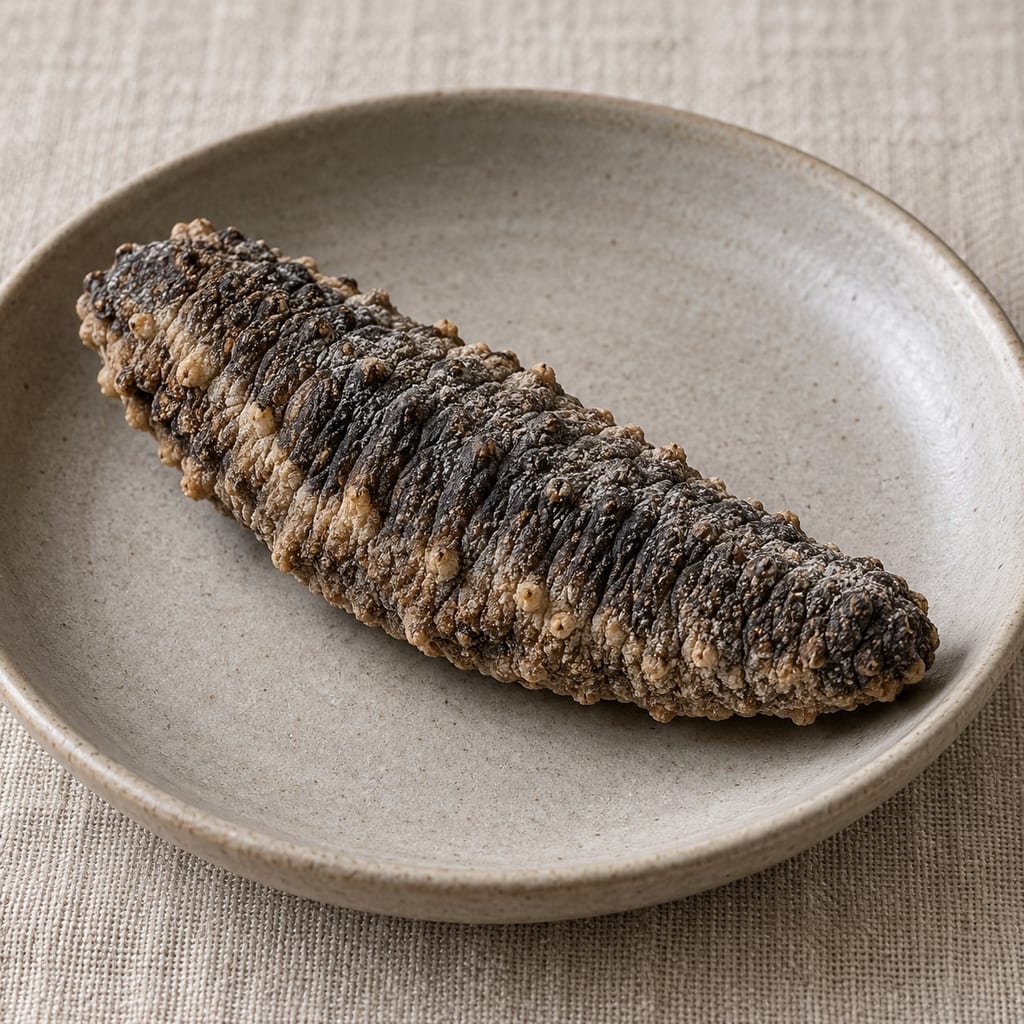
Sea cucumber cleaned, boiled and dried, sometimes with smoke, into a long-keeping trade product; Makassan processing in Arnhem Land is documented from at least the eighteenth century.
No community contributions have been published for this entry yet.
Sign in to contribute. Published comments and photos are free to read.
WikipediaHistory · Variants · Method
RaguFrench ragout origin; Emilia-Romagna late 18th century; Alvisi ragu per i maccheroni; meat options; liquids; southern and northern versions; no storage advice; seafood not covered
Cited in: A meat sauce from Emilia-Romagna; Making the sauce; Ragu in other forms and the gap
WikipediaHistory · Method
Ragu alla bologneseImola end of 18th century; Alvisi; Artusi 1891 needs citation; 1982 and 2023 Academy recipes; soffritto; beef and pork; white wine; milk; tomato a later addition; no storage advice
Cited in: A meat sauce from Emilia-Romagna; From Imola to Bologna; Making the sauce