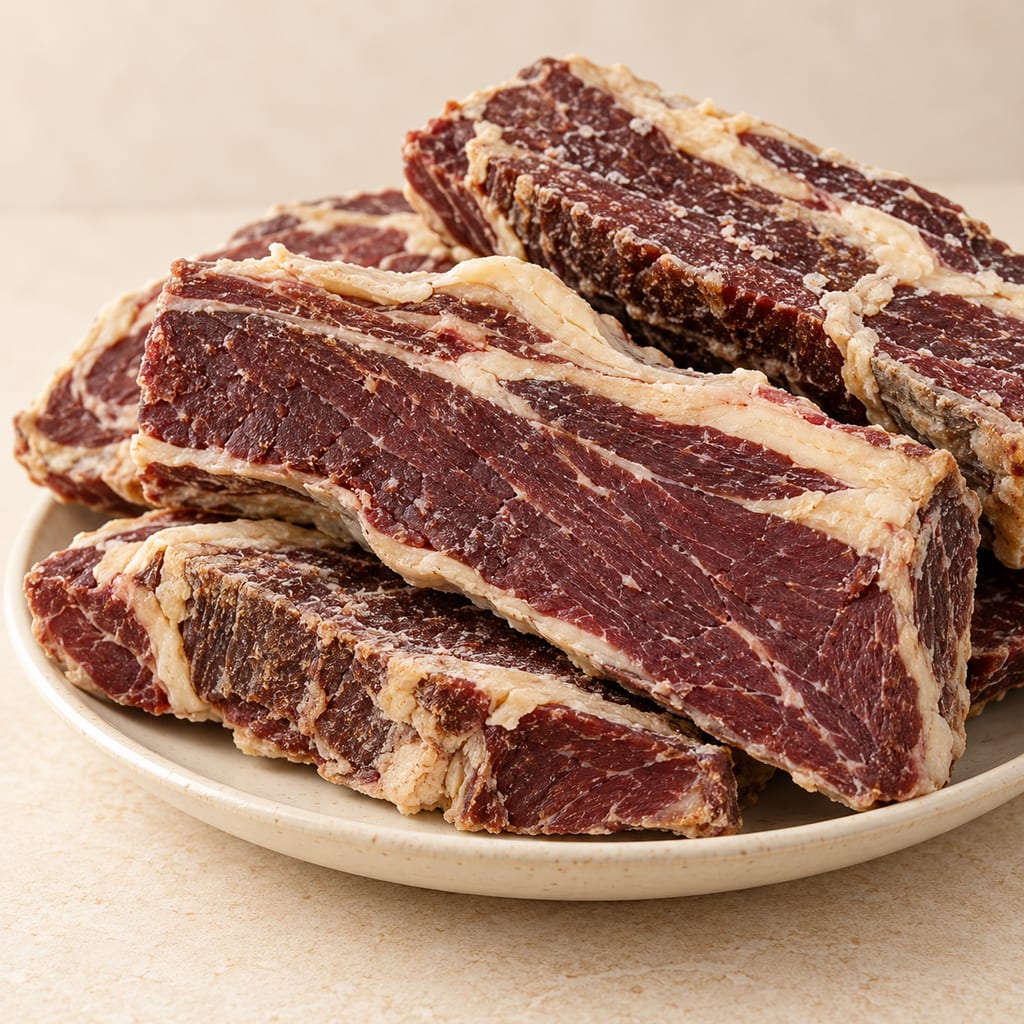
Charque
Beef salted heavily and dried into a strongly preserved ingredient that is desalted before it is cooked in stews; a Brazilian form of salt-dried meat that keeps far longer than the lightly salted carne-de-sol.
 FermenteaWhere food goes to change
Substrates
Beef is the meat of domestic cattle, Bos taurus and Bos indicus, sold as steaks, roasts, ground meat and cured products, and used in broths, salami and koji seasonings.

Beef is the meat of domestic cattle, Bos taurus and its humped relative the zebu, Bos indicus. Cattle are the most widespread large ruminants kept as livestock, and they supply milk, hides and draught power as well as meat.
Chemically, lean beef is about 75 per cent water and 20 per cent protein. In muscle after rigor roughly 11.5 per cent of the weight is the contractile protein of the fibres (actin and myosin), 5.5 per cent is soluble protein in the cell fluid, 2 per cent is connective tissue (collagen and elastin), and about 2.5 per cent is fat laced among the fibres. The balance between these decides what a cut is good for. The fibres give beef its chew and, when fat marbles through them, its juiciness. The collagen is what makes a shin or a brisket tough when it is cooked briefly and silky when it is cooked for hours: collagen only softens with prolonged cooking at 50 to 60 °C, and it becomes less soluble as the animal ages.
All domestic cattle descend from the aurochs, Bos primigenius, a huge wild ox that ranged across Eurasia and North Africa and is now extinct. Genetic work identifies two lineages. Taurine cattle trace to aurochs of Neolithic Southwest Asia, and zebu cattle to a separate population of aurochs in South Asia. By the Bronze Age, around 2000 BC, the two had begun to interbreed, which is why many modern herds carry both ancestries.
The old story placed the first domestication in the upper Euphrates valley of northern Syria in the ninth millennium BC, when villagers began keeping cattle that were smaller than their wild relatives. A more recent reading of the archaeology argues that small domestic cattle are not visible until the eighth millennium BC, and that people had been managing herds — penning, foddering, milking, choosing which animals to breed and which to cull — a millennium or more earlier, across much of the Levant. That means beef as a food has two histories. Hunters were eating aurochs long before anyone herded them, and herders were killing managed cattle for meat before the animals changed shape.
Cattle have been bred ever since for different jobs. Today's systems range from specialised beef and dairy operations (some grass-based, some feedlot) to labour-intensive mixed farms where cattle plough and give milk as well as meat, and extensive pastoral systems on rangeland. Where cattle graze land that cannot grow crops, they turn plants that people cannot eat into protein.
A beef carcass is divided into primal cuts, and their sizes explain the economics of the animal. Of a typical carcass the chuck makes up about 29 per cent, the round 22 per cent, the loin and sirloin 16 per cent, the rib and the plate 9 per cent each, the flank 5 per cent, the brisket 4 per cent and the shank 3 per cent. The chuck, rib, loin and round together are more than three-quarters of the carcass. An animal that weighs 1,000 lb alive yields, on average, about 630 lb of carcass, a dressing percentage of 63.
Tenderness varies from cut to cut. The chuck and the round are the least tender, and the chuck, shank, brisket and plate are usually cooked slowly or ground. A few muscles stay tender even in older animals: the longissimus lumborum of the loin, the psoas major and the infraspinatus. Age matters as well. In the United States a carcass is judged mature by the darkening of the lean and the ossification of the skeleton, and carcasses over about 30 months are excluded from the higher quality grades. Mature beef is toughest in the chuck and round. About one in five US cattle slaughtered in 2020 were cows or bulls, about 17.4 and 1.7 per cent of 15.86 million head, and their meat, where it is not tender enough to sell as whole cuts, is often ground.
Muscle does not become meat at the moment of slaughter. The first changes are the breakdown of ATP and the failure of calcium regulation in the cells, which end in rigor. After rigor the muscle's own enzymes go to work: calcium-dependent calpains cut muscle proteins, and other enzymes degrade connective tissue, which tenderises the meat. This is why beef is held cold for days or weeks before it is sold.
The same changes make flavour. As aged muscle breaks down, it releases sugars, nucleotides, organic acids such as lactic acid, creatine and fatty acids. These are the precursors of beef flavour, and heat turns them into the browned, meaty compounds of a seared steak through lipid oxidation, Strecker degradation and Maillard reactions.
Ageing is done two ways. Wet ageing seals the cut in a vacuum bag and holds it cold. Dry ageing leaves the carcass, side or primal cut uncovered in a refrigerated room with controlled temperature, humidity and air flow, commonly at about 2 °C for 21 days or more. Until vacuum packaging spread, dry ageing was the normal way beef was handled. Today it is a premium product, because the cut loses water to evaporation, the dried outer surface has to be trimmed away, and the room costs money to run. It is used mainly on well-marbled beef, the upper two-thirds of USDA Choice and Prime, where the intramuscular fat keeps the finished steak juicy. Dry-aged beef is concentrated, nutty and strongly beefy; it is featured in restaurants in the United States, Australia, Korea, Japan and other Asian cities.
Salt is the basis of most preserved beef: corned beef, biltong, charque and pastirma all depend on it. Corned beef takes its name from the grains, or corns, of coarse salt used to cure it. In the seventeenth century cooks added saltpeter, which kept the meat pink rather than grey and held back botulism. Ireland made corned beef a major export: British demand for beef drove the trade, Irish producers had a low salt tax and cheap salt from France, Portugal and Spain, and the barrelled beef fed British armies and navies, North American colonists and West Indian plantations. Most people in Ireland could not afford it. Irish immigrants in the United States, who left in large numbers during the famine of 1845 to 1852, likely first tasted it there, from kosher butchers and delicatessens, and corned beef with cabbage became an Irish-American staple.
On the North American plains the great preserved meat was pemmican: dried meat, traditionally bison, pounded to a coarse powder and mixed with an equal weight of melted fat, sometimes with berries, then sewn into hide bags of about 41 kg. The word is Cree, pimikan, usually rendered as manufactured grease. Pemmican was dense, rich in protein and energy and easy to store and carry. First Nations hunters and the Métis made it for the fur trade, and in 1814 Governor Miles Macdonell banned the export of food, pemmican included, from the Red River Colony. Moose, caribou, venison or beef could take the place of bison.
Drying works because it lowers the water available to bacteria and moulds, and salt on the surface of the meat draws moisture out and keeps the surface dry. Strips of beef dry in four to five days in the sun, and lose up to 60 to 70 per cent of their weight in three or four days. The products differ with the climate and the spice cupboard.
Biltong, from southern Africa, is salted and dried beef or antelope. It is cut in strips 1 to 2 cm thick, most often dry-salted with coarse salt and pepper, sometimes with sugar, coriander, aniseed or garlic, with a little vinegar sprinkled between the layers of meat. It is dried for one to two weeks, until the inside is soft, moist and red under a hard brown crust, and it is eaten raw. Charque, the beef of Brazil and other South American countries, is flat pieces of about 5 kg and no more than 5 cm thick, salted in brine or in layers of dry salt pressed under stones, then dried in the sun for four or five days. Kilishi, from Nigeria and the arid parts of West Africa, is thin slices of lean beef, goat or lamb, dried in the sun, coated in a paste of groundnut cake or soybean flour with garlic, salt, pepper and ginger, dried again and roasted over a fire for about five minutes. Pastirma, of Turkey, Egypt and Armenia, is long strips from the hindquarters coated in garlic paste and dried for 5 to 12 days to a salt content of 4.5 to 6 per cent.
Beef is cured and dried far more often than it is fermented, but it takes part in some ferments. In dry salami it supplies lean meat alongside pork and pork fat, as in the Genoa-style salami on this site, where lean beef is ground with lean pork, back fat, salt, curing salt and red wine and fermented under a starter culture. Corned beef and dried beef are preserved by salt and drying, not by a living culture.
A newer use is meat seasoning made like soy sauce. Koji, grain grown over with the mould Aspergillus oryzae, secretes many hydrolases, above all proteases: the genome of A. oryzae carries 135 secreted protease genes. In soy sauce these enzymes cleave soybean protein to peptides and free amino acids, and glutaminase turns glutamine into glutamic acid, which strengthens umami. A koji seasoning made from meat, such as the meat-trim koji garum on this site, depends on the same kind of enzyme action on muscle protein, with the meat as the substrate and the mould supplying the enzymes.
In the European Union, fresh beef must carry its history on the label: the identification of the animal or group, the approval numbers of the slaughterhouse and the cutting plant, the countries of birth, rearing and slaughter, and a batch code. This is required for fresh and frozen cuts, mince and boned meat, but not for sausages and cured or smoked meat. A batch of divided meat can contain animals slaughtered at up to three slaughterhouses, provided they were born, reared and slaughtered in the same country or countries.
In the United States, quality grades describe marbling and the maturity of the animal, and the top grades are reserved for cattle under about 30 months. Marbling, the fat within the muscle, adds flavour and juiciness, and it is the reason the highest-graded beef is the beef chosen for dry ageing.
Steaks, roasts and chops of beef are safe at an internal temperature of 145 °F (63 °C) after a rest of three minutes. Ground beef must reach 160 °F (71 °C). Grinding mixes the surface of the meat, where bacteria sit, through the whole batch, which is why mince is cooked to the higher temperature. Ground beef can turn brown before it has reached a safe temperature, so colour is not a test; a thermometer is.
Raw beef is kept apart from ready-to-eat food, and the boards, knives and hands that touch it are washed before they touch anything else.
Beef is a mammalian meat, and some people are allergic to it. Alpha-gal syndrome is an allergy to a molecule found in most mammals but not in people. It can develop after a tick bite; in the United States the lone star tick is most often associated with it. People with the syndrome are usually advised to avoid red meat, including beef, pork, lamb, venison and rabbit, and some must also avoid dairy and certain medicines and other products derived from mammals.
alpha-gal (mammalian meat)
Taurine cattle management over a wide area of the Levant; not a single birthplace.
Zebu cattle descend from a South Asian aurochs population; the page does not give a more exact place.
Export trade in salted (corned) beef to British armies and navies, North America and the West Indies; not a claim that corned beef originated there.
Pemmican made by Metis and First Nations hunters, traditionally from bison; beef is a named alternative.
Biltong, salted and dried beef or antelope; the source gives the region, not a place or date of origin.
Charque, salted and sun-dried flat beef; named for Brazil and other South American countries.
Beef salted heavily and dried into a strongly preserved ingredient that is desalted before it is cooked in stews; a Brazilian form of salt-dried meat that keeps far longer than the lightly salted carne-de-sol.
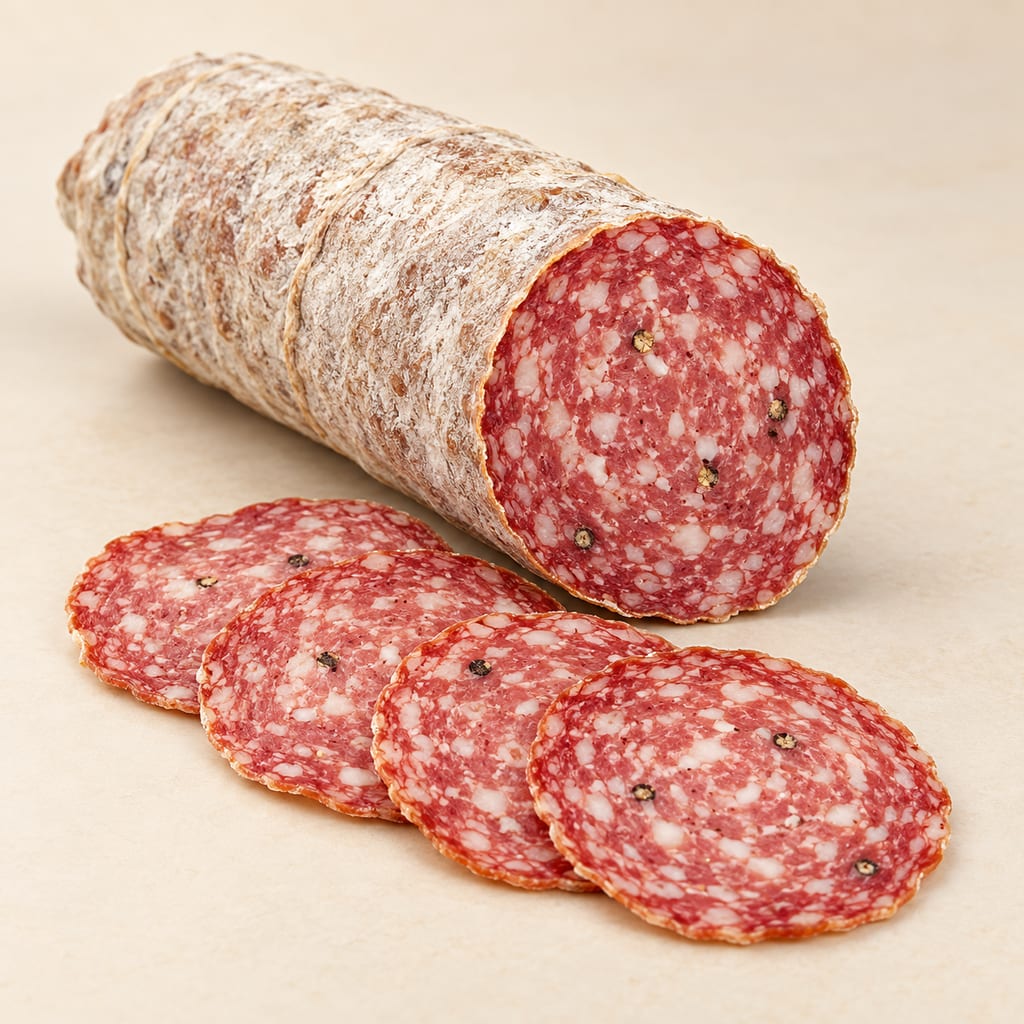
Pork, beef and back fat ferment with a named starter, cure and red wine before the sausages dry in casings. This contemporary formula uses no wood-smoke stage.

A documentary account of dried meat strips and their historical uses. It does not provide an operational home method for making shelf-stable jerky at home.
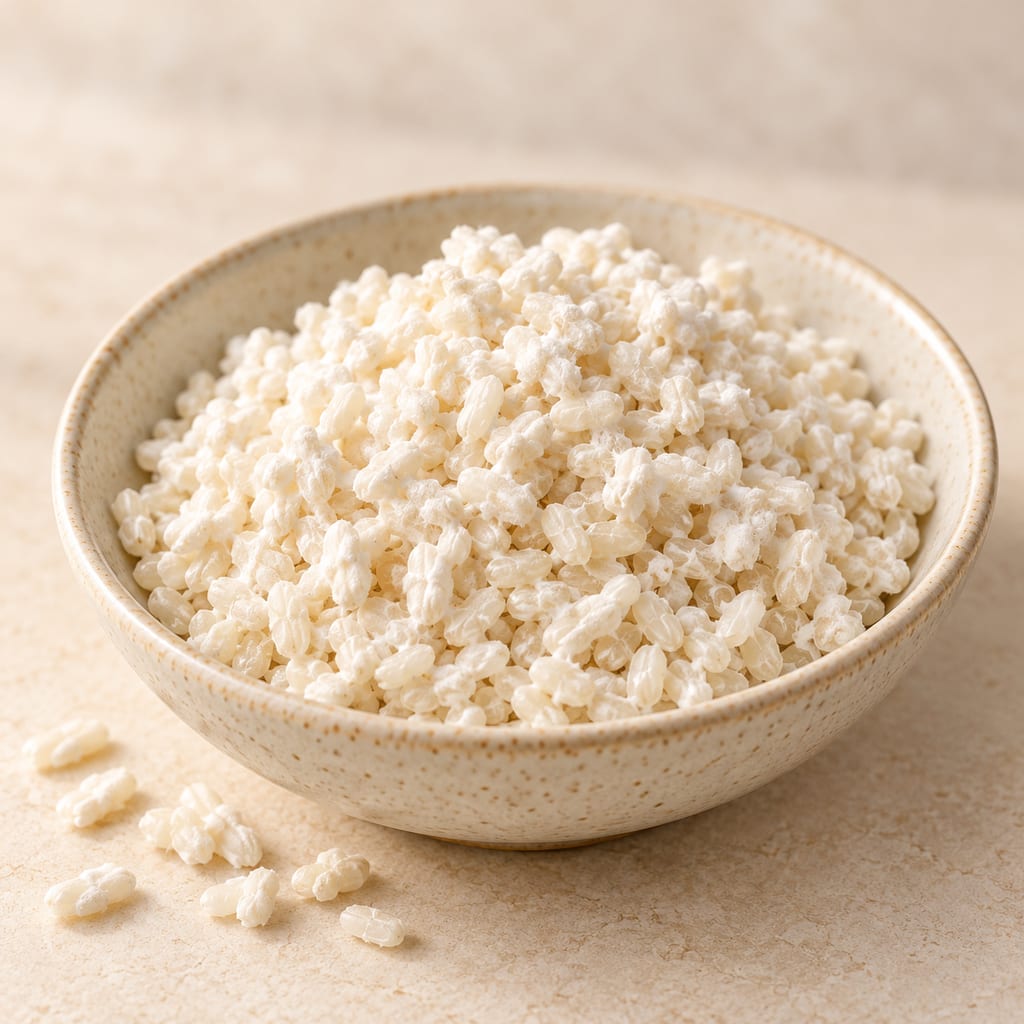
Koji is steamed grain — rice, barley, soybean or wheat — grown out with a food-grade Aspergillus mold until the kernels carry working enzymes. It is bought or cultivated, and it converts starch and protein for the foods that follow.
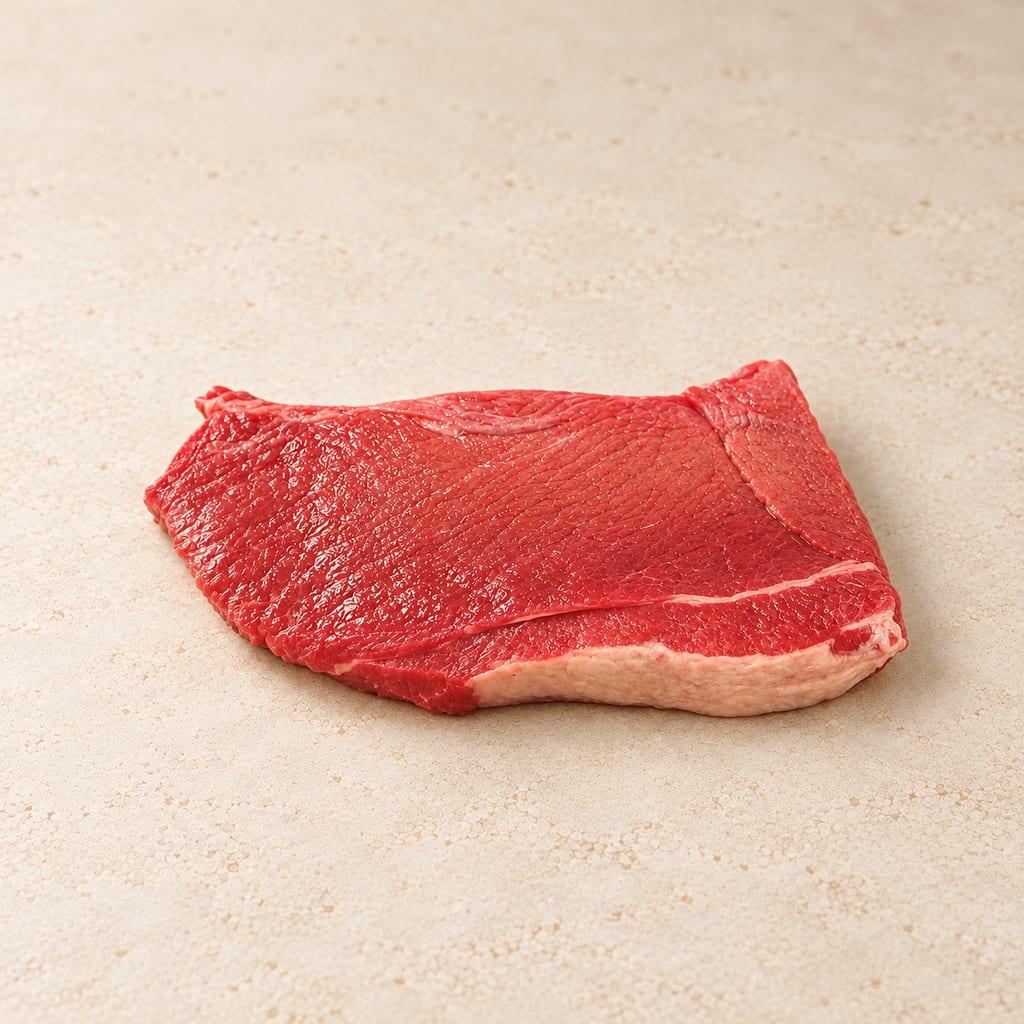
Lean beef is the trimmed muscle of cattle, Bos taurus and Bos indicus. In Genoa-style salami it is the second lean meat beside pork, ground fine, with pork back fat added separately.

Meat-trim koji garum is a savoury liquid seasoning made by holding meat scraps with rice koji, salt and water at steady warmth before straining the mash.
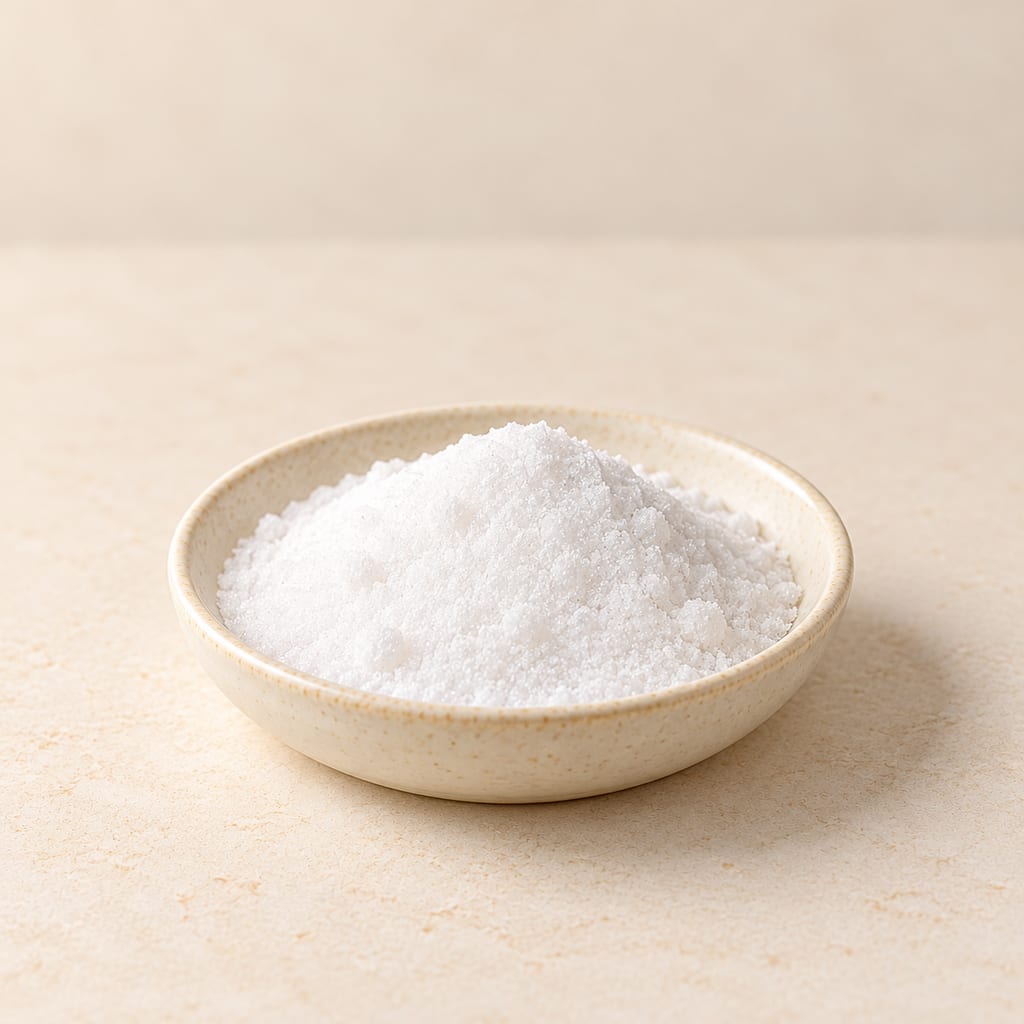
Baking soda is food-grade sodium bicarbonate, a single alkaline powder that releases carbon dioxide when it meets acid in a wet batter. It lifts quick breads without a living culture.
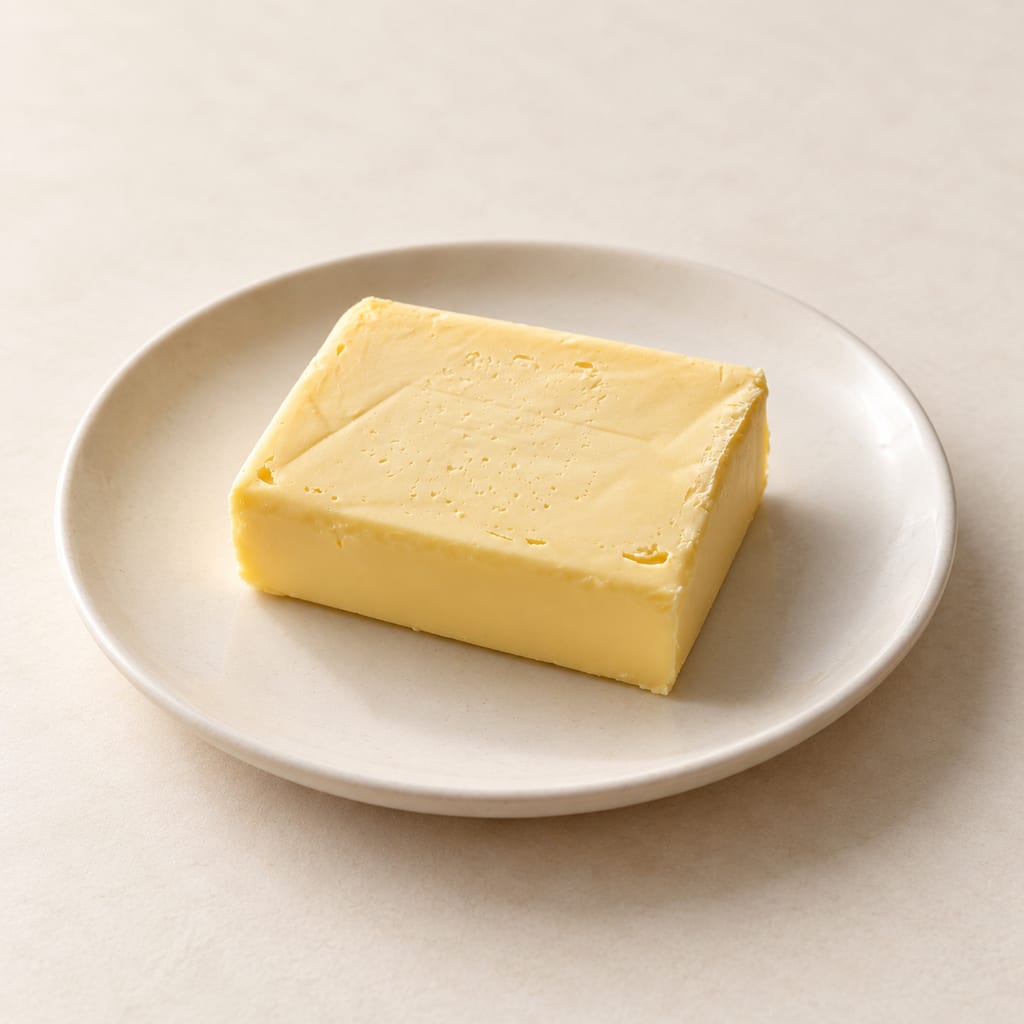
Butter is a milk-fat emulsion made by churning cream. It enriches dough or finishes bread; melted, cool and room-temperature butter serve different recipe roles.
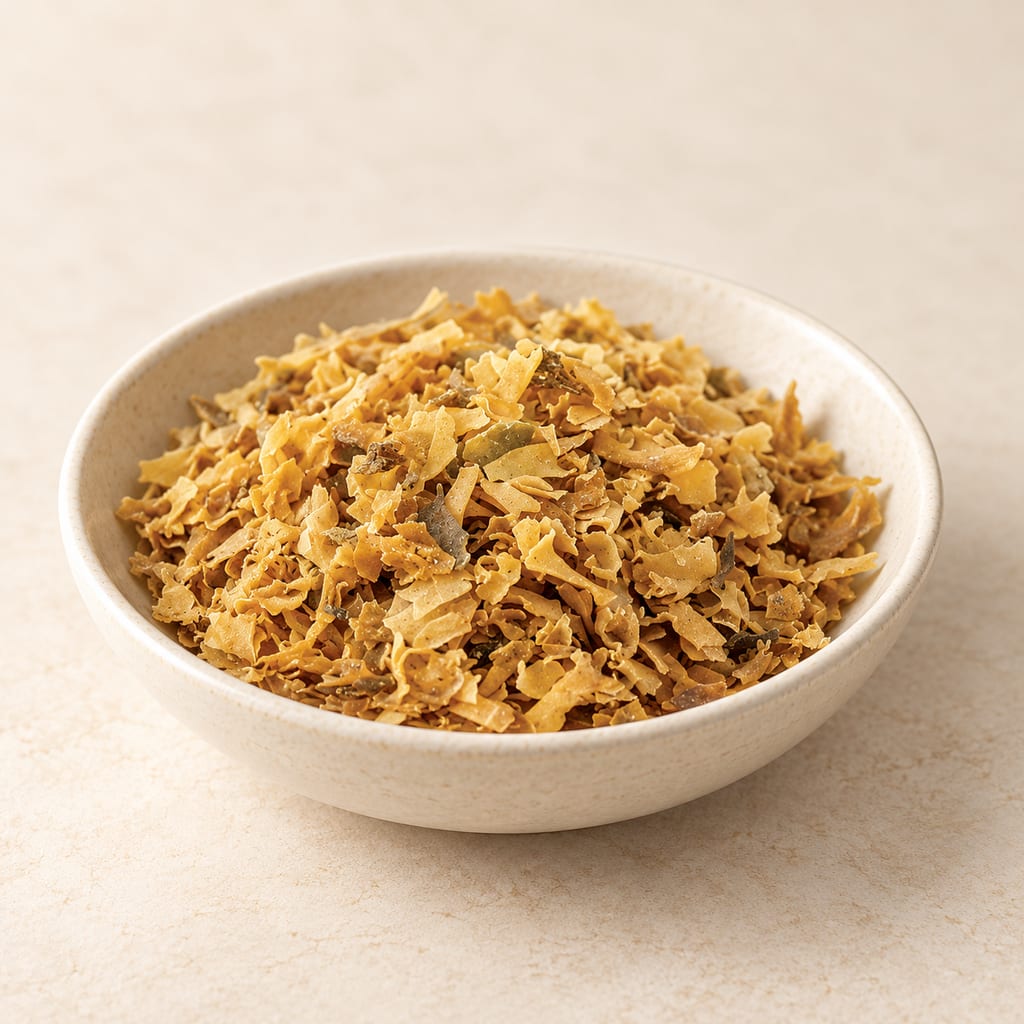
Red seaweed sold as dried material or a concentrated fining, connecting carrageen desserts and coastal trade with the separation of protein material in brewing wort.
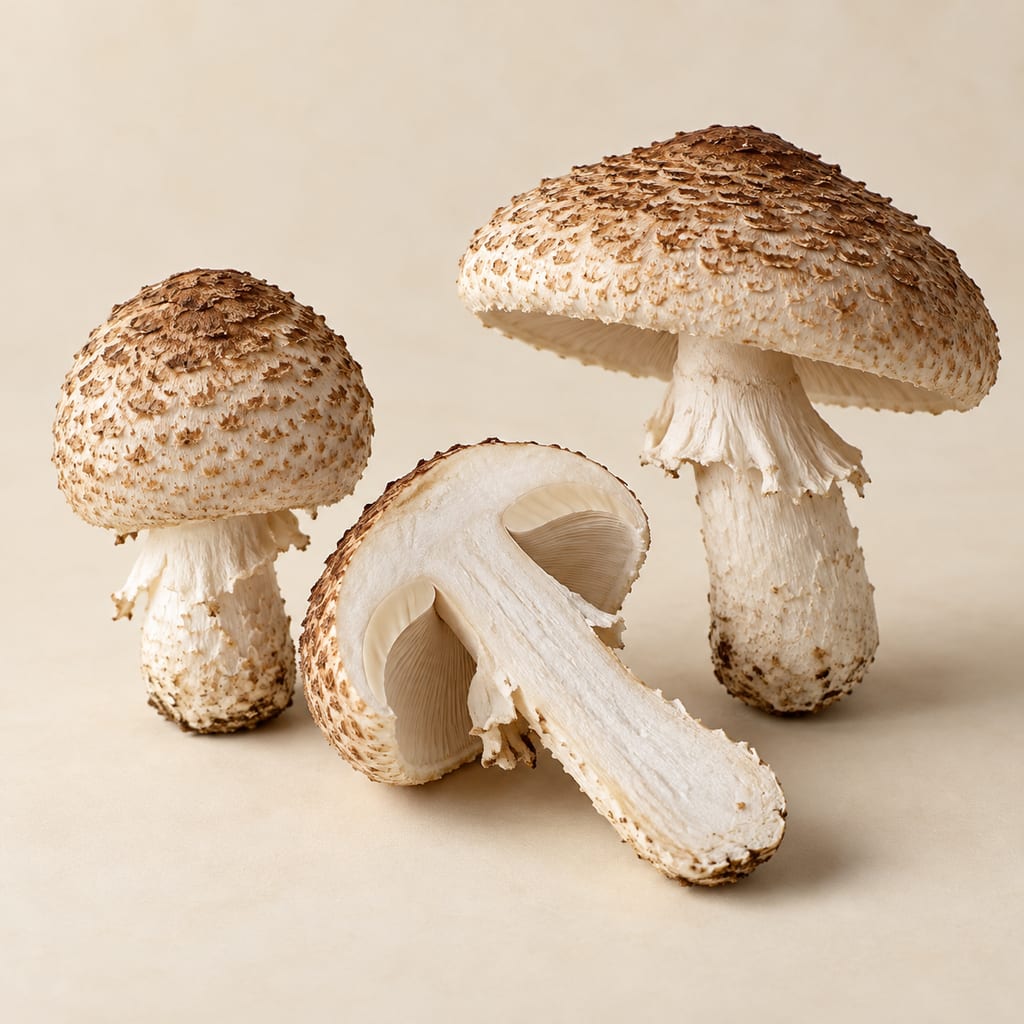
The prince (Agaricus augustus) is a large wild mushroom with a pale, brown-scaled cap and sweet almond-like aroma. Field guides describe it as edible, with species-specific contaminant cautions.

At North Abydos in Egypt, a fixed early Dynastic brewery comprised parallel semi-subterranean installations with rows of ceramic mash vats; excavation reports revise their number, scale and estimated batch capacity.

Ají amarillo is the orange-yellow Peruvian chilli cultivar group of Capsicum baccatum, used to colour and season huancaína sauce and ají de gallina. Published heat estimates do not establish one range for the named cultivar.

Toasted almonds are whole sweet almond kernels dry-roasted until golden to brown. Heat replaces their marzipan note with a roasted, nutty one; they thicken and flavour romesco.

Kodiak salmon, halibut and cod cut as seg'aq and hung on an initaq rack to become tamuuq, with kac'amaasaq and kupcuunaq named as different results.

Aniseed is the dried ripe fruit of Pimpinella anisum, an aromatic Apiaceae spice commonly called a seed. It adds a sweet, warm aroma to breads such as Moroccan krachel and South African mosbolletjies, and is distinct from star anise.

A fixed Late Chalcolithic installation in Areni-1 cave combined a shallow clay pressing basin with a large jar set into the cave floor and storage vessels nearby.

Ripe avocado flesh is the soft, buttery, fat-rich pulp of Persea americana, eaten raw. It is low in acid, so it is a fresh ingredient that needs care in chilled dishes.

A portable dome and pan used over a hearth, with embers on the lid and heat from below. Regional peka and saç forms share this principle while differing in materials, pan shape and how the food is cooked.
No community contributions have been published for this entry yet.
Sign in to contribute. Published comments and photos are free to read.
Food and Agriculture Organization of the United NationsIdentity · Husbandry
CattleCattle are Bos indicus and Bos taurus, the most common and widespread large ruminant livestock; they supply milk, meat, hides and draught power; production systems range from specialised beef and dairy (grass-based and feedlot) to mixed crop-livestock and extensive pastoral systems.
Cited in: What beef is; From aurochs to the cattle herd
Animal Frontiers 11(3):10-19 (PubMed Central)History
Management and domestication of cattle (Bos taurus) in Neolithic Southwest AsiaDomestic cattle derive from the extinct aurochs, Bos primigenius; two lineages, taurine from Neolithic Southwest Asia and zebu from a South Asian aurochs population; taurine and zebu increasingly hybridised by the Bronze Age (about 2000 BC); management began in a wide Levantine area before domestic body traits appear in the eighth millennium BC.
Cited in: From aurochs to the cattle herd
Food and Agriculture Organization of the United NationsComposition
Meat and meat products in human nutrition: Meat quality; Role of meat and meat products in human nutritionLean meat is about 75 per cent water and 20 per cent protein; muscle after rigor holds about 11.5 per cent myofibrillar protein, 5.5 per cent sarcoplasmic protein, 2 per cent connective tissue and about 2.5 per cent fat; intramuscular fat 1 to 3 per cent of muscle weight; collagen softens only with prolonged cooking at 50 to 60 C and becomes less soluble as animals age.
Cited in: What beef is
Penn State ExtensionCuts
Understanding beef carcass yields and losses during processingCarcass shares: chuck 29, round 22, loin with sirloin 16, rib 9, plate 9, flank 5, brisket 4, shank 3 per cent; chuck, rib, loin and round are over 75 per cent of the carcass; average dressing percentage 63, so a 1,000 lb animal yields about 630 lb of carcass.
Cited in: Cuts, and why some are tender
Food Science of Animal Resources 42(5):723-743 (PubMed Central)Quality
Post-Harvest Strategies to Improve Tenderness of Underutilized Mature Beef: A ReviewAbout 15.86 million cattle were slaughtered at US federally inspected plants in 2020, 17.4 per cent cows and 1.7 per cent bulls; maturity is judged by lean colour and skeletal ossification; carcasses over about 30 months are ineligible for the higher quality grades; chuck and round cuts are the least tender in mature beef while psoas major, infraspinatus and longissimus lumborum stay tender; tenderness depends on post-mortem proteolysis, background toughness, sarcomere length and intramuscular fat.
Cited in: Cuts, and why some are tender; Buying beef and reading the label
Critical Reviews in Food Science and Nutrition 64(4):1076-1109Science
Metabolic, proteomic and microbial changes postmortem and during beef agingAfter slaughter, ATP breakdown and calcium regulation precede rigor; later enzymatic degradation of connective tissue and shifts in energy metabolism dominate; sugars, nucleotides, organic acids, creatine and fatty acids act as flavour precursors in lipid oxidation, Strecker degradation and Maillard reactions on cooking.
Cited in: From muscle to meat: rigor and ageing; Beef in fermentation and curing
Journal of Animal Science and Technology 58:20 (PubMed Central)Science · History
Dry aging of beef; ReviewDry aging was the norm until vacuum packaging; wet aging is in vacuum packs, dry aging in a refrigerated room at controlled temperature, humidity and air flow; typical dry aging at 2 C for at least 21 days; costly because of shrinkage and trim loss; usually applied to well-marbled upper Choice and Prime beef.
Cited in: From muscle to meat: rigor and ageing
Biochimie 74(3):239-245Science
The role of Ca(2+)-dependent proteases (calpains) in post mortem proteolysis and meat tendernessEndogenous calcium-dependent calpain proteolysis of muscle proteins underlies post-mortem tenderisation.
Cited in: From muscle to meat: rigor and ageing
National GeographicHistory · Use
St. Patrick's Day: So What Is Corned Beef, Anyway?Corn is the archaic word for a grain of coarse salt; saltpeter added in the 17th century; Irish corned beef was big business by the 17th century on cheap imported salt and a low salt tax, supplying British armies and navies, North American colonists and West Indian planters; most Irish could not afford it; Irish immigrants in the US likely first met it through kosher butchers; corned beef with cabbage became an Irish-American staple.
Cited in: Salted, dried and pressed beef
The Canadian EncyclopediaHistory · Use
PemmicanPemmican is dried meat, traditionally bison, pounded and mixed with an equal amount of melted fat, sometimes with berries, sewn into bison-hide bags of 41 kg; the word is Cree pimikan; the Metis made it for the fur trade; the 1814 Pemmican Proclamation banned export of food from the Red River Colony.
Cited in: Salted, dried and pressed beef
Food and Agriculture Organization of the United NationsUse · Method
Manual on simple methods of meat preservation, Chapter 2: Simple techniques for production of dried meatBiltong, charque, kilishi and pastirma processes; drying lowers water activity and surface salt keeps surfaces dry; sun-dried strips dry in four to five days with weight losses up to 60 to 70 per cent.
Cited in: Dried beef around the world
Frontiers in Microbiology 9:1872Science
Extracellular Proteome Analysis and Flavor Formation During Soy Sauce FermentationAspergillus oryzae secretes many hydrolases, especially proteases, in koji; its genome carries 135 secreted protease genes; the proteases cleave protein to peptides and free amino acids; glutaminase converts glutamine to glutamic acid, which strengthens umami.
Cited in: Beef in fermentation and curing
Statni veterinarni sprava (Czech State Veterinary Administration)Labelling
Povinne oznacovani puvodu u masaEU labelling of fresh beef must give the animal or group identification, slaughterhouse and cutting-plant approval numbers, country of birth, country of rearing, country of slaughter and a batch code; processed products such as sausages, cured and smoked meat are outside this rule.
Cited in: Buying beef and reading the label
University of Maine Cooperative ExtensionSafety
In the Kitchen: Safe Minimum Internal TemperaturesBeef steaks, roasts and chops 145 F (63 C) with a 3-minute rest; ground meat and sausage 160 F (71 C).
Cited in: Handling and cooking safely
University of Minnesota ExtensionSafety
Safe food temperatures: Heating and coolingGround beef can turn brown before it reaches a safe internal temperature, so colour is not a check.
Cited in: Handling and cooking safely
U.S. Centers for Disease Control and PreventionAllergen
About Alpha-gal SyndromeAlpha-gal syndrome is an allergy to a molecule found in most mammals, can develop after a tick bite, and leads patients to avoid red meat such as beef, pork, lamb, venison or rabbit; in the United States the lone star tick is most often associated.
Cited in: Alpha-gal and other dietary context