Fermented meat around the world
Dry salami, sour pork with rice, matured sheep and aged blubber follow different paths from animal to food. Their stories connect microbes with climate, slaughter, migration and the meals people share.
 FermenteaWhere food goes to change
Traditional method
Pastirma · Basturma · Dry-cured beef pastırma
Dry-cured beef salted, air-dried and often coated with a spice paste called çemen before it is sold whole or sliced; a Turkish cured meat whose preservation rests on salting and drying.
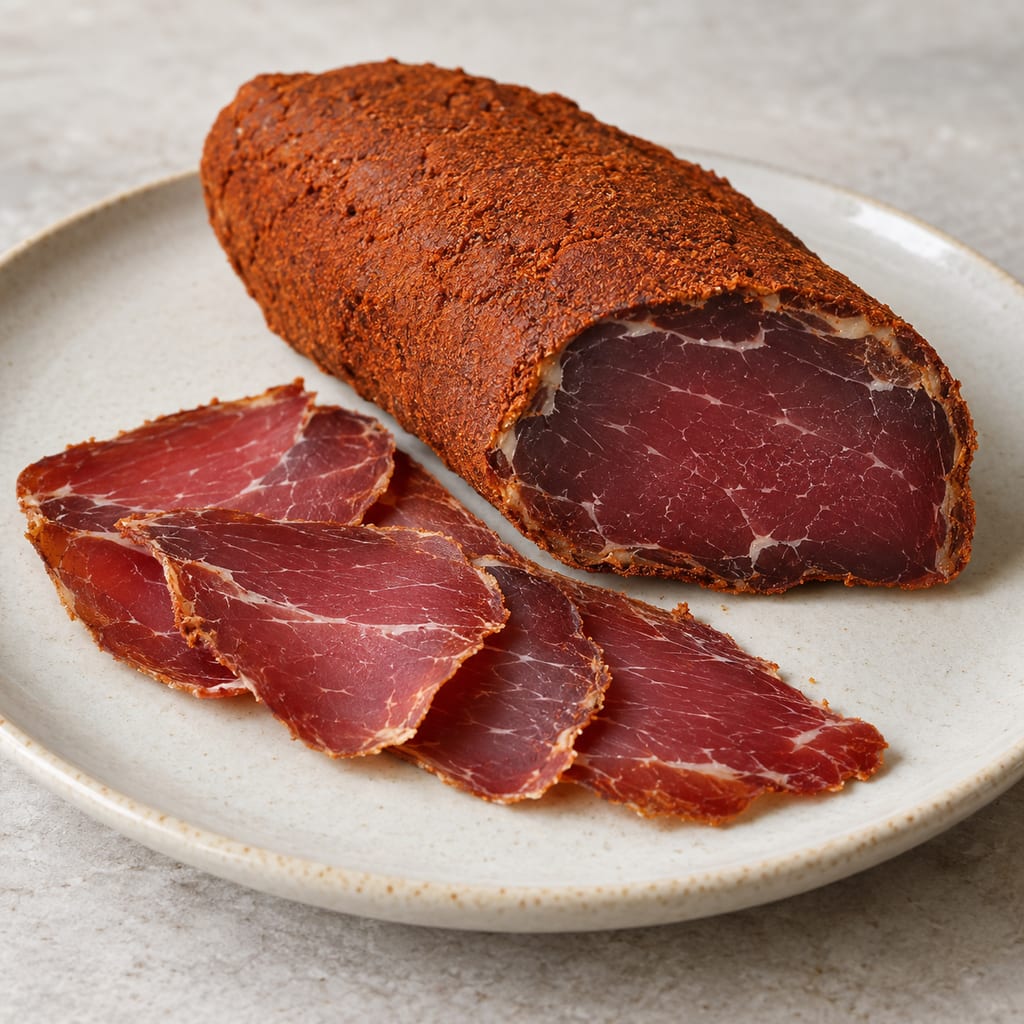
Pastırma is a dry-cured beef product. Whole muscles are salted and air-dried until they are firm, and the surface is often coated with a spice paste before the meat is sold whole or sliced. The coating is characteristic of the Turkish form, though the sources describe several combinations of salting, drying, coating and pressing.
Pastırma belongs to a group of salt-dried whole muscles that includes biltong, charqui and charque. These are related mechanisms, not one shared recipe. The sources do not treat them as a single invention or give them the same regional history.
Salt draws water out of the meat and makes it less hospitable to spoilage. Air drying then removes more moisture. The coating does not replace these steps; where a spice coating is used, it sits on the dried surface.
Pressing, where it is part of the method, shapes the meat and changes how it dries. The sources do not give the times or temperatures for these stages.
The sources give no salt levels, drying times or safe storage limits for pastırma. A packaging study compared air, vacuum and modified-atmosphere packs for the cured product, and that comparison is evidence about storage behaviour, not a validated home method.
Pastırma, or basturma, is dry-cured beef made by salting and air drying a whole muscle, sometimes with a spice coating or pressing. The related salt-dried whole-muscle traditions do not imply a common invention date or identical regional histories.
Scaling: source batch only
Cured and dried meat relies on salt and moisture reduction that the sources do not quantify for pastırma.
Hazard sourceDo not use this historical description as a validated curing method; use a tested cure and process.
Control sourceThe sources record historical practice only. They are not a tested home method.
The record documents the practice in Türkiye; the sources do not give a single origin for pastırma or for basturma.
Dry salami, sour pork with rice, matured sheep and aged blubber follow different paths from animal to food. Their stories connect microbes with climate, slaughter, migration and the meals people share.
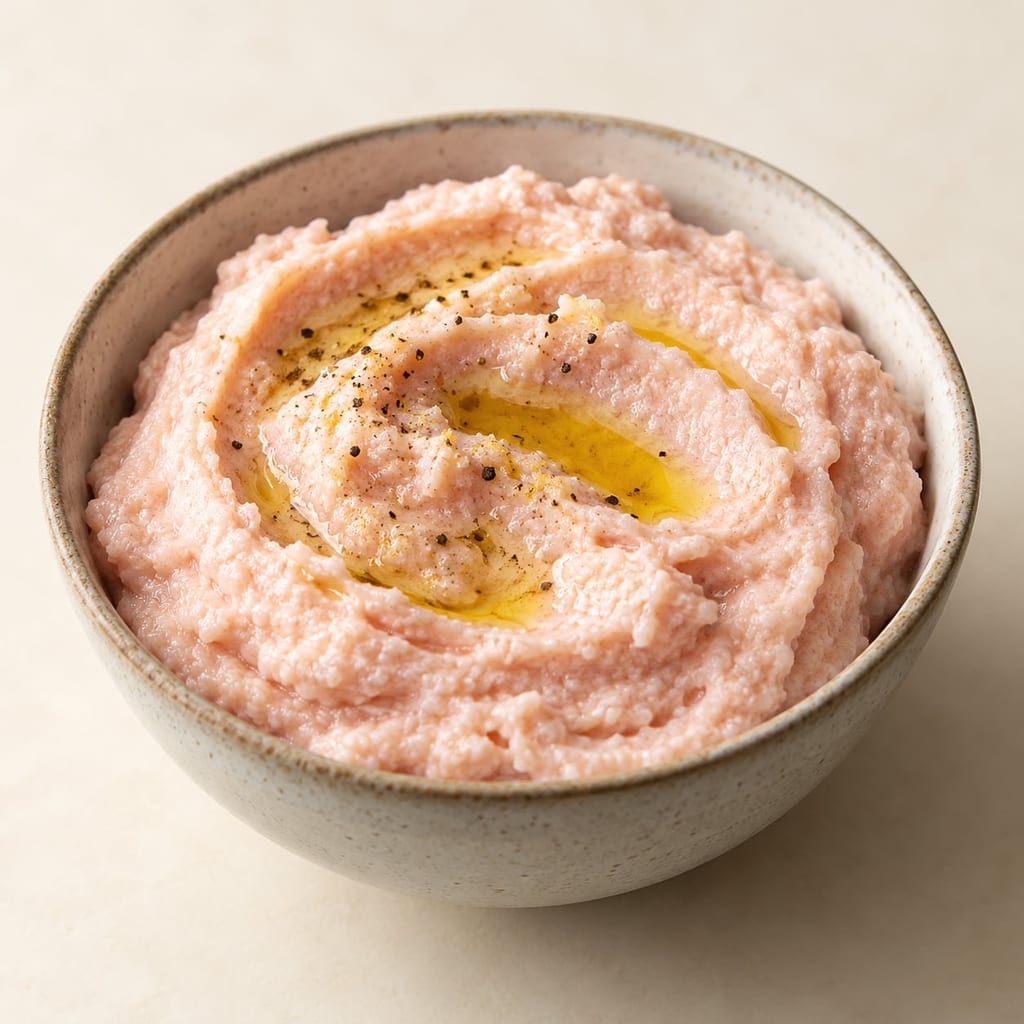
A meze of salted cured fish roe, most often cod, beaten with olive oil, lemon juice and a starchy base of bread or potato, from Greece and the eastern Mediterranean.

Ayran is Turkey’s cold, savoury yogurt drink: plain yogurt is loosened with water and lightly salted, then whisked smooth or aerated into a soft cap of foam.
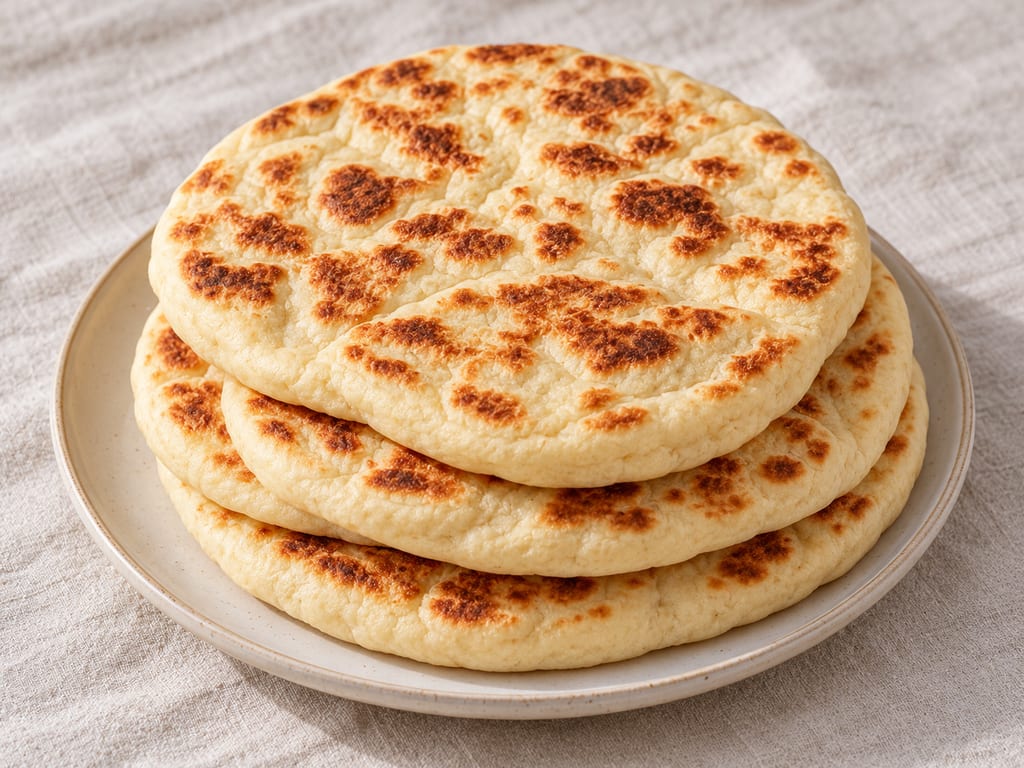
This Turkish bazlama uses yeast, plain yogurt and olive oil for a soft dough cooked in a skillet. Shape it into twelve small or six larger rounds, flip as bubbles appear, and wrap the breads to keep them soft.

Beyaz peynir is a Turkish white cheese matured in brine. Sheep milk, alone or mixed with other milks, gives a close-textured cheese cut into blocks and packed in cans.
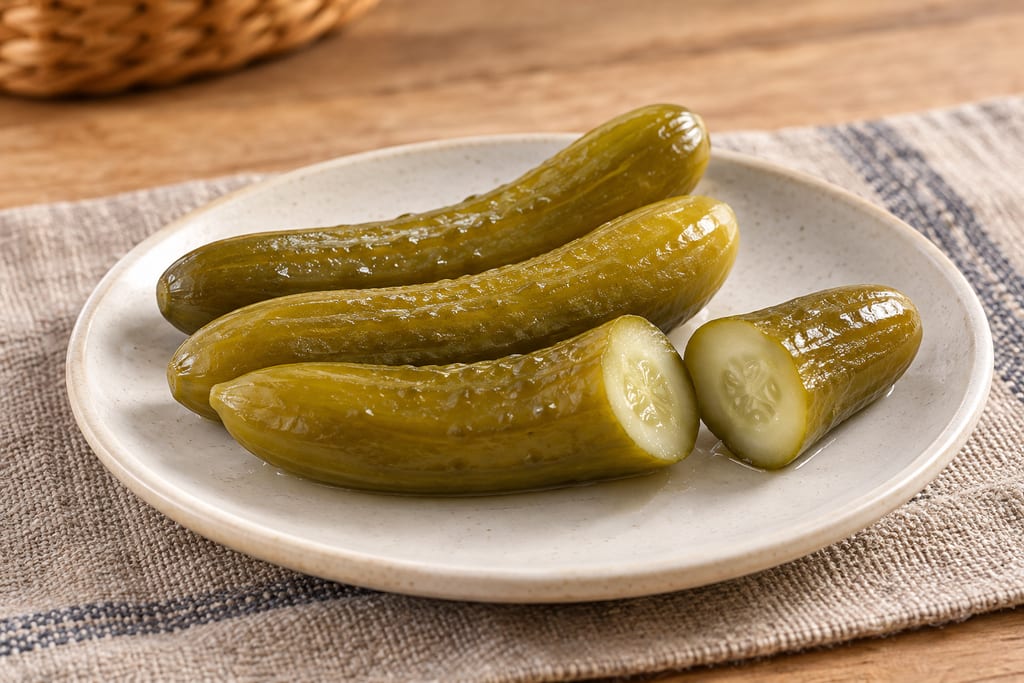
Çubuk turşusu is a registered pickle from Çubuk district in Ankara. Its cucumber variant is sold as Salatalık Turşusu, and a commercial specification sets its brine and room-temperature period.
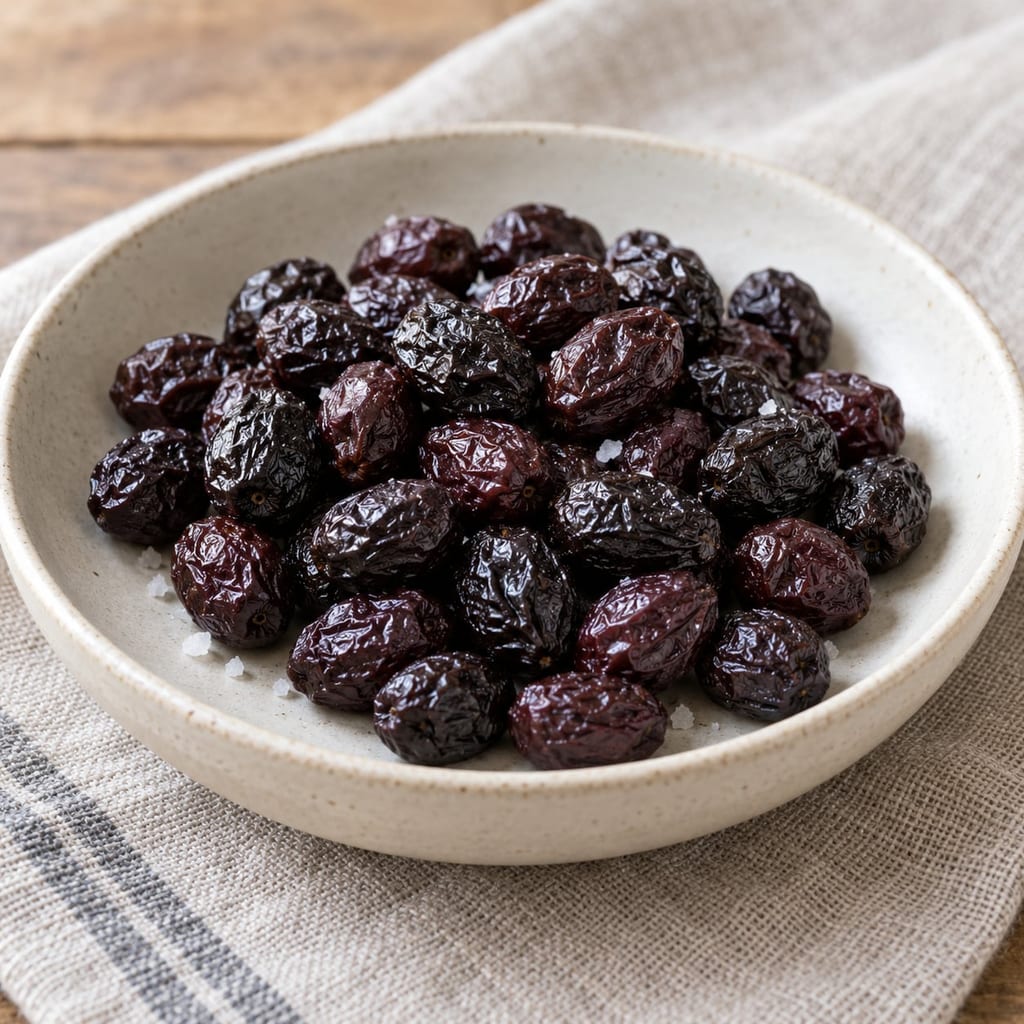
Fully ripe dark olives are mixed with salt and turned weekly as salt draws out moisture. Distinct from existing brine-fermented and lye-treated olives.
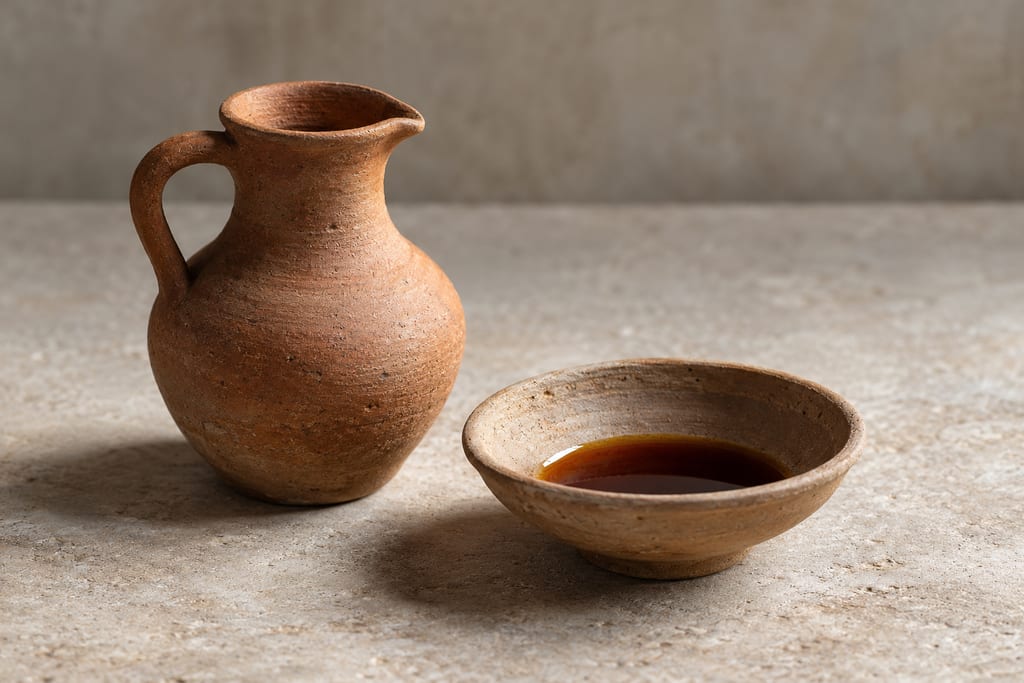
Garum, Greek garos and Latin liquamen, was the fish sauce of the ancient Mediterranean: fish and viscera salted and left in the sun, then drained off as a savoury liquid.
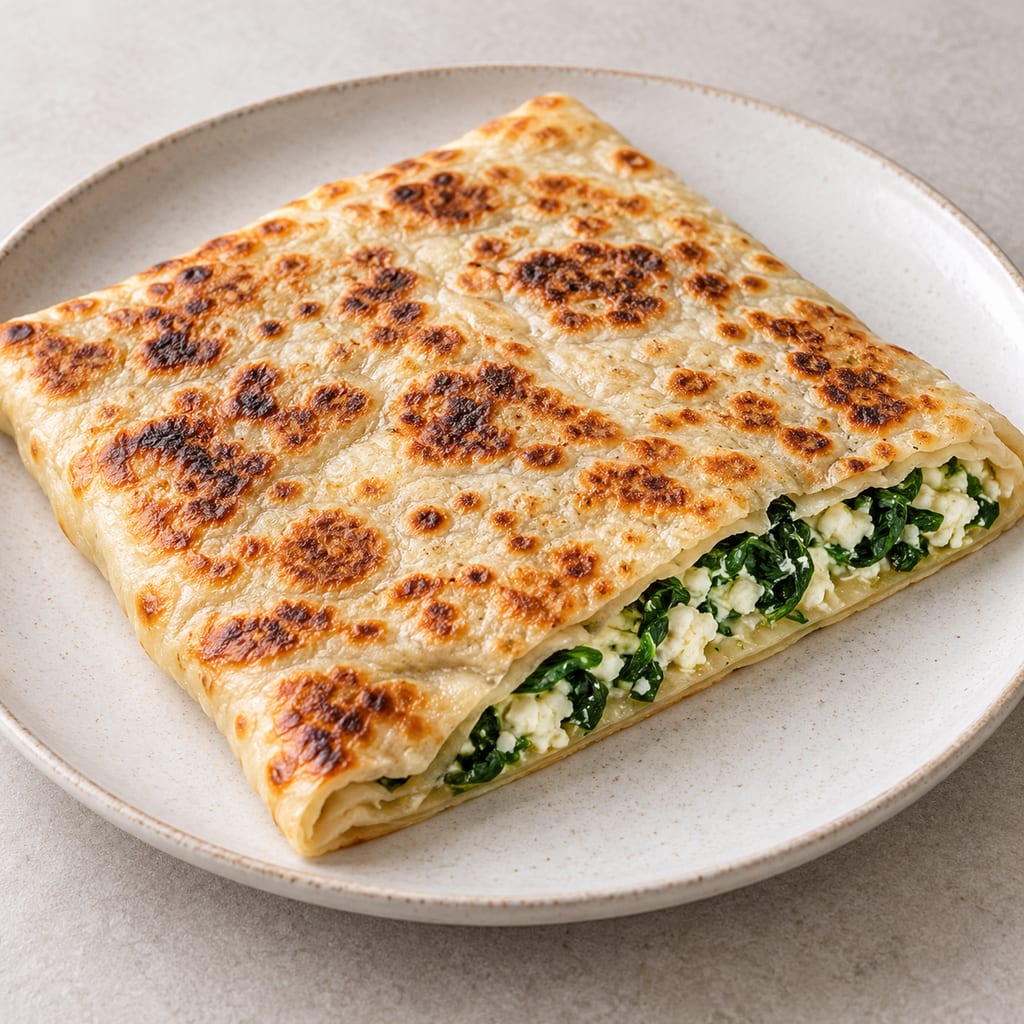
A yeast-and-yogurt dough is rolled into a large thin sheet, filled with spinach, onion and feta, folded closed, then cooked on an oiled griddle. This is Özlem Warren’s spinach-and-cheese family-style version.
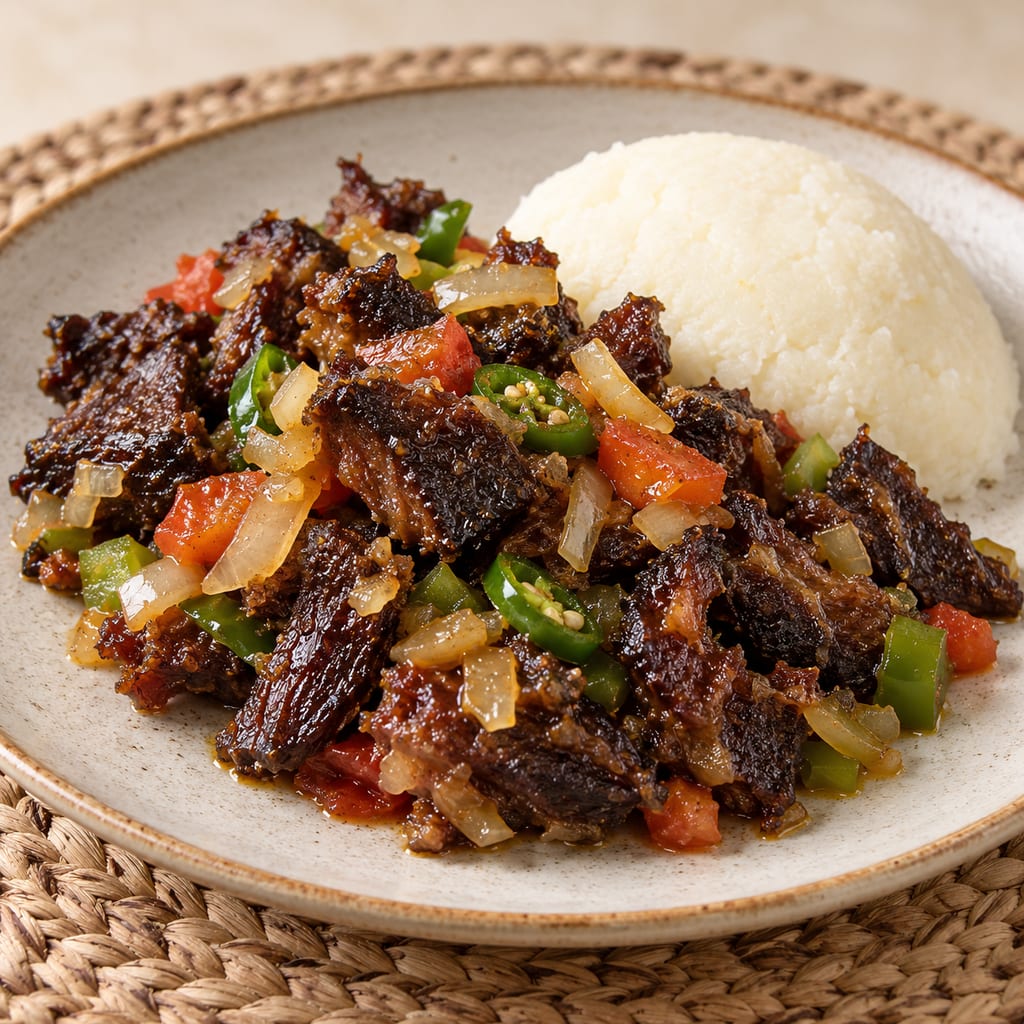
Alina Magano Johannes’s Oondhingu is a family dish from Onyaanya, Oshikoto, in northern Namibia: softened dried beef fried with vegetables and served with pap.
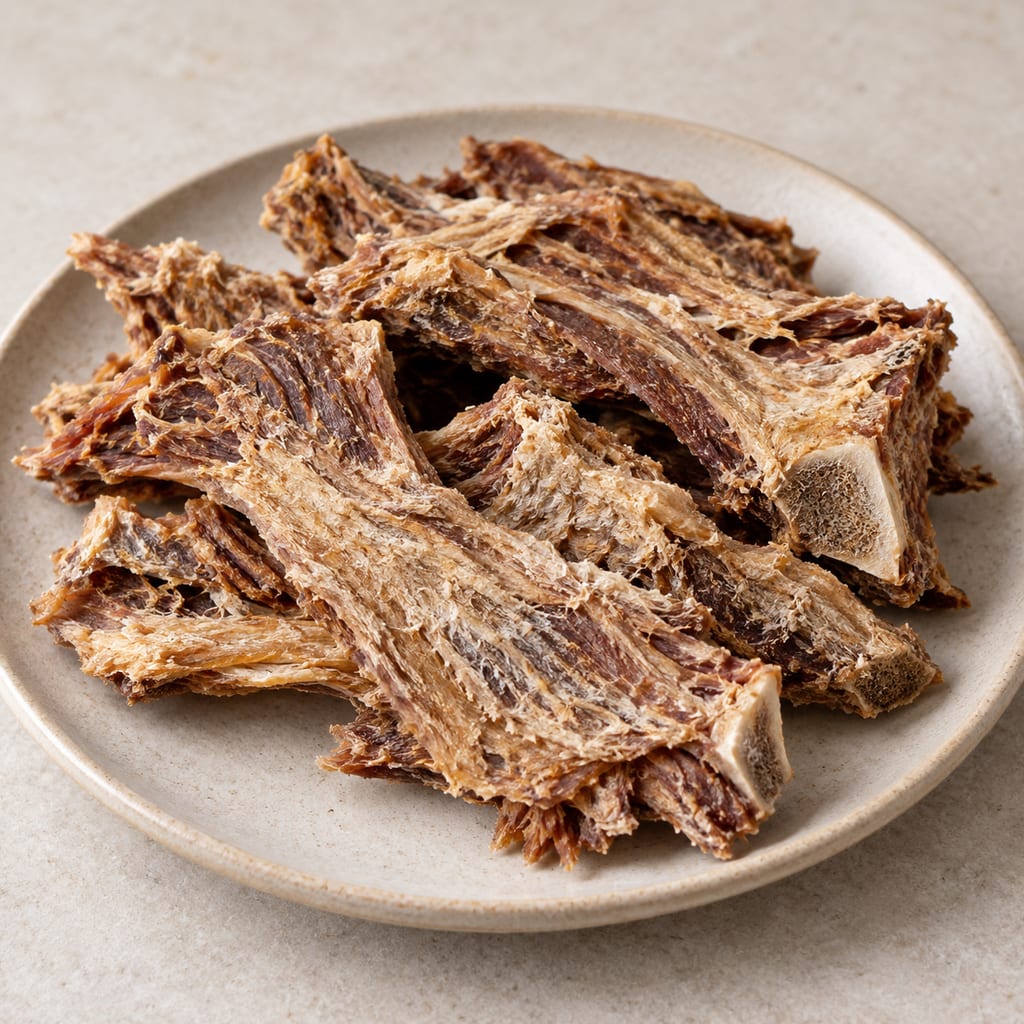
Alpaca charqui is Andean dried meat, made from camelid meat exposed to hot sun by day and frost by night at high altitude, the ancestor of the modern word jerky.
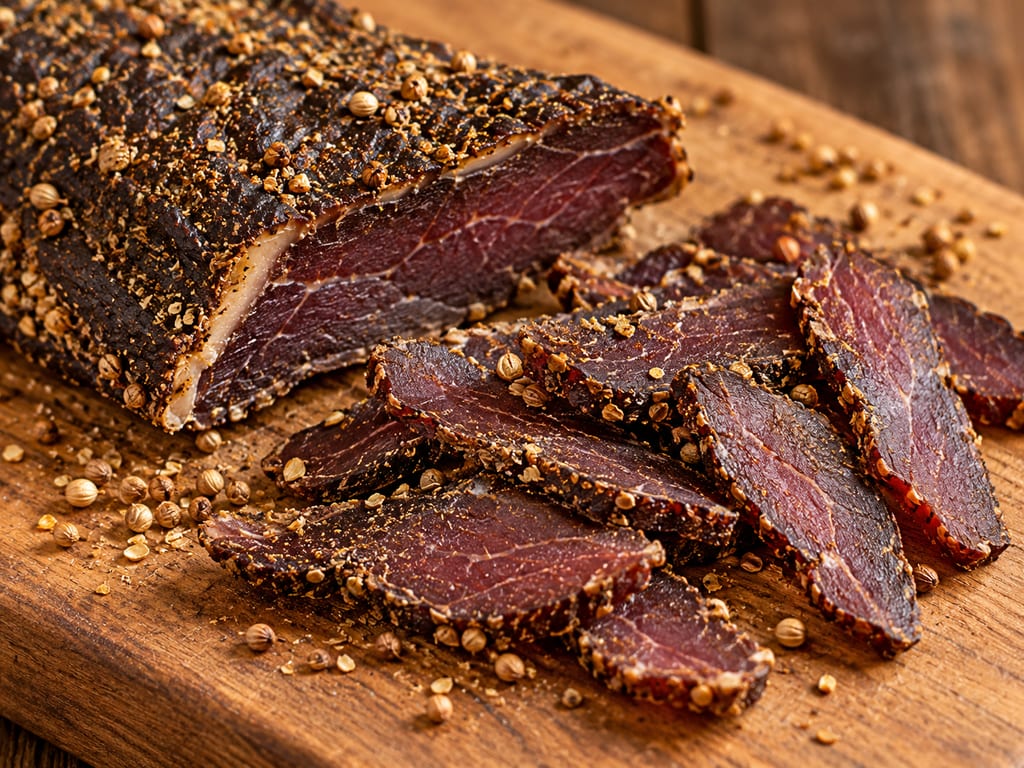
Strips of whole-muscle beef or game seasoned with salt, vinegar, roasted coriander and pepper and air-dried without cooking, sold anywhere from soft and moist to hard and very salty.
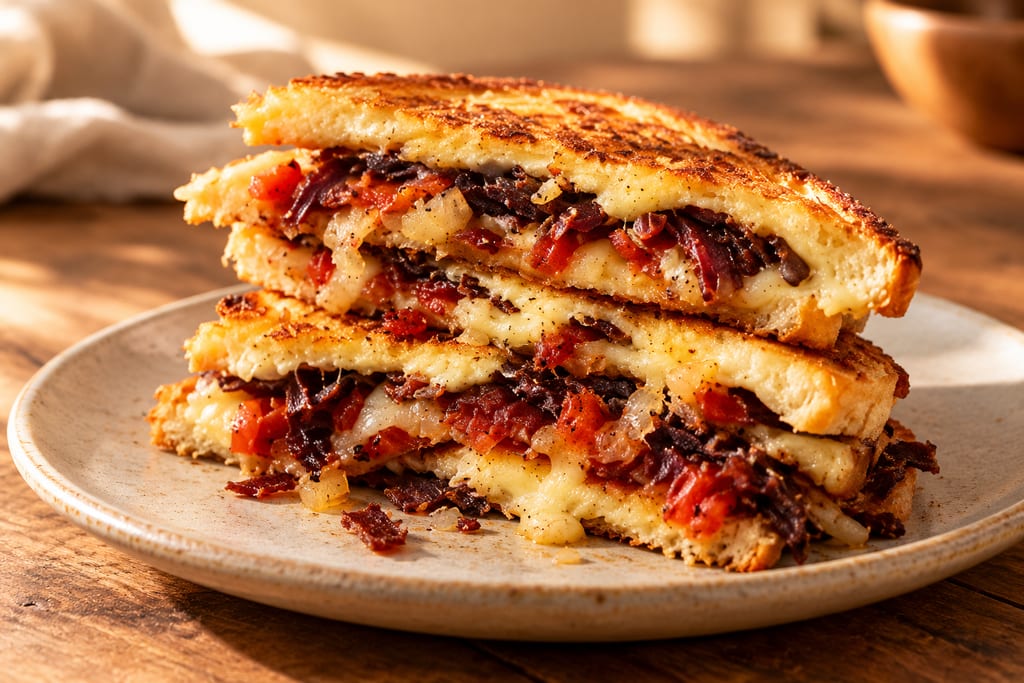
Chopped biltong, sweet onion, cream cheese and Cheddar fill bread toasted in a hinged grid over gentle coals, then finished with biltong dust.
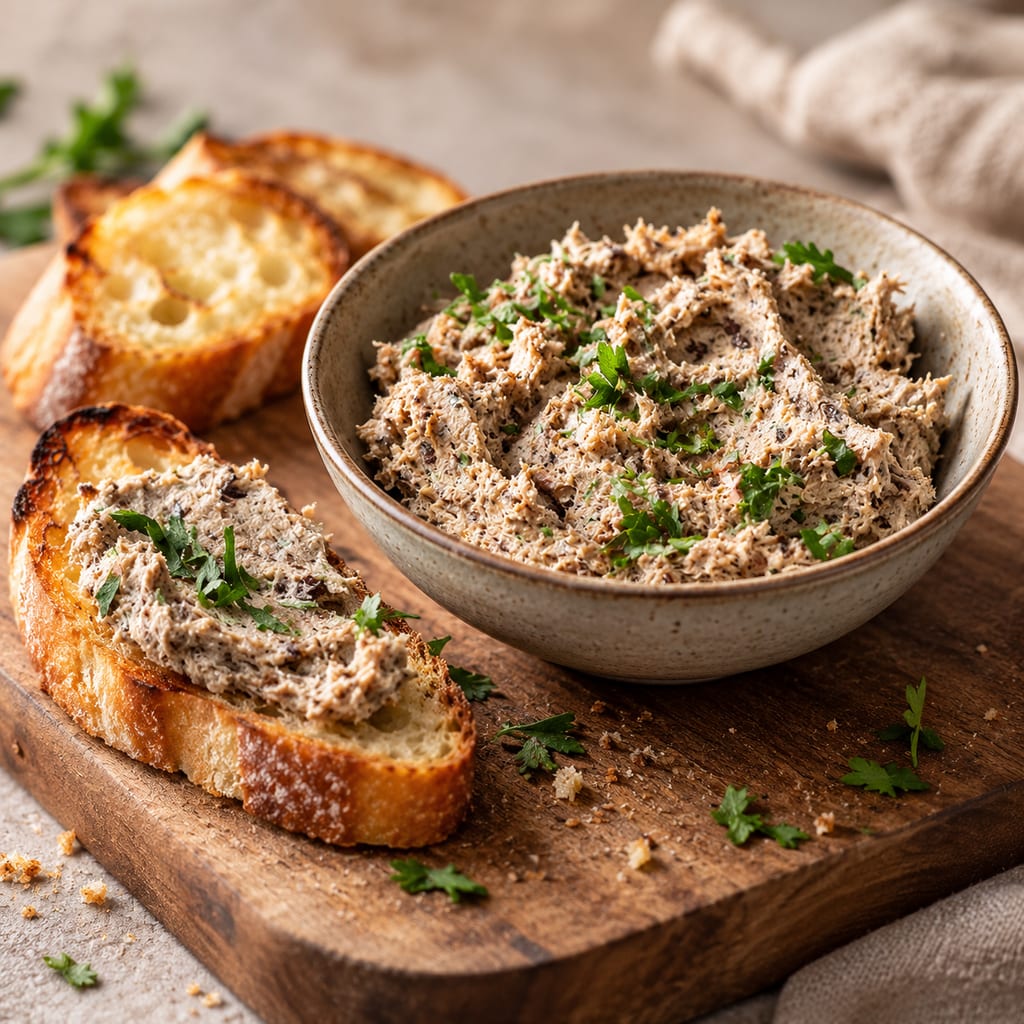
A cold biltong spread with sour cream, mayonnaise, mustard, lemon and herbs; serve it with crackers, crostini or bread.
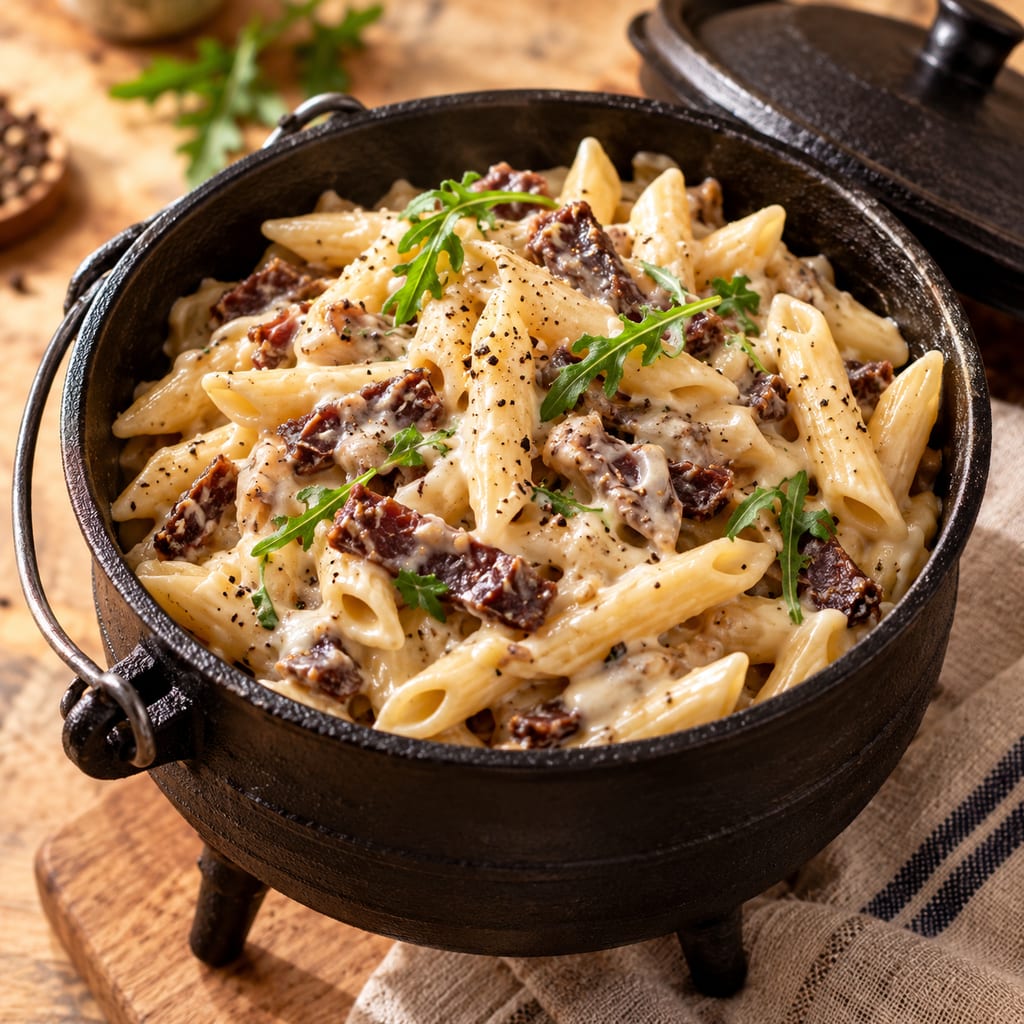
Biltong, bacon and vegetables simmer in tomato-herb stock, then join cooked pasta, milk, cream and Cheddar in this outdoor potjie.
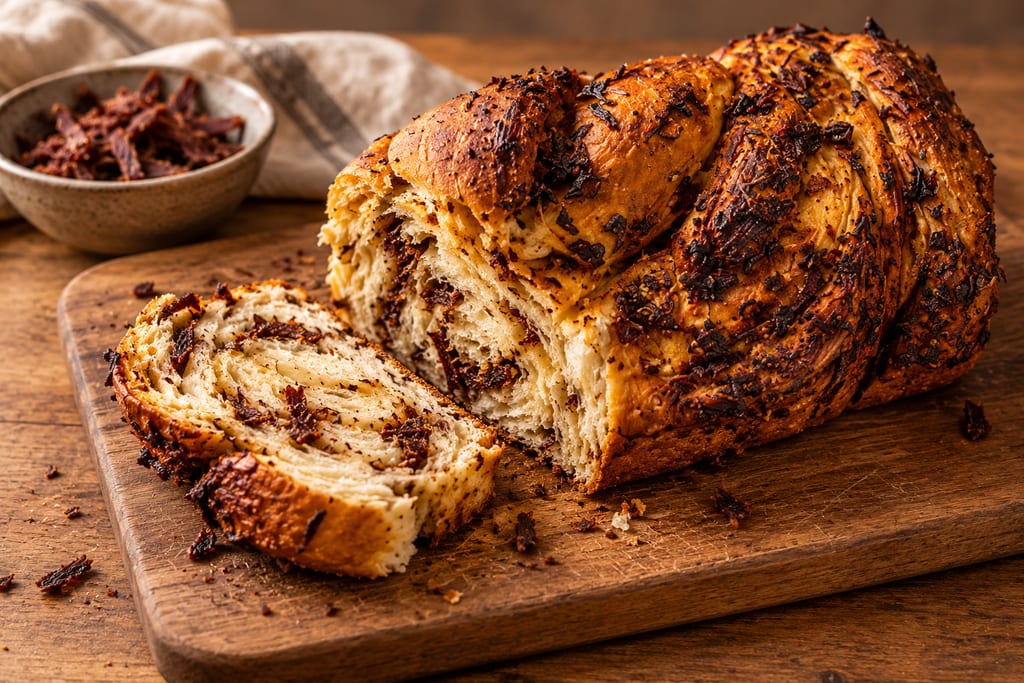
Yeasted bread wrapped around biltong, tomato pesto, Cheddar and feta, split lengthwise into a braid and baked; served with chilli-biltong butter.
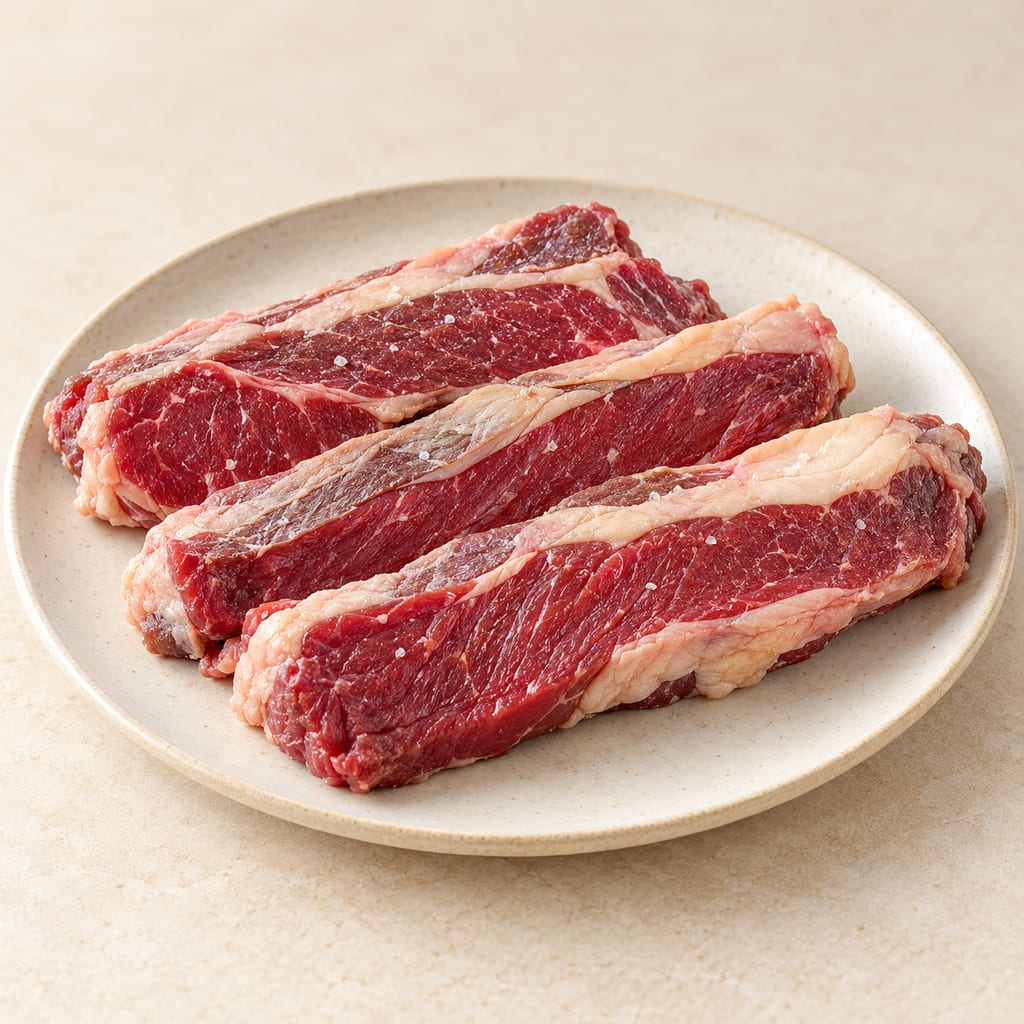
Beef given limited salt and partial surface drying, a short-keeping Brazilian meat that is much less durable than fully dried charque and is treated as a cold-chain product.
No community contributions have been published for this entry yet.
Sign in to contribute. Published comments and photos are free to read.
FAOMethod
https://www.fao.org/4/x6932e/x6932e02.htmSalting, air drying and sometimes spice coatings or pressing across salt-dried whole muscles
Cited in: What it is; Place in the family of salt-dried meats; How salting and drying preserve; Limits of the record
FAOMethod · History
https://www.fao.org/4/x6555e/X6555E02.htmDry-cured meat traditions in Türkiye and neighbouring regions