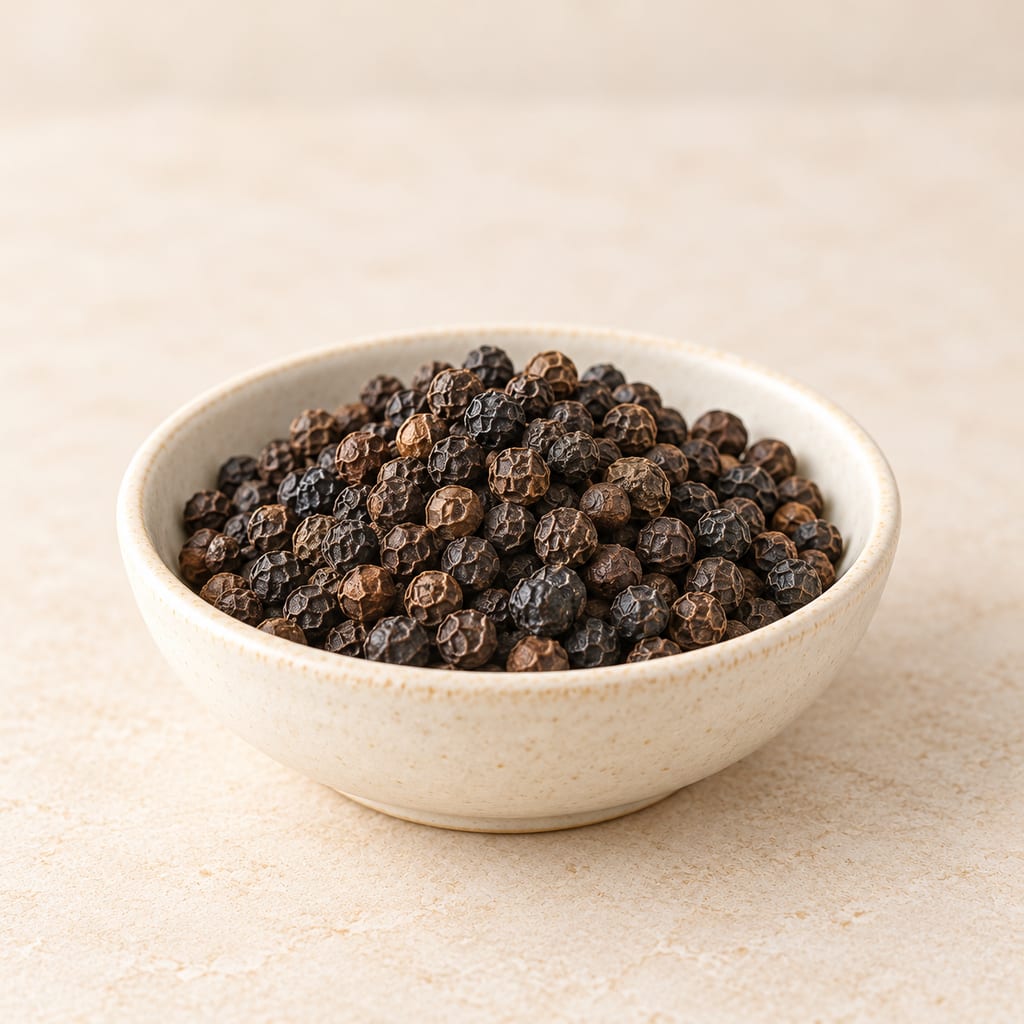
Black pepper
Black pepper is the dried fruit of Piper nigrum, a tropical climbing vine, used whole, cracked or ground for its pungency and aromatic oils.
 FermenteaWhere food goes to change
Traditional method
Beef biltong · Game biltong · Moist biltong · Dry biltong
Strips of whole-muscle beef or game seasoned with salt, vinegar, roasted coriander and pepper and air-dried without cooking, sold anywhere from soft and moist to hard and very salty.
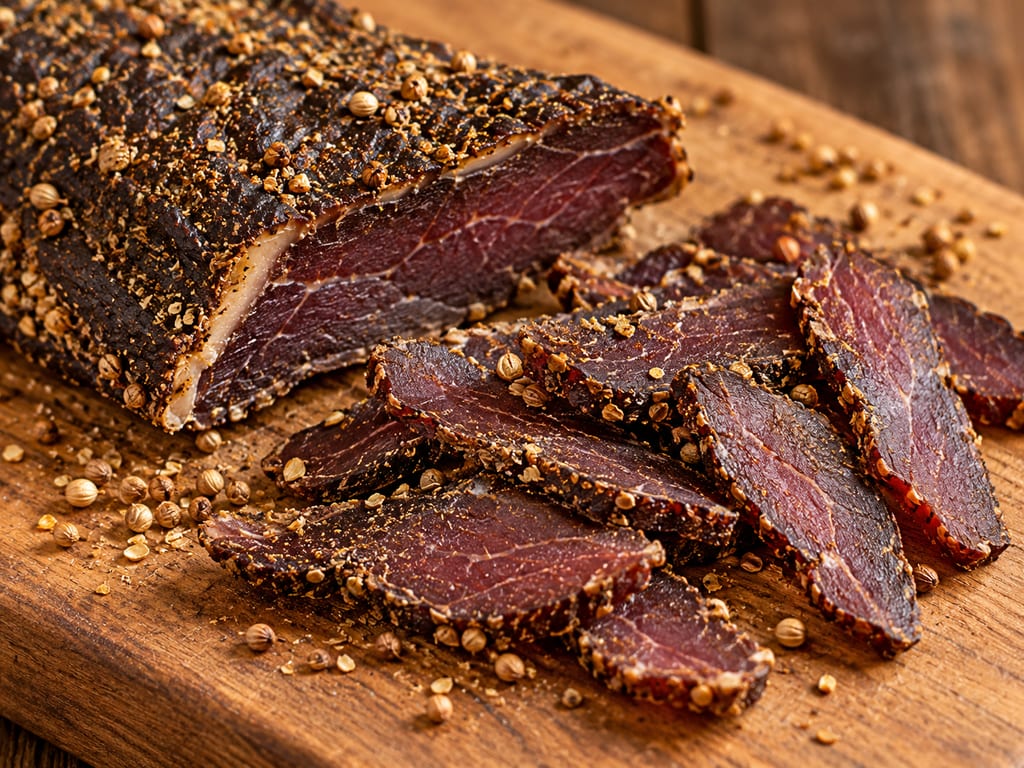
Biltong is one of southern Africa's best-known preserved meats. It is typically made from strips of whole muscle seasoned with salt, vinegar and spices, then dried until they develop a concentrated meat flavour and a firm or chewy texture.
It is commonly compared with jerky, but the two names do not describe identical processes. Traditional biltong manufacture generally involves relatively thick pieces of meat and low-temperature drying, while many American commercial jerky processes include a heat-treatment step. Neither name guarantees a particular safety treatment, and products must be assessed by their actual manufacturing processes.
Biltong also differs fundamentally from droëwors. Biltong usually preserves strips of intact muscle; droëwors is ground meat packed into casings.
That distinction affects drying behaviour and microbial risk. Mincing redistributes microorganisms through a sausage filling, while contamination of an intact meat strip is more concentrated on its exposed surfaces until the meat is cut or further handled.
The characteristic biltong flavour is built around beef or game meat, vinegar, salt, roasted coriander and pepper. Yet there are many variations, including chilli-flavoured products, relatively moist pieces, very dry slices and products made from different cuts or animal species.
The finished food is eaten without further cooking, so achieving an appealing texture is not enough. A reliable manufacturing process must also make the product microbiologically safe.
The Afrikaans word biltong is generally understood through bil, referring to a buttock or haunch, and tong, a strip or tongue-shaped piece. This is a commonly given etymology, but it should not be used to invent a precise date for the food's creation.
Biltong is the established term in both Afrikaans and South African English. Commercial descriptions distinguish beef biltong, game biltong, wet or moist biltong, and dry biltong.
The names of the meat species are important. Beef comes from domestic cattle, generally Bos taurus; kudu biltong may be made from greater kudu (Tragelaphus strepsiceros); and springbok biltong from Antidorcas marsupialis.
These are not interchangeable raw materials. Muscle structure, fat composition, flavour and the quality of the original carcass can influence drying performance.
A label reading only game biltong does not establish which species has been used.
Drying animal foods is an ancient preservation strategy found in many human societies.
Indigenous southern African communities possessed meat-processing and preservation knowledge before European settlement at the Cape. European colonists also brought established salting and curing traditions.
Modern biltong developed within this larger setting of livestock farming, game hunting, mobility, household food production and commercial trade.
However, no single verified invention date for modern coriander-and-vinegar biltong emerges from the research examined here. Nor does the existence of an early dried-meat tradition prove that every ingredient of contemporary biltong was used together at that time.
An overly neat history, in which one population invents the exact modern recipe on a particular journey, obscures the distinction between evidence for meat drying generally and evidence for biltong as a named food.
The development of commercial biltong shops, prepacked snacks, industrial drying cabinets and international retail markets is also distinct from its earlier household history.
The scientific literature documents a remarkably diverse contemporary product. Some commercial biltong is very dry and salty; other products retain enough moisture to remain soft and relatively tender.
This diversity means historical and commercial claims should always identify which kind of biltong is being discussed.
Biltong is commonly made from relatively lean whole-muscle cuts.
Suitable meat must be sound, properly inspected and prepared hygienically.
The original muscle structure influences texture. Fibres running along a long strip provide a different eating experience from slices cut across the grain after drying.
Lean cuts are often preferred for drying because exposed fat can oxidise and develop rancid flavours. Some people nevertheless prefer biltong with a noticeable fat edge.
That is a quality preference, not evidence that fat-containing biltong is necessarily unsafe or that every fat-free product is properly preserved.
Fat behaves differently from muscle during drying. Muscle loses water as a substantial component of the final weight reduction. Fat does not undergo the same moisture movement, and its susceptibility to oxidation becomes an important storage consideration.
Different muscles also have different levels of connective tissue. A cut with substantial collagen may remain chewy even after considerable drying.
The direction of cutting matters for the finished texture. Slicing across muscle fibres shortens them and generally makes the final mouthful easier to chew. Cutting with the grain tends to produce longer strands.
Salt influences both flavour and preservation.
By increasing the concentration of dissolved substances in the remaining moisture, salt reduces water activity. This restricts the ability of many microorganisms to grow.
Salt also changes protein behaviour and the distribution of water within the meat.
The amount of salt actually present in the finished product can be significantly higher than the amount initially applied relative to fresh meat weight, because drying removes water.
Published commercial samples have shown a wide range of final salt concentrations. It would be misleading to treat a single teaspoon-per-kilogram instruction as a universal scientific control.
Vinegar supplies acetic acid and produces the characteristic sour note.
Acidification can influence the surface environment and the behaviour of microorganisms, but its effectiveness depends on concentration, exposure time, the meat's buffering capacity and the complete process.
A biltong strip that tastes noticeably sour is not necessarily microbiologically safe.
The sources examined do not establish one universal vinegar concentration, soaking time or finished pH for all biltong.
Roasted coriander is closely associated with traditional biltong.
Its aromatic compounds contribute citrus-like, floral and warm spice notes. Crushing the seed exposes more surface area and releases aromatic oils.
Roasting changes flavour but is not a validated decontamination treatment for the finished raw meat.
Black pepper contributes pungency from piperine and other compounds.
Chilli, garlic, sugar and additional spices are used in some contemporary styles.
Their inclusion can distinguish a commercial flavour variation without changing the fundamental preservation process.
Remove bone, unsuitable connective tissue and visibly damaged portions.
The exact cut and dimensions should follow a proven formulation. Very thick pieces require more time for internal moisture to migrate to the surface than thin ones.
Uniform dimensions help achieve predictable drying. If a batch contains both extremely thick and thin pieces, their finished water activities may differ even when they are removed from the dryer together.
The scientific literature does not establish a compulsory strip thickness applicable to every biltong product.
Some salt the meat before applying vinegar and spices; others combine the acid and seasonings in a marinade.
The sequence can influence salt penetration, flavour distribution, surface conditions and water loss.
There is no evidence that merely copying the sequence from an old household recipe guarantees microbial control.
One reviewed experimental system used a marination period of approximately 18–20 hours at 4–8°C. That is a documented research condition, not a universal historical rule or a complete validated recipe.
Raw meat must not be left uncontrolled during this stage.
Direct contact between adjacent pieces can interfere with moisture removal.
Excessive surface drying can create a hard outer layer while the centre remains comparatively moist.
The equipment and process should therefore control temperature, humidity and airflow rather than relying on an assumed number of days.
Monitoring weight loss can help track a batch, but it does not establish microbial safety by itself.
Water activity, relevant pH measurements, process validation and raw-material controls determine whether the finished product meets its safety specification.
An experimental study published in 2022 demonstrated pathogen reductions exceeding 5 log units under one particular biltong process involving vinegar, salt, coriander and pepper, followed by controlled drying at 23.9°C and 55% relative humidity.
This result does not mean that every recipe dried at those conditions will achieve the same reduction. The study used a defined meat preparation, treatment and challenge-testing procedure.
Its value is to demonstrate what validation looks like, not to provide an automatically safe household shortcut.
Slicing creates fresh surfaces and adds opportunities for post-process contamination.
Packaging must protect against unwanted moisture uptake and the product's established shelf-life limitations.
Vacuum packaging alone cannot compensate for insufficient drying or inadequate microbiological control.
One of the most important scientific findings is that commercial biltong is not uniform.
A 2014 study examining beef, kudu and springbok biltong from South Africa identified distinct moist and dry products.
The samples had measured pH values between 5.00 and 6.26.
These are analytical observations from a particular study, not numerical acceptance criteria for all biltong.
They also show why the words dry and moist matter technically. The softer product contains substantially more available water.
The microbiological observations included lactic acid bacteria and differences in lactic-acid composition. Some dry samples displayed characteristics consistent with fermentation, while other products did not.
It would therefore be inaccurate to label all biltong as intentionally fermented meat.
The primary preservation strategy is the combined action of dehydration, salt and often acid treatment. Microbial fermentation may occur in certain products but should not be assumed to be an essential controlled stage.
Moisture — 21.5–25.3 g per 100 g — 35.1–42.8 g per 100 g
Water activity — 0.65–0.68 — 0.85–0.89
Salt — 5.5–7.9 g per 100 g — 3.8–5.6 g per 100 g
Beef biltong is the most familiar contemporary version. The flavour is influenced by the beef cut, fat content, seasoning and dryness.
Kudu biltong uses a game species with its own meat properties and flavour.
Springbok biltong is another documented game version, also represented in the scientific literature.
Moist biltong is intentionally softer and retains more moisture, making its microbiological specification particularly important.
Very dry biltong is firmer, often more intensely salty per unit weight, and may be sliced thinly or broken into small pieces.
Chilli biltong adds heat but is not a different preservation method.
Garlic, barbecue and sweet-spiced styles demonstrate modern retail variation.
Specific claims about protected regional recipes or an exclusive original seasoning should be supported by a named historical source or producer rather than inferred from a geographical label.
Biltong is usually eaten as a snack without further cooking.
A whole strip may be cut into slices, torn into smaller pieces or chewed directly.
Prepacked sliced biltong is common in shops, and specialised biltong retailers allow customers to choose between lean and fatty pieces, moist and dry textures, and different seasonings.
It is also used as an ingredient in savoury cooking. Small pieces can be incorporated into bread, muffins, potato dishes, fillings and salads.
In these preparations biltong contributes concentrated salt, savoury flavour and a characteristic dried-meat texture.
Cooking a biltong-containing dish changes its texture and flavour; it does not retrospectively validate an unsafe raw dried-meat batch.
A sound product should display the expected colour, aroma, moisture distribution and texture for its style.
Rancidity may develop from fat oxidation and produces stale, paint-like or unpleasantly fatty aromas.
Case hardening can produce a hard exterior and undesirably moist centre.
Excessive saltiness may result from the formulation or greater-than-expected moisture loss.
Patchy drying may reflect inconsistent strip dimensions or airflow.
Surface mould, slime or putrid odours are warning signs, although hazardous microorganisms may also be present without visible symptoms.
Biltong is raw dried meat intended to be consumed without a final cooking step. This makes process validation especially important.
The UK Food Standards Agency's review identifies microbiological hazards associated with biltong and related products. It also notes that environmental conditions suitable for traditional drying cannot simply be assumed in a different climate.
Commercial manufacture requires suitable raw materials, hygienic handling, validated reduction or control of relevant pathogens, monitored drying, appropriate packaging and defensible shelf-life.
Neither final weight loss alone nor a particular traditional number of drying days is sufficient proof of safety.
Modern biltong developed within a setting of livestock farming, game hunting, mobility, household food production and commercial trade, drawing on both Indigenous southern African meat-processing knowledge and the salting and curing traditions European colonists brought. An overly neat history, in which one population invents the exact modern recipe on a particular journey, blurs the difference between evidence for meat drying in general and evidence for biltong as a named food. The growth of commercial biltong shops, prepacked snacks, industrial drying cabinets and international retail is a later and separate story from the household one. The etymology usually given reads bil as a buttock or haunch and tong as a strip or tongue-shaped piece, which is a common explanation rather than grounds for dating the food.
Scaling: source batch only
Biltong is raw dried meat intended to be consumed without a final cooking step, so there is no later step to correct an inadequate process.
Hazard sourceMoist products measured 0.85-0.89 water activity against 0.65-0.68 in dry products, so the softer style has substantially more water available to microorganisms and its microbiological specification matters more.
Hazard sourceEnvironmental conditions suitable for traditional drying cannot simply be assumed in a different climate.
Hazard sourceExcessive surface drying creates a hard outer layer over a comparatively moist centre, and pieces touching each other interfere with moisture removal.
Hazard sourceHold the seasoned meat under refrigeration while it marinates rather than leaving it uncontrolled
Control sourceDry under a validated, monitored combination of temperature, humidity and airflow
Control sourceVerify the finished batch by water activity and relevant pH measurement rather than by weight loss
Control sourceCut strips to uniform dimensions and hang them so air circulates around every surface
Control sourceA biltong strip that tastes noticeably sour is not necessarily microbiologically safe; acidification depends on concentration, exposure time and the meat's buffering capacity.
The dry and moist measurements belong to two different kinds of product and must not be combined into one specification.
Drying at 23.9°C and 55% relative humidity does not reproduce the published 5-log reduction for a different recipe; that result belongs to its own defined process and challenge test.
Vacuum packaging cannot compensate for insufficient drying or inadequate microbiological control, and slicing creates fresh surfaces that can be contaminated after the process.
Cooking a biltong-containing dish changes its texture and flavour; it does not retrospectively validate an unsafe raw dried-meat batch.
Not all biltong is fermented meat: some dry samples showed characteristics consistent with fermentation and others did not, and fermentation should not be assumed to be a controlled stage.
A country-level association from South African product research. It is not a claim that biltong originated at any particular place, and the research establishes no invention date.
Black pepper is the dried fruit of Piper nigrum, a tropical climbing vine, used whole, cracked or ground for its pungency and aromatic oils.
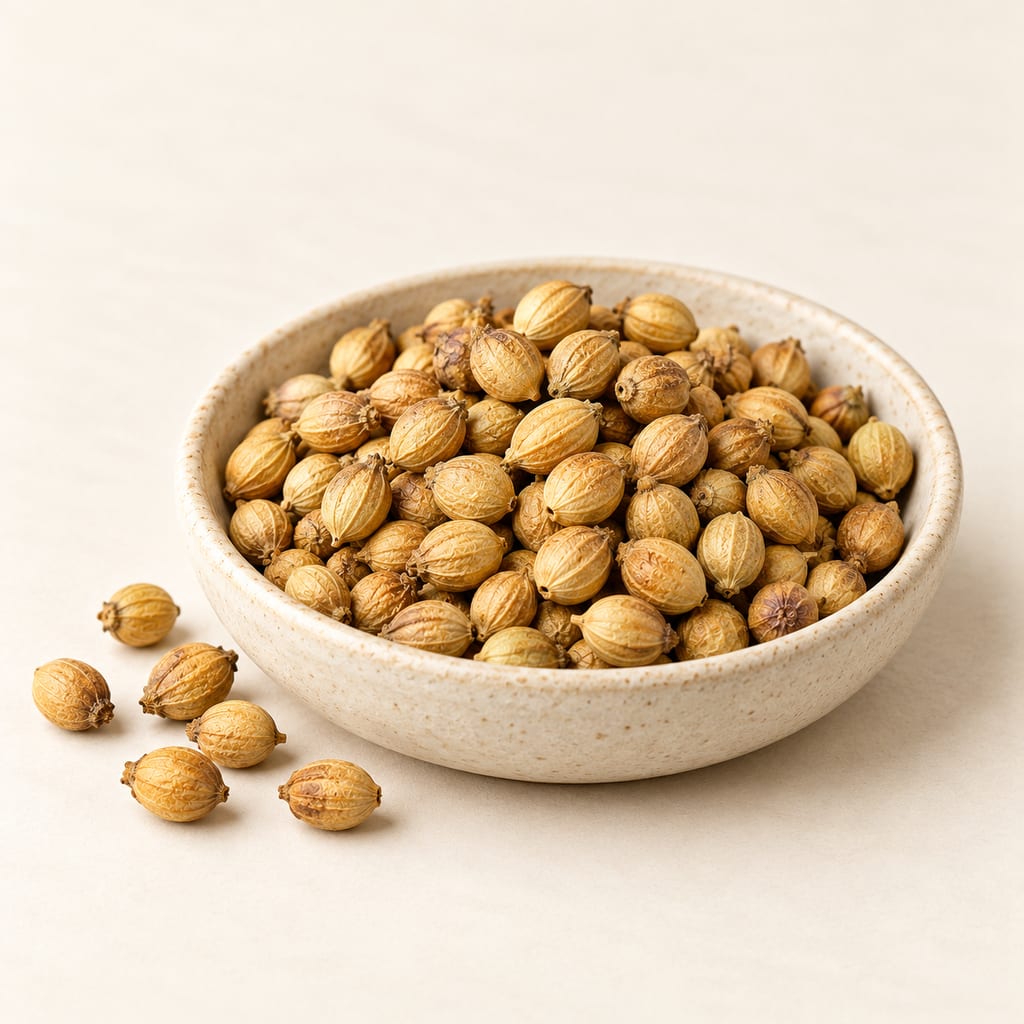
Coriander seed is the dried, aromatic fruit of Coriandrum sativum, used whole, cracked or ground in spice blends, pickles and cooked dishes.
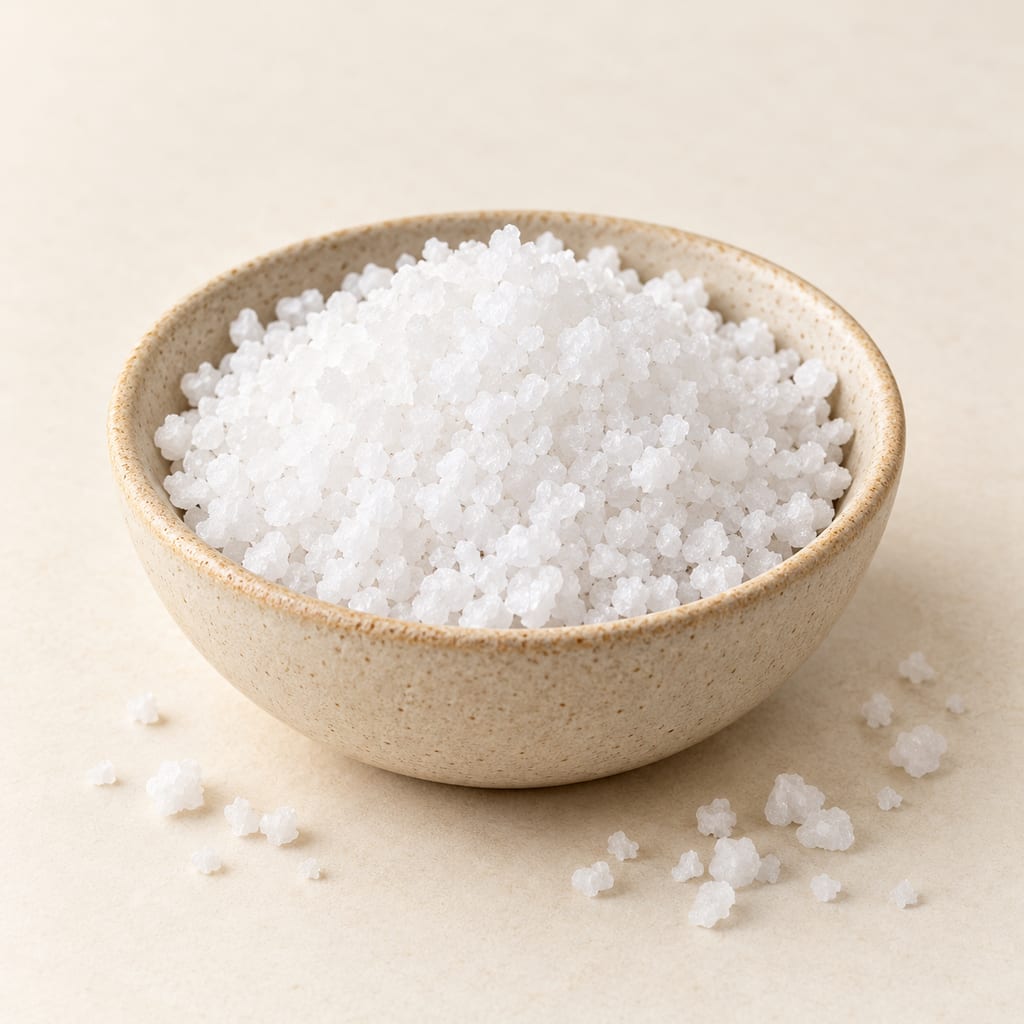
Food-grade sodium chloride seasons food and changes water movement in brines and cures; crystal size and the recipe's measurement method matter.
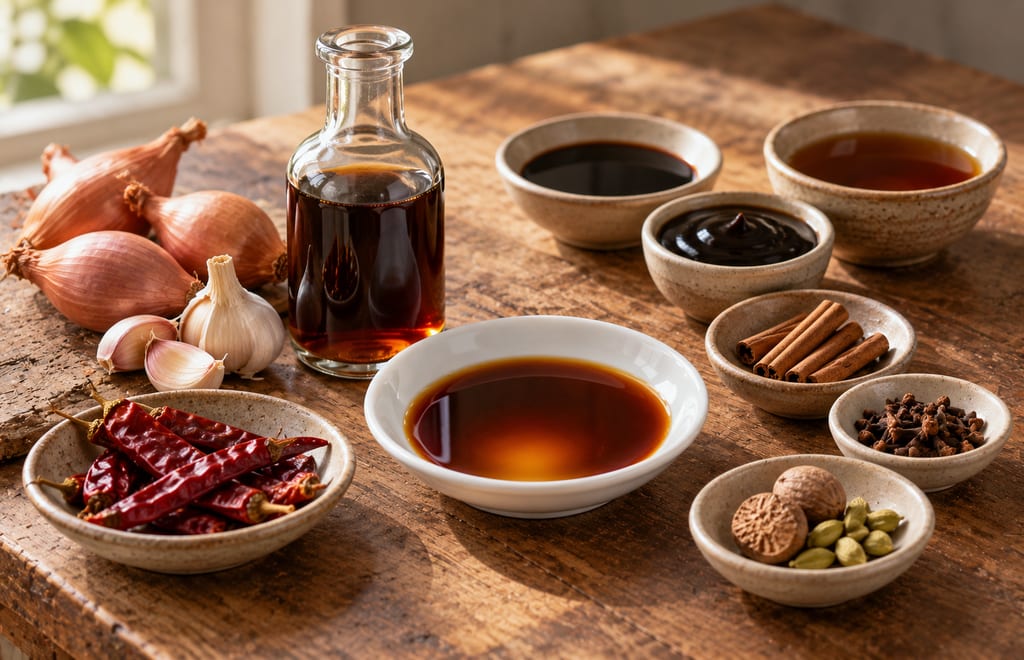
A thin, dark, sharply savoury table sauce associated with Worcester, England. This recipe preserves one historical formula printed in 1932 and distinguishes it from modern proprietary Worcestershire sauces.
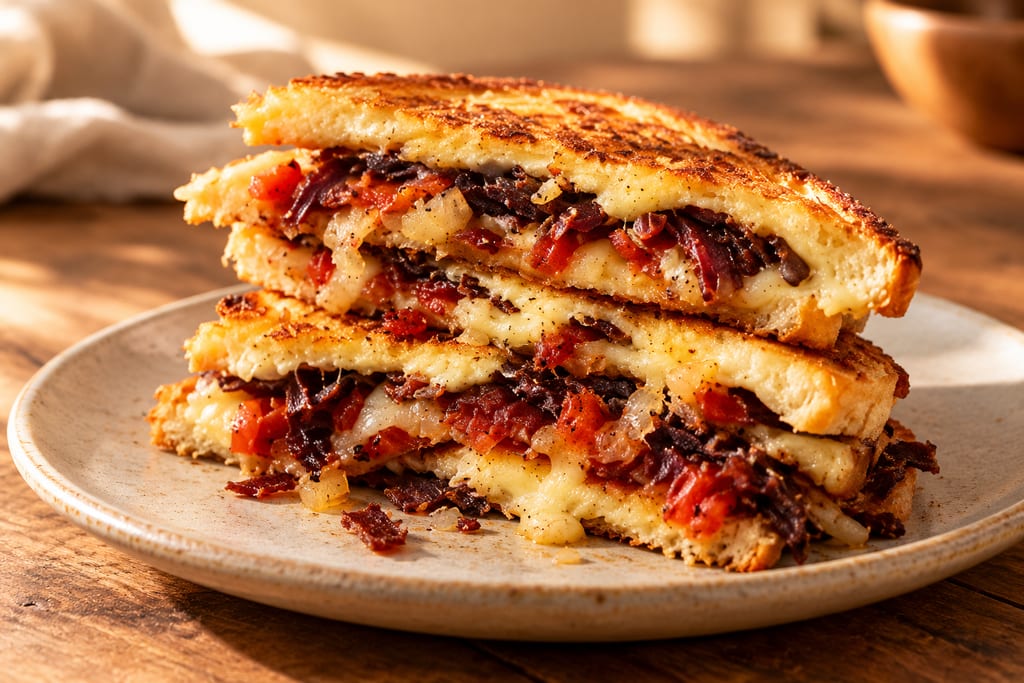
Chopped biltong, sweet onion, cream cheese and Cheddar fill bread toasted in a hinged grid over gentle coals, then finished with biltong dust.
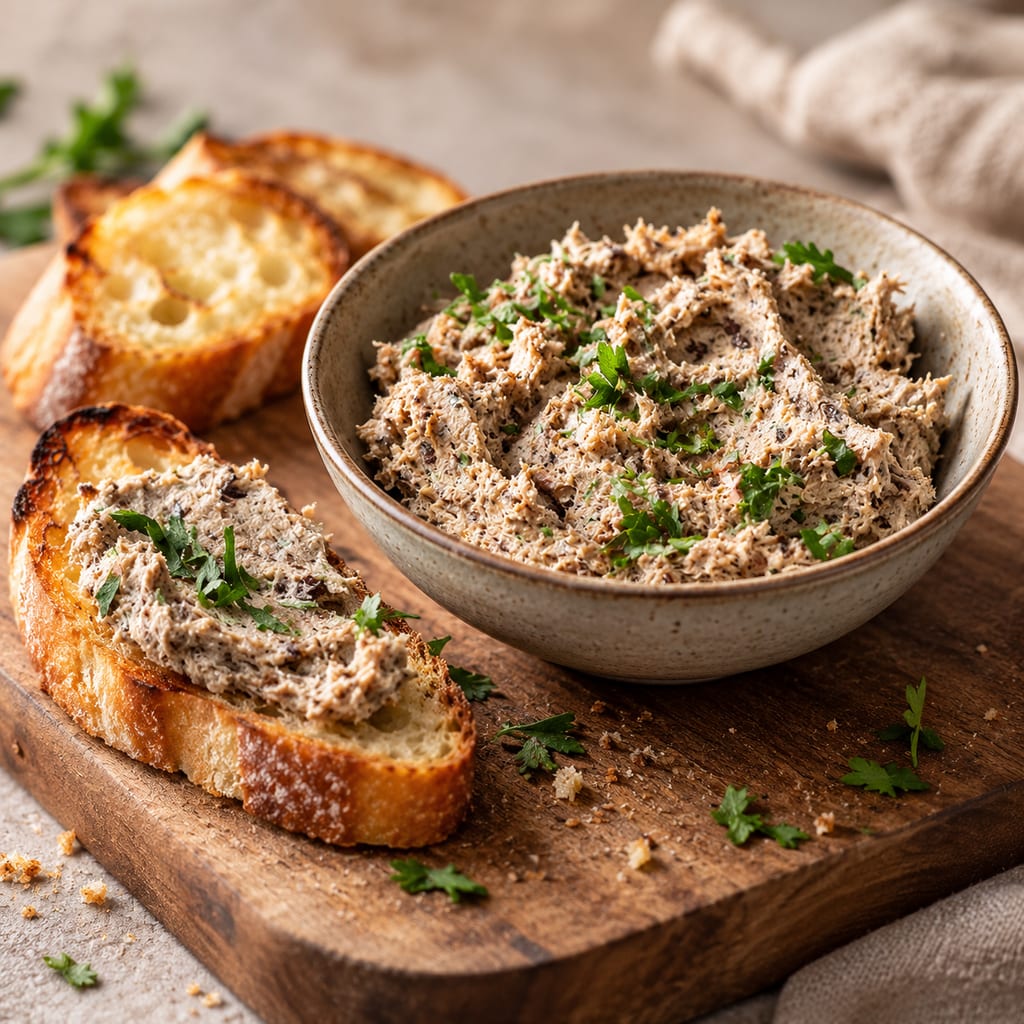
A cold biltong spread with sour cream, mayonnaise, mustard, lemon and herbs; serve it with crackers, crostini or bread.
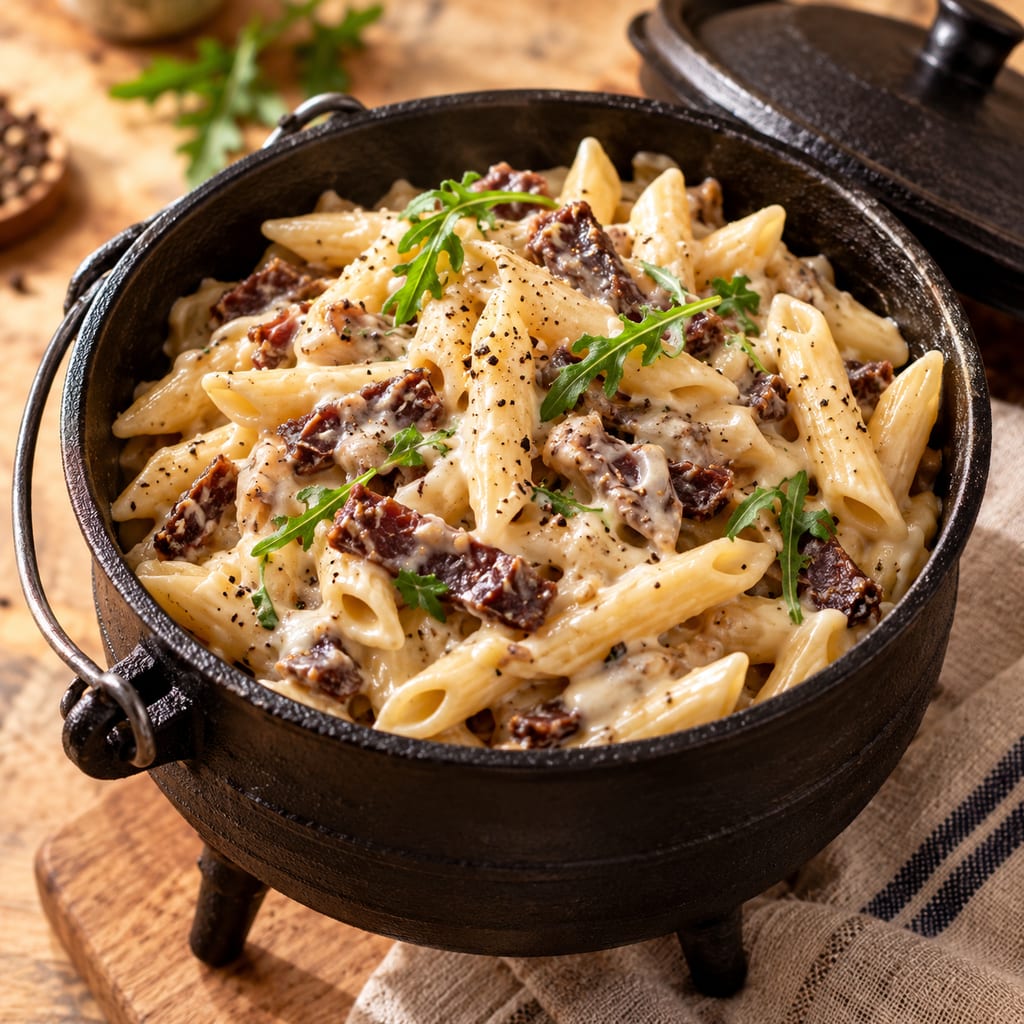
Biltong, bacon and vegetables simmer in tomato-herb stock, then join cooked pasta, milk, cream and Cheddar in this outdoor potjie.
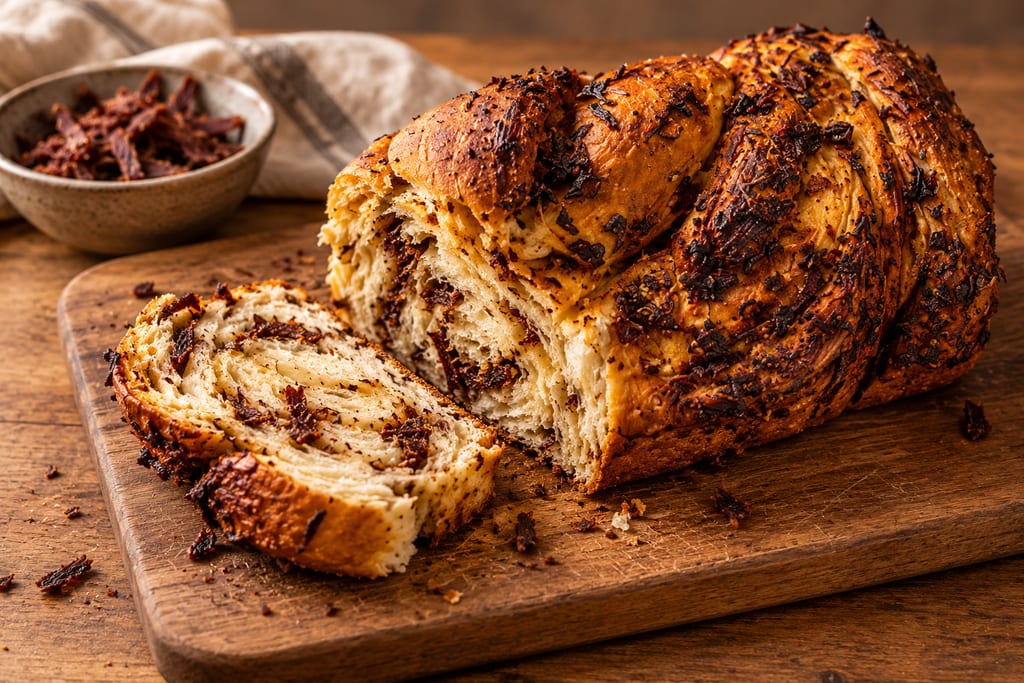
Yeasted bread wrapped around biltong, tomato pesto, Cheddar and feta, split lengthwise into a braid and baked; served with chilli-biltong butter.
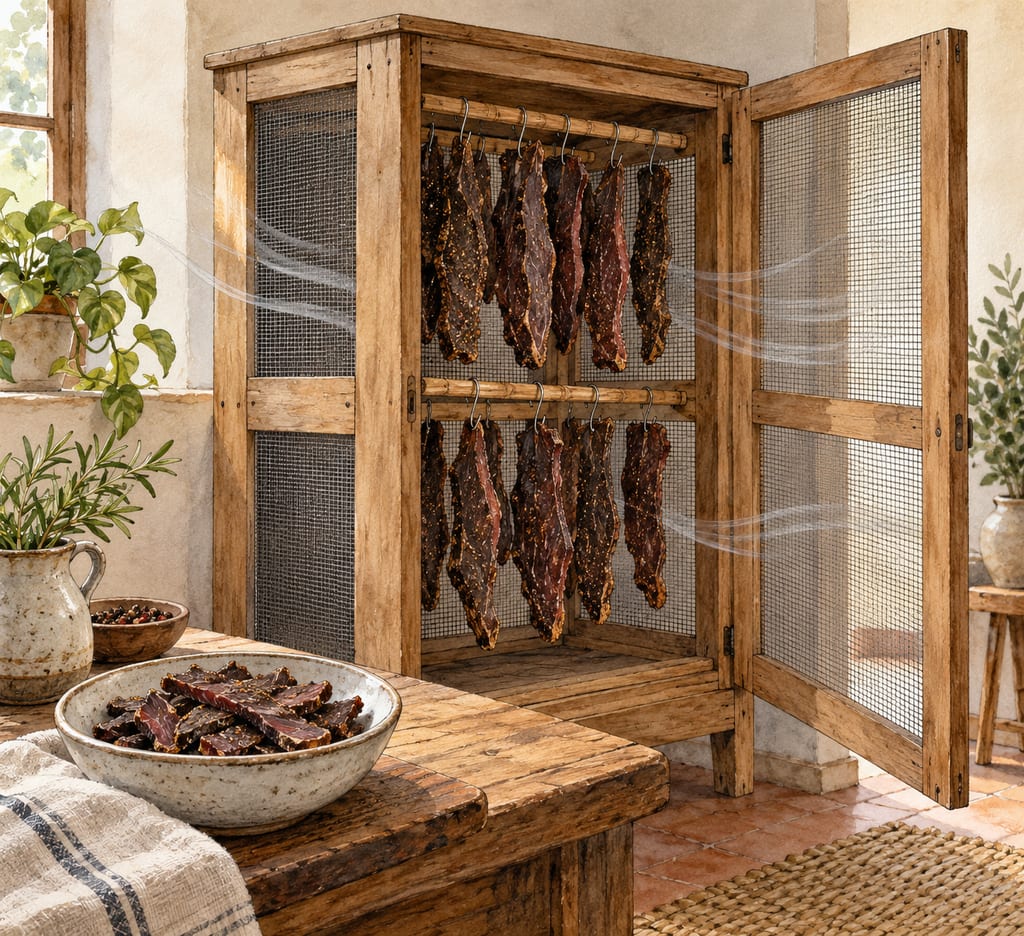
An unpowered timber cabinet with screened openings and food-suitable hanging rails, for drying meat such as biltong. Air moves through it by natural draft, so the room it stands in sets how fast it dries.
Two South African historical accounts describe biltong hung in a household chimney after initial drying or curing; neither supplies a construction plan or modern processing schedule.
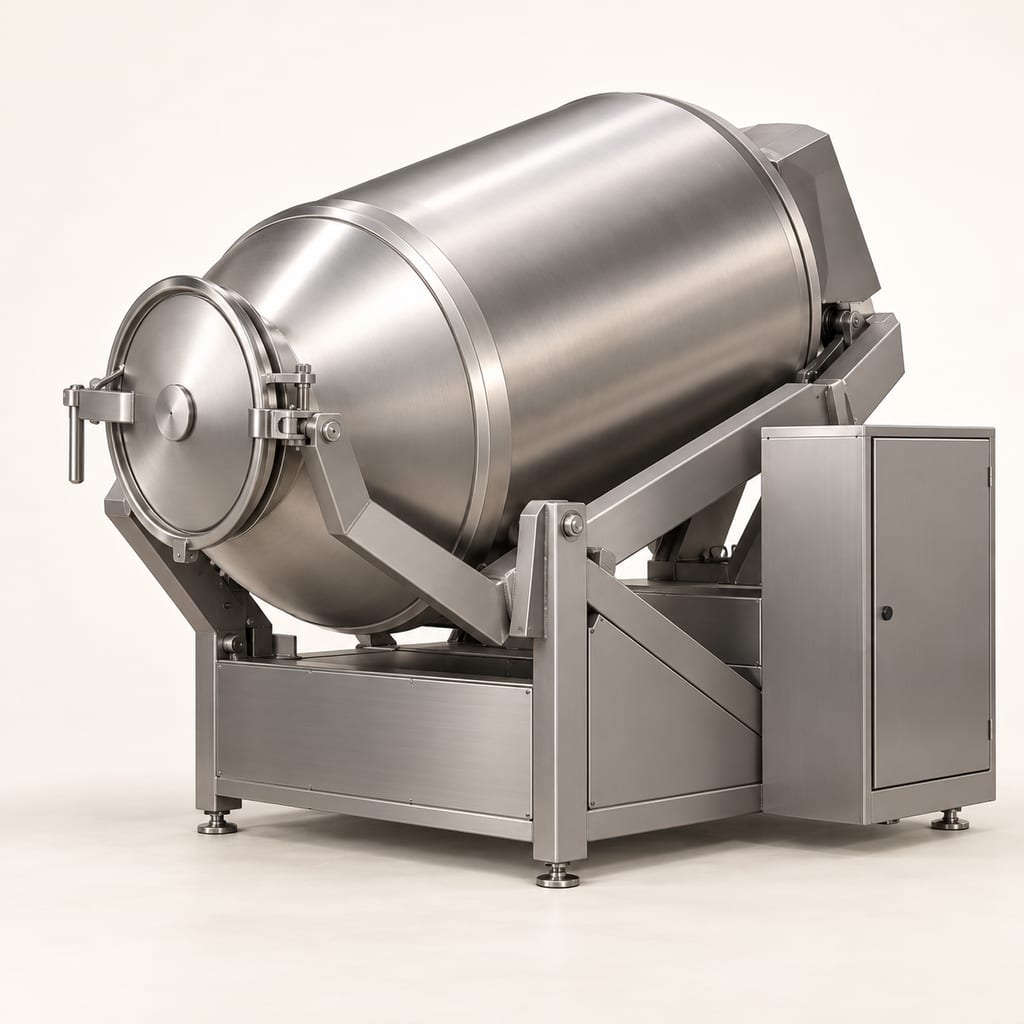
A vacuum tumbler is a powered rotating drum that massages meat under reduced pressure, distributing marinade or brine before later processing.
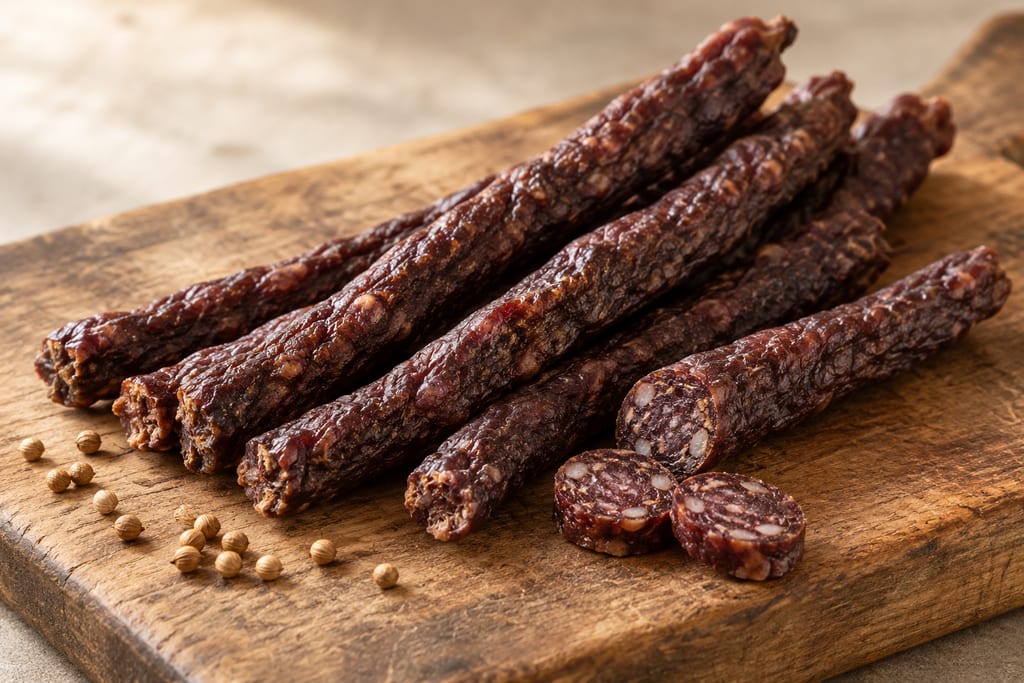
South Africa's dried sausage: seasoned minced meat in narrow casings, dried until it can be eaten without cooking, which makes it a far more demanding product than fresh boerewors.
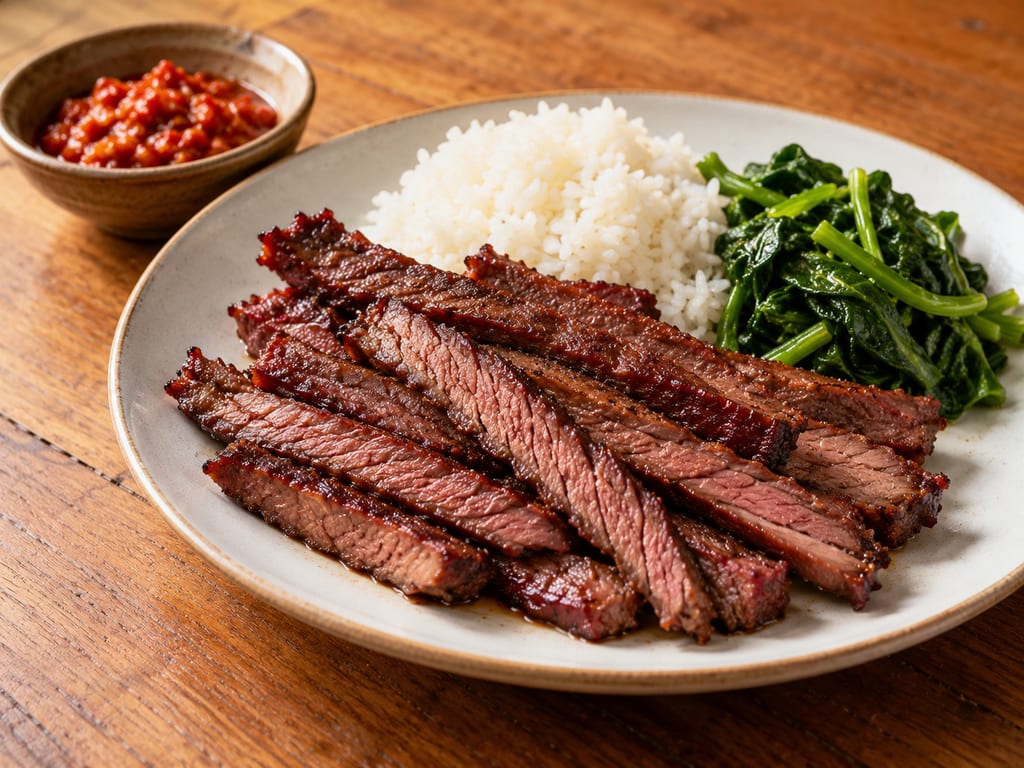
Smoked meat of Timor and Rote in eastern Indonesia: salted strips of beef or pork cooked over kosambi-wood embers under fresh kosambi leaves, served warm with rice, sambal lu'at and greens.
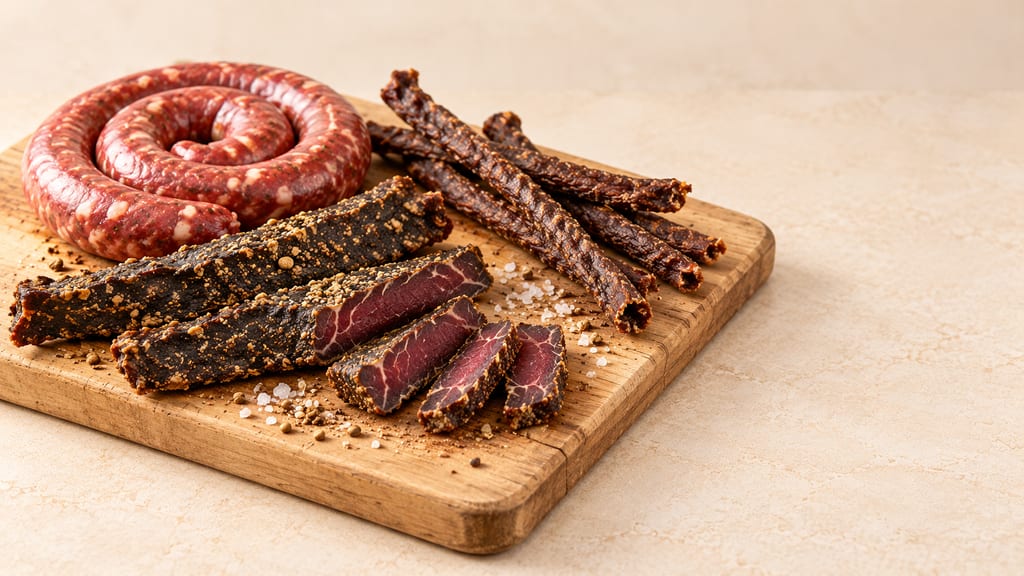
Boerewors, biltong and droëwors share a table but follow different paths from meat to meal. Their histories lead from the braai and butcher's counter to drying lines, household pots and the science of keeping food.
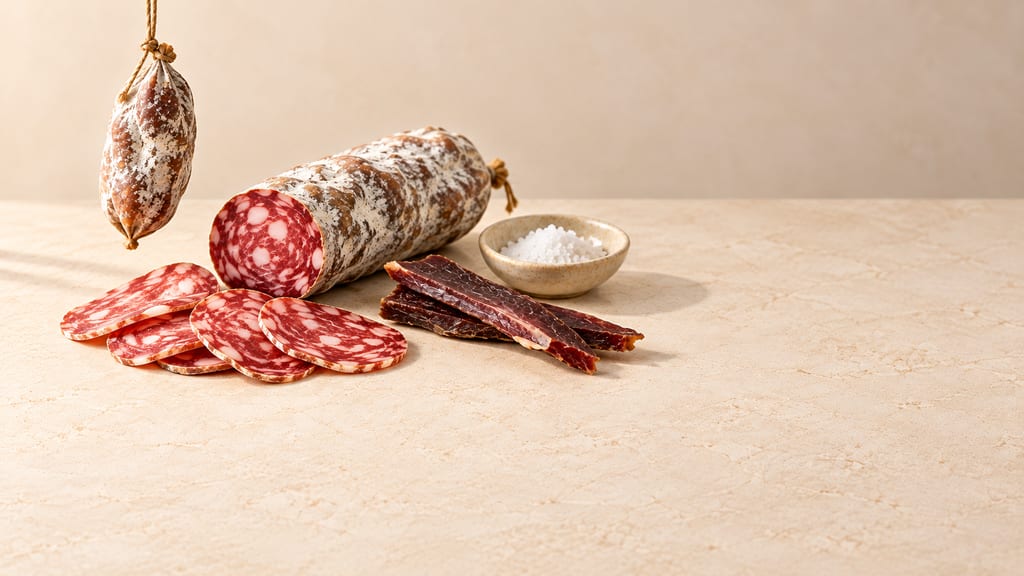
Dry salami, sour pork with rice, matured sheep and aged blubber follow different paths from animal to food. Their stories connect microbes with climate, slaughter, migration and the meals people share.
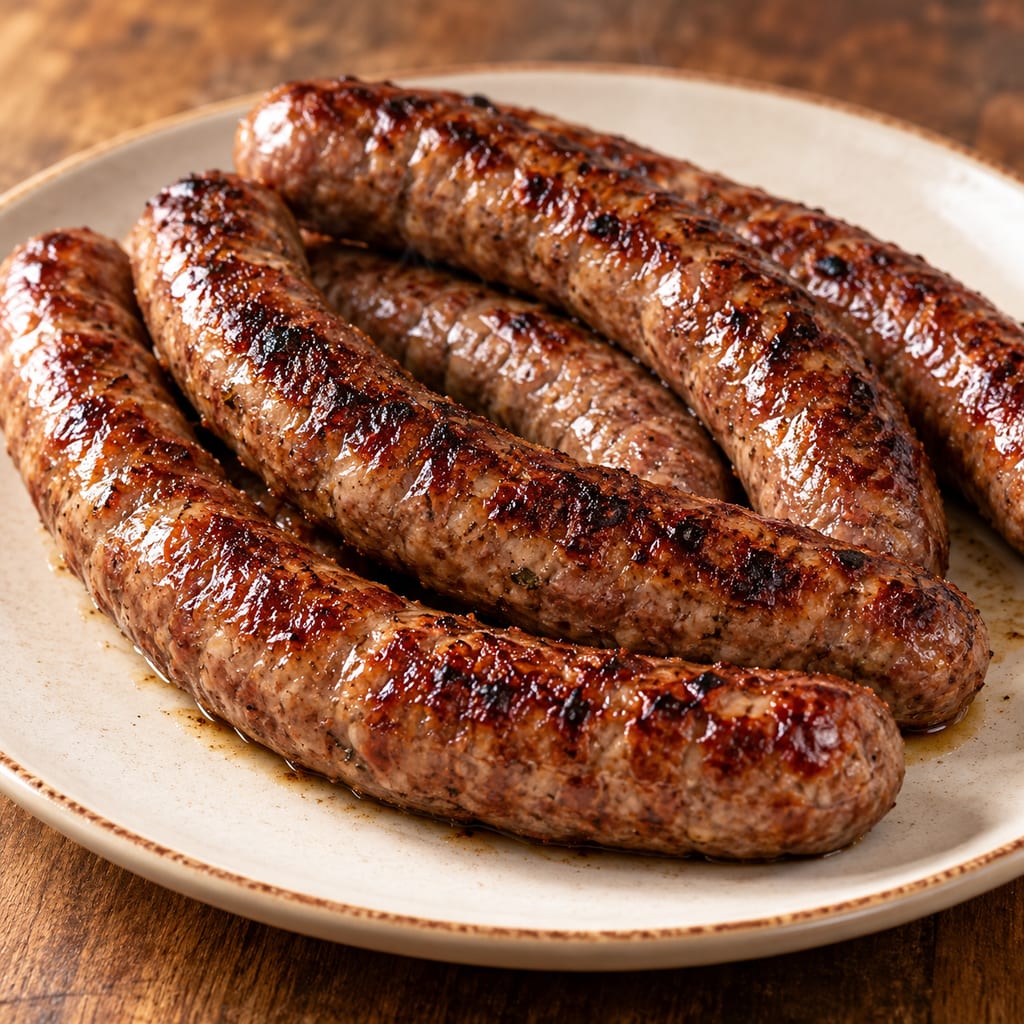
South Africa's regulated grilling-sausage class, looser than boerewors: a minimum of 40% meat, vegetable protein and mechanically recovered meat allowed, and sold raw.
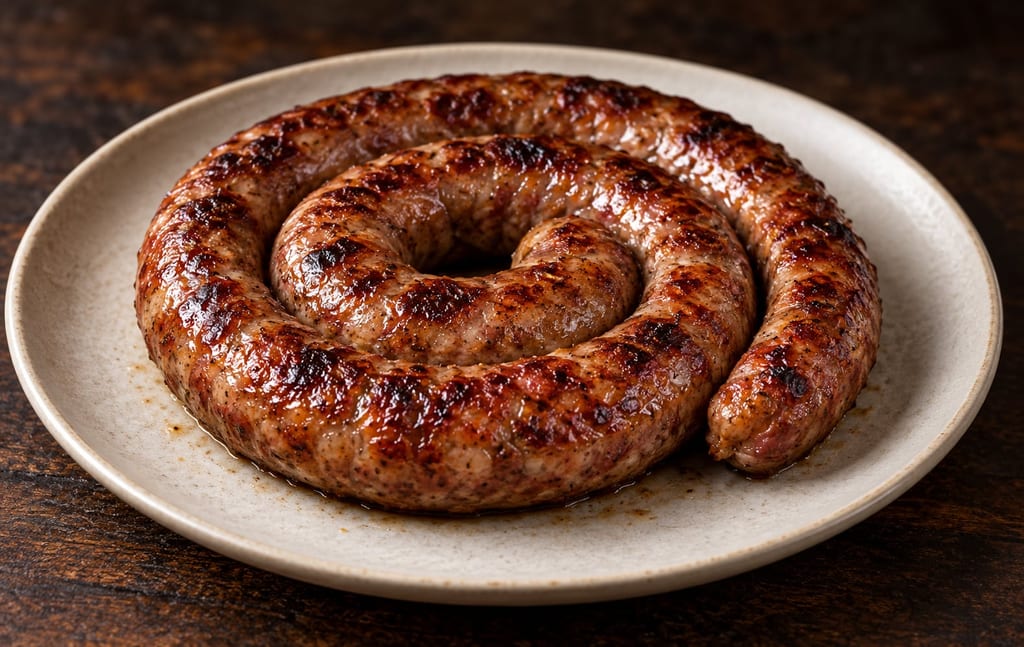
A coarse South African farmhouse sausage of beef with pork or mutton fat, defined by its coriander seasoning and cooked fresh over coals rather than preserved.
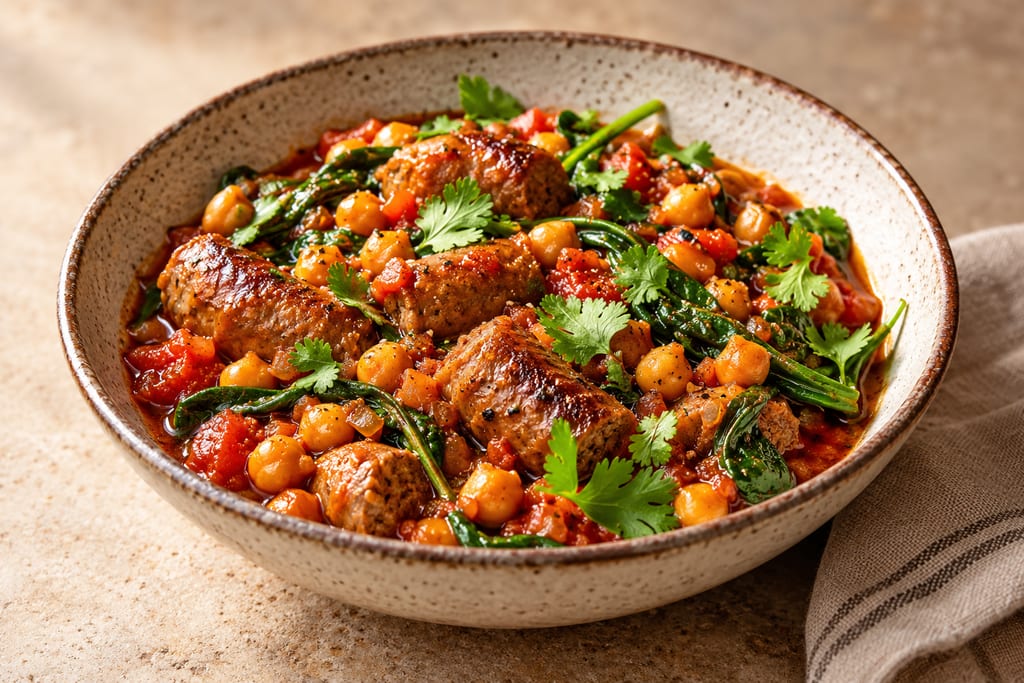
Lesego Semenya’s contemporary South African stew combines browned boerewors, chickpeas, tomato, spinach and warm spices.
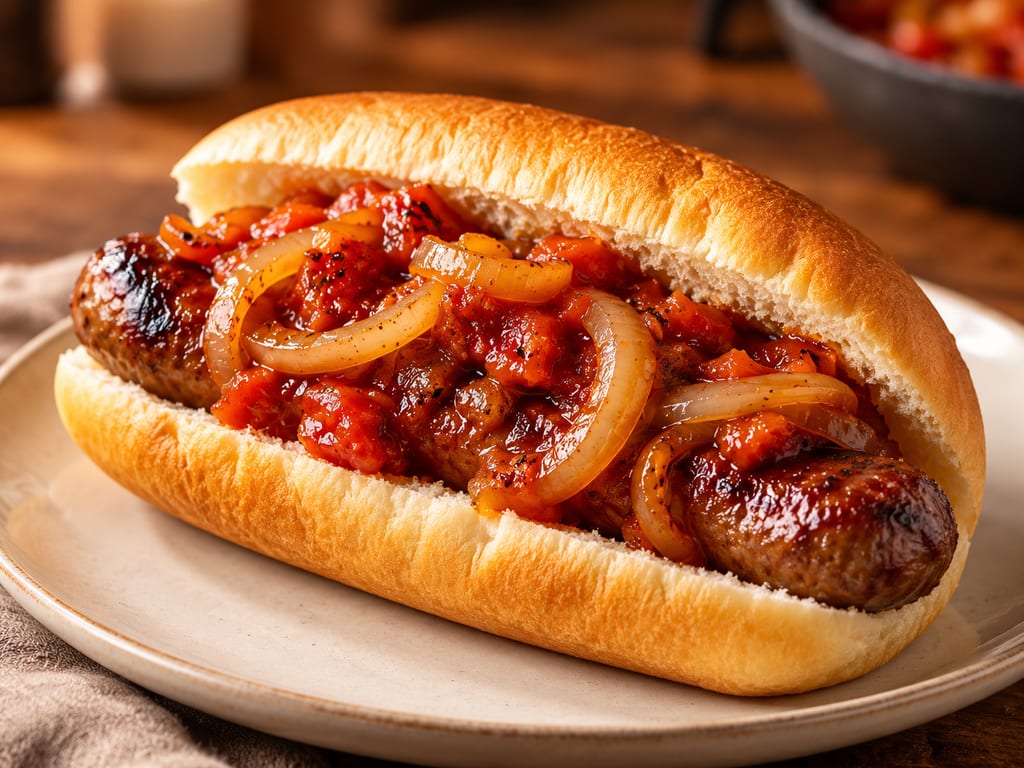
A South African boerie roll puts fully cooked boerewors in a soft bread roll and tops it with warm tomato-and-onion smoor.

A spicy South African vegetable relish of onion, carrot, pepper, tomato, curry seasoning and beans, cooked briefly and served warm or cold beside pap and grilled meat.
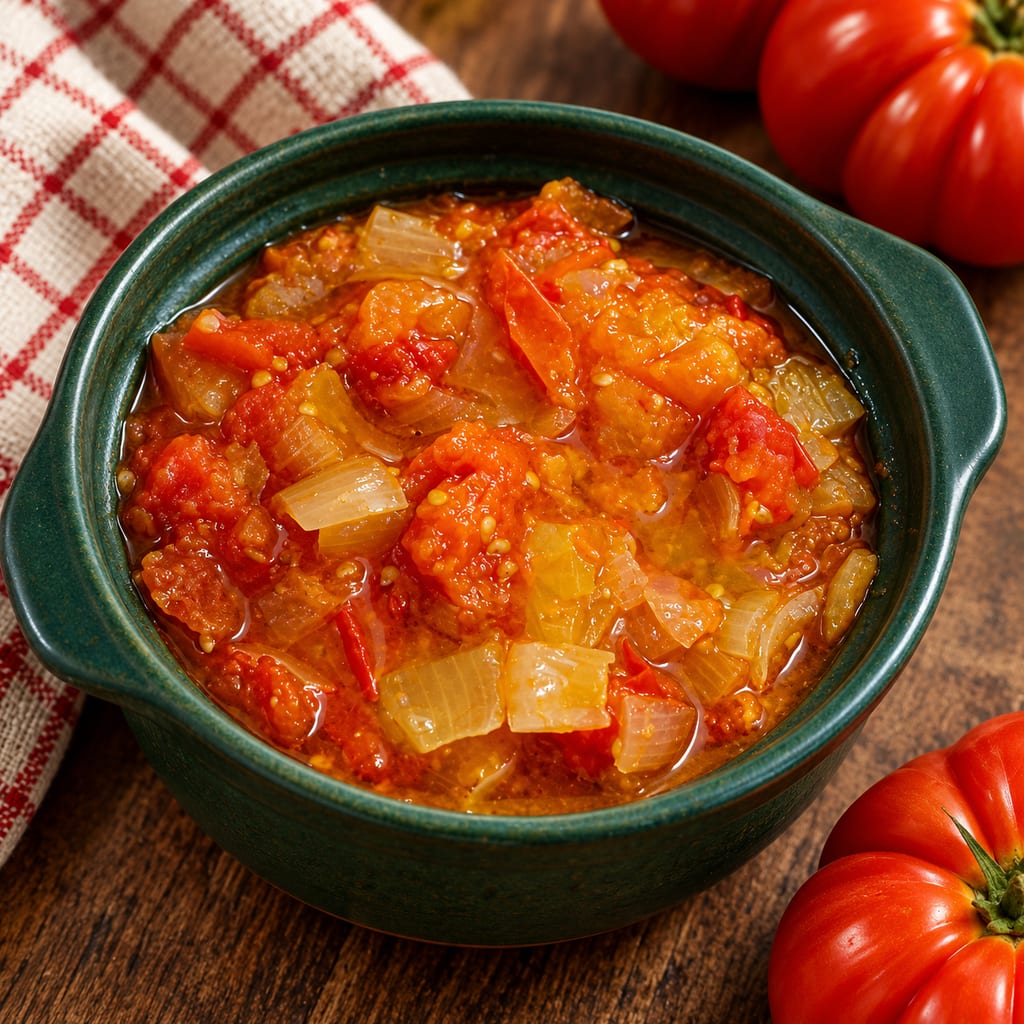
A thick South African tomato-and-onion relish simmered slowly and served warm with boerewors, pap or bread.
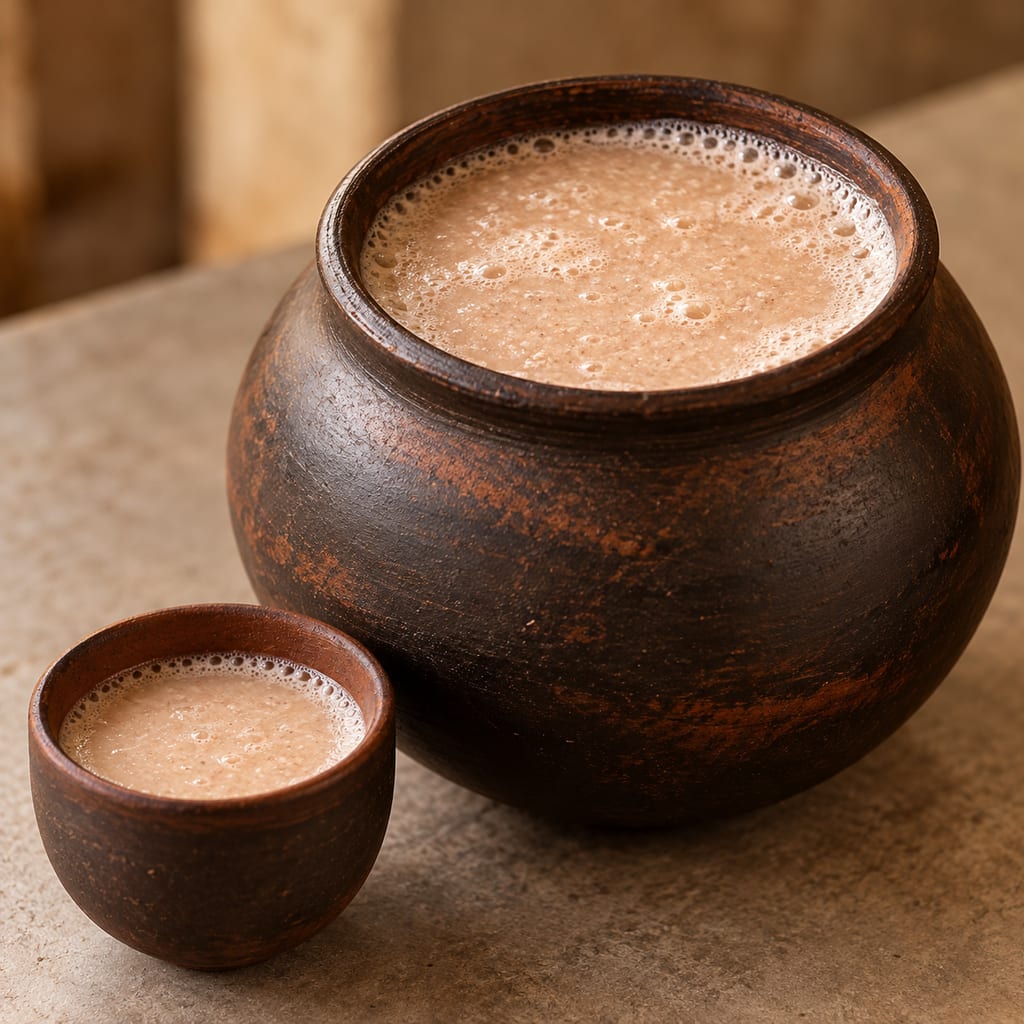
South Africa's opaque sorghum beer, soured by lactic acid bacteria before its mash is cooked and fresh malt stirred in, leaving a cloudy, creamy, cereal-thick drink that keeps only a day or two.
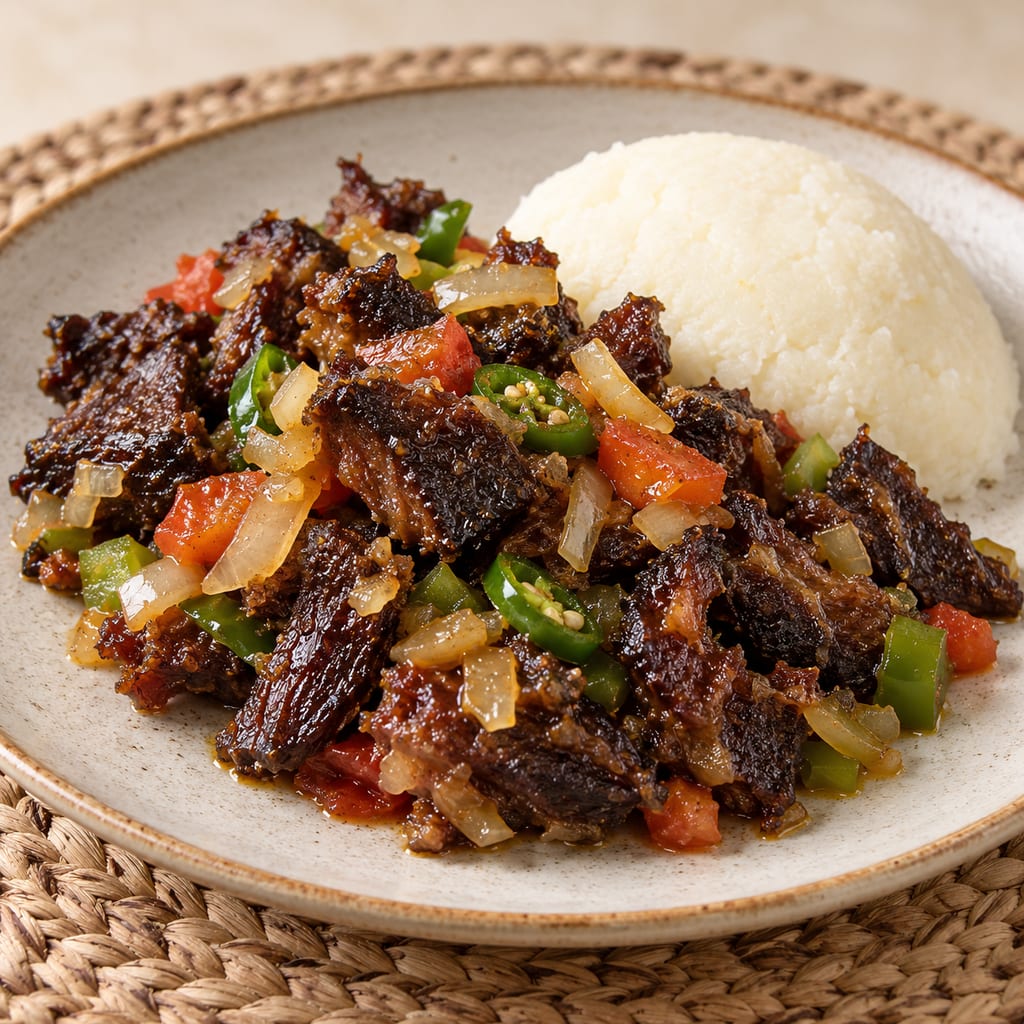
Alina Magano Johannes’s Oondhingu is a family dish from Onyaanya, Oshikoto, in northern Namibia: softened dried beef fried with vegetables and served with pap.
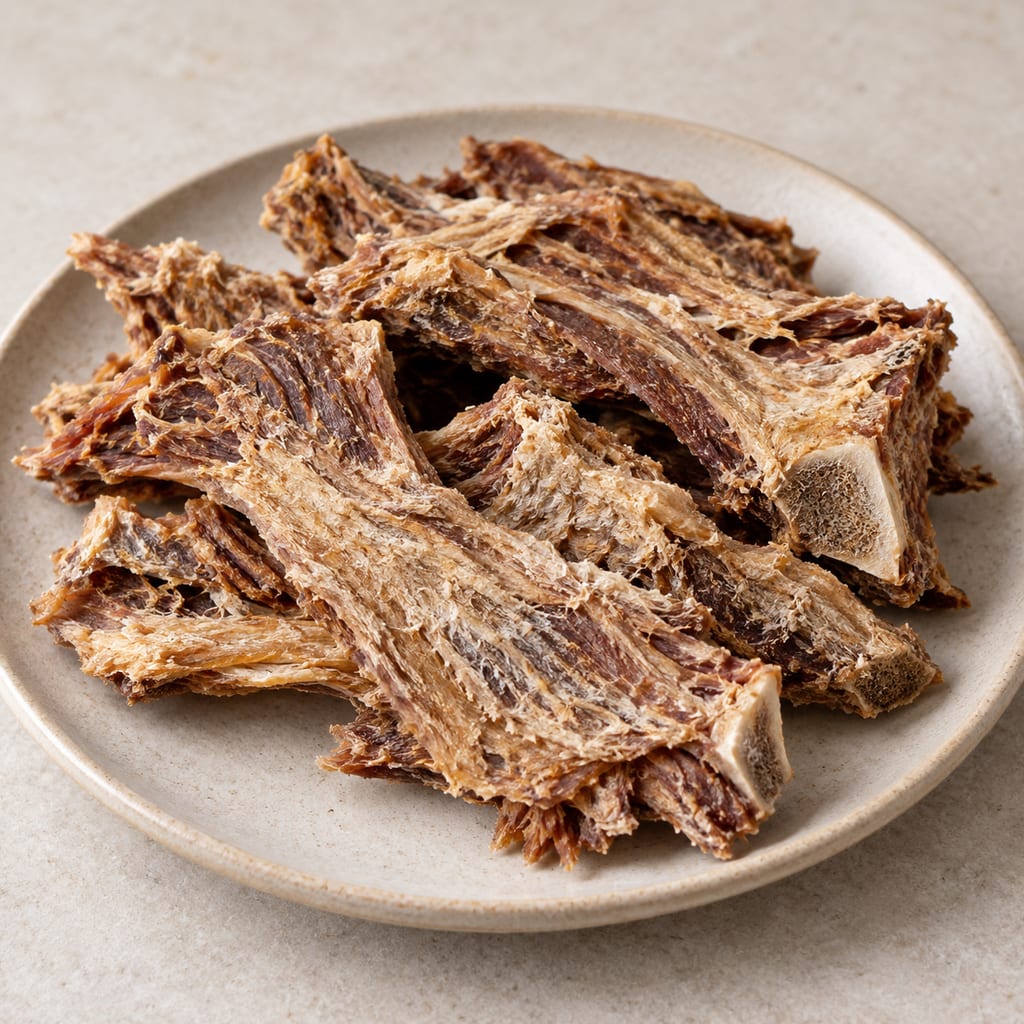
Alpaca charqui is Andean dried meat, made from camelid meat exposed to hot sun by day and frost by night at high altitude, the ancestor of the modern word jerky.
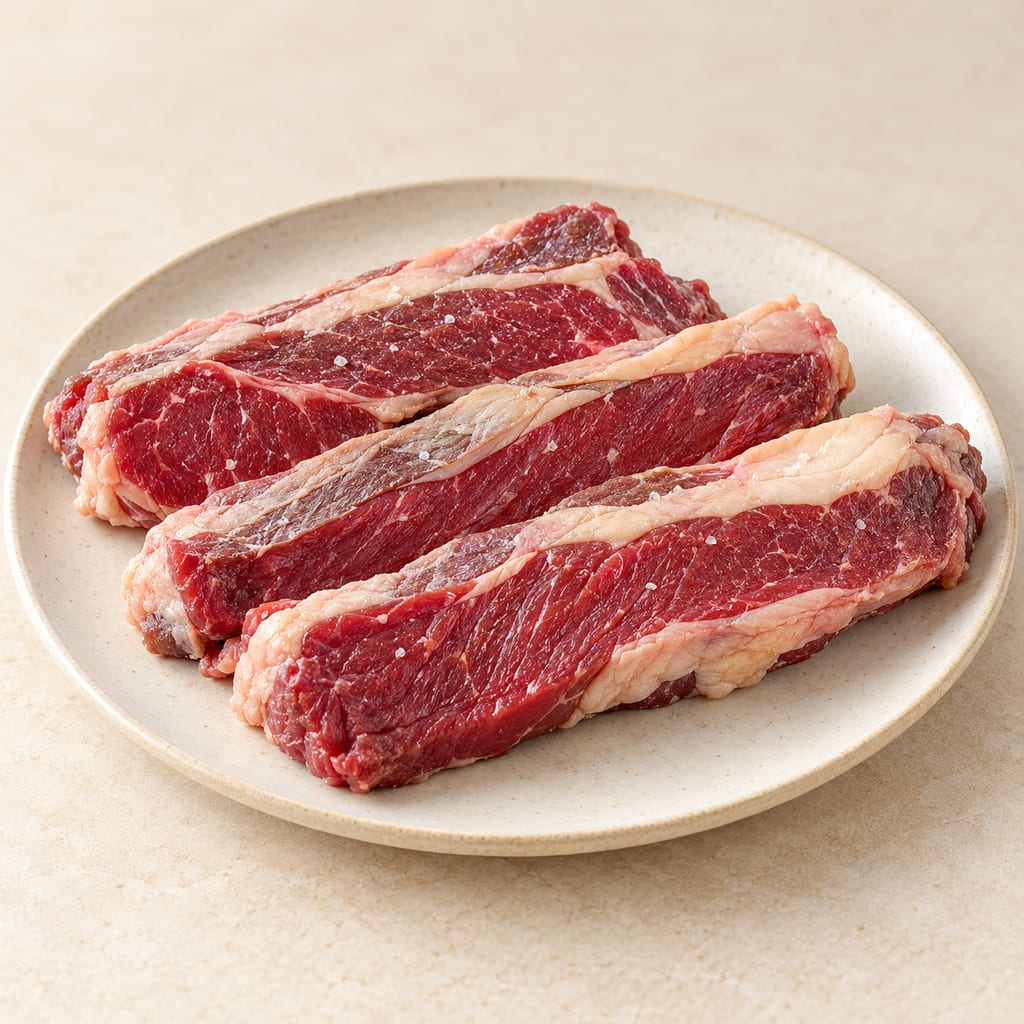
Beef given limited salt and partial surface drying, a short-keeping Brazilian meat that is much less durable than fully dried charque and is treated as a cold-chain product.
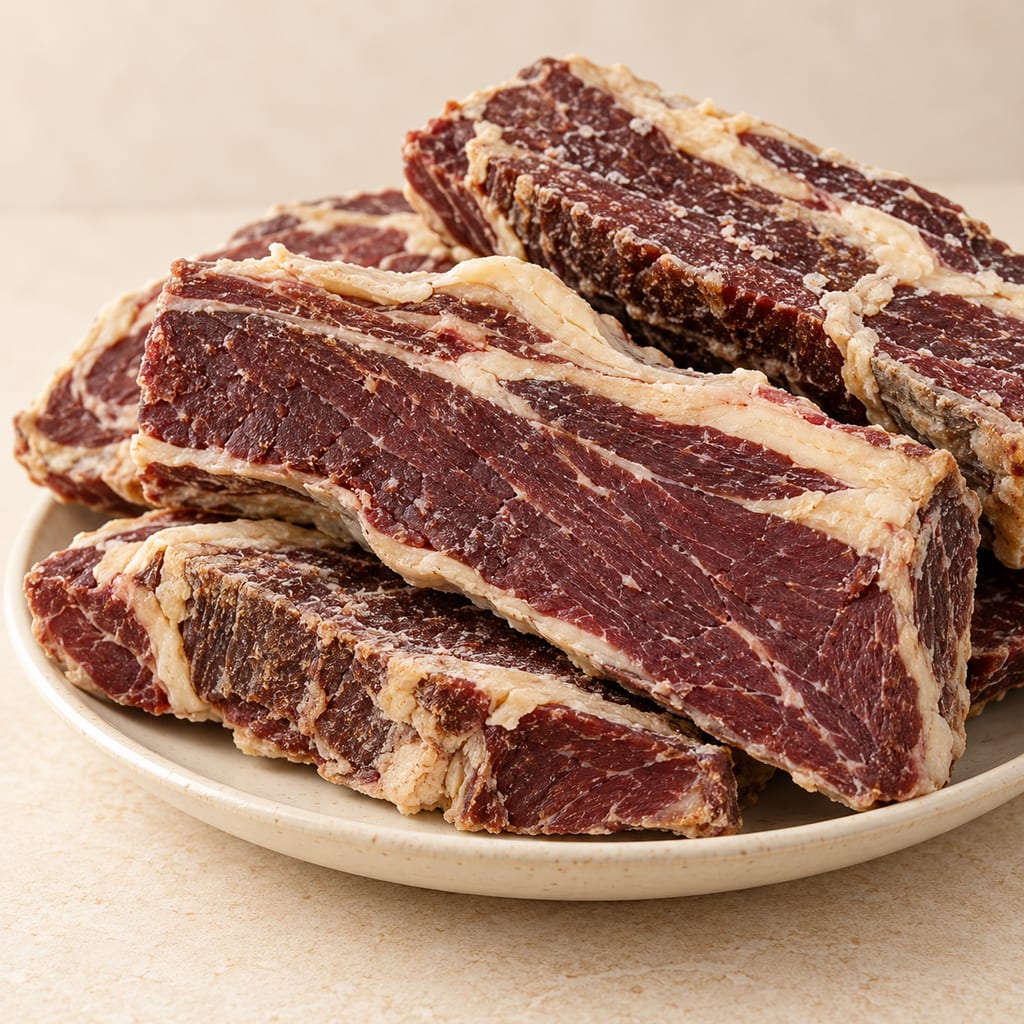
Beef salted heavily and dried into a strongly preserved ingredient that is desalted before it is cooked in stews; a Brazilian form of salt-dried meat that keeps far longer than the lightly salted carne-de-sol.

A documentary account of dried meat strips and their historical uses. It does not provide an operational home method for making shelf-stable jerky at home.
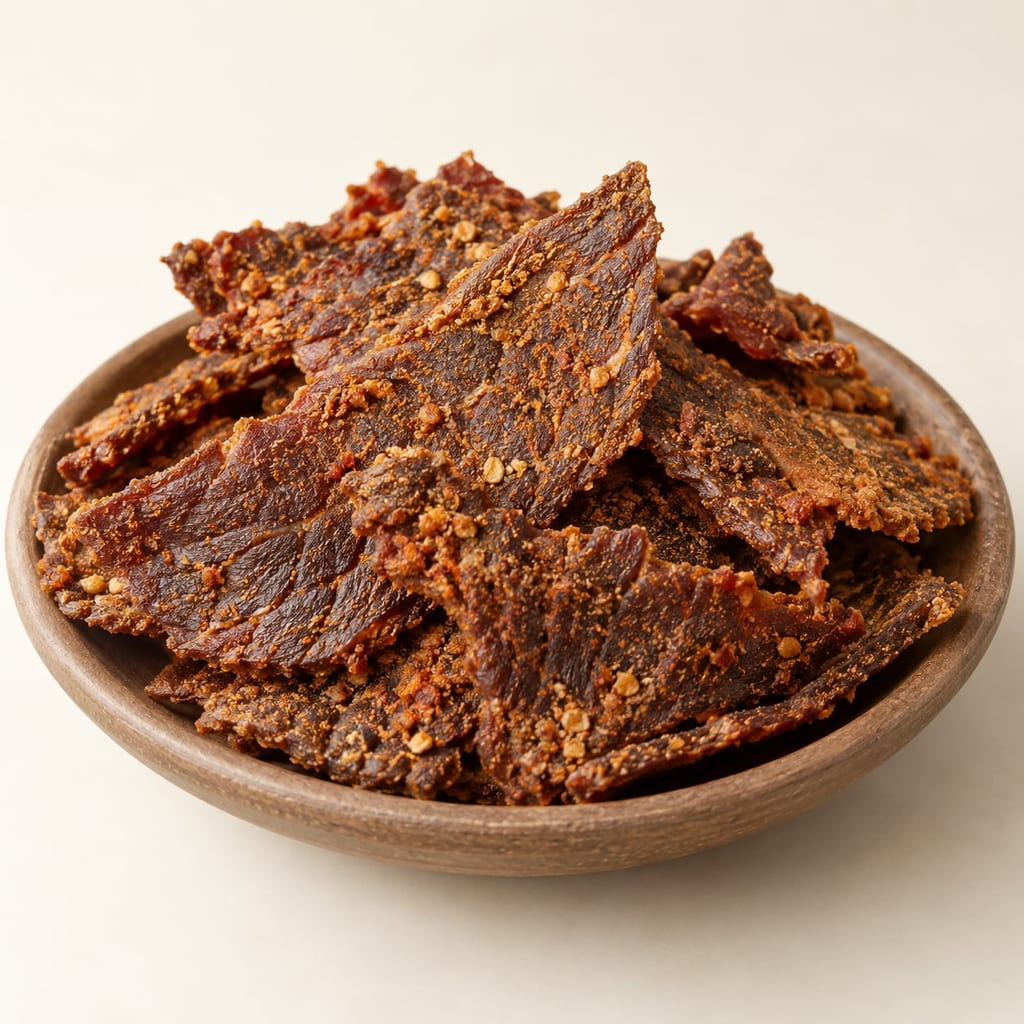
Kilishi is a Hausa-land dried meat from northern Nigeria and southern Niger: thin slices of beef or other meat, dried, coated in a spiced groundnut paste and dried again.
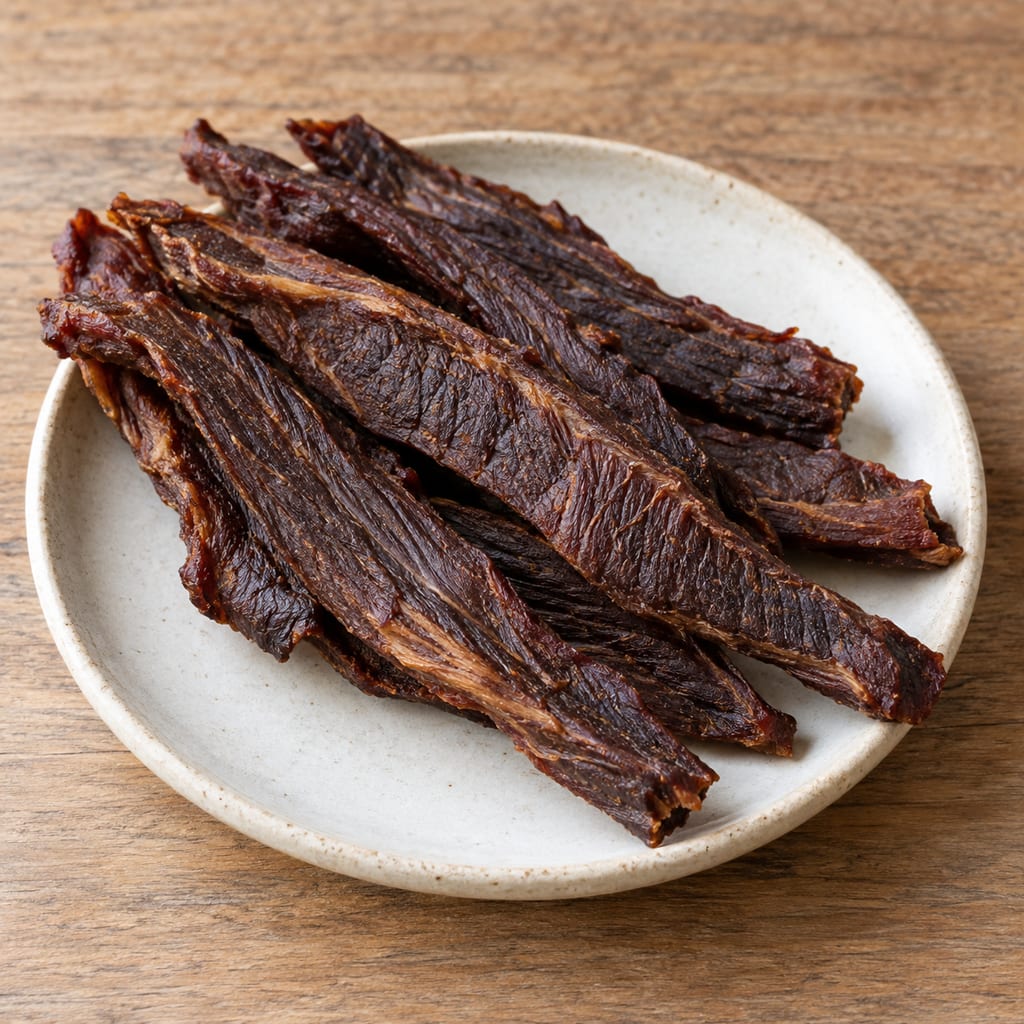
A documentary account of Malagasy salted meat strips, commonly dried, smoked or both; it does not provide a validated home-preservation recipe.
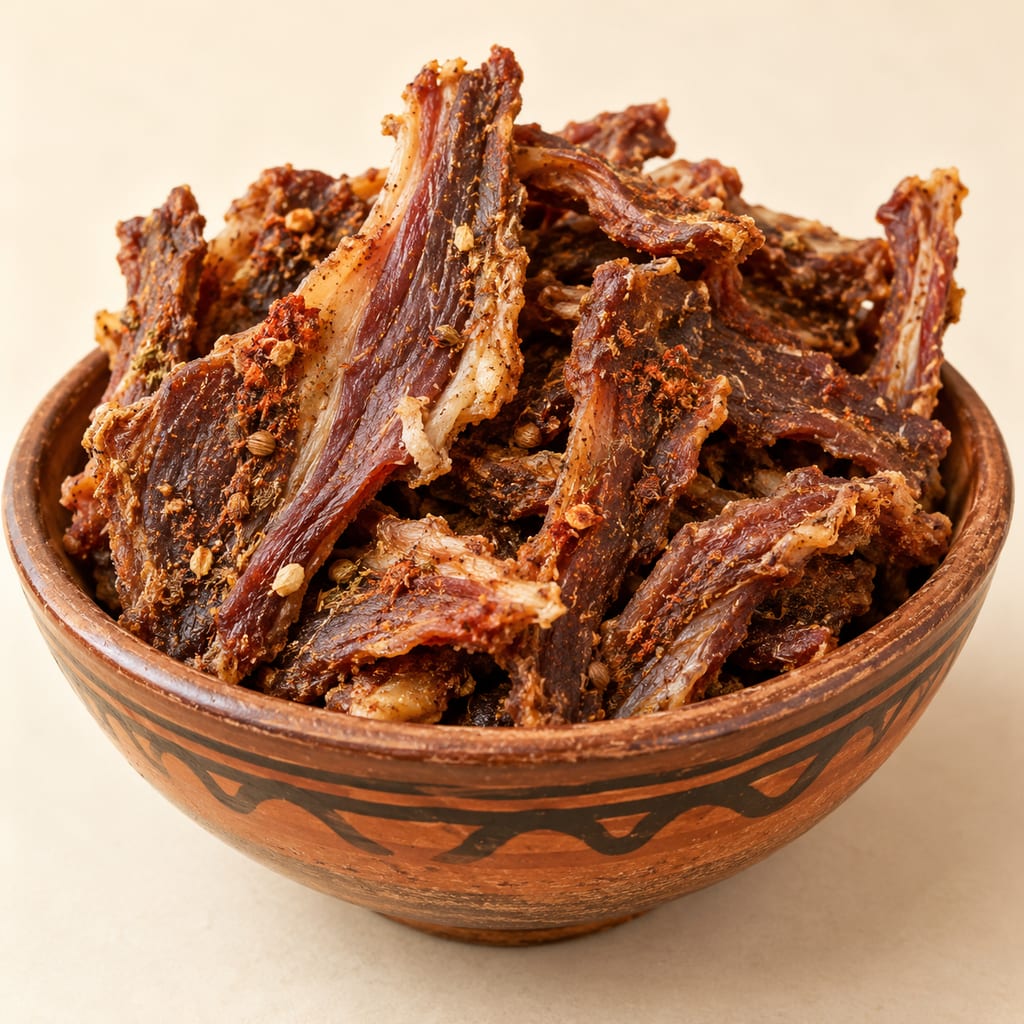
Moroccan kaddid is a traditional salted, dried meat. The measured batch here is from a 2023 Tunisian experiment and is included only as a non-instructional comparison.
No community contributions have been published for this entry yet.
Sign in to contribute. Published comments and photos are free to read.
South African Society for Animal ScienceScience · Method
Jones, Arnaud, Gouws and Hoffman (2017) — Processing of South African biltong: A reviewA 2017 review of South African biltong processing: whole-muscle strips, the roles of salt, vinegar and spices, and the diversity of contemporary commercial products from very dry and salty to soft and relatively tender.
One reviewed experimental system used a marination period of approximately 18-20 hours at 4-8°C.
The literature does not establish a compulsory strip thickness applicable to every biltong product.
Cited in: More than South African jerky; Names, meat species and regional vocabulary; History: documented drying and the limits of origin stories; The raw material: why the cut matters; Salt; Vinegar; Coriander; Pepper and other spices; Select and inspect the meat; Cut into strips; Add salt, vinegar and spices; Hold under controlled conditions; Arrange for drying; Dry and monitor; Slice and package; Regional, species and commercial variations; How biltong is eaten
PubMedScience
Petit and colleagues (2014) — Physicochemical and microbiological characteristics of biltongA 2014 study of beef, kudu and springbok biltong identified distinct dry and moist products. Dry samples: moisture 21.5-25.3 g per 100 g, water activity 0.65-0.68, salt 5.5-7.9 g per 100 g. Moist samples: moisture 35.1-42.8 g per 100 g, water activity 0.85-0.89, salt 3.8-5.6 g per 100 g. Measured pH across the samples was 5.00-6.26.
Microbiological observations included lactic acid bacteria and differences in lactic-acid composition; some dry samples showed characteristics consistent with fermentation while other products did not.
Cited in: History: documented drying and the limits of origin stories; Salt; Water activity, moisture and fermentation; Regional, species and commercial variations
PubMed CentralSafety · Science
Experimental study of microbial pathogen reduction during biltong processing (2022)A 2022 experimental study demonstrated pathogen reductions exceeding 5 log units under one particular biltong process using vinegar, salt, coriander and pepper followed by controlled drying at 23.9°C and 55% relative humidity, with a defined meat preparation, treatment and challenge-testing procedure.
Cited in: Vinegar; Verify the finished batch; Quality faults and safety
MDPI FoodsScience
Microbial community changes during biltong processing (2023)A 2023 study of microbial community changes during biltong processing.
Cited in: Water activity, moisture and fermentation
Food Standards AgencySafety
UK Food Standards Agency — Microbiological hazards associated with biltong and similar dried meatsA review of microbiological hazards associated with biltong and similar dried meats, which also notes that environmental conditions suitable for traditional drying cannot be assumed in a different climate.
Cited in: Dry and monitor; Quality faults and safety