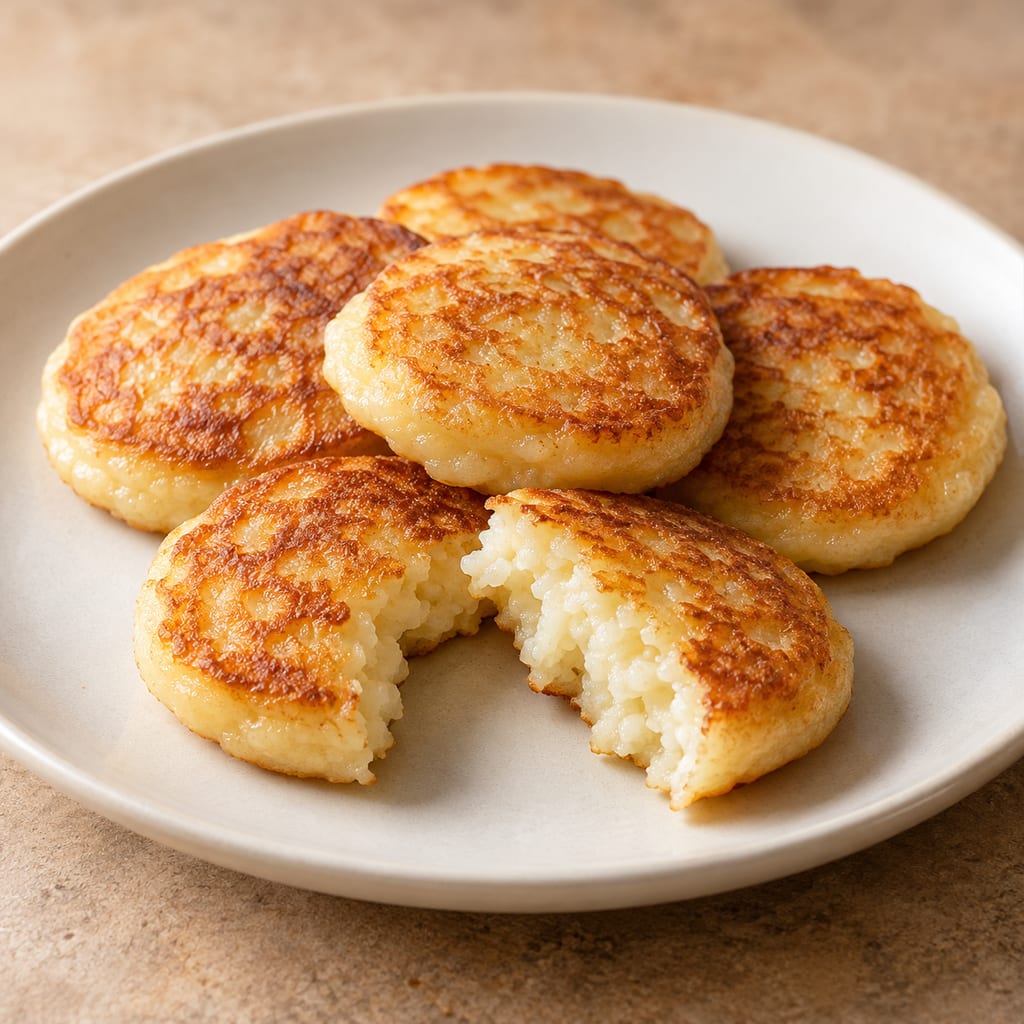
Mofo gasy (cream-of-rice batter)
Small, mildly sweet Madagascar-named griddle cakes made from a briefly risen batter of cream of rice, whole-wheat pastry flour, yeast and water.
 FermenteaWhere food goes to change
Traditional method
Kitoza (salted and smoked meat)
A documentary account of Malagasy salted meat strips, commonly dried, smoked or both; it does not provide a validated home-preservation recipe.
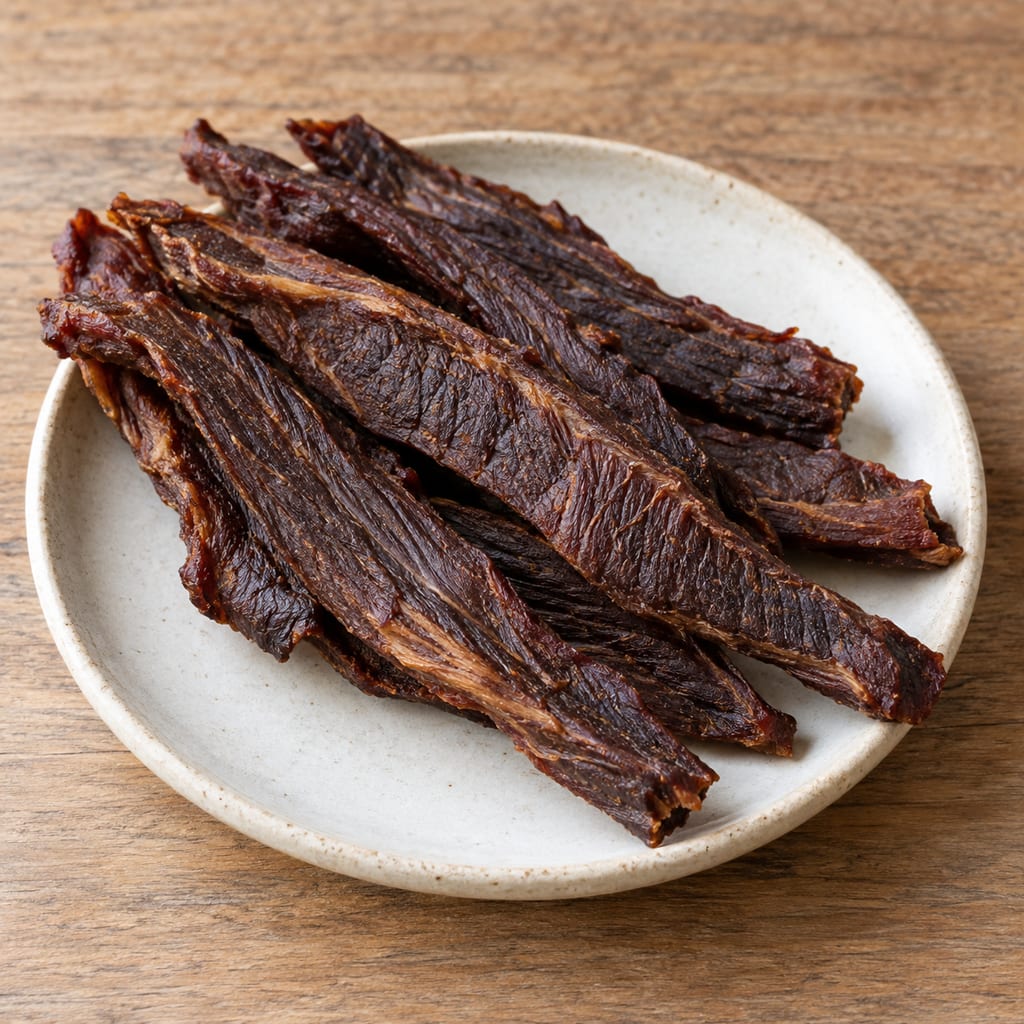
Kitoza is a Malagasy meat product: strips of beef, often zebu, or pork, salted and seasoned and then dried, smoked or both. It is a preserved meat, not a fermented one.
It is eaten with rice, often as a thin rice soup, and sometimes with greens. One journalistic report describes northern Madagascar eating it with a thin rice porridge, and says preferences differ in the central highlands.
Published studies describe long strips of beef, often zebu, or pork, seasoned with salt and sometimes garlic, pepper or ginger. These descriptions document reported ingredients and product forms; they do not specify household quantities.
Accounts describe sun-dried, smoked and combined forms. Traditional smoke is reported over a kitchen fire or in a smoking unit. Studies find more moisture in smoked samples than in dried samples, so these are distinct product forms.
The cited sources do not establish a validated household time, temperature, salt concentration or storage limit. These descriptions are not directions for home preservation.
Studies report polycyclic aromatic hydrocarbons in smoked kitoza, with some samples above the EU benzo(a)pyrene limit cited by the study. A separate study reports that a staged industrial approach reduced PAH levels, but its findings are not a household process.
Home-made samples were made from fresh raw meat and microbiological quality was not generally controlled; researchers found substantial variability between batches. This page records those findings and reported traditions without supplying a home preservation method.
Recent studies and a technical guide document kitoza as a traditional Malagasy product. The origin story in one technical guide is uncited and is not repeated here.
Scaling: source batch only
A study of smoked kitoza found some samples above the EU benzo(a)pyrene limit of 2 µg/kg. A separate drying or cooking step followed by a short smoke step reduced these levels in a study.
Hazard sourceHome-made kitoza is made from fresh raw meat, and its microbiological quality is generally not controlled. No validated process is established.
Hazard sourceThis page is a documentary account, not a validated home salting, drying or smoking process.
Research found that home-made kitoza may have uncontrolled microbial quality and that some smoked samples exceeded the cited benzo(a)pyrene limit.
Do not rely on smell, colour or appearance to judge safety. This account gives no household preservation, storage or consumption instructions.
Country-level association. Regional differences in serving are reported in one account.
Small, mildly sweet Madagascar-named griddle cakes made from a briefly risen batter of cream of rice, whole-wheat pastry flour, yeast and water.
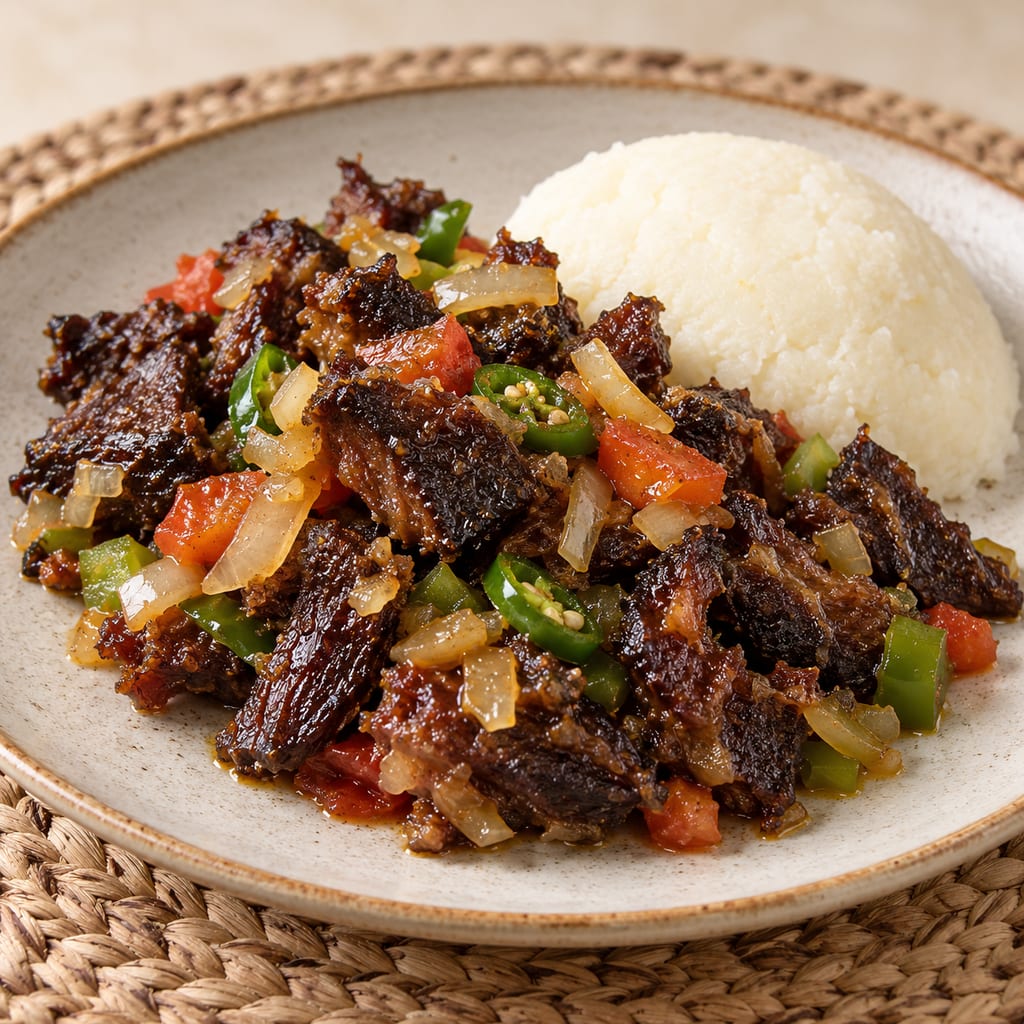
Alina Magano Johannes’s Oondhingu is a family dish from Onyaanya, Oshikoto, in northern Namibia: softened dried beef fried with vegetables and served with pap.
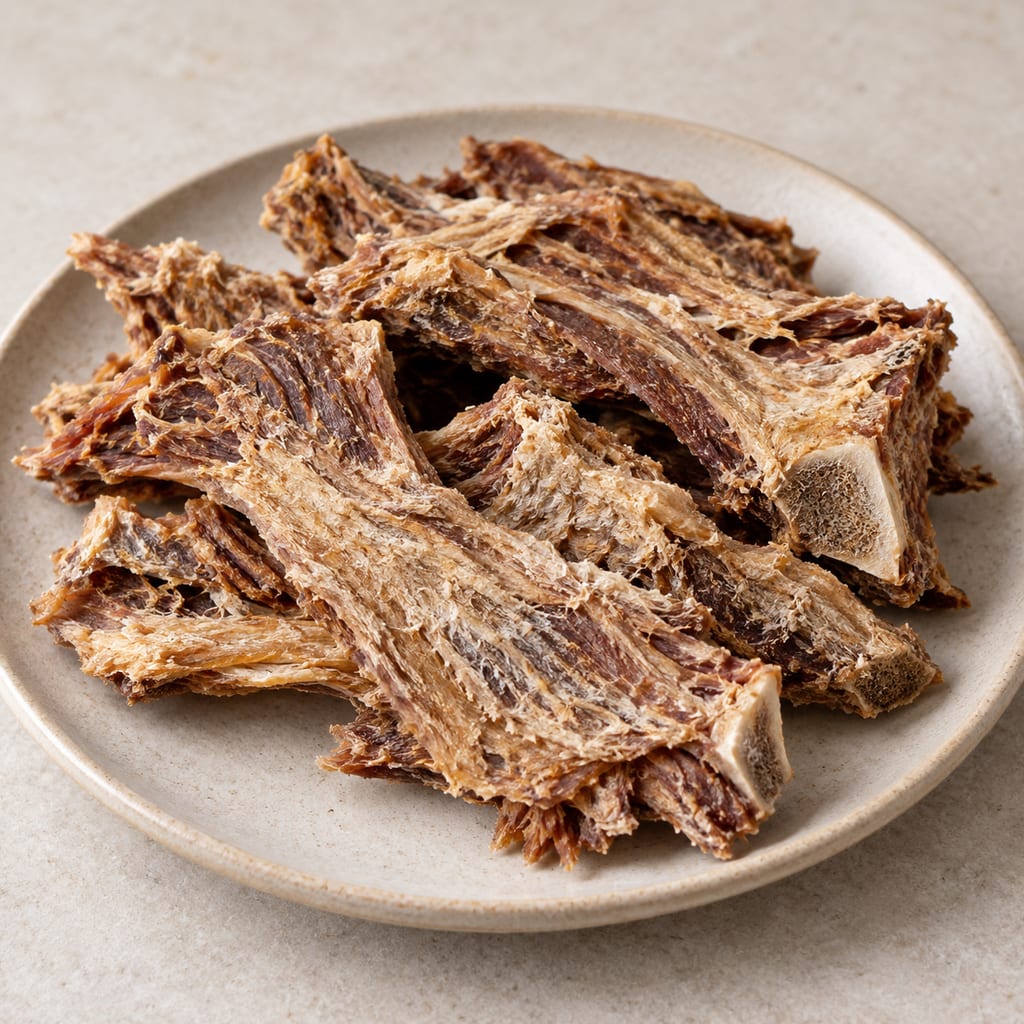
Alpaca charqui is Andean dried meat, made from camelid meat exposed to hot sun by day and frost by night at high altitude, the ancestor of the modern word jerky.
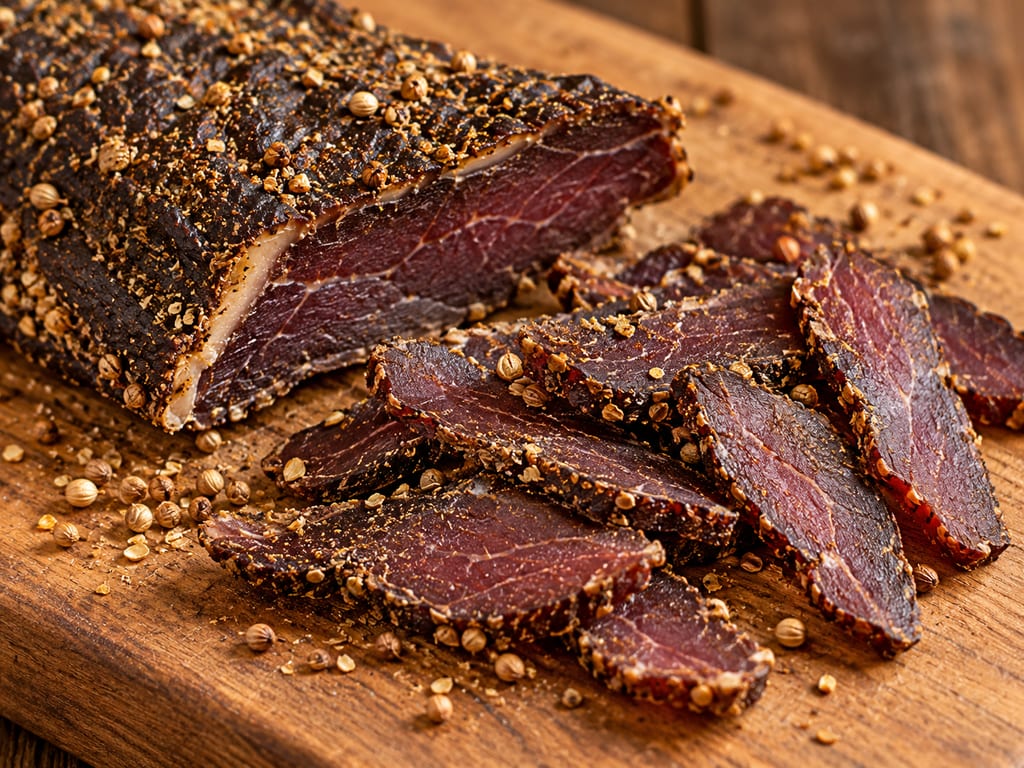
Strips of whole-muscle beef or game seasoned with salt, vinegar, roasted coriander and pepper and air-dried without cooking, sold anywhere from soft and moist to hard and very salty.
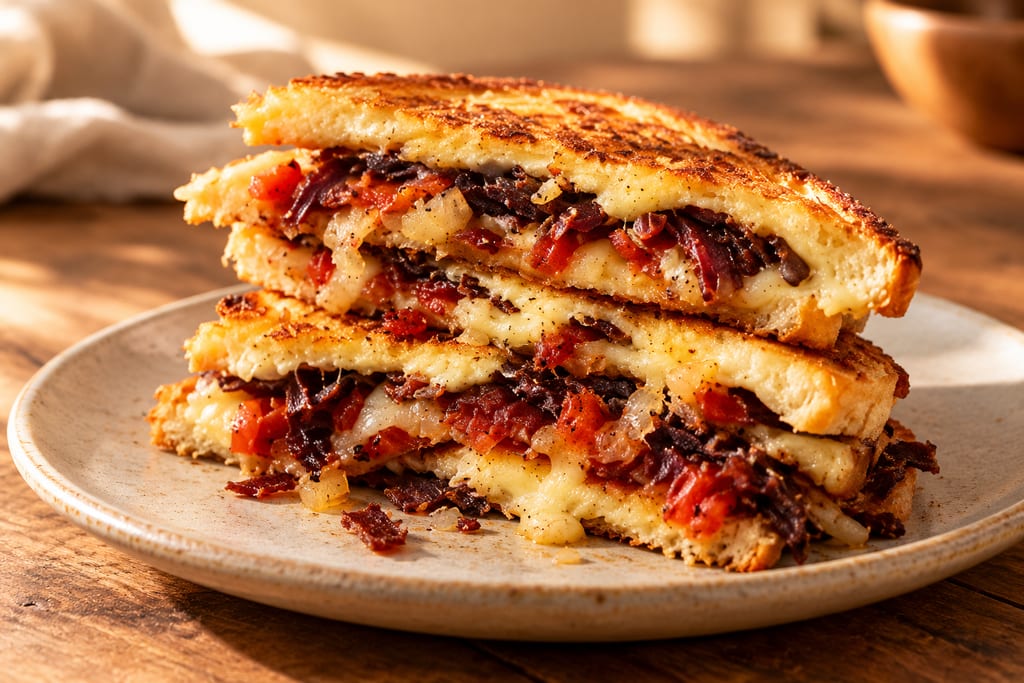
Chopped biltong, sweet onion, cream cheese and Cheddar fill bread toasted in a hinged grid over gentle coals, then finished with biltong dust.
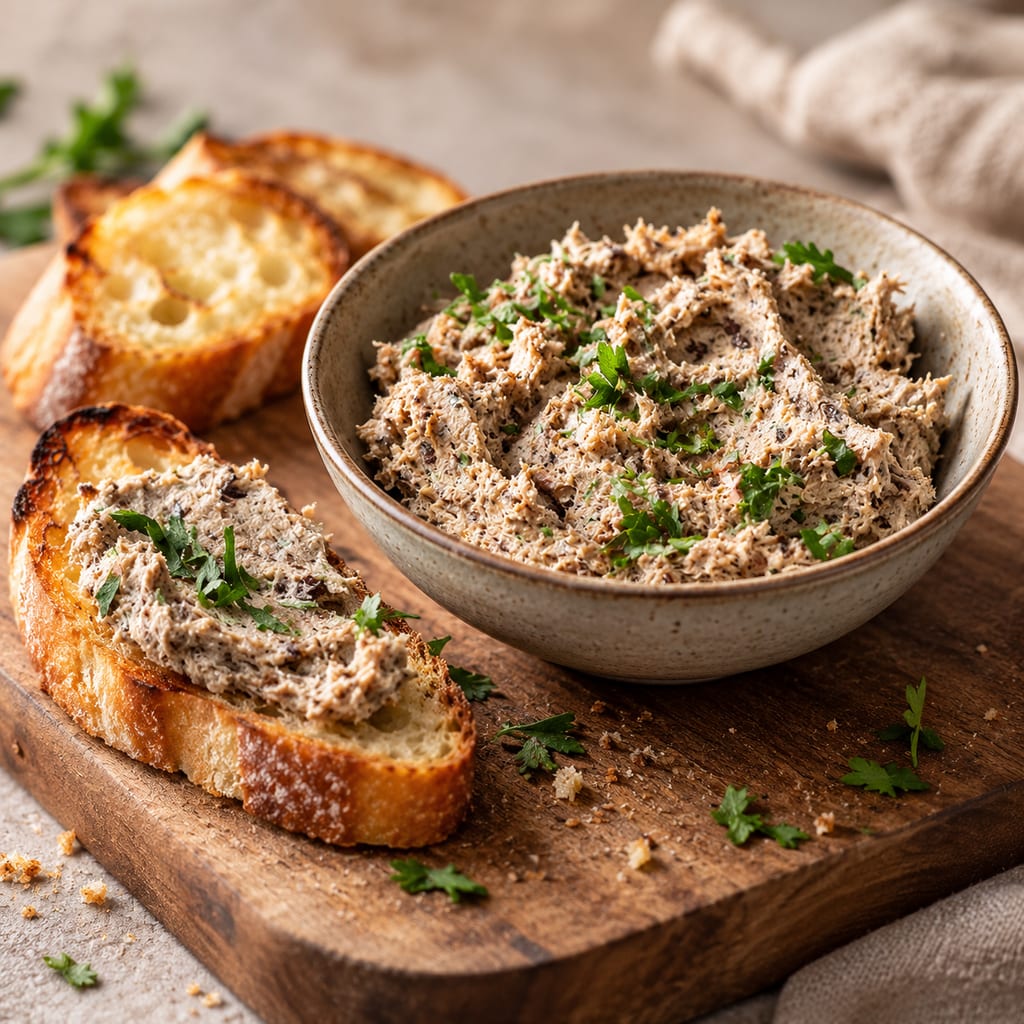
A cold biltong spread with sour cream, mayonnaise, mustard, lemon and herbs; serve it with crackers, crostini or bread.

Biltong, bacon and vegetables simmer in tomato-herb stock, then join cooked pasta, milk, cream and Cheddar in this outdoor potjie.
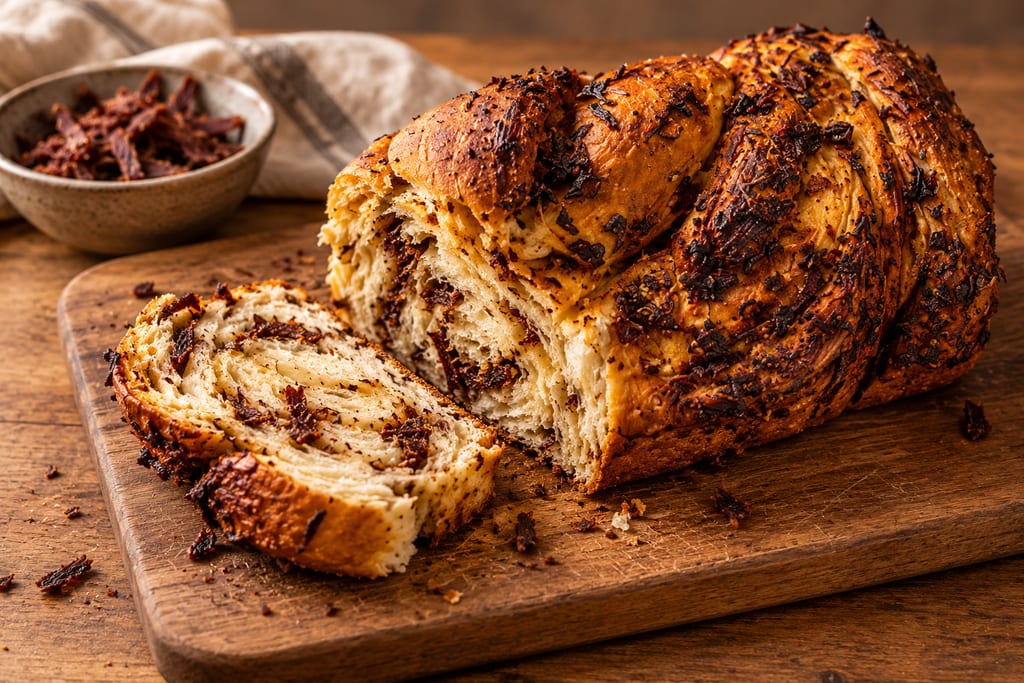
Yeasted bread wrapped around biltong, tomato pesto, Cheddar and feta, split lengthwise into a braid and baked; served with chilli-biltong butter.
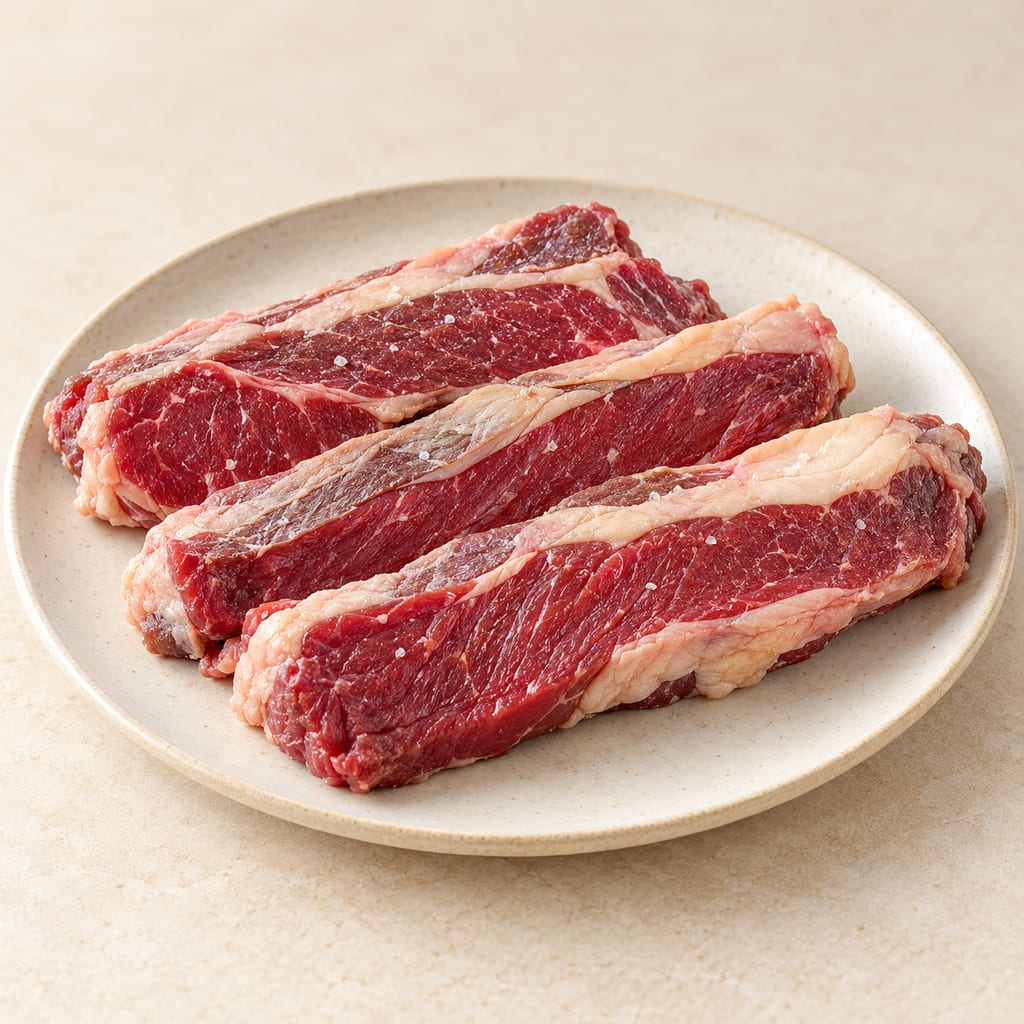
Beef given limited salt and partial surface drying, a short-keeping Brazilian meat that is much less durable than fully dried charque and is treated as a cold-chain product.
No community contributions have been published for this entry yet.
Sign in to contribute. Published comments and photos are free to read.
Université de La Réunion (HAL)Method · Safety · Geography
Quality characterization of kitoza, a malagasy meat productStrips about 20 to 50 cm long and 2 to 4 cm wide.
Meat strips salted, seasoned with garlic, pepper or ginger, and sun-dried or smoked.
Cited in: A salted meat from Madagascar; Reported forms and production; Research and safety context
ResearchGate (study record)Method · Safety
Improving the smoking process of kitoza, a traditional Malagasy meat productTraditional smoking over a kitchen fire or in dedicated smoking units.
A study separated cooking and drying from a short smoke step, which reduced PAH levels.
Cited in: Research and safety context
PubMed CentralMethod · Safety
Physicochemical and microbiological characteristics of kitoza, a traditional salted/dried/smoked meat product of MadagascarSalted, dried and smoked meat kept at room temperature.
Dried kitoza had lower moisture than smoked; some smoked samples exceeded the EU benzo(a)pyrene limit.
Cited in: Reported forms and production; Research and safety context