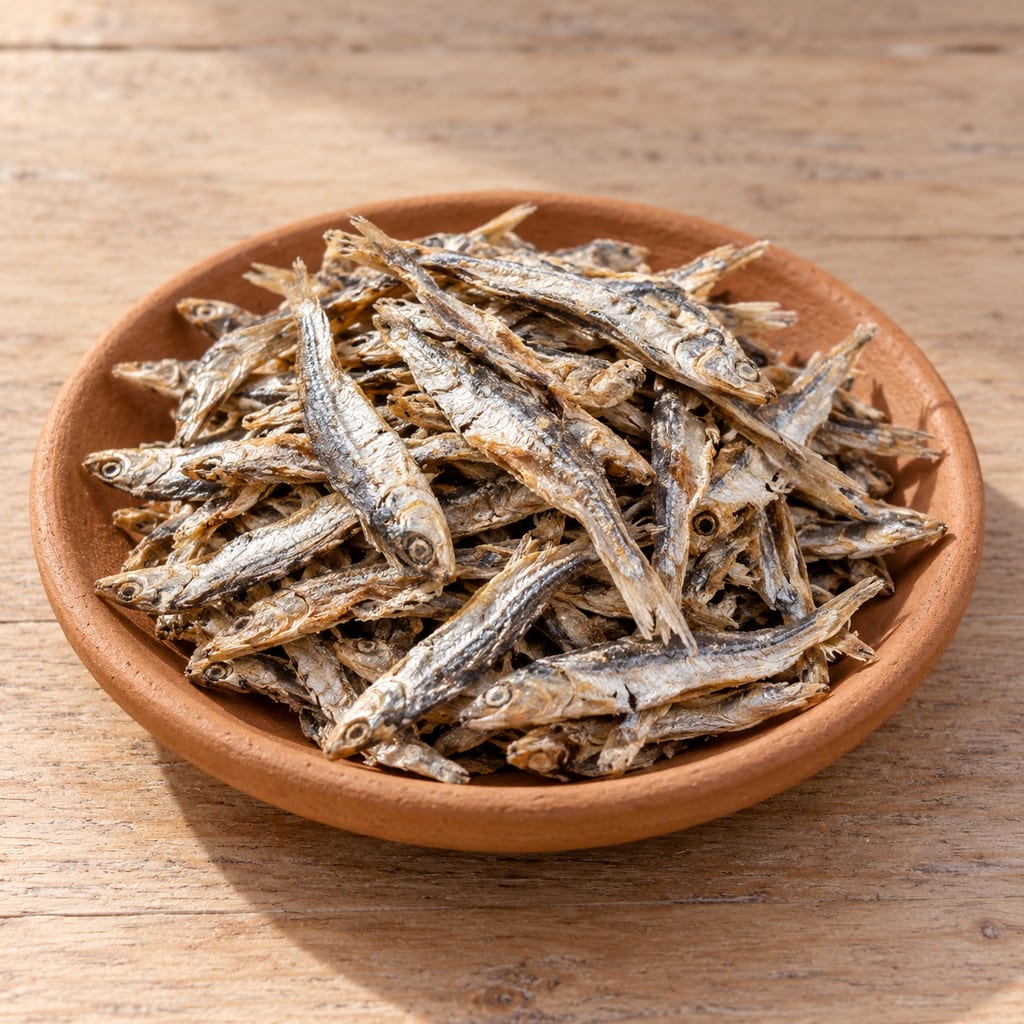
Carquín dried anchoveta
Anchoveta salted, drained of sanguaza and sun-dried on sand or stones at Caleta de Carquín, a technique declared part of Peru's cultural heritage in 2016.
 FermenteaWhere food goes to change
ch'arki · Charqui · Charque · Ch'arki · Andean jerky · Llama charque
Alpaca charqui is Andean dried meat, made from camelid meat exposed to hot sun by day and frost by night at high altitude, the ancestor of the modern word jerky.
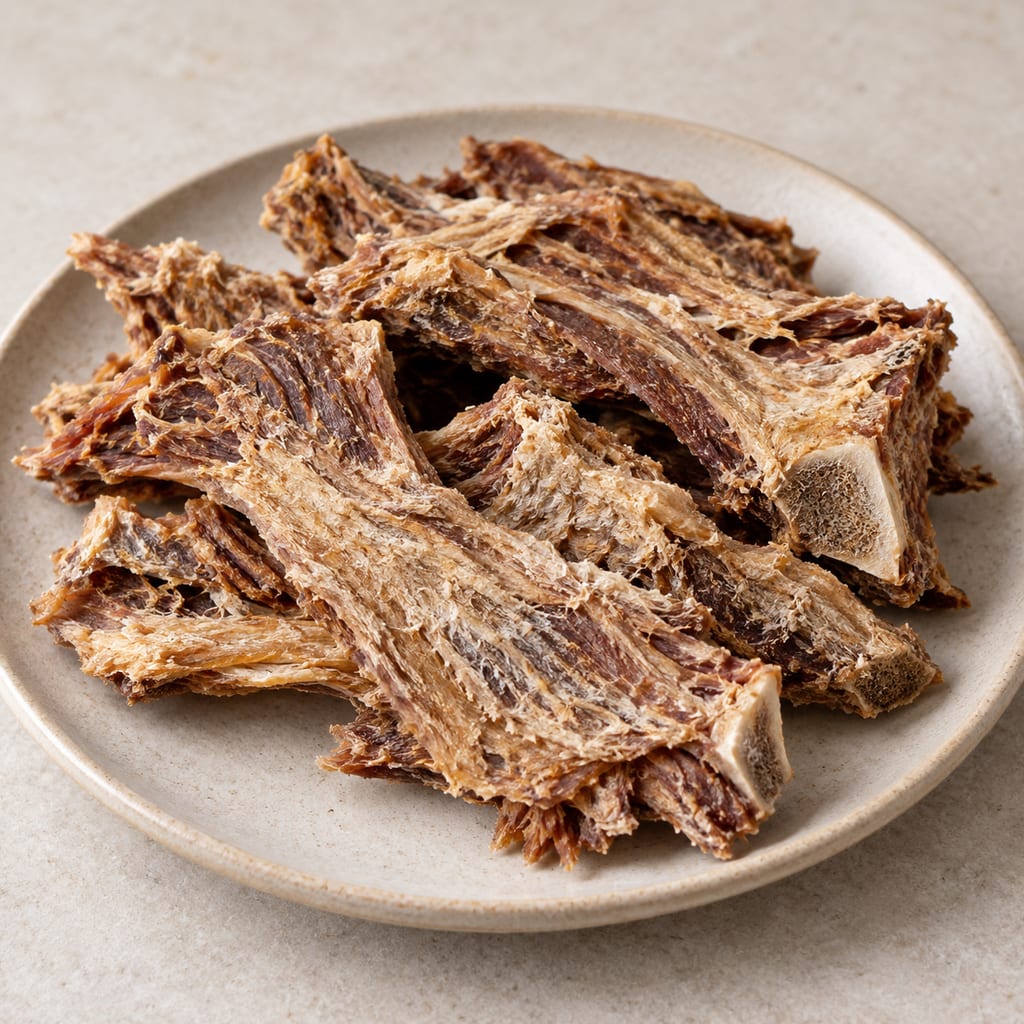
Charqui is the Spanish form of an Andean word. The Quechua name is ch'arki, and the word for the dried meat carried over into Spanish as charqui and charque. In English the product became jerky. The Andean original is the older thing, and the name records a method that goes back to the highlands rather than a recipe that could be copied anywhere.
Alpaca charqui belongs to that family: a dried camelid meat from the Andes, made where the air is thin, cold at night and hot in the day. The product is not the same as beef charqui made in a lowland plant, and the two should not be treated as one process.
All traditional ch'arki was made in the high-altitude Andean puna, the cold grassland above the agricultural valleys. The altitude is the key condition. The warmer air at lower altitudes did not preserve meat well, so the making of dried meat stayed with the highlands even when its market lay below them.
The product was traded to the coastal lowlands, along with fur and sometimes a whole llama, in exchange for agricultural goods. The dried meat travelled well, which made it valuable in a trade that crossed steep country.
The traditional meat was camelid: llama-type animals were central to the product. Herds were culled for food, and the authors of the 2000 study estimate that as much as 15 percent of herds were culled each year for consumption. Alpaca, a close relative, is the animal in the title of this page. The material available here does not give a separate alpaca process, so the alpaca version is treated as the camelid version of ch'arki rather than as a separate tradition.
Today the same name covers many meats. The modern product is commonly called jerky, and it is made from a range of animals, including beef, which is the basis of the beef charqui photographed in the image set.
The traditional method alternates heat and cold. The meat is dried in the hot sun by day and frozen at night, so that it loses water in the sun and is held cold by frost. Pieces were usually made with the bones included, rather than cut into thin strips, and the heads and feet were kept mainly for home use. Thin strips were smoked by a separate method.
Salt was rare. It became more available after the Spanish conquest, and the material does not establish whether salt was used on the meat before then. A modern version that adds salt, or that uses a different drying frame, is a change from the recorded practice and should be labelled as one.
Dried meat stores for a long time and can be carried over distance, which made it useful for travel, trade and lean seasons. In the Andes, ch'arki is often soaked and cooked into soups and stews, so the dried meat is a stock ingredient rather than something eaten raw.
The same qualities explain its wider use: a dry product needs no refrigeration, and it stays dry only while the moisture is kept out. The archaeological argument of the 2000 study is that the scale of this preservation shaped what was eaten and recorded at settlements, which is why the product matters beyond the kitchen.
The consulted material does not give an alpaca-specific salting, drying or moisture procedure. Alpaca and llama are named together for the traditional product, and the process data that would separate them is not in hand. Any alpaca process should be validated on the product itself before it is made for other people.
Two gaps matter most. First, no drying endpoint or water activity is recorded for alpaca charqui, so the page cannot say when the meat is safe to store. Second, the traditional description is qualitative: sun by day and frost by night, with no days, degrees or moisture numbers.
Dried camelid meat keeps only while it stays dry. A hard, dry piece is not proof that the meat is safe, and smell and colour cannot show that spoilage organisms are absent. Bones and fat left in the meat change the drying, so the cut and the fat content belong in any record of a batch.
Storage and handling are the controls to name first: keep the dried meat dry, away from insects and damp, and treat any sign of mould or off smell as a reason to discard it. No storage limit is recorded for alpaca charqui in the material.
Ch'arki is a traditional Andean product made in the high-altitude pasturelands. A 2000 study in American Antiquity by Miller and Burger argues that it was dried camelid meat, made in quantity as a food and a trade good, and that its scale explains the patterns of bones found at Chavin-period sites. The method is older than any written record in the material, and no date is recorded for its origin.
Scaling: source batch only
The traditional process is described, but no critical limit for moisture, water activity or temperature is recorded for alpaca charqui.
Hazard sourceThe salting step and its effect are not recorded for the early product, so a home adaptation cannot rely on the historical method.
Hazard sourceDo not treat the traditional description as a validated safe process.
Smell, colour and texture do not establish that dried meat is safe.
Sun and frost cycles are not endpoints; a verified water activity or equivalent measure is needed for any production.
The source places all traditional ch'arki in high-altitude Andean pasturelands; it names no single village.
Dried meat was traded to the lowlands; the lowlands were not suitable for making it.
Anchoveta salted, drained of sanguaza and sun-dried on sand or stones at Caleta de Carquín, a technique declared part of Peru's cultural heritage in 2016.
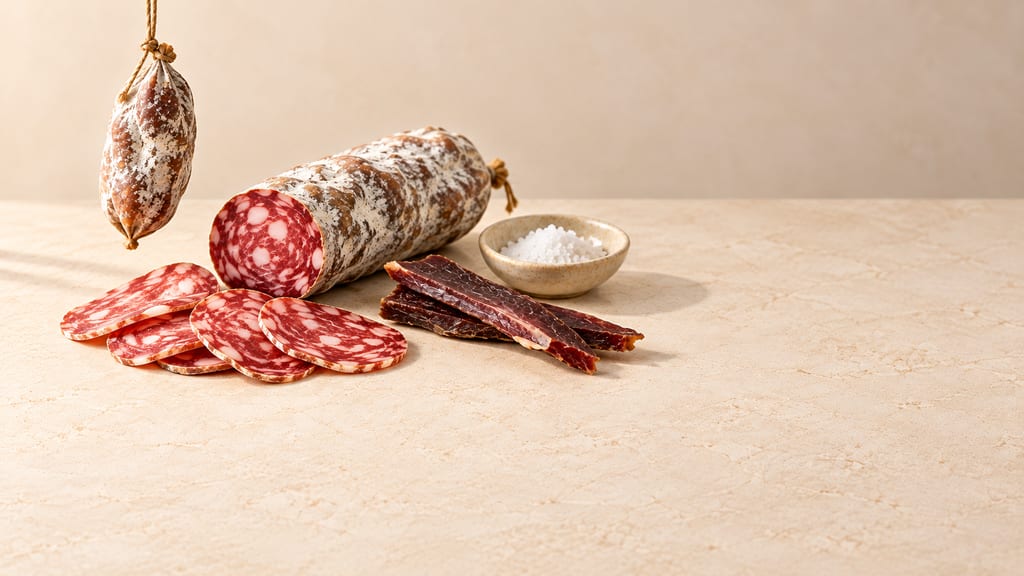
Dry salami, sour pork with rice, matured sheep and aged blubber follow different paths from animal to food. Their stories connect microbes with climate, slaughter, migration and the meals people share.
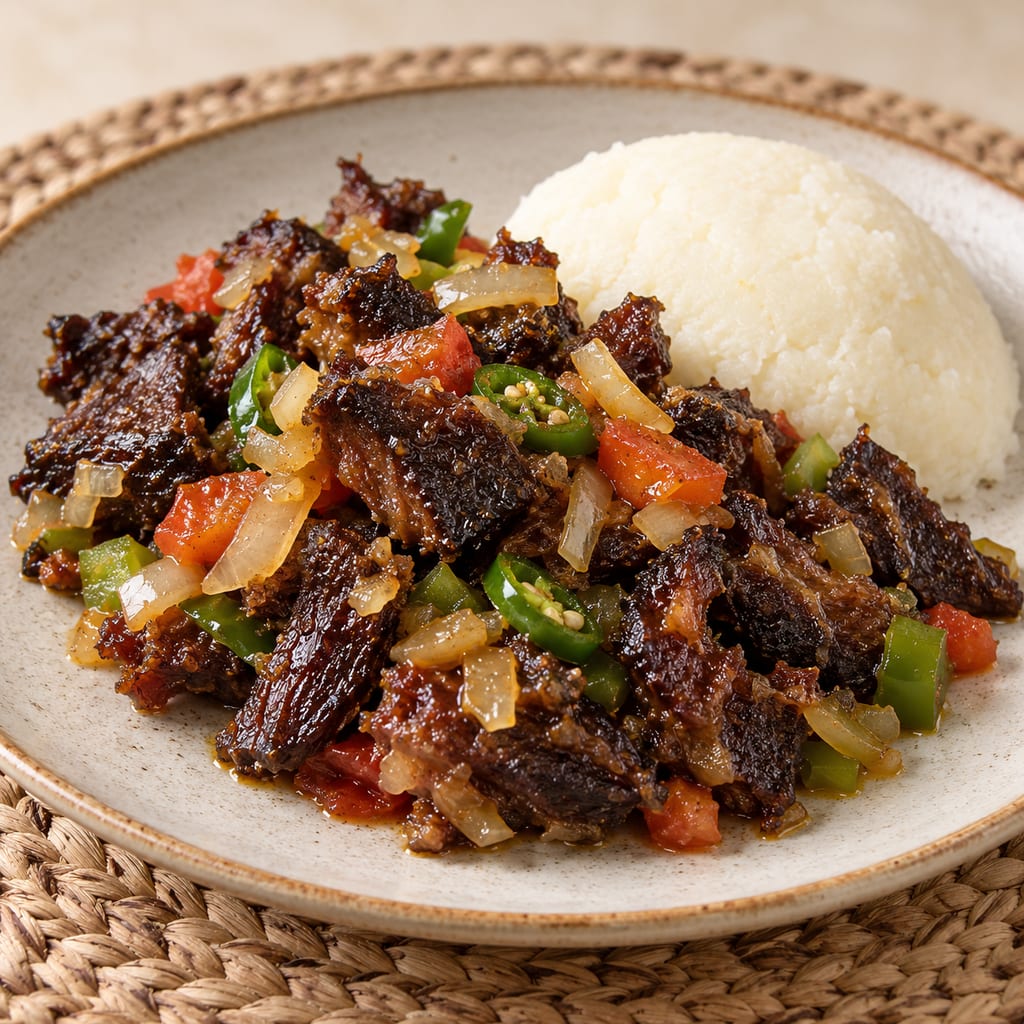
Alina Magano Johannes’s Oondhingu is a family dish from Onyaanya, Oshikoto, in northern Namibia: softened dried beef fried with vegetables and served with pap.
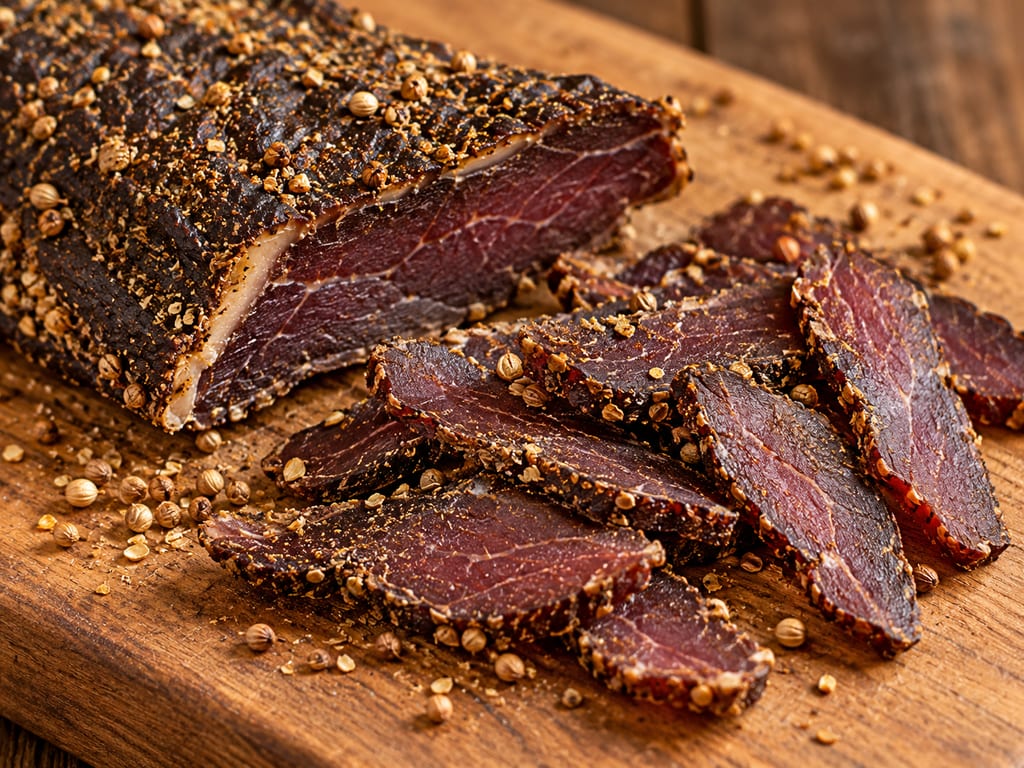
Strips of whole-muscle beef or game seasoned with salt, vinegar, roasted coriander and pepper and air-dried without cooking, sold anywhere from soft and moist to hard and very salty.
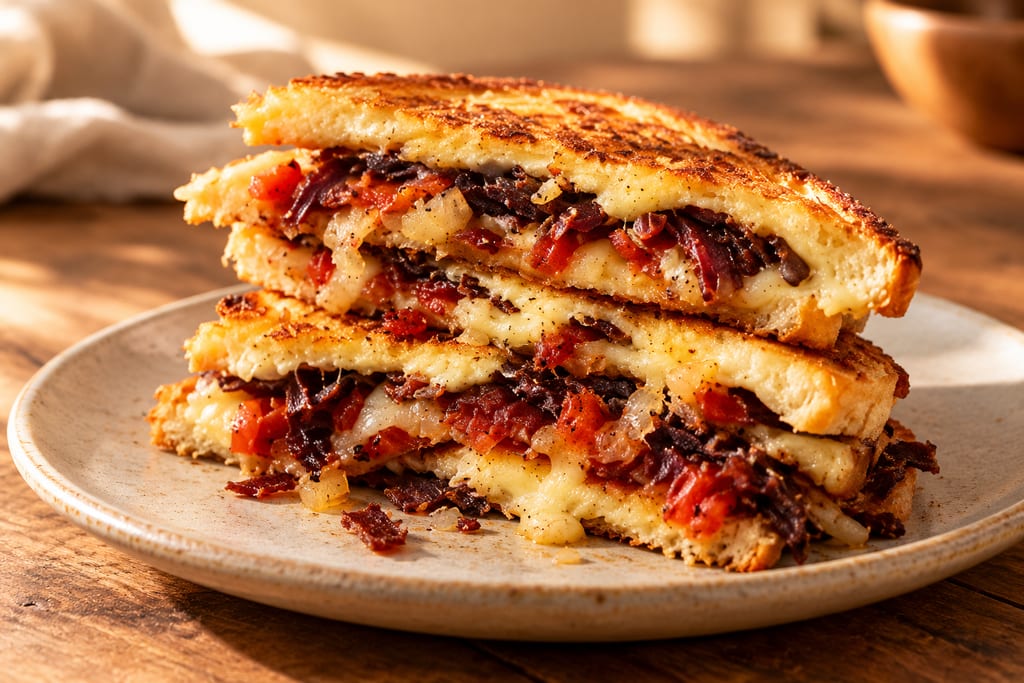
Chopped biltong, sweet onion, cream cheese and Cheddar fill bread toasted in a hinged grid over gentle coals, then finished with biltong dust.
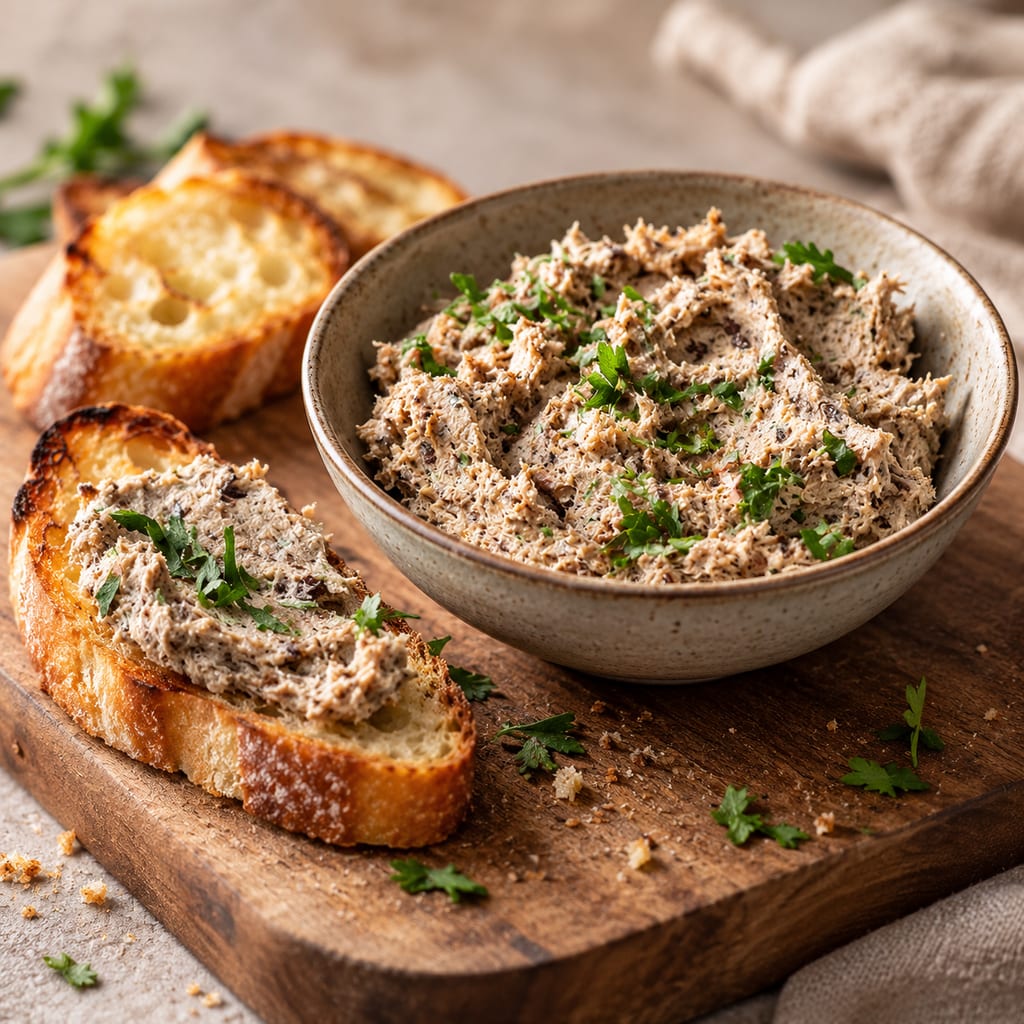
A cold biltong spread with sour cream, mayonnaise, mustard, lemon and herbs; serve it with crackers, crostini or bread.
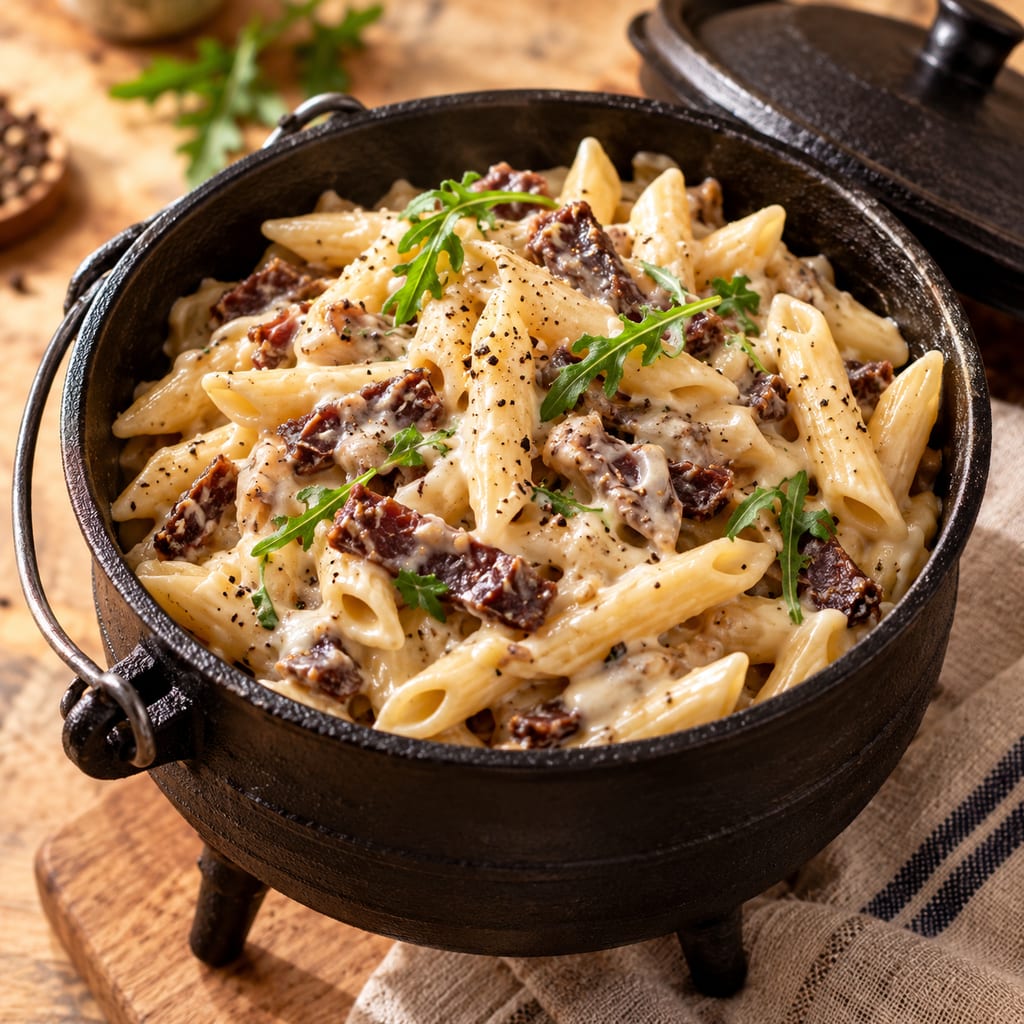
Biltong, bacon and vegetables simmer in tomato-herb stock, then join cooked pasta, milk, cream and Cheddar in this outdoor potjie.
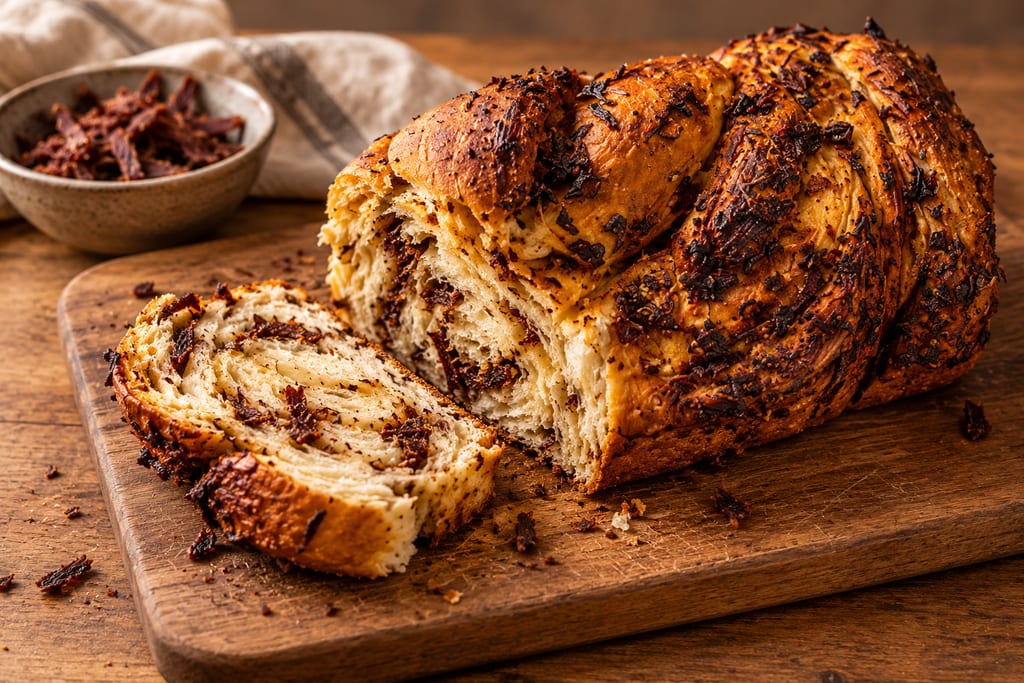
Yeasted bread wrapped around biltong, tomato pesto, Cheddar and feta, split lengthwise into a braid and baked; served with chilli-biltong butter.
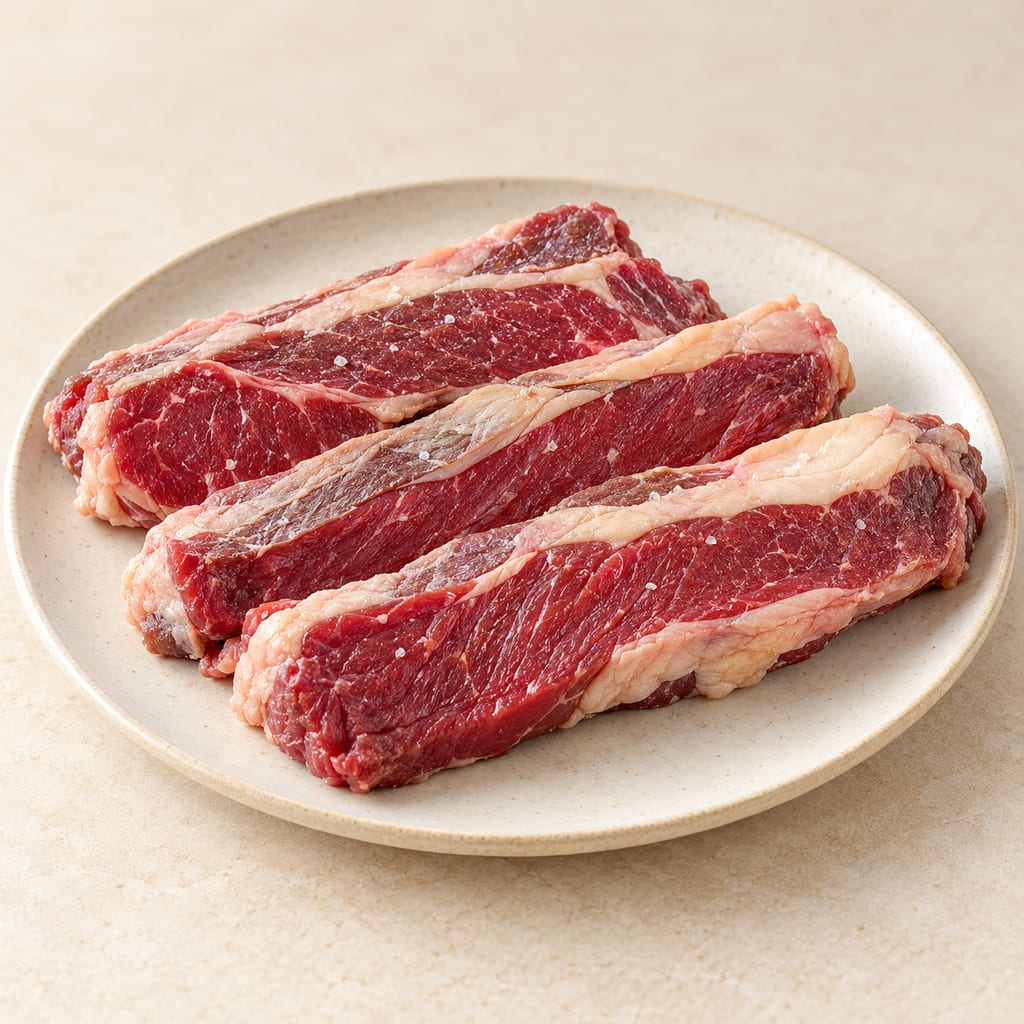
Beef given limited salt and partial surface drying, a short-keeping Brazilian meat that is much less durable than fully dried charque and is treated as a cold-chain product.
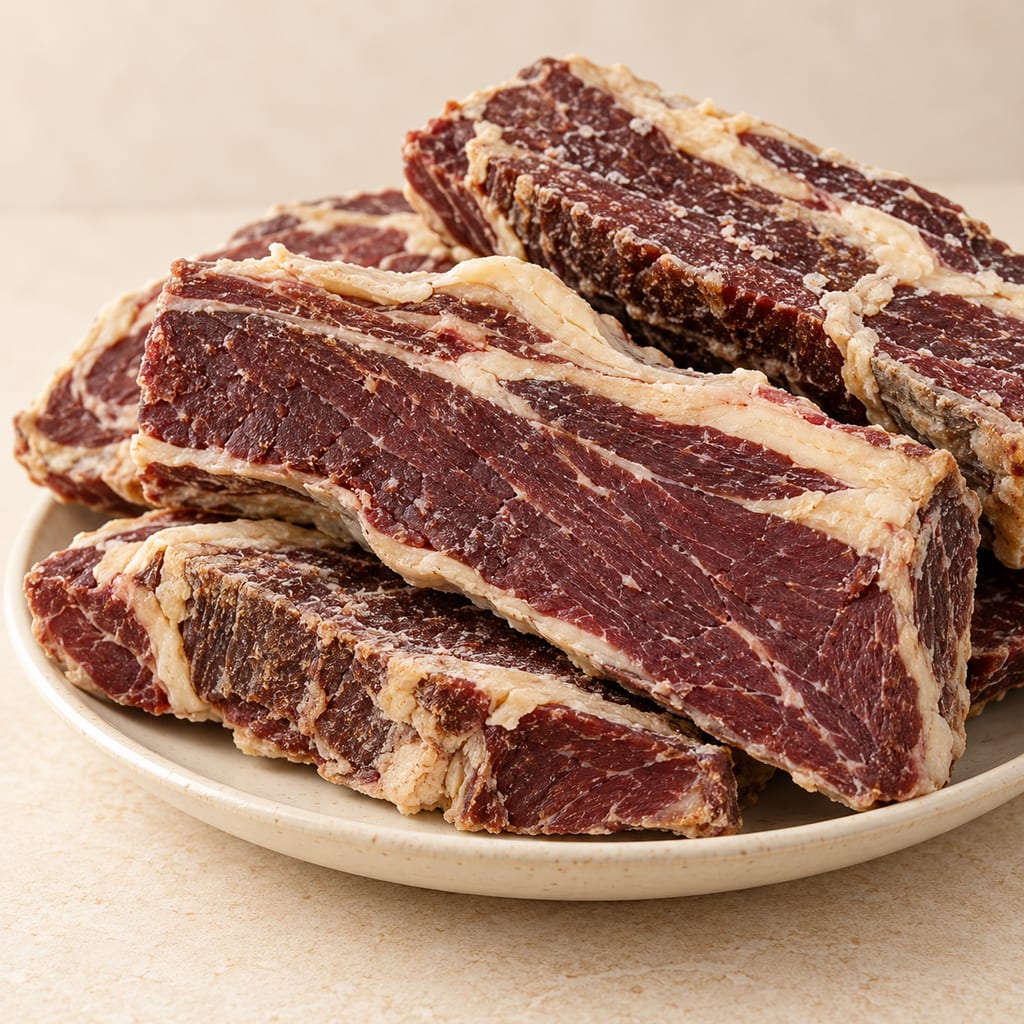
Beef salted heavily and dried into a strongly preserved ingredient that is desalted before it is cooked in stews; a Brazilian form of salt-dried meat that keeps far longer than the lightly salted carne-de-sol.
No community contributions have been published for this entry yet.
Sign in to contribute. Published comments and photos are free to read.
JSTOR DailyHistory · Method · Uses
Charki: the first jerkyAll ch'arki produced in high-altitude Andean puna
Freeze-dried camelid meat per American Antiquity research (Miller and Burger 2000, vol. 65 no. 3, pp. 573-576)
Sun by day, frost at night
Herds culled for food, up to 15% a year (authors' estimate)
Made with bones included rather than as thin strips
Salt was rare until after the Spanish conquest
Dried meat, fur and whole llama traded to coastal lowlands
Cited in: What the name carries; Where it was made; Which animal; How it was dried; Uses; What the material does not settle; Reading the result and its risks