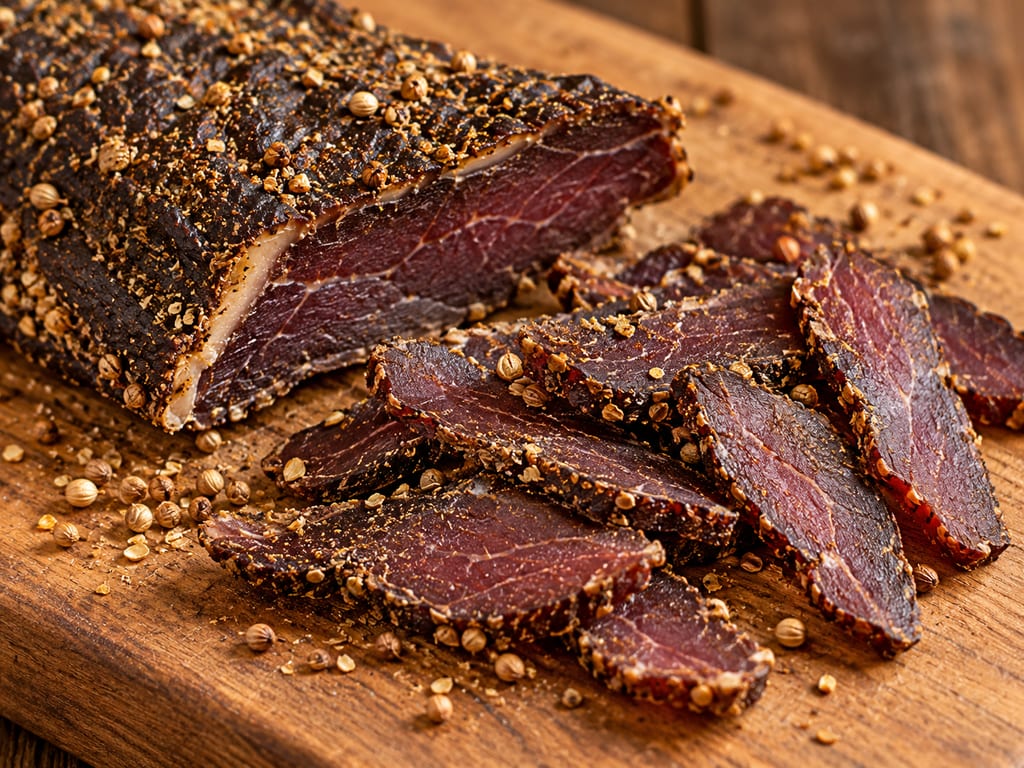
Biltong
Strips of whole-muscle beef or game seasoned with salt, vinegar, roasted coriander and pepper and air-dried without cooking, sold anywhere from soft and moist to hard and very salty.
 FermenteaWhere food goes to change
Biltong Pasta Potjie · Biltong potjie
Biltong, bacon and vegetables simmer in tomato-herb stock, then join cooked pasta, milk, cream and Cheddar in this outdoor potjie.
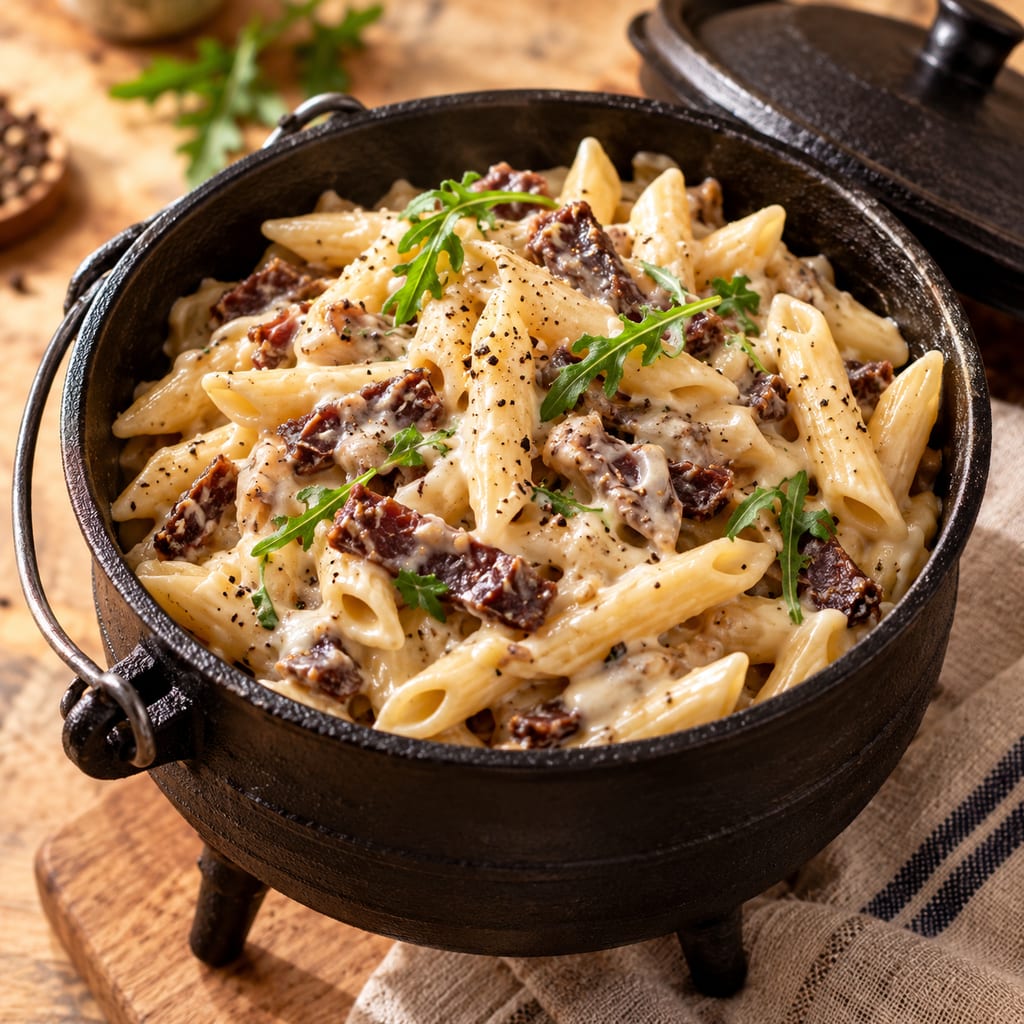
LK’s Kitchen calls its dish Biltong Pasta Potjie and provides recipes for two sizes of pot: a No. 3 version serving 16 and a No. 6 version serving 48. This page records the No. 3 batch only, preserving its quantities as a set. The recipe combines biltong with bacon, onions, green pepper, tinned mushrooms and a tomato-and-stock sauce, then folds in cooked pasta, milk, cream and grated Cheddar.
The result sits between a potjie stew and a creamy pasta bake: the potjie is cooked over hot coals, but the pasta is prepared separately according to its packet, then warmed in the sauce. The named source is a cookware company’s modern recipe published in 2022. It does not claim an old origin for this combination.
For the pot, LK’s lists 1.5 kg biltong, one pack of bacon, two tots of sunflower oil, three crushed and chopped garlic cloves, two tins of mushrooms, six sliced onions, one cup full-cream milk, one cup fresh cream, one kilogram pasta shells, two sliced green peppers, 500 g grated Cheddar, one teaspoon braai spice, and salt and pepper to season. The sauce is 1.5 L boiling water, two teaspoons mixed green herbs, four chicken-stock blocks and one sachet tomato paste.
The recipe keeps South African culinary units such as tot and sachet as published; the source gives no conversion or brand-specific pack sizes for bacon, mushrooms, stock or tomato paste. It also leaves salt and pepper to taste. The 48-serving No. 6 list scales quantities differently and is not a substitute for the No. 3 amount list. For this page, all quantities stay within the 16-serving version.
Cook the pasta separately by its packet instructions and set it aside. Place the potjie over hot coals, add sunflower oil and soften the onions. Add the chopped garlic, sliced peppers, tinned mushrooms and bacon, cooking until the bacon is sizzling and cooked. The source gives no duration for these stages, so don’t infer a standard time from the later simmer instructions.
Mix the boiling water, herbs, stock blocks and tomato paste to make the sauce, then stir this into the potjie vegetables and bacon. The tomato paste supplies colour and a concentrated savoury-tangy base; the stock blocks season the liquid. The order gives the stock and tomato time to distribute through the pot before the biltong and pasta are added.
Add biltong, cover and simmer for about five minutes. Then remove the lid and stir in the milk, cream and already cooked pasta. Cover again and let the pot simmer for about ten minutes. The biltong is therefore heated within the moist sauce, rather than cooked for the full duration from the beginning; this staging preserves its identity as a dried meat while allowing its flavour to season the liquid.
Finish by sprinkling on the grated Cheddar, mixing well and serving. LK’s notes that if the potjie cooks dry, the cook can add a little more milk or water until the consistency is right. This is a source-supported adjustment, but the quantity is intentionally flexible. Do not add all extra liquid by default: the starting moisture and heat loss depend on the pot and fire.
The large stated yield makes this a communal meal suited to a group around the braai. The source does not specify accompaniments, a detailed serving weight, or a cooling and storage plan. It is best represented as LK’s source recipe, not as a universal formula for all potjies. A smaller batch can’t be obtained reliably by dividing every ingredient without considering the different pot size and evaporation; LK’s separate No. 6 batch is documented, but no small home batch is given.
The recipe uses purchased biltong and does not teach its manufacture. Biltong itself varies in dryness, fat, salt and particle size, so the finished sauce and chew may differ by product. The source gives no claim that biltong becomes shelf-stable after mixing with dairy. Treat the finished dish as a prepared cooked food and follow ordinary safe chilling guidance for leftovers rather than making an unsupported shelf-life claim.
LK’s Kitchen published this biltong pasta potjie in May 2022 and offers separate No. 3 and No. 6 batch sizes. It documents a contemporary recipe combining potjie cooking with cooked pasta and dairy, not a historical claim about the origins of potjie or biltong.
Yield 16 servings · Scaling: source batch only
The recipe cooks outdoors over hot coals in a lidded cast-iron potjie.
Hazard sourceUse the potjie over a stable fire and handle its hot lid and vessel with suitable heat protection.
Control sourceThe source uses ready-to-eat biltong; this recipe does not describe or validate biltong manufacture.
The recipe source documents a modern version. It does not establish an origin date for the dish.
Strips of whole-muscle beef or game seasoned with salt, vinegar, roasted coriander and pepper and air-dried without cooking, sold anywhere from soft and moist to hard and very salty.
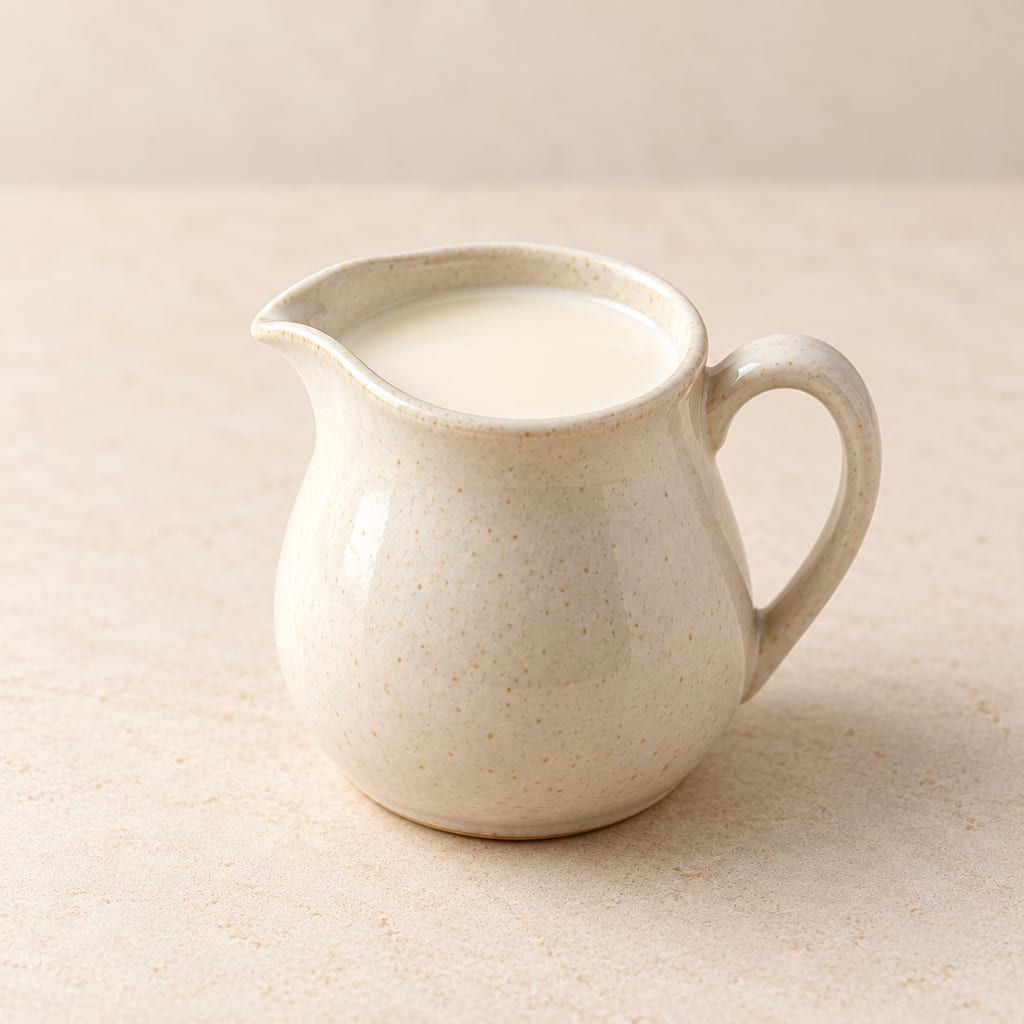
The fat-rich fraction of milk, used as a pouring ingredient, a whipped foam, a cultured dairy substrate or the starting material for butter.

Milk is the fluid produced by dairy animals. Its species, fat level, heat treatment and handling shape the way it can be drunk, cultured or turned into curd.
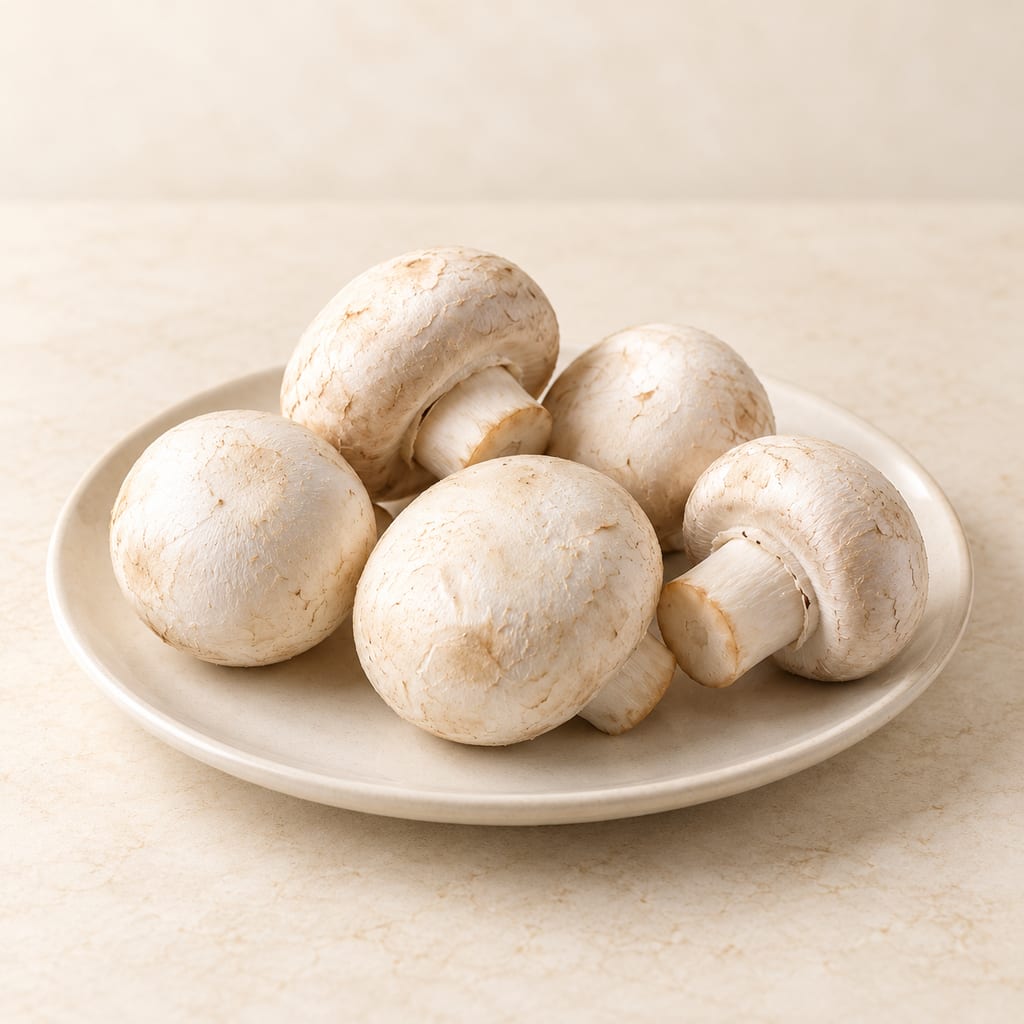
Mushrooms are the edible fruiting bodies of fungi, cultivated or gathered, and each species has its own texture, aroma and handling needs. Fresh, dried and roasted forms differ in water and in flavour compounds.
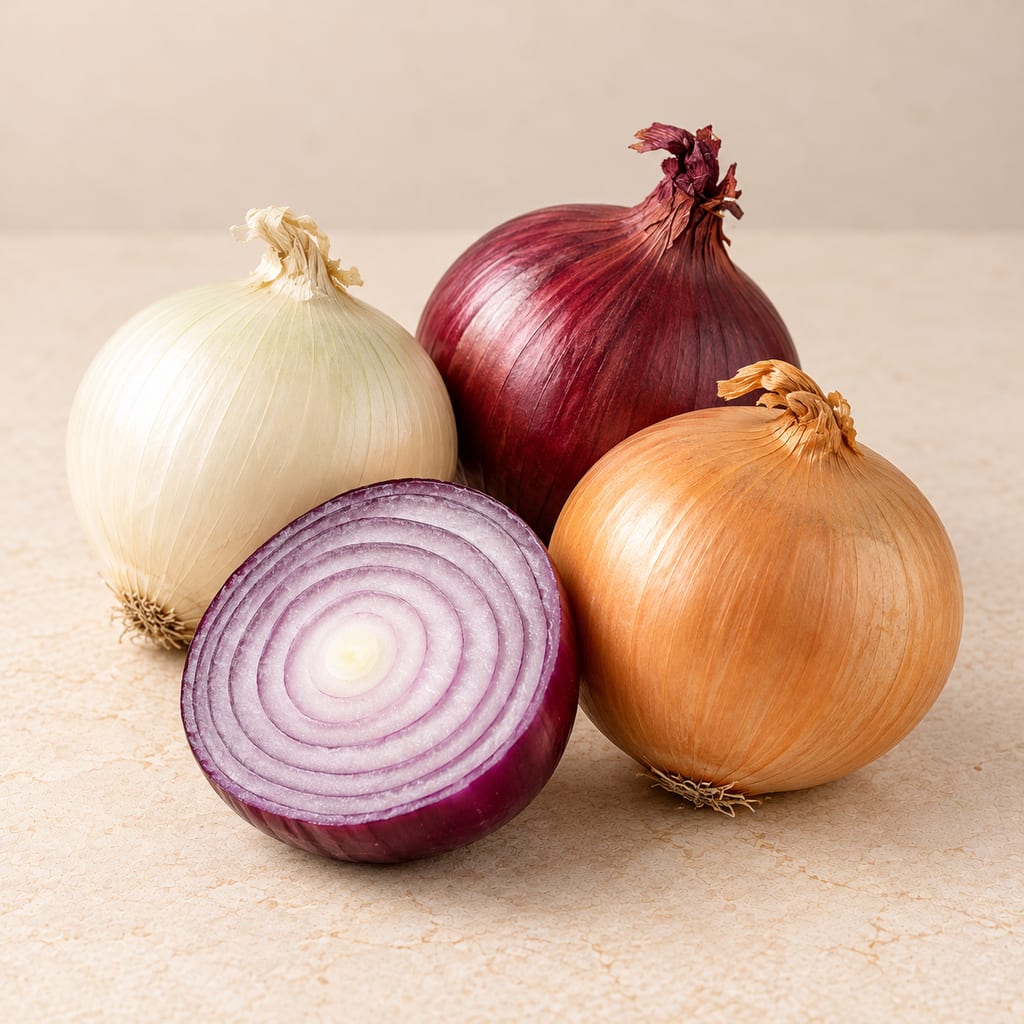
The onion is the bulb of Allium cepa, built from swollen leaf bases, and is eaten raw, cooked, pickled and as a seasoning in ferments. It is known only from cultivation and probably began in Central Asia.
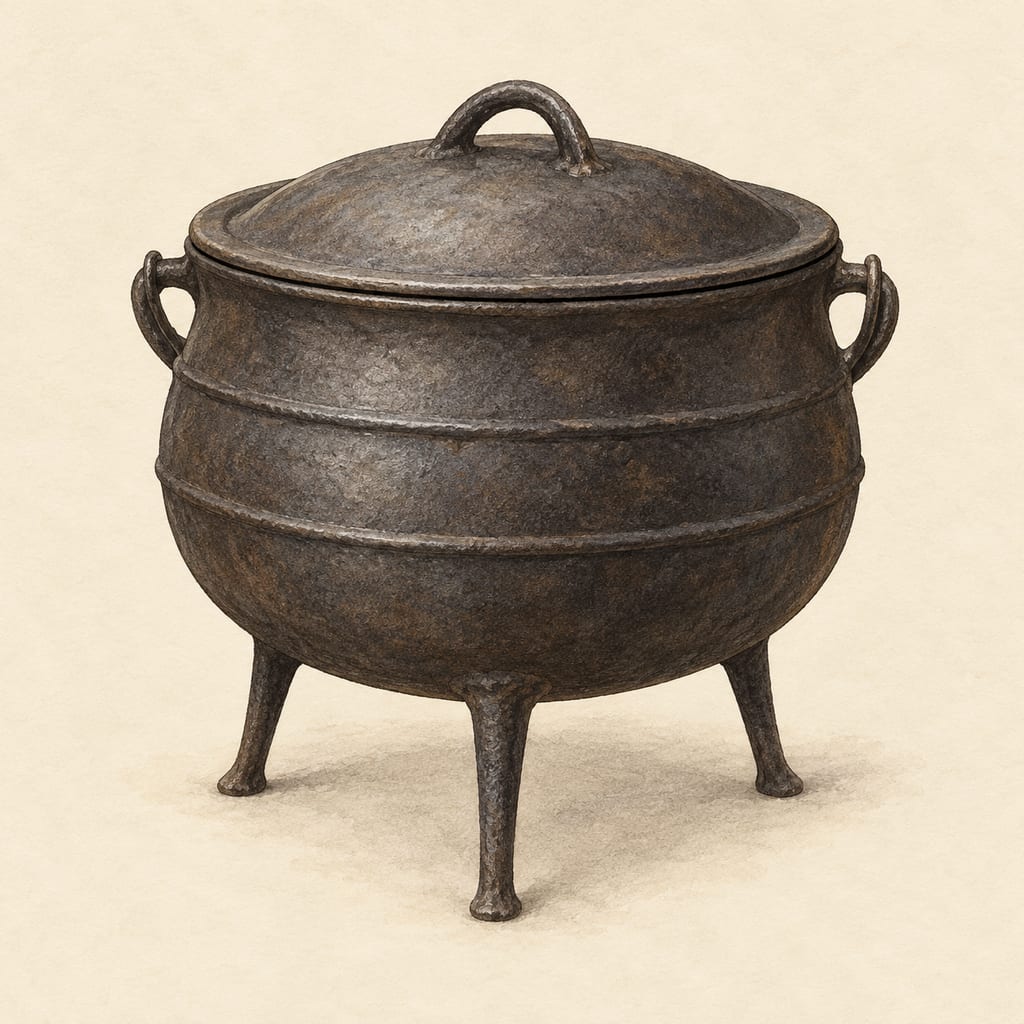
A lidded, rounded cast-iron pot with three legs, used over open fires and embers across southern Africa. Its African history belongs to the vessel's adoption and use, not a claim of European invention.
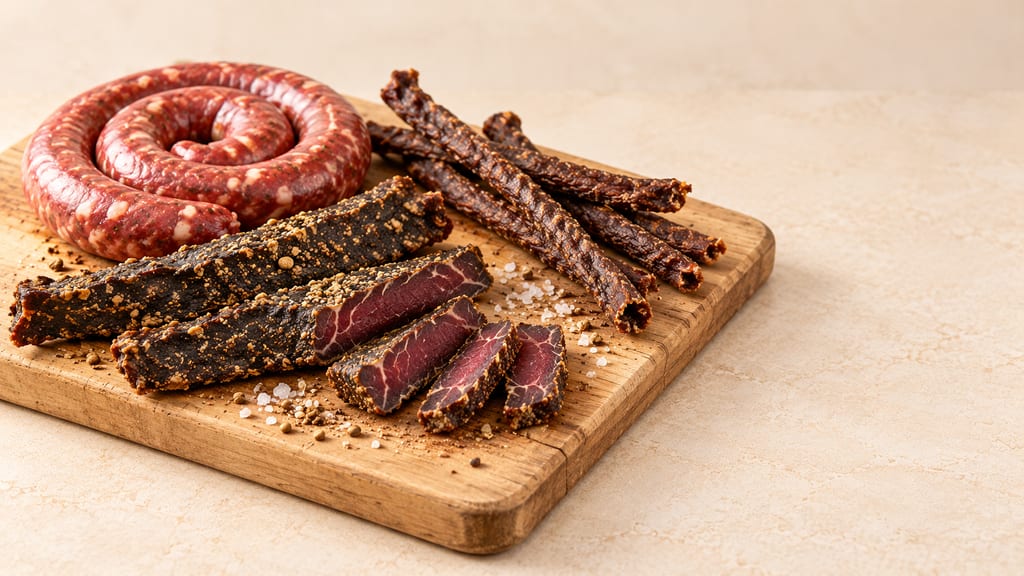
Boerewors, biltong and droëwors share a table but follow different paths from meat to meal. Their histories lead from the braai and butcher's counter to drying lines, household pots and the science of keeping food.
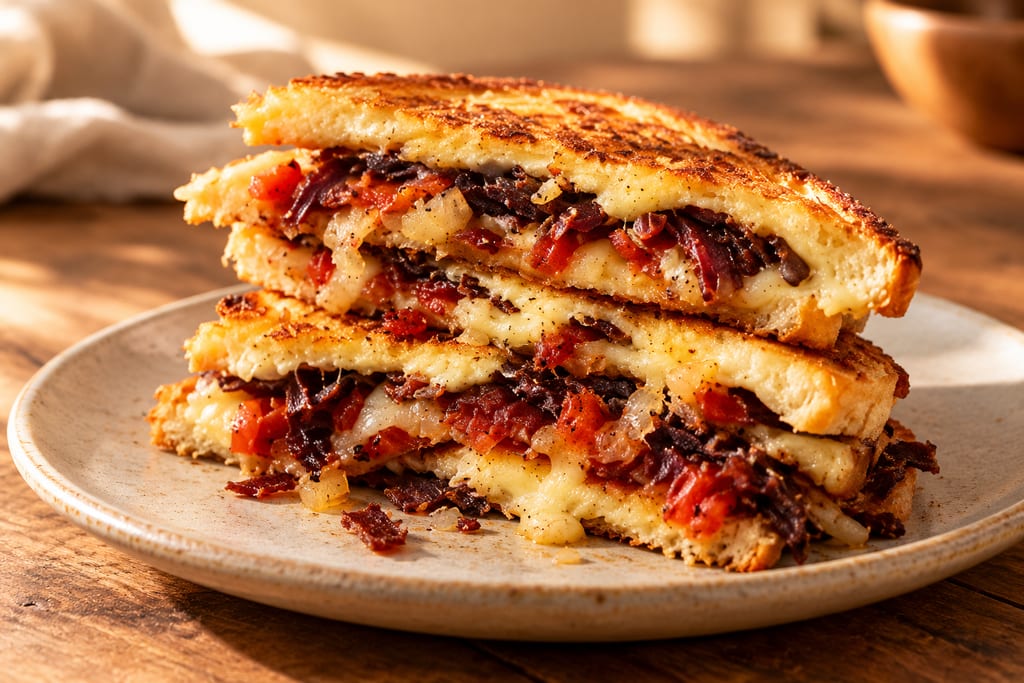
Chopped biltong, sweet onion, cream cheese and Cheddar fill bread toasted in a hinged grid over gentle coals, then finished with biltong dust.
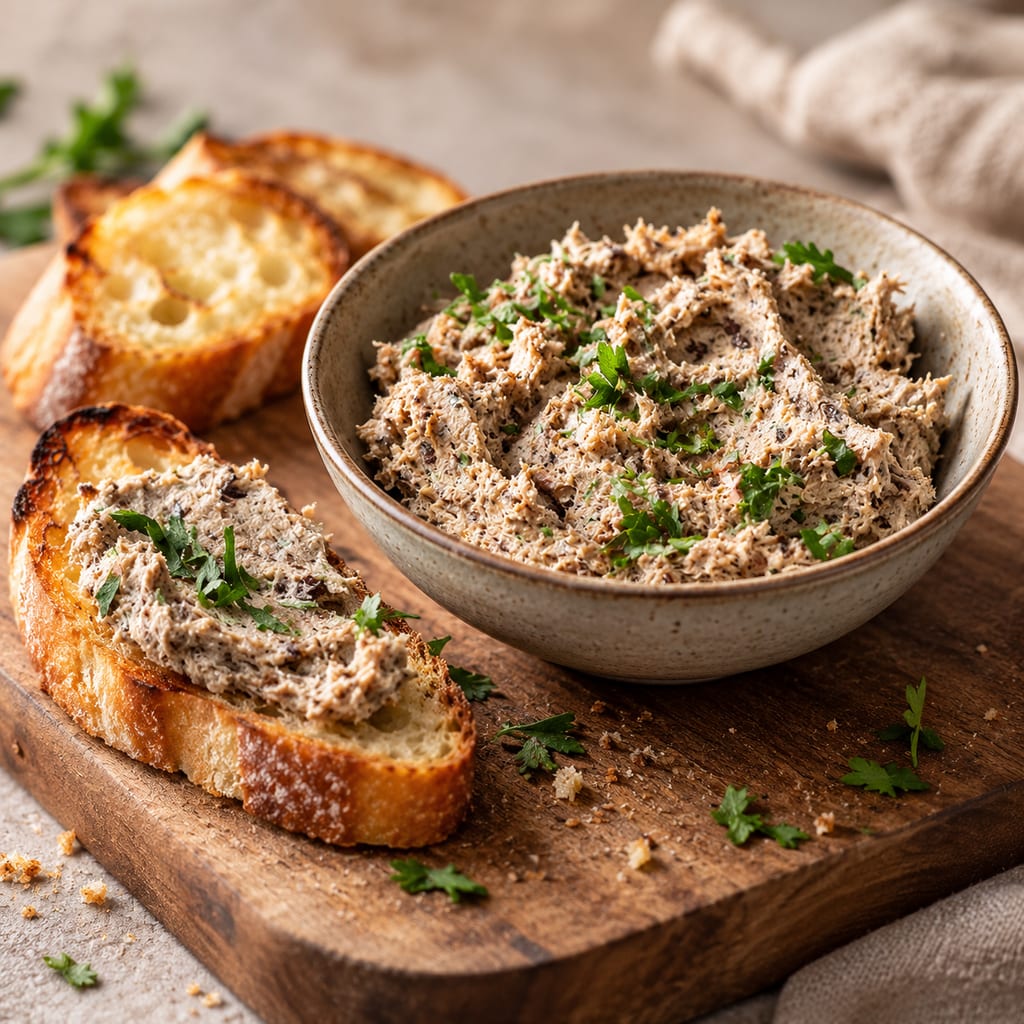
A cold biltong spread with sour cream, mayonnaise, mustard, lemon and herbs; serve it with crackers, crostini or bread.
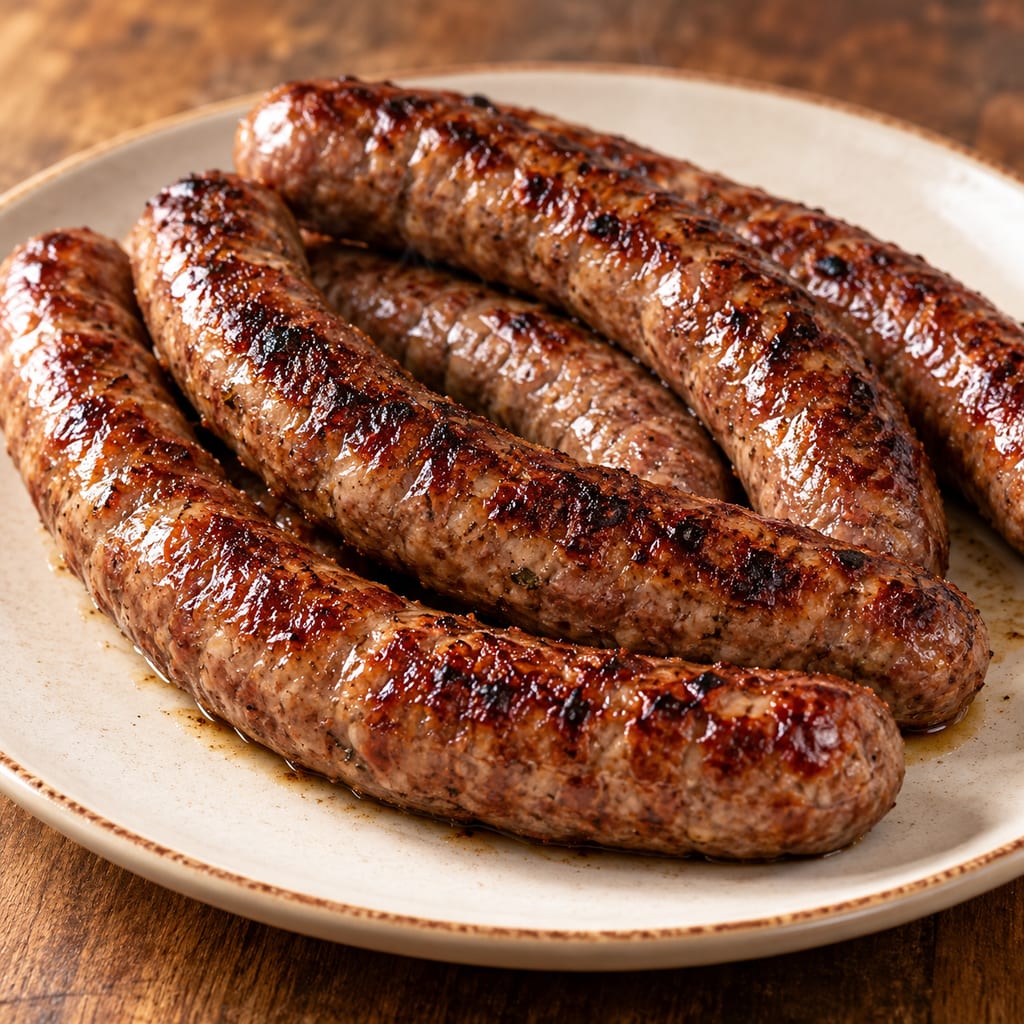
South Africa's regulated grilling-sausage class, looser than boerewors: a minimum of 40% meat, vegetable protein and mechanically recovered meat allowed, and sold raw.
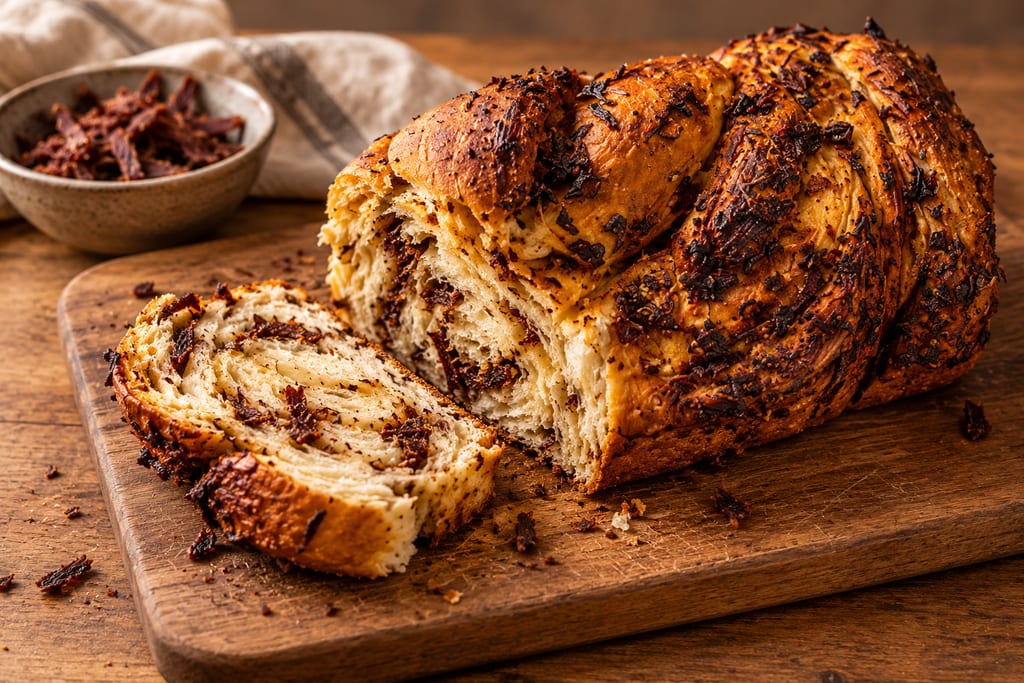
Yeasted bread wrapped around biltong, tomato pesto, Cheddar and feta, split lengthwise into a braid and baked; served with chilli-biltong butter.
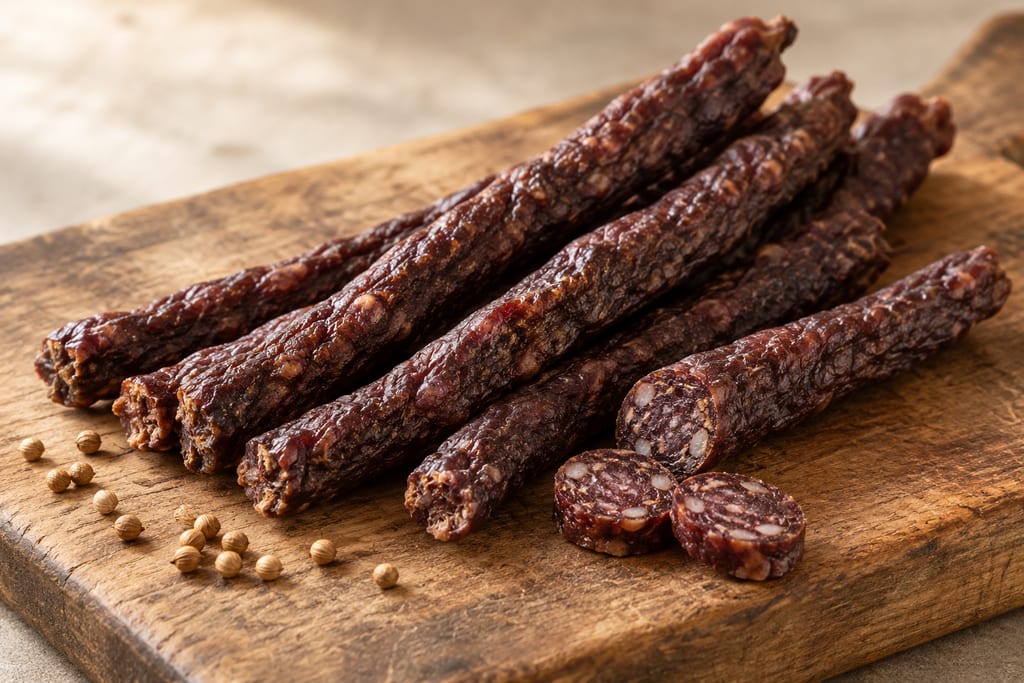
South Africa's dried sausage: seasoned minced meat in narrow casings, dried until it can be eaten without cooking, which makes it a far more demanding product than fresh boerewors.
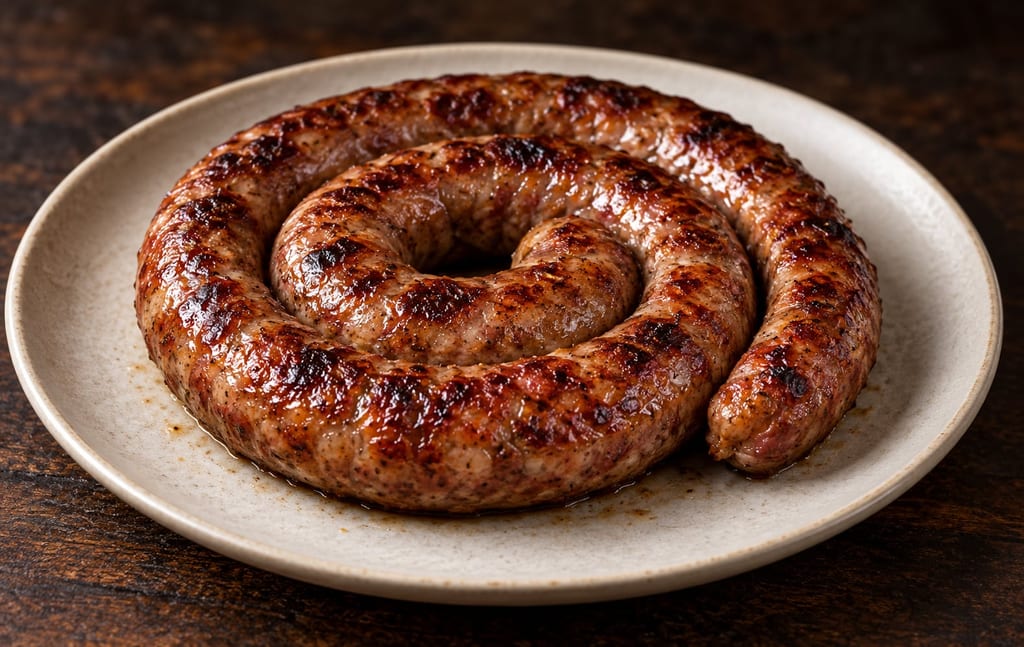
A coarse South African farmhouse sausage of beef with pork or mutton fat, defined by its coriander seasoning and cooked fresh over coals rather than preserved.
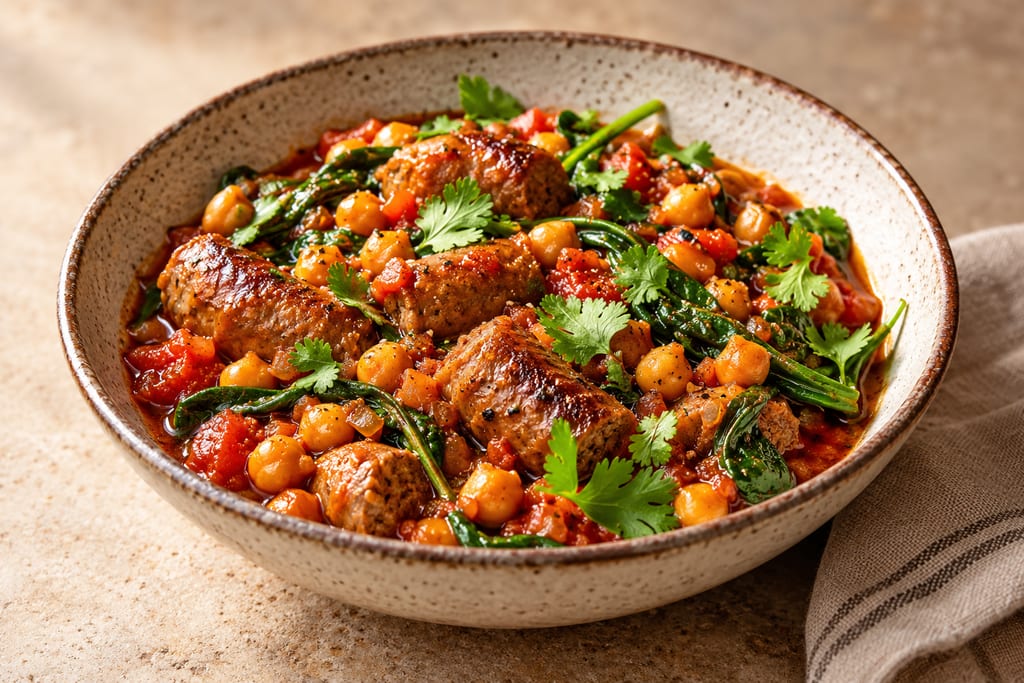
Lesego Semenya’s contemporary South African stew combines browned boerewors, chickpeas, tomato, spinach and warm spices.
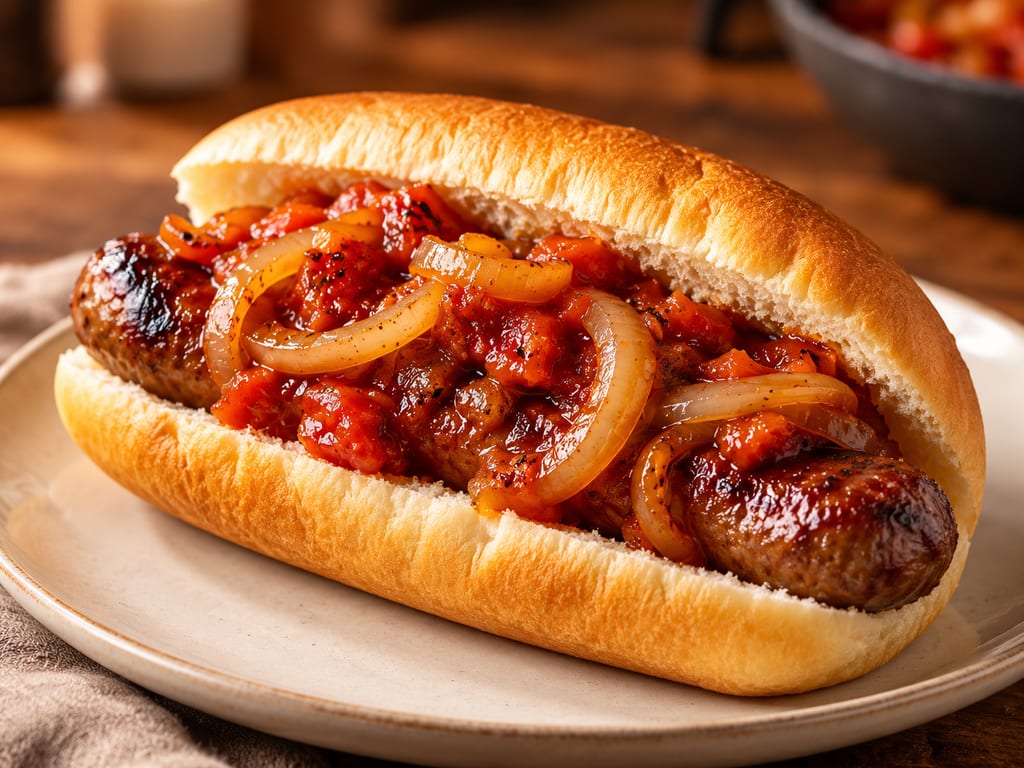
A South African boerie roll puts fully cooked boerewors in a soft bread roll and tops it with warm tomato-and-onion smoor.
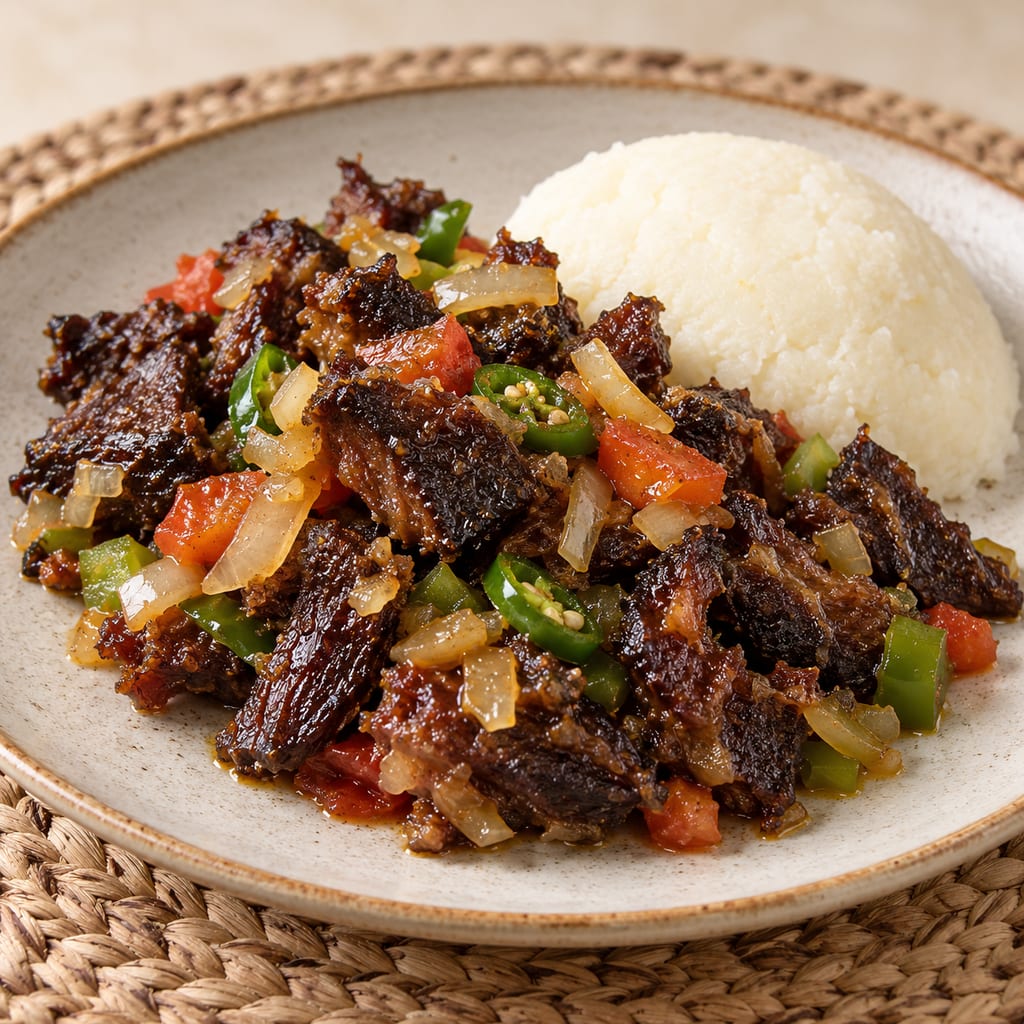
Alina Magano Johannes’s Oondhingu is a family dish from Onyaanya, Oshikoto, in northern Namibia: softened dried beef fried with vegetables and served with pap.
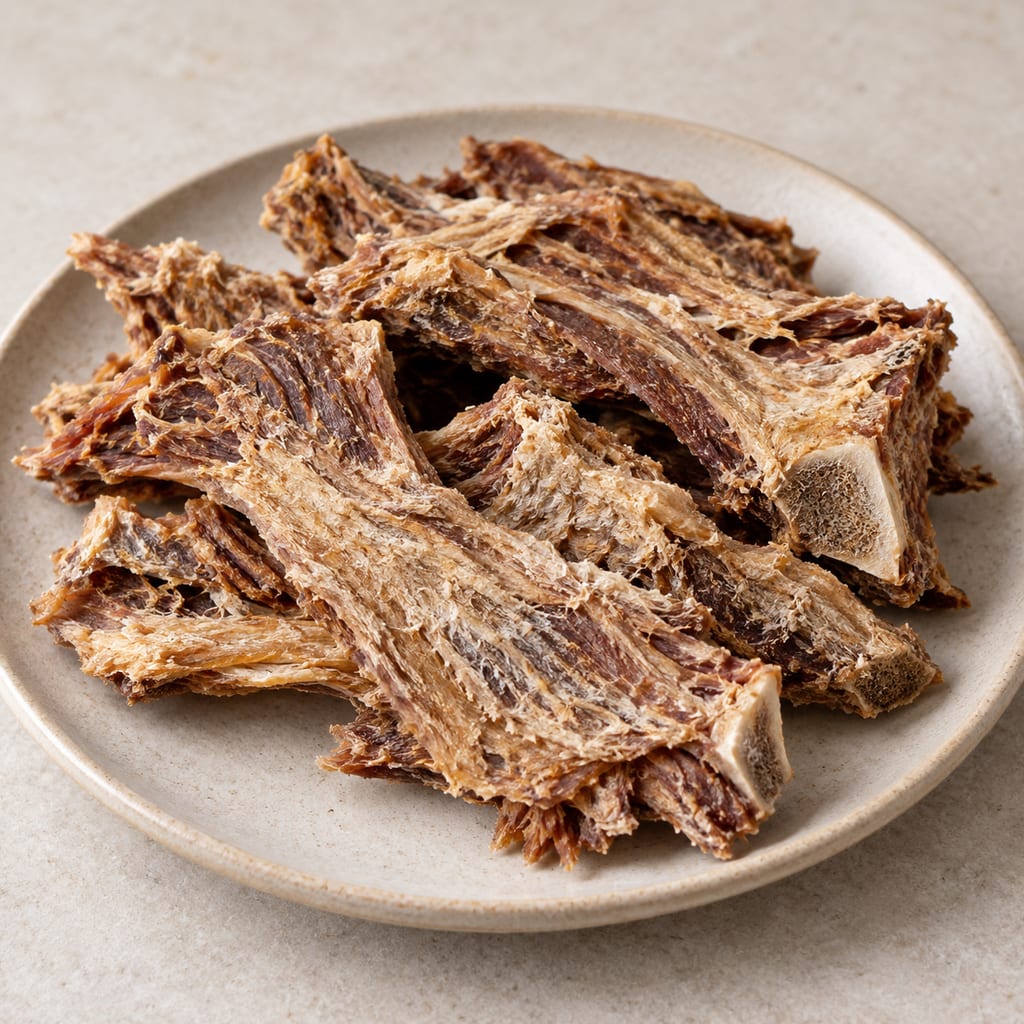
Alpaca charqui is Andean dried meat, made from camelid meat exposed to hot sun by day and frost by night at high altitude, the ancestor of the modern word jerky.
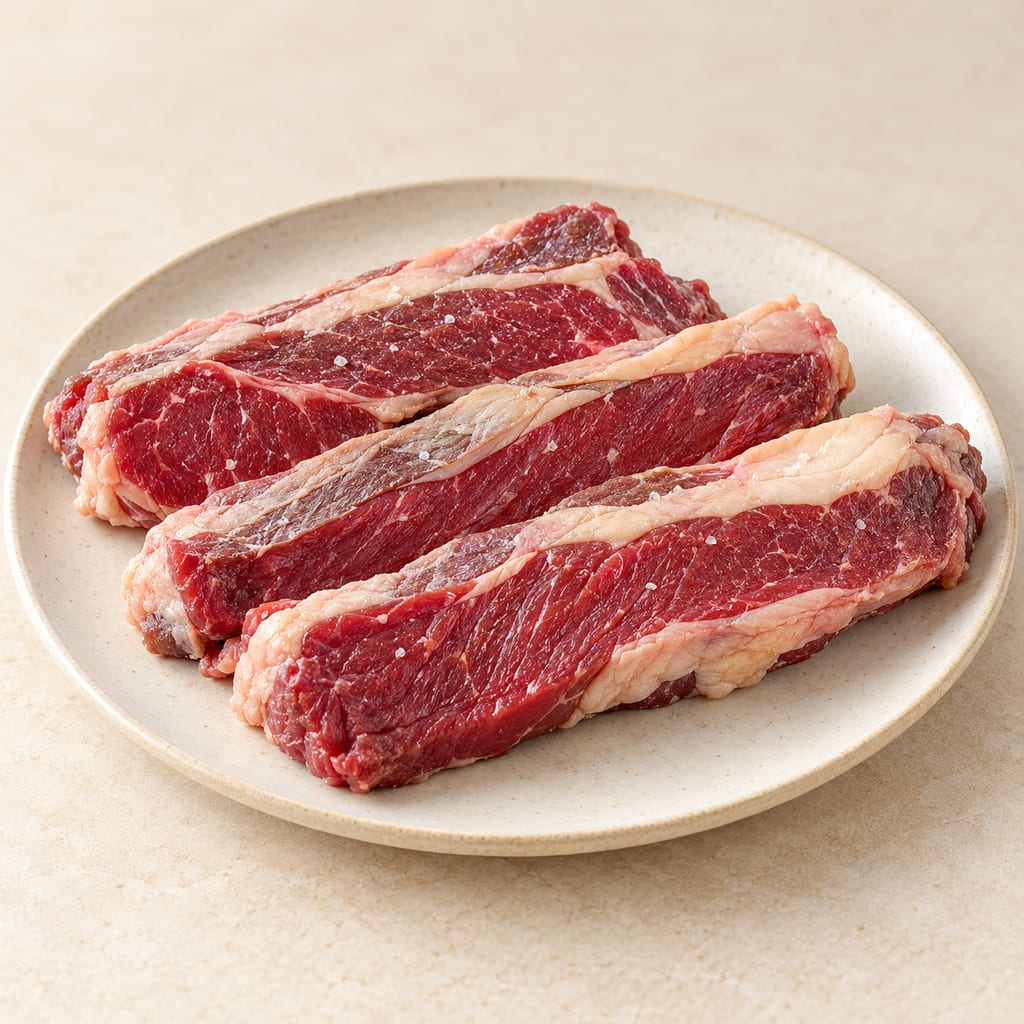
Beef given limited salt and partial surface drying, a short-keeping Brazilian meat that is much less durable than fully dried charque and is treated as a cold-chain product.
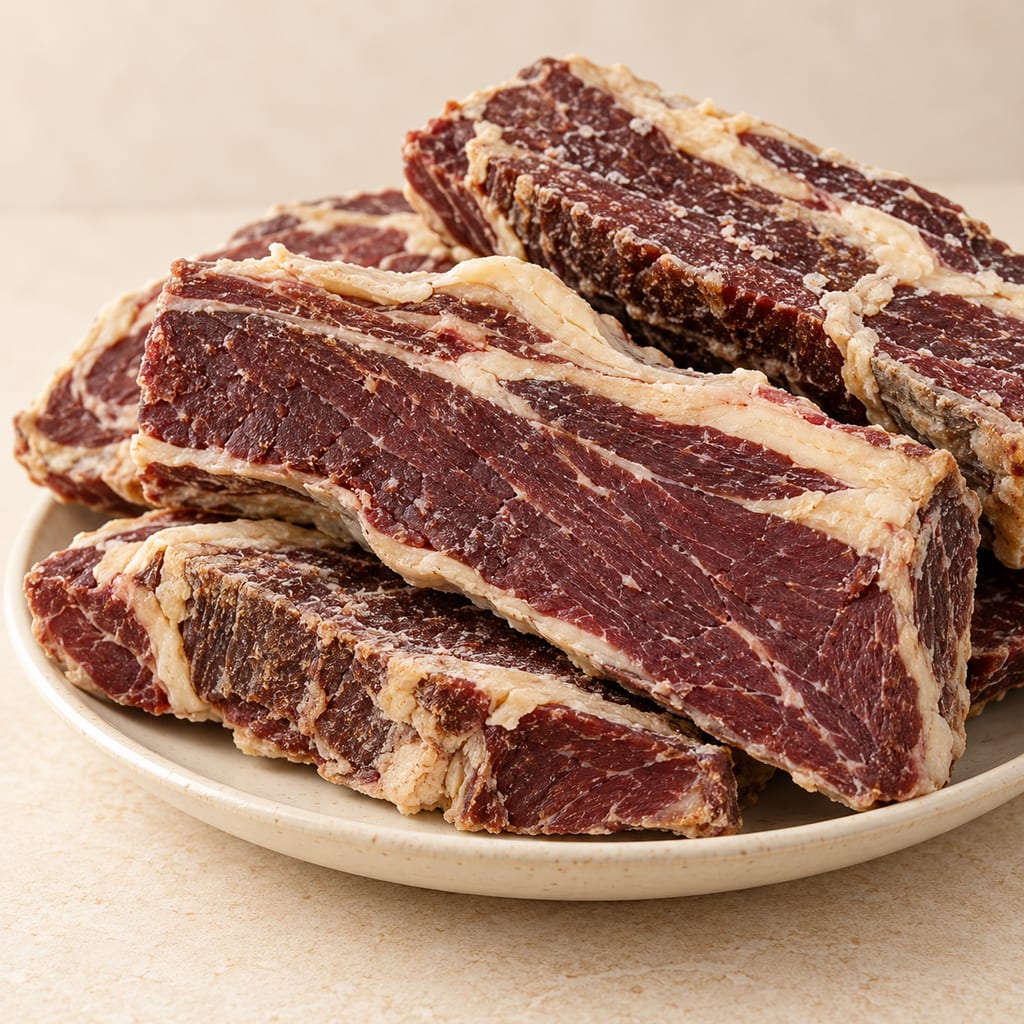
Beef salted heavily and dried into a strongly preserved ingredient that is desalted before it is cooked in stews; a Brazilian form of salt-dried meat that keeps far longer than the lightly salted carne-de-sol.

A documentary account of dried meat strips and their historical uses. It does not provide an operational home method for making shelf-stable jerky at home.
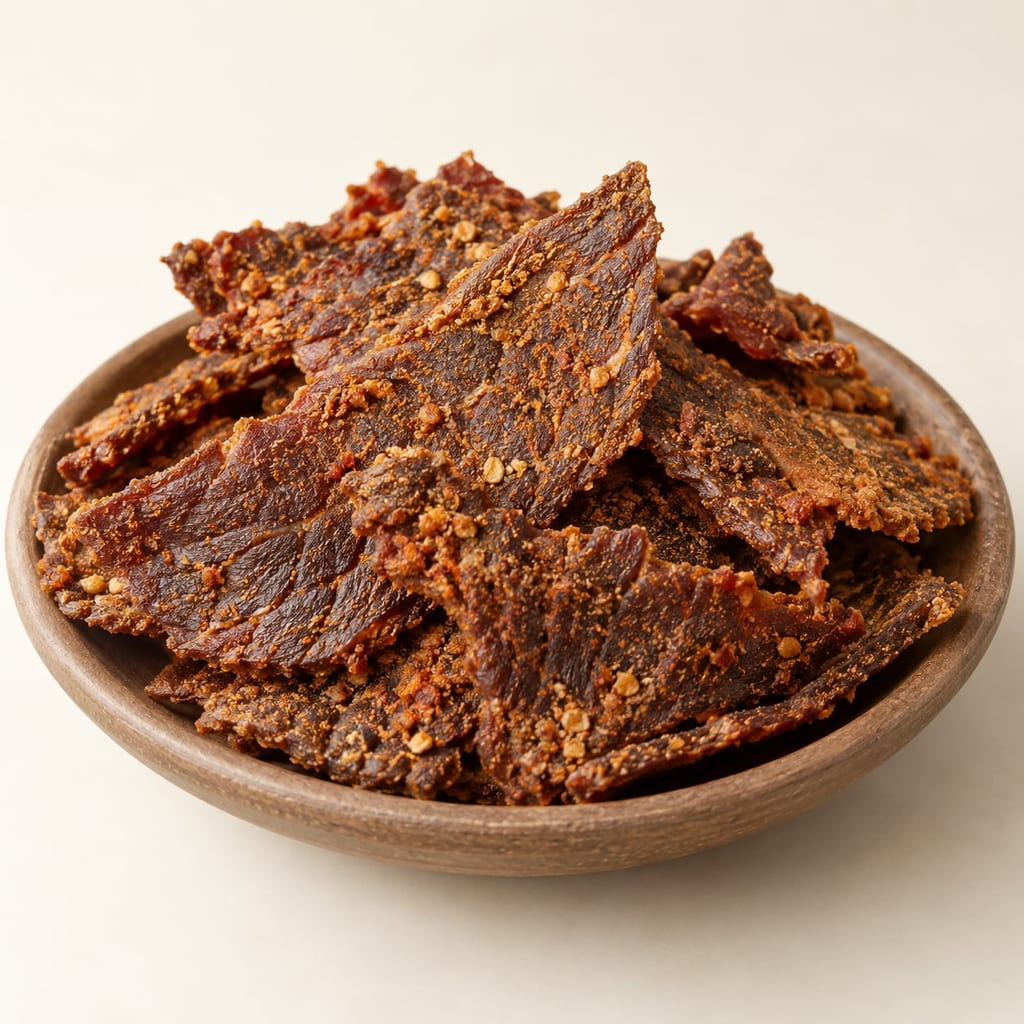
Kilishi is a Hausa-land dried meat from northern Nigeria and southern Niger: thin slices of beef or other meat, dried, coated in a spiced groundnut paste and dried again.
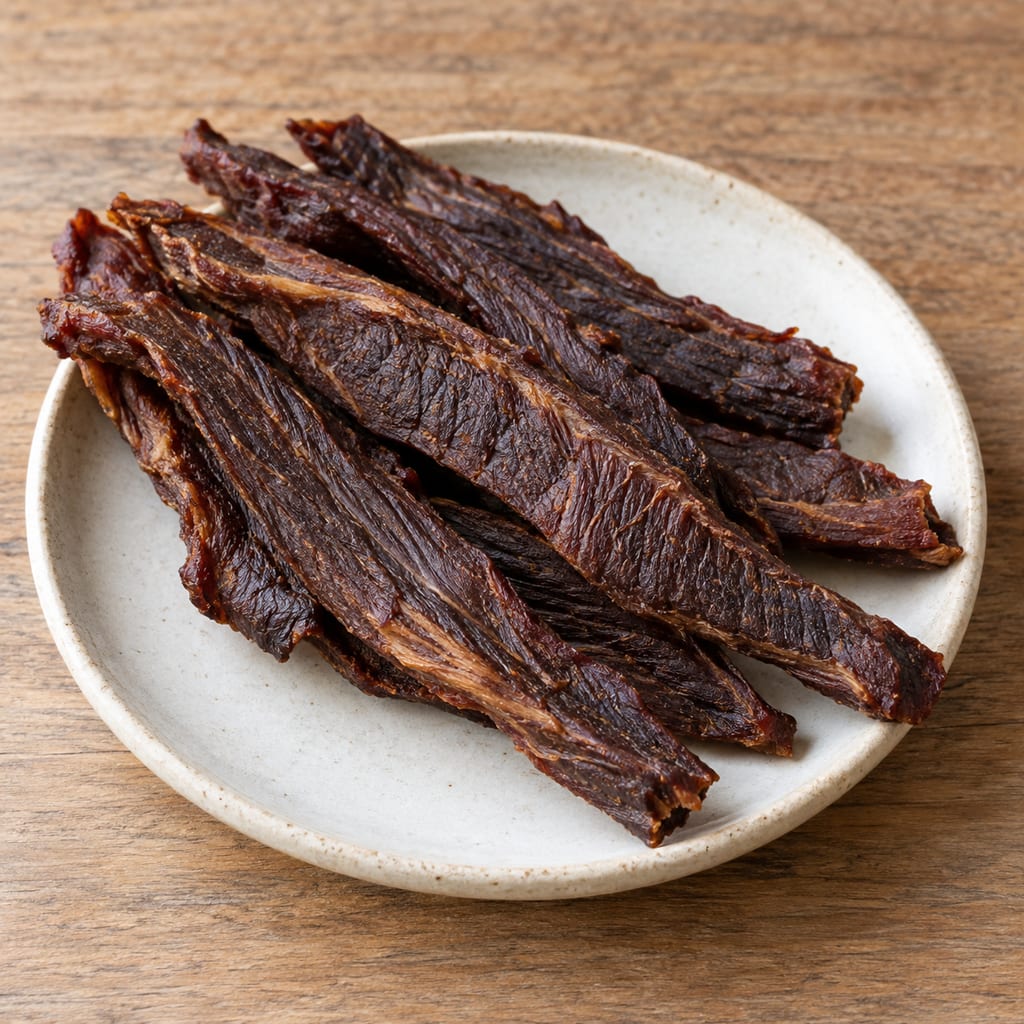
A documentary account of Malagasy salted meat strips, commonly dried, smoked or both; it does not provide a validated home-preservation recipe.
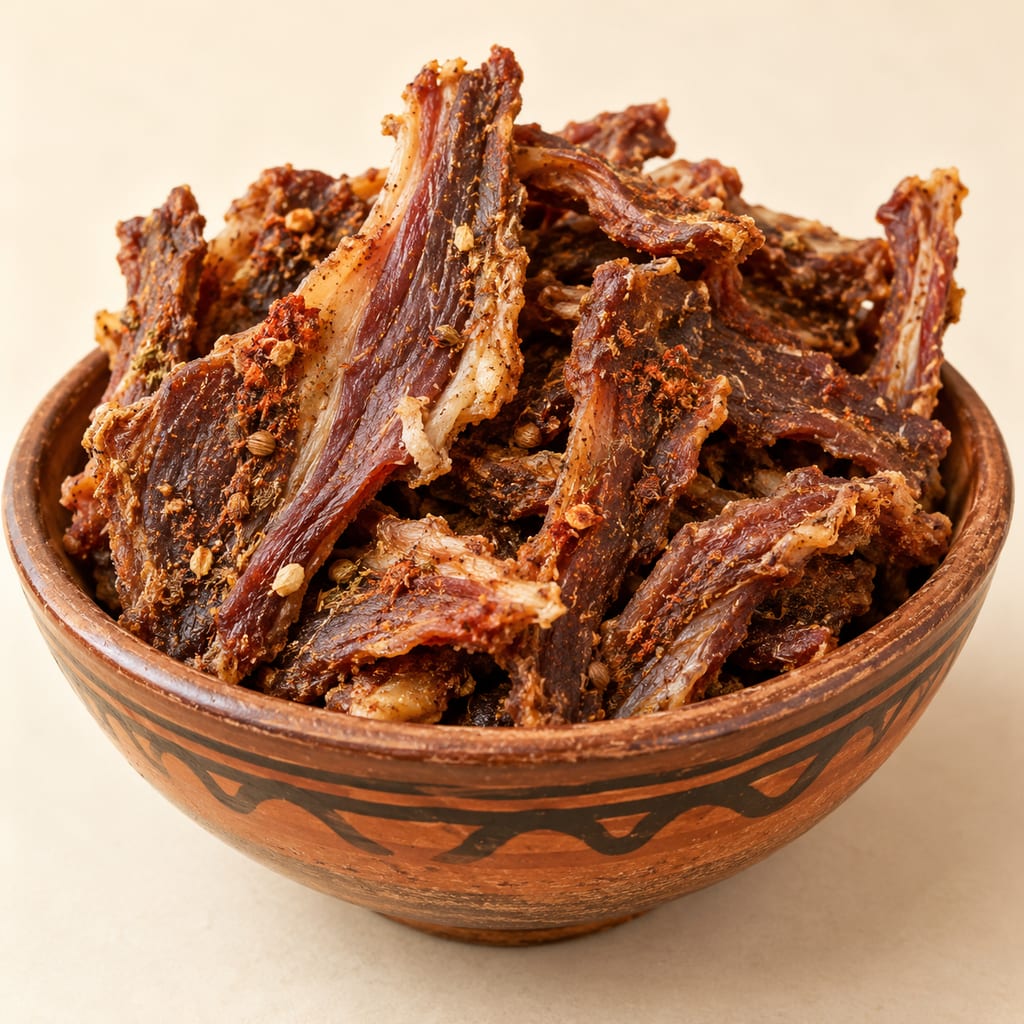
Moroccan kaddid is a traditional salted, dried meat. The measured batch here is from a 2023 Tunisian experiment and is included only as a non-instructional comparison.

Soft, spreadable Calabrian pork sausage made with a great deal of red chilli and fatty pork, stuffed into natural casings, sometimes smoked and matured while staying soft.

A way to add independent temperature logging to an existing food dehydrator without changing its built-in controls or protections. It is a monitoring method, not a rewiring plan.

Pleurotus cystidiosus is the abalone mushroom, a cultivated oyster-type fungus with dark brown caps that grows more slowly and is more demanding than other Pleurotus species.

A dark, balanced vinegar from Emilia-Romagna made by combining cooked or concentrated grape must with wine vinegar, then acetifying and refining it in wood under a protected specification.

A living dairy inoculum that starts controlled cream fermentation, developing acidity and aroma before sour cream or cultured butter is finished.

A small electric incubator holds jars at a selected temperature for yogurt and other documented warm food preparations. Controls, capacity and vessel arrangement vary by model.

Adygean salt is a seasoned table salt associated with Adygea and the wider North Caucasian culinary tradition. Salt is blended with garlic and a variable selection of herbs and spices; the exact mix depends on the named style and maker.

The African Caesar-group mushroom, Amanita masasiensis, is a wild ectomycorrhizal species of central and southern African woodlands, eaten locally. The genus contains deadly poisonous species, so identification needs care.
No community contributions have been published for this entry yet.
Sign in to contribute. Published comments and photos are free to read.
LK’s KitchenRecipe · Method · Equipment · Image
Biltong PotjieNo. 3 potjie version serves 16 and uses 1.5 kg biltong, one pack bacon, 2 tots sunflower oil, 3 chopped garlic cloves, 2 tins mushrooms, 6 onions, 1 cup milk, 1 cup cream, 1 kg pasta shells, 2 green peppers, 500 g Cheddar, 1 tsp braai spice and salt and pepper.
Sauce: 1.5 L boiling water, 2 tsp mixed green herbs, 4 chicken stock blocks, 1 sachet tomato paste.
Cook pasta by package instructions; fry onions, then add garlic, peppers, mushrooms and bacon until bacon cooks; make and add the sauce; add biltong and simmer covered about 5 minutes; add milk, cream and cooked pasta and simmer covered about 10 minutes; stir in cheese and serve.
LK’s also publishes a No. 6 formulation for 48 servings; its quantities are separate from the No. 3 recipe.
Cited in: A contemporary creamy pasta potjie; The No. 3 potjie ingredients; Build the potjie base and sauce; Add biltong, pasta and dairy in stages; Serving and the limits of the recipe
Food Standards AgencySafety
How to chill, freeze and defrost food safelyOfficial guidance says cooked dishes and dairy products should be refrigerated and storage instructions followed.
Cited in: Serving and the limits of the recipe