
South african meat
Beyond biltong: the coil, the slice and the snap
Boerewors, biltong and droëwors share a table but follow different paths from meat to meal. Their histories lead from the braai and butcher's counter to drying lines, household pots and the science of keeping food.
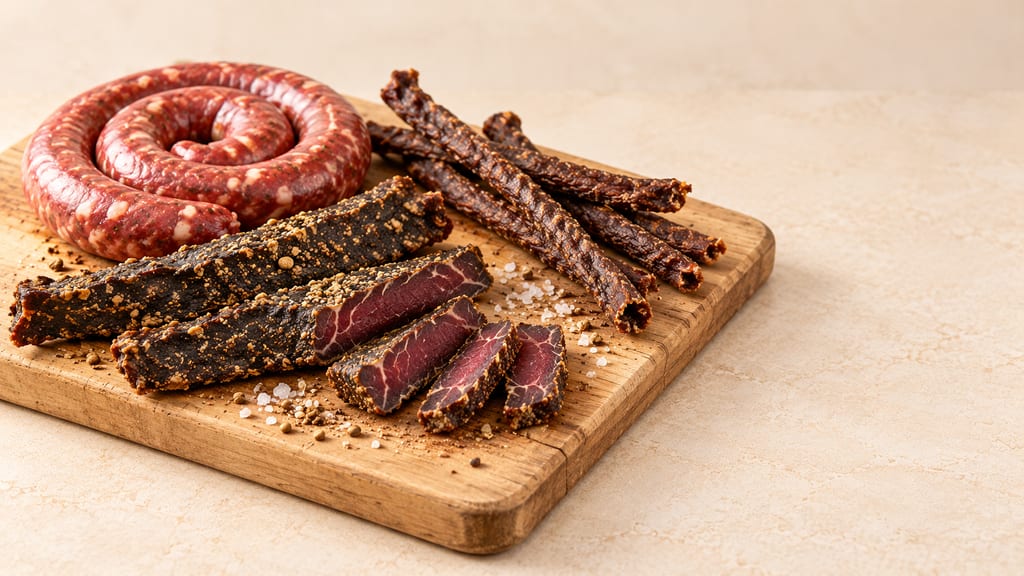
Boerewors, biltong and droëwors: three South African meats that share a table but not a method.
A coil, a slice, a snap
A coil of boerewors on the braai, a slice of biltong cut across the grain, a length of droëwors snapped between the fingers: they may share coriander and a place at the table, but they begin with different decisions. The coil is a fresh sausage for the fire. Biltong keeps the form of a piece of muscle. Droëwors starts with minced meat and fat packed into a narrow casing and then dried.
That difference is more than a matter of shape. It changes the surface exposed to air, the way fat is distributed and the texture a cook or butcher seeks. It also changes what a name can tell a hungry person: fresh boerewors needs cooking through, while a properly produced dried product is made to be eaten as such. A browned casing alone cannot establish that the centre of a fresh sausage is cooked.
The same paper bag can hold foods made for quite different reasons. Biltong offers the chew of fibres cut from a larger piece; droëwors gives a casing and a coarse interior. Both can vary from soft to distinctly dry. The descriptions are a useful starting point at a counter, not a promise that every maker uses identical proportions or finishes. Fresh boerewors, meanwhile, belongs in the refrigerator until it is cooked, however much its shape resembles a sausage destined for a drying room.
The work of the mincer
Boerewors is associated with the braai, but its pleasures begin before the fire: a coarse texture, fat that carries flavour, and spices that make the meat recognisable. Coriander often leads, with pepper and warm spices in supporting roles. Recipes and producers differ in meat, fat, casing and seasoning; the name does not prescribe one household's mixture.
The Dictionary of South African English records a 1913 recipe called farmer's sausages, and Leipoldt later wrote about wors with the attention of a cook for whom such distinctions mattered. A dated recipe tells us what was recorded by then, not who invented the sausage or when. The gap between surviving print and older kitchen practice is too wide for a tidy origin story.
Droëwors takes the casing in another direction. It is a drying sausage, not simply a raw coil forgotten beside the fire. Producers use differing meat and fat blocks, seasoning and casings. A slim dried stick may look like it from a distance, but a whole-muscle biltong stick has not passed through the same mincer. Salami sticks and cabanossi add another complication: their names alone do not establish whether a particular product has been dried, smoked, cooked or fermented. One Australian cabanossi producer, for example, describes its product as cooked and smoked.
A casing is not a trivial detail. It determines the diameter of the sausage and holds the minced mixture together; the choice also matters to anyone avoiding a particular animal product. Beef in the filling does not establish the material of the casing. A label or a direct question to the maker is more useful than assuming that a meat name answers every dietary question.
A butcher's choice of grind has consequences at the table. Fat appears in the cut surface rather than running as a single edge along a muscle, and seasoning is distributed through the filling. The production route also means that a fresh sausage and a dried sausage require their own handling and process controls. Their family resemblance should not be used to borrow a drying schedule from one for the other.
The muscle and the knife
Biltong begins with a recognisable piece of meat. Salt, seasoning and often vinegar precede drying; the final cut reveals the grain that was there at the start. Some people prefer it moist and yielding, others much drier. Fat, thickness and the angle of the knife alter the experience as much as the spice on the outside.
That flexibility has a long paper trail. In her 1891 cookbook Hildagonda Duckitt gave separate accounts of biltong and tassal. Her biltong was prepared for thin slicing or rasping; tassal had its own treatment and could return to the fire after soaking. Historical recipes are evidence of what a writer described, not ready-made instructions for today's kitchen. In particular, old quantities of saltpetre should not be turned into a modern cure by guesswork.
These records resist a single heroic invention. Meat keeping has many histories across the region, and an early printed word or recipe establishes an attestation, not the moment a community first began to make the food.
The historical recipe books themselves deserve careful reading. They preserve a literate writer's selection and vocabulary, not a complete record of everyone who salted, dried or cooked meat. The recipes can show that a practice had reached a page by a certain date and how that author described it. They cannot settle the origin of a food that may have travelled through households, languages and markets before it was printed.
What drying can and cannot promise
As water leaves meat, flavour and salt become more concentrated and the texture changes. Airflow, thickness and the conditions around a batch influence that change. Yet a piece that feels dry, a familiar number of days, or a percentage of weight lost does not on its own establish safety. Weight loss includes water but is not the same measurement as final moisture or water activity.
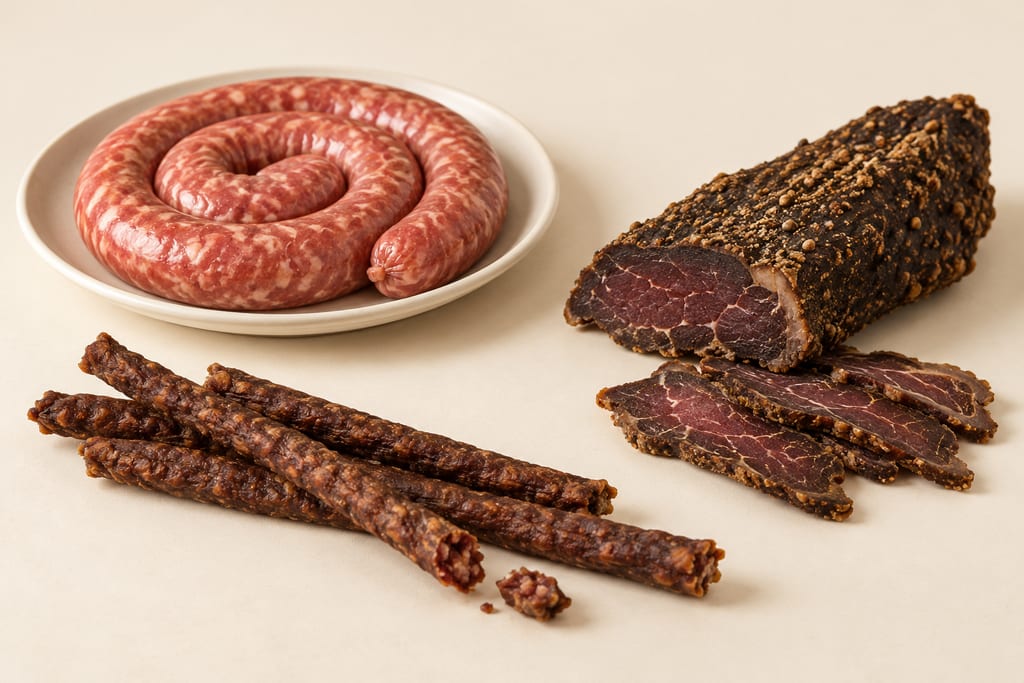
In one biltong study, researchers tested combinations of vinegar, weight loss and packaging. Their results belong to those conditions; they do not validate every home batch. Drying, acid and salt can reduce hazards, but dried meat is not automatically sterile. The familiar smell of coriander is no measurement of pathogens.
For a home cook wanting a heated dried beef strip, USDA guidance gives a separate jerky process with a heating step. Its result is not a validation of traditional unheated biltong or droëwors. That distinction leaves room to enjoy both the tradition and the science without pretending that one published timetable works for every piece of meat.
For a producer, the attractive dark surface is only one part of a batch. Ingredients, raw meat handling, acid, salt, temperature, humidity, airflow, time and the finished product all belong to the process. Changing the thickness or the recipe can change the outcome. A laboratory result is strongest when it is kept attached to the process actually tested, rather than presented as a guarantee for anything that looks similar.
Fermentation is another word that needs care. Salt and vinegar do not, by themselves, prove that a starter culture was used. Commercial samples can show differences in measures associated with lactic acid, but that does not make every biltong or droëwors a fermented salami. Nor does it prove that microbial activity can never occur. The useful question is what happened in the particular product and how its maker controls it.
Across borders, into the pot
The map opens further when dried meat is treated as an ingredient rather than only a snack. In Namibia, Alina Magano Johannes's oondhingu, presented by Namibia Food Print, puts dried beef into a cooked dish. It is a named cook's account, grounded in a particular place and kitchen; it should not be made to speak for every Namibian household.
In Zimbabwe, Princess Tafadzwa describes chimukuyu chinedovi, dried meat served in a peanut sauce. The transformation is striking: meat kept by drying becomes part of a soft, cooked meal. These dishes have their own names and contexts. They are neighbours to South African biltong, not interchangeable labels for a single national tradition.
Drying can make a portable ingredient, but the point of keeping it need not be to eat it unchanged. Once cooked in a sauce or pot, dried meat gives up flavour to other ingredients and becomes part of a different texture. These contemporary recipes show cooks adapting a preserved ingredient to a meal; neither recipe establishes the age of every version of the dish or supplies a validated process for making the dried meat from scratch.
The line by the sea
At Velddrif on South Africa's West Coast, the drying line carries fish rather than beef. GroundUp's reporting on bokkoms follows the people who salt and hang harders, and records a maker's account of weather changing the time required. The work depends on hands, space and seasons as well as salt and air.
Bokkoms widen the picture without becoming biltong. The fish, its local industry and its workers have a history of their own. A line of hanging food can connect two preservation practices without flattening the communities that make them.
The fish also brings a different set of questions about raw material and handling. A description of a maker's craft is valuable evidence of work and local knowledge; it is not a complete household safety specification. The time a maker reports in one season is an observation tied to that setting, not a universal release test. The weather is part of the story precisely because it refuses a single number.
Back to the fire
Biltong can be sliced for a snack or used as a savoury ingredient; Jan Braai puts it into a braaibroodjie, a toasted sandwich made over the fire. Boerewors follows a different route to the meal, cooked as a fresh sausage and served in a roll or alongside pap. Droëwors can be eaten in the wait while the coals do their work.
The three foods remain recognisable precisely because their makers make different choices: leave the muscle whole or mince it, fill a casing or hang a strip, preserve it or cook it fresh. What began as the practical question of keeping and preparing meat has become an argument about texture and taste—one that continues every time someone chooses a slice, a stick or a coil.
The persistence of these foods is not explained by storage alone. There is pleasure in choosing the degree of dryness, comparing a butcher's seasoning with another's, or returning a dried ingredient to a family dish. The old books, the studies and the present-day recipes each illuminate a different part of that life. None is a substitute for the others, and none needs an invented eyewitness to make the food interesting.
Related
Discussed in this article
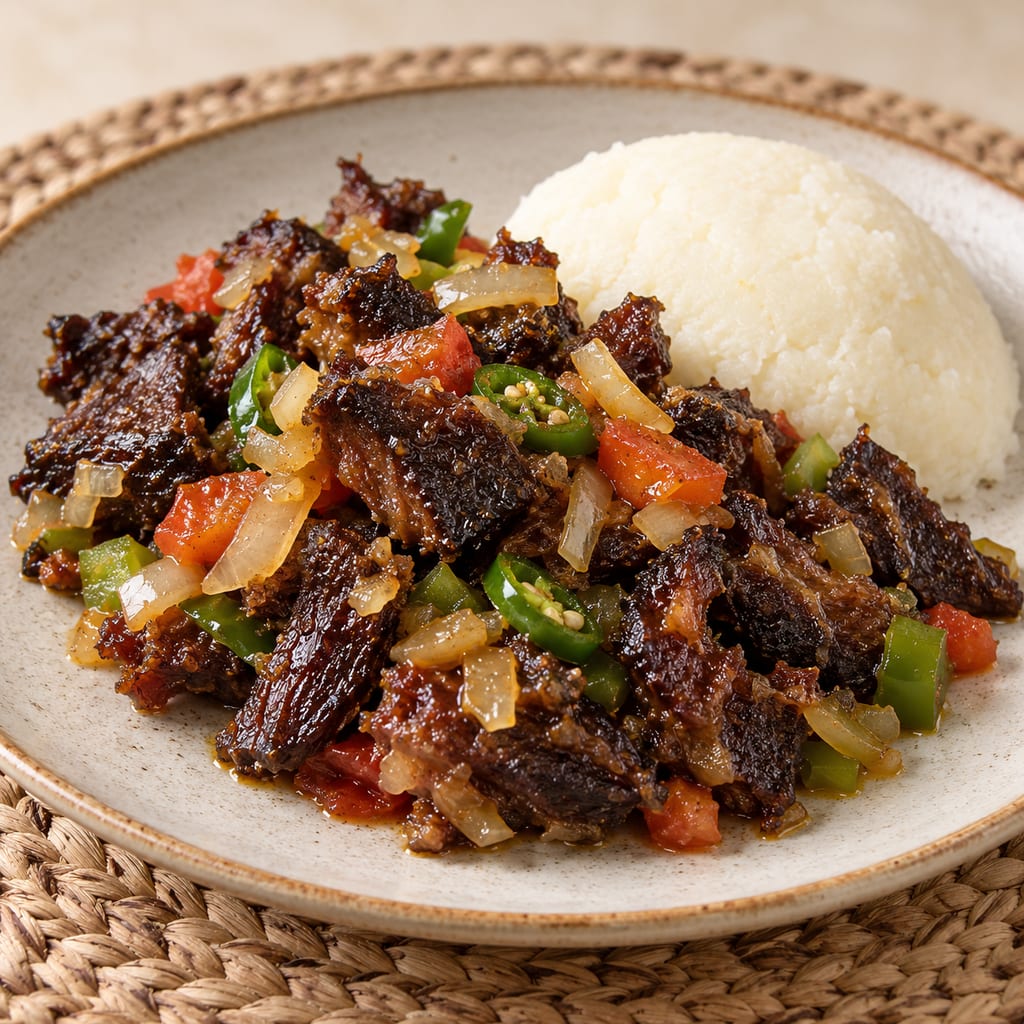
Alina's Oondhingu
Alina Magano Johannes’s Oondhingu is a family dish from Onyaanya, Oshikoto, in northern Namibia: softened dried beef fried with vegetables and served with pap.
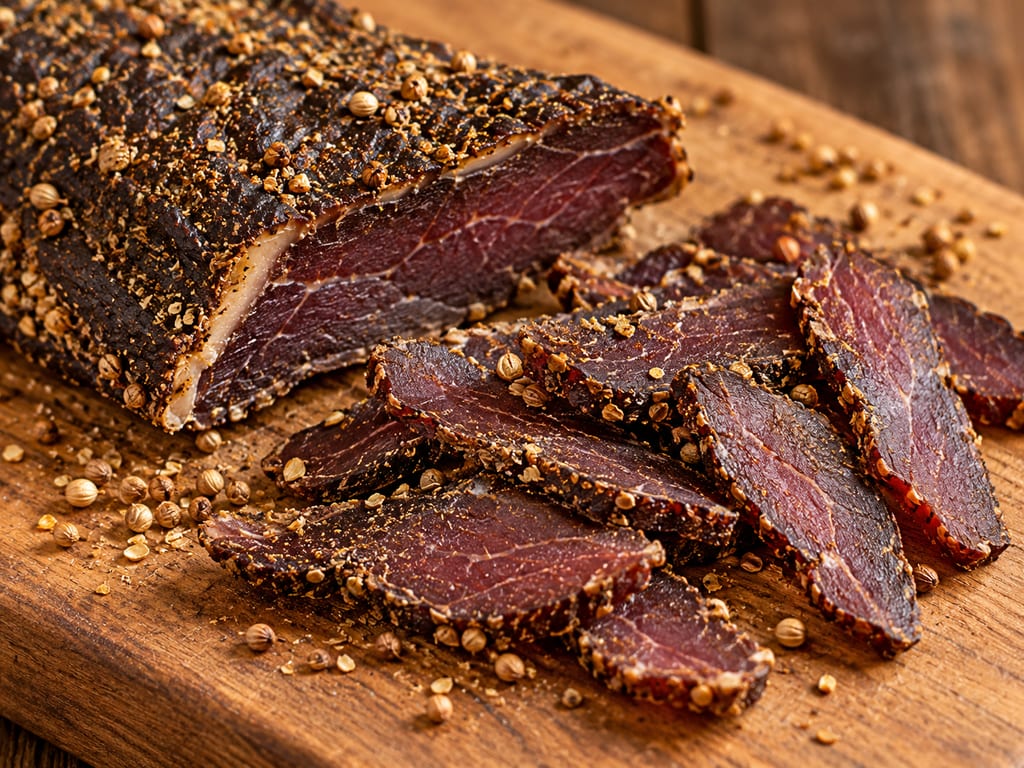
Biltong
Strips of whole-muscle beef or game seasoned with salt, vinegar, roasted coriander and pepper and air-dried without cooking, sold anywhere from soft and moist to hard and very salty.
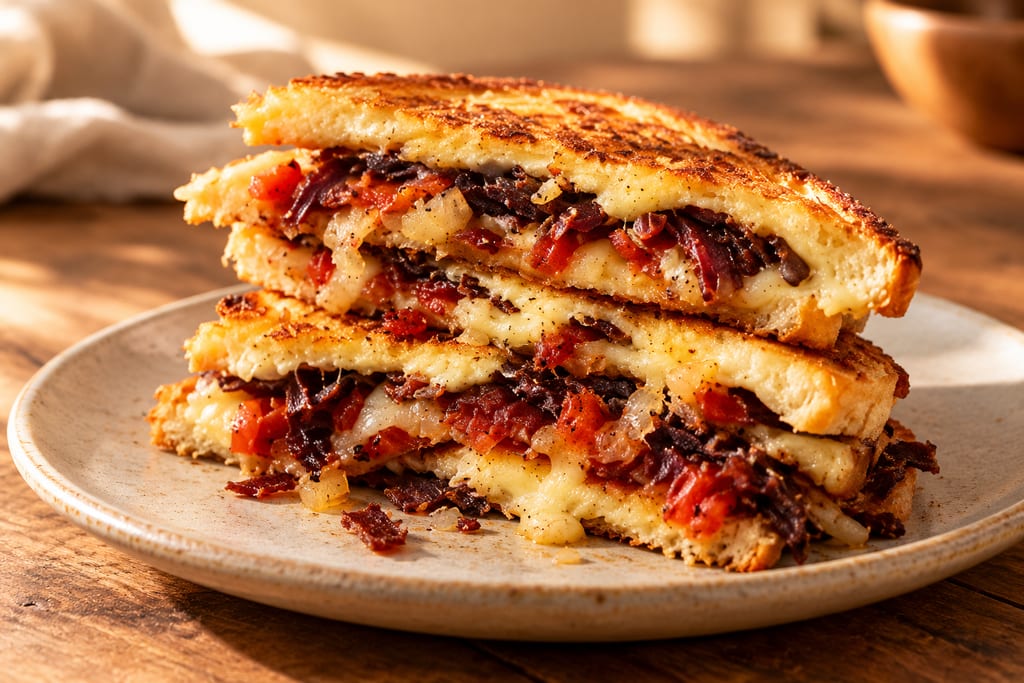
Biltong braaibroodjie
Chopped biltong, sweet onion, cream cheese and Cheddar fill bread toasted in a hinged grid over gentle coals, then finished with biltong dust.
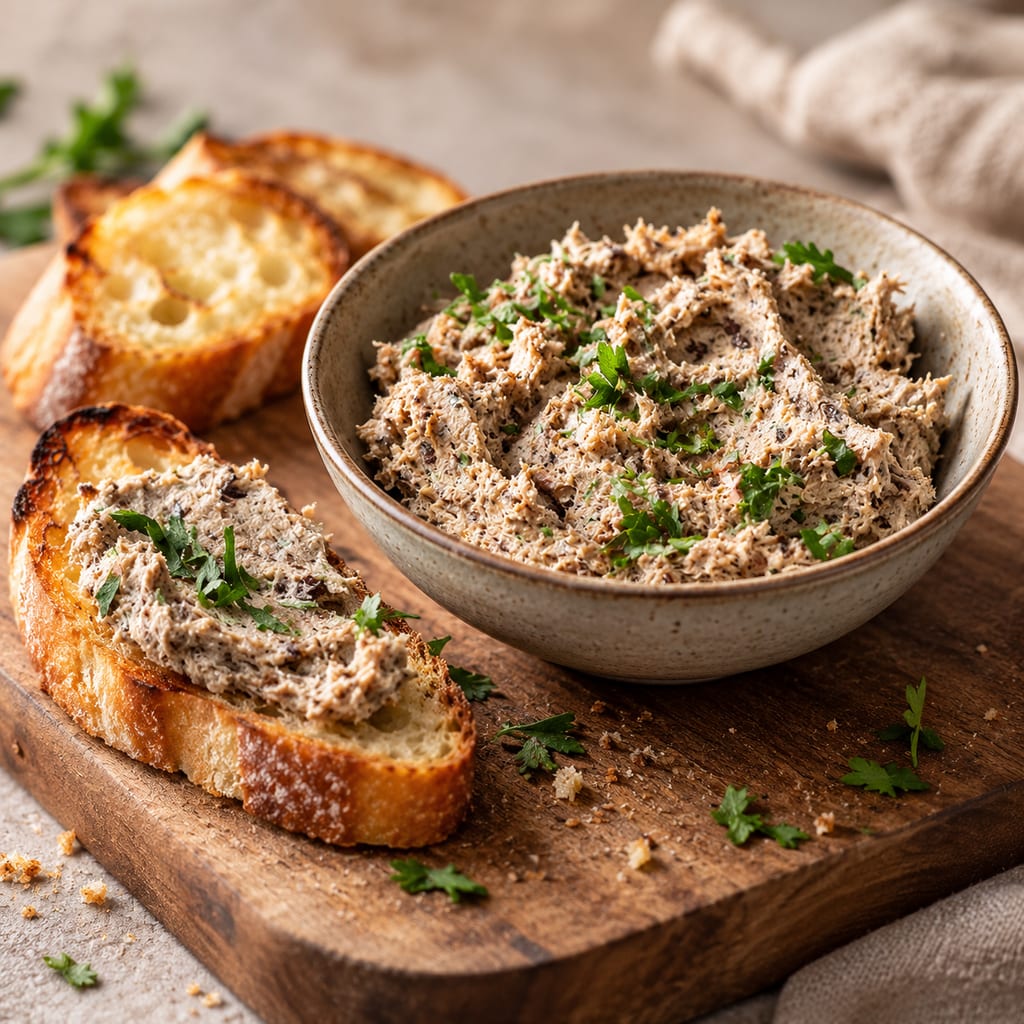
Biltong pâté
A cold biltong spread with sour cream, mayonnaise, mustard, lemon and herbs; serve it with crackers, crostini or bread.
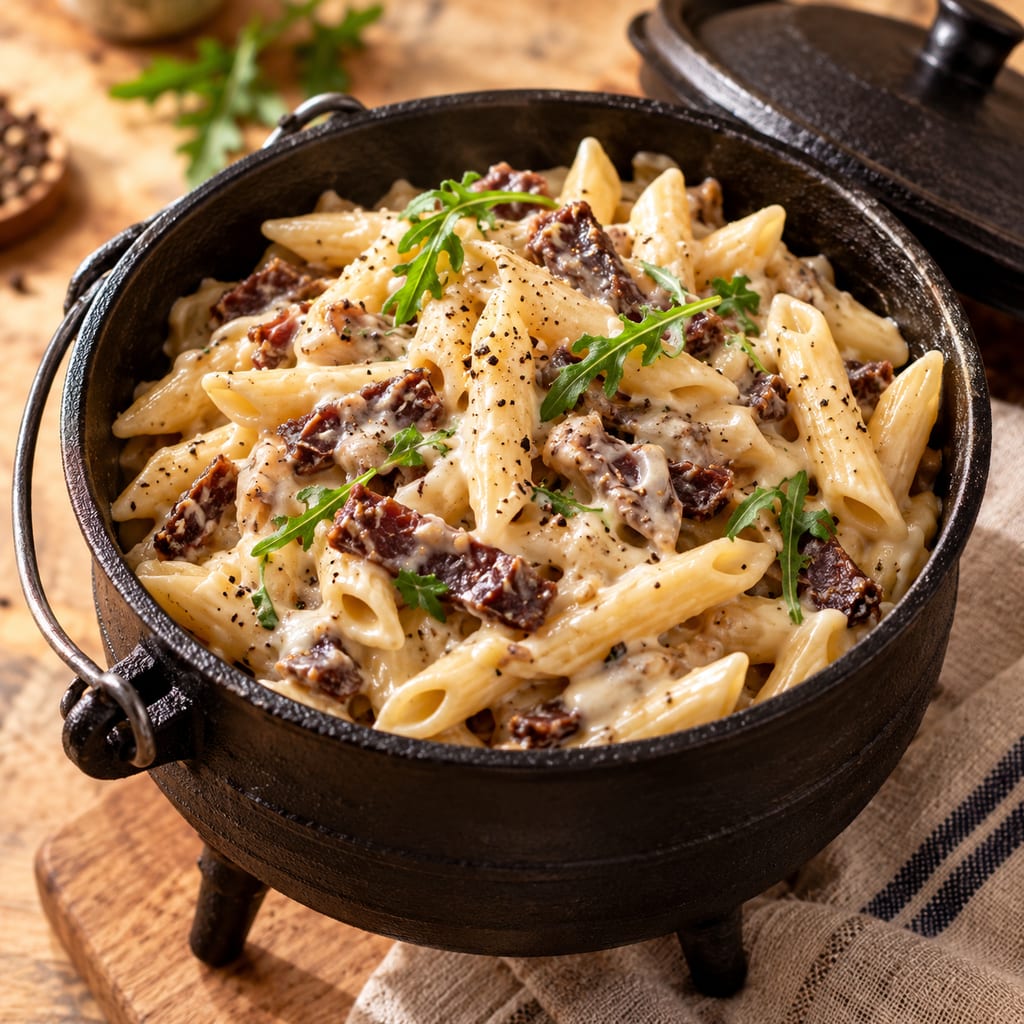
Biltong potjie with creamy pasta
Biltong, bacon and vegetables simmer in tomato-herb stock, then join cooked pasta, milk, cream and Cheddar in this outdoor potjie.
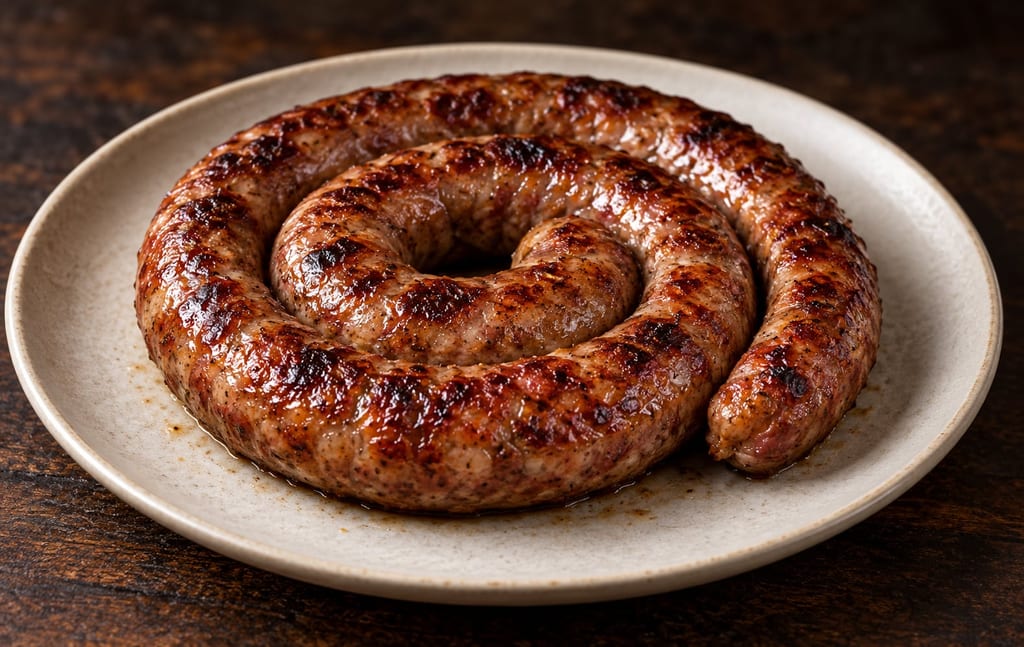
Boerewors
A coarse South African farmhouse sausage of beef with pork or mutton fat, defined by its coriander seasoning and cooked fresh over coals rather than preserved.
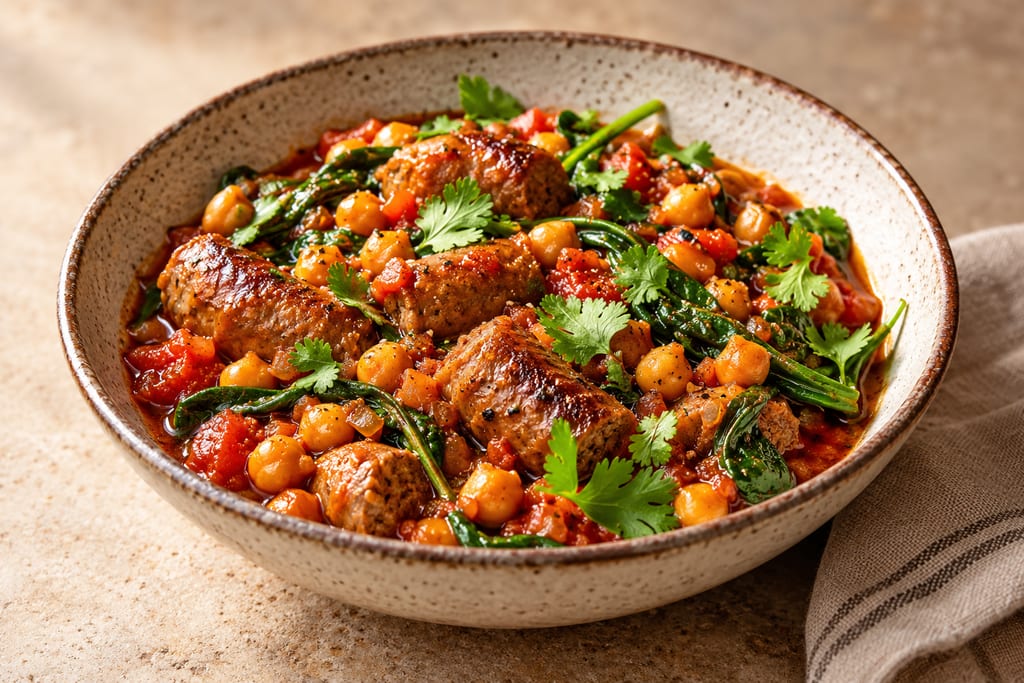
Boerewors and chickpea stew
Lesego Semenya’s contemporary South African stew combines browned boerewors, chickpeas, tomato, spinach and warm spices.
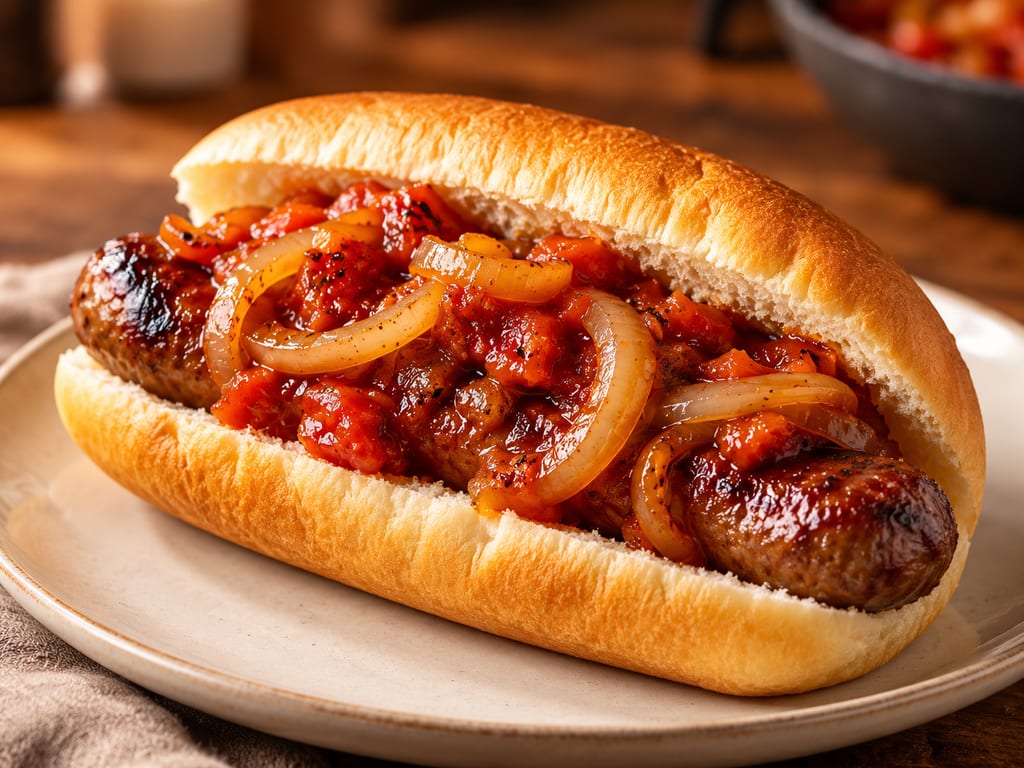
Boerie roll
A South African boerie roll puts fully cooked boerewors in a soft bread roll and tops it with warm tomato-and-onion smoor.
Community
No community contributions have been published for this entry yet.
Share what you made
Sign in to contribute. Published comments and photos are free to read.
Sources
Deli Spices
Biltong & DroëworsCited in: A coil, a slice, a snap; The work of the mincer; Back to the fire
Food and Agriculture Organization
Simple techniques for production of dried meatCited in: A coil, a slice, a snap; The muscle and the knife; What drying can and cannot promise
Jones et al., Meat Science, 2019
Effects of vinegar, weight loss and packaging on biltongCited in: What drying can and cannot promise
USDA Food Safety and Inspection Service
Jerky and Food SafetyCited in: What drying can and cannot promise
Gaps
- No single inventor or invention date is established for these foods; surviving printed records do not establish beginnings.
- Household names and spellings require further speaker-led checking. The historical drying accounts are not validated modern processes.
Updated 2026-10-28