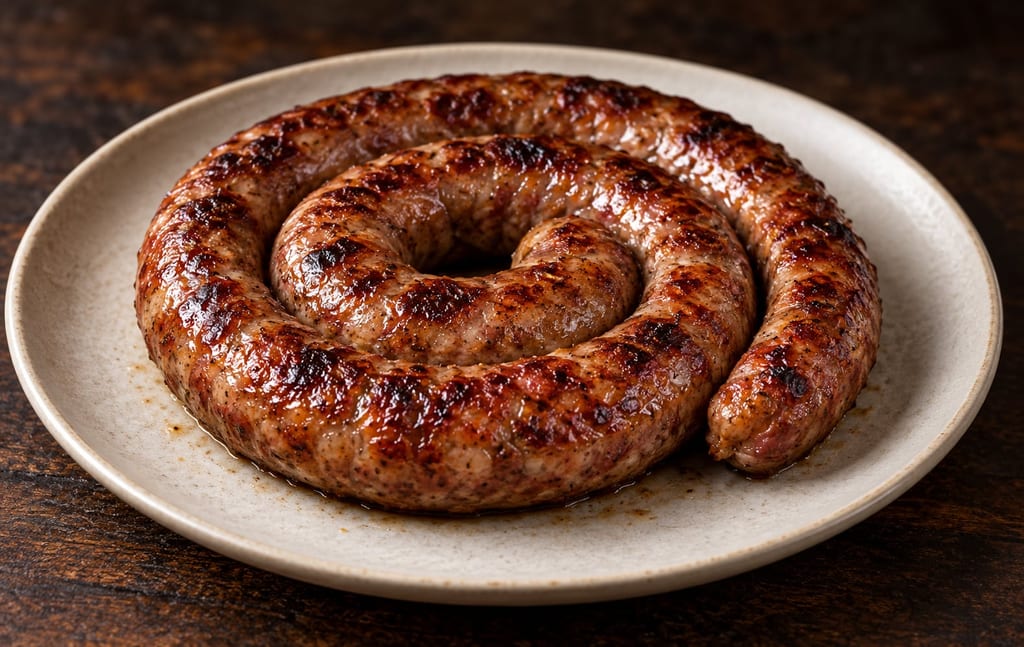
Boerewors
A coarse South African farmhouse sausage of beef with pork or mutton fat, defined by its coriander seasoning and cooked fresh over coals rather than preserved.
 FermenteaWhere food goes to change
Traditional method
Boerie rolls
A South African boerie roll puts fully cooked boerewors in a soft bread roll and tops it with warm tomato-and-onion smoor.
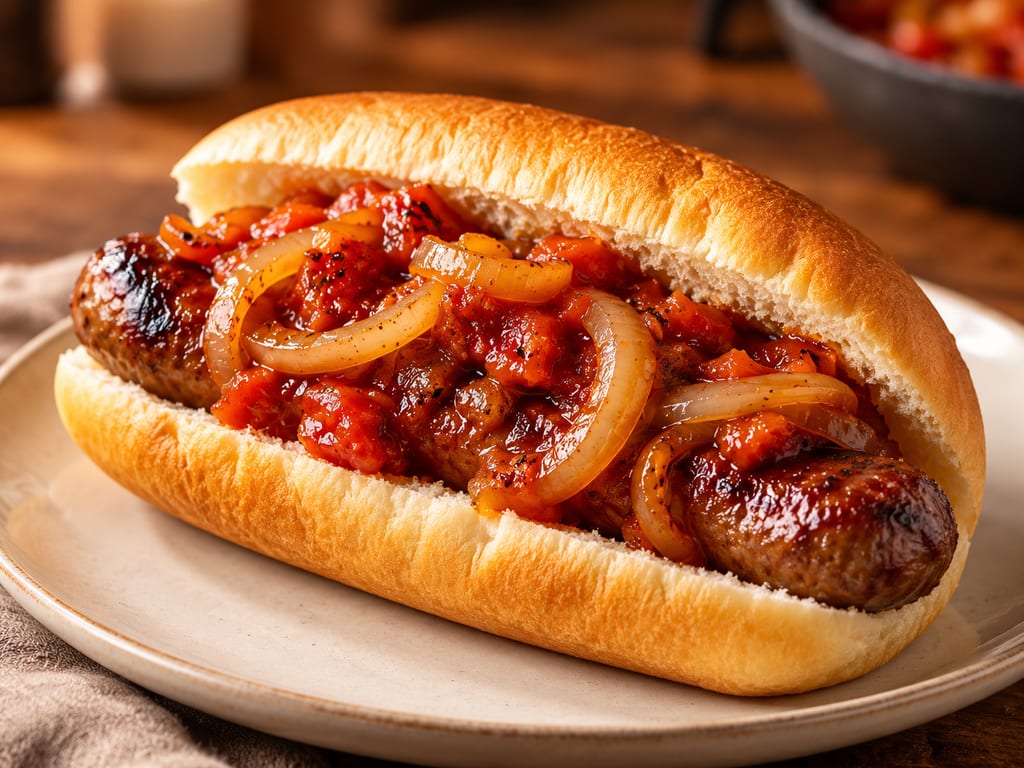
A boerie roll is a simple serving format: cooked boerewors is cut to fit a soft bread roll and finished with a warm relish or sauce. In the version recorded here, tomato-and-onion smoor is spooned over the sausage. The combination brings a mild bread base, a strongly seasoned fresh sausage and a moist, tangy-sweet topping together in a hand-held meal.
The name boerie is a familiar short form of boerewors, while wors is Afrikaans for sausage. The Dictionary of South African English describes boerewors as usually a coarse beef-and-pork sausage seasoned with spices; the roll recipe treats the sausage as a bought fresh ingredient. This page is for assembling the dish, not for making or preserving the sausage itself.
The sausage has a longer written record than the bun-and-sausage serving. The dictionary gives examples of boerewors in print from 1913, 1930 and 1937. For the roll, it records the compound wors roll in a Cape Times item in 1981 and a Grahamstown notice in 1989. These entries show that the sausage and its bread-roll serving were part of South African English usage by those dates. They do not identify the first cook, stall or household to make the dish.
A modern braai recipe gives one clear form: a continuous coil grilled over coals, then cut into lengths and tucked into buttered white rolls with tomato smoor. The recipe is evidence of a present-day practice, not proof that every boerie roll follows one canonical formula. The dish's story is best told through these dated language records and published recipes rather than an unsupported single-origin legend.
The recipe sources place the dish in South African cooking and connect it to the braai: the outdoor grill over coals that supplies the sausage's cooking heat. The evidence supports a country-level association. It does not establish one town or province as the roll's birthplace, and it does not make the dish exclusive to one community.
The South African government describes Heritage Day on 24 September as a celebration of the country's diverse cultures and living heritage. A 2011 SAnews report records one family and its neighbours sharing boerewors at a Heritage Day braai. South African History Online also explains that calling the holiday “Braai Day” has been debated. The roll belongs in this living food culture, but a shared meal is one way people choose to mark the day, not a substitute for the country's many distinct traditions.
Smoor is a cooked tomato-and-onion relish. In this recipe, onions soften first in oil; garlic is added briefly; tomatoes, tomato paste, sugar and water then simmer uncovered. The order matters for texture. Softening the onion gives it time to lose its raw bite before the wetter tomatoes go in, while open simmering lets water escape until the mixture is thick enough to stay on the bread instead of running off.
Tomatoes vary in tartness and water content, and the source recipes do not make the same smoor. The Braai.co.za version uses fresh grated tomatoes or tinned tomatoes, with a small measure of sugar. The News24 recipe uses a larger tinned-tomato base, tomato paste, water and more sugar. This version follows the latter's ingredient pattern but starts with less sugar, then invites gradual adjustment after the relish has reduced. That is a clearly labelled kitchen variation, not a claim that the source published the lower quantity.
The cited braai method cooks the coil whole over medium coals and turns it with tongs. Keeping the coil together makes it easier to handle on the grid; cutting it into roll-length pieces after cooking gives the sausage time to rest before serving. The heat also renders some of its fat and browns the casing. That browning is a flavour and appearance change, not proof of safe cooking.
Boerewors is minced sausage, so use a clean food thermometer to check the centre. The UK Food Standards Agency lists 70°C for two minutes or equivalent combinations such as 75°C for 30 seconds for thorough cooking; clean the probe after checking. Keep raw sausage and its utensils away from the bread and cooked smoor. When the sausage has rested, cut it into six portions, set each in a split roll and add warm smoor just before serving.
Tomato smoor is a documented topping, but the roll adapts readily to what the cook has at hand. Braai.co.za's version allows a little chilli in the relish; News24 presents smoor as a companion to wors more broadly. A 2026 Afrikaans-language boerewors-roll recipe takes a different route, topping the sausage with an onion-based monkey-gland-style sauce made from tomato sauce, chutney and Worcestershire sauce. These are neighbouring serving choices, not ingredients to combine into a single historical standard.
A soft white roll is the recipe's practical frame, and a buttered roll appears in the braai version. Other contemporary recipes use toasted buns, caramelised onions, cheese or mayonnaise. These additions change the balance and richness, but the defining structure remains sausage in bread with a moist topping. Additions are optional serving variations; they do not change the fresh-sausage cooking control.
Serve the roll while the smoor is warm and the bread is still soft. It works as a quick meal beside a braai, where the sausage can be cooked as part of a larger gathering, or as a portable portion at a market or event. The Braai.co.za recipe places rolls alongside other braai foods; the SAnews account shows how a family braai can also be a social occasion for neighbours and visitors.
A good smoor should be thick enough to cling to the sausage and bread. If it is loose, simmer it longer before assembly; if it tastes sharp, adjust seasoning and sweetness gradually rather than adding a large amount of sugar at once. A split or browned sausage casing can still conceal an undercooked centre, so judge safety with the thermometer and time-temperature guidance. The dish is cooked and served fresh; its recipe does not establish a shelf-stable relish or sausage.
The roll is the serving format, not the sausage's origin story. The Dictionary of South African English records the compound “wors roll” in a 1981 Cape Times citation and a 1989 Grahamstown notice; these attest the name in print by those dates but do not establish when the food was invented. The same dictionary records boerewors examples from 1913, 1930 and 1937. Contemporary recipes document the roll with tomato-and-onion smoor, while later recipes show other sauces. No single birthplace, inventor or first recipe for the roll is established by these sources.
Yield 6 rolls · Scaling: source batch only
Boerewors is fresh minced sausage. Browning the casing does not show that the centre has reached a safe time-temperature combination.
Hazard sourceCook the sausage through and check its centre with a clean food thermometer.
Control sourceKeep raw sausage separate from ready-to-eat bread and garnishes; wash hands and utensils after handling raw sausage.
Country-level documentation only; not a claim of exclusive origin.
A coarse South African farmhouse sausage of beef with pork or mutton fat, defined by its coriander seasoning and cooked fresh over coals rather than preserved.
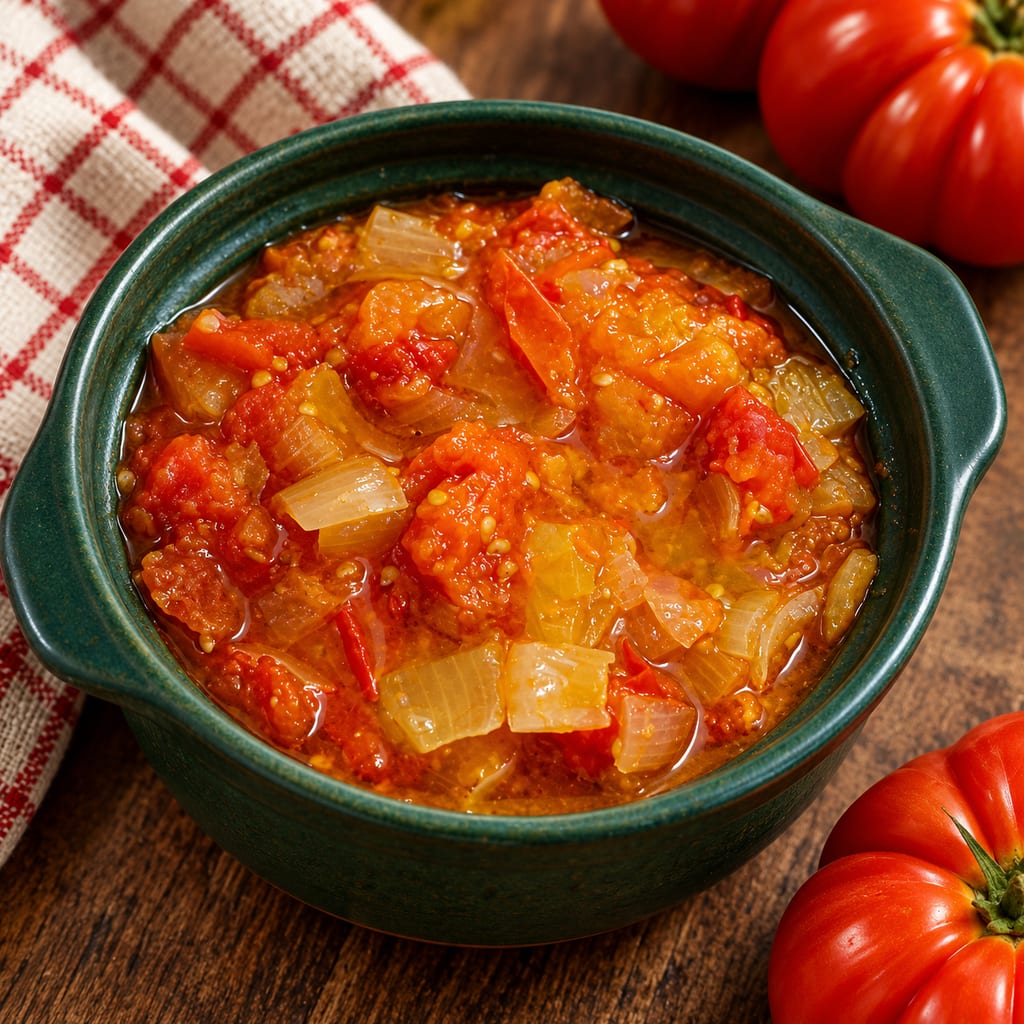
A thick South African tomato-and-onion relish simmered slowly and served warm with boerewors, pap or bread.
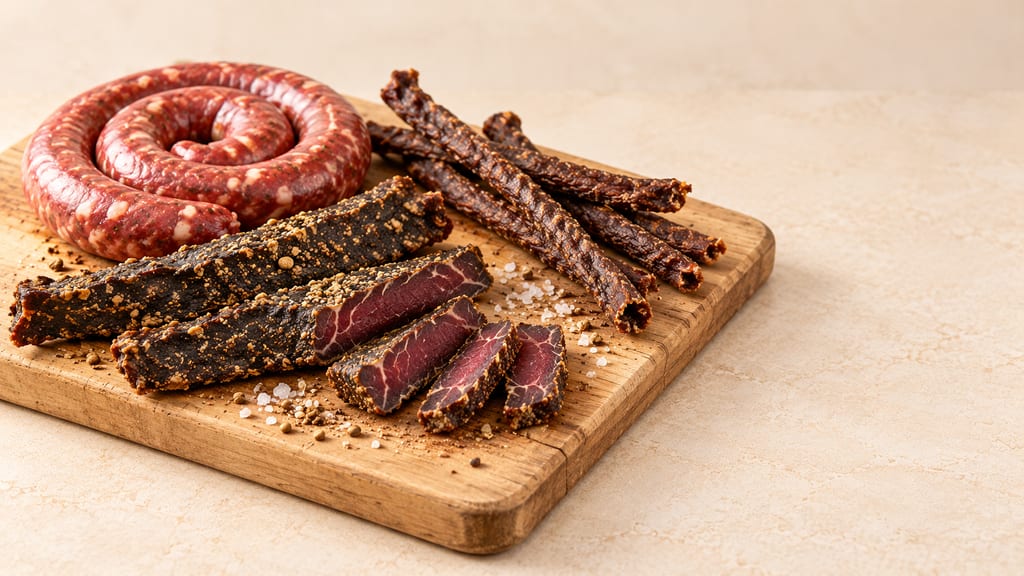
Boerewors, biltong and droëwors share a table but follow different paths from meat to meal. Their histories lead from the braai and butcher's counter to drying lines, household pots and the science of keeping food.
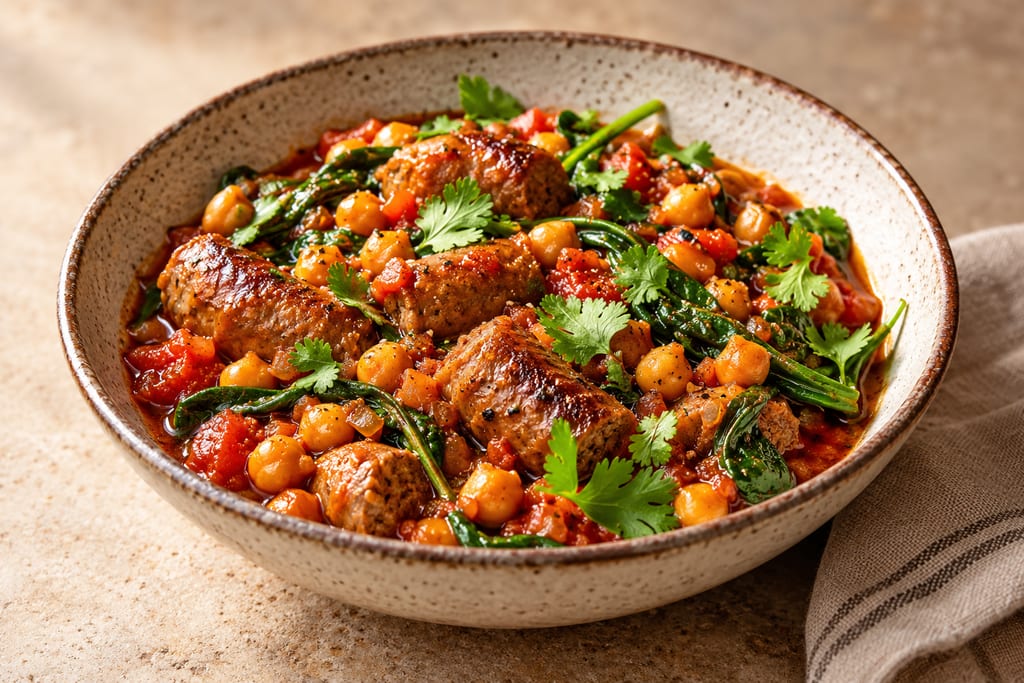
Lesego Semenya’s contemporary South African stew combines browned boerewors, chickpeas, tomato, spinach and warm spices.
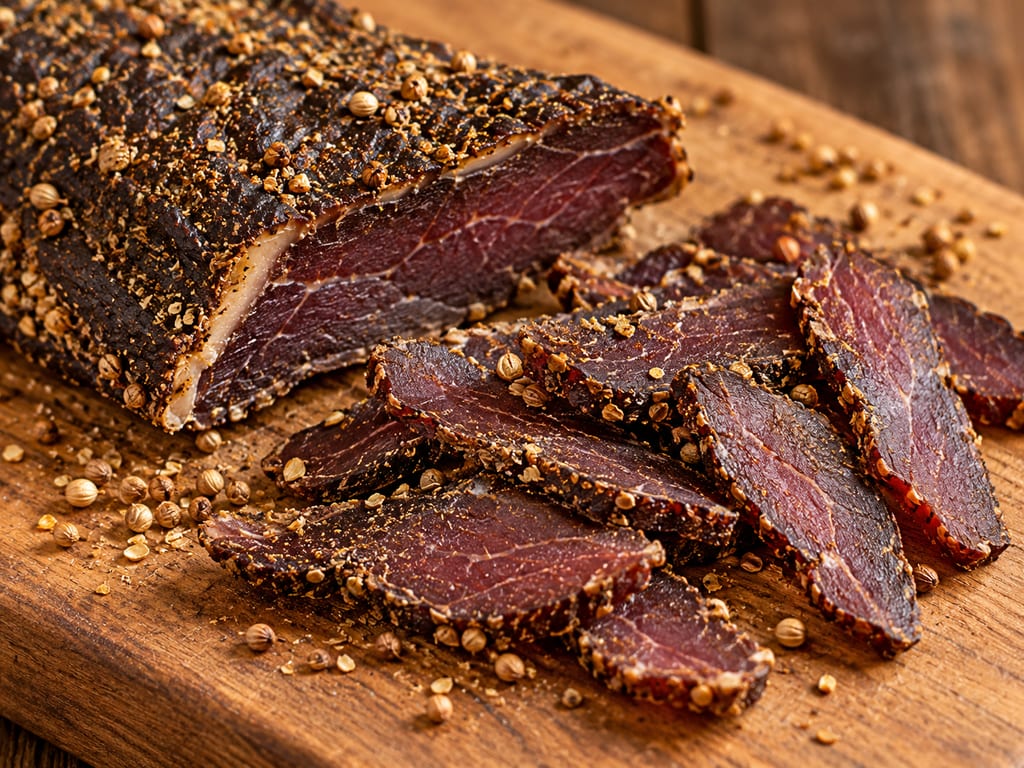
Strips of whole-muscle beef or game seasoned with salt, vinegar, roasted coriander and pepper and air-dried without cooking, sold anywhere from soft and moist to hard and very salty.
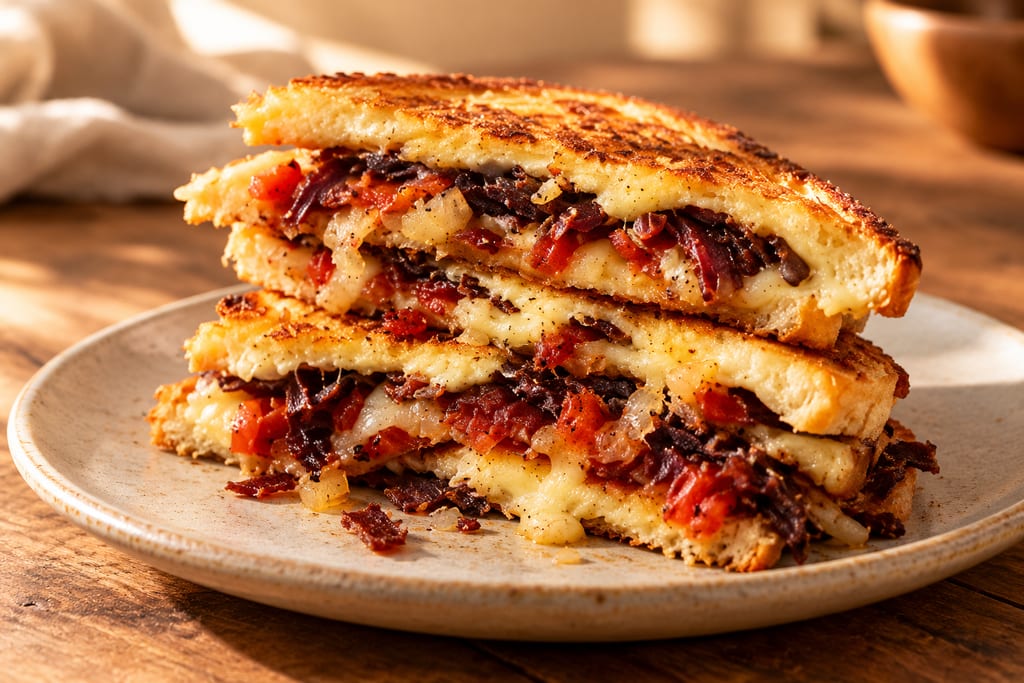
Chopped biltong, sweet onion, cream cheese and Cheddar fill bread toasted in a hinged grid over gentle coals, then finished with biltong dust.
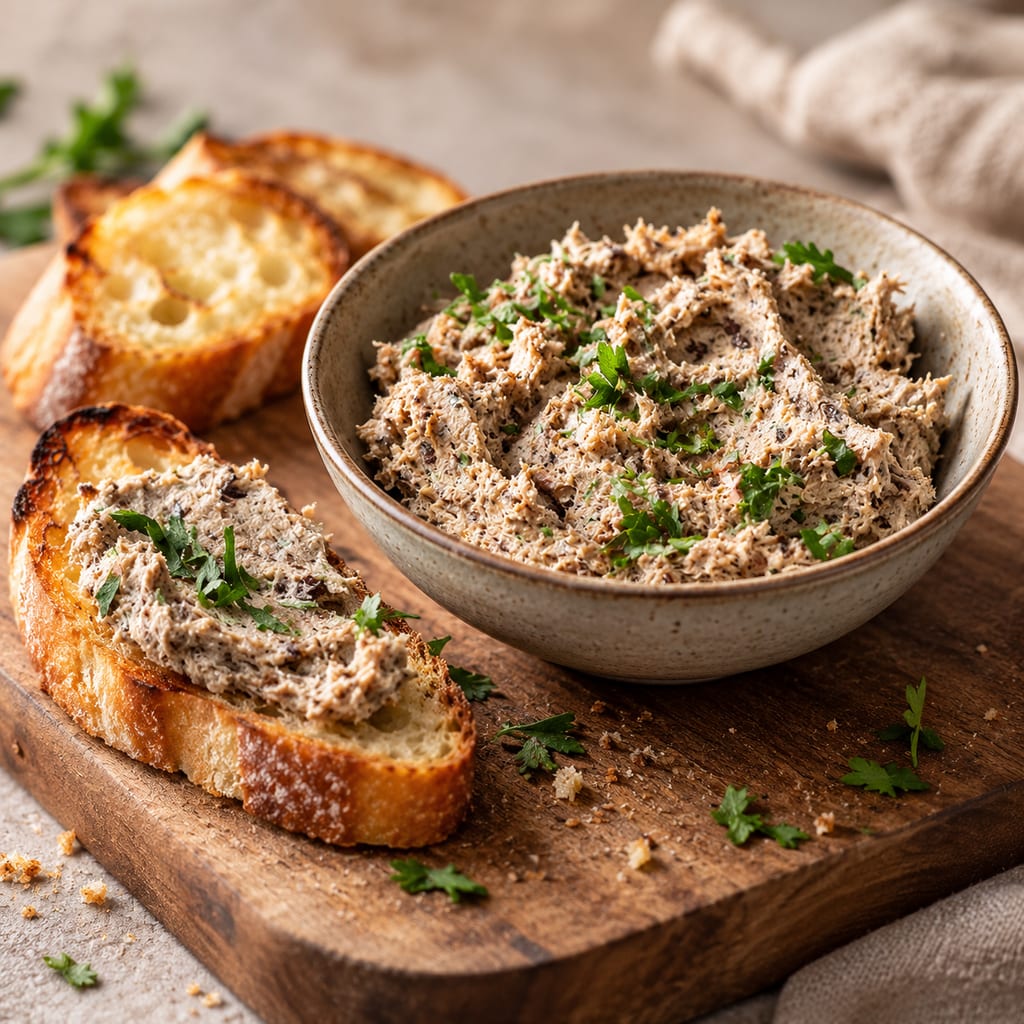
A cold biltong spread with sour cream, mayonnaise, mustard, lemon and herbs; serve it with crackers, crostini or bread.
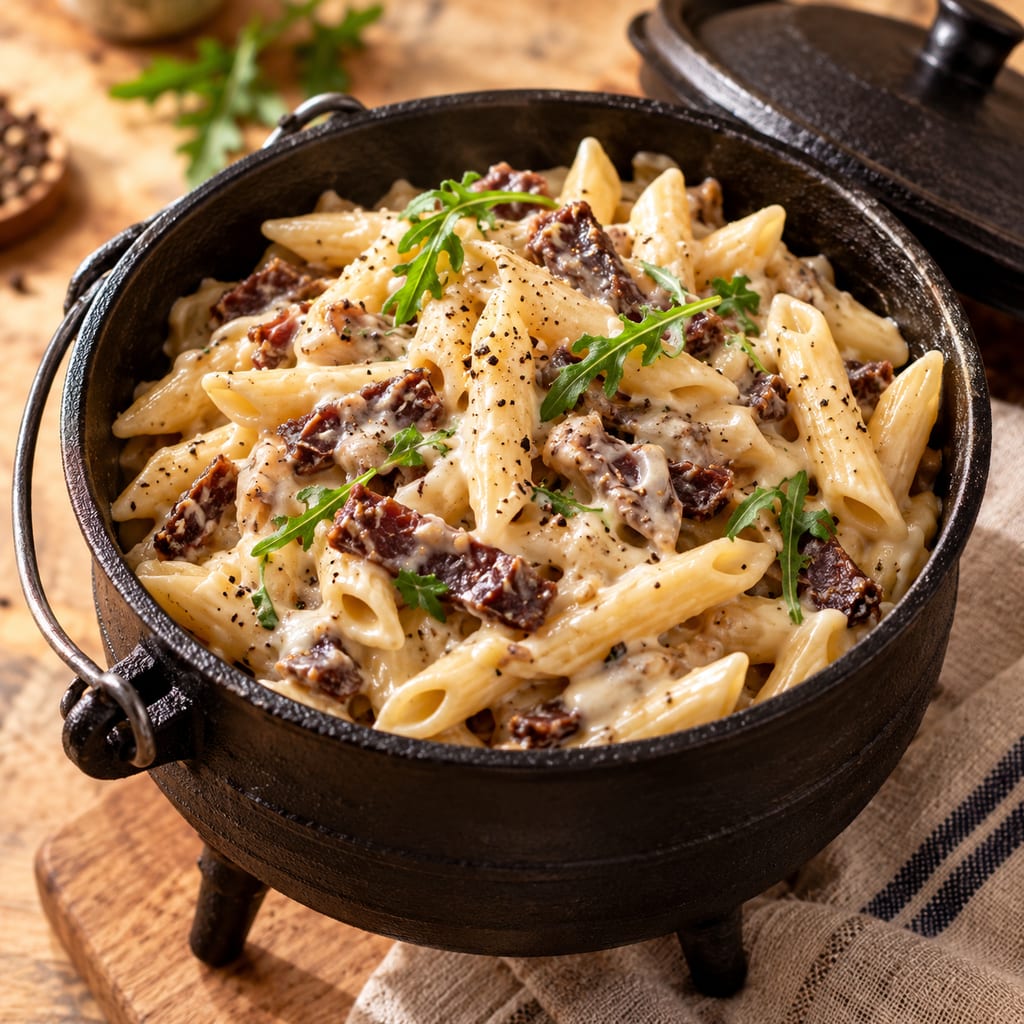
Biltong, bacon and vegetables simmer in tomato-herb stock, then join cooked pasta, milk, cream and Cheddar in this outdoor potjie.
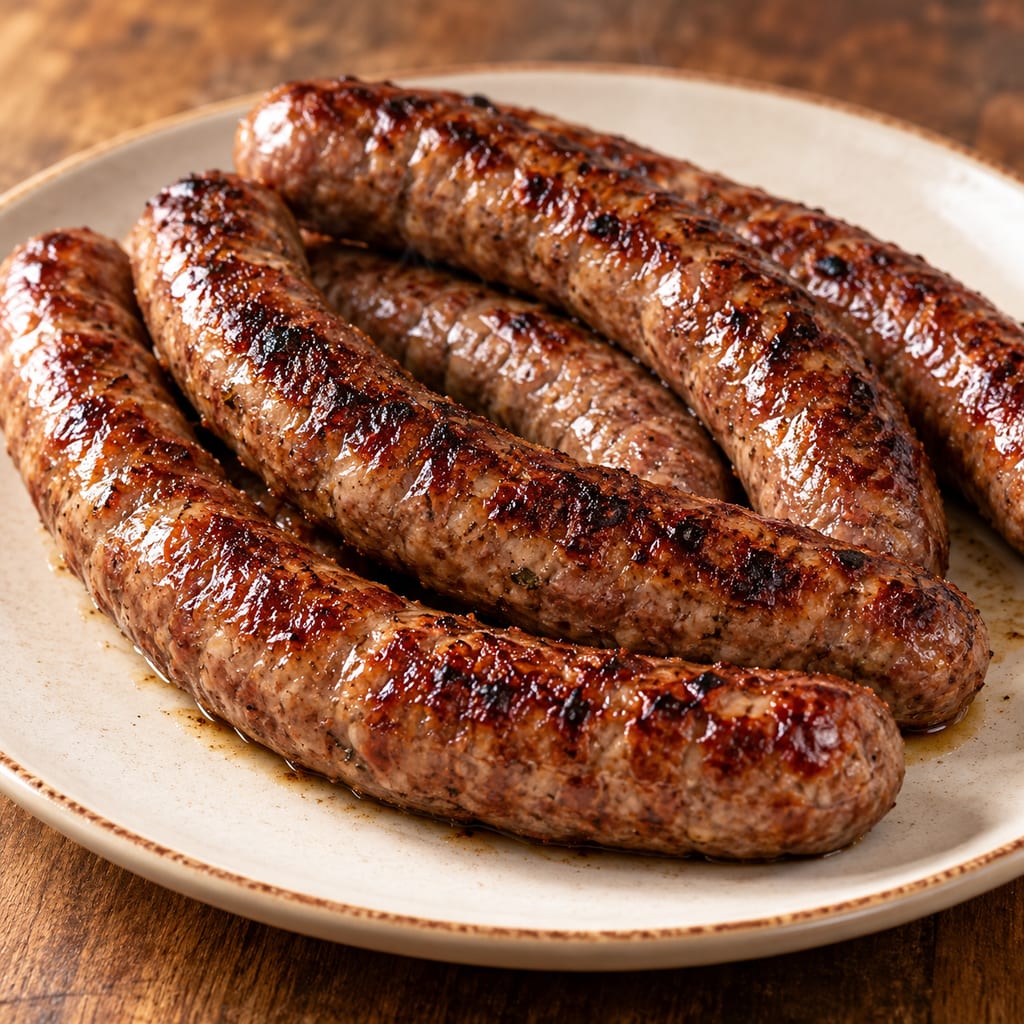
South Africa's regulated grilling-sausage class, looser than boerewors: a minimum of 40% meat, vegetable protein and mechanically recovered meat allowed, and sold raw.
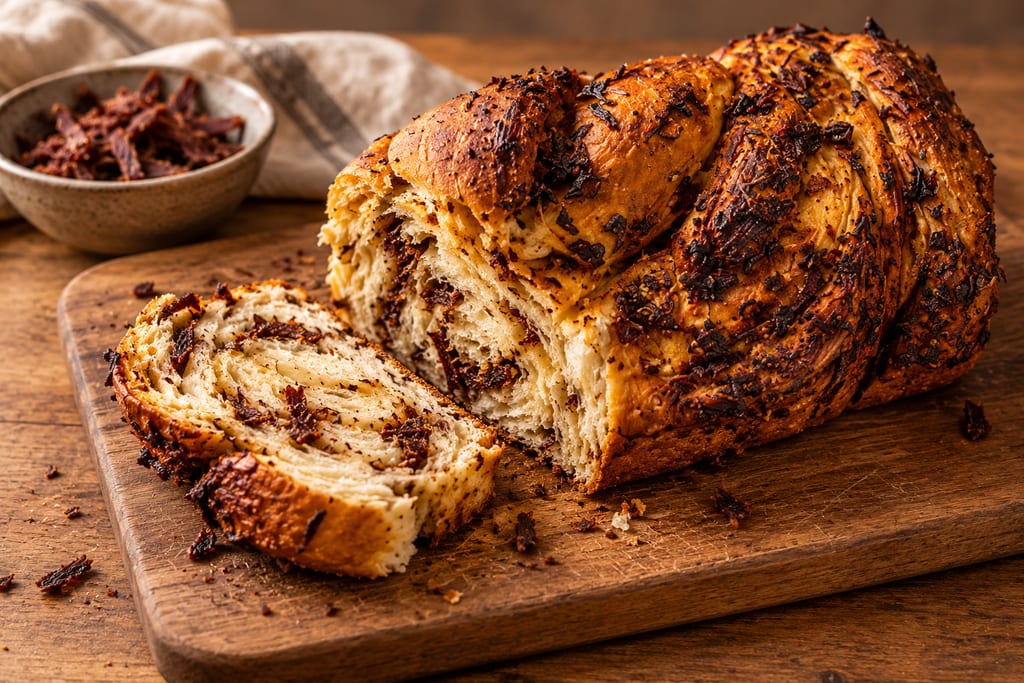
Yeasted bread wrapped around biltong, tomato pesto, Cheddar and feta, split lengthwise into a braid and baked; served with chilli-biltong butter.

A spicy South African vegetable relish of onion, carrot, pepper, tomato, curry seasoning and beans, cooked briefly and served warm or cold beside pap and grilled meat.
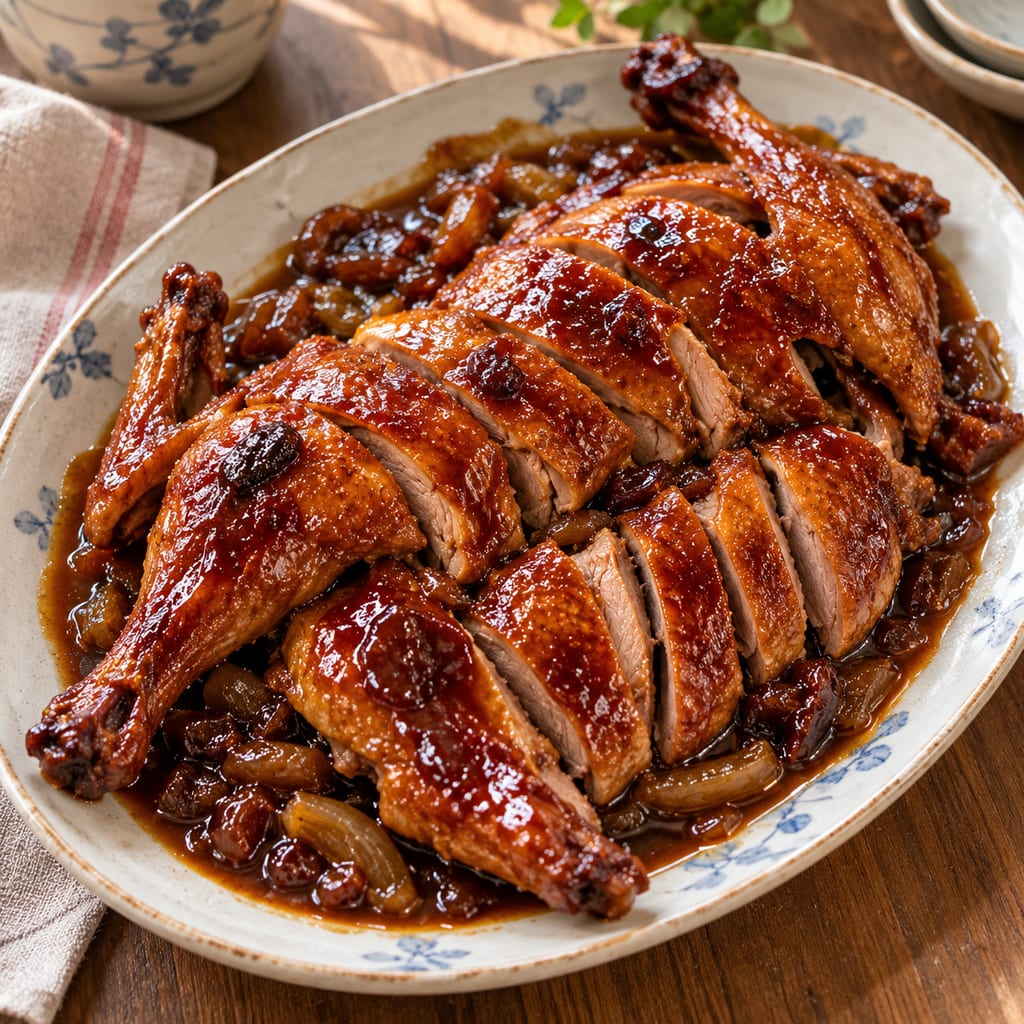
A whole duck braised on onions with pickled plums and Chinese plum sauce until the sauce turns into a thick onion marmalade, a Hakka family dish for Chinese New Year.

Iburunge is boiled cassava and kidney beans dressed with strong butter, the Rwandan farm meal Hirata recorded. This home plate uses butter oil and comes with a cold cup of ikivuguto.
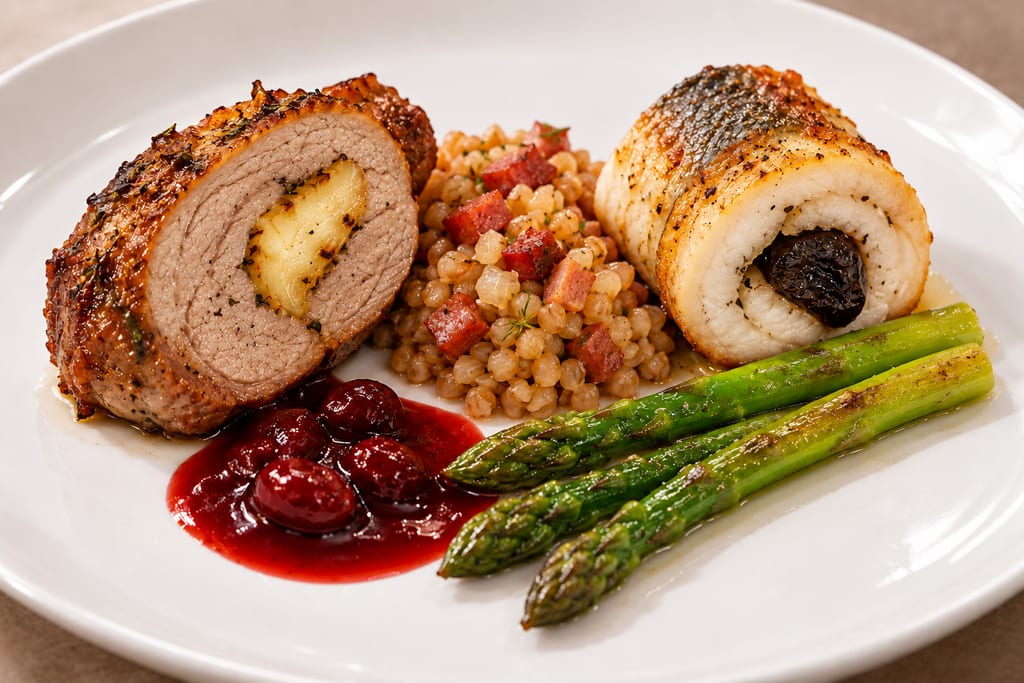
A student cookbook pairs lamb stuffed with Oscypek and zander with suska, then serves wheat groats with a small amount of kiełbasa lisiecka.
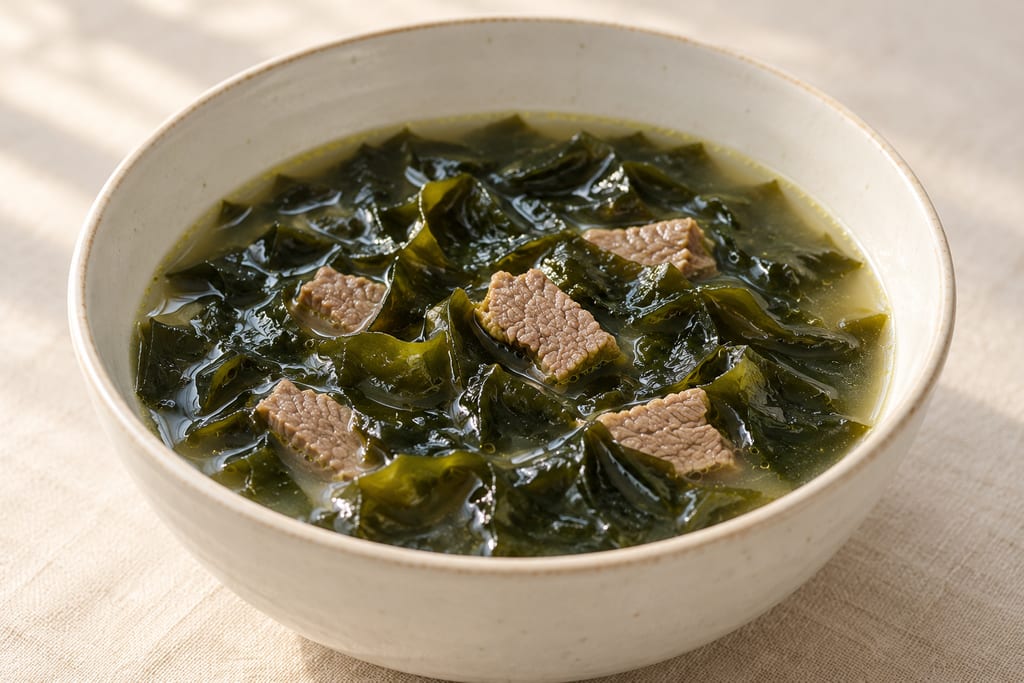
A Korean soup of rehydrated brown seaweed simmered with beef, seafood or a plain seasoned broth, traditionally served after childbirth, on birthdays and as an everyday meal.

Panrkhash is an Armenian bread-and-cheese dish associated with Gyumri and Shirak. One published oven-baked version layers lavash and string cheese with butter-sautéed onion and hot water; regional methods vary.
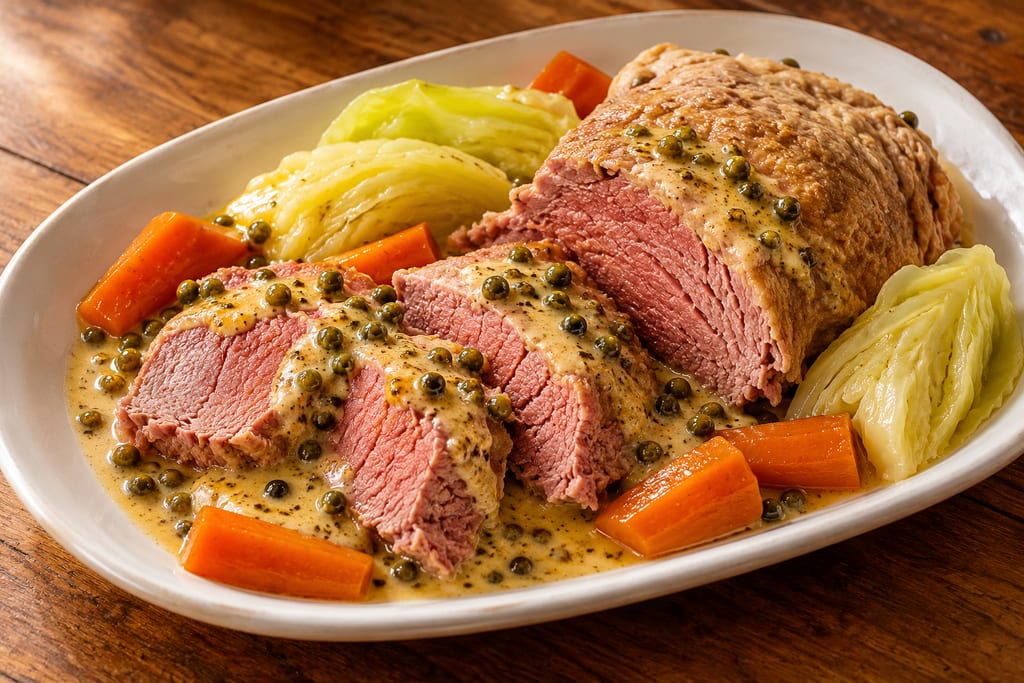
A Karoo-style festive dish of already cured salt beef simmered with vegetables and aromatics, served with a cream sauce of brined green peppercorns and wholegrain mustard.
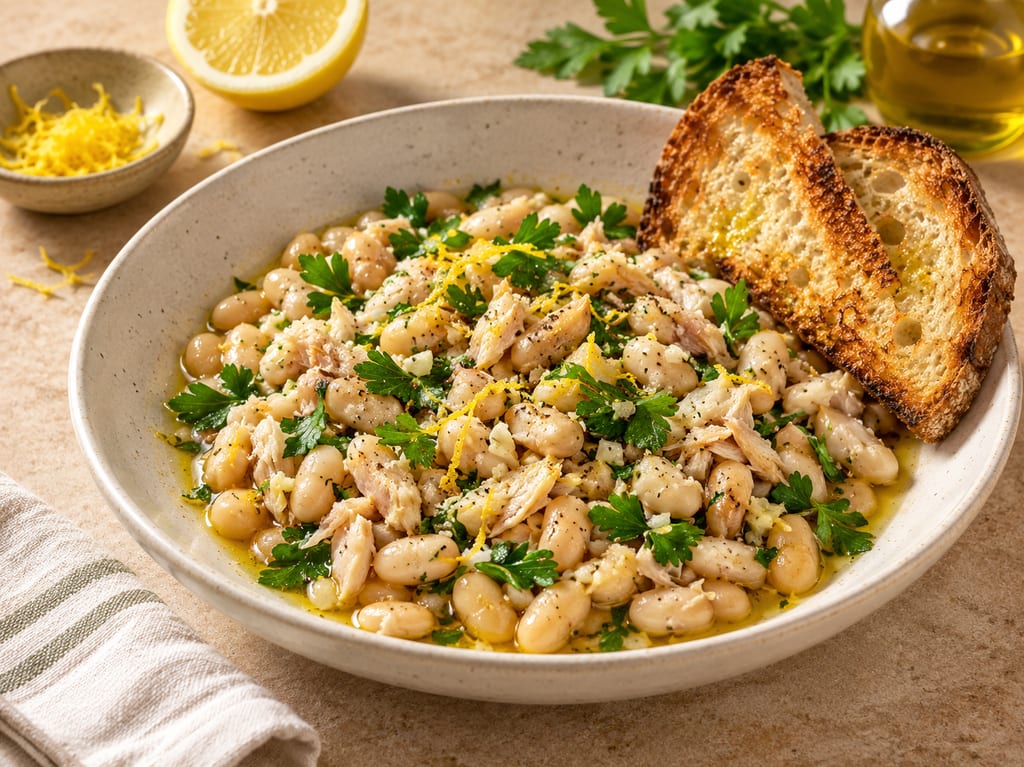
Cooked white beans warm gently with a little deboned, ready-to-eat commercial bokkom flesh, garlic, lemon and parsley. This is a contemporary serving adaptation, not a documented inherited Cape dish.

Soft, spreadable Calabrian pork sausage made with a great deal of red chilli and fatty pork, stuffed into natural casings, sometimes smoked and matured while staying soft.

A way to add independent temperature logging to an existing food dehydrator without changing its built-in controls or protections. It is a monitoring method, not a rewiring plan.

Pleurotus cystidiosus is the abalone mushroom, a cultivated oyster-type fungus with dark brown caps that grows more slowly and is more demanding than other Pleurotus species.

A dark, balanced vinegar from Emilia-Romagna made by combining cooked or concentrated grape must with wine vinegar, then acetifying and refining it in wood under a protected specification.

A living dairy inoculum that starts controlled cream fermentation, developing acidity and aroma before sour cream or cultured butter is finished.

A small electric incubator holds jars at a selected temperature for yogurt and other documented warm food preparations. Controls, capacity and vessel arrangement vary by model.

Adygean salt is a seasoned table salt associated with Adygea and the wider North Caucasian culinary tradition. Salt is blended with garlic and a variable selection of herbs and spices; the exact mix depends on the named style and maker.

The African Caesar-group mushroom, Amanita masasiensis, is a wild ectomycorrhizal species of central and southern African woodlands, eaten locally. The genus contains deadly poisonous species, so identification needs care.
No community contributions have been published for this entry yet.
Sign in to contribute. Published comments and photos are free to read.
Braai.co.zaMethod · Inspiration · Uses
Boerewors rolls with tomato smoorA contemporary South African recipe gives a six-roll batch using one 1 kg coil and soft rolls, tomato-onion smoor, medium coals and assembly after resting.
Its smoor softens onions before tomatoes are simmered to a thick relish; the sausage is grilled whole and cut for serving after resting.
Cited in: A hot sausage in bread; What the record says about its history; Geography, braai and a contested national symbol; Why the smoor is cooked separately; Grilling the coil and assembling the roll; Ways people vary the topping; Serving and reading the result
News24Method · Variation · Uses
The ultimate smoor recipe, best served with worsA published South African smoor recipe uses onions, garlic, oil, canned tomatoes, tomato paste, sugar and water, simmered to a relish served with wors.
Cited in: Why the smoor is cooked separately; Ways people vary the topping
Dictionary of South African EnglishHistory · Language
wors, nounThe dictionary glosses a wors roll as a bread roll containing boerewors and cites the compound in Cape Times (1981) and a Grahamstown notice (1989). These are print attestations, not an invention date.
Cited in: What the record says about its history
Dictionary of South African EnglishHistory · Identity
boerewors, nounThe name is an Afrikaans compound; dictionary citations document boerewors in 1913, 1930 and 1937 and describe common coarse beef-and-pork forms.
Cited in: A hot sausage in bread; What the record says about its history
Food Standards AgencySafety · Method
Cooking your foodFresh sausages and minced meats need thorough cooking; the centre should reach 70°C for 2 minutes or equivalent listed combinations including 75°C for 30 seconds, checked with a clean thermometer.
Cited in: Grilling the coil and assembling the roll
South African GovernmentCultural context · Geography
Heritage Day 2025Heritage Day falls on 24 September and recognises the country's many cultures and living heritage.
Cited in: Geography, braai and a contested national symbol; Serving and reading the result
SAnews / Government Communication and Information SystemCultural use · History
SA celebrates Heritage Day with a braaiA 2011 report describes a family and neighbours sharing a Heritage Day braai with boerewors and records the contemporary National Braai Day campaign context.
Cited in: Geography, braai and a contested national symbol; Serving and reading the result
South African History OnlineCultural context · History
Heritage Day, Braai Day or Shaka Day: Whose Heritage is it Anyway?The article explains the contested meanings of Heritage Day and the later Braai4Heritage effort; a braai is one contemporary way some people mark the day, not a universal definition of South African heritage.
Cited in: Geography, braai and a contested national symbol
Maroela MediaVariation · Method
Resep | BoereworsrolleA 2026 Afrikaans-language recipe serves six rolls with boerewors and a monkey-gland-style sauce made with onion, tomato sauce, chutney and Worcestershire sauce, as an alternative to tomato smoor.
Cited in: Ways people vary the topping