
Boerie roll
A South African boerie roll puts fully cooked boerewors in a soft bread roll and tops it with warm tomato-and-onion smoor.
 FermenteaWhere food goes to change
Sour plum duck
A whole duck braised on onions with pickled plums and Chinese plum sauce until the sauce turns into a thick onion marmalade, a Hakka family dish for Chinese New Year.
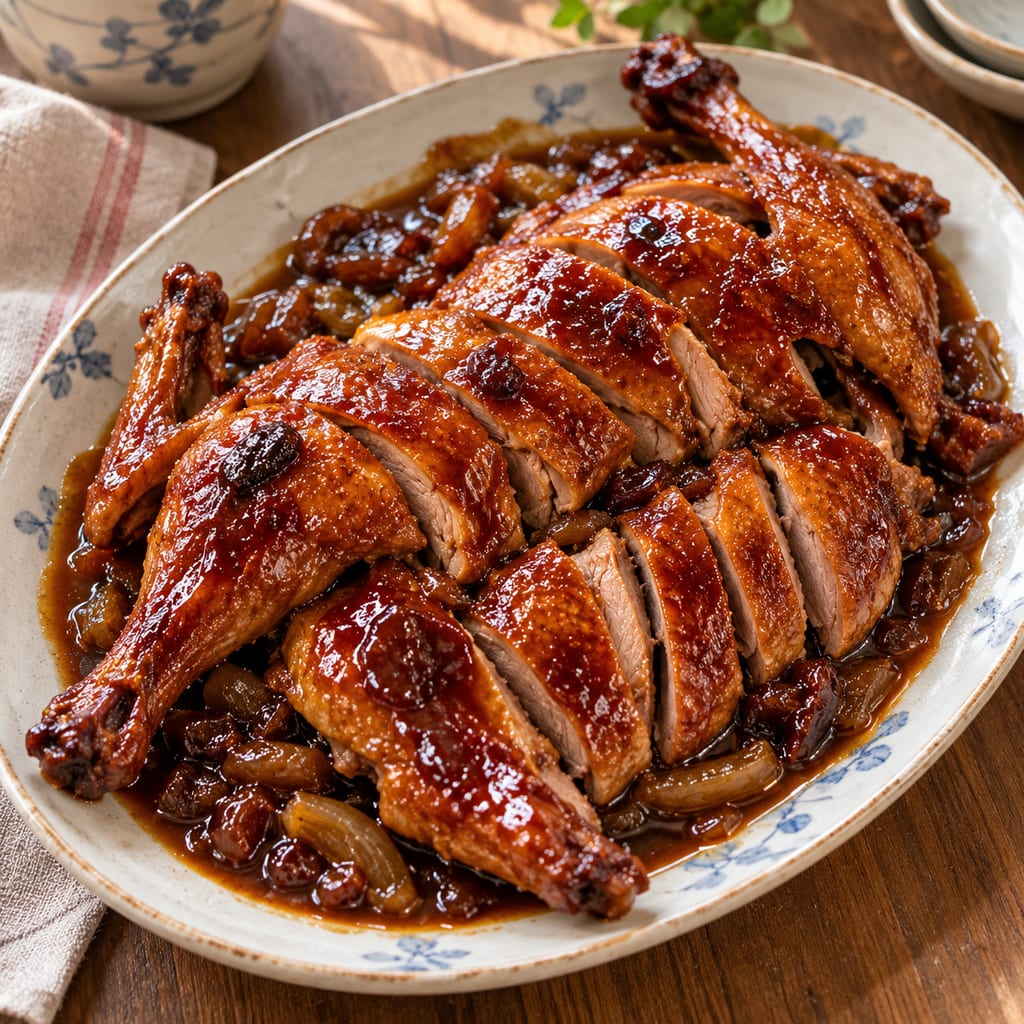
Sour plum duck is a whole duck braised in a covered pot on a bed of sliced onions with pickled plums and Chinese plum sauce. The Woks of Life presents it as a Hakka classic: Bill Leung remembers it as the special dish his father cooked on Chinese New Year's Day, which the children later asked for on ordinary days too. He says he rebuilt the recipe from childhood memory and filled gaps by taste and educated guessing, so it is a family reconstruction, not an inherited or verified formula. He also suggests the dish might be the source of the name duck sauce, since the sauce looks like plum sauce. That is his guess and not a documented history.
The duck is salted and rubbed with white pepper and ginger, then rested for 30 minutes so the seasoning reaches the meat. Searing in a hot pot browns the skin before any liquid goes in. The aromatics, shallots, garlic and a large amount of onion, are softened in the same pot so they pick up the browned fat.
The sauce is built from pickled plums, which are sour and salty, plum sauce, which is sweet with a little sourness, chicken stock, dried citrus peel for its bitter aroma and a spoonful of rice vinegar. The duck goes in breast side down for the first hour so the breast sits in the liquid, then is turned for a second stage and finally left uncovered for 15 minutes. Over those hours the onions break down and the sauce reduces to what the author calls a thick onion marmalade. The cook is told to judge the end by tenderness and to add stock or reduce the sauce to bring it to the right consistency, since duck size and pot shape change how much liquid is lost.
Chinese plum sauce (su mei jiang, 苏梅酱 or 蘇梅醬, spelled both ways on jars) is a mostly sweet sauce with a slight sourness. Recipes and brands differ: the Woks of Life glossary notes that it may be made from plums and sometimes apricots or pineapple. One jar lists sugar, rice vinegar, salted plums, ginger and salted garlic and chillies. Lee Kum Kee's Su Mei Sauce lists sugar, salted plums, water, rice vinegar, modified corn starch, ginger, citric acid, sodium citrate, chilli and xanthan gum, and the company recommends it with roast duck and other meats. These are prepared sauces, and the sources give no single standard recipe.
The name can mislead. Salted or pickled plums and a smooth sweet-sour plum sauce are not the same product, even though the sauce is made with salted plums, and this dish uses both. The sauce is also compared to the packet duck sauce served with takeout, which the glossary says is less flavourful because of corn syrup and artificial colouring; the comparison is a faint one, and the sources do not show that the two share a history. The Michelin Guide repeats a historical preservation association for plum sauce but gives no primary citation, so the sauce's earliest record is open. No source gives a tested shelf life for a homemade plum sauce; bought jars are refrigerated once opened.
A family recollection of Chinese New Year cooking; the author reconstructed the recipe from memory. No source dates the dish or traces its origin.
Yield 6 servings · Scaling: source batch only
The recipe handles a whole raw duck. The source judges doneness by tenderness and gives no internal temperature.
Hazard sourceWash hands and surfaces after handling the raw duck, and cook it until it is tender and cooked through; the source gives no internal temperature, so follow your national poultry guidance for doneness.
Control sourceThe recipe is the author's reconstruction from childhood memory, with some ingredients and steps worked out by taste. It is not a verified traditional formula.
The source gives no storage instructions for leftovers.
The author calls the dish a Hakka classic remembered from family Chinese New Year meals. The source names no village, county or date, so no place is claimed.
A South African boerie roll puts fully cooked boerewors in a soft bread roll and tops it with warm tomato-and-onion smoor.

Iburunge is boiled cassava and kidney beans dressed with strong butter, the Rwandan farm meal Hirata recorded. This home plate uses butter oil and comes with a cold cup of ikivuguto.
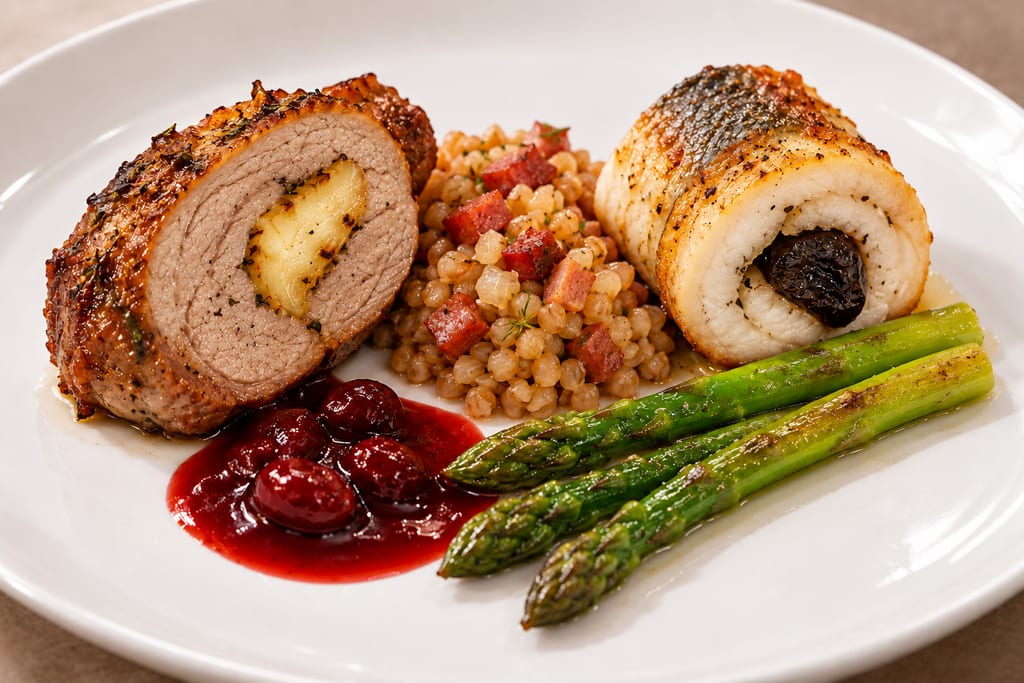
A student cookbook pairs lamb stuffed with Oscypek and zander with suska, then serves wheat groats with a small amount of kiełbasa lisiecka.
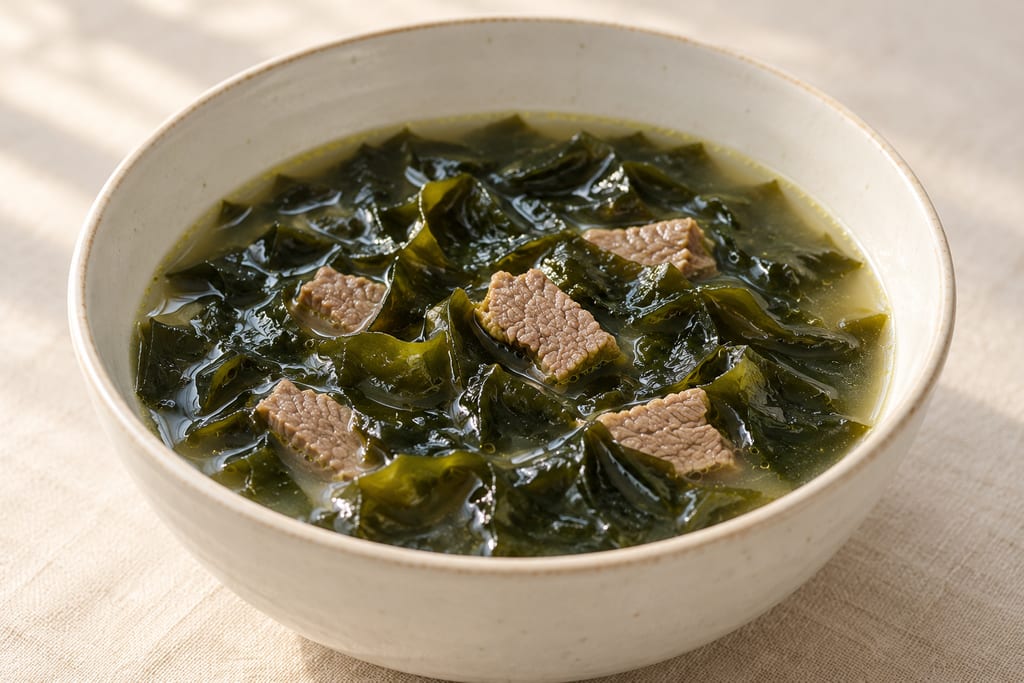
A Korean soup of rehydrated brown seaweed simmered with beef, seafood or a plain seasoned broth, traditionally served after childbirth, on birthdays and as an everyday meal.

Panrkhash is an Armenian bread-and-cheese dish associated with Gyumri and Shirak. One published oven-baked version layers lavash and string cheese with butter-sautéed onion and hot water; regional methods vary.
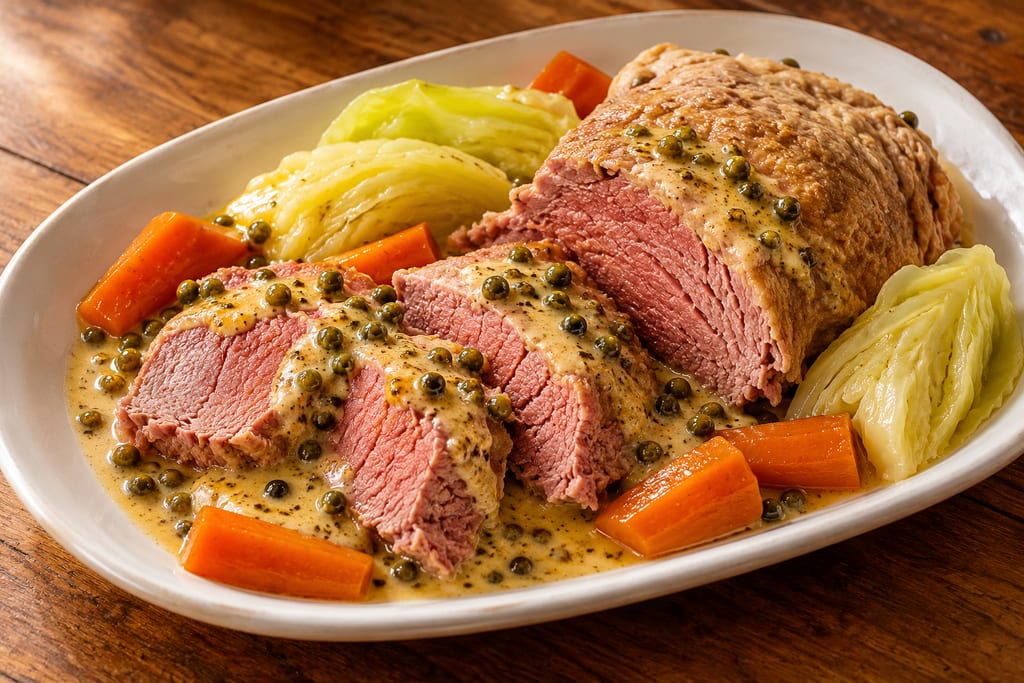
A Karoo-style festive dish of already cured salt beef simmered with vegetables and aromatics, served with a cream sauce of brined green peppercorns and wholegrain mustard.
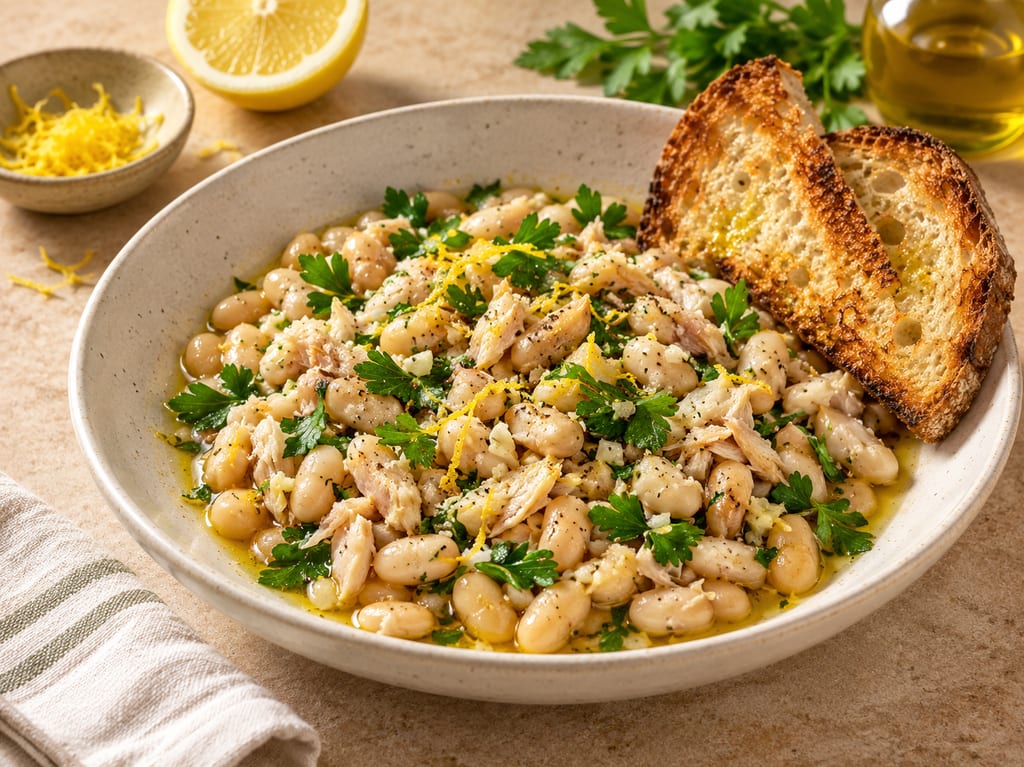
Cooked white beans warm gently with a little deboned, ready-to-eat commercial bokkom flesh, garlic, lemon and parsley. This is a contemporary serving adaptation, not a documented inherited Cape dish.
No community contributions have been published for this entry yet.
Sign in to contribute. Published comments and photos are free to read.
The Woks of LifeRecipe · Method · History
Sour Plum Duck, A Hakka Chinese ClassicIngredients, quantities, oven temperature and method for a six-serving sour plum duck using pickled plums and bought plum sauce; 35 minutes preparation and 2 hours 45 minutes cooking.
The author remembers the dish from Chinese New Year meals cooked by his father, says he reconstructed it from childhood memory and developed some ingredients by taste, and suggests it may be the origin of the name duck sauce.
Cited in: A family dish for the new year; How the braise works
The Woks of LifeIngredient · Variants
Plum Sauce: Chinese Ingredients GlossaryChinese plum sauce (su mei jiang) is mostly sweet with a slight sourness, made from plums and sometimes apricots or pineapple depending on the brand; it resembles takeout duck sauce but uses real fruit.
One jar lists sugar, rice vinegar, salted plums, ginger and salted garlic and chillies; it is a dipping sauce for fried foods and an ingredient in sour plum duck; kept refrigerated once opened.
Cited in: The plum sauce, and what else carries the name
Lee Kum Kee USAIngredient · Commercial product
蘇梅醬Lee Kum Kee's Su Mei Sauce lists sugar, salted plums, water, rice vinegar, modified corn starch, ginger, citric acid, sodium citrate, chilli and xanthan gum, and is recommended with roast duck and other meats.
Cited in: The plum sauce, and what else carries the name
Michelin GuideHistory
10 Essential Cantonese Sauces ExplainedRepeats a historical preservation association for plum sauce without a primary historical citation.
Cited in: The plum sauce, and what else carries the name