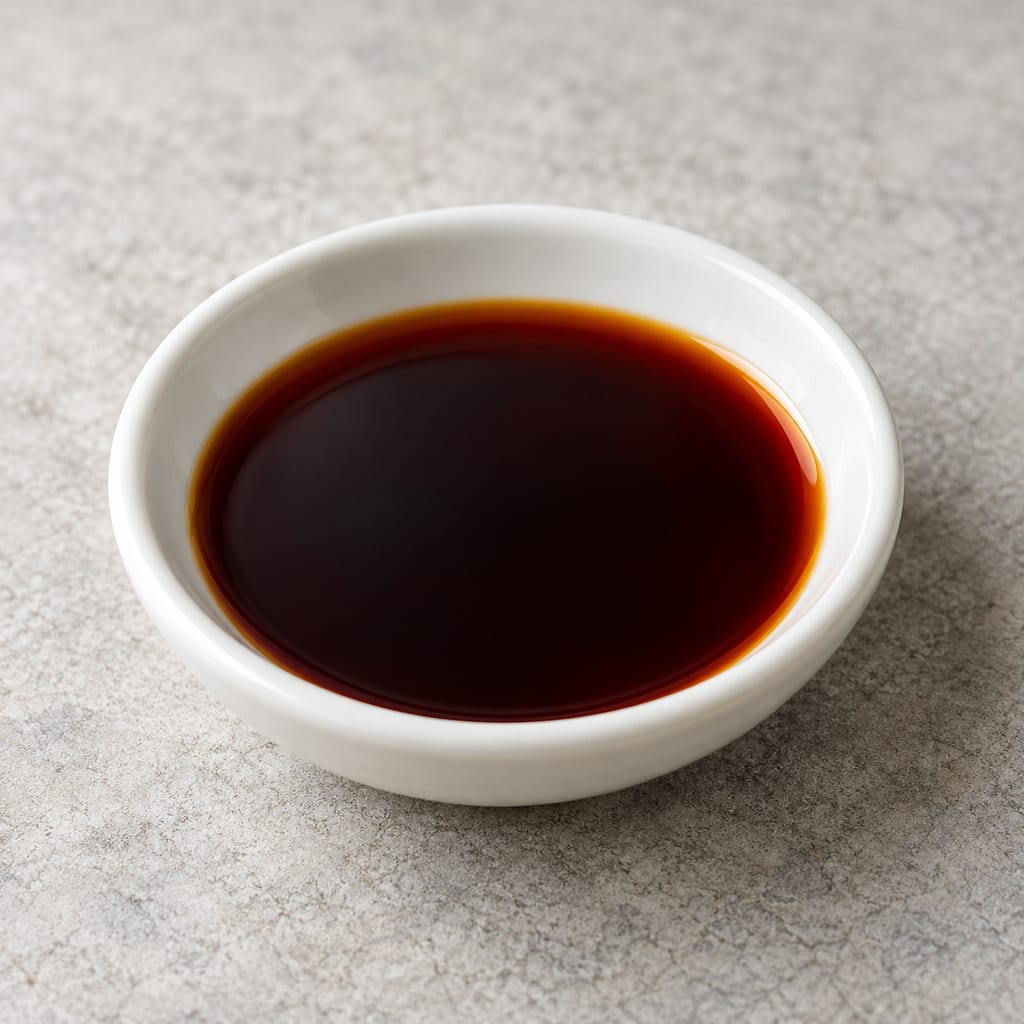
Soy sauce
Soy sauce is a salted liquid seasoning made by growing koji mould on soybeans and grain, maturing the mash in brine and pressing out the liquid. Japan's shoyu is the best-documented form.
 FermenteaWhere food goes to change
Modern adaptation
미역국 · miyeok-guk · miyeokguk · miyŏk-kuk · 미역국 · 메역국 · myeokguk · Korean seaweed soup · Korean birthday soup · birthday seaweed soup · 산모 미역국 · sanmo miyeok-guk · 소고기 미역국 · 쇠고기 미역국 · sogogi miyeok-guk · 홍합 미역국 · honghap miyeok-guk · 조개 미역국 · jogae miyeok-guk · 전복 미역국 · jeonbok miyeok-guk · 성게 미역국 · seongge miyeok-guk · 가자미 미역국 · gajami miyeok-guk · 도다리 미역국 · dodari miyeok-guk · 소 미역국 · so miyeok-guk
A Korean soup of rehydrated brown seaweed simmered with beef, seafood or a plain seasoned broth, traditionally served after childbirth, on birthdays and as an everyday meal.
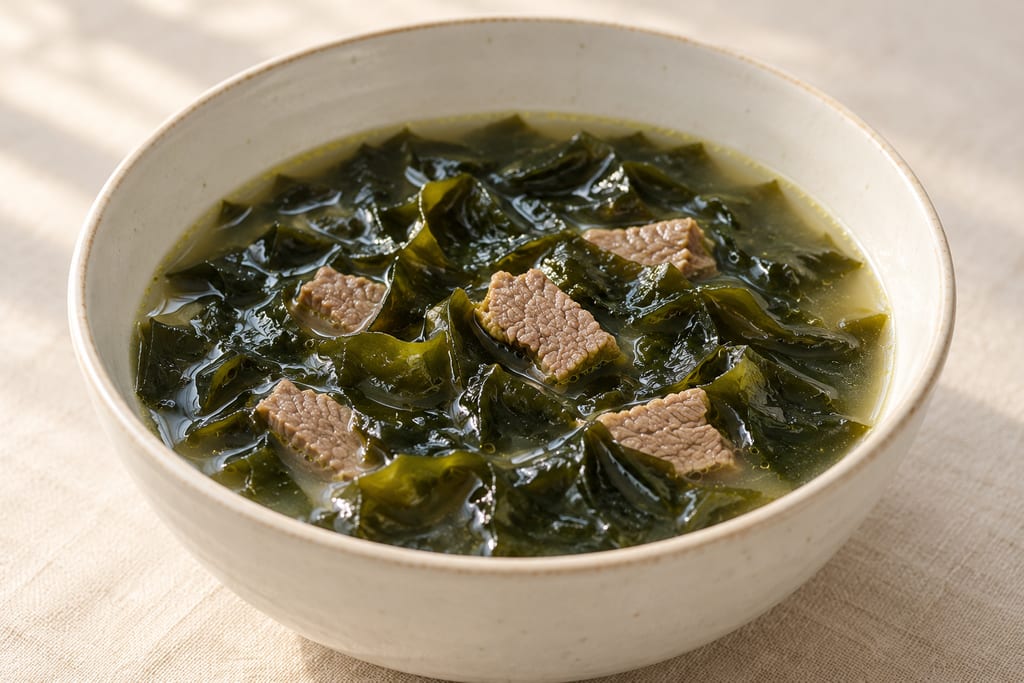
Miyeok-guk, 미역국, is a Korean soup made from miyeok, the edible brown seaweed Undaria pinnatifida. Dried seaweed is soaked until it softens and expands, then simmered in water or broth with seasonings. Beef is common, but the soup can also contain mussels, clams, abalone, fish or no animal ingredients at all. Sesame oil and Korean soup soy sauce, guk-ganjang, are characteristic seasonings. The finished soup has broad, soft pieces of seaweed in a light to fairly full broth, with a mild marine flavour and a savoury aroma.
Miyeok belongs to the brown algae, not the red algae used to produce nori or agar. The same species is known as wakame in Japan. It is a multicellular marine organism that grows attached to underwater surfaces, with a broad blade and a distinct central midrib. The edible material is harvested, washed and sold fresh, salted or dried. Dried miyeok keeps well and is soaked when needed. The species is Undaria pinnatifida (Harvey) Suringar.
Miyeok-guk is cooked, not fermented. The seaweed is soaked and heated, with no starter and no souring. Guk-ganjang is a fermented soy seasoning, but that does not make the soup a ferment.
The soup holds a special place in Korean family customs. It is traditionally served to women after childbirth and is also eaten on birthdays, often at breakfast. Birthday miyeok-guk is associated with remembering the mother who gave birth to the person celebrating. The Academy of Korean Studies describes a postpartum first meal consisting of white rice and seaweed soup, sometimes prepared without meat. These customs coexist with everyday consumption: miyeok-guk is also an ordinary soup cooked when no birthday or birth is involved.
The different versions share the seaweed but not necessarily the same broth. Beef miyeok-guk, sogogi miyeok-guk, is often darker and meatier, while seafood versions may be clearer and more distinctly marine. Korean food references describe white fish, dried mussels and chicken broth as alternatives. On Jeju Island, sea urchin roe is used in seongge miyeok-guk.
Its consistency depends on the ratio of seaweed to broth and the cooking method. The seaweed should be soft enough to eat comfortably but remain recognisable as broad pieces or strips.
The history of miyeok-guk begins with the use of miyeok as a food, but the two histories must be distinguished. The best-known medieval reference is Xu Jing's Goryeo Dogyeong, 宣和奉使高麗圖經, written after his visit to Goryeo in 1123. Korean historical accounts describe its observation that people of different social ranks consumed seaweed widely. The passage supports medieval seaweed consumption, not the precise modern soup recipe.
Another historical reference comes from Heo Gyun's Domundaejak, 屠門大嚼, written in 1611. The work describes regional foods and delicacies, including early-harvested miyeok from Samcheok in Gangwon Province. So the origin and season of seaweed mattered to Korean food writers by the early seventeenth century.
A directly identifiable soup recipe appears in Bang Sin-yeong's 1921 edition of Joseon Yori Jebeop, 朝鮮料理製法. The Korean Traditional Knowledge Portal reproduces both the original Korean text and a modern transcription. Under the historical spelling 메역국, it instructs the cook to soak and clean seaweed, combine it with soy sauce, oil and cooked meat, stir-fry the mixture, add water and simmer. It also recommends mussels or a fish called ganggodori. The recipe is labelled a winter or spring-and-autumn food. This is solid evidence for an identifiable cooking method by 1921, although the soup certainly need not have originated then.
The connection to childbirth is documented in Korean historical and ethnographic scholarship. The National Institute of Korean History describes cheot-gukbap, the first postpartum meal of white rice and miyeok-guk. It records the preparation of an unbroken length of seaweed, janggwak, associated with wishes for the baby's long life and an uncomplicated delivery. The same account describes a meatless soup, or one containing dried mussels, sometimes called so miyeok-guk. The postpartum soup could therefore differ from today's beef birthday soup.
The ritual meal also relates to Samsin, the protective spirits associated with pregnancy, birth and children. Historical descriptions include a Samsin offering of rice and seaweed soup. The symbolic use of long, uncut seaweed and the avoidance of bargaining when purchasing childbirth seaweed belong to documented folk customs. They are evidence of cultural meanings, not scientific claims that cutting the seaweed could affect childbirth.
The frequently repeated story that Koreans began serving miyeok after watching whales eat seaweed following birth is a separate tradition. The birthday custom is clearly documented in modern Korea, but its first appearance as an annual observance remains undated.
Contemporary documentation includes Korea.net's 2017 recipe prepared with the Institute of Traditional Korean Food, national cultural encyclopaedia entries, Korean food-history publications and field research on childbirth practices.
Miyeok-guk is produced by rehydration, heat extraction and cooking. No microbial fermentation is required. The principal ingredient, Undaria pinnatifida, is a brown alga with a cellular structure quite different from land vegetables or agar-producing red seaweeds. Its tissues contain alginates, fucoidan and other polysaccharides, together with minerals, proteins, pigments and soluble flavour compounds. These constituents influence the way dried miyeok absorbs water, softens during cooking and contributes flavour to the broth.
Rehydration occurs when water enters the dried seaweed's tissues. The blades expand and regain flexibility as water associates with cell-wall polysaccharides and other hydrophilic components. Washing removes loose salt, sand and some water-soluble material. Dried miyeok can expand considerably, so recipes specify much smaller weights than the final hydrated volume might suggest. Rehydration is a physical process, not the activation of a fermentation culture.
Alginates are structural polysaccharides composed of mannuronic and guluronic acid residues. Their interactions with water and mineral ions contribute to the texture of brown algae. A 1977 study of Undaria pinnatifida found that 15 minutes of boiling softened it considerably and lowered the viscosity of extracted sodium alginate. A separate 2008 study measured changes in breaking strength and insoluble dietary fibre after different treatments. These findings explain why the seaweed becomes increasingly tender during cooking, although the exact result depends on the product and cooking conditions.
The soup's savoury flavour comes from several ingredients acting together. Miyeok supplies its natural marine flavour and soluble compounds. Beef contributes amino acids, peptides and other broth constituents; seafood supplies its own characteristic savoury compounds. Korean soup soy sauce adds salt and fermentation-derived flavour. Sesame oil provides aroma and helps distribute fat-soluble flavour compounds. In meat versions, sautéing the beef before adding water can develop additional browned flavours, although a soup made without browning can also be savoury.
The broth's look depends partly on method. Sautéing seaweed with beef and sesame oil before adding water can produce a cloudier, pale broth, whereas simmering the ingredients plainly may give a clearer result. Prolonged cooking can soften the seaweed further and increase the concentration of soluble compounds in the liquid.
It is required for the production of thyroid hormones, but the amount present in seaweed varies with the species, growing conditions and processing. Some iodine can move into soaking or cooking water. When the cooking liquid is consumed as soup, dissolved components may remain part of the meal rather than being discarded.
Miyeok-guk usually begins with dried miyeok. The seaweed is placed in water until its blades soften and expand, then rinsed to remove any sand or loose material. The thickest or toughest parts may be removed or cut smaller. In the official Korean recipe published by Korea.net with the Institute of Traditional Korean Food in 2017, 20 g dried miyeok is soaked for 30 minutes, squeezed and cut into pieces approximately 4 cm long. Other household recipes use shorter soaking times, depending on the dried seaweed product.
The official beef version specifies 100 g beef shank, which is cleaned, sliced and seasoned with Korean clear soup soy sauce, minced garlic and black pepper. The beef is then sautéed in sesame oil. Beef contributes savoury material and protein, while the oil carries aromatic compounds and helps the ingredients heat evenly against the bottom of the pot.
The same recipe gives one tablespoon sesame oil, equivalent to 13 g in the published measurements. The beef is fried over medium heat for two minutes, after which the soaked seaweed is added and fried for another three minutes. This sautéing stage coats the seaweed and develops flavour before the broth is introduced.
Water or stock is then added. The English-language Korea.net recipe gives eight cups of water, equivalent to 1.6 kg, followed by five minutes of boiling over high heat and another 20 minutes at medium heat. The soup is seasoned with additional clear soy sauce and salt, then returned to the boil. These quantities and timings belong to that documented recipe. The published Japanese and Chinese translations contain differences in water and salt quantities, so the precise version being followed must be identified rather than combining their figures.
Guk-ganjang, 국간장, suits the soup because it supplies salt and savoury flavour without requiring a large quantity of dark sauce. It is a fermented soy product, although it is used here as a seasoning rather than a fermentation starter. Salt may be added separately to adjust the final seasoning. Garlic contributes a characteristic savoury aroma, but not every traditional version includes it. Sesame oil is also common, although some seafood versions place greater emphasis on the flavour of the shellfish or fish.
A historically different method appears in Bang Sin-yeong's 1921 cookbook. Her recipe instructs the cook to soak and clean the seaweed, mix it with soy sauce, oil and cooked meat, sauté the mixture and then add water. Mussels or fish are recommended as alternatives or additions. The original does not provide modern gram quantities, numerical temperatures or standardised cooking times.
For seafood versions, mussels, clams, fish or abalone provide alternative sources of protein and flavour. Their preparation and cooking requirements are ingredient-specific. Fresh seafood must be handled hygienically and cooked thoroughly.
Miyeok-guk is eaten throughout Korea, but the ingredients change with local food supplies, family customs and the purpose of the meal. Beef miyeok-guk is a widely recognised contemporary version. Other preparations use mussels, clams, abalone, chicken or white fish. It also explains that some soups are made using prepared broth, while others begin by sautéing the seaweed and meat together.
Coastal areas have a close relationship with the dish because fresh fish and shellfish are at hand. The Korea Tourism Organization describes coastal miyeok-guk made with clams, sea bream or flatfish. These ingredients produce different broths from the beef version, and some preparations require less initial oil cooking. The seaweed remains the defining ingredient even when seafood supplies much of the flavour.
Jeju Island has a documented sea urchin variation called seongge miyeok-guk, 성게미역국. It uses sea urchin roe to give the broth a stronger seafood character. The Korea Tourism Organization identifies it as a representative Jeju food and describes a lightly seasoned broth with salt and soy sauce. The island also has red tilefish and seaweed soup, okdom miyeok-guk, listed among traditional Jeju restaurant dishes. These are genuine geographically documented versions, rather than adaptations assigned to Jeju simply because they contain seafood.
Jeju's haenyeo, the female divers who harvest marine foods, form part of the region's wider seaweed and seafood culture. Their harvesting traditions help explain the availability of ingredients such as sea urchins and abalone. The connection between a local ingredient and its use in miyeok-guk should still be distinguished from a claim that a particular soup originated with an individual diving community.
Gijang, near Busan, has a documented association with miyeok cultivation and childbirth-related seaweed customs. Local research records seaweed soup and ceremonial meals after childbirth there.
One long-recorded variation is the postpartum first soup. Korean historical scholarship describes a plain preparation made without meat, sometimes using dried mussels and otherwise seasoned principally with soy sauce and sesame oil. The use of long, unbroken seaweed carried symbolic meaning. This differs from the modern assumption that a birthday soup must contain beef. Meatless, beef and seafood versions all belong within the broader miyeok-guk category.
Modern household variations may use rice-rinsing water, prepared anchovy stock, additional garlic or different oils. These are culinary choices rather than distinct fermentation techniques.
Miyeok-guk is normally eaten hot as part of a Korean meal, with rice and accompanying side dishes. It is often served in a separate soup bowl rather than poured over rice. The soft seaweed, broth and additional meat or seafood are eaten together. It can be a light soup or a more substantial meal depending on the quantity of protein and seaweed included.
The best-known ceremonial use is on birthdays. Many Korean families prepare miyeok-guk for the person celebrating, often at breakfast. The Korea Tourism Organization explains that this custom recalls the soup traditionally given to mothers after childbirth and expresses appreciation for the person who gave birth to them.
After childbirth, miyeok-guk has traditionally been served as a first meal and during postpartum recovery. Historical references describe white rice and a carefully prepared seaweed soup, sometimes without meat. The soup's mild flavour, warmth and availability throughout the year helped make it suitable for this context. Modern accounts link it with iodine and other nutrients, but the custom is not evidence that seaweed soup improves milk production or speeds recovery.
The soup has religious and symbolic associations. Historical accounts of Samsin offerings describe bowls of rice and miyeok-guk prepared in connection with childbirth. The long lengths of unbroken seaweed were associated with wishes for safe delivery and the child's longevity.
Miyeok-guk is also prepared outside birthdays and childbirth. Beef versions are ordinary home cooking, while mussel, clam, fish and abalone versions appear in households and restaurants. Jeju's sea urchin version can be eaten as a regional specialty by residents and visitors. The dish's meaning depends on context: the same soup can be an everyday lunch, a birthday breakfast or part of postpartum care.
An unrelated but noteworthy Korean expression connects seaweed soup with examinations. The phrase miyeok-guk meogeotda, 미역국 먹었다, literally refers to eating seaweed soup but can figuratively mean failing an examination. Popular explanations connect the expression to the slippery quality of seaweed and the idea of slipping or failing. Some people avoid the soup on examination days for this reason.
For a culinary reference, miyeok-guk belongs under cooked soup, birthday food, postpartum food, Korean everyday cooking and seaweed-based dishes.
A well-prepared miyeok-guk should contain thoroughly rehydrated seaweed that is tender but still recognisable. Its colour is normally green-brown, with a broth ranging from fairly clear to slightly cloudy depending on the method. The soup should taste savoury and gently marine rather than excessively salty or bitter. These are culinary expectations, not microbiological safety tests. The final texture depends on the seaweed product, soaking, cooking time and how finely the blades were cut.
Insufficient soaking can leave dried sections unevenly hydrated, while prolonged cooking can produce very soft seaweed. Heat reduces the breaking strength of Undaria pinnatifida and changes its texture. If the soup becomes thicker or more slippery than expected, the seaweed's natural polysaccharides and changes in tissue structure may contribute.
A major nutritional safety consideration is iodine. Brown seaweed contains iodine needed for normal thyroid hormone production, but excessive consumption can also disturb thyroid function. A nationwide Korean study of 1,054 women during the first eight weeks after childbirth reported mean iodine intake of 2,945.6 micrograms per day, with intake highest soon after childbirth. Seaweed soup accounted for much of this exposure. These values describe the study participants' complete daily iodine intake, not the iodine content of every bowl.
A separate Korean cohort reported that mothers consuming seaweed soup more frequently after childbirth had markedly higher iodine intakes. The authors found no significant relationship between iodine intake and maternal thyroid measures or birth outcomes in their studied population. A three-year follow-up also found no significant association with maternal thyroid disease or child development.
Clinical reports identify a different concern: iodine transferred through breast milk can affect infant thyroid function. Preterm infants may be especially vulnerable. Clinical trials have not shown brown seaweed to increase breast-milk production.
The iodine in a bowl varies with the seaweed, portion and broth. The US National Institutes of Health lists an adult tolerable upper iodine intake of 1,100 micrograms per day, including during pregnancy and lactation, while Korean dietary guidance uses different population-specific reference values. People with thyroid conditions or concerns about repeated high intake during pregnancy or breastfeeding should seek appropriate medical dietary guidance.
Buy food-grade seaweed and check dried miyeok for visible contamination before soaking. Seafood versions require particular attention to raw-material freshness, refrigeration and thorough cooking. FoodSafety.gov recommends cooking most fish to 63°C and discarding mussels or clams whose shells fail to open during cooking. Beef, fish and shellfish introduce different food-safety and allergen considerations.
Cooked miyeok-guk is perishable. The US Centers for Disease Control and Prevention advises refrigerating leftovers within two hours and consuming refrigerated leftovers within three to four days. Divide large batches into shallow containers so they cool quickly.
Seaweed can accumulate contaminants depending on species and growing conditions. A 2023 European Food Safety Authority assessment looked at dietary exposure to arsenic, cadmium, lead, mercury and iodine from edible seaweeds, which argues for monitored, traceable food-grade seaweed.
A recipe for 메역국 appears in Bang Sin-yeong's 1921 edition of Joseon Yori Jebeop (朝鮮料理製法): soak the seaweed, season it with soy sauce, oil and meat, fry briefly, add water and simmer, with mussels or fish as additions. Earlier records concern the seaweed, not the soup: Xu Jing's Goryeo Dogyeong, from his 1123 visit, records widespread seaweed eating, and Heo Gyun's 1611 Domundaejak praises early-harvested seaweed from Samcheok. The postpartum first meal and Samsin offerings are documented in later Korean historical and ethnographic work. When the soup was first made is not known.
Undaria pinnatifida can supply substantial iodine, with concentrations varying by product and processing. Repeated large servings of seaweed soup may produce excessive iodine exposure, particularly relevant during pregnancy and lactation and for people with thyroid disorders.
Hazard sourceClinical case reports describe neonatal thyroid dysfunction associated with high maternal seaweed soup consumption. A 2026 report documented three infants with transient hypothyroidism associated with maternal intake. These are individual cases, not evidence that ordinary occasional servings cause the same outcome.
Hazard sourceA nationwide study of 1,054 postpartum Korean women found mean total iodine intake of 2,945.6 micrograms per day. Intake varied with time after childbirth. This figure measures total daily dietary intake in the study population, not the iodine contained in one bowl of this recipe.
Hazard sourceRaw beef may carry pathogenic microorganisms and can contaminate equipment or other ingredients during preparation. The soup must be cooked appropriately and raw-meat cross-contamination avoided.
Hazard sourceMiyeok-guk is a high-moisture cooked food. Slow cooling, prolonged room-temperature holding or repeated warming without appropriate storage controls may permit bacterial growth.
Hazard sourcePoorly handled seaweed may contain sand, foreign material or environmental contaminants. The original recipe specifically instructs washing away sand and other foreign material, but does not establish contaminant concentrations or testing specifications.
Hazard sourceGuk-ganjang contains soy and may contain wheat depending on the manufacturer. Sesame oil introduces sesame. These are important allergen considerations even though the seaweed itself is not a soy or sesame ingredient.
Hazard sourceMussel, clam, abalone and fish variations introduce species-specific cooking, handling, shellfish allergen and raw-material requirements. Those variations must not be treated as identical to the beef recipe.
Hazard sourceUse food-grade dried miyeok and remove foreign material before cooking.
Control sourceUse the documented cooking process for the beef-and-seaweed soup.
Control sourceFollow food-safety guidance for cooking beef.
Control sourceAvoid raw-beef cross-contamination during preparation.
Control sourceRefrigerate cooked soup promptly when it will not be eaten immediately.
Control sourceMaintain appropriate refrigerated storage temperature.
Control sourceUse recognised cooked-soup refrigerated storage guidance.
Control sourceReheat refrigerated leftovers thoroughly.
Control sourceConsider total dietary iodine exposure rather than treating seaweed soup as an unrestricted supplement.
Control sourceSeek individual clinical dietary advice when repeated consumption could produce high iodine exposure, particularly during breastfeeding or with thyroid disorders.
Control sourceFor seafood variations, follow the relevant species-specific cooking criteria.
Control sourceThis is a cooked soup and is not fermented. Fermented guk-ganjang is a seasoning ingredient, not a starter culture.
The iodine concentration of the finished soup has not been measured. Raw dry-seaweed iodine figures cannot reliably determine iodine per bowl without product-specific analysis.
Repeated high consumption during pregnancy or breastfeeding should not be recommended solely on the basis of tradition. Case reports and clinical studies identify possible excessive iodine exposure and infant thyroid effects.
Cultural beliefs that seaweed soup improves recovery or milk production are not substitutes for controlled clinical evidence.
The 1,100-microgram adult iodine upper intake level is a general US dietary reference, not a therapeutic instruction or a universal regulatory threshold for this dish.
Soup containing beef is perishable and must not be stored at room temperature as a preserved food.
Seafood versions require separate allergen declarations and cooking controls.
Commercial guk-ganjang brands vary in sodium content and allergens; the actual product label should be checked.
This is a modern beef miyeok-guk, not the historic postpartum first-meal soup.
Refrigerated cooked soup keeps about 3 to 4 days at 4 C or below when cooked, cooled promptly and handled cleanly.
Soy sauce is a salted liquid seasoning made by growing koji mould on soybeans and grain, maturing the mash in brine and pressing out the liquid. Japan's shoyu is the best-documented form.
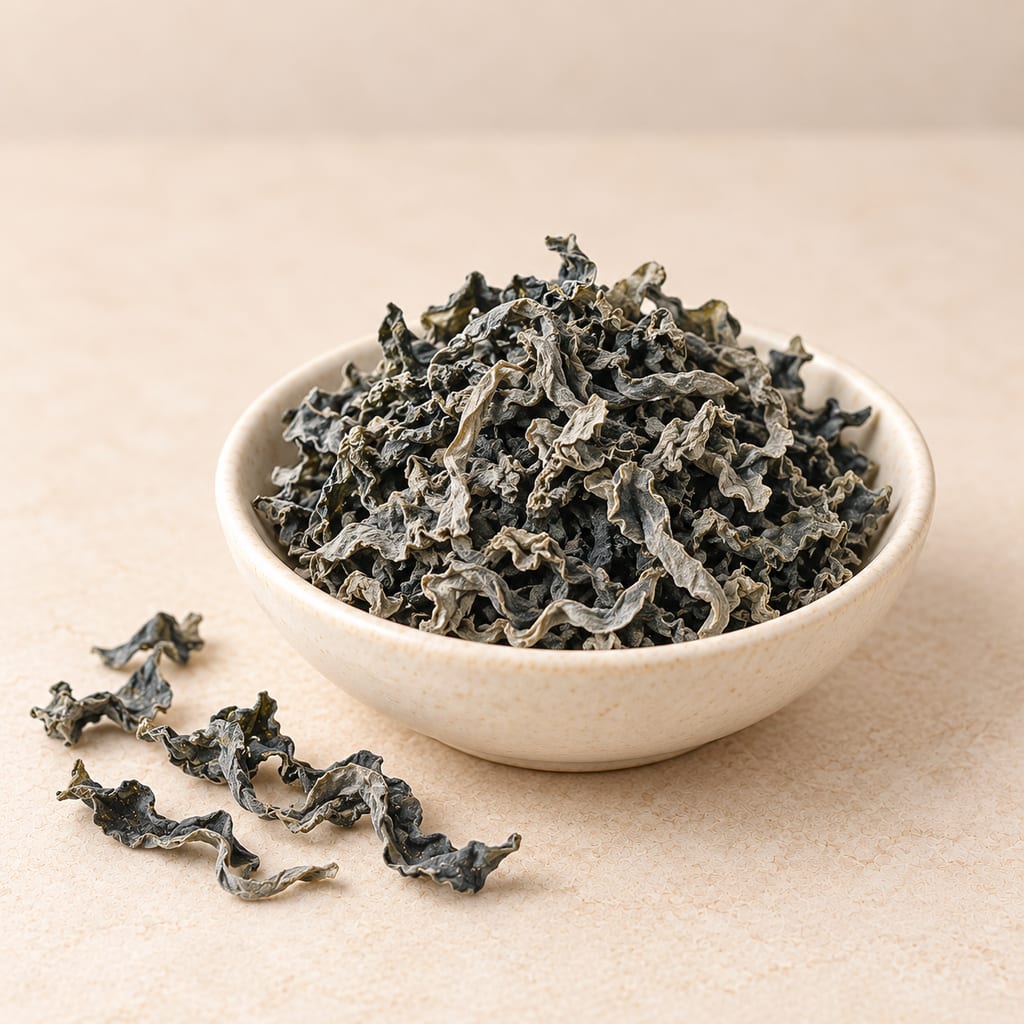
Wakame is an edible brown kelp native to the northwest Pacific, harvested or cultivated for its tender blades, firm stems and frilled reproductive parts, and used in soups, salads, rice dishes and preserved seaweed products.
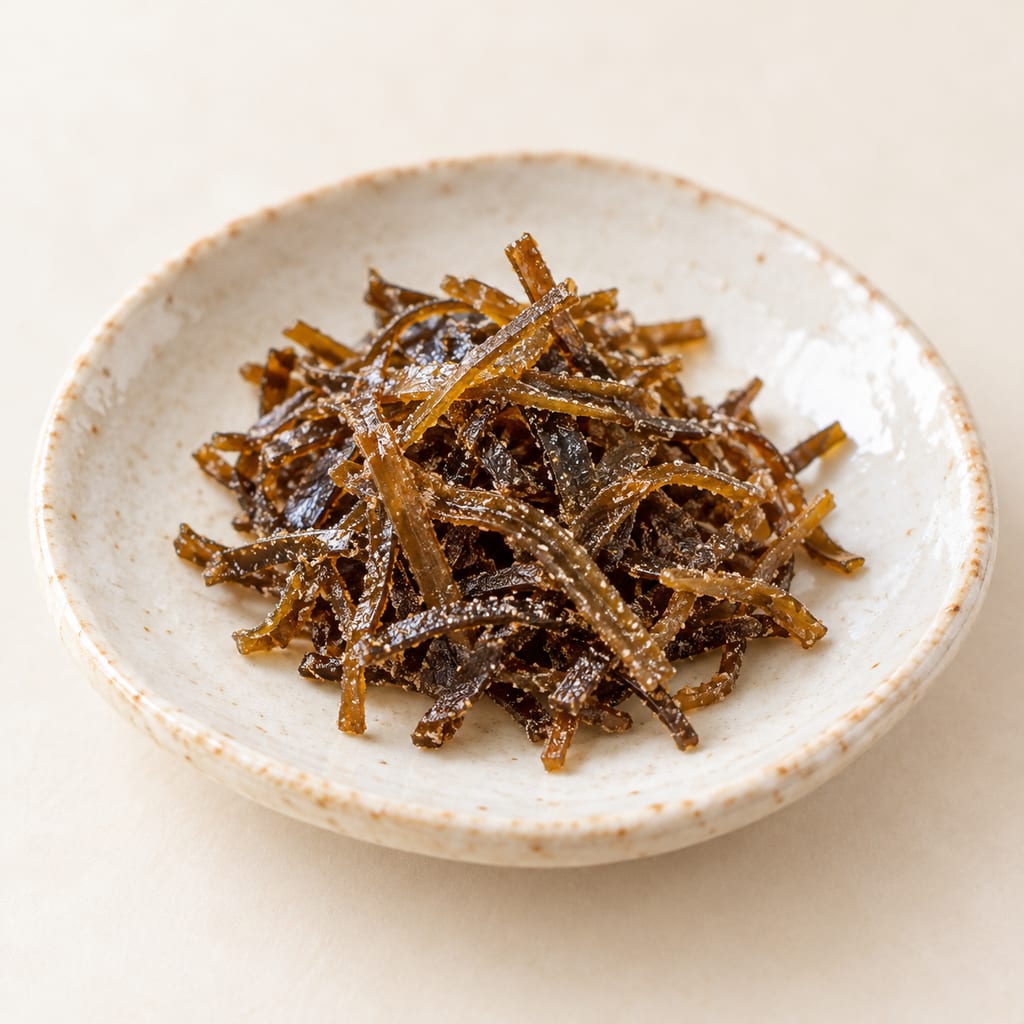
Japanese kelp simmered in soy sauce and seasonings, sometimes dried and salted, eaten with rice or used as an umami seasoning.
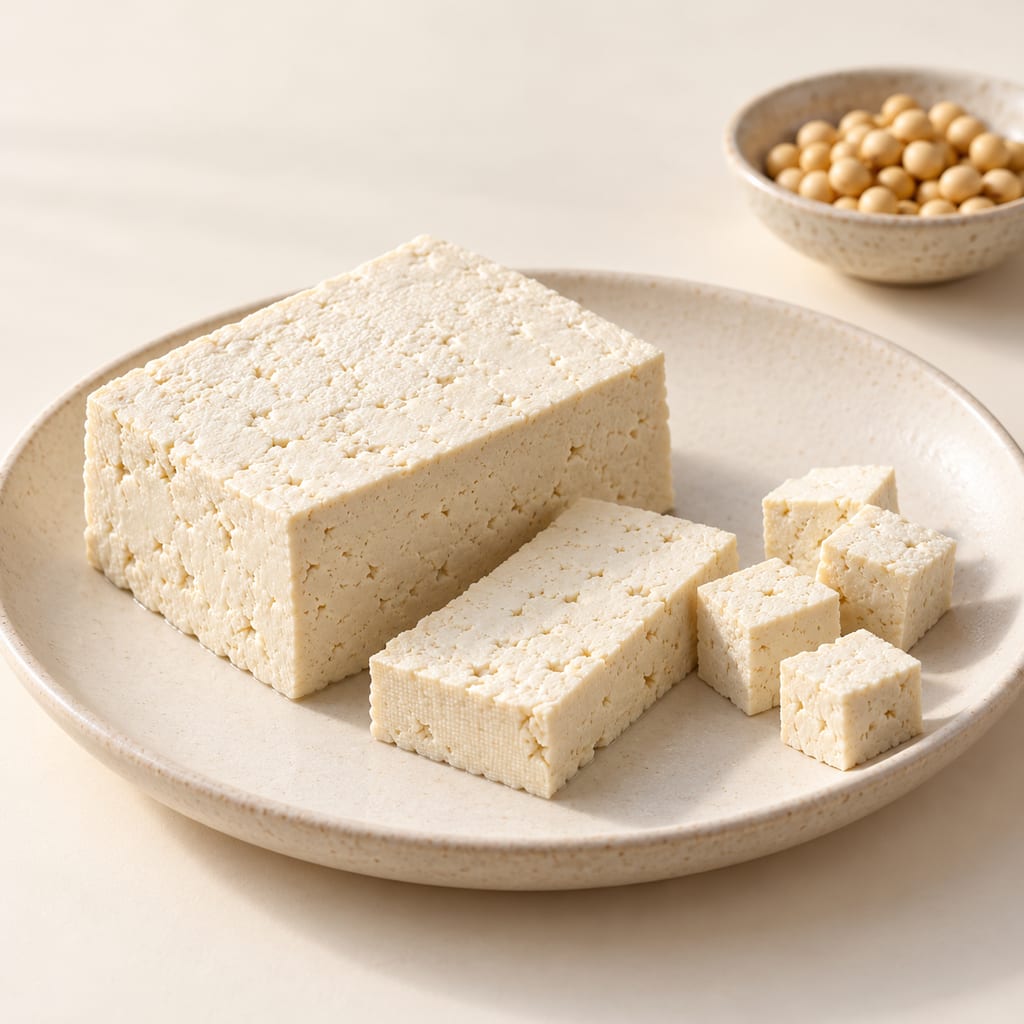
Fresh firm tofu is made by coagulating cooked soybean milk, then draining and pressing the curds into a sliceable block. This version follows a published nigari method and traces tofu’s varied, contested history.
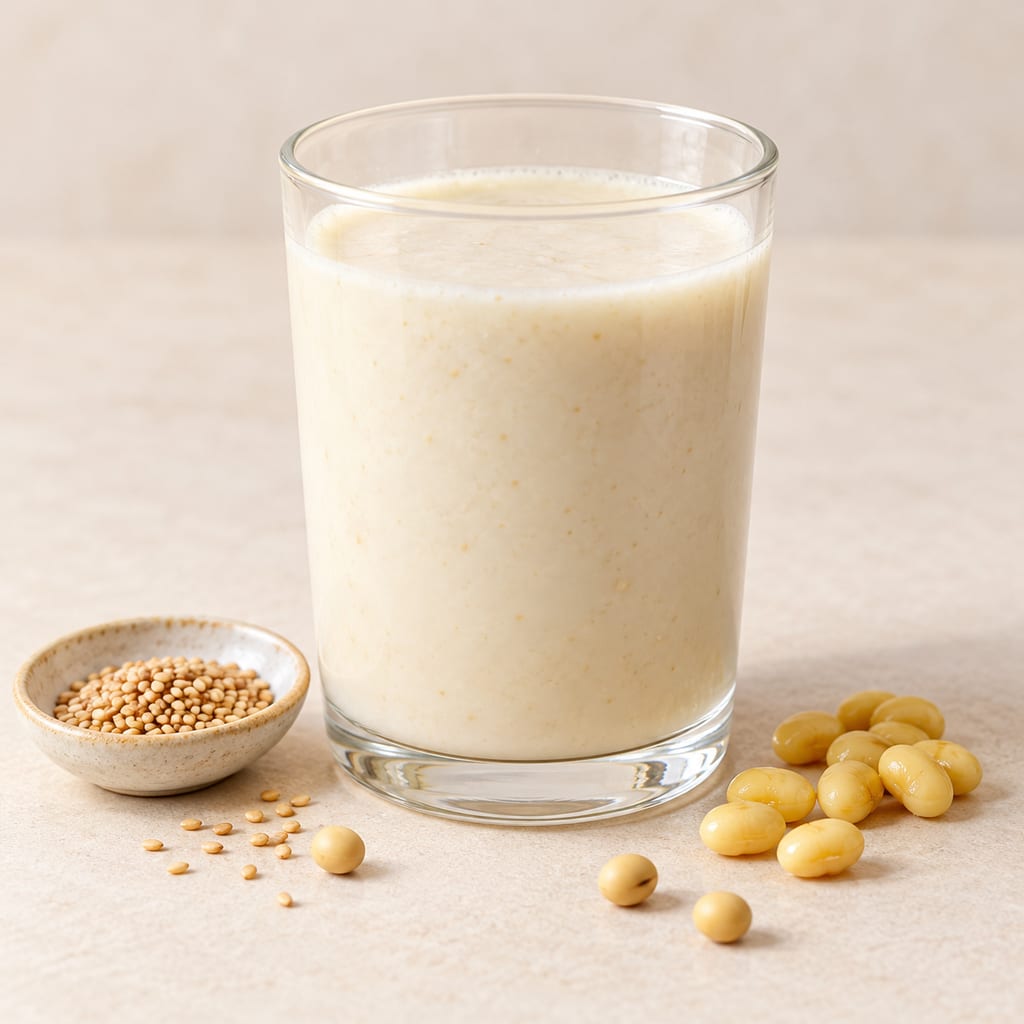
A Korean-style soy drink of cooked whole soybeans blended with cold water, sesame and salt and served at once; tofu-making soy milk is a different, filtered milk.
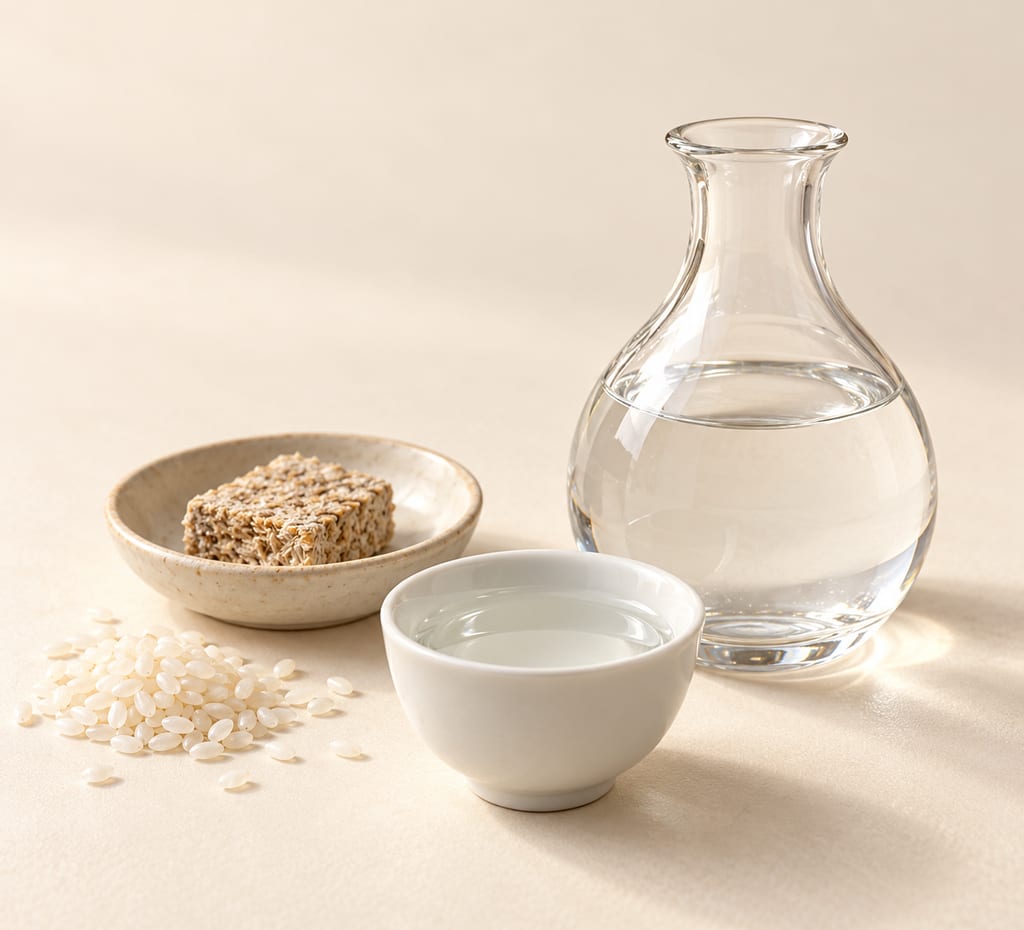
Andong soju is a rice spirit from North Gyeongsang, distilled from steamed rice and wheat nuruk. This method makes the starter before fermenting the rice mash in a jar.
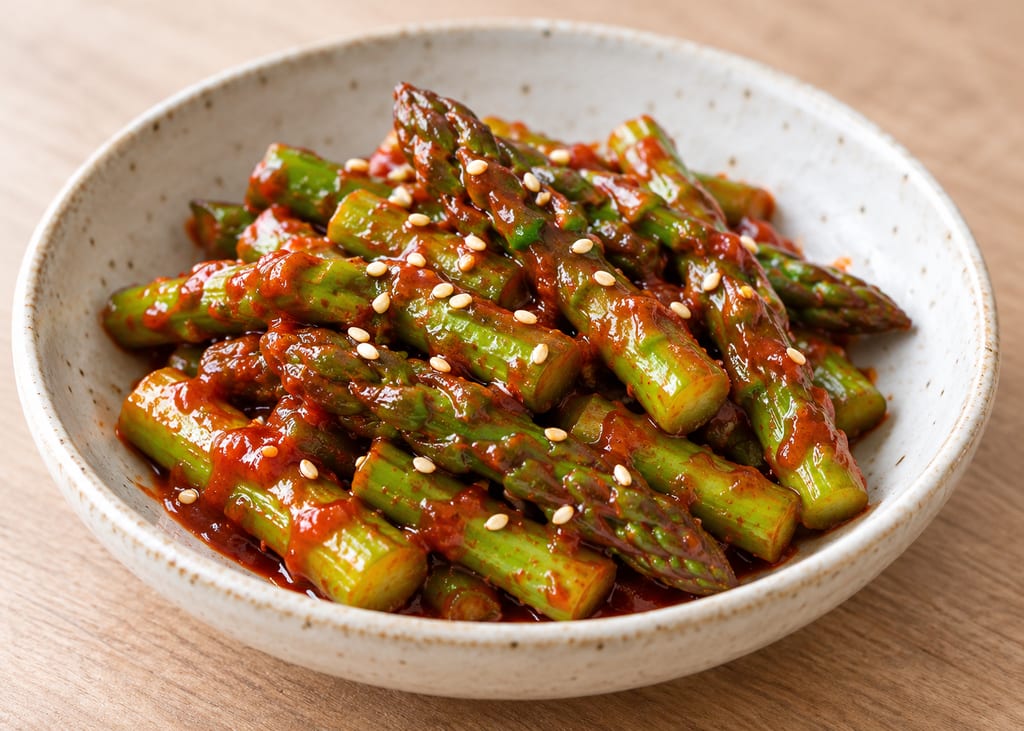
A Korean banchan of blanched asparagus dressed with a sweet-sour cho-gochujang sauce; Hyosun's version cools the spears in ice water before tossing.
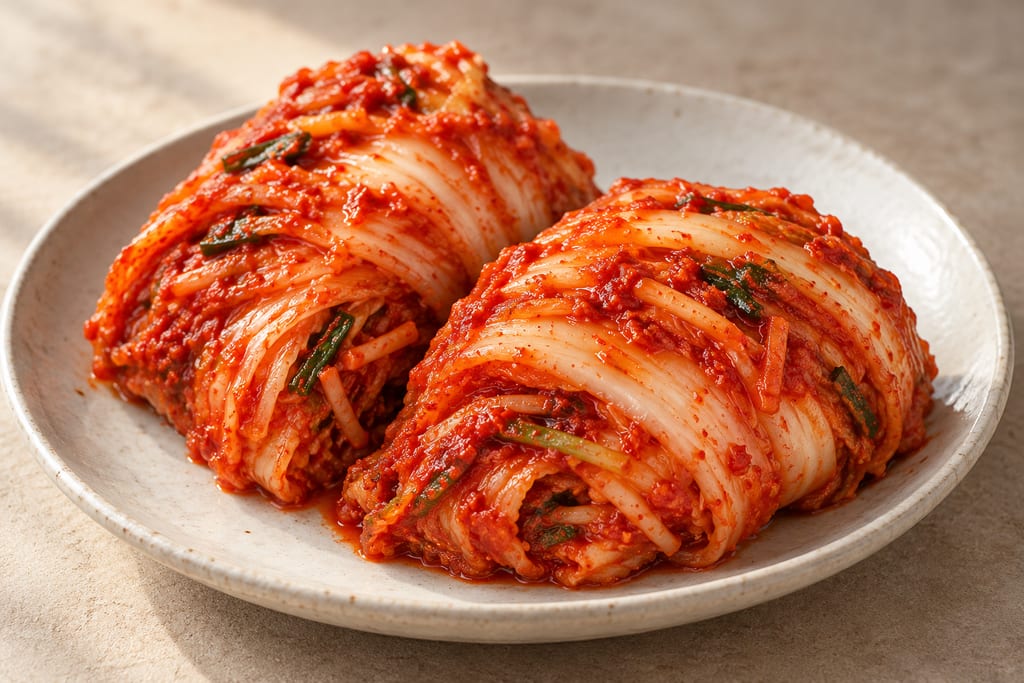
Napa cabbage salted, seasoned with a paste of gochugaru, garlic, ginger and salted seafood, and left to sour through lactic fermentation; Korea's everyday winter preserve.
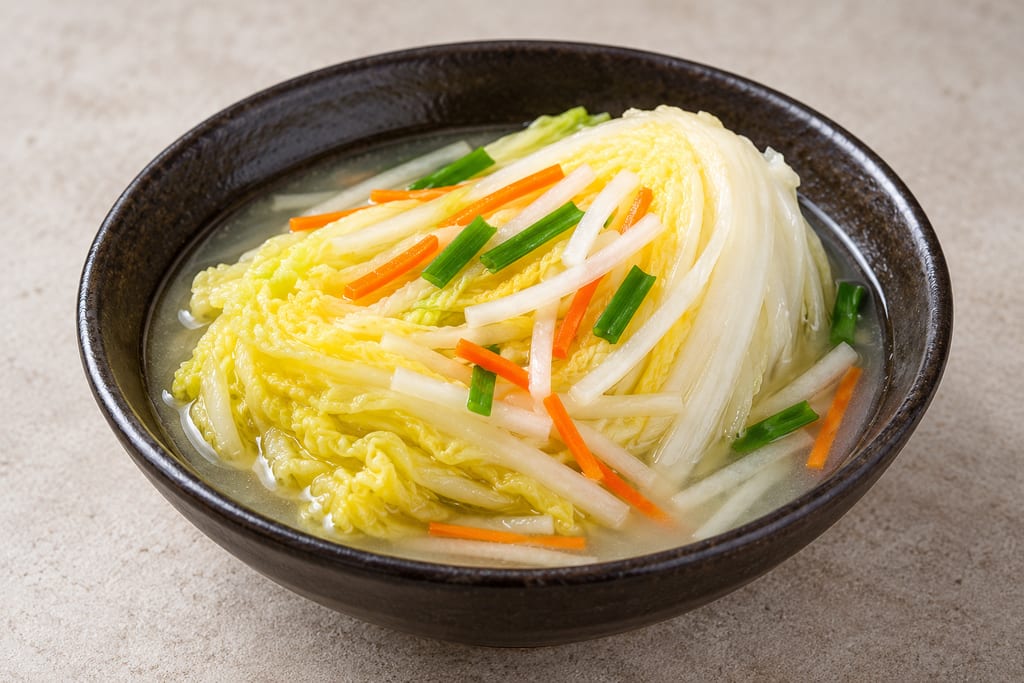
Napa cabbage is brined and filled with pear, radish, alliums, chives and fruit; this Korean kimchi omits red pepper flakes.

Korean black raspberry wine: crushed bokbunja berries with their seeds, sweetened to 20 °Brix, fermented 15 days at 25 °C with wine yeast, filtered and matured three months.
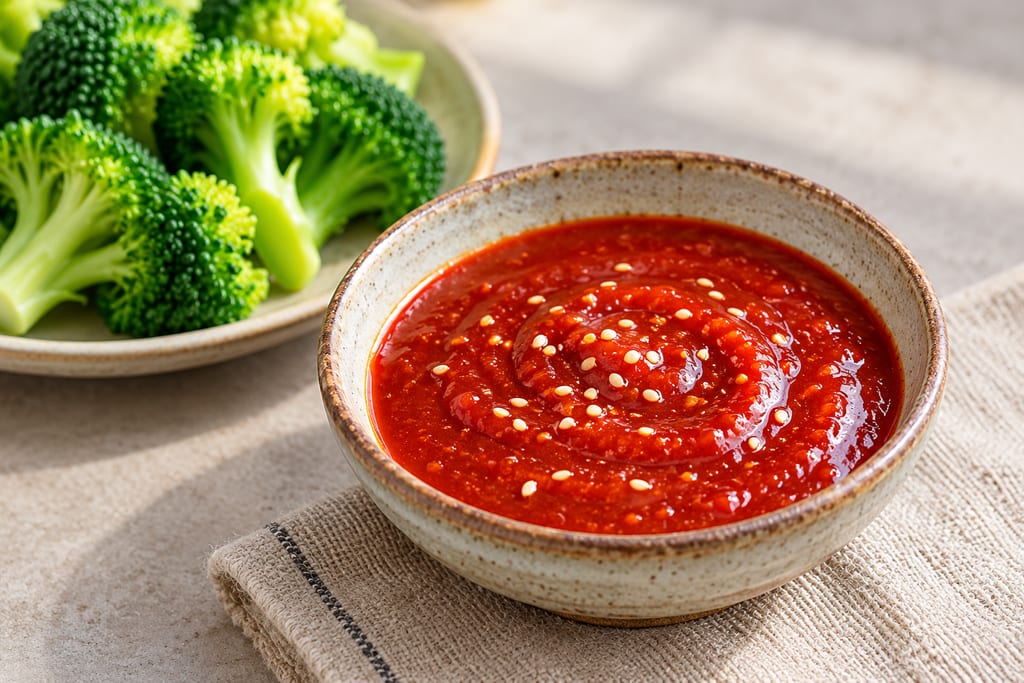
Chogochujang is a Korean sweet-sour sauce made by seasoning gochujang with vinegar and sugar. This development batch adds water and toasted sesame seeds, with optional garlic for the portion being served.

A South African boerie roll puts fully cooked boerewors in a soft bread roll and tops it with warm tomato-and-onion smoor.
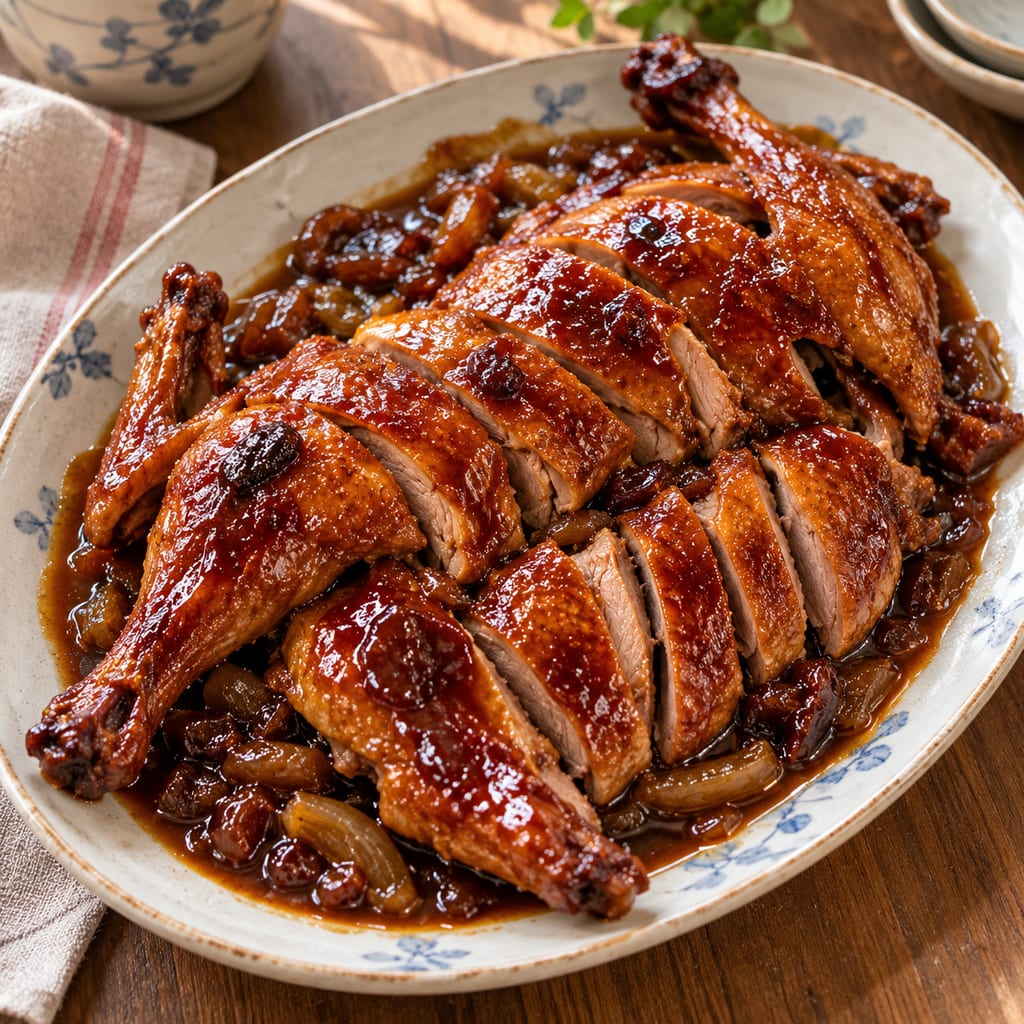
A whole duck braised on onions with pickled plums and Chinese plum sauce until the sauce turns into a thick onion marmalade, a Hakka family dish for Chinese New Year.

Iburunge is boiled cassava and kidney beans dressed with strong butter, the Rwandan farm meal Hirata recorded. This home plate uses butter oil and comes with a cold cup of ikivuguto.
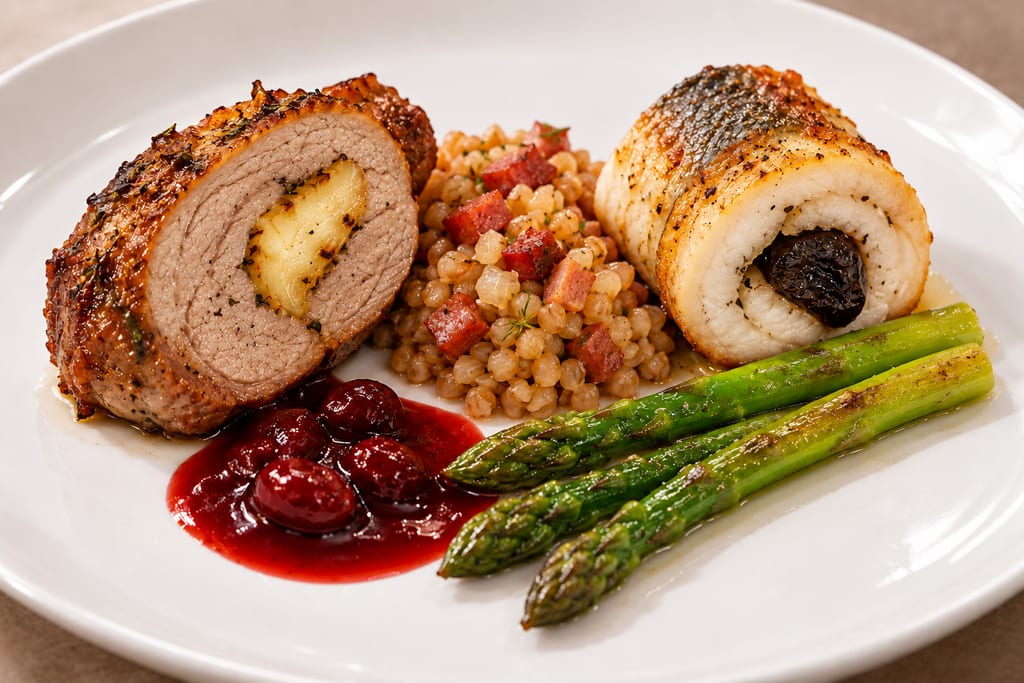
A student cookbook pairs lamb stuffed with Oscypek and zander with suska, then serves wheat groats with a small amount of kiełbasa lisiecka.

Panrkhash is an Armenian bread-and-cheese dish associated with Gyumri and Shirak. One published oven-baked version layers lavash and string cheese with butter-sautéed onion and hot water; regional methods vary.
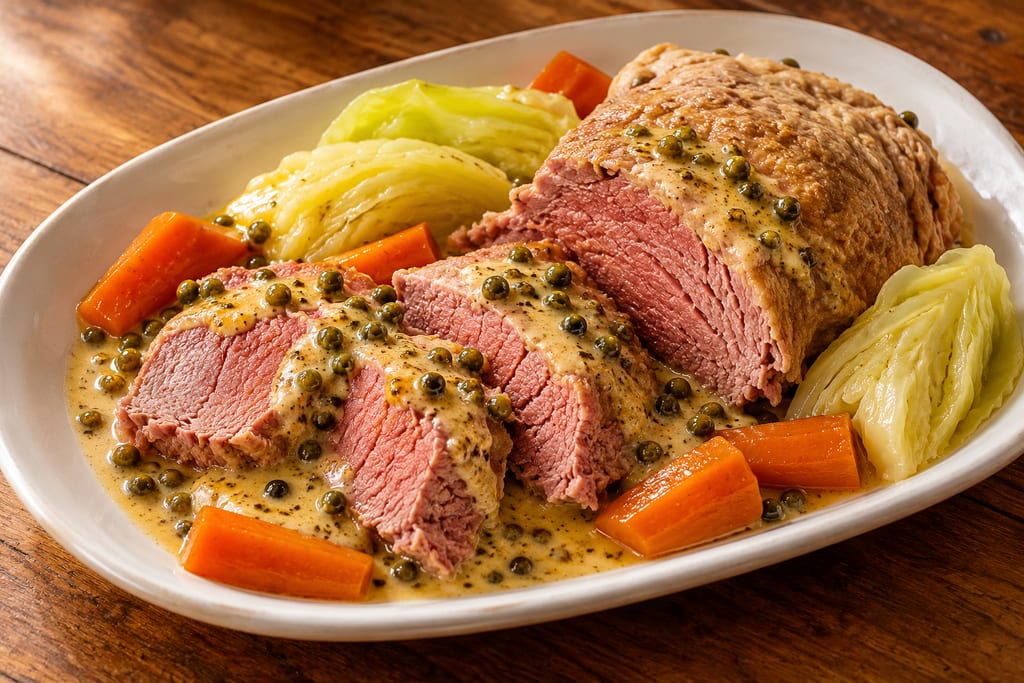
A Karoo-style festive dish of already cured salt beef simmered with vegetables and aromatics, served with a cream sauce of brined green peppercorns and wholegrain mustard.
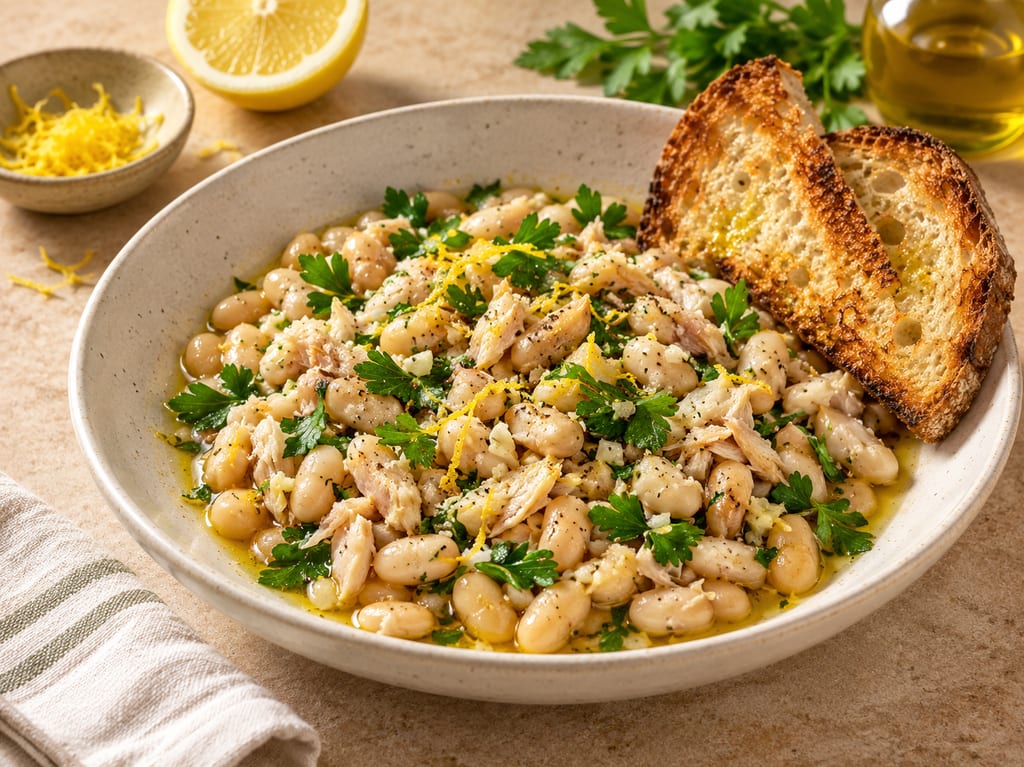
Cooked white beans warm gently with a little deboned, ready-to-eat commercial bokkom flesh, garlic, lemon and parsley. This is a contemporary serving adaptation, not a documented inherited Cape dish.

A Cap-Pelé boucanière is an Acadian herring-smoking building. The documented Willie Niles example is a one-storey wood-frame structure with a ridge smoke vent and interior bays for hanging fish-bearing cannes.

Achcharu is a family of Sri Lankan vinegar pickles made with mixed vegetables or seasonal fruit and a piquant spice dressing. This version is a quick, refrigerated, non-fermented mixed-vegetable pickle.

The acocote is a long, hollowed and dried gourd used to draw aguamiel from a mature maguey. It is a harvesting tool: the sap is transferred to a separate vessel before it ferments into pulque.

Adrak murabba preserves young ginger in sugar syrup, a sweet South Asian preparation recorded in Indian cookery and food-processing sources.

Parkia biglobosa seeds are fermented into regional West African seasonings, including nététou, iru, dawadawa and soumbala. The yellow fruit pulp is a separate food, and names and methods vary by place.

Japanese reddish-brown vinegar from sake lees matured about three years, turned to vinegar by acetic bacteria; the vinegar of Handa and Edomae sushi rice.

A refined common-wheat flour blended for a broad range of baking; its protein and behavior vary with wheat, milling and market.

The almond mushroom, Agaricus subrufescens, was cultivated in eastern North America in the 1800s, lost its market, and returned as a cultivated mushroom from Brazil, where it is grown under several names.
No community contributions have been published for this entry yet.
Sign in to contribute. Published comments and photos are free to read.
Korea.net, Korean Culture and Information Service, Ministry of Culture, Sports and Tourism, Republic of KoreaReference
Korean Recipe: Miyeokguk Seaweed Soup (미역국)Primary Block C recipe, published 24 February 2017
Recipe drawn from The Beauty of Korean Food: 100 Best-Loved Recipes
20 g dried miyeok and 100 g beef shank
Precise beef-seasoning quantities
Sesame oil, cooking water, soy sauce and salt quantities
Thirty-minute seaweed soaking
Cutting seaweed into 4 cm pieces
Cutting beef into 2.5 cm squares approximately 0.2 cm thick
Two-minute beef sauté and three-minute seaweed sauté
Five minutes over high heat followed by twenty minutes over medium heat
Final seasoning and return to the boil
Birthday and postpartum cultural context
Mussels and abalone as documented alternatives
Cited in: What it is; History; How it works: biology and chemistry; How it is made and why each ingredient and step matters; How it is eaten and used
Korea.net, Japanese-language editionReference
韓国料理レシピシリーズ:わかめスープ(미역국、ミヨクッ)Independent language version of the 2017 Korea.net recipe
Japanese translation specifies 6½ cups water rather than 8 cups
Japanese translation specifies 1.3 L water
Japanese translation specifies 6 g salt rather than 8 g
Confirmation of a discrepancy between translations
The Japanese-language page was indexed, but a direct later fetch encountered a redirect loop; the indexed text was used for the comparison
Cited in: How it is made and why each ingredient and step matters
Korea.net, Chinese-language editionReference
韩国料理食谱系列之:海带汤(미역국)Chinese translation of the 2017 official recipe
6½ cups water, approximately 1.3 kg
6 g salt described as half a teaspoon
Six-minute high-heat stage instead of the English version's five minutes
Additional final two-minute cooking instruction
Source comparison to prevent accidental blending of different translations
The page was indexed, but a direct later fetch encountered a redirect loop
Cited in: How it is made and why each ingredient and step matters
Korean Traditional Knowledge Portal, Republic of KoreaReference
미역국 — 한국전통지식포탈 전통식품Full historical miyeok-guk recipe from Joseon Yori Jebeop
Original historical spelling 메역국
1921 publication date
Soaking and cleaning seaweed
Soy sauce, oil and meat as ingredients
Historical stir-frying and simmering sequence
Mussels and fish as documented variations
Absence of modern gram quantities and measured cooking temperatures in the historical recipe
Separation of early twentieth-century attestation from the modern quantified recipe
Cited in: History; How it is made and why each ingredient and step matters
Encyclopedia of Korean Culture, Academy of Korean StudiesReference
미역국 — 한국민족문화대백과사전Definition of miyeok-guk
Traditional use after childbirth
First postpartum meal of white rice and seaweed soup
Meatless postpartum version seasoned with soy sauce and sesame oil
Established birthday custom
Use of beef shank, brisket, chicken stock or dried mussels
Differences between cooking methods and broth appearance
Historical interpretation of the dish's cultural role
Cited in: What it is; History; How it works: biology and chemistry; How it is made and why each ingredient and step matters; Regional and historical variations; How it is eaten and used
National Institute of Korean History, Republic of KoreaReference
첫날, 첫국밥 — 한국문화사Historical and ethnographic account of the first postpartum meal
Rice and miyeok-guk associated with childbirth
Janggwak, long or unbroken seaweed, and its symbolic use
Samsin-related childbirth offerings
Traditional preparation customs distinct from everyday beef soup
Cultural significance of the seaweed's form
Historical practices separated from scientific nutritional claims
Cited in: What it is; History; Regional and historical variations; How it is eaten and used
KOREA Magazine, Korean Culture and Information ServiceReference
The Origin — MiyeokgukHistorical overview published July 2025
Recognition that the origin date of miyeok consumption is unknown
Reference to Xu Jing's visit to Goryeo in 1123
Early written evidence of widespread seaweed consumption
Distinction between historic seaweed use and the invention of a specific soup
Continued birthday and postpartum traditions
Modern cultural significance
Cited in: History; Regional and historical variations
Korea Tourism OrganizationReference
Do Koreans Eat Based on the Weather and Their Feelings? The Story Behind K-Food in K-ContentContemporary explanation of Korean birthday-food traditions
Connection between birthday miyeok-guk and postpartum food
Social and symbolic meaning of the soup
Distinction between cultural practice and a single mandatory recipe
Cited in: How it is eaten and used
Korea Tourism OrganizationReference
Seaweed Soup (미역국 / Miyeokguk)Official Korean tourism description of miyeok-guk
The dish's principal seaweed ingredient
Common beef and seafood preparations
Everyday and culturally significant consumption
Recognition of miyeok-guk as a distinct Korean soup
Cited in: What it is; Regional and historical variations
Korea Tourism OrganizationReference
Sea Urchin Roe and Seaweed Soup (성게미역국 / Seonggemiyeokguk)Documented Jeju sea urchin roe variation
Seafood-based miyeok-guk as a regional speciality
Distinction between the Jeju variation and the beef-based primary recipe
Culinary use of sea urchin roe with miyeok
Cited in: What it is; Regional and historical variations; How it is eaten and used
Nutrients, MDPI; indexed by the US National Library of MedicineReference
Nationwide Representative Survey of Dietary Iodine Intake and Urinary Excretion in Postpartum Korean WomenNationwide study of 1,054 Korean women within eight weeks postpartum
Mean total daily iodine intake of 2,945.6 micrograms
Higher intake soon after childbirth
Decrease in iodine exposure during the postpartum period
Association of repeated miyeok-guk consumption with iodine intake
Distinction between total daily dietary iodine and the iodine content of an individual bowl
Need for further research on clinical consequences
Cited in: Reading results and problems
JCEM Case Reports, Oxford University Press, October 2026Reference
Transient Neonatal Hypothyroidism Due to Maternal Seaweed Soup Ingestion: A Report of 3 CasesCase report published 11 September 2026
Three infants with thyroid dysfunction associated with maternal seaweed soup consumption
Maternal iodine exposure as a possible cause of neonatal hypothyroidism
Particular concerns regarding excessive intake and breastfeeding
Distinction between individual clinical cases and population-wide risk
Importance of maternal dietary history when assessing infant thyroid abnormalities
National Library of Medicine, National Institute of Child Health and Human Development, United StatesReference
Iodine — Drugs and Lactation Database (LactMed)Clinical information on maternal iodine intake and breastfeeding
Transfer of iodine into breast milk
Reported infant thyroid abnormalities following heavy maternal seaweed consumption
Potential vulnerability of preterm infants
Importance of adequate but not excessive iodine intake
Revision dated 15 September 2026
National Institutes of Health, Office of Dietary Supplements, United StatesReference
Iodine — Fact Sheet for Health ProfessionalsPhysiological importance of iodine
Iodine in thyroid hormone production
Variation in iodine content of seaweeds
Excessive iodine intake and thyroid dysfunction
Adult tolerable upper intake level of 1,100 micrograms daily
The upper limit applying to total iodine intake
Special considerations during pregnancy and lactation
Variation in susceptibility to excessive iodine intake
Cited in: How it works: biology and chemistry; Reading results and problems
FoodSafety.gov, United StatesReference
Cook to a Safe Minimum Internal TemperatureGeneral cooking temperatures for beef and seafood
63°C and three-minute rest for whole beef cuts
71°C for ground beef
63°C for fish
Shellfish cooking guidance
74°C for reheating leftovers
Distinction between general food-safety temperatures and the recipe's unmeasured cooking temperatures
FoodSafety.gov, United StatesReference
4 Steps to Food SafetyCleaning, separating, cooking and chilling food
Preventing cross-contamination
Refrigeration within two hours
One-hour refrigeration limit when ambient exposure exceeds 32°C
Refrigerator temperature at or below 4°C
Use of shallow containers for rapid cooling
Safe handling of cooked beef and soup leftovers
FoodSafety.gov, United StatesReference
Cold Food Storage ChartRefrigerated storage guidance for cooked soups and stews
Three to four days at 4°C or below
Freezer storage recommendations for soups and stews
Distinction between general storage guidance and product-specific shelf-life testing
Importance of refrigeration temperature
Academy of Korean StudiesReference
Encyclopedia of Korean Culture entry E0019981Cited in: What it is; How it works: biology and chemistry
Aalto University research portalReference
Seaweed ShrineCited in: Regional and historical variations
Korea Tourism OrganizationReference
Red tilefish and seaweed soup, SeogwipoCited in: Regional and historical variations
EFSA JournalReference
Dietary Exposure to Heavy Metals and Iodine Intake via Consumption of Seaweeds and Halophytes in the European PopulationCited in: Reading results and problems
Centers for Disease Control and PreventionReference
Preventing food poisoningFood Science and Technology ResearchReference
Heat softening of wakame (Undaria pinnatifida)Cited in: How it works: biology and chemistry; Reading results and problems
Ministry of Culture, Sports and Tourism, KoreaReference
Korean food culture news itemCited in: How it is eaten and used