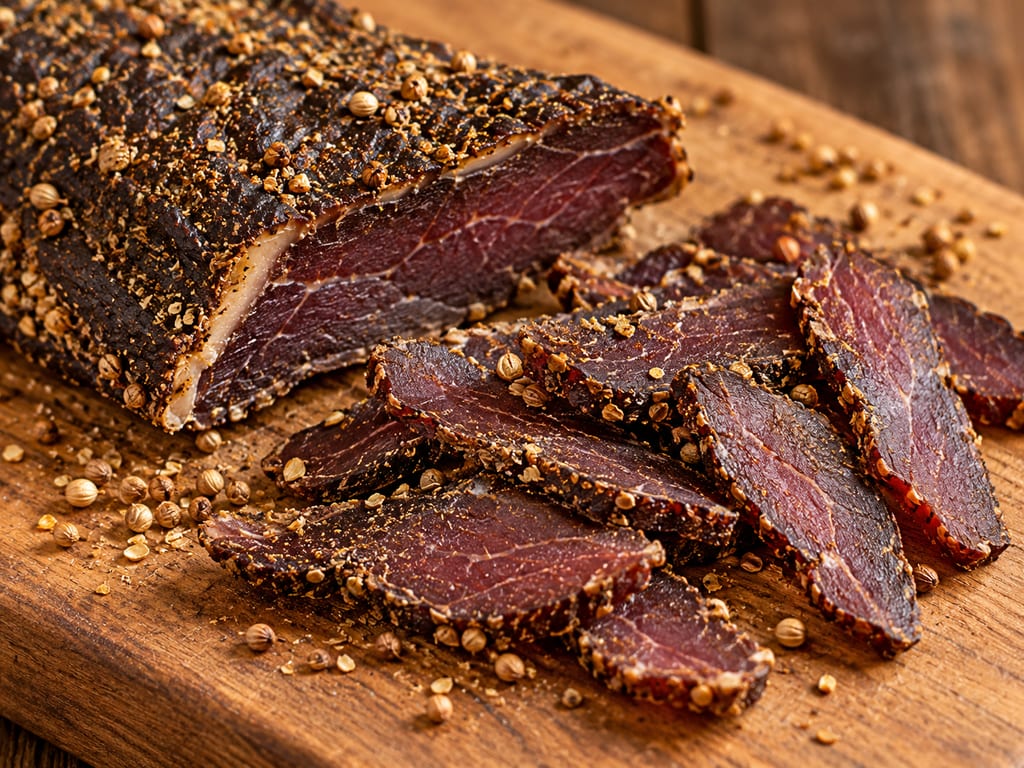
Biltong
Strips of whole-muscle beef or game seasoned with salt, vinegar, roasted coriander and pepper and air-dried without cooking, sold anywhere from soft and moist to hard and very salty.
 FermenteaWhere food goes to change
Spices and aromatics
Black pepper is the dried fruit of Piper nigrum, a tropical climbing vine, used whole, cracked or ground for its pungency and aromatic oils.
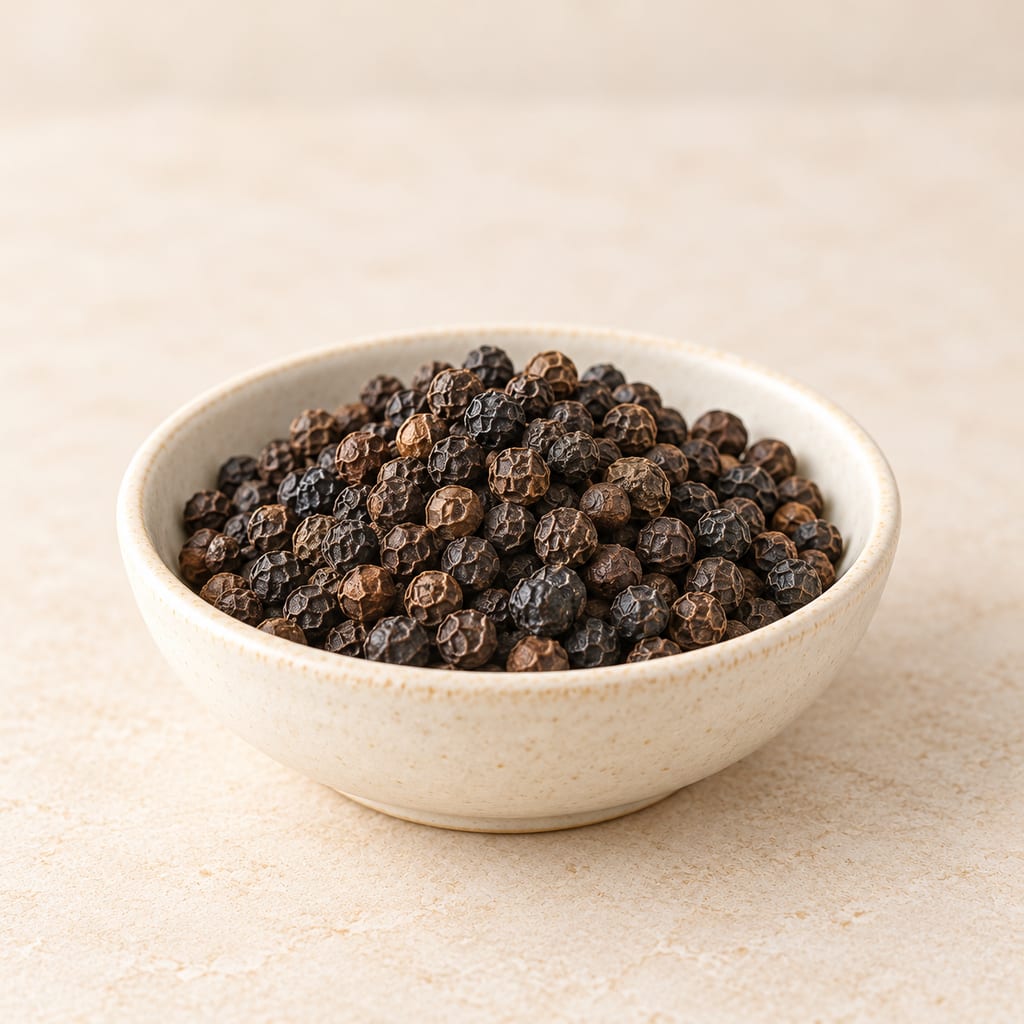
Black pepper is the dried fruit of Piper nigrum, a climbing plant in the pepper family, Piperaceae. A whole peppercorn is dark and wrinkled, with a firm outer layer surrounding the seed. Cracking or grinding changes its physical form while retaining the character for which the spice is prized: pungency accompanied by an aromatic mixture of volatile oils.
In an ingredient list, the word pepper needs the same care as any other food name. A mixture of coloured peppercorns may contain several products, and a jar of ground seasoning may include ingredients besides the dried fruit. Choose the form the preparation actually names. That choice preserves the visible texture as well as the balance of seasoning, and avoids silently turning a whole-fruit ingredient into an extract or a blend.
The small dried fruit connects a tropical crop with kitchens far from the place where it was grown. It can be added whole to a liquid, cracked into a meat filling or ground through a seasoning mixture. Those forms place different-sized particles in the food. A visible peppercorn, a coarse fragment and a fine powder consequently give the cook different ways to distribute the same ingredient.
Its familiar name can obscure an important botanical distinction. Black and white pepper are products made from Piper nigrum by different processing routes. Green pepper is another preparation of its fruit. Long pepper belongs to a different botanical subject, while other spices called pepper need their own identification. A colour word alone is not enough to establish that several products come from the same plant.
The Periplus of the Erythraean Sea describes an Indian Ocean trading world in which pepper was a substantial cargo. Its anonymous Greek-speaking merchant connected ports on India's southwestern coast with ships arriving from Arabia and the Mediterranean trade. Muziris and Nelcynda appear among the important markets, while pepper production is associated with the district called Cottonara.
The account describes large ships loading pepper and malabathrum. Coin, metals, glass and other goods travelled in the opposite direction. Pepper therefore belonged to a network of cultivation, inland movement, coastal markets and ocean voyages. The dried berry at the consumer's end represented work by people who grew, handled, carried and traded it.
Seasonal sailing conditions also mattered. Voyages followed the opportunities offered by the winds, connecting the crop with the practical calendar of maritime commerce. The pepper-producing district and the port were different parts of that system: a place where ships loaded a cargo was not necessarily where its plants were grown. That distinction remains useful when interpreting a geographical name attached to a traded spice.
Pliny the Elder treated pepper as a conspicuous imported taste. In his first-century Natural History he distinguished black, white and long pepper as market goods and expressed surprise that people paid for a substance valued for pungency. His discussion combines sensory judgement with a complaint about the appetite for imports from India.
He described black pepper as having an agreeable flavour and white pepper as milder, and recorded different prices for the named goods. Those observations reveal distinctions recognized in Roman commerce, even though his botanical explanation of the plant and its fruits contains errors. The history of a traded food can preserve useful evidence about taste and markets alongside mistaken natural history.
His account also discusses adulteration. The possibility of mixing cheaper material into a valuable spice belonged to its commercial life, just as botanical identification and product quality remain important when buying it. Pepper was already more than a generic hot powder: people distinguished forms, compared their sensory character and worried about what was actually being sold under the name.
Piper nigrum is a perennial woody climber. Its climbing stems attach to supports, while lateral branches carry the flowering spikes and subsequent fruit. In cultivation, trained vines can form dense columns around posts or living trees. The crop's shape therefore reflects both its climbing habit and the way a grower supports and prunes it.
Warmth and humidity suit the plant, but water around its roots needs somewhere to drain. Long dry spells and waterlogged soil create different problems. A warm, moist atmosphere does not imply that the root system should sit in stagnant water. Soil structure and drainage are part of producing the fruit later encountered as a dry spice.
Cultivation also requires patience. A perennial vine develops before it produces a full crop, and the period from flowering to harvest extends over months. Planting, support and ongoing management precede the brief operations that turn harvested spikes into peppercorns. The ingredient's apparent simplicity in a spice jar conceals a crop maintained through repeated seasons.
Pepper has a long cultivation history in Kerala and in several parts of Southeast Asia. Smallholder systems have used both living support trees and dead posts. These systems differ in shade, inputs and management, while still working with the same basic climbing habit. A vine within a mixed planting encounters a different agricultural setting from a closely managed stand on posts.
Growers also select cultivars with different branching, leaves, flowering and performance under local conditions. Kuching is a named cultivar associated with Sarawak, while Lampung and Bangka have their own established cultivated types. Cultivar identity concerns the plant; a commercial grade or port name on a bag may instead describe how the harvested commodity is sorted or traded.
A growing region, a cultivar and an export name describe different things. The crop can be grown in more than one country, a selected plant can be moved elsewhere, and a shipping centre can handle pepper from a wider area. Reading those names separately gives a clearer picture of the ingredient than treating every name on a sack as a botanical variety.
Black pepper is made from whole fruits harvested while still unripe but fully developed. The stage of picking matters because the harvested fruit is the material that must withstand handling and drying. Whole spikes are collected, and the berries are separated from their stalks before the finished commodity is cleaned and graded.
In Kerala's documented preparation, harvested berries may first be heaped to begin browning, then threshed and spread for sun drying. Raking helps the berries dry more evenly and limits conditions favouring unwanted mold. Drying removes water and changes the appearance of the outer fruit layer, producing the familiar dark, shrivelled surface.
Blanching is another documented processing choice. A brief hot-water treatment before drying can accelerate browning and drying and make the finished colour more uniform. It is a crop-processing operation, distinct from the later fermentation of a sausage seasoned with pepper. Calling both processes fermentation would conceal the different materials, purposes and controls involved.
White pepper demonstrates how much the outer fruit layer matters. One traditional process starts with ripe fruit and uses soaking to loosen that layer, which is then removed before washing and drying. The finished pale product exposes the kernel instead of retaining black pepper's dark outer surface. It is a different prepared ingredient from the same plant.
Other methods remove the outer layer mechanically or soften it with heat before removal. These routes can differ in appearance and aroma from the traditional soaked product. Processing is therefore part of ingredient identity, rather than a cosmetic change applied after an otherwise identical spice has been made.
Dehydrated green pepper begins with a different aim: retaining the green character of immature fruit. Heat treatment can inactivate enzymes responsible for browning before controlled dehydration. Blackening, removing an outer layer and preserving green colour are different technological directions. The shared species explains the relationship among the products, while the selected harvest and handling explain why they remain distinct ingredients.
Piperine is an important contributor to pepper's pungency. Essential oil contributes much of the characteristic aroma. These are different aspects of the sensory experience: the sensation of pungency and the smell of volatile compounds need not change together or be measured by the same method.
Aromatic composition can also vary with the fruit and its preparation. Grinding, oil extraction and use of an oleoresin produce different physical ingredients. A distilled oil is not a ground peppercorn, and an extract does not supply the same amount of fruit material, fibre or visible particles. Their names may share pepper, but their behaviour and use need separate formulation decisions.
In a sausage, pepper principally supplies seasoning. It joins a mixture whose other ingredients determine the overall taste and whose method determines how the meat is fermented and dried. The spice has its own job within that formulation; it does not explain the whole preservation process.
Pepper belongs with the recipe's specified seasoning form. A ground spice distributes small particles through the mixture; cracked pepper leaves larger pieces. The amount and form should follow that particular preparation rather than a general rule about how much pepper a fermented food needs. The pepper provides pungency and aroma while the recipe's salt, culture and processing stages retain their separate functions.
Finocchiona pairs black pepper with fennel seed and garlic. Maltese sausage places it alongside coriander and garlic. Those combinations show how the same spice becomes part of different aromatic profiles: fennel or coriander is not simply another name for pepper heat. A cook choosing ingredients for either preparation needs the particular combination, rather than a premixed seasoning assumed to be equivalent. The linked recipes retain their own complete ingredient lists and methods.
Dried spices can carry microorganisms. Salmonella, Bacillus cereus and Clostridium perfringens have been found in marketed spices and dried herbs, and outbreaks have been linked with the category. Dryness changes the conditions for growth; it does not demonstrate that a spice has been sterilized. Food-grade supply and control of contamination during processing matter before the pepper reaches a fermentation.
Contamination can enter at several points in the spice supply chain: soil and water around the crop, handling during harvest and drying, equipment, transport and later packing. Grinding does not remove that history. A food manufacturer choosing pepper therefore has a sourcing question as well as a sensory one, including whether a pathogen-reduction treatment has been applied and how the material is protected afterwards.
The change from dry spice to moist food matters too. An organism that persists in a dried ingredient may encounter conditions more favourable for growth once the pepper is mixed into a filling or another moist preparation. Adding seasoning after cooking is a different handling point from incorporating it before a controlled processing stage. The ingredient’s pungency gives no indication of that microbiological history.
Keep the ingredient protected from moisture and contamination, following its supplier's storage directions. Whole, cracked and ground pepper should retain their actual identity on the label. A blend may contain other seasonings, and its ingredients and allergen declarations must be read as those of the blend rather than of pure pepper. No single storage duration describes every package, grind and handling history.
At the table, pepper can remain visible in a slice of sausage or disappear into a finely ground seasoning. In a cooking liquid, whole berries provide another physical presentation. Its long journey through cultivation, drying and trade ends in these small decisions about form and distribution. The spice's identity remains both botanical and practical: a particular fruit, prepared in a particular way, used for its pungency and aroma.
Kew's current taxonomic record gives Sri Lanka as the native range, while its older species profile and the PROSEA crop account name the Western Ghats of India. This disagreement does not undo the documented history of southwestern Indian cultivation and trade, but it prevents a single confident domestication claim. No numerical aroma shelf life is given here.
Documented pepper-growing and processing region; not a claim of sole domestication.
Crop account documents cultivation and support systems; not recipe origin.
Strips of whole-muscle beef or game seasoned with salt, vinegar, roasted coriander and pepper and air-dried without cooking, sold anywhere from soft and moist to hard and very salty.
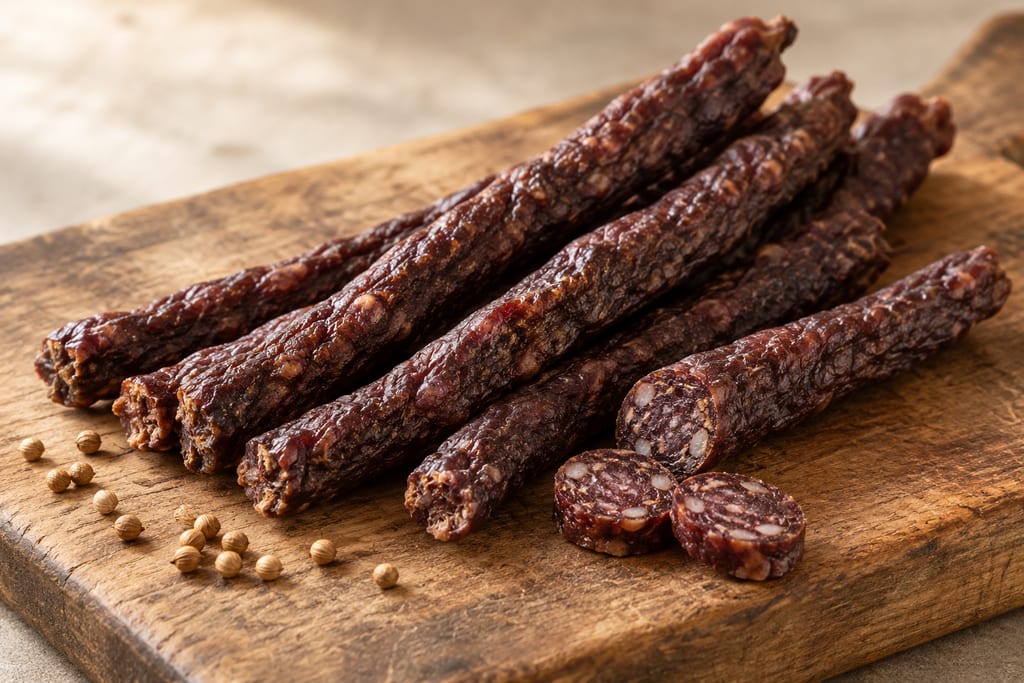
South Africa's dried sausage: seasoned minced meat in narrow casings, dried until it can be eaten without cooking, which makes it a far more demanding product than fresh boerewors.
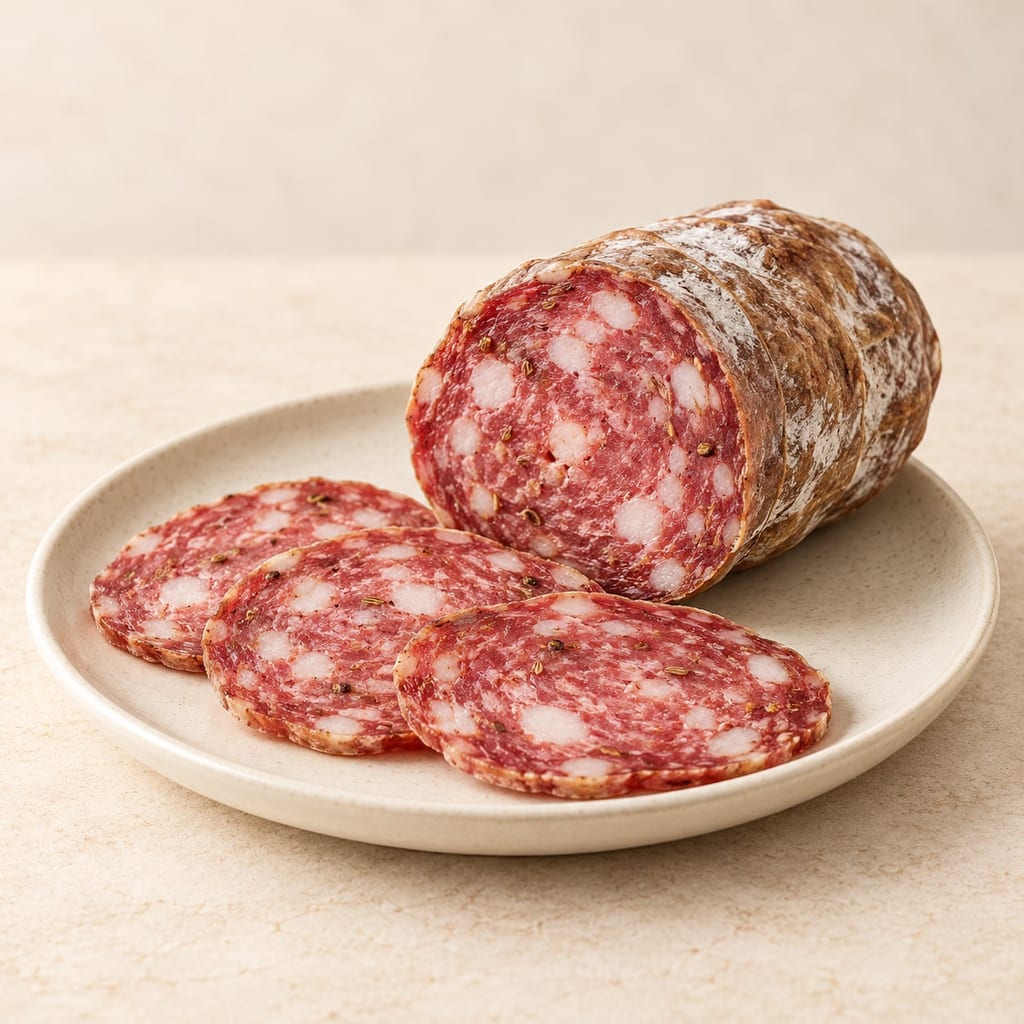
A Tuscan-style fennel salami made with pork and back fat. Toasted fennel, fennel pollen and Sambuca flavor this starter-cultured preparation.
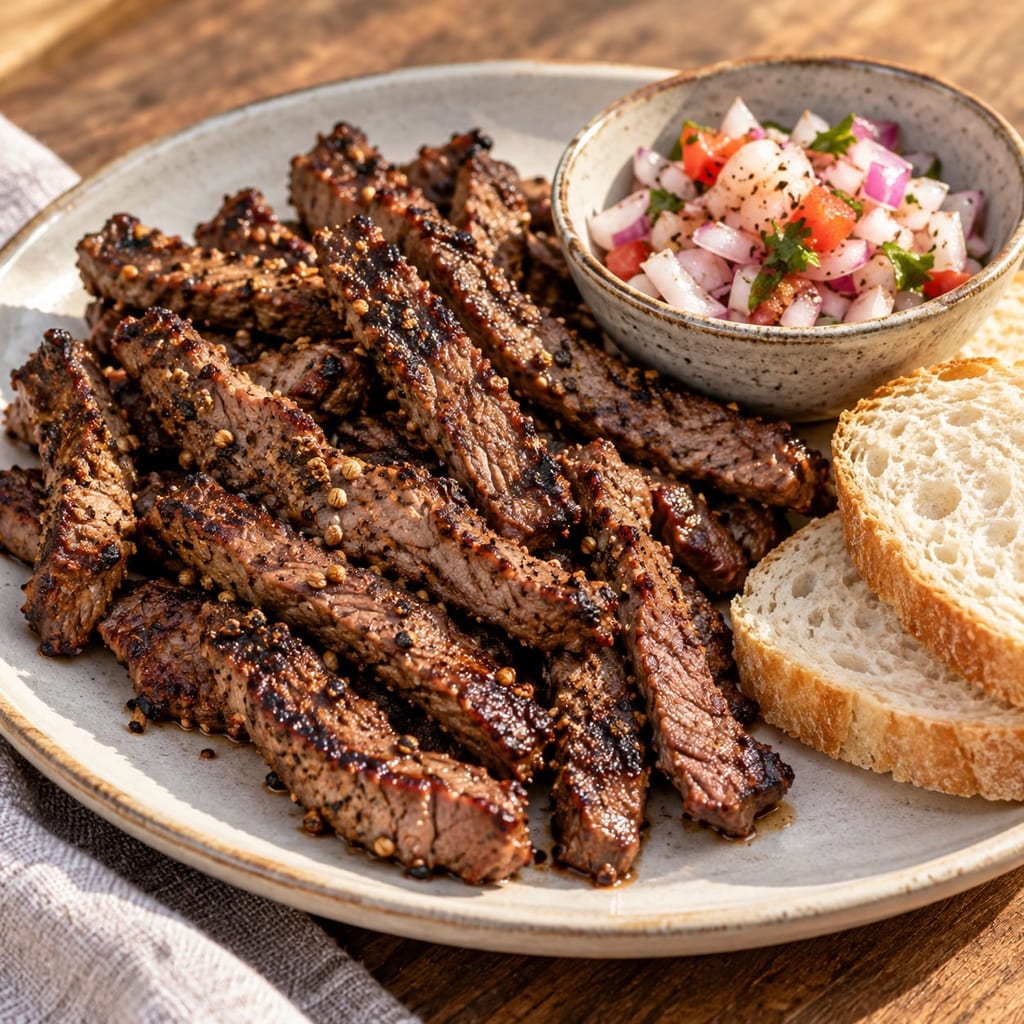
Beef rump takes vinegar, toasted coriander and pepper from the flavour family of tassal, then meets a thermometer-checked braai fire as a fresh-cooked meal.

A documentary account of a modern ventricina-style salami source and its Abruzzese context. This page provides no preparation directions or validated home process.
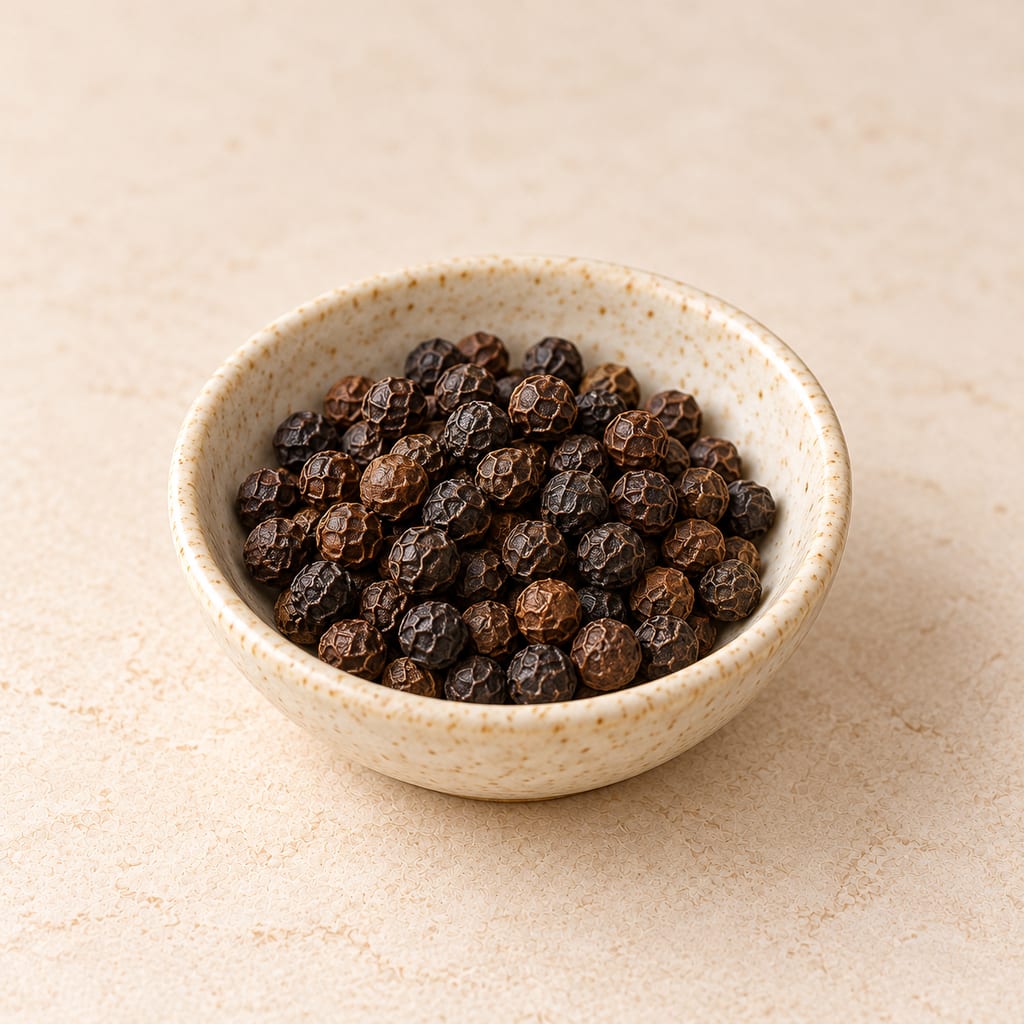
Whole peppercorns are the dried, uncracked berries of Piper nigrum, sold with their pungent seed intact. They season cured sausages such as Genoa-style salami and soppressata di Calabria beside a ground pepper.

A gelling polysaccharide extracted from red seaweeds, sold as kanten strips or powder; it sets firm at a low concentration and stays solid until about 85 °C.
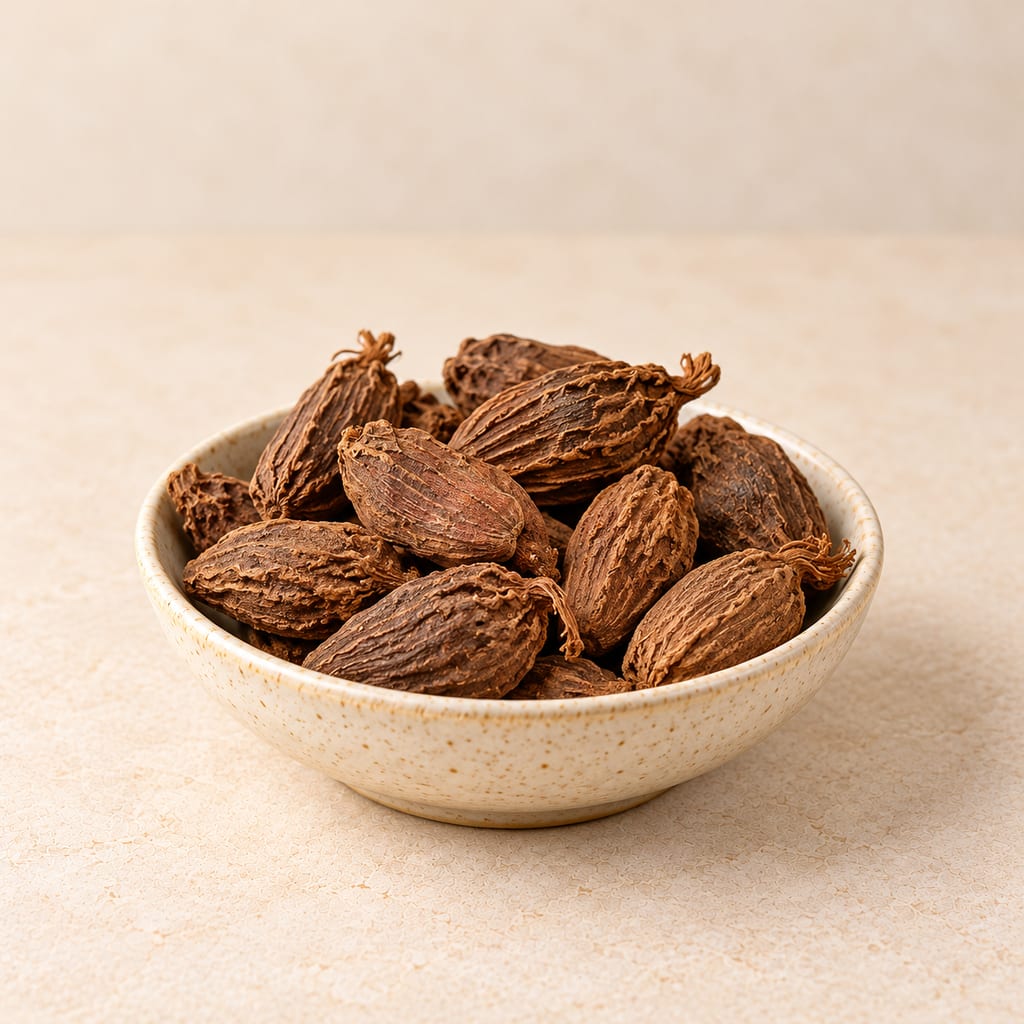
Alainchi is the large or black cardamom of the eastern Himalaya, the dark, smoke-dried pods of Amomum subulatum. Its camphor-cool, smoky seeds season Himalayan and North Indian cooking and a sweet Nepali lapsi achar.
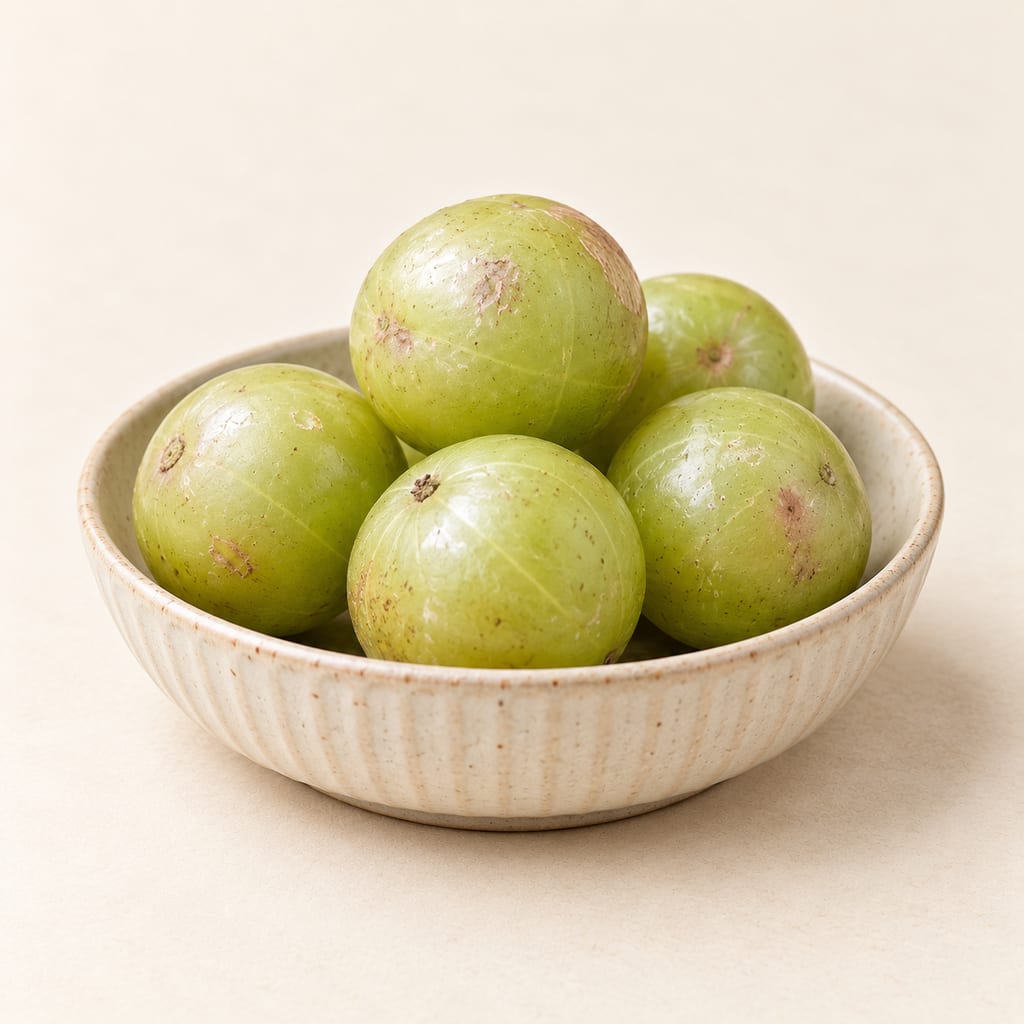
Amla is the firm, sharply sour fruit of Phyllanthus emblica. Cooks transform it into murabba, pickles, chutneys, drinks and dried snacks.
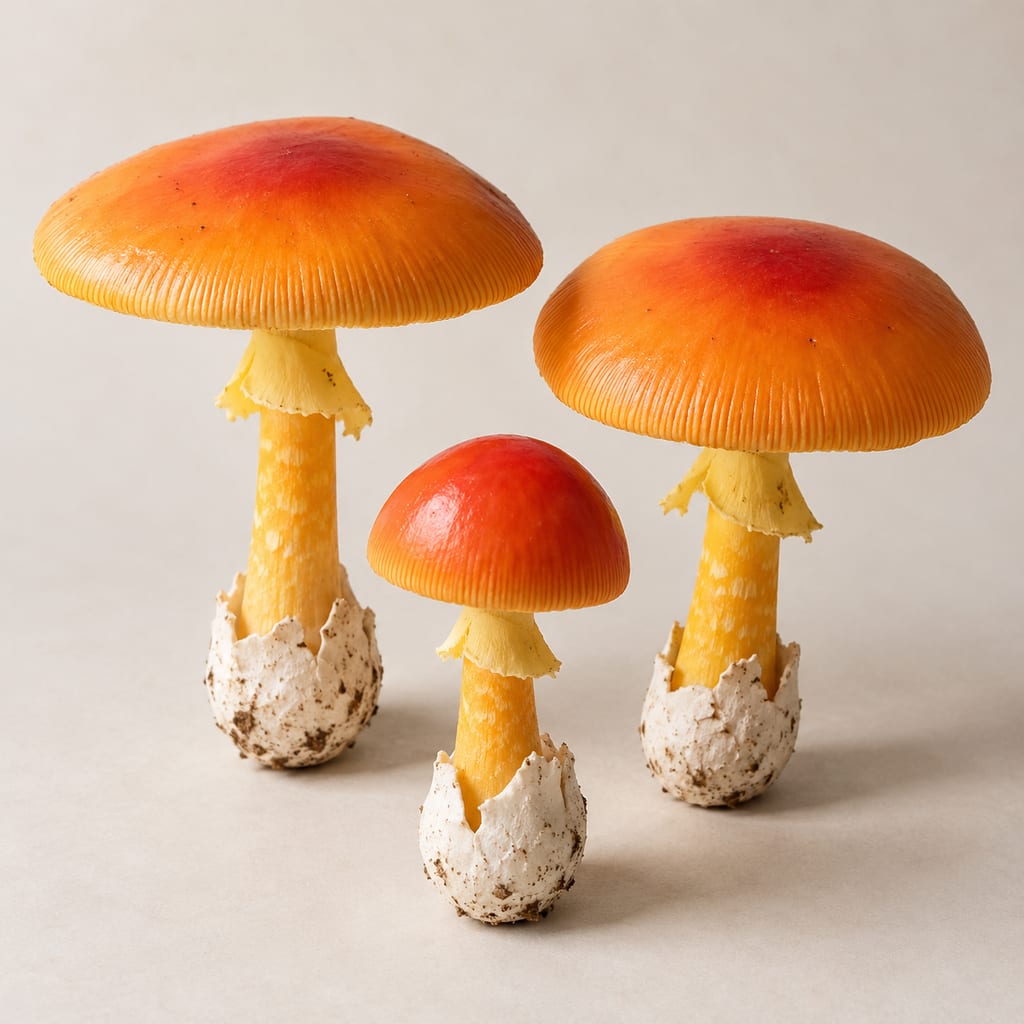
A wild Asian Amanita reported as food in regional literature and listed in China’s edible-fungi catalogue. Lookalikes include lethal species; this record is not a guide to identifying wild mushrooms.
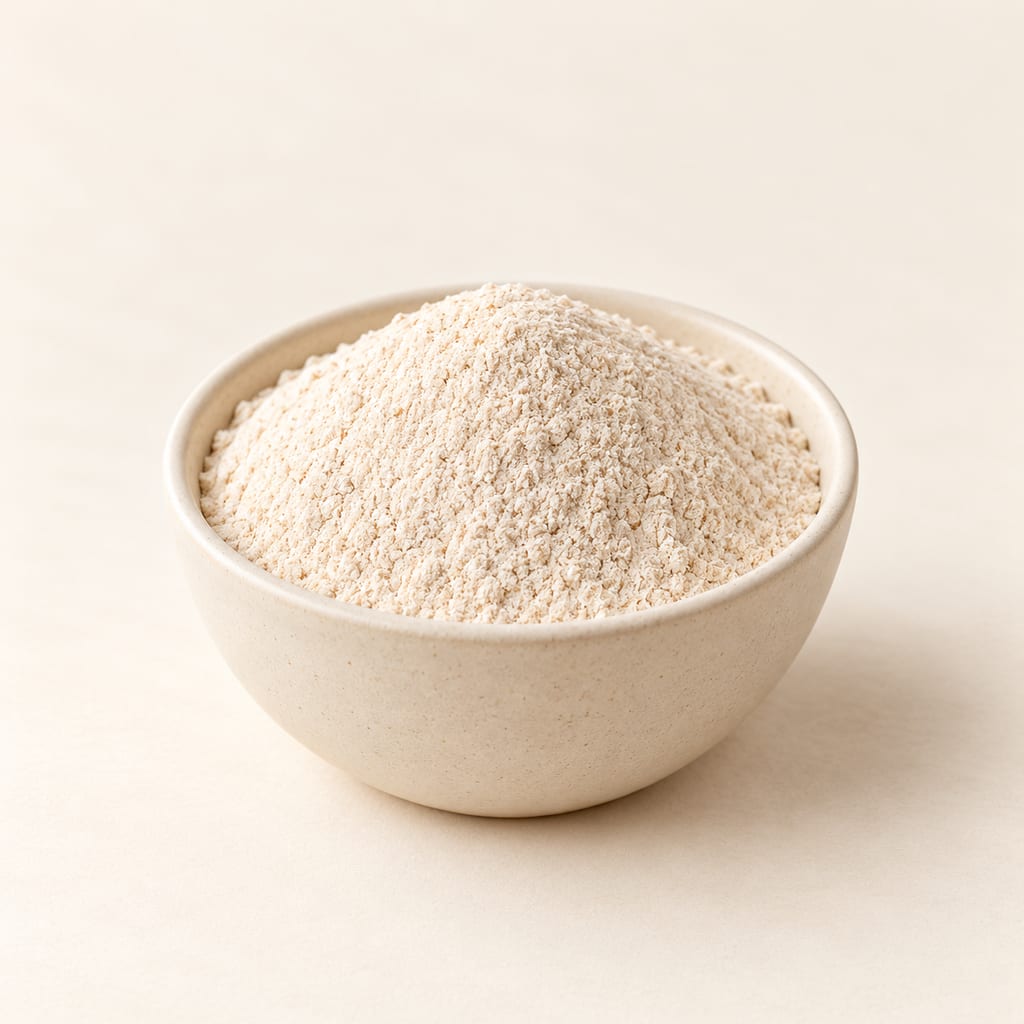
Atta is wheat flour used across South Asian bread traditions. Indian standards distinguish wheat flour (atta) from resultant atta; milling route and particle size shape its behavior in chapati dough.
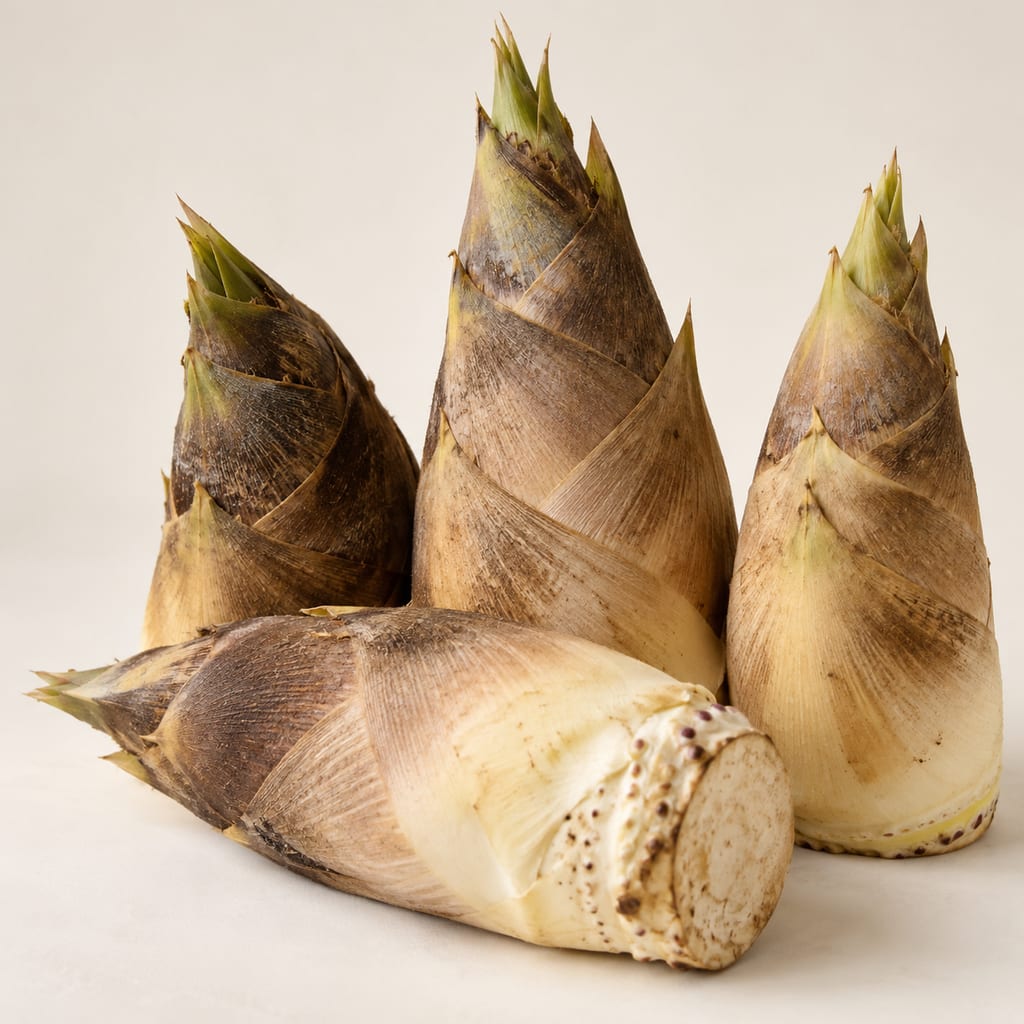
Bamboo shoots are the young culms of many bamboo species, eaten after boiling or leaching in Asia, and fermented into sour and preserved foods in the Himalayas, northeast India and Burma.
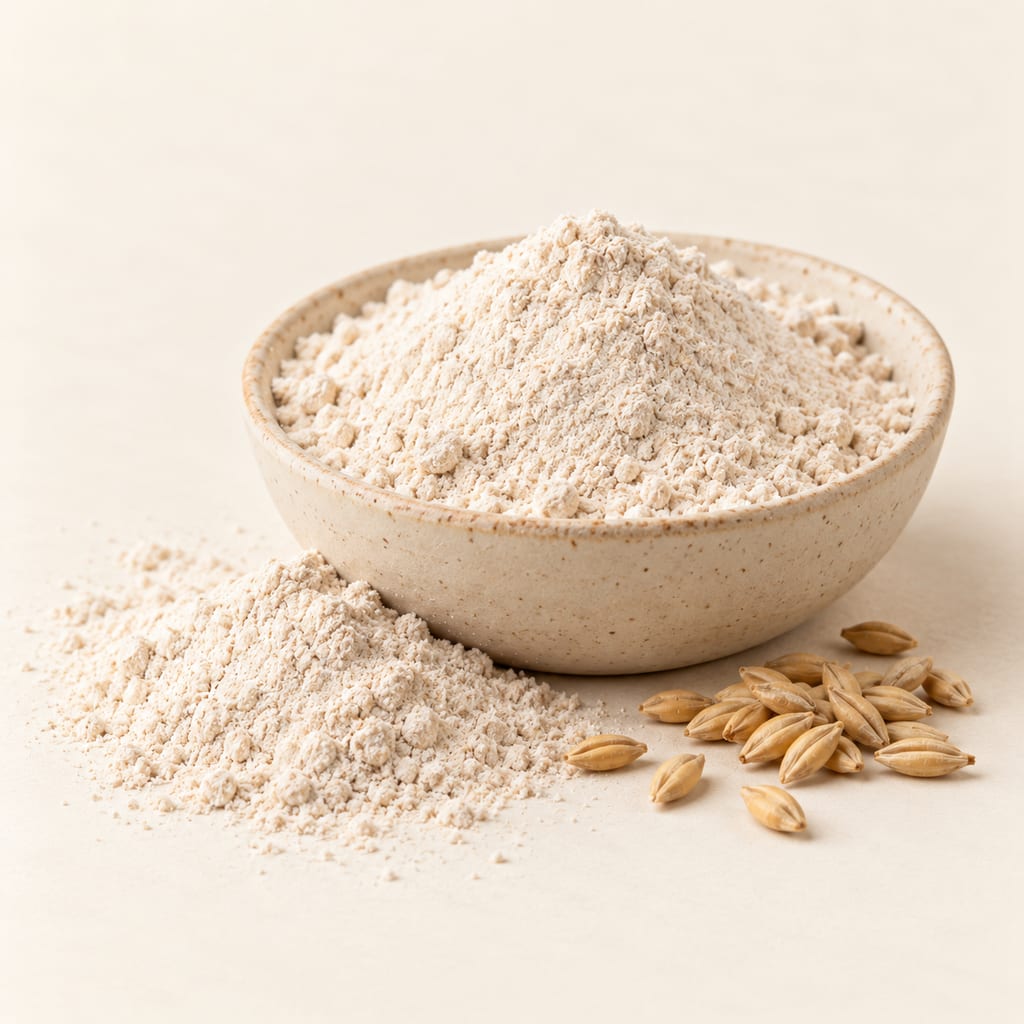
Barley flour is ground barley grain; whether it comes from pearled or hulless kernels, its milling and limited wheat-like gluten-forming ability shape the doughs and foods it can make.
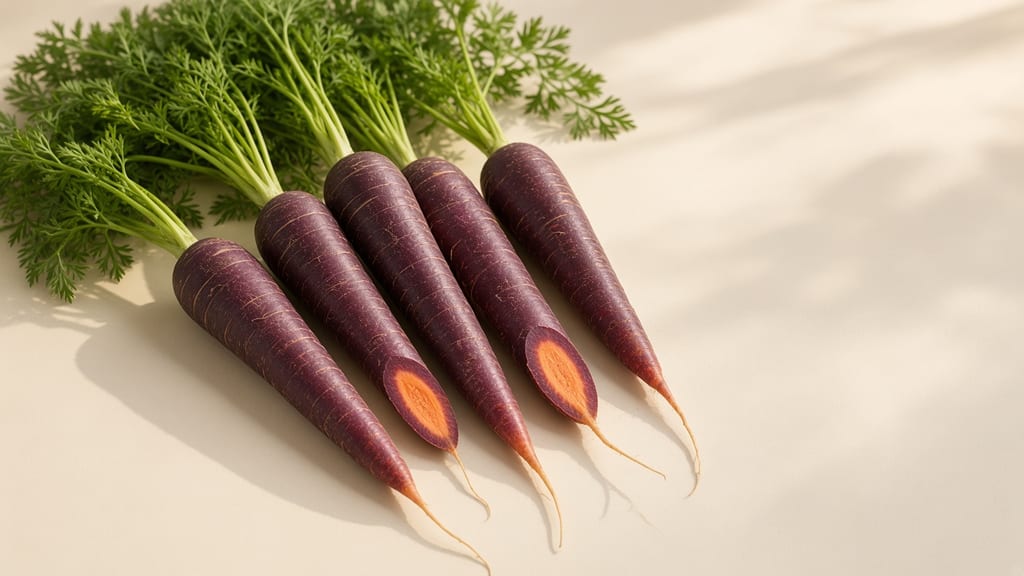
Black carrot is the anthocyanin-pigmented Eastern carrot (Daucus carota var. atrorubens), the purple root that preceded orange types and still colours kanji and şalgam.

At North Abydos in Egypt, a fixed early Dynastic brewery comprised parallel semi-subterranean installations with rows of ceramic mash vats; excavation reports revise their number, scale and estimated batch capacity.

Ají amarillo is the orange-yellow Peruvian chilli cultivar group of Capsicum baccatum, used to colour and season huancaína sauce and ají de gallina. Published heat estimates do not establish one range for the named cultivar.

Toasted almonds are whole sweet almond kernels dry-roasted until golden to brown. Heat replaces their marzipan note with a roasted, nutty one; they thicken and flavour romesco.

Kodiak salmon, halibut and cod cut as seg'aq and hung on an initaq rack to become tamuuq, with kac'amaasaq and kupcuunaq named as different results.

Aniseed is the dried ripe fruit of Pimpinella anisum, an aromatic Apiaceae spice commonly called a seed. It adds a sweet, warm aroma to breads such as Moroccan krachel and South African mosbolletjies, and is distinct from star anise.

A fixed Late Chalcolithic installation in Areni-1 cave combined a shallow clay pressing basin with a large jar set into the cave floor and storage vessels nearby.

Ripe avocado flesh is the soft, buttery, fat-rich pulp of Persea americana, eaten raw. It is low in acid, so it is a fresh ingredient that needs care in chilled dishes.

A portable dome and pan used over a hearth, with embers on the lid and heat from below. Regional peka and saç forms share this principle while differing in materials, pan shape and how the food is cooked.
No community contributions have been published for this entry yet.
Sign in to contribute. Published comments and photos are free to read.
Royal Botanic Gardens, KewIngredient context
Piper nigrum L., general informationPiper nigrum’s botanical identity, fruit forms, culinary uses and distinctions from other plants called pepper; the reference contains differing native-range accounts.
Cited in: A dried fruit with a long journey; Notes
PROSEA FoundationIngredient context
Piper nigrum L.The crop account by de Waard and Anunciado describes the climbing vine, regional cultivation, support systems, cultivars, aroma and pungency.
Cited in: A dried fruit with a long journey; A tropical vine, not a pepper tree; Growing regions and cultivated differences; Pungency and aroma are different sensations; Notes
Food and Agriculture Organization of the United NationsIngredient context
Ecocrop: Piper nigrumPepper is a perennial woody climber cultivated in hot, humid conditions, with distinct establishment, flowering and fruit-harvest stages.
Cited in: A tropical vine, not a pepper tree
University of Washington, Silk Road TextsIngredient context
The Voyage around the Erythraean SeaThe ancient voyage account describes southwest Indian ports, Cottonara pepper, traded cargoes and sailing winds in a first-century commercial setting.
Cited in: Pepper in the first-century maritime world
Attalus, H. Rackham translationIngredient context
Natural History, Book 12, sections 26–29The ancient text records pepper’s taste, trade, prices and adulteration in Roman consumption.
Cited in: Pliny's pungent luxury
Kerala Agricultural UniversityIngredient context
Black Pepper: Harvesting and processingBlack, white and green pepper products differ in harvest and processing; threshing, drying and blanching accompany production of pepper oil and oleoresin.
Cited in: Harvesting and making black pepper; White and green pepper show the importance of processing; Pungency and aroma are different sensations; Buying, keeping and using the spice
World Health Organization and Food and Agriculture OrganizationIngredient context
Microbiological hazards in spices and dried aromatic herbs: meeting reportMarketed spices can carry pathogens and have been implicated in foodborne outbreaks.
Cited in: Buying, keeping and using the spice
U.S. Food and Drug AdministrationIngredient context
Questions & Answers on Improving the Safety of SpicesSpice contamination control includes treatment before retail and prevention across the supply chain.
Cited in: Buying, keeping and using the spice
U.S. Food and Drug AdministrationIngredient context
Risk Profile: Pathogens and Filth in SpicesPathogens can persist in dry spices; treatment and prevention of recontamination matter throughout the supply chain, and moist foods provide a different environment for growth.
Cited in: Buying, keeping and using the spice
2 Guys & A CoolerIngredient context
How to Make Tuscan Finocchiona SalamiThe modern Finocchiona formulation combines pepper with fennel and garlic as seasonings.
Cited in: Pepper within a fermentation
2 Guys & A CoolerIngredient context
Maltese SausageThe modern Maltese sausage formulation combines black pepper with coriander and garlic.
Cited in: Pepper within a fermentation