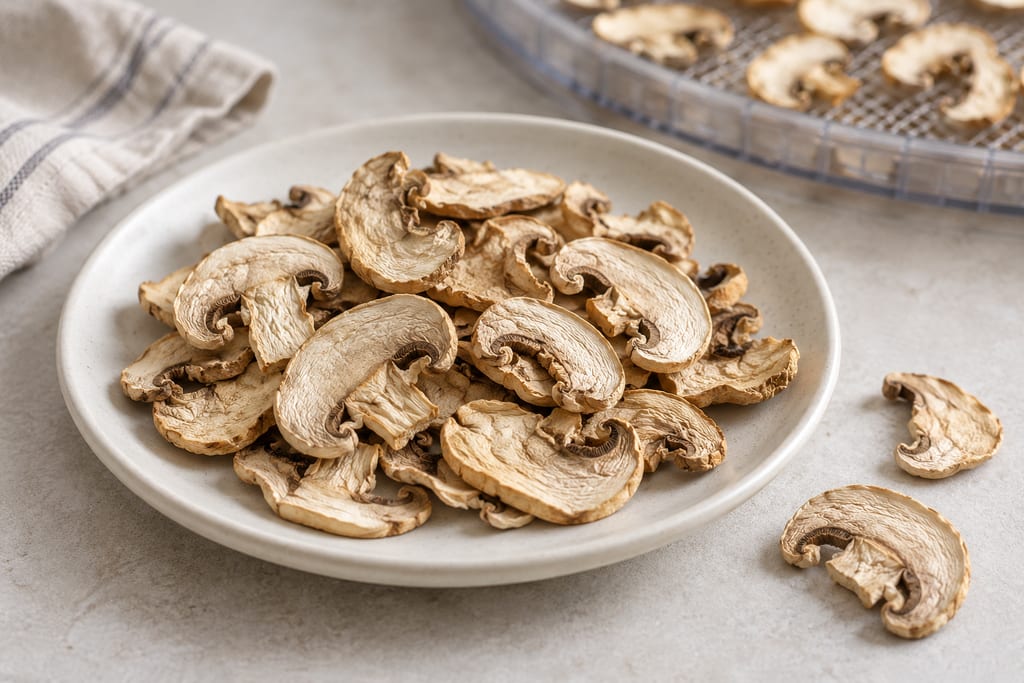
Hot-air dehydrated mushrooms
Hot-air dehydrated mushrooms are sliced mushrooms dried in a dehydrator or dryer with heated, moving air; a 2011 study dried button mushroom slices at 60 °C and compared them with microwave-vacuum and freeze-drying.
 FermenteaWhere food goes to change
Modern method
A regional Vesper preparation pairs bread and protected Schwarzwälder Schinken with apple-horseradish butter. The accepted source gives butter, apple and horseradish amounts, but not the bread or ham quantities.
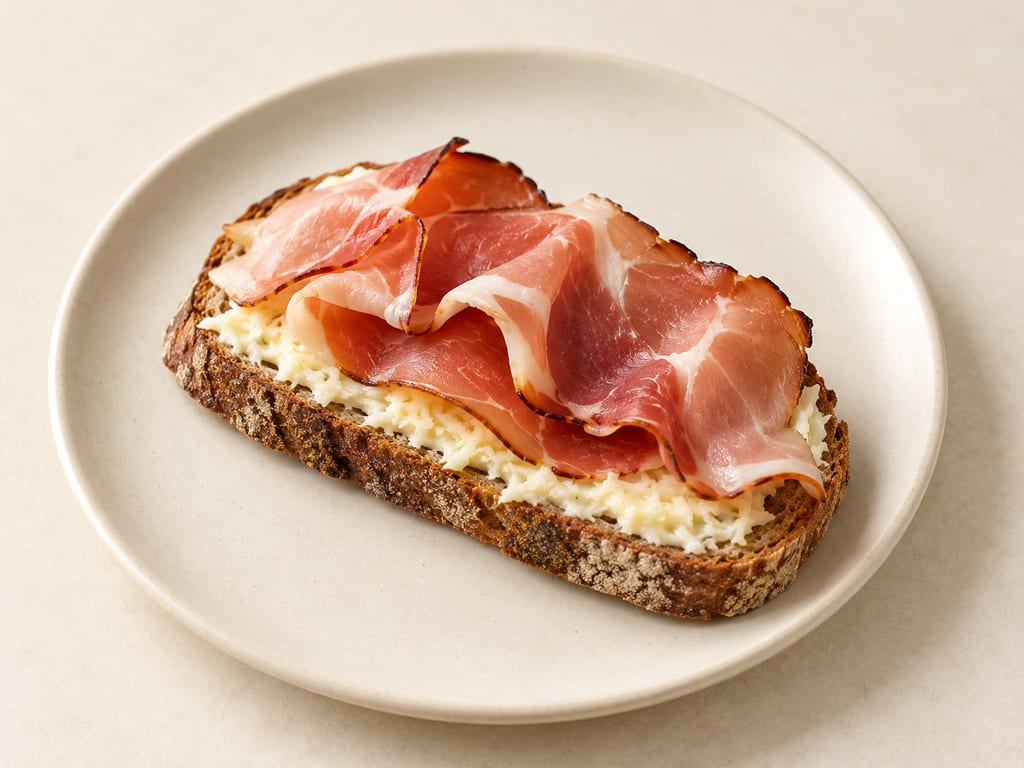
Schwarzwälder Schinken Vesper is a traditional-style Black Forest snack or light meal built around sliced Black Forest ham, bread and a flavoured butter.
The German word Vesper refers to a snack or simple meal, particularly in southern German food culture.
The featured product, Schwarzwälder Schinken, is Black Forest ham, a geographically protected German cured-meat specialty.
The recorded recipe combines ready-to-eat sliced ham and bread with butter flavoured using grated apple and horseradish.
It is published by Schmeck den Süden, a regional food initiative in Baden-Württemberg.
The preparation requires mixing and chilling the butter before spreading it onto bread and topping it with ham.
It contains no cooking, smoking or curing stage.
Black Forest ham belongs to a wider European tradition of preserving pork through salting, smoking and drying.
Before refrigeration, farmers and butchers needed methods to retain usable meat beyond immediate slaughter.
Salt reduces water availability to microorganisms and changes the structure of muscle proteins.
Smoking introduces flavour compounds and contributes additional preservation effects.
Drying removes moisture and further changes the product's stability and texture.
The Black Forest developed a distinctive smoked-ham tradition influenced by local climate, wood availability, livestock production and regional food customs.
Over time, Schwarzwälder Schinken became a commercially important regional product.
The protected name was registered at European Union level in 1997.
Its geographical indication protects a defined product and manufacturing context.
The recipe therefore uses a product whose identity is more tightly defined than the generic expression “smoked ham”.
The Vesper tradition reflects the regional habit of serving bread, cured meat, cheese and other simple accompaniments as a cold meal.
However, the exact apple-horseradish butter formula cannot be dated to a particular historical century.
It is a contemporary serving preparation using a traditionally associated protected product.
Schwarzwälder Schinken is a cured and smoked pork ham made from the hind leg of a pig, Sus scrofa domesticus.
The protected specification describes a boneless ham produced using dry curing rather than injecting brine directly into the muscle.
The meat is seasoned and smoked, traditionally with fir wood associated with the Black Forest.
The product undergoes maturation under controlled conditions.
The outer surface is characteristically dark, while the cut meat is red and the fat remains visually distinct.
Its aroma is smoky and savoury, with flavour also influenced by curing spices.
The protected product specification covers manufacture, not the preparation of this particular Vesper.
The recipe begins with already finished, thinly sliced ham.
Ingredient — Quantity
Butter — 250 g
Small apple — 1
Grated horseradish — 2 tbsp
Salt — To taste
Black pepper — To taste
Bread, e.g. wood-fired bread — Unspecified
Schwarzwälder Schinken g.g.A., sliced — Unspecified
The source gives no number of servings.
It also does not specify bread weight, ham weight or number of slices.
Those omissions should remain rather than being filled with assumed sandwich quantities.
Schwarzwälder Schinken supplies the defining meat flavour and smoky aroma.
Its cured and dried structure gives it a firmer texture than cooked fresh ham.
Bread forms the carbohydrate base and makes the preparation a convenient snack.
The source suggests wood-fired bread, Holzofenbrot, but does not require a particular flour or loaf weight.
Butter forms the body of the spread. Its high fat content carries flavour and creates a smooth layer on bread.
Apple, Malus domestica, contributes mild sweetness, acidity and aromatic compounds.
The recipe specifies a small apple but does not identify the variety.
Horseradish, Armoracia rusticana, provides sharp, pungent flavour.
Salt and pepper adjust seasoning.
Because Black Forest ham is already salted, the butter seasoning should be considered in the context of the finished sandwich.
Horseradish belongs to the Brassicaceae family.
When its tissues are damaged through grating, enzymes interact with glucosinolates and generate pungent isothiocyanate compounds.
These volatile compounds are responsible for much of the characteristic sharpness perceived in the nose.
Freshly grated horseradish can have a more intense aroma than a preparation that has stood for an extended period.
The original recipe calls for grated horseradish but does not specify whether it is freshly grated or a commercially prepared product.
The perceived strength may therefore vary.
Apple provides a contrasting sweetness and acidity, moderating the pungency.
A mixing bowl and spoon or spatula are needed for the butter.
A grater is required for the apple and potentially for fresh horseradish.
A refrigerator is required for the resting stage.
A knife and breadboard are needed for serving.
The preparation uses no cooking heat.
Stage 1 — Soften the butter
Bring 250 g butter to a consistency suitable for mixing.
The source specifies room-temperature butter but does not define a numerical temperature.
Stage 2 — Cream the butter
Stir the butter until creamy and smooth.
No exact beating time is specified.
Stage 3 — Add horseradish
Mix in 2 tablespoons grated horseradish.
Distribute it evenly through the butter.
Stage 4 — Prepare the apple
Wash one small apple.
Grate it into a bowl.
The source does not specify whether it should be peeled.
Stage 5 — Drain the apple
Pour off the liquid released by the grated apple.
This stage helps prevent the butter from becoming excessively watery.
Stage 6 — Combine
Mix the grated apple into the horseradish butter.
Stir until evenly distributed.
Stage 7 — Season
Add salt and black pepper according to taste.
No exact amount is supplied.
Stage 8 — Refrigerate
Place the butter mixture in the refrigerator for at least one hour.
This resting period allows the flavours to develop and the butter to firm.
Stage 9 — Temper before serving
Remove the flavoured butter from the refrigerator approximately twenty minutes before serving.
This is a texture and flavour-serving instruction.
It does not establish a general safe holding period for perishable foods.
Stage 10 — Assemble the Vesper
Slice the bread.
Spread the apple-horseradish butter over the slices.
Arrange sliced Schwarzwälder Schinken on top.
Serve as a cold bread-and-ham preparation.
Butter is a water-in-oil emulsion containing substantial milk fat.
At refrigerator temperatures, a greater proportion of the fat is solid, so the butter becomes firmer.
As it warms, it softens and spreads more readily.
The apple introduces water and plant-cell material into the butter.
Draining the grated apple reduces the amount of free liquid, making it easier to incorporate the fruit without producing a visibly wet spread.
The fruit may still release moisture during refrigerated holding.
The horseradish contributes volatile pungent compounds, many of which are fat-compatible and aromatic.
The flavour changes over time as compounds redistribute or dissipate.
The one-hour refrigeration stage therefore has both textural and sensory consequences.
It is not fermentation.
The finished ham's characteristics depend on several interacting preservation processes.
Dry curing introduces salt into the meat.
Salt changes water activity and affects proteins, microbial growth and texture.
Smoke deposits compounds on and near the product's surface.
Maturation permits further moisture loss and development of characteristic cured-meat flavour.
This is a controlled process rather than a single event.
The protected product specification defines the conditions and characteristics required for commercial production.
The home Vesper recipe does not attempt to reproduce them.
The finished ham is simply sliced and eaten as intended by the producer.
Vesper meals vary widely in Baden-Württemberg.
Some include cheese, radishes, pickles, sausage, other cured meats or different breads.
The apple-horseradish butter is a particular accompaniment rather than an essential component of every Black Forest Vesper.
Different apples vary in acidity and sweetness.
Fresh horseradish and prepared grated horseradish also differ in intensity.
Some commercial Schwarzwälder Schinken products have differing spice profiles within the protected specification.
Those differences can affect the balance with the butter.
The basic identity of the recorded recipe remains sliced protected ham on bread with the documented flavoured butter.
The Vesper is generally served cold.
It works as a light meal, snack or part of a regional cold-food platter.
Bread provides the main structural component.
The ham supplies salt and smoke, while the butter contributes a combination of richness, sweetness and pungency.
The original source suggests a glass of Black Forest fruit spirit, such as Schwarzwälder Kirschwasser or Zwetschgenwasser, as an accompaniment.
That is a serving suggestion, not an ingredient or requirement.
The amount of ham per person is not specified, so the recipe cannot be assigned a reliable number of portions.
The butter should be creamy enough to spread evenly after tempering.
Large pockets of excess apple moisture can create an undesirable wet texture.
Too much salt can make the spread overpower the already cured ham.
The ham should retain the sensory appearance and aroma expected of a properly stored product.
Unexpected slime, mould inconsistent with the product, damaged packaging or an expired use-by date require caution and may justify rejection.
The apple should be fresh and free from rot.
The horseradish should contribute sharpness without overpowering the other ingredients.
The source gives no objective texture measurements or sensory evaluation scores.
This is a ready-to-eat meat and chilled dairy spread preparation.
The protected ham has undergone controlled commercial curing and smoking, but the home recipe does not validate its production.
Follow the product's packaging and storage instructions.
Refrigeration and hygienic handling are particularly important because contamination can occur after slicing.
Food Standards Scotland identifies chilled ready-to-eat meats as products requiring appropriate temperature control and protection from Listeria contamination.
The recipe's twenty-minute tempering instruction is a culinary detail, not a validated holding rule for every environment.
There is no tested storage duration for the assembled sandwiches or the apple-horseradish butter in this formulation.
This is a contemporary recipe-page serving preparation; it does not establish an earliest attestation of the Vesper or Black Forest ham.
Scaling: source batch only
FSS includes cured deli meats among chilled ready-to-eat foods. The source uses Schwarzwälder Schinken without specifying its package or storage category; follow product label directions.
Hazard sourceThe recipe mixes butter and serves it with a chilled ready-to-eat meat; FSS advice calls for chilled ready-to-eat foods to be kept at 5°C or below and used by package dates.
Hazard sourceFor packaged ready-to-eat ham and chilled spread ingredients, follow package storage/use-by instructions and current local guidance. FSS says chilled ready-to-eat food should be kept at 5°C or below and opened foods used within two days unless the label says otherwise; this is consumer handling guidance, not a product-specific shelf life.
Control sourceThe accepted recipe source gives no yield, bread quantity, ham quantity or storage duration for the assembled Vesper. FSS guidance is general and does not validate the protected ham or the recipe.
This records the source-specific product or recipe association, not an origin or wider household-process claim.
Hot-air dehydrated mushrooms are sliced mushrooms dried in a dehydrator or dryer with heated, moving air; a 2011 study dried button mushroom slices at 60 °C and compared them with microwave-vacuum and freeze-drying.
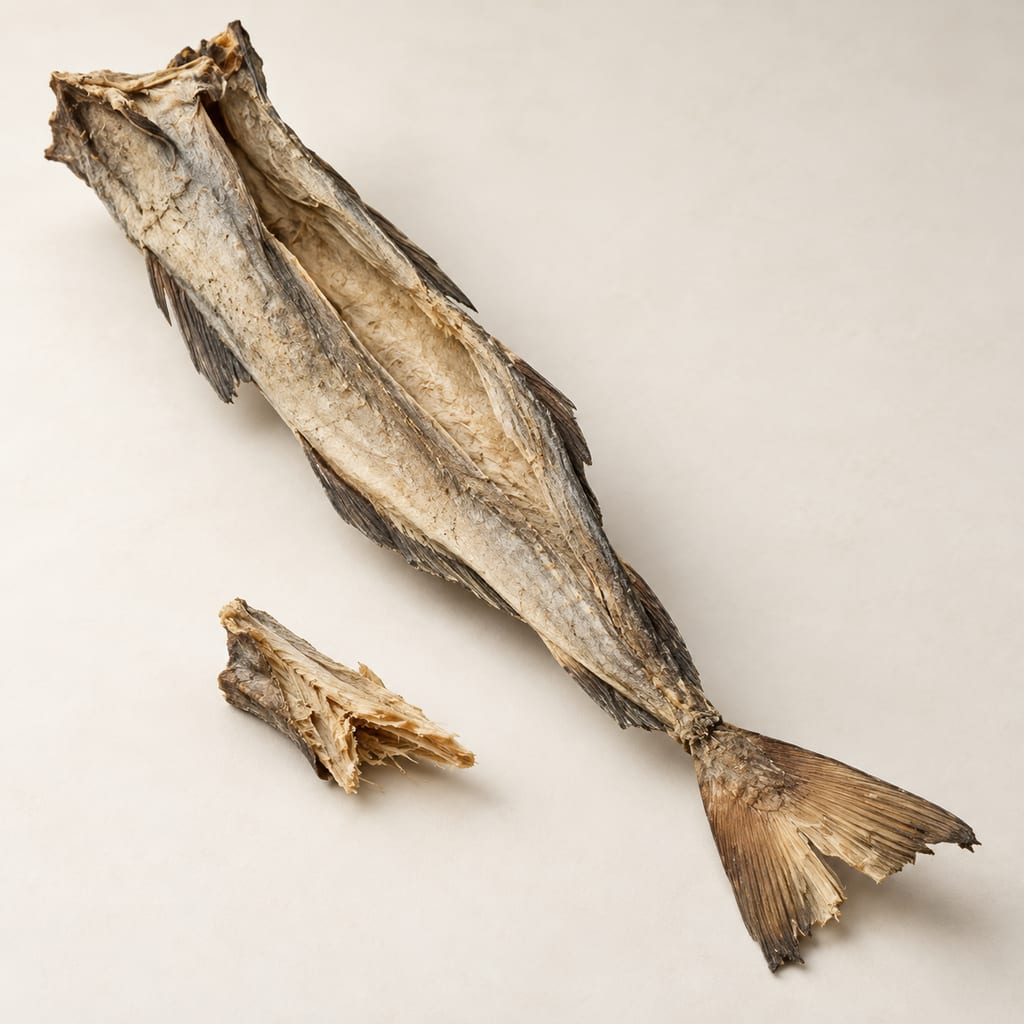
Cod hung on open racks in cold northern air until most of its water has gone, leaving a hard, light, unsalted fish that keeps and travels and must be soaked for days before cooking.
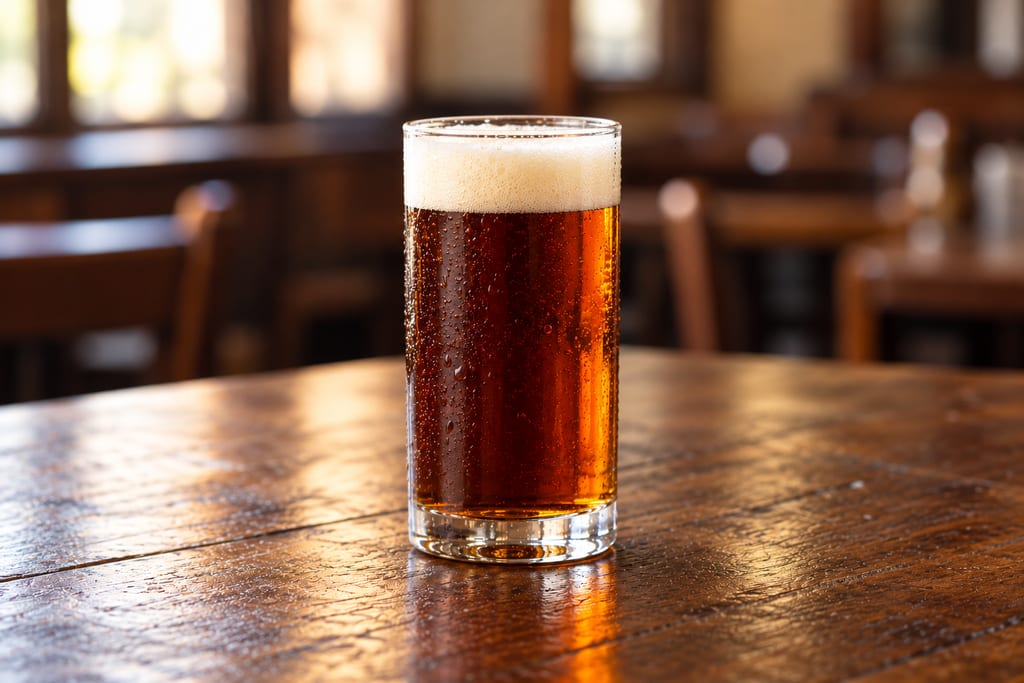
A source-specific modern extract adaptation of Düsseldorf Altbier, with specialty malts, two hop additions and an ale yeast. It is distinct from a brewery's commercial Altbier process and from Kölsch.
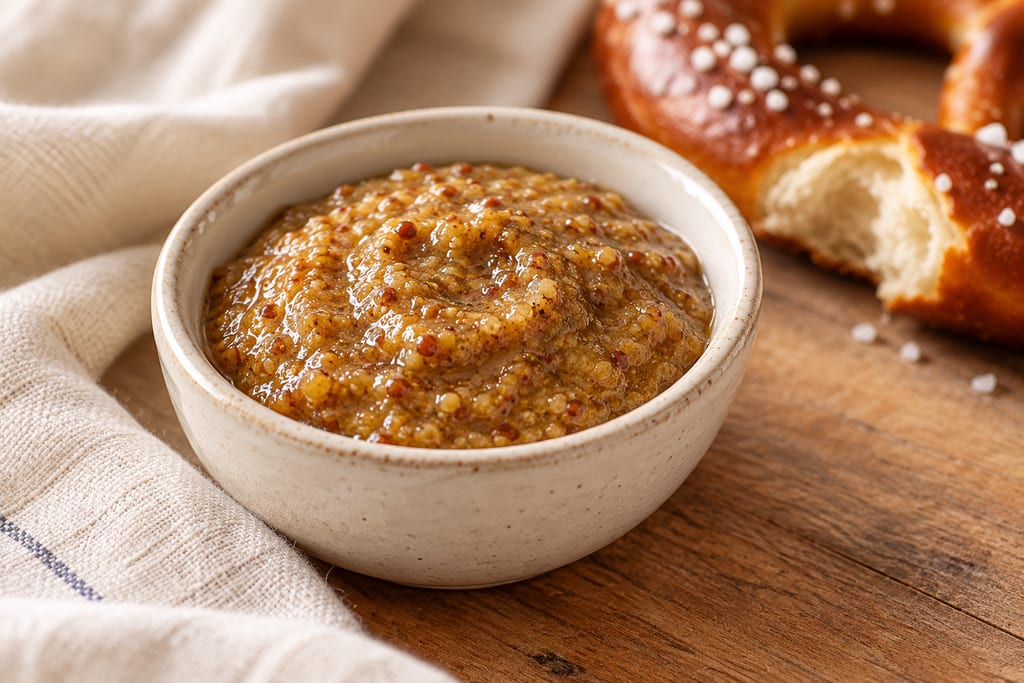
A coarse, sweet Bavarian-style mustard of yellow and brown seed in a cooked brown-sugar and vinegar base, made to eat with Weisswurst; an original refrigerated formula.
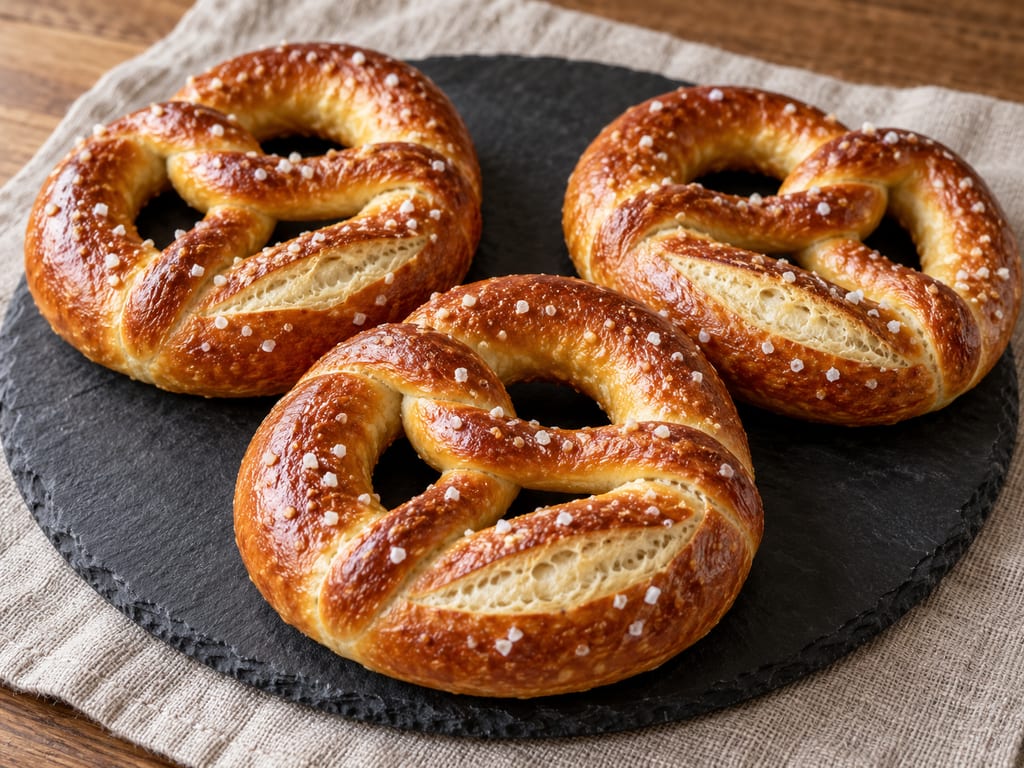
This German-style knot pretzel uses a firm yeast dough, a chilled shape, a one-minute baking-soda bath and a deep bake. The method follows Jeffrey Hamelman's home adaptation for King Arthur Baking.

A German-style Brezel is a yeast-raised wheat dough shaped into a loop and dipped in an alkaline bath before baking. This home version uses baking soda; the original formula uses food-grade lye.
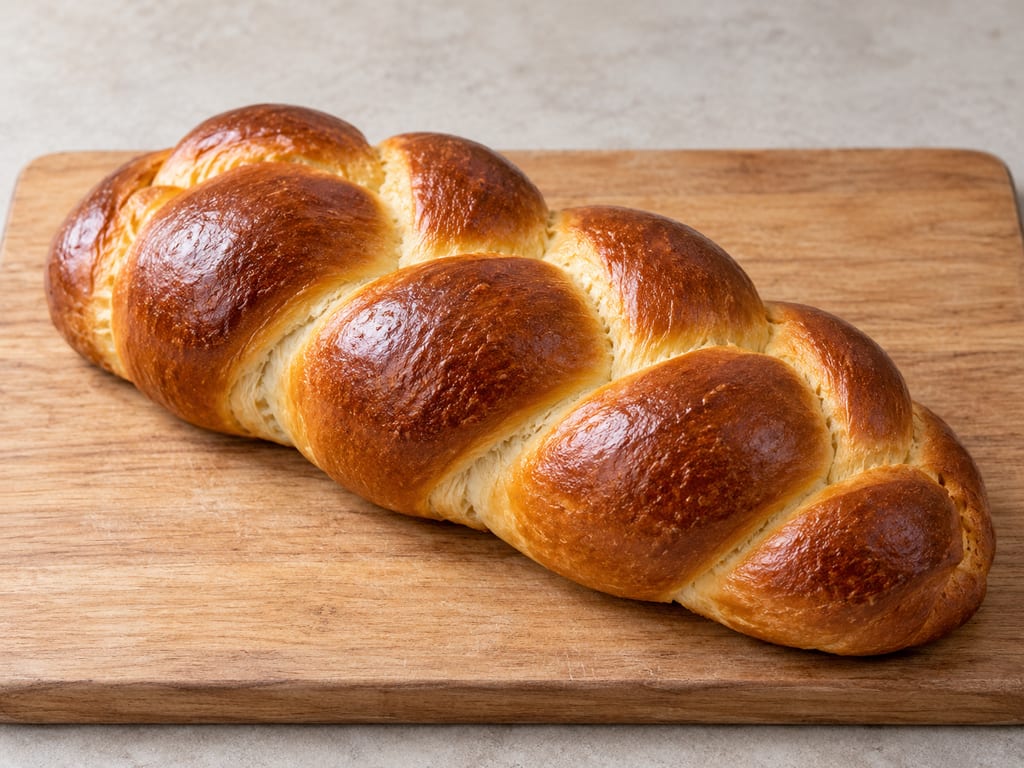
A three-strand yeast-raised challah with flour, salt, yeast, water, neutral oil, honey and egg, based on a Jewish Museum Vienna home recipe.
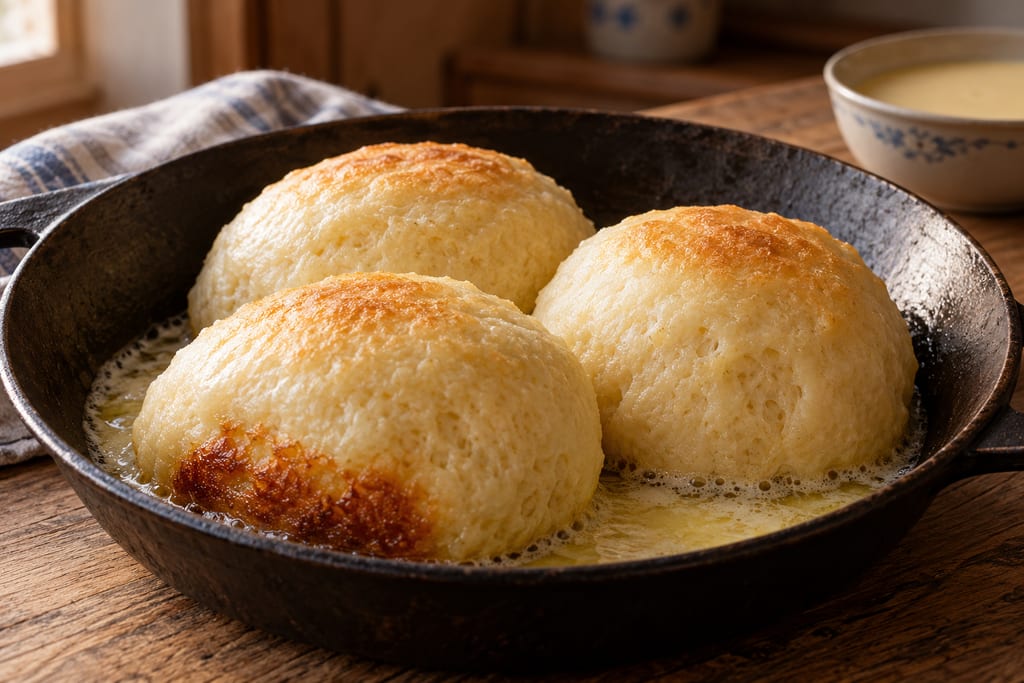
Allgäu Dampfnudeln are enriched wheat buns proofed in a covered casserole and cooked in milk and butter until the liquid nearly cooks away.
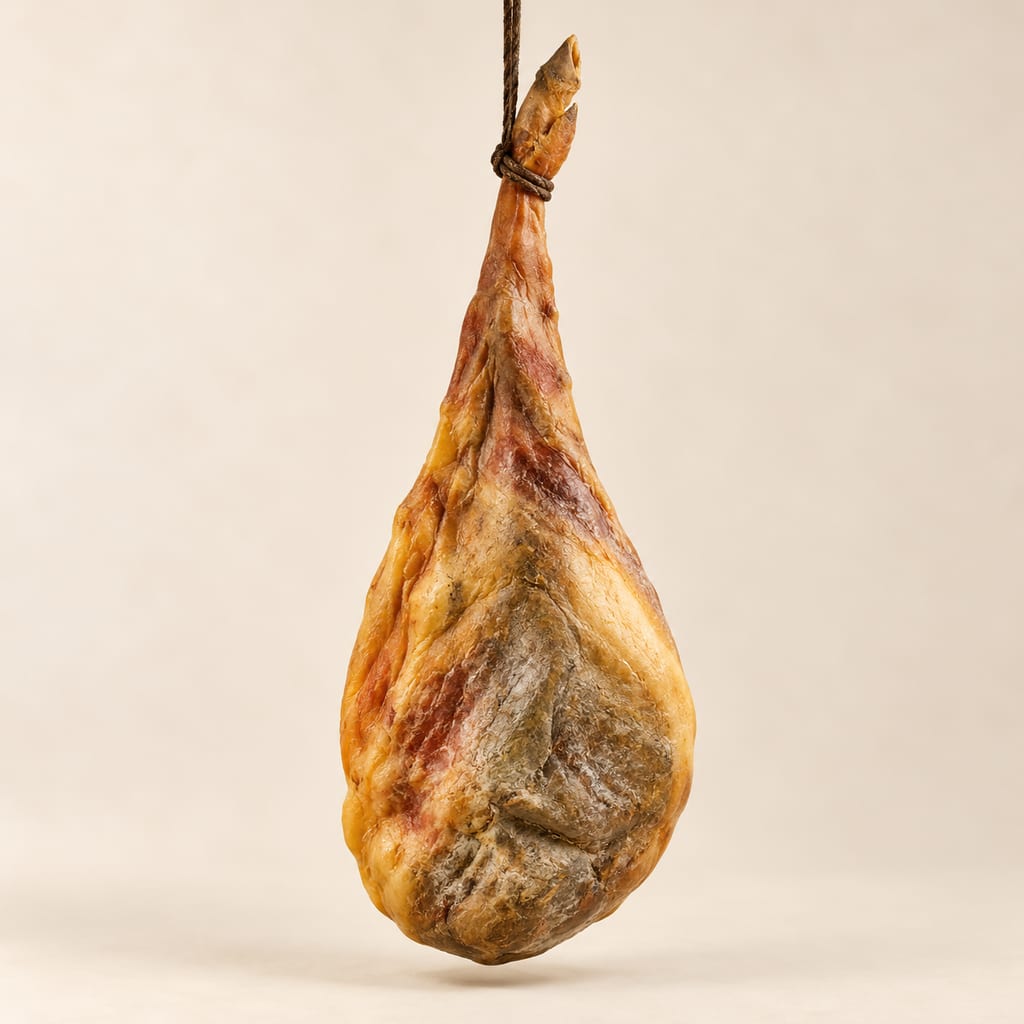
Cato the Elder records a second-century BCE sequence for salting, air-drying, and smoking ham. This historical account is not a validated modern curing protocol.
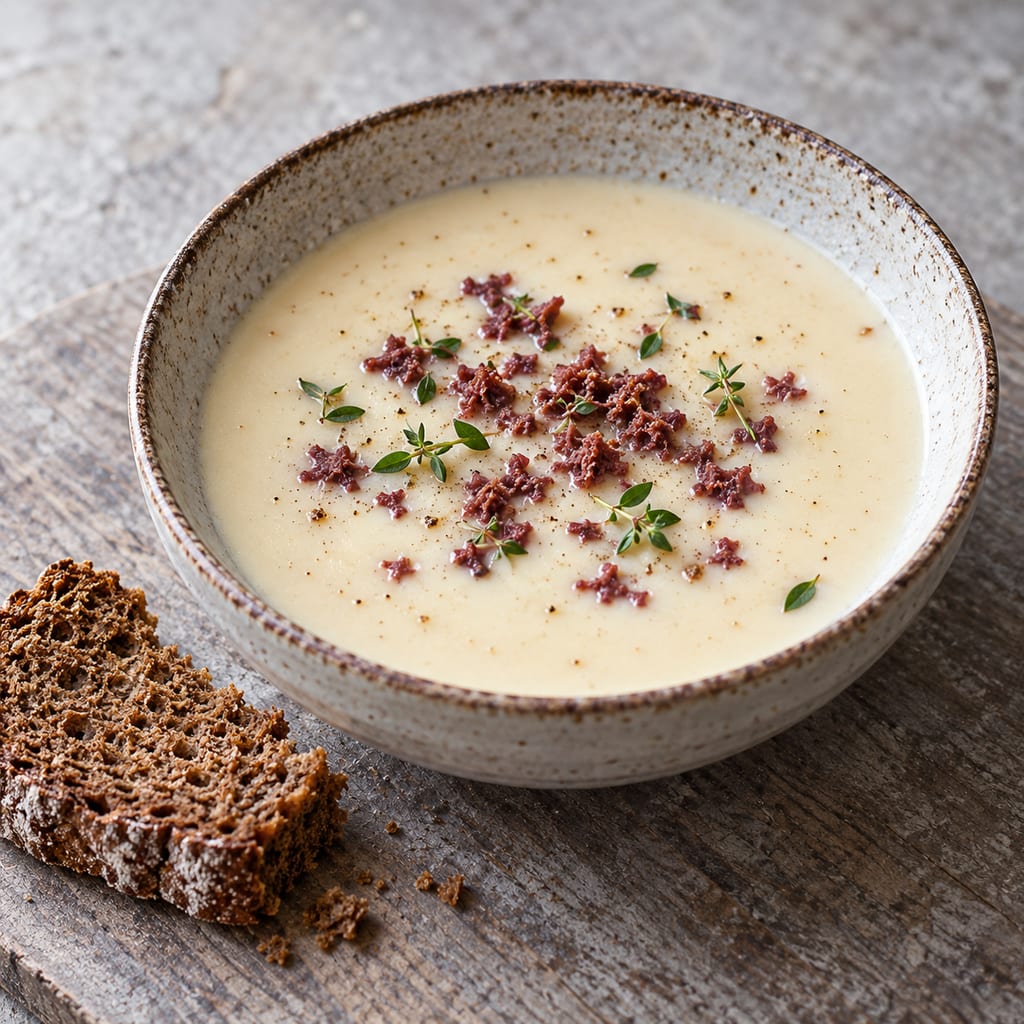
Kylmäsavuporokeitto is a creamy cold-smoked reindeer soup with onion, stock and cheese, served with bread.
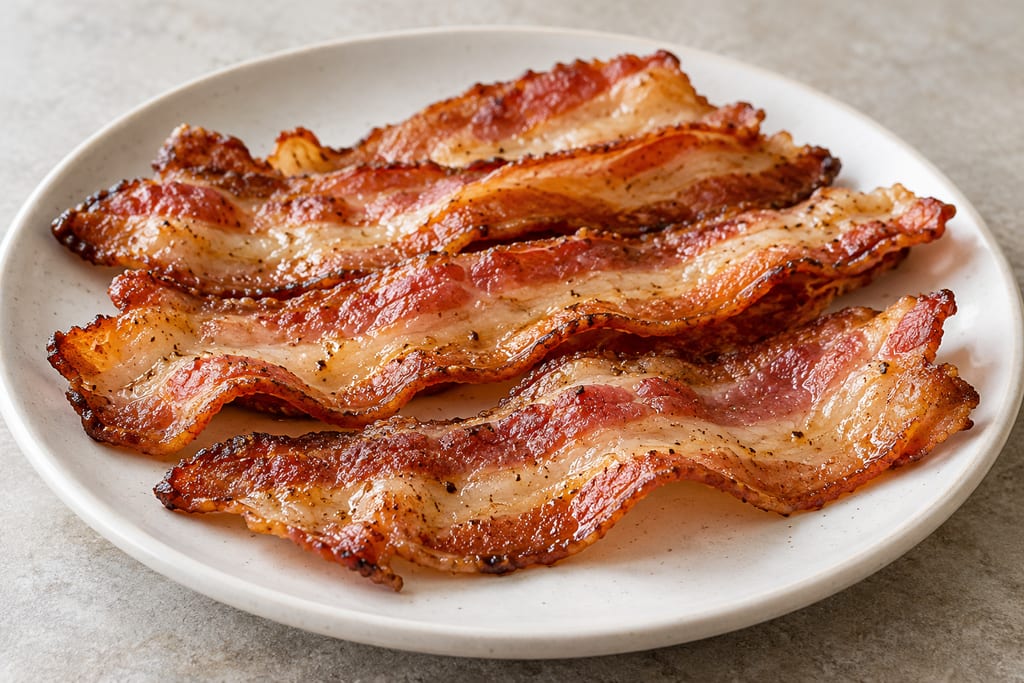
Pork belly receives a measured salt-and-sugar cure with coffee and spices, then is refrigerated before cooking or hot smoking.

Finnish pea soup simmers dried peas with palvikinkku or a vegetable alternative, then is served with mustard and chopped onion.
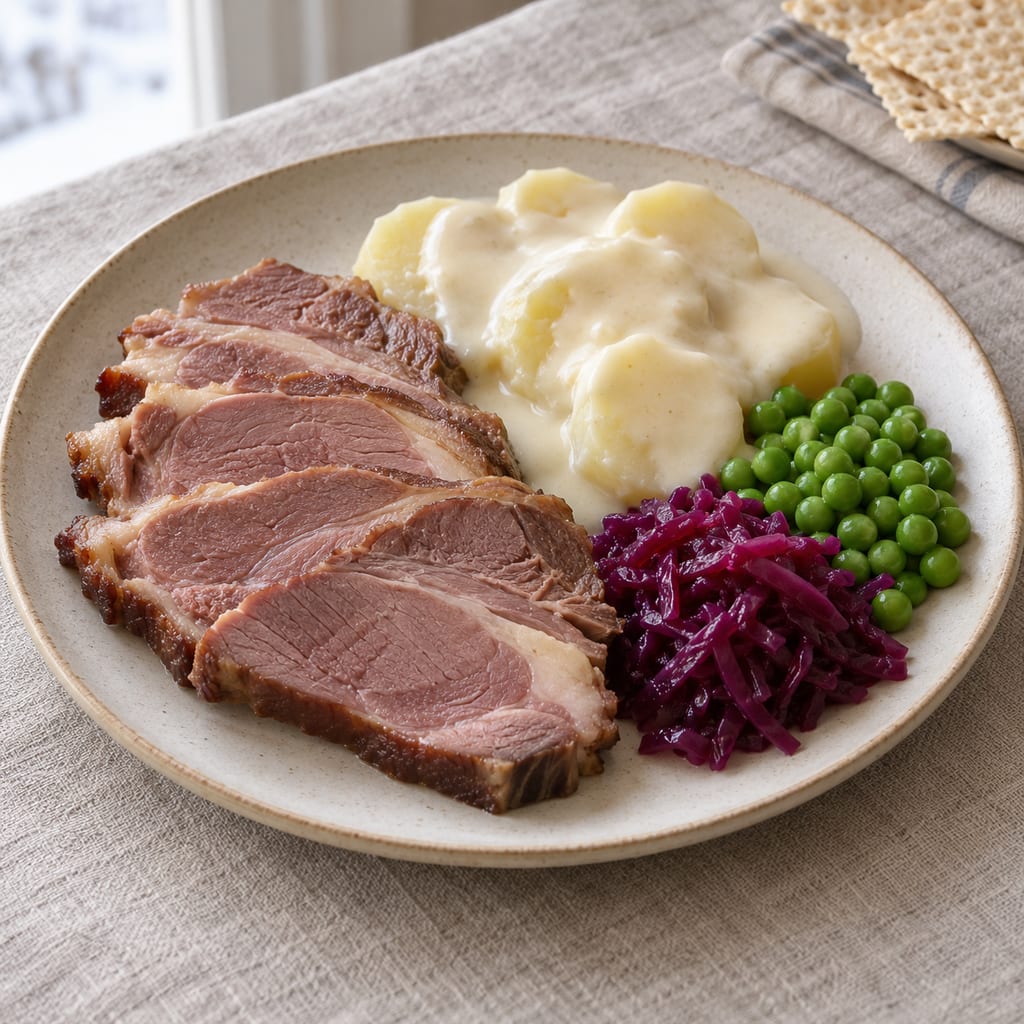
A six-person Icelandic Lamb serving recipe for deboned hangikjöt with potato bechamel, pickled cabbage, peas and laufabrauð. It cooks the product; it does not smoke or cure it.
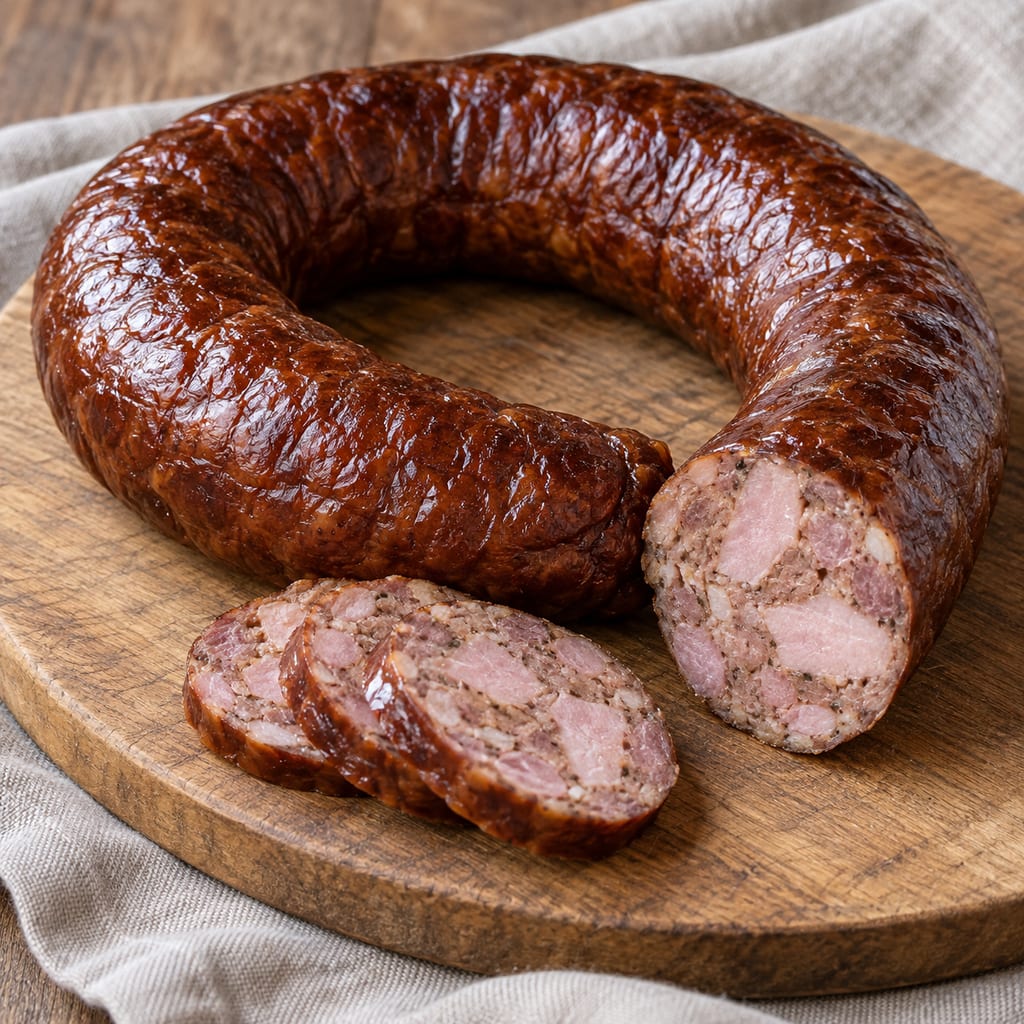
A protected pork sausage associated with Liszki and Czernichów; its application describes commercial curing and smoking, not a home batch.
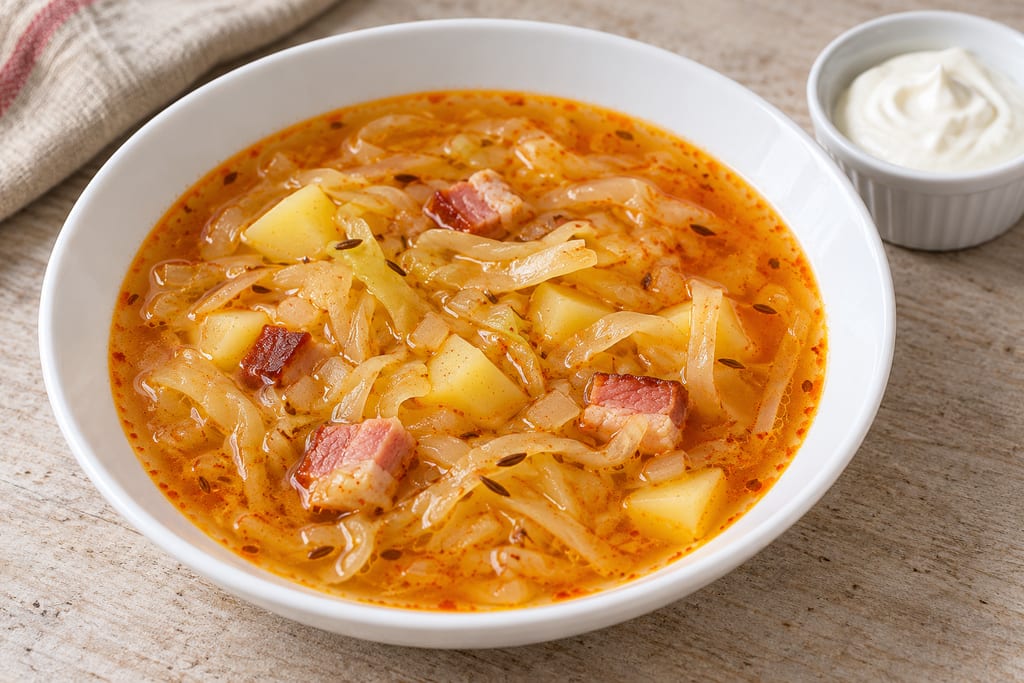
A two-portion cabbage soup with onion, potato and finished Geselchtes, served with garlic sour cream.
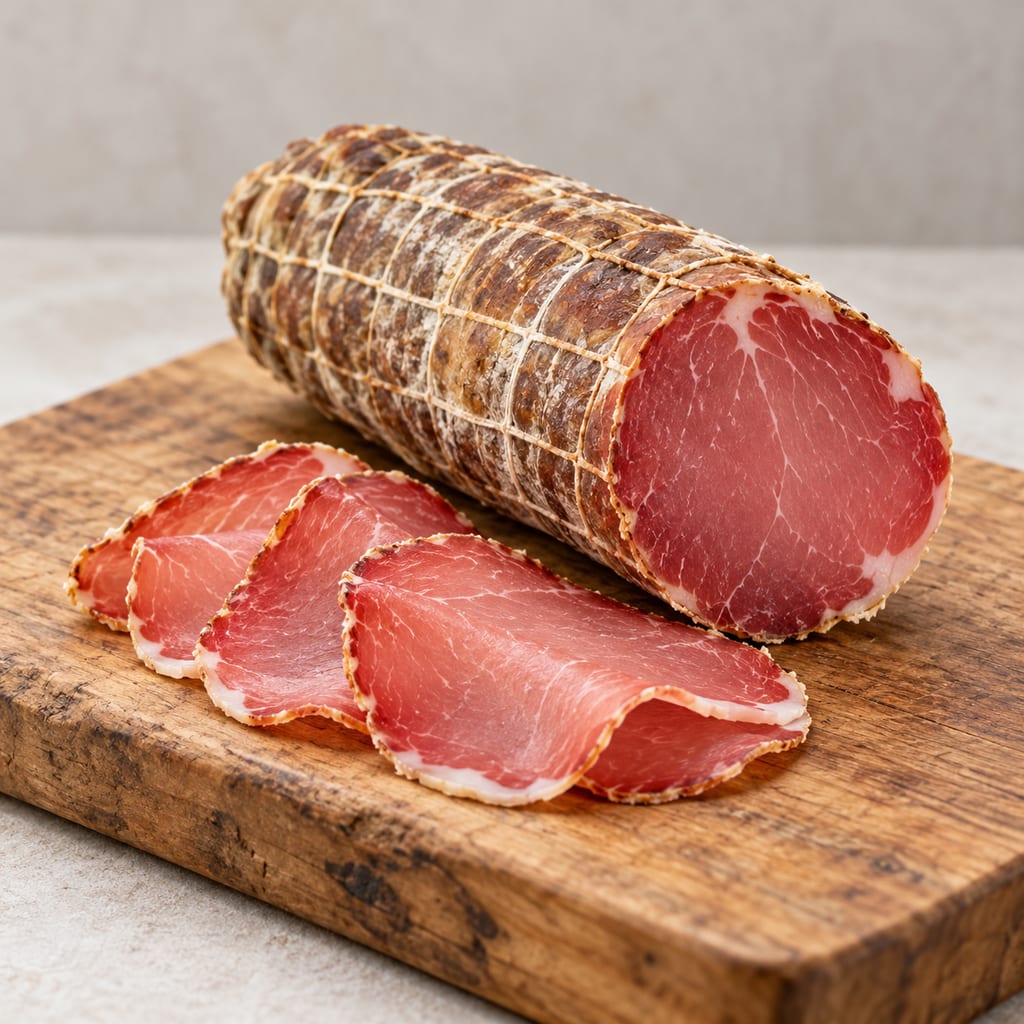
Documentary account of Italian regional cured-loin traditions, including Tuscan and Marche variations; no home-cure instructions are provided because the published professional methods lack validated safety controls.
No community contributions have been published for this entry yet.
Sign in to contribute. Published comments and photos are free to read.
Schmeck den Süden Baden-WürttembergSource batch · Recipe · Protected product context
Schinken – Geschützte OriginaleThe page identifies Schwarzwälder Schinken as the protected product and gives a Vesper with bread, ham and apple-horseradish butter: 250 g butter, one small apple, 2 tbsp grated horseradish, salt and pepper; mix, chill at least one hour, temper about 20 minutes, spread and top with ham. Bread and ham quantities and yield are unstated.
Cited in: What it is; Ingredients; Ingredient functions; The chemistry of horseradish; Equipment; Method; The food science of the spread; Regional variations; Serving and pairings; Recognising quality and defects
Food Standards ScotlandConsumer safety guidance
Listeria monocytogenesThe page lists cured deli meats and prepared salads among chilled ready-to-eat foods; says chilled ready-to-eat foods should be held at 5°C or below, used by their use-by date, stored per label, opened foods used within two days unless the label differs, ready-to-eat food eaten within four hours out of refrigeration, and raw/RTE foods kept separate. For higher-risk groups, the smoked/cured fish advice is specific to cold-smoked/cured fish; it separately lists tinned/canned smoked fish as a safer alternative.
Cited in: Food safety
EUR-LexProduct identity context
Schwarzwälder Schinken PGI product specificationCited in: Historical context; Protected product identity; Curing and smoking science; Recognising quality and defects
UK GovernmentProduct identity context
Schwarzwälder Schinken protected nameRegistration information.
Cited in: Historical context; Protected product identity
EUIPOProduct identity context
Geographical-indication food exhibitionAdditional protected-product context.
Cited in: Protected product identity; Regional variations