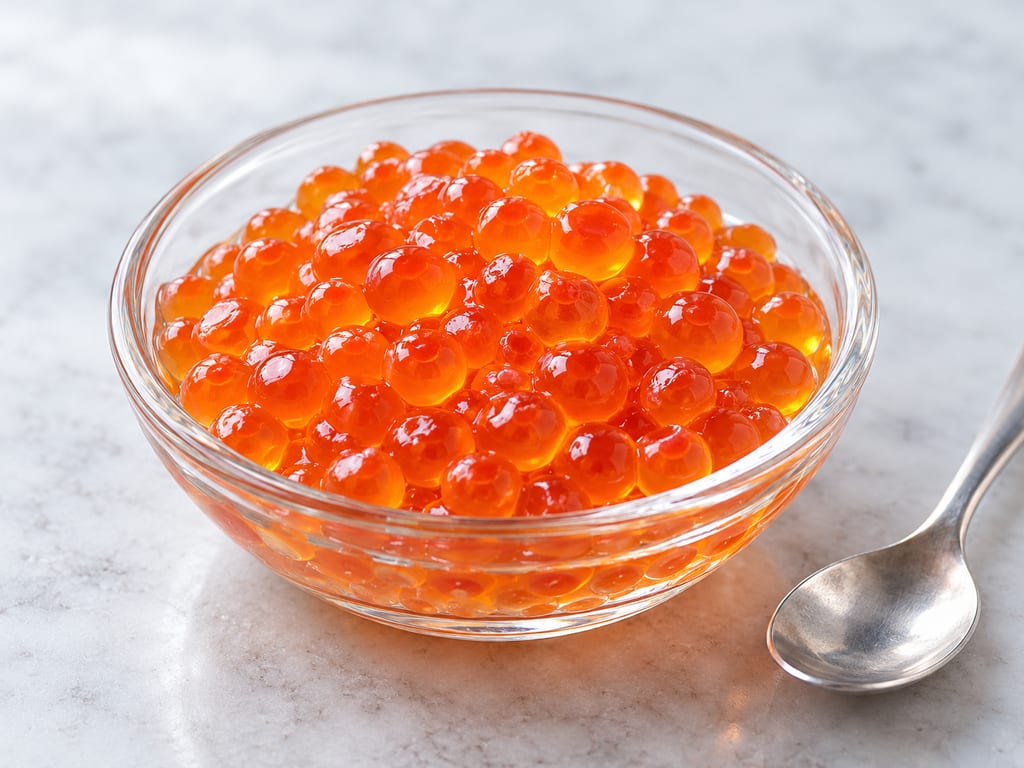
Alaska salmon roe caviar
Salmon roe is separated from skeins and treated in two salt-water stages using a University of Alaska Extension formula.
 FermenteaWhere food goes to change
Cusic-style bacon
Pork belly receives a measured salt-and-sugar cure with coffee and spices, then is refrigerated before cooking or hot smoking.
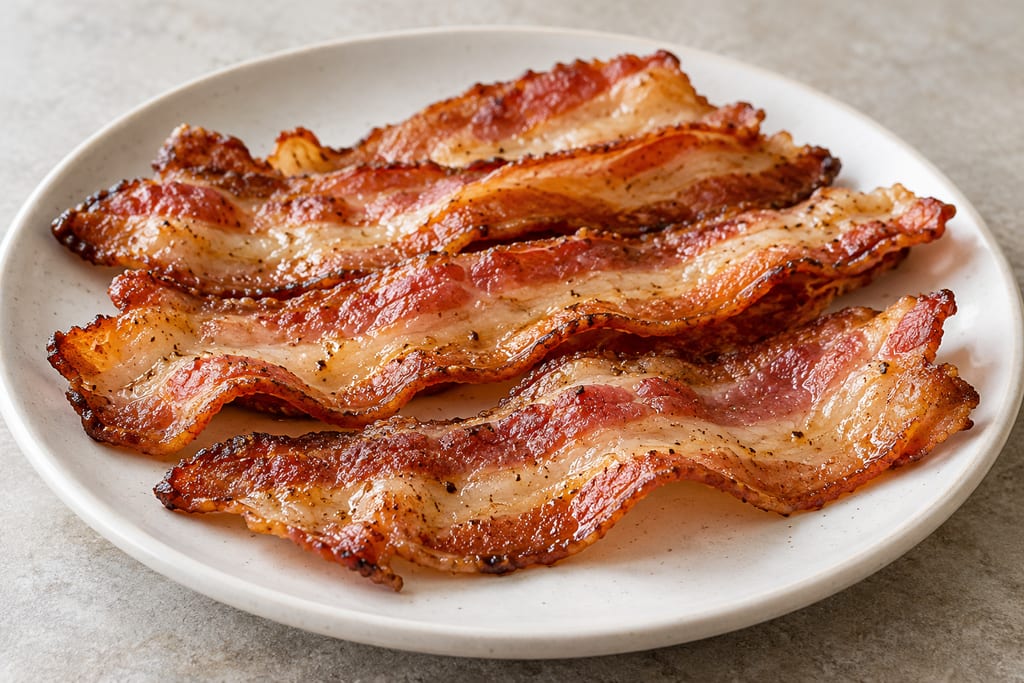
Cusic-style bacon is a dry-cured pork belly: a slab of belly rubbed with a salt, sugar and nitrite cure, rested in the refrigerator for several days and then cooked or hot-smoked. The name is the one the source gives for the formula, and the source's own recipe is coffee-and-spice cured, so the finished slab carries a dark crust of ground coffee and paprika over the meat.
The defining feature is the cure itself. Salt draws water out of the belly and carries the curing agents into the meat, sugar softens the salt's edge and feeds the surface, and the coffee and paprika are flavour rather than preservation. Where a cure of this kind is used, the nitrite is what gives cured pork its characteristic pink colour and its cured flavour, and it is also the reason the premix in this formula must not be swapped for another salt.
Curing is a physical and chemical process, not a fermentation. Salt diffuses into the muscle over several days; the free water it pulls out forms a brine that the sugar and spices sit in, and the meat firms as its proteins are changed by the salt. The home formula calls for a refrigerated cure of five to seven days, turning the belly daily so the rub reaches every surface and the brine redistributes. The source's time window of 120 to 168 hours is the period it asks for, and nothing in it is tied to a fermentation stage.
Nitrite is the active curing agent in the source's Cure #1 premix. Cure #1 is a sodium nitrite preparation mixed with salt and is not interchangeable with plain salt or with another premix. Using the wrong mix changes both the safety margin and the colour, so the measured teaspoon named in the formula is part of the method rather than a seasoning choice.
After the cure, the belly is rinsed to remove the surface rub and then cooked or hot-smoked until the thickest part reaches 160 °F (71 °C). The formula treats this endpoint as the safety step. Cold smoking is not a cooking step and does not reach that temperature, so a belly that is only cold-smoked still needs the cooking endpoint before it is eaten.
The source does not establish shelf stability for this bacon. Its instruction is to keep it refrigerated during and after the cure, and to cook or hot-smoke it before eating. Ready-to-eat cured meat is governed by validated process hurdles in USDA FSIS guidance, and this home formula does not claim to meet them, so the page carries that limit as a warning rather than a promise.
Modern home-bacon formula in Oregon State Extension; no older origin inferred.
Scaling: source batch only
Cure #1 is a specified premix; another mix or plain salt is not interchangeable.
Hazard sourceSource specifies a 160°F (71°C) finish.
Hazard sourceFollow exact Cure #1 formula, refrigerate during cure and cook to stated endpoint.
Control sourceReady-to-eat cured meat requires validated process hurdles.
Control sourceCure #1 is not ordinary salt and cannot be exchanged for another premix.
Source does not establish shelf stability; refrigerate and cook or hot-smoke to 160°F (71°C).
Cold smoking is not a cooking step.
The source documents a named home formula, not its historical birthplace.
Salmon roe is separated from skeins and treated in two salt-water stages using a University of Alaska Extension formula.

Kodiak salmon, halibut and cod cut as seg'aq and hung on an initaq rack to become tamuuq, with kac'amaasaq and kupcuunaq named as different results.
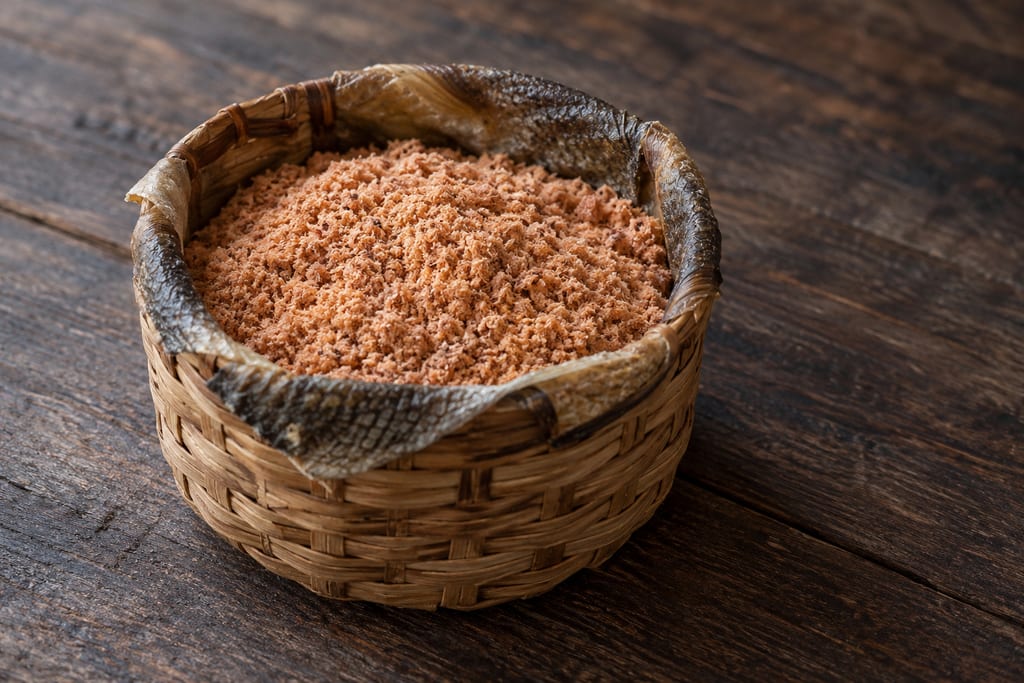
Dried salmon broken down, pounded to a meal and pressed into grass baskets lined with fish skin: the compact trade food of Celilo Falls and The Dalles.
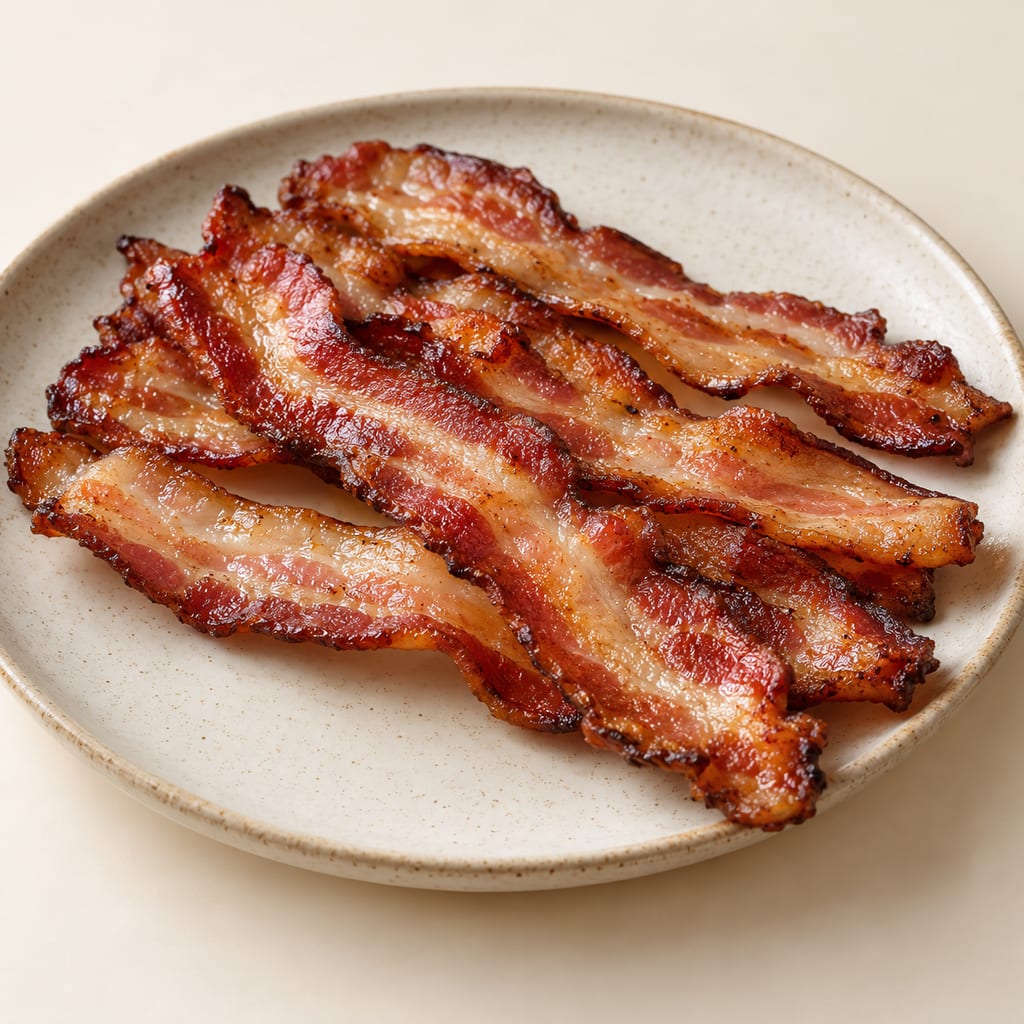
A refrigerated pork-belly brine combines beer and maple syrup with salt, garlic powder and measured Cure #1.
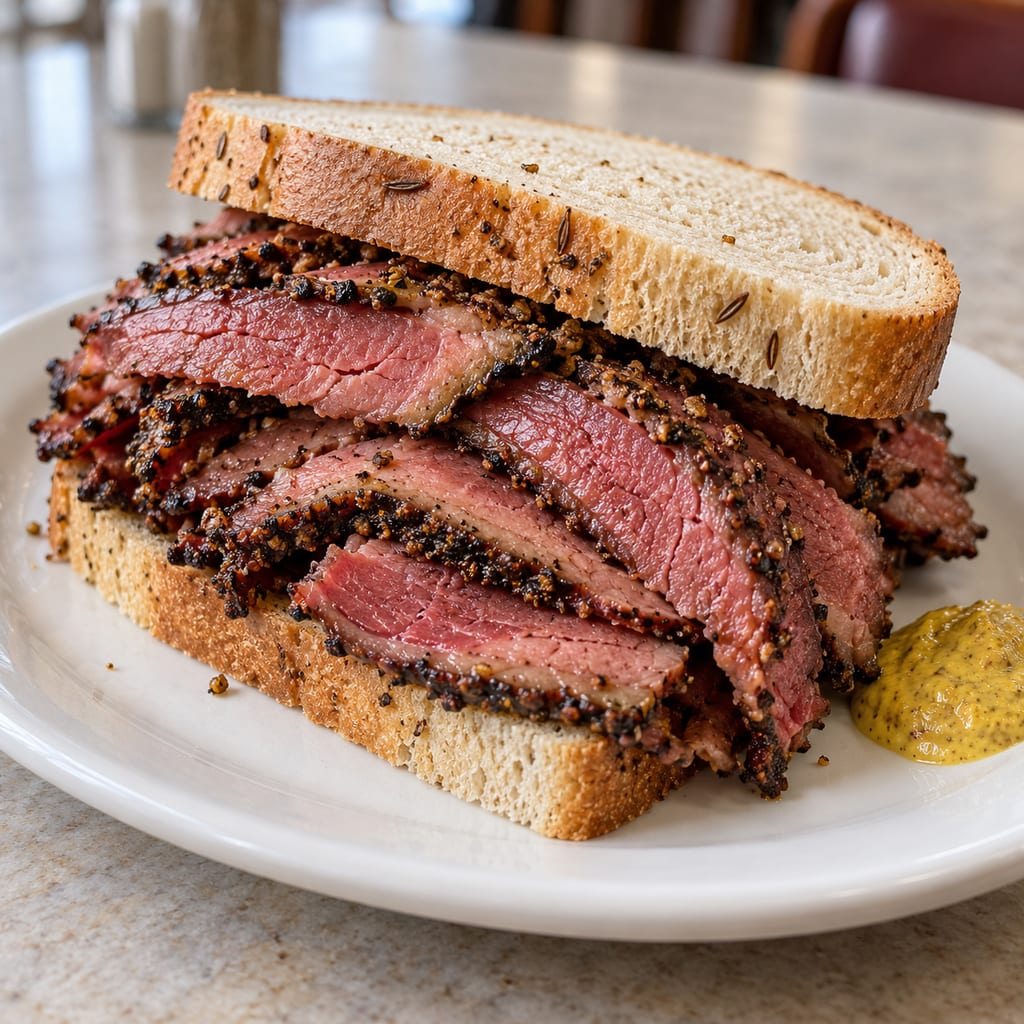
Pastrami is beef brined, rubbed with spices, smoked and steamed, the New York Jewish deli meat served hot and hand-carved on rye. Its origin is argued between competing accounts.
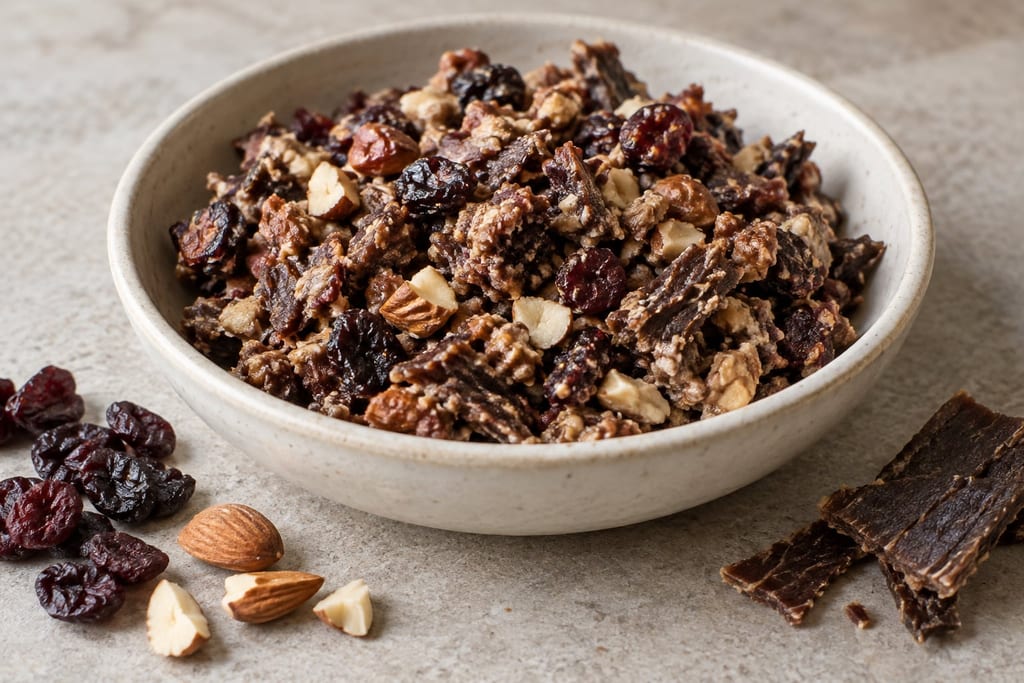
A contemporary recipe published with Valerie Segrest’s permission among recipes from Muckleshoot Nation, combining jerky, dried berries, raw nuts or seeds, and nut butter.
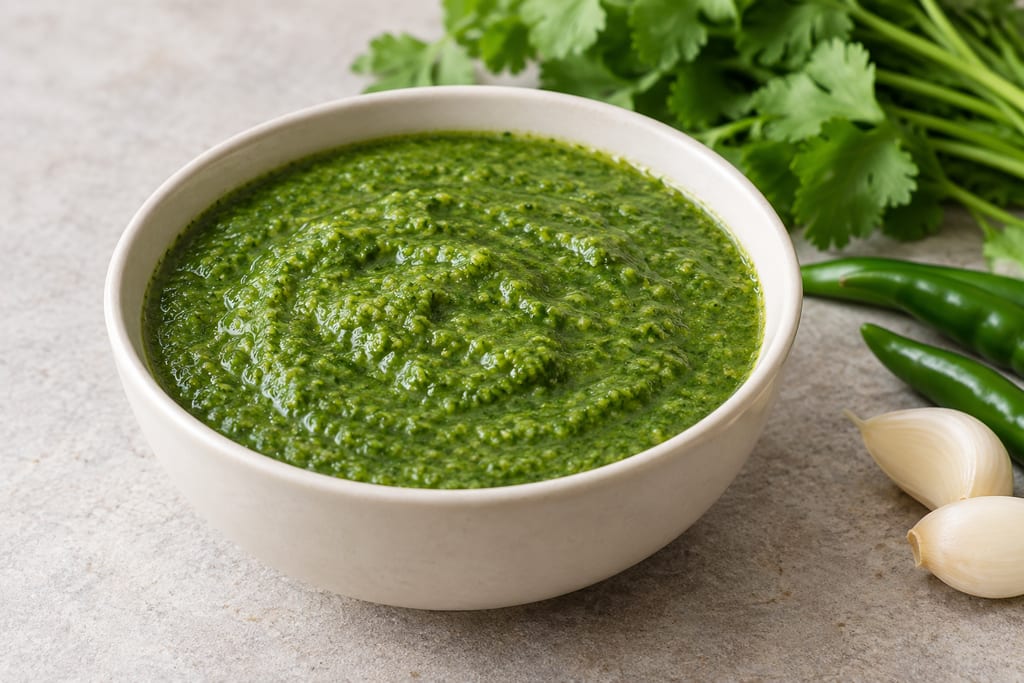
Afghan coriander chatni is a sharp, hot herb sauce with garlic and vinegar. A 2008 Afghanistan manual records green or red pepper and optional walnut; heat and household versions vary.
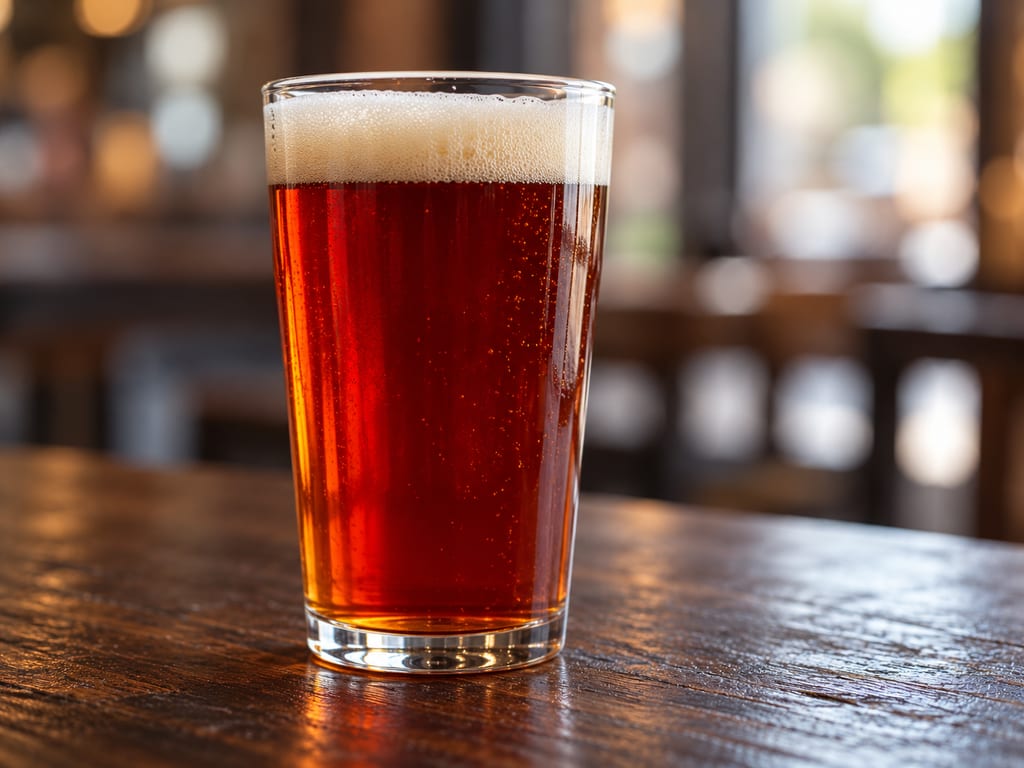
A deep amber-red American ale brewed from pale, Munich, CaraVienne and chocolate malts, bittered with Columbus hops and finished with Amarillo.
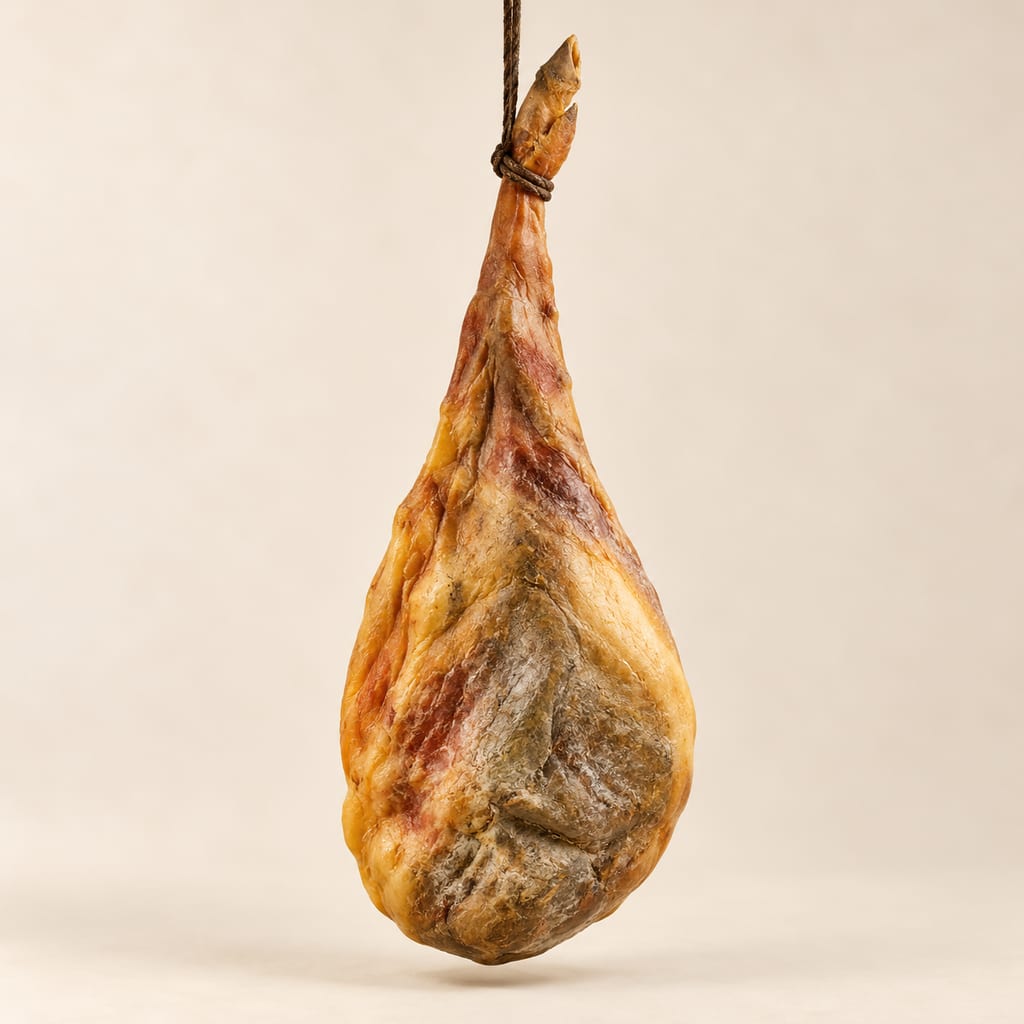
Cato the Elder records a second-century BCE sequence for salting, air-drying, and smoking ham. This historical account is not a validated modern curing protocol.
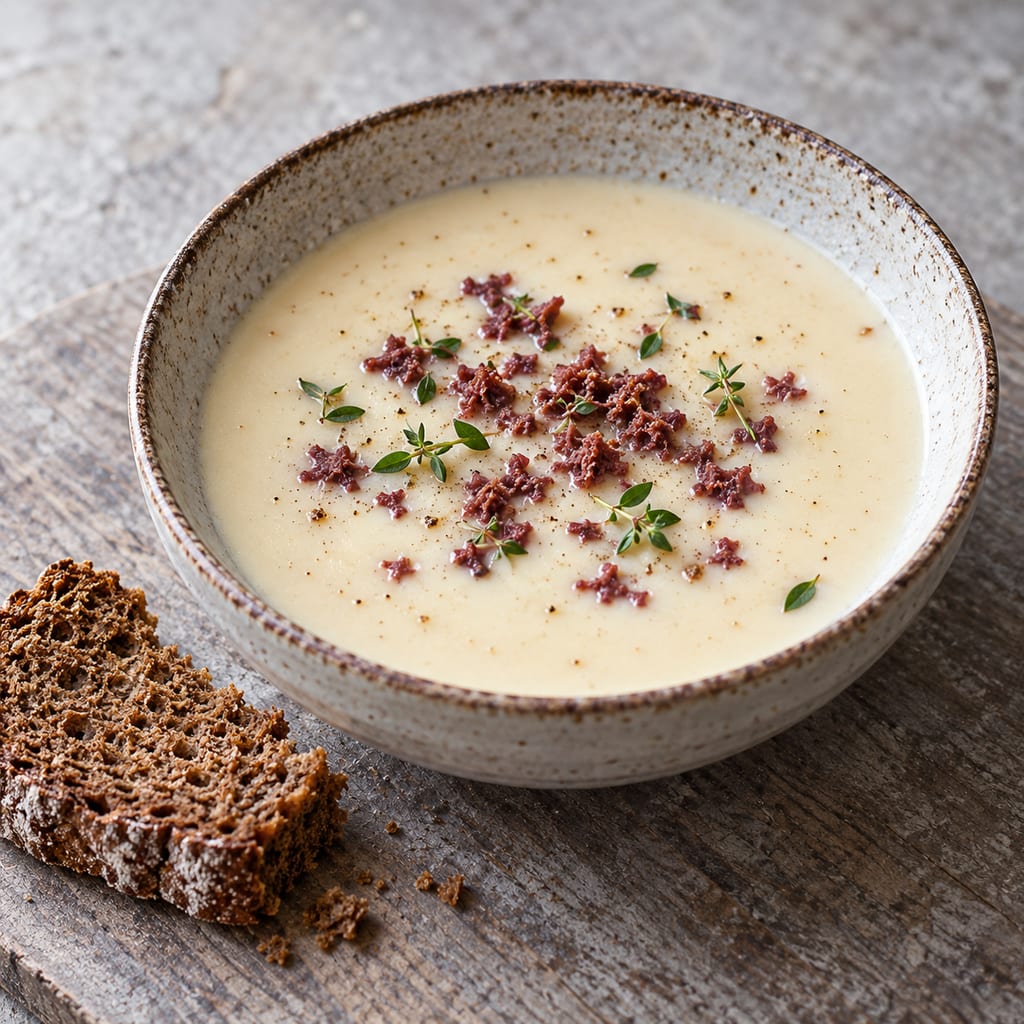
Kylmäsavuporokeitto is a creamy cold-smoked reindeer soup with onion, stock and cheese, served with bread.

Finnish pea soup simmers dried peas with palvikinkku or a vegetable alternative, then is served with mustard and chopped onion.
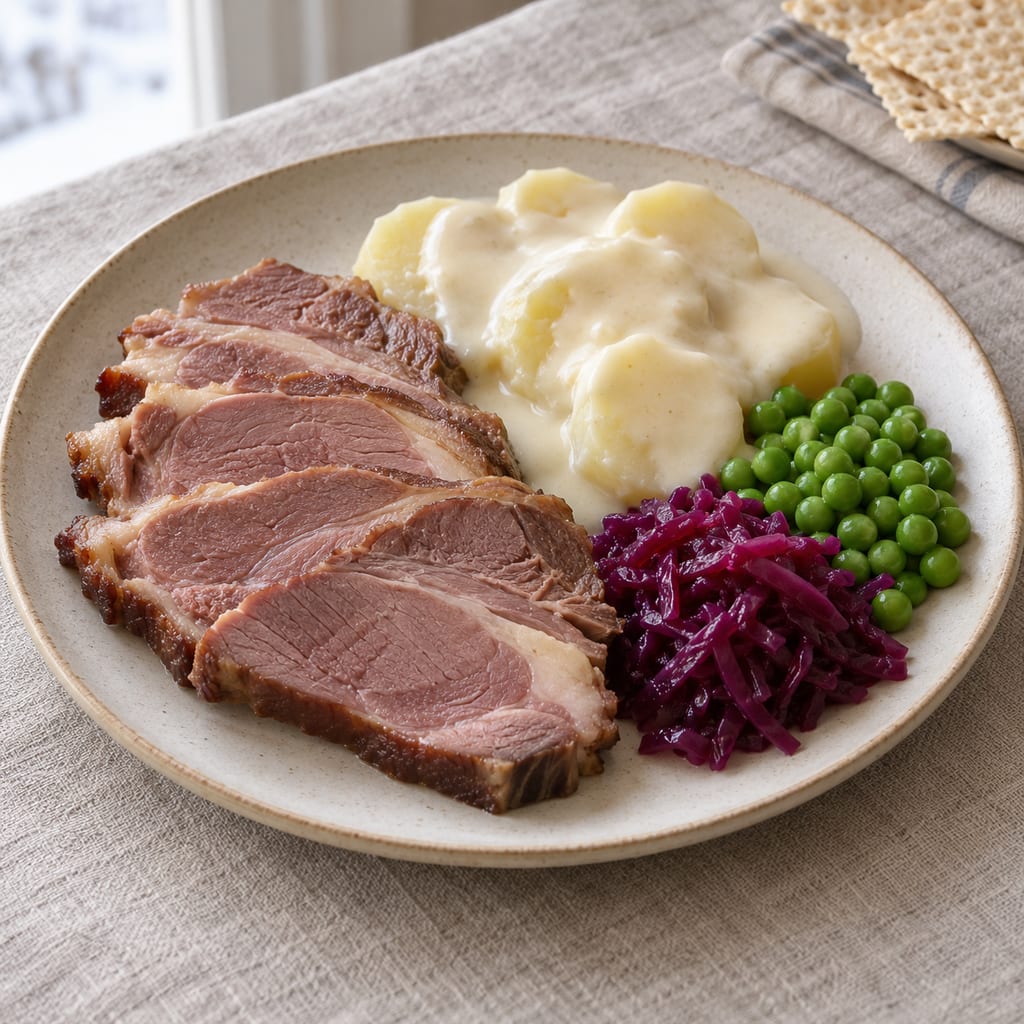
A six-person Icelandic Lamb serving recipe for deboned hangikjöt with potato bechamel, pickled cabbage, peas and laufabrauð. It cooks the product; it does not smoke or cure it.
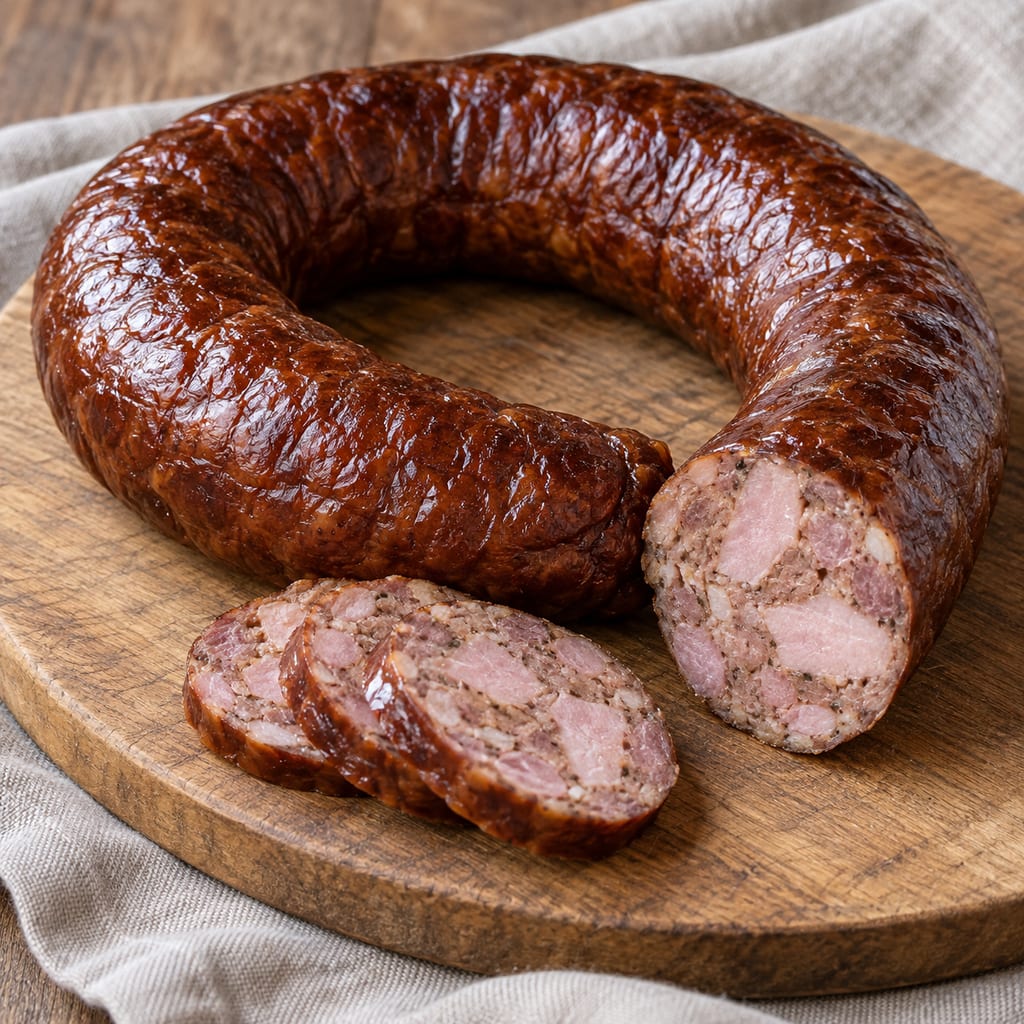
A protected pork sausage associated with Liszki and Czernichów; its application describes commercial curing and smoking, not a home batch.
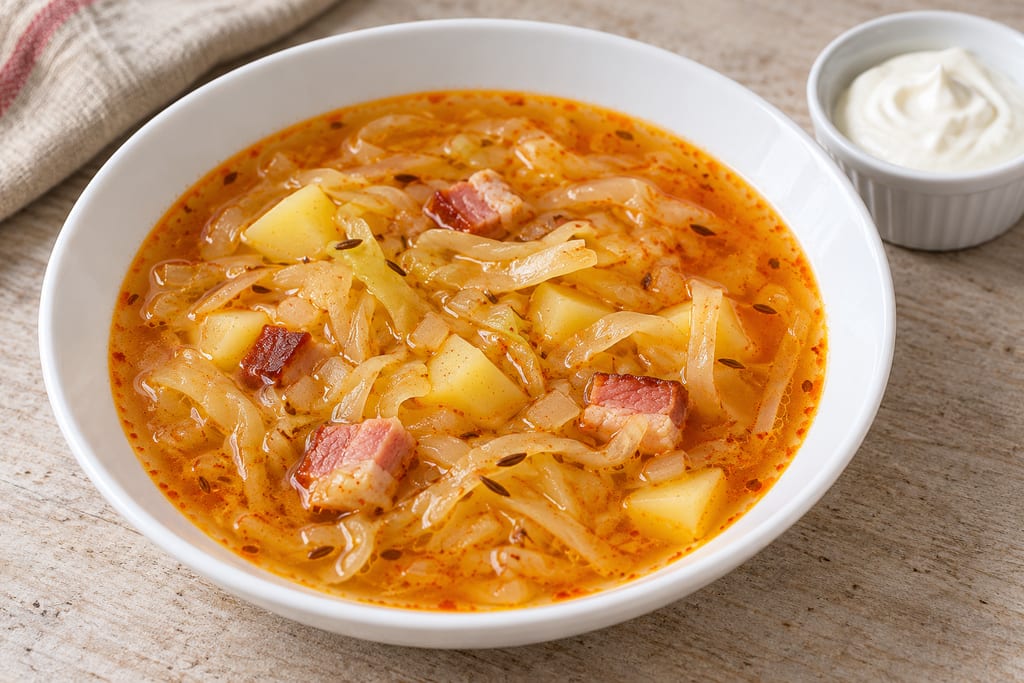
A two-portion cabbage soup with onion, potato and finished Geselchtes, served with garlic sour cream.
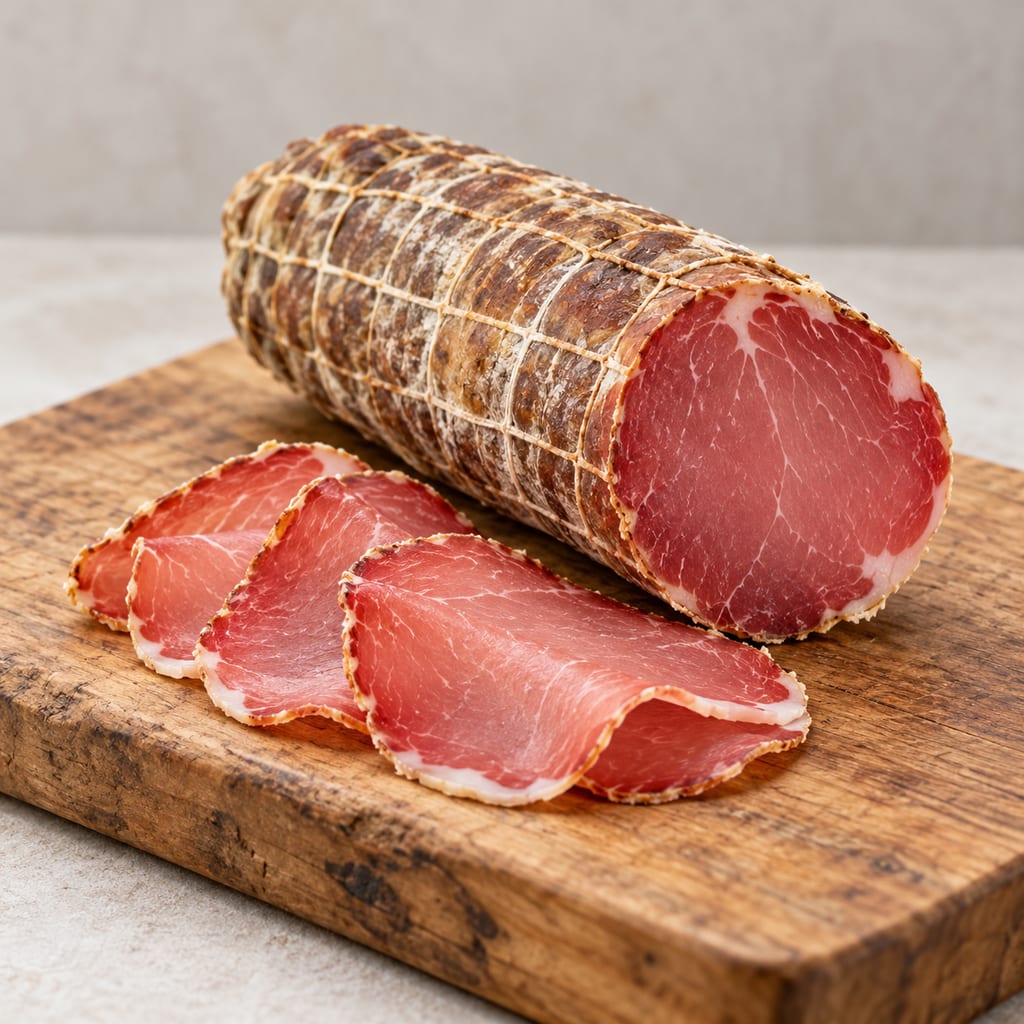
Documentary account of Italian regional cured-loin traditions, including Tuscan and Marche variations; no home-cure instructions are provided because the published professional methods lack validated safety controls.
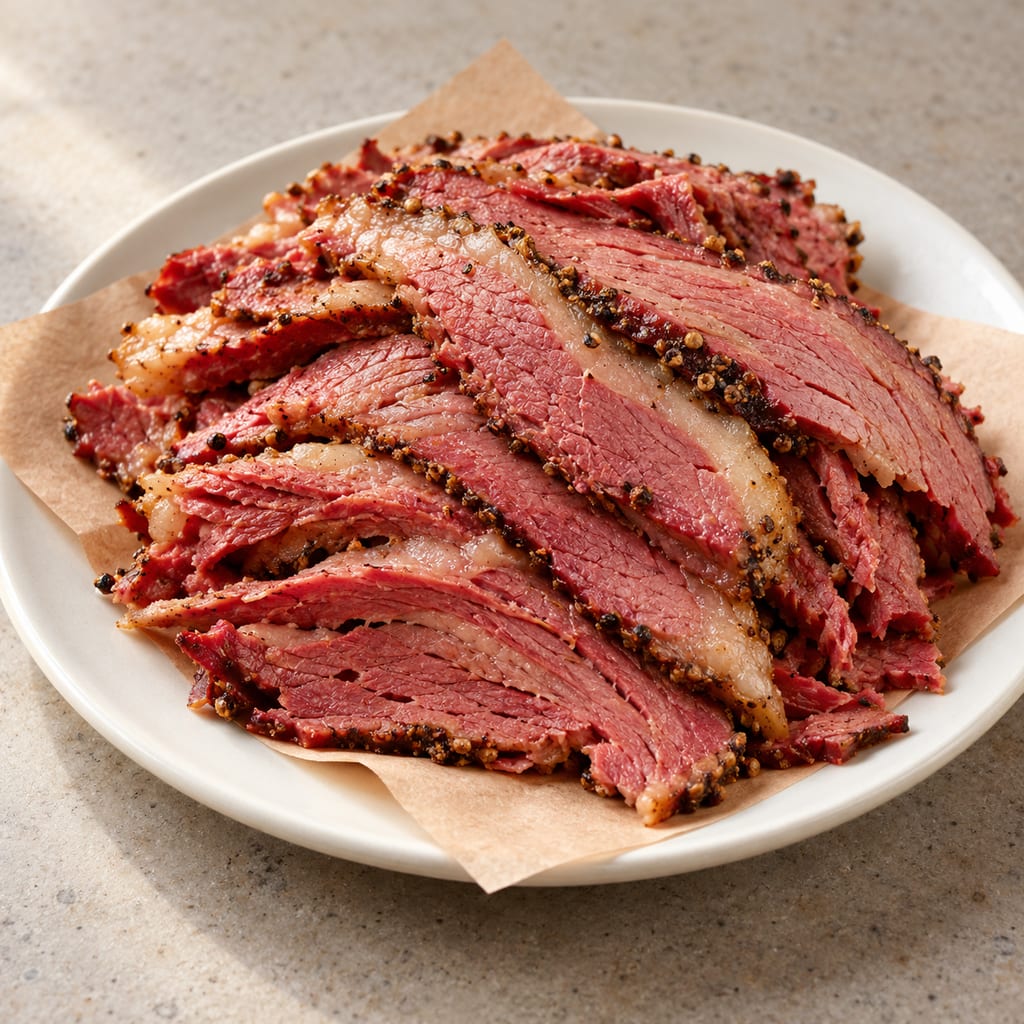
Montréal smoked meat is a brisket-centred Jewish deli specialty shaped by migration and Montréal's restaurant culture. This entry documents reported commercial traditions and one deli's account; it is not a home-curing method.
No community contributions have been published for this entry yet.
Sign in to contribute. Published comments and photos are free to read.
Oregon State University ExtensionRecipe · Process · Safety
Making Cured Bacon at HomeCure #1 is 6.25% sodium nitrite with salt, not interchangeable; recipes include dry coffee/brown-sugar cure and wet maple-beer cure; 5–7 days refrigerated, turning daily; cook/hot smoke to 160°F (71°C).
Cited in: What this bacon is; How the cure works; Finishing and keeping
USDA FSISSafety
FSIS Guideline for Meat and Poultry ProductsReady-to-eat cured/dried meat needs validated process hurdles.
Cited in: Finishing and keeping