
Alutiiq dried, smoked and half-dried fish (tamuuq, kupcuunaq, kac'amaasaq)
Kodiak salmon, halibut and cod cut as seg'aq and hung on an initaq rack to become tamuuq, with kac'amaasaq and kupcuunaq named as different results.
 FermenteaWhere food goes to change
Salmon roe caviar
Salmon roe is separated from skeins and treated in two salt-water stages using a University of Alaska Extension formula.
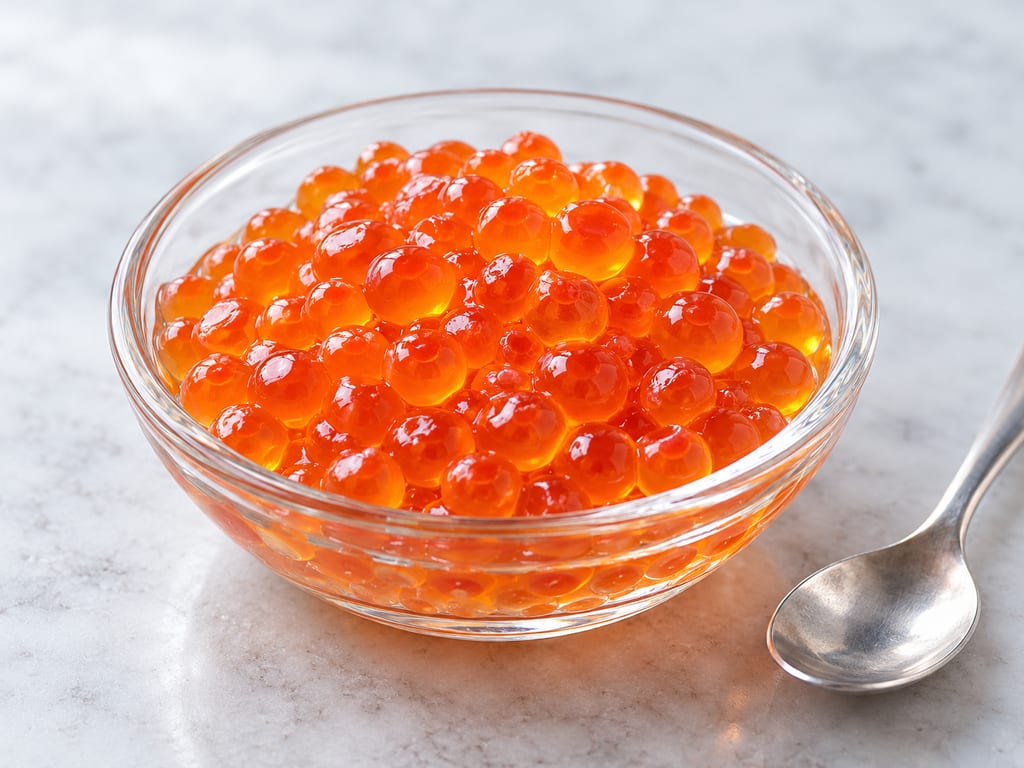
Salmon roe caviar is made by separating the individual eggs from the skeins of a salmon and treating them in a salt-water brine. The eggs are firm, translucent and orange, with a clean salt flavour. The University of Alaska Extension documents this regional product, and this method follows its formula.
The page describes the home process only. Salted roe is made across many salmon-fishing regions, and the source does not claim an exclusive origin for this formula.
The first brine loosens the membrane that holds the eggs in their skeins and begins to draw water out of them. The second, weaker brine treats the separated eggs, firming them and seasoning them. The eggs must be kept cold throughout, because the salt concentration in a home cure does not prevent microbial growth under all conditions.
Research on Listeria monocytogenes in salted caviar at different salt concentrations is cited in the sources. It shows that salt does not hold the organism back in every case, which is why cold storage and prompt processing are part of the method.
The skeins must be kept iced and processed within 24 hours of catch or purchase. The eggs are rinsed and drained after the second brine, and then either refrigerated or frozen.
Home canning is not an option. The source advises against canning roe, and the page follows that advice. Storage time is not validated for this batch, so the page gives no shelf life; home-salted roe is perishable and must be kept cold.
UAF Extension documents preparation for Alaska salmon roe; not an exclusive origin claim.
Scaling: source batch only
Study found growth at 7°C despite tested salt concentrations.
Hazard sourceSalt alone does not control all hazards.
Hazard sourceIce during handling and process promptly; source says within 24h.
Control sourceDo not rely on salt alone for Listeria control.
Control sourceDo not home-can; follow source storage guidance.
Control sourceDo not home-can roe.
Keep cold; salt does not prevent Listeria growth under all conditions.
Source storage advice is not proof of batch safety.
The source documents an Alaska Extension formula, not an exclusive origin.
Kodiak salmon, halibut and cod cut as seg'aq and hung on an initaq rack to become tamuuq, with kac'amaasaq and kupcuunaq named as different results.
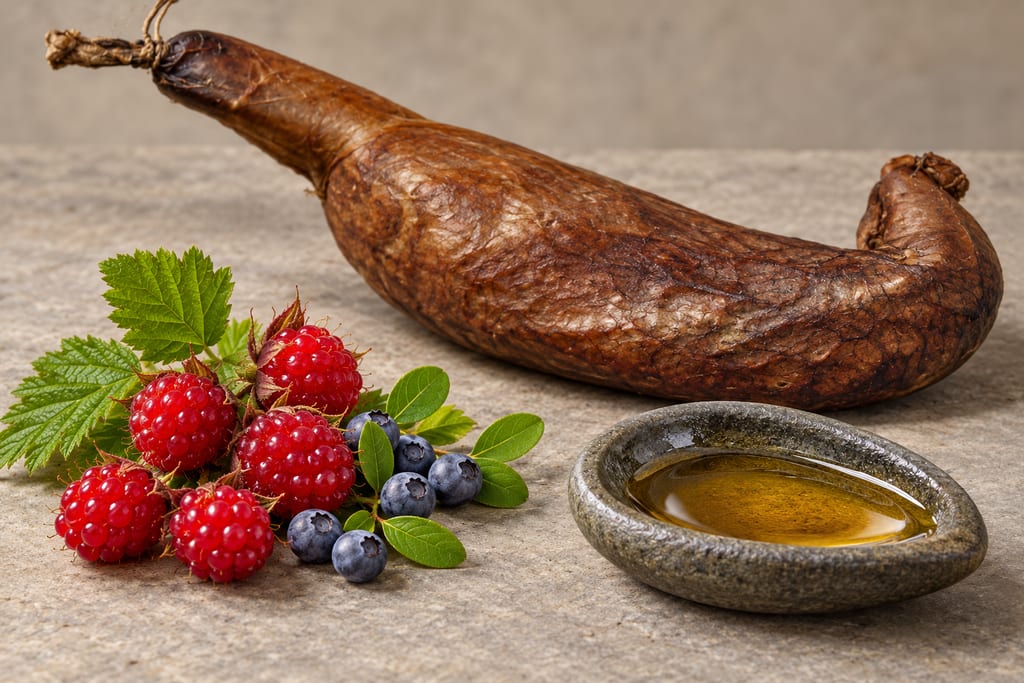
Berries, greens and fish eggs were kept in seal oil by Indigenous Alaskan communities. The oil seals the food from air, and the result depends on preparation and the surrounding conditions.
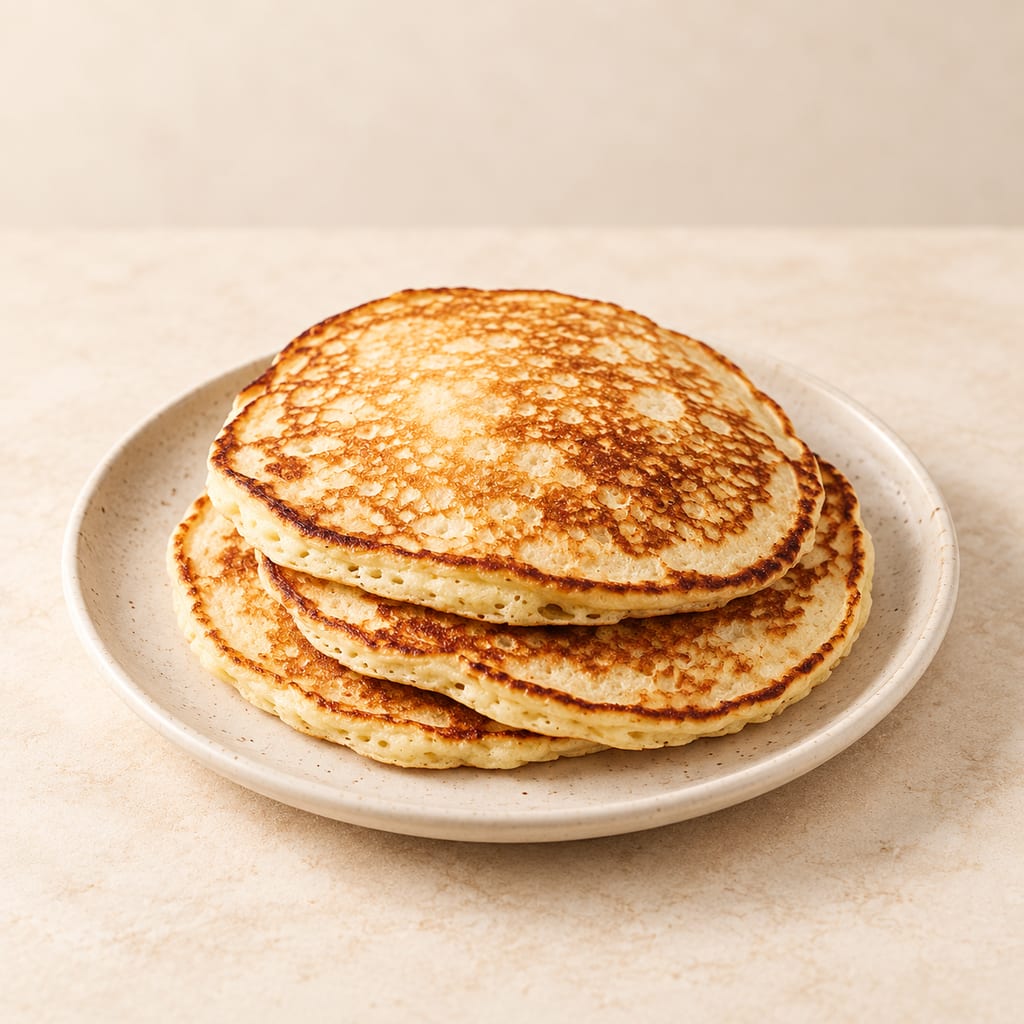
Buttermilk, flour and sourdough discard rest overnight before eggs and baking soda turn the sponge into a griddle batter. The finished pancakes are tender and lightly tangy.
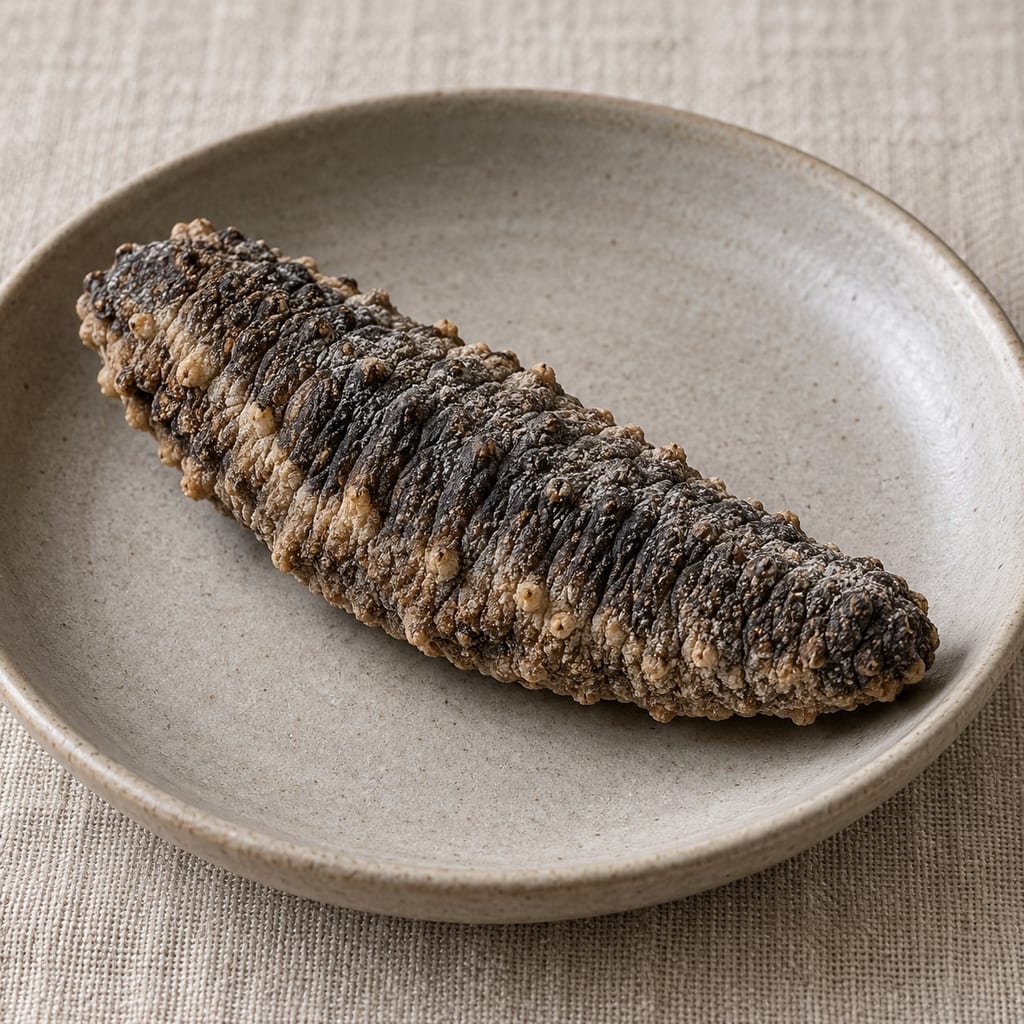
Sea cucumber cleaned, boiled and dried, sometimes with smoke, into a long-keeping trade product; Makassan processing in Arnhem Land is documented from at least the eighteenth century.
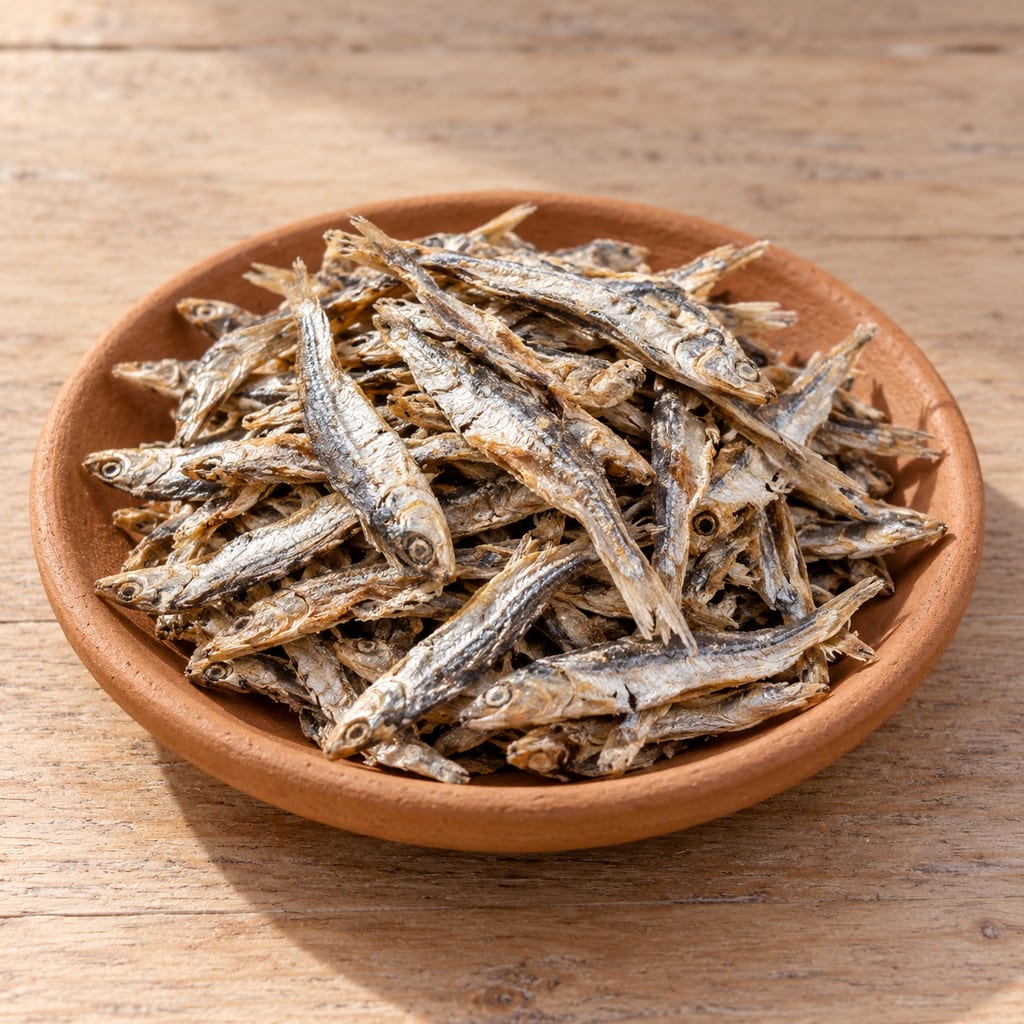
Anchoveta salted, drained of sanguaza and sun-dried on sand or stones at Caleta de Carquín, a technique declared part of Peru's cultural heritage in 2016.
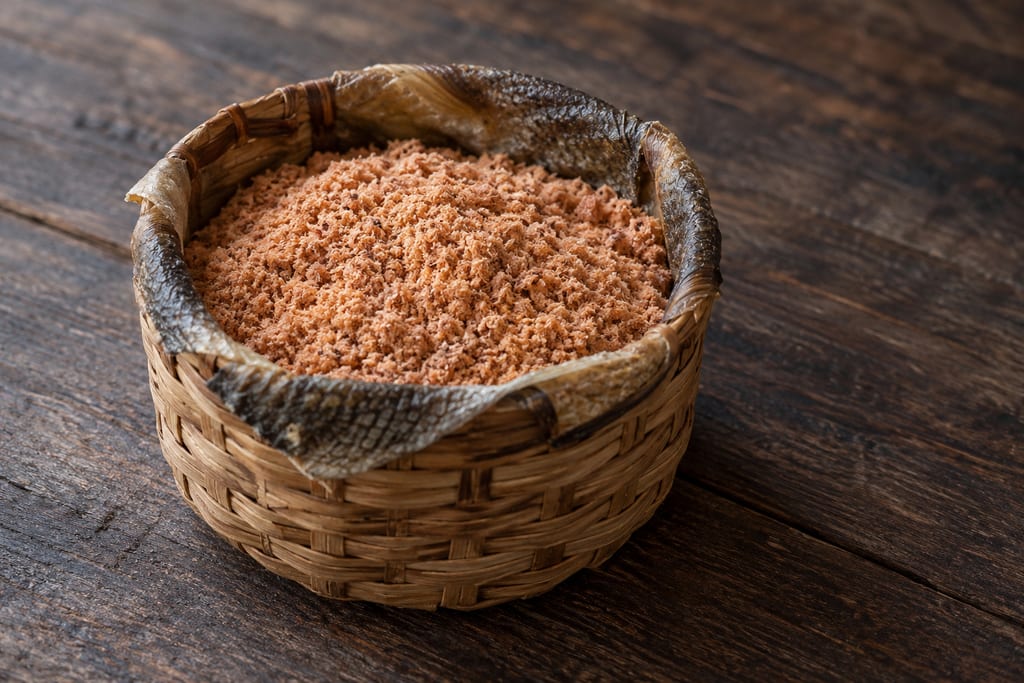
Dried salmon broken down, pounded to a meal and pressed into grass baskets lined with fish skin: the compact trade food of Celilo Falls and The Dalles.
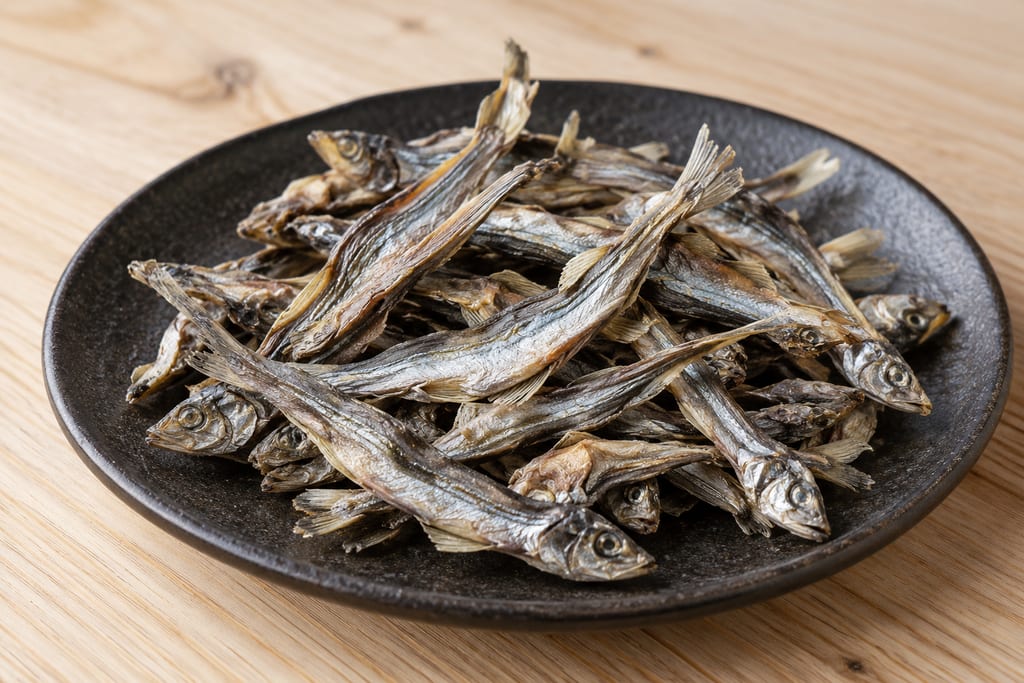
Greenlandic capelin dried whole on rocks, among crowberry vegetation or on buildings, and the microbial research that has made this small fish unusually well studied.
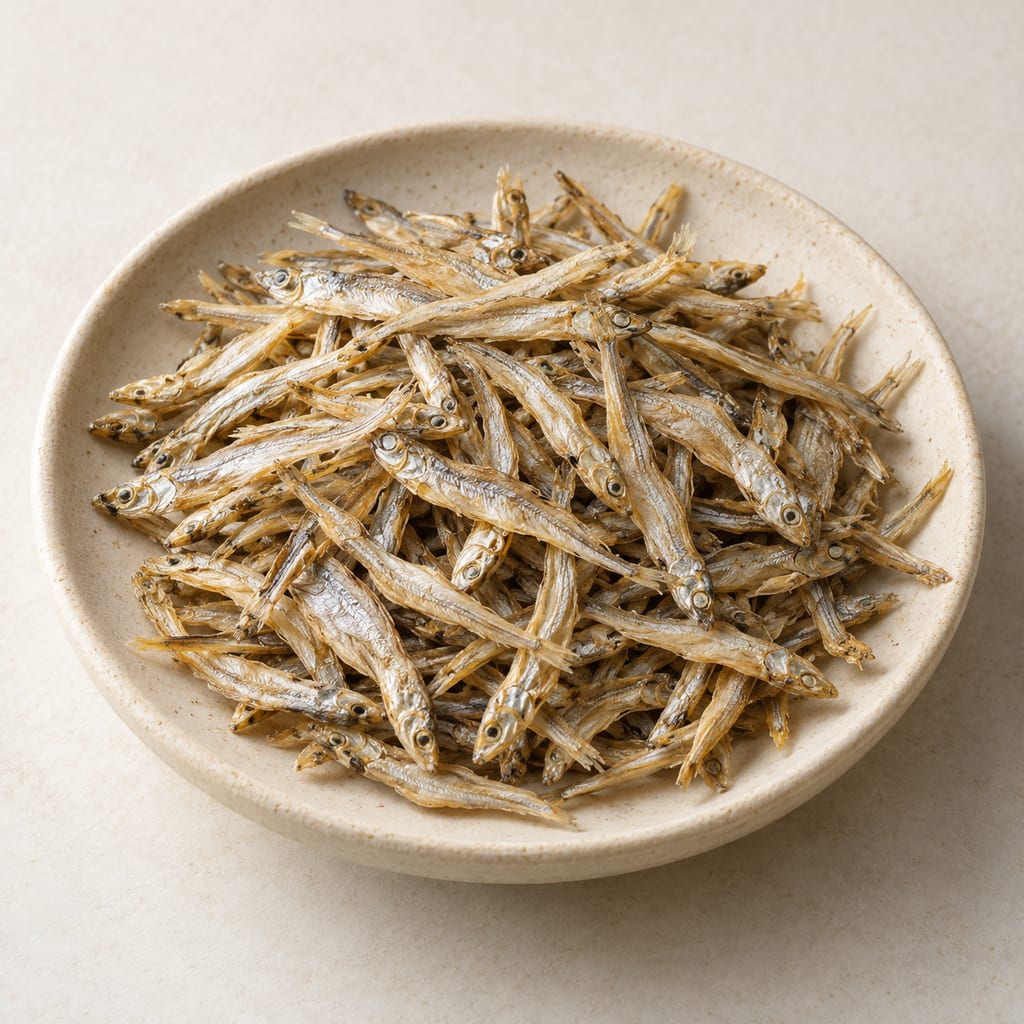
Small central-Mexican lake silversides, Chirostoma spp., dried whole and sometimes salted, then fried, roasted or simmered into Lenten tortitas and snacks.
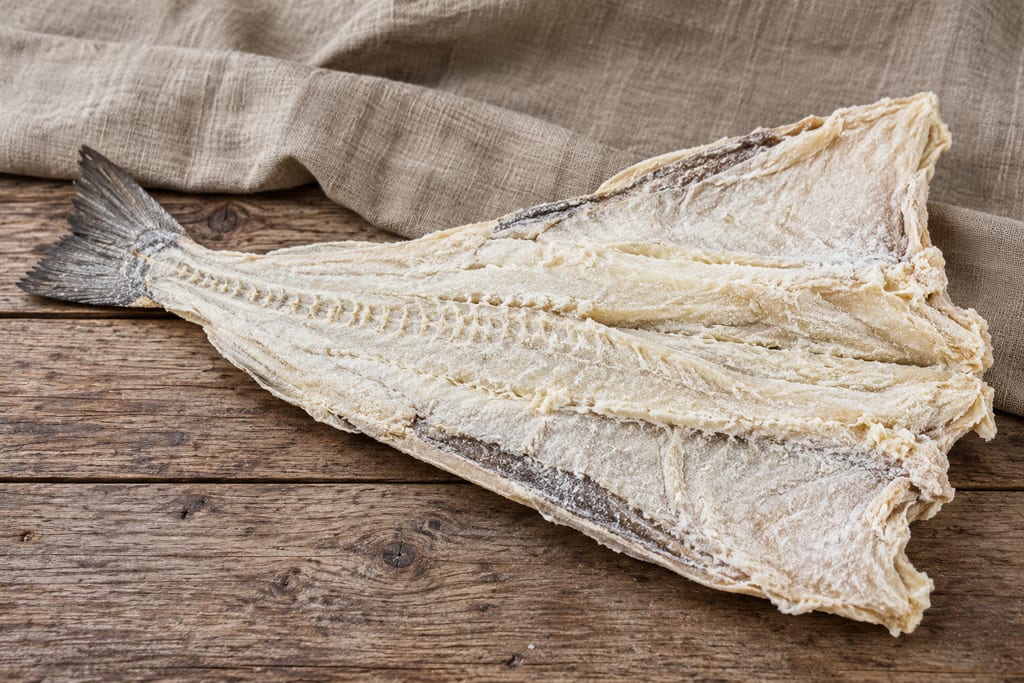
Cod split, salted and dried on flakes until hard, a long-keeping fish that must be desalted and rehydrated before use; the salting and the extensive drying together make it portable where light salting or partial drying does not.
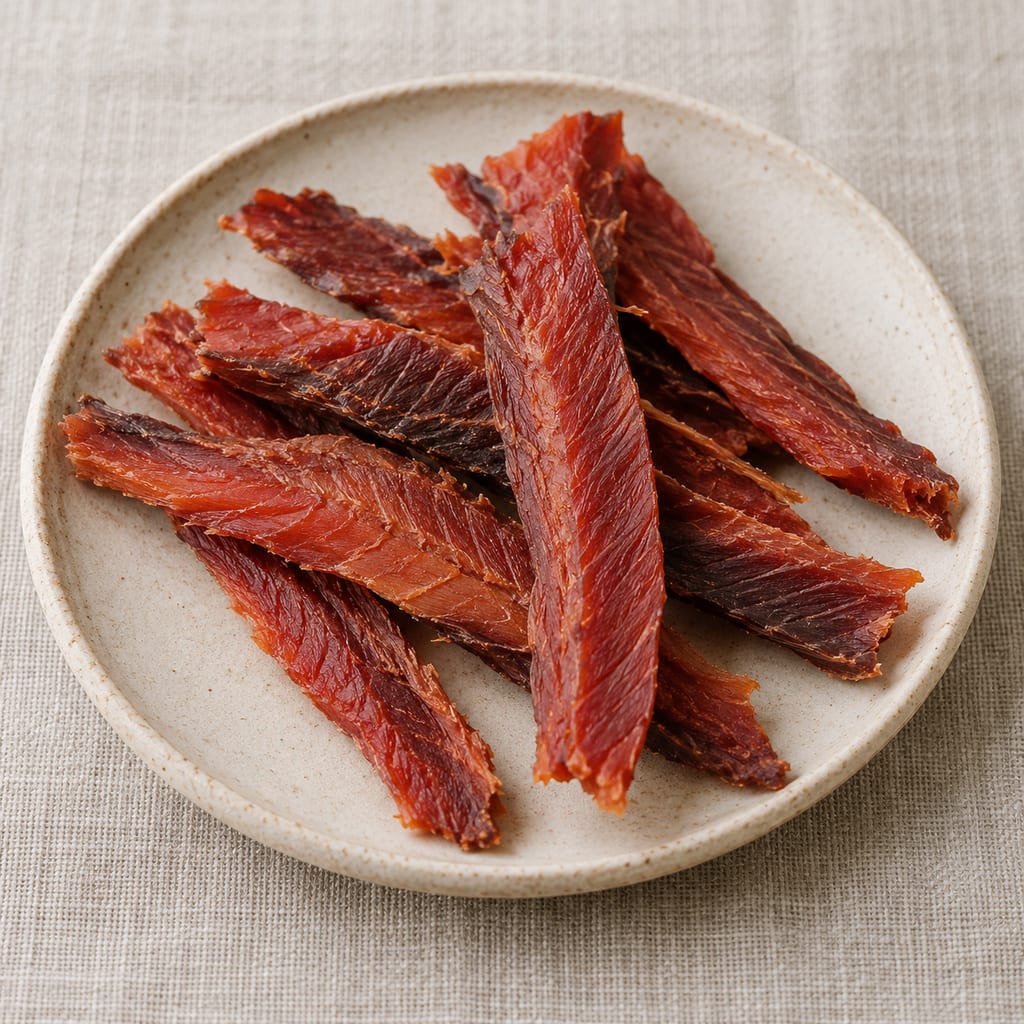
Salmon opened, scored and hung on roofed racks in the dry canyon winds of the Fraser River: slhíts'es in Stó:lō documentation, sts'wan in St'át'imc records.

Koobi is Ghanaian salted and dried tilapia. Sources differ on the brief ripening stage and drying period, and do not establish a single validated household process. This entry records documented variants and their limits.
No community contributions have been published for this entry yet.
Sign in to contribute. Published comments and photos are free to read.
University of Alaska Fairbanks Cooperative Extension ServiceRecipe · Process · Safety
Salmon Roe CaviarIced skeins, process within 24h; first brine 3 lb salt/gallon for 5 min; second 1/2 cup salt/2 cups water for 5–30 min; no home canning.
Cited in: What this caviar is; How the brine works; Handling and storage
Journal of Food ScienceSafety
Listeria monocytogenes Growth during Cold Storage in Caviar with Different Salt ConcentrationsStudy found Listeria growth at 7°C under tested salt concentrations.
Cited in: How the brine works
FAO / Codex AlimentariusSafety
Code of Practice for Fish and Fishery ProductsFish hazards include parasites, histamine, pathogens and botulinum toxin.
Cited in: Handling and storage