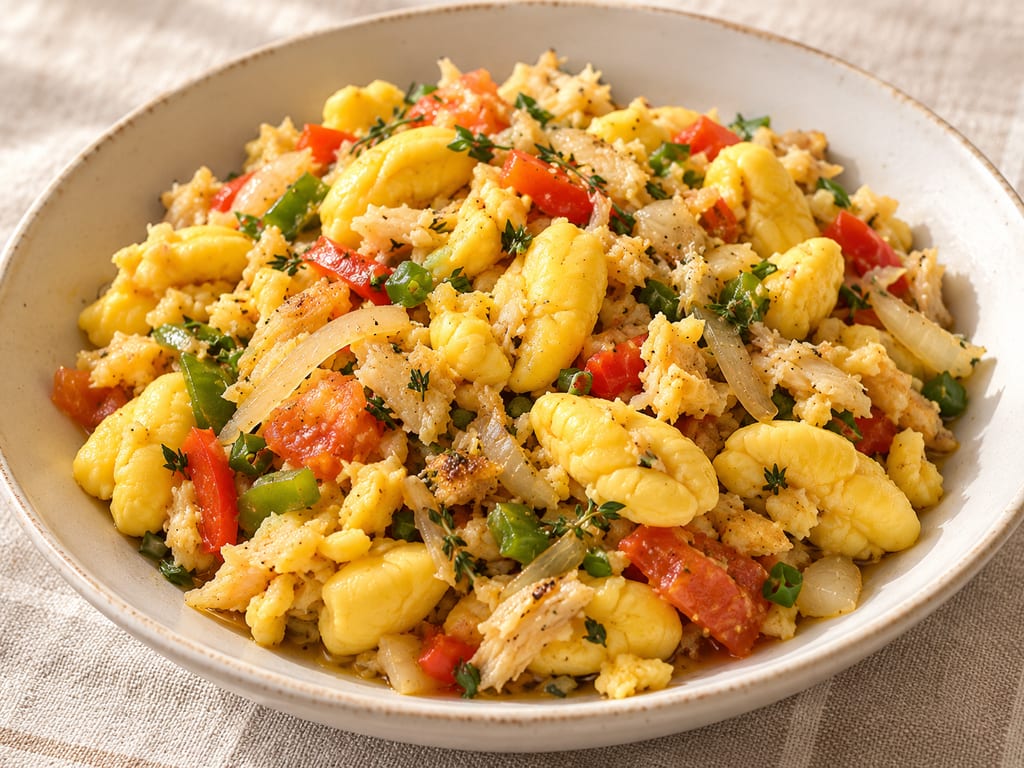
Ackee and saltfish
Jamaica's best-known dish: salt-cured cod desalted and flaked, then folded through ackee arils with onion, tomato, sweet pepper, thyme and Scotch bonnet.
 FermenteaWhere food goes to change
Traditional method
Salt cod · Dried salt cod · Bacalhau · Newfoundland salt cod
Cod split, salted and dried on flakes until hard, a long-keeping fish that must be desalted and rehydrated before use; the salting and the extensive drying together make it portable where light salting or partial drying does not.
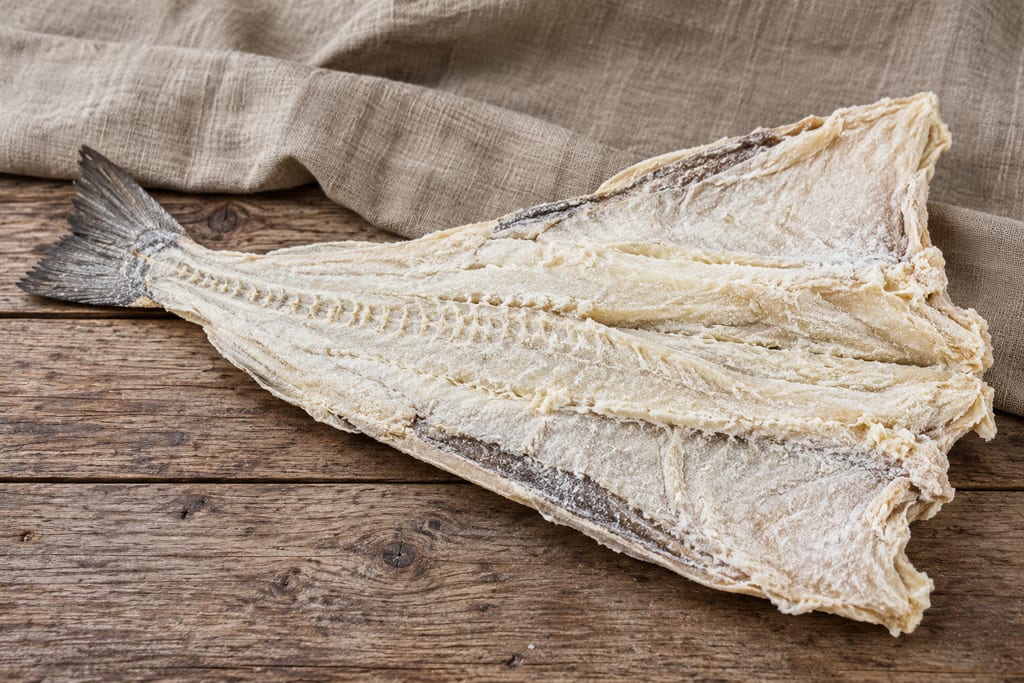
Dried salted cod is a split white fish that has been salted and dried until hard. It keeps far longer than the fresh fish, and it must be soaked out of its salt before cooking. Salt cod and unsalted stockfish are often confused, but they are different products: stockfish is air-dried without salt.
The product belongs to the wider family of salted and dried fish, in which salt and drying work together. Neither step is enough alone for the same portability.
Salting followed by extensive drying made salt cod portable, and it moved through European, Asian and African trade networks. The record names Norway, Portugal and Newfoundland among the places associated with the material. Norway is the source of unsalted stockfish, which is a distinct product.
The sources do not give a first date for the Newfoundland form, so the period is left unknown.
Salt draws water out of the fish and reduces the moisture that spoilage needs. Drying then removes more water, so the fish becomes hard and stable. Partial drying or light salting gives a shorter-keeping food.
The salting is the first stage of the preservation. Drying on flakes completes it. The fish is then rehydrated before cooking, which is why rehydrated fish is far more perishable.
Before cooking, the dried fish is desalted and rehydrated. The rehydrated fish is far more perishable than the dried product, and the sources give no durations or temperatures for soaking or for storage.
Cod split, salted and dried on flakes in Newfoundland is desalted and rehydrated before use. Salting combined with extensive drying made fish more portable and durable than either light salting or partial drying alone; unsalted stockfish is a different product.
Scaling: source batch only
Rehydrated fish is far more perishable than the dried product. The sources give no safe soaking time or storage limit.
Hazard sourceTreat rehydrated fish as perishable; no validated soaking time or storage limit is recorded.
Control sourceThe sources record historical practice only. They are not a tested home method.
Newfoundland dried salt cod is the form the record describes; the source does not give a single origin for salt cod.
Jamaica's best-known dish: salt-cured cod desalted and flaked, then folded through ackee arils with onion, tomato, sweet pepper, thyme and Scotch bonnet.
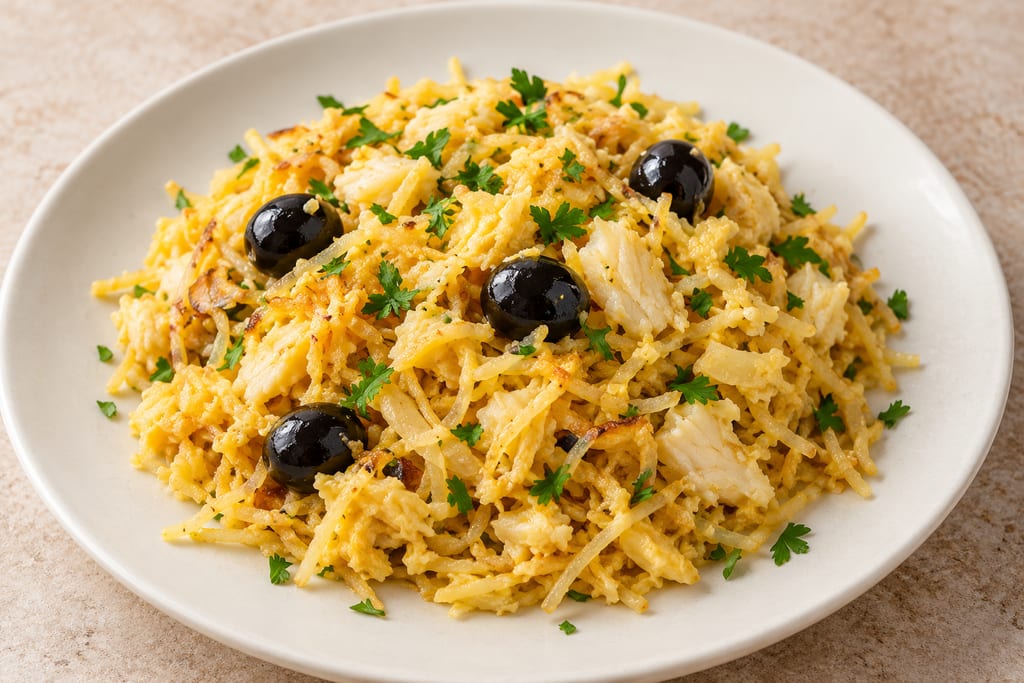
Lisbon's salt cod dish: shredded desalted cod and fine fried potato matchsticks folded through softened onion and bound with beaten egg, finished with parsley and black olives.
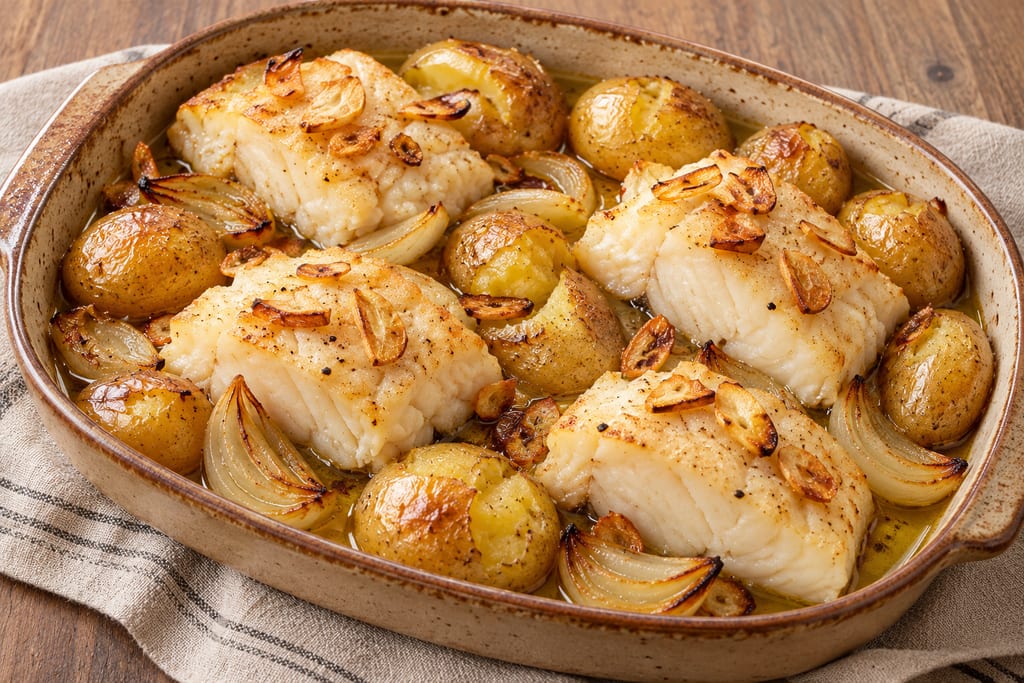
Thick pieces of desalted salt cod roasted in olive oil with garlic and onion, served with small potatoes cooked and then crushed until their skins split.
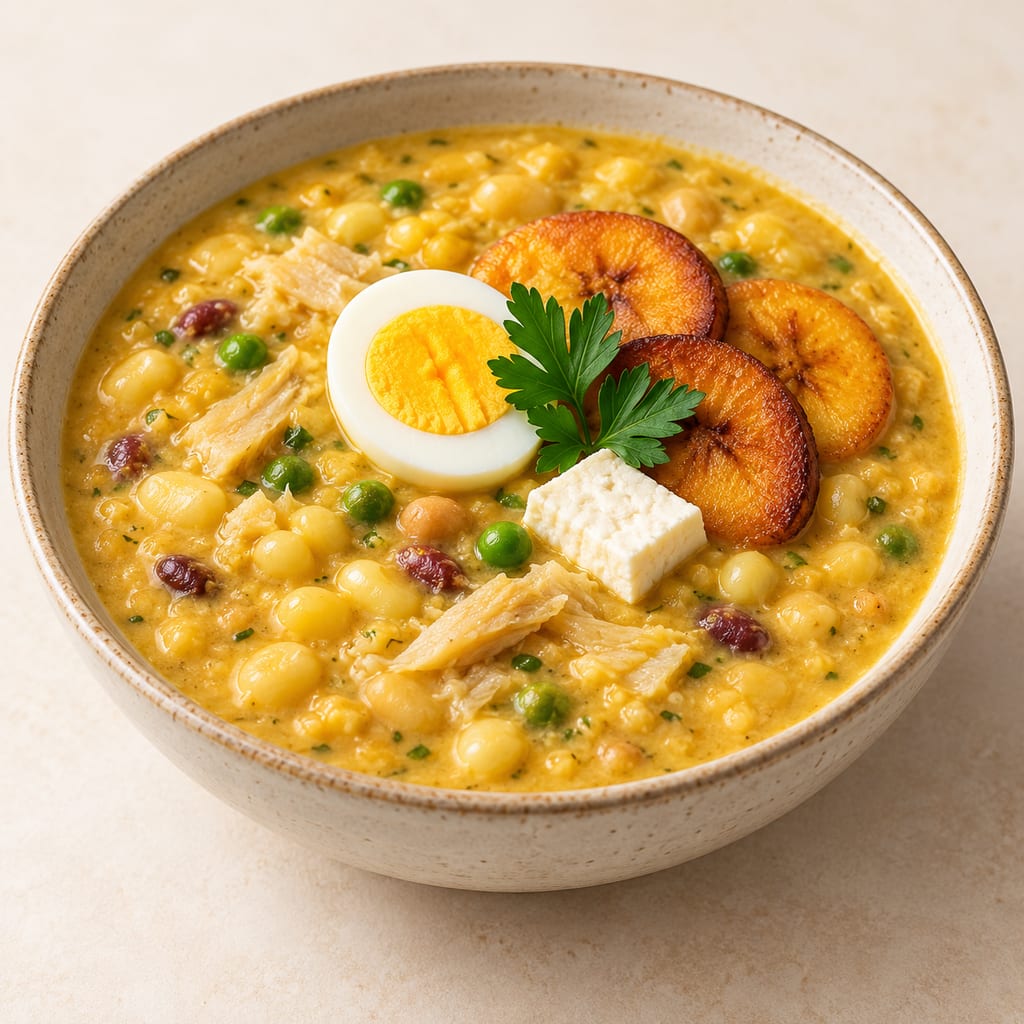
Ecuadorian Holy Week soup of tender grains and pulses, squash, milk and salted fish, thickened with peanut paste and served with contrasting garnishes.
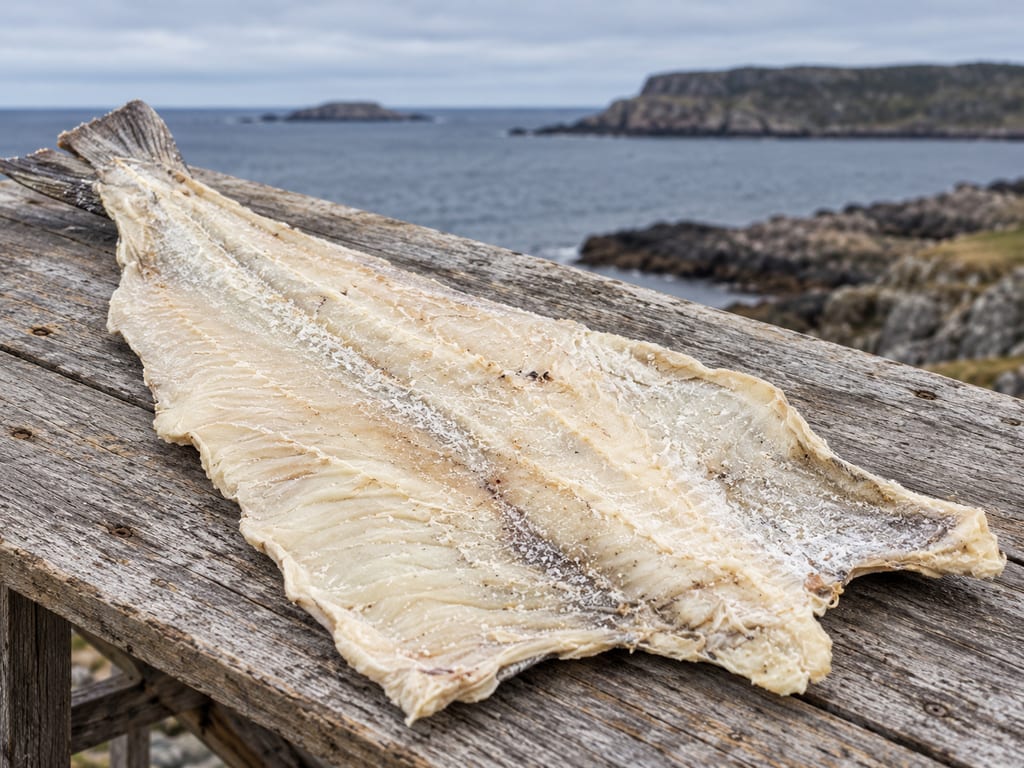
Atlantic cod split, salted and dried on raised flakes along the Newfoundland and Labrador shore, manufactured ashore for markets across the Atlantic.
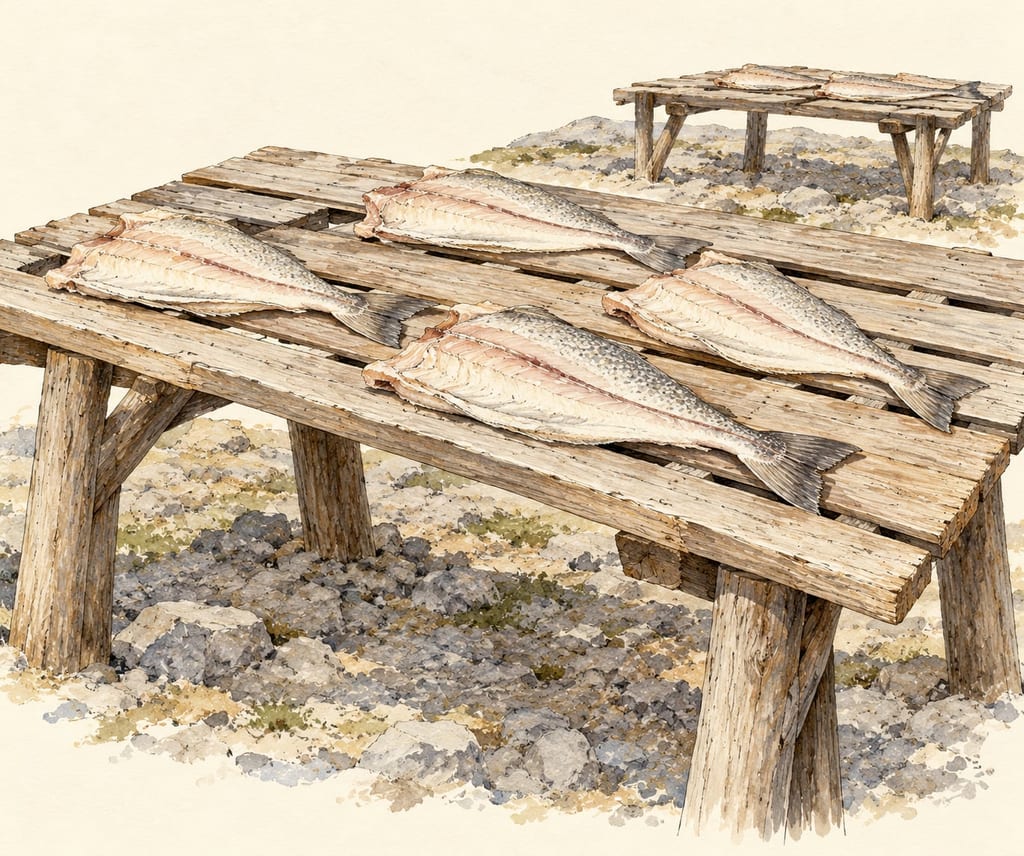
A Newfoundland flake was an open wooden platform where split, salted cod was laid in the sun to dry. It belongs to the historic coastal fishery, not to smokehouses.
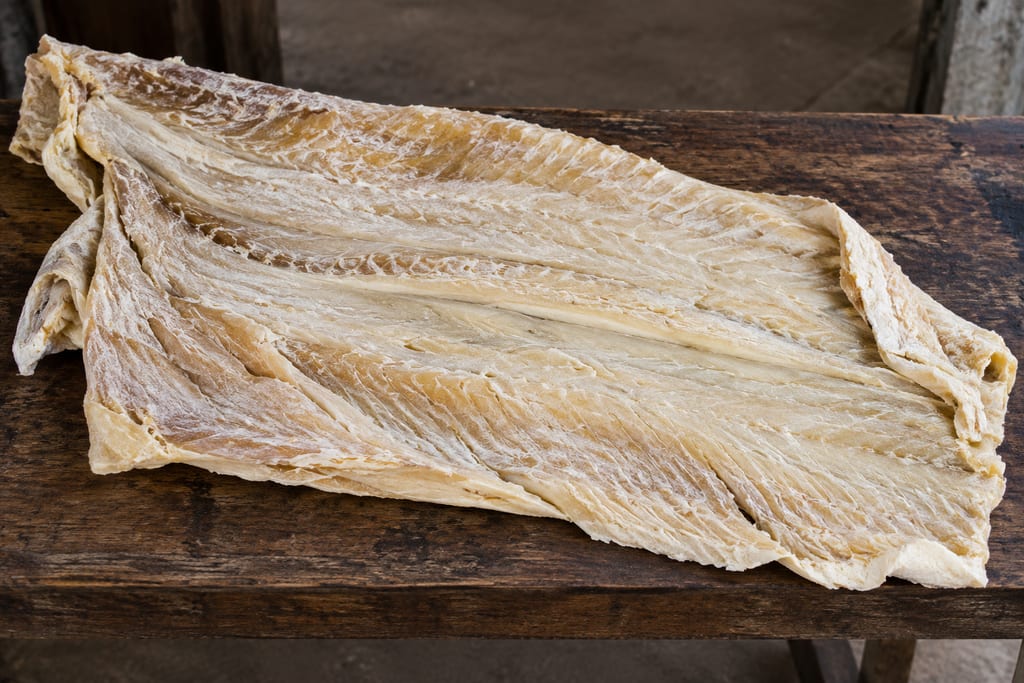
Arapaima gigas split into broad mantas, salted, matured for days and dried into the sheets that travel Amazonian river markets as bacalhau da Amazônia.
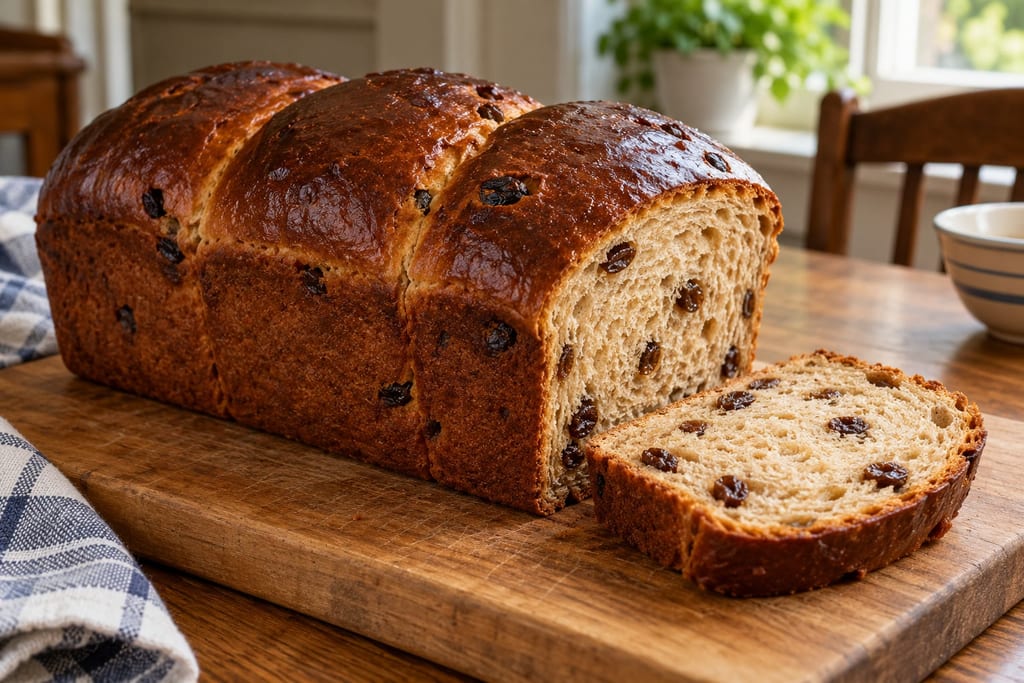
A Newfoundland family-style sweet yeast loaf with molasses, raisins, cinnamon and cloves. This version follows a half-batch adaptation of Nanny Hemeon's family formula; it is not a standard recipe for all Newfoundland households.
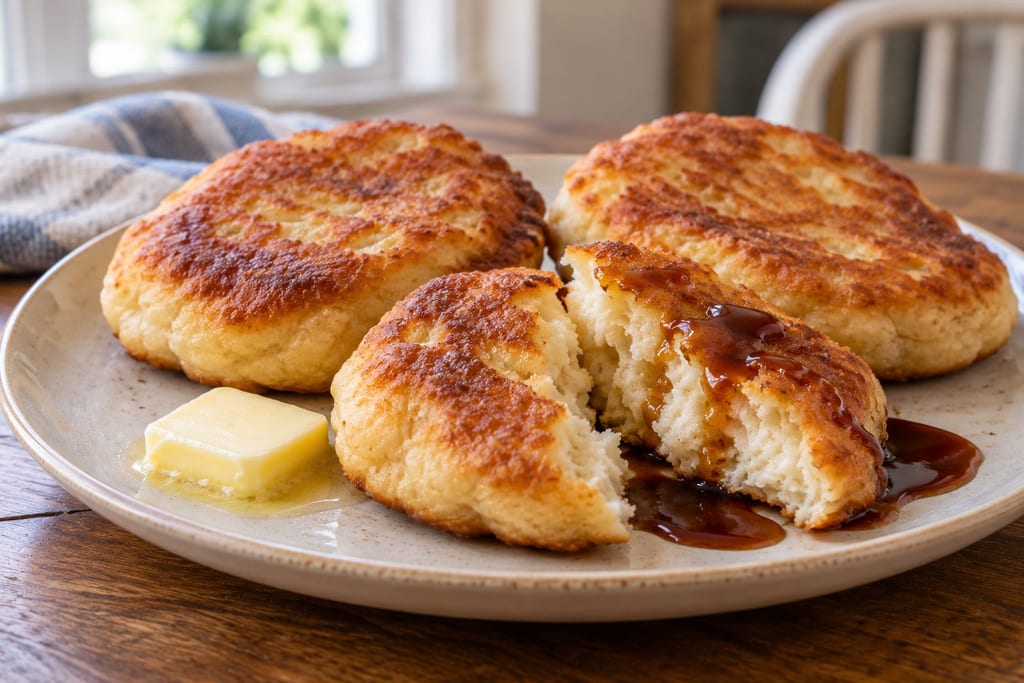
Rounds of leftover yeasted white bread dough, rested and shallow-fried slowly in canola oil; served warm with butter and molasses.
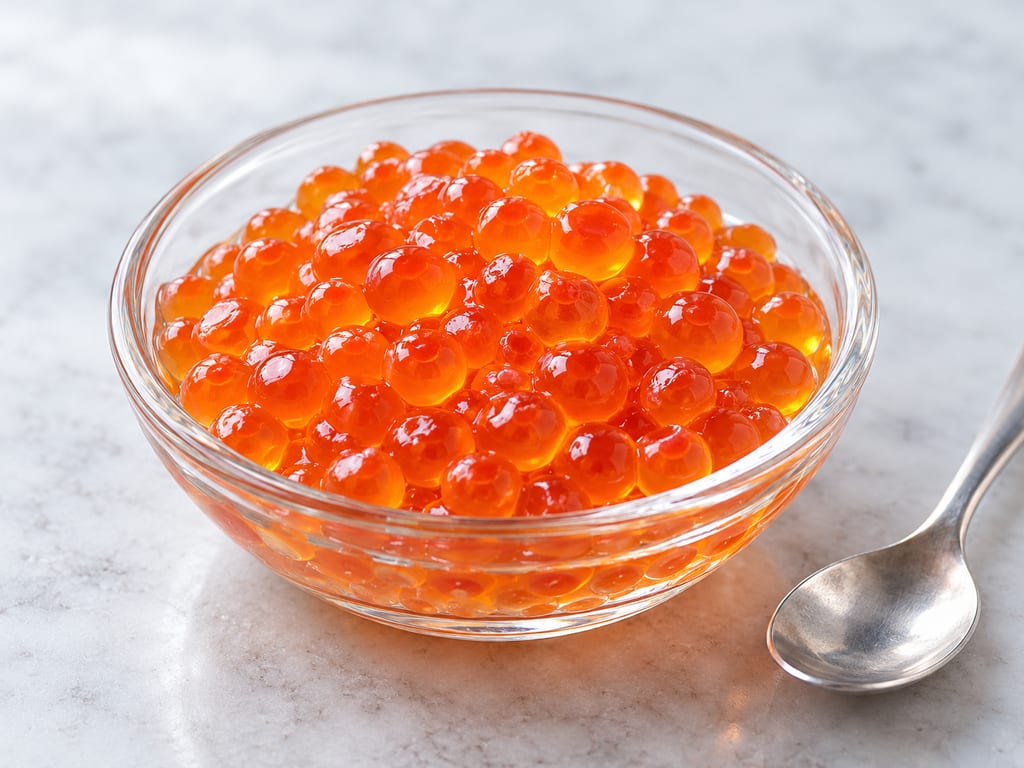
Salmon roe is separated from skeins and treated in two salt-water stages using a University of Alaska Extension formula.

Kodiak salmon, halibut and cod cut as seg'aq and hung on an initaq rack to become tamuuq, with kac'amaasaq and kupcuunaq named as different results.
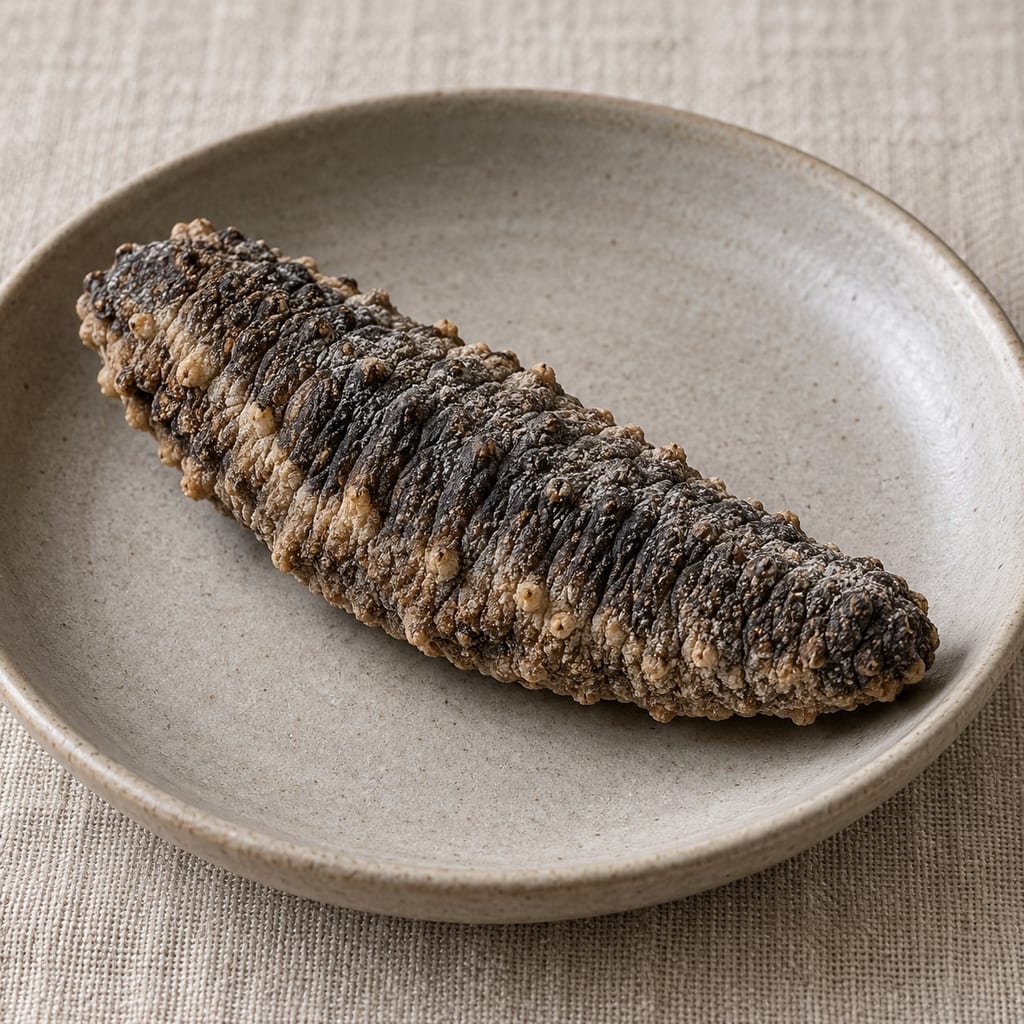
Sea cucumber cleaned, boiled and dried, sometimes with smoke, into a long-keeping trade product; Makassan processing in Arnhem Land is documented from at least the eighteenth century.
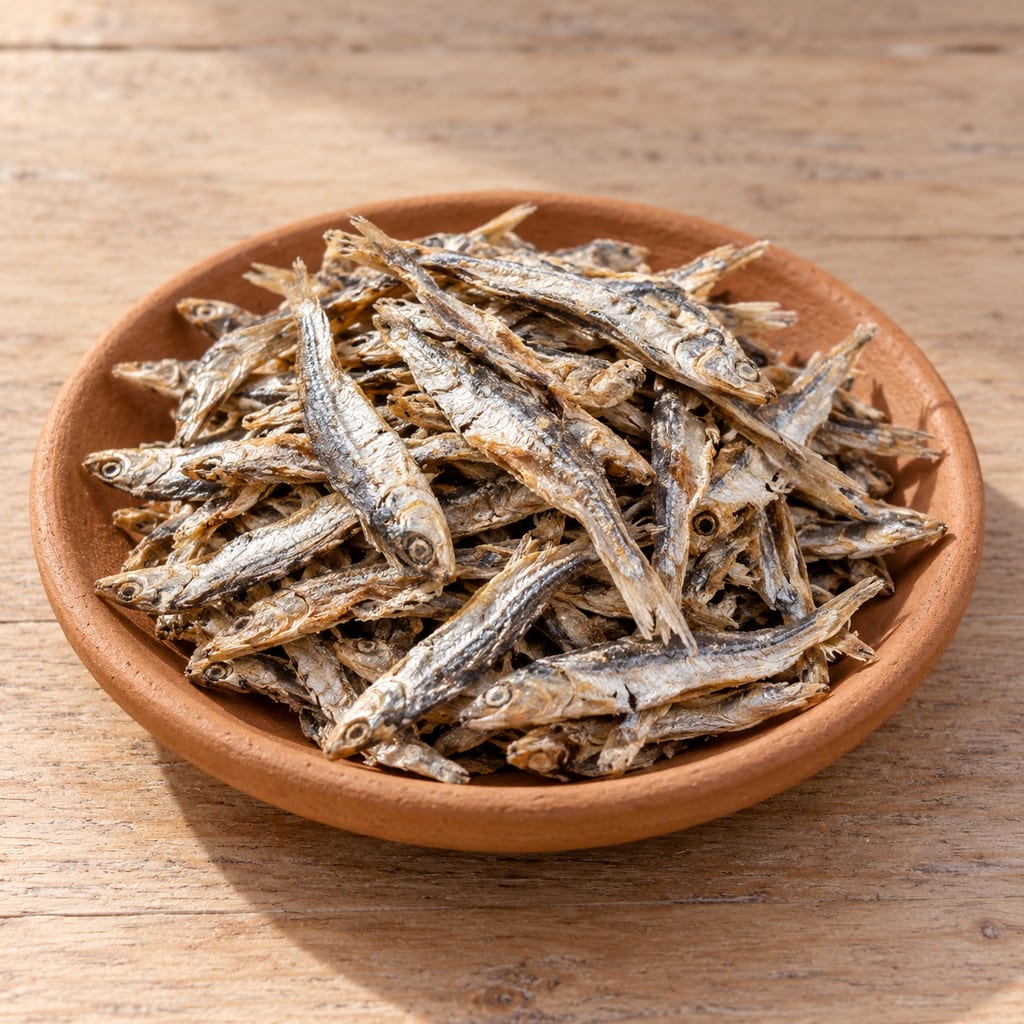
Anchoveta salted, drained of sanguaza and sun-dried on sand or stones at Caleta de Carquín, a technique declared part of Peru's cultural heritage in 2016.
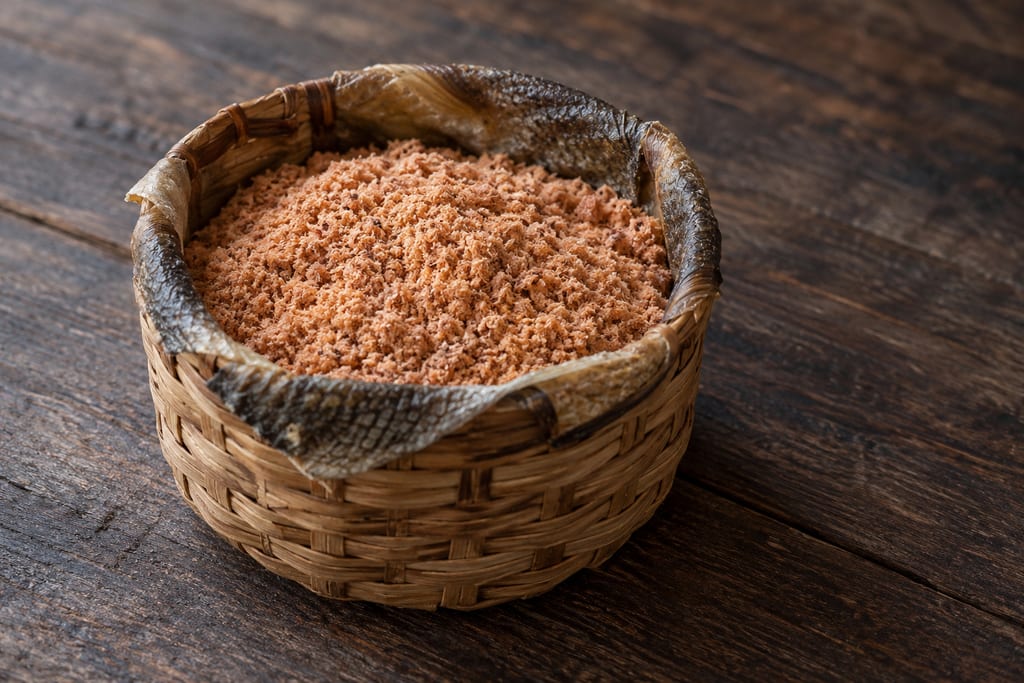
Dried salmon broken down, pounded to a meal and pressed into grass baskets lined with fish skin: the compact trade food of Celilo Falls and The Dalles.
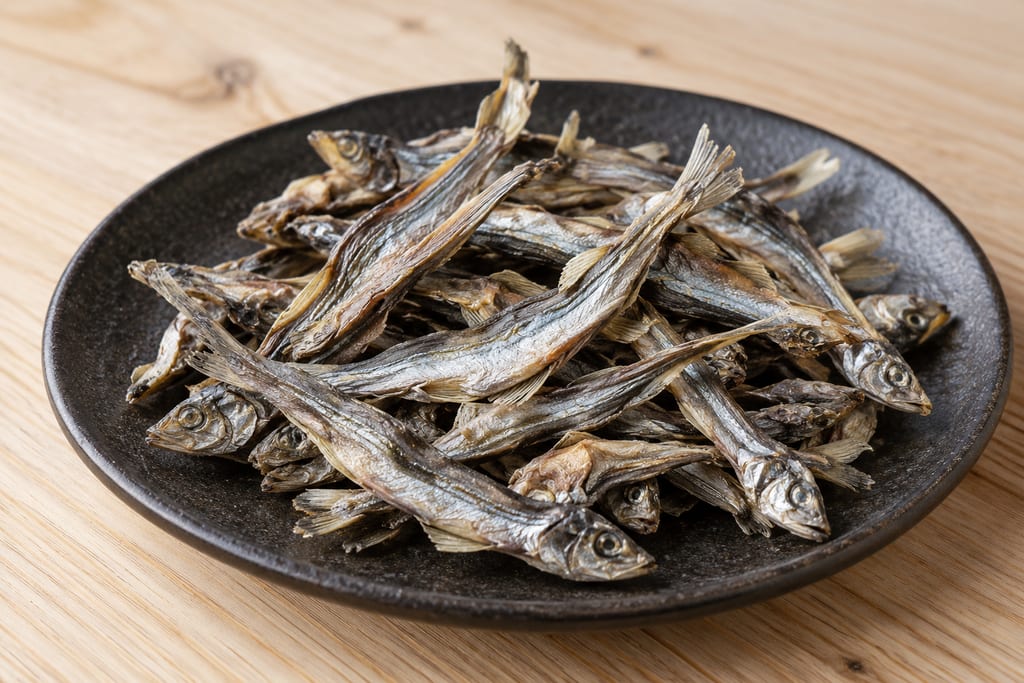
Greenlandic capelin dried whole on rocks, among crowberry vegetation or on buildings, and the microbial research that has made this small fish unusually well studied.
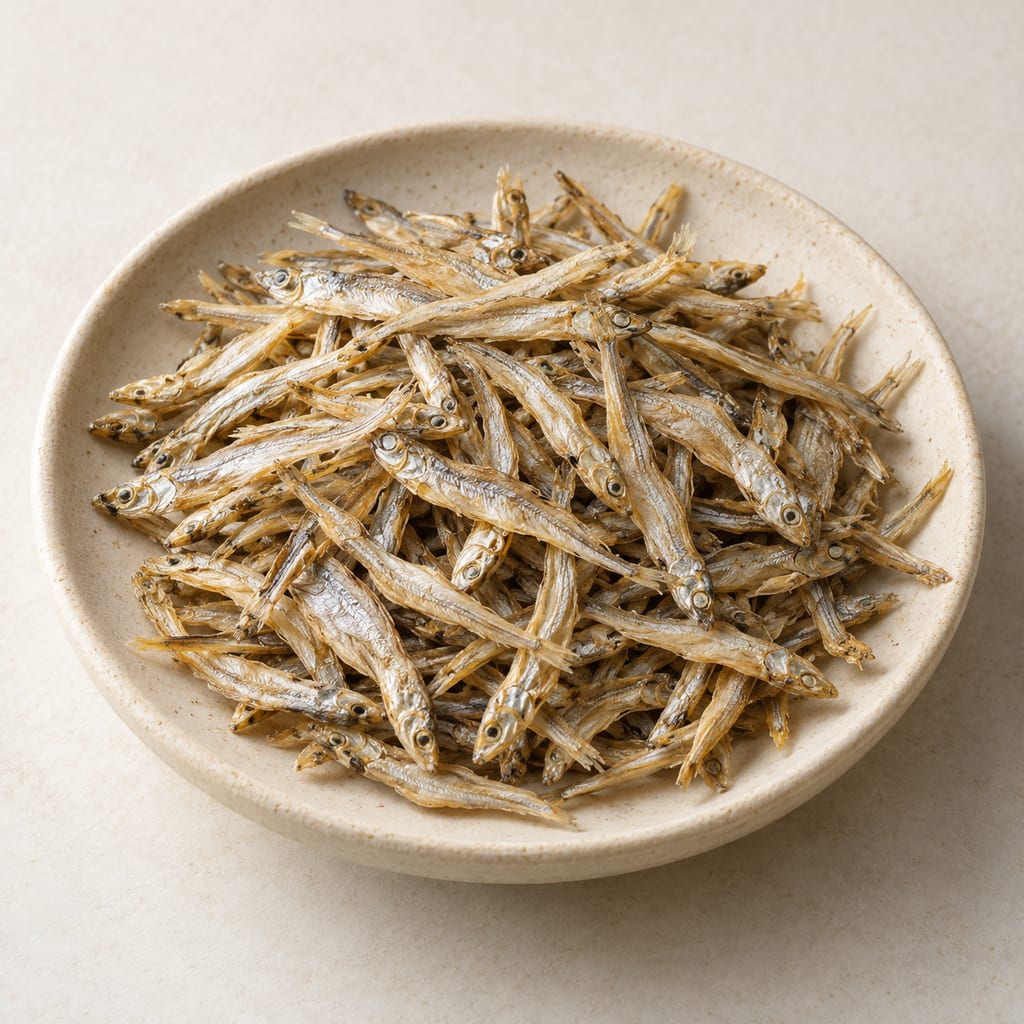
Small central-Mexican lake silversides, Chirostoma spp., dried whole and sometimes salted, then fried, roasted or simmered into Lenten tortitas and snacks.
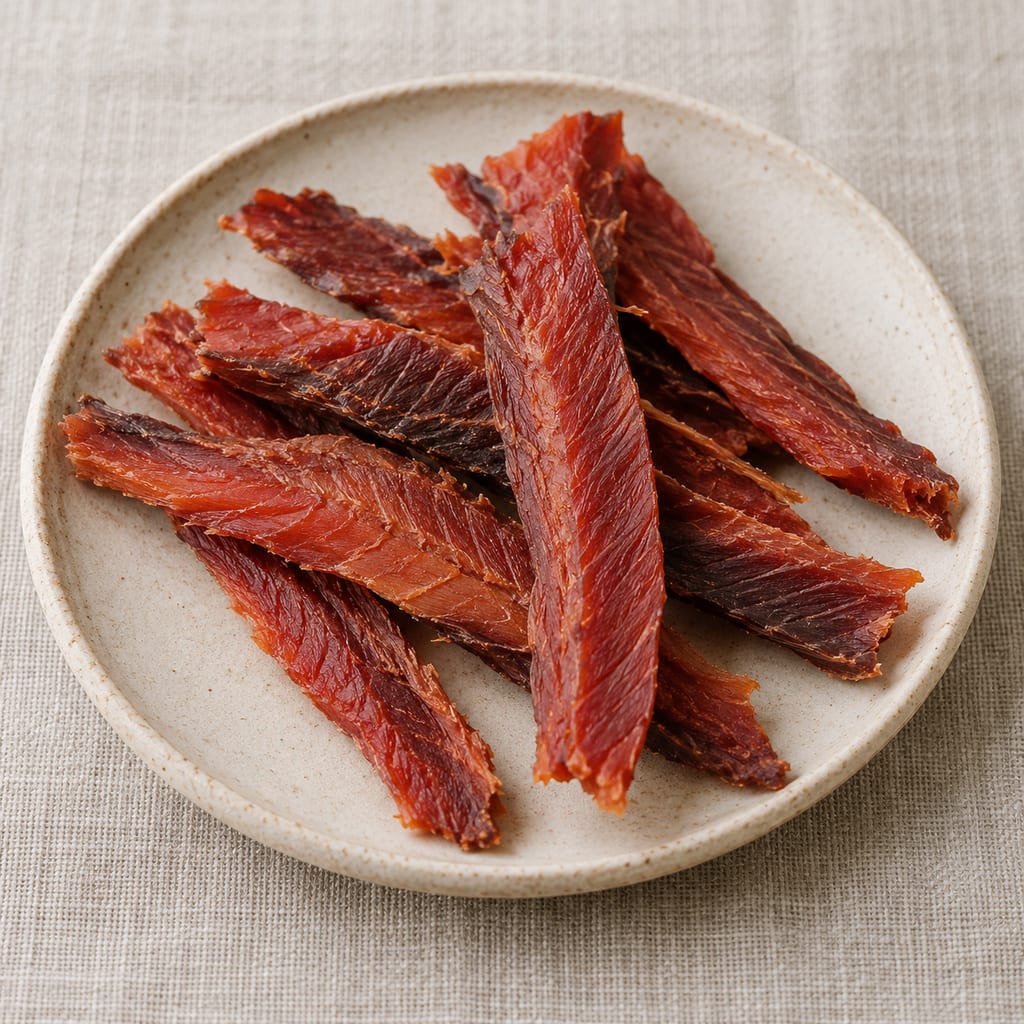
Salmon opened, scored and hung on roofed racks in the dry canyon winds of the Fraser River: slhíts'es in Stó:lō documentation, sts'wan in St'át'imc records.
No community contributions have been published for this entry yet.
Sign in to contribute. Published comments and photos are free to read.
SEAFDECMethod · History
https://repository.seafdec.org/bitstream/handle/20.500.12066/4751/SEA-fish-products2002.pdf?sequence=1Salting combined with extensive drying makes fish more portable and durable than light salting or partial drying alone
Salt cod should be distinguished from unsalted stockfish
Cited in: What it is; Trade and history; How salt and drying preserve; Using and storing
Museum NorthHistory
https://www.museumnord.no/en/stories/all-skrei-is-cod-but-not-all-cod-is-skrei/Norwegian stockfish is unsalted air-dried cod, distinct from salt-cured cod