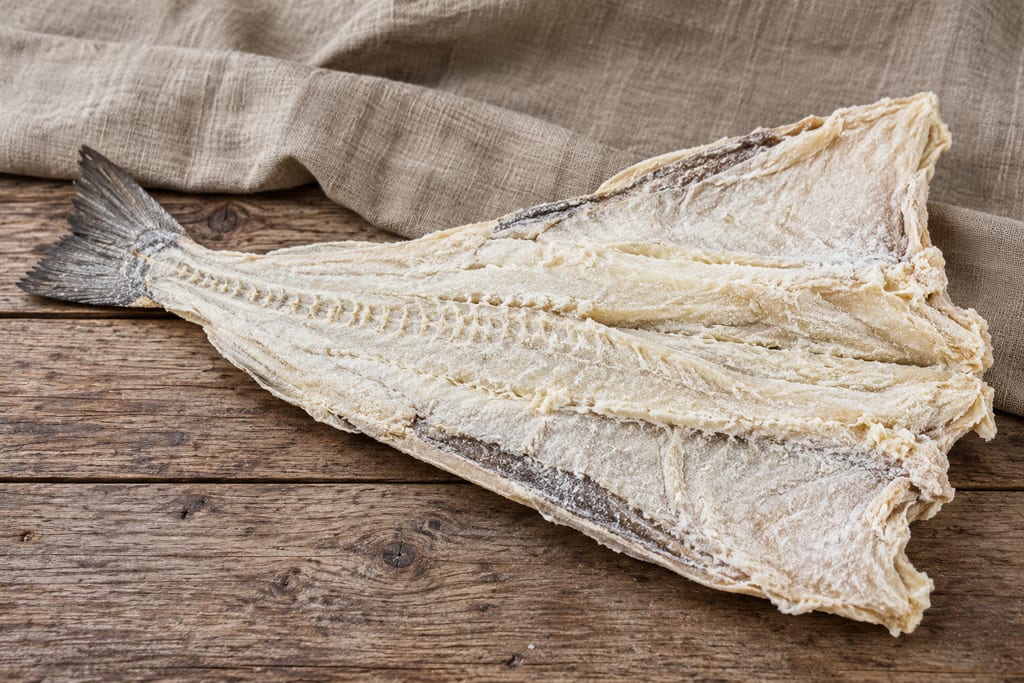
Dried salted cod
Cod split, salted and dried on flakes until hard, a long-keeping fish that must be desalted and rehydrated before use; the salting and the extensive drying together make it portable where light salting or partial drying does not.
 FermenteaWhere food goes to change
Traditional method
Ackee and codfish · Ackee & saltfish
Jamaica's best-known dish: salt-cured cod desalted and flaked, then folded through ackee arils with onion, tomato, sweet pepper, thyme and Scotch bonnet.
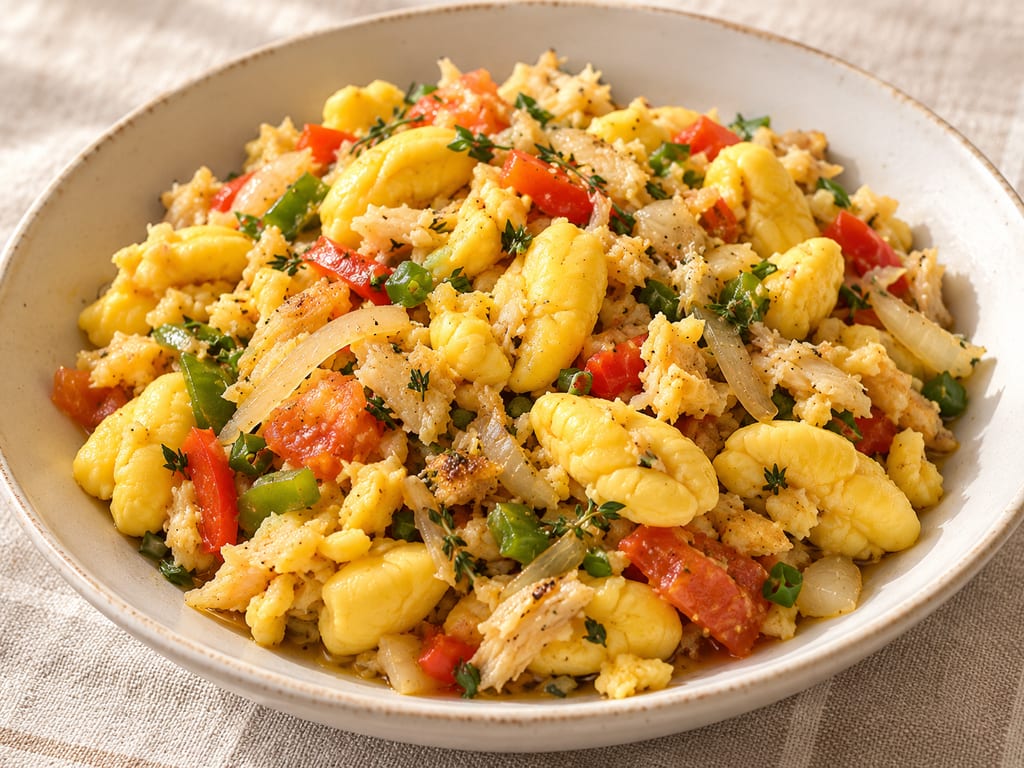
Ackee and saltfish combines two ingredients with very different histories: the fruit of a West African tree and salt-preserved Atlantic cod. Together, they form one of Jamaica's most distinctive foods.
The finished dish is soft, savoury and aromatic. Pale yellow pieces of ackee sit among flakes of saltfish, onions, tomatoes, sweet peppers, thyme and, often, Scotch bonnet pepper. It may be served as breakfast, lunch or a substantial meal with traditional accompaniments.
Ackee is the fruit of Blighia sapida, a tree in the soapberry family, Sapindaceae. Although frequently discussed as a vegetable in cooking, it is botanically a fruit. The edible portion consists of fleshy arils surrounding the seeds, not the entire fruit.
Saltfish usually means salt-cured cod, especially Gadus morhua, although other salted fish can be used in Caribbean cooking. It arrives in the kitchen already transformed by salt and sometimes extensive drying. Before it can be combined with ackee, most of that preserving salt must be removed.
The major terms are:
Ackee and saltfish — Jamaica's best-known combination of ackee and salt-preserved fish
Ackee — English Jamaican name for Blighia sapida
Saltfish — Caribbean English term for salt-preserved fish, frequently cod
Codfish — Another common Caribbean name for the preserved ingredient
Stamp and go — Jamaican saltfish fritters; a related use of the ingredient, not the same dish
Rundown — A Caribbean cooking style commonly involving coconut milk; mackerel rundown is a separate dish
Bacalao / morue salée — Spanish / French terms for salted cod in neighbouring Caribbean traditions
The significance of ackee and saltfish is not that Jamaica invented salting cod. It is that Jamaican cooks transformed an imported preservation product into a dish with its own ingredients, flavour and identity.
Atlantic cod did not originate in Jamaican waters. It came through the enormous North Atlantic fishery that connected Newfoundland and other northern fishing regions with European and colonial American markets.
Salt curing allowed cod to travel over long distances before mechanical refrigeration. Plantation economies provided a substantial market for comparatively inexpensive preserved fish, including fish used to provision enslaved people.
This trade helped establish saltfish as a familiar ingredient in Jamaican households.
Ackee followed a different route. The tree is indigenous to tropical West Africa and was introduced to Jamaica during the colonial period. It was established on the island by the late eighteenth century.
The exact date when somebody first cooked ackee together with salted cod is not securely documented. It would be misleading to assign the finished dish to one inventor or a precise year.
What can be said is that the combination became possible through the meeting of West African botanical knowledge, Caribbean agriculture and Atlantic preserved-fish commerce.
The eventual dish is thoroughly Jamaican.
It uses vegetables, aromatics and cooking practices adapted locally over generations. Its texture and presentation differ substantially from most European ways of preparing salt cod.
Saltfish was an important part of the provisioning systems of Caribbean slavery. Its transportability and cost mattered to plantation owners, but those economic considerations are not the whole story of its culinary development.
Enslaved and subsequently emancipated communities cultivated foods, retained knowledge, adapted unfamiliar ingredients and developed ways of cooking that transformed the materials available to them.
Treating ackee and saltfish merely as a European recipe transported to Jamaica erases this history.
Equally, claiming that its exact modern recipe has been continuously documented since slavery would exceed the surviving evidence.
The stronger historical account is one of cultural adaptation over time.
Ripe, properly prepared ackee has a soft, buttery texture and a mild savoury flavour. In cooked dishes it can resemble scrambled egg in appearance, although its botanical identity and chemistry are completely different.
The arils contain lipids that contribute to their richness. Their tenderness means they must be handled gently after cooking; excessive stirring can break them into a paste.
The fruit itself develops in a capsule that splits naturally as it ripens, exposing the pale arils and glossy dark seeds.
This natural opening is extremely important because immature ackee contains dangerous toxins.
The best-known is hypoglycin A, which can interfere with the body's ability to maintain normal blood glucose levels.
Improperly prepared ackee has been associated with serious poisoning, historically called Jamaican vomiting sickness.
Cooking does not reliably make immature ackee safe: hypoglycin A is heat-stable.
Only properly ripened, correctly separated edible arils are appropriate for consumption. The seeds and unsuitable parts of the fruit must not be eaten.
For cooks outside regions where fresh ackee is traditionally handled, commercially processed canned ackee from a reputable supplier is the practical choice.
This is an important difference from preparing many other fruits. Ackee safety depends not only on heating the food but on its maturity and on which anatomical portions are used.
Saltfish is much more than a source of salt.
During curing, salt draws moisture from the cod's muscle and diffuses into its tissues. Reduced water availability slows the growth of many microorganisms, while dehydration and changes in muscle proteins create a firm texture.
After soaking and cooking, properly prepared saltfish breaks into flakes that retain a certain bite. These flakes contrast with the softness of the ackee.
The initial cure also concentrates flavours that are less pronounced in fresh cod.
Desalting removes excess sodium chloride, but it does not entirely restore the original fresh-fish structure.
In the finished dish, relatively small flakes of fish distribute savouriness throughout a larger quantity of fruit and vegetables.
This is why simply substituting fresh white fish produces something recognizably different.
Saltfish and ackee should complement one another. The dish should not taste overwhelmingly salty.
Purchased saltfish must first be examined for the storage and preparation instructions appropriate to its particular cure.
Heavily dried pieces usually require more rehydration than thinner or softer salted fish.
The objective is to remove enough salt to make the fish pleasant to eat while preserving its characteristic texture.
Place the fish in a clean container with potable water and refrigerate while it soaks. Change the water periodically.
One documented Jamaican recipe uses a two-hour soak with hourly water changes or an overnight soak. These are recipe-specific approaches, not universal desalting times.
Very thick or exceptionally salty pieces may need different preparation, so the salt level should be assessed after cooking a small portion.
A long overnight soak should be carried out under refrigeration.
The soaked fish is commonly cooked in water before being drained, cooled sufficiently for handling, skinned where needed, and separated from bones.
Remove pin bones carefully. Break the flesh into manageable flakes rather than pulverizing it.
The resulting pieces should remain distinct when folded through the cooked ackee.
Excessive salt can dominate the dish and obscure the gentle character of the ackee.
Desalting changes the distribution of sodium chloride between the fish and the surrounding water. Repeated water changes maintain a concentration difference, encouraging more salt to move out of the flesh.
The effect is gradual, particularly in thick pieces.
This is diffusion, not fermentation.
The following recipe is based on a published Jamaican-style preparation using canned ackee. It is a cooking recipe, not a method for manufacturing saltfish or preparing fresh ackee from an unopened fruit.
- 150 g purchased saltfish, before desalting - 1 tin commercially prepared ackee, drained - 1 onion, sliced - 1 tomato, chopped - 2 spring onions, chopped - ? sweet pepper, sliced - 2 garlic cloves, chopped - 1 Scotch bonnet pepper, used to taste - 3 sprigs of thyme - 2 tablespoons cooking oil - ? teaspoon ground black pepper
Ackee and saltfish is not a rigid industrial formula.
Some preparations contain more tomato; others emphasize onions, scallions and sweet pepper. Some cooks use a whole Scotch bonnet during cooking and remove it before serving; others want the pepper's heat distributed through the dish.
The amount of saltfish also varies.
In a dish with abundant ackee, the fish may provide intermittent savoury flakes. Other households prefer a much stronger fish presence.
Some cooks begin with separately boiled fresh ackee when it has been safely harvested and prepared by experienced handlers. Commercial canned ackee changes the preparation because the edible arils have already been processed.
The finished dish should not be confused with saltfish fritters merely because the preserved ingredient is the same.
Stamp and go is a Jamaican saltfish fritter.
Desalted, flaked fish is mixed into a seasoned flour batter and fried. Depending on the recipe, scallion, onion, thyme and pepper may contribute flavour.
Unlike ackee and saltfish, the structure comes primarily from the batter.
Frying develops a browned exterior while keeping the interior softer.
These fritters are eaten as snacks, breakfast foods or savoury accompaniments.
The common link is the use of salted preserved fish, not a shared finished recipe.
Across the Caribbean, saltfish appears in preparations with green banana, breadfruit, dumplings, rice, flour batter and coconut milk.
In Saint Lucia, green fig and saltfish pairs the fish with unripe banana. The word fig in this setting does not refer to the common Mediterranean fig, Ficus carica.
In Barbados, saltfish becomes part of seasoned fried fish cakes, including the street-food preparation known as bread and two.
In Martinique, accras de morue are small salt-cod fritters.
These dishes belong to related preserved-fish traditions, but the differences in accompanying starches, flavourings and cooking methods are meaningful.
Ackee and saltfish is especially associated with Jamaican breakfast, but it can be eaten at other times.
Common accompaniments include:
- Fried dumplings - Boiled green banana - Roasted breadfruit - Fried plantain - Bammy, a cassava-based flatbread - Callaloo - Boiled yam and other provisions
These foods are not merely decorative side dishes.
They provide starch and bulk beside the richer ackee and salty fish. Fried or roasted accompaniments also contribute textural contrast.
A soft portion of ackee and saltfish served with crisp fried dumplings offers a completely different experience from the same dish with boiled banana and yam.
Neither needs to be treated as the single authentic presentation.
Insufficient desalting is the most obvious cause.
Adding more ackee or vegetables may reduce the perceived intensity, but it does not remove the excess sodium from the meal.
The better intervention is to prepare the saltfish appropriately before cooking.
The arils are delicate. Overmixing or extended vigorous boiling can destroy their structure.
Add prepared ackee toward the end and turn it gently through the other ingredients.
Poor-quality or improperly stored preserved fish can develop oxidized or deteriorated flavours.
Do not assume that soaking or frying can rescue a spoiled ingredient. Discard fish with suspicious spoilage signs or compromised packaging.
Some canned ackee and cooked vegetables release liquid. Thorough draining and sensible heat management help prevent a pool of water beneath the finished food.
This is the most serious failure and cannot be judged by texture alone.
Unripe ackee and improperly separated fruit can contain clinically dangerous concentrations of hypoglycin A.
Published FDA information reports that unripe fruit can contain concentrations around 1,000 parts per million, and the agency regards ackee products exceeding 100 parts per million hypoglycin A as adulterated under its regulatory criteria.
These numbers are toxicological and regulatory information, not preparation targets. There is no safe kitchen technique that uses appearance after cooking to verify the concentration.
Do not eat unopened, forced-open or improperly prepared fresh ackee. Use reliable commercially processed products unless the fruit is prepared by someone competent in the established local food-handling practice.
Prepared saltfish and finished ackee and saltfish are not shelf-stable merely because the original cod was preserved.
Desalting restores water to the fish and reduces its salt concentration, changing the conditions that previously inhibited microbial growth.
The finished meal also contains moist cooked fruit and vegetables.
Treat it as a perishable cooked dish: avoid prolonged room-temperature holding, refrigerate promptly and reheat thoroughly if keeping leftovers.
For commercial establishments, follow applicable food safety procedures and the manufacturer's instructions for canned ackee.
A sealed can of commercially processed ackee and an opened can are not the same storage product.
Ackee and saltfish is a striking example of how preservation technology becomes absorbed into a local cuisine.
The cod's long journey from northern fishing grounds explains its original availability. Salting and drying explain why it could travel. Caribbean agriculture explains the vegetables and accompanying starches. West African plant history helps explain the presence of ackee.
But the final act of invention was culinary.
Jamaican households gave these ingredients a form and flavour that became strongly associated with the island itself.
Understanding the dish means recognizing all these layers without pretending that every historical detail is documented.
The result is a food whose identity belongs to Jamaica, even though its two defining ingredients have very different geographical origins.
Atlantic cod did not originate in Jamaican waters; it came through the North Atlantic fishery that connected Newfoundland and other northern regions with European and colonial American markets, and salt curing let it travel before mechanical refrigeration. Plantation economies provided a substantial market for inexpensive preserved fish, including fish used to provision enslaved people, which helped establish saltfish as a familiar Jamaican ingredient. Ackee followed a different route: the tree is indigenous to tropical West Africa, was introduced during the colonial period and was established on the island by the late eighteenth century.
The exact date when somebody first cooked ackee together with salted cod is not securely documented, and it would be misleading to assign the finished dish to one inventor or a precise year. Enslaved and later emancipated communities cultivated foods, retained knowledge and adapted unfamiliar ingredients; the stronger historical account is one of cultural adaptation over time rather than a European recipe transported to Jamaica or a continuously documented modern recipe.
Scaling: source batch only
Immature ackee and improperly separated fruit can contain clinically dangerous concentrations; hypoglycin A is heat-stable, so cooking does not reliably make unripe ackee safe. Poisoning has historically been called Jamaican vomiting sickness.
Hazard sourcePoor-quality or improperly stored saltfish can develop oxidised or deteriorated flavours; soaking and frying do not rescue a spoiled ingredient.
Hazard sourceDesalting restores water to the fish and reduces its salt concentration, and the finished meal contains moist cooked fruit and vegetables, so the dish is not shelf-stable because the cod was once preserved.
Hazard sourceUse only properly ripened fruit whose capsule has split naturally, taking the edible arils alone
Control sourceFDA regulatory criterion for hypoglycin A in ackee products
Control sourceRefrigerate the fish throughout a long soak and treat the finished dish as perishable cooked food
Control sourceDo not eat unopened, forced-open or improperly prepared fresh ackee: the seeds and unsuitable parts of the fruit must not be eaten, and no kitchen technique verifies hypoglycin A by appearance after cooking.
Outside regions where fresh ackee is traditionally handled, use commercially processed canned ackee from a reputable supplier.
A sealed can of commercially processed ackee and an opened can are not the same storage product.
A country-level association; the sources do not place the dish's development in one Jamaican locality.
Green fig and saltfish is a related saltfish preparation, not this dish.
Saltfish fish cakes and the street-food preparation known as bread and two are related uses, not this dish.
Cod split, salted and dried on flakes until hard, a long-keeping fish that must be desalted and rehydrated before use; the salting and the extensive drying together make it portable where light salting or partial drying does not.
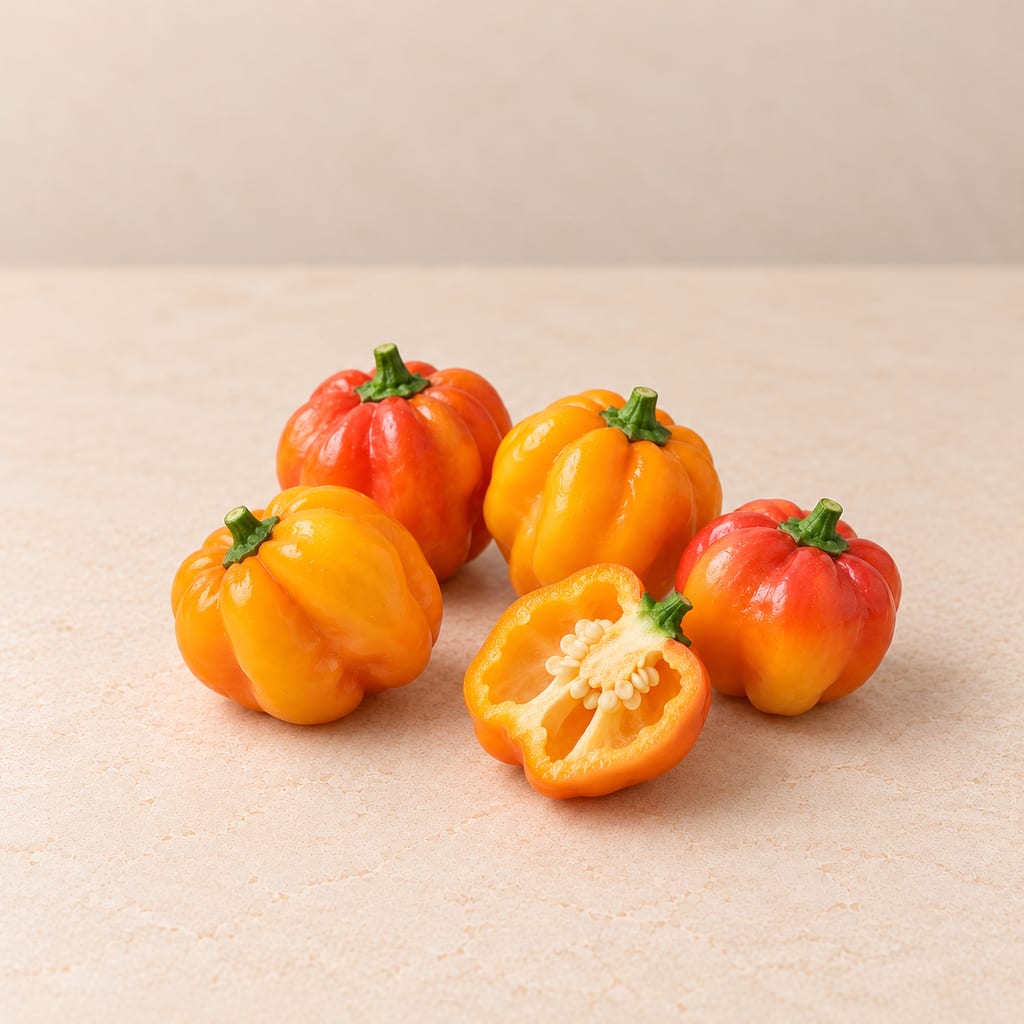
The Scotch bonnet is the squat, fiercely hot, fruity chilli of Jamaican jerk and Caribbean pepper sauces, a Capsicum chinense cousin of the habanero.
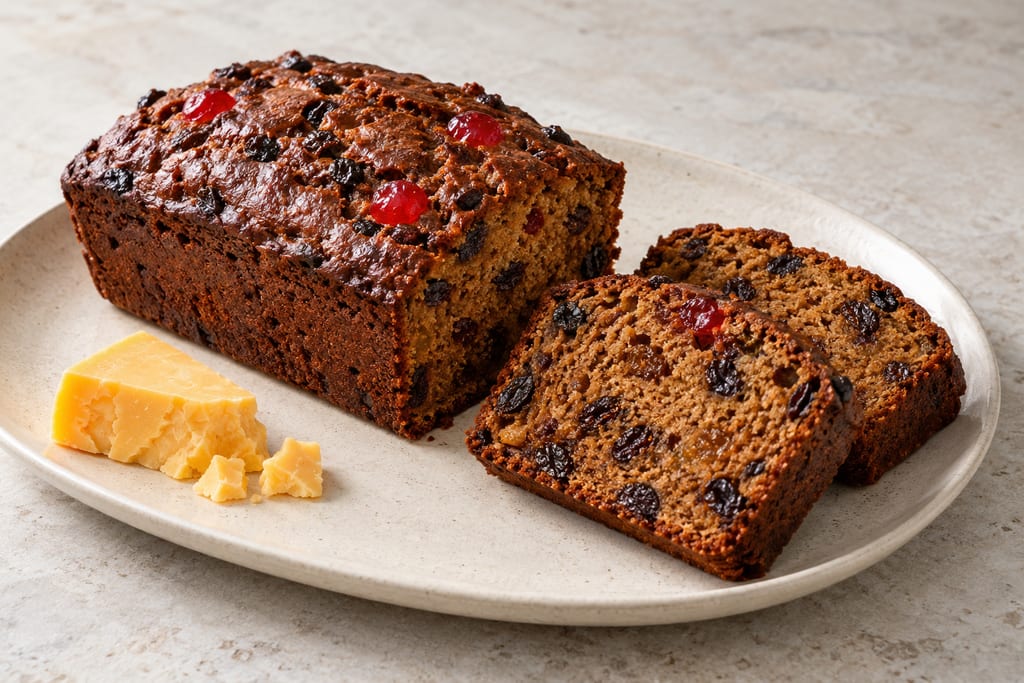
A Jamaican Easter loaf made from a dark, sweet batter of stout, dried fruit and warm spices. This version uses baking powder and a loaf pan; yeast-raised variations are separate preparations.
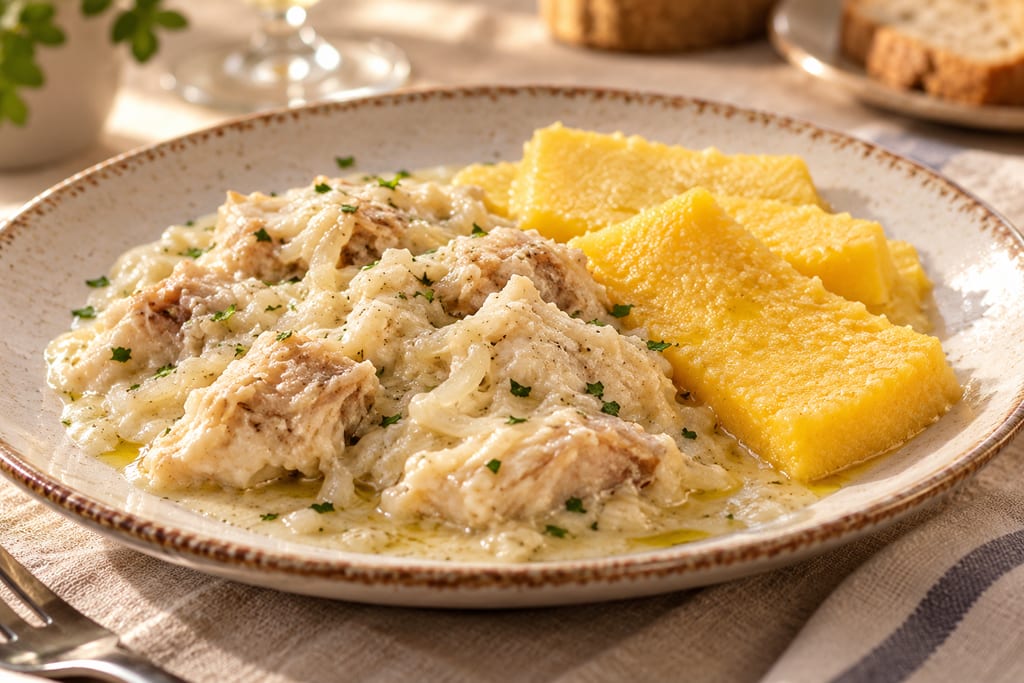
Stockfish from Vicenza, left barely bubbling for hours with onion, preserved anchovy, olive oil, milk and a little cheese until it is tender under a dense pale sauce, and eaten with polenta.
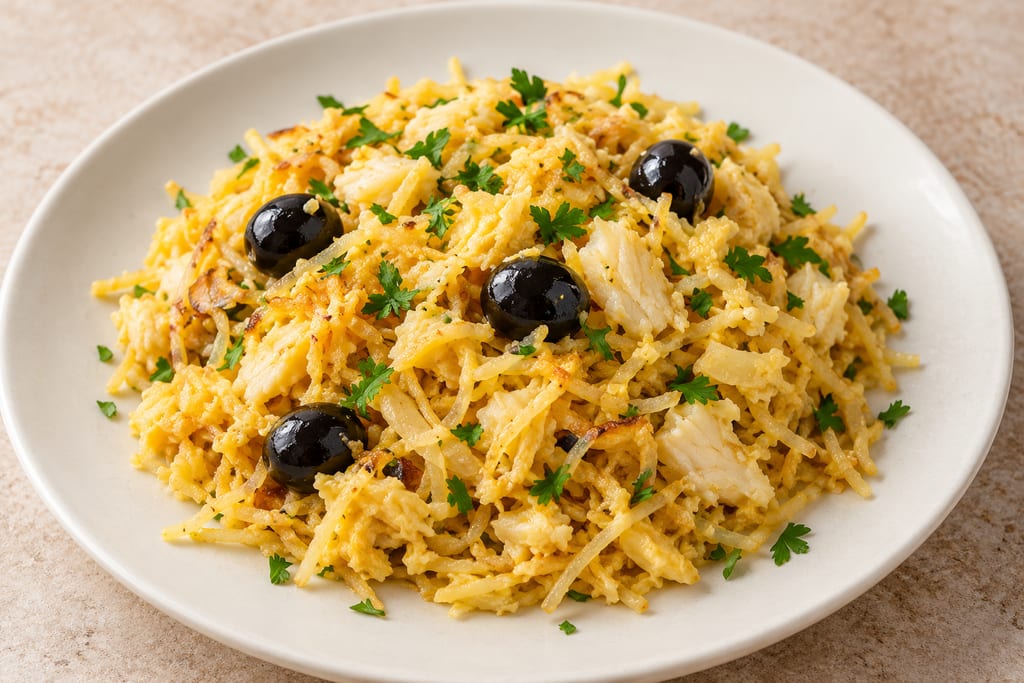
Lisbon's salt cod dish: shredded desalted cod and fine fried potato matchsticks folded through softened onion and bound with beaten egg, finished with parsley and black olives.
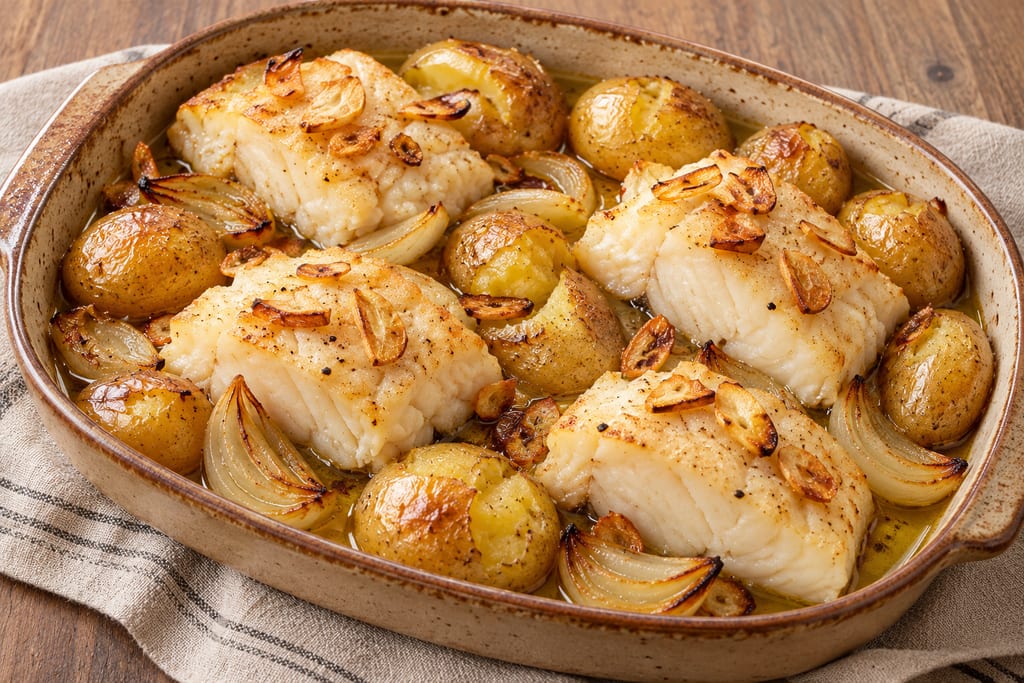
Thick pieces of desalted salt cod roasted in olive oil with garlic and onion, served with small potatoes cooked and then crushed until their skins split.
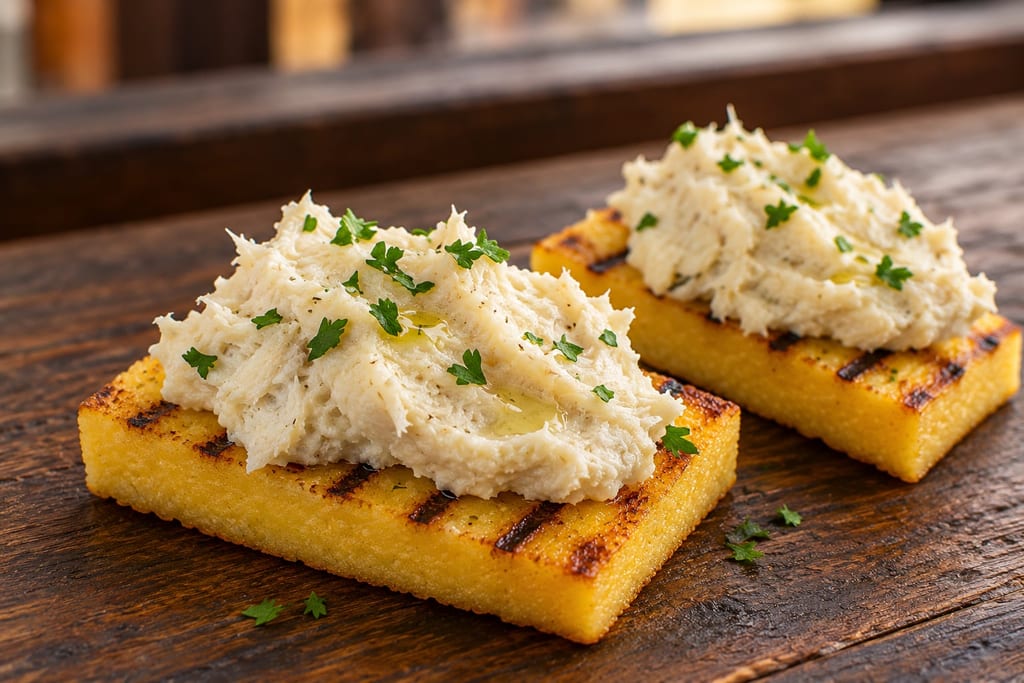
A Venetian cicchetto of cooked unsalted stockfish beaten with oil until it turns into a pale, aerated cream, spooned onto grilled polenta in the city's wine bars.
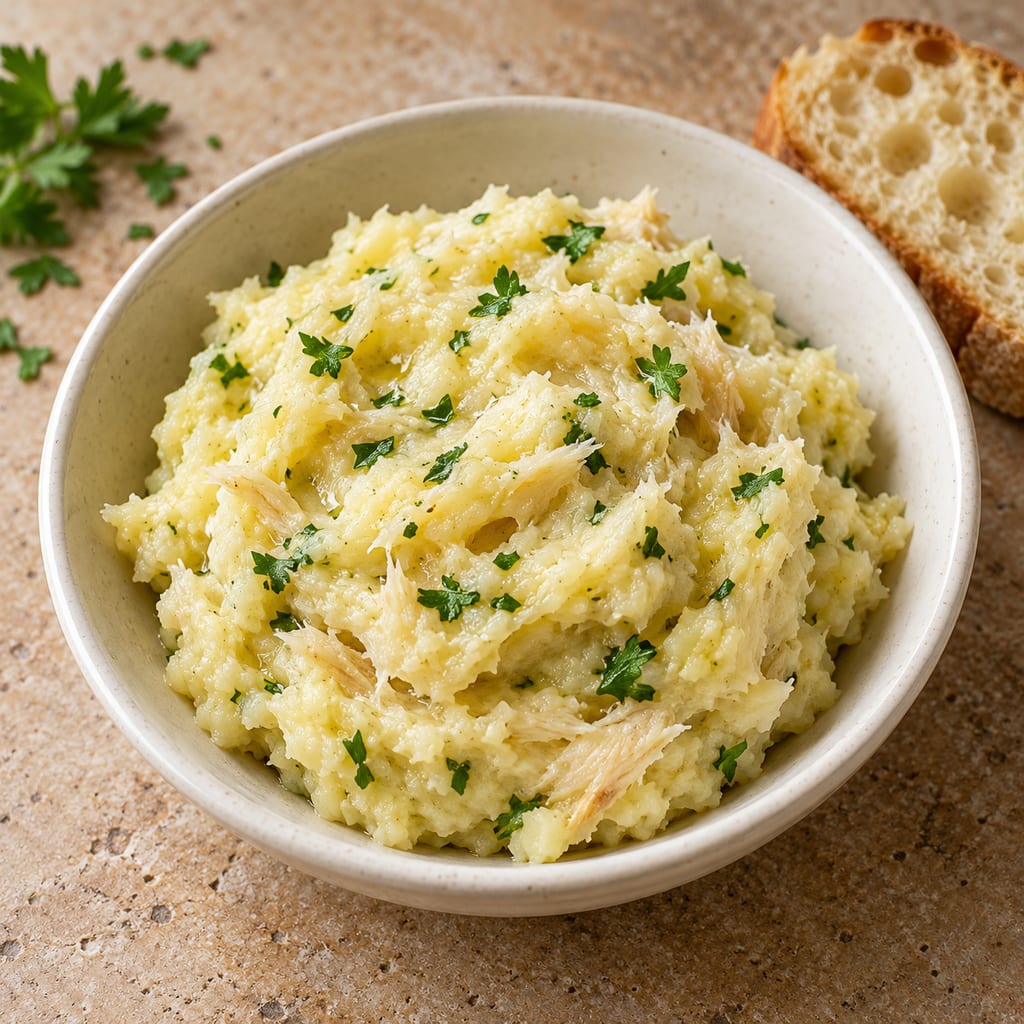
An Istrian festive spread of cooked stockfish beaten with olive oil and garlic until pale and cohesive, here bulked out with hand-mashed floury potato.
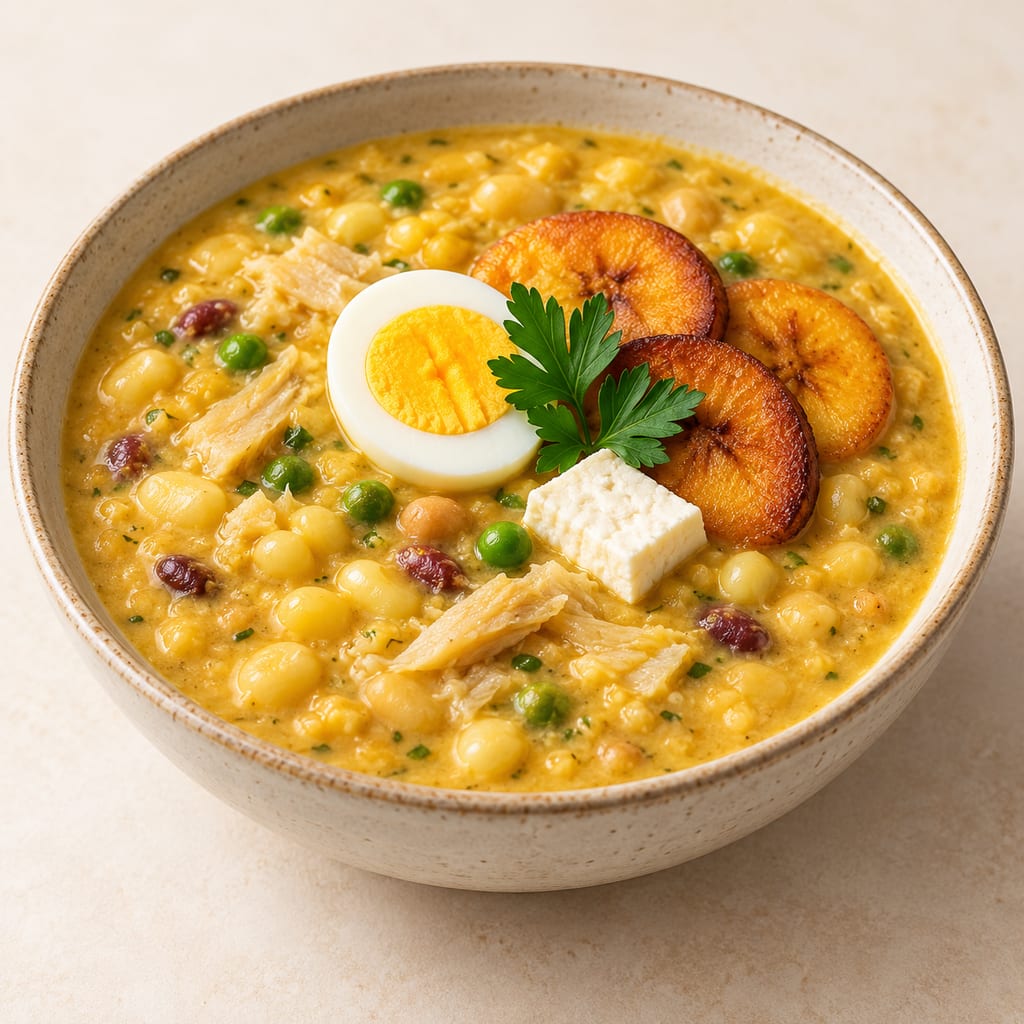
Ecuadorian Holy Week soup of tender grains and pulses, squash, milk and salted fish, thickened with peanut paste and served with contrasting garnishes.
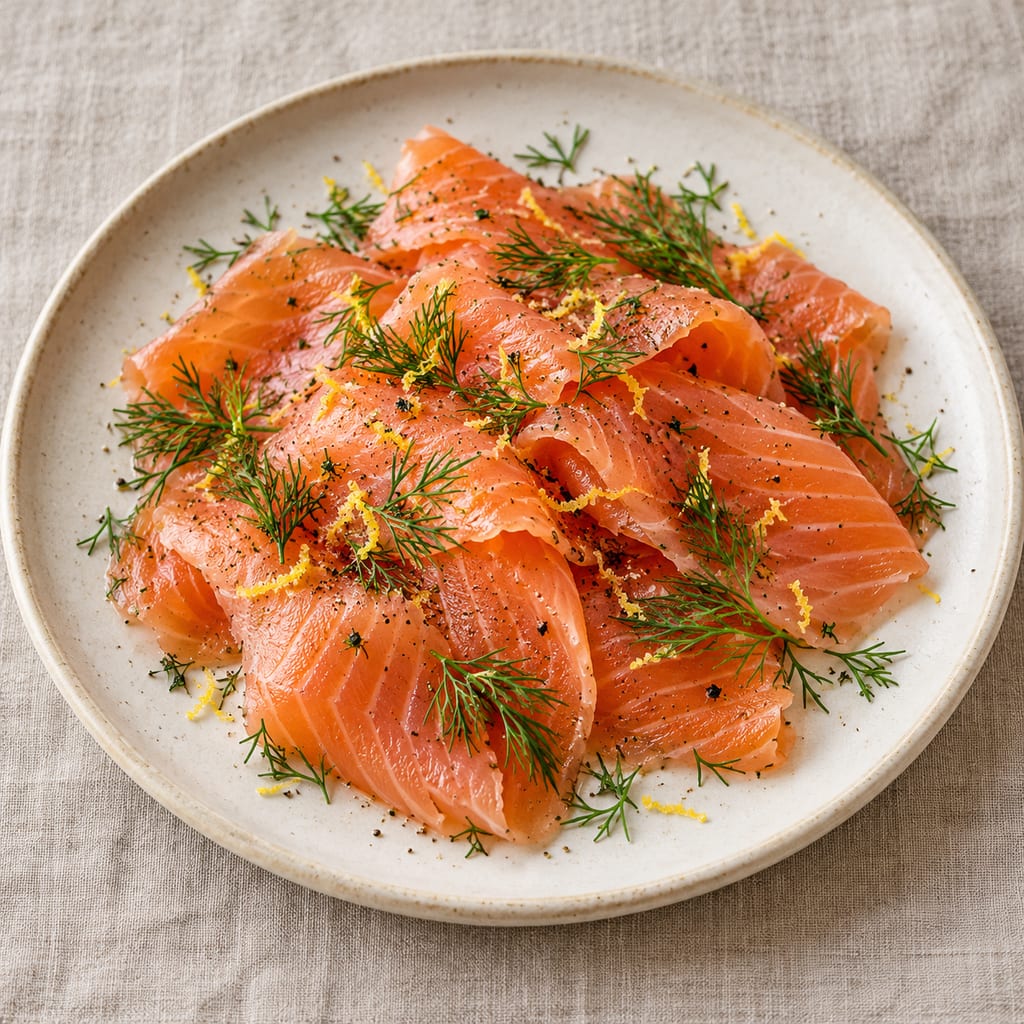
Salmon is cured with salt, sugar, pepper, dill and lemon zest under refrigeration.
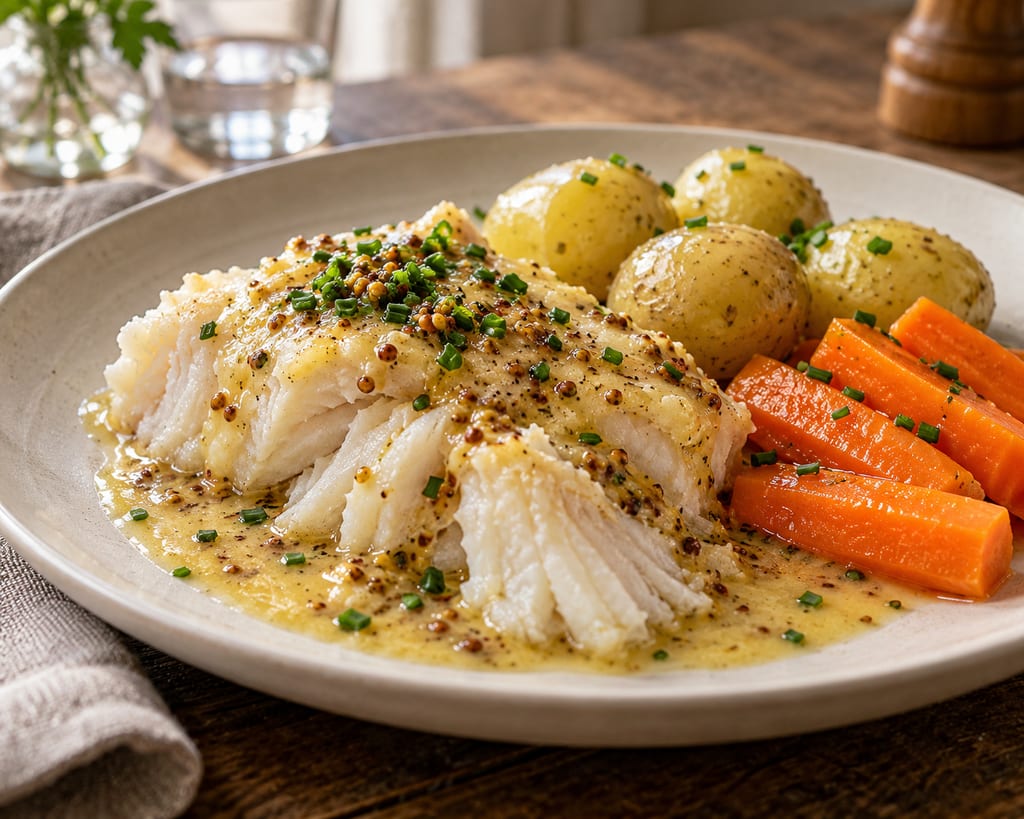
Rehydrated air-dried Norwegian cod simmered until it flakes, served with boiled potatoes and carrots under a wholegrain-mustard butter whisked from the fish's own poaching liquid.
No community contributions have been published for this entry yet.
Sign in to contribute. Published comments and photos are free to read.
National Library of JamaicaHistory
National Library of Jamaica — Jamaican food and historical notesJamaican food history and the local development of the dish
Cited in: A Jamaican dish with an Atlantic history; Food history and unequal power; The meaning of the dish today
Jamaica Tourist BoardHistory · Use
Visit Jamaica — Ackee and Saltfish in JamaicaAckee and saltfish as Jamaica's national dish and its place at breakfast
Ackee established in Jamaica by the late eighteenth century after introduction from tropical West Africa
Cited in: A Jamaican dish with an Atlantic history; The two ingredients arrived by different routes; Variations within Jamaica; Stamp and go; The meaning of the dish today
CheveningMethod · Inspiration
Chevening — Jamaican ackee and saltfish recipeA documented Jamaican-style preparation using canned ackee: 150 g saltfish, one tin of drained ackee, onion, tomato, spring onions, sweet pepper, garlic, Scotch bonnet, thyme, cooking oil and ground black pepper
A two-hour soak with hourly water changes, or an overnight soak
Boiling the soaked fish, then skinning, boning and flaking it
Cited in: How the saltfish contributes flavour and texture; Preparing saltfish for cooking; Soaking; Cooking and cleaning; Why the soak matters; A practical ackee and saltfish preparation; Ingredients; Variations within Jamaica; The dish is far too salty; The ackee has become a paste; The fish tastes unpleasantly rancid; The dish is watery
US Food and Drug AdministrationSafety
US FDA — Hypoglycin and ackee fruitHypoglycin A is heat-stable and cooking does not reliably make immature ackee safe
Unripe fruit can contain concentrations around 1,000 parts per million
Ackee products exceeding 100 parts per million hypoglycin A are regarded as adulterated under FDA regulatory criteria
Cited in: What makes ackee so unusual?; The ackee is unsafe; Storage and food safety
Newfoundland and Labrador Heritage Web SiteHistory · Trade
Newfoundland and Labrador Heritage — Saltfish markets and the Caribbean tradeSalt curing allowed cod to travel from northern fishing grounds to Caribbean markets, including fish used to provision enslaved people
Cited in: The two ingredients arrived by different routes; Food history and unequal power; How the saltfish contributes flavour and texture
Jamaica Tourist BoardUse
Visit Jamaica — Jamaican food guideAccompaniments including fried dumplings, boiled green banana, roasted breadfruit, fried plantain, bammy, callaloo and boiled yam
Cited in: What to serve with ackee and saltfish
Barbados Tourism Marketing Inc.Use
Barbados tourism authority — Street-food traditionsBarbadian seasoned fried fish cakes, including the street-food preparation known as bread and two
Cited in: Other Caribbean saltfish dishes
Saint Lucia Tourism AuthorityUse
Saint Lucia Tourism Authority — Culinary traditionsGreen fig and saltfish in Saint Lucia, pairing the fish with unripe banana
Cited in: Other Caribbean saltfish dishes