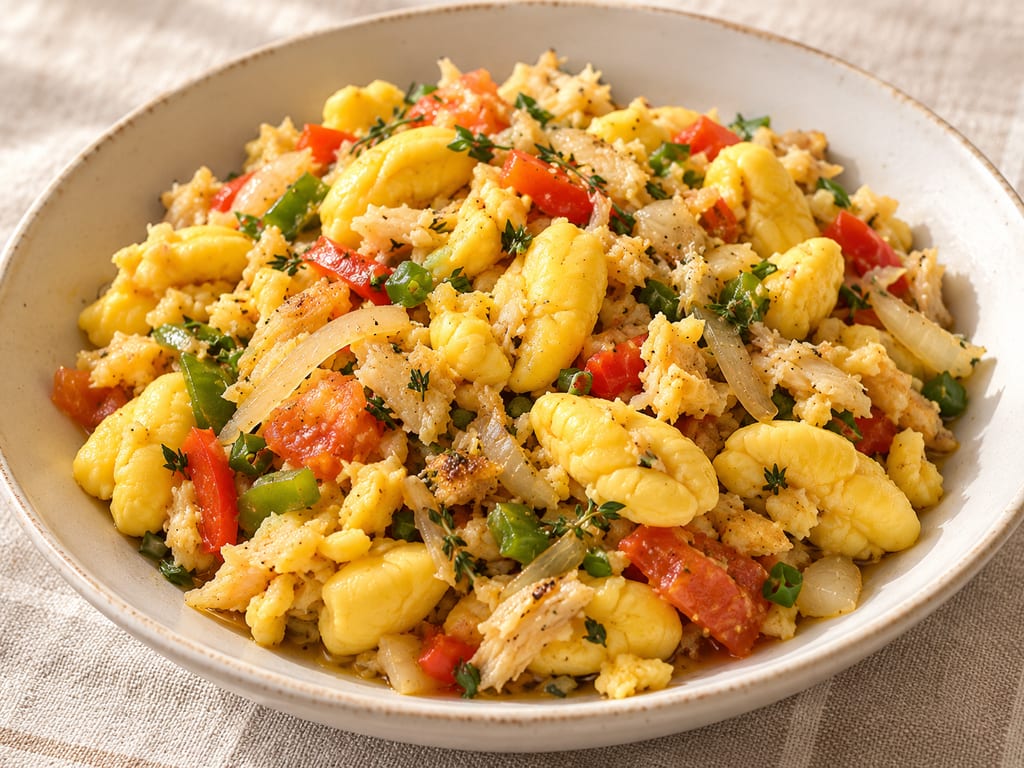
Ackee and saltfish
Jamaica's best-known dish: salt-cured cod desalted and flaked, then folded through ackee arils with onion, tomato, sweet pepper, thyme and Scotch bonnet.
 FermenteaWhere food goes to change
Modern method
Jamaican Easter bun · Easter bun
A Jamaican Easter loaf made from a dark, sweet batter of stout, dried fruit and warm spices. This version uses baking powder and a loaf pan; yeast-raised variations are separate preparations.
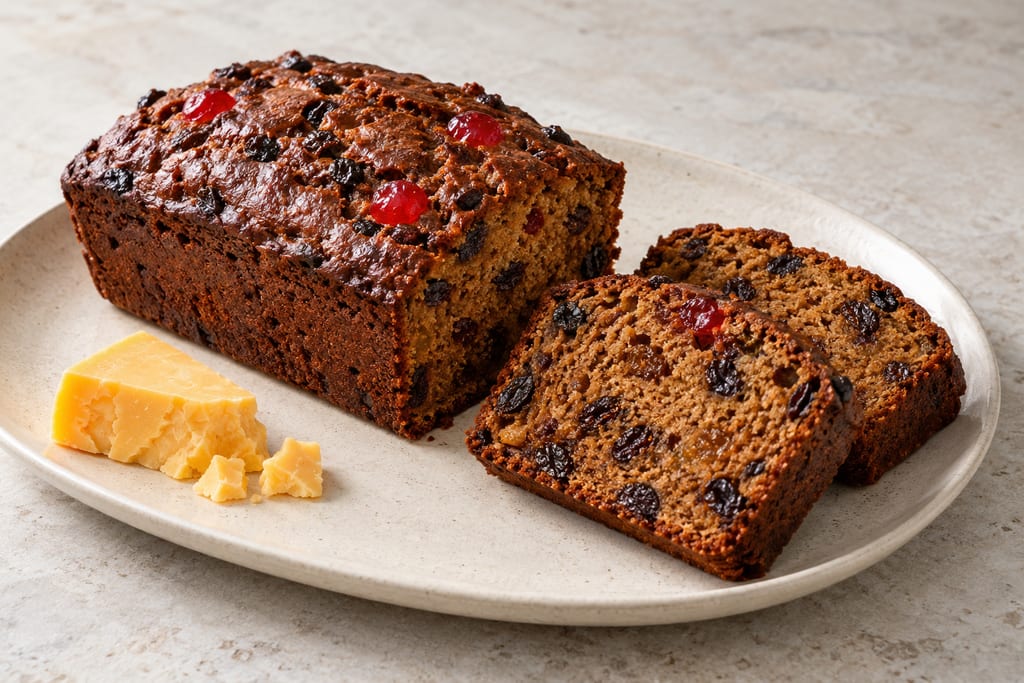
Jamaican Easter spice bun is a sweet, dark loaf with warm spices and pieces of dried fruit. It is most recognisable in the pairing called bun and cheese: thick slices of the sweet bread alongside cheese, a combination the National Library of Jamaica records as an Easter custom. The library also places Easter bun among British influences on Jamaican food. Those statements establish a cultural association and a broad historical connection; they do not date one definitive recipe or establish that every Jamaican bun descends from one unchanged formula.
Several kinds of Easter bun circulate. Imma Adamu describes both yeast-raised and chemically leavened adaptations, and her own version may be made with or without stout. This record follows only her stout-and-baking-powder loaf. It is a quick bread: the batter goes into the oven after mixing, and its rise comes from chemical leavening rather than a living yeast culture or a proofing period. Keeping that boundary matters. A yeast dough requires its own measured formula, hydration, kneading and rise cues; the page's mention of yeast as a variation does not supply those details.
The bun has a story that reaches beyond the ingredient list. Food historian B. W. Higman's writing is cited in a 2017 Eater account that connects Jamaican spice bun to English hot-cross buns and reports that the Jamaican version shifted toward a fruit-filled loaf. The National Library likewise identifies Easter bun as part of English influence on the island's food culture. These accounts help explain the relationship, but neither traces this specific stout-and-baking-powder formula to an eighteenth- or nineteenth-century recipe. The modern recipe is best understood as one contemporary expression within a larger Jamaican tradition.
The seasonal association is more than a label on a bakery shelf. The National Library's account of Jamaican Easter describes bun and cheese as a traditional food eaten over the holiday. Paul Williams's 2025 Gleaner article quotes historian Olive Senior on Good Friday observance, including the long church service and bun and cheese eaten during it. It also recounts Senior's description of Easter as 'Pickney Christmas' during slavery-era holiday customs. That history concerns the holiday and its observances; it is not proof that today's particular loaf, with stout, browning sauce and its measured quantities, existed in the same form then.
The calendar also shaped how cooks and sellers distinguished Easter buns from everyday buns. A 2003 Jamaica Observer food report describes bun and cheese as a familiar daily snack in Jamaica, while noting that bakers added more fruit to Easter buns. That distinction is useful: Easter bun is not defined only by being a sweet loaf. The season, the abundance of fruit in some versions, the household or bakery that makes it, and the cheese served with it all contribute to what people mean by the pairing.
Accounts of the bun's development should be read with care because popular retellings sometimes reach beyond their evidence. Similar spiced breads are found in many Christian food traditions, but similarity alone cannot demonstrate a direct line of descent. The National Library's broad record of English influence and Eater's modern discussion make a context for the Jamaican hot-cross-bun relationship. They do not establish a single inventor, an exact year of transformation, or an uninterrupted recipe. This loaf's documented source is a present-day author's recipe, and its historical setting is the Jamaican Easter food tradition.
The formula makes about ten servings and begins with a wet mixture of brown and granulated sugar, honey, browning sauce, molasses, vanilla, stout and one egg. The dry mixture contains all-purpose flour, baking powder, salt, ½ tablespoon ground cinnamon, and 2½ teaspoons (4 g) of the author's Easter spice blend, which she specifies as 1 teaspoon cinnamon, ¾ teaspoon nutmeg and ¾ teaspoon allspice. Dried fruit is tossed through the flour mixture before the wet ingredients are added. Butter is stirred in after the batter comes together, and candied cherries can be placed on top. The source provides both gram and household measures.
Brown sugar, honey and molasses bring sweetness and dark, rounded flavour; the stout contributes liquid and a malt character. The recipe author says the stout deepens the loaf's brown colour and adds malt and cocoa notes. Browning sauce is included in a small measured amount, and the author describes it as a Caribbean seasoning used to darken dishes. Cinnamon, nutmeg and allspice form the warm spice profile. The amounts are specific to this recipe, so a reader should not infer that any one ingredient can be removed or increased without changing the result.
The egg and flour supply structure that holds the loaf together as it bakes. Butter enriches the batter and contributes tenderness. The dried fruit adds sweetness and pockets of chew; coating it with the flour mixture helps break up clumps before the wet ingredients are added. That instruction is simple but useful: a clump stuck together does not distribute like separate pieces. Optional candied cherries decorate the top, rather than serving as a required part of the batter.
Although the recipe contains stout, fruit, and sugars, the method is not fermentation. The ingredient's prior brewing history does not turn this batter into a fermented food. The recipe asks for baking powder, not a yeast starter, and proceeds directly to baking. Treating the two versions as one would obscure why this loaf can be mixed and baked without proofing.
Baking powder is a chemical leavener, a prepared mixture containing a base and an acid. Once moistened, its components release carbon dioxide, and a double-acting powder produces further gas as batter heats in the oven. The bubbles expand and help raise the batter. This is a chemical reaction, not microbial fermentation: no yeast cells grow, consume sugar and produce a rising dough during a resting stage.
That mechanism explains why the order of work is short and why the mixed batter should move to the oven without an unnecessary wait. The source recipe separates wet and dry mixtures, combines them, adds butter and transfers the batter to a greased loaf pan. Once liquid meets the baking powder, leavening begins. In a quick loaf, there is no long rise to develop a gluten network. Instead, the batter is shaped by the ingredients and pan while gas bubbles expand during baking.
The loaf's rise depends on a balance among leavener, liquid, flour and sweeteners. Baking powder is measured at eight grams in this recipe. The University of Illinois Extension explains that old baking powder can lose effectiveness and advises using it before its printed date. The source recipe also gives spoon measures, but weight reduces variation among spoon sizes. Stale or poorly stored powder may leave a denser result, although other causes such as excess flour or handling can also matter.
Chemical leavening and yeast leavening create different processes and textures. Adamu describes a yeast alternative as producing a more airy texture after a warm rise, but does not give a full yeast formula here. That note is a signpost, not an instruction to swap baking powder for yeast one-for-one. A yeast loaf would need its own tested proportions and fermentation timing; this page preserves the published quick-bread version.
Begin by heating the oven to 180°C (350°F) and greasing a loaf pan. The oven must be ready when the batter is mixed so the baking powder's gas can be captured in the loaf rather than lost while batter sits. Greasing reduces sticking and allows the baked loaf to release after it has cooled.
Whisking the sugars with honey, browning sauce, molasses, vanilla, stout and egg makes one consistent liquid mixture. Separately sifting flour, baking powder, spices and salt distributes small amounts of leavener and seasoning through the flour. Tossing the dried fruit with the dry ingredients follows the author's method for breaking up clumps and spreading pieces through the batter.
Combine the wet and dry mixtures only until the flour is incorporated, scraping the sides of the bowl where dry patches can hide. The author then stirs in melted or softened butter. This recipe does not ask for kneading or a prolonged mixing stage. A quick bread's aim is a coherent batter; extensive mixing is unnecessary and can make the finished crumb tougher as flour proteins develop.
Pour the batter into the pan, arrange optional cherries on top, and bake for 60 to 75 minutes. That is the source's interval; the recipe card's separate total time of one hour and fifteen minutes does not cover the full upper end. The discrepancy should remain visible rather than be resolved by inventing a new time. The author's endpoint is a toothpick inserted in the centre that comes out clean. In a later reply, the author offers 93–96°C (200–205°F) as an additional doneness cue; it is a recipe author's comment, not a separately validated safety limit.
Cool the bun before removing it from the pan. The loaf is still setting as it loses heat, so turning it out immediately can damage its shape. Once cooled, slice it thickly for bun and cheese. The procedure is a single source's ten-serving batch; the recipe does not establish how to scale it.
The word 'bun' can suggest a small individual roll, but this version is baked as a loaf. Eater's account of Jamaican spiced bun describes a development away from the smaller English hot-cross-bun form toward a denser fruit loaf, and the recipe author likewise uses a loaf pan because the batter is too fluid to shape by hand. That does not make every Jamaican Easter bun identical: commercial loaves and home recipes vary in colour, fruit, sweetness, moisture and leavening.
Cheese is not an incidental garnish in the Jamaican pairing. The National Library records bun and cheese as an Easter food, and the Jamaica Observer's 2003 report describes it as an everyday snack as well as a holiday combination. Adamu serves her version with sharp cheddar, coffee or tea, and suggests butter, jam or avocado as accompaniments. A savoury, sharp cheese gives a counterpoint to the sweet loaf; that is a serving observation, not a claim that all Jamaican households use the same cheese.
The pairing also travels with people. Eater's account describes Jamaican cuisine in diaspora cities and the foodways carried into those communities. The bun's presence outside Jamaica reflects the reach of the holiday tradition, though availability, bakery recipes and accompanying cheese vary by place. A supermarket loaf, a local bakery's recipe and a home-baked quick bun may all be recognized as Easter bun while differing substantially in method.
Some bakers include more fruit for Easter, while others make spiced bun throughout the year. The Observer's reporting documents both everyday consumption and seasonal fruit differences. This helps explain why no single sensory description can cover the entire category. The recipe here has a stout-darkened colour and dried fruit, with an optional cherry topping; another bun might be lighter, yeast-raised, without stout, or made to a baker's own family formula.
Adamu lists a broad range of possible dried fruits and presents the fruit choice as a personal variation. The measured recipe uses 170 grams of dried fruit and names cherries, raisins and apricots as examples. A mix can create different sweetness and chew, while leaving fruit out produces a different loaf; the source offers this as a variation but does not give separate quantities for every option. Keep the total amount tied to the formula unless following a fully specified version.
The stout is also optional in the source author's broader discussion. Her preferred stout version is darker and more malt-forward; she says root beer or cola can substitute in her adaptation, with the sugar reduced, and mentions coffee as another route to bitterness and colour. These are the author's own variation notes, not interchangeable equivalents for every formula. The structured recipe remains the stout version because it has one exact measure and process.
Chemical and yeast-raised versions should remain distinct recipes. A packet of yeast cannot simply replace baking powder: yeast requires hydration, food, time, and a warm place to rise, whereas this batter goes into the oven soon after mixing. The source's suggestion to let yeast dough rise does not establish yeast amount, liquid balance, proofing duration, shaping, or bake time. A separate, source-complete yeast method would allow those variables to be reported accurately.
Fruit amount also carries cultural and commercial variation. The 2003 Jamaica Observer article says Easter buns are often made with more fruit than everyday buns. That is a reported practice, not a universal standard, and no exact increase is given. This recipe uses one measured fruit amount and is best kept intact when repeated; a baker who changes it is creating a personal variation.
The source author notes that excess moisture can contribute to a centre that seems underbaked and that packing flour into a measuring cup can create a larger flour quantity than intended. Her advice is to use a scale or, if needed, adjust the oven temperature and bake longer. The recipe's weighed quantities help control one source of variation. Because the source does not present a controlled troubleshooting study, these points remain the author's practical guidance rather than universal causes.
A toothpick that emerges clean is the endpoint printed in the recipe. The same author later suggests an internal-temperature range, but neither source gives qualified storage directions or a validated process review. The temperature should not be presented as a food-safety critical limit, and the bun's colour or smell cannot establish how long it can safely be stored. This record therefore carries no shelf-life claim.
The recipe contains wheat flour, egg and butter, so it contains wheat, egg and milk allergens. Stout is part of the stated formula; the source does not measure residual alcohol after baking. Readers who avoid alcohol should follow a fully specified alternative from the author rather than assume baking removes it all. The recipe's source offers an option to omit stout, but each substitute changes the ingredient balance and sensory result.
Finally, this baked bun is not a preserved product. The method does not include fermentation, curing or a validated canning step, and it makes one fresh loaf. The recipe's useful detail lies in its specific formula and serving tradition, not an unsupported promise about storage or safety.
Jamaican Easter bun is recorded by the National Library of Jamaica as part of Jamaican culture, with broad English influence in the island's food history. The recipe author's stout-and-baking-powder formula is contemporary; the reviewed sources do not establish an earliest attestation for this specific loaf.
Yield 10 servings · Scaling: source batch only
The formula contains wheat flour, egg and butter.
Hazard sourceFollow the source bake and use its toothpick endpoint; the author separately gives 93–96°C as a doneness cue, not a validated safety limit.
Control sourceThis is a baked quick bread, not a fermented dough. Yeast-raised versions are separate preparations.
Contains wheat, egg and milk; stout is an ingredient. Baking does not establish that all alcohol has evaporated.
The sources support a Jamaican food tradition and a recipe published as Jamaican; they do not establish a single place of origin.
Jamaica's best-known dish: salt-cured cod desalted and flaked, then folded through ackee arils with onion, tomato, sweet pepper, thyme and Scotch bonnet.
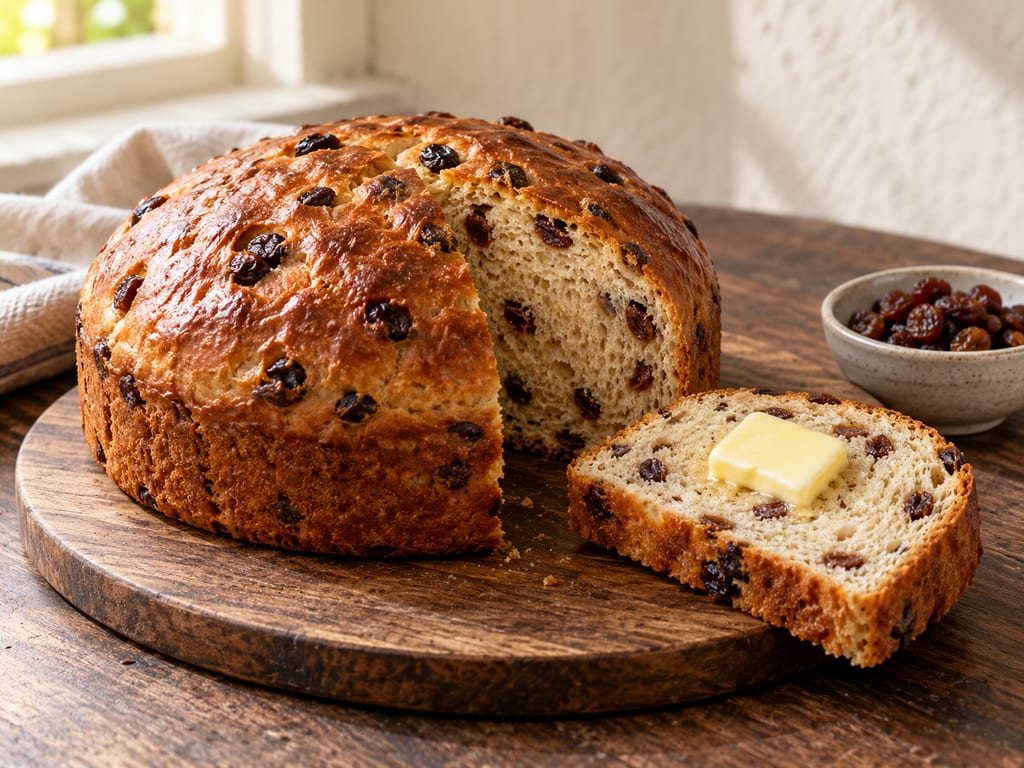
An Irish fruit-studded yeast loaf, associated in a contemporary cultural account with Halloween and often served fresh or toasted with butter.
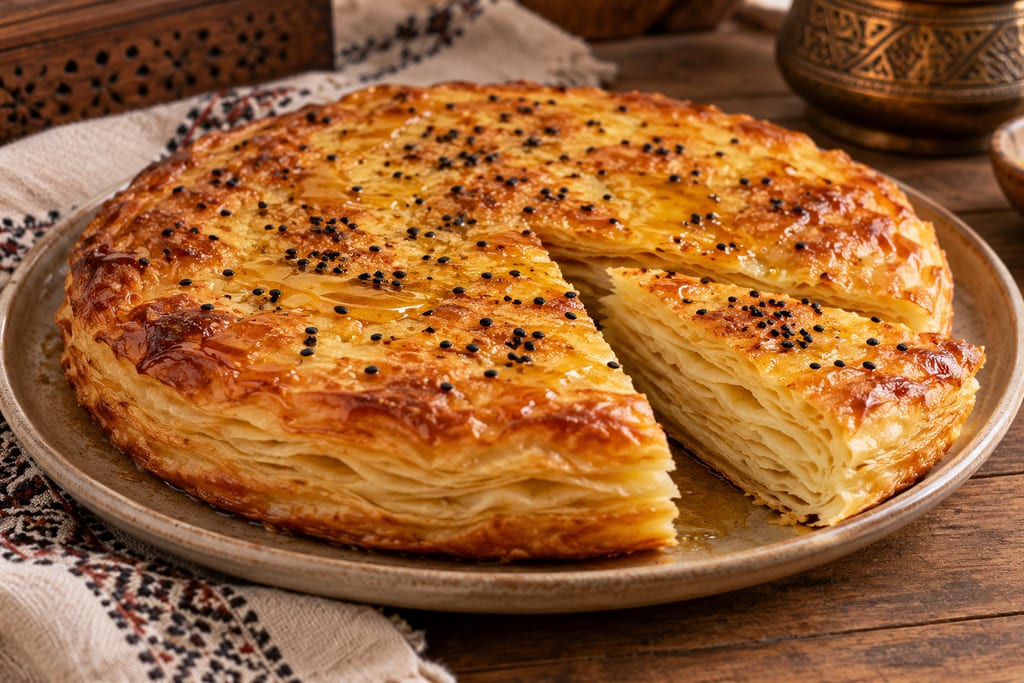
Bint al-sahn is a Yemeni celebration and home bread built from thin, egg-rich yeast dough layers brushed with ghee or butter. This source-specific version makes one round cake, baked until golden and served warm with honey.
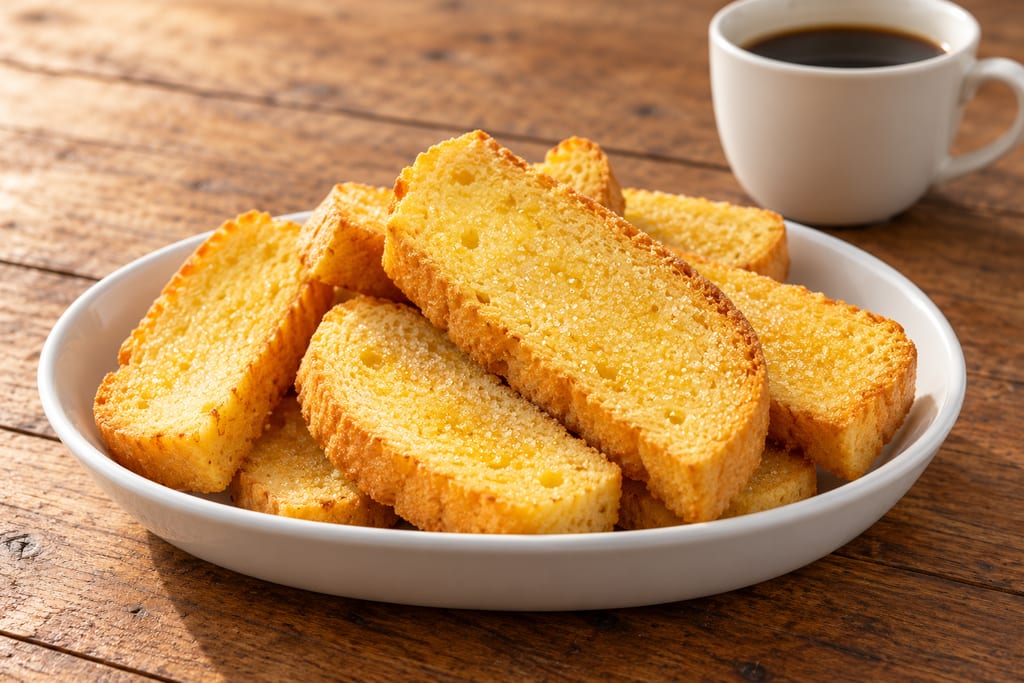
PagkainPinoy’s 24–30 piece version twice-bakes day-old soft bread with a thin butter-and-sugar coating.
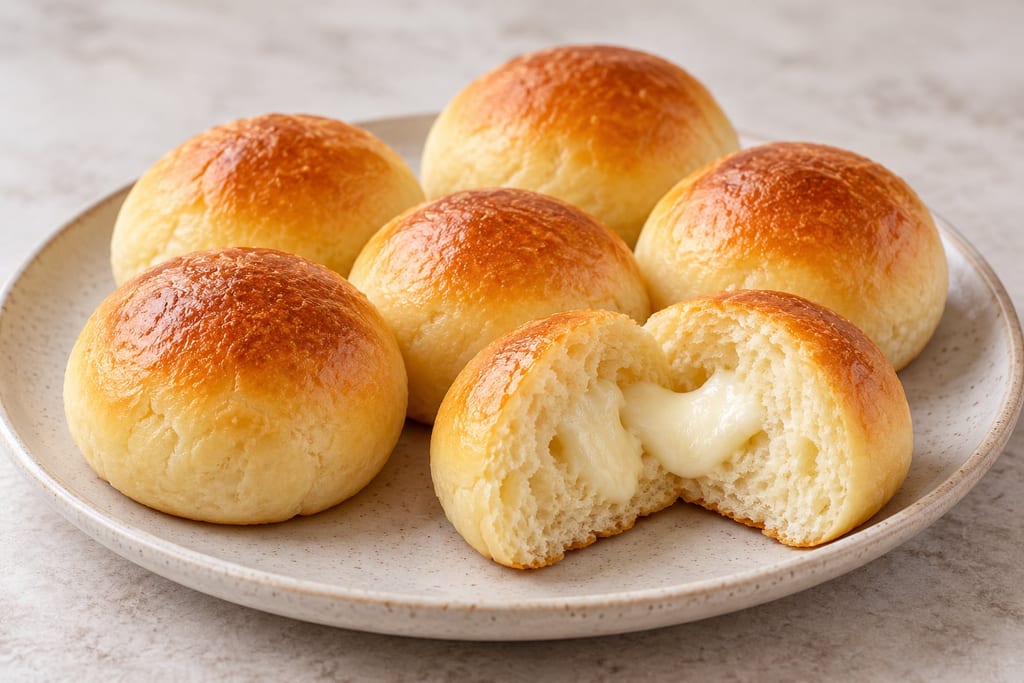
Soft Brazilian yeast rolls use cooked mashed potato in an enriched dough, with mozzarella cubes enclosed before baking.
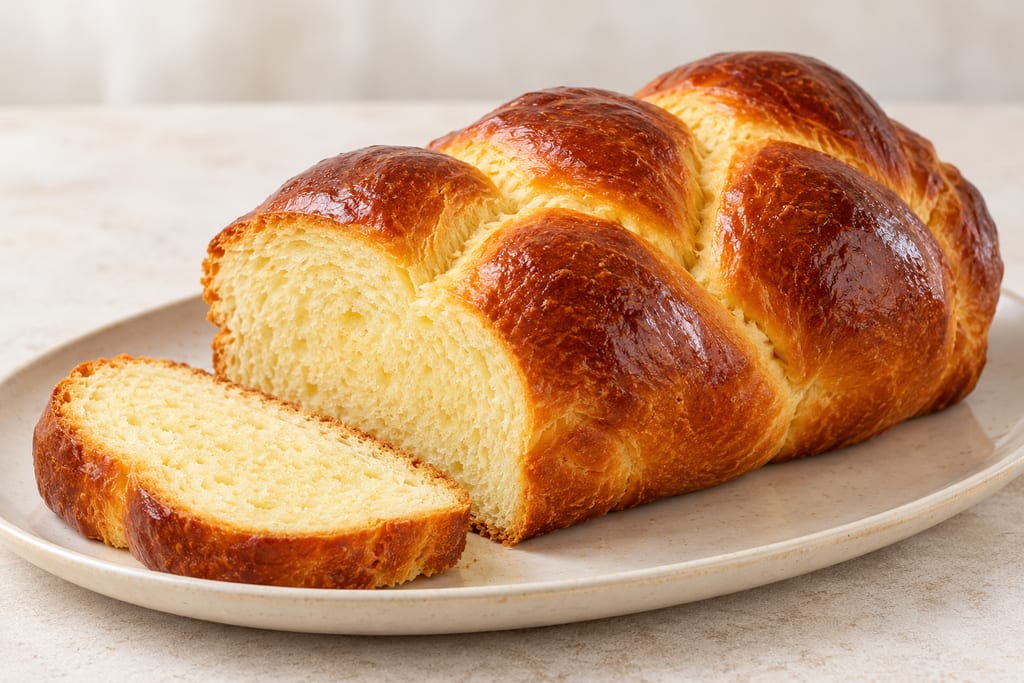
An egg-and-butter-rich yeast dough shaped as one round loaf, two loaves or twelve small brioches, with baking paths that vary by shape.
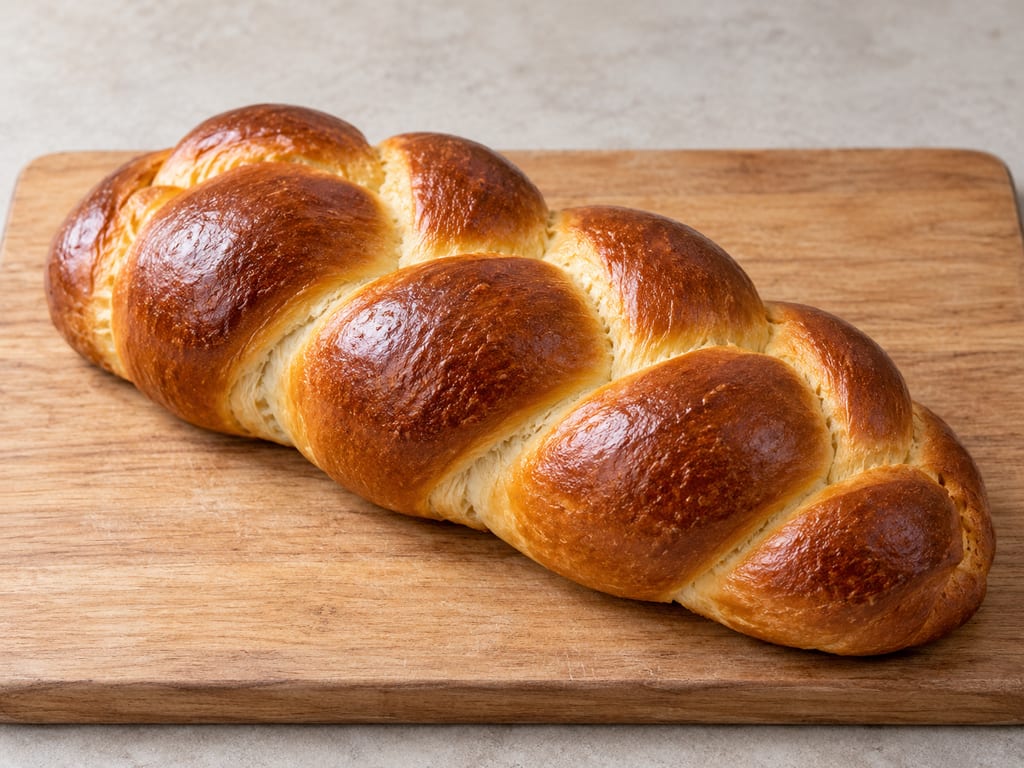
A three-strand yeast-raised challah with flour, salt, yeast, water, neutral oil, honey and egg, based on a Jewish Museum Vienna home recipe.
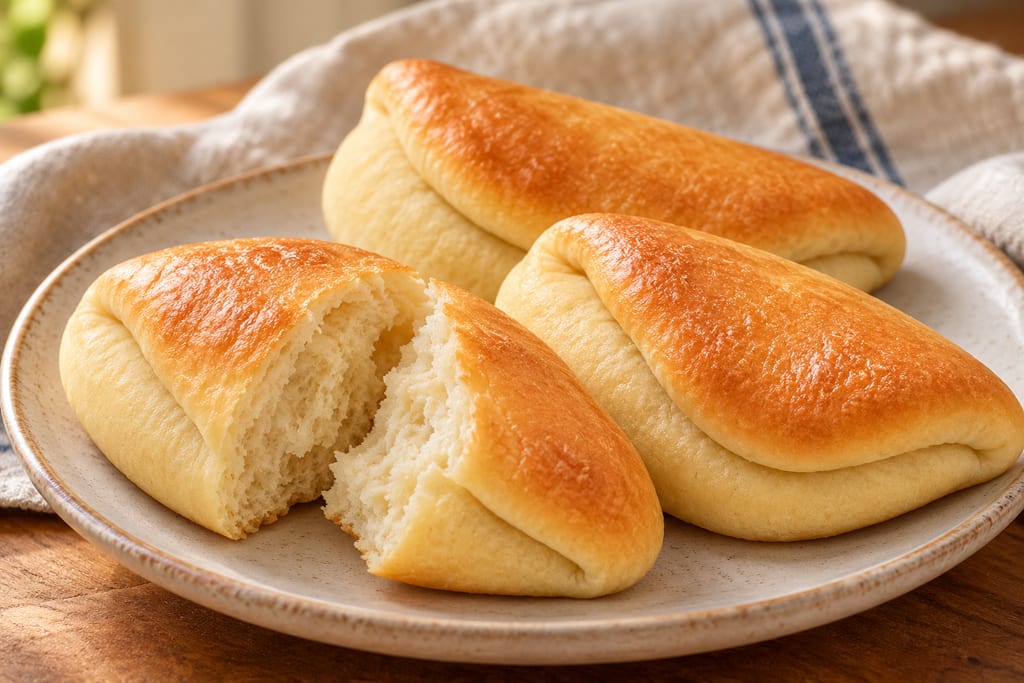
Jamaican-style folded rolls made from sweet coconut-milk yeast dough and brushed with butter.
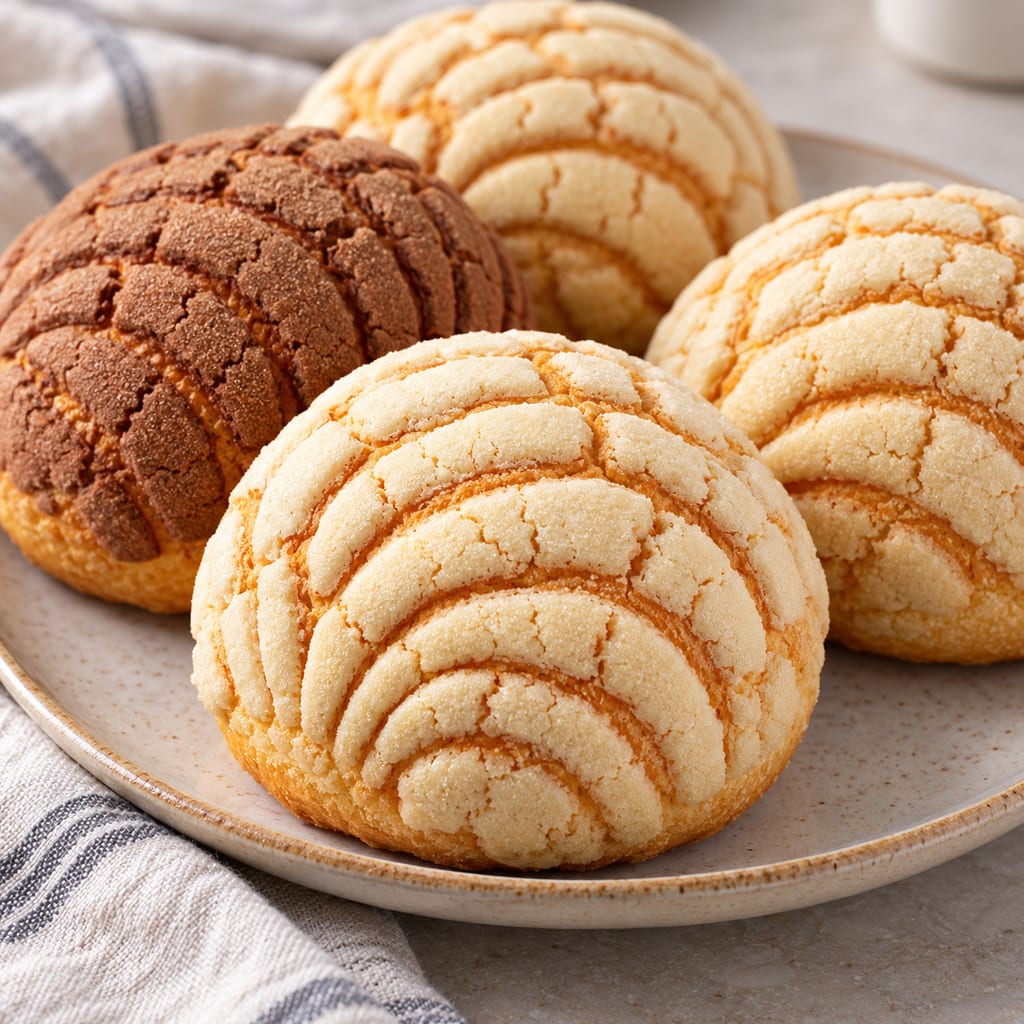
Mexican sweet rolls with a soft enriched yeast dough and a separate scored sugar-flour topping shaped like a shell. This version makes 15 rolls and uses a chilled dough rest before final proofing.
No community contributions have been published for this entry yet.
Sign in to contribute. Published comments and photos are free to read.
Immaculate Bites / Imma AdamuInspiration · Process
Jamaican Easter Spice BunFormula, quantities, yield, loaf-pan method, oven setting and bake interval; author's discussion of Easter context, stout, serving, and chemical- and yeast-raised versions.
Cited in: A Jamaican Easter loaf with more than one method; What makes this particular loaf; How baking powder lifts a quick bread; Mixing and baking: why each stage is there; A loaf, a bun, and the cheese beside it; Variations that deserve their own formula; Reading results without inventing rules
National Library of JamaicaHistory · Geography
History Notes: Information on Jamaica’s Culture & HeritageThe library describes Easter bun as an English cultural influence in Jamaica and records Jamaican Easter bun and cheese; it does not date this loaf formula.
Cited in: A Jamaican Easter loaf with more than one method; Easter, church, family and the calendar; A loaf, a bun, and the cheese beside it
The Gleaner; Paul WilliamsHistory · Culture
Of Easter and traditions in JamaicaContributor quotes Olive Senior on Good Friday observances, Easter bun and cheese, and 'Pickney Christmas'; attributed historical interpretation, not a recipe date.
Cited in: A Jamaican Easter loaf with more than one method; Easter, church, family and the calendar
Jamaica Observer; Novia McDonald-WhyteCulture · Use
Snack it…Juicy bun and cheese2003 report describes bun and cheese as an everyday Jamaican snack and a Good Friday tradition, and notes that Easter buns receive more fruit.
Cited in: Easter, church, family and the calendar; A loaf, a bun, and the cheese beside it; Variations that deserve their own formula
Eater; Natelegé WhaleyHistory · Culture
The Future of Jamaican Fusion Food Is NowModern secondary account describes the Jamaican bun's relationship to English hot-cross buns and reports its development into a fruit-filled loaf, citing food historian B. W. Higman.
Cited in: A Jamaican Easter loaf with more than one method; A loaf, a bun, and the cheese beside it; Variations that deserve their own formula
University of Illinois ExtensionTechnique · Science
4-H Cooking 201Quick-bread leavening: baking powder releases carbon dioxide when moistened and again when heated; the extension says to use it before its printed date.
Cited in: What makes this particular loaf; How baking powder lifts a quick bread; Mixing and baking: why each stage is there; Reading results without inventing rules