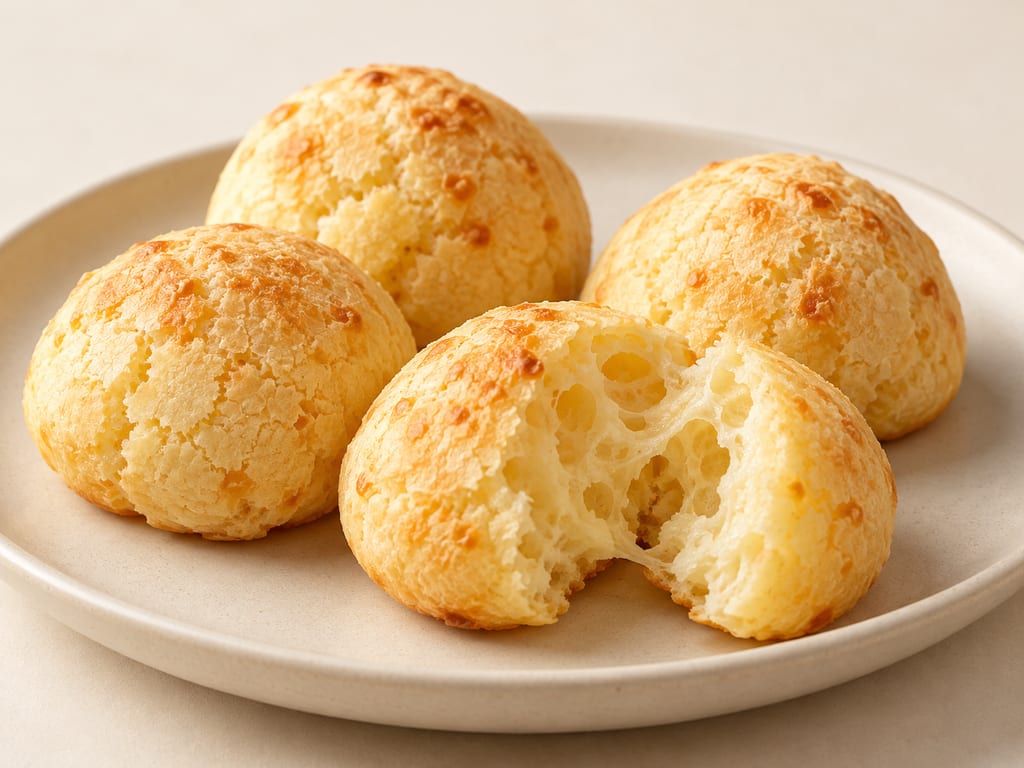
Pão de queijo: Ricardo Gonzalez's version
Scooped tapioca-starch buns made by scalding the starch, then beating in garlic, cheese and eggs. This named version has no dough-fermentation stage.
 FermenteaWhere food goes to change
Pão de Batata · pao de batata · Brazilian potato rolls
Soft Brazilian yeast rolls use cooked mashed potato in an enriched dough, with mozzarella cubes enclosed before baking.
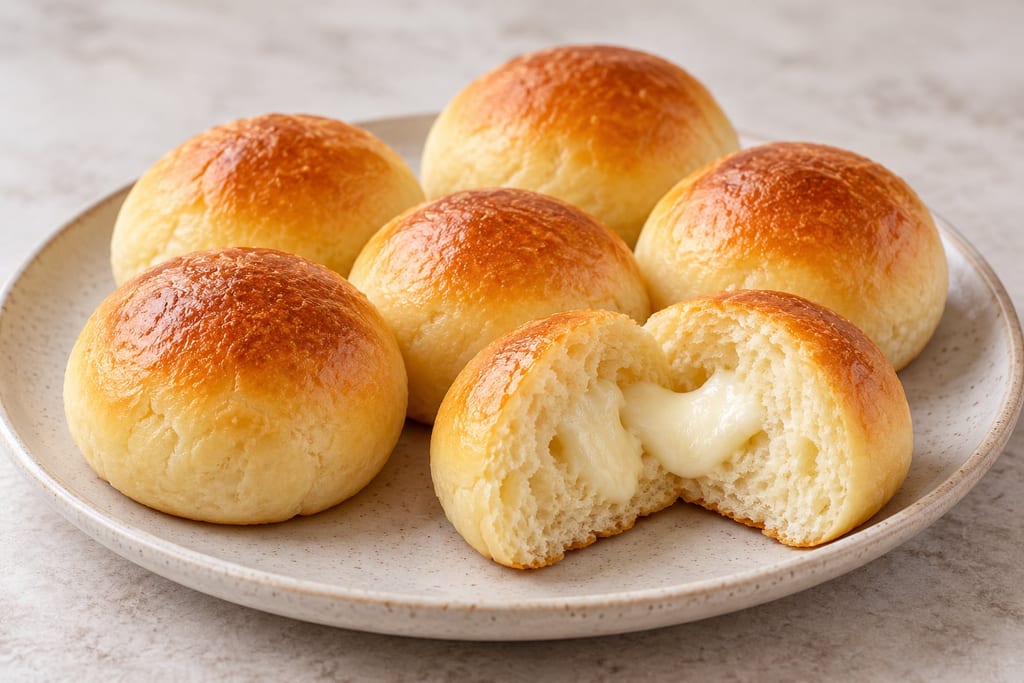
The selected formula is directly verified in Receitas Nestlé and Senac's public Course of Breads PDF, lesson 4, pages 8–9. It yields 30 portions and uses a potato-enriched yeast dough with a mozzarella cube enclosed in each roll. The source gives a 30-minute covered rest and a second 30-minute rise, then a 180°C bake for about 30 minutes or until golden. This is one course formula, not a universal Brazilian method.
The selected M008 North American burger-bun recipe is a different formula: it uses a small amount of potato starch with whole-wheat flour, bran and flax, and makes six unfilled burger buns. M008 describes a wider family that can also include cooked potato, so this Brazilian formula is a distinct documented example within the broader potato-bread family rather than an unrelated category.
The exact Receitas Nestlé HTML lesson page returned HTTP 403 in the earlier check and remains uninspected. The public 16-page PDF hosted on the official Receitas Nestlé domain was directly downloaded and inspected; pages 8–9 verify the formula recorded here. The index excerpt is not being used as independent verification. The PDF establishes no historical origin or precise regional birthplace.
The Home Baking Association's baking-safety chart lists 165°F at the center for meat-, cheese- or poultry-filled breads and instructs checking baked products at center with a food thermometer. This directly covers the cheese-filled-bread type of this mozzarella roll and supplies a measurable endpoint. The chart is category guidance, not a validation study of this exact formula or of probe placement relative to its mozzarella cube.
A directly inspected Portal de Candeias recipe from Minas Gerais gives a separate 20-roll formula: 500 g wheat flour, 300 g cooked mashed potato, 10 g dry yeast, 1 tablespoon sugar, 1 teaspoon salt, 1/2 cup warm milk, 1 egg and 3 tablespoons butter. Its method dissolves the yeast with sugar in warm milk for 10 minutes, mixes in the potato, egg, butter and salt, gradually adds flour, kneads, covers and rises for 1 hour, shapes rolls, proofs them for 30 minutes, and bakes at 180°C for 25 minutes.
This is a comparison formula, not a correction to the separate Nestlé-index formula above. The page suggests requeijão as an optional filling but gives neither a measured filling amount nor an objective filling endpoint. The filled suggestion therefore does not resolve the existing safety hold. The page documents a Minas Gerais home recipe; it does not establish origin or verify the inaccessible Nestlé page.
An indexed result for a Brazilian Nestlé baking-course page presents pão de batata as a snack or sale item that may be filled and made in different sizes. Direct access to that page returned HTTP 403, so the source's identity, formula and cultural context have not been directly verified. No historical origin or precise regional birthplace is established.
Yield 30 portions · Scaling: source batch only
Flour is raw and the dough contains eggs; do not taste uncooked dough.
Hazard sourceKeep dough and utensils from contaminating ready-to-eat foods; wash hands and equipment after handling raw flour and egg. Bake before eating.
Control sourceFor cheese-filled breads, Home Baking Association guidance gives an at-center endpoint of 165°F (74°C). Check the center of the filled roll with a food thermometer and continue baking until it reaches that temperature; do not use browning alone.
Control sourceThe Nestlé source gives a 180°C oven and about 30 minutes or browning. For the mozzarella-filled bread, use the Home Baking Association's 165°F (74°C) at-center guidance for cheese-filled breads rather than treating time or crust colour as sufficient. This is category-level guidance, not validation testing of this exact formula.
A Brazilian teaching source documents this preparation; it does not establish a precise regional birthplace or origin date.
Scooped tapioca-starch buns made by scalding the starch, then beating in garlic, cheese and eggs. This named version has no dough-fermentation stage.
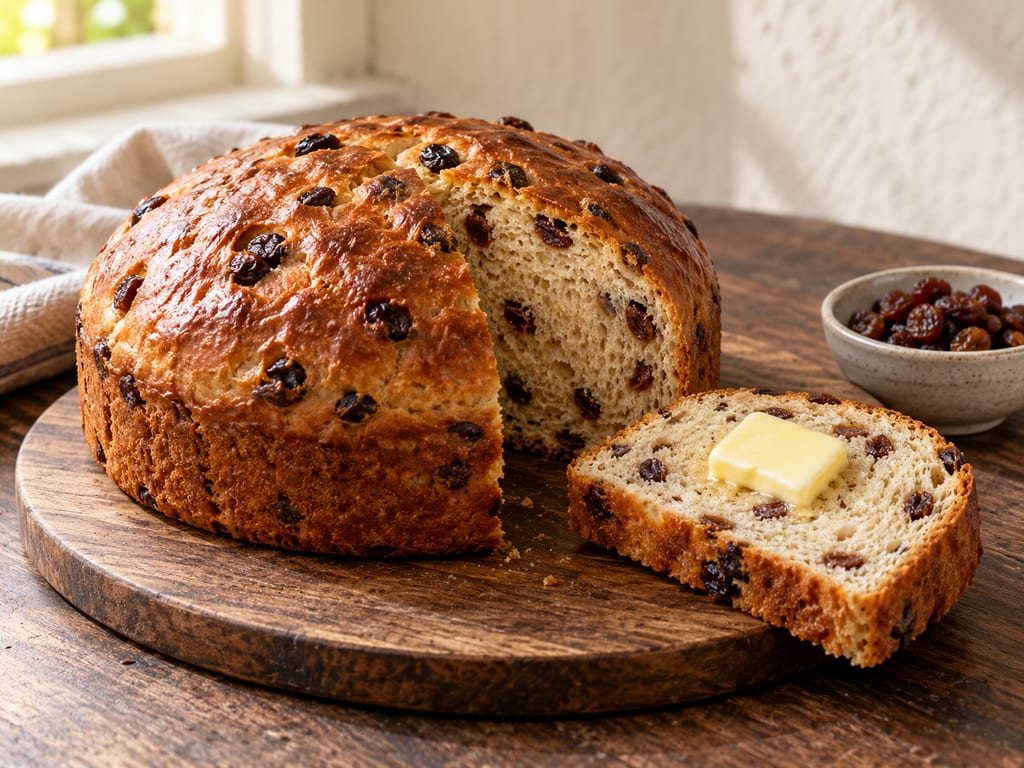
An Irish fruit-studded yeast loaf, associated in a contemporary cultural account with Halloween and often served fresh or toasted with butter.
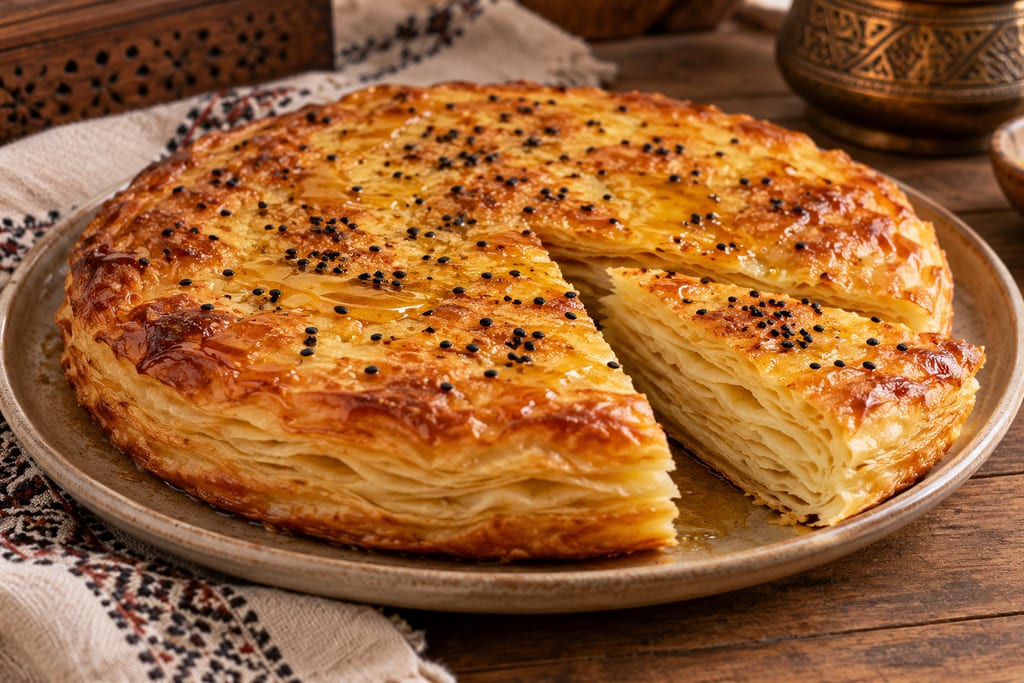
Bint al-sahn is a Yemeni celebration and home bread built from thin, egg-rich yeast dough layers brushed with ghee or butter. This source-specific version makes one round cake, baked until golden and served warm with honey.
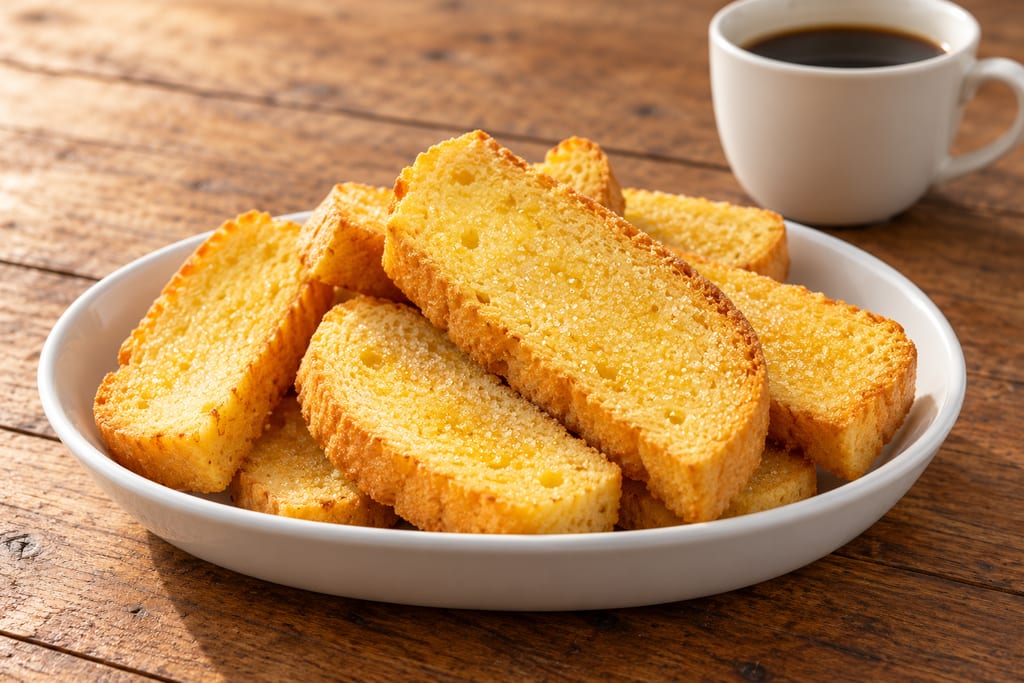
PagkainPinoy’s 24–30 piece version twice-bakes day-old soft bread with a thin butter-and-sugar coating.
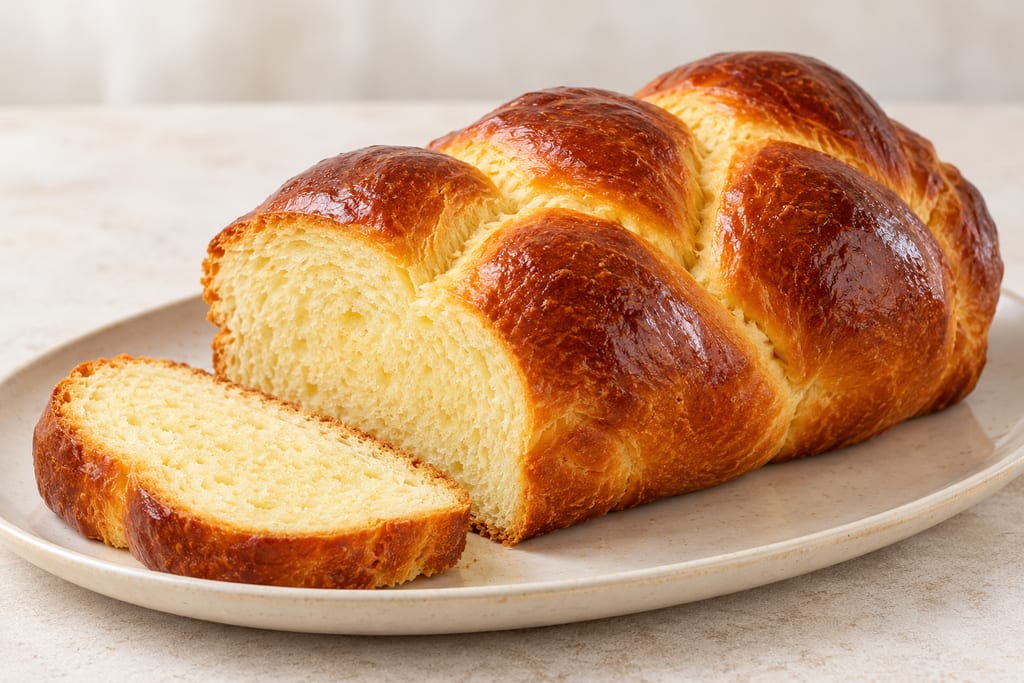
An egg-and-butter-rich yeast dough shaped as one round loaf, two loaves or twelve small brioches, with baking paths that vary by shape.
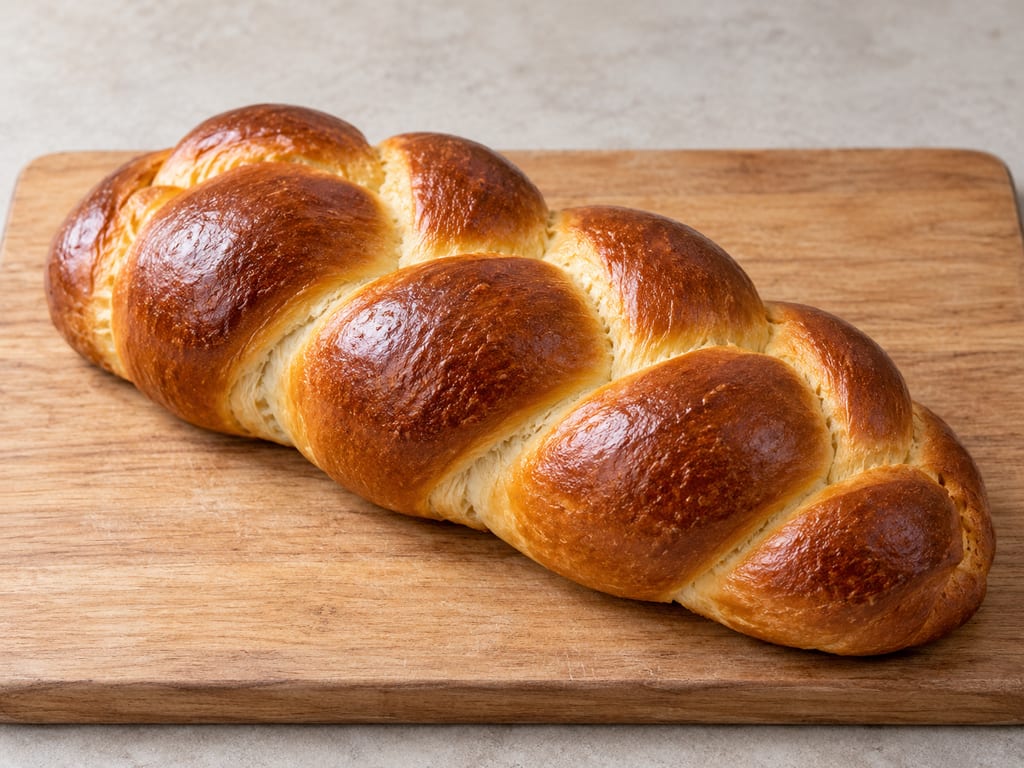
A three-strand yeast-raised challah with flour, salt, yeast, water, neutral oil, honey and egg, based on a Jewish Museum Vienna home recipe.
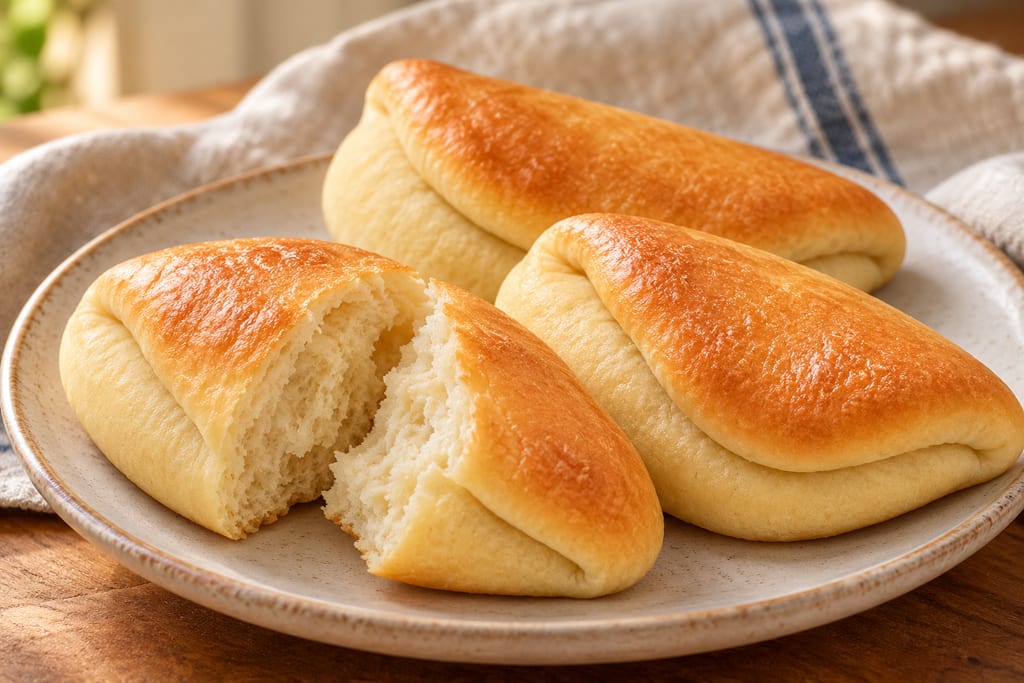
Jamaican-style folded rolls made from sweet coconut-milk yeast dough and brushed with butter.
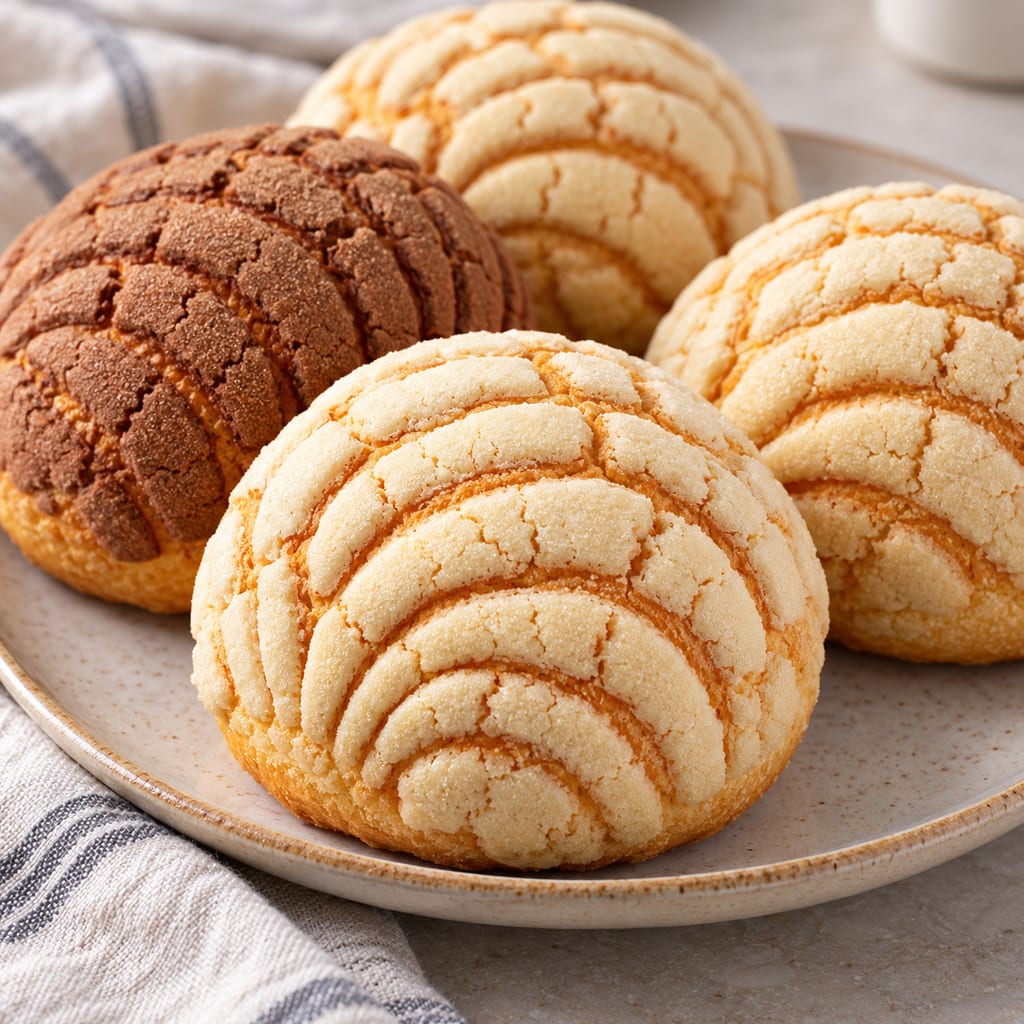
Mexican sweet rolls with a soft enriched yeast dough and a separate scored sugar-flour topping shaped like a shell. This version makes 15 rolls and uses a chilled dough rest before final proofing.
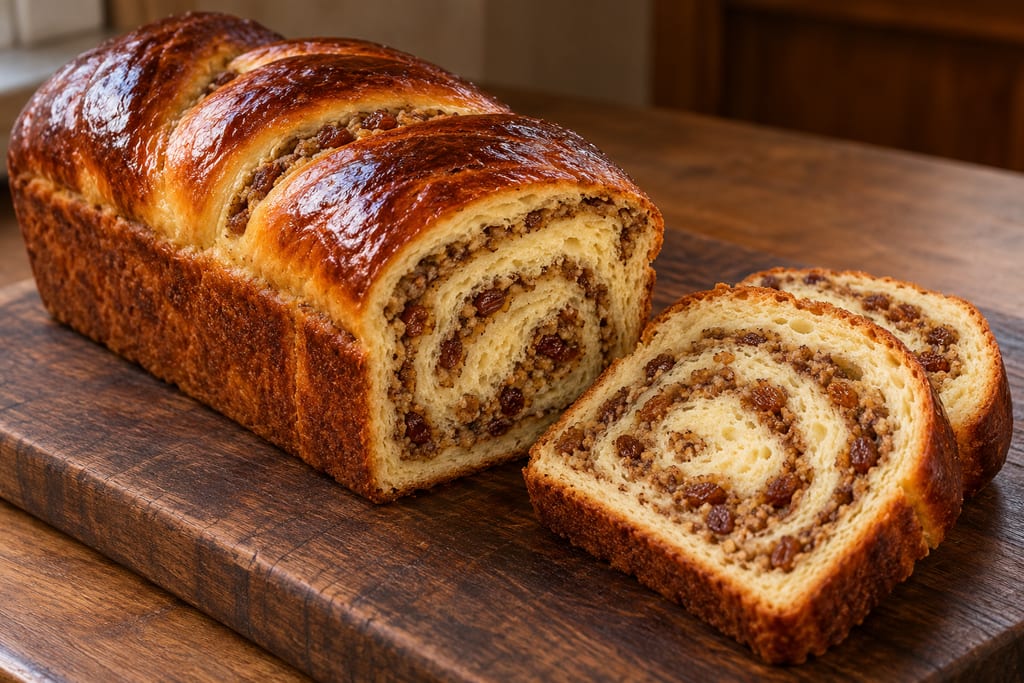
This Romanian cozonac recipe makes two enriched loaves filled with walnuts, sultanas and a whipped egg-white mixture. The dough rises once before filling and again in tins, then bakes in two oven stages.

Soft, spreadable Calabrian pork sausage made with a great deal of red chilli and fatty pork, stuffed into natural casings, sometimes smoked and matured while staying soft.

A way to add independent temperature logging to an existing food dehydrator without changing its built-in controls or protections. It is a monitoring method, not a rewiring plan.

Pleurotus cystidiosus is the abalone mushroom, a cultivated oyster-type fungus with dark brown caps that grows more slowly and is more demanding than other Pleurotus species.

A dark, balanced vinegar from Emilia-Romagna made by combining cooked or concentrated grape must with wine vinegar, then acetifying and refining it in wood under a protected specification.

A living dairy inoculum that starts controlled cream fermentation, developing acidity and aroma before sour cream or cultured butter is finished.

A small electric incubator holds jars at a selected temperature for yogurt and other documented warm food preparations. Controls, capacity and vessel arrangement vary by model.

Adygean salt is a seasoned table salt associated with Adygea and the wider North Caucasian culinary tradition. Salt is blended with garlic and a variable selection of herbs and spices; the exact mix depends on the named style and maker.

The African Caesar-group mushroom, Amanita masasiensis, is a wild ectomycorrhizal species of central and southern African woodlands, eaten locally. The genus contains deadly poisonous species, so identification needs care.
No community contributions have been published for this entry yet.
Sign in to contribute. Published comments and photos are free to read.
Receitas NestléAccess limit
Aula de Pão de BatataThe exact HTML lesson page returned HTTP 403 on 2026-10-29 and was not directly inspected.
The previously seen index excerpt is not relied on to verify the formula; the same course's public PDF hosted on the Receitas Nestlé domain was directly inspected and verifies the recorded formula.
Cited in: A Brazilian mashed-potato roll
U.S. Food and Drug AdministrationSafety
Handling Flour Safely: What You Need to KnowFlour is a raw food; do not eat or taste raw flour or dough.
Cooking is needed to address harmful bacteria that may be present in flour.
Wash hands and clean utensils and surfaces after working with flour and raw dough.
Cited in: A Brazilian mashed-potato roll
Portal de CandeiasMethod
Pão de batata: receita mineira passo a passoDirectly inspected local Minas Gerais recipe page gives 500 g wheat flour, 300 g cooked mashed potato, 10 g dry biological yeast, 1 tablespoon sugar, 1 teaspoon salt, 1/2 cup warm milk, 1 egg and 3 tablespoons butter for 20 rolls.
Its method dissolves yeast with sugar in warm milk for 10 minutes; mixes in potato, egg, butter and salt; adds flour gradually and kneads; covers the dough for a 1-hour rise; shapes balls and proofs 30 minutes; then bakes at 180°C for 25 minutes.
The page suggests an optional spoonful of requeijão in each roll, but does not quantify the filling or give a filling-specific doneness endpoint. The published formula therefore records the plain rolls; the optional filled variation does not resolve the held mozzarella-center safety concern.
This is a separate measured Minas Gerais home recipe. It does not verify the inaccessible Nestlé formula, establish a historical origin, or justify combining quantities or timings across formulas.
Cited in: Separate Minas Gerais home formula
Ajinomoto Foodservice BrasilMethod · Ingredients · Comparison
Pão de batata recheado com requeijão | Receita ProfissionalDirectly inspected professional food-service recipe lists 200 g Ajinomoto potato purée, 30 g fresh yeast, 30 g sugar, 150 g eggs (3), 100 g unsalted margarine, 200 mL water, 500 g wheat flour, 300 g culinary requeijão and 20 g egg yolk; yield 10 units.
It dissolves yeast and sugar, combines eggs, margarine, potato purée, water and flour, and rests the dough for 50 minutes. It shapes ten approximately 5 cm spheres, fills each with requeijão, closes them, proofs 30 minutes or until doubled, brushes egg yolk and bakes in a preheated 180°C oven for 20 minutes or until browned.
This is a separate complete Brazilian professional formula with requeijão rather than the current Nestlé source's mozzarella-filled dough. None of its ingredients, quantities, proofing or timing are blended into the selected formula.
The page gives no measured center temperature or other objective filling-specific bake endpoint. Its color/time cue therefore does not resolve the current filled-center hold.
King Arthur BakingTechnical baking context · Comparison
Using a thermometer with yeast breadKing Arthur Baking reports a thermometer comparison of yeast breads and soft dinner rolls. Its center bun read 171°F after 15 minutes in one pan and 199°F after 20 minutes in another; it presents 190°F at a bread's center as a useful baking benchmark for many loaves and rolls.
This is baking doneness guidance for unfilled bread, not a validated food-safety limit and not a test of cheese-filled potato rolls. It does not establish that a probe placed beside a molten filling can confirm the center crumb is fully baked.
This comparison supports checking bread crumb at the center rather than relying only on crust color, but it does not resolve the held mozzarella-filled center endpoint.
Receitas Nestlé and SenacPrimary copy · Method · Ingredients
Curso de Pães – Pães Salgados, Aula 4: Pão de BatataDirectly downloaded from the public Receitas Nestlé host and inspected in the PDF: page 8 contains the measured ingredients and yield; page 9 contains the method. The 16-page PDF had SHA-256 0D868D25168F3C52AAE5216F8D1537C1448E916F99279FDFF0273DC1AA1692E0.
The directly inspected formula yields 30 portions and lists 30 g biological yeast, 1 tablespoon sugar, 1 cup warm whole milk, 100 g butter, 2 eggs, 500 g cooked mashed potato, 2 tablespoons MAGGI Fondor, about 750 g wheat flour, 200 g mozzarella cubes, 1 egg yolk for brushing and 1 teaspoon MAGGI Fondor for sprinkling.
The method dissolves yeast in sugar; mixes in warm milk, butter, eggs, mashed potatoes and Fondor; gradually adds flour to a homogeneous, slightly sticky dough; rests covered about 30 minutes; fills portions with mozzarella cubes and shapes buns; brushes with yolk, sprinkles Fondor, proofs about 30 minutes, then bakes in a preheated 180°C oven for about 30 minutes or until golden.
This official PDF is a directly readable primary copy of the selected formula. The separate Receitas Nestlé HTML lesson page returned HTTP 403 in the earlier check and remains not directly inspected; its index excerpt is not treated as evidence independently of this PDF.
The PDF gives time and color cues but no objective bake endpoint for the mozzarella-filled center. Its content does not resolve the existing filled-center safety hold.
Cited in: A Brazilian mashed-potato roll
Home Baking AssociationFood safety · Bake endpoint
Baking Food Safety 101Directly downloaded and visually inspected the Home Baking Association's two-page infographic. Its 'Baked Goods Internal Doneness Temperatures' chart gives an at-center endpoint of 165°F for meat-, cheese- or poultry-filled breads, with examples including empanadas, pot pies, pasties, calzones and bierocks.
The infographic instructs users to test baked products with a food thermometer at the center to ensure they are completely baked, and says to take an internal temperature at the center when the oven timer indicates the product is done.
This category explicitly includes cheese-filled breads and is directly applicable to a mozzarella-filled potato roll. It supplies a measurable center endpoint, but does not report a validation study for the exact Nestlé roll formula, size or thermometer placement relative to its mozzarella cube.
Cited in: A Brazilian mashed-potato roll