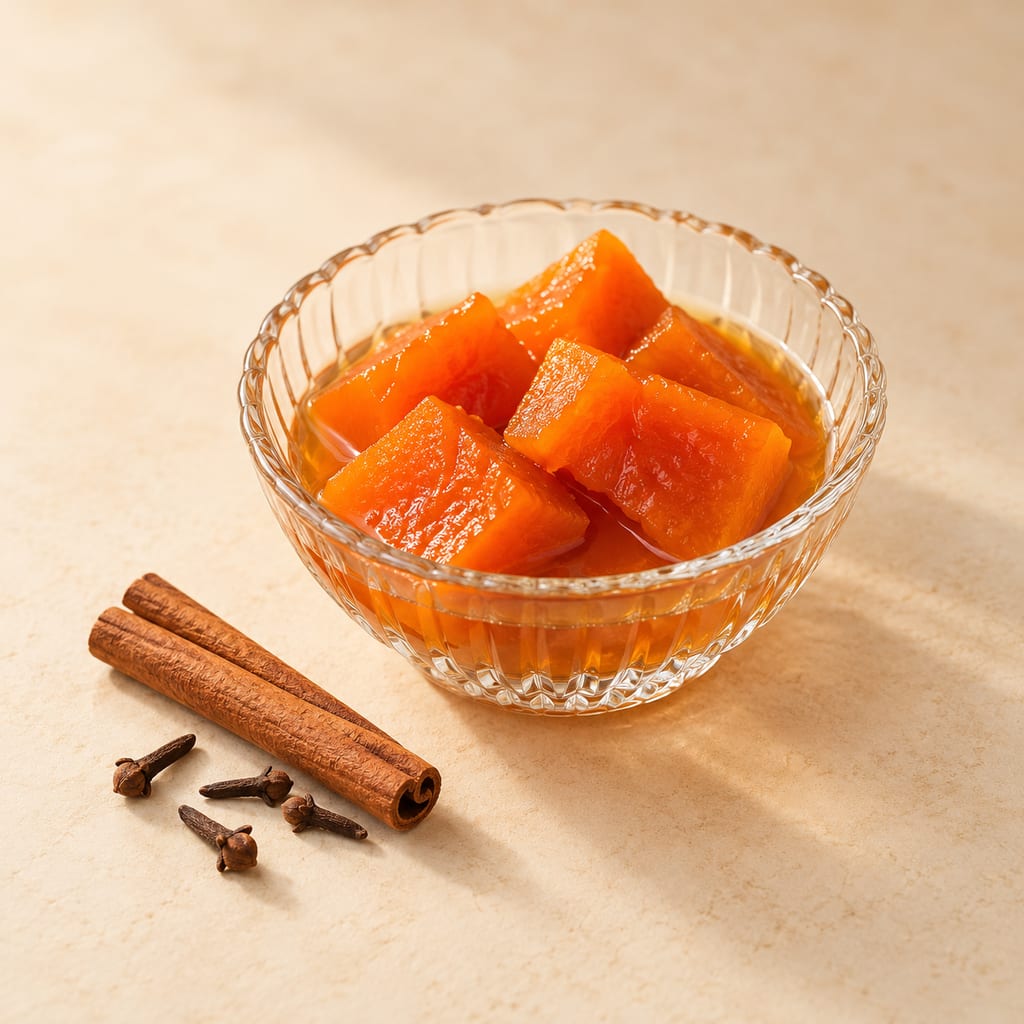
Brazilian doce de abóbora: a preserve of small pumpkin pieces
Brazilian doce de abóbora: Freeze for winter; small fresh portion refrigerated up to 48 hours.
 FermenteaWhere food goes to change
Recipes by the places recorded in their sources.
Brazilian doce de abóbora: Freeze for winter; small fresh portion refrigerated up to 48 hours.
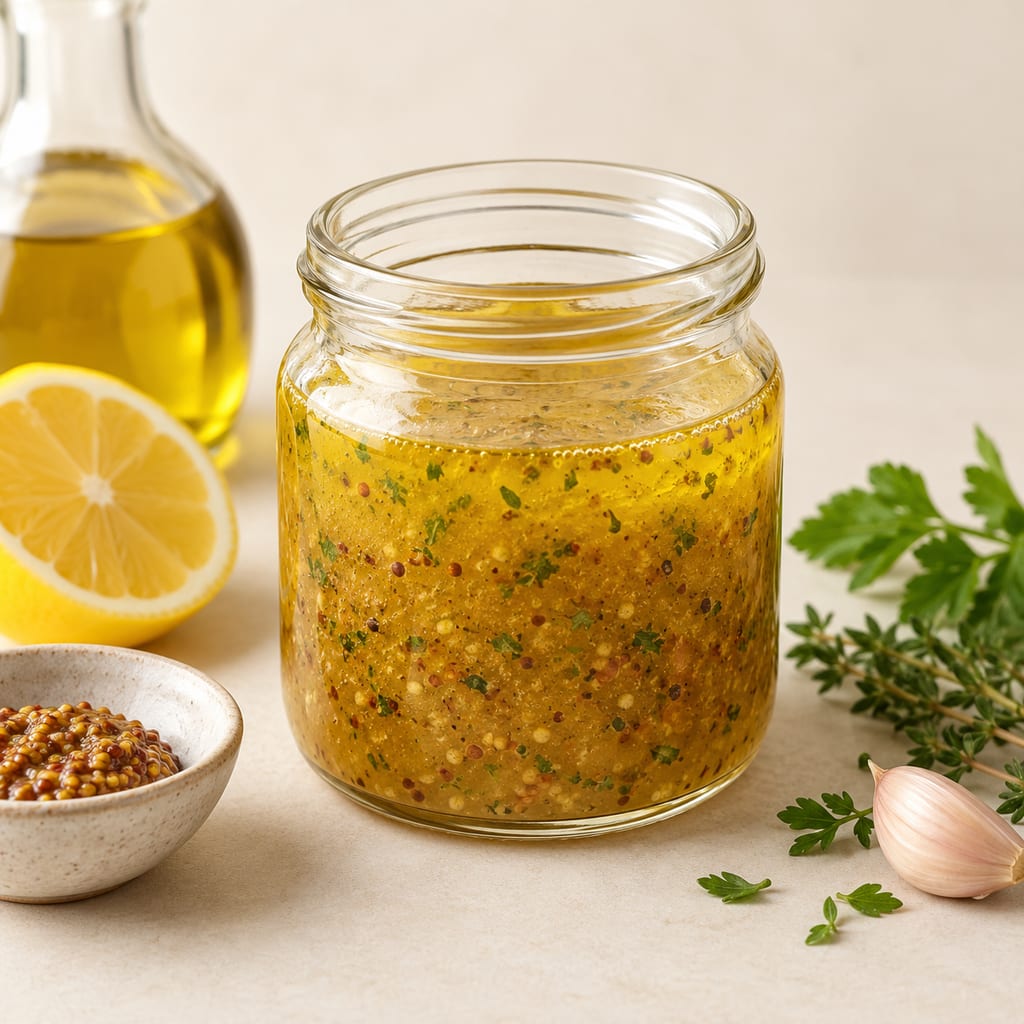
A dressing of edible oil whisked with a mild acid, usually vinegar or lemon juice, seasoned with salt, herbs and mustard, used on salads and as a marinade.
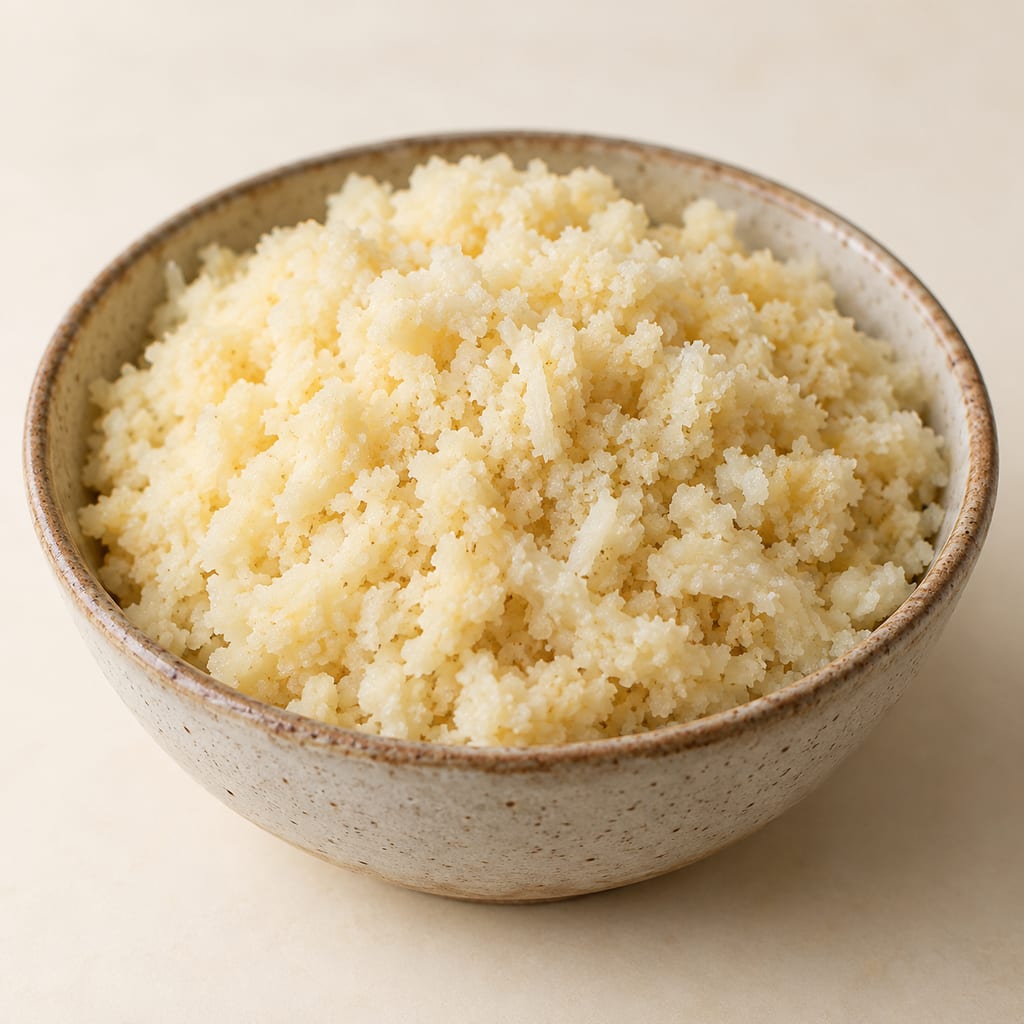
A documentary account of puba (carimã), a Brazilian fermented cassava pulp. It records one 1998 study batch and reported uses; it is not a household recipe or a validated cassava-safety method.
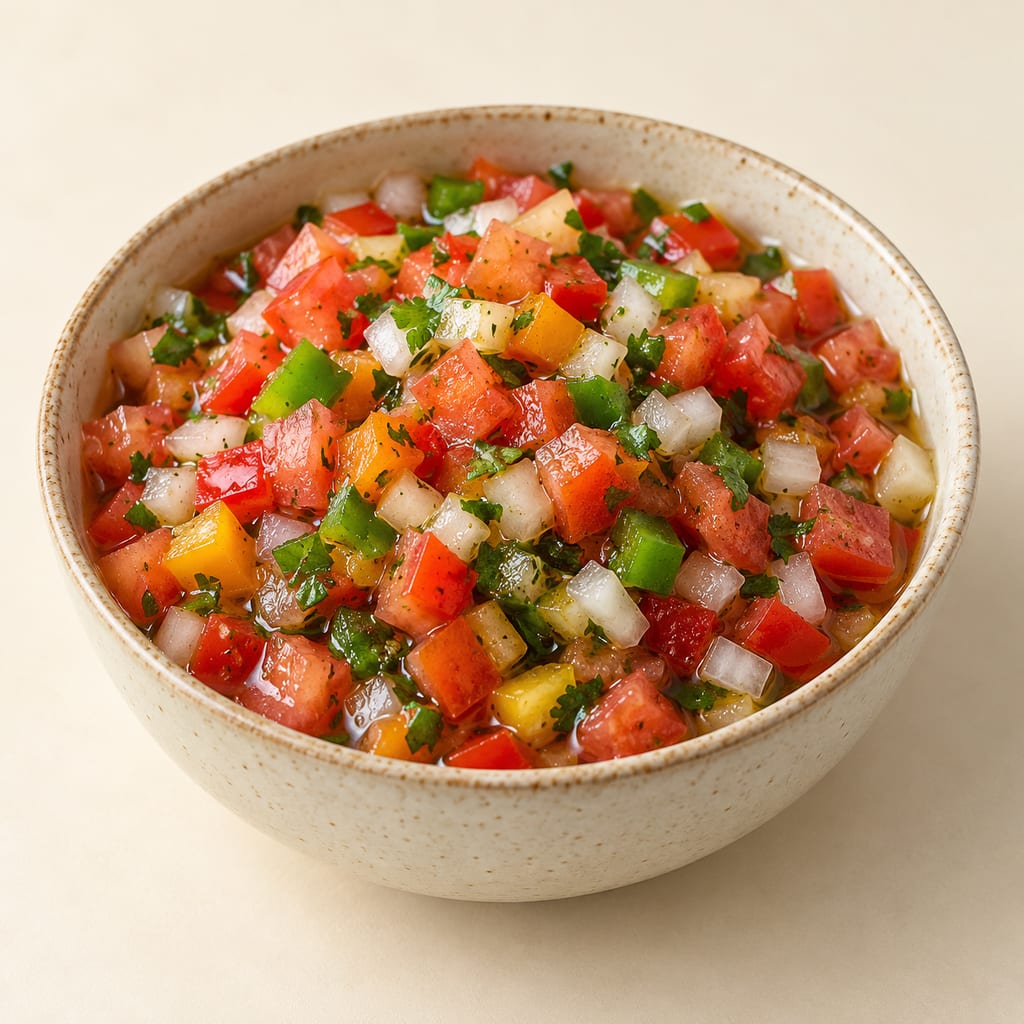
Vinagrete, also called molho à campanha, is a Brazilian relish of finely chopped tomato, onion and peppers dressed with vinegar and olive oil. It is served with grilled meat and feijoada.
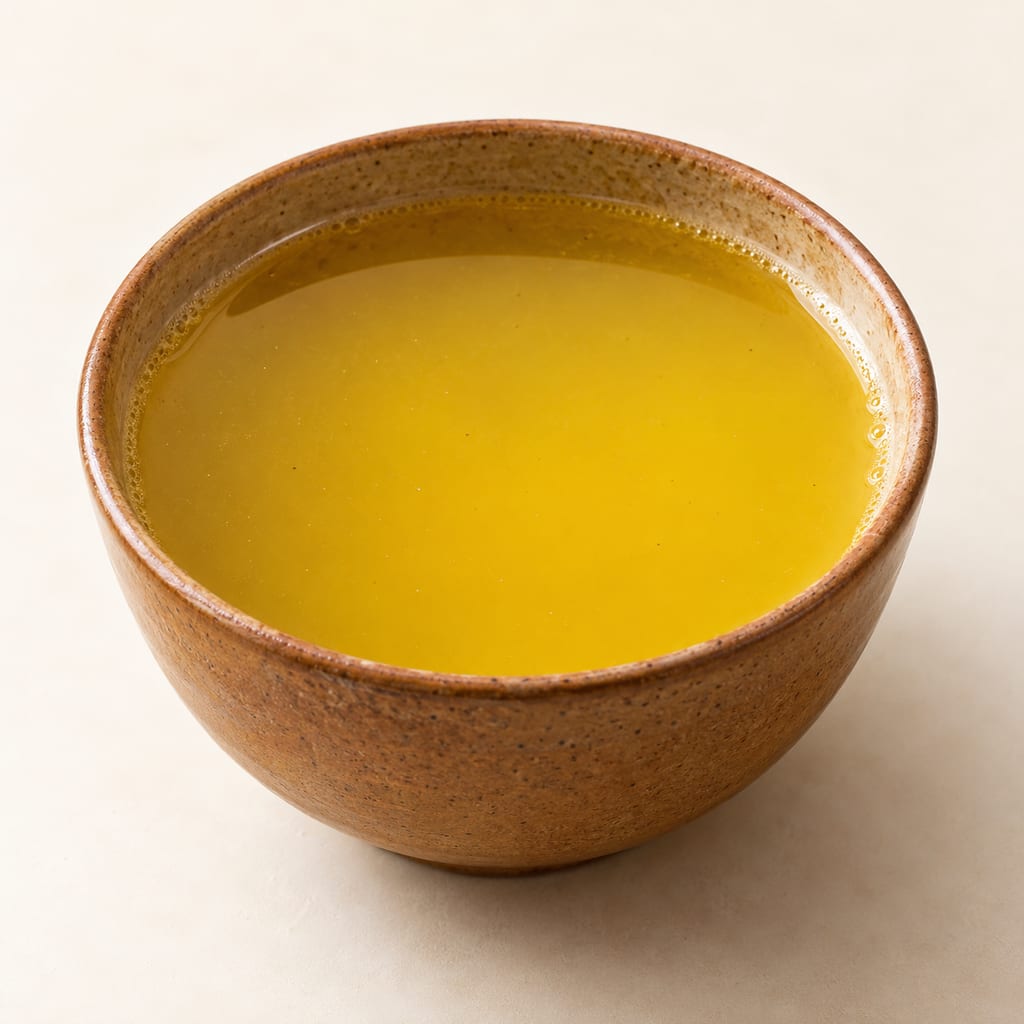
Tucupi is a yellow, sour liquid from the Brazilian Amazon, made from the juice of bitter manioc that is settled, fermented and cooked. It is the base of duck in tucupi and tacacá.
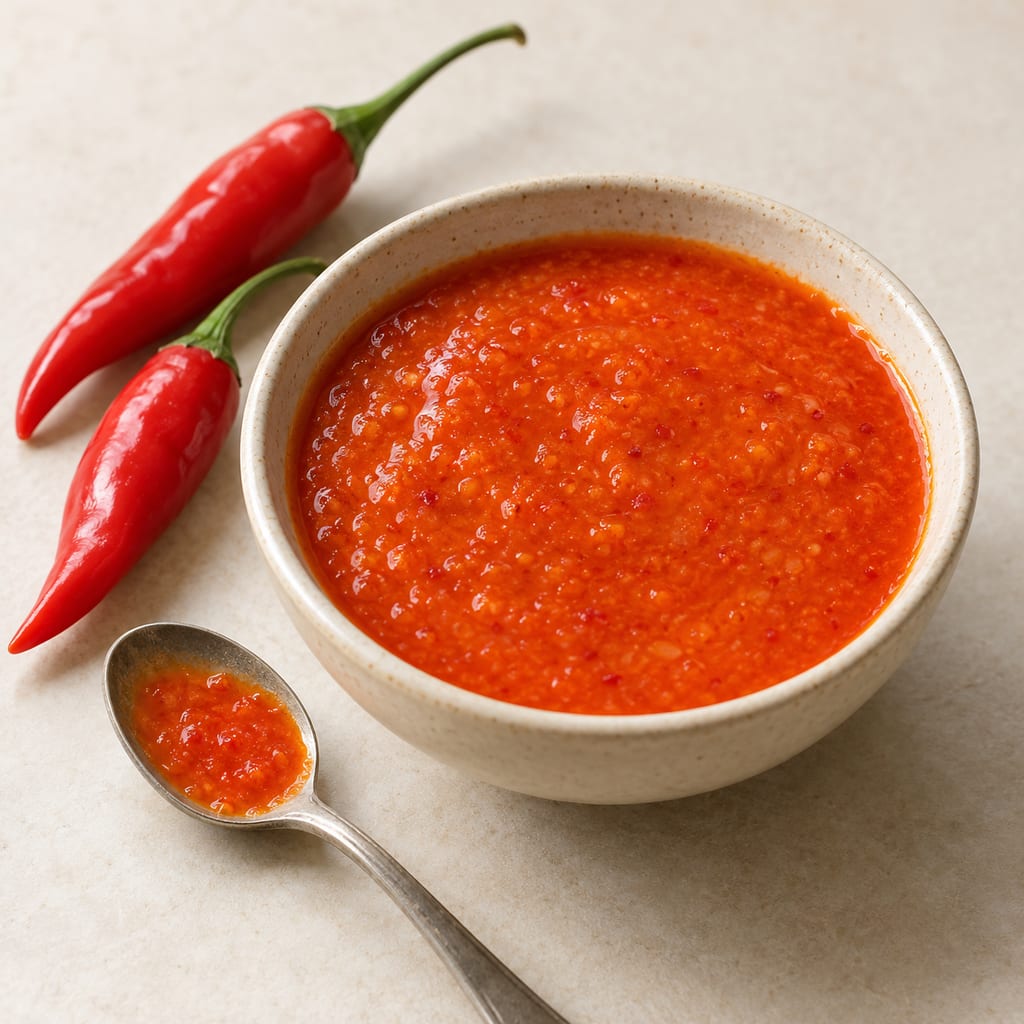
A Brazilian table sauce made from hot peppers, most often dedo-de-moça, cooked briefly with onion, garlic and vinegar and then blended smooth. Household versions differ widely.
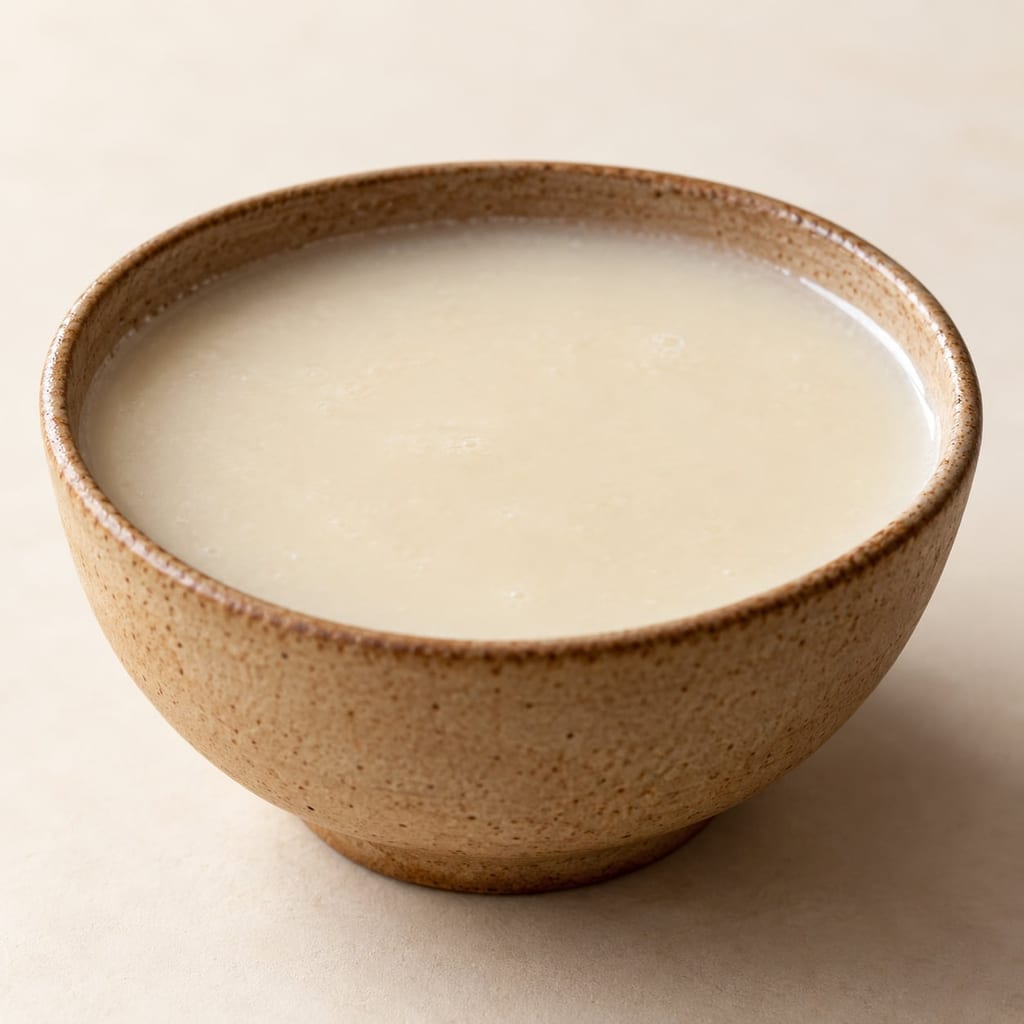
Tarubá is a cassava drink documented in several distinct Amazonian settings. Community-linked accounts describe different beiju-based processes; they do not establish one universal recipe, fermentation culture or safety endpoint.

Farinha d’água is a coarse cassava flour associated with Brazil's Amazon and Pará. This page documents one published experiment; it is not a household recipe or validated safety guide.
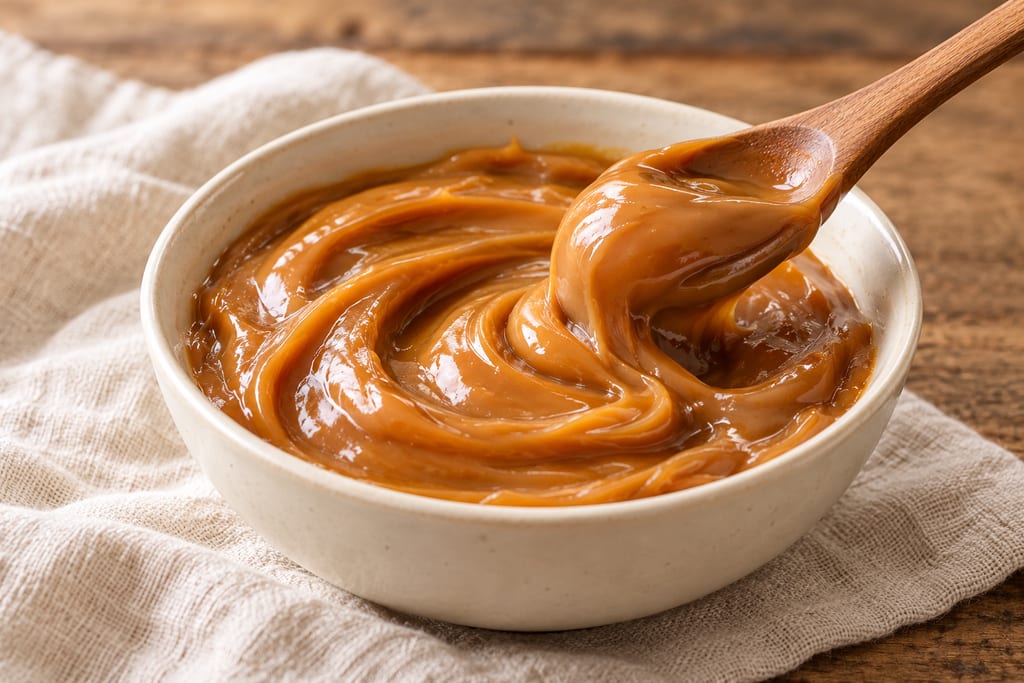
Dulce de leche and its relatives, including Mexican cajeta from goat's milk, are milk and sugar cooked slowly until thick and brown. The name changes across Latin America, and the browning gives each its character.
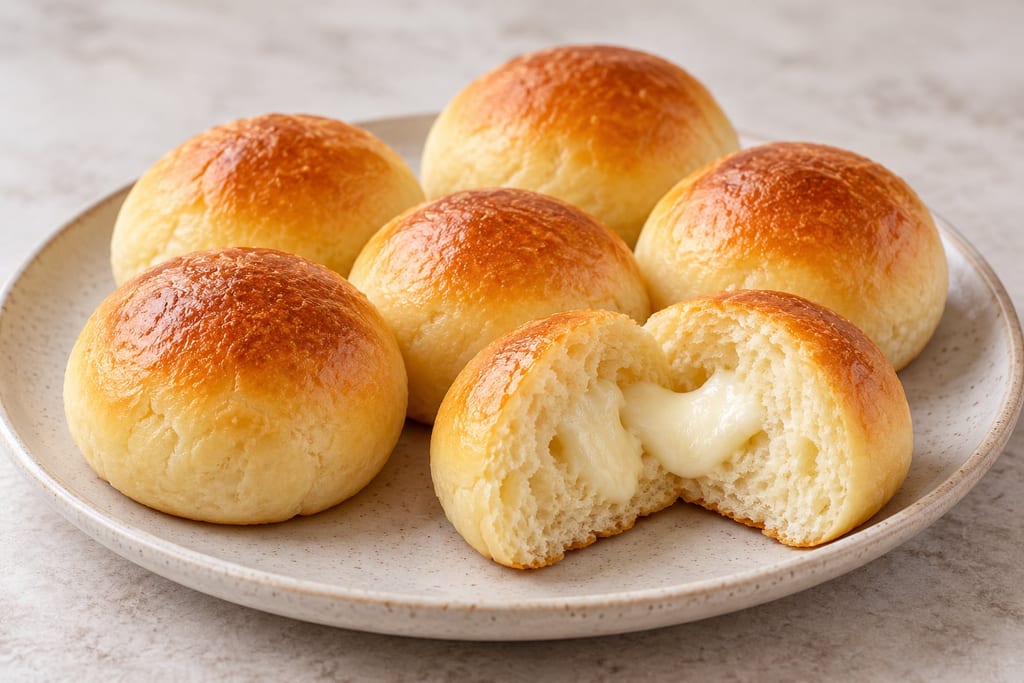
Soft Brazilian yeast rolls use cooked mashed potato in an enriched dough, with mozzarella cubes enclosed before baking.
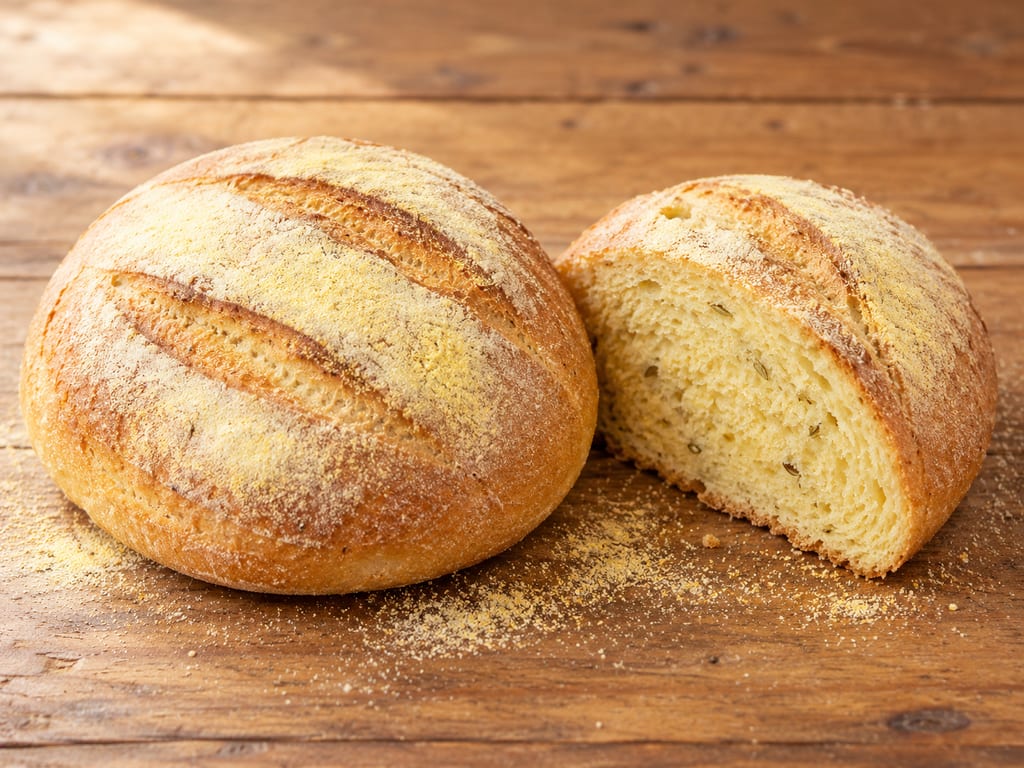
Brazilian broa de milho is a lightly sweet wheat-and-fine-maize bread with fennel and dry yeast, shaped into two small loaves for a Festa Junina or coffee break.
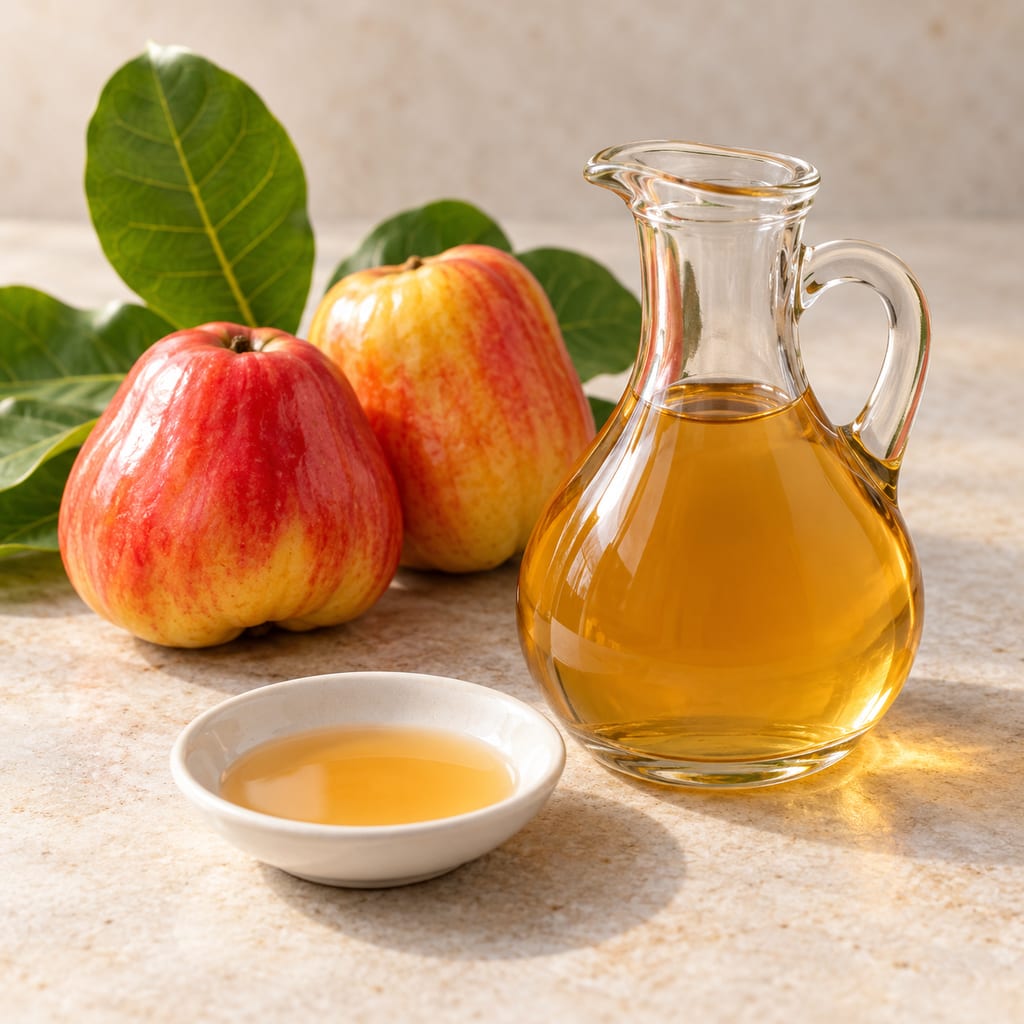
Vinagre de caju is made by fermenting cashew-apple juice into an alcoholic base, then aerating it so acetic bacteria can convert ethanol into acid. Brazilian guidance records the sequence, but not a complete home-scale formula.
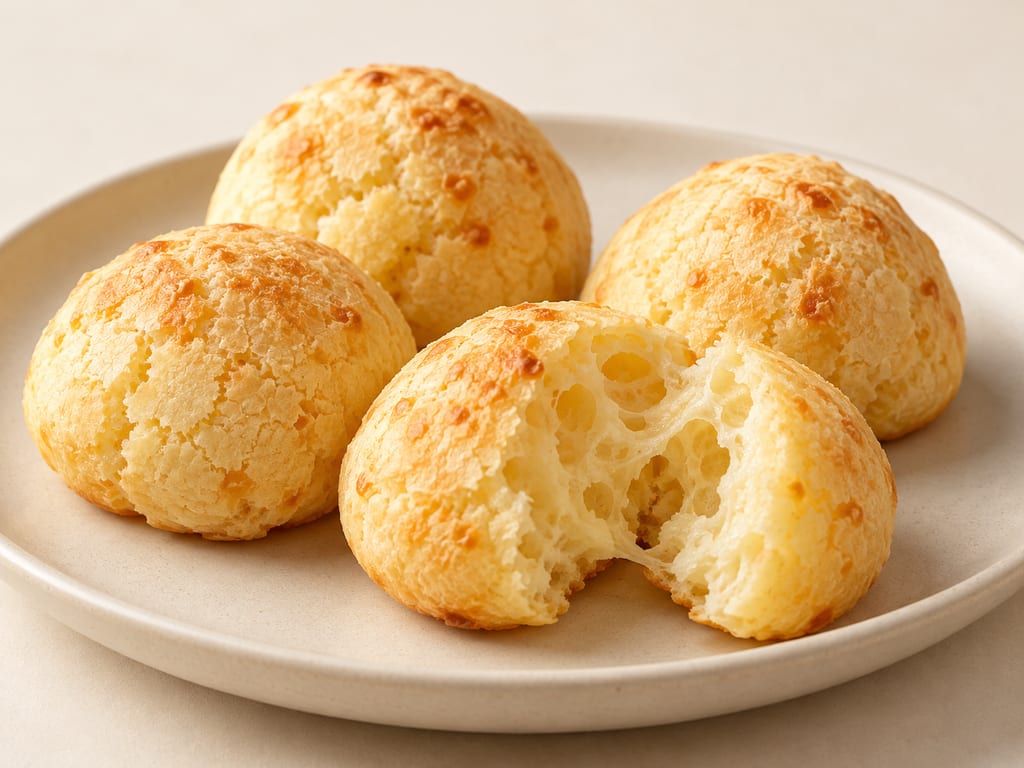
Scooped tapioca-starch buns made by scalding the starch, then beating in garlic, cheese and eggs. This named version has no dough-fermentation stage.
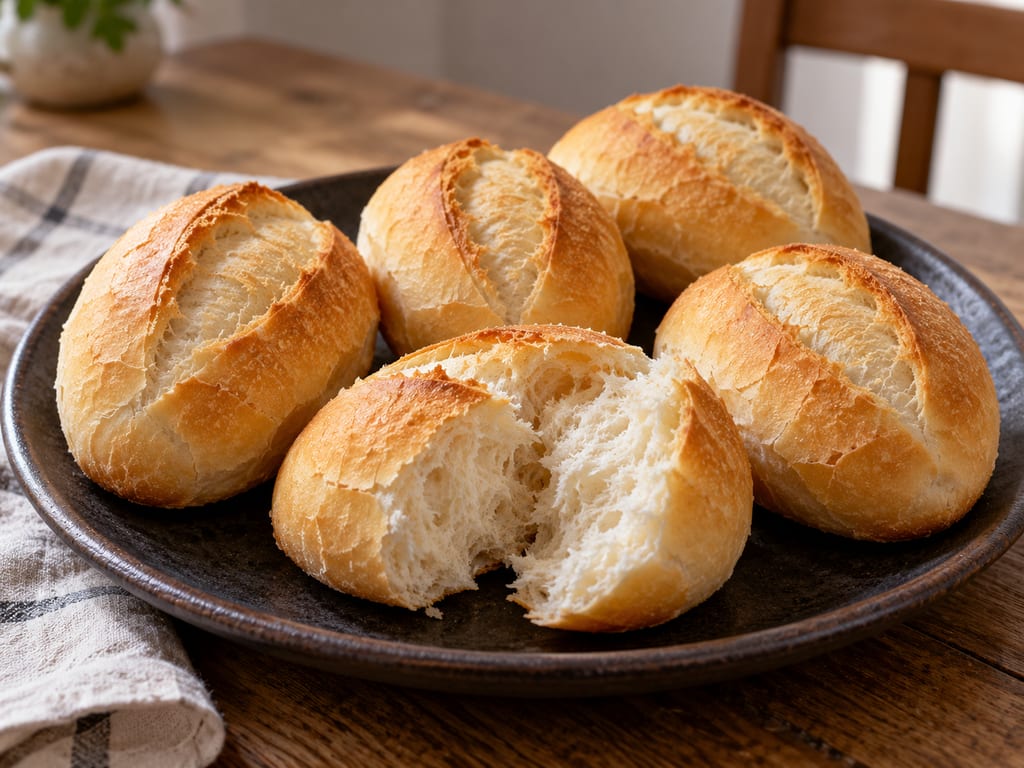
A Brazilian wheat roll with a crisp crust, this home batch uses dry baker’s yeast and a steam-assisted oven bake.
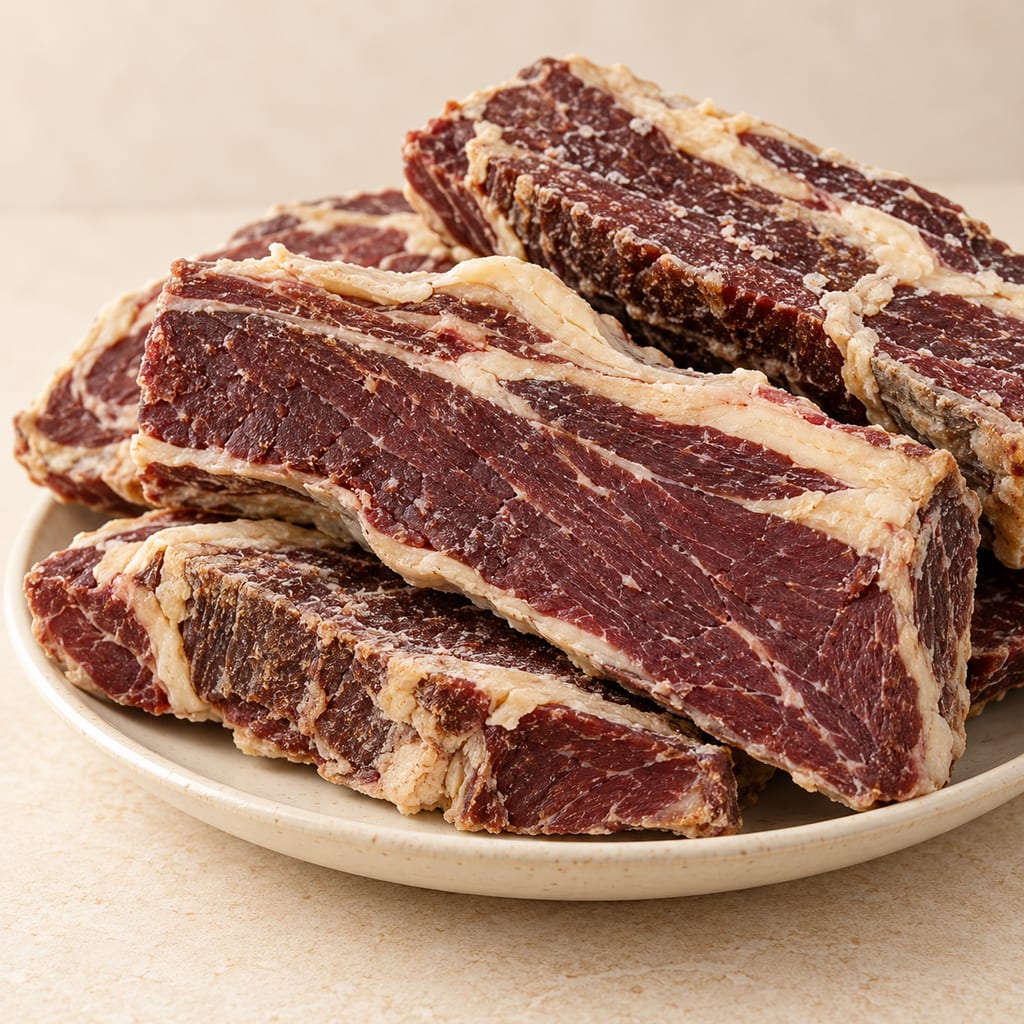
Beef salted heavily and dried into a strongly preserved ingredient that is desalted before it is cooked in stews; a Brazilian form of salt-dried meat that keeps far longer than the lightly salted carne-de-sol.
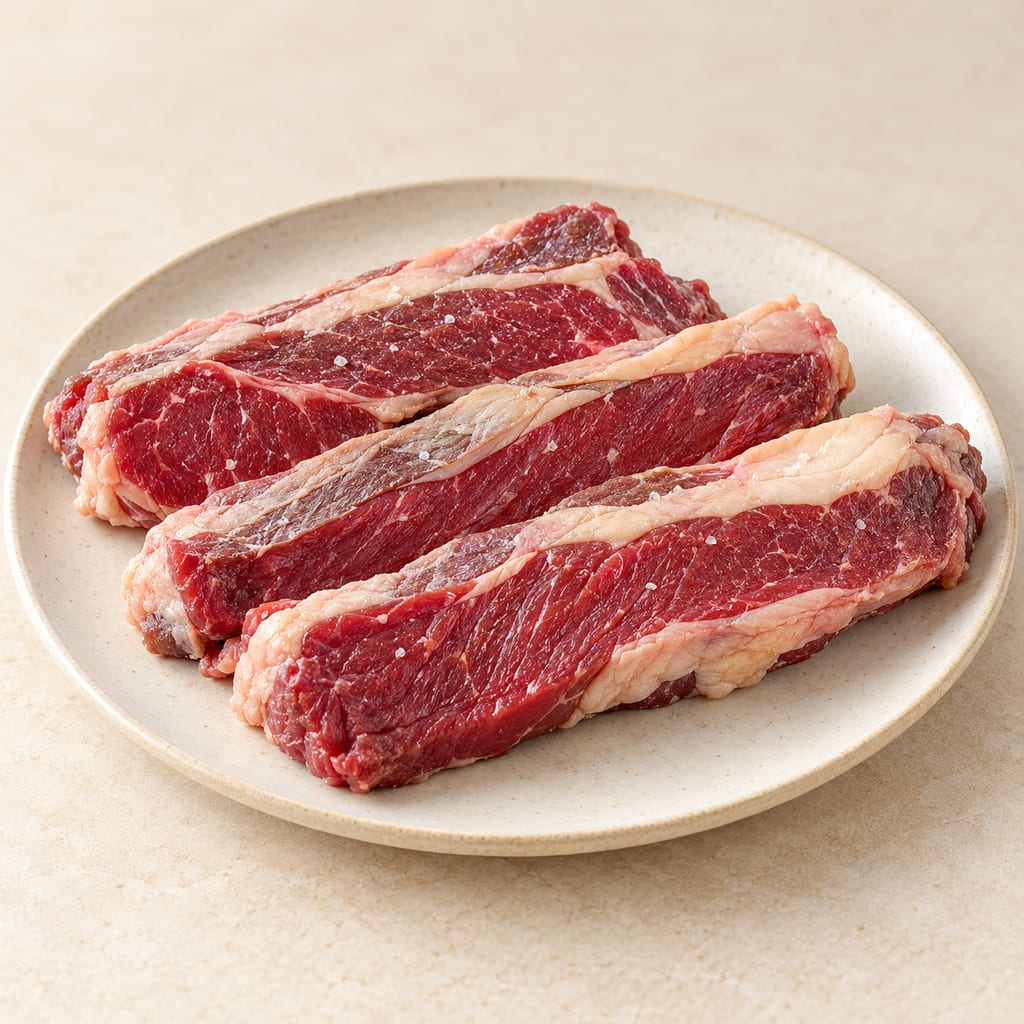
Beef given limited salt and partial surface drying, a short-keeping Brazilian meat that is much less durable than fully dried charque and is treated as a cold-chain product.
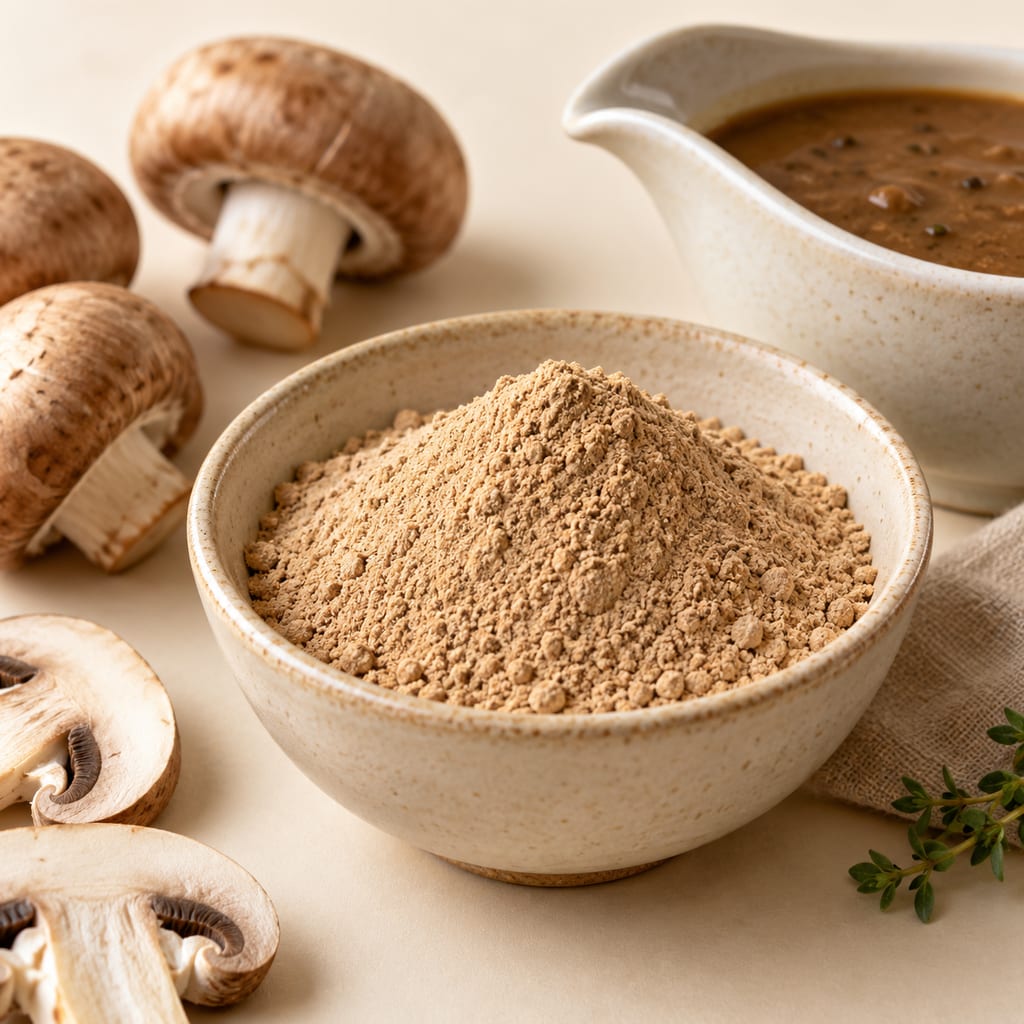
Mushroom powder is dried mushroom tissue ground to a fine powder and added to gravies and sauces. Victorian cooks made it from fresh cultivated mushrooms when fresh ones were not to hand.
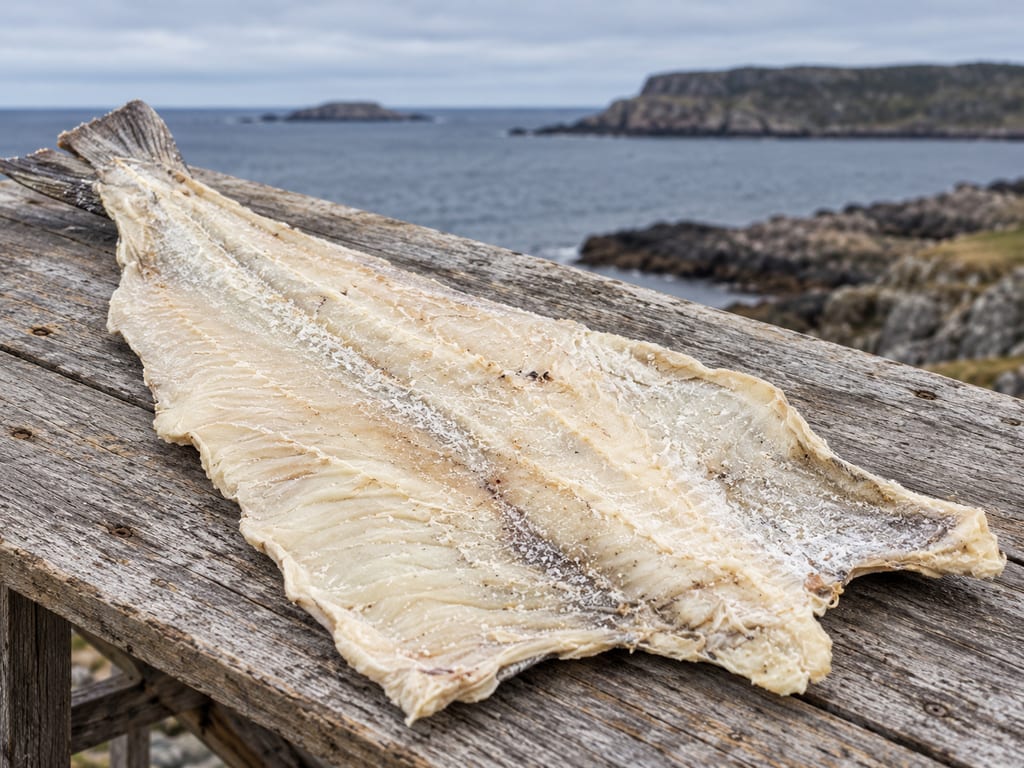
Atlantic cod split, salted and dried on raised flakes along the Newfoundland and Labrador shore, manufactured ashore for markets across the Atlantic.
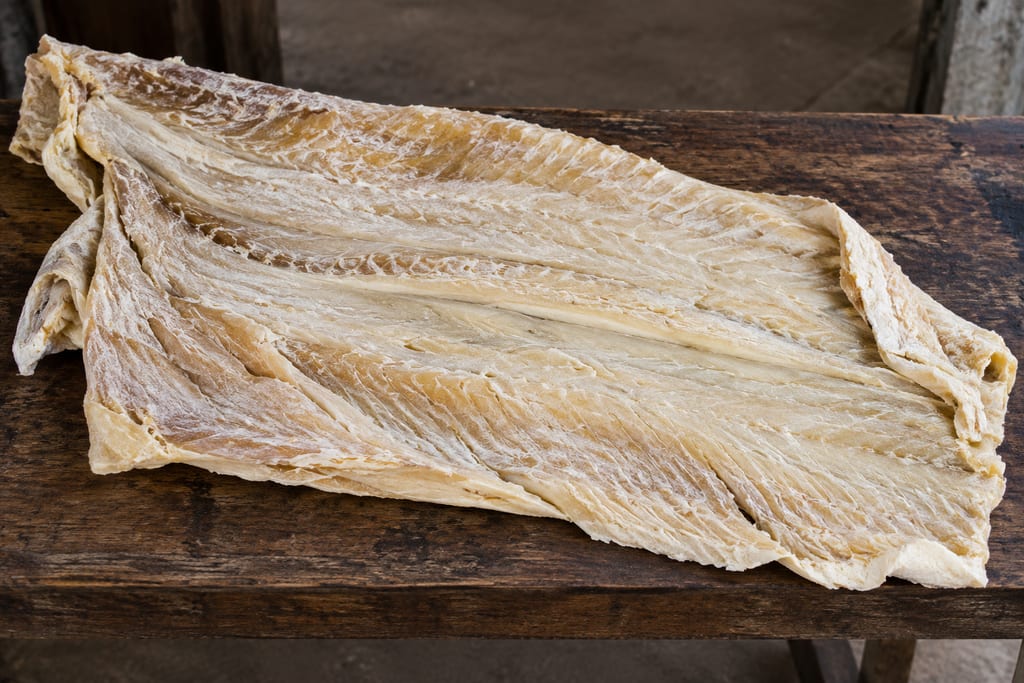
Arapaima gigas split into broad mantas, salted, matured for days and dried into the sheets that travel Amazonian river markets as bacalhau da Amazônia.
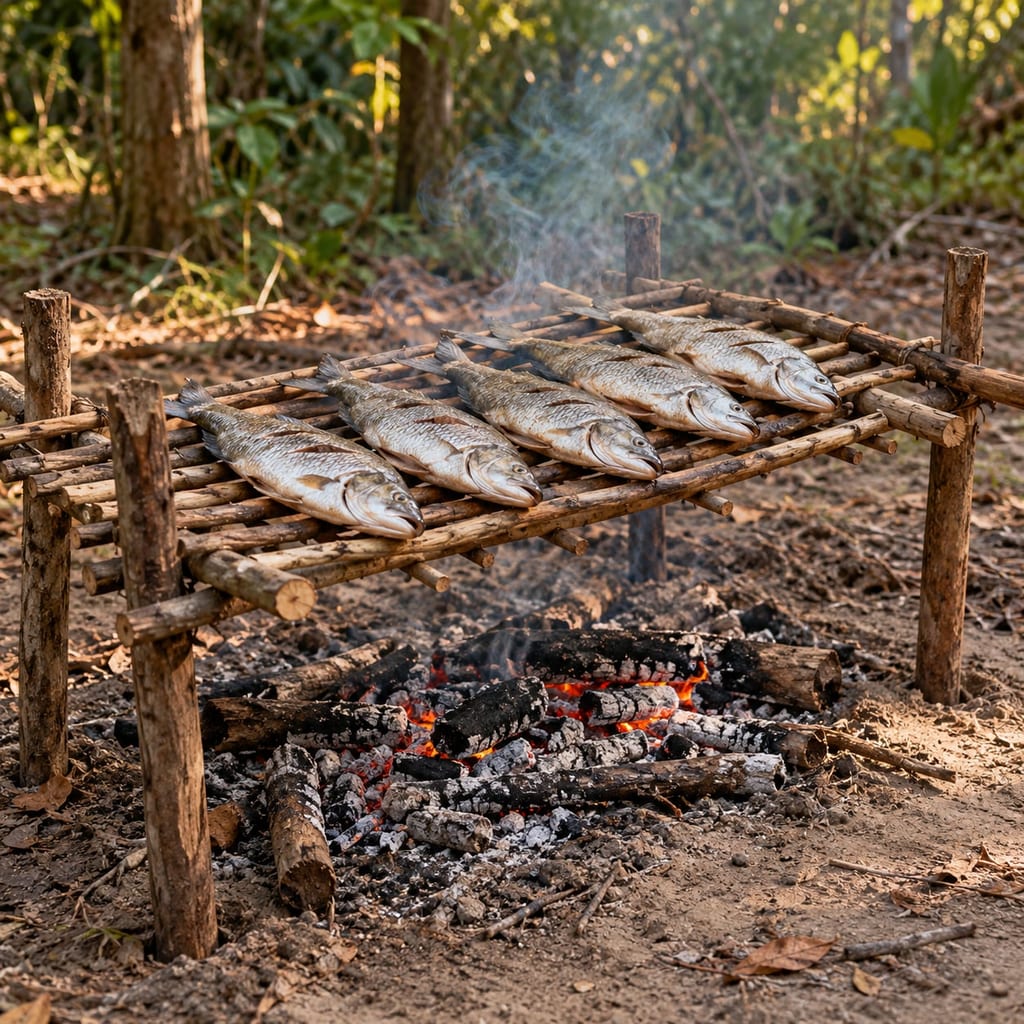
Moquém is the Brazilian Indigenous method of laying meat or fish on a grill of wooden sticks to roast, dry or smoke it, and also the name of the grill itself.
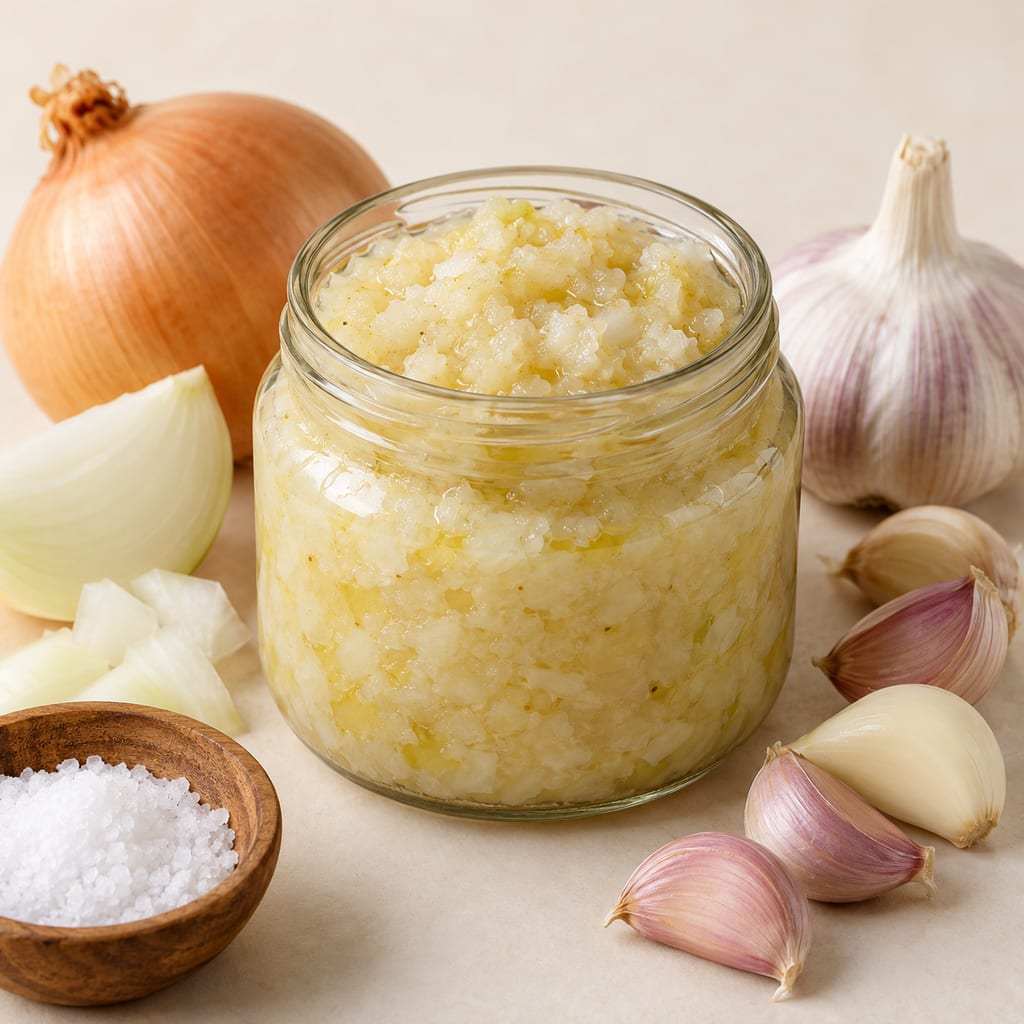
Tempero pronto is a fresh Brazilian paste of garlic, onion and salt, ground with oil and kept ready to start a dish. It is the Brazilian counterpart of sofrito and refogado.