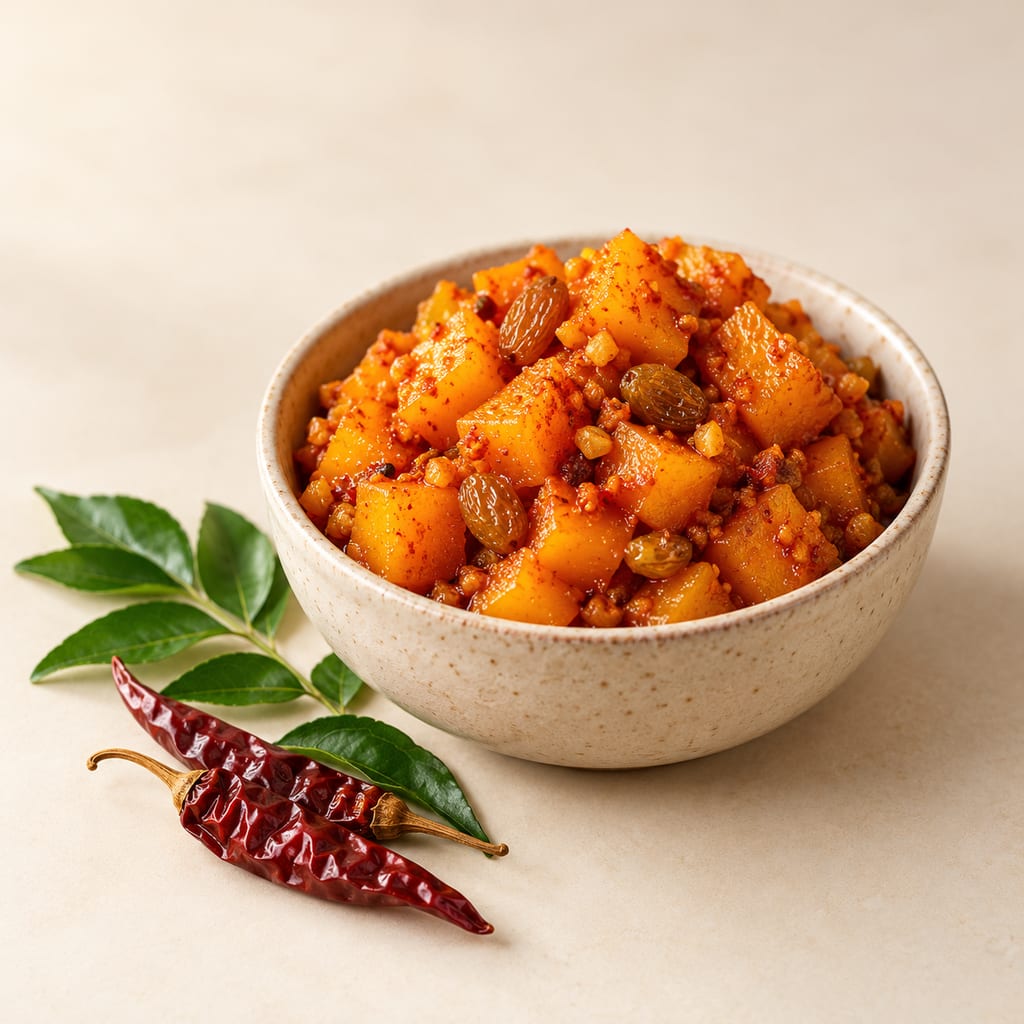
Mathanga achar: Kerala pumpkin pickle
Mathanga achar: Freeze for winter; small fresh portion refrigerated up to 48 hours.
 FermenteaWhere food goes to change
Recipes by the places recorded in their sources.
Mathanga achar: Freeze for winter; small fresh portion refrigerated up to 48 hours.
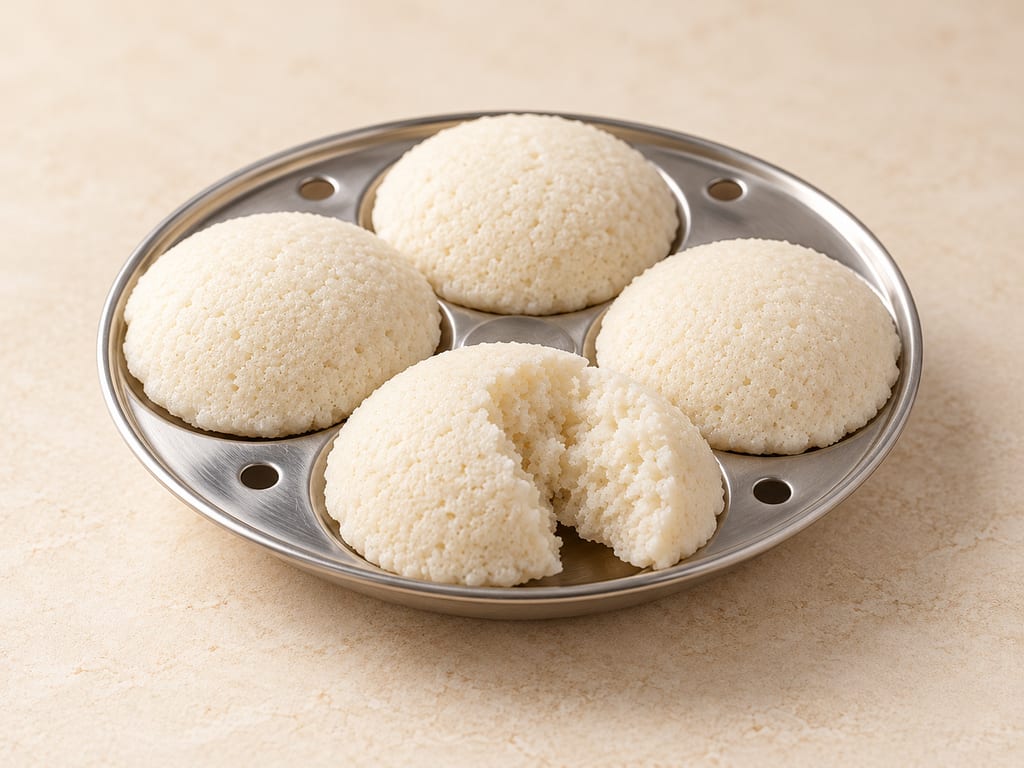
Rice and black gram are soaked separately, ground, salted and fermented into a thick batter for idli. The batter is portioned into moulds and steamed into soft savoury cakes.
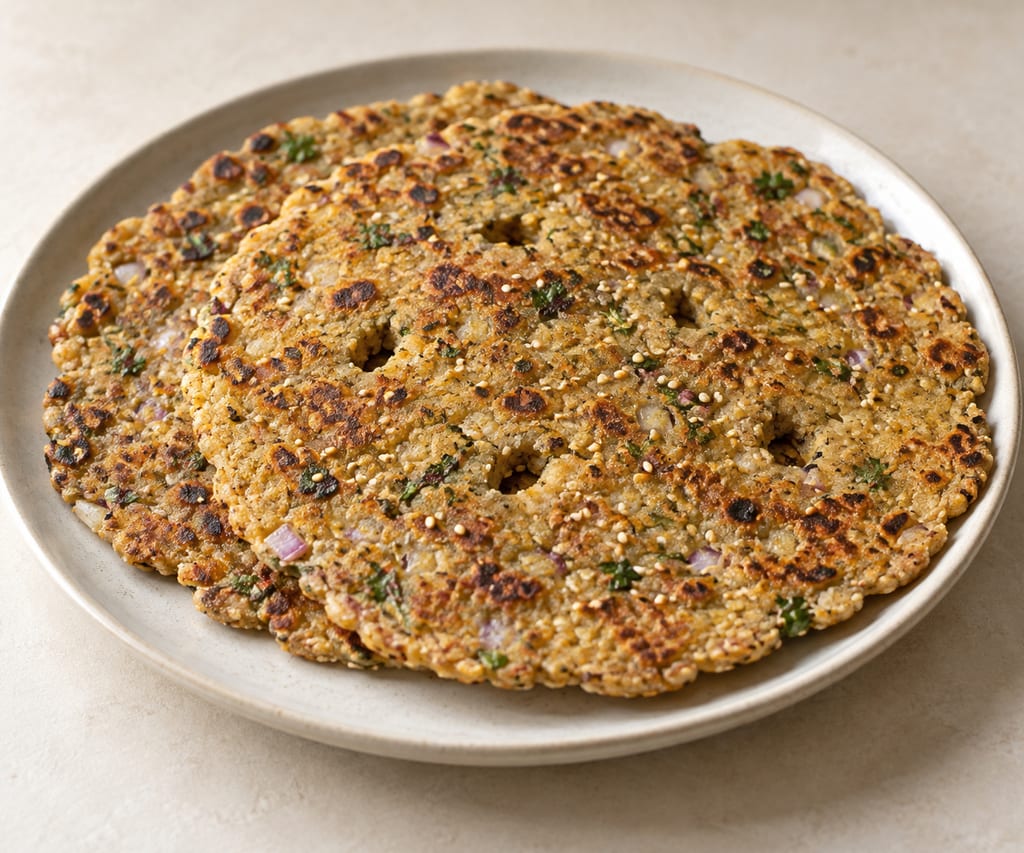
A Maharashtrian multigrain flatbread, patted by hand and cooked on a hot griddle. This home version mixes five flours with onion, sesame and spices.
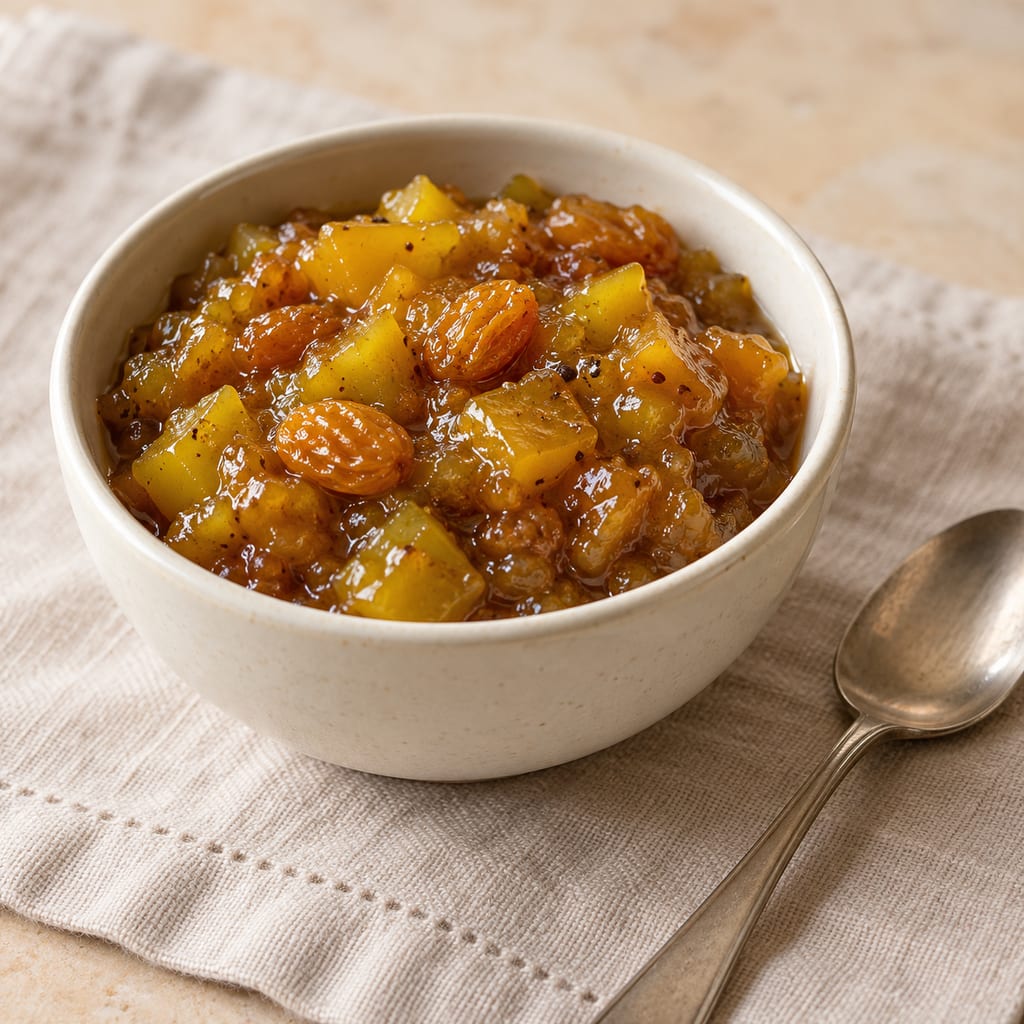
Hard green mango is cooked with vinegar, sugar, raisins, ginger, garlic and chilli in this tested US home-canning recipe.
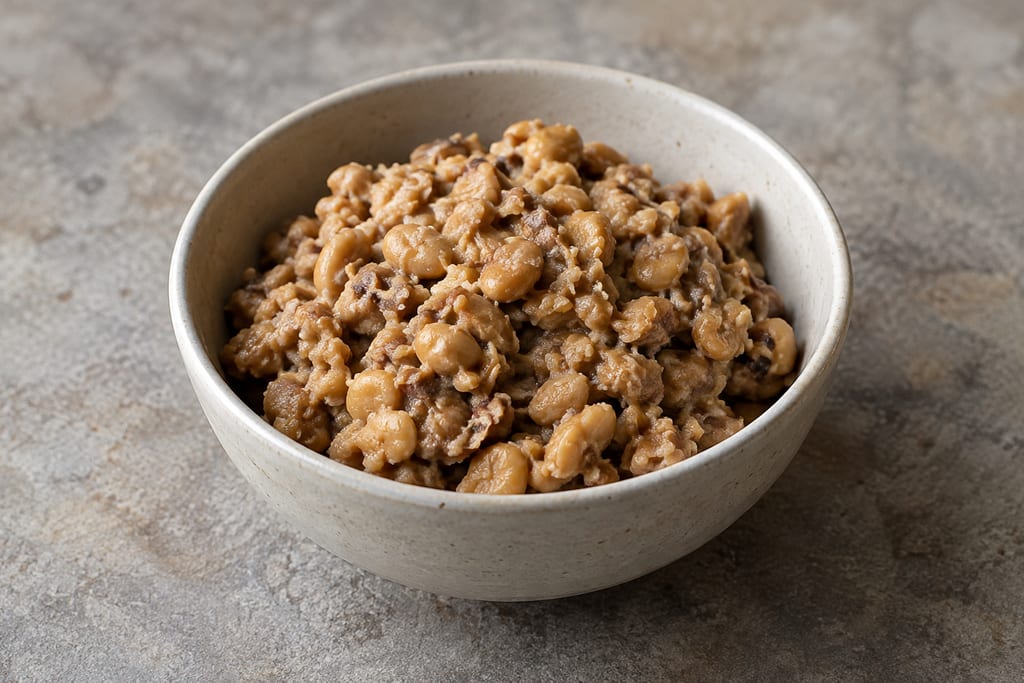
A Khasi and Jaintia fermented soybean food from Meghalaya: cooked beans ferment naturally in leaf-lined baskets above a fire, giving a sticky, pungent, savoury mass.
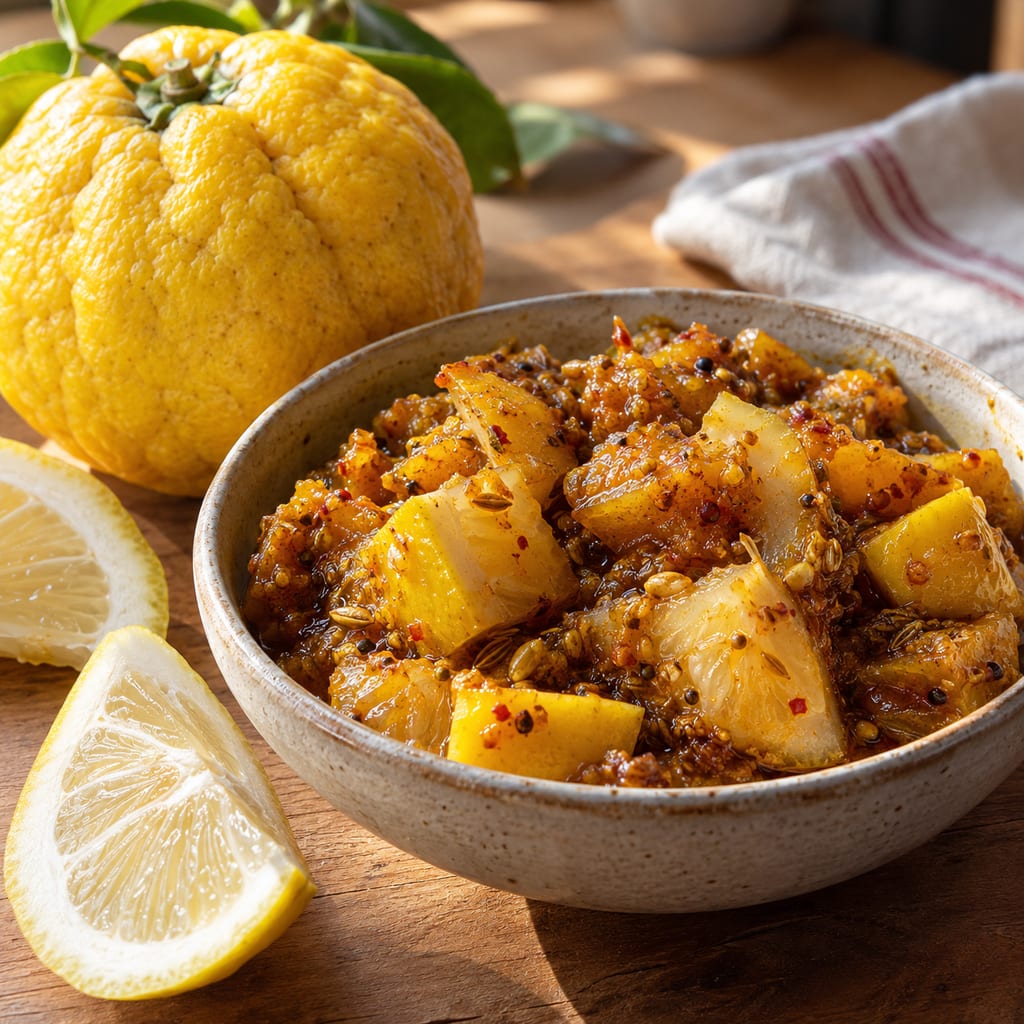
Ripe Himalayan galgal is boiled, sun-dried and cooked with mustard oil, spices and jaggery before a further rest in a ceramic jar.
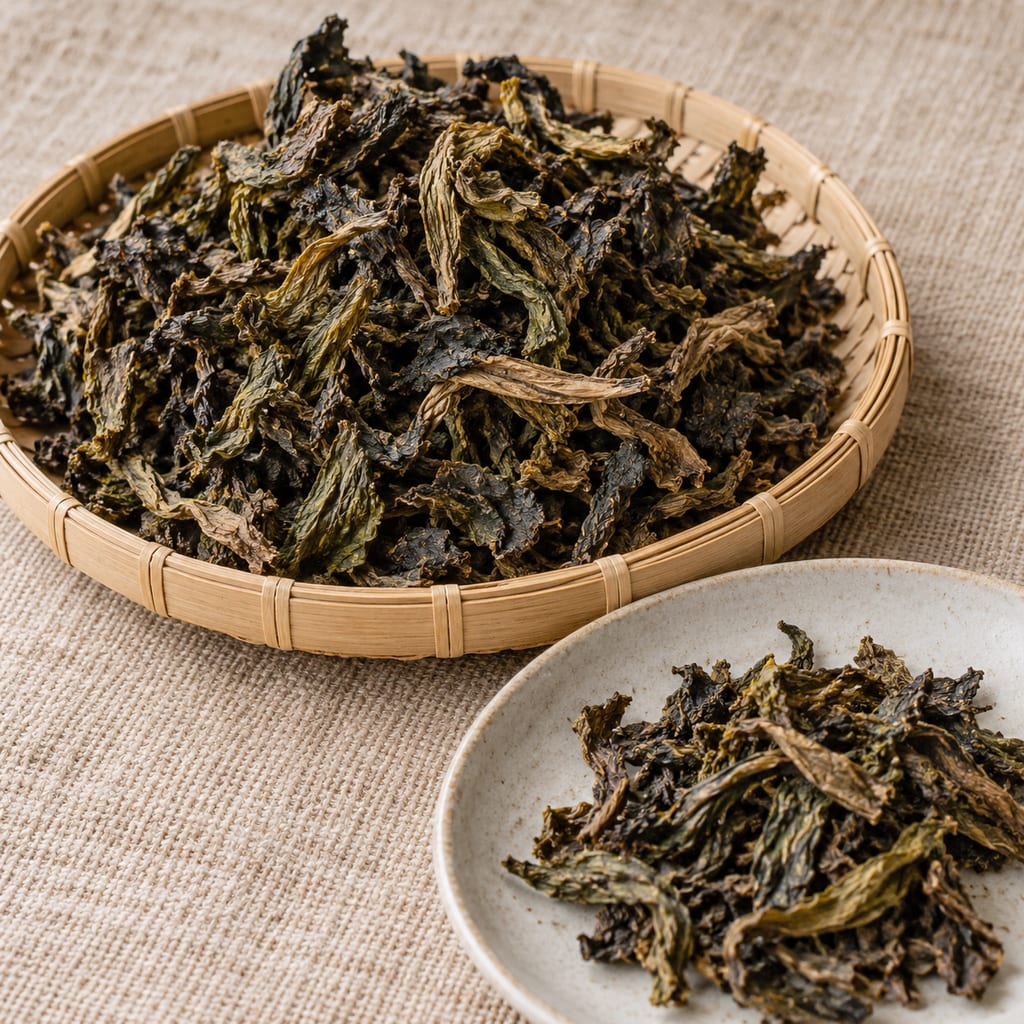
Inziangsang is a Naga fermented food of mustard leaves from Nagaland and Manipur. Crushed, soaked and squeezed leaves ferment for 7 to 10 days, then dry in the sun. A squeezed liquid can be boiled to a concentrate.
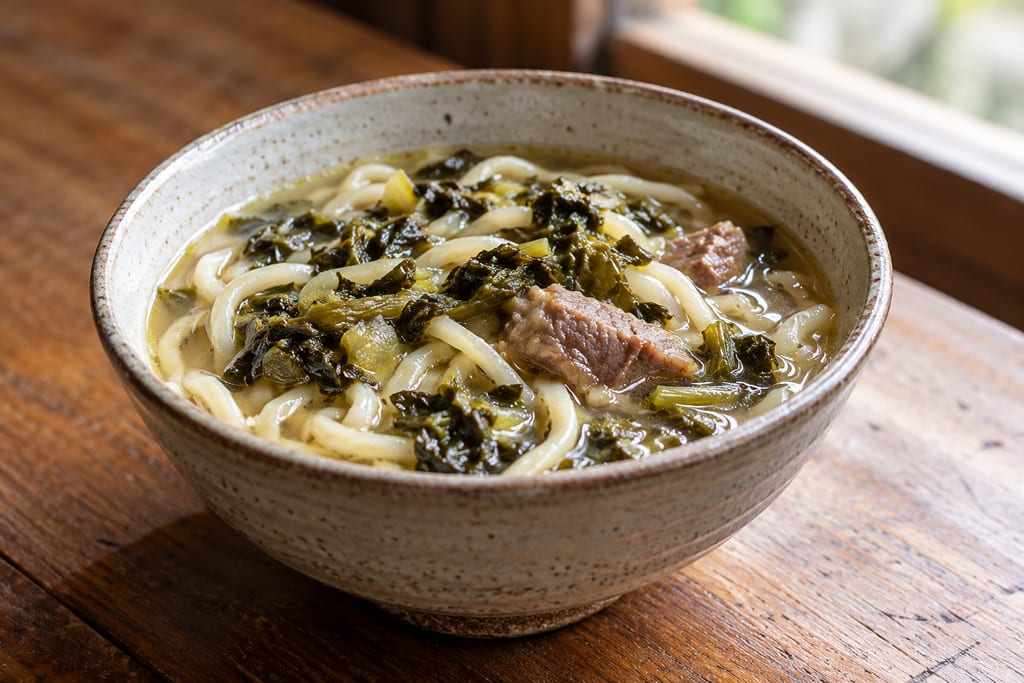
Goyang is a Sherpa fermented wild leafy food of the Darjeeling hills and Sikkim. Rainy-season magane-saag leaves are packed in a bamboo basket, held at room temperature for about a month, then eaten fresh or dried and used in soup.
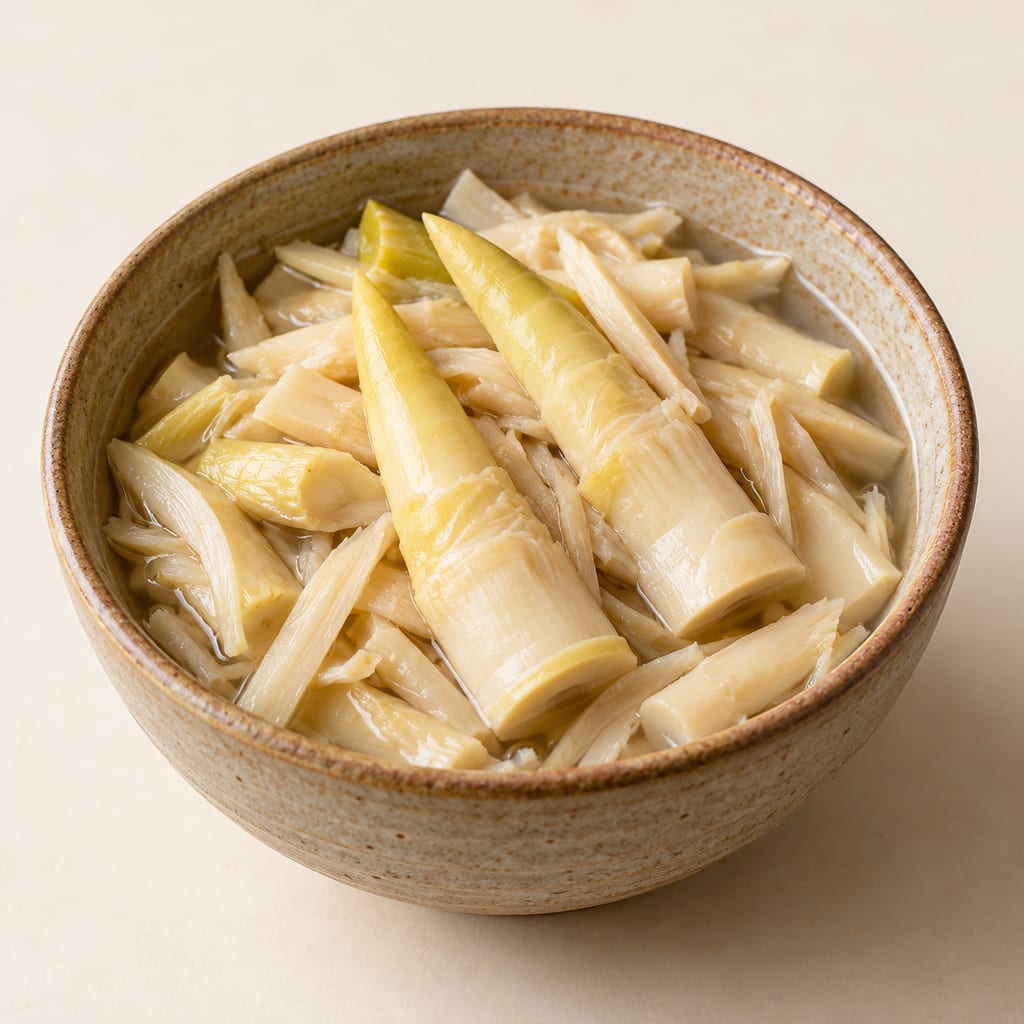
Fermented tender bamboo-shoot tips from Manipur, started with the sour liquid of an earlier batch and eaten in chutneys and curries.
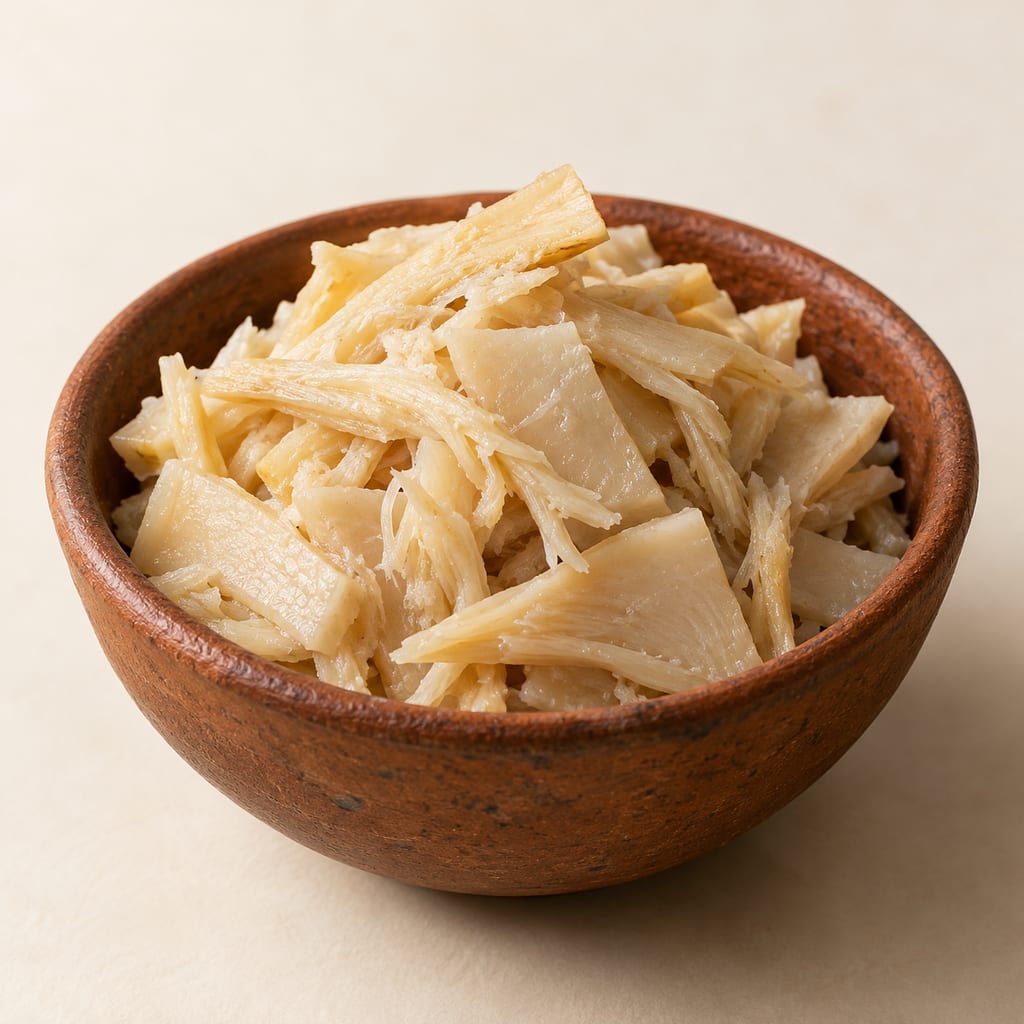
Thin slices of juvenile bamboo shoots fermented for six to twelve months in Manipur, eaten as a sour side dish with rice.
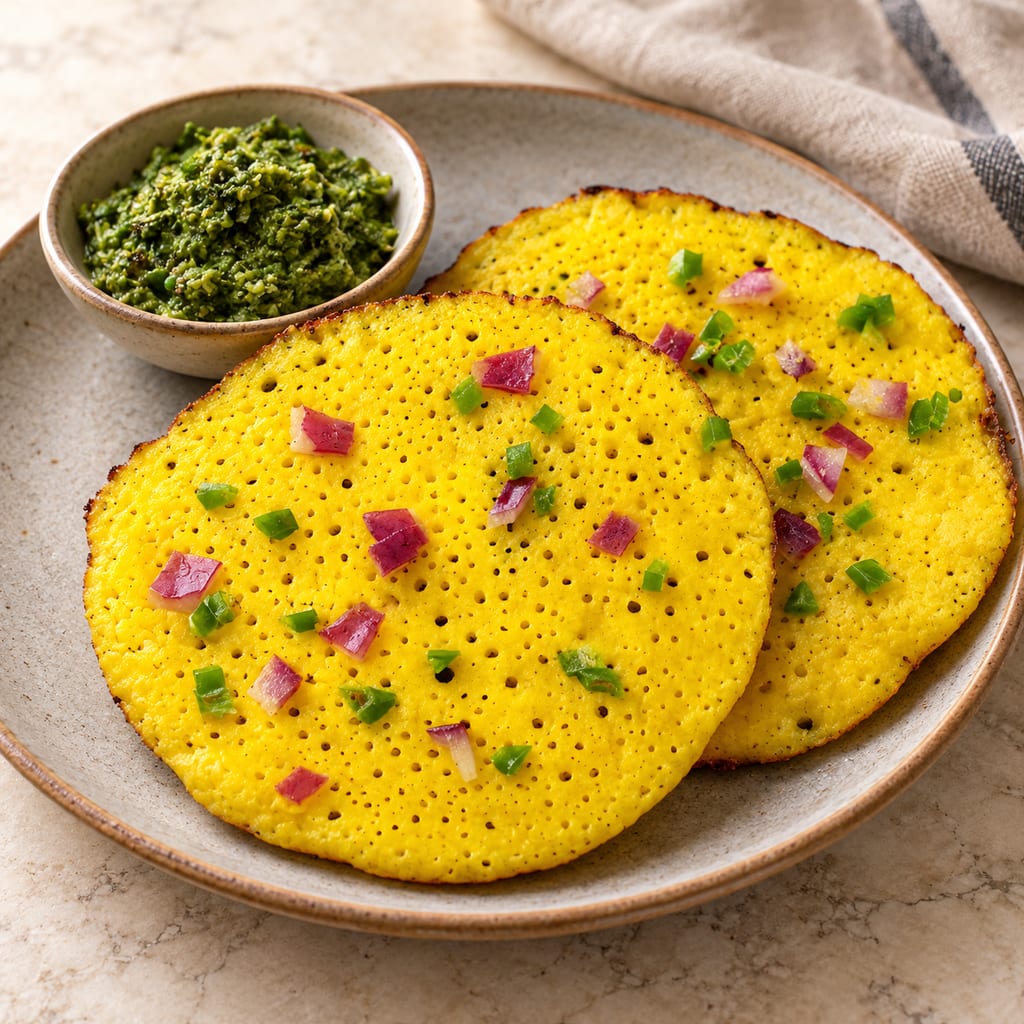
Spongy rice-and-coconut pancakes associated with Goa, cooked on one side from a batter that a multicooker's yogurt programme lets rise overnight.

In a surveyed Himachal method, ripe galgal is blanched, sun-dried, cooked with mustard oil, fennel and thyme, then left to ferment.
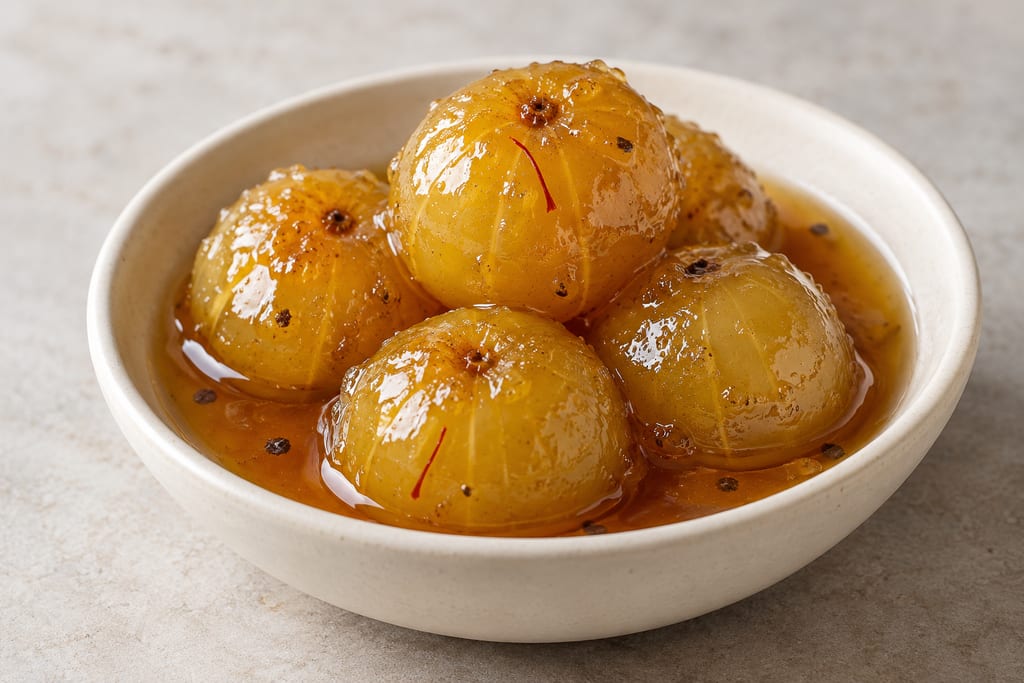
Amla murabba preserves whole Indian gooseberries in a heavy sugar syrup scented with cardamom and sharpened with pepper and black salt. This household method soaks the fruit before cooking.
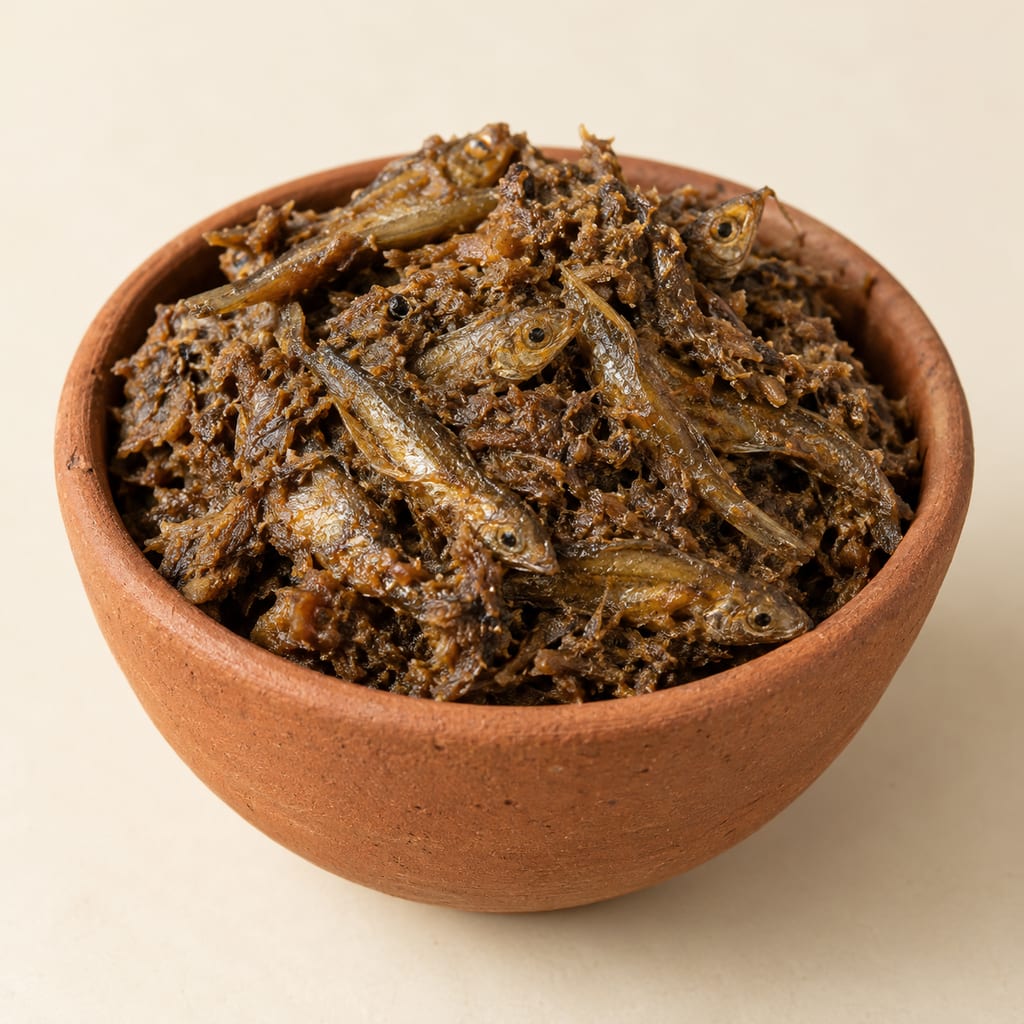
Shidal is a fermented fish preparation from Assam, Tripura and neighbouring northeastern regions, made from small dried fish moistened and matured in earthenware. Studies describe salt-free versions that stay solid or pasty.
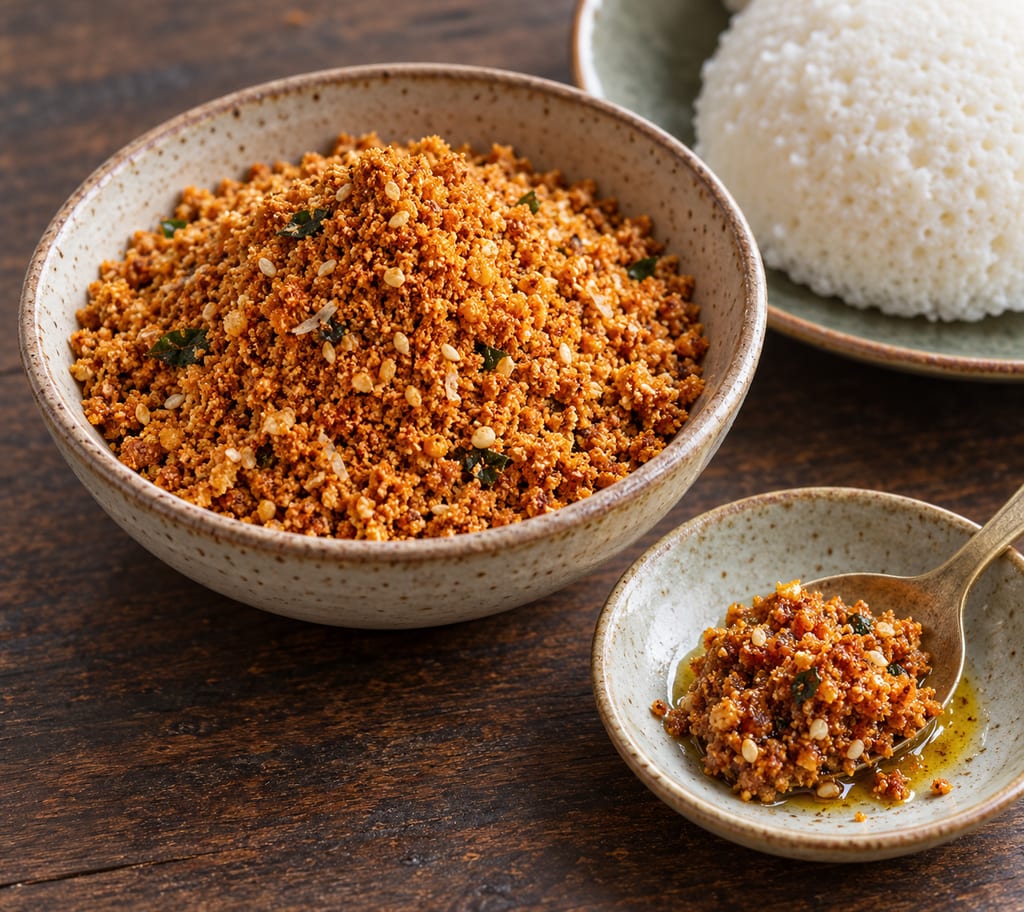
A South Indian dry chutney powder has many regional and household forms. This record follows one published gunpowder podi recipe, served with ghee or gingelly oil; it is not a single standard formula.
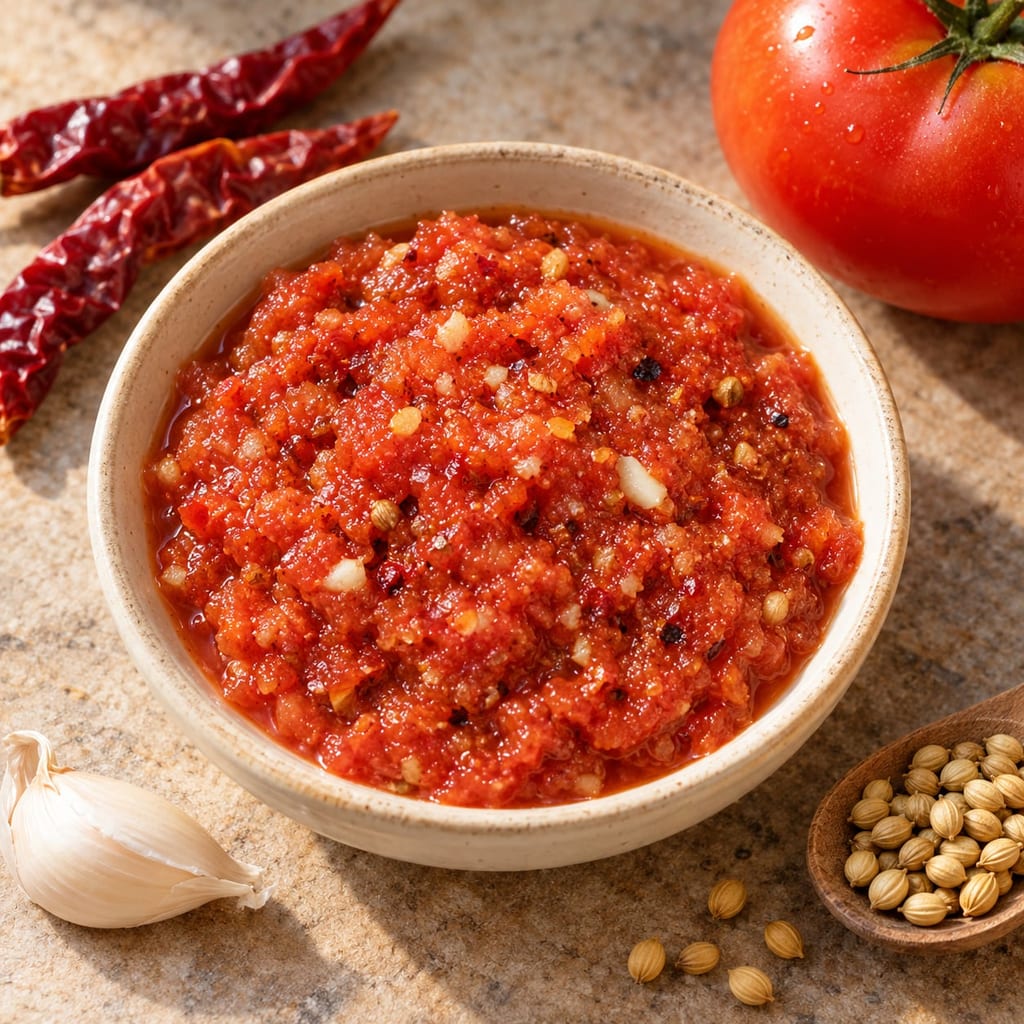
A wet Rajasthani chutney of tomato, soaked dried red chillies, garlic and coriander seed ground with salt and water. A 2017 study gives its proportions as a ratio and tested a stored batch.
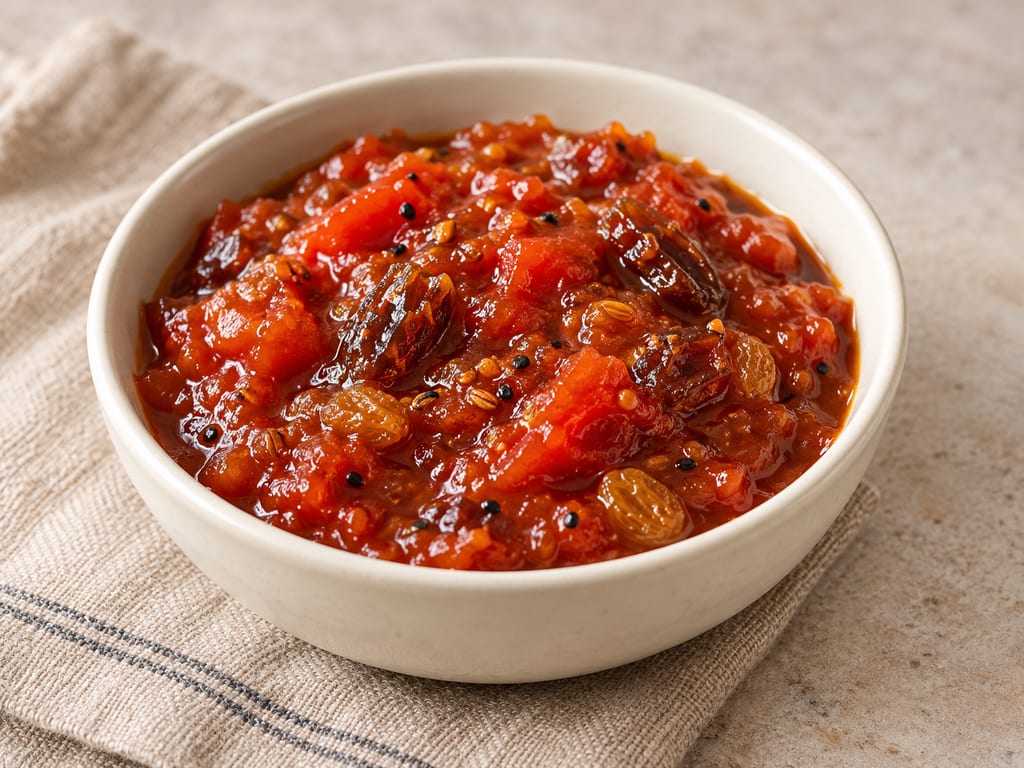
A cooked Bengali meal chutney combining tomatoes, dates, raisins, ginger and panch phoron.
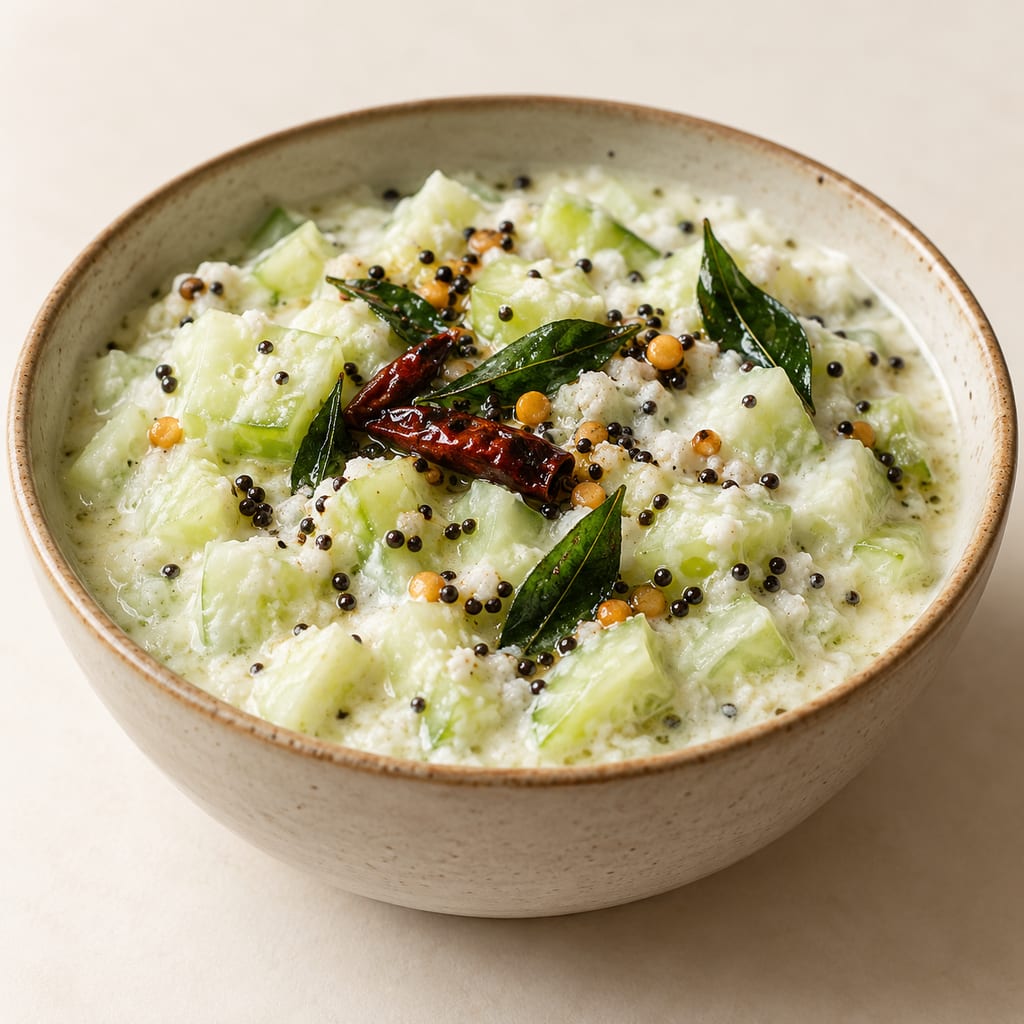
A Kerala cucumber kichadi for an Onam sadya, finished with coconut, yogurt and a coconut-oil tempering.
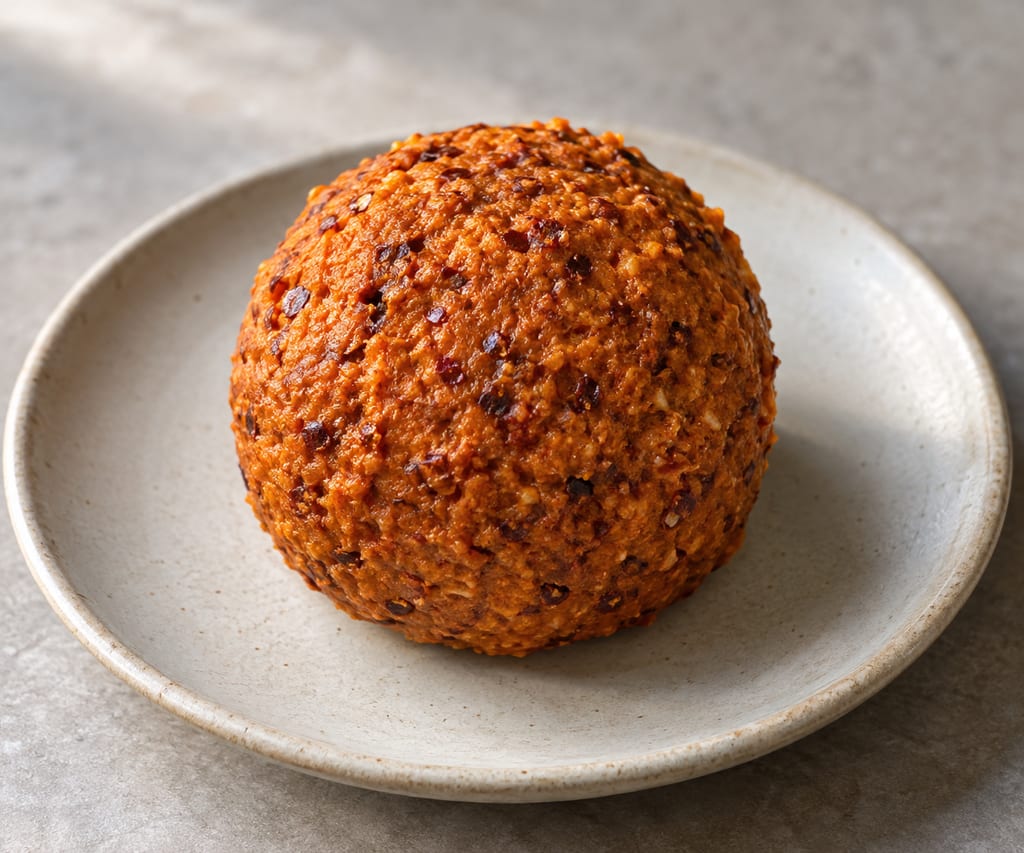
A Kerala chammanthi of coconut and red chillies roasted over a flame, then ground with shallots, tamarind, curry leaves, lemon leaves and salt and shaped into a ball.
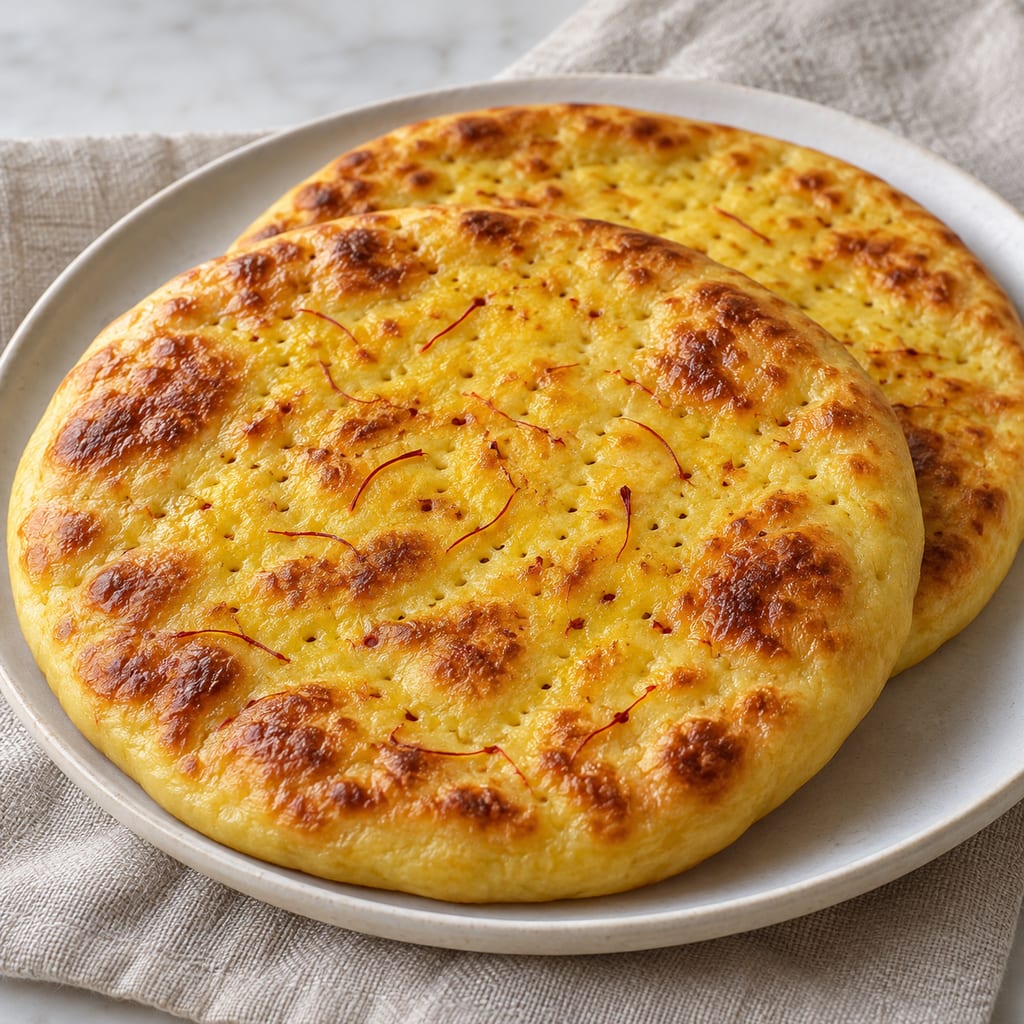
Dassana Amit’s measured sheermal makes eight mildly sweet, saffron-brushed flatbreads without a leavener. Milk, cardamom and a large quantity of ghee enrich the dough, which can be cooked on a covered skillet or baked.
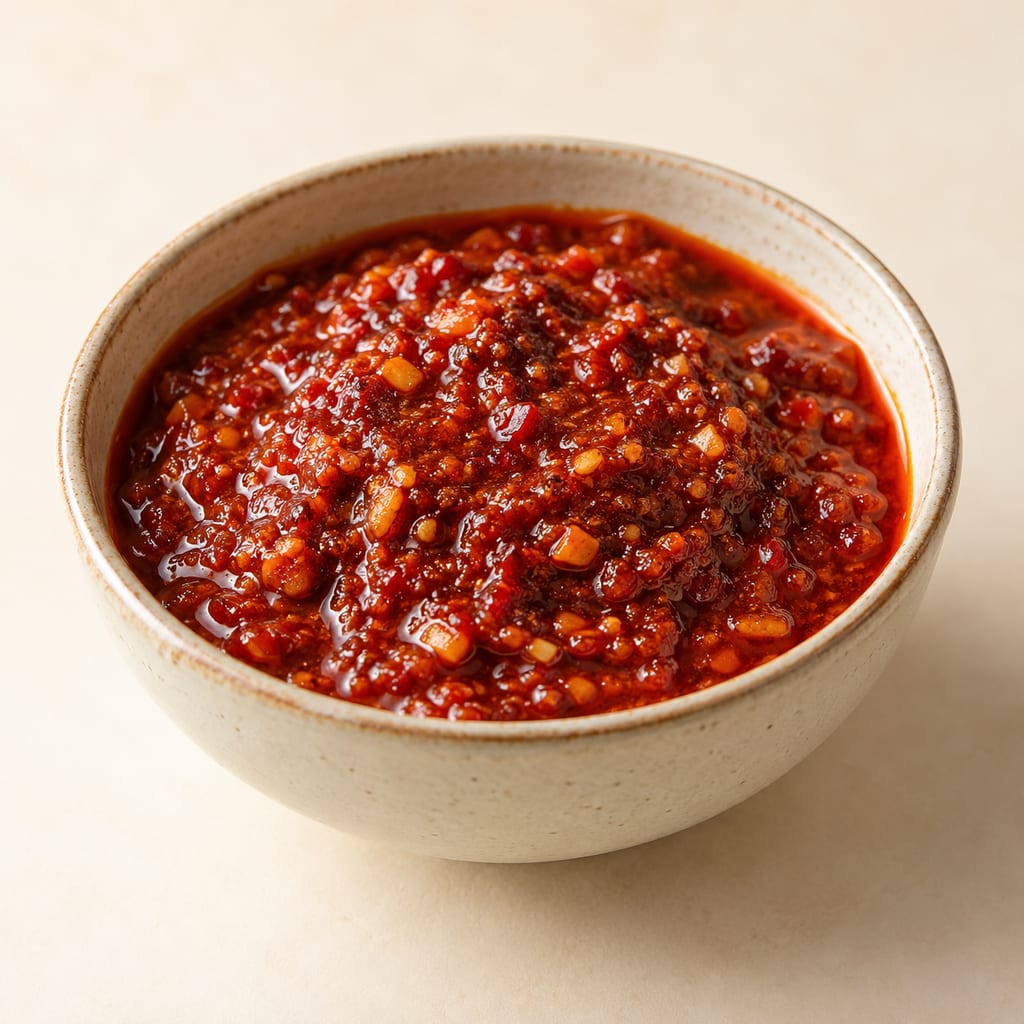
A cooked Indo-Chinese chilli sauce made with soaked dried chillies, aromatics, soy and vinegar.
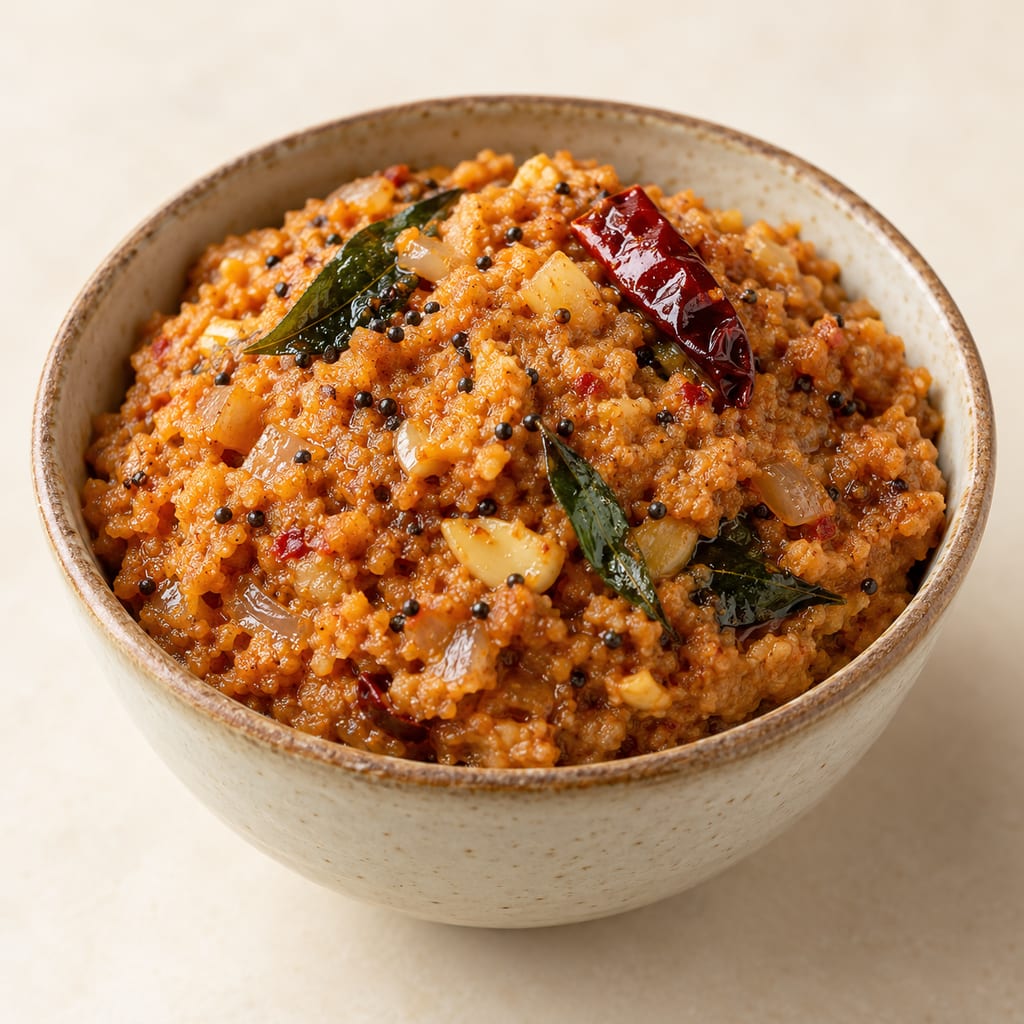
A source-specific groundnut pacchadi with roasted peanuts, cooked onion, garlic, dried chile and tamarind, finished with mustard and curry leaves.
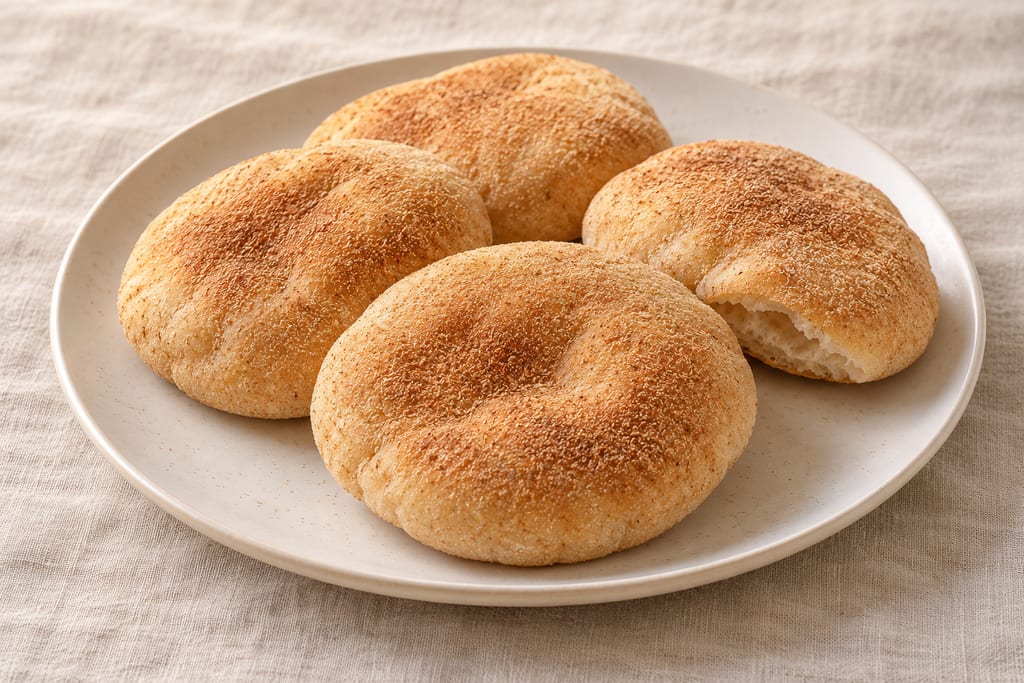
Goan wheat rounds coated in bran and baked hot until they puff. This measured home method uses commercial yeast and makes six poee.
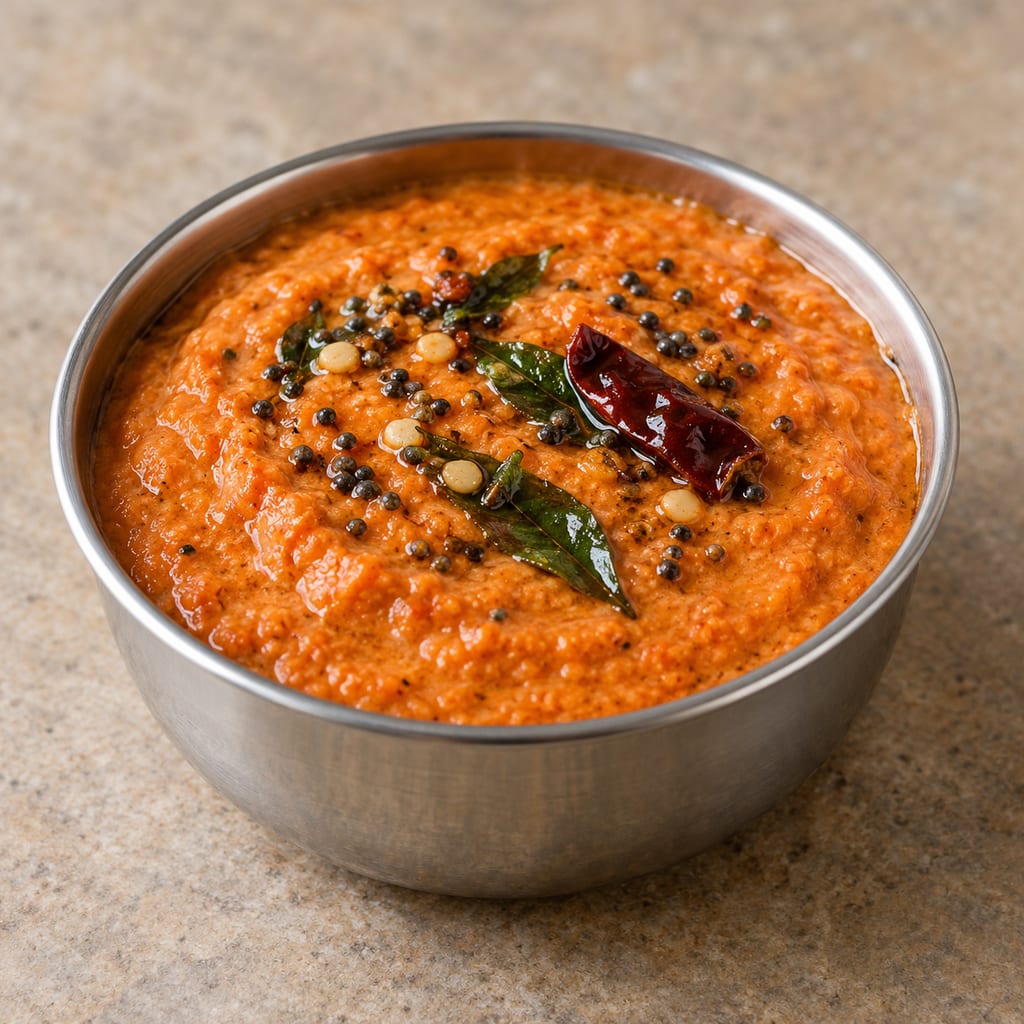
A South Indian chutney of onion and tomato cooked soft with chillies, ginger, tamarind and coconut, cooled, blended and finished with a mustard and curry-leaf tempering, for idli and dosa.
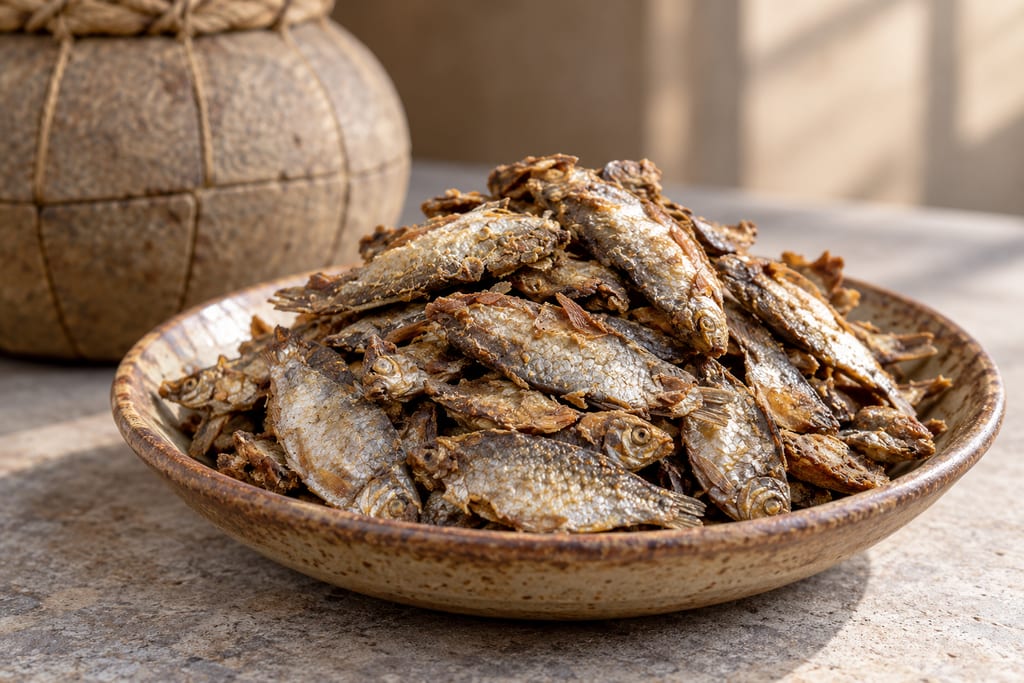
Ngari is a Manipuri fermented fish condiment made from small sun-dried fish, usually Puntius sophore, packed for fermentation. A biochemical study describes a salt-free method; it works as a condiment and ingredient rather than as a filtered sauce.
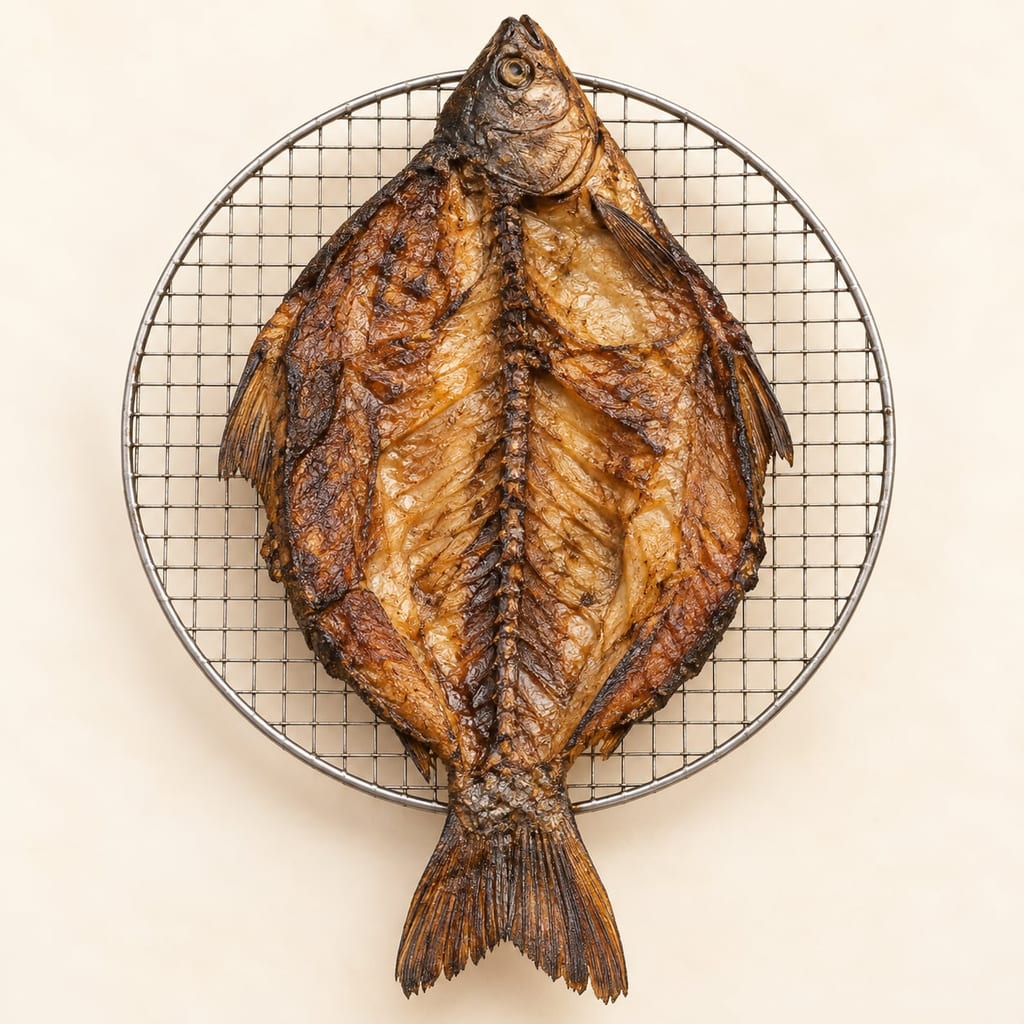
Ngaphak is fish split, flattened and roasted and smoked over an open flame on a wire net or woven bamboo mesh, as practised by fish processors around Loktak Lake in Manipur, India.
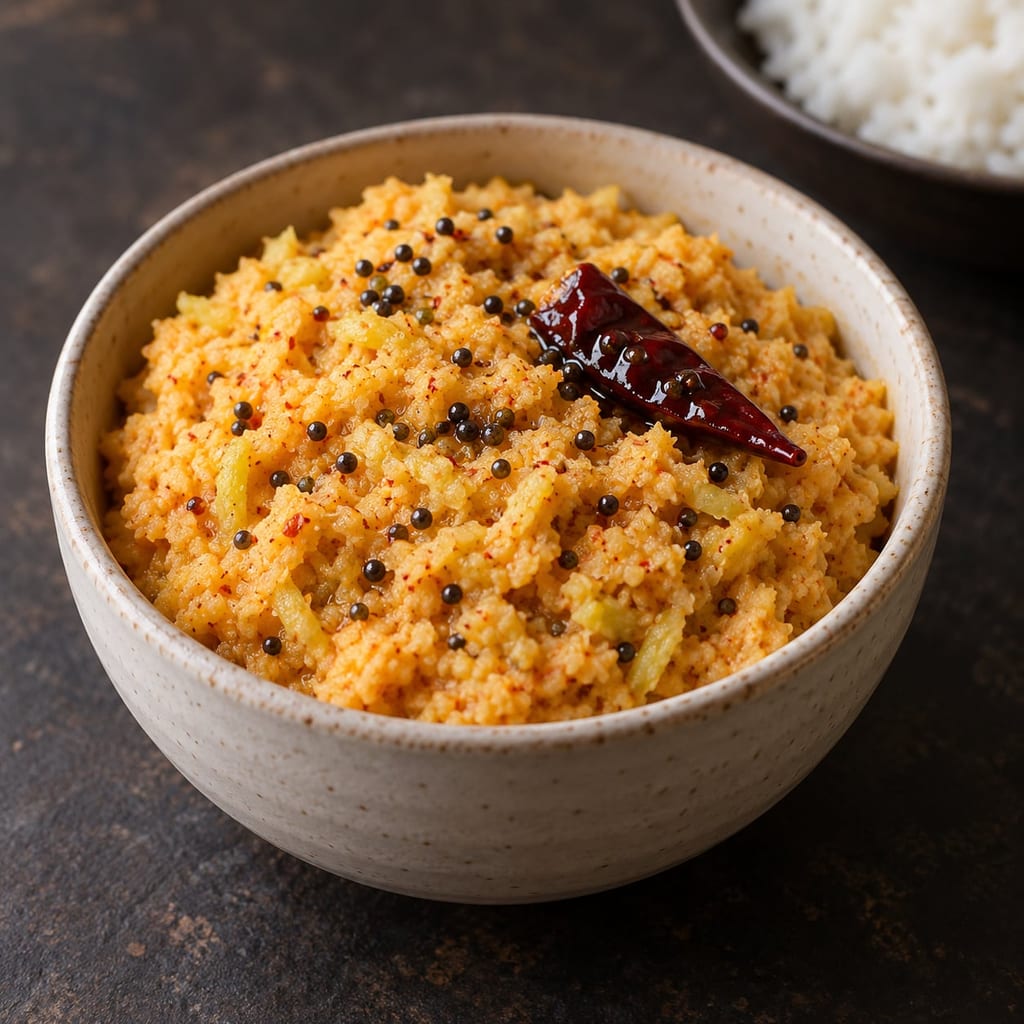
A coarse, sour Andhra chutney of raw mango and fresh coconut ground with browned urad dal and hot chillies, finished with a mustard tempering and eaten with hot rice.
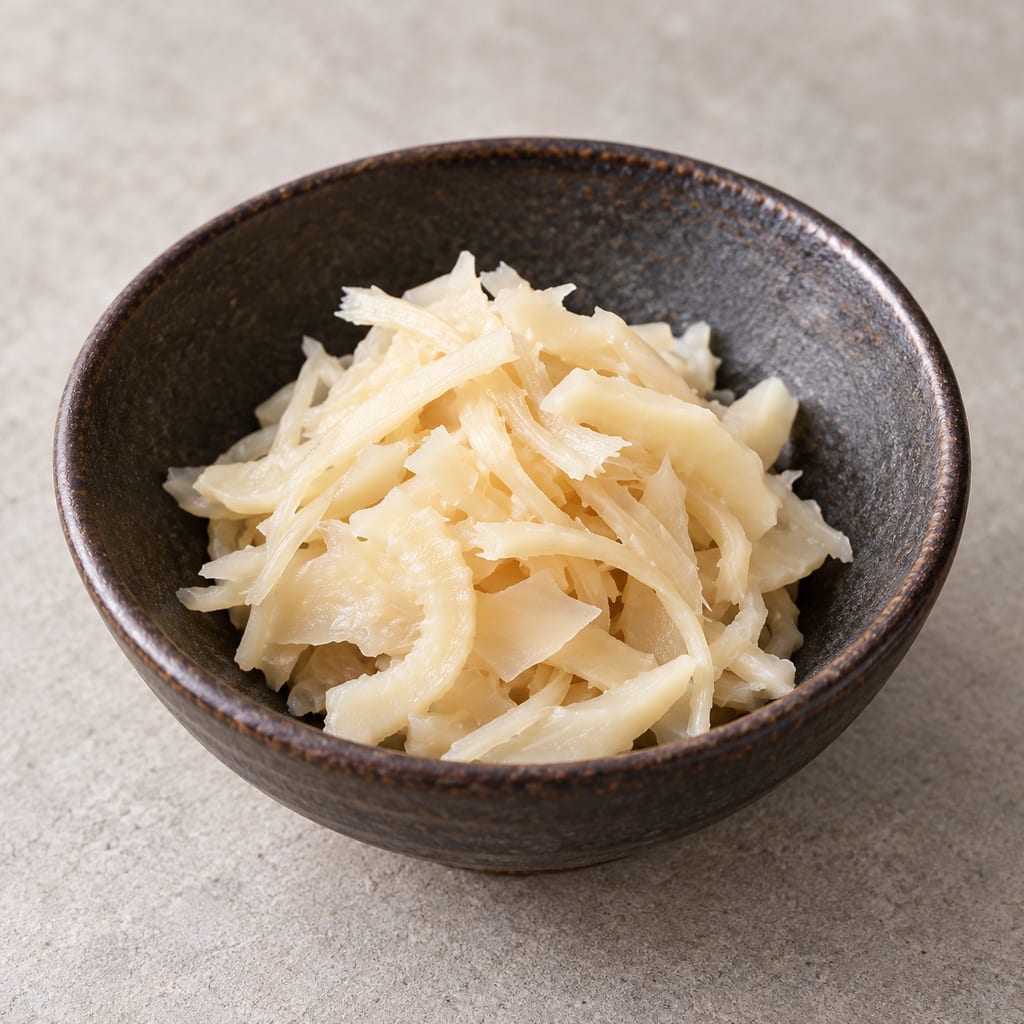
Young Dendrocalamus hamiltonii shoots fermented in a bamboo cylinder in a stream or in a sealed bottle above a kitchen oven, from Khasi households in Meghalaya.
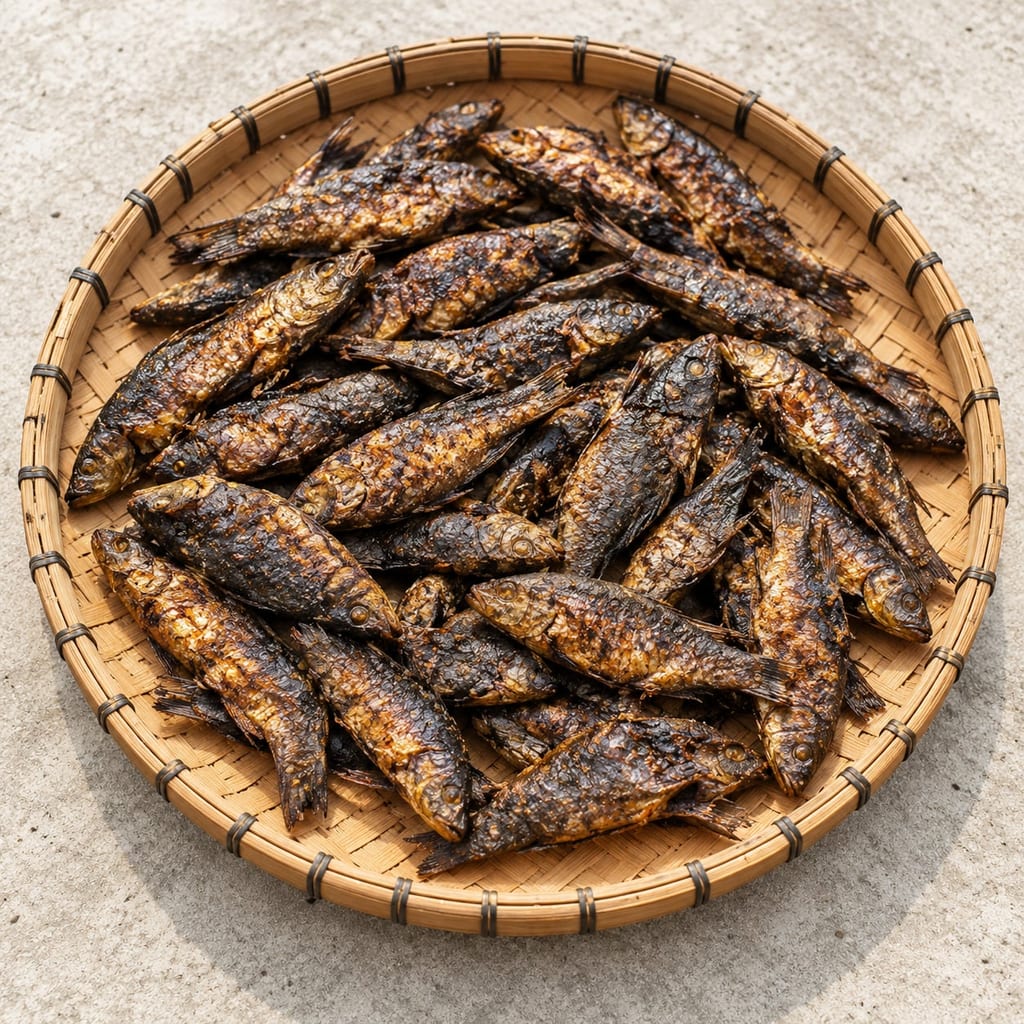
Leirou is fish smoked in a prepared kiln or room by processors around Loktak Lake in Manipur, India, a method the local survey keeps apart from open-flame ngaphak.
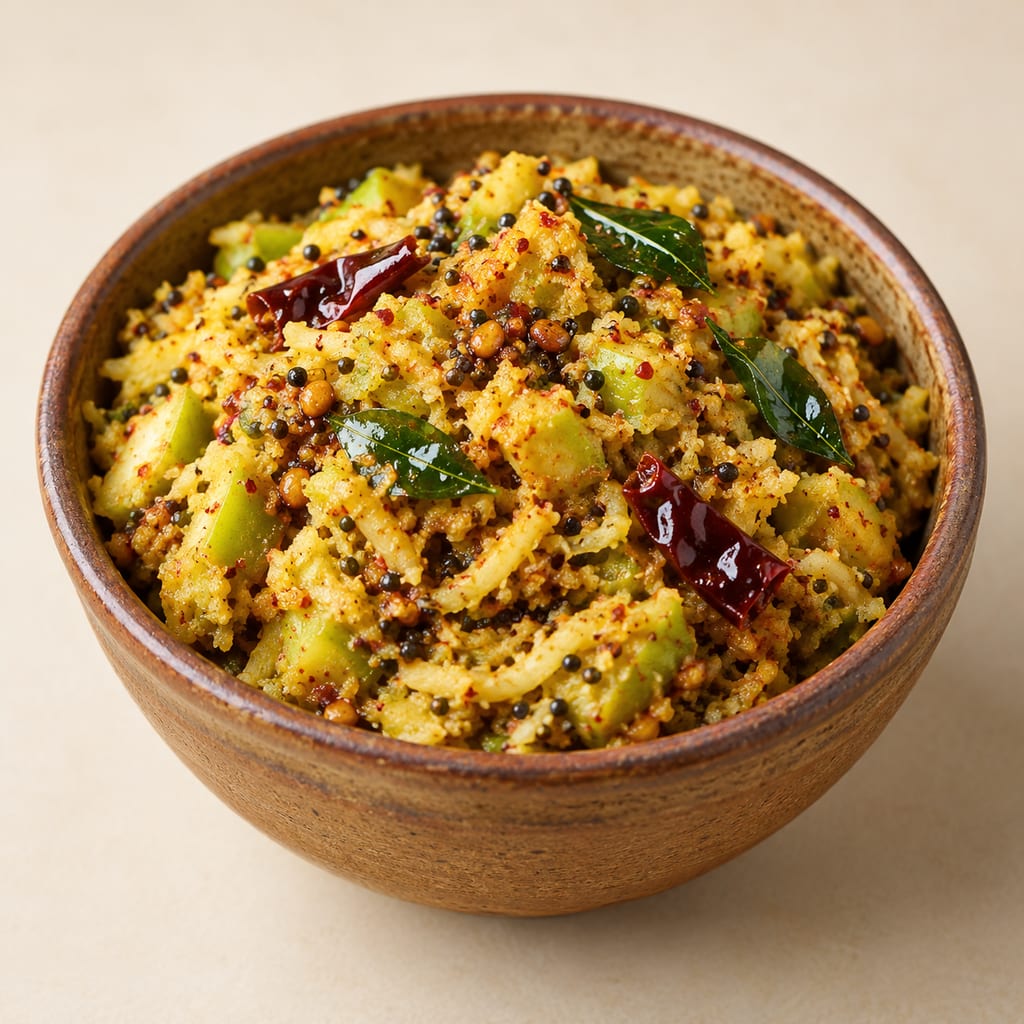
A Telugu coconut and raw mango pachhadi with a separately fried spice mixture.
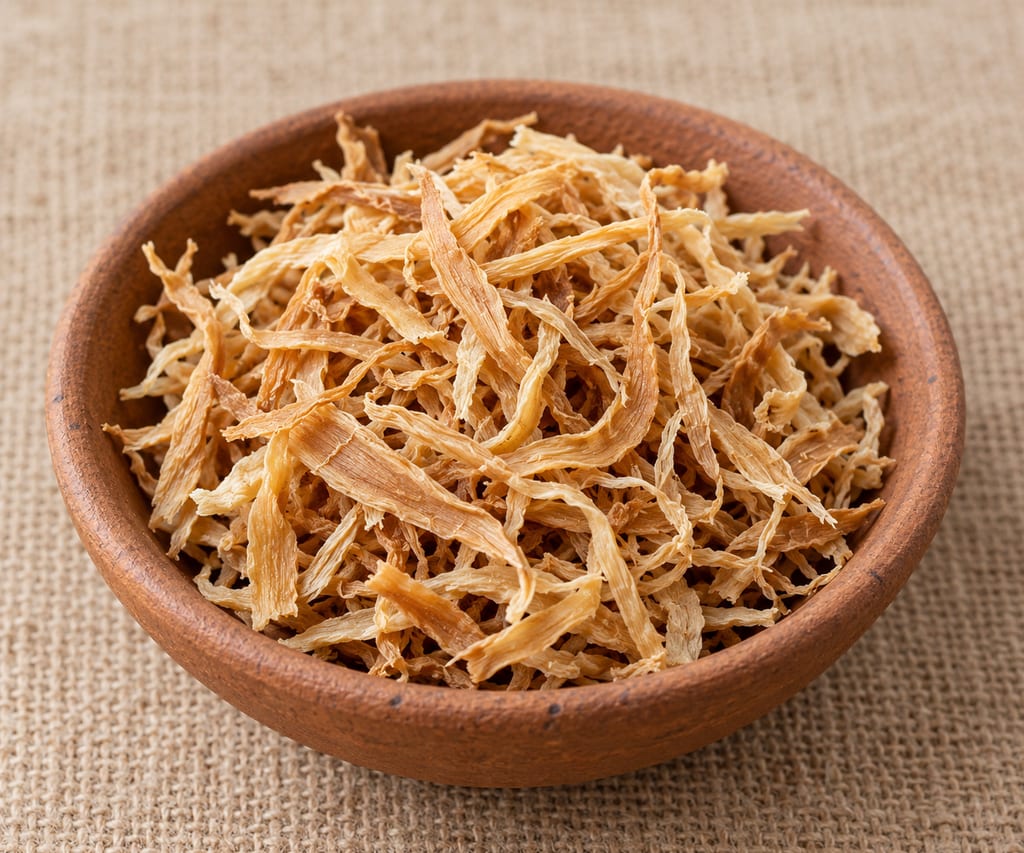
Khorisa is an Assamese fermented bamboo-shoot food. This page records cultural and lab accounts, not a validated home method. FSANZ says shoots must be fully cooked before eating; it does not validate Khorisa or set its cooking time.
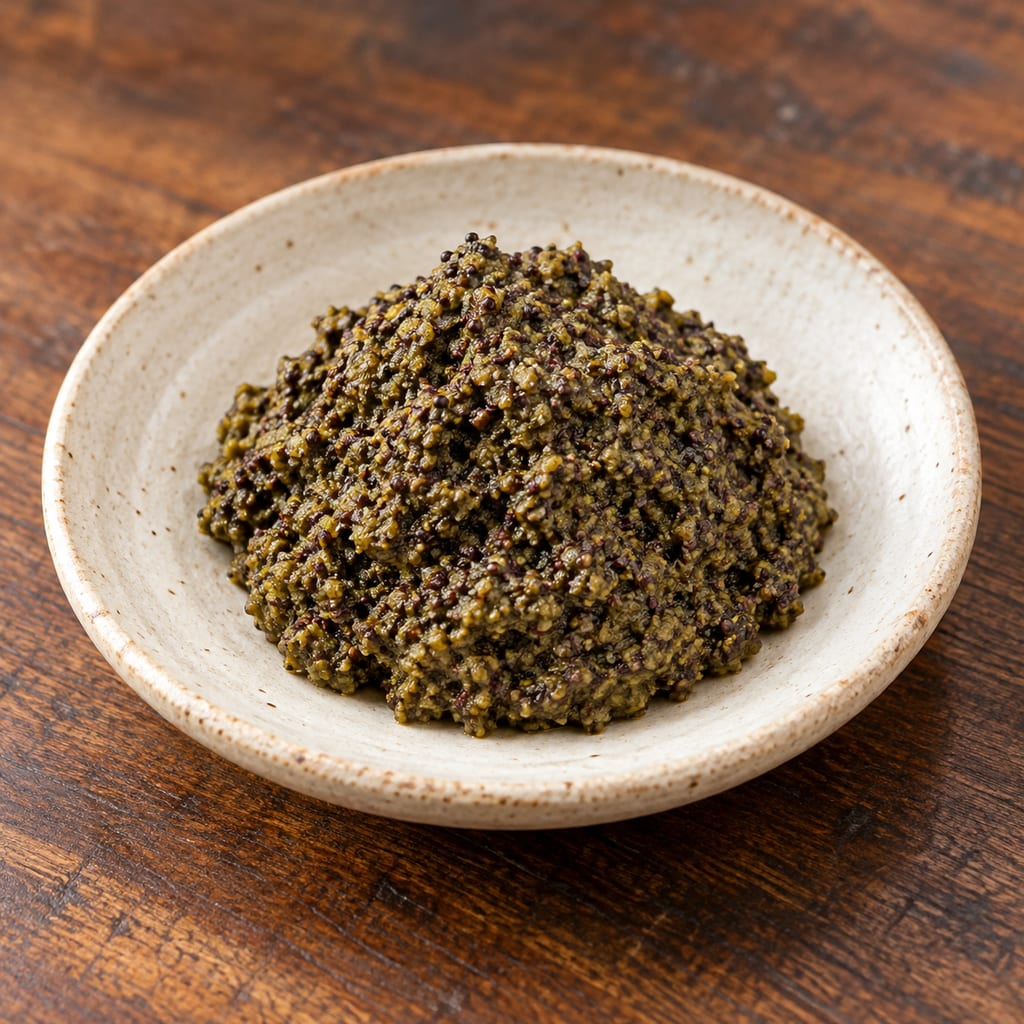
A strong Assamese condiment of mustard seed mixed with khar, an alkaline banana-ash filtrate, wrapped in leaves and fermented in bamboo over a fire or in a kitchen pot.
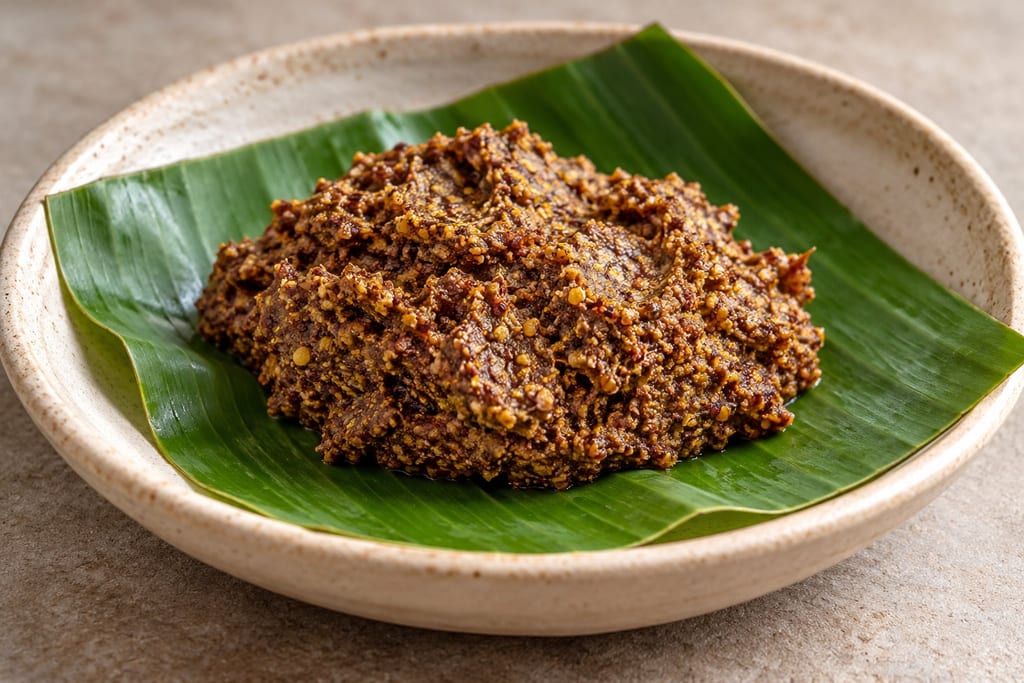
Kahudi is an Assamese mustard-seed condiment fermented with sour Thekera fruit into a strong mash; household methods and study results differ, and no validated home schedule exists.
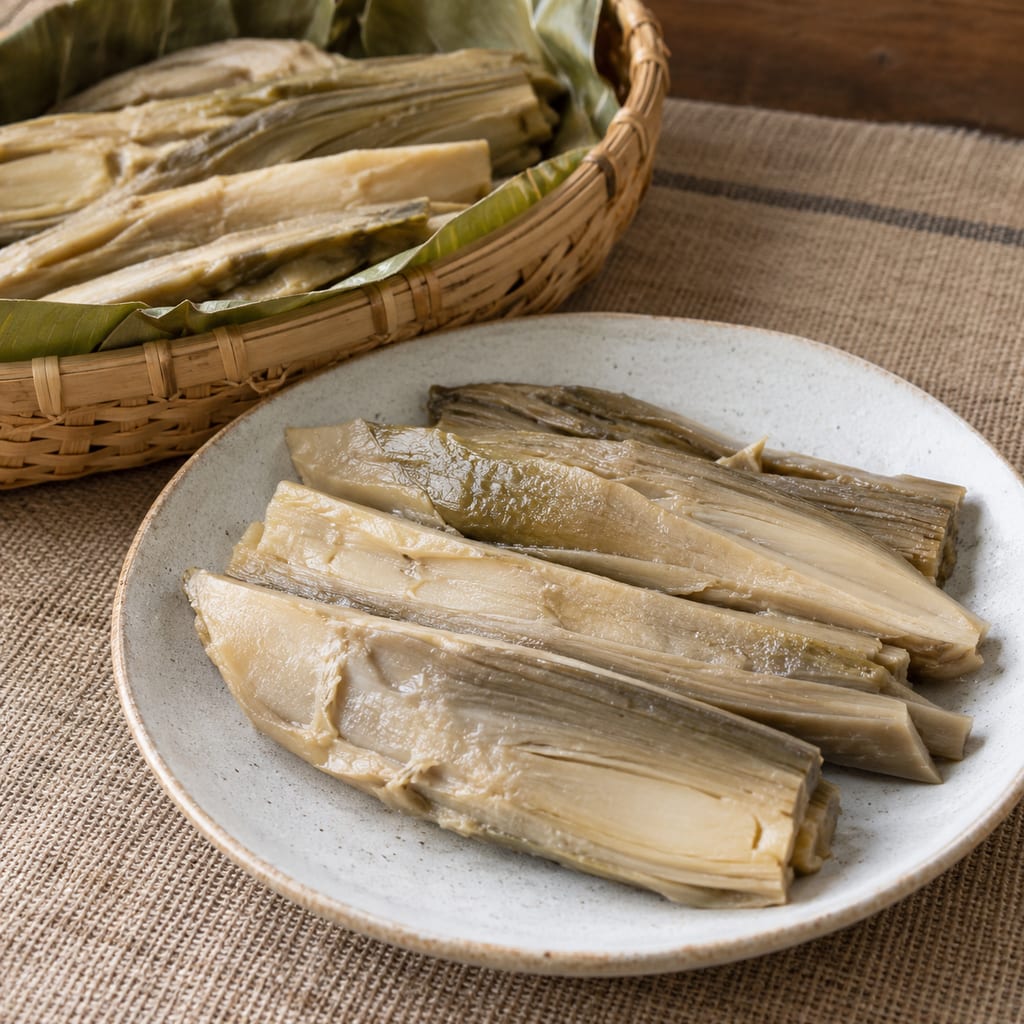
Upper tender bamboo-shoot tips, split or flattened, pit-fermented one to three months in Arunachal Pradesh and eaten in curries.
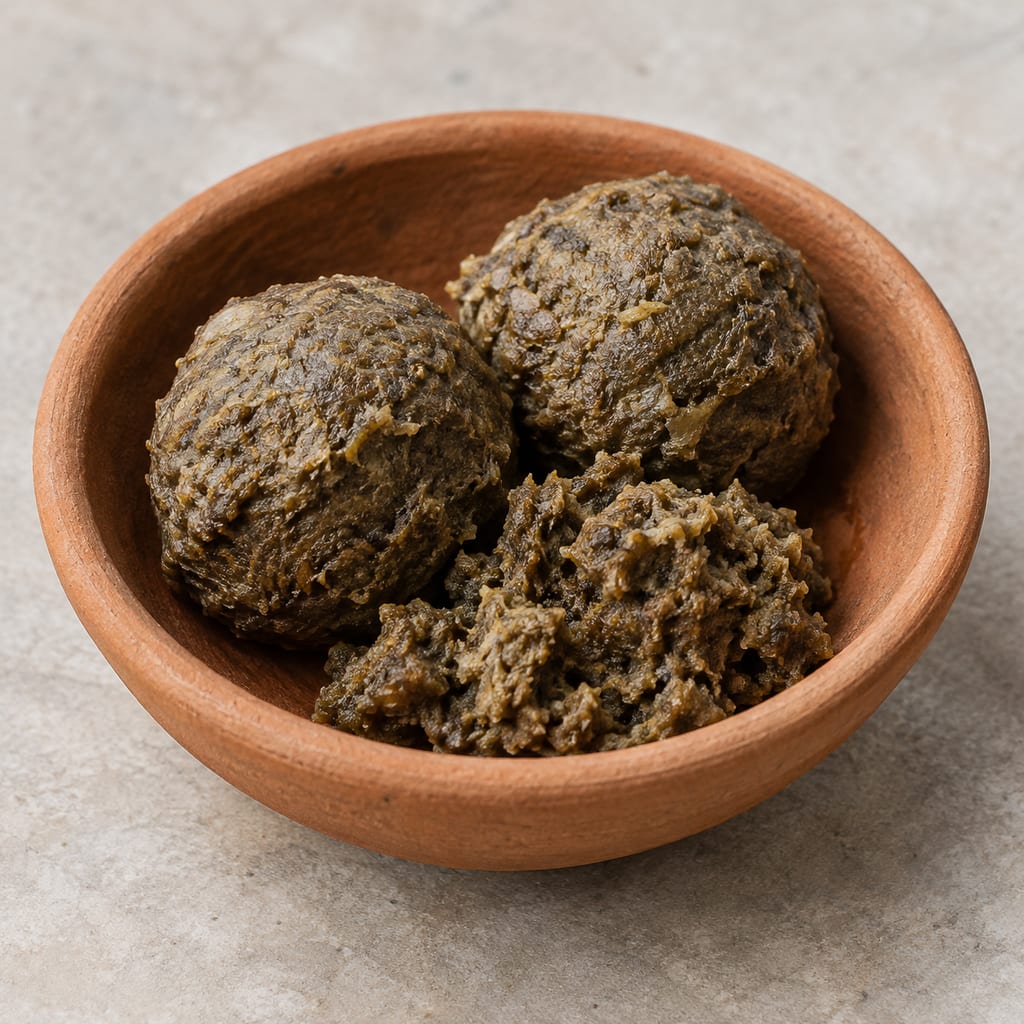
Manipuri fermented fish-and-aroid paste, formed into balls or kept in an earthen pot, used to season Manipuri dishes. Its method is documented in outline only.
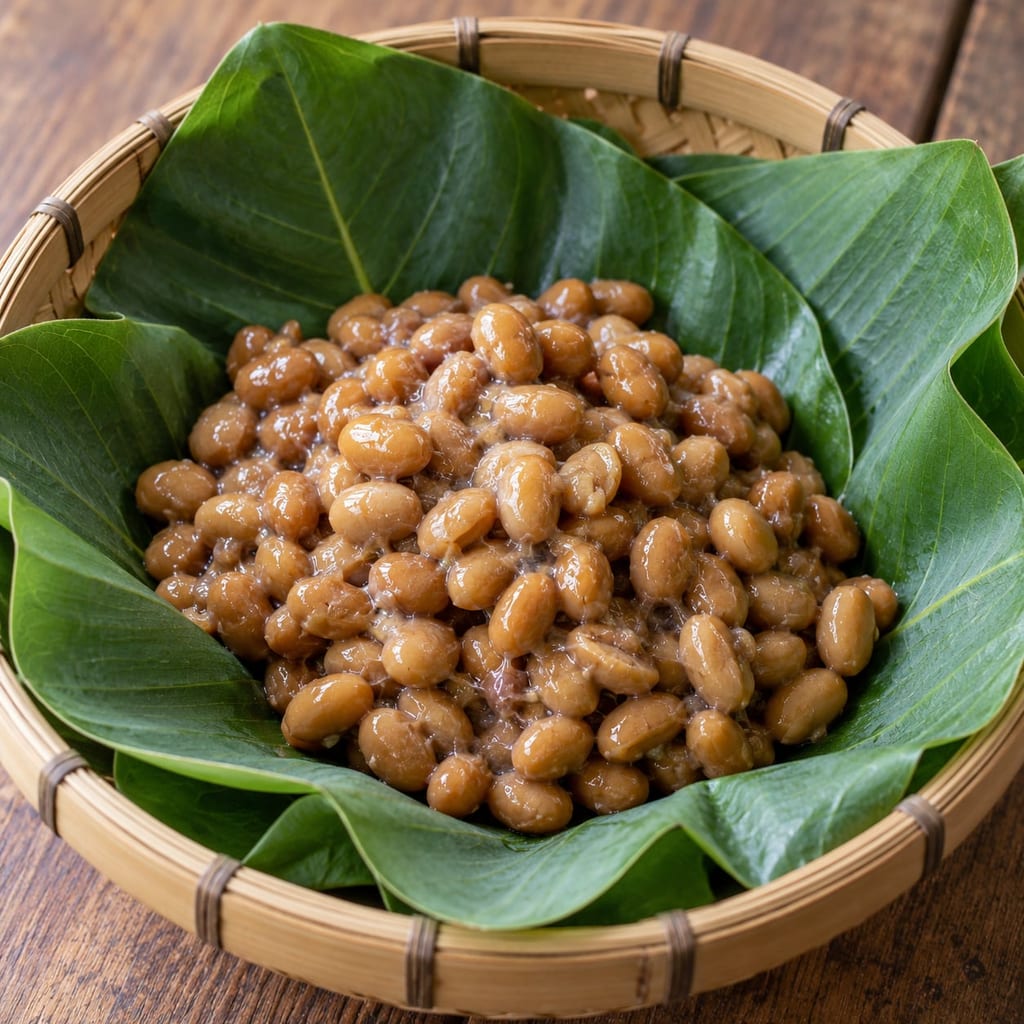
A sticky fermented soybean food of Manipur, made by packing cooked soybeans in leaf-lined bamboo baskets and keeping them warm, related to but distinct from Bekang and Akhone.
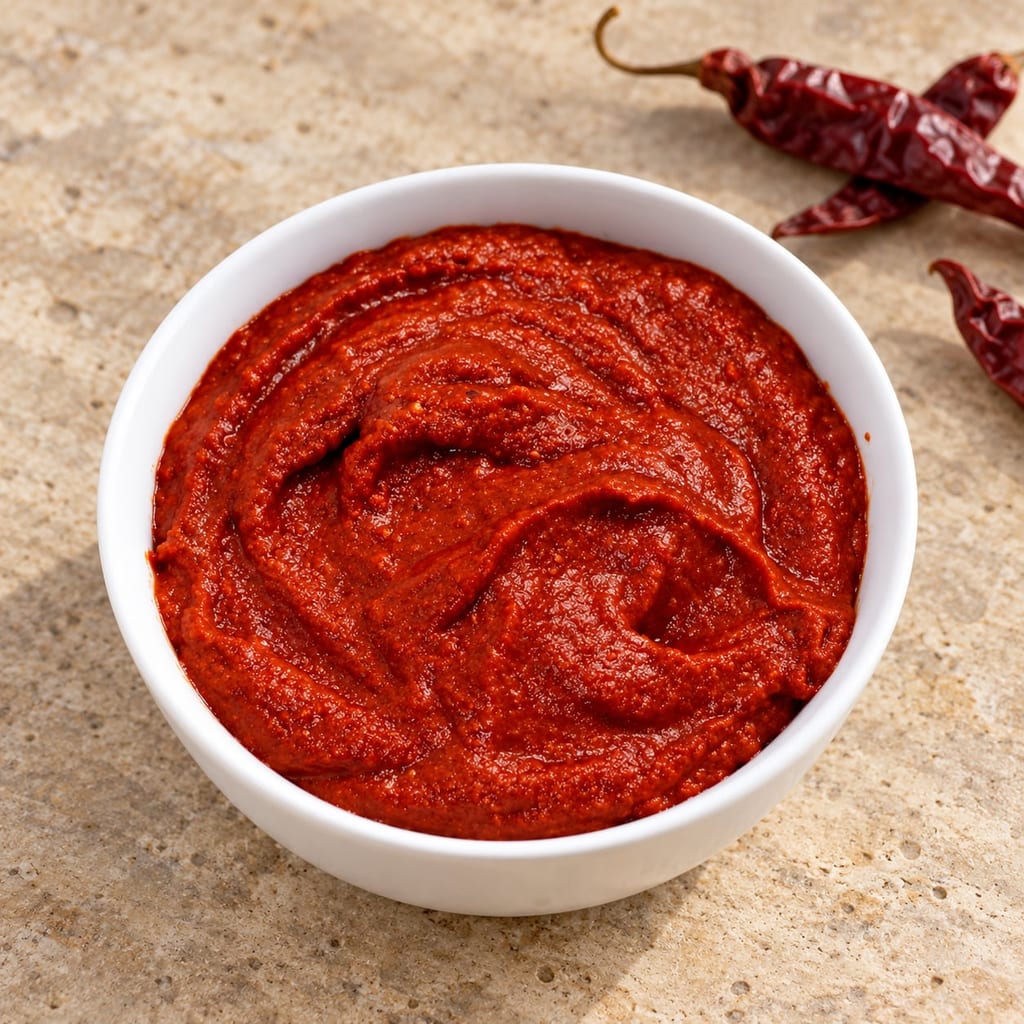
Recheado is a red Goan spice paste of Kashmiri chillies, garlic and spices ground in vinegar, best known as the stuffing for fried fish such as mackerel.

Pit-fermented bamboo shoots from Arunachal Pradesh, cut smaller and sun-dried for five to ten days, used in curries.
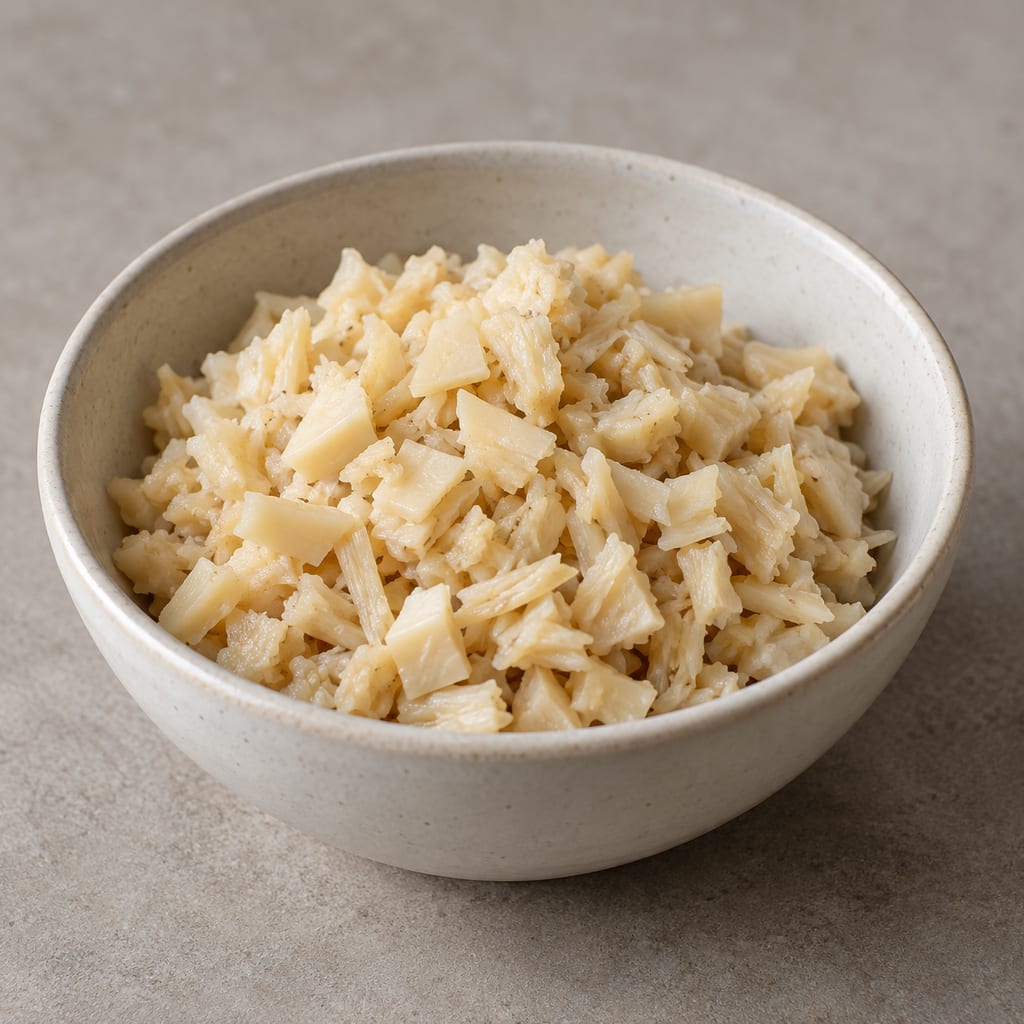
Finely chopped young bamboo shoots packed in leaf-lined baskets, sealed in a forest pit and weighted for one to three months, from Arunachal Pradesh.
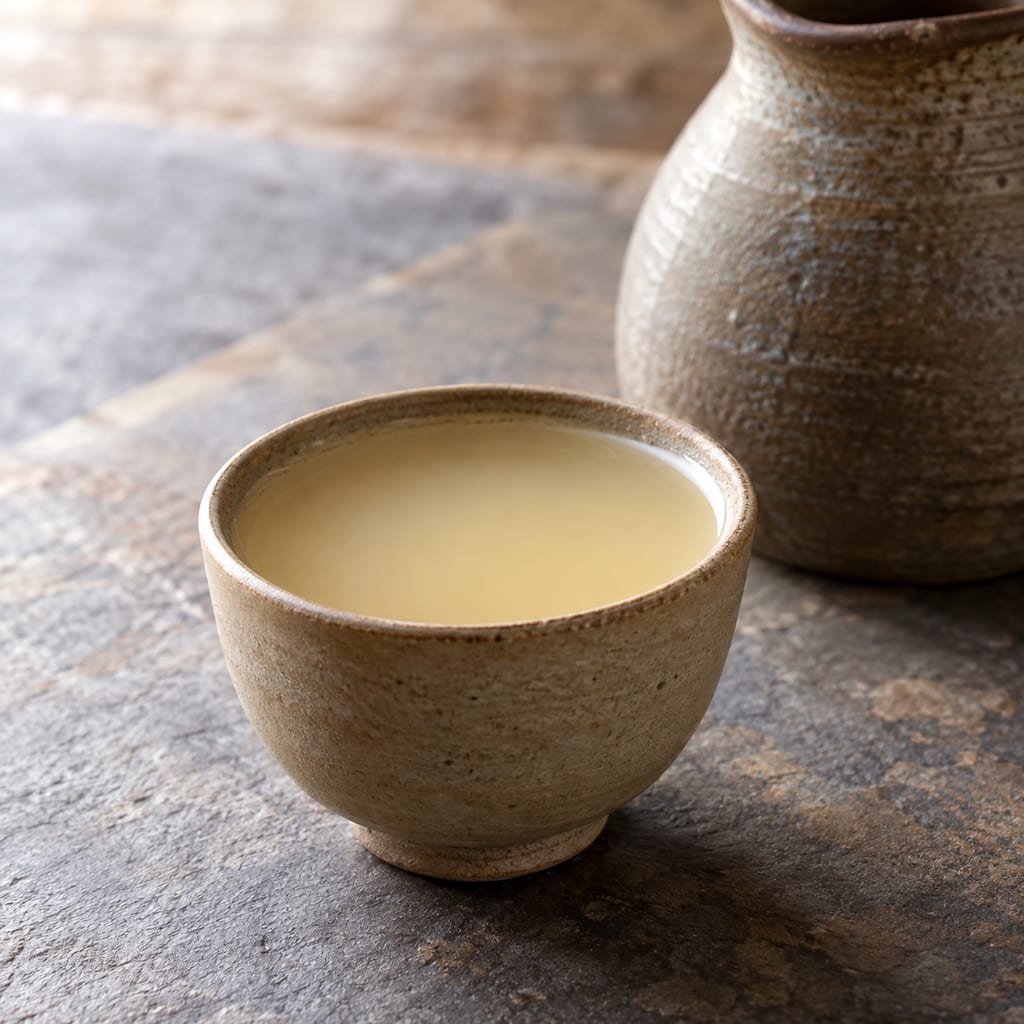
A 2005 Tibetan account describes cooked barley mixed with changdzi, fermented as moist grain, then steeped in water for an alcoholic drink. Grain and water amounts, starter dose and a verified safety endpoint are absent.
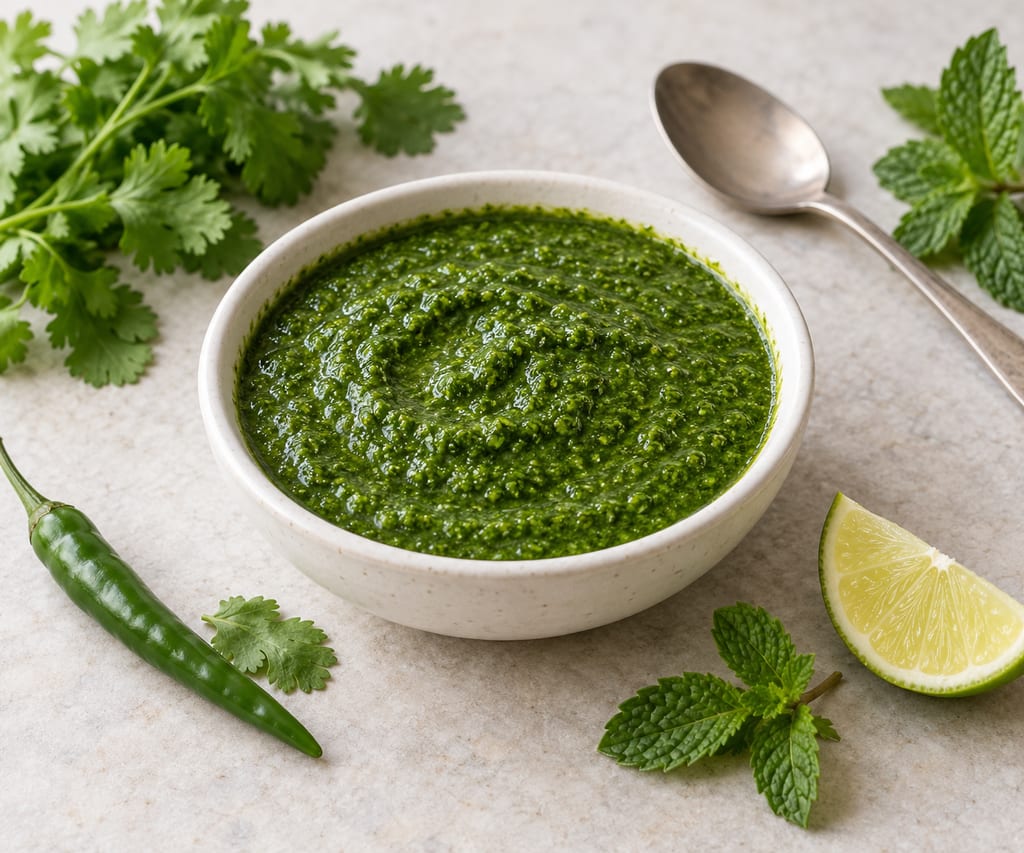
A fresh, uncooked green chutney blended from coriander, mint, chilli and citrus. This measured development batch is untested and intended for prompt serving.
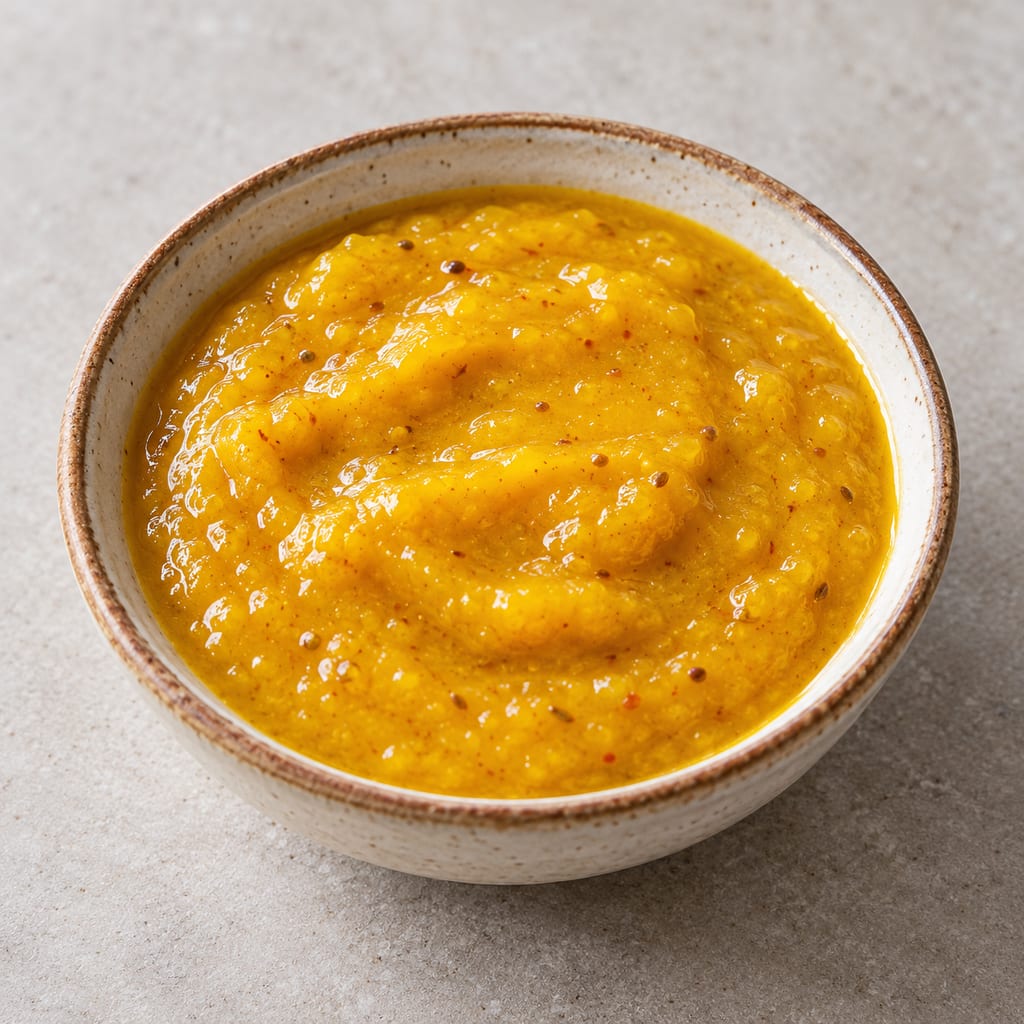
This cooked amba follows a Jewish Food Society recipe that simmers ripe mango with onion, garlic, mustard seed and warm spices into a tangy Middle Eastern condiment.
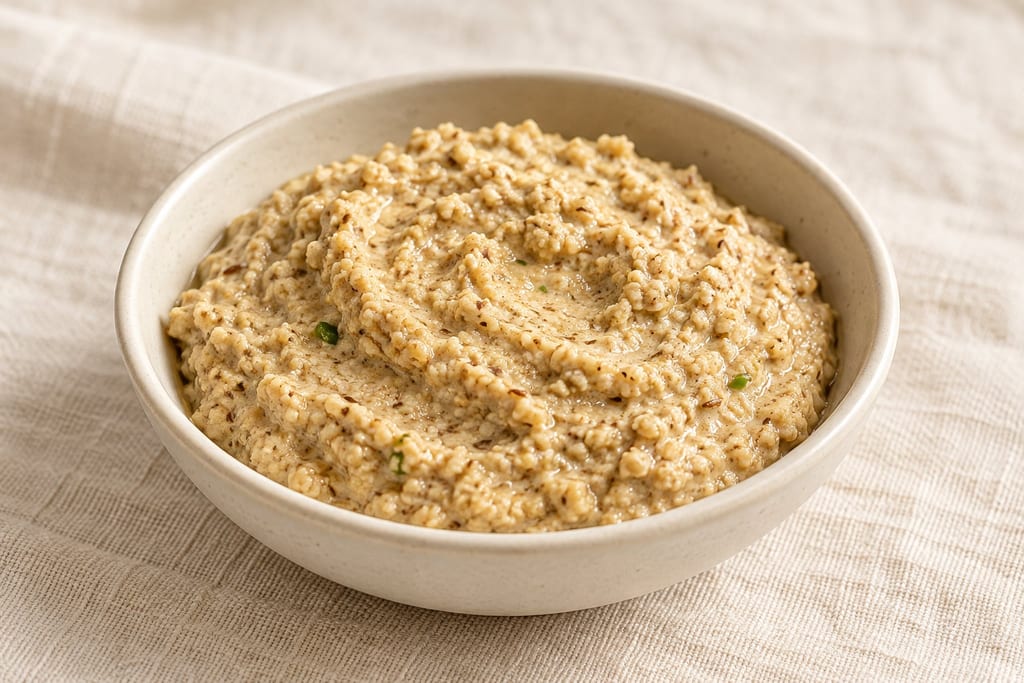
Til ki chutney is a sesame-and-cumin condiment from an Uttarakhand cuisine collection: the seeds are roasted, finely ground with salt and green chillies, then mixed with lemon juice. The book describes it as a winter preparation.
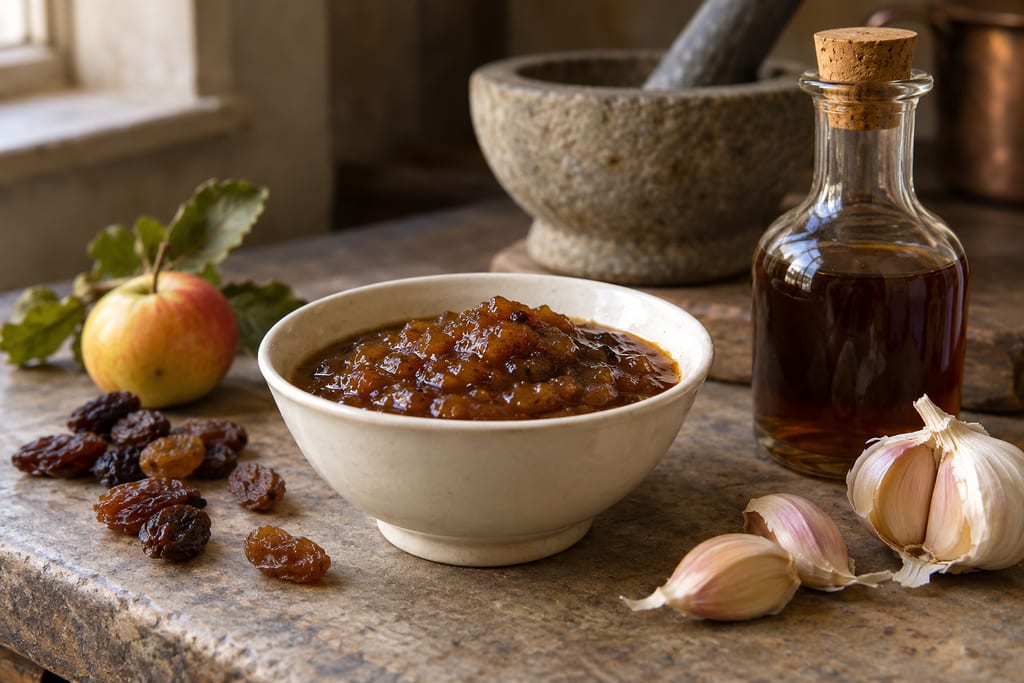
Eliza Acton's Bengal receipt for chetney sauce: stoned raisins and a hard acid fruit pounded with brown sugar, ginger, salt, cayenne and garlic, then thinned with vinegar to the consistence of thick cream.
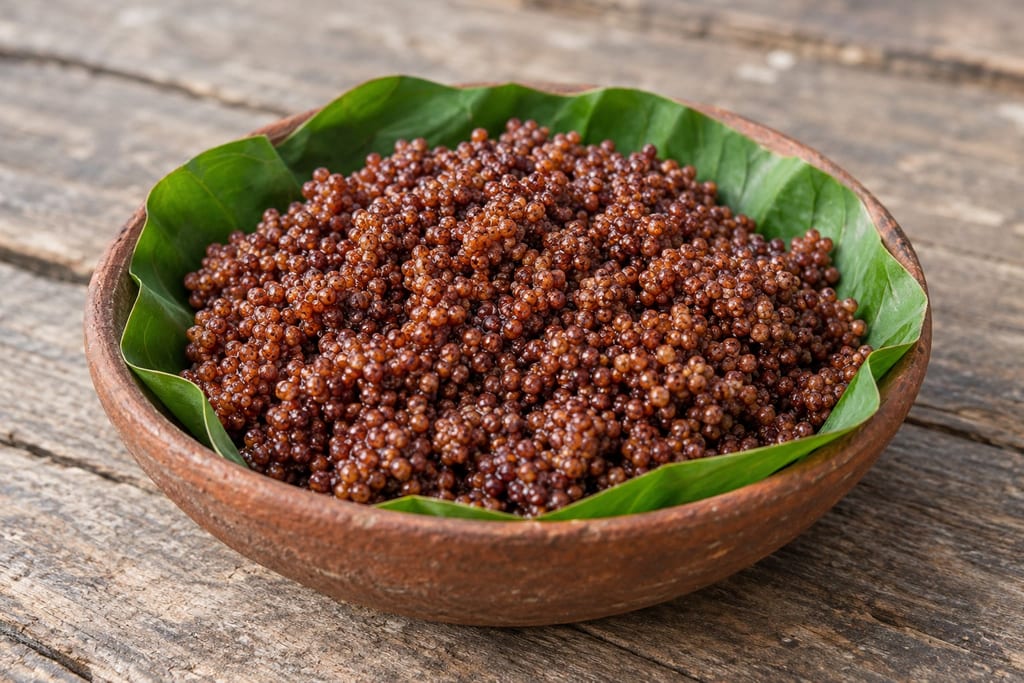
Finger millet fermented with marcha in surveyed Darjeeling and Sikkim communities. Tongba is the later warm-water extraction from the fermented grain. The cited accounts do not establish a complete or validated home batch.
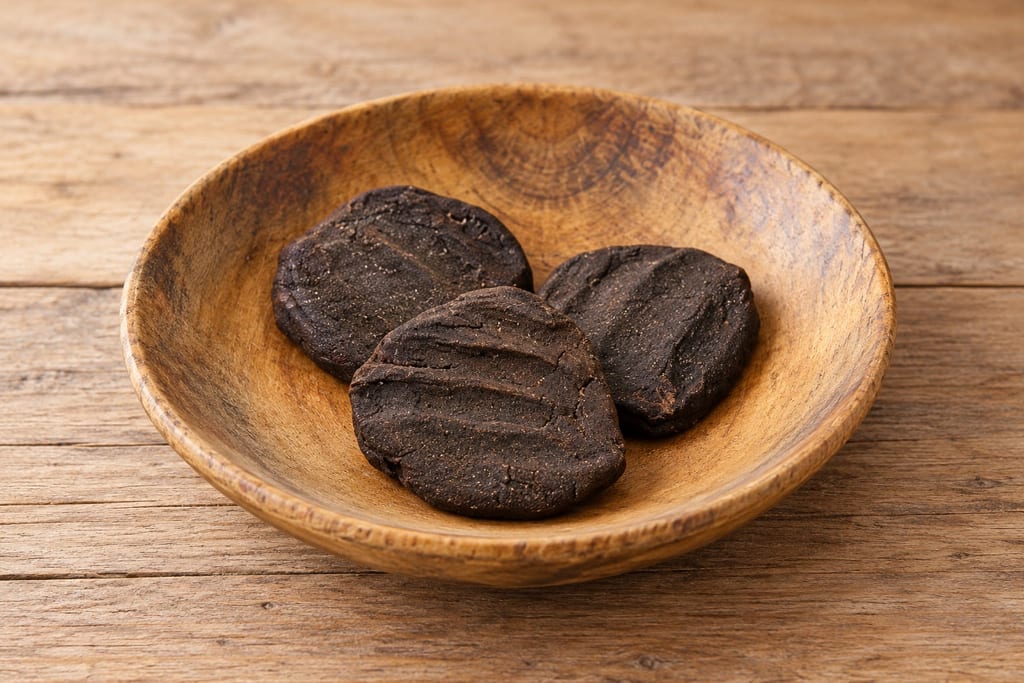
Dried cakes of pounded taro leaves from the Ao Naga in Nagaland, yellowed in a bag, then dried by hot ash or sun and used to flavour meat dishes.
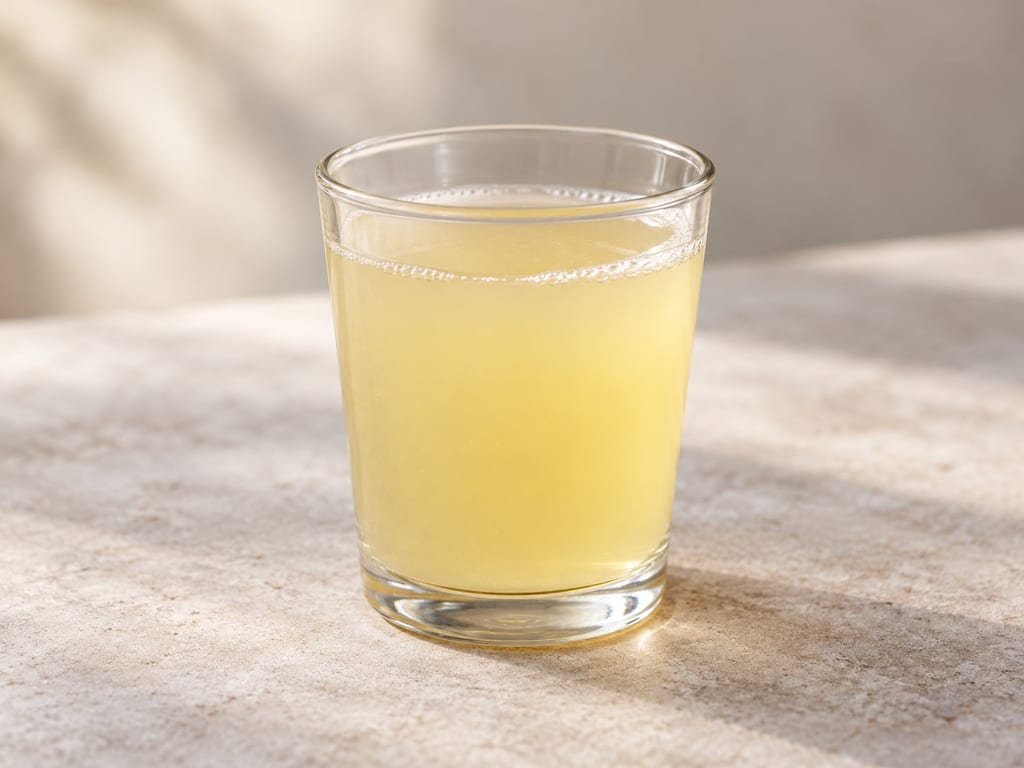
A Manipuri rice beverage: cooked rice is cooled to about 40°C, inoculated with Hamei starter cakes, fermented for a season-dependent spell, then held submerged before filtering.

Adrak murabba preserves young ginger in sugar syrup, a sweet South Asian preparation recorded in Indian cookery and food-processing sources.

Aam panna is a tart Indian summer drink made by cooking unripe green mango until its flesh softens, then blending the pulp with sweetener, salt and spices and diluting it with water.
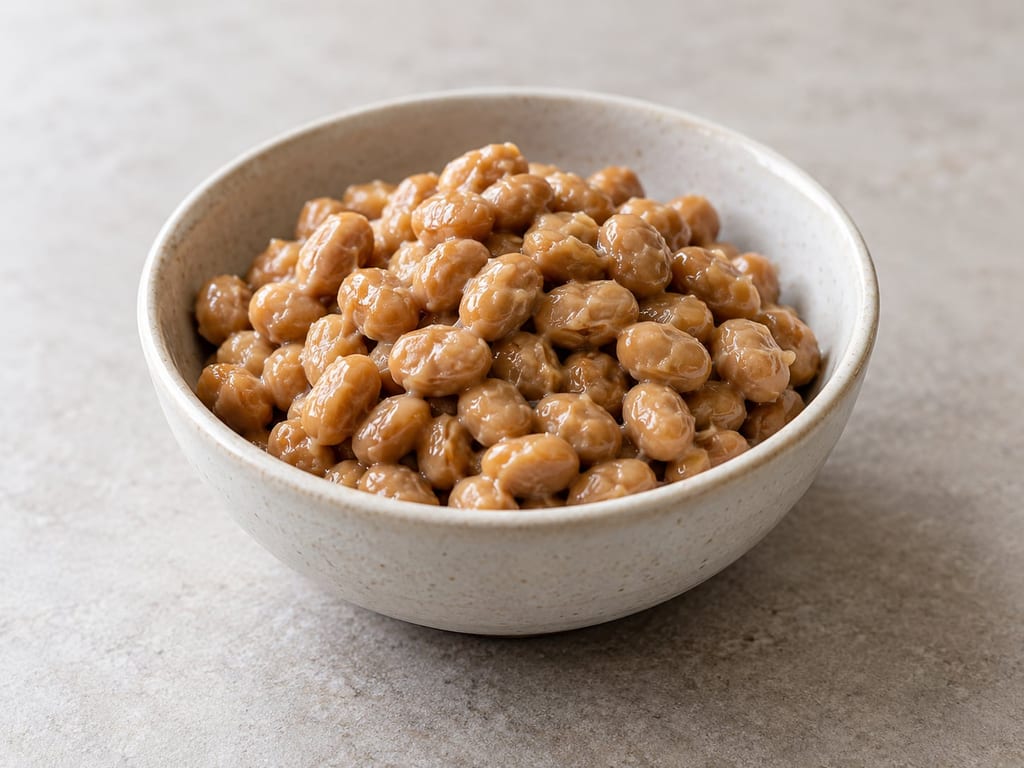
An Apatani fermented soybean food from the Ziro Valley of Arunachal Pradesh: cooked beans are wrapped in ginger leaves and left near the hearth until sticky and savoury, then eaten with rice or as a chilli-seasoned chutney.