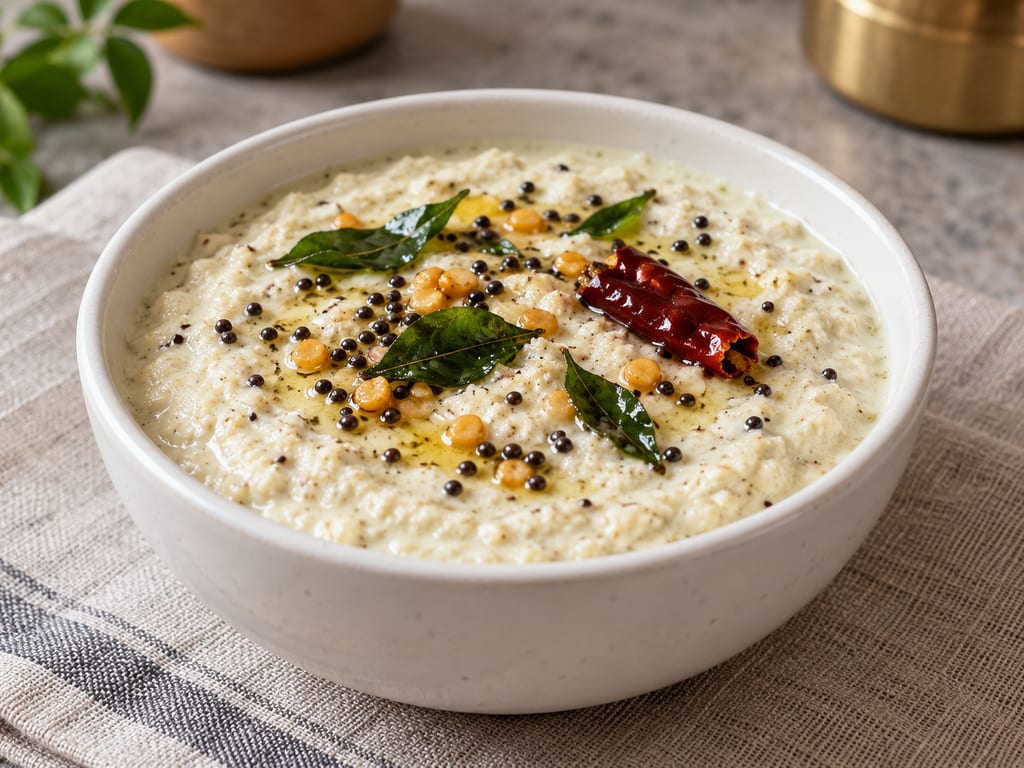
Coconut chutney
A coconut chutney whose ground base is finished with a separate oil tempering of mustard, urad dal, curry leaves and spices; the author pairs it with South Indian breakfast foods and snacks.
 FermenteaWhere food goes to change
തേങ്ങ ചുട്ടരച്ച ചമ്മന്തി · Thenga chuttaracha chammanthi · Chuttaracha chammanthi · Roasted coconut chutney · Kerala roasted coconut chammanthi
A Kerala chammanthi of coconut and red chillies roasted over a flame, then ground with shallots, tamarind, curry leaves, lemon leaves and salt and shaped into a ball.
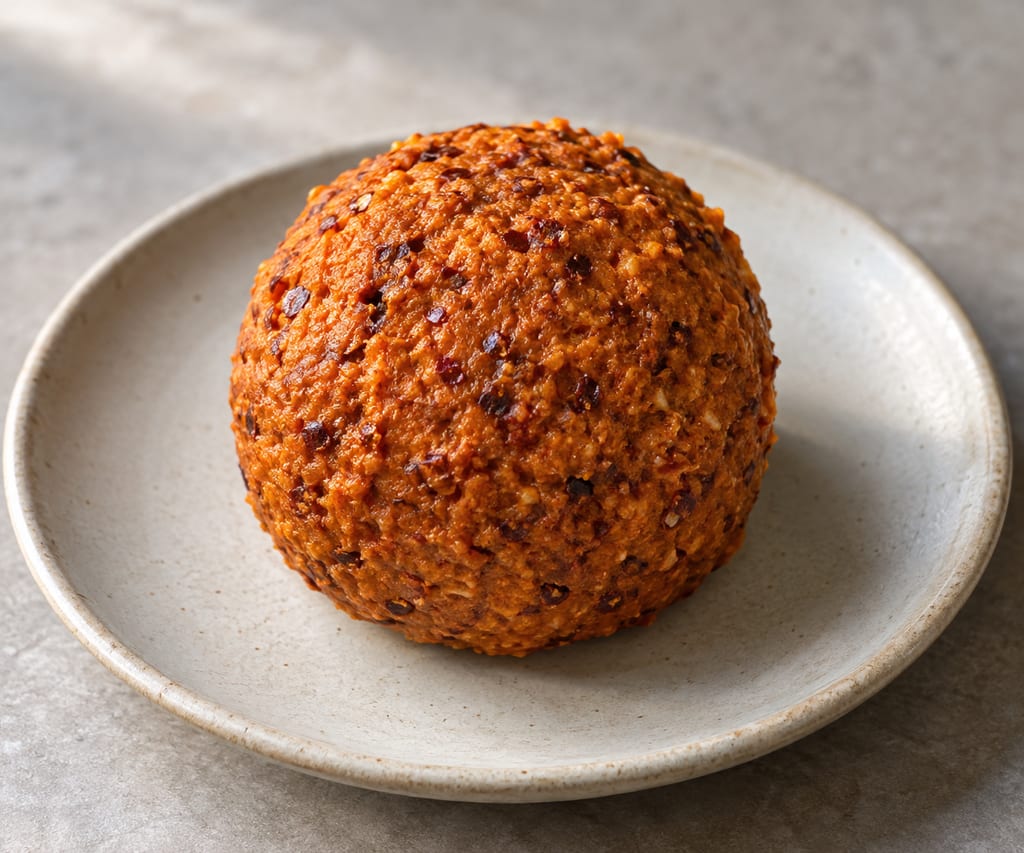
Thenga chuttaracha chammanthi is a Kerala chutney in which the coconut and the chillies are roasted before they are ground. "Thenga" is coconut, and the "chuttaracha" part of the name points to the roasting: the coconut and red chillies are charred over a flame, then ground with shallots, a ball of tamarind, curry leaves, lemon leaves and salt into a smooth paste. The page shapes it into a ball for serving.
That roasting separates it from the Tamil Nadu-style coconut chutney, which grinds raw grated coconut with green chillies and finishes with a hot-oil tempering. Here the flavour comes from the flame and from the tamarind and shallot, not from tempered mustard seeds.
Chammanthi is glossed in a Malayalam lexicon as a pounded and mashed mixture, and is believed to come from the Sanskrit sambandi, meaning an accompaniment. A Kerala food feature adds that chammanthi can be as simple as crushed chillies and salt, which predates ingredients like coconut and shallots, and that Kerala is the only state that adds fish to such a chutney. In Tamil it is popularly called karuthavaiyyal.
The same feature says that nobody knows for certain where or when chutney began. Food historian K T Achaya is quoted suggesting the Indus Valley, citing stone grinders found at its sites; a belief that chutney arose around 500 BC is only that, a belief. None of this dates the roasted coconut chammanthi.
In Kerala chammanthi is commonly eaten with hot kanji (rice gruel) and roasted pappadam, a pairing the feature says Keralites turn to for colds and seasonal flu. The Kerala Tourism page itself says only to shape the paste into a ball and serve.
The Kerala Tourism page lists no yield, no quantities for the curry leaves, lemon leaves or salt, no roasting time and no storage period, and it does not name the grinding implement. None of these is guessed here. It remains a fresh ground preparation: the sources establish no preservation step, and neither the roasting nor the tamarind should be taken as one.
Kerala Tourism lists the preparation without a history. A Kerala feature says nobody knows with certainty where or when chutney began and describes chammanthi as a pounded and mashed mixture; the word is thought to come from Sanskrit.
Scaling: source batch only
The source gives no storage period or holding guidance. Fresh coconut and shallots make this a perishable fresh preparation; make it for the meal and keep it cold.
Roasting over an open flame needs care with the chillies, whose fumes are irritating.
Kerala Tourism lists it among Kerala food; the page gives no town, date or history.
A coconut chutney whose ground base is finished with a separate oil tempering of mustard, urad dal, curry leaves and spices; the author pairs it with South Indian breakfast foods and snacks.
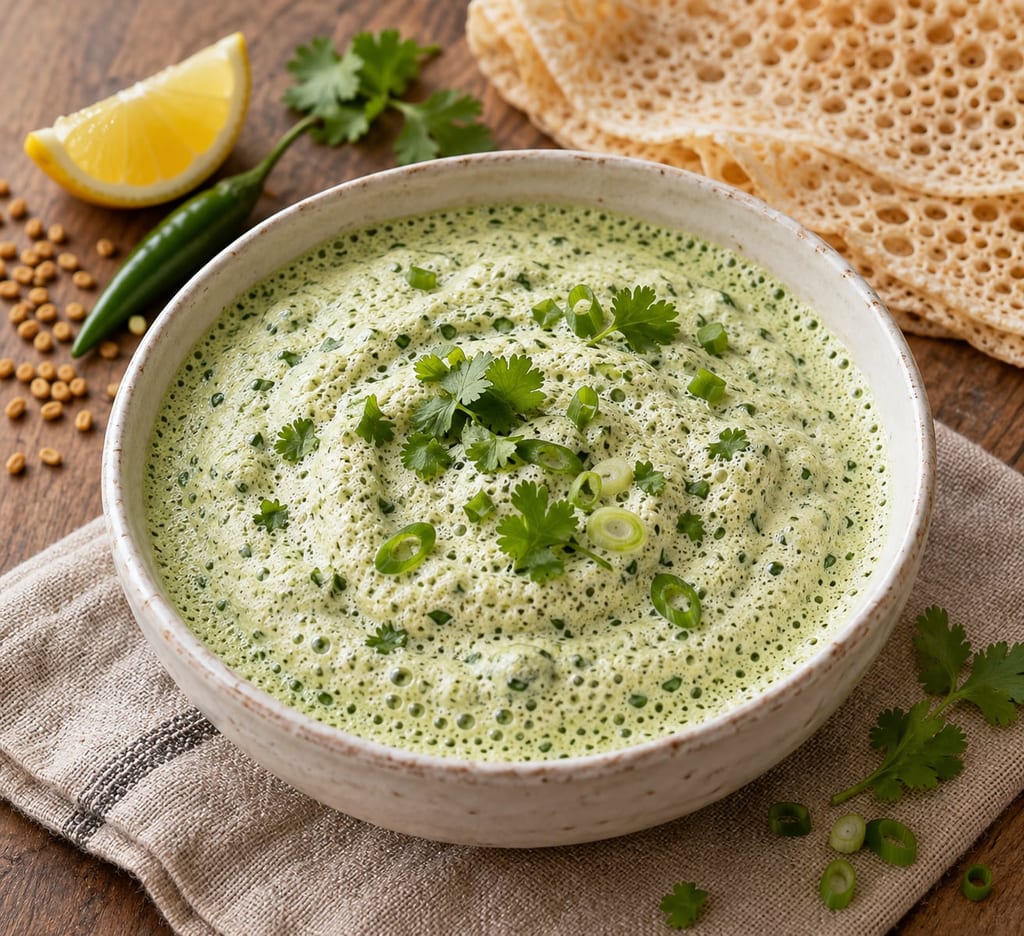
A whipped condiment of soaked ground fenugreek seed, aerated until foamy and finished with herbs, chilli and lemon. It comes from Yemen.
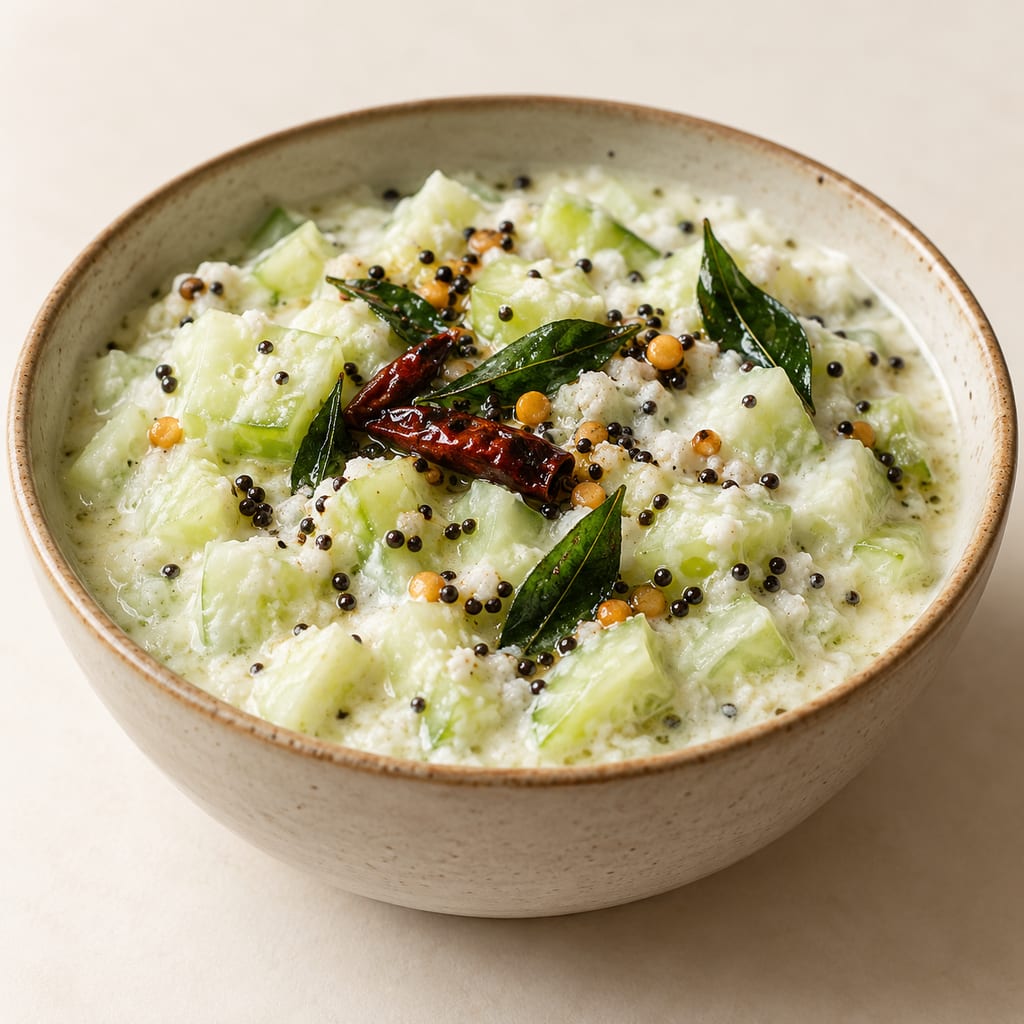
A Kerala cucumber kichadi for an Onam sadya, finished with coconut, yogurt and a coconut-oil tempering.

Appam, or hoppers, are South Indian and Sri Lankan rice pancakes made from a fermented coconut-and-rice batter and cooked in a curved pan to a crisp lacy rim and a soft, spongy centre.
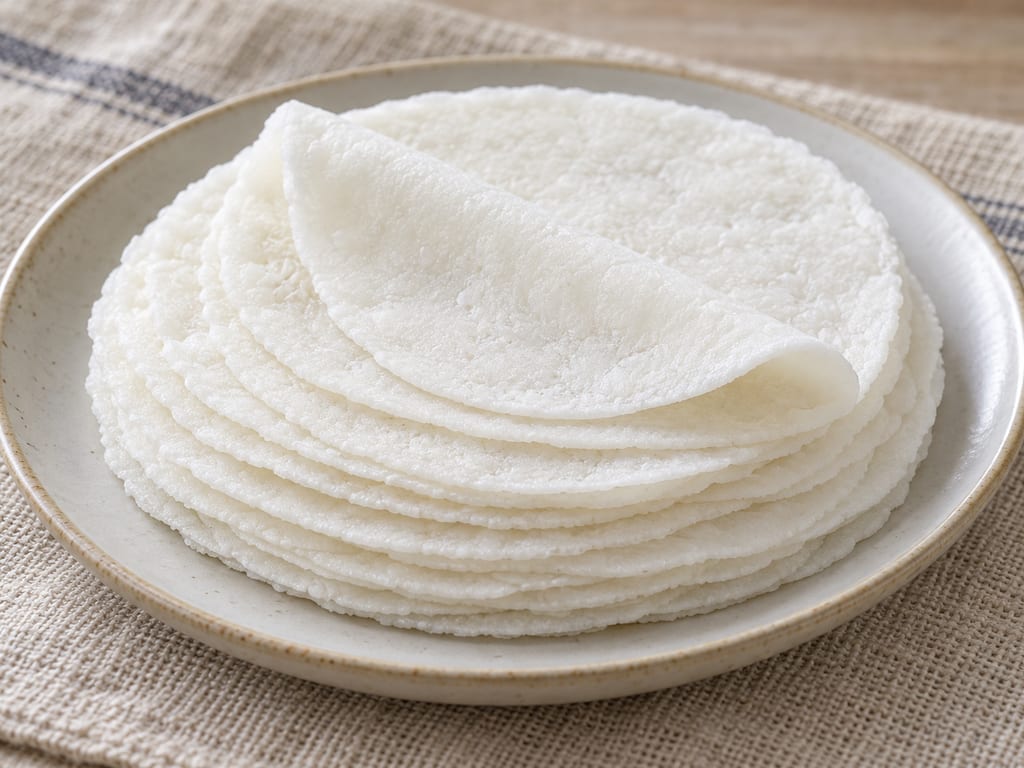
Thin Malabar rice-flour rounds made from roasted rice flour cooked into salted boiling water, kneaded after cooling, and rolled to about 1 mm. They cook on a hot griddle without taking on colour.
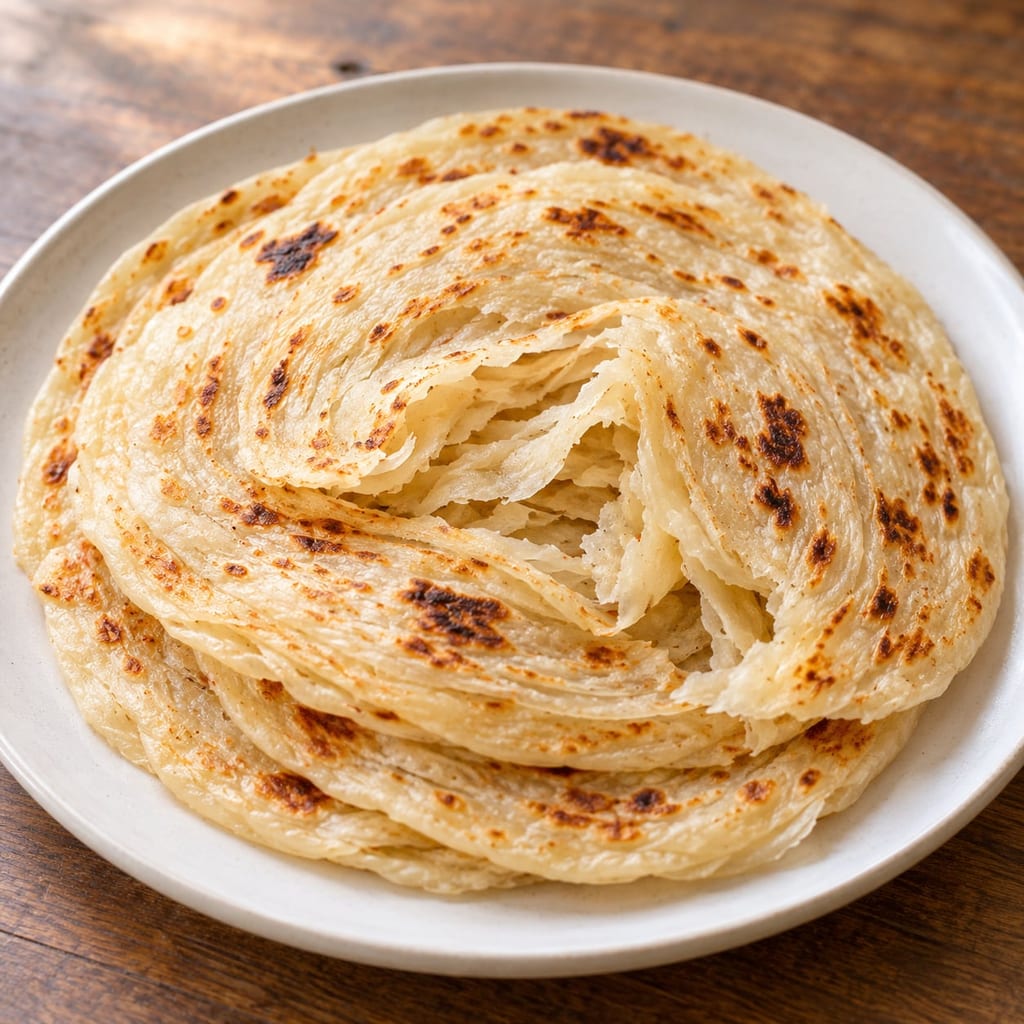
A layered Kerala flatbread made with an unleavened refined-wheat dough, stretched, coiled and cooked on a tawa.
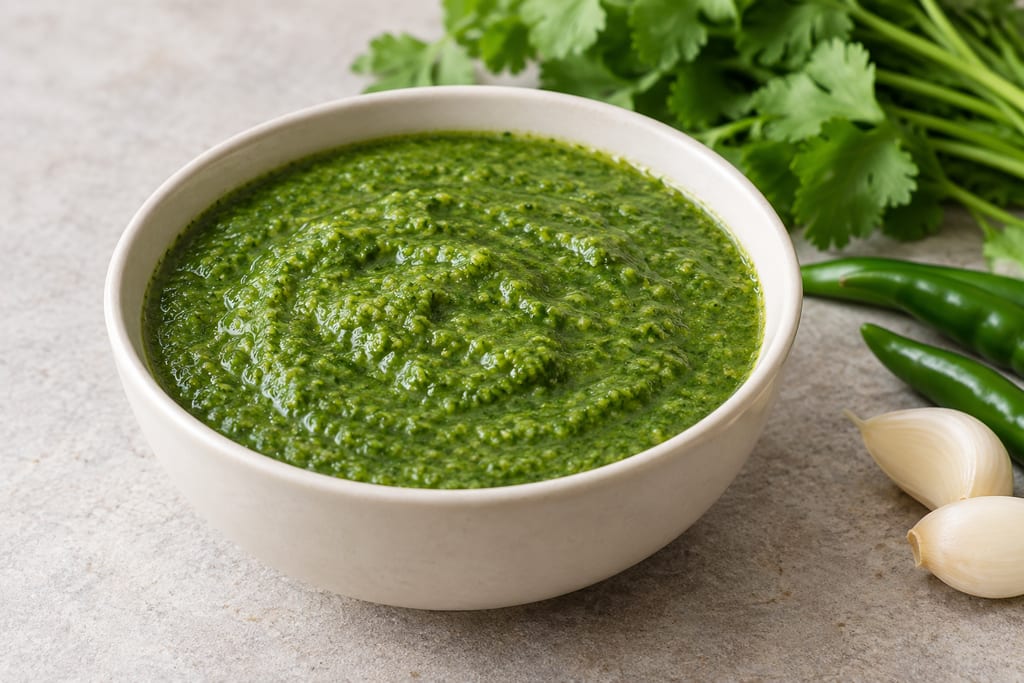
Afghan coriander chatni is a sharp, hot herb sauce with garlic and vinegar. A 2008 Afghanistan manual records green or red pepper and optional walnut; heat and household versions vary.
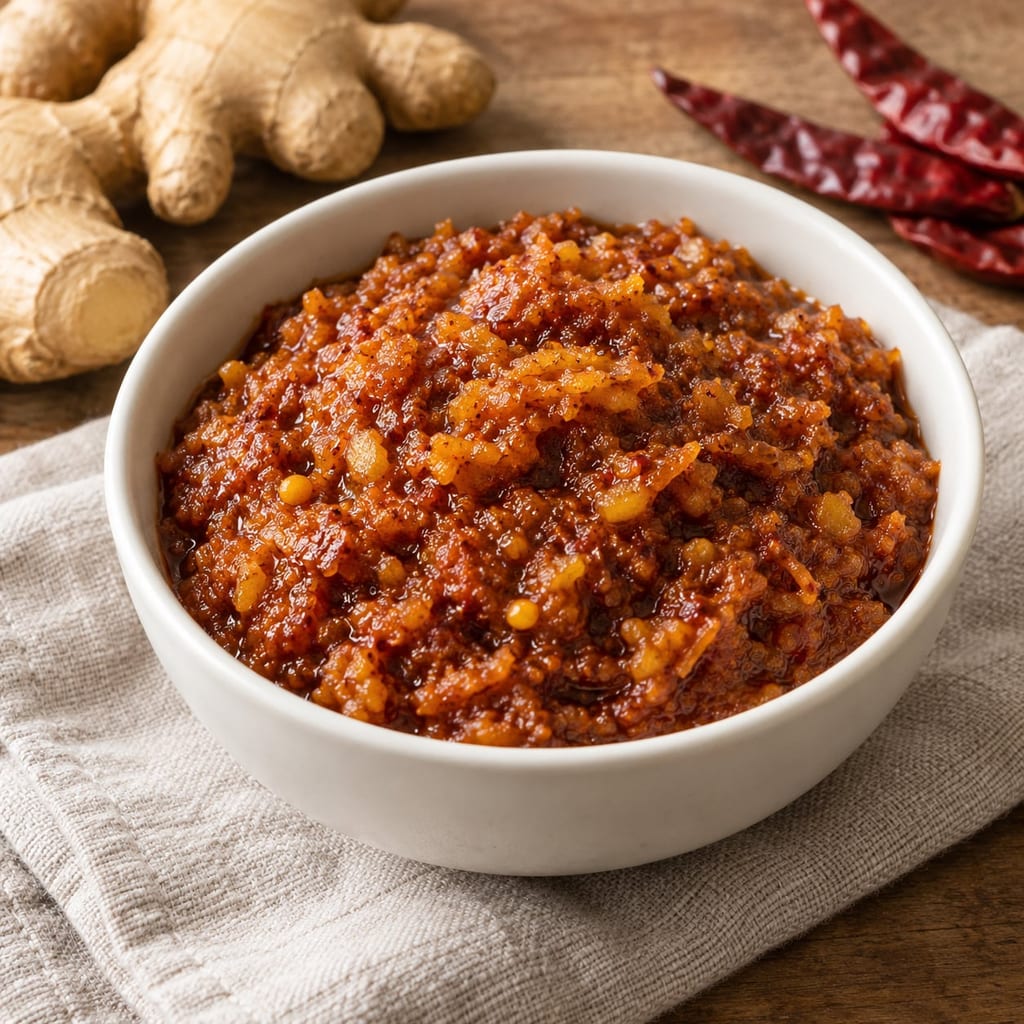
An Andhra ginger-and-urad chutney in which browned dal and briefly fried ginger and chillies are cooled, then ground with jaggery to a coarse paste.
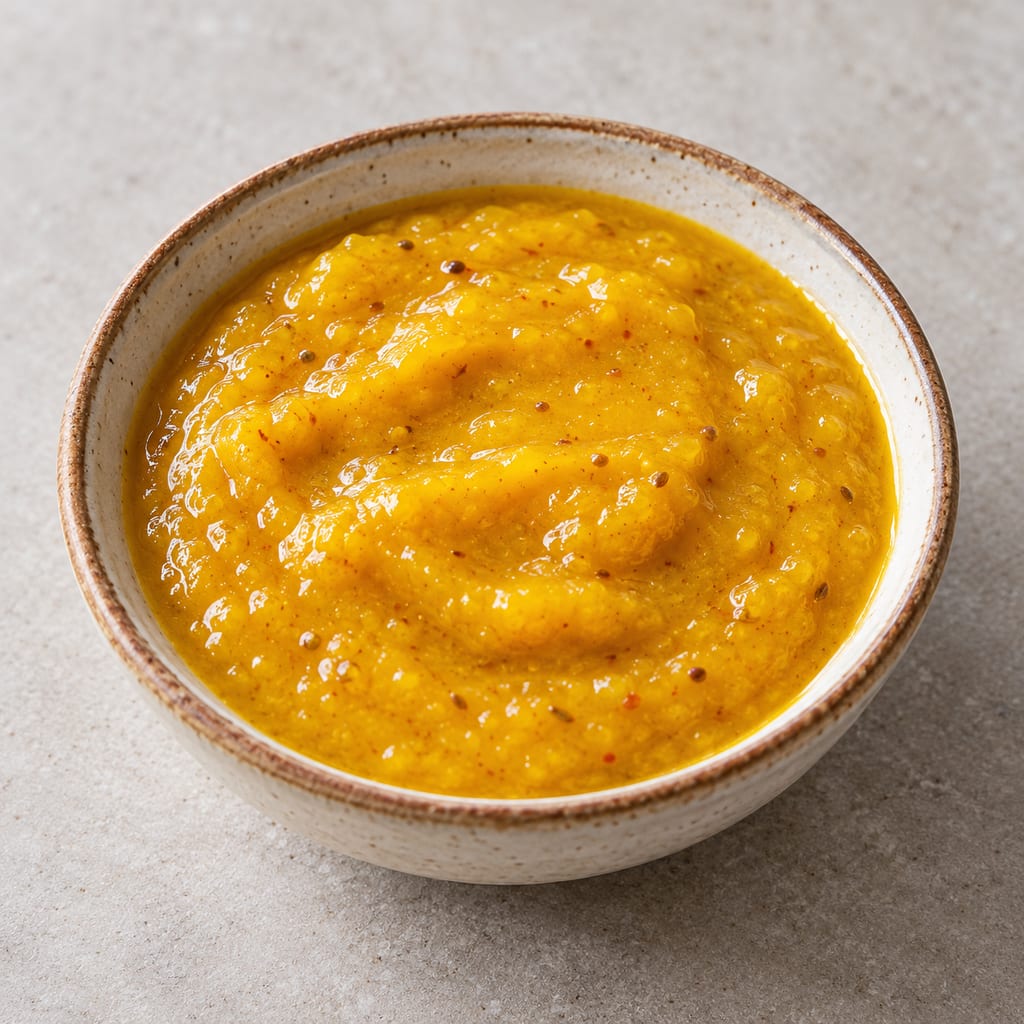
This cooked amba follows a Jewish Food Society recipe that simmers ripe mango with onion, garlic, mustard seed and warm spices into a tangy Middle Eastern condiment.
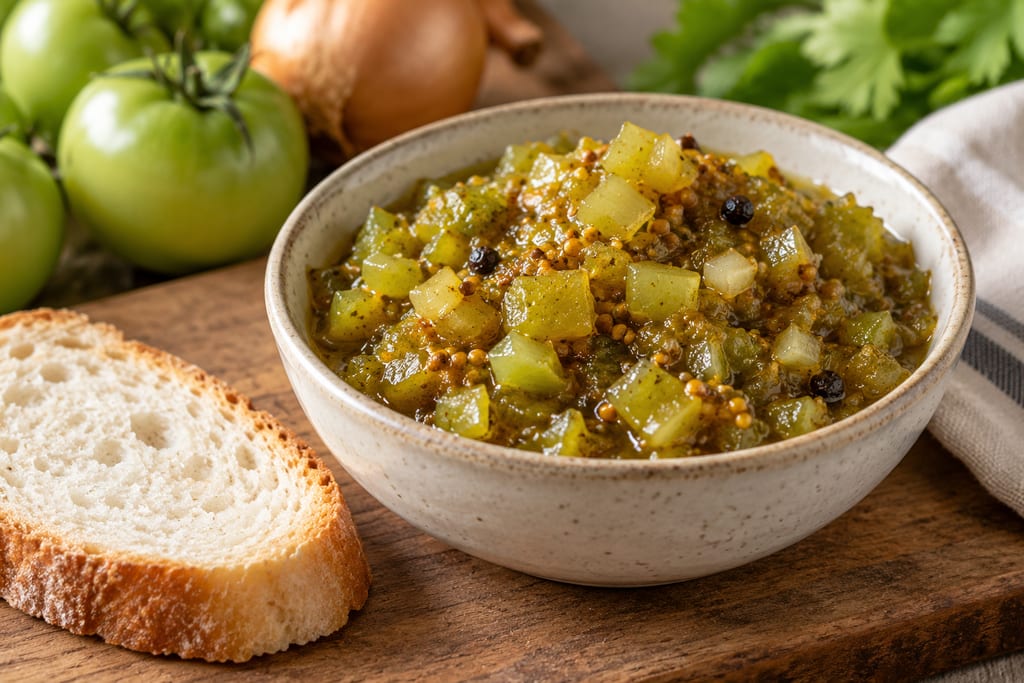
Australian green tomato pickles and relishes vary. This partial version follows ABC Western Victoria’s 2018 pickle recipe, not Beerenberg’s commercial formula. Sources document examples from 1944 onward, not a single origin.
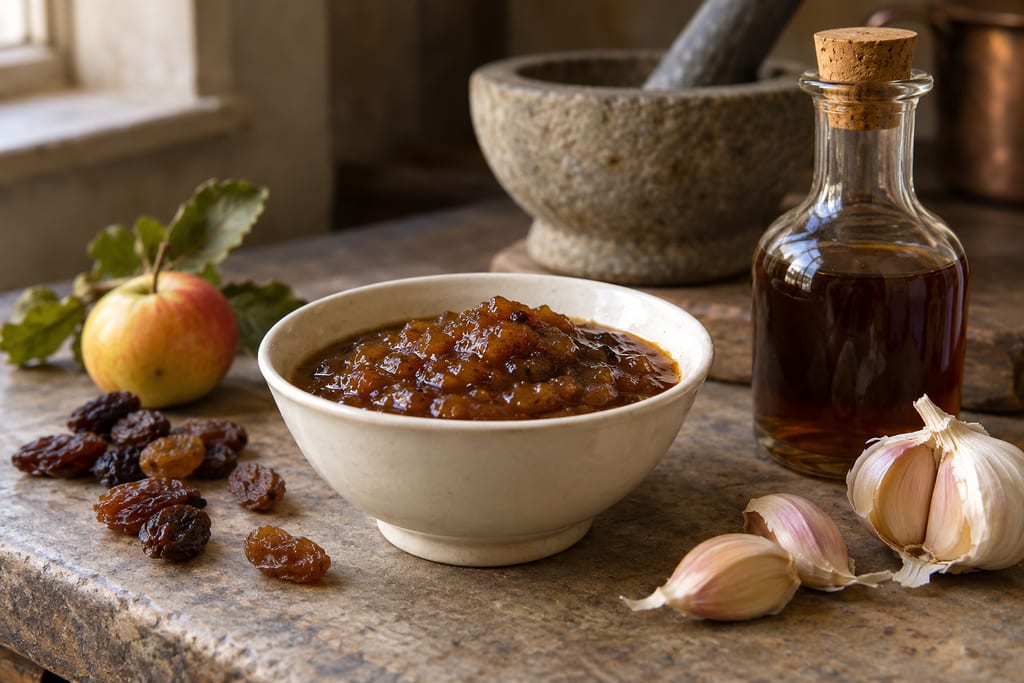
Eliza Acton's Bengal receipt for chetney sauce: stoned raisins and a hard acid fruit pounded with brown sugar, ginger, salt, cayenne and garlic, then thinned with vinegar to the consistence of thick cream.
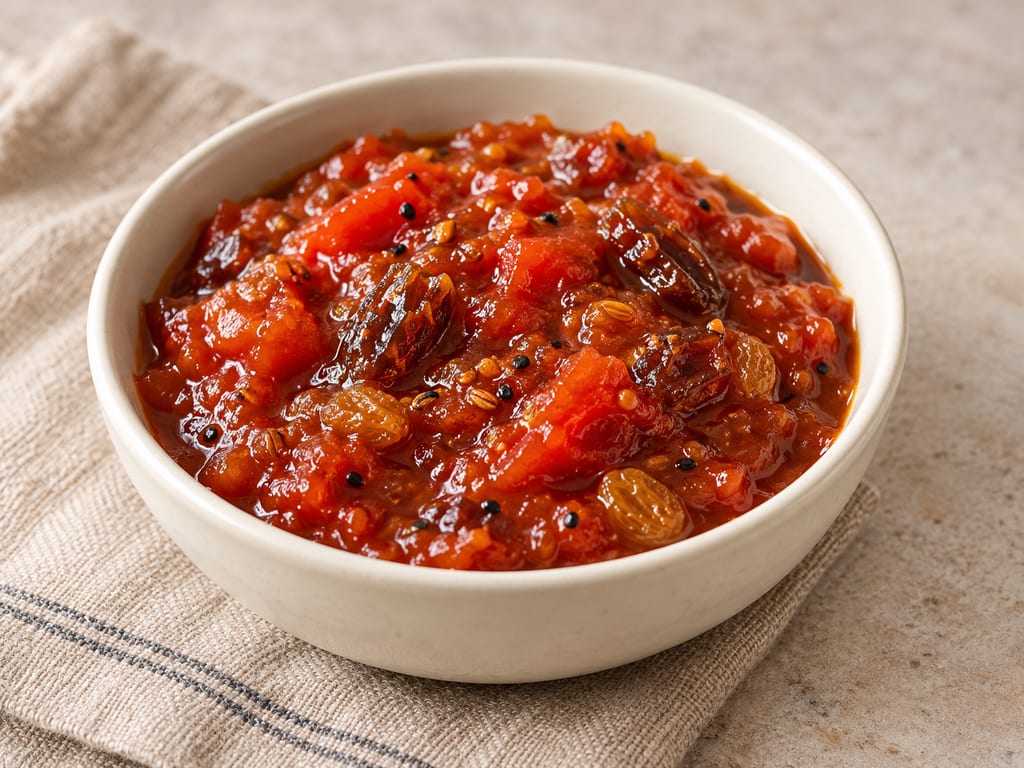
A cooked Bengali meal chutney combining tomatoes, dates, raisins, ginger and panch phoron.

A spicy South African vegetable relish of onion, carrot, pepper, tomato, curry seasoning and beans, cooked briefly and served warm or cold beside pap and grilled meat.
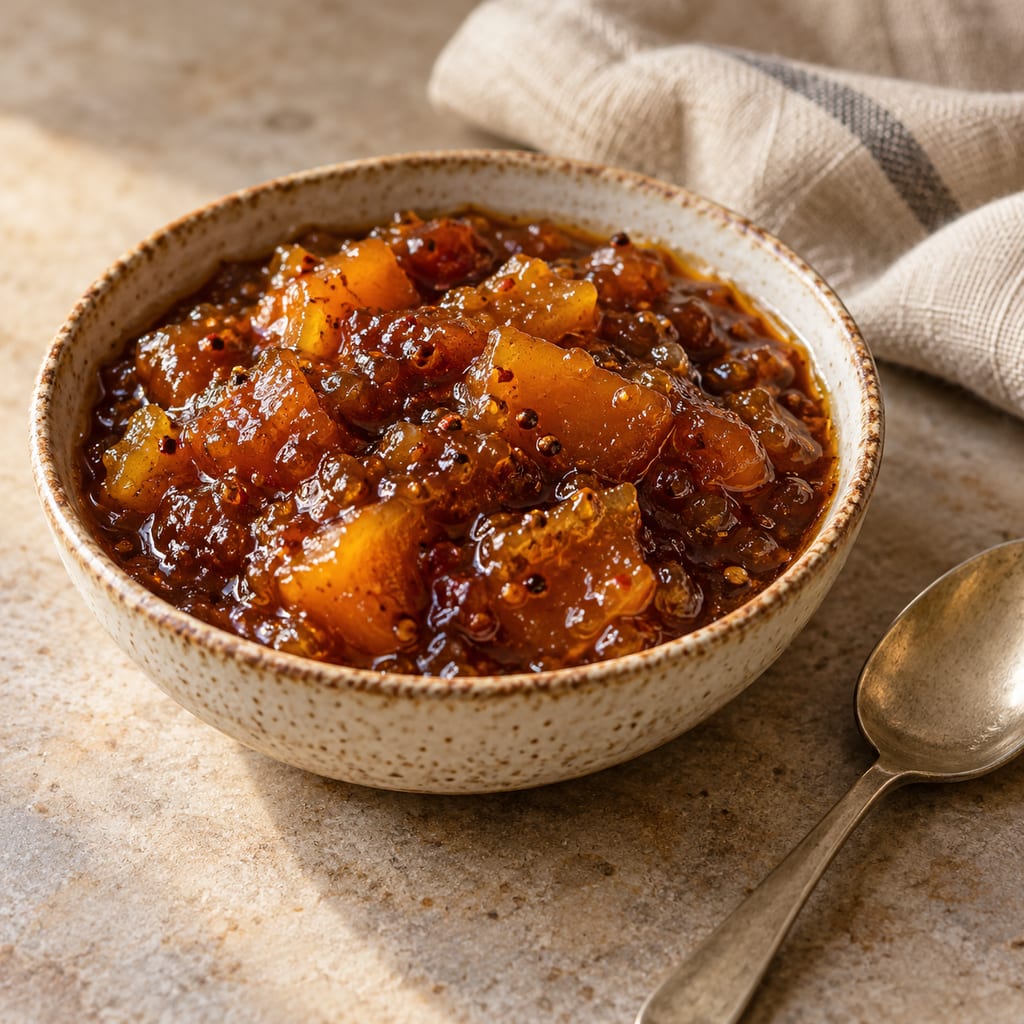
A broad account of cooked chutney traditions: fruit or vegetables combined with sugar, spices and sometimes acid, often boiled into a thick condiment. This record is historical and process context, not a formula or storage recipe.
No community contributions have been published for this entry yet.
Sign in to contribute. Published comments and photos are free to read.
Kerala Tourism, Government of KeralaMethod · Identity
Roasted Coconut Chutney (Thenga Chuttaracha Chammanthi)Half a coconut in pieces, 8 red chillies, 4 shallots, a gooseberry-sized tamarind ball, curry leaves, lemon leaves and salt.
Roast coconut and chillies over a flame, grind with the rest to a smooth paste, shape into a ball and serve.
Cited in: What it is; Eating it; What the source does not give
OnmanoramaHistory · Use
History and origin of chammanthi / chutneyChammanthi is a pounded and mashed mixture in the Malayalam lexicon, believed to derive from Sanskrit sambandi (accompaniment).
Eaten in Kerala with hot kanji (rice gruel) and roasted pappadam.
Origin and date of chutney are unresolved; a 500 BC date is only a belief.
Cited in: The word and its context; Eating it
Dassana's Veg RecipesComparison
Coconut Chutney Recipe (South Indian Classic)The Tamil Nadu-style fresh coconut chutney with grated raw coconut and a separate tempering, which this preparation differs from.
Cited in: What it is
U.S. Food and Drug AdministrationSafety
Selecting and Serving Produce SafelyGeneral produce handling guidance; it does not establish a shelf life for this chutney.
Cited in: What the source does not give