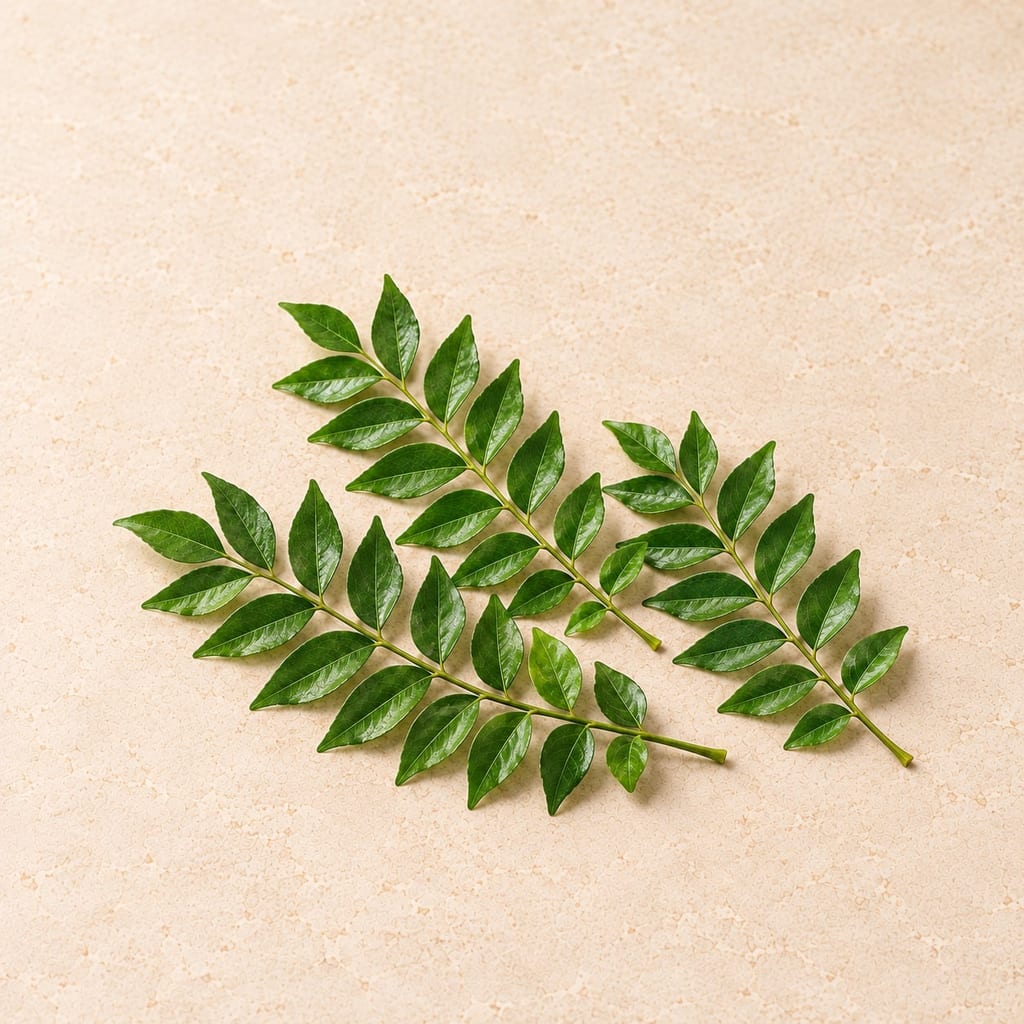
Curry leaves
Curry leaves are the glossy compound leaves of the curry tree, Bergera koenigii, used fresh across southern India and Sri Lanka. Fried in hot oil they give a citrusy, nutty, faintly smoky note.
 FermenteaWhere food goes to change
Modern method
Tamil Nadu style coconut chutney · South Indian coconut chutney
A coconut chutney whose ground base is finished with a separate oil tempering of mustard, urad dal, curry leaves and spices; the author pairs it with South Indian breakfast foods and snacks.
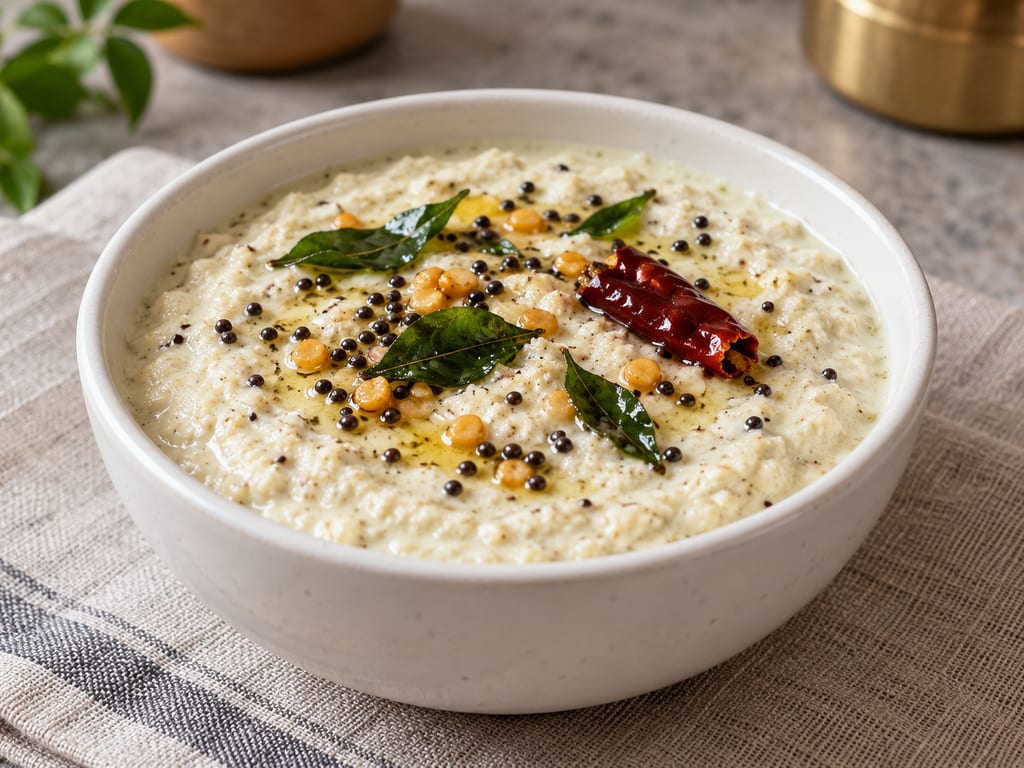
Coconut chutney is a fresh South Indian condiment made by grinding coconut with selected flavouring ingredients and water.
The mixture is commonly finished with a hot-oil tempering containing mustard seeds, curry leaves and other spices.
It is served with dishes including idli, dosa, vada and uttapam.
Unlike many chutneys intended for long preservation, this version is freshly prepared and does not undergo a deliberate fermentation stage.
Its presence in a fermentation reference is nevertheless relevant because it commonly accompanies fermented rice-and-lentil foods.
The coconut chutney itself should be classified as non-fermented.
The preparation documented here is described as Tamil Nadu style. It was published by Dassana Amit and most recently updated in November 2024.
The original article was first published in April 2014.
The recipe demonstrates two separate culinary techniques: wet grinding and tadka or tempering.
Both are essential to its finished flavour.
Coconut is called thengai (தேங்காய்) in Tamil.
Coconut chutney is commonly called தேங்காய் சட்னி (thengai chutney).
In Hindi, coconut chutney is commonly written नारियल की चटनी.
The botanical species of the coconut palm is Cocos nucifera.
The present preparation also uses curry leaves, which come from Murraya koenigii.
Mustard seeds generally derive from cultivated Brassica species.
Urad dal comes from black gram, Vigna mungo.
Roasted chana dal is associated with chickpea, Cicer arietinum.
The ingredients therefore combine several distinct botanical groups, each contributing its own texture, aroma and nutritional characteristics.
Coconut is widely cultivated and consumed across tropical South Asia.
Fresh coconut chutneys are strongly associated with southern Indian cooking.
The dish belongs to a broader family of condiments prepared by grinding coconut, herbs, chillies, legumes or other ingredients.
Different regions and households vary the formula according to availability and the meal being served.
The current source identifies a Tamil Nadu-style preparation but does not provide an exact historical first attestation.
There is insufficient evidence here to assign its invention to one ancient dynasty, religious community or village.
The technique of hot-oil tempering is much broader than coconut chutney itself.
Spices are heated in oil to release and transform aromatic compounds, then poured over or mixed into a prepared food.
This method is widely used in Indian cooking.
The specific combination of coconut, green chilli and mustard-curry-leaf tempering has become a recognisable South Indian condiment.
Fresh grated coconut — ½ cup, tightly packed
Roasted chana dal — 2 tablespoons, optional
Green chillies — 1–2
Ginger — ½ inch, optional
Salt — To taste
Water — 3–4 tablespoons initially, plus 1–2 more if needed
Fresh coconut can be replaced with ½ cup unsweetened desiccated coconut in the documented variation.
The source also permits substituting one or two small garlic cloves for the ginger.
These are alternatives, not mandatory additional ingredients.
Sesame oil — ½ tablespoon
Mustard seeds — ½ teaspoon
Split, husked urad dal — ½ teaspoon, optional
Cumin seeds — ½ teaspoon, optional
Curry leaves — 9–10
Asafoetida — One pinch
Dried red chilli — 1
Sunflower, peanut, coconut or another neutral oil can replace sesame oil.
The original recipe permits omitting urad dal or cumin.
The complete version includes them for flavour and texture.
Fresh coconut flesh contains fat, water, fibre, protein and other constituents.
Grating increases its exposed surface area.
This makes it easier to grind into a fine mixture with water.
The result is a suspension containing finely divided coconut tissue rather than a completely dissolved sauce.
The fatty component gives the chutney much of its creamy mouthfeel.
The exact texture depends on coconut maturity, the amount of water added and the performance of the grinder.
Young coconut flesh and mature coconut meat have different compositions.
The recipe uses mature, freshly grated white coconut rather than the soft translucent flesh of drinking coconuts.
Roasted chana dal provides a nutty flavour and helps give the chutney body.
It is already cooked and roasted.
When ground with coconut and water, it adds fine solid particles to the mixture.
This can make the chutney feel fuller and less watery.
It also contributes a flavour distinct from fresh coconut.
The original source permits omitting it.
Without the dal, the chutney may be lighter and have a different texture.
That is a legitimate variation rather than a failed version of the recipe.
Measure ½ cup tightly packed grated coconut.
Place it in a small grinder or chutney blender.
If using desiccated coconut, use the documented unsweetened variety.
The source does not prescribe an exact rehydration stage for the desiccated alternative.
Add 1–2 chopped green chillies.
Add the optional ½ inch ginger, chopped.
Add 2 tablespoons roasted chana dal if using.
Add salt to taste.
The amount of salt is deliberately unspecified.
Start with 3–4 tablespoons water.
The mixture should contain enough liquid to grind, but not so much that it becomes unnecessarily thin.
Grind until smooth.
Stop and scrape the sides of the grinder if necessary.
Add another 1–2 tablespoons water if the mixture is too thick to process.
The finished base should have a smooth or finely textured consistency suitable for dipping.
Spoon the chutney into a heatproof serving bowl.
Adjust the salt.
The tempering will be added separately.
Place ½ tablespoon sesame oil in a small pan.
Heat over low heat.
The source does not specify a numeric oil temperature.
Add ½ teaspoon mustard seeds.
Allow them to crackle.
The seeds release aromatic compounds as they heat.
Take care because hot oil and seeds can splutter.
Add ½ teaspoon urad dal and ½ teaspoon cumin, if using.
Stir gently.
When urad dal is included, cook until it begins to turn golden and aromatic.
Avoid burning.
Add the broken dried red chilli.
Add 9–10 curry leaves.
Add a pinch of asafoetida.
Stir-fry briefly.
This final stage takes only a few seconds.
The curry leaves may splutter as moisture meets hot oil.
Turn off the heat.
Pour the tempering and oil over the ground coconut mixture.
Stir to distribute.
Serve fresh.
Dassana’s Veg Recipes
Tempering is much more than adding whole spices to a finished dish.
Heat changes the distribution and availability of aromatic compounds.
Many spice aromas come from volatile compounds that dissolve or disperse effectively in hot fat.
Oil provides a medium in which these substances can spread.
Heating also promotes chemical changes, including transformations of some flavour compounds.
Mustard seeds contain glucosinolates and enzymes that can contribute pungent compounds when tissues are disrupted.
Cumin contains aromatic substances associated with its characteristic warm, earthy flavour.
Curry leaves contain their own complex mixture of volatile compounds.
Dried chilli provides capsaicinoids, pigments and aromatic material.
Asafoetida contributes powerful sulphur-related aromas.
The final chutney therefore contains one flavour phase produced by wet grinding and another created through hot-oil extraction.
Different ingredients respond differently to heat.
Mustard seeds are heated first until they crackle.
Urad dal can tolerate enough cooking to develop a golden colour and toasted flavour.
Curry leaves and asafoetida need only a brief final exposure.
Adding all the ingredients simultaneously would make it harder to control their individual reactions.
The recipe's order is a practical way of managing browning, aroma release and the risk of burning.
A burnt tempering can dominate the mild coconut base.
The correct method therefore depends on careful attention rather than simply heating the ingredients for a long time.
Coconut chutney is often described as creamy, but it is not necessarily a stable classical emulsion.
The ground mixture contains water, fine coconut particles, coconut fat and other solids.
Some oil may disperse through the mixture while some remains as visible droplets.
The tempering adds more oil.
The final product is better understood as a complex food suspension with dispersed fat.
This explains why the texture can change during standing.
Some liquid may separate.
Stirring may temporarily restore a more uniform appearance.
A modest separation is not necessarily evidence of spoilage, but it does not establish safety either.
Fresh coconut contains natural moisture and has a particular sweet, creamy flavour.
Desiccated coconut has been dried for storage.
It therefore hydrates differently during grinding.
Its texture can be coarser or more fibrous unless sufficient water is incorporated.
The original source permits an equal-volume substitution.
However, the finished sauce may not be identical.
The difference is a legitimate ingredient variation within one recipe page.
A recipe database should identify the form of coconut rather than simply recording coconut as an undifferentiated ingredient.
Green chilli contributes heat and fresh vegetal notes.
Its pungency depends on cultivar.
Ginger provides characteristic gingerol-associated sharpness and aroma.
The source permits garlic as an alternative.
Fresh garlic changes the flavour towards a stronger allium profile.
Neither substitution changes the fact that the chutney is freshly prepared.
The quantity and combination should be recorded as optional variants.
Coconut chutney preparations vary across South India.
Some versions are relatively white and mild.
Others include red chilli, coriander, mint, tamarind or additional roasted legumes.
Some use a more substantial quantity of liquid, producing a pourable sauce.
Others are thick enough to scoop.
Tempering compositions also differ.
The present recipe is specifically a Tamil Nadu-style version with mustard, curry leaves and optional urad dal and cumin.
These variations belong within the broader coconut-chutney family rather than being automatically treated as separate dishes whenever one spice changes.
One of the classic pairings is idli, steamed cakes made from fermented rice-and-lentil batter.
The soft, mild idli absorbs the chutney and its aromatic oil.
Dosa, a thin cooked pancake made from fermented batter, is another familiar accompaniment.
The contrast between crisp dosa and creamy coconut chutney is particularly appealing.
Medu vada, a fried savoury lentil preparation, benefits from the chutney's moisture and fresh flavour.
Uttapam, another fermented-batter preparation, is also commonly served with chutney.
The chutney can accompany other South Indian breakfast and snack foods.
Its culinary role is to add moisture, richness, heat and aroma rather than to function as the main course.
The ground ingredients are mixed and served immediately.
The original method does not include a microbial starter, controlled holding period or acidification through fermentation.
The mustard-seed tempering is a cooking step, not fermentation.
The fact that coconut chutney accompanies fermented dosa or idli does not make the condiment fermented.
This distinction is important for accurate tagging in Fermentea.
The correct process labels are grinding and tempering.
Fresh coconut chutney is perishable.
It contains moisture, plant material and nutrients that can support microbial growth if handled poorly.
The documented recipe is intended for fresh serving.
The source's storage advice should not be treated as a universal validated shelf life.
Keep the chutney refrigerated if it is not eaten promptly.
Use clean utensils and do not leave it for prolonged periods at warm ambient temperature.
The hot tempering does not sterilise the entire ground coconut mixture.
The recipe may contain sesame oil, roasted chana dal and urad dal.
Sesame is a regulated allergen in UK food labelling.
Legume allergies also matter.
If using alternative oils or omitting ingredients, accurately identify those changes.
The source's suggested vegetarian formula contains no fish or meat.
Too thick: Add water gradually within the documented adjustment range.
Too watery: The initial water addition may have been excessive.
Gritty texture: The grinder may not have reduced the coconut and dal sufficiently.
Bitter flavour: Overheated or burnt spices can dominate the chutney.
Mustard seeds do not crackle: Oil temperature may be inadequate.
Curry leaves splutter violently: Moisture contacting hot oil can cause splashing.
Oil separates: Some separation is normal in a fresh ground suspension.
Sour or rotten odour after storage: Reject the chutney.
The author labels the recipe Tamil Nadu style, situates coconut chutney in South Indian cuisine and describes common breakfast and snack pairings. These modern recipe-page statements do not establish a dated first attestation or exclusive origin.
Yield 3 servings · Scaling: source batch only
The author says to serve fresh; for a few hours, the page says to keep it in the refrigerator’s “freezer section” and consume within a day. This is attributed recipe advice, not independently validated storage guidance.
The author labels this batch Tamil Nadu style and describes it within South Indian cuisine. The page’s general origin statement is not treated as a dated or exclusive origin record.
Curry leaves are the glossy compound leaves of the curry tree, Bergera koenigii, used fresh across southern India and Sri Lanka. Fried in hot oil they give a citrusy, nutty, faintly smoky note.
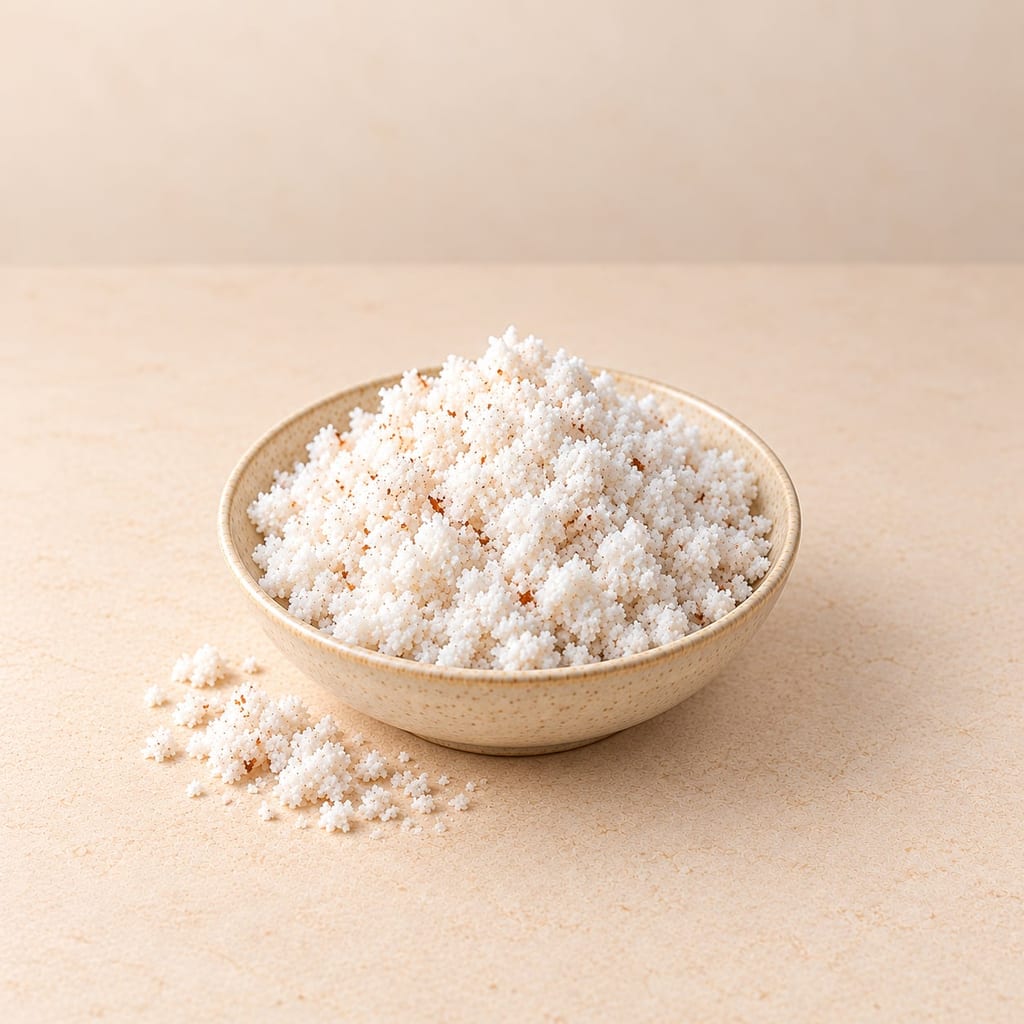
The shredded white kernel of a mature coconut, used fresh or thawed from frozen in sambols and chutneys; its lauric-acid fat is rich and the moist meat is perishable.
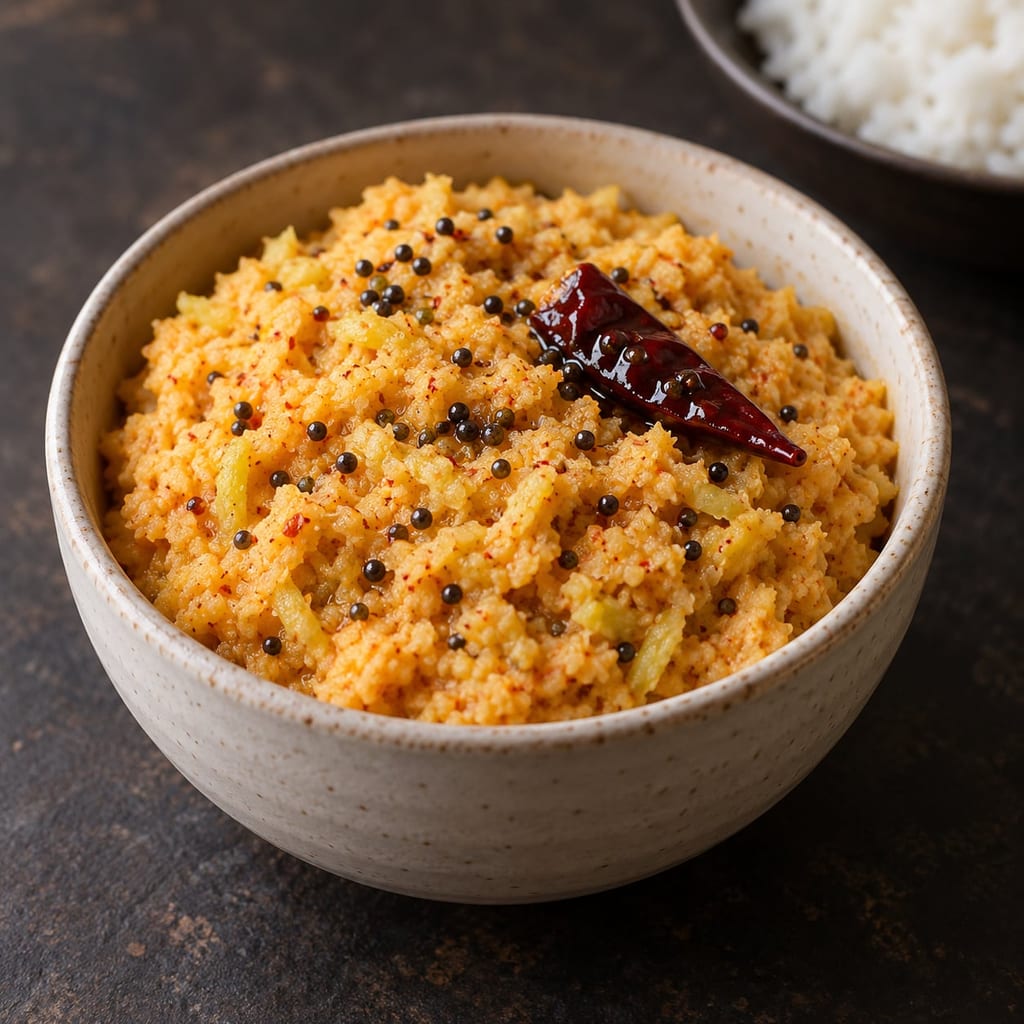
A coarse, sour Andhra chutney of raw mango and fresh coconut ground with browned urad dal and hot chillies, finished with a mustard tempering and eaten with hot rice.
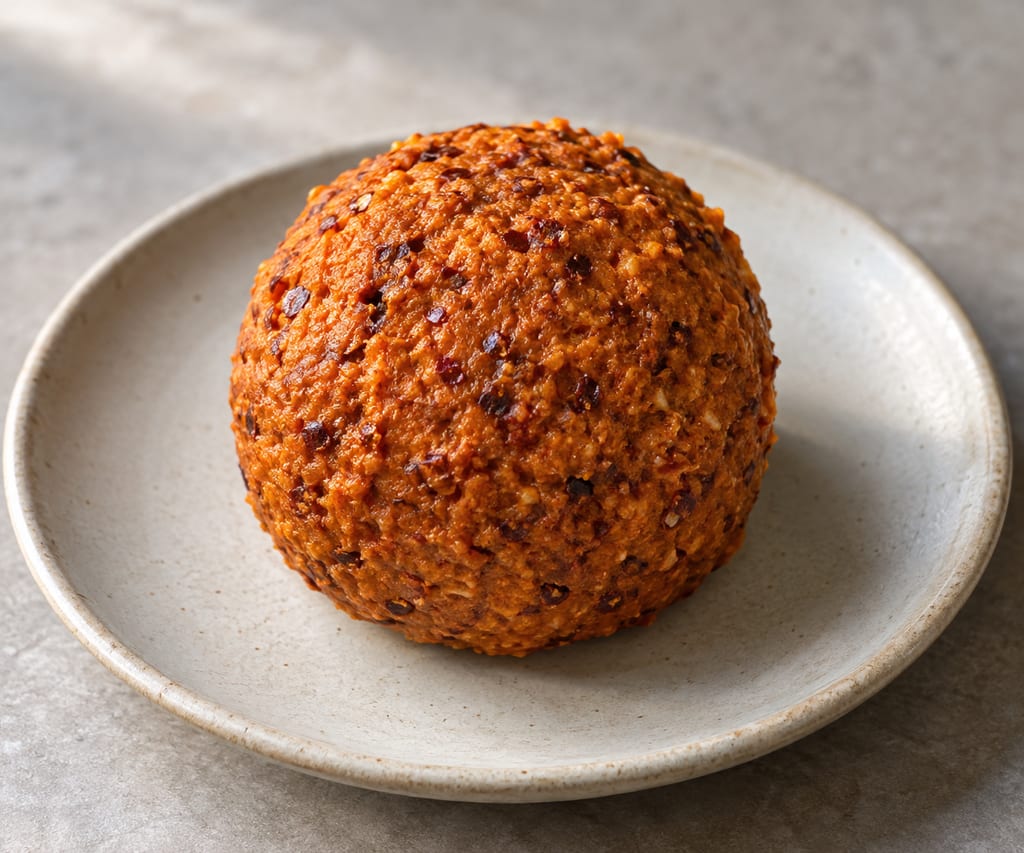
A Kerala chammanthi of coconut and red chillies roasted over a flame, then ground with shallots, tamarind, curry leaves, lemon leaves and salt and shaped into a ball.

Appam, or hoppers, are South Indian and Sri Lankan rice pancakes made from a fermented coconut-and-rice batter and cooked in a curved pan to a crisp lacy rim and a soft, spongy centre.
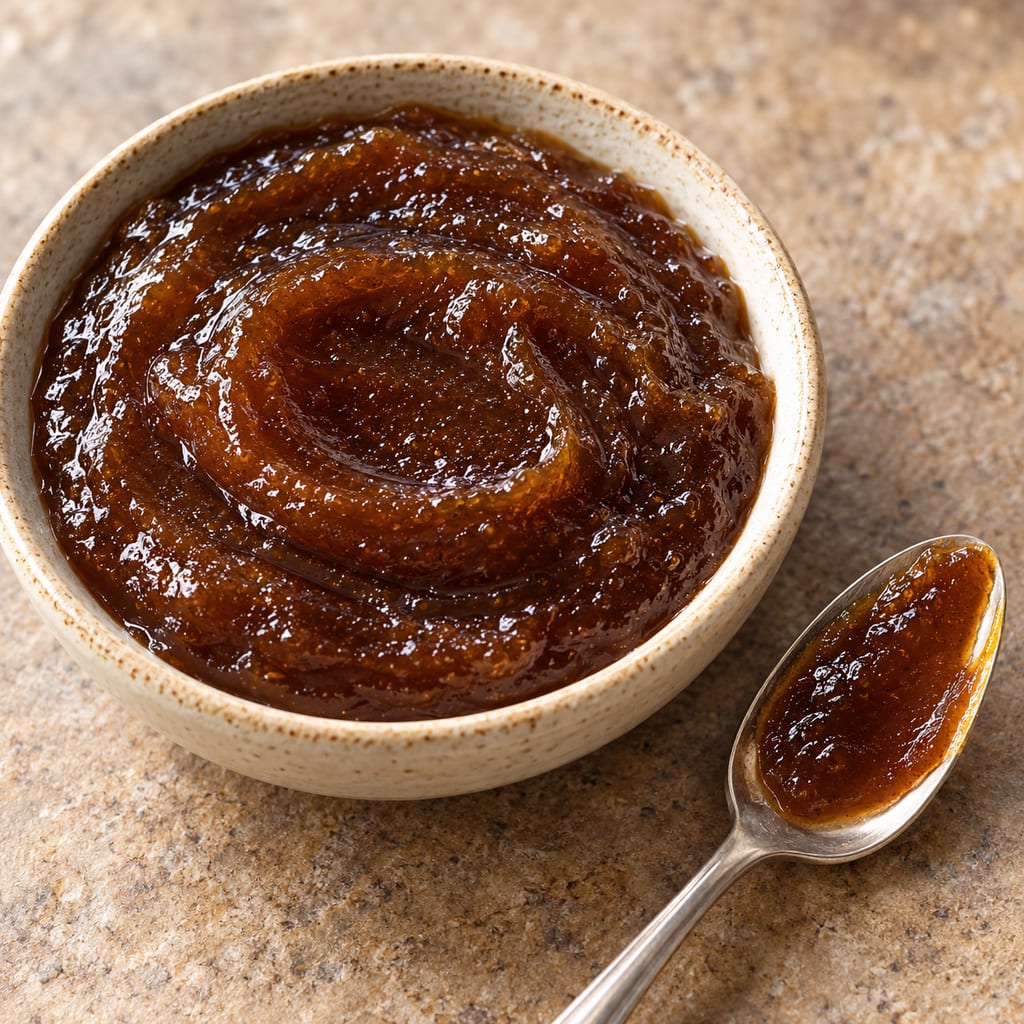
An experimental sweet mushroom preserve developed in Indian food-processing research, made by cooking mushroom pulp with sugar, added pectin and citric acid until concentrated into a thick, spreadable jam.
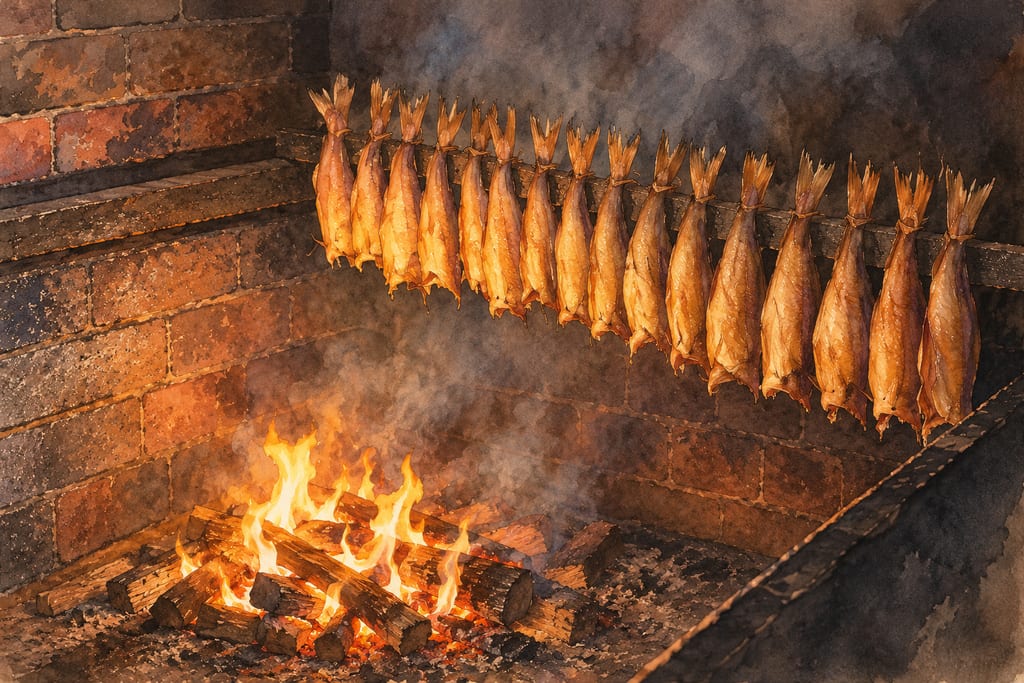
The Arbroath “barrel” is a hardwood-fired smoking pit with triangular rails and a cover. Its documented form belongs to the traditional hot-smoking of haddock around Arbroath and Auchmithie, Scotland.

Crisp battered white fish in warm corn tortillas with shredded cabbage, lime and fresh salsa. This home version draws on the Ensenada style without claiming to be a definitive historic formula.
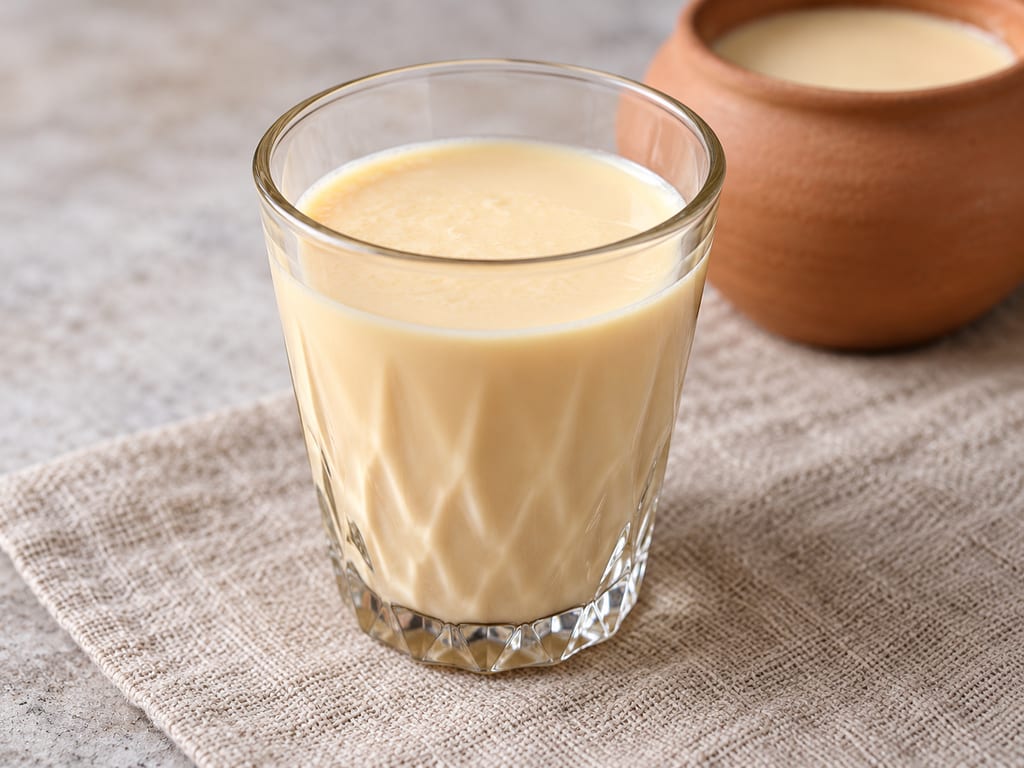
Baked milk is an Eastern European preparation of milk held at high heat for hours until it turns cream-coloured with a cooked, mildly sweet flavour, without any fermentation.

A coarse South African farmhouse sausage of beef with pork or mutton fat, defined by its coriander seasoning and cooked fresh over coals rather than preserved.
A flood-season pit store described for Omagua communities along the Amazon: manioc tubers were buried before inundation and recovered as waters receded. Its shape and lining are not recorded.
A temporary, in-place earthen oven used to cook camas with heat retained by fire-heated stones. The dimensions described here belong to one Kalispel-supervised reconstruction, not a universal form.

Chuño negro is a source-documented Andean potato-preservation practice. This entry records producer tradition; it is not a validated household process for making potentially toxic bitter potatoes safe.
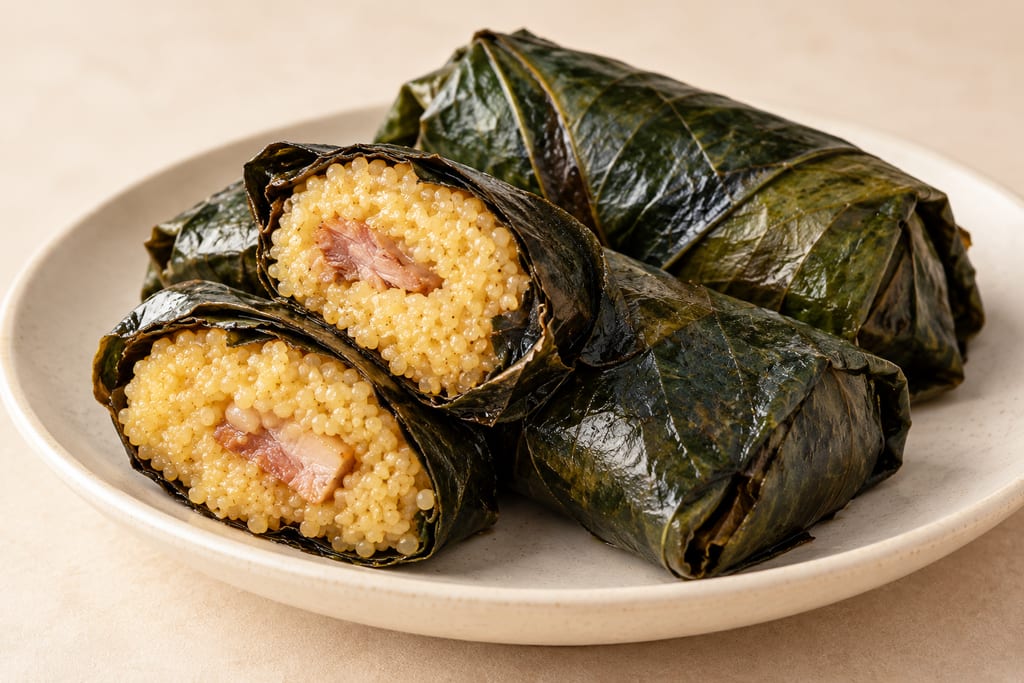
Cinavu is a Paiwan leaf-wrapped parcel built around millet or taro, meat and locally gathered leaves. It belongs to a food culture of harvest, hospitality and shared work, with village recipes differing in both filling and cooking time.
No community contributions have been published for this entry yet.
Sign in to contribute. Published comments and photos are free to read.
Dassana’s Veg RecipesRecipe · Current use
Coconut Chutney Recipe (South Indian Classic)Lines 0–48: recipe title, Tamil Nadu style label, author’s South Indian classification and pairing descriptions; no dated historical attestation inspected.
Lines 57–135 and recipe card: measured coconut base, optional chana dal/ginger and garlic alternative, water, tempering ingredient quantities, steps and three-serving yield.
Lines 147–154: author’s fresh-service/refrigeration advice and declared one-day use statement; captured as unvalidated author guidance, not a preservation process.
Cited in: What is coconut chutney?; Names and ingredients in local languages; Historical context; Ingredients — Ground base; Ingredients — Tempering; Why the coconut is grated; What roasted chana dal contributes; Stage 1 — Prepare the coconut; Stage 2 — Add the flavourings; Stage 3 — Add water; Stage 4 — Grind; Stage 5 — Transfer; Stage 6 — Heat the oil; Stage 7 — Add mustard seeds; Stage 8 — Add dal and cumin; Stage 9 — Add chilli and curry leaves; Stage 10 — Finish; The chemistry of tempering; Why the order of tempering matters; Texture: an emulsion or suspension?; Fresh coconut versus desiccated coconut; Green chilli and ginger; Regional variations; How coconut chutney is served; Why the chutney is not fermented; Storage and safety; Allergens; Troubleshooting
Food Standards ScotlandSafety
Food allergies and intolerancesMustard, sesame and nut allergens named in regulated allergen guidance
Cited in: Storage and safety; Allergens