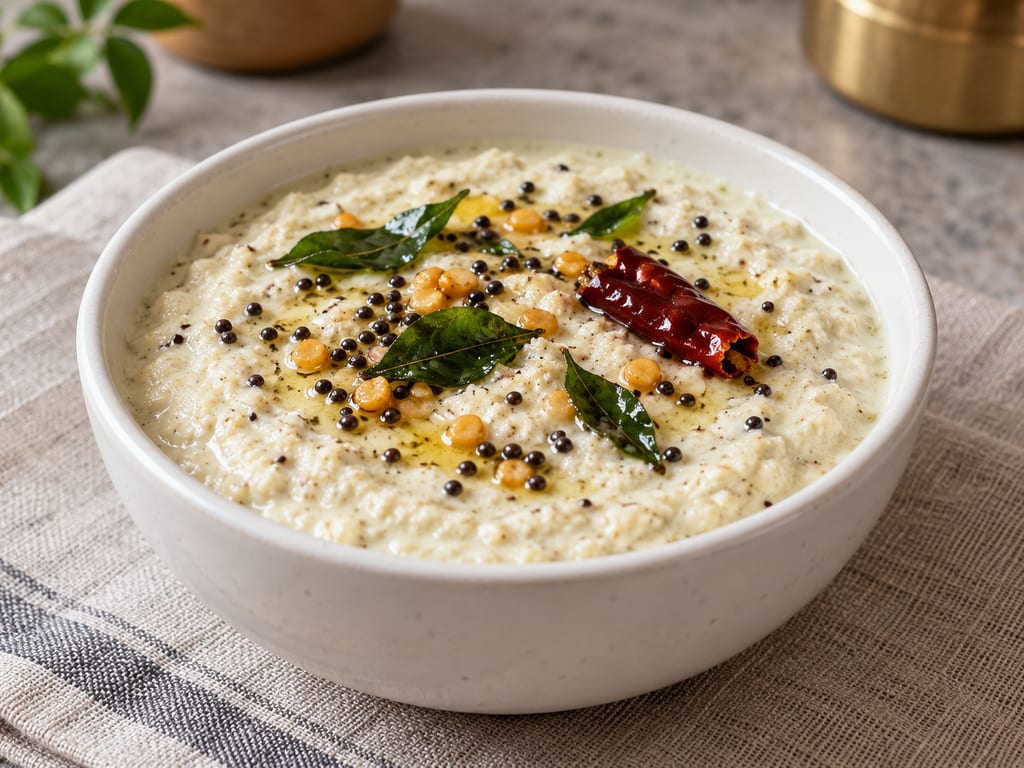
Coconut chutney
A coconut chutney whose ground base is finished with a separate oil tempering of mustard, urad dal, curry leaves and spices; the author pairs it with South Indian breakfast foods and snacks.
 FermenteaWhere food goes to change
Substrates
The shredded white kernel of a mature coconut, used fresh or thawed from frozen in sambols and chutneys; its lauric-acid fat is rich and the moist meat is perishable.
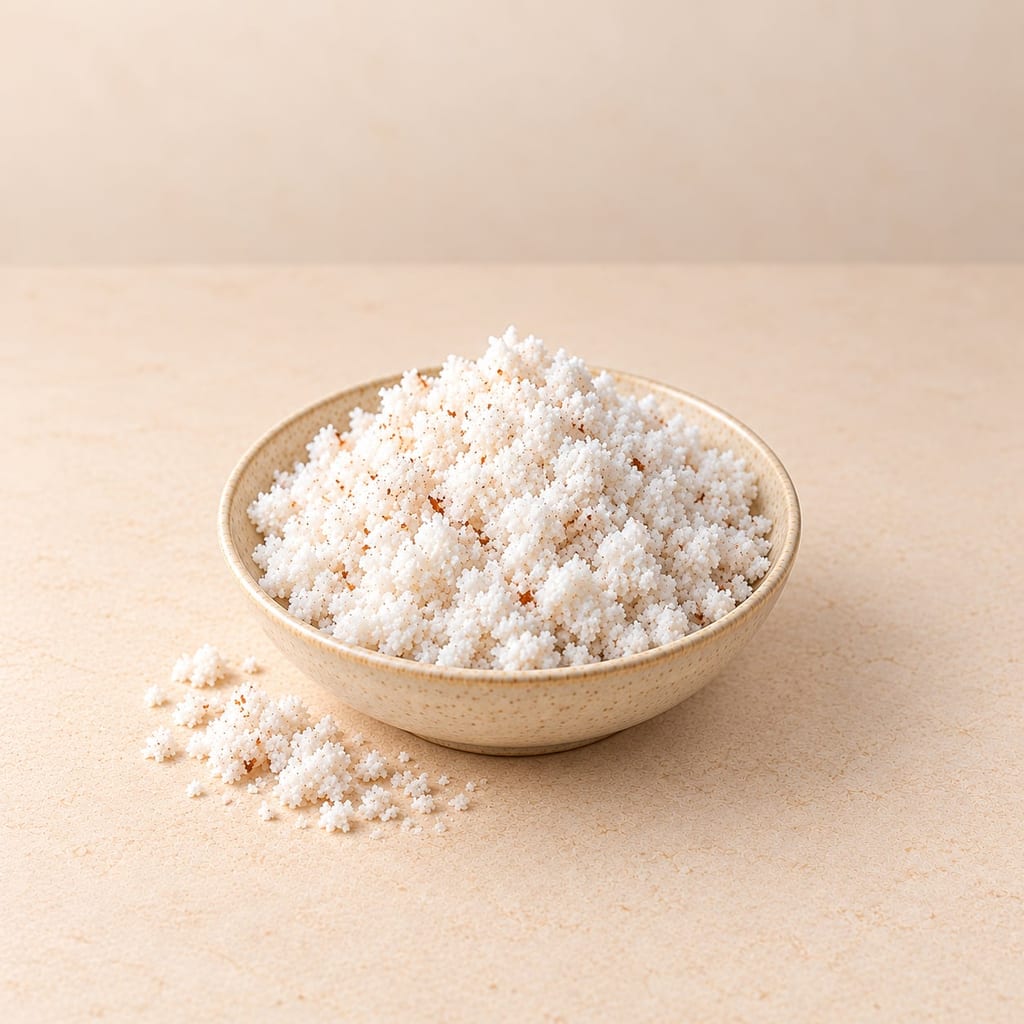
Grated coconut is the white, solid endosperm of a mature coconut, Cocos nucifera, reduced to fine shreds. Botanists call that white layer the endosperm; cooks call it the meat or the kernel, and it is what lines the inside of the hard shell around the clear coconut water. Grated fresh, it is moist, sweet and rich. It is not coconut milk, which is the emulsion pressed out of grated meat, and it is not the soft jelly-like meat of a young nut.
Three forms are in common use. Freshly grated coconut is scraped or ground from a husked mature nut just before cooking. Frozen grated coconut, sold unsweetened, is the same meat grated and frozen; thawed, it stands in for the fresh. Desiccated coconut is grated meat that has been dried, and it is available unsweetened or, in baking aisles, sweetened. This page concerns the first two: fresh or thawed unsweetened gratings, used moist and raw or only lightly cooked. Dried and sweetened shreds behave differently, because most of the water is gone and, in the sweetened form, sugar is added.
The relish and chutney traditions of Sri Lanka and southern India lean on this ingredient. The Sri Lankan relish is pol sambol, called thenkai sambal in Tamil; in Karnataka coconut chutney is kayi chattni.
The coconut palm is a native of the Old World tropics, and its fruit is naturally adapted for dispersal by sea currents; the form thought to be ancestral has a large proportion of fibrous husk. People turned that adaptation into the most portable food and drink of the tropics. A palm that bears nuts holding both water and a rich kernel allowed voyagers to cross water and colonise islands, and its history is tied to the movement of people across the Pacific and Indian oceans.
A genetic survey of 1,322 coconut accessions from around the world divides the species into two deeply separate groups, one in the Pacific basin and one in the Indian and Atlantic basins. That pattern suggests that coconut cultivation began independently in these two regions. Only the Pacific domestication produced the traits most closely linked to human selection: dwarf habit, self-pollination and the rounded, water-rich fruit known as niu vai. Classic analyses of fruit shape separate two forms named for Polynesian varieties: niu kafa, oblong and triangular with much fibrous husk and read as the more ancestral, and niu vai, rounded, often brightly coloured and holding a large share of liquid endosperm, read as shaped by cultivation. Dwarfs make up about five per cent of palms; the Talls outcross and grow faster, and many of them are grown for copra and coir fibre.
The spread is traced to seafaring. The coconut was spread to eastern Polynesia and later introduced to the Pacific coasts of Latin America, most likely by pre-Columbian Austronesian seafarers from the Philippines, and westward Austronesian expansion influenced the palms of Madagascar. Later, Europeans took coconuts from India to the Atlantic coast of Africa, to South America and the Caribbean. Coconuts that show a mixture of Pacific and Indo-Atlantic ancestry cluster in the south-western Indian Ocean, along the old trade route between Madagascar and Southeast Asia. Almost every coconut population in the world has been touched by human cultivation and dispersal. The crop has a vulnerability: coconut lethal yellowing, a phytoplasma infection, has reached epidemic levels in the Caribbean and other parts of the Neotropics, and susceptible trees typically die within a year of infection, which is why the genetic structure of the species matters to breeders.
Today the palm is grown in around 90 countries on roughly 12 million hectares. Indonesia, India and the Philippines lead production, together supplying about 72 per cent of the world total of 65.5 million tonnes in 2024.
Grated coconut is the structural ingredient of many coastal South Asian relishes. Pol sambol, the Sri Lankan coconut relish, is freshly grated coconut with shallots or red onion, dried chilli or chilli powder, lime juice and salt, traditionally ground on a granite slab with a granite roller called a miris gala. Maldive fish, a smoked and cured tuna sold in chips or flakes, is an alternative seasoning, and a cooked variant, badapu pol sambol, is sautéed with mustard seeds, curry leaves and sliced onion. It sits at room temperature on the plate beside rice, string hoppers, hoppers and curries.
South Indian coconut chutney grinds the meat with green and red chillies, tamarind, salt, coriander and water, with ginger, curry leaves and mustard seeds among the other common ingredients. It is served with idli and dosa, with bajji, bonda and vada, and in Karnataka with rice dishes such as pulao and puliyogare. One account holds that the chutney was originally limited to the coastal plains of the Vijayanagara Kingdom, where coconut plantations were traditional, and spread later to the Karnataka plateau, Tamil Nadu, Rayalaseema and Telangana.
Neither condiment has a documented origin date. Both depend on the same quality: mature, freshly grated coconut that contributes sweetness and fat without cooking.
A coconut takes about a year to ripen, and the kernel changes character during that time. In a study of the dwarf cultivar Wenye No. 3, harvested at 8, 10 and 12 months after pollination, the moisture of the meat fell from 81.15 to 61.73 per cent while fat rose from 8.61 to 17.53 per cent, protein from 0.60 to 1.29 per cent and total soluble sugars from 2.13 to 4.84 per cent. Lauric acid dominated the fat at every stage. Volatile compounds shifted as well: esters and alcohols prevailed in the younger meat, aldehydes accumulated in the oldest. A young nut yields a thin, wet jelly that cannot be grated; a nut of full maturity gives a firm, oily meat that holds a shred. That is why grated coconut is always made from the mature nut. The cultivar in that study, Wenye No. 3, is a dwarf bred from the Malayan Red Dwarf and released in 2007, widely planted in Hainan, and its meat also showed an alpha-amylase inhibitory activity that peaked at 10 months at 20.4 per cent.
How much of the fruit is edible meat depends on how the husk is counted. One analysis puts a mature fruit at 12 per cent hard shell, 25 per cent coconut water, 28 per cent meat and 35 per cent husk; another, working on the husked nut, reports 51.7 per cent kernel, 9.8 per cent water and 38.5 per cent shell. The meat dried in the sun is copra, the raw material for coconut oil, and sun drying is slow, costly and open to contamination.
Mature coconut meat is a fatty, watery solid. One analysis gives 37.3 per cent fat, 4.1 per cent protein and 46.3 per cent water; US figures for raw meat give about 33.5 grams of fat per 100 grams, of which about 29.7 grams is saturated. The fat is unusual among food fats. Lauric acid, a 12-carbon medium-chain fatty acid, makes up roughly 45 to 50 per cent of the total, with myristic, caprylic and capric acids behind it, and about 90 per cent of the fat is saturated. Medium-chain fats are shorter than the long-chain fats of most plant oils and are absorbed by a different route. The kernel is also a source of minerals, among them calcium, phosphorus, iron, magnesium and selenium, and of vitamin E and several B vitamins, and it carries phenolic acids and catechin.
Pressing grated meat releases an oil-in-water emulsion, coconut milk. Coconut milk made this way carries about 33.5 grams of fat per 100 grams, with lauric acid at 45 to 50 per cent of that fat.
The differences between the forms come down to water and fat. Mature coconut meat contains about 299.7 grams of total fatty acids per kilogram, 48 per cent of it lauric acid, 19 per cent myristic acid and 10 per cent palmitic acid; tender meat holds only 90.87 grams per kilogram. A grating made from a mature nut is therefore a lipid-rich food, and the fat gives the meat its richness.
A frozen unsweetened grating is the same meat grated and frozen, so once thawed it can stand in for fresh in a relish or chutney where the meat is eaten raw and moist. Drying changes it. Sun-drying the meat is slow and exposes it to contamination, and the alternatives, osmotic dehydration with sugar or freeze-drying, are designed to control moisture and preserve quality. Desiccated coconut is the dried grating; the remaining fat now makes up a much larger share of the weight, and sweetened versions add sugar. A recipe that asks for fresh or thawed coconut is asking for the damp, undried meat.
Grated coconut is a raw ingredient, and in most dishes it meets fermentation only at the table: coconut chutney is the standard companion of idli and dosa, the steamed and griddled cakes made from fermented batters. The chutney is a raw, cool, fatty side to a soured, fermented staple, and the fermentation belongs to the batter, not to the coconut.
Grated coconut is not fermented in these preparations. Coconut chutney is served with idli and dosa, whose batter ferments before cooking; that fermentation belongs to the batter, not the coconut.
For grating, the nut must be mature, because the meat of a young nut is too wet and soft to shred. Frozen unsweetened gratings are thawed before use. No shelf life is established for freshly grated or thawed coconut. A moist meat of 46 per cent water and 37 per cent fat is a rich medium, and grating is a handling step in which hands, graters and machines can add contamination: a survey of grated coconut sold in four markets in Maputo found presumptive Escherichia coli in 14.1 per cent of samples and Staphylococcus aureus on 38.0 per cent of samples and surfaces, with only 62.5 per cent of samples passing all safety criteria. That is a preprint on one city’s market stalls, not a general measure, but it supports clean tools and prompt use or freezing.
Dried coconut has its own record. Salmonella in dried coconut was a recognised problem in the 1950s and 1960s, and a large outbreak of Salmonella Muenchen in Germany between September 2020 and July 2021 was traced to dried coconut pieces: 301 cases, 31 hospitalised among the 186 with known outcomes, and no deaths. The long shelf life of the product may have prolonged the outbreak. Fresh or thawed gratings are not dried coconut, but the incident shows that coconut is not inherently safe from contamination.
Coconut is a recognised allergen source: the catalogued allergen of Cocos nucifera is Coc n 1, a 53 kDa vicilin-like storage protein. Its fat is about 90 per cent saturated, and the health effects of coconut fat remain under study: published trials and reviews report mixed effects on blood lipids and blood sugar, and no recommendation is drawn here.
No dated origin is established for eating grated coconut raw in sambols or chutneys. No shelf life is established for fresh or thawed gratings, and no grading standard is given for frozen unsweetened product. Published composition varies with cultivar, maturity and analytical method.
Coconut (Cocos nucifera allergen Coc n 1)
Pacific coconuts carry the dwarf, self-pollinating and niu vai traits; no single place or date is claimed.
A second, separate origin of cultivation; admixture with Pacific coconuts in the south-western Indian Ocean.
Pol sambol is a Sri Lankan relish of freshly grated coconut; no locality is claimed.
Coconut chutney is said to have been originally limited to these coastal plains; the claim is a single encyclopedic account.
The three largest coconut-producing countries, about 72 per cent of 2024 world production.
A coconut chutney whose ground base is finished with a separate oil tempering of mustard, urad dal, curry leaves and spices; the author pairs it with South Indian breakfast foods and snacks.
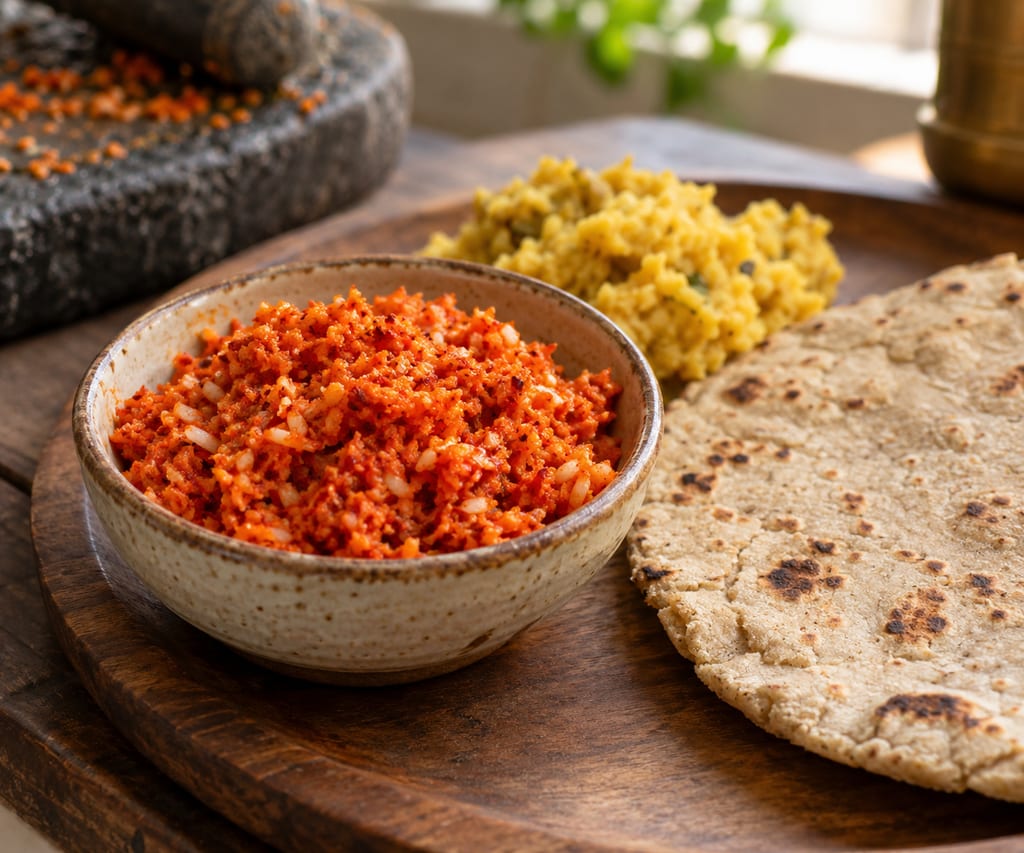
A fresh Maharashtrian chutney of wet coconut and garlic, ground with chilli and salt and finished with lemon; Royal Chef Sujata serves it with jhunka-bhakri.
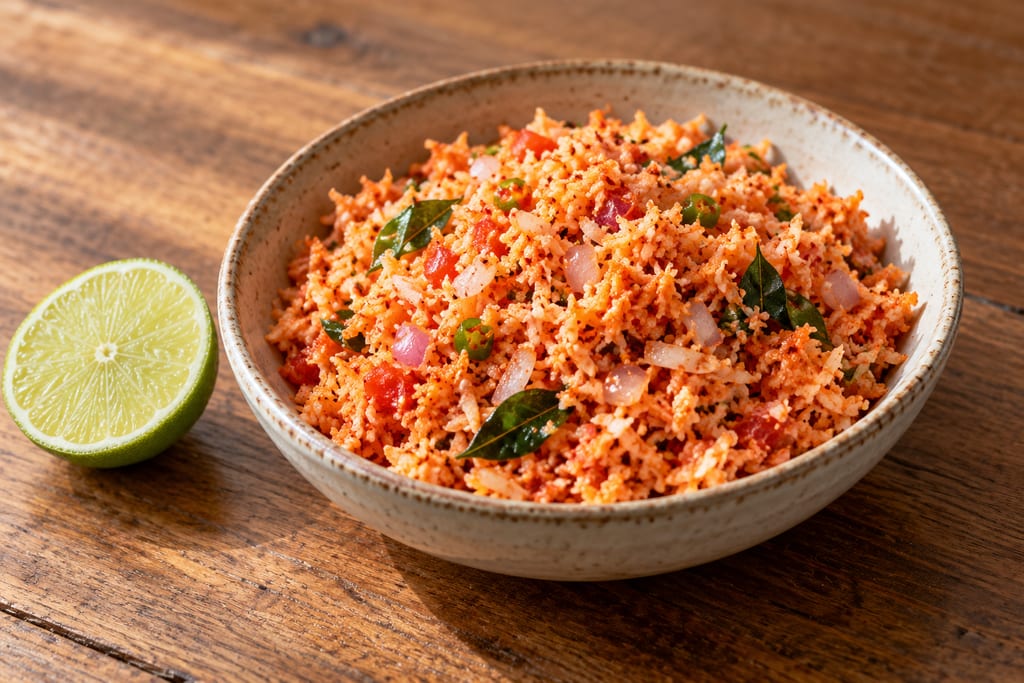
A Sri Lankan coconut relish made from grated coconut, aromatics, chilli, lime and optional Maldive fish; a seasoned paste is folded through the coconut by hand.
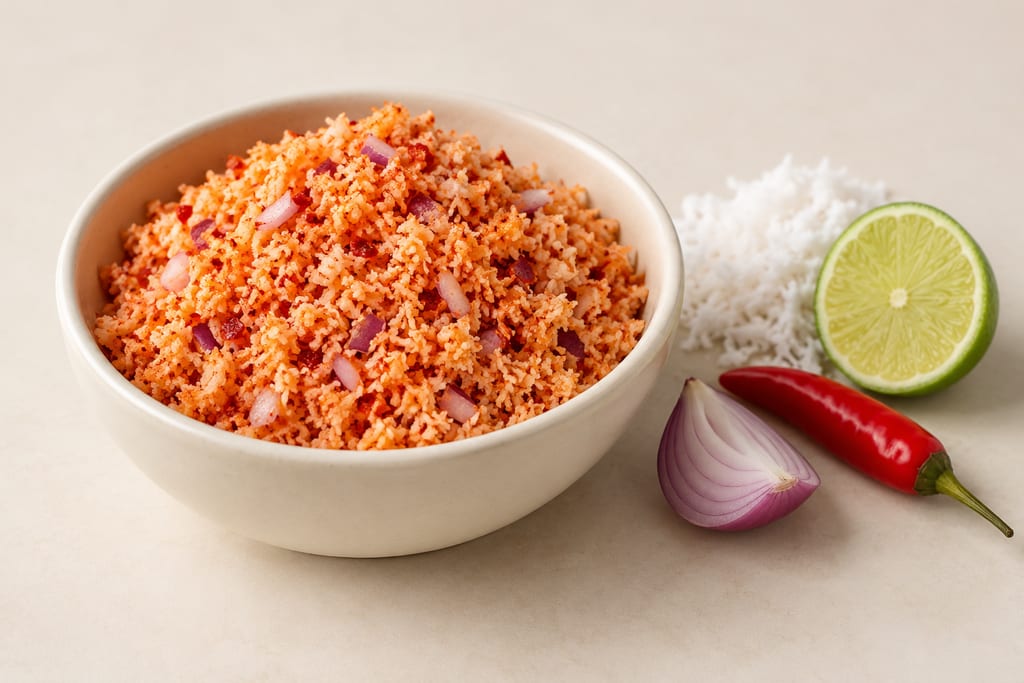
A fresh, untested coconut relish developed in reference to Sri Lankan pol sambol. This formula is an adaptation, not a documented traditional recipe or a preserve.
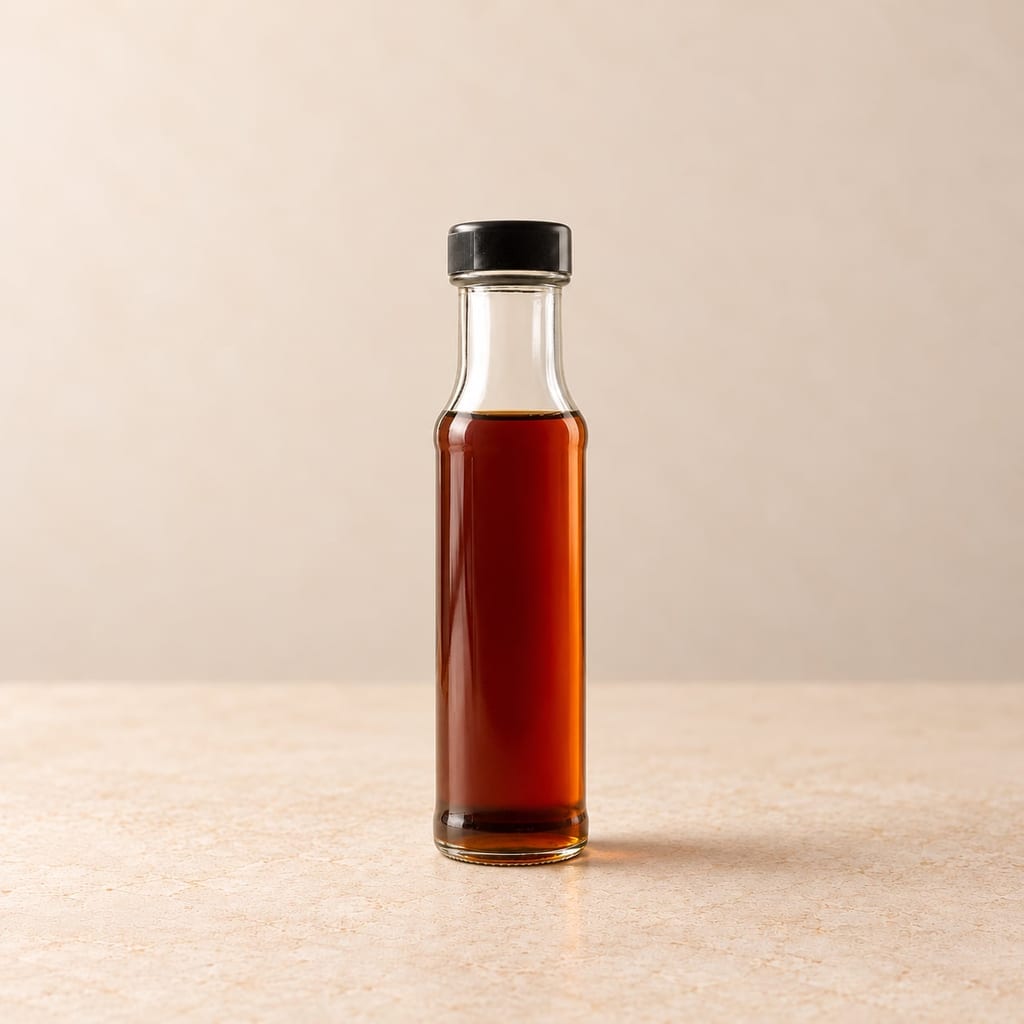
Dark, strongly scented oil pressed from roasted sesame seed, used as a last-minute seasoning in East Asian sauces, dips and dressings rather than as a frying oil.
No community contributions have been published for this entry yet.
Sign in to contribute. Published comments and photos are free to read.
PLoS ONEHistory · Botany
Independent origins of cultivated coconut (Cocos nucifera L.) in the Old World tropicstwo genetic groups, Pacific and Indo-Atlantic, indicating independent origins of cultivation
dwarf habit, self-pollination and niu vai fruit arose only in the Pacific
Austronesian dispersal from the Philippines; admixture in the south-western Indian Ocean; Europeans took coconuts from India to Atlantic Africa, South America and the Caribbean
Dwarfs about 5 per cent of palms; Talls grown for copra and coir
Cited in: A palm domesticated twice; Notes
Foods (MDPI)Composition
Effect of Maturation on the Chemical Composition, Nutritional Value, Biological Activities In Vitro and Volatile Organic Compounds in the Coconut Meat of Wenye No. 3 Varietymoisture 81.15 to 61.73 per cent, fat 8.61 to 17.53, protein 0.60 to 1.29, sugars 2.13 to 4.84 from 8 to 12 months
lauric acid dominant at all stages; esters and alcohols in younger meat, aldehydes in oldest
Cited in: From flower to kernel: growth and harvest; Choosing, thawing and storing
Foods (MDPI)Composition
Effect of Dry Processing of Coconut Oil on the Structure and Physicochemical Properties of Coconut Isolate Proteinscoconut meat 37.3 per cent fat, 4.1 protein, 46.3 water
dry processing of dried meat; copra meal about 19 per cent protein
Cited in: What grated coconut is; What the kernel is made of; How fresh, thawed and dried gratings differ; What it does with fermentation
HeliyonComposition · Processing
Drying kinetics and mathematical modeling of coconut meat slices: Insight into pretreatment and drying synergic effectmature fruit 12 per cent shell, 25 per cent water, 28 per cent meat, 35 per cent husk
sun-dried meat is copra; sun drying slow, costly and prone to contamination
Cited in: From flower to kernel: growth and harvest; How fresh, thawed and dried gratings differ
Foods (MDPI)Composition · Processing
Comparative Study of the Fatty Acid and Phenolic Profiles of Tender and Mature Coconut for Coconut Milk Productioncoconut milk is an emulsion extracted from grated endosperm; about 33.5 g fat per 100 g; lauric acid 45 to 50 per cent of fat
phenolic acids and catechin in the meat
Cited in: What grated coconut is; What the kernel is made of; How fresh, thawed and dried gratings differ
Bioprocess and Biosystems EngineeringProcessing
A comprehensive review on the techniques for coconut oil extraction and its applicationwet-process routes: natural fermentation (hot water added to coconut milk, covered, left two days) and induced fermentation (high yield, fermented odour)
other extraction methods listed
coconut oil 90 to 95 per cent saturated
Cited in: What it does with fermentation
Food Chemistry: XComposition
Virgin coconut oil: A comprehensive review of its health impacts and functional food applicationsfruit 51.7 per cent kernel, 9.8 per cent water, 38.5 per cent shell
kernel minerals and vitamins
lauric acid 45 to 52 per cent; about 90 per cent saturated
Cited in: What the kernel is made of; Dietary and allergen context
Epidemiology and InfectionSafety
Large outbreak of Salmonella Muenchen linked to dried coconut pieces, September 2020 to July 2021, Germany301 cases, 31 hospitalised of 186 with information, no deaths
Salmonella in dried coconut a recognised problem in the 1950s and 1960s
long shelf life may explain duration
Cited in: Choosing, thawing and storing
Preprints.orgSafety
Microbiological Safety of Grated Coconut Sold in Municipal Markets of Maputo, Mozambique (preprint)presumptive E. coli in 14.1 per cent of samples; S. aureus in 38.0 per cent of samples and surfaces; 62.5 per cent of samples overall safe
Cited in: Choosing, thawing and storing
Allergologie SelectAllergens
Allergens from plant-based food allergen sources and their clinical and diagnostic relevanceCoc n 1, a 53 kDa vicilin-like protein, is the catalogued allergen of Cocos nucifera
Cited in: Dietary and allergen context
WikipediaUses
Coconut chutneyground coconut with chillies, tamarind, salt, coriander; served with dosa, idli, bajji, bonda, vada
originally limited to the coastal plains of the Vijayanagara Kingdom; kayi chattni
Cited in: On the table: sambol, chutney and the coast; What it does with fermentation
WikipediaUses
Pol sambolfreshly grated coconut, shallots, chilli, lime juice, salt; ground on a miris gala; Maldive fish alternative; badapu pol sambol; served with rice and hoppers
Cited in: On the table: sambol, chutney and the coast; Notes
WikipediaProduction · Composition
Coconut2024 world production 65.5 million tonnes; Indonesia, India and the Philippines about 72 per cent
raw meat about 33.5 g fat and 29.7 g saturated fat per 100 g
Cited in: What grated coconut is; A palm domesticated twice; What the kernel is made of; Choosing, thawing and storing; Dietary and allergen context
Animals (MDPI)Processing
Copra Meal: A Review of Its Production, Properties, and Prospectscopra meal is a by-product of coconut oil production; 1.98 million tonnes in 2023
Cited in: What it does with fermentation