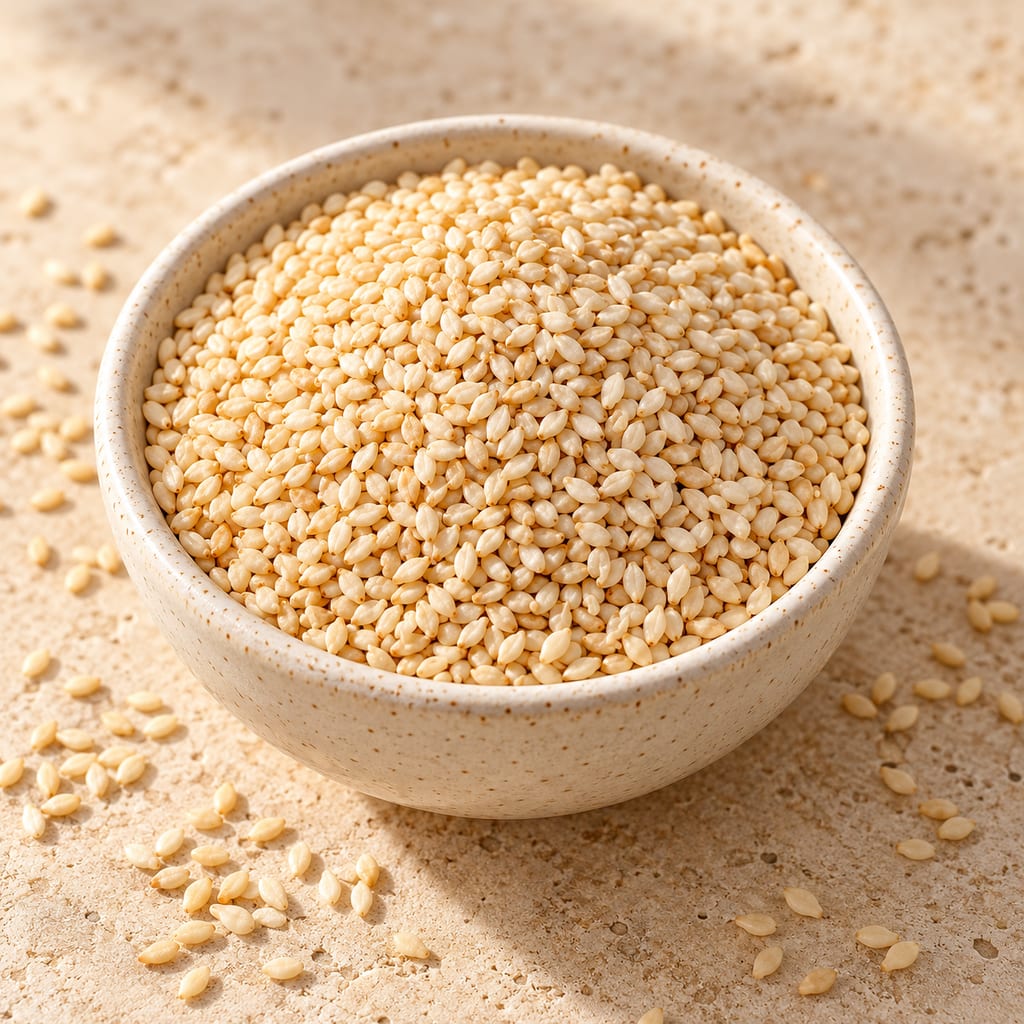
Sesame seeds
Sesame seed, from Sesamum indicum, is about half oil and is eaten whole, ground into paste or pressed into oil. It was a crop of South Asia by the Harappan period and reached Mesopotamia before 2000 BC.
 FermenteaWhere food goes to change
Fat or oil
Dark, strongly scented oil pressed from roasted sesame seed, used as a last-minute seasoning in East Asian sauces, dips and dressings rather than as a frying oil.
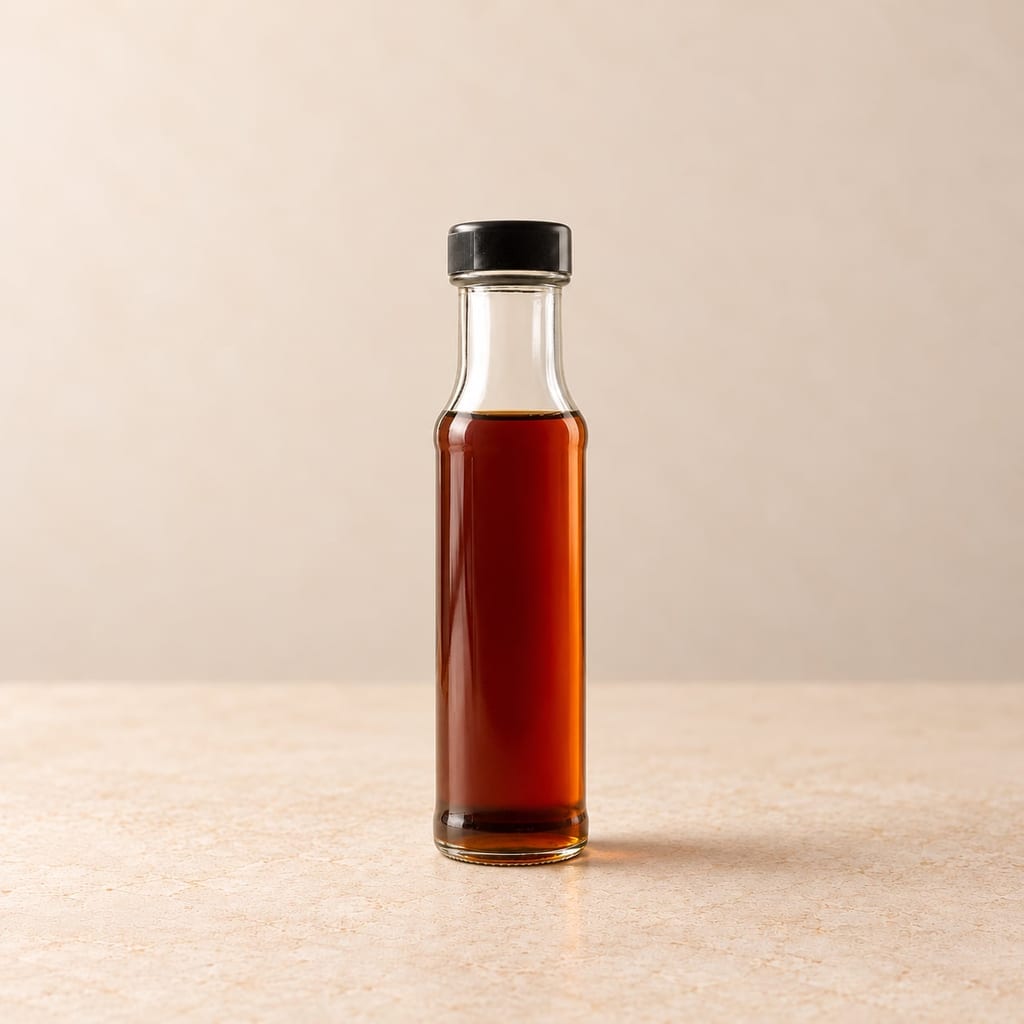
Toasted sesame oil is the dark, strongly scented oil pressed from sesame seeds that have been roasted first. It runs from amber to brown, It is a seasoning rather than a cooking medium. The oil from raw seeds, which may be cold-pressed, is a pale, light oil that serves for stir-frying and deep-frying; the toasted oil is added at the end of cooking, because it is not suited to high heat.
In China it is zhima you (芝麻油) or xiangyou (香油), in Japan goma abura (ごま油), and in Korea chamgireum (참기름). All three cuisines use it for seasoning and dips. It differs from the light oil pressed from raw seed, from sesame paste such as tahini, which is the ground seed, and from the whole seed itself.
Sesame, Sesamum indicum, is regarded as the oldest oilseed crop known. Charred remains from about 3500 to 3050 BC point to domestication on the Indian subcontinent, and cultivation is documented from about 3000 BC. The place of origin is still argued. Most wild Sesamum species are native to sub-Saharan Africa, which led many scholars to propose an African origin; the richness of cultivated forms in Asia led others to argue for the Indian subcontinent, and charred seed has supported domestication in north-western South Asia in the time of the Indus civilisation. A recent genome study of 927 accessions from 42 countries supports East Africa as the centre of origin, with later movement through the Middle East to South Asia, South-East Asia and East Asia.
The oil trade was old. Sesame was the main oil crop of the Indus Valley, and sesame oil, known as ilu in Sumerian and ellu in Akkadian, was probably exported to Mesopotamia; trade in sesame between Mesopotamia and the subcontinent is placed by 2000 BC. Sesame was grown in ancient Egypt, appears in the Ebers Papyrus of about 1550 BC and was found in the tomb of Tutankhamun, and it was grown and pressed for oil in Urartu by at least 750 BC.
Nothing in the sources reviewed dates the practice of roasting the seed before pressing, so the origin of the toasted oil as a separate product remains unknown.
Sesame is a fast crop, with a life cycle of 70 to 90 days, about 6,000 seeds per plant and a small genome. It is a plant of tropical and subtropical regions: Africa and Asia grew 96.3 per cent of the world’s seed in 2021. World production was about 6.7 million tonnes in 2024, with India at 0.87 million tonnes, Myanmar 0.72, Sudan 0.63, Nigeria 0.45, Ethiopia 0.44 and Burkina Faso 0.27. In 2023 about 1.2 million tonnes of sesame oil were produced, with India and Myanmar together supplying 34 per cent.
The harvest holds back mass production. The seed capsules open only when fully ripe, so farmers cut the plants by hand and stand them upright to finish ripening. The seed is white or black: lighter seed is common in Europe, the Americas, West Asia and the Indian subcontinent, darker seed mostly comes from China and South-East Asia. Seed holds about 45 to 55 per cent fat, roughly 20 per cent protein and about 0.8 per cent lignans.
Per 100 grams the dried whole seed has 570 kilocalories, 49.7 grams of fat, 23.4 grams of carbohydrate including 11.8 grams of fibre, 17.7 grams of protein and 4.7 grams of water. It is a rich source of several B vitamins and of calcium, iron and magnesium, and it contains phytic acid, which reduces mineral absorption; heating and cooking reduce the phytic acid.
Making sesame oil begins with washing, drying and crushing the seed, and roasting is the step that decides the character of the oil. Oil is then obtained by mechanical pressing, solvent extraction or hot-water flotation; mechanical pressing is the most widely practised, with low cost, simple equipment and no solvent residue, though it recovers less oil than solvents, and seed moisture, pressing temperature, screw speed and feed rate all change the yield and the amount of lignans kept in the oil.
Roasting works through several reactions at once: the Maillard reaction between sugars and amino acids, sugar degradation, protein denaturation, Strecker degradation and lipid oxidation. Industrial roasting uses 150 to 250 degrees Celsius for 20 to 60 minutes. A laboratory study of 18 combinations, 160 to 210 degrees for 10, 20 or 30 minutes, found that the roasting time mattered more than temperature. After 10 minutes the volatile compounds were mainly pyrazines such as 2,6-diethylpyrazine and alcohols such as 3-hexanol, which give green and nutty aromas. After 20 to 30 minutes heterocyclic compounds, pyrazines, pyridines, thiazoles and furans, dominated at 102.77 to 316.94 micrograms per gram, peaking at 210 degrees for 20 minutes, and phenols such as 2-methoxyphenol appeared, which give smoky and sweet notes but also a pungent off-odour at high concentration. The sensory result was intense roasted and burnt notes. The fatty acid profile of the oil did not change significantly.
Roasting has a ceiling. Roasting too hard or too long can form 5-hydroxymethylfurfural, acrylamide and furan, and hot-air roasting at high temperature for a long time can lose tocopherols and proteins and may produce harman, norharman and benzo(a)pyrene. In the laboratory study, oil from seed roasted at 170 degrees for 10 minutes had the longest oxidation induction time, 48.56 minutes, and 170 degrees for 10 to 20 minutes was the best balance of flavour and stability. Of 56 volatile compounds identified, 30 were key aroma-active compounds, and the sensory panel described the oils as nutty, sweet, roasted, burnt, green and pungent. Those results come from oven-roasted seed extracted with hexane, not from a commercial press, and industrial settings need adjusting. Microwave roasting has been explored as a faster, less wasteful alternative to hot air.
A comparison of cold-pressed, roasted, microwaved and steam-exploded sesame oils identified 82 aroma compounds. Cold-pressed oil was characterised by aldehydes and phenols, had the simplest aroma and the lowest intensity, and best preserved the heat-sensitive lignans sesamin and sesamolin. Roasted, microwaved and steam-exploded oils had markedly more pyrazines and thiazoles, which carry the roasted and nutty aromas. Microwaved and steam-exploded oils also showed higher total phenolics, sesamol and antioxidant capacity, although some sesamin and sesamolin broke down. Roasting for 20 minutes, microwaving for 8 minutes and steam explosion for 1.5 to 2 minutes gave comparable aroma complexity; over-roasting produced undesirable flavours and lost heat-sensitive nutrients.
A direct comparison with hot air makes the trade-off concrete. Microwaving at 900 watts for 6 to 10 minutes released more gamma-tocopherol into the oil, 349.30 to 408.50 milligrams per kilogram against 304.90 for hot air at 200 degrees for 20 minutes, and produced more aromatic heterocyclic compounds, 42.40 to 125.12 milligrams per kilogram against 25.59. Six minutes gave a stronger roasted-sesame flavour with weaker bitter and burnt notes. The carcinogenic by-products fell: harman reached up to 775.19 nanograms per gram against 1,319.85 for hot air, norharman up to 1,069.99 against 1,168.40, and benzo(a)pyrene up to 1.59 micrograms per kilogram against 1.83. Ten minutes of microwaving went too far, with a strong bitter taste and a burnt flavour.
Pressing interacts with roasting. In a screw press, oil yield from unroasted seed rose with press temperature up to 150 degrees and did not improve at 200. Roasting lowered the yield from a mechanical press, probably through loss of moisture. White seed gave more oil and more sesamin and sesamolin, while black seed was higher in phenolics, antioxidant activity and sesamol. Moderate press temperatures gave the best balance between yield and bioactive compounds.
Sesame oil is entirely fat. About 80 per cent of the fat is unsaturated, mainly oleic acid, a monounsaturated fat, and linoleic acid, a polyunsaturated one; palmitic acid is the main saturated fat. It holds tocopherols, phytosterols and the lignans sesamin, sesamolin and sesamol, and heating can convert sesamin and sesamolin into sesamol, the lignan credited with the oil’s resistance to rancidity. In the pre-treatment comparison the microwaved and steam-exploded oils were higher in sesamol, and the cold-pressed oil kept more of the original sesamin and sesamolin.
The oil is unusually stable for its composition. Despite its polyunsaturated fat it resists rancidity better than most cooking oils with a high smoke point, and the natural antioxidant sesamol is credited with much of the effect. Roasting is reported to improve oxidative stability, through the products of the Maillard reaction. Even so, light and air shorten its life; storage in amber or opaque bottles and in the refrigerator limits oxidation.
Toasted sesame oil is rarely fermented itself. Its place beside fermented foods is as a finishing seasoning, the roasted aroma that goes on at the end. East Asian cuisines use it for seasoning and dips, and because it does not suit high heat it is added when cooking is nearly done. In South Indian cooking, sesame oil has traditionally been used in curries and with spicy foods.
The oil is one of the forms in which the seed reaches the kitchen: ground to a paste, scattered whole, or pressed to an oil that carries the roasted aroma.
Choose by colour and scent: a dark amber-to-brown oil with a strong roasted aroma is toasted oil, and the light oil is made from raw seed. Words on a label such as cold-pressed, roasted or microwaved describe the pre-treatment of the seed: cold-pressed oil has the simplest aroma, while roasted oil is built on pyrazines and thiazoles. Some producers refine the oil by solvent extraction, neutralisation and bleaching, mainly for appearance; good seed yields a palatable oil without these steps and many consumers prefer unrefined oil. Buy a quantity you will finish, keep it capped, dark and cool, and use it at the end of cooking.
No storage time is given in the sources reviewed, so none is stated. Burnt notes belong to heavily roasted oil: in the laboratory study they came with 20 to 30 minutes of roasting.
Sesame is a recognised food allergen. In Europe the sensitisation rate was 4.5 per cent in 2014. In the United States the FASTER Act of 2021 made sesame a major food allergen, and the European Union lists it among 14 allergens that must be labelled; Canada also requires sesame labelling. Prevalence of allergy is estimated at 0.1 to 0.8 per cent in Australia, Canada and the United States and is much higher in the Middle East, and sesame cross-reacts with peanuts, hazelnuts and almonds. The allergens include 2S albumins such as Ses i 1 and the seed oil-body proteins called oleosins. The sources reviewed do not establish how much allergen toasted oil carries, and exposure to the oil can cause contact dermatitis.
Published figures for the unsaturated share of sesame oil differ by a few percentage points. The roasting study used laboratory conditions and hexane extraction, so its temperatures are a guide to flavour chemistry, not a protocol for pressing. No source reviewed dates the first toasted oil or gives a household shelf life.
Sesame (Ses i 1 and oleosins)
Domestication on the subcontinent is one of two competing hypotheses; the oil is documented here, not the toasted oil specifically.
A genome study of 927 accessions supports East Africa as the centre of origin of cultivated sesame; this is disputed.
Sesame oil known as ilu in Sumerian and ellu in Akkadian was traded with the Indian subcontinent.
East Asian cuisines use toasted sesame oil for seasoning and dips; no country or locality is singled out.
Sesame oil has traditionally been used in South Indian curries and with spicy foods.
India and Myanmar made 34 per cent of world sesame oil in 2023 and led seed production in 2024.
Sesame seed, from Sesamum indicum, is about half oil and is eaten whole, ground into paste or pressed into oil. It was a crop of South Asia by the Harappan period and reached Mesopotamia before 2000 BC.
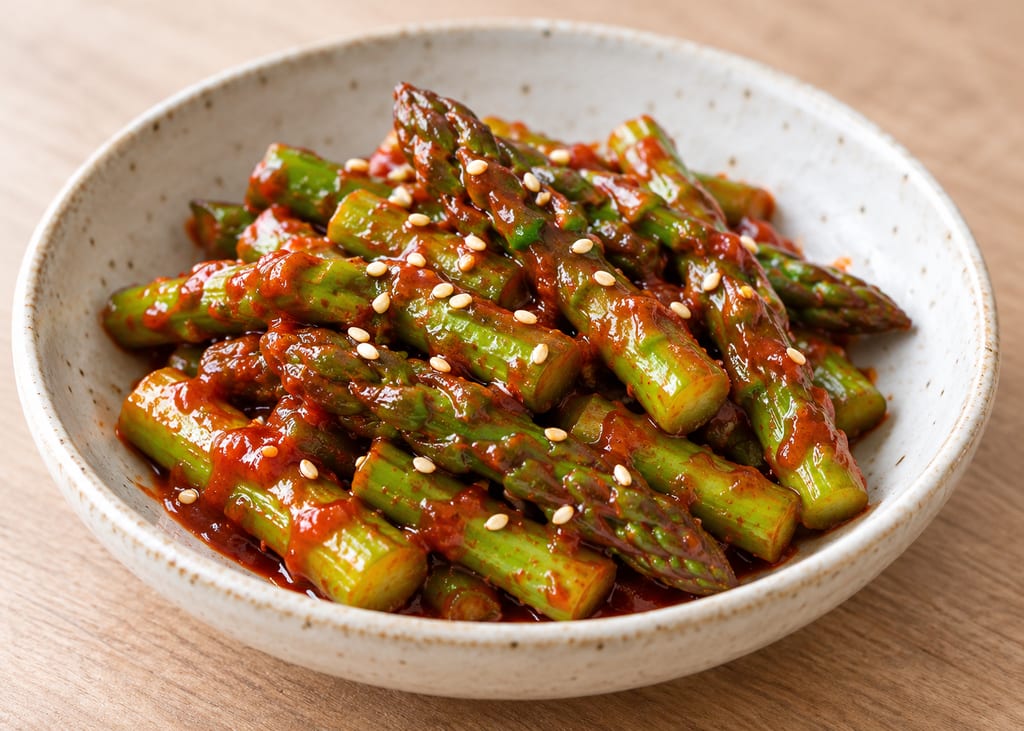
A Korean banchan of blanched asparagus dressed with a sweet-sour cho-gochujang sauce; Hyosun's version cools the spears in ice water before tossing.
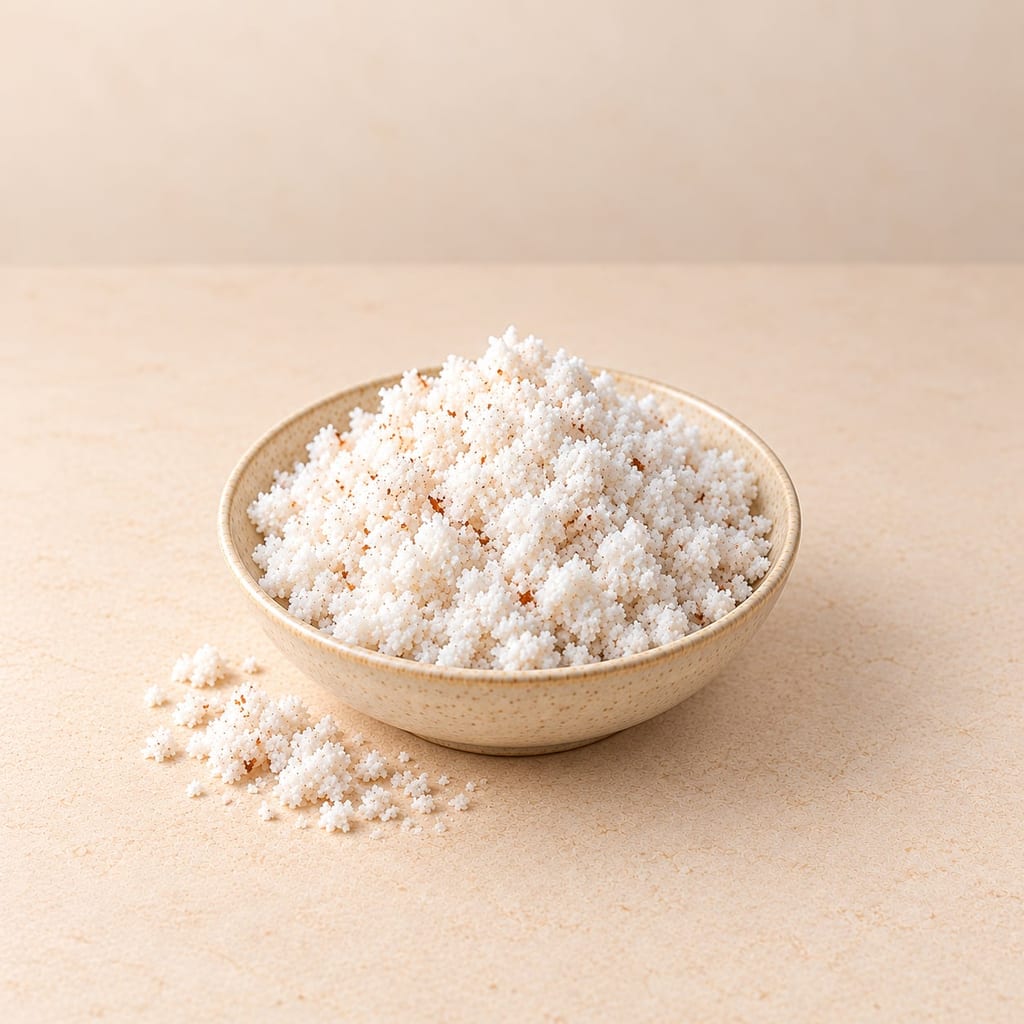
The shredded white kernel of a mature coconut, used fresh or thawed from frozen in sambols and chutneys; its lauric-acid fat is rich and the moist meat is perishable.

At North Abydos in Egypt, a fixed early Dynastic brewery comprised parallel semi-subterranean installations with rows of ceramic mash vats; excavation reports revise their number, scale and estimated batch capacity.

Ají amarillo is the orange-yellow Peruvian chilli cultivar group of Capsicum baccatum, used to colour and season huancaína sauce and ají de gallina. Published heat estimates do not establish one range for the named cultivar.

Toasted almonds are whole sweet almond kernels dry-roasted until golden to brown. Heat replaces their marzipan note with a roasted, nutty one; they thicken and flavour romesco.

Kodiak salmon, halibut and cod cut as seg'aq and hung on an initaq rack to become tamuuq, with kac'amaasaq and kupcuunaq named as different results.

Aniseed is the dried ripe fruit of Pimpinella anisum, an aromatic Apiaceae spice commonly called a seed. It adds a sweet, warm aroma to breads such as Moroccan krachel and South African mosbolletjies, and is distinct from star anise.

A fixed Late Chalcolithic installation in Areni-1 cave combined a shallow clay pressing basin with a large jar set into the cave floor and storage vessels nearby.

Ripe avocado flesh is the soft, buttery, fat-rich pulp of Persea americana, eaten raw. It is low in acid, so it is a fresh ingredient that needs care in chilled dishes.

A portable dome and pan used over a hearth, with embers on the lid and heat from below. Regional peka and saç forms share this principle while differing in materials, pan shape and how the food is cooked.
No community contributions have been published for this entry yet.
Sign in to contribute. Published comments and photos are free to read.
Foods (MDPI)Method · Chemistry
Effects of Roasting Conditions on the Quality of Sesame Oil: Sensory Profiles, Volatile Components, Fatty Acids and Oxidative Stabilityroasting of 160 to 210 C for 10, 20 and 30 minutes; time mattered more than temperature
10 minute roast: pyrazines and alcohols, green nutty; 20 to 30 minutes: heterocyclic compounds 102.77 to 316.94 ug/g, peak at 210 C for 20 minutes; phenols such as 2-methoxyphenol
oxidation induction time peak 48.56 minutes at 170 C for 10 minutes; 170 C for 10 to 20 minutes recommended
roasting can form HMF, acrylamide and furan; fatty acid profile not significantly changed
Cited in: What toasted sesame oil is; How roasting makes the oil; What is in the oil; Choosing and keeping it; Notes
Food Chemistry: XMethod · Safety
Comparison of microwave and hot-air roasting on microstructure of sesame seed, aroma-active, hazardous components, and sensory perception of sesame oilseed 45 to 55 per cent fat, about 80 per cent unsaturated linoleic and oleic
industrial hot-air roasting 150 to 250 C for 20 to 60 minutes; flavour from lipid oxidation, caramelisation, Strecker degradation and Maillard reaction
long hot roasting can lose tocopherols and proteins and form harman, norharman and benzo(a)pyrene
microwave roasting as alternative
Cited in: How roasting makes the oil; Cold-pressed, roasted or microwaved: how the pre-treatment changes the oil; What is in the oil
Food Chemistry: XMethod · Chemistry
Revealing the aroma profile, aroma compounds, and nutritional quality changes of sesame oil under different pre-treatments82 aroma compounds; cold-pressed oil simplest aroma and best preserves sesamin and sesamolin; roasting, microwave and steam explosion raise pyrazines and thiazoles
microwave and steam explosion raise phenolics, sesamol and antioxidant capacity with partial loss of sesamin and sesamolin
steam explosion 1.5 to 2 minutes comparable to microwave 8 minutes and roasting 20 minutes
Cited in: Cold-pressed, roasted or microwaved: how the pre-treatment changes the oil; What is in the oil; Choosing and keeping it
Molecules (MDPI)Method
Effects of Screw-Press Temperatures on Oil Yield and Phytoconstituents of Roasted and Unroasted Black and White Sesame Cultivarsmechanical pressing is the most widely practised method; lower yield than solvent; moisture, pressing temperature, screw speed and feed rate affect yield and phytoconstituents
sesamin, sesamolin and sesamol are the key lignans
Cited in: How roasting makes the oil; Cold-pressed, roasted or microwaved: how the pre-treatment changes the oil
Plant Biotechnology JournalHistory · Botany
Insights Into the Origin and Local Adaptation Evolution of the Cultivated Sesame With Telomere-to-Telomere High-Quality Genomecultivation evidence from 3000 to 3050 BC
origin debated between Africa and the Indian subcontinent; Harappan domestication hypothesis
927 accessions from 42 countries support East Africa as the centre of origin
Africa and Asia 96.3 per cent of seed production in 2021; 70 to 90 day cycle; about 55 per cent oil, 20 per cent protein, 0.8 per cent lignans
Cited in: The oldest oilseed; Growing sesame
Allergologie SelectAllergens
Allergens from plant-based food allergen sources and their clinical and diagnostic relevancesesame sensitisation rate in Europe 4.5 per cent in 2014
FASTER Act of 2021 recommended sesame as a major allergen
sesame allergens include 2S albumin Ses i 1 and oleosins
Cited in: Allergens and dietary context
WikipediaUses · Production · Storage
Sesame oillight oil from raw seed; dark aromatic oil from toasted seed used as flavouring at the end of cooking
capsules open when ripe, cut by hand; 2023 world production about 1.2 million tonnes; India and Myanmar 34 per cent
oleic and linoleic acids; resists rancidity, attributed to sesamol; amber bottles and refrigeration
East Asian seasoning and dips; South Indian curries; some producers refine; allergy rare, contact dermatitis
Cited in: What toasted sesame oil is; The oldest oilseed; Growing sesame; What is in the oil; In fermented dishes and sauces; Choosing and keeping it; Allergens and dietary context; Notes
WikipediaHistory · Production · Allergens
Sesamecharred remains about 3500 to 3050 BC; Mesopotamia trade by 2000 BC; ilu and ellu; Ebers Papyrus c. 1550 BC; Tutankhamun; Urartu by 750 BC
2024 production 6.7 million tonnes and leading countries
white and black seed regions
allergy prevalence 0.1 to 0.8 per cent; EU and Canada labelling; cross-reactions
Cited in: The oldest oilseed; Growing sesame; What is in the oil; In fermented dishes and sauces; Allergens and dietary context