Peka
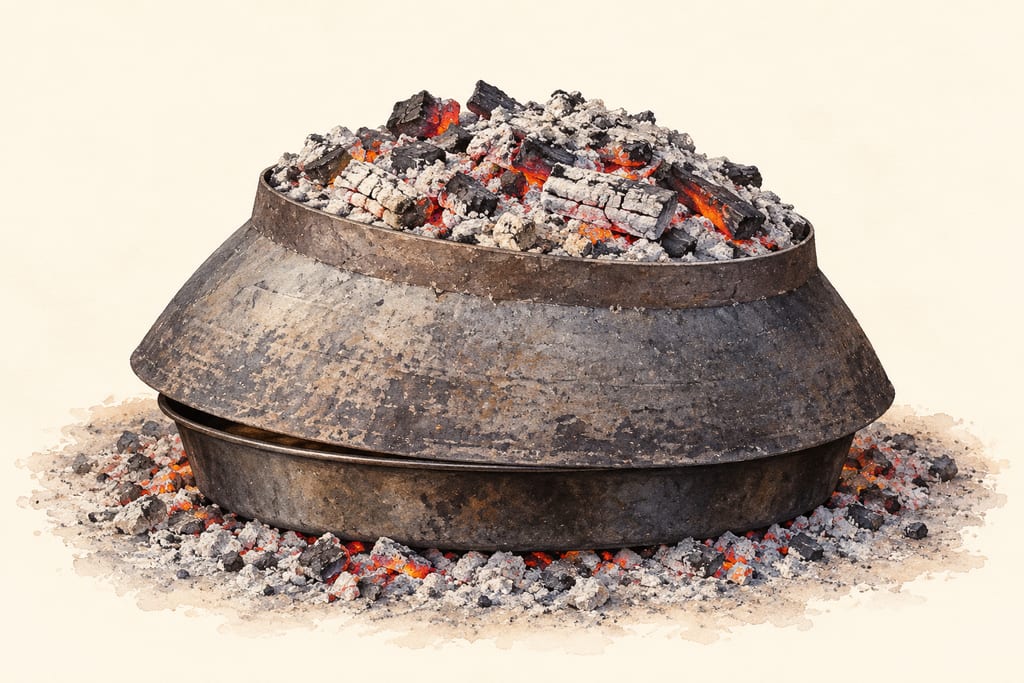
Peka names a family of hearth-baking lids: a domed clay or metal bell carries embers above food. In the later Dinaric assembly, a shallow pan sits beneath the lid, sometimes with a ring to hold coals in place.
 FermenteaWhere food goes to change
Equipment · Jars, pots and crocks
A portable dome and pan used over a hearth, with embers on the lid and heat from below. Regional peka and saç forms share this principle while differing in materials, pan shape and how the food is cooked.
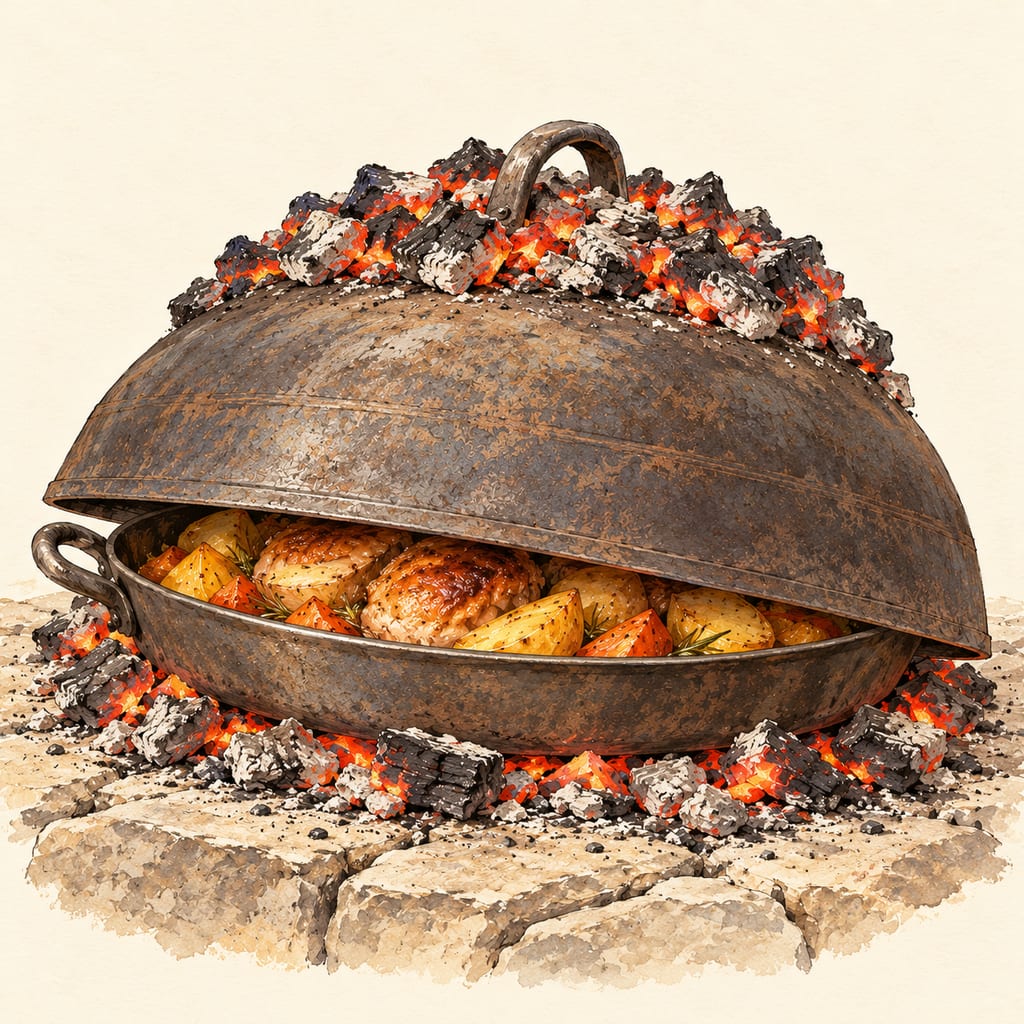
A baking bell is a portable cover used with a shallow pan or baking surface over a hearth. The cook places food below the lid and heats it with embers above and a hot cooking surface beneath. The dome sends heat down onto the upper surface while the pan holds the food and its juices. The design encloses food without turning every regional form into the same standardized pot.
This broad equipment family includes Balkan baking bells called peka or saç. The shape and materials vary. Krka National Park describes clay or iron peka lids and a later Dinaric arrangement with a shallow pan and a rim that helps retain coals. Slow Food describes the iron bell-shaped saç used for flia. Neither account establishes one capacity or set of dimensions for all such covers.
The name peka is used in Dalmatia, where the county tourist board describes baking under the lid as a traditional preparation. Its examples include meat and vegetables, as well as octopus, fish and squid. Krka National Park describes peka in the wider regional history and notes that earlier forms could lack a separate pan, with food cooked on the hearth beneath the lid.
Slow Food places flia or flija in Albanian and Kosovar gastronomy and records related gjomleze around Ohrid and Prespa. These are connected baking practices, not interchangeable recipes. A peka roast often stays covered for a longer bake; flia is made by repeatedly adding and baking thin batter layers.
For flia, a baking tin sits beneath the bell-shaped iron saç, which is covered with burning coal. A thin batter of flour, water and salt is baked, then brushed with cream and covered with another layer. The sequence is repeated, and the Slow Food record gives a total preparation time of two to three hours. Frequent lifting is part of this layered method; it differs from leaving a roast covered for a long interval.
The name of the lid can vary by place, and the way the pan, hearth and cover fit together matters to the process. A source that documents one locality or vessel does not establish the dimensions, fuel or exact timing for another. Use the method belonging to the named local preparation rather than transferring a peka or flia instruction wholesale.
The equipment's main role is to carry heat from embers above and the hearth below. In peka, food cooks beneath the lid; Dalmatian descriptions include seafood as well as meat and vegetables. In flia, the lid is repeatedly moved to bake successive layers. The same broad principle therefore serves both long covered cooking and an opened, layered preparation.
The cited accounts do not establish a general capacity, dimension, maker, market or maintenance schedule for the whole class. The material and design must be identified for the particular bell or pan. Krka National Park reports archaeological examples with clay lids and relays a late Bronze Age interpretation, while noting that clay-versus-iron precedence is uncertain; this supports regional antiquity, not a precise invention date for every bell.
Krka National Park reports peka examples with clay lids at Illyrian archaeological sites and relays a late Bronze Age interpretation attributed to Milovan Gavazzi. The park cautions that it is difficult to tell whether clay or iron lids came first. The evidence does not give a precise invention year for every regional form.
The county tourist board identifies peka as traditional in Dalmatian cuisine; this is a use association, not a universal origin claim.
Slow Food documents flia/flija baked beneath a coal-covered saç in Kosovo.
Slow Food associates flia with Albanian gastronomy.
Slow Food documents related gjomleze in these regions.
Krka National Park reports peka use in the region since ancient times and clay-lidded examples at Illyrian sites; it relays a late Bronze Age interpretation and notes the earliest lid material is uncertain.
Peka names a family of hearth-baking lids: a domed clay or metal bell carries embers above food. In the later Dinaric assembly, a shallow pan sits beneath the lid, sometimes with a ring to hold coals in place.
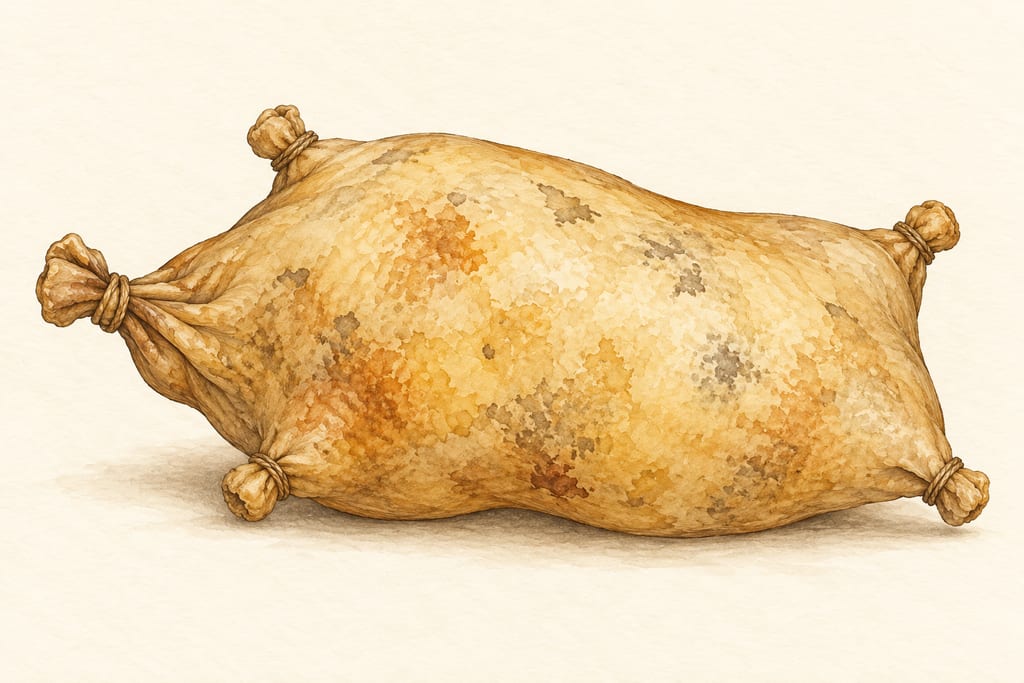
A whole lambskin, prepared as a flexible sack, holds densely packed cheese for ripening as sir iz mišine. The Croatian record locates the tradition in Dalmatia, Velebit and Lika, while its beginnings remain uncertain.
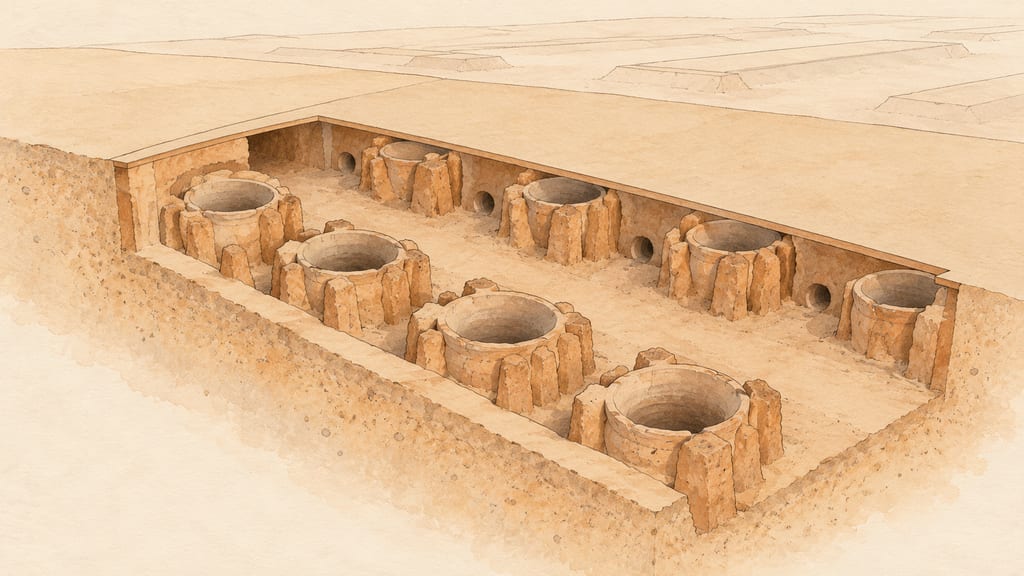
At North Abydos in Egypt, a fixed early Dynastic brewery comprised parallel semi-subterranean installations with rows of ceramic mash vats; excavation reports revise their number, scale and estimated batch capacity.
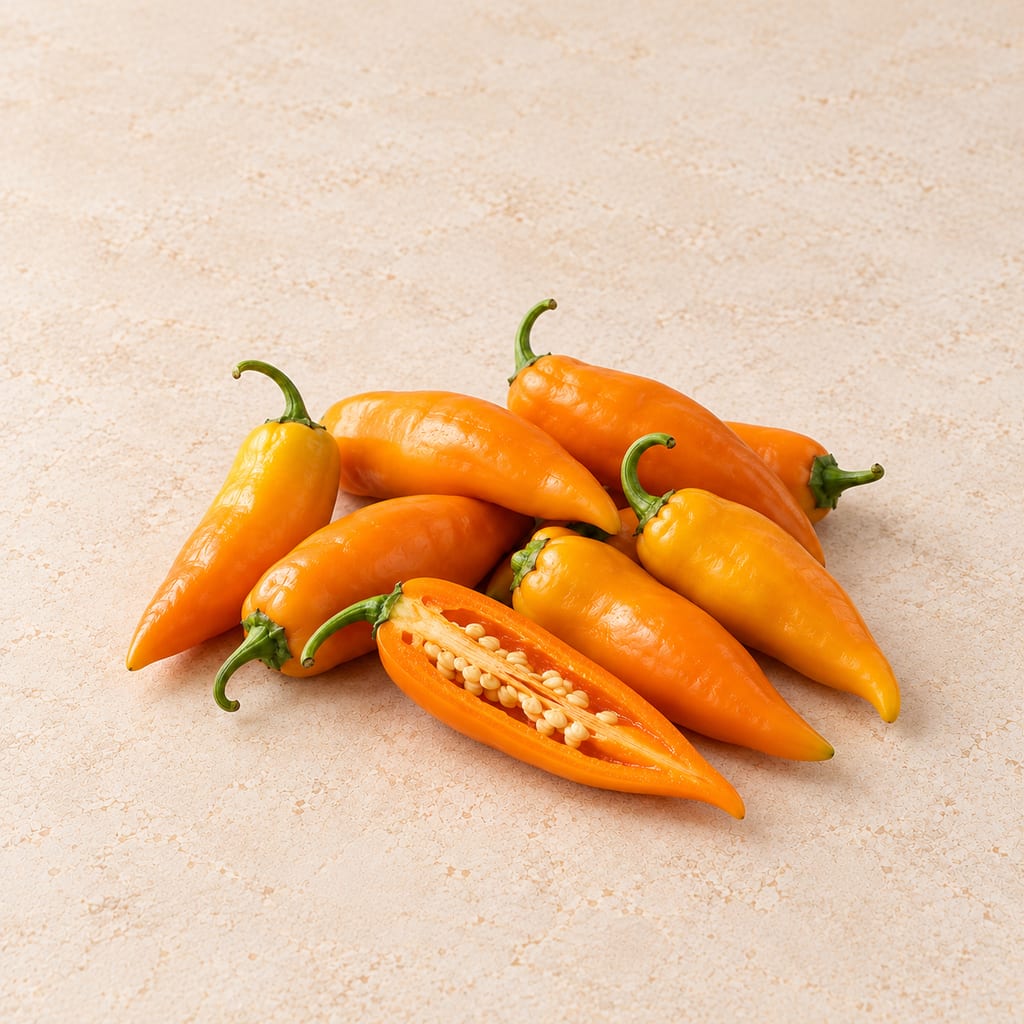
Ají amarillo is the orange-yellow Peruvian chilli cultivar group of Capsicum baccatum, used to colour and season huancaína sauce and ají de gallina. Published heat estimates do not establish one range for the named cultivar.

Toasted almonds are whole sweet almond kernels dry-roasted until golden to brown. Heat replaces their marzipan note with a roasted, nutty one; they thicken and flavour romesco.

Kodiak salmon, halibut and cod cut as seg'aq and hung on an initaq rack to become tamuuq, with kac'amaasaq and kupcuunaq named as different results.

Aniseed is the dried ripe fruit of Pimpinella anisum, an aromatic Apiaceae spice commonly called a seed. It adds a sweet, warm aroma to breads such as Moroccan krachel and South African mosbolletjies, and is distinct from star anise.
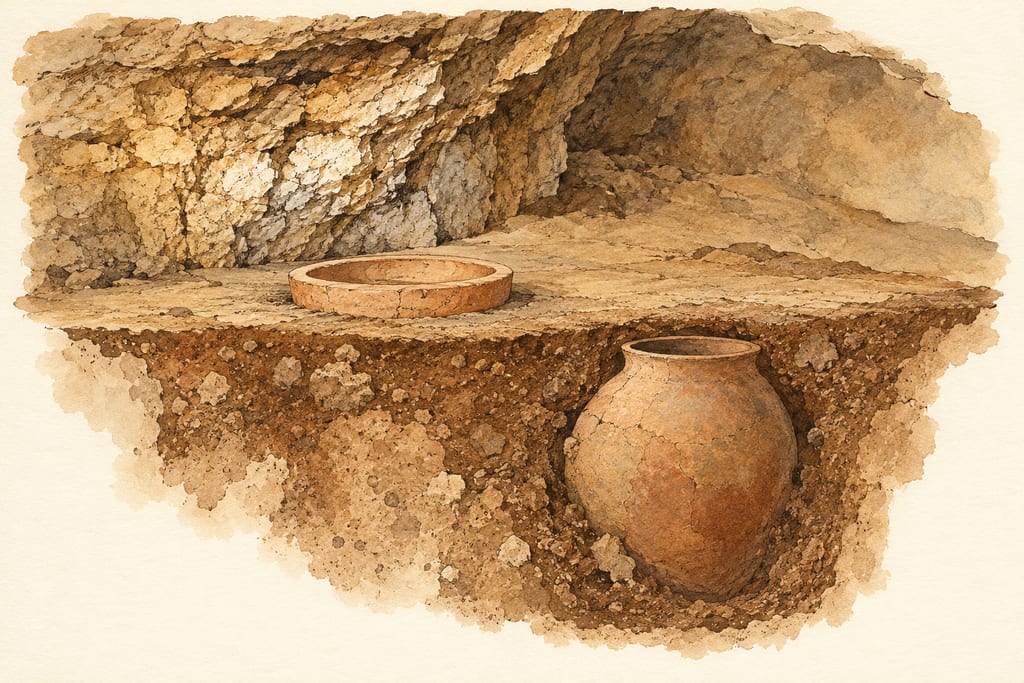
A fixed Late Chalcolithic installation in Areni-1 cave combined a shallow clay pressing basin with a large jar set into the cave floor and storage vessels nearby.

Ripe avocado flesh is the soft, buttery, fat-rich pulp of Persea americana, eaten raw. It is low in acid, so it is a fresh ingredient that needs care in chilled dishes.
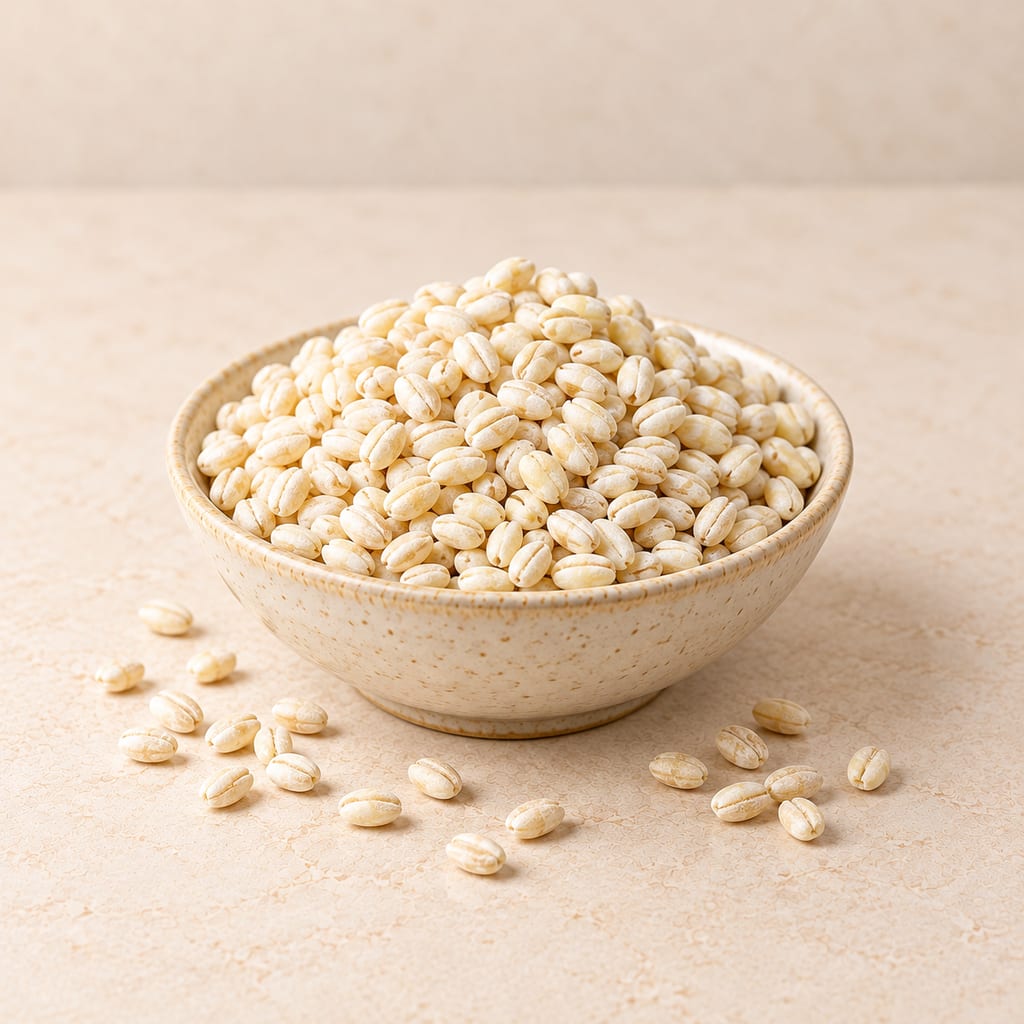
Barley is a hardy cereal, domesticated in the Middle East over 10,000 years ago, eaten whole, pearled or milled, malted for brewing, and grown with koji mold for barley miso.
No community contributions have been published for this entry yet.
Sign in to contribute. Published comments and photos are free to read.
Tourist Board Split-Dalmatia CountyRegional use · Food use
PekaPeka is described as a traditional way to prepare food in Dalmatia.
The tourist board lists meat, vegetables, octopus, fish and squid as foods prepared under peka.
Cited in: Regional names and use; What the records establish
Slow Food FoundationRegional use · Equipment · Method
FliaFlia/flija is associated with Albanian and Kosovar gastronomy and related gjomleze around Ohrid and Prespa.
It is baked under a bell-shaped iron saç covered with burning coal; layers are baked successively over two to three hours.
Cited in: A cover that carries heat; Regional names and use; Layered baking under saç; What the records establish
Krka National ParkHistory · Regional use · Method
PekaThe park reports ancient regional use and clay-lidded archaeological examples, and relays a late Bronze Age interpretation attributed to Milovan Gavazzi.
It says clay-versus-iron precedence is difficult to establish and describes panless and shallow-pan forms.
Cited in: A cover that carries heat; Regional names and use; Layered baking under saç; What the records establish