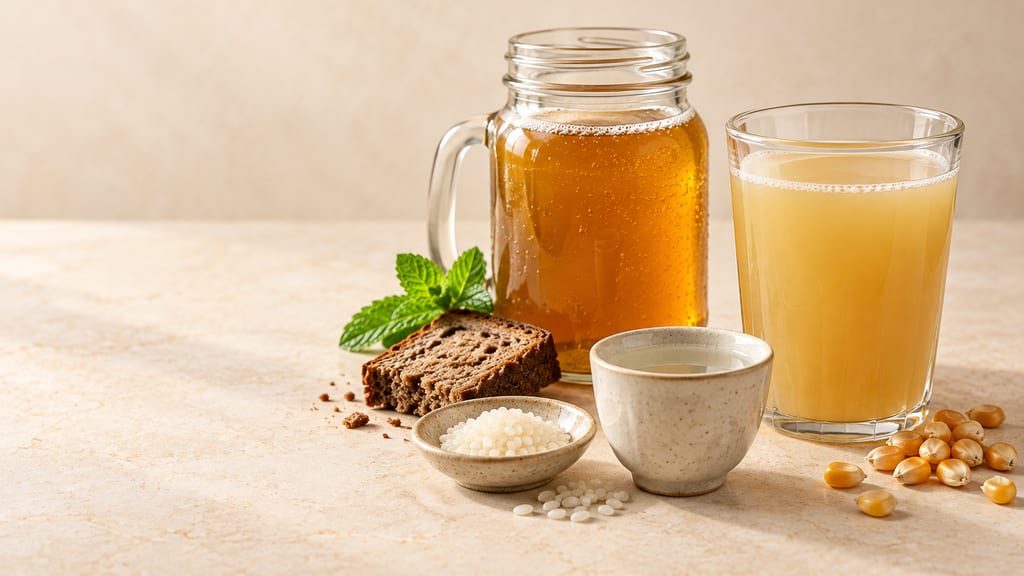
Yeast and the world's fermented drinks
People kept, traded and steered living ferments for thousands of years before anyone saw a yeast cell. This is that history, region by region, and a guide to what a yeast strain is today.
 FermenteaWhere food goes to change
Built structures · Place · Floors, basins and masonry tanks
A fixed Late Chalcolithic installation in Areni-1 cave combined a shallow clay pressing basin with a large jar set into the cave floor and storage vessels nearby.
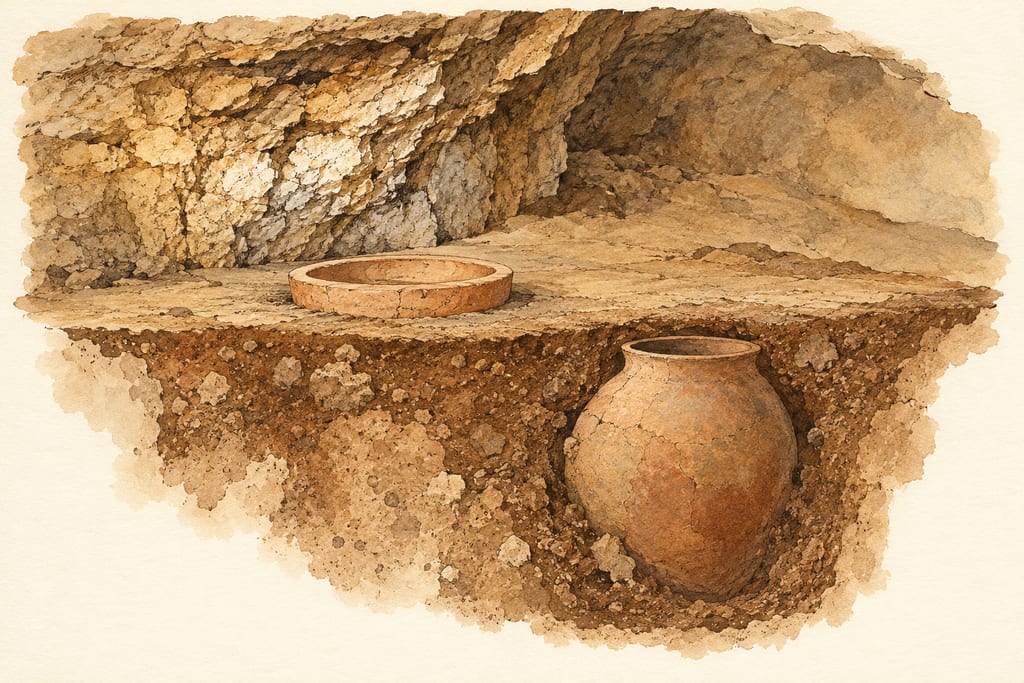
Areni-1 is not one portable wine press. Its archaeological record includes a shallow clay basin, a large jar incorporated into the cave-floor installation, and other vessels nearby. The fixed relation between these features makes the subject a build: it belongs to its cave gallery and cannot be moved as one object.
The cave lies in limestone cliffs of the Arpa River gorge near Areni village, in Armenia's Vayots Dzor region. The cave complex has multiple galleries and a notably dry, stable interior. Archaeological investigations began in 2007. The winemaking installation is associated with a Late Chalcolithic occupation around 4000 BCE. The date is approximate: radiocarbon samples from the basin area span 4223–3790 calibrated BCE, while pottery sherds have been reported in the range 4100–4000 BCE.
The lower-level installation described in the excavation record consisted of a shallow clay tub with the mouth of a large jar at its centre. The authors interpret it as a surface for pressing grapes or berries, with juice flowing into the jar. Desiccated grapes, seeds, skins still attached to stems, and grape rachises were found close by. These remains support the pressing interpretation, but do not recover a complete operating sequence or prove that every nearby vessel served the same step.
A contemporary report describes a shallow hard-packed clay basin with raised edges beside a deep vat buried in the floor. These descriptions differ in the jar's precise relation to the basin. The interpretive illustration therefore shows their shared, well-supported arrangement—a clay press at the surface and a large jar extending underground—without claiming an exact channel, slope or complete reconstructed plan.
The surrounding cave yielded vessels associated with fermentation and storage, drinking cups and grape material. Chemical analysis of pottery sherds detected malvidin, a red plant pigment, adding evidence for wine production when considered with the archaeological and botanical context. The chemical result is not a complete recipe, a yeast identification or a measurement of alcohol strength.
The basin-and-jar arrangement connects pressing, liquid collection and a cave setting within one excavated context. It differs from evidence based only on a residue inside an isolated vessel. The inspected accounts do not provide a complete construction plan: the basin's exact dimensions, jar capacity, prepared ground, clay mixture and all assembly details are not established. This page documents an archaeological feature, not a modern building or winemaking guide.
Areni-1's integrated wine-production installation is associated with a Late Chalcolithic level and dates around 4000 BCE. Radiocarbon samples from the grape-crushing-basin area span 4223–3790 calibrated BCE; the range dates associated samples, not a precise construction year for each feature.
A build is made where it stands: moving it means building it again.
The excavation paper locates the cave about 1.5 km east of Areni village and gives coordinates; UNESCO's Armenian tentative-list submission places it in Vayots Dzor.
People kept, traded and steered living ferments for thousands of years before anyone saw a yeast cell. This is that history, region by region, and a guide to what a yeast strain is today.
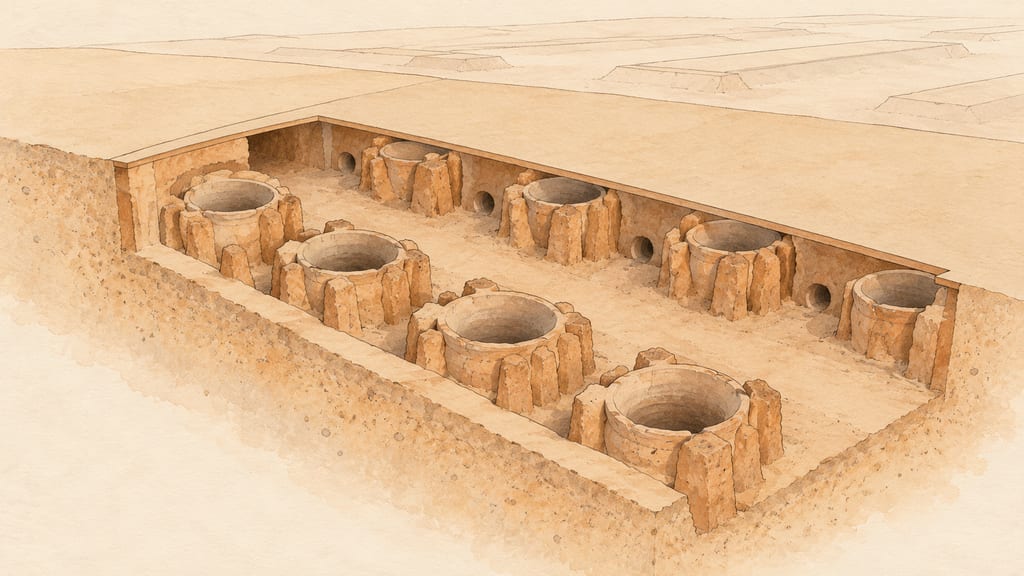
At North Abydos in Egypt, a fixed early Dynastic brewery comprised parallel semi-subterranean installations with rows of ceramic mash vats; excavation reports revise their number, scale and estimated batch capacity.
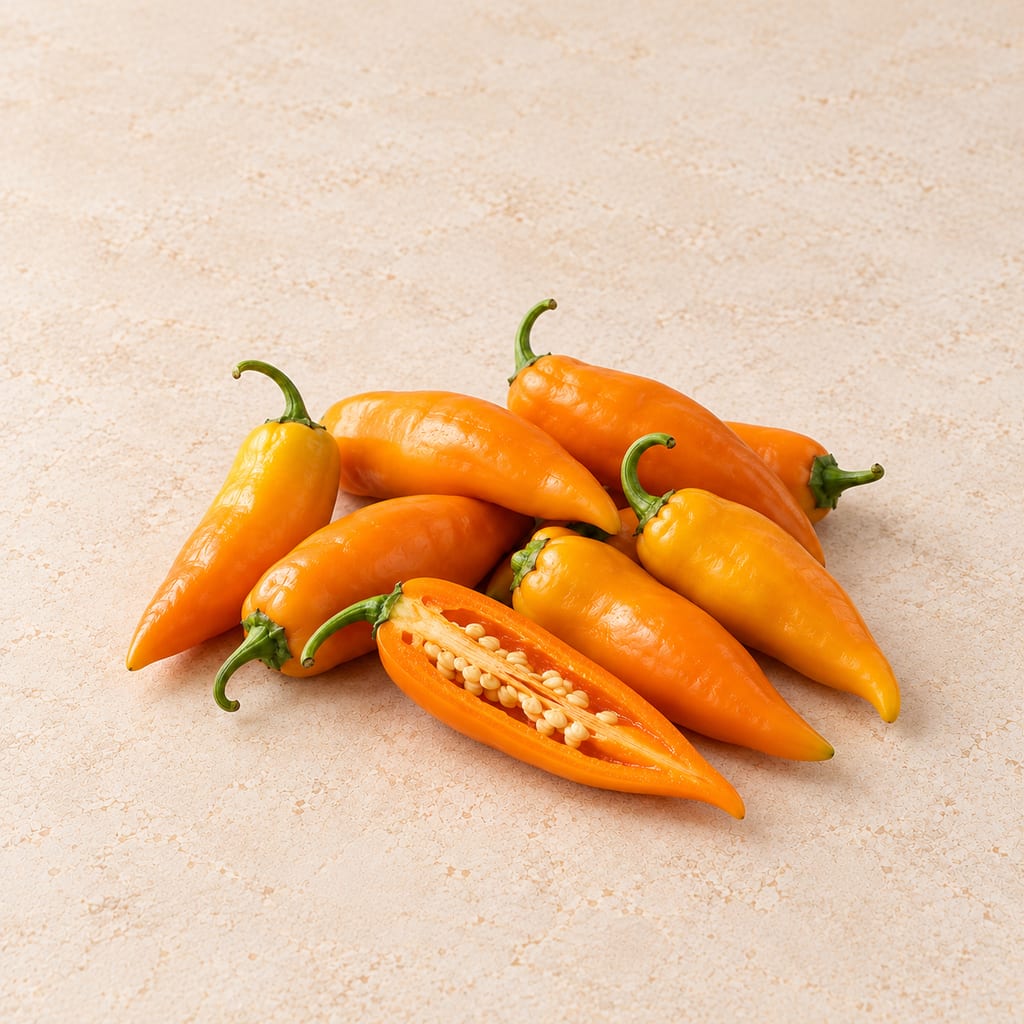
Ají amarillo is the orange-yellow Peruvian chilli cultivar group of Capsicum baccatum, used to colour and season huancaína sauce and ají de gallina. Published heat estimates do not establish one range for the named cultivar.

Toasted almonds are whole sweet almond kernels dry-roasted until golden to brown. Heat replaces their marzipan note with a roasted, nutty one; they thicken and flavour romesco.

Kodiak salmon, halibut and cod cut as seg'aq and hung on an initaq rack to become tamuuq, with kac'amaasaq and kupcuunaq named as different results.

Aniseed is the dried ripe fruit of Pimpinella anisum, an aromatic Apiaceae spice commonly called a seed. It adds a sweet, warm aroma to breads such as Moroccan krachel and South African mosbolletjies, and is distinct from star anise.

Ripe avocado flesh is the soft, buttery, fat-rich pulp of Persea americana, eaten raw. It is low in acid, so it is a fresh ingredient that needs care in chilled dishes.
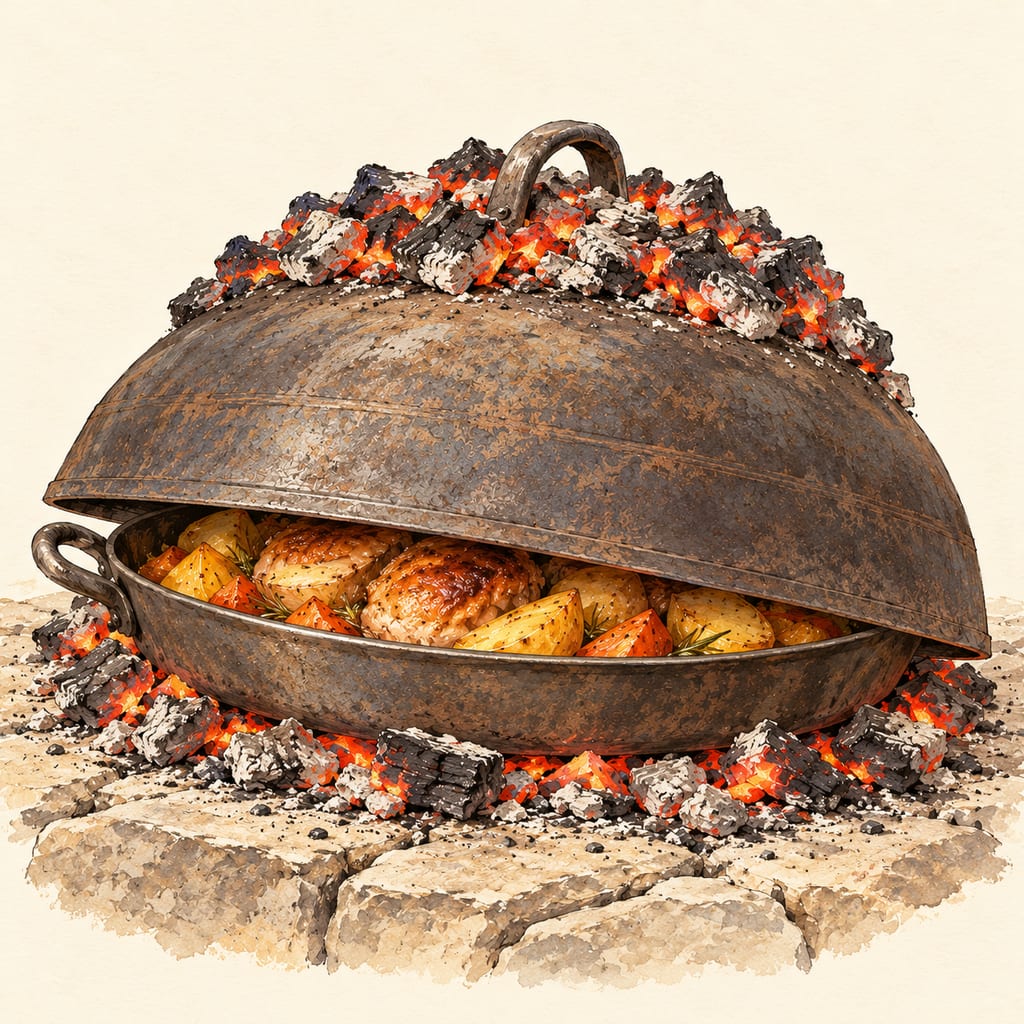
A portable dome and pan used over a hearth, with embers on the lid and heat from below. Regional peka and saç forms share this principle while differing in materials, pan shape and how the food is cooked.
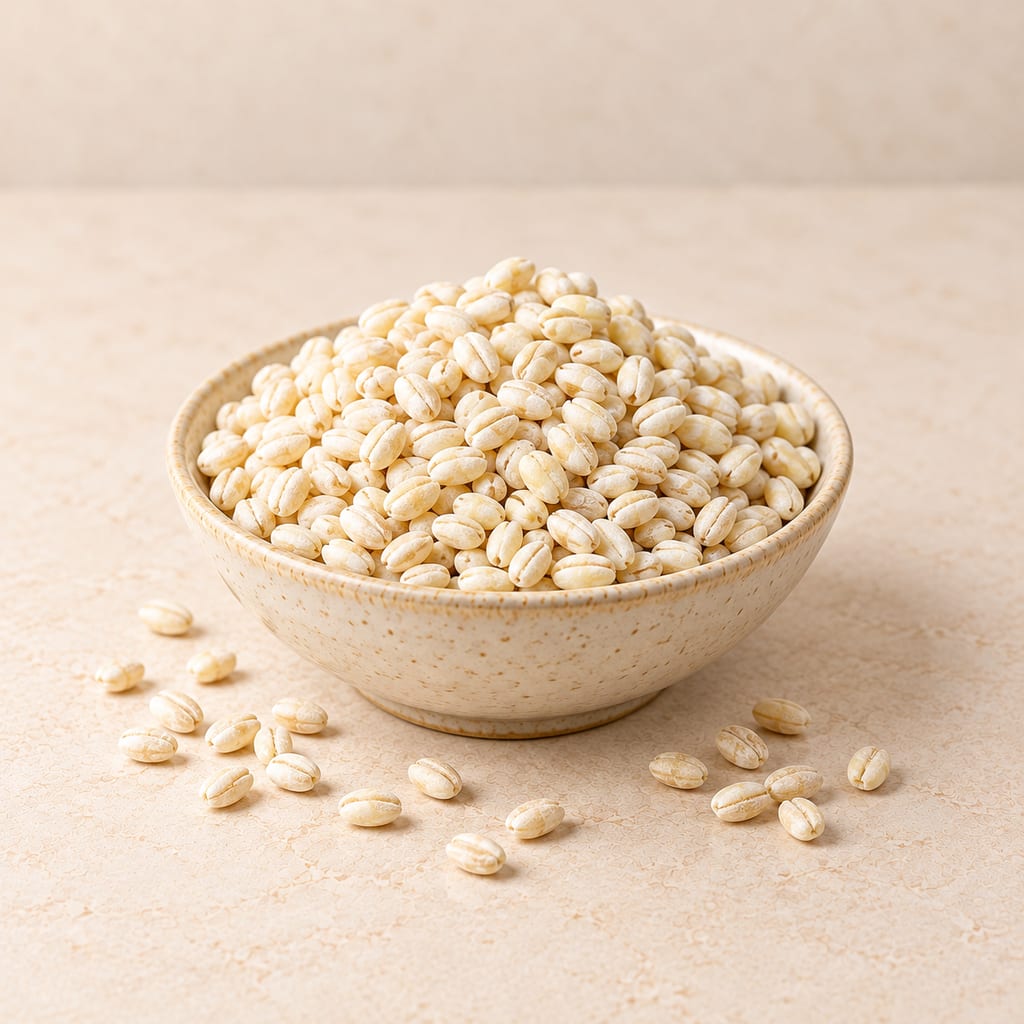
Barley is a hardy cereal, domesticated in the Middle East over 10,000 years ago, eaten whole, pearled or milled, malted for brewing, and grown with koji mold for barley miso.
No community contributions have been published for this entry yet.
Sign in to contribute. Published comments and photos are free to read.
Antiquity Publications Ltd.History · Construction · Geography
The Chalcolithic of the Near East and south-eastern Europe: discoveries and new perspectives from the cave complex Areni-1, ArmeniaLower-level installation: shallow clay tub with the mouth of a large jar at its centre.
Pressing grape or berries and juice collection are interpretations supported by nearby grape remains.
Samples from the basin area date to 4223–3790 cal BC.
The cave is about 1.5 km east of Areni village in Vayots Dzor, Armenia.
Cited in: A winery built into a cave setting; A basin and buried jar in one working place; What the installation establishes
National GeographicHistory · Construction
Earliest Known Winery Found in Armenian CaveArchaeologists completed excavation of a deep buried vat beside a shallow hard-packed clay basin with raised edges.
The article reports sherds dated 4100–4000 BC, grape remains and malvidin.
Juice flowing from press to vat is an interpretation attributed to Gregory Areshian.
Cited in: A winery built into a cave setting; A basin and buried jar in one working place; What the installation establishes
Journal of Archaeological Science 38 (2011), 977–984History
Chemical evidence for wine production around 4000 BCE in the Late Chalcolithic Near Eastern highlandsThe study reports installations and artefacts from Areni-1 dating to around 4000 cal BCE and chemical evidence supporting the hypothesis of wine production.
Cited in: What the installation establishes
UNESCO World Heritage Centre; submitted by the Permanent Delegation of the Republic of Armenia to UNESCOGeography · History
Areni-1 (Birds’) Cave: Prehistoric Life and Winemaking in the Arpa River GorgeThe cave lies in limestone cliffs of the Arpa River gorge in Vayots Dzor, Armenia.
The submission describes an integrated grape press, fermentation vats and storage vessels, dated to the late fifth–early fourth millennium BCE.
The cave setting and preservation conditions are described qualitatively.
Cited in: A winery built into a cave setting; What the installation establishes