In the Kodiak Archipelago, catching fish is only the beginning of preserving it.
Salmon return in seasonal runs, while halibut and cod become available according to their own movements and fishing conditions. A household that can transform these catches into durable food is less dependent on immediate access to the sea or river.
The Alutiiq, also known as Sugpiaq, have developed an extensive vocabulary for this work. These words identify different stages, objects and results of preservation.
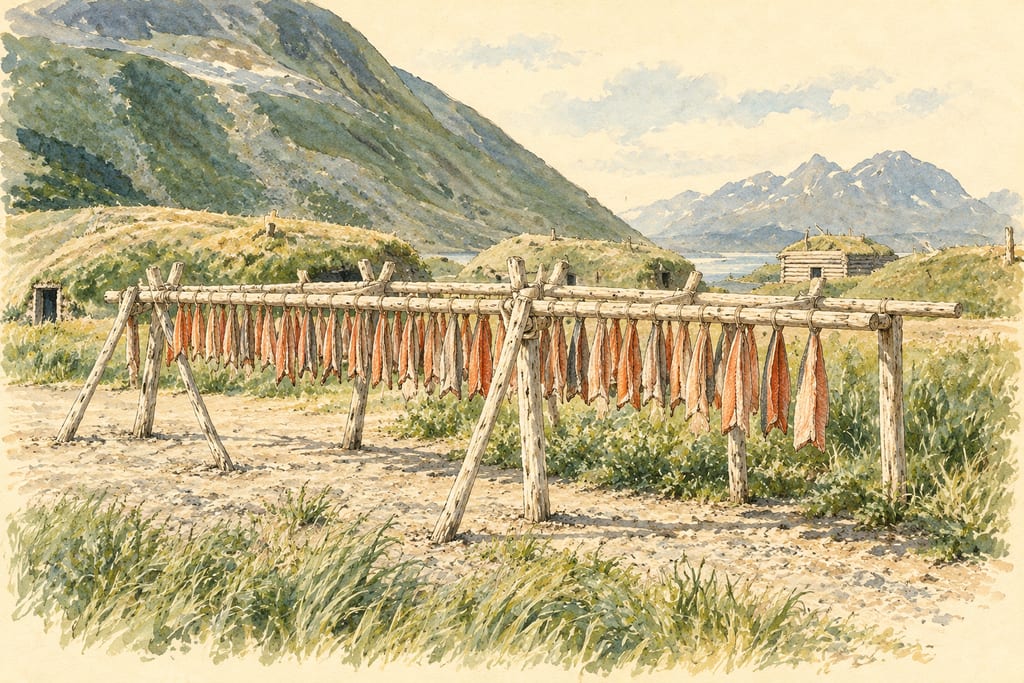
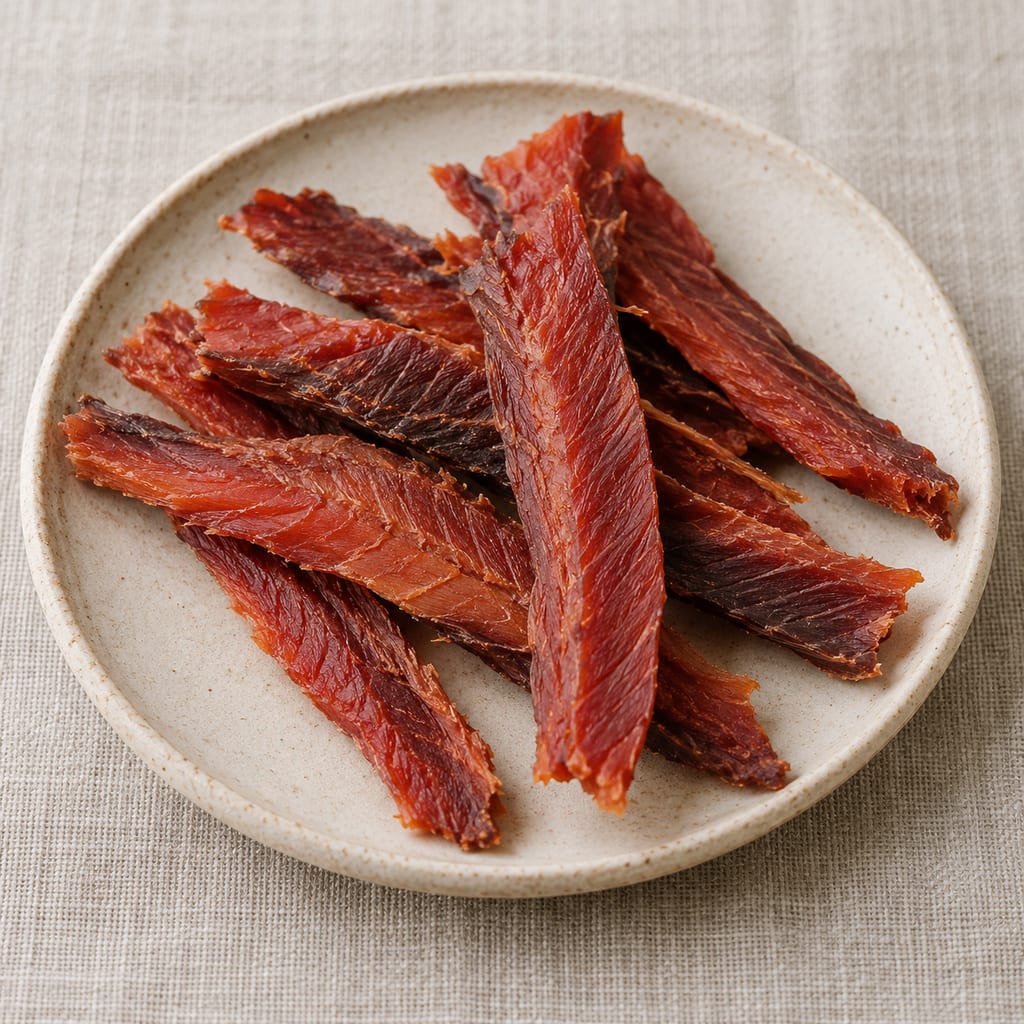
Tamuuq means dry fish. Seg’aq refers to fish cut and prepared for drying. Initaq is the rack used for hanging it.
Another word, kac’amaasaq, refers to a partly dried preparation, while kupcuunaq identifies smoked fish.
These terms are not interchangeable. They record distinctions that would be lost by translating every preparation as salmon jerky.
Tamuuq — Dry fish
Seg’aq — Fish cut or split for drying
Initaq — Hanging rack, including a fish-drying rack
Kac’amaasaq — Partly dried, split fish
Kupcuunaq — Smoked fish
Ulu — A traditional curved cutting tool
The Alutiiq language is written in a Latin-based orthography using letters, apostrophes and other conventions suited to its sounds.
There is no single scientific name for tamuuq because several fish can be dried.
Common salmon include sockeye or red salmon, Oncorhynchus nerka; pink salmon, O. gorbuscha; chum salmon, O. keta; and coho salmon, O. kisutch.
Halibut may include Pacific halibut, Hippoglossus stenolepis, while Pacific cod is Gadus macrocephalus.
The species matters. A salmon fillet, a thin halibut strip and a piece of cod do not dry at identical rates or produce the same texture.
Archaeological evidence from the Kodiak region demonstrates that fish processing was important thousands of years before Russian colonization or the development of the modern fishing industry.
At a site on outer Uganik Island, the Alutiiq Museum describes evidence of cod processing approximately 3,800–3,000 years ago.
Cod bones, cutting equipment and features associated with heating support the interpretation that fish was being processed for later consumption.
The evidence does not establish that every fish was preserved through exactly the same unsalted air-drying procedure used in recent Alutiiq households.
Archaeology can demonstrate the presence of fish, tools, hearths and processing locations more readily than it can identify a precise drying endpoint or reconstruct the amount of smoke involved.
Nevertheless, it establishes an important continuity: fish preservation in this region is not merely a response to European commercial fishing.
A productive salmon season can mean a large number of fish arriving over a short time. The bottleneck is not always catching them; it is processing them before they deteriorate.
Historical records describe women cleaning and splitting very substantial catches.
An Alutiiq account notes that a skilled processor could split more than 200 fish in a day during the height of the salmon season.
For Karluk in the late nineteenth century, a recorded annual processing figure is approximately 100,000 fish among roughly 300 residents.
These figures describe historical activity, not recommended production quotas or evidence that every household processed an equal number.
Alutiiq households may use loose tarps or other roofing materials to shed rain.
They must not be drawn tightly around the rack.
Trapped humid air encourages moisture accumulation and mould growth.
Fishing netting can be used as an outer barrier against small scavengers while permitting air circulation.
The net is not itself the preservation mechanism. It helps protect food being dried by the air.
The museum's historical account describes racks both inside and outside buildings. Archaeological arrangements involving postholes, burned rock and charcoal may indicate indoor drying or heating structures.
Where smoke or fire was involved, the product cannot simply be assumed to be identical to food dried outdoors without heat.
The Alutiiq Museum records a preference in some circumstances for drying leaner pink and chum salmon, while especially oily king salmon may be more suitable for freezing or pickling.
This does not mean every oily fish is impossible to dry. It means fat content affects which preserving method is practical for a particular fish.
Halibut, salmon and cod present different combinations of thickness and moisture.
A fish that feels dry outside may remain inadequately dried within.
Modern water-activity testing provides one way of measuring a critical preservation parameter.
The FDA identifies 0.85 or below as an important water-activity threshold for controlling pathogenic microbial growth and toxin production in shelf-stable dried seafood.
That is not a historical measurement of tamuuq. The Alutiiq museum accounts do not provide tested water-activity values for the documented fish.
One of the most useful contributions of Alutiiq terminology is the clear distinction between preservation endpoints and methods.
Tamuuq describes dry fish.
Kac’amaasaq identifies partly dried fish. A partly dried product retains more moisture and cannot automatically be treated as having the storage characteristics of fully dried fish.
Kupcuunaq means smoked fish.
Smoking may contribute flavour and deposit antimicrobial compounds on the surface, but its safety effect depends on the complete process.
Smoked fish may also have been salted, brined, air-dried or heat-treated.
The words therefore identify different results even when some individual production stages overlap.
A modern article should not merge them into one generic recipe.
Safety: what historical practice does and does not establish
Fish drying without added salt can be hazardous when attempted under unsuitable conditions.
The CDC identifies some unsalted dried fish and traditionally fermented fish among foods associated with botulism in Alaska.
The risk is particularly serious because botulinum toxin is not reliably identified by taste, smell or appearance.
Changing traditional practices in ways that trap moisture, raise temperature or reduce airflow can create dangerous conditions.
Similarly, copying an approximate number of drying days from Kodiak into a different climate is not an adequate safety plan.
No exact universal salt percentage, drying temperature, water-activity endpoint or rack spacing is supplied in the Alutiiq word-of-the-week descriptions.
Those gaps must not be filled with invented specifications.
Families in Kodiak and surrounding communities continue to prepare dried fish, adapting equipment and storage where appropriate while maintaining important skills and food preferences.
The language preserves relationships between stages of processing: a fish becomes seg’aq when prepared for hanging, is suspended on an initaq, and may eventually become tamuuq.
These distinctions help explain why the food is best understood as a complete technology rather than an isolated finished ingredient.
The fish, the cut, the rack, the weather and the people tending it are all part of the process.
Archaeological evidence from the Kodiak region shows that fish processing was important thousands of years before Russian colonisation or the modern fishing industry. At a site on outer Uganik Island, the Alutiiq Museum describes evidence of cod processing approximately 3,800 to 3,000 years ago, with cod bones, cutting equipment and features associated with heating supporting the interpretation that fish was being processed for later consumption. That evidence does not establish that every fish was preserved through exactly the same unsalted air-drying procedure used in recent Alutiiq households: archaeology can show fish, tools, hearths and processing locations more readily than a precise drying endpoint or the amount of smoke involved.
An 1889 photograph from Old Harbor records lengthy racks beside houses bearing large quantities of hanging fish, direct visual evidence of the practice at a particular time and place. Families in Kodiak and surrounding communities continue to prepare dried fish today.
Ingredients
Scaling: source batch only
SalmonRemove the head, backbone and ribs, leaving two fillets joined at the tail, and make deep angled cuts across the flesh.
Amount not stated
The museum accounts describe household practice, not a measured batch.
Halibut (optional)Cut into thin strips.
Amount not stated
One of the fish the sources record as dried; an alternative to salmon rather than an addition.
Pacific cod (optional)Clean and split promptly.
Amount not stated
One of the fish the sources record as dried; an alternative to salmon rather than an addition.
Method
Risks and precautions · High risk
Clostridium botulinum in unsalted dried fish
The CDC identifies some unsalted dried fish and traditionally fermented fish among foods associated with botulism in Alaska, and botulinum toxin is not reliably identified by taste, smell or appearance.
Hazard source
Incomplete drying inside thick flesh
The outside may look finished before the interior has reached appropriate conditions, and moisture deep inside thick flesh must still migrate outward.
Hazard source
Trapped humidity, mould and scavengers
Rain and trapped humidity prevent sufficient moisture loss, an overly tight tarp makes conditions worse despite keeping rain off, and insects and scavengers contaminate fish unless racks are monitored.
Hazard source
Fat oxidation in oily fish
Salmon fat can oxidise when exposed to air, heat and light, producing stale, bitter or rancid flavours; this is a chemical quality problem rather than visible microbial growth.
Hazard source
Water activity for shelf-stable dried seafood
Control source
Shed rain with loose roofing rather than enclosing the rack, so humid air is not trapped around the fish
Control source
No exact salt percentage, drying temperature, water-activity endpoint or rack spacing is supplied in the Alutiiq word-of-the-week descriptions, and those gaps must not be filled with invented specifications.
Changing traditional practice in ways that trap moisture, raise temperature or reduce airflow can create dangerous conditions.
A traditional product name alone does not establish that a particular batch is shelf-stable at room temperature; modern households may refrigerate or freeze dry fish.
Choose suitable fish. The species and condition of the catch matter.
Clean and split promptly. Remove unwanted internal organs and prepare the fish before deterioration advances.
Score where appropriate. Angled cuts increase exposed surface area.
Hang by the tail. Fish are draped over a wooden rail, with the connected tail supporting the two sides.
Adjust to rain and sunshine. A particularly interesting practice concerns the orientation of the fillets.
Continue drying and assess the product. The Alutiiq Museum records approximately three weeks for drying salmon in one account.
Store and use. Properly dried fish was historically kept for later meals, carried during travel and incorporated into a household's preserved-food supplies.
Places
Kodiak Archipelago
Traditional preparation · Region evidence
The archipelago and neighbouring Alutiiq communities where the practice is documented.
A recorded annual processing figure of approximately 100,000 fish among roughly 300 residents; a record of activity, not of a method unique to this village.
An Alutiiq initaq is a wooden hanging rack for air-drying fish around Kodiak. An 1889 Old Harbor photograph shows an open rail structure; the Alutiiq Museum documents contemporary spruce-pole or lumber racks and airflow-preserving covers.
Salmon opened, scored and hung on roofed racks in the dry canyon winds of the Fraser River: slhíts'es in Stó:lō documentation, sts'wan in St'át'imc records.
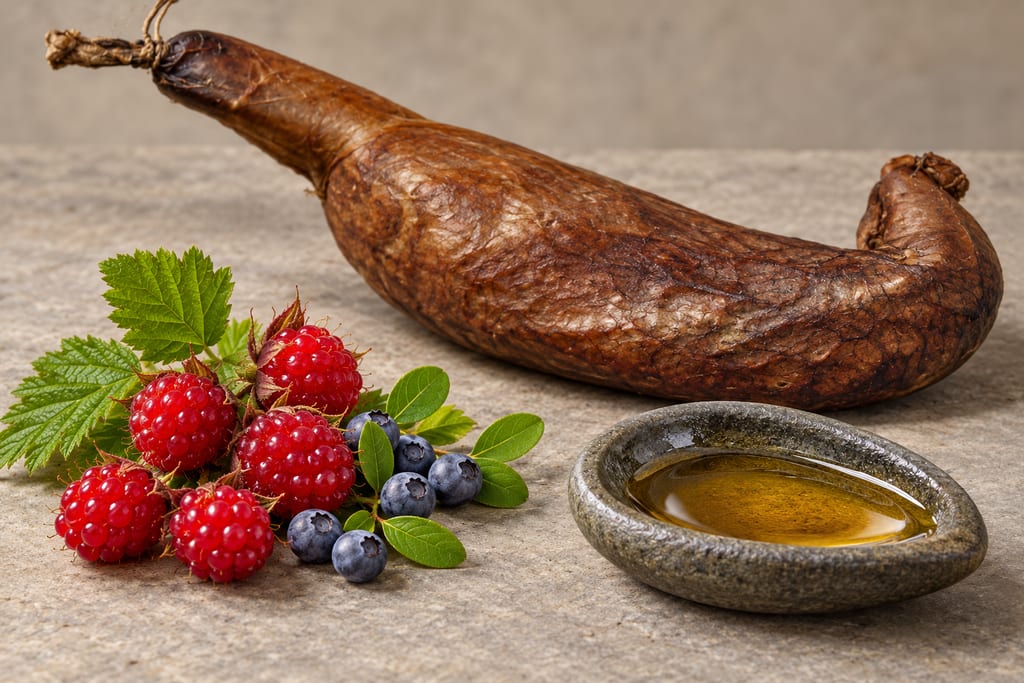
Berries, greens and fish eggs were kept in seal oil by Indigenous Alaskan communities. The oil seals the food from air, and the result depends on preparation and the surrounding conditions.
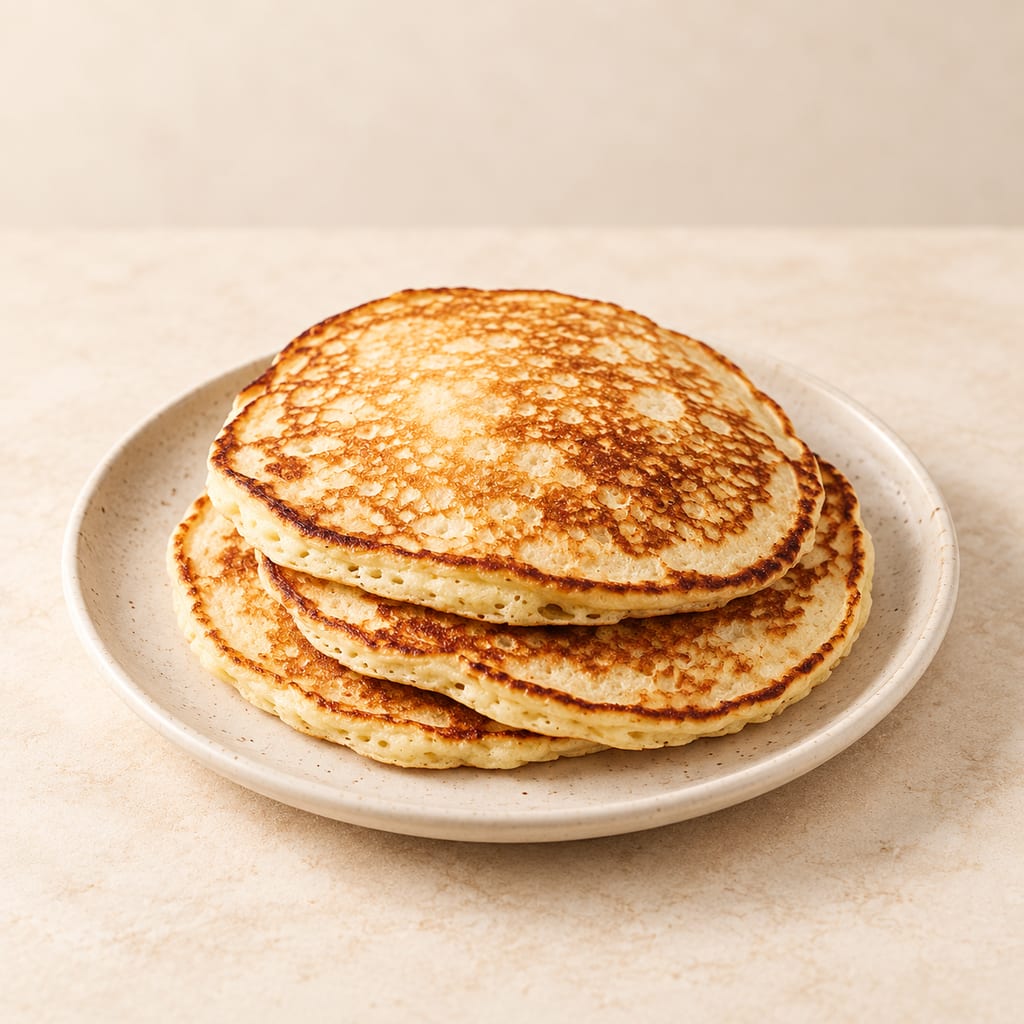
Buttermilk, flour and sourdough discard rest overnight before eggs and baking soda turn the sponge into a griddle batter. The finished pancakes are tender and lightly tangy.
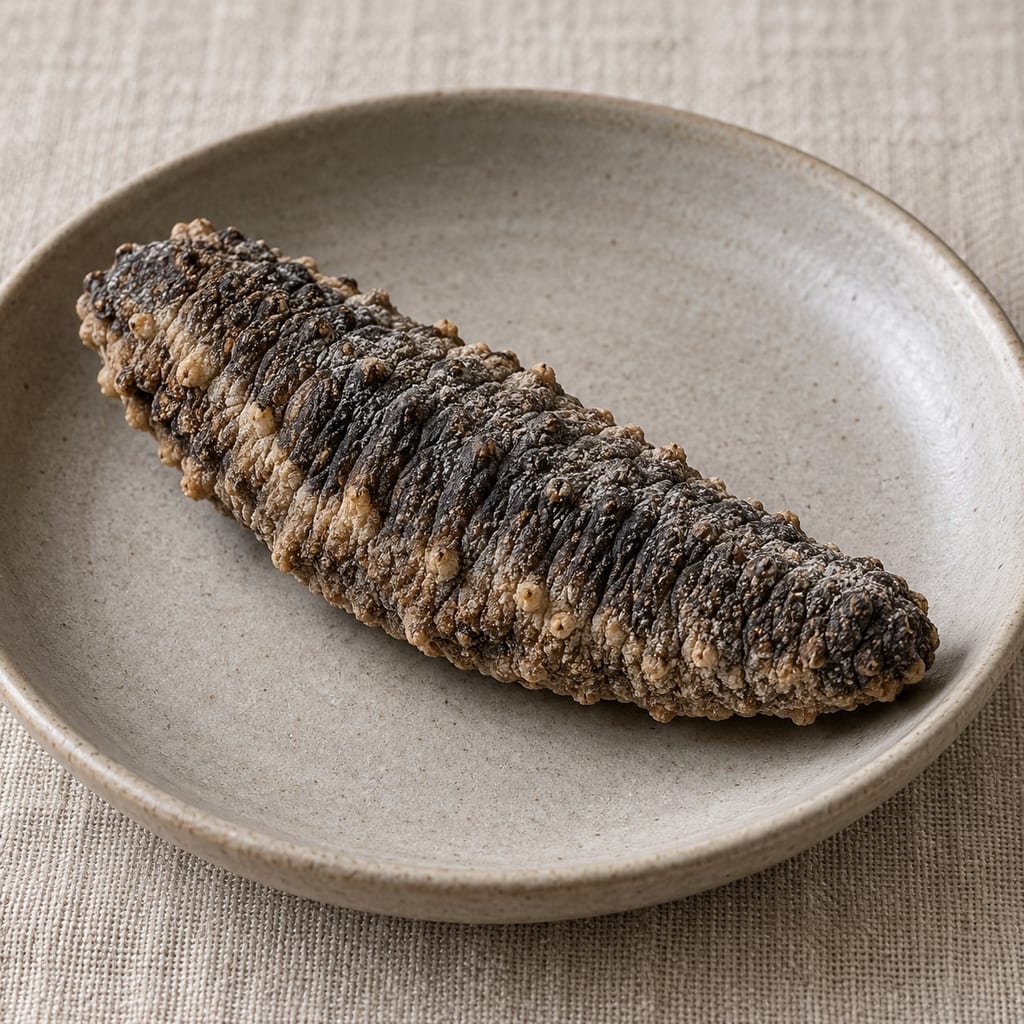
Sea cucumber cleaned, boiled and dried, sometimes with smoke, into a long-keeping trade product; Makassan processing in Arnhem Land is documented from at least the eighteenth century.
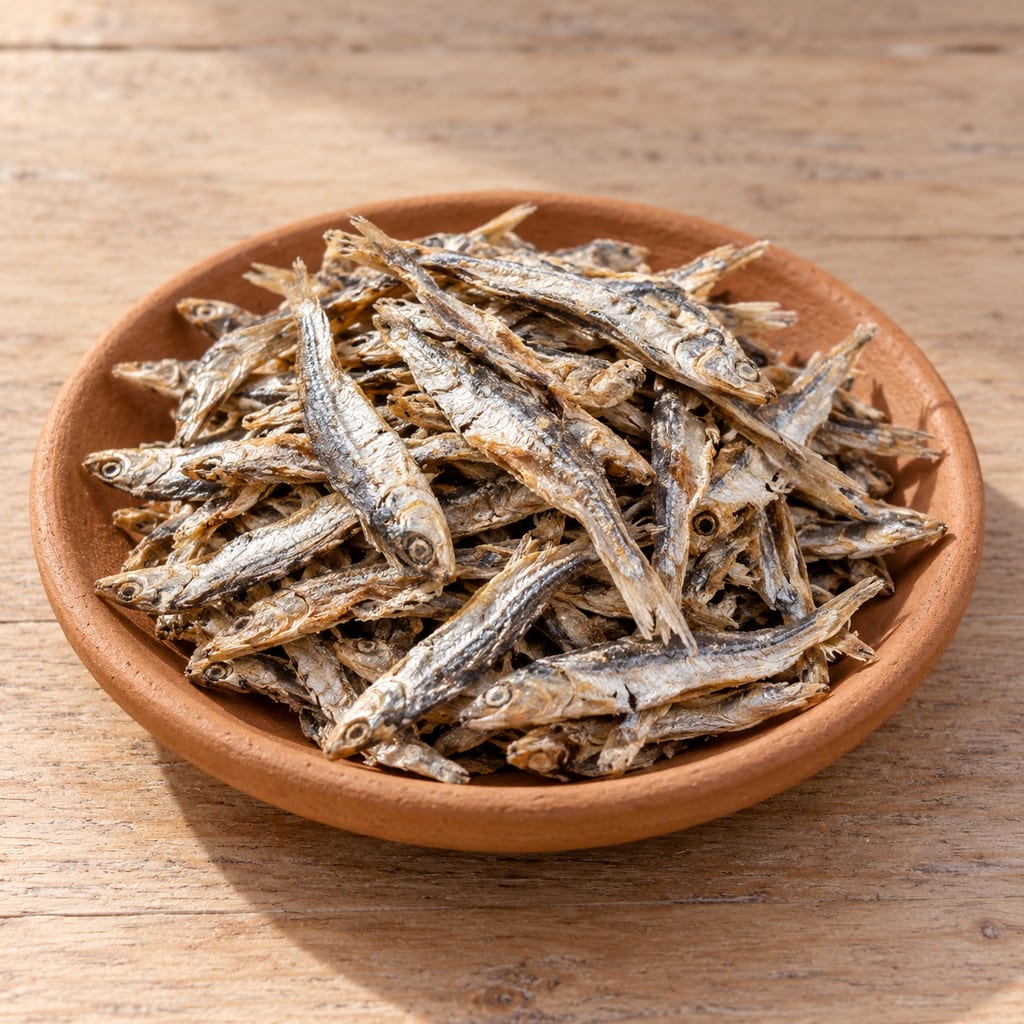
Anchoveta salted, drained of sanguaza and sun-dried on sand or stones at Caleta de Carquín, a technique declared part of Peru's cultural heritage in 2016.
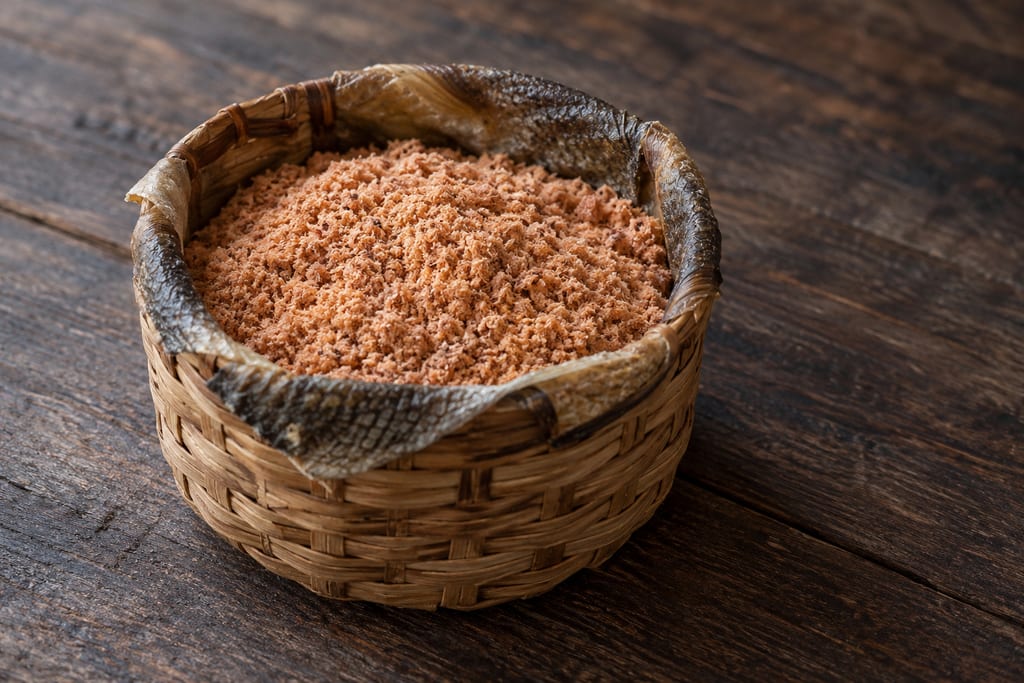
Dried salmon broken down, pounded to a meal and pressed into grass baskets lined with fish skin: the compact trade food of Celilo Falls and The Dalles.
Greenlandic capelin dried whole on rocks, among crowberry vegetation or on buildings, and the microbial research that has made this small fish unusually well studied.
Small central-Mexican lake silversides, Chirostoma spp., dried whole and sometimes salted, then fried, roasted or simmered into Lenten tortitas and snacks.
Cod split, salted and dried on flakes until hard, a long-keeping fish that must be desalted and rehydrated before use; the salting and the extensive drying together make it portable where light salting or partial drying does not.
Koobi is Ghanaian salted and dried tilapia. Sources differ on the brief ripening stage and drying period, and do not establish a single validated household process. This entry records documented variants and their limits.
Izu Islands fish cured by repeated immersion in a maintained microbial brine, then dried. The reused brine, not drying alone, is what defines the product.
At North Abydos in Egypt, a fixed early Dynastic brewery comprised parallel semi-subterranean installations with rows of ceramic mash vats; excavation reports revise their number, scale and estimated batch capacity.
Ají amarillo is the orange-yellow Peruvian chilli cultivar group of Capsicum baccatum, used to colour and season huancaína sauce and ají de gallina. Published heat estimates do not establish one range for the named cultivar.
Toasted almonds are whole sweet almond kernels dry-roasted until golden to brown. Heat replaces their marzipan note with a roasted, nutty one; they thicken and flavour romesco.
Aniseed is the dried ripe fruit of Pimpinella anisum, an aromatic Apiaceae spice commonly called a seed. It adds a sweet, warm aroma to breads such as Moroccan krachel and South African mosbolletjies, and is distinct from star anise.
A fixed Late Chalcolithic installation in Areni-1 cave combined a shallow clay pressing basin with a large jar set into the cave floor and storage vessels nearby.
Ripe avocado flesh is the soft, buttery, fat-rich pulp of Persea americana, eaten raw. It is low in acid, so it is a fresh ingredient that needs care in chilled dishes.
A portable dome and pan used over a hearth, with embers on the lid and heat from below. Regional peka and saç forms share this principle while differing in materials, pan shape and how the food is cooked.
Barley is a hardy cereal, domesticated in the Middle East over 10,000 years ago, eaten whole, pearled or milled, malted for brewing, and grown with koji mold for barley miso.
Community
No community contributions have been published for this entry yet.
Share what you made
Sign in to contribute. Published comments and photos are free to read.
Approximately three weeks for drying salmon in one account, and approximately ten days for thin halibut pieces in suitable conditions
A preference in some circumstances for drying leaner pink and chum salmon, while especially oily king salmon may be more suitable for freezing or pickling
Fish drying beneath protective netting on Afognak Island
Sea-mammal oil as a traditional accompaniment for dipping dry fish
Cited in: The fish that feeds a household beyond summer; Seasonal subsistence; The work of preparing seg’aq; Why the anatomy matters; The stages of making tamuuq; 1. Choose suitable fish; 2. Clean and split promptly; 3. Score where appropriate; 4. Hang by the tail; 5. Adjust to rain and sunshine; 6. Continue drying and assess the product; 7. Store and use; The biology of drying fish; Water activity versus dryness; Fat and rancidity; Tamuuq, kac’amaasaq and kupcuunaq; How tamuuq is eaten; Identifying problems; A living preservation tradition
Accessed 2026-10-27
Alutiiq Museum and Archaeological RepositoryMethod · History
Initaq is the rack used for hanging fish, built from upright supports and a horizontal rail
An 1889 photograph from Old Harbor records lengthy racks beside houses bearing large quantities of hanging fish
Racks both inside and outside buildings, with postholes, burned rock and charcoal suggesting indoor drying or heating structures
Loose tarps that shed rain without being drawn tightly around the rack, and fishing netting as an outer barrier against small scavengers
Cited in: The fish that feeds a household beyond summer; Seasonal subsistence; The initaq: a rack designed around the weather; Protecting without sealing; The stages of making tamuuq; Identifying problems; A living preservation tradition
Accessed 2026-10-27
Alutiiq Museum and Archaeological RepositoryMethod · Classification
At a site on outer Uganik Island, evidence of cod processing approximately 3,800 to 3,000 years ago, with cod bones, cutting equipment and features associated with heating
Cited in: An older history than commercial salting
Accessed 2026-10-27
Alutiiq Museum and Archaeological RepositoryClassification
Some unsalted dried fish and traditionally fermented fish are among foods associated with botulism in Alaska, and botulinum toxin is not reliably identified by taste, smell or appearance
Cited in: Safety: what historical practice does and does not establish
Water activity of 0.85 or below as an important threshold for controlling pathogenic microbial growth and toxin production in shelf-stable dried seafood
Cited in: The biology of drying fish; Water activity versus dryness; Safety: what historical practice does and does not establish