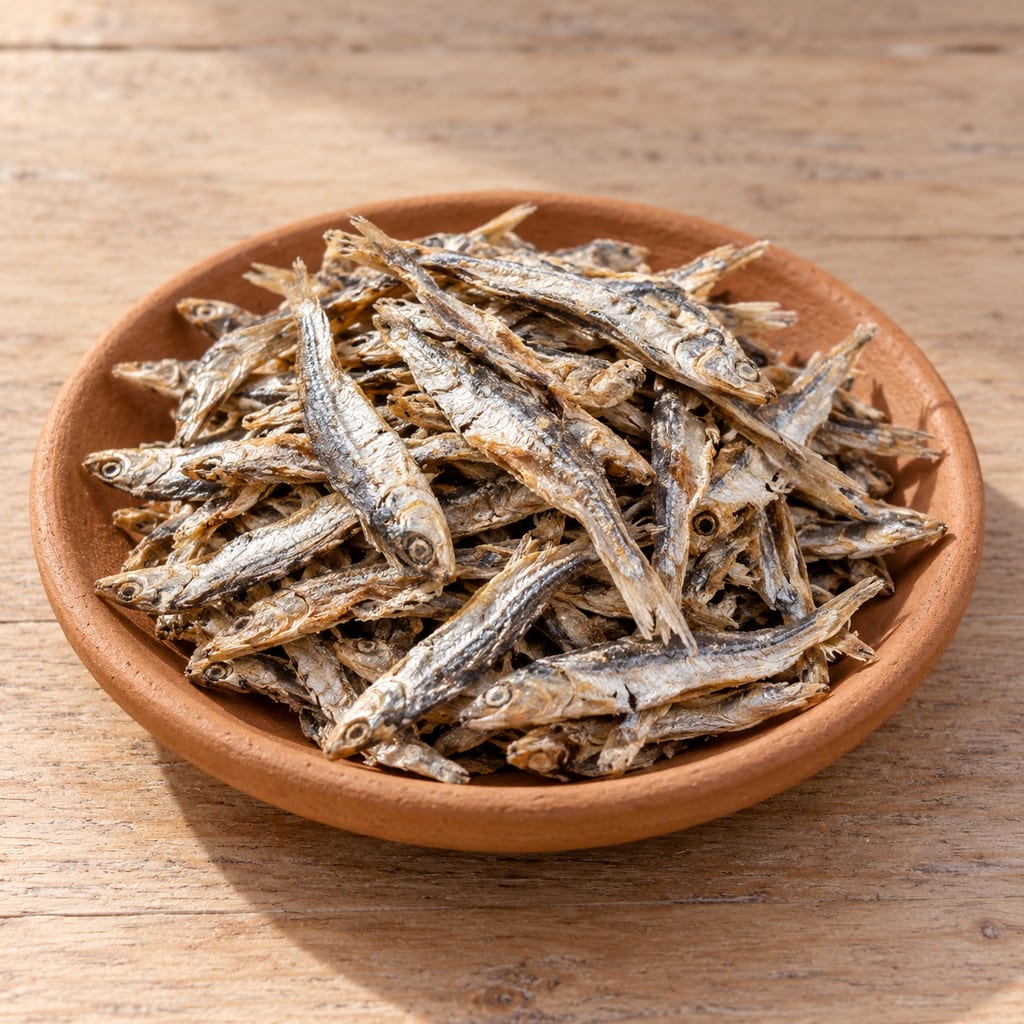
Carquín dried anchoveta
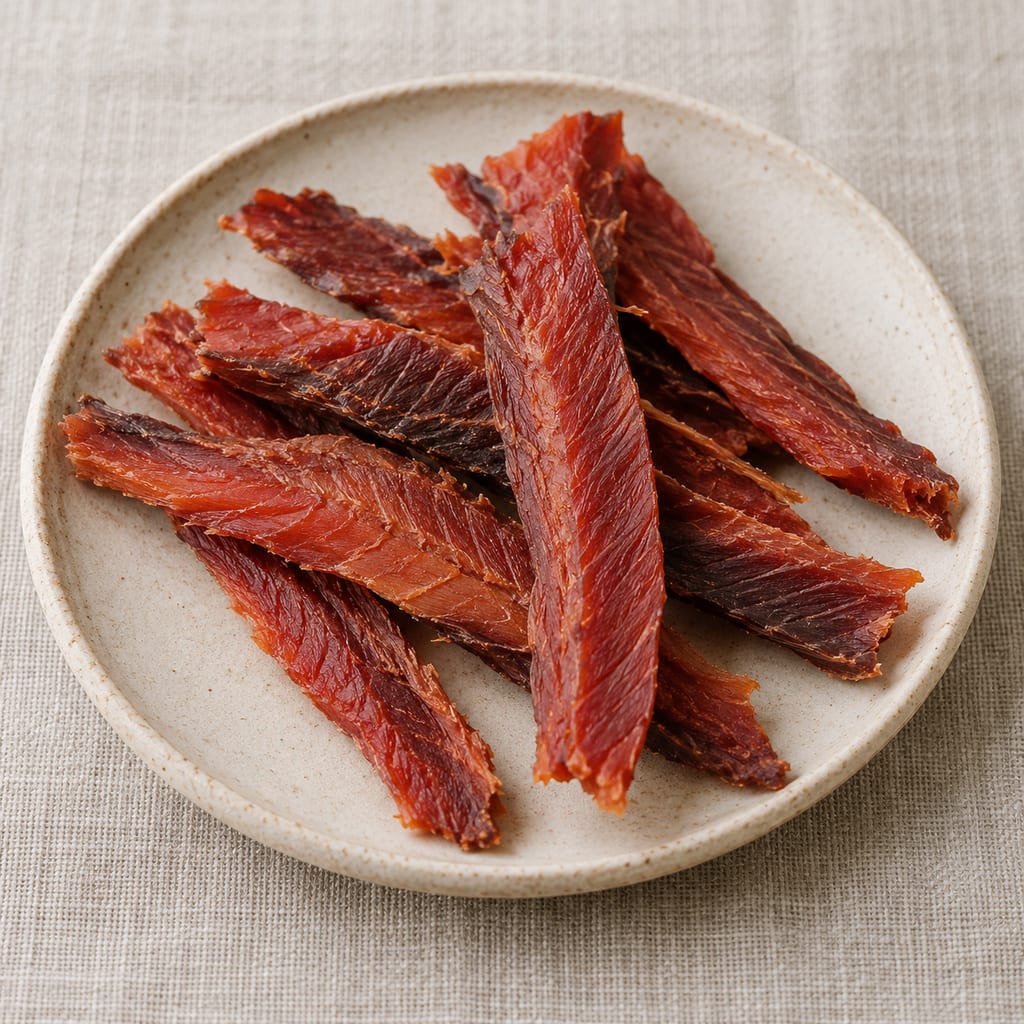
Anchoveta salted, drained of sanguaza and sun-dried on sand or stones at Caleta de Carquín, a technique declared part of Peru's cultural heritage in 2016.
 FermenteaWhere food goes to change
Traditional method
Charales secos · Charales secos · Charal seco · Dried charal · Charales dorados
Small central-Mexican lake silversides, Chirostoma spp., dried whole and sometimes salted, then fried, roasted or simmered into Lenten tortitas and snacks.
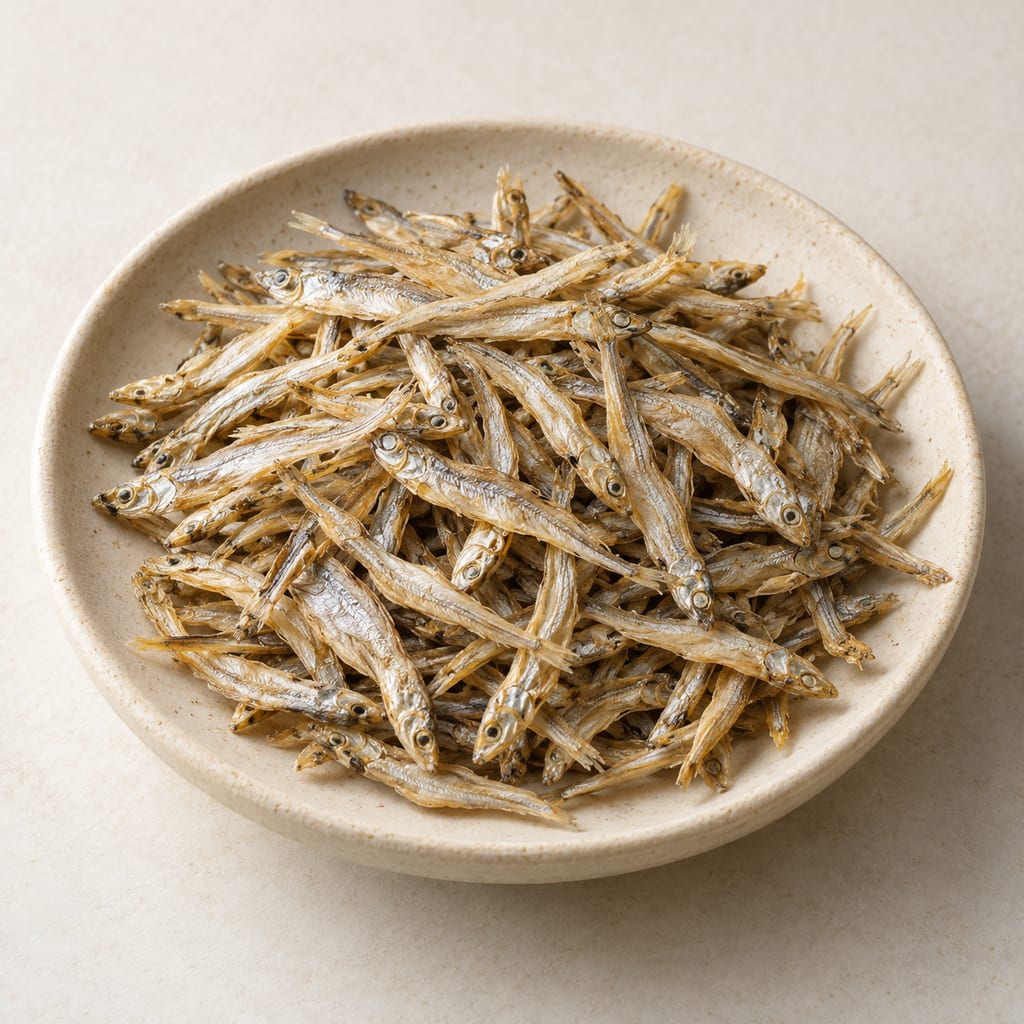
Charales are small freshwater fish that have been part of the food culture of central Mexico for generations.
They may be eaten fresh, dried, roasted, fried, incorporated into tamales or cooked in sauces. Their small bodies and distinctive silvery appearance make them recognisable in markets and regional cooking.
The name charal does not identify one single species.
It is commonly applied to small silverside fishes associated with the genus Chirostoma and related taxa in the family Atherinopsidae.
One scientifically documented species is Chirostoma patzcuaro, the Pátzcuaro silverside. Other Chirostoma species and some fish placed within Menidia under alternative classifications are also relevant to the wider commercial and biological group.
It is therefore more accurate to write charales, Chirostoma spp., than to claim that every dried charal sold in Mexico belongs to one species.
Charal — Mexican Spanish — Small freshwater silverside
Charales — Mexican Spanish, plural — Small lake silversides sold as food
Charales secos — Spanish — Dried charales
Charales dorados — Spanish — Fried or crisped charales
Tortitas de charales — Spanish — Charal-and-egg patties
Tortitas de charal seco — Spanish — Patties using dried charales
Pescado blanco — Mexican Spanish — Larger related silversides, not automatically the same product
Charales must not be confused with marine anchovies, although both may be small fish used in dried preparations.
Their freshwater ecology, history and culinary geography are different.
Charales are especially associated with inland waters such as Lake Chapala and Lake Pátzcuaro.
These are not interchangeable fisheries.
Lake Chapala lies largely within Jalisco and is Mexico's largest freshwater lake by surface area. It has long supported communities whose livelihoods include fishing and agriculture.
Lake Pátzcuaro in Michoacán is associated with Indigenous Purépecha culture and distinctive lake fisheries.
Charales are also documented in parts of the State of Mexico and other central Mexican waters.
Their habitats include lakes with changing water levels, water quality and ecological conditions.
Charales represent a source of protein and, when consumed whole with bones, dietary minerals.
They are also economically important to fishing communities.
Their small size makes them accessible as a low-cost snack or an ingredient used to stretch a meal with vegetables, eggs and maize-based foods.
Different preparations can create very different textures.
Fresh charales may be delicate. Drying concentrates the flesh. Frying can produce an especially crisp result.
The combination explains why charales appear in market snacks as well as more substantial cooked dishes.
Small freshwater fish have been eaten in central Mexico since before European colonization.
Government descriptions identify charales as a longstanding food in regional Mexican cuisines.
However, an exact year for the invention of dried charales is not documented.
Nor should every contemporary egg-and-charal recipe be attributed unchanged to pre-Hispanic times.
The introduction and spread of domestic chicken eggs, for example, belong to a different historical period from the original Indigenous lake-fishing traditions.
A responsible history distinguishes the older importance of freshwater fish from the later development of particular dishes incorporating new ingredients.
A particularly valuable source is the Recetario coca de Mezcala, Jalisco, published by Mexico's Ministry of Culture in 2017.
The cookbook documents food practices of the Indigenous Coca community of Mezcala on Lake Chapala.
It contains preparations for dried charales, charal roe, roasted charales and other regional foods.
This is stronger evidence than a generic commercial recipe because it places the food within a named community and its seasonal calendar.
The book also documents the community's struggle to maintain its territory, fishing traditions and cultural identity.
Its account should not be treated as a universal recipe book for all Mexican silversides. It is specifically grounded in Mezcala.
The family Atherinopsidae includes New World silversides, generally small to medium-sized fishes with an elongated body and a conspicuous silvery band along the side.
Some species live in freshwater, while others occupy coastal or estuarine environments.
The Mexican charales discussed here are principally inland-water fishes.
Several taxonomic names have changed or been disputed over time, particularly in the relationship between Chirostoma and Menidia.
This creates problems for food databases.
A market label may say only charales secos without identifying the species.
That is adequate for a familiar culinary category but insufficient for a precise biological record.
For an ingredient database, the best practice is to record the common food name and the available scientific identification separately.
Where the exact species is unknown, it should remain unknown.
The principal preserving technique is dehydration.
Small fish are cleaned or otherwise prepared according to the local method, then dried under suitable conditions.
Some products may also be salted.
The sources establish that dried charales are widely consumed but do not provide one universally validated traditional manufacturing procedure with exact salt percentage, drying temperature and final water activity.
Those values should not be fabricated.
Charales are harvested from freshwater lakes and other inland fishing areas.
Their small size affects the equipment and handling arrangements used by fishermen.
In a successful fishing period, quantities of small fish may be landed together.
They require prompt handling because they can deteriorate rapidly.
Fish may be separated by size and quality.
Some culinary preparations use small fish largely intact. Others remove heads or other parts.
This difference matters for the final food.
Whole fish can provide a crisp texture after frying, while a more extensively cleaned product may be easier to incorporate into cooked dishes.
Salt may be used for flavour and preservation.
When applied, it draws out water and begins diffusing into the muscle.
The rate depends on the fish's size, preparation and the surrounding conditions.
Not every dried charal sold in Mexico should automatically be described as heavily salt-cured.
Some products are simply presented as dried fish, with additional seasoning applied during cooking or serving.
Water is removed through exposure to suitable air or controlled drying equipment.
Because the fish are small, the distance from the centre of the muscle to the exposed surface is shorter than in large fillets.
This can favour faster moisture loss, but the process still depends on temperature, humidity, airflow and how densely the fish are arranged.
A crowded layer can trap moisture.
The sources consulted do not establish one universal number of drying hours or days for traditional charales.
Dried fish must be protected from humidity, insects and other contamination.
The fact that the fish are small does not eliminate these requirements.
A dry-looking surface is not proof of microbiological safety.
Dried charales may be toasted, fried or incorporated into dishes.
Some recipes soak or soften them before mixing with egg or cooking in sauce.
This final cooking stage changes both texture and flavour.
Drying removes moisture and increases the relative concentration of protein, minerals and other solids.
When small dried fish are fried or toasted, their surfaces can become crisp as the remaining water is driven off.
The bones of very small fish may become sufficiently brittle or tender to eat as part of the finished preparation, depending on species, size and cooking.
That whole-fish consumption contributes to their reputation as a mineral-rich food.
The crispness is produced principally by moisture loss and subsequent heat treatment, not by fermentation.
Frying can produce browned aromas through reactions involving proteins and other compounds on the surface.
The fish's natural flavour becomes concentrated during dehydration.
Chilli, lime, garlic and salt can then contribute contrasting acidity, heat and savouriness.
This is why a simple plate of fried charales can be strongly flavoured without a complicated sauce.
One of the most characteristic preparations combines dried charales with beaten egg to form small patties.
The patties are fried and often finished in a sauce.
A 2026 Mexican agriculture-ministry description identifies tortitas de charal en salsa verde con nopales as a classic use of dried fish.
The combination is familiar throughout parts of central Mexico, but sauces and accompaniments vary regionally.
The Recetario coca de Mezcala records a preparation called tortitas o albóndigas de charal seco.
Its ingredients are:
- Eggs - Dried charales - Tomato - Nopales
The book describes beating the eggs, incorporating approximately five or six charales into the forming patties, frying them in oil, then finishing the patties in a tomato broth containing nopales.
The exact number refers to this documented way of forming individual pieces; it is not an industrial ratio or a universal portion size.
The source does not give weights for every ingredient.
A key detail is that the patties should not be stirred vigorously while simmering because they can break apart.
Egg proteins coagulate during cooking, binding the small fish together.
Frying firms and browns the exterior.
Finishing in sauce allows the patties to absorb additional flavour and moisture.
The nopales contribute their distinctive texture and vegetal flavour.
This combination transforms a concentrated dried ingredient into a larger, more substantial meal.
The Mezcala version uses dried charales in egg patties finished in a tomato-based broth with nopales.
It is particularly associated with the spring season and Lent.
The community cookbook places the dish within the seasonal availability of fish and other ingredients.
Another well-known variation uses salsa verde made with tomatillos and green chillies.
The fried patties are placed into the sauce and may be accompanied by nopales.
This differs from the tomato-broth version in flavour and acidity, but the underlying preparation is closely related.
Both belong on the same article page as variations of tortitas de charales.
The Diccionario enciclopédico de la Gastronomía Mexicana describes versions served in tomato broth with chipotle or other chillies.
The ingredient identity remains the same: dried charales bound into patties, then cooked or served with a seasoned sauce.
The same gastronomic dictionary records a related preparation in Campeche called tsaquitos or tortillas de charal.
These may be served with pickled red onion or tomato sauce.
It is a valuable regional connection, although the dictionary's entry does not establish that every Campeche preparation uses exactly the same species of charal as those caught in central Mexican lakes.
In Jalisco and elsewhere, charales may be fried until crisp, then seasoned with lime, salt and chilli.
They are often eaten as a snack or included in tacos.
This is a simpler culinary use than egg patties, but it depends on the same small fish.
Charales also appear in tamales.
A Mexican cultural-tourism recipe describes combining fish with onion, garlic, coriander and dried chillies, wrapping the mixture in maize leaves and steaming it.
That recipe gives ? kg of charales, two onions, three garlic cloves, three tablespoons of chopped coriander, three dried chillies and two bundles of maize leaves.
Those figures belong to that specific published recipe.
They should not be copied into the tortitas recipe, which has different ingredients and preparation.
Other regional uses include soups, roasted charales and preparations with beans.
The diversity shows how a small preserved fish can function as a snack, a main ingredient or a source of concentrated flavour.
Dried charales are particularly associated with Cuaresma, or Lent, in some Mexican regions.
The Mezcala cookbook describes the spring season as a time when charal availability and the community's food practices change.
Its account also discusses charal roe, which may be eaten fresh or preserved.
During periods when fresh charales are less available, dried fish becomes useful.
This is a classic function of preservation: the stored food bridges a period when obtaining the fresh ingredient is difficult.
The association with Lent is also cultural and religious, reflecting the place of fish in meals where meat may be avoided.
However, not every charal dish is exclusively a Lenten food.
Crisp charales are eaten as ordinary snacks and market foods at other times.
The Mezcala cookbook also records hueva de charal, or charal roe.
It can be prepared separately from the adult fish and, in some traditions, dried for later use.
The roe may subsequently be rehydrated and cooked.
This is a distinct ingredient, although it belongs within the same wider charal food culture.
Roe presents different preservation challenges from small whole fish.
Its moisture content, delicate structure and susceptibility to spoilage require appropriate handling.
The community source documents the culinary practice but does not supply a scientifically validated drying procedure for modern home use.
Charal roe should therefore be linked as a related ingredient, rather than merged into the dried-fish manufacturing instructions.
If the egg mixture is insufficiently set before simmering, the patties can disintegrate.
Rough stirring can also break them.
Allow the patties to firm during frying and handle them gently in the sauce.
Some purchased dried products may contain significant salt.
Check the product's preparation directions and assess its saltiness before adding further seasoning.
Do not assume every dried-charal product has the same cure.
Poor storage can lead to oxidation and undesirable flavour.
Discard products with clear signs of deterioration.
Dried fish can absorb moisture from the environment.
Damp packaging, condensation, mould or insect contamination are signs that storage conditions have failed.
Do not rely on another round of frying to rescue a visibly spoiled product.
There are two separate safety concerns with charales.
The first is normal fish-handling and preservation safety.
Poor drying, contamination, unsuitable storage and improper cooking can create foodborne illness risks.
For commercially shelf-stable dried fish, water activity is an important control. The FDA's general threshold of 0.85 or below is relevant, but no such validated endpoint is given for every traditional Mexican charal method described here.
The second issue concerns the ecological condition of the source lake.
Fish harvested from contaminated waters may carry hazards that drying or frying does not remove.
Heavy metals and some environmental contaminants are not destroyed by ordinary cooking.
The precise risk depends on the species, lake, contaminant and relevant testing results.
No unsupported claim should be made that charales from every Mexican lake have the same contaminant levels.
Consumers should buy from reputable suppliers who can identify the source of the fish.
Charales are under pressure in some central Mexican lakes.
A 2025 scientific account highlighted several threats, including introduced species, contamination and changes in lake ecosystems.
Common carp, Cyprinus carpio, is one introduced species associated with ecological pressures on native fish communities.
Introduced fish may compete for food or habitat, prey on smaller fish or bring parasites and disease.
Water pollution can affect reproduction and survival.
Fishing pressure also matters, but declining charal populations cannot be explained exclusively by overharvesting.
A regional food depends on the survival of the species and ecosystem that produce it.
If lake populations decline, local households may lose access to fish that previously formed a familiar part of their diet.
Imported or farmed substitutes may not be biologically identical to local species.
This creates a direct link between environmental management and culinary heritage.
Conserving charales is therefore not only an ecological question.
It also means preserving fishing knowledge, family cooking practices and foods associated with particular lakes and communities.
Mexico continues to produce charales for consumption.
Government figures released in February 2026 reported 356 tonnes of farmed charales in preliminary 2025 production data.
That is a reported aquaculture figure, not a measure of total wild catch or a population estimate for every species.
Aquaculture may contribute to availability, but its sustainability depends on species identification, disease control, water quality and genetic management.
An ingredient database should distinguish farmed and wild charales where that information is known.
It should also avoid using the generic name charal to obscure the identity of threatened or locally restricted fish species.
Dried charales demonstrate that the world's preserved-fish traditions are not confined to coastal waters.
In the lakes of central Mexico, small freshwater fish became ingredients capable of being stored and transformed into a remarkably varied cuisine.
They can be fried as crisp snacks, bound with egg into patties, cooked in sauces or incorporated into tamales.
The same ingredient links Indigenous lake economies, household food preservation, Catholic Lenten customs and contemporary street food.
Their history also illustrates why a preservation reference should record both a food's cultural name and its biological identity.
One market name may cover multiple fish species, and those species may have very different conservation needs.
Charales are small fish, but their story belongs to an entire landscape of lakes, fishing communities and regional cooking.
Small freshwater fish have been eaten in central Mexico since before European colonization, and government descriptions identify charales as a longstanding food in regional Mexican cuisines. An exact year for the invention of dried charales is not documented, and no contemporary egg-and-charal recipe should be attributed unchanged to pre-Hispanic times: the introduction and spread of domestic chicken eggs belong to a different historical period from the original Indigenous lake-fishing traditions.
A particularly valuable source is the Recetario coca de Mezcala, Jalisco, published by Mexico's Ministry of Culture in 2017, which documents the food practices of the Indigenous Coca community of Mezcala on Lake Chapala, including preparations for dried charales, charal roe and roasted charales. It places the food within a named community and its seasonal calendar, and it also documents that community's struggle to maintain its territory, fishing traditions and cultural identity. Its account is specifically grounded in Mezcala rather than a universal recipe book for all Mexican silversides.
Scaling: source batch only
Ordinary fish-handling and preservation failures can create foodborne illness risks, and no validated endpoint is given for the traditional Mexican methods described.
Hazard sourceFish harvested from contaminated waters may carry hazards that drying or frying does not remove; heavy metals and some environmental contaminants are not destroyed by ordinary cooking.
Hazard sourceA dried product that becomes damp in storage can deteriorate, and a crowded drying layer can trap moisture in the first place.
Hazard sourceWater activity for commercially shelf-stable dried fish
Control sourceBuy from reputable suppliers who can identify the source of the fish
Control sourceNo validated water-activity endpoint is given for any of the traditional Mexican charal methods described here.
The precise contaminant risk depends on the species, lake, contaminant and relevant testing results; no claim should be made that charales from every Mexican lake have the same contaminant levels.
The Mezcala cookbook documents charal roe as a culinary practice but supplies no validated drying procedure for modern home use.
A state-level association recorded by the Mezcala cookbook and the regional sauce variations.
The Coca community whose cookbook documents the dried-charal preparations; coordinates are not given by the source.
Lake Pátzcuaro and its fisheries are associated with Indigenous Purépecha culture; a state-level association.
One of the states the sources name for charal cooking; a state-level association.
Anchoveta salted, drained of sanguaza and sun-dried on sand or stones at Caleta de Carquín, a technique declared part of Peru's cultural heritage in 2016.
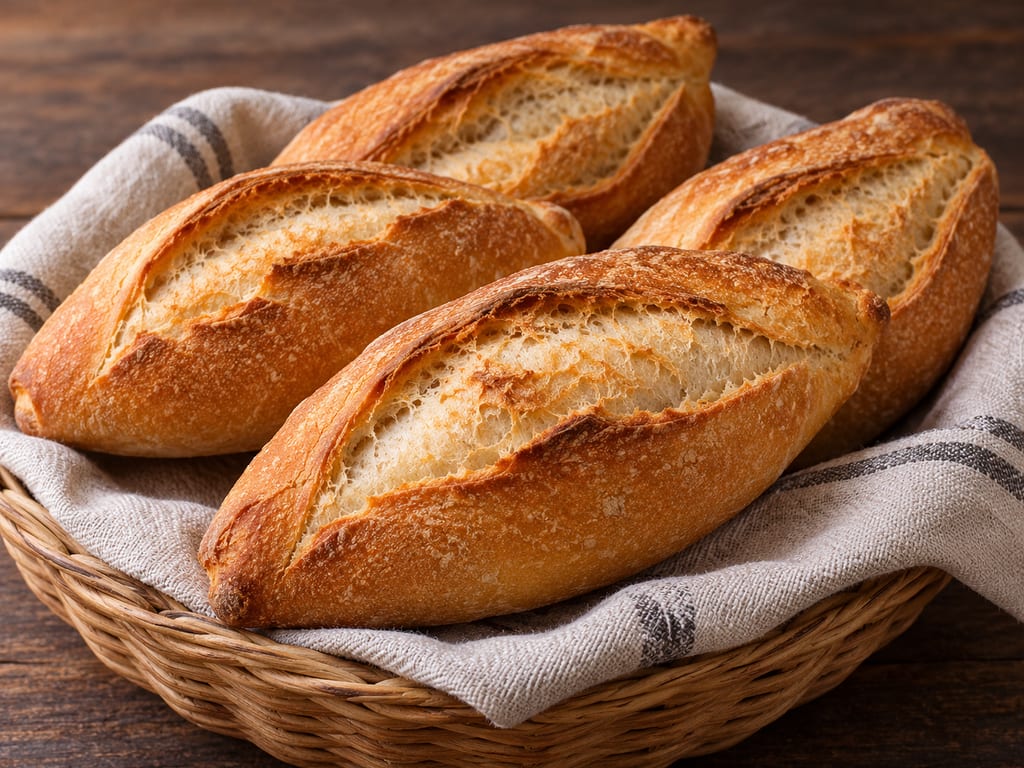
A measured, commercial-yeast home method for Guadalajara-style birote salado, with a six-hour preferment, shaped rolls and a two-temperature steam bake. This formula contains no egg.
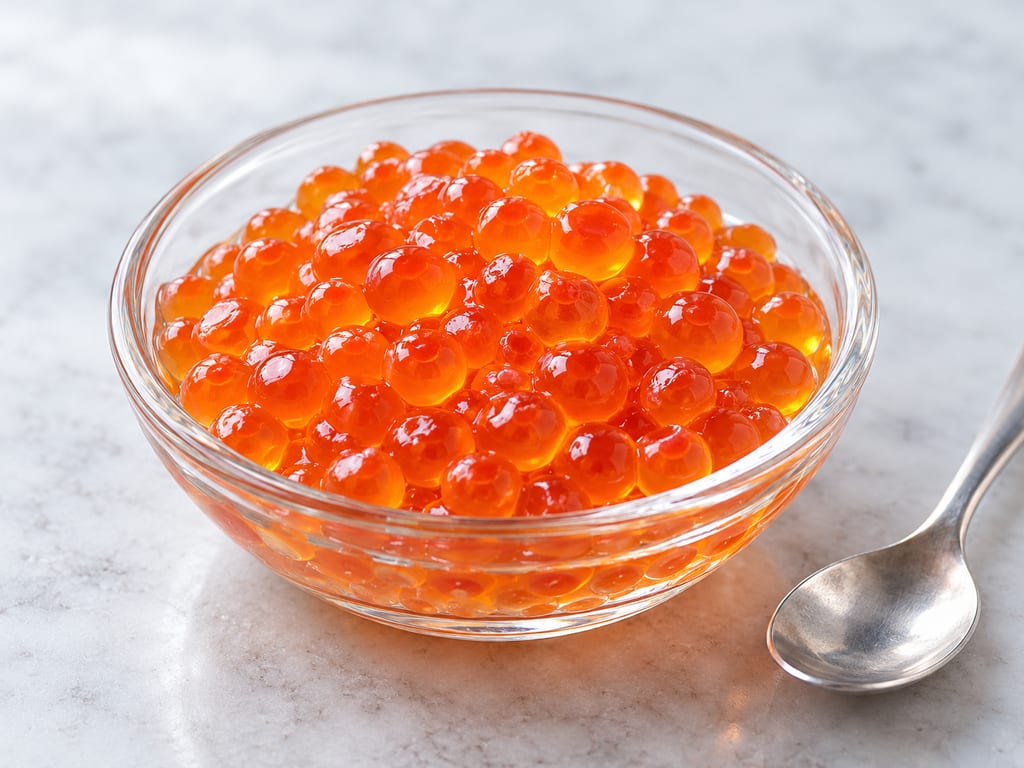
Salmon roe is separated from skeins and treated in two salt-water stages using a University of Alaska Extension formula.

Kodiak salmon, halibut and cod cut as seg'aq and hung on an initaq rack to become tamuuq, with kac'amaasaq and kupcuunaq named as different results.
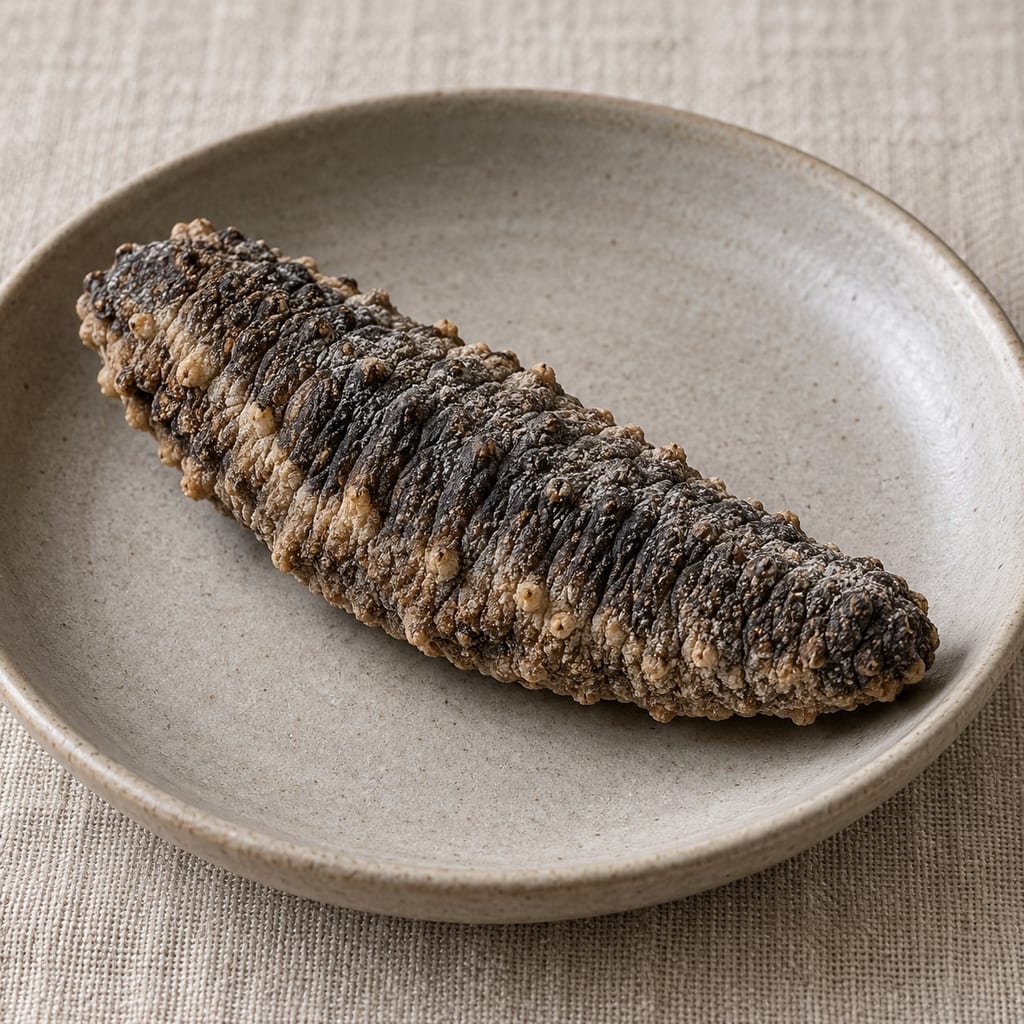
Sea cucumber cleaned, boiled and dried, sometimes with smoke, into a long-keeping trade product; Makassan processing in Arnhem Land is documented from at least the eighteenth century.
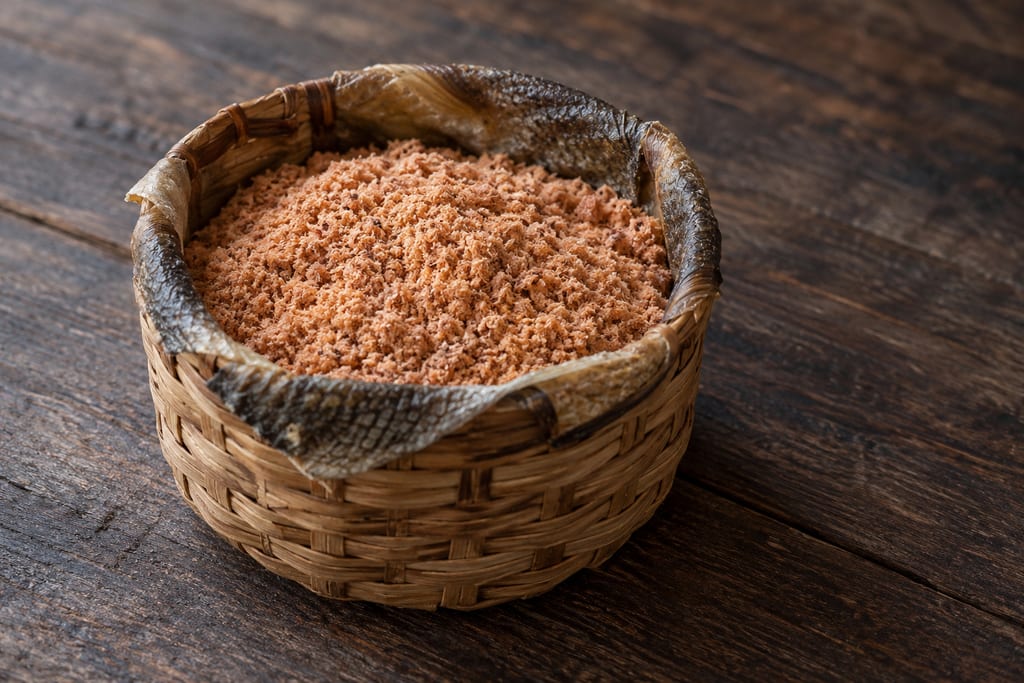
Dried salmon broken down, pounded to a meal and pressed into grass baskets lined with fish skin: the compact trade food of Celilo Falls and The Dalles.
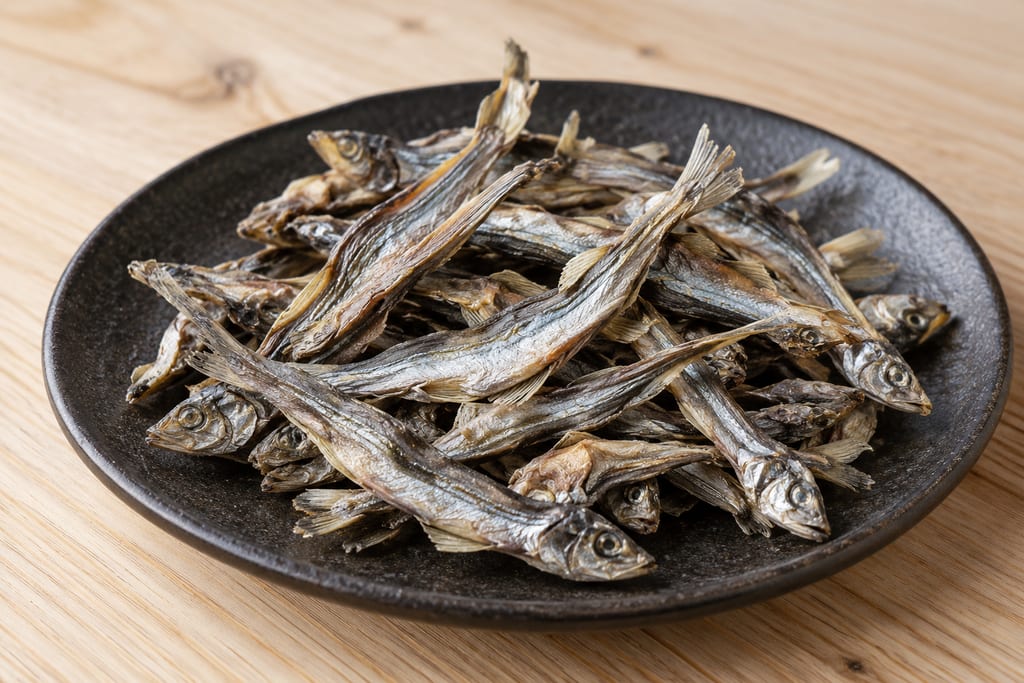
Greenlandic capelin dried whole on rocks, among crowberry vegetation or on buildings, and the microbial research that has made this small fish unusually well studied.
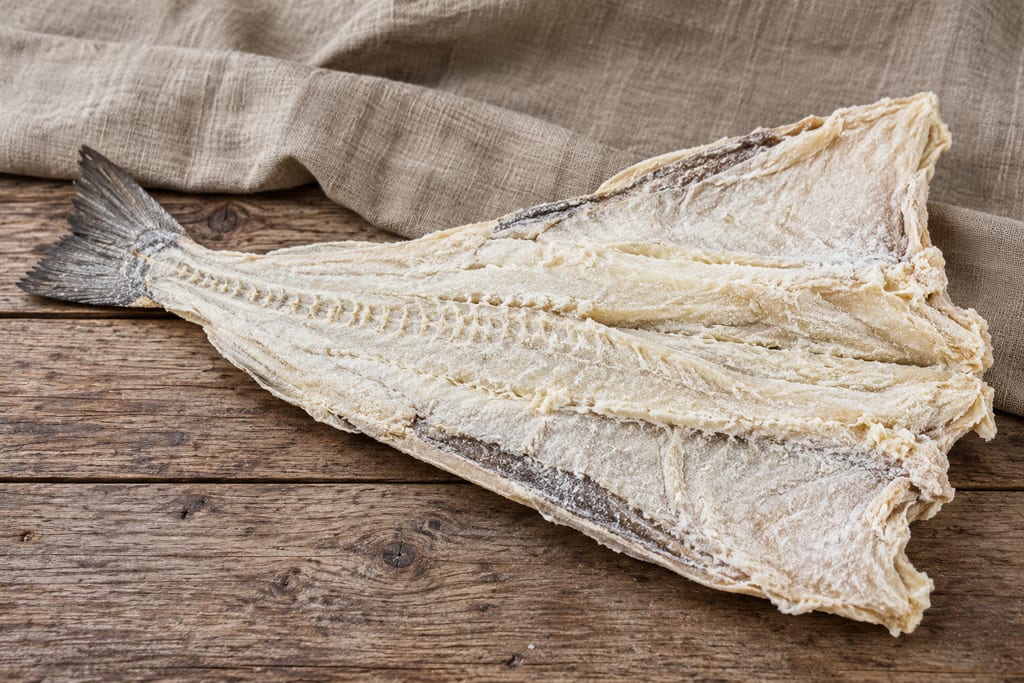
Cod split, salted and dried on flakes until hard, a long-keeping fish that must be desalted and rehydrated before use; the salting and the extensive drying together make it portable where light salting or partial drying does not.
Salmon opened, scored and hung on roofed racks in the dry canyon winds of the Fraser River: slhíts'es in Stó:lō documentation, sts'wan in St'át'imc records.

Koobi is Ghanaian salted and dried tilapia. Sources differ on the brief ripening stage and drying period, and do not establish a single validated household process. This entry records documented variants and their limits.
No community contributions have been published for this entry yet.
Sign in to contribute. Published comments and photos are free to read.
UNAM Global, Universidad Nacional Autónoma de MéxicoConservation · Context
UNAM Global — Why charales are disappearing in Mexico, 2025The decline of charal populations in Mexican lakes and the conservation pressures on the fishery
Cited in: The lakes of central Mexico; Safety and lake-water quality; The conservation problem; Why conservation matters to cuisine; Modern production; Why dried charales matter
Secretaría de Agricultura y Desarrollo RuralHistory · Use
Mexican Ministry of Agriculture — Charal and regional cooking, February 2026Charales as a longstanding food in regional Mexican cuisines, and their place in the seasonal food calendar
Lake Pátzcuaro in Michoacán and its distinctive lake fisheries
Cited in: What are charales?; The lakes of central Mexico; Why the fish are important; Historical evidence; The fish and their taxonomy; How dried charales are made; 1. Catching; 2. Sorting and cleaning; 3. Salting where applicable; 4. Drying; 5. Storage; 6. Cooking; Campeche: tsaquitos; Fried charales as snacks; Lent and the seasonal food calendar; Modern production; Why dried charales matter
Secretaría de Agricultura y Desarrollo RuralHistory · Use
Mexican Ministry of Agriculture — Charales and Mexican gastronomyCharales in Mexican gastronomy and their nutritional profile
Cited in: What are charales?; Why the fish are important; Historical evidence; What makes charales crispy?; Browning and flavour; Fried charales as snacks
Secretaría de Cultura de MéxicoMethod · Use
Mexican Ministry of Culture — Recetario coca de Mezcala, Jalisco, 2017The Recetario coca de Mezcala, Jalisco, published in 2017, documenting the food practices of the Indigenous Coca community of Mezcala on Lake Chapala
A preparation called tortitas o albóndigas de charal seco using eggs, dried charales, tomato and nopales, with approximately five or six charales worked into each forming patty, fried in oil then finished in a tomato broth containing nopales
Hueva de charal, charal roe, prepared separately and in some traditions dried for later use
The community's struggle to maintain its territory, fishing traditions and cultural identity
Cited in: Mezcala and Lake Chapala; How dried charales are made; Tortitas de charales secos; A documented Mezcala preparation; How the dish works; Jalisco: tomato broth and nopales; Charales in tamales and other dishes; Charal roe as a related preserved ingredient; Patties fall apart in the sauce; The charales are too salty; Why conservation matters to cuisine; Why dried charales matter
Larousse CocinaUse · Method
Larousse Cocina — Tortitas de charalesTortitas de charales and their regional sauces, including versions served in tomato broth with chipotle or other chillies
Cited in: What makes charales crispy?; Browning and flavour; Tortitas de charales secos; How the dish works; Green salsa; Chipotle and red tomato sauces; Lent and the seasonal food calendar; The charales are too salty
Secretaría de Cultura de MéxicoUse
Mexican Ministry of Culture — Regional recipes including tamal de charalesRegional recipes including tamal de charales
Cited in: Charales in tamales and other dishes
Integrated Taxonomic Information SystemTaxonomy
Integrated Taxonomic Information System — Chirostoma patzcuaroChirostoma patzcuaro, the Pátzcuaro silverside, as a scientifically documented species of the group
Cited in: What are charales?; The fish and their taxonomy
US Food and Drug AdministrationSafety
US FDA — Fish and Fishery Products Hazards and Controls GuidanceA general water-activity threshold of 0.85 or below for commercially shelf-stable dried fish
Cited in: The fish tastes stale or rancid; The fish has become damp in storage; Safety and lake-water quality