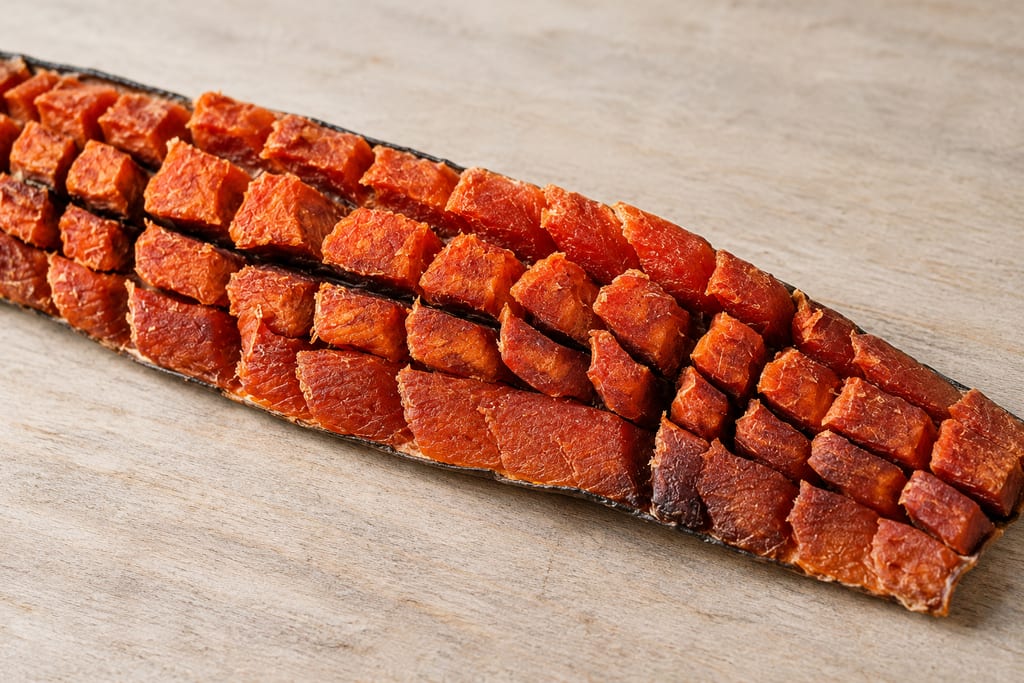
Pipsi
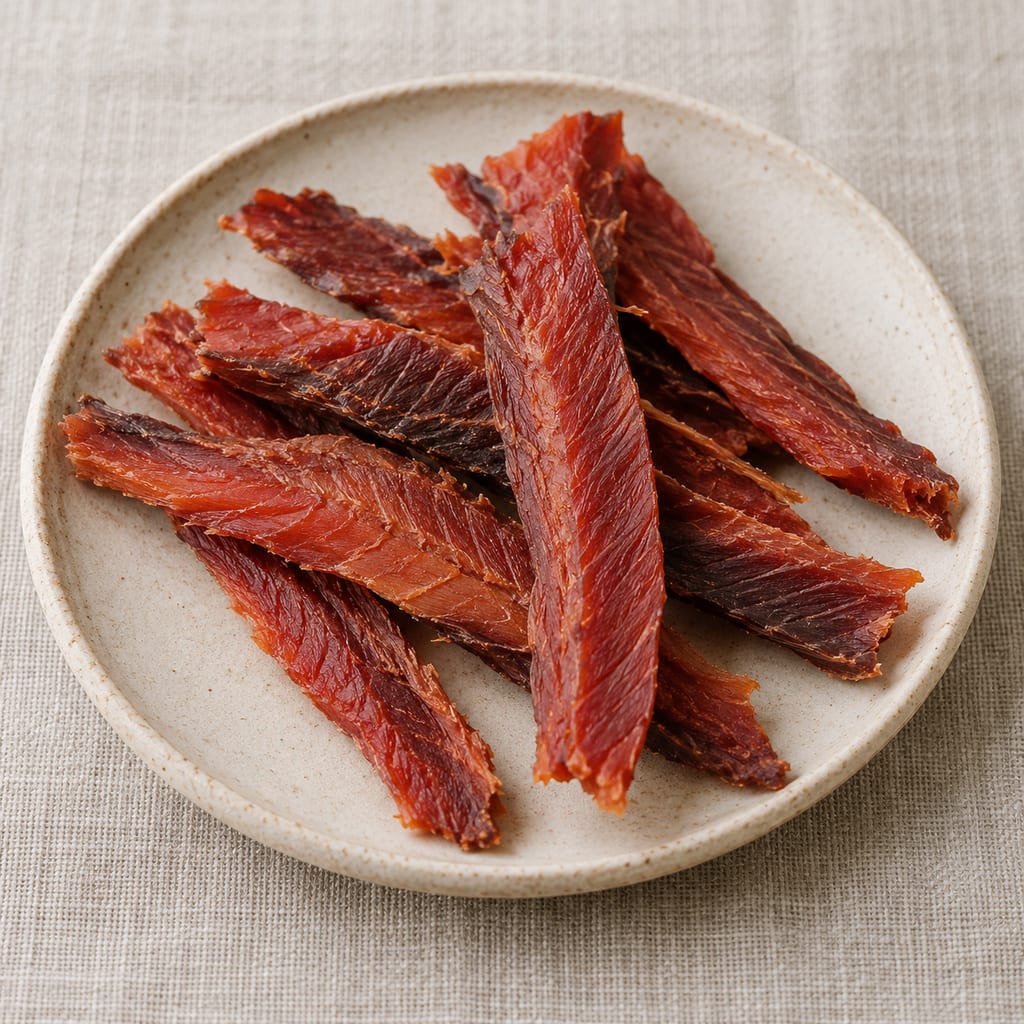
Arctic char opened, scored and air-dried in the Canadian Arctic: concentrated, chewy country food recorded as pipsi in Nunavut and pitsik in Nunavik.
 FermenteaWhere food goes to change
Traditional method
Ammassaat · Ammassat · Ammassak · Dried capelin · Lodde
Greenlandic capelin dried whole on rocks, among crowberry vegetation or on buildings, and the microbial research that has made this small fish unusually well studied.
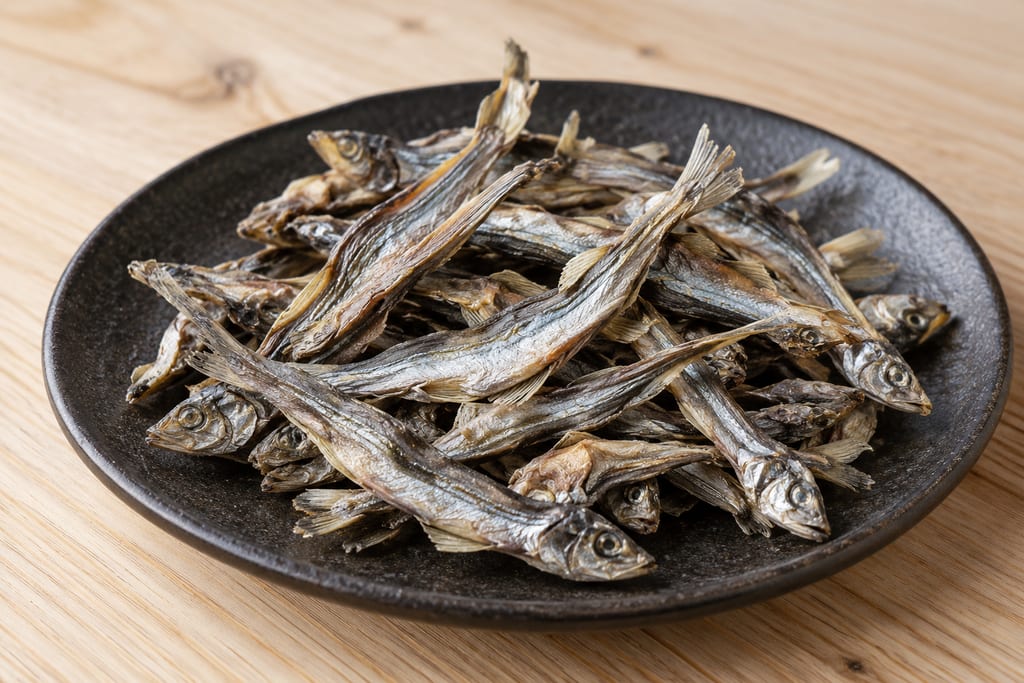
Dried capelin is a traditional Greenlandic food made from a small marine fish that appears in large seasonal concentrations along parts of the coast.
The fish is capelin, Mallotus villosus, a member of the smelt-related order Osmeriformes. It is not a young cod, sardine or anchovy, although its small size and importance in food chains may invite superficial comparisons.
In Greenlandic, the singular name is commonly written ammassak; the plural ammassaat is used in contemporary Greenlandic research materials. The spelling ammasat is also widely encountered in English and Danish descriptions and older captions.
Danish uses lodde for capelin.
The small body size of capelin makes it suitable for preservation as a whole fish, rather than necessarily splitting it into large fillets.
Dried ammassaat may be eaten as a snack, served at gatherings or kept as part of the household's supply of country food.
Its importance reaches far beyond human consumption. Capelin is also used as dog food and bait and is a major prey species for marine predators.
That combination makes it one of the clearest examples of a fish connecting ecology, food preservation and culture.
Capelin form schools in northern marine waters.
During the breeding season, fish move into suitable coastal spawning areas, sometimes concentrating in very large numbers near shore.
This creates an opportunity for people to gather quantities of fish over a short period.
In parts of West Greenland, capelin become available in late spring and early summer.
Disko Bay is particularly important.
The fish attracts not only human harvesters but also seabirds, seals and whales. Its seasonal arrival links different parts of the marine food web.
Capelin can be collected near shore using hand nets where conditions and local regulations allow.
The result may be a large catch of relatively small fish that must be preserved or consumed promptly.
A seasonal food abundance is valuable only if people can use it before it deteriorates.
Fresh capelin spoils readily.
Its small size makes large-scale individual filleting impractical for many traditional household methods.
Drying whole fish offers a way to transform numerous small animals into food that is easier to store and transport.
The decision to dry capelin is therefore both biological and logistical.
The fish arrives in schools, is harvested in quantity, and is small enough to be spread out for drying without the same cutting operation required for large cod.
Capelin has been harvested and preserved in Greenland over many generations.
An exact first date for drying ammassaat is not established.
The practice belongs to Indigenous Greenlandic food systems in which fishing, hunting, seasonal movement and household preservation have long been interconnected.
Modern photographs and research establish the continued importance of the food.
An image taken at Upernavik on 8 July 2007 shows dried capelin served at a kaffemik, a Greenlandic social gathering, during a confirmation celebration.
The fish had been dried on rocks in sunlight.
This photograph is particularly valuable because it documents both the finished product and an actual serving occasion.
Dried capelin was not merely an emergency ration. It belonged to the ordinary social life of a community.
In 2020, a peer-reviewed study examined the microbial communities associated with traditional and industrially dried Greenlandic fish.
The research included capelin, Atlantic cod and Greenland cod, or ogac.
It showed that the environment and method of drying had a major influence on the microorganisms present in the finished product.
A later initiative, AMMASSAK — Fish of Life, expanded attention to the cultural, ecological and nutritional importance of capelin.
Fieldwork in the Disko Bay area during 2024 included documenting harvesting practices, drying techniques and community knowledge.
These projects show that the tradition is both a subject of scientific inquiry and a living food practice.
One of the most striking aspects of Greenlandic capelin drying is the variety of surfaces used.
Fish may be spread on coastal rocks, placed among low vegetation, suspended on a building or arranged on racks.
These methods may appear almost identical from a distance: fish are exposed to moving air until dry.
But at the microbial and physical level, the surroundings matter considerably.
Smooth or gently sloping coastal rocks can provide an exposed surface.
Small fish are spread out where air and suitable weather encourage drying.
The surface also determines which microorganisms and contaminants may come into contact with the fish.
Direct sunlight and rock temperature may influence evaporation, while rainfall can interrupt the process.
The Upernavik photograph documents dried capelin produced on rocks in sunlight.
Another recorded practice places capelin over low crowberry plants.
Crowberry belongs to the genus Empetrum.
Vegetation provides a different drying surface from rock.
It changes how air reaches the fish, how water drains and which environmental microorganisms may be encountered.
It is not reasonable to assume that fish dried on vegetation has an identical microbiome to fish hung in an industrial drying facility.
A 2020 research study recorded capelin hung on the north-facing side of a house.
This exposes fish to an environment different from a beach or field of low vegetation.
Building orientation may alter sunshine, airflow and precipitation exposure.
The documented study recorded 11 days for that treatment.
Commercial methods may place fish in more controlled environments.
The drying conditions can be regulated more consistently, and the equipment can be cleaned and monitored using standardized procedures.
This can result in a more uniform product.
However, industrial drying does not automatically reproduce the exact flavour or microbiological composition of fish prepared outdoors.
The 2020 study recorded several preparations made in different years and places.
For capelin, the reported durations included:
Capelin hung on a house — 11 days — One documented treatment
Capelin dried among crowberry vegetation in 2016 — Approximately 14 days — Conditions specific to that year
Capelin dried among crowberry vegetation in 2017 — Approximately 21 days — Different seasonal conditions
The longer drying period in the second crowberry observation was associated with less favourable weather.
These figures are excellent historical and scientific data because they record real variation.
They are not validated home-preservation instructions.
The study's purpose was to examine microbial communities, not to establish a universal safe drying process for every household.
No single salt percentage, water-activity target or microbiological safety endpoint is provided for all the capelin treatments.
The microbial research is one of the strongest reasons to give ammassaat a separate article rather than treating it as generic dried fish.
Scientists examined the bacterial communities present on products prepared using different methods.
The work used 16S ribosomal RNA gene sequencing, a technique that identifies and compares bacteria through characteristic genetic sequences.
It does not, on its own, demonstrate that every detected organism is alive, harmful, beneficial or responsible for a particular flavour.
Traditionally dried capelin contained microbial communities that differed from those found on industrially prepared fish.
The industrial products tended to have more uniform bacterial profiles.
Traditional preparations varied more.
These differences are consistent with the influence of outdoor surfaces, air, handling and other environmental sources.
Fish arrive with microorganisms already associated with their skin and digestive systems.
The marine environment contributes others.
During drying, some of these organisms remain detectable on the finished product.
The skin microbiome was an important source of the dominant bacteria on the dried fish.
Intestinal microbes also appeared in some preparations.
This observation does not prove that the food was deliberately fermented in the way yogurt or controlled lactic-acid vegetables are fermented.
Drying remains the principal documented preservation technique.
Local preferences for certain traditionally dried capelin were reflected in differences between microbial communities.
The findings suggest that microbes could contribute to flavour variation.
However, this is not the same as proving that a particular bacterial species causes a particular desirable taste.
Such a conclusion would require further targeted experiments.
The study is therefore best understood as evidence for the complexity of the food microbiome, not as a ready-made starter-culture recipe.
This question requires a careful definition.
Microorganisms may remain present on the fish and may undergo metabolic activity while drying.
But their presence alone does not make the product an intentionally fermented food.
Fermentation generally involves microbial biochemical changes that are important to creating or preserving the food, often under recognizable process conditions.
The Greenlandic capelin preparations studied were primarily categorized as dried fish.
It is possible for microbial transformations to influence their sensory qualities, but that does not establish a standardized fermentation mechanism.
They should therefore be indexed as dried fish, with microbial activity discussed where documented, rather than classified automatically as fermented seafood.
Capelin provides protein and marine lipids.
Because small fish may be consumed with bones, dried capelin can also contribute substantial calcium.
The AMMASSAK research project discusses measurements reaching approximately 1,100 mg of calcium per 100 g.
That is a reported nutritional measurement, not a guaranteed value for every batch.
Bone content, processing and whether a serving includes the whole fish will influence the result.
Drying also concentrates nutrients per unit weight by removing water.
It does not create extra protein or minerals; it changes the ratio between water and the remaining components.
The fish's ecological role also contributes to its importance in Greenlandic food culture. It is a seasonal resource with direct links to seabirds, seals, dogs and other fisheries.
Dried capelin can be eaten as a concentrated snack or included among foods served at social gatherings.
The Upernavik kaffemik photograph documents a plate of dried fish offered during a family celebration.
Unlike a very large salted cod, which usually requires extensive soaking and cooking, small dried capelin can be served as a finished food when properly prepared.
The degree of dryness and local practices influence how it is handled.
There is no single universally documented sauce or garnish that must accompany it.
The simplest presentation may be the most representative: a portion of dried fish made available for guests to share.
Capelin also remains useful as animal food and fishing bait. These uses are part of its cultural and economic significance, although fish destined for bait should not automatically be treated as food-grade product.
Whole-fish drying brings its own risks.
The intestinal contents may remain in the body in preparations using whole fish.
Contact with rocks or vegetation introduces environmental microorganisms.
Rain or insufficient airflow can delay moisture loss.
Fish packed together too densely may dry unevenly.
Oily components can oxidize during exposure to air and light.
Mould, slime, putrid odours and insect contamination are warning signs.
The fish's small size can help expose more surface area relative to its volume, but does not eliminate the need for suitable conditions.
No.
The presence of a varied bacterial community does not establish probiotic benefits.
To call particular organisms probiotic would require evidence of their identity, viability, administered quantity and demonstrated health benefit.
The study provides valuable information about microbial diversity, not proof that all traditionally dried capelin is probiotic.
Equally, bacterial sequencing does not certify the absence of pathogens or dangerous toxins.
The exact historical methods should not be copied without controls.
The study's recorded periods of 11, 14 and 21 days are examples of actual drying conditions, not safe targets that can be transferred to another location.
For shelf-stable dried seafood, measuring water activity is important. The FDA's general threshold of 0.85 or lower is relevant, but it is only one component of a validated system.
The species, possible pathogens, handling conditions and storage arrangements remain important.
The fact that some products may traditionally be eaten without subsequent cooking further increases the importance of reliable preparation.
A modern producer intending to market dried capelin should use appropriate seafood processing controls rather than assuming that historical drying durations prove safety.
Ammassaat makes an unusually powerful subject for a fermentation and preservation reference because it connects several types of knowledge.
There is Indigenous knowledge of seasonal fish movements, places to gather capelin, drying surfaces and suitable weather.
There is biological knowledge of the fish's reproductive migrations and its role as prey.
There is physical chemistry in moisture removal.
And there is microbiology showing how the drying environment shapes the living and residual microbial community associated with the food.
Its small size should not obscure its importance.
Dried capelin is a concentrated expression of the relationship between Greenlandic communities and the coastal marine environment.
Capelin has been harvested and preserved in Greenland over many generations, and an exact first date for drying ammassaat is not established. The practice belongs to Indigenous Greenlandic food systems in which fishing, hunting, seasonal movement and household preservation have long been interconnected.
Modern photographs and research establish the food's continued importance. An image taken at Upernavik on 8 July 2007 shows dried capelin served at a kaffemik, a Greenlandic social gathering, during a confirmation celebration; the fish had been dried on rocks in sunlight. The photograph documents both the finished product and an actual serving occasion, showing that dried capelin was not merely an emergency ration but part of the ordinary social life of a community.
Scaling: source batch only
Some products may traditionally be eaten without subsequent cooking, which increases the importance of reliable preparation; the species, possible pathogens, handling conditions and storage arrangements all remain important.
Hazard sourceThe recorded periods of 11, 14 and 21 days are examples of actual drying conditions under particular weather, not validated safe targets, and no water-activity target or microbiological endpoint is provided for the capelin treatments.
Hazard sourceWater activity for shelf-stable dried seafood
Control sourceThe 2020 study's purpose was to examine microbial communities, not to establish a safe drying process; its 11, 14 and 21 day observations are not home-preservation instructions.
A diverse microbial community detected by gene sequencing does not show that the organisms are alive, harmful, beneficial or responsible for a particular flavour, and does not make the fish probiotic.
A producer intending to market dried capelin should use appropriate seafood processing controls rather than assume that historical drying durations prove safety.
A country-level association; the study recorded preparations in several places and years.
Dried capelin photographed being served at a kaffemik, the fish having been dried on rocks in sunlight; coordinates are not given by the source.
One of the western coastal areas the research associates with the harvest; not a claim of origin.
Arctic char opened, scored and air-dried in the Canadian Arctic: concentrated, chewy country food recorded as pipsi in Nunavut and pitsik in Nunavik.
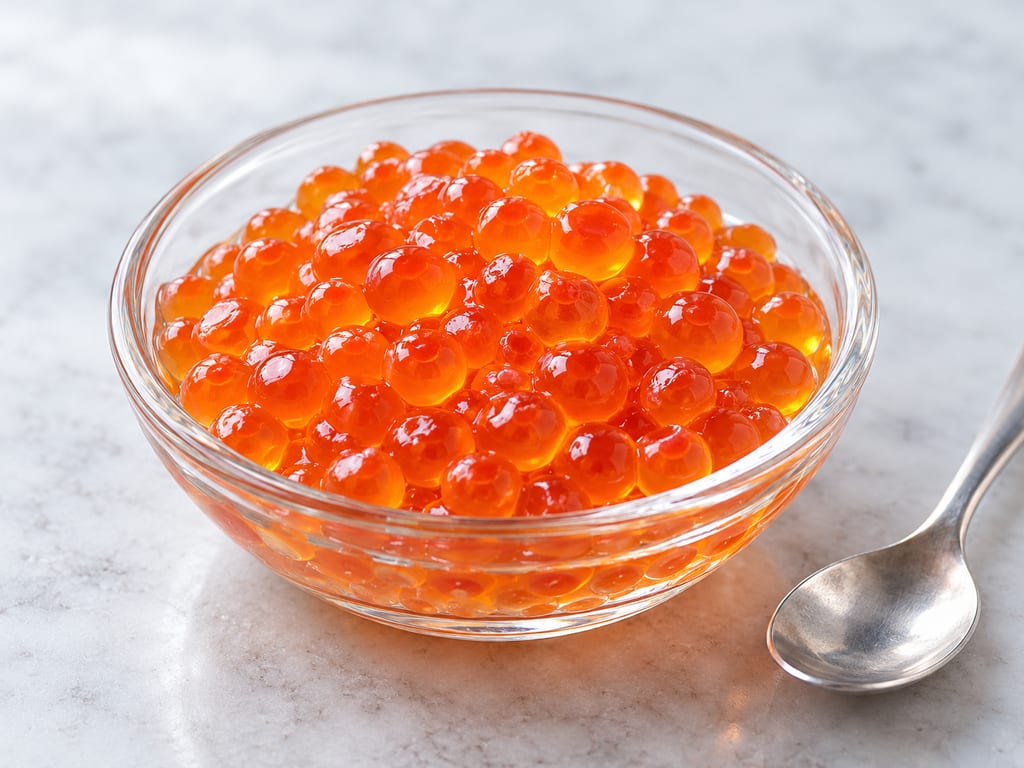
Salmon roe is separated from skeins and treated in two salt-water stages using a University of Alaska Extension formula.

Kodiak salmon, halibut and cod cut as seg'aq and hung on an initaq rack to become tamuuq, with kac'amaasaq and kupcuunaq named as different results.
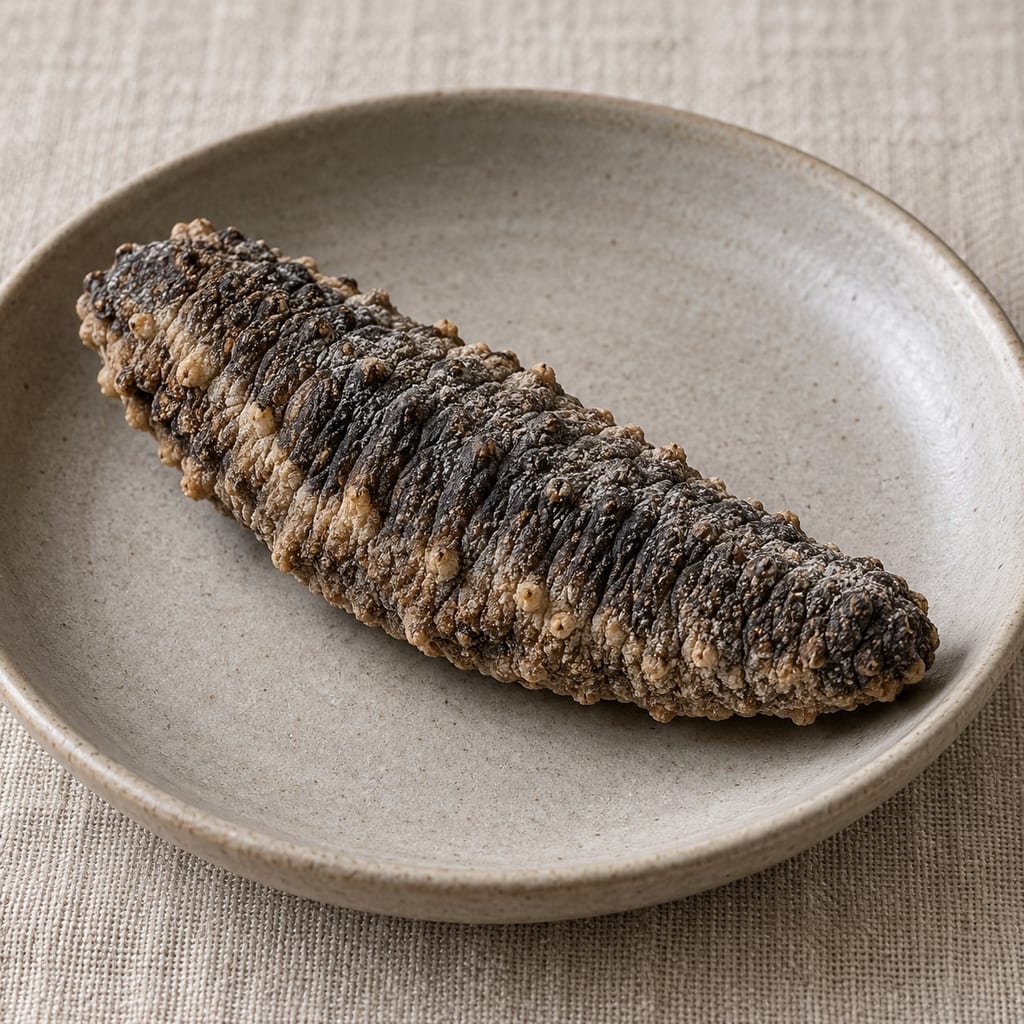
Sea cucumber cleaned, boiled and dried, sometimes with smoke, into a long-keeping trade product; Makassan processing in Arnhem Land is documented from at least the eighteenth century.
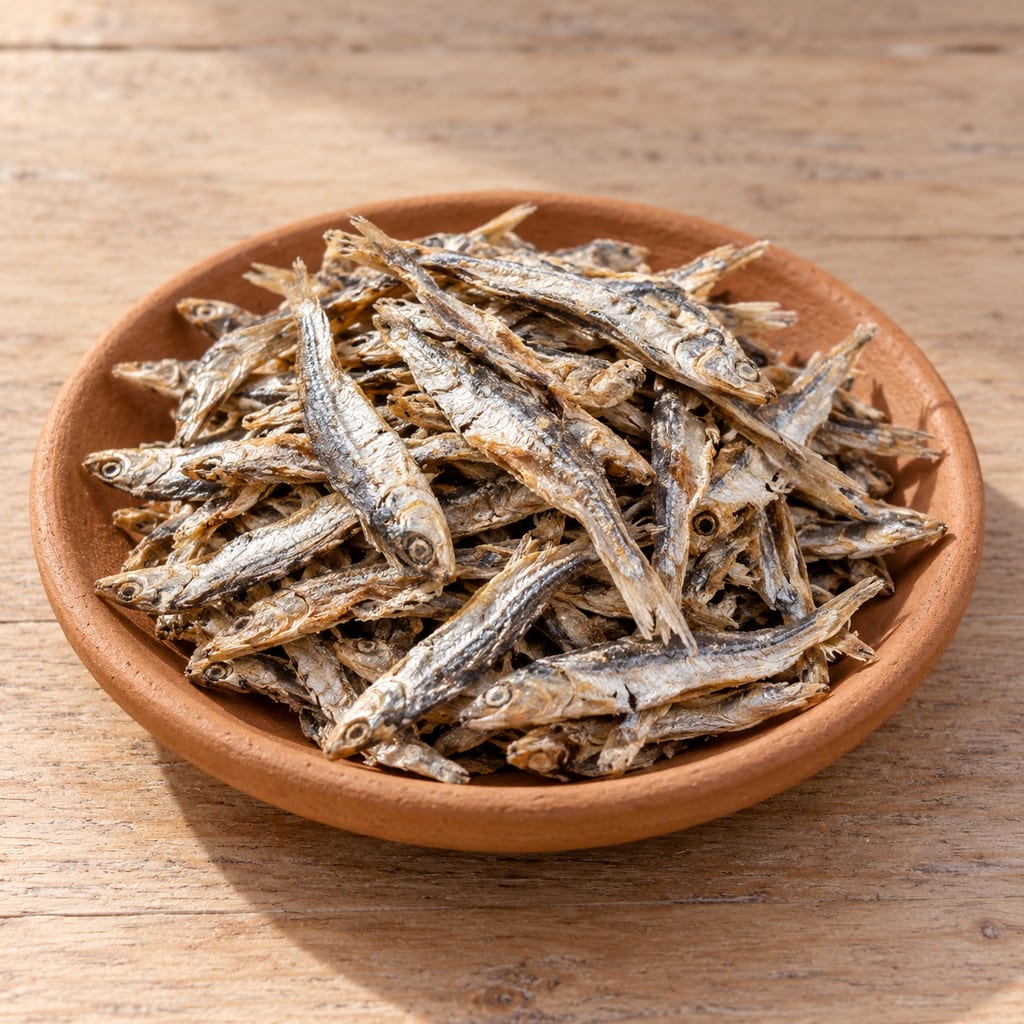
Anchoveta salted, drained of sanguaza and sun-dried on sand or stones at Caleta de Carquín, a technique declared part of Peru's cultural heritage in 2016.
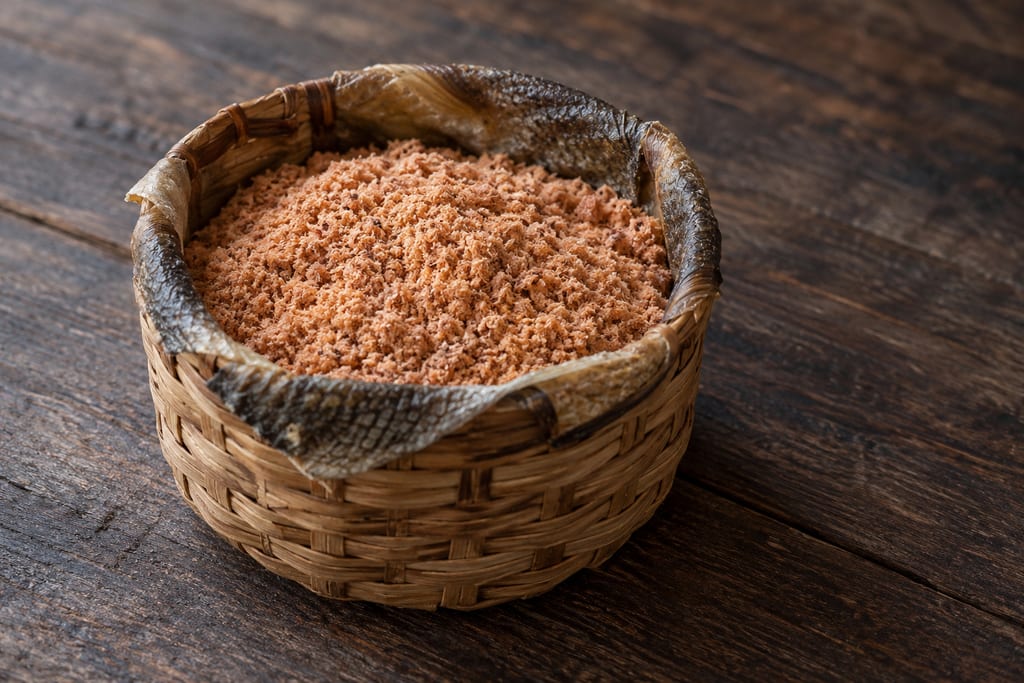
Dried salmon broken down, pounded to a meal and pressed into grass baskets lined with fish skin: the compact trade food of Celilo Falls and The Dalles.
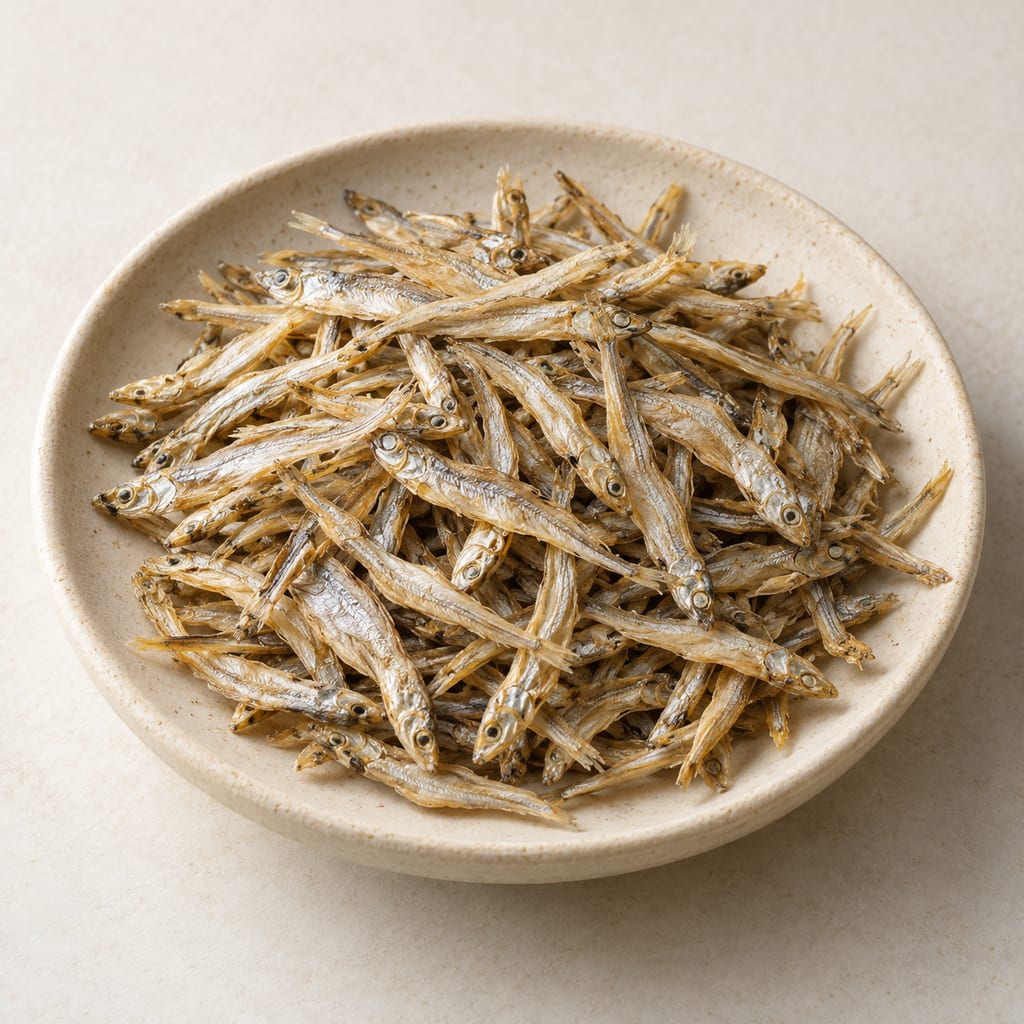
Small central-Mexican lake silversides, Chirostoma spp., dried whole and sometimes salted, then fried, roasted or simmered into Lenten tortitas and snacks.
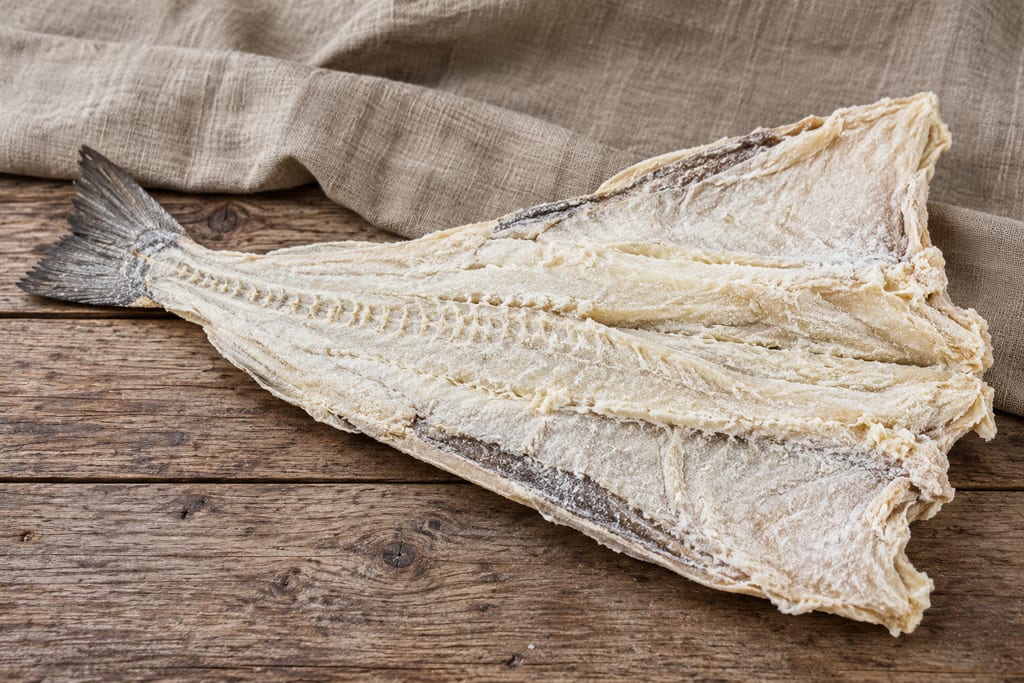
Cod split, salted and dried on flakes until hard, a long-keeping fish that must be desalted and rehydrated before use; the salting and the extensive drying together make it portable where light salting or partial drying does not.
Salmon opened, scored and hung on roofed racks in the dry canyon winds of the Fraser River: slhíts'es in Stó:lō documentation, sts'wan in St'át'imc records.
No community contributions have been published for this entry yet.
Sign in to contribute. Published comments and photos are free to read.
Food Microbiology (Elsevier)Microbiology · Method
Hauptmann et al. — Microbial composition of traditionally dried Greenlandic fish, Food Microbiology, 2020Microbial composition of traditionally dried Greenlandic fish, examined by 16S ribosomal RNA gene sequencing
Recorded drying durations: capelin hung on a house for 11 days; capelin dried among crowberry vegetation for approximately 14 days in 2016 and approximately 21 days in 2017
Traditional and industrial products differ in their bacterial communities
The Greenlandic capelin preparations studied were primarily categorised as dried fish
Cited in: The small fish with an enormous importance; Capelin biology and the seasonal harvest; Why the timing matters; Contemporary research; The different ways capelin can be dried; Drying on rocks; Drying among crowberry vegetation; Drying on buildings; Industrial drying; Exact drying observations from the Greenland study; The microbiology of traditionally dried capelin; Traditional and industrial products differ; Skin, sea and gut microorganisms; What flavour differences may mean; Is dried capelin a fermented food?; Nutritional characteristics; What can go wrong?; Does a diverse microbiome mean the fish is probiotic?; Modern preservation safety
Ilisimatusarfik, University of GreenlandMicrobiology · Method
Hauptmann et al. — Full research articleThe full research article and its recorded preparations, places and years
Cited in: The different ways capelin can be dried; Exact drying observations from the Greenland study; The microbiology of traditionally dried capelin
Greenland Research CouncilResearch · Context
Greenland Research Council — AMMASSAK project, part 2The AMMASSAK project and its continuing research into capelin harvesting and preservation
Cited in: History and cultural continuity; Contemporary research; A food at the centre of an ecosystem
Carsten EgevangResearch · Context
AMMASSAK — Fish of Life, research and photographic projectThe AMMASSAK photographic and research project on capelin harvesting and preservation
Cited in: Contemporary research
Wikimedia CommonsUse · History
Wikimedia Commons — Dried ammasat at Upernavik, 2007An image taken at Upernavik on 8 July 2007 showing dried capelin served at a kaffemik during a confirmation celebration, the fish having been dried on rocks in sunlight
Cited in: History and cultural continuity; How the fish is eaten
Visit GreenlandIdentity · Context
Visit Greenland — Fish species guideCapelin, Mallotus villosus, among Greenland's food fish and its seasonal availability
Cited in: The small fish with an enormous importance; Capelin biology and the seasonal harvest; Why the timing matters; Nutritional characteristics; How the fish is eaten; A food at the centre of an ecosystem
US Food and Drug AdministrationSafety
US FDA — Fish and Fishery Products Hazards and Controls GuidanceA water-activity threshold of 0.85 or lower for shelf-stable dried seafood
Cited in: What can go wrong?; Modern preservation safety