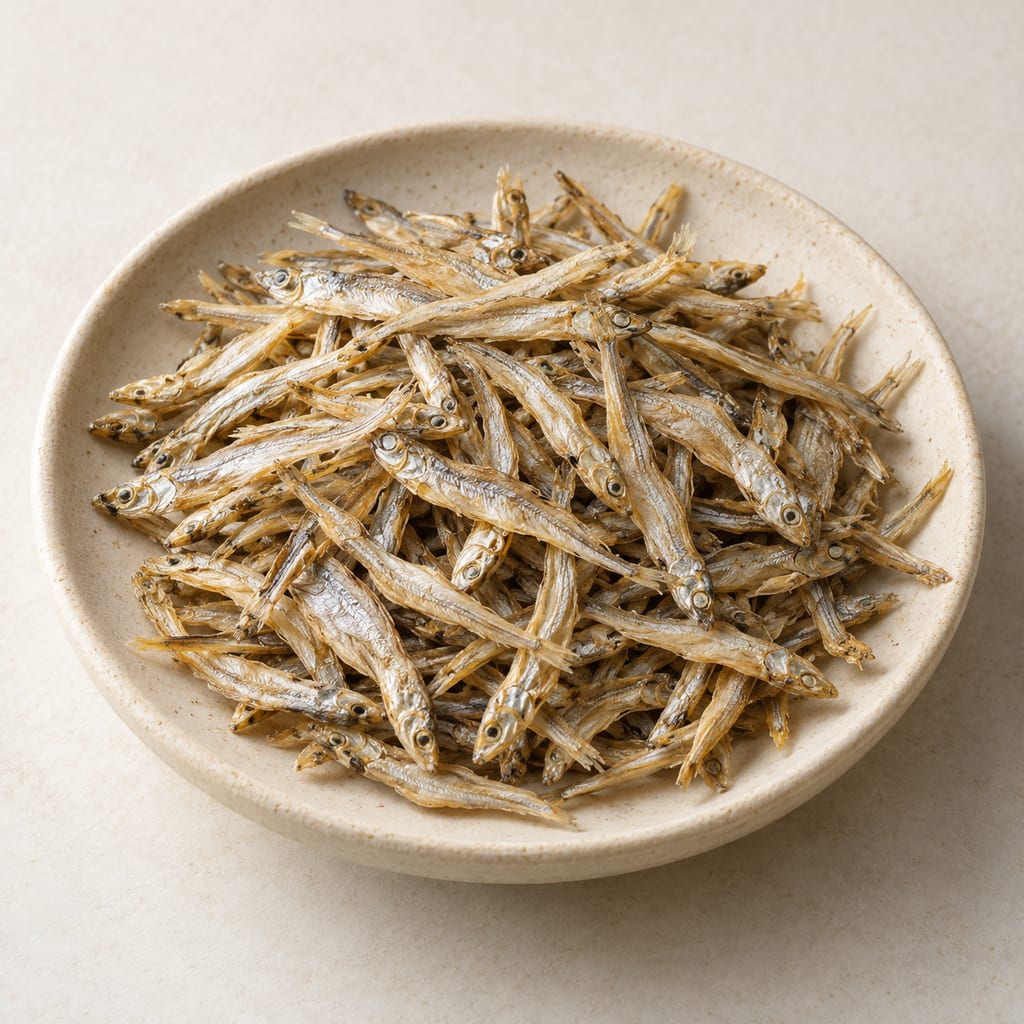
Dried charales (charales secos)
Small central-Mexican lake silversides, Chirostoma spp., dried whole and sometimes salted, then fried, roasted or simmered into Lenten tortitas and snacks.
 FermenteaWhere food goes to change
Birote salado · Birote salado de Guadalajara
A measured, commercial-yeast home method for Guadalajara-style birote salado, with a six-hour preferment, shaped rolls and a two-temperature steam bake. This formula contains no egg.
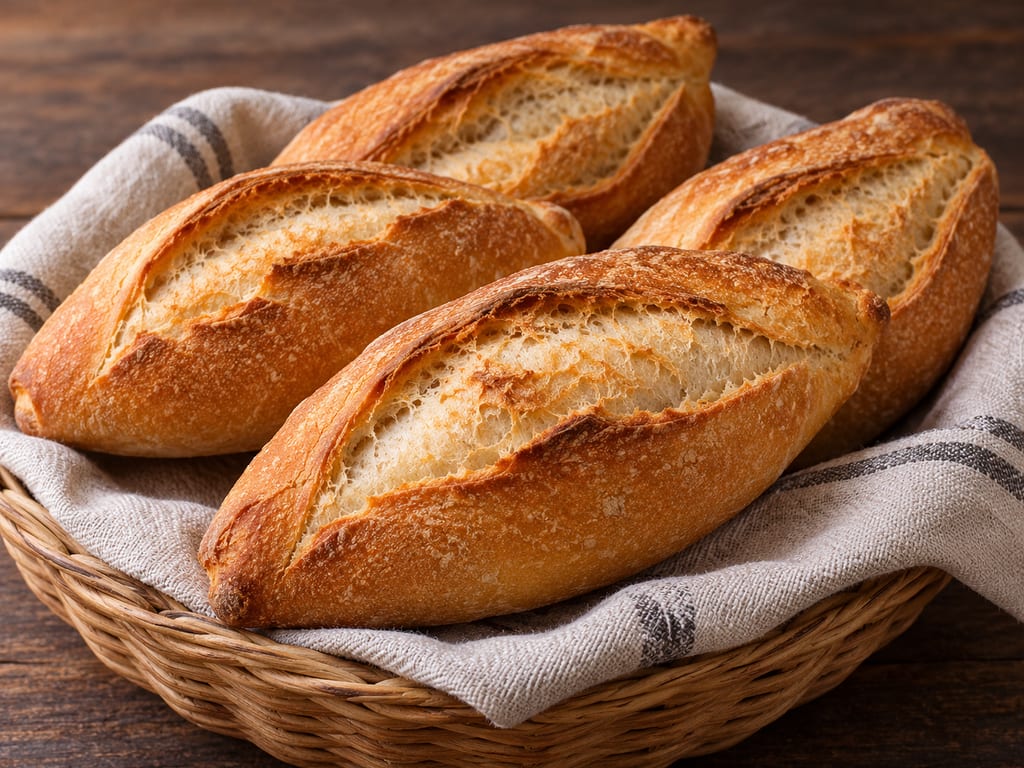
This recipe follows a measured Cardamomo home method for birote salado served with tortas ahogadas. It uses commercial yeast in a preferment and final dough; it is not sourdough and does not claim to reproduce a bakery's maintained culture. The source calls for a six-hour preferment, then a bulk rise and shaped rest, with expansion cues as well as approximate durations.
The source's headline time is 55 minutes, which does not include the six-hour preferment or the later rise. The steps give an hour or until doubled for the bulk dough, and about 30 minutes plus an expansion cue after shaping. Follow the source's stated cues without treating them as controlled fermentation limits.
A Jalisco cultural publication identifies birote salado with Guadalajara and describes its place in local foodways. Mexico's agriculture ministry describes torta ahogada as a Guadalajara dish prepared with birote. These sources support the regional association and serving context, not a precise origin date or a universal recipe.
This formula contains wheat and yeast and does not include egg. Do not taste raw dough. Follow the source's bake sequence and handle the steam pan carefully. No fermentation temperature or pH endpoint is supplied, and none is inferred here.
Guadalajara's municipal tourism account describes crisp birote as a defining part of the city's food culture through the torta ahogada, served with tomato and chile de árbol sauce. The bread's place in that meal is the documented association; the account does not supply this recipe's dough process.
This page uses Cardamomo's contemporary commercial-yeast home formula. It does not claim to reproduce a bakery's maintained starter or establish that birote can only be baked in Guadalajara. The regional identity and serving tradition are kept separate from unsupported claims about a necessary local climate.
Larousse Cocina describes birote as a Jalisco bread tied to tortas ahogadas, with a dense crumb and a sour note. La Jornada, writing in 2006 about the torta ahogada as an emblem of Guadalajara, gives a climate explanation for the bread's character. That explanation is the newspaper's account; it is not tested here and it is not an origin story.
Zona Guadalajara publishes a different, two-stage method. The first stage, called the pata, mixes 500 g flour, 15 g yeast and water as needed, and rests six hours at room temperature or three days in the refrigerator. The second stage adds 30 g dry yeast and 20 g salt. After a 30-minute rest and a final rise, the loaves bake at 250°C for about 15 minutes, or until brown. That page gives no water amount for the second stage, no final-rise length, no yield and no measured endpoint, and it does not say why the dough is split in two. It is not a complete household recipe, and the method above stays the Cardamomo one.
The Cardamomo article presents this as a home-style Guadalajara birote salado for tortas ahogadas. It is a contemporary commercial-yeast formula, not a claim to reproduce a traditional bakery starter. A Jalisco cultural publication identifies birote salado with Guadalajara, while Mexico's agriculture ministry describes the torta ahogada as a Guadalajara dish made with birote. Neither establishes a precise birthplace or the history of this formula.
Yield 8 birotes · Scaling: source batch only
Contains wheat (gluten). Do not taste raw dough; handle the hot water pan and steam carefully.
A Jalisco cultural publication identifies birote salado as a Guadalajara food emblem and describes its use with tortas ahogadas; Mexico’s agriculture ministry also describes the torta ahogada as a Guadalajara dish made with birote. These sources support regional use, not a birthplace for every birote formula.
Small central-Mexican lake silversides, Chirostoma spp., dried whole and sometimes salted, then fried, roasted or simmered into Lenten tortitas and snacks.
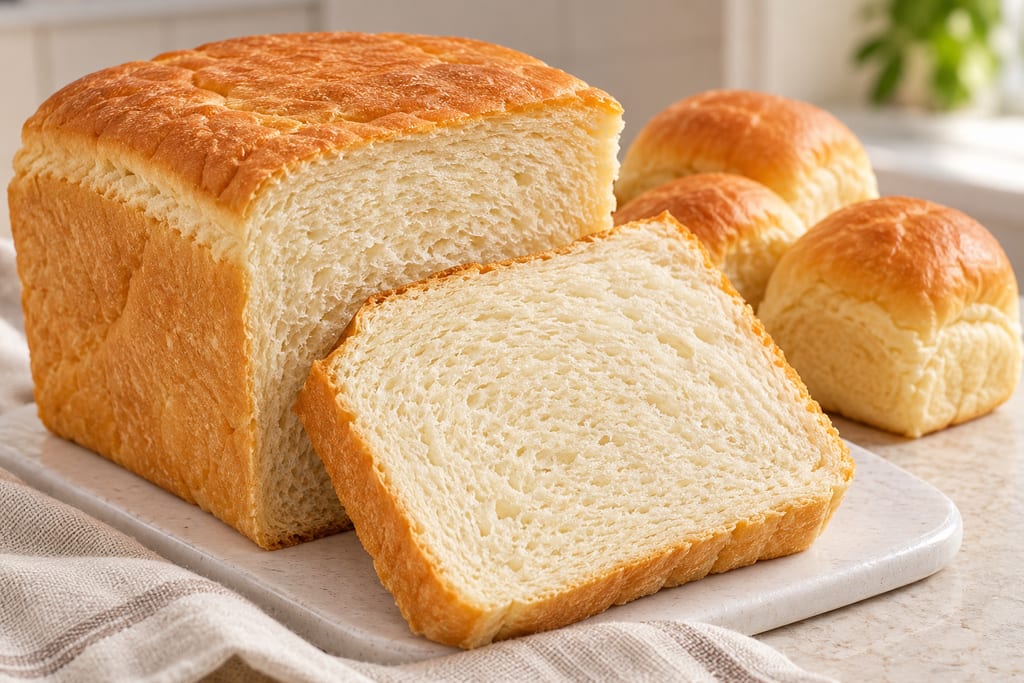
This softer home-style Agege bread uses a scalded flour paste, an enriched yeast dough and a 9×5-inch loaf pan, with rolls from the extra dough.
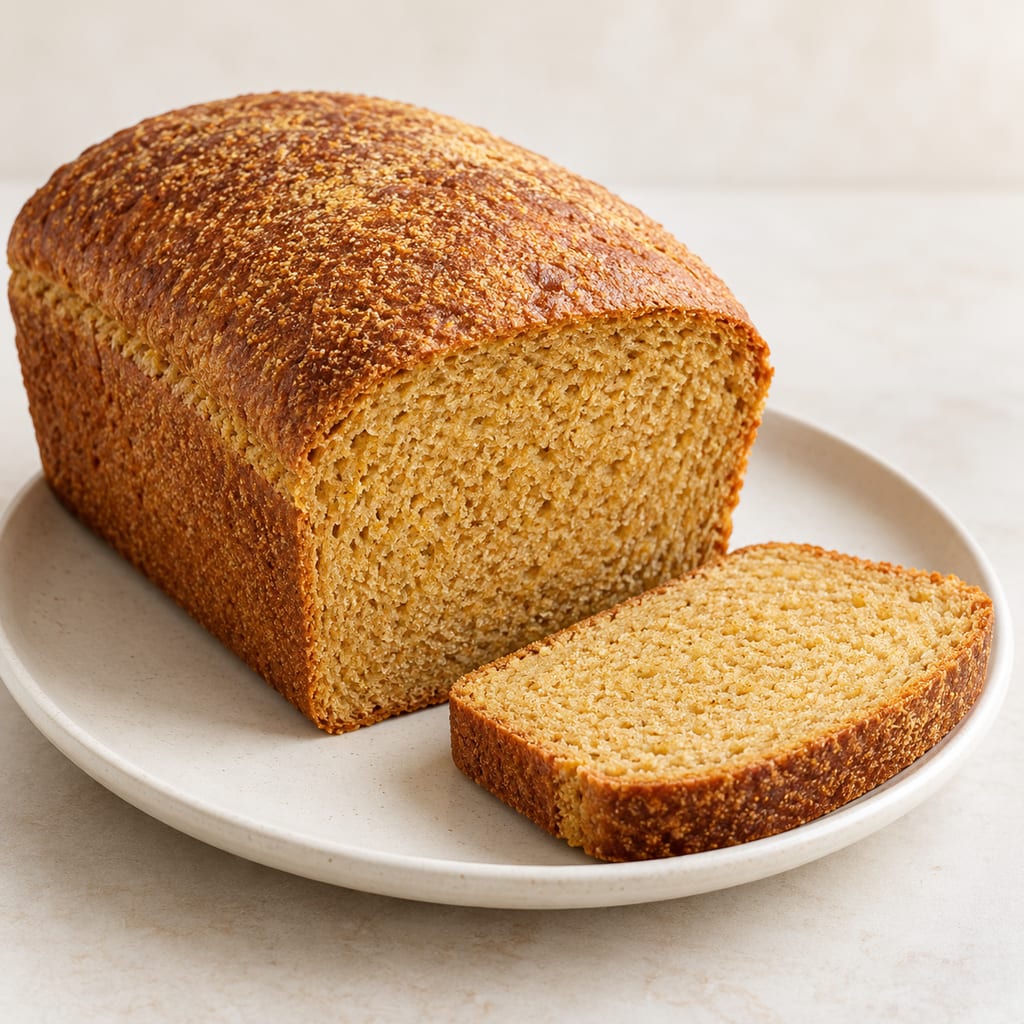
Anadama is a New England yeast loaf made with wheat flour, cornmeal and molasses. Scalded cornmeal enriches the dough, while molasses lends sweetness and a dark crust; it is especially good toasted or beside soup and baked beans.

A yeast-raised wheat ring shaped from a firm dough, briefly boiled and baked. This source-batch formula gives a gently malted crust and a chewy crumb.
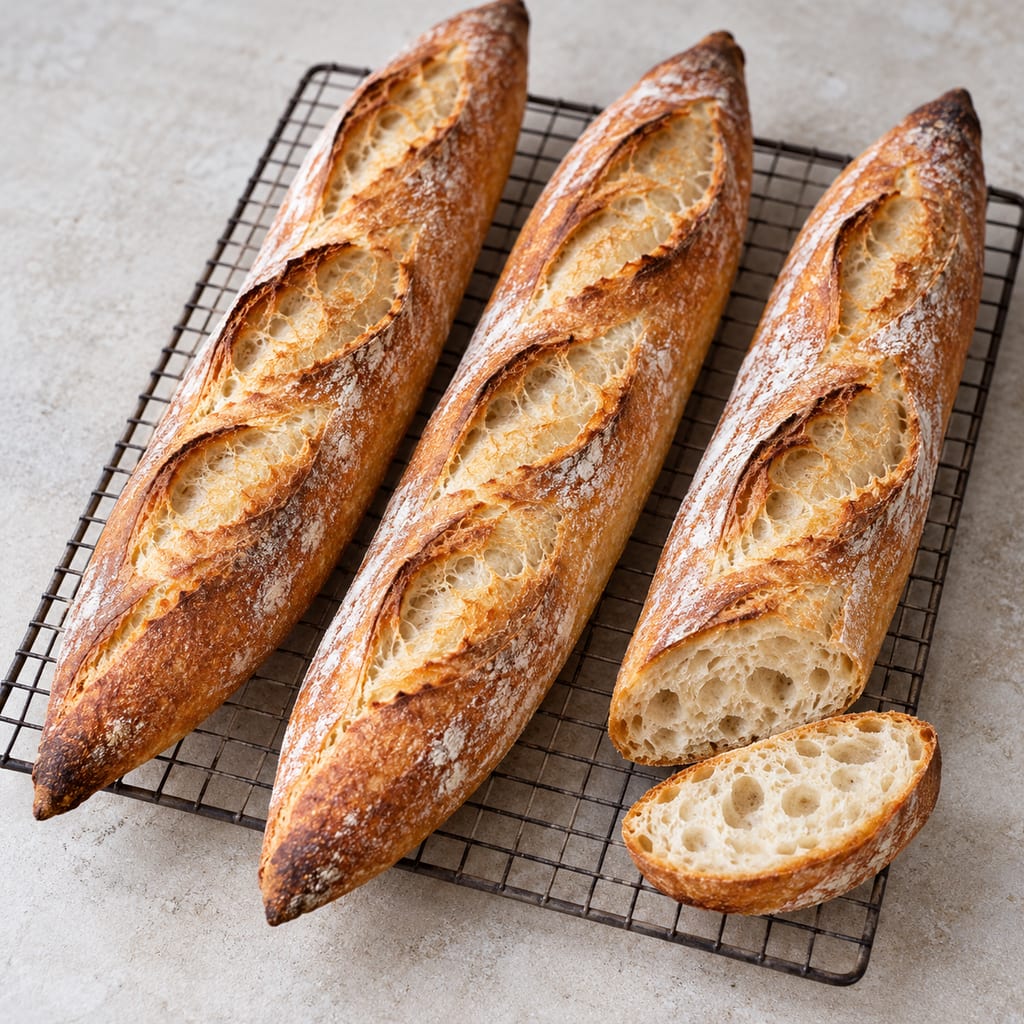
Three long, crusty wheat loaves made with an overnight yeast poolish, shaped by hand and baked with steam for a crisp crust.
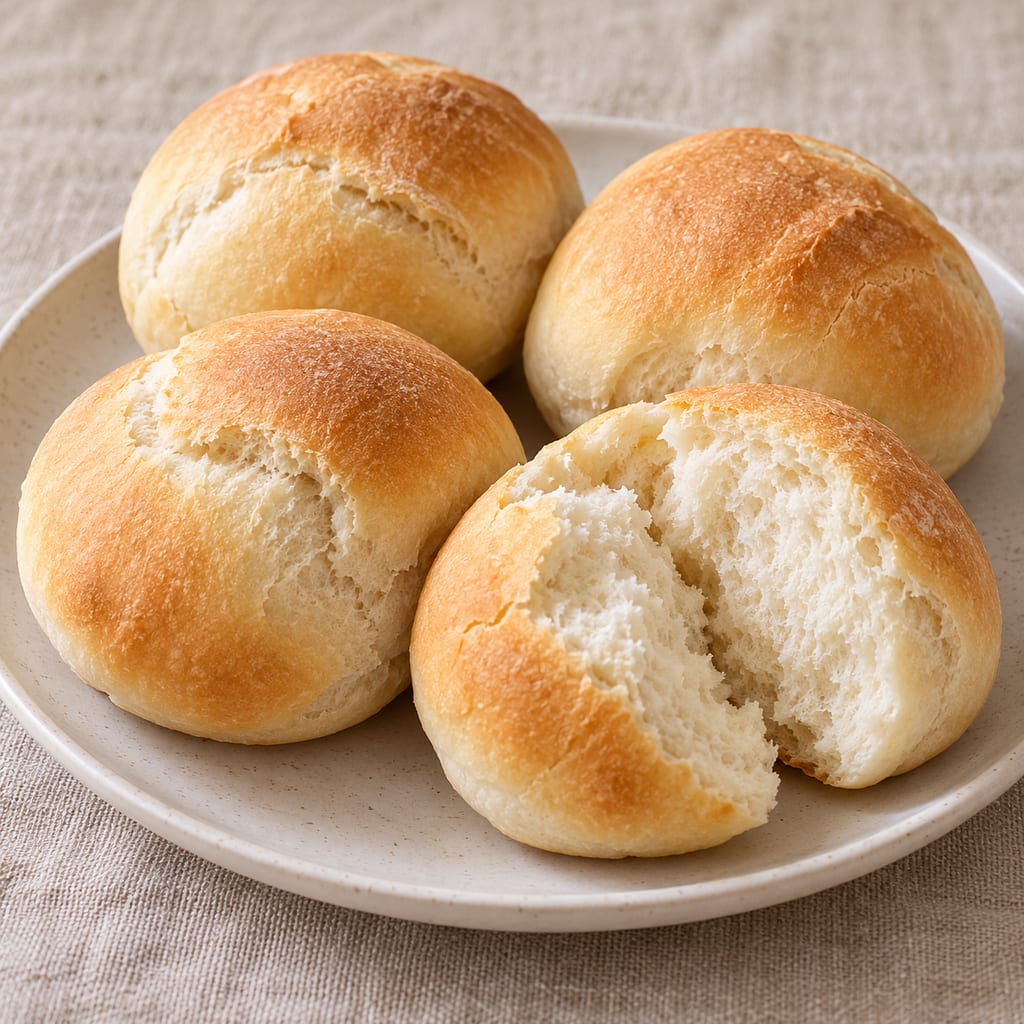
A lightly salted, yeast-raised Barbadian roll, baked in a dozen-roll home batch and often split for cutters.
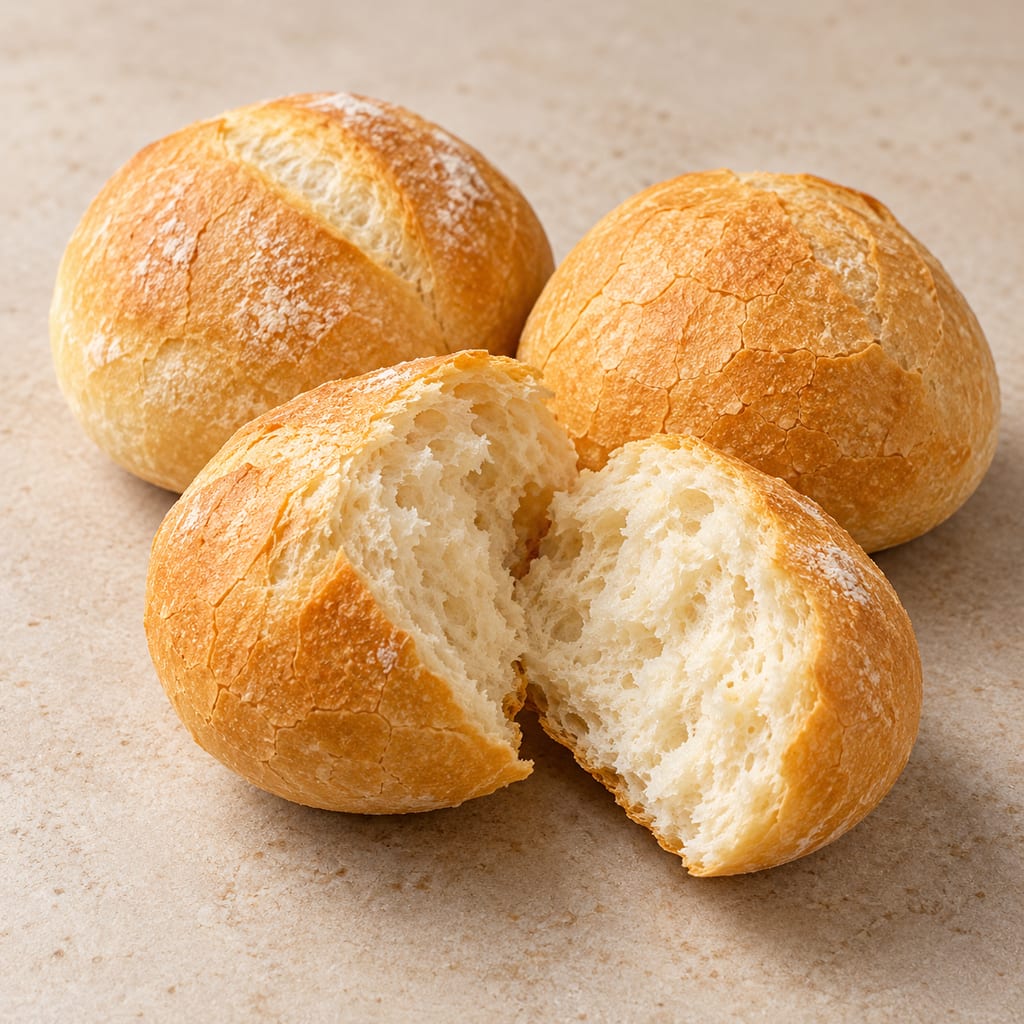
A crisp Belgian roll made from a supplier’s Croc-flour dough, mixed by hand or machine, proofed in rounds and baked with steam.
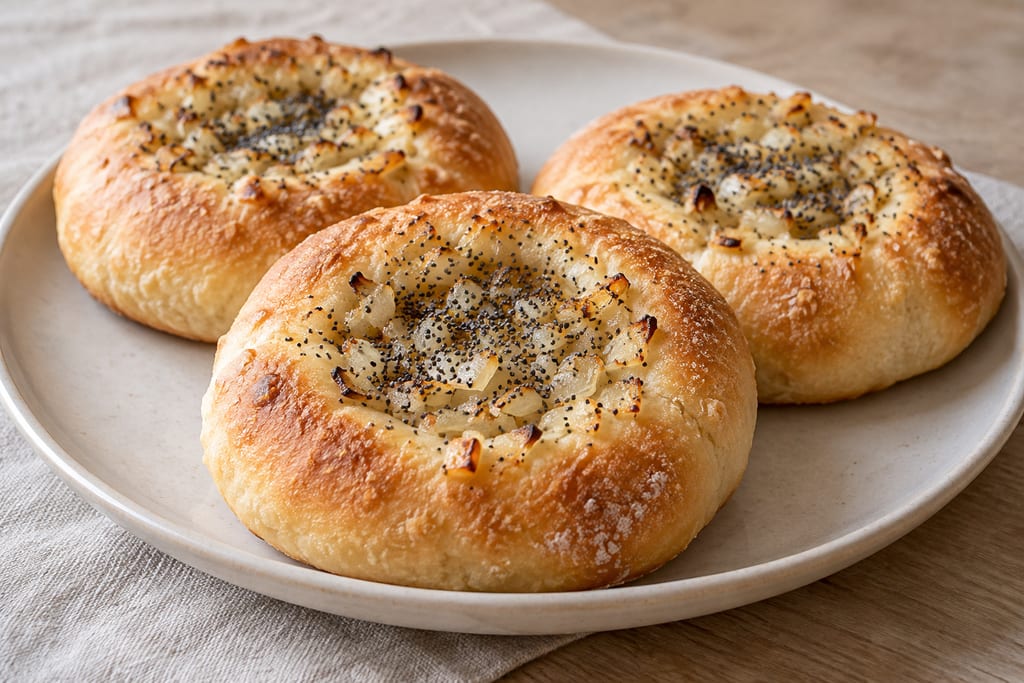
Bialys are soft, yeasted wheat rolls baked without boiling, each shaped with an onion-filled central depression instead of a hole.
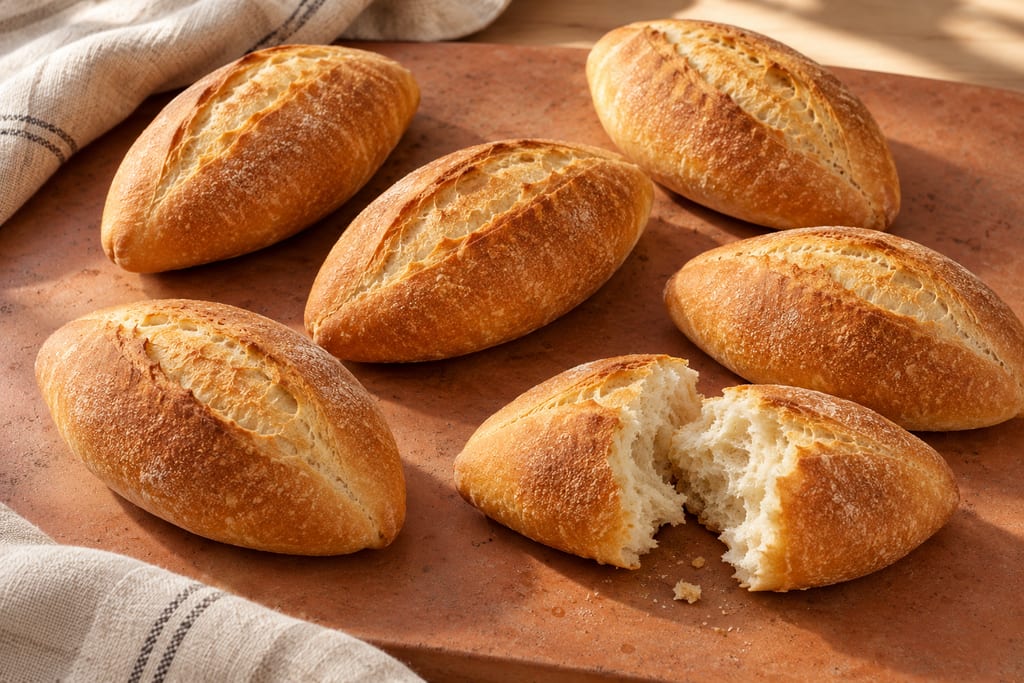
Small, lightly enriched rolls with tapered ends and a scored top; this six-roll formula bakes on a hot stone with steam for a thin, crisp crust.
No community contributions have been published for this entry yet.
Sign in to contribute. Published comments and photos are free to read.
CardamomoMethod · Ingredients
Birote salado estilo Guadalajara, receta fácil para las tortas ahogadasThe source gives a home formula of 750 g flour, 22 g yeast, 1 tablespoon salt and 2 1/4 cups water, using 250 g flour, 1 cup water and 7 g yeast for a six-hour preferment; the final dough uses the remaining flour, water and yeast.
It describes a one-hour bulk rise or until doubled, eight shaped rolls with about 30 minutes' expansion, and steam-baking at 250°C for 15 minutes followed by 5–10 minutes at 200°C until browned. No egg is listed.
Cited in: A Guadalajara-style home formula; Bread in the local meal
Secretaría de Cultura, Gobierno del Estado de Jalisco / ConacultaGeography · Cultural use
Sabor que somosThe cultural publication identifies birote salado with Guadalajara and tortas ahogadas; this supports regional association, not a precise origin or the recipe formula.
Cited in: Regional use
Secretaría de Agricultura y Desarrollo Rural, Gobierno de MéxicoGeography · Cultural use
Torta ahogada, tradición y sabor del occidente de MéxicoThe ministry describes torta ahogada as a Guadalajara dish made with birote.
Cited in: Regional use
Centers for Disease Control and PreventionSafety
Raw Flour and DoughRaw flour can carry germs; CDC advises against eating raw dough and recommends following recipe baking directions and cleaning utensils after contact.
Cited in: Food handling
Turismo GuadalajaraContext
Guadalajara: Un Destino que se SaboreaMunicipal tourism article dated 1 June 2026 describes crisp birote as part of Guadalajara's food identity and its use in torta ahogada with tomato and chile de árbol sauce. It does not establish the recipe's fermentation or a first attestation.
Cited in: Bread in the local meal
Larousse CocinaIdentity · Geography · Use
BiroteLarousse associates birote with Jalisco and with tortas ahogadas, and describes a dense crumb with a sour note.
Cited in: Other descriptions and a two-stage method
La JornadaContext
Torta ahogada: identidad de GuadalajaraA 2006 newspaper piece on the torta ahogada as an emblem of Guadalajara gives the local setting and attributes a climate explanation to the bread's character; this is the newspaper's account and is not tested or taken as an origin story.
Cited in: Other descriptions and a two-stage method
Zona GuadalajaraMethod · Comparison
Receta: cómo hacer el birote saladoA two-stage dough that begins with a stage called pata: 500 g flour, 15 g yeast and water as needed, rested six hours at room temperature or three days in the refrigerator.
The second stage adds 30 g dry yeast and 20 g salt; after a 30-minute rest and a final rise the loaves bake at 250°C for about 15 minutes, or until brown. The water for the second stage, the final-rise length, the yield and a measured endpoint are not given.
Cited in: Other descriptions and a two-stage method
Wikimedia CommonsImage reference
File:Birotes_Salado.jpgRon Mader, CC BY-SA 2.0; individually checked, excluded from PD/CC0 count.
Wikimedia CommonsImage reference
File:Birotes_Salados.jpgTyrv, CC BY-SA 4.0; individually checked, excluded from PD/CC0 count.
Wikimedia CommonsImage reference
File:Lonche_de_pierna.jpgEngirare, CC BY-SA 4.0; individually checked, excluded from PD/CC0 count; filled sandwich also not the plain recipe.
Wikimedia CommonsImage reference
File:Birotes.jpgExact source page inaccessible; licence and exact salado subject unconfirmed, not counted.
Wikimedia CommonsImage reference
File:El_Pan_Birote.jpgExact source page inaccessible; licence and exact salado subject unconfirmed, not counted.