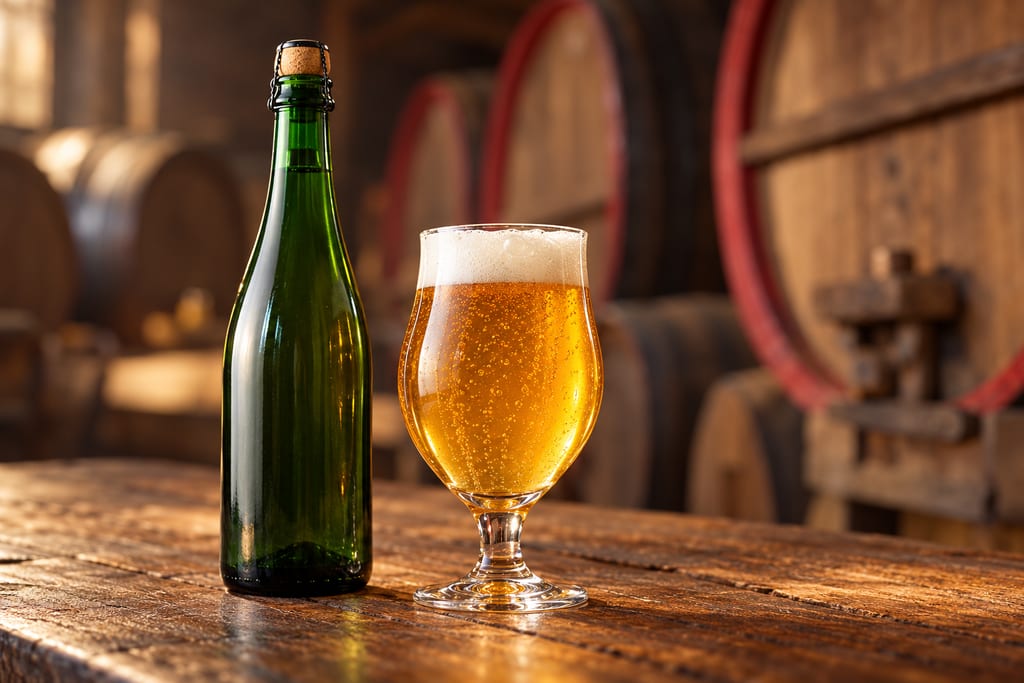
Gueuze
Belgian beer blended from young and mature spontaneously fermented lambics, then refermented in the bottle to natural carbonation. The recipe follows a 2,600-litre blend studied in 2024.
 FermenteaWhere food goes to change
Modern method
Pistolet · Pistolets
A crisp Belgian roll made from a supplier’s Croc-flour dough, mixed by hand or machine, proofed in rounds and baked with steam.
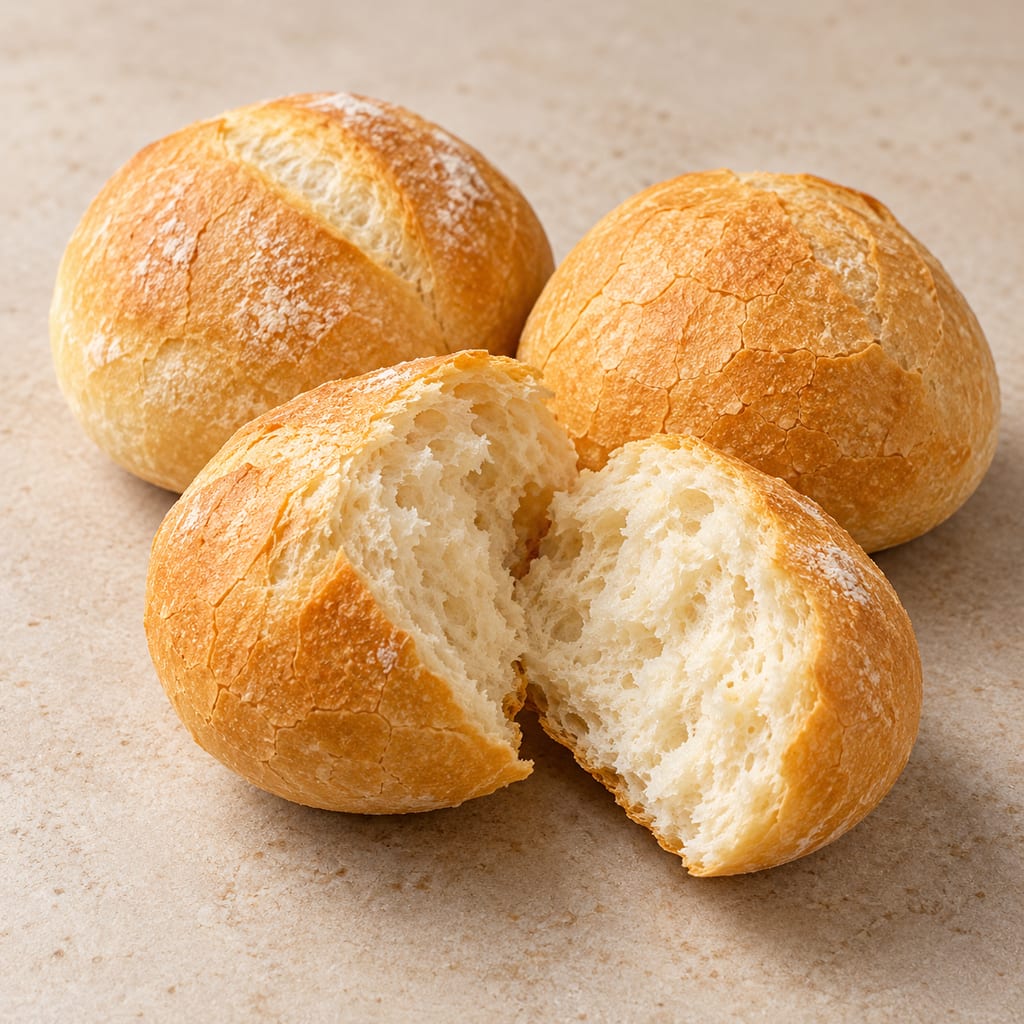
A pistolet is a small Belgian yeast roll, generally round, with a crisp crust and a soft crumb. It is closely associated with Brussels, where it is also eaten as a filled roll. This record follows one white Croc-flour formula for home baking. The dough is mixed, rested, divided into small rounds, reshaped, proved and baked with steam. That makes the entry specific: it is not a universal pistolet formula, and it does not claim to reproduce a single bakery's signature roll.
A Brussels cultural article offers several possible explanations for the name, including a resemblance to a small pistol, and leaves the etymology unsettled. It also notes that pistolets were not always round: longer forms existed in the nineteenth century. A round shape is common in the contemporary home methods recorded here, but shape alone cannot settle the history.
Descriptions of the local roll often mention a top groove or split. A Brussels bakery report documents one baker's version with a distinctive groove; a Brussels tourism account emphasizes a golden crust and soft crumb. The selected Croc method does not specify cutting or slashing the top. It reshapes the portions and covers them with dimpled plastic during the final rise. This account preserves the method as written and does not add a score or groove to imitate a particular baker's form.
The roll is also distinguished by its eating context. Current Brussels descriptions show it filled with local dishes and ingredients, while Belgian bread references describe soft, hard, white, grey, tiger-marked and seeded variants. These examples make clear that pistolet is a family of recognizable rolls rather than one unchanged shape or recipe. This entry describes the white supplier-flour version and leaves other formula and decoration choices to their own evidence.
The pistolet has a documented association with Brussels, but an association is not proof of a birthplace. A 2025 Brussels cultural article reviews references in dictionaries and texts and notes that nineteenth- and twentieth-century writers called pistolets a Brussels specialty. It also lays out several proposed explanations for the name, including a resemblance to a small pistol and a comparison with an old French coin. The article does not settle which explanation is right or where a pistolet was first eaten.
The same account points to older works that it says mention Brussels pistolets. Those books were not examined directly for this recipe, so they are evidence reported by the modern article, not independently verified passages in this record. The local food's history should therefore stay cautious: there is a strong Brussels connection in historical writing, but the exact beginning and naming story remain open.
Present-day Brussels provides a clearer picture of use. The city tourism office describes a small round roll with a golden crust and soft crumb, served in little sandwiches inspired by local foods. A 2013 report on one specialist bakery describes rolls with a top groove and fillings such as grey shrimp, roast beef, seasoned minced meat, and local sausages and cheeses. These are specific examples of current shop practice, not a requirement that every pistolet be filled or carry the same groove.
The bakery evidence also distinguishes the cultural food from the formula on this page. The local roll is known through a Brussels eating tradition, while the selected recipe is a product-linked Croc dough for home baking. Neither the name nor regional association implies that the supplier's exact proportions are old. This record carries the place association, identifies the selected formula as modern and leaves the earliest recipe and exact origin unknown.
The selected formula lists 500 g Croc white pistolet flour, either 35 g fresh yeast or 12 g dried yeast, 8 g salt and 300 g ice-cold water. It also calls for oil, but only to coat the dimpled plastic cover used over the shaped rolls during the final proof; no oil amount is provided. Croc is a flour blend that already contains pistolet improver. This is why the formula adds no separate improver. The flour blend is part of the method, not a neutral name for any white flour. The supplier's product page lists wheat flour, wheat gluten and soy flour in this blend, so this flour is not suitable for people avoiding those allergens; check the current package label.
The listing labels this as a batch of 15 and later directs the baker to divide the dough into 60 g pieces. The listed mixture totals about 843 g with fresh yeast or 820 g with dried yeast, before residue or handling loss. Fifteen pieces at 60 g would need 900 g of dough, so the stated yield does not reconcile with the mixture.
Other formulas show why the mismatch should not be patched by borrowing ingredients. A separate Belgian home-pâtisserie method labels a formula as 2 kg of dough but lists 1 kg flour, 550–600 g water, 60 g fresh yeast, 40 g unspecified improver and 17 g salt, a different set of proportions and shaping instructions. A current Soubry recipe adds butter and a measured bread improver, uses 500 g flour, and forms sixteen 53 g rolls. Cook & Bake's product-linked version uses its own flour blend and crispness improver. These are distinct formulas built around different products.
Use the Croc formula as a whole if following its method. Adding improver to its pre-blended flour, or replacing that flour without adjusting the recipe, is not supported by the selected instructions. Commercial blends can differ in strength and in which improver is already incorporated. The recorded water and yeast amounts belong to this particular version; the alternative recipes are useful for comparison, not for topping up its yield.
Wheat flour gives yeast dough a network that can stretch as gas forms. New Mexico State University Cooperative Extension explains that when wheat flour is moistened and worked, gluten develops into an elastic framework that holds fermentation gas. That general mechanism helps explain why kneading matters in the pistolet method: the dough needs enough structure to expand into a light crumb while retaining the shape of a small roll. No measured gluten strength is given for the Croc flour in the record.
Water hydrates the flour and makes the dough cohesive; the recipe uses it very cold, weighed as 300 g. The supplier gives a target dough temperature of 25–26°C during proofing and says surrounding conditions affect the rise. The initial water temperature and final dough temperature are different measures. Cold water can help control dough warmth during mixing, but the listed instructions do not say that the water itself should be at 25–26°C.
Yeast consumes available sugars and releases carbon dioxide during fermentation. The gas stretches the gluten network, and the small bubbles created and distributed during mixing give it places to expand. This formula allows either fresh or dried yeast, at the two quantities it lists. It does not provide a proof time that converts exactly between the two forms, nor does it name a strain or give a fermentation endpoint measurement. The visual and touch cues are practical instructions, not a laboratory test.
Salt is present at 8 g in the Croc batch. It contributes seasoning and is added with the other measured ingredients; the recipe offers no special salt treatment. The supplier warns dried-yeast users to dissolve it in a small amount of the cold water, but does not say to omit salt or alter the formula. In the Soubry formula, butter and improver have their own roles in a separate version. They should not be silently carried over to the Croc recipe.
American Society of Baking describes bread baking as a sequence in which the dough expands, the surface dries, and the crust browns. In this roll, early steam keeps the surface moist while it expands; releasing the oven's steam later lets the surface dry and form a crisp crust. This is a general explanation of steam baking, not a measured crust-moisture target or a guarantee that any home oven will reproduce a bakery result.
Measure the Croc flour, salt, yeast and ice-cold water by weight. If using dried yeast, dissolve it in a little of the measured water before mixing. The selected recipe offers several ways to develop the dough: a beater-style mixer uses eight minutes at first speed and three at second; a spiral kneader takes about twelve minutes; vigorous hand kneading takes about twenty minutes. These alternatives are not exact equivalents for every mixer or baker, but each is a separate route in the same formula.
A small piece of dough is stretched as a check. A thin, translucent membrane is the kneading cue. That check is qualitative; it is not a required thickness measurement. The dough then rests under plastic film for twenty minutes and should increase only slightly, rather than double. The formula gives 25–26°C as an ideal dough temperature; warmer or cooler conditions change how long the dough takes to rise.
Divide the dough into 60 g portions, round them and leave the covered balls for fifteen minutes. Flatten each ball and reshape it into a round pistolet. That intermediate rest gives the dough a pause before shaping, but the directions do not describe a complete degassing or folding sequence. The Home Pâtisserie variation explicitly presses down the dough before dividing; the Croc method does not direct the baker to adopt that step. Keeping the stages separate prevents a combined method from appearing more certain than either one.
The shaped dough is covered for its final rise with dimpled plastic. Oil the cover so that it does not stick to the rolls. The texture and moisture of the cover matter here: the aim is to protect the exposed surface during proofing while allowing the shaped pieces to rise. The final proof may take up to two hours at room conditions or about forty-five minutes in a proofing cabinet. These are alternatives, not cumulative waits.
Shape and proof the individual pieces with enough room for them to be handled. Soubry's current version places 53 g rolls at least 7 cm apart if they should remain separate, or closer if meant to touch in a figure. That spacing belongs to the Soubry formula, not this Croc formula, which gives no tray dimensions or spacing. No exact batch count can be promised for the Croc method because its stated fifteen pieces conflict with its listed dough mass.
Proofing gives yeast time to produce gas before baking. In the Croc procedure, the first covered rest is twenty minutes and the rounded balls rest fifteen minutes; the long final rise follows reshaping. The final proof may take up to two hours at room conditions or about forty-five minutes in a proofing cabinet. These times describe this flour formula, not a universal pistolet schedule. Flour, dough temperature, room conditions and equipment affect how quickly the rolls rise.
The finger-press check is the stated endpoint for the final proof: press the dough lightly, and a dent that remains rather than springing back indicates readiness. A touch cue is useful because no exact volume increase is specified for the final rise. It should not be rewritten as a claim that a particular number of minutes guarantees readiness. If the dough reaches the cue sooner or later, the directions give no measured calibration to substitute for judgment.
The 25–26°C target refers to dough temperature, not proof-box air or oven temperature. No minimum or maximum fermentation temperature is provided, and “room conditions” is not numerically defined. This record preserves those limits. It does not imply that a home cook can infer a safe or complete fermentation from smell or visible bubbles; the process here is ordinary yeasted bread dough followed by baking, and the useful endpoint is specific to shaping and oven readiness.
Other versions illustrate how proofing depends on formula and bakery practice. The Home Pâtisserie recipe uses a one-hour rise after shaping followed by another half-hour after cutting the rolls. Soubry's method gives a single sixty-minute room-temperature proof after rounding. Cook & Bake uses two short rests and a forty-five-to-sixty-minute final rise. Those times are not averaged into one recommendation; each belongs to its own flour, yeast, portion size and shaping path.
Heat the oven to about 220°C before baking. The Croc method gives twenty to twenty-two minutes as its bake time. During the early bake, yeast activity and expanding gases enlarge the rolls before the dough structure sets. Steam helps keep the surface flexible during this initial expansion; once the surface dries, the crust can brown and crisp. The American Society of Baking describes these as overlapping expansion, drying and browning stages.
If the oven has a steam function, apply steam once and release it about five minutes before the end. If there is no vent, the method suggests opening the oven briefly near the end to let steam escape. Another option is to put water or ice into a heatproof vessel in the hot oven. That creates a direct burn and scald hazard: hot metal, hot water, melting ice and escaping steam can injure skin. Use only an oven-safe vessel and a method the appliance maker permits; do not reach over it or pour water into glassware that may not tolerate thermal shock.
Steam is a baking aid with a real handling risk, not a special fermentation stage. The basic bread method is kneading, resting, shaping, proofing and baking. This formula advises steam for the crust, but a home oven's steam function, vent and door design differ. The instruction to briefly open a non-vented oven is one option in the supplier method; follow appliance instructions and do not use a door-opening method that risks damage or burns.
Other current recipes arrange heat and steam differently. The Soubry formula starts at 240°C, reduces to 200°C, and asks for the door to be held slightly open after twelve minutes; its optional hot pebbles and 50 ml water also release immediate steam. Cook & Bake uses 230°C for twenty to twenty-two minutes and leaves the oven ajar near the end. The Home Pâtisserie directions use about 240°C with steam during the first three minutes. These are separate bake paths, not interchangeable steps to add to the Croc schedule.
A plain pistolet can be eaten as a roll or filled. In Brussels, reported shop fillings range from grey shrimp and roast beef to sausages, egg, pickles, cheese, chicory and tomato. The city tourism page describes these as small local sandwiches, while a local bakery report documents one shop's menu. Neither list defines the only correct filling. This selected recipe contains no filling; its method ends with cooled plain rolls.
Belgian bakers offer several related forms: white and grey flour, softer or harder rolls, tiger-marked crusts and seeded tops. Soubry demonstrates another measured variation in which butter and extra improver are included, while Cook & Bake uses its own crispness improver. These additions are not absent by accident in the Croc method: it relies on a pre-blended flour that already contains pistolet improver. A version made with plain white flour would need its own evidence and would not be this formula.
The pistolet is often recognized by more than its ingredients. A small roll, crisp crust and soft crumb distinguish it in Brussels food descriptions, and a top groove is a documented feature of some bakery examples. The Croc instructions do not specify a slash or groove. That limit matters for faithful reproduction: follow the method as written rather than add a shaping gesture from a different baker's recipe.
After baking, cool the rolls away from a humid place; humidity can make them soggy. No storage duration, packaging method or reheating schedule is given. The reported crisp crust is a fresh-bake characteristic, and this page does not promise how long it will remain crisp. It also does not set an internal temperature or establish a commercial shelf life.
The precise historical origin and name of this bread remain unsettled, and the flour blend is product-specific. Formula and oven choices vary across the Belgian recipes; those differences are real variants rather than missing quantities to combine.
Pistolets are small crisp-crusted Belgian rolls with a soft interior, strongly associated with Brussels. A Brussels cultural account records the bread among the city's specialties in 19th- and 20th-century texts while leaving both the name's origin and the first place it was eaten unresolved. A local tourism page describes its small round form and current use in filled sandwiches. This record follows one present-day Croc-flour formula for home baking; it does not claim to recover the first or only traditional recipe. Other bakeries use different flour blends, improvers, portion sizes, shaping and steam schedules, so those methods remain separate variants.
Scaling: source batch only
The source's no-steam-function alternative uses a heatproof pot inside the hot oven and adds water or ice at loading.
Hazard sourceThe Croc flour product page lists wheat flour, wheat gluten and soy flour. This recipe depends on that specific supplier blend.
Hazard sourceTake care when adding water or ice to the hot vessel; the source explicitly warns about burns.
Control sourceThe specified Croc flour contains wheat and soy. Do not use it for anyone avoiding either allergen; check the package label because product ingredients can change.
Control sourceTake care around the source's hot water or ice steam alternative; it explicitly warns of burn risk.
The specified Croc flour's current product listing includes wheat flour, wheat gluten and soy flour. Check the package label before baking, especially when serving someone with a wheat, gluten or soy allergy.
BRUZZ reports a strong 19th- and 20th-century association with Brussels while stating that neither one etymology nor the place where the roll was first eaten is settled.
Belgian beer blended from young and mature spontaneously fermented lambics, then refermented in the bottle to natural carbonation. The recipe follows a 2,600-litre blend studied in 2024.
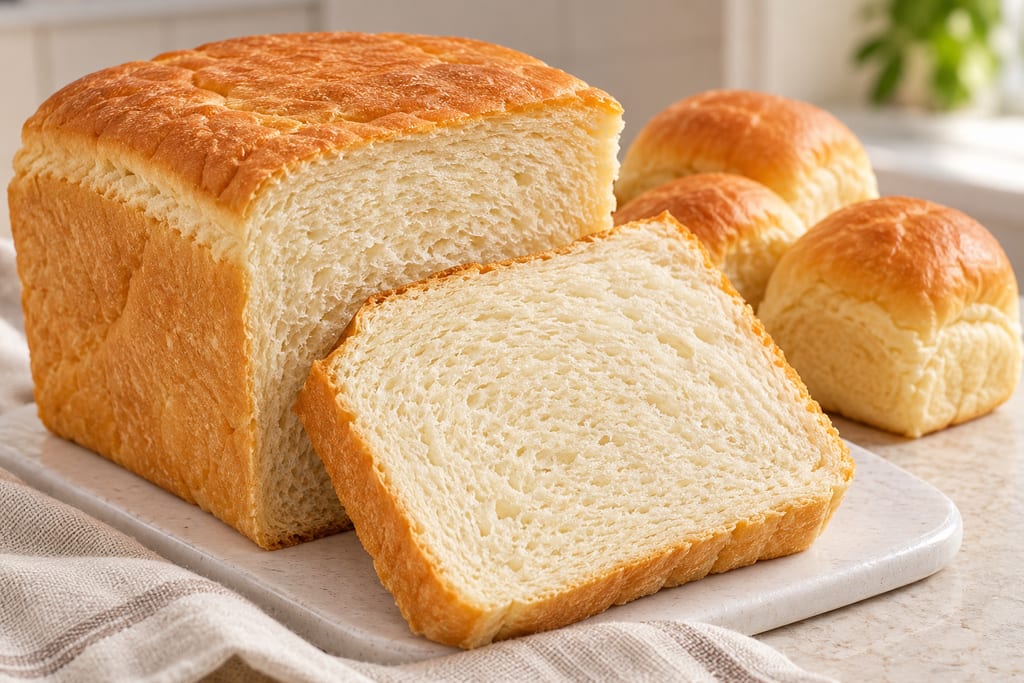
This softer home-style Agege bread uses a scalded flour paste, an enriched yeast dough and a 9×5-inch loaf pan, with rolls from the extra dough.
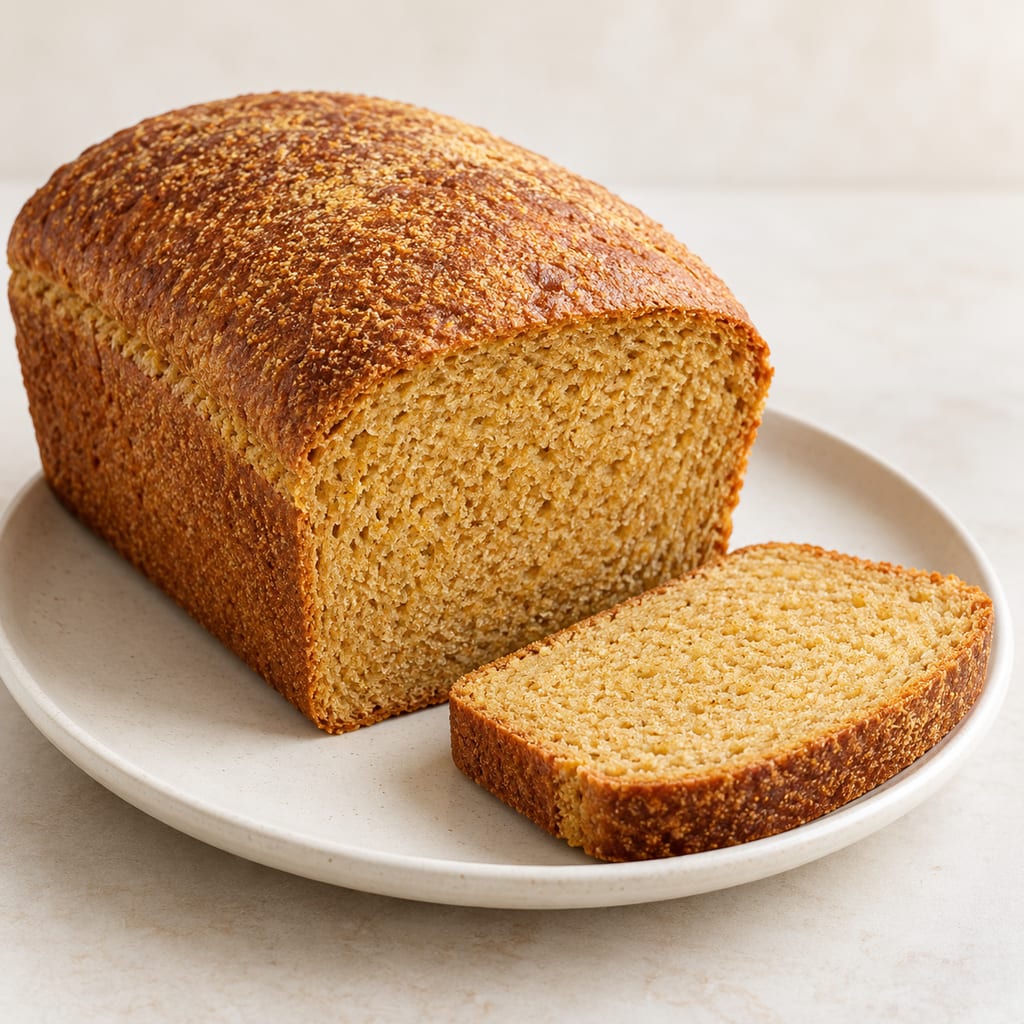
Anadama is a New England yeast loaf made with wheat flour, cornmeal and molasses. Scalded cornmeal enriches the dough, while molasses lends sweetness and a dark crust; it is especially good toasted or beside soup and baked beans.

A yeast-raised wheat ring shaped from a firm dough, briefly boiled and baked. This source-batch formula gives a gently malted crust and a chewy crumb.
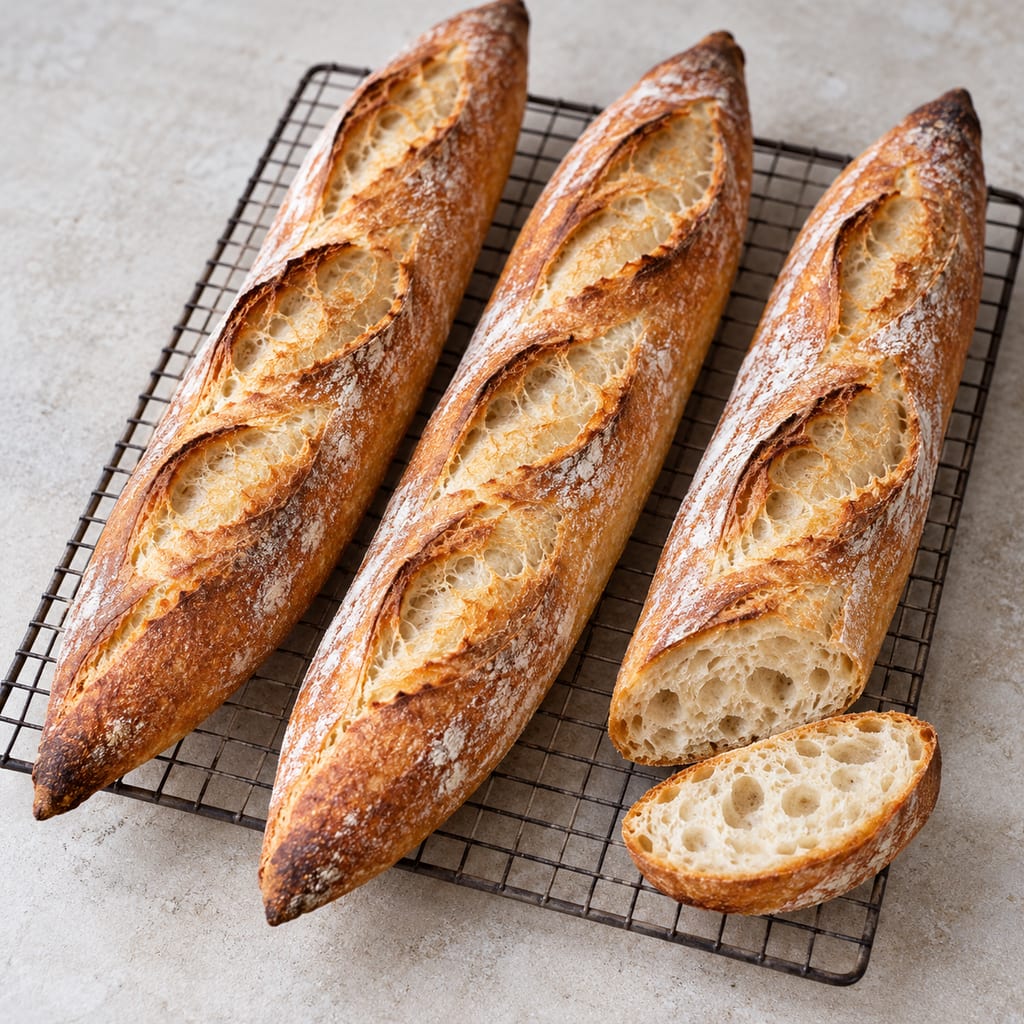
Three long, crusty wheat loaves made with an overnight yeast poolish, shaped by hand and baked with steam for a crisp crust.
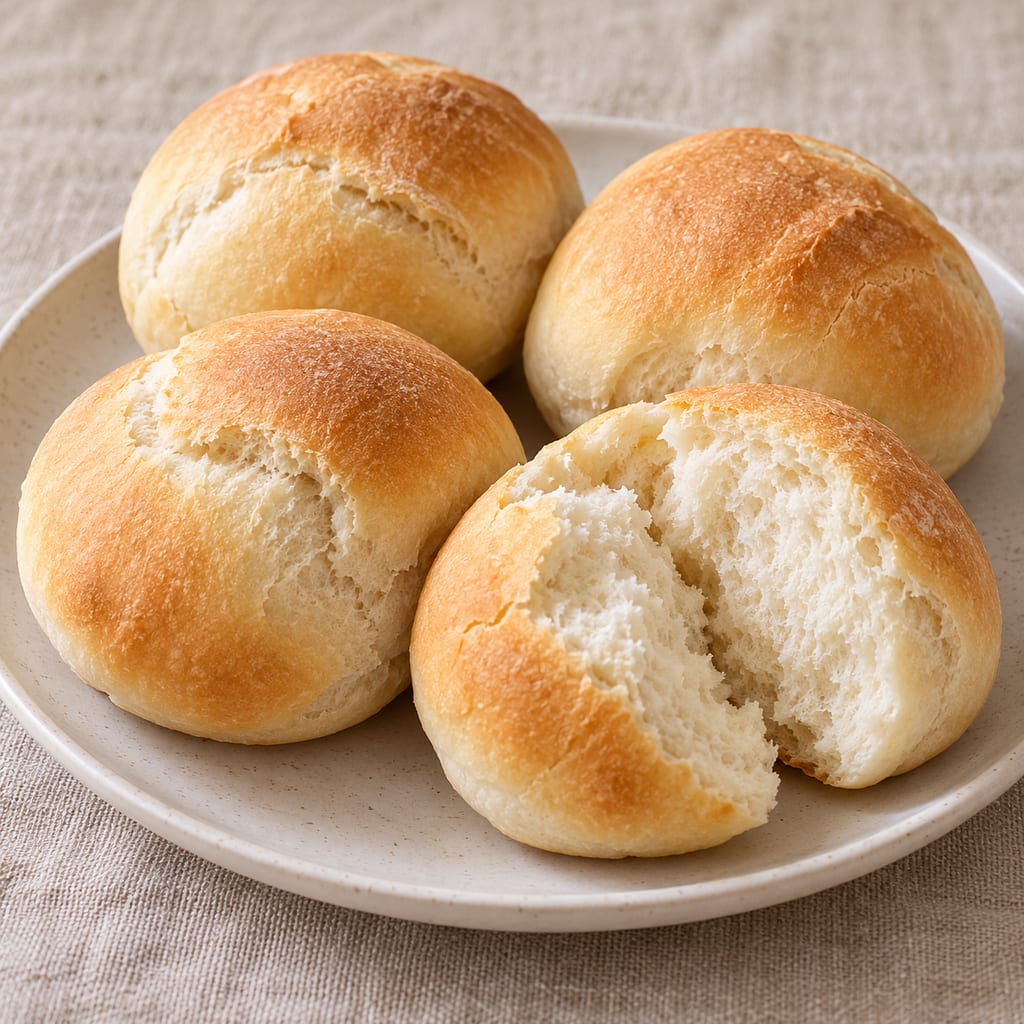
A lightly salted, yeast-raised Barbadian roll, baked in a dozen-roll home batch and often split for cutters.
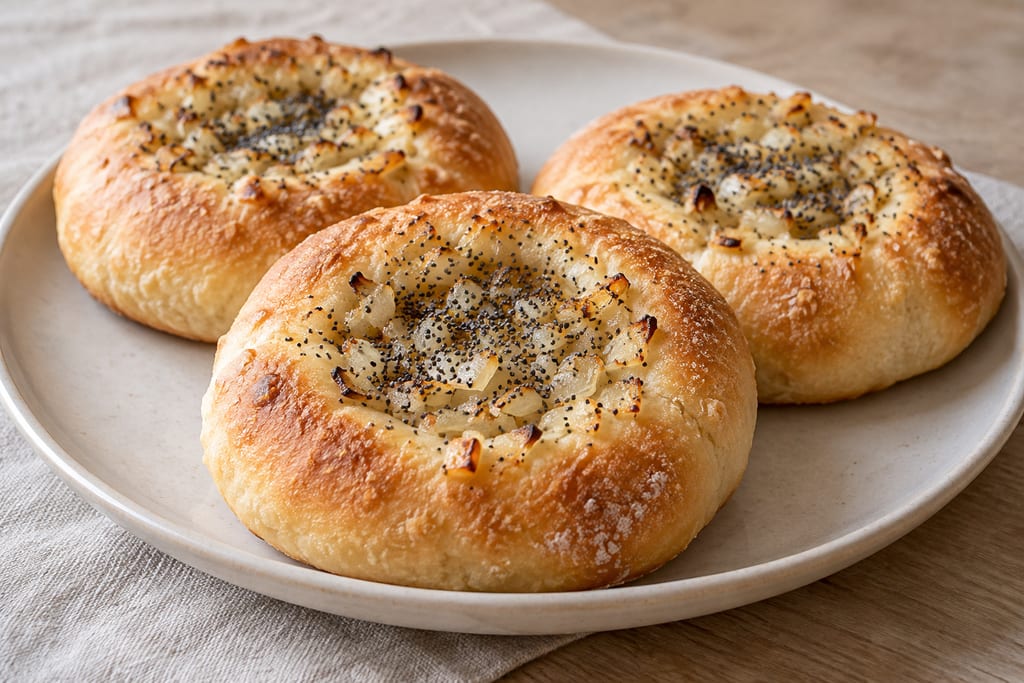
Bialys are soft, yeasted wheat rolls baked without boiling, each shaped with an onion-filled central depression instead of a hole.
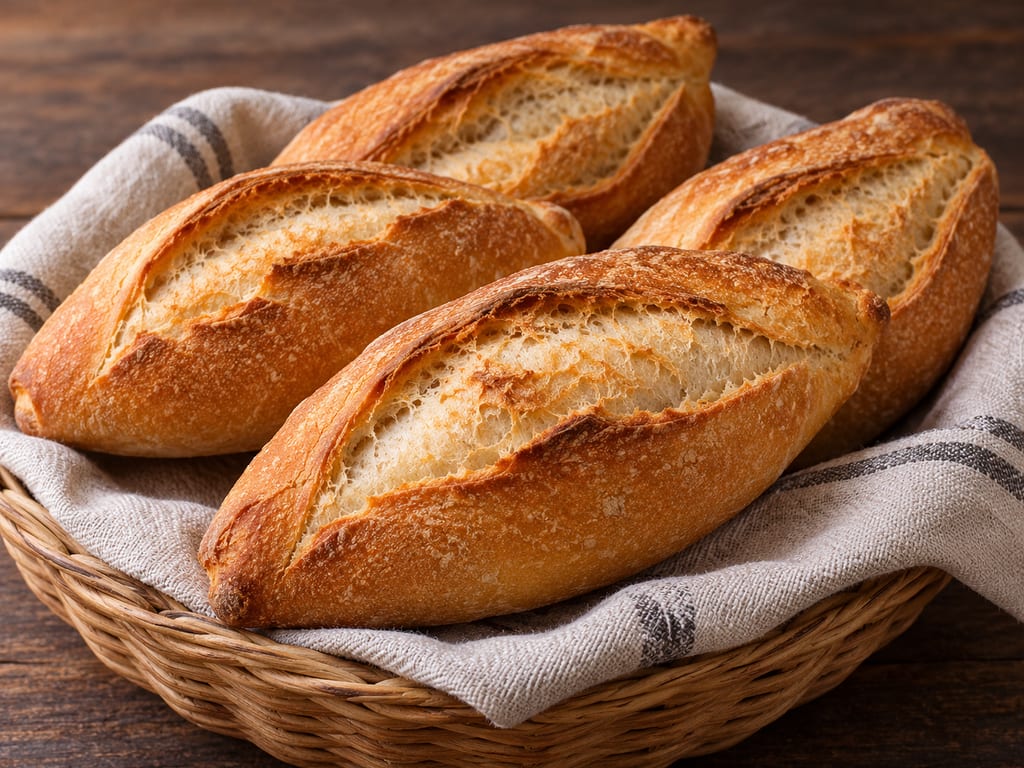
A measured, commercial-yeast home method for Guadalajara-style birote salado, with a six-hour preferment, shaped rolls and a two-temperature steam bake. This formula contains no egg.
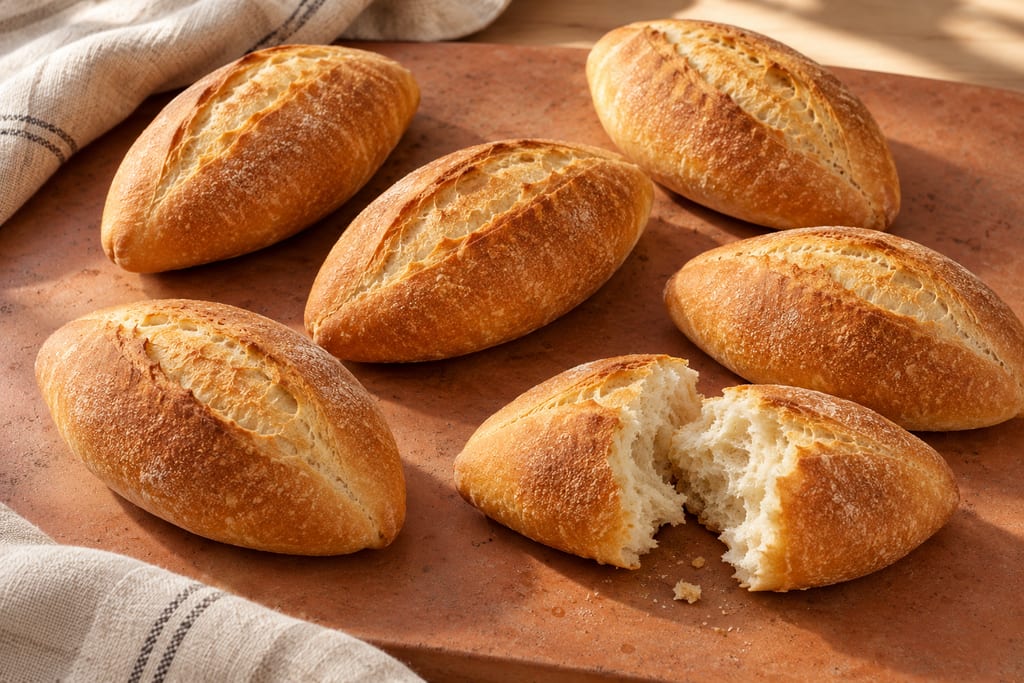
Small, lightly enriched rolls with tapered ends and a scored top; this six-roll formula bakes on a hot stone with steam for a thin, crisp crust.
No community contributions have been published for this entry yet.
Sign in to contribute. Published comments and photos are free to read.
ZelfbakkerRecipe · Home method · Equipment
Zelf pistolets bakkenCurrent page directly inspected 26 October 2026, lines 47–64: Brillant requires added improver; Croc and Pisto-Krok already contain it. Croc batch for 15 lists 500 g flour, 35 g fresh or 12 g dry yeast, 8 g salt, no extra improver and 300 g ice-cold water.
Lines 66–76 give kneading options and a translucent-membrane cue.
Lines 78–101 describe 20-minute initial rest/rise, 60 g division, 15-minute ball proof, shaping, final proof up to 2 hours at room conditions or about 45 minutes in a proofing cabinet, with a persistent finger-dent endpoint; 25–26°C is called an ideal dough temperature.
Lines 103–113 give 220°C, 20–22-minute baking, steam-function advice, a heatproof-pot water/ice alternative with burn caution, and cooling-away-from-humidity advice.
Lines 119–121 say advice reflects the supplier's products, experience and customer feedback; the page gives no finished-roll storage duration or independent validation.
The page labels this basis recipe as 15 pistolets and later specifies 60 g portions; the listed Croc-variant ingredients total 843 g with fresh yeast or 820 g with dried yeast, less than 900 g for fifteen 60 g portions.
Direct supplier page had been inspected earlier in this tranche at lines 47-121; current web retrieval in this correction pass returned HTTP 404, so no new text was inferred. The existing inspected method specifies oiling the plastic/dimpled covering to prevent sticking and a brief oven-opening steam-release option when the oven has no vent.
Cited in: The Croc-flour formula and its limits; What flour, water and yeast contribute; Mixing, resting and shaping small rolls; Proofing: time, temperature and touch; Steam, oven spring and a crisp crust; Use, variation and what this entry leaves open
Home PâtisserieRelated source batch
Baguette et pistoletPrior assigned dossier records direct inspection of a separate 2 kg-labelled formula listing 1,000 g flour, 550–600 g cold water, 60 g fresh yeast, 40 g undefined improver and 17 g salt, plus pistolet stages.
The listed amounts total 1,667–1,717 g before process loss; this batch is not mixed with the selected Croc-flour recipe.
A current browser re-open timed out; facts are retained from the prior inspected dossier, not described as a fresh fetch.
Cited in: The Croc-flour formula and its limits; What flour, water and yeast contribute; Mixing, resting and shaping small rolls; Proofing: time, temperature and touch; Steam, oven spring and a crisp crust; Use, variation and what this entry leaves open
BRUZZCultural history · Geography
BIG CITY. Is 'de pistolet' van oorsprong Brussels?Lines 59–75 discuss competing name explanations, Brussels-associated sources and 19th-/20th-century speciality status; article says there is no settled etymology or known first-eating place.
Older texts named by BRUZZ were not inspected independently.
Cited in: A small roll with a Brussels identity; A Brussels specialty without a settled origin
Soubry ConsumersModern variant · Method · Ingredients · Equipment
Crispy and airy pistoletsThe current recipe specifies 500 g white-bread flour, 220 g cold water topped to 300 g with five ice cubes, 30 g fresh yeast, 30 g butter, 17 g bread improver and 8 g salt, for 16 rolls of 53 g.
It mixes all ingredients with a stand mixer for five minutes on low and five minutes on speed 2, rests 20 minutes, divides and rounds 16 portions, then proves 60 minutes at room temperature.
It bakes with steam, beginning at 240°C and reducing to 200°C for 15–20 minutes; a wooden spoon holds the door open after 12 minutes to release steam. It says to cool on a rack.
A tip suggests heating a stone bowl with pebbles and carefully pouring 50 ml water onto them for a crisper crust, and warns that steam releases immediately; this alternative is not used as the recipe's required method.
Cited in: The Croc-flour formula and its limits; What flour, water and yeast contribute; Mixing, resting and shaping small rolls; Proofing: time, temperature and touch; Steam, oven spring and a crisp crust; Use, variation and what this entry leaves open
Cook & Bake BelgiumModern variant · Method · Ingredients · Equipment
PistoletsThis product-linked recipe uses 1 kg of its white-bread-and-pistolet flour, 580–600 ml ice water, 55 g yeast, 17 g salt and 50 g of its own crispness improver.
It uses a machine knead of 10–15 minutes, a 15-minute rest, 70 g portions, two rounds of shaping separated by a 15-minute rest, and a 45–60-minute final rise under damp cloth or film.
The recipe bakes at 230°C for 20–22 minutes and suggests leaving the oven ajar during the final minutes to release moisture. It is a separate branded formula, not a supplement to the Croc-flour batch in this record.
Cited in: The Croc-flour formula and its limits; What flour, water and yeast contribute; Mixing, resting and shaping small rolls; Proofing: time, temperature and touch; Use, variation and what this entry leaves open
visit.brusselsGeography · Modern use
Brussels’ culinary specialitiesVisit Brussels describes the pistolet as a small round bread with a golden crust and soft crumb, and gives examples of fillings at a Brussels specialist: américain, white pudding, chicory, tomato and prawns, and Liège syrup. This supports current identity and use, not origin or a universal recipe.
Cited in: A small roll with a Brussels identity; A Brussels specialty without a settled origin; Use, variation and what this entry leaves open
BRUZZ / Agenda MagazineModern use · Form · Fillings
Pistolet OriginalA 2013 report describes a Brussels bakery's rolls made to baker Yves Guns's recipe with a distinctive groove on top, and local fillings including grey shrimp, mincemeat with pickles, roast beef, blood sausages and cream cheese.
The report documents one shop's service and selection; it does not establish a single standard recipe or universal filling.
Cited in: A small roll with a Brussels identity; A Brussels specialty without a settled origin; Use, variation and what this entry leaves open
Pain et SantéIdentity · Variants · History
La petite histoire d’un petit painThe page says Belgian bakers offer soft and hard pistolets, white and grey, tiger-marked, and seeded variants; it notes that the roll remains a popular breakfast bread and that its origins are poorly documented.
The page introduces an article by the Veurne Bread Museum; that linked article itself was not inspected here, so no further historical claim is taken from it.
Cited in: A small roll with a Brussels identity; Use, variation and what this entry leaves open
New Mexico State University Cooperative ExtensionIngredient science · Fermentation science
BreadmakingExplains that yeast uses moisture, food and warmth and releases carbon dioxide and alcohol; explains that hydrated and worked wheat-flour gluten forms an elastic framework that holds fermentation gas. Used only for general mechanism, not to infer the dough's endpoint or exact gluten quality.
Cited in: What flour, water and yeast contribute
American Society of BakingBaking science · Steam
BakingExplains bread baking as heat and mass transfer and describes early dough expansion, surface drying and crust browning as distinct phases. Used to explain the source's early-steam instruction, not to invent a process temperature or bake endpoint.
Cited in: Steam, oven spring and a crisp crust
ZelfbakkerIngredients · Allergens
Croc – 2.5kgThe supplier's Croc product page lists wheat flour, wheat gluten, soy flour, dextrose, emulsifier, flour treatment agents, wheat malt flour and enzymes. It supports the product-specific wheat/gluten and soy disclosure; it does not change the selected dough formula.