
Other
Cooking oil
Cooking oil can coat a pan, carry heat around food, or contribute flavor and texture. The source and intended use matter because oils differ in flavor and heating behavior.
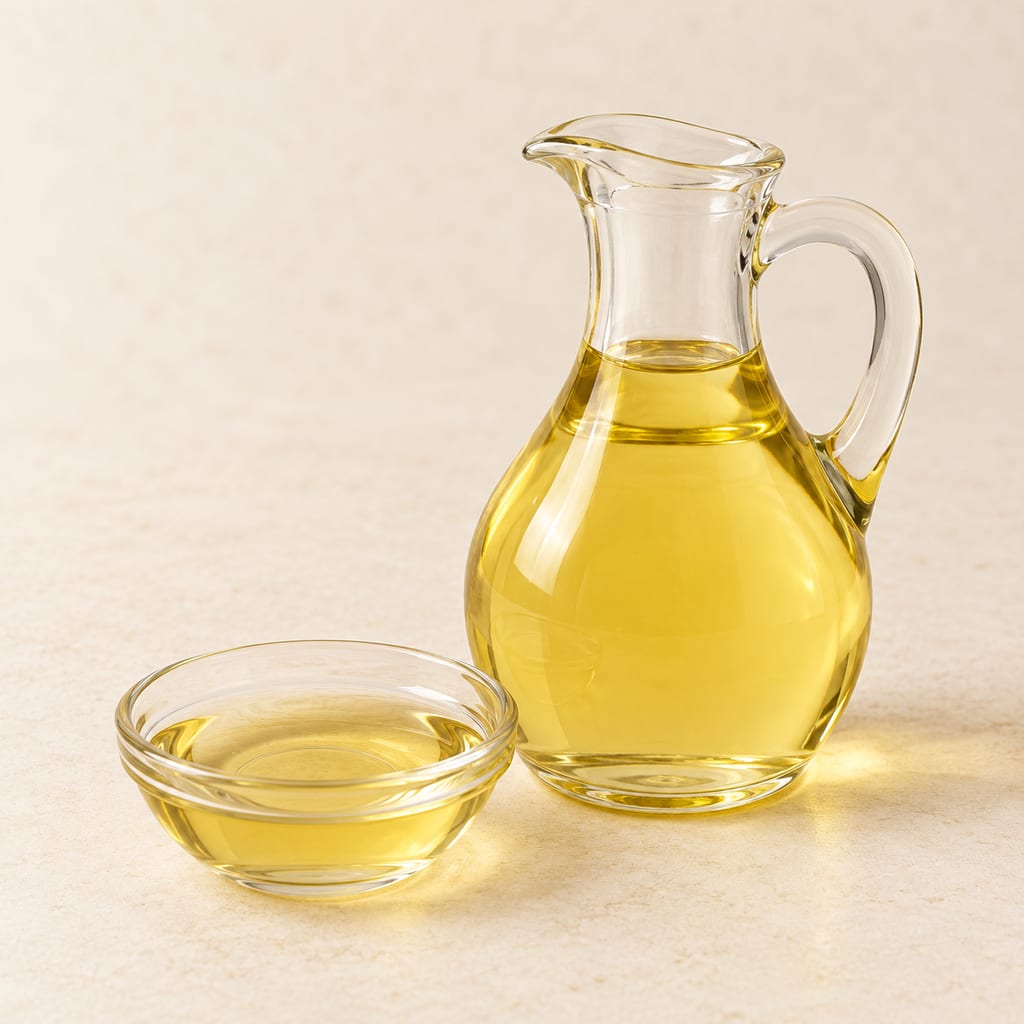
Selection and preparation
Oil can coat a pan or griddle to reduce sticking, or a larger amount can serve as cooking medium. In the assigned ragi uthappam batch, the creator oils the griddle and adds oil around the cake edge. The batch does not name or measure the oil; this example does not establish a universal choice.
Use the oil named by a recipe when one is given. When a recipe says only cooking oil, its source, processing, flavor and amount remain unspecified. Oils are not automatically interchangeable: flavor may change the food, and oils differ in heating behavior. Utah State University Extension compares cooking uses and notes that smoke behavior varies among oils. Follow the recipe method and heat; no numerical smoke points or universal temperature limits are supplied here.
Fermentation role
In the ragi uthappam batch, oil is used after fermentation on the cooking surface and around the batter. It is a pan lubricant or cooking medium in that preparation, not the starter or a fermentation control. Do not infer an oil addition to a ferment or use oil in place of salt, culture or another stated control.
Oil around submerged ingredients creates a low-oxygen environment. University of Minnesota Extension and Health Canada warn that vegetables or herbs stored in oil need product-specific safety controls. Infused oil is a different product from plain cooking oil; do not use ordinary oil-storage advice as a preservation process.
Allergens and storage
Cooking oil does not identify its source. Check the product label for its plant or animal source and declared allergens; this broad name alone cannot establish allergen status or suitability for a diner.
For plain oil, follow the package directions and store it away from heat and light. Utah State University Extension notes that air exposure can shorten quality life and cooler storage slows rancidity. An off odor is a reason not to use it. Storage life varies by product, so no universal period is given here.
Geography and use
Edible oils come from different seeds, fruits and other food sources. Names such as olive, canola, sunflower, sesame and peanut oil identify different products, not interchangeable versions of one oil. This article does not establish a single crop origin, regional tradition or historical starting point for oil use.
The ragi uthappam batch documents unspecified cooking oil used to coat a griddle and the cake edge. Broader cooking guidance describes different oils for sauteing, roasting, frying, baking and dressings, but those comparisons do not override a recipe's named ingredient.
Places
Unknown
Documented preparation · Place not establishedThese sources discuss general cooking-oil uses and one griddle preparation. They do not establish a unique geographic origin for cooking oil or a single regional tradition.
Community
No community contributions have been published for this entry yet.
Share what you made
Sign in to contribute. Published comments and photos are free to read.
Sources
Utah State University ExtensionSelection · Cooking use
Navigating Dietary Fats: Understanding, Selection, and UsageGuide compares oils and fats for cooking and baking uses.
Page says cooking oils have different smoke behavior; no numerical value is used.
Utah State University ExtensionStorage
Ask an Expert - Gearing Up for Holiday BakingAir exposure can shorten oil quality life; cooler storage slows rancidity.
University of Minnesota ExtensionHandling
Minnesota cottage food law: Chili oil and oil-based productsExplains hazards for low-acid ingredients submerged in oil; concerns infused products, not plain oil.
Health CanadaHandling
Food safety tips for vegetables and herbs in oilGovernment guidance gives controls for home-prepared vegetables and herbs stored in oil; not generalized to plain oil.
Gita's KitchenDocumented use
1 Batter 5 Recipes I Healthy Ragi Idli/Dosa/Uthappam/Paniyaram&Pakoda ! Diabetics Special IAssigned uthappam segment oils the tawa and adds oil around the cake edge; type and amount are unstated.