
Appam and hoppers
Appam, or hoppers, are South Indian and Sri Lankan rice pancakes made from a fermented coconut-and-rice batter and cooked in a curved pan to a crisp lacy rim and a soft, spongy centre.
 FermenteaWhere food goes to change
Roast paan · Thati paan
A lean Sri Lankan yeast bread baked as joined flat pieces, separated after the first bake, then grilled on both sides for its crisp crust.
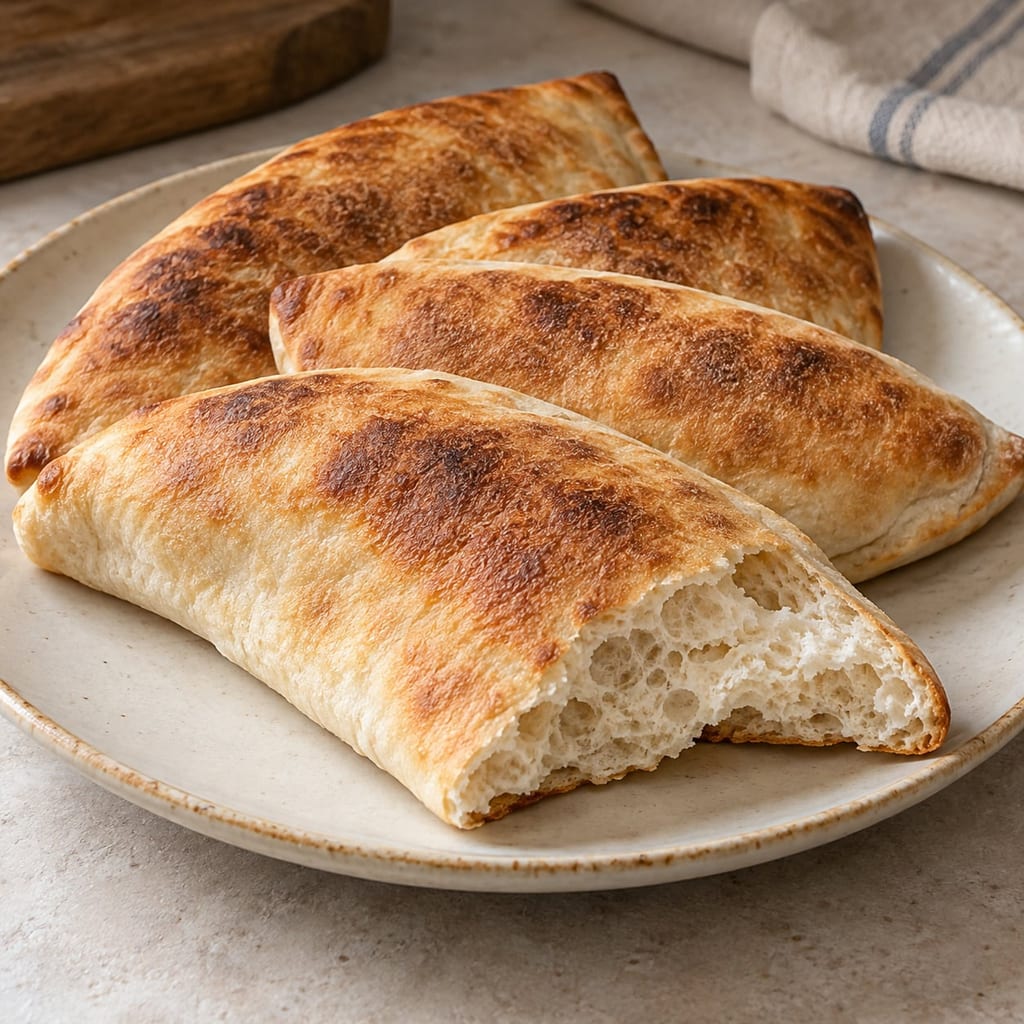
Roast paan, also called thati paan, is a Sri Lankan yeast bread with a distinctive two-stage bake. In this home method, separate flat pieces are layered in a pan, baked together, separated and grilled on both sides. The result is a crisp exterior with softer bread inside.
The Sri Lanka Export Development Board's commercial listing describes a related two-bake process using flatter units arranged together in a pan. It distinguishes the harder-crusted Roast Bread from a thicker and softer Pan Bread. These commercial details support the bread's identity but are not substituted for the home formula below.
Activate the yeast in ¼ cup water with 2 teaspoons sugar. Mix 2½ cups flour and ½ teaspoon salt. Add 1 cup water, the yeast mixture, 2 teaspoons oil, and the listed 2 tablespoons additional water. If the flour remains dry, add another 2–3 tablespoons water. Cover for 15 minutes.
Knead for 7–10 minutes, using the additional ½ cup flour as needed. Cover and proof in an oiled bowl for 1½ hours. The author looks for about a 40% rise and says cool weather may add 30 minutes.
Mix 3 tablespoons flour and 4 tablespoons oil into a loose paste. Line an 8-inch loaf pan and coat it with the paste. Deflate the dough and divide it into four portions for long rectangular breads or eight for box-shaped pieces. Shape the portions, brush paste between them and layer them in the pan with room to expand. Cover and proof 30 minutes.
Bake the joined pieces at 200°C for 30 minutes with a small oven-safe vessel of water in the oven. Invert the bread, separate the pieces and brush one side with butter. Grill or broil that side for 13–15 minutes, then turn and repeat. The source gives no grill temperature or rack distance, so watch closely. Use oven mitts to handle hot bread and equipment.
Do not taste the raw dough. Raw flour can carry harmful germs; cook the bread according to the recipe and wash hands, utensils and surfaces after handling flour and dough.
Shana's Kitchen publishes a separate home recipe for the same bread. It also describes roasting the bread again after the first bake, but its optional second bake is shorter and cooler, at 200 °C for five to ten minutes. The recipe differs from the Island Smile method in its dough, shaping and pan arrangement, so the two are kept apart here rather than combined into one formula.
The difference matters for the reader. The Island Smile method on this page gives the first bake and the buttered grill finish with their times, and it is the method this record follows. The Shana's Kitchen account shows that the second, crust-making stage is described by more than one home cook, while the exact temperatures and durations for that stage vary between the two published recipes.
Island Smile identifies roast paan, also called thati paan, as Sri Lankan bread. Sri Lanka's Export Development Board describes a commercial roast bread made from reduced-leavening dough, separated after a shared-pan first bake and baked again for a crust. No birthplace or earliest date is claimed.
Yield 4 servings · Scaling: source batch only
Raw flour may carry harmful germs; do not taste the dough and bake it before eating.
Hazard sourceThe pan and separated breads remain hot during the second browning stage; use oven mitts and monitor the grill to avoid burns or scorching.
Hazard sourceDo not eat raw dough; bake according to the recipe and wash hands and surfaces after handling flour and dough.
Control sourceThe second grill/broil setting and rack distance are not specified by the recipe; monitor the bread closely.
Handle the hot pan and bread with oven mitts.
The home source identifies roast paan as Sri Lankan and names thati paan; no more precise origin is established.
Appam, or hoppers, are South Indian and Sri Lankan rice pancakes made from a fermented coconut-and-rice batter and cooked in a curved pan to a crisp lacy rim and a soft, spongy centre.

Achcharu is a family of Sri Lankan vinegar pickles made with mixed vegetables or seasonal fruit and a piquant spice dressing. This version is a quick, refrigerated, non-fermented mixed-vegetable pickle.
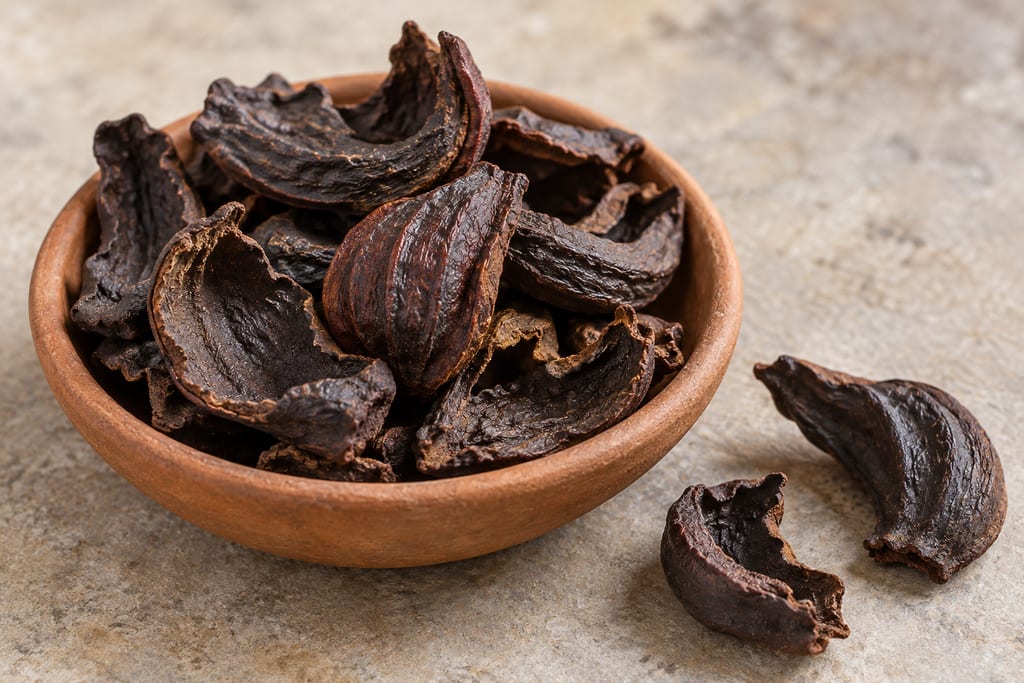
Goraka is the dried rind of Garcinia quaesita, a souring ingredient for Sri Lankan curries. Its drying is documented, but no complete household method is.
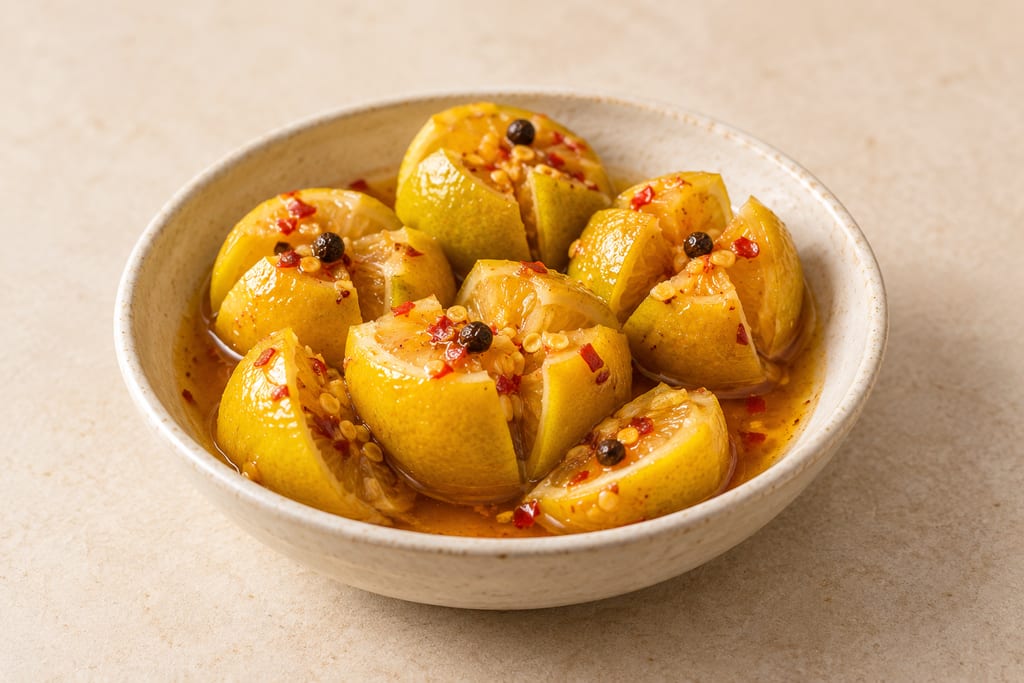
Peter Kuruvita’s published lime pickle stuffs 20 limes with rock salt, then simmers them in vinegar, sugar and chilli before a two-week rest.

Lunu dehi is Sri Lankan salted lime pickle. This version sun-dries cut, salt-stuffed ripe limes, then packs them with dried lime juice, chillies, spices and vinegar.
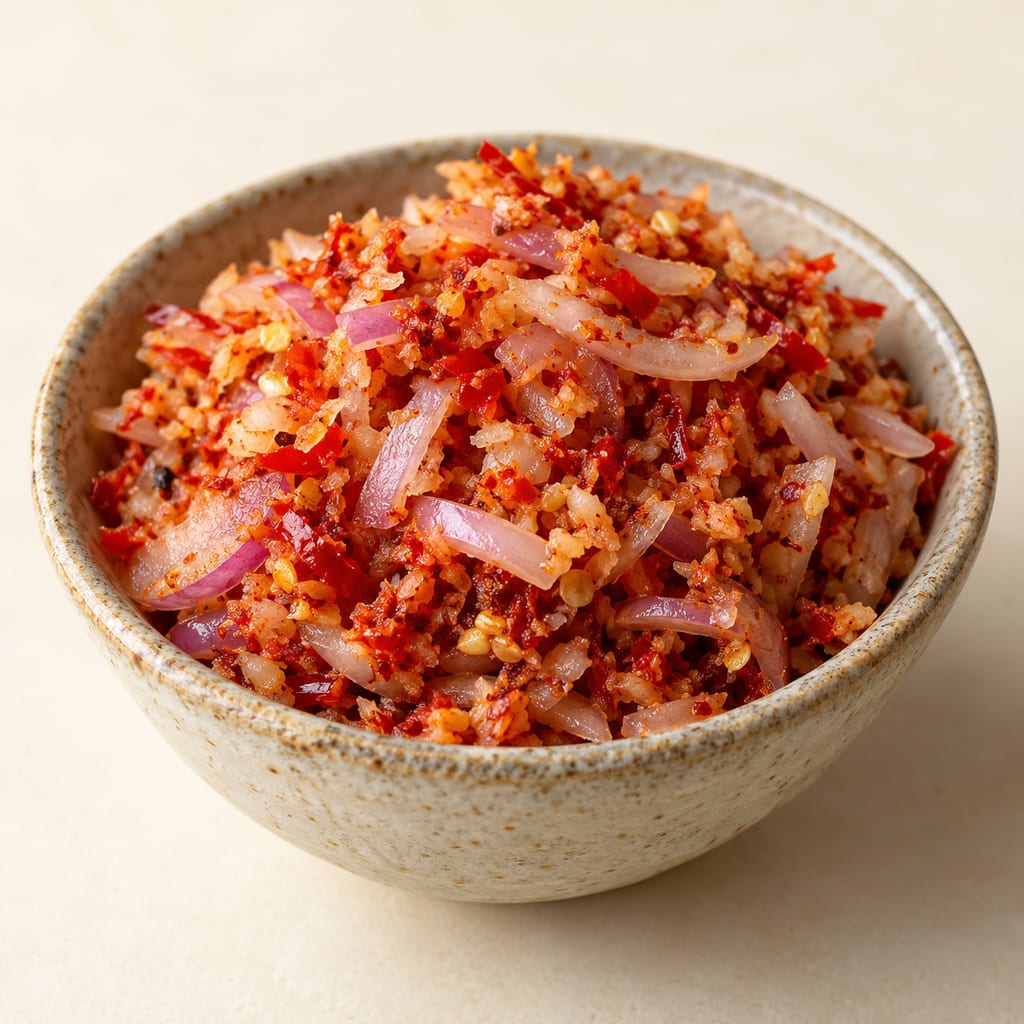
A Sri Lankan lunu miris made by pounding onion and chilli flakes with lime; Maldive fish is optional.
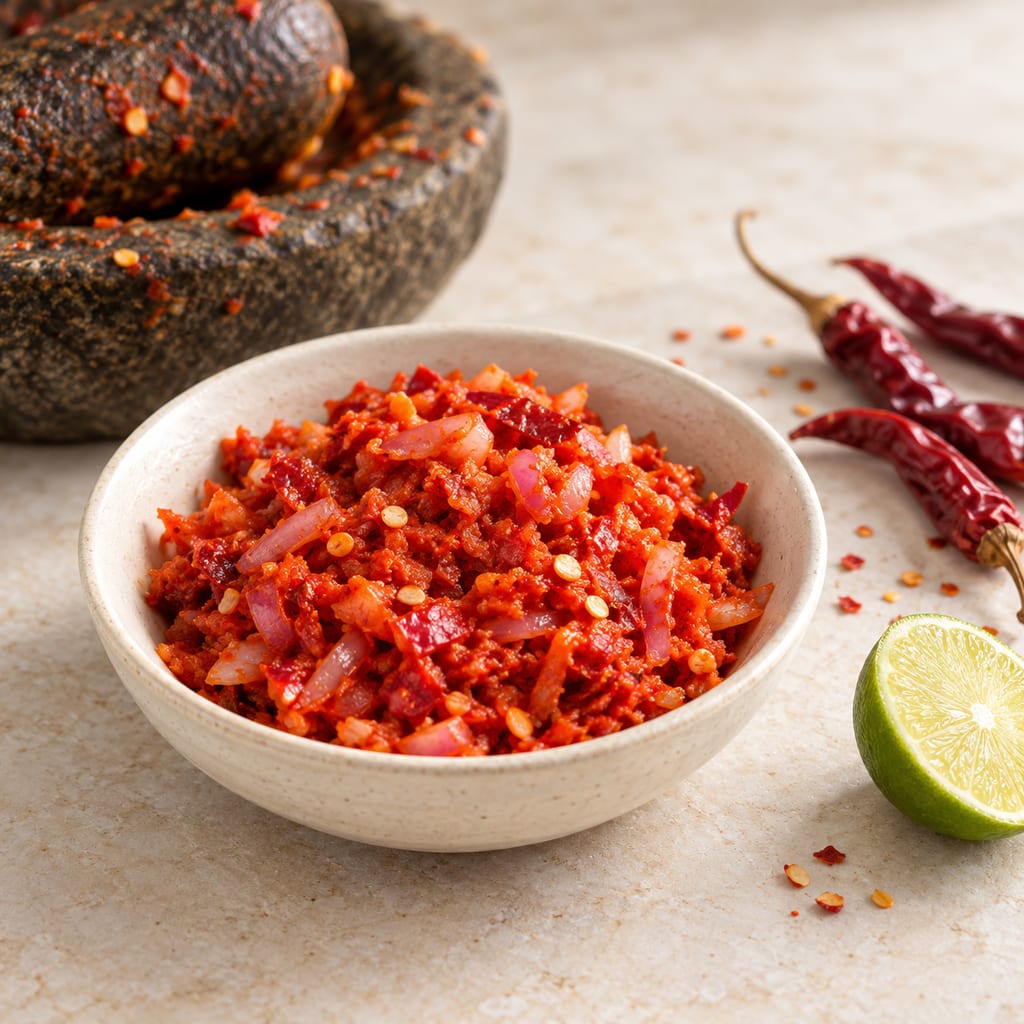
Lunu miris is Sri Lanka's pounded onion and chilli sambol: chilli flakes and red onion crushed with salt and lime, often with Maldive fish, eaten in small amounts with hoppers, pol roti and kiribath.
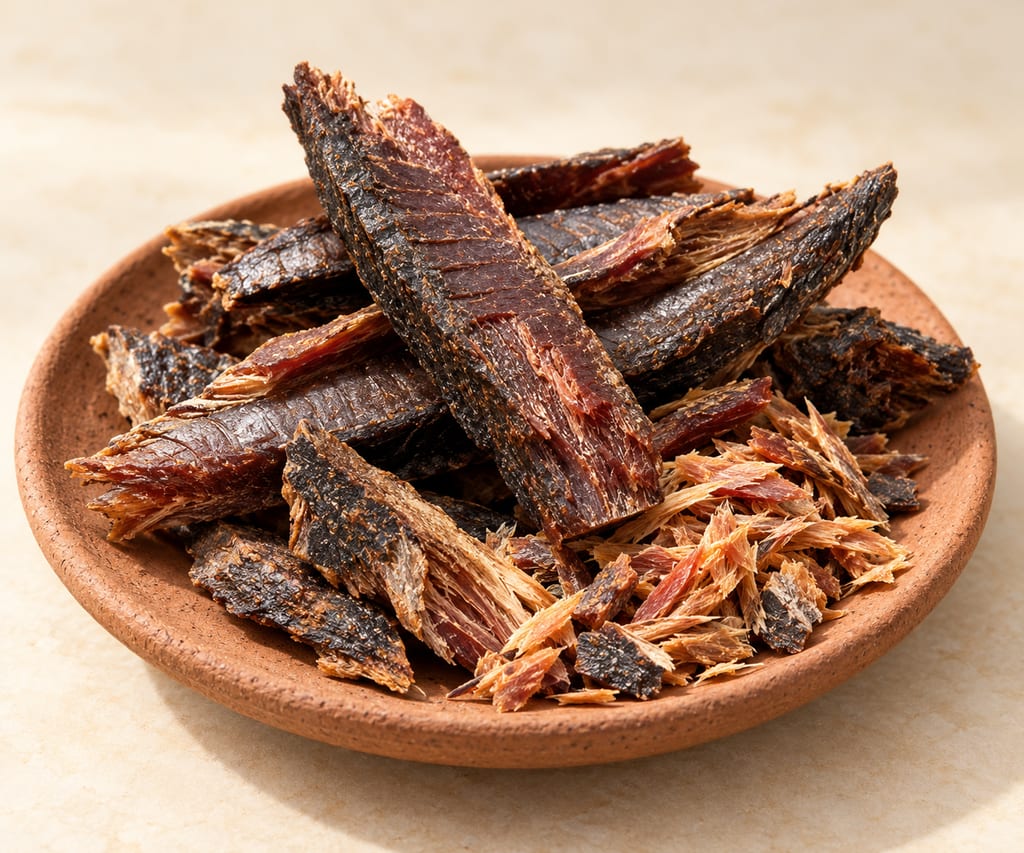
Maldive fish is a hard, smoke-dried tuna product made in the Maldives and traded especially to Sri Lanka, where it is known as umbalakada. Cooks shave or pound it into a concentrated savory seasoning for sambols, curries and other dishes.
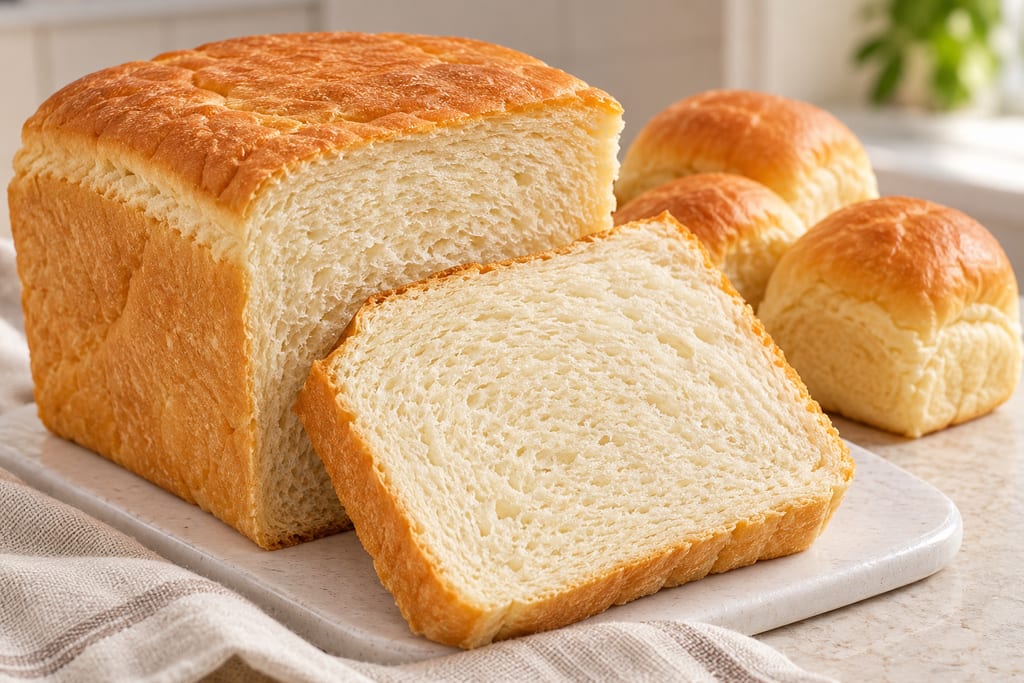
This softer home-style Agege bread uses a scalded flour paste, an enriched yeast dough and a 9×5-inch loaf pan, with rolls from the extra dough.
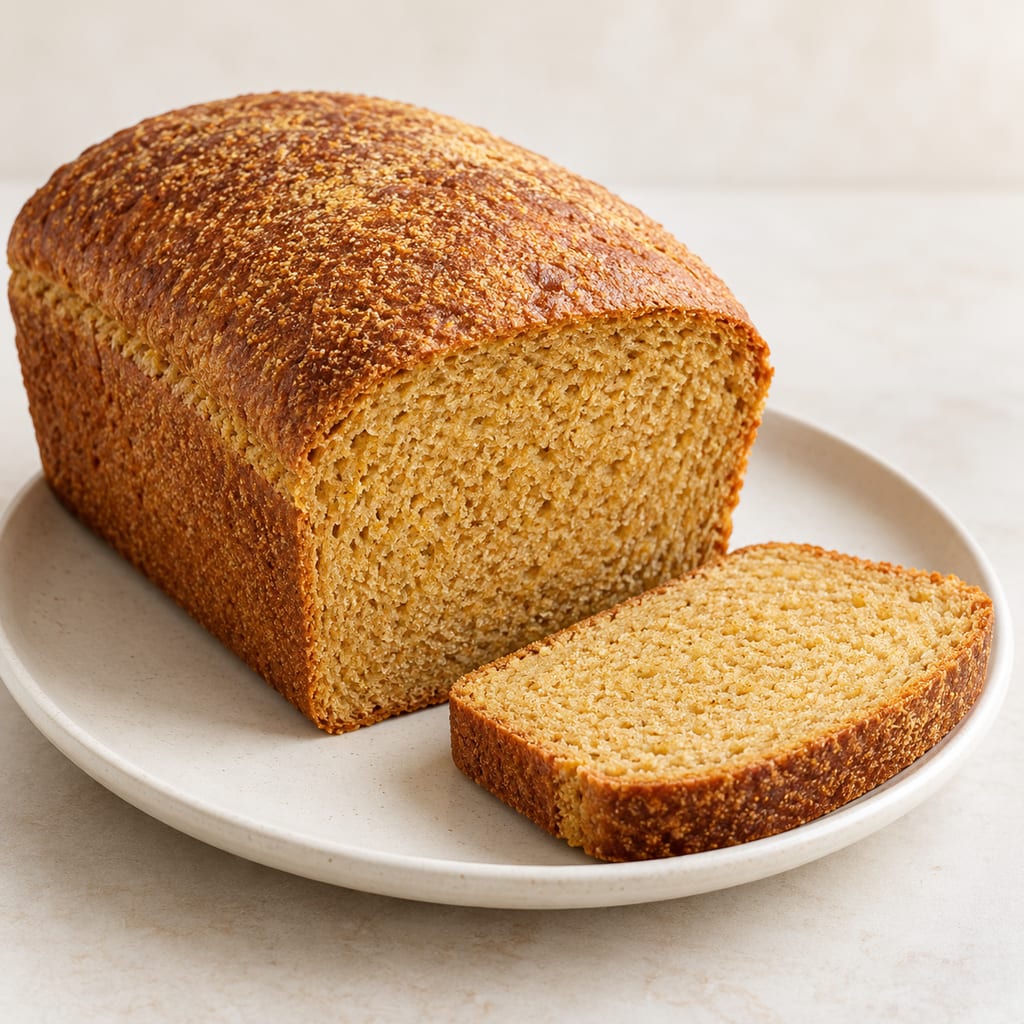
Anadama is a New England yeast loaf made with wheat flour, cornmeal and molasses. Scalded cornmeal enriches the dough, while molasses lends sweetness and a dark crust; it is especially good toasted or beside soup and baked beans.

A yeast-raised wheat ring shaped from a firm dough, briefly boiled and baked. This source-batch formula gives a gently malted crust and a chewy crumb.

Three long, crusty wheat loaves made with an overnight yeast poolish, shaped by hand and baked with steam for a crisp crust.
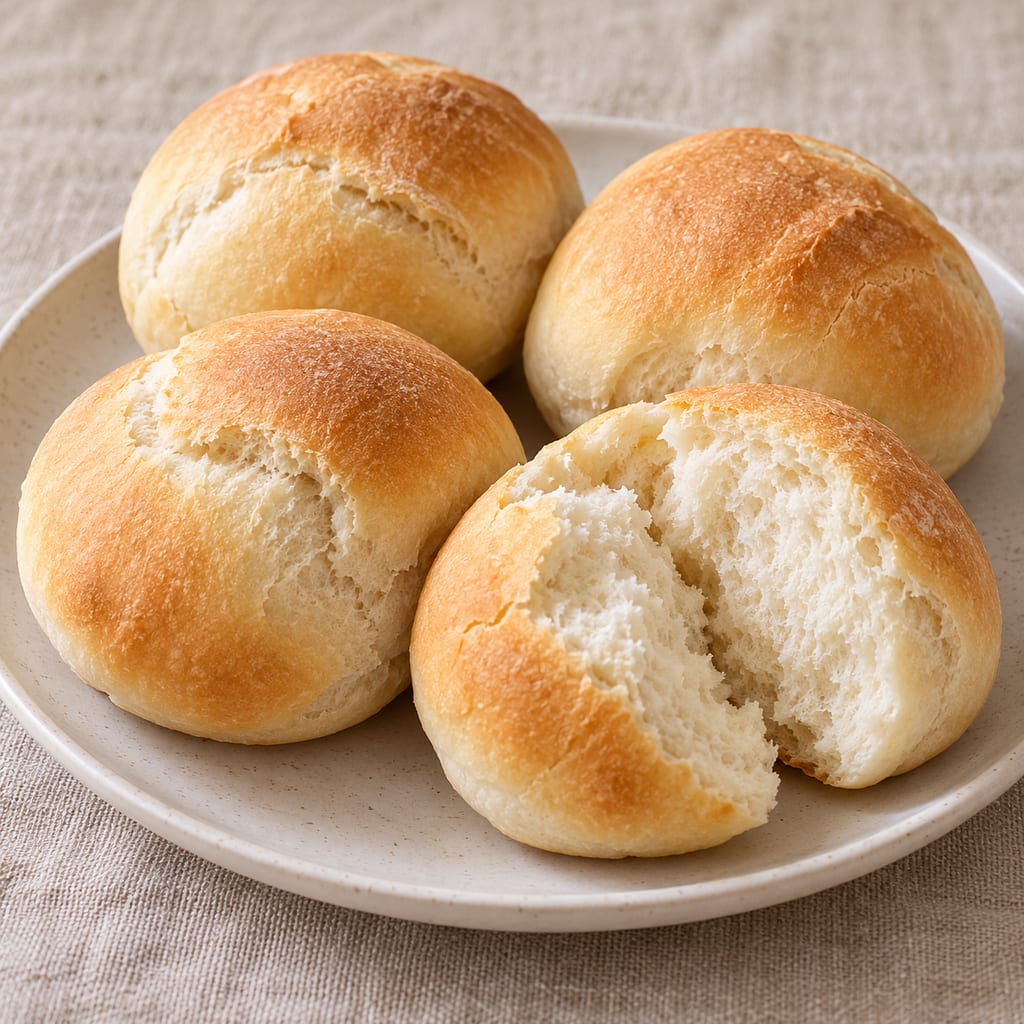
A lightly salted, yeast-raised Barbadian roll, baked in a dozen-roll home batch and often split for cutters.
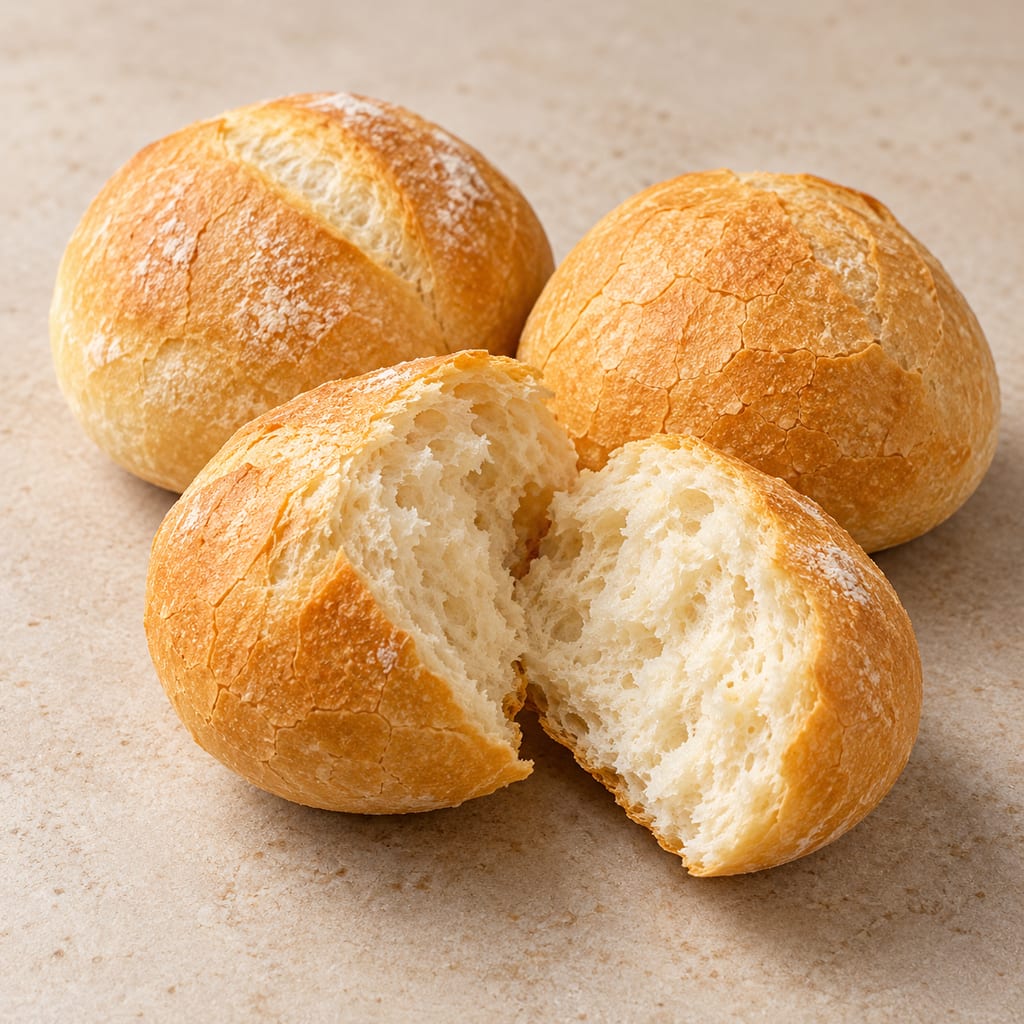
A crisp Belgian roll made from a supplier’s Croc-flour dough, mixed by hand or machine, proofed in rounds and baked with steam.
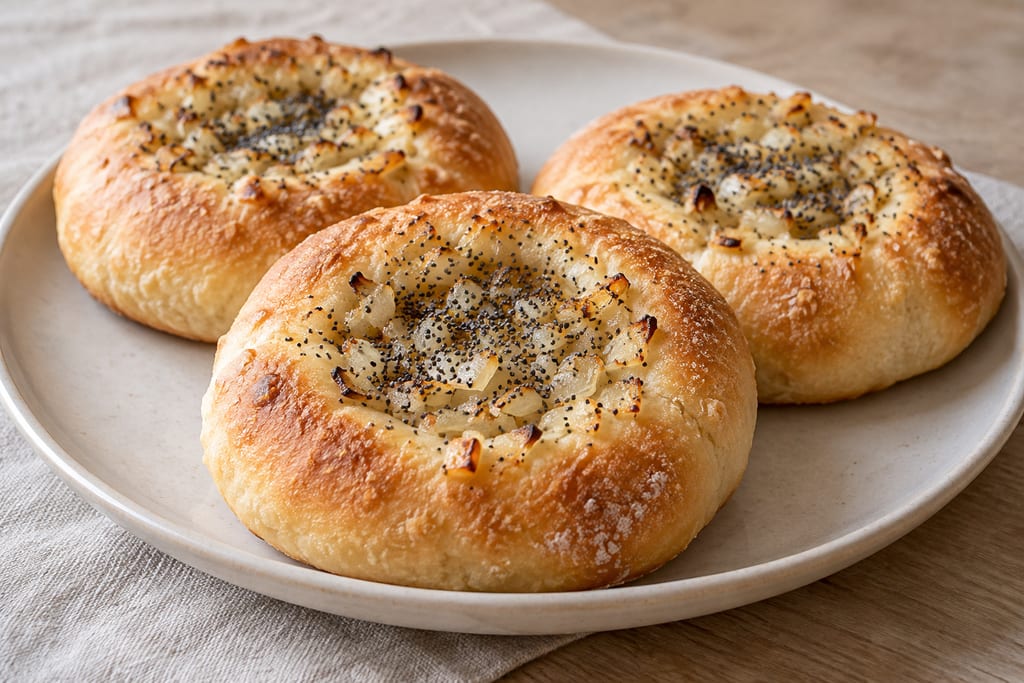
Bialys are soft, yeasted wheat rolls baked without boiling, each shaped with an onion-filled central depression instead of a hole.
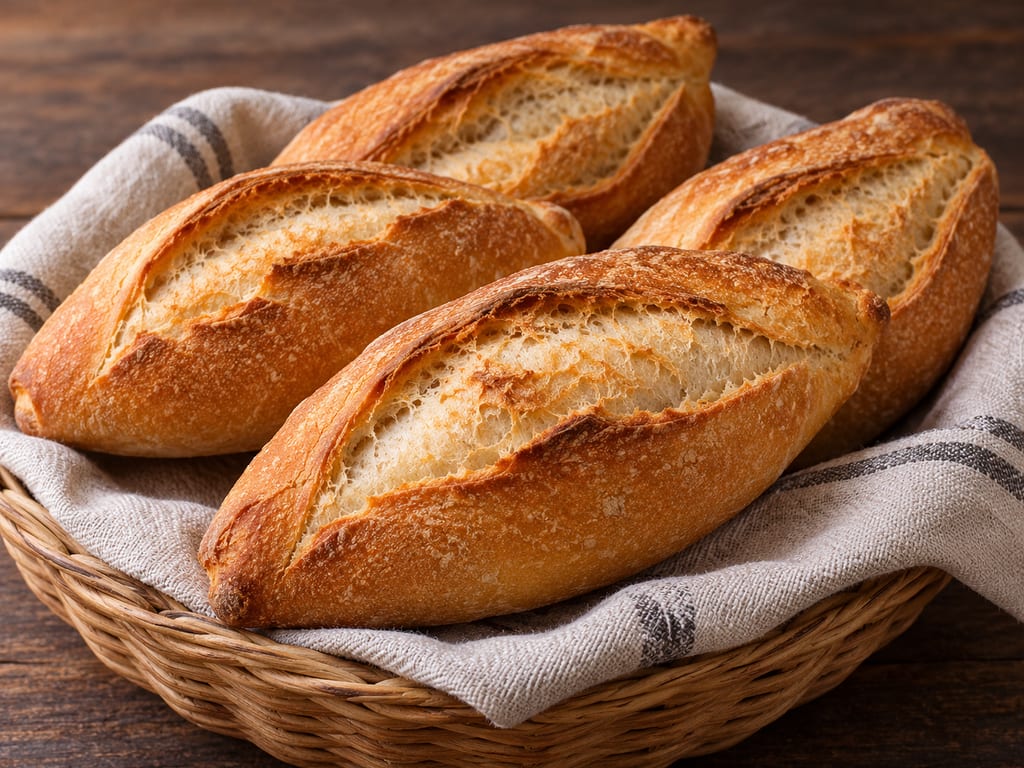
A measured, commercial-yeast home method for Guadalajara-style birote salado, with a six-hour preferment, shaped rolls and a two-temperature steam bake. This formula contains no egg.
No community contributions have been published for this entry yet.
Sign in to contribute. Published comments and photos are free to read.
Island SmileRecipe · Method · Identity · Geography
Sri Lankan Roast paan (‘thati paan’ bread recipe)Measured four-serving home formula and stepwise method: yeast dough; flat pieces layered in a loaf pan with flour-oil paste; 200°C first bake for 30 minutes; separate and butter; grill/broil each side 13–15 minutes.
The author identifies the bread as Sri Lankan and also calls it thati paan; no dated origin is given.
The second grill/broil temperature is unspecified; source also notes proof variation in cool weather.
Cited in: Sri Lankan roast paan; Mix and proof the dough; Shape and bake twice; A second home method for comparison
Sri Lanka Export Development Board eMarketplace / FINAGLE Lanka Pvt LtdComparison · Identity · Method
FINAGLE - BREADCommercial Roast Bread uses reduced-leavening dough shaped into flatter squares, arranged together in a pan, baked, separated and baked again for a crust.
The listing distinguishes this harder-crusted roast bread from a larger, thicker, softer Pan Bread; no ingredient formula or temperature is given.
Cited in: Sri Lankan roast paan
Centers for Disease Control and PreventionSafety
Raw Flour and DoughRaw flour and dough can carry harmful germs; do not taste raw dough, cook it according to directions, and clean hands, utensils and surfaces after handling.
Cited in: Raw dough safety
Shana's KitchenMethod · Comparison
Sri Lankan Flat Bread (Roast Paan)Roasting again after baking is described
Optional second bake of 200 °C for 5–10 minutes
Its recipe differs from the selected home method
Cited in: A second home method for comparison