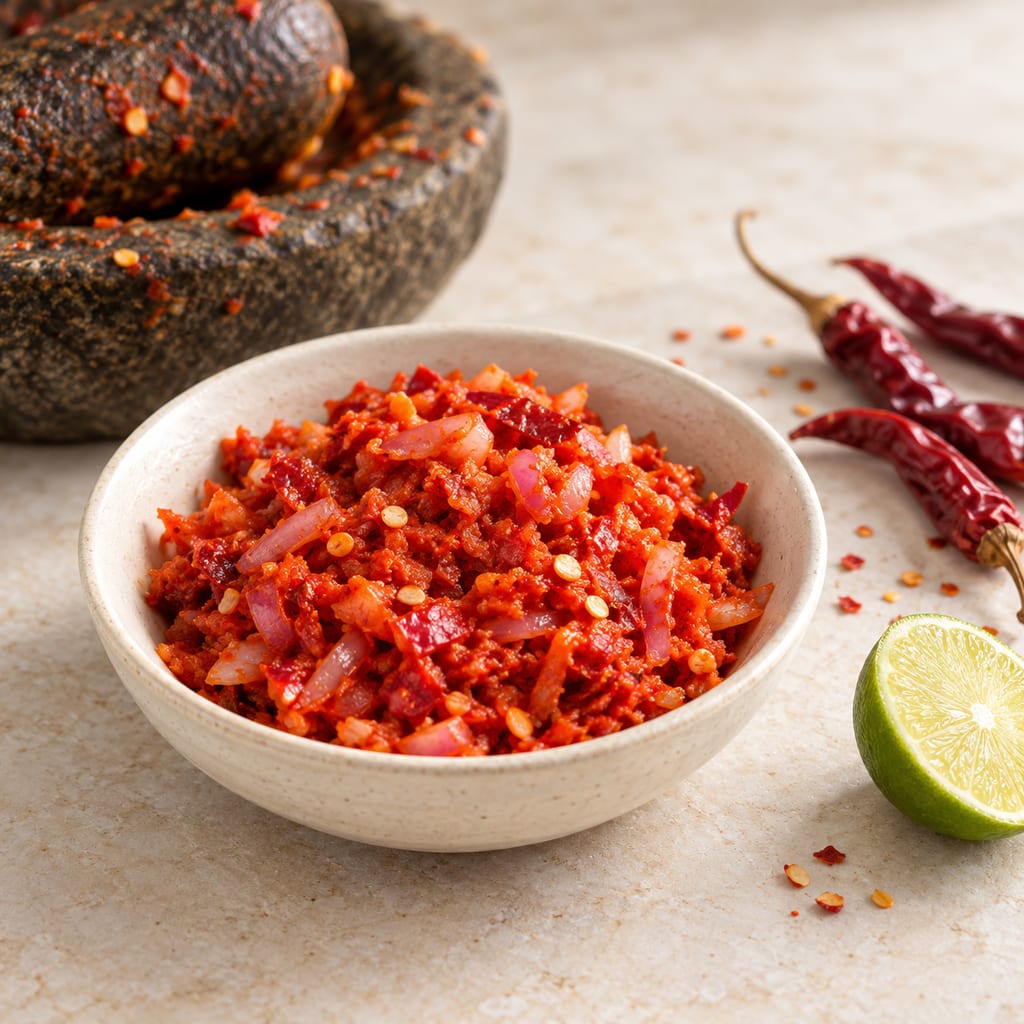
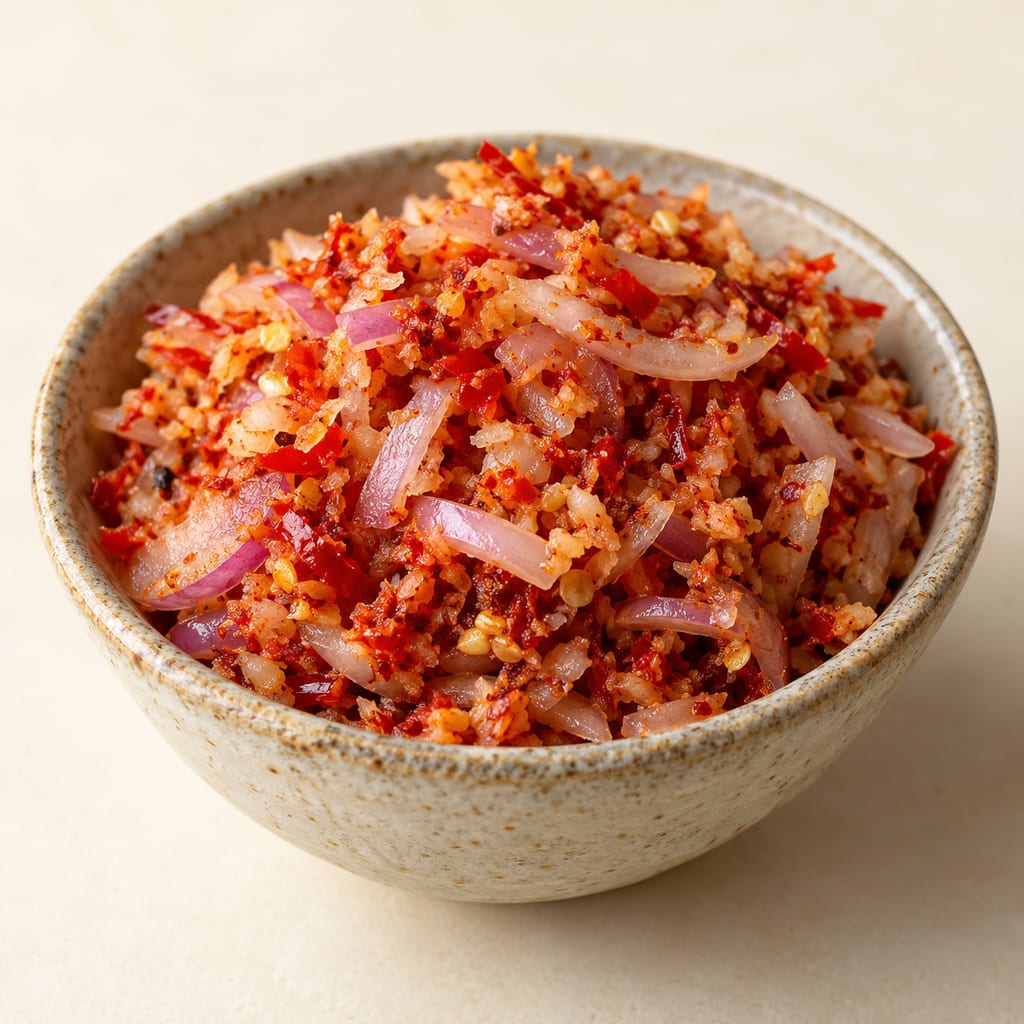
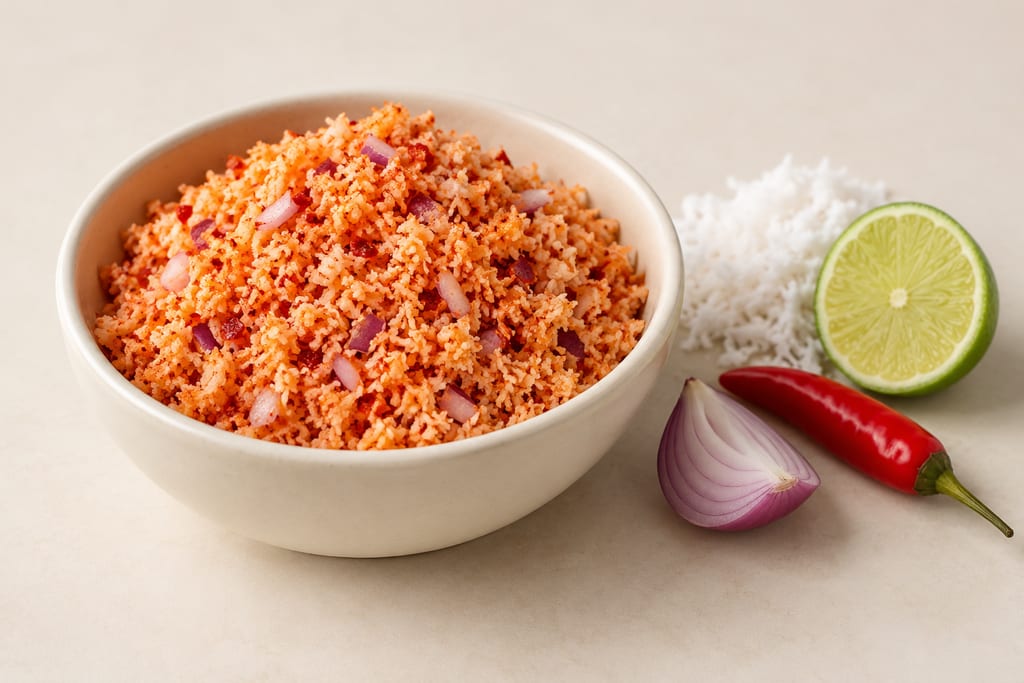
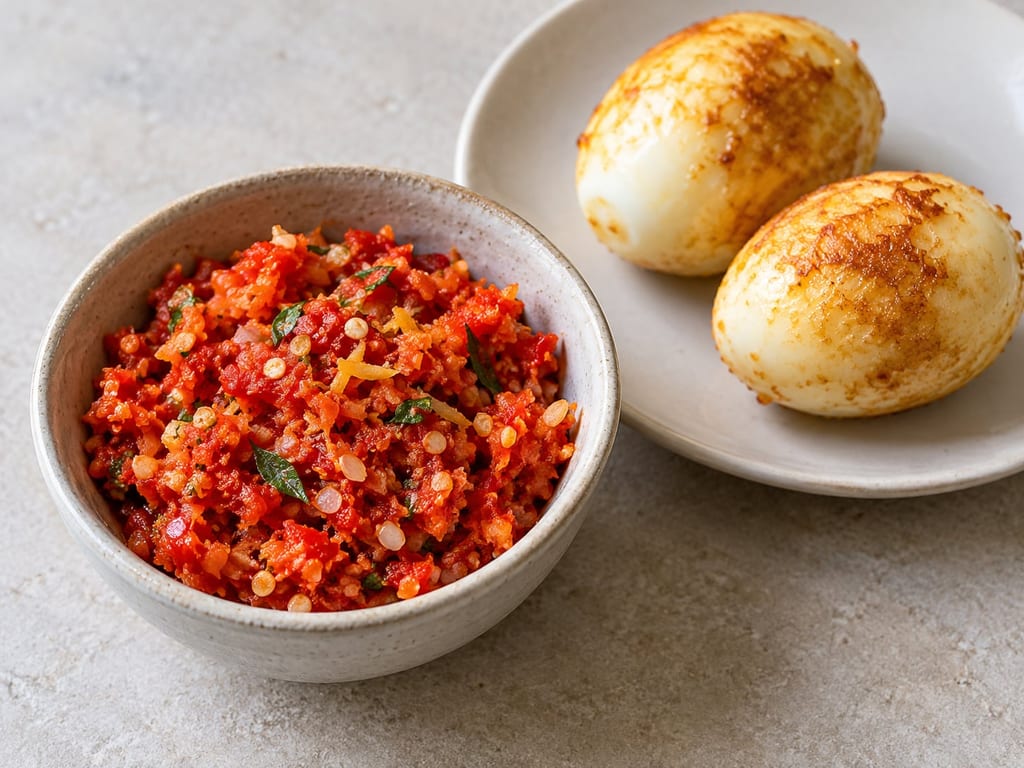
Lunu miris is Sri Lanka's pounded onion and chilli sambol: chilli flakes and red onion crushed with salt and lime, often with Maldive fish, eaten in small amounts with hoppers, pol roti and kiribath.
Lunu miris (ලුණු මිරිස්, literally salt-chilli) is a Sri Lankan sambol of chilli and red onion pounded together with salt and lime. Sri Lanka Tourism calls it a spicy onion sambol and sets it apart from pol sambol, which is built on coconut. The Cultural Me describes it as fresh, uncooked, extremely spicy and pungent, and eaten in small quantities.
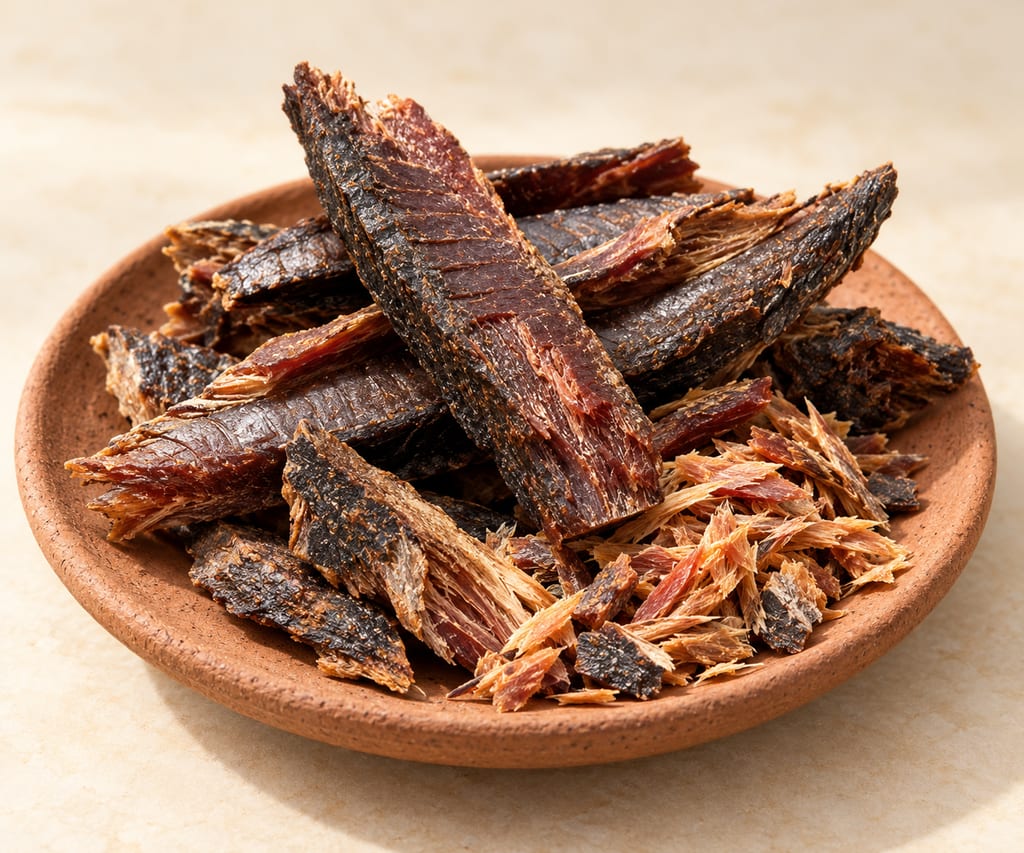
Where it differs between cooks is the chilli, the fish and the lime. The Cultural Me pounds dried red chillies with small red onions, salt and a little Maldive fish, then finishes with lime. DailyLife.lk uses chilli flakes and adds umbalakada, the Sinhala name for Maldive fish, as an optional powder at the end.
The DailyLife.lk batch is 100 g of chilli flakes and 100 g of red onion. The onion goes into a small mortar first and is pounded; the chilli flakes and salt follow, and it is pounded to a paste. Lime juice, half a teaspoon, is added on a plate, and salt and lime are corrected to taste. A last step stirs in umbalakada powder, 1.5 tablespoons, and a few pieces of tomato "to boost the flavour". The tomato appears only in that step and not in the ingredient list, so no amount is given.
Inside Magazine's two-serving card is a second version, but it omits the chilli amount and its introduction and directions disagree on when the lime goes in. The two are kept apart rather than blended into one formula.
Katta sambol is a related chilli condiment. The Cultural Me describes it as onion-free and drier, which would set it apart from lunu miris, while Explore Sri Lanka discusses sambol variety without defining where katta ends and lunu miris begins. Sources therefore differ on whether katta sambol is a distinct onion-free preparation or another name for the same thing. This page records lunu miris only; no katta sambol recipe was found in the sources read.
DailyLife.lk says to keep it in the refrigerator and eat it within two or three days. The page gives no temperature or container conditions, and nothing else read validates a storage time, so treat it as a guide from one cook and not a safety guarantee. It is not a fermented food. No Sinhala or Tamil historical source was read, so naming, chronology and regional variants remain open.
Tomato pieces (optional)Mentioned in the last step only, not in the ingredient list.
no amount given
Method
Risks and precautions
The DailyLife.lk page says to keep it in the refrigerator and eat it within two to three days. That is a recipe-page statement with no stated temperature or container conditions and is not a safety guarantee.
Raw onion and chilli paste with lime is a fresh preparation; no source validates a storage time. Smell or taste never establishes safety.
Extremely hot: the Cultural Me calls it extremely spicy and pungent, eaten in small quantities.
Peel and clean the onions and set them aside. Grind the chilli flakes.
Pound the red onions in a small mortar.
Add the chilli flakes and salt and pound until combined into a paste.
Transfer to a plate and add the lime juice. Taste and add more salt and lime juice if needed.
To boost the flavour, mix in the umbalakada powder and, if wanted, a few pieces of tomato.
Places
Sri Lanka
Documented preparation · Country evidence
These sources associate lunu miris with Sri Lanka. They do not identify a precise place of origin.
Maldive fish is a hard, smoke-dried tuna product made in the Maldives and traded especially to Sri Lanka, where it is known as umbalakada. Cooks shave or pound it into a concentrated savory seasoning for sambols, curries and other dishes.
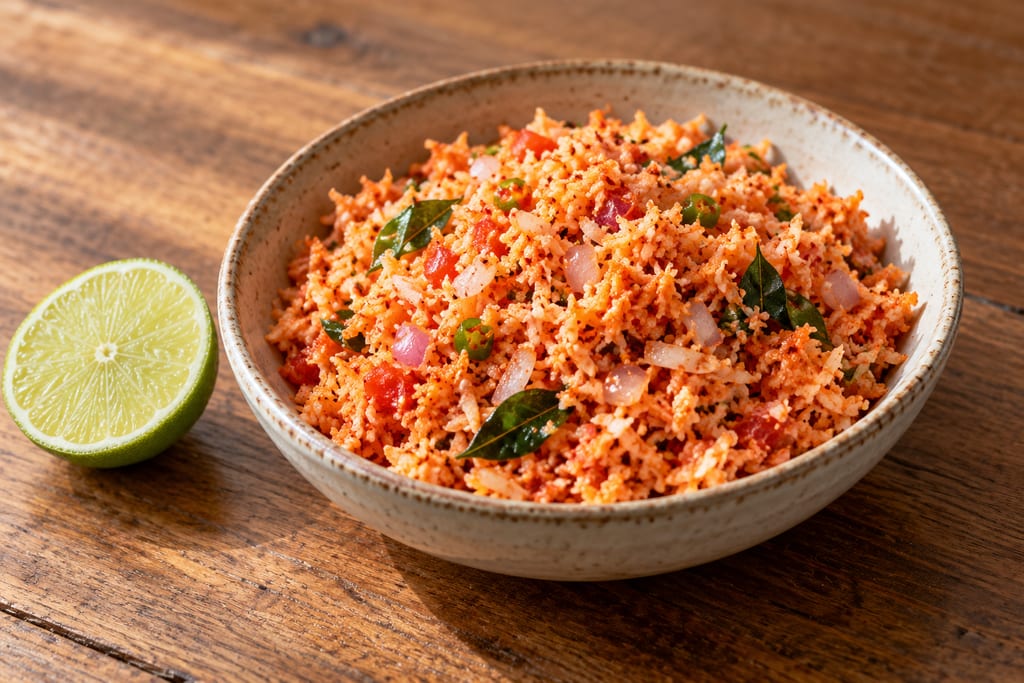
A Sri Lankan coconut relish made from grated coconut, aromatics, chilli, lime and optional Maldive fish; a seasoned paste is folded through the coconut by hand.
A fresh, untested coconut relish developed in reference to Sri Lankan pol sambol. This formula is an adaptation, not a documented traditional recipe or a preserve.
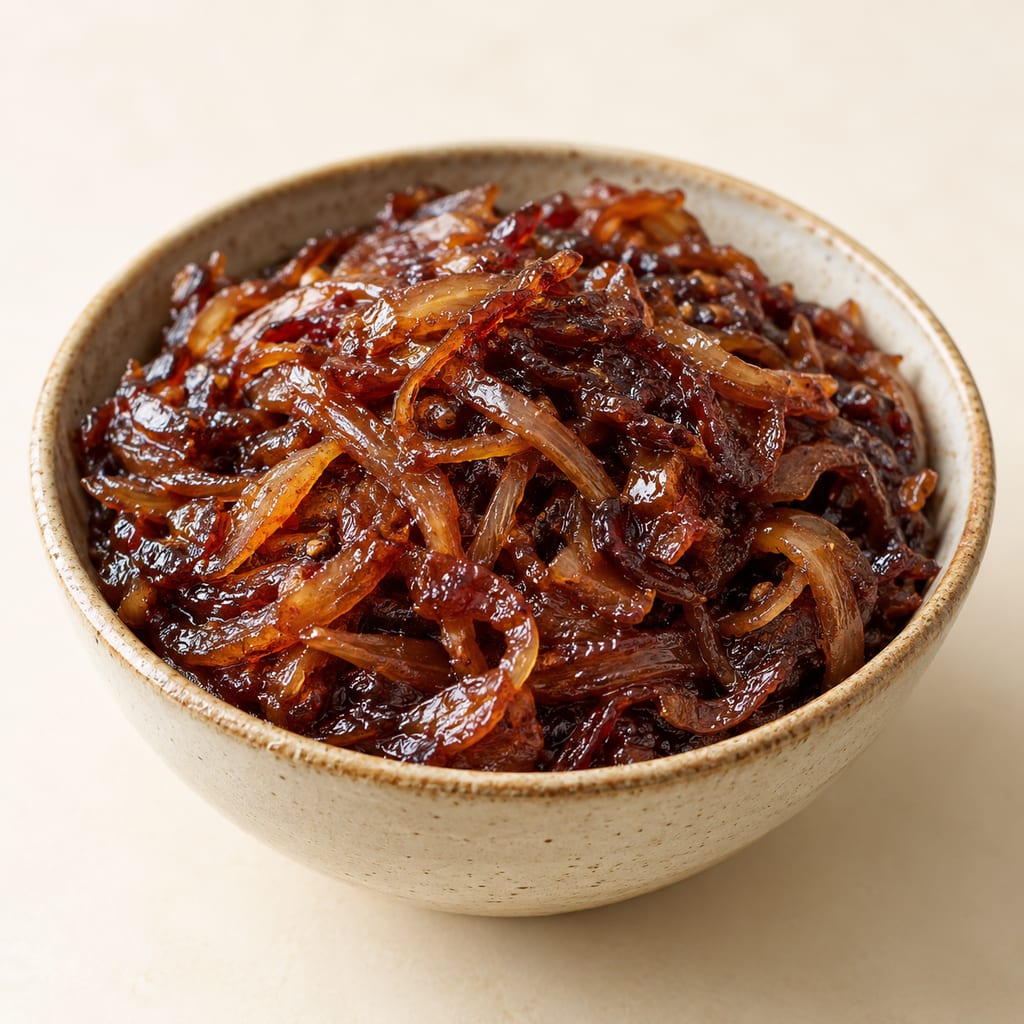
Sri Lankan cooked onion relish: onions fried in oil until dark and jammy, then sharpened with tamarind and sweetened with sugar. Not a fermented condiment.
Achcharu is a family of Sri Lankan vinegar pickles made with mixed vegetables or seasonal fruit and a piquant spice dressing. This version is a quick, refrigerated, non-fermented mixed-vegetable pickle.
Appam, or hoppers, are South Indian and Sri Lankan rice pancakes made from a fermented coconut-and-rice batter and cooked in a curved pan to a crisp lacy rim and a soft, spongy centre.
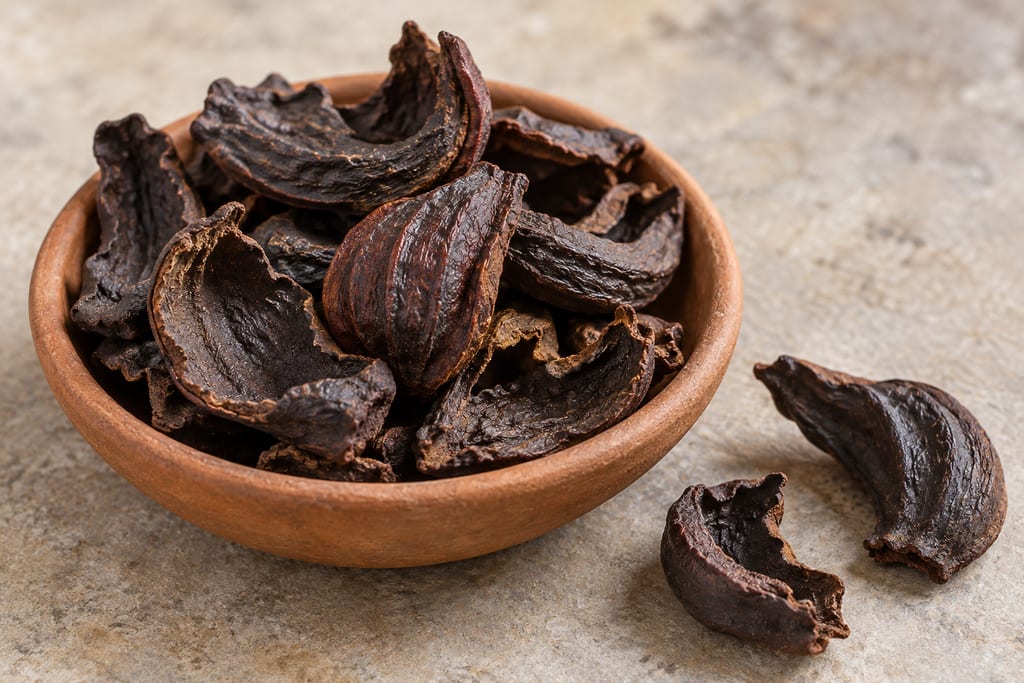
Goraka is the dried rind of Garcinia quaesita, a souring ingredient for Sri Lankan curries. Its drying is documented, but no complete household method is.
Ai-manas is described as a very hot chilli paste served with Timorese meals. One published version blends fresh chillies, shallots, garlic, Thai basil, ginger, lemon and salt, and serves it with eggs. Sources do not establish a standard formula, precise birthplace or earliest date.
Ají verde is a Peruvian green sauce of coriander, chilli, onion and garlic in a mayonnaise or cheese base. It is best known through Peruvian restaurant cooking abroad.
Community
No community contributions have been published for this entry yet.
Share what you made
Sign in to contribute. Published comments and photos are free to read.
Describes a fresh, uncooked preparation with dried red chillies, small red onions, salt, a small amount of Maldive fish and lime; no quantities are established.
Calls it extremely spicy and pungent, eaten in small quantities.
Distinguishes related katta sambol as onion-free and drier.
Associates it with pol roti, kiribath, hoppers and rice.
Cited in: What it is; Katta sambol and related names; Serving; Storage and limits