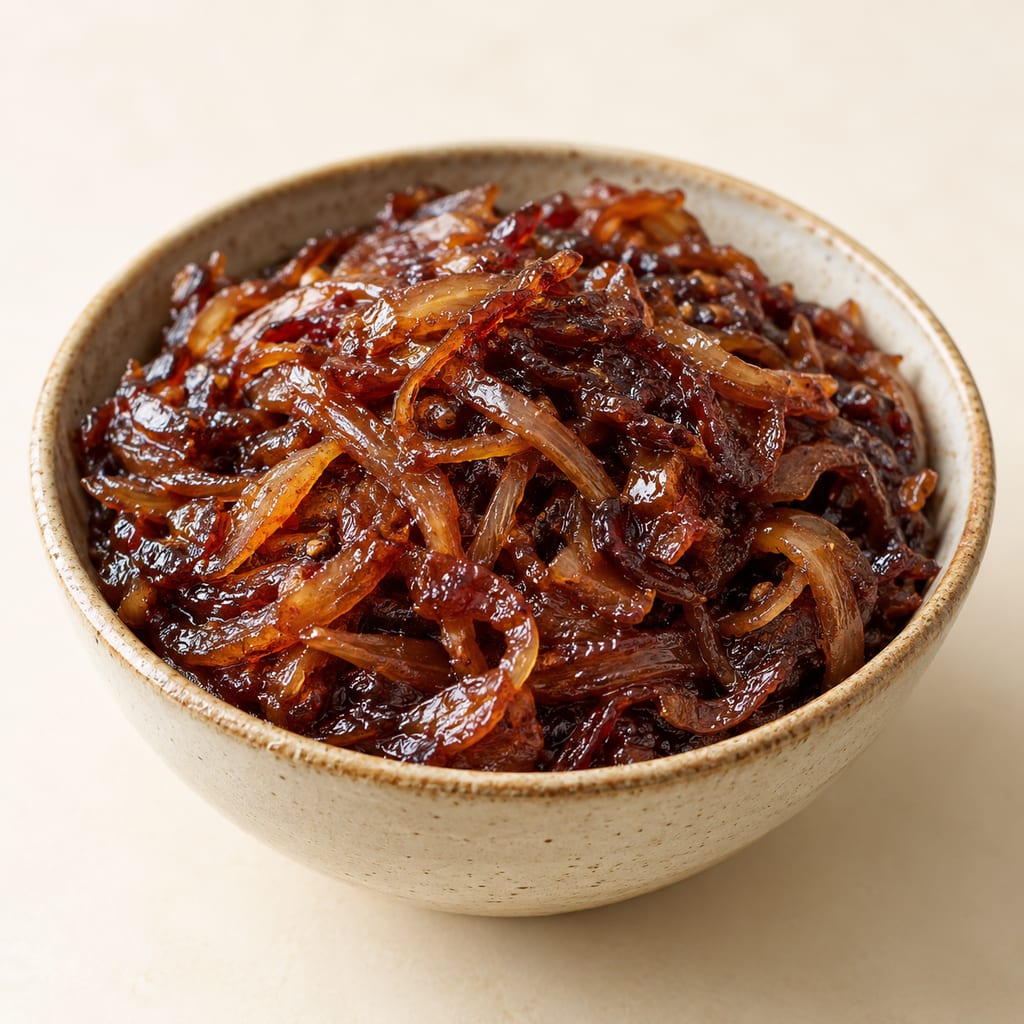
Sri Lankan cooked onion relish: onions fried in oil until dark and jammy, then sharpened with tamarind and sweetened with sugar. Not a fermented condiment.
Seeni sambol is a Sri Lankan relish made from onions cooked slowly in oil until they are soft, dark and jammy, then sharpened with tamarind and sweetened with sugar. In Sinhala it is written සීනි සම්බෝල. English spellings vary between seeni sambol, seeni sambola and seenisambol.
The name sits in the wide sambol family. Many sambols are raw or lightly prepared, such as the coconut and herb relishes served fresh. Seeni sambol is cooked and dark instead. Wikipedia calls it a caramelised onion chutney or relish, closer to a chutney than to a fresh sambol, with flavours that are sweet, spicy and aromatic.
Recipe sites gloss the word sambol as a sauce or condiment in Sinhala and Tamil, and seeni as sweet or mild. Those glosses describe the dish's character. They are not a dated etymology, and the sambol word also appears in Tamil as sambal, which does not make every Sri Lankan sambol the same dish.
No inspected source dates seeni sambol. A 2013 Sri Lankan food feature describes sambol as a common relish across social occasions and names seeni sambol among the island's preparations. The same feature links seeni sambol and lunu miris with hoppers and milk rice, while leaf sambols are often served with rice. That is evidence of use in contemporary food writing. It is not an origin.
The dish is documented in Sri Lanka at country level. No locality, inventor or first recorded date is known.
Commercial and restaurant use is documented as well. Wikipedia names seeni sambol as part of lamprais and of seeni banis, a brioche bun filled with the relish. A hotel buffet photograph labels one bowl as seeni sambol, which shows restaurant presentation rather than a single household style.
Cooks serve it with hoppers (appam) and with kiribath, the milk rice. The family recipe also suggests it as a sandwich filling. Wikipedia adds rice, curries, idiyappam (string hoppers) and plain appam, and says it is served at room temperature.
The family recipe describes it as a side dish the author's mother often makes at home. That is one household account. Other sources show the relish as a buffet item or a bun filling, so its use is broader than one kitchen.
The method is a long, shallow-pan cook. In the family batch, the chopped onions are mixed with crushed ginger, garlic, whole spices and a pinch of salt. The mixture goes into hot oil and is stirred for 10 to 15 minutes, until the onions are well fried and dry. Tamarind paste goes in next, the mixture fries until dark brown, and sugar and salt finish it.
The other inspected versions follow the same arc in a different order. The Island Smile version fries the spices in oil first, adds the sliced onions and cooks them for about ten minutes, then adds tamarind juice and sugar and cooks down for a few more minutes. The 196 Flavors version salts the onions and dry-heats the pan, cooks covered until the onion water has gone and the onion turns translucent, adds oil and spices, then finishes uncovered over high heat before the tamarind and sugar go in.
What happens in the pan is thermal change, not fermentation. Heat drives off the onion's water, and the sugars in the onion caramelise and darken. None of the sources uses microbial action, and the Island Smile page says to stir steadily so the onions do not catch. The darkening is the cook's visual endpoint. The sources use three cues in turn: well fried and dry, then dark brown, then jammy.
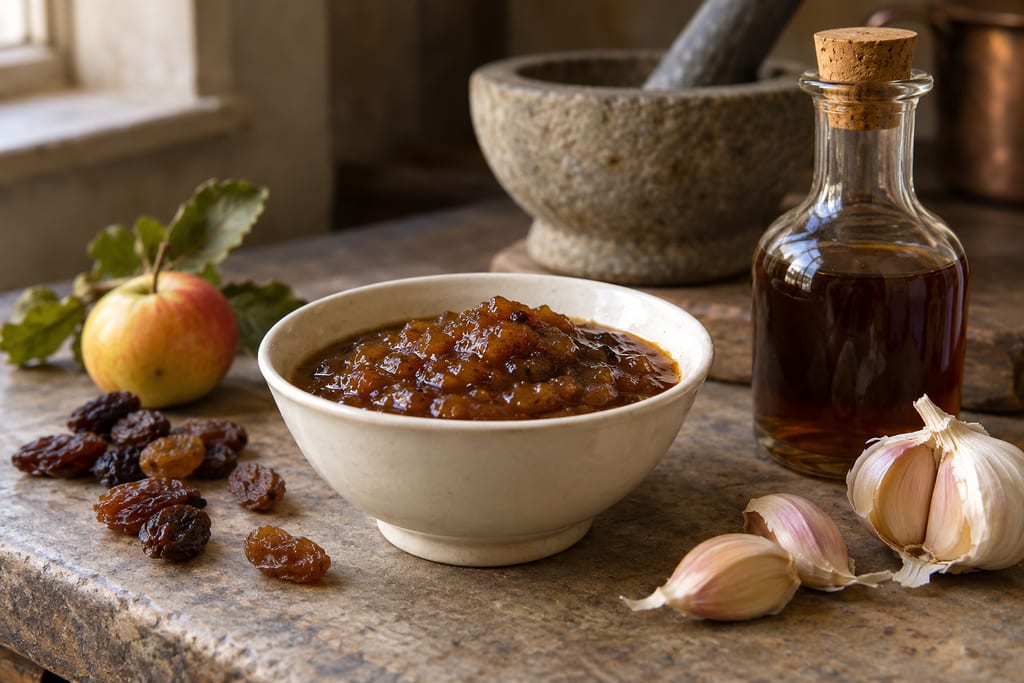
Onions are the bulk of the relish. The family batch uses five large onions. The Island Smile version uses 1 to 2 kg of large red onions, often called Bombay onions, and says they give the most flavour. Wikipedia lists red onions or shallots.
Tamarind supplies the sourness that balances the sugar. The family batch uses 1 teaspoon of tamarind paste. Island Smile uses 3 tablespoons of tamarind juice or 1 teaspoon of paste, and 196 Flavors uses half a cup of juice. Sugar is added late, to sweeten the relish and to deepen its colour as it reduces. The family batch uses 2 teaspoons, Island Smile 2 tablespoons and 196 Flavors half a tablespoon.
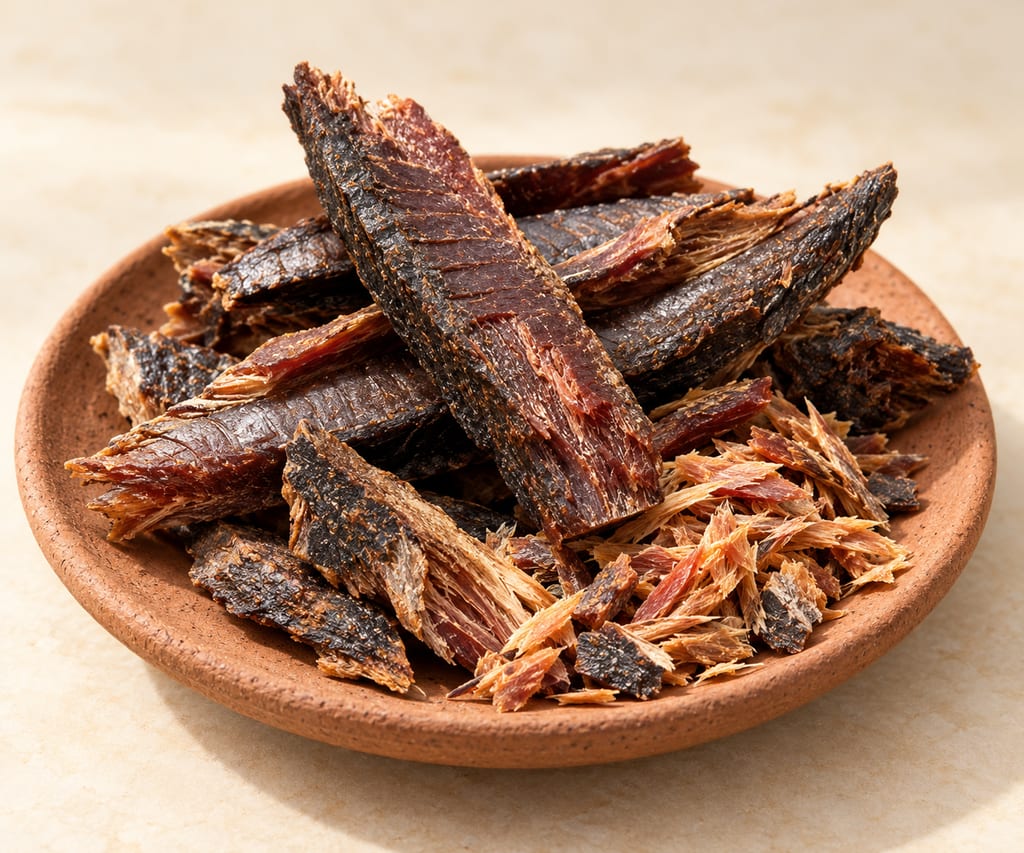
Maldive fish is optional in the family batch, at a quarter cup. The 196 Flavors version uses one teaspoon of Maldive fish flakes or powder, which that page identifies as a dried, smoked skipjack tuna. It adds salt and savour. It does not turn the relish into a fish fermentation, and the family batch can be made without it.
The aromatics are curry leaves, cinnamon, cloves, ginger, garlic and lemongrass in the family batch, with rampe, the pandan leaf the recipe names. Island Smile adds cardamom and pandan. These are flavour notes, not preservatives. Chilli is absent from the family batch. Island Smile uses one tablespoon of red chilli powder, and 196 Flavors uses one and a half tablespoons of red pepper flakes, which makes those versions hotter.
The family batch uses 4 to 6 tablespoons of vegetable oil. Island Smile calls for coconut, vegetable or sunflower oil, and advises against avocado oil.
The family batch, from a Sri Lankan food blog, is the most complete account in the inspected set. It is five large onions, optional Maldive fish, no chilli powder, a 30-minute total time and five to six servings.
The Island Smile version is larger, at 1 to 2 kg of onions for four servings, and includes chilli powder, cardamom and pandan. Its recipe card lists a one-hour cook, while the stage photographs are captioned 2 to 3, 3 to 5 and 5 to 7 minutes. Those times do not match, so the cook should judge by colour and texture.
The 196 Flavors version is smaller, at about one pound of onion for four servings, with red pepper flakes, tamarind juice and Maldive fish flakes. It lists 25 minutes of cooking. Wikipedia describes the usual form as spicy, sweet and aromatic, built from red onions or shallots, sugar, tamarind juice, red chillies and salt.
Only one inspected source gives storage guidance. Island Smile says to cool the relish completely, keep it in a clean, dry glass jar in the fridge, and always use a dry spoon. The author says it can be frozen, but advises refrigeration for longer keeping. To reheat, the page suggests microwaving a few spoonfuls for under a minute.
None of the sources gives a storage period in days, a water activity, a pH or a tested preservation method. The family batch and the 196 Flavors version say nothing about keeping. This record does not establish a safe room-temperature shelf life. Dark colour, sweetness and oil are not evidence that the relish is safe to keep out of the fridge.
A 24-month shelf life that appears on a bakery seeni-sambol bun in a catalogue refers to a packaged bread product. It does not apply to the relish and is not used here.
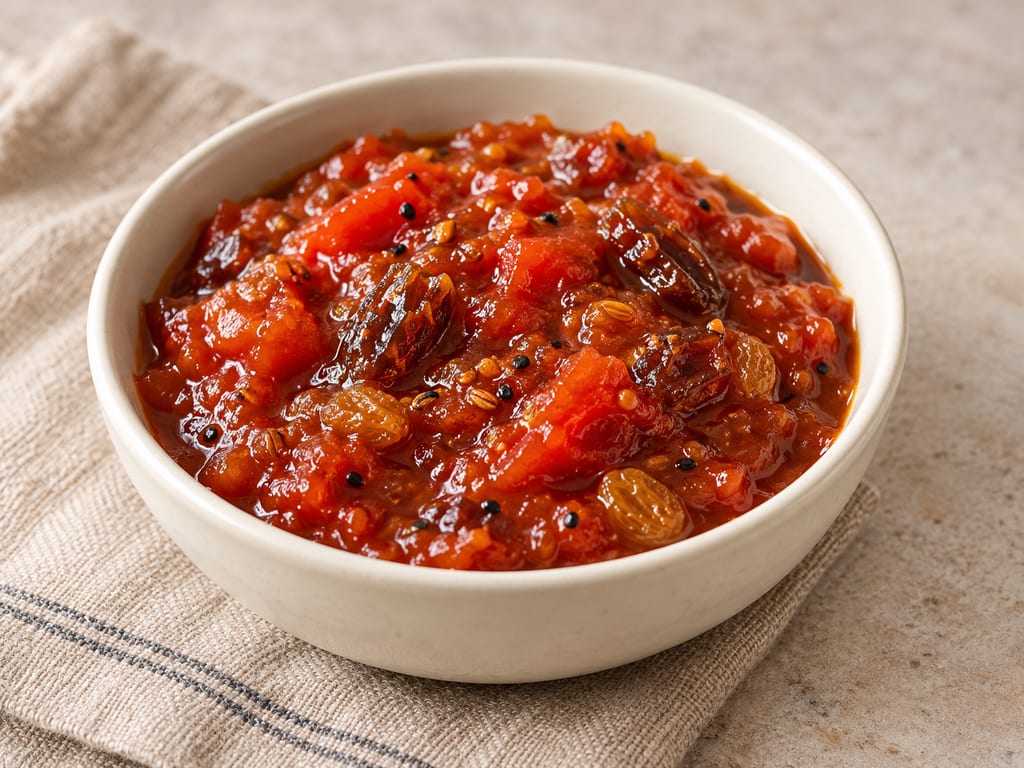
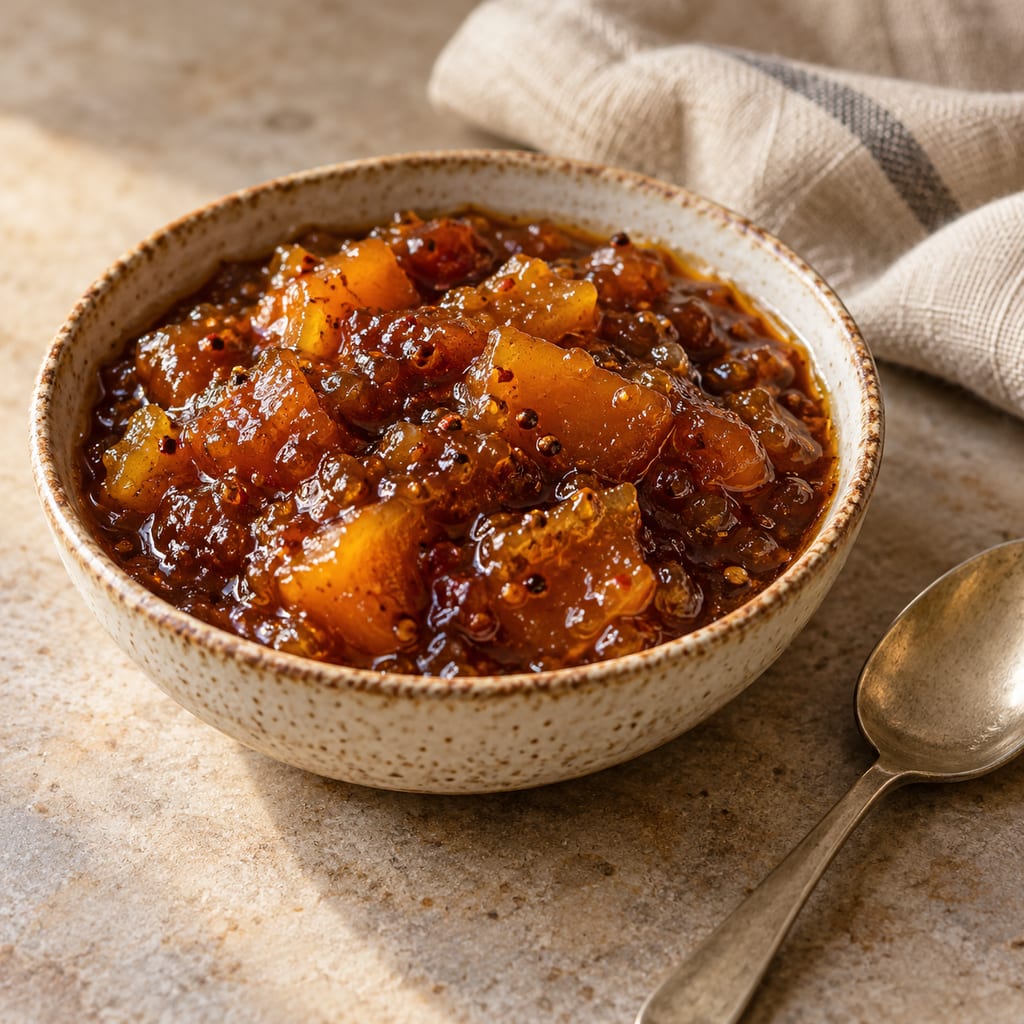
The sources give the cook visible endpoints rather than measurements. The onions should look well fried and dry. The mixture should darken to dark brown. The finished relish is dark, soft and jammy, with the onion strands still visible in the bowl.
These are recipe cues, not safety tests. Scorching is the most common fault in these methods, which is why the Island Smile method asks for steady stirring. A cook who wants a looser relish can stop earlier, but the sources do not say how that changes keeping.
Two questions remain open. The first is a dated Sri Lankan cookbook or archive that establishes the relish's earliest record. The second is a second household recipe in Sinhala or Tamil with comparable measures, which would show whether the family batch is typical.
A cooling and storage study for the cooked relish has not been found. Until one is, the storage advice here stays limited to what the home sources state.
The inspected recipe page, published in 2014, presents a family recipe from the contributor's mother. This documents a modern household account, not the origin or earliest history of seeni sambol.
Maldive fish is a hard, smoke-dried tuna product made in the Maldives and traded especially to Sri Lanka, where it is known as umbalakada. Cooks shave or pound it into a concentrated savory seasoning for sambols, curries and other dishes.
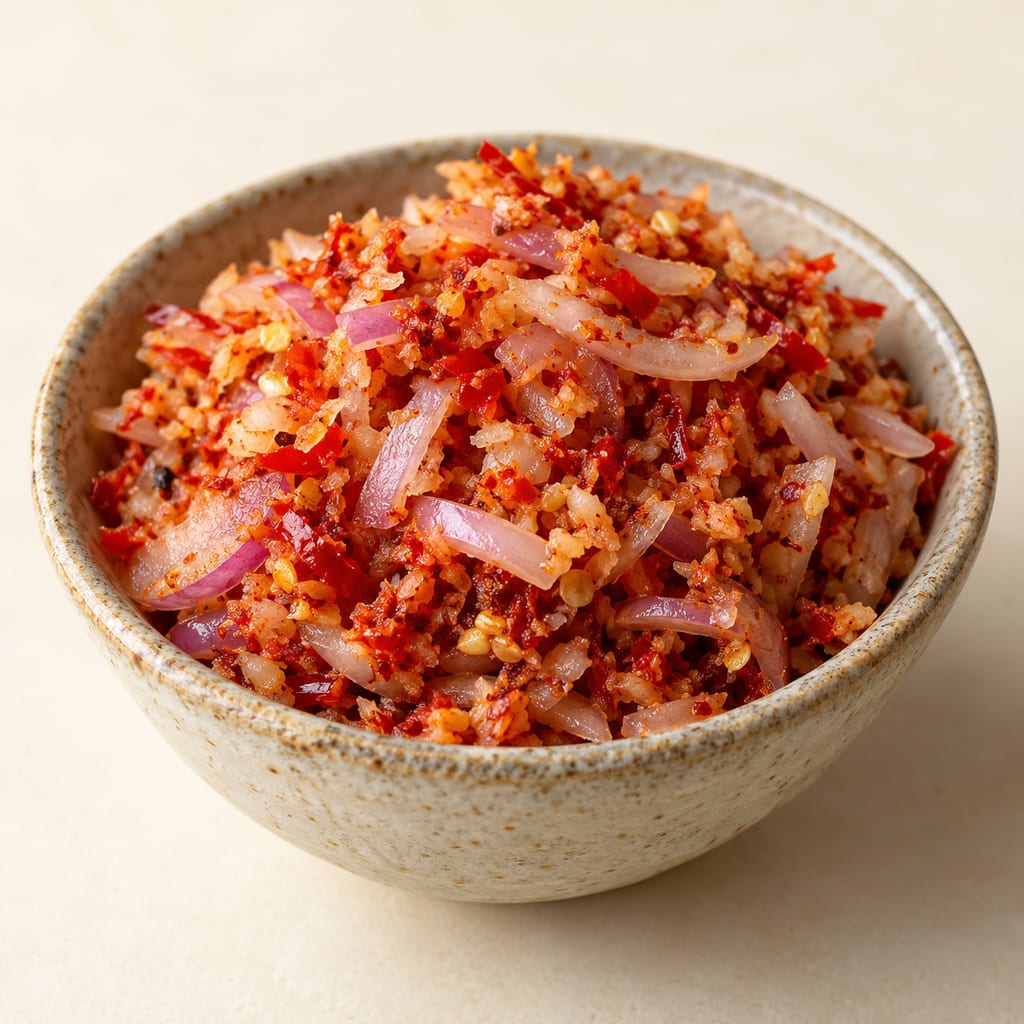
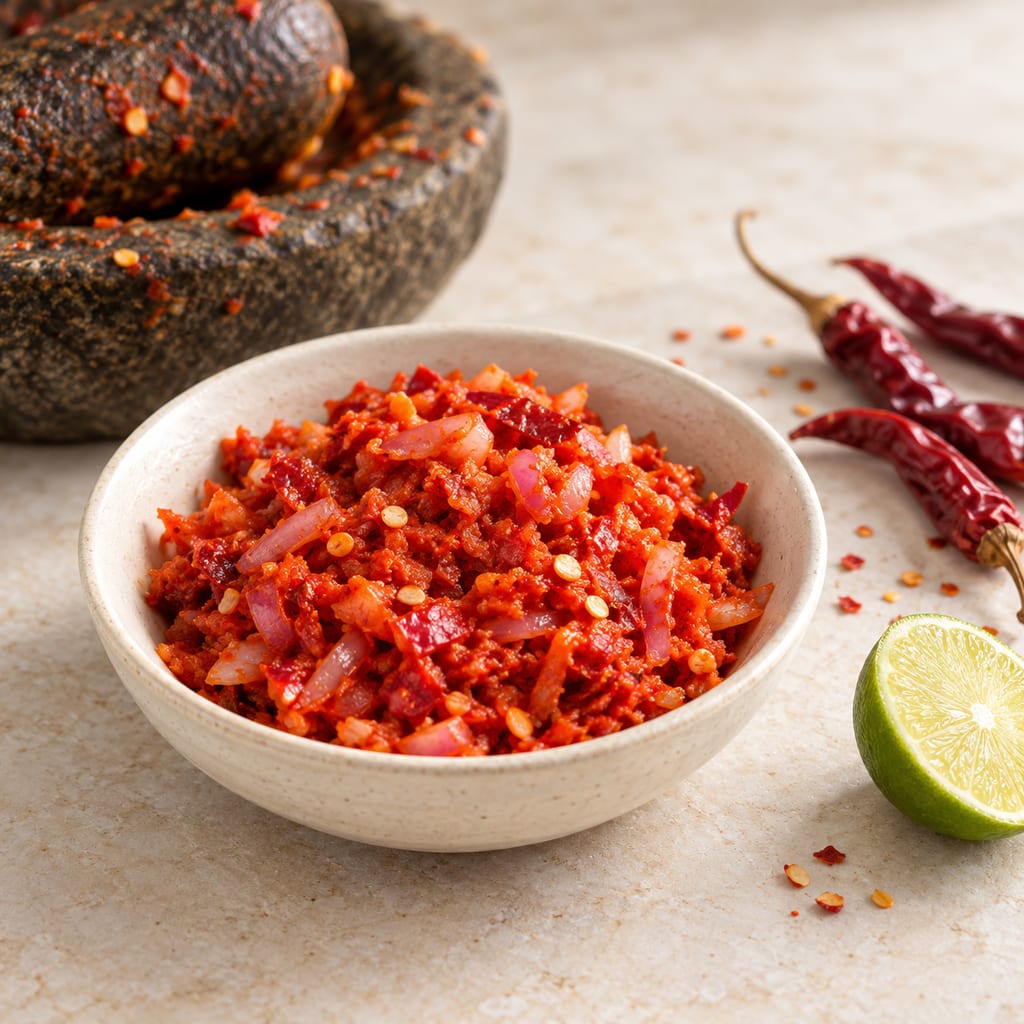
Lunu miris is Sri Lanka's pounded onion and chilli sambol: chilli flakes and red onion crushed with salt and lime, often with Maldive fish, eaten in small amounts with hoppers, pol roti and kiribath.
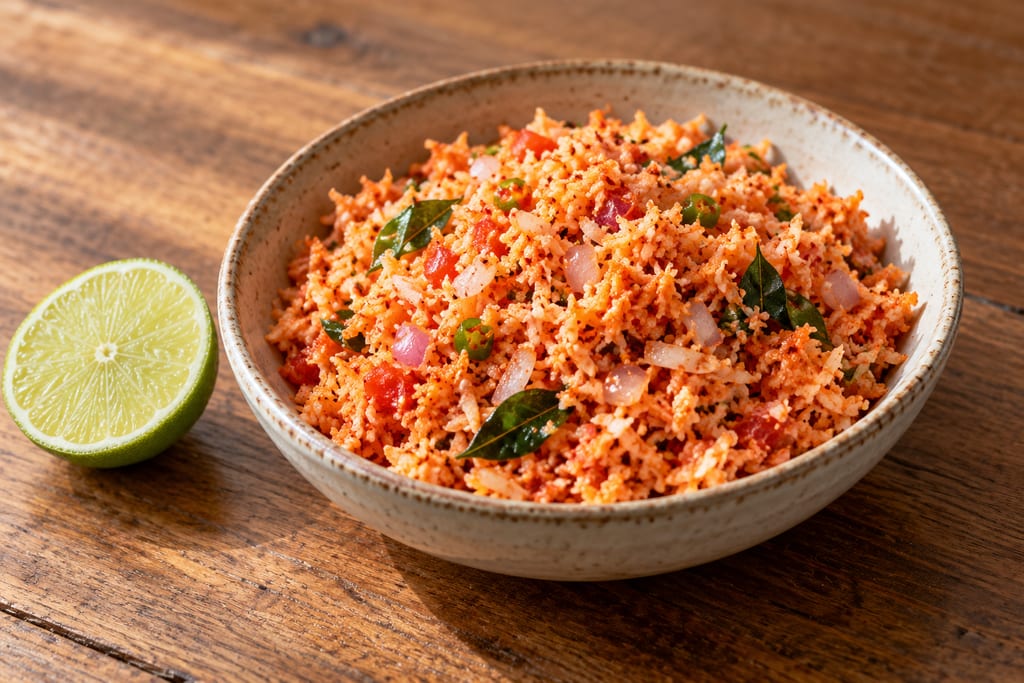
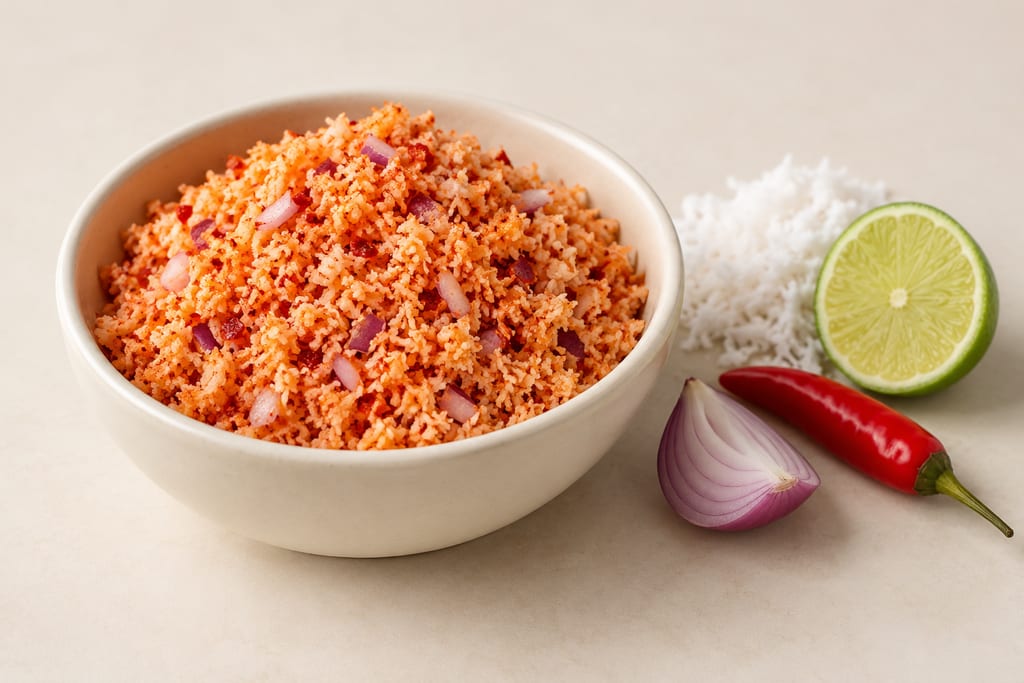
A Sri Lankan coconut relish made from grated coconut, aromatics, chilli, lime and optional Maldive fish; a seasoned paste is folded through the coconut by hand.
A fresh, untested coconut relish developed in reference to Sri Lankan pol sambol. This formula is an adaptation, not a documented traditional recipe or a preserve.
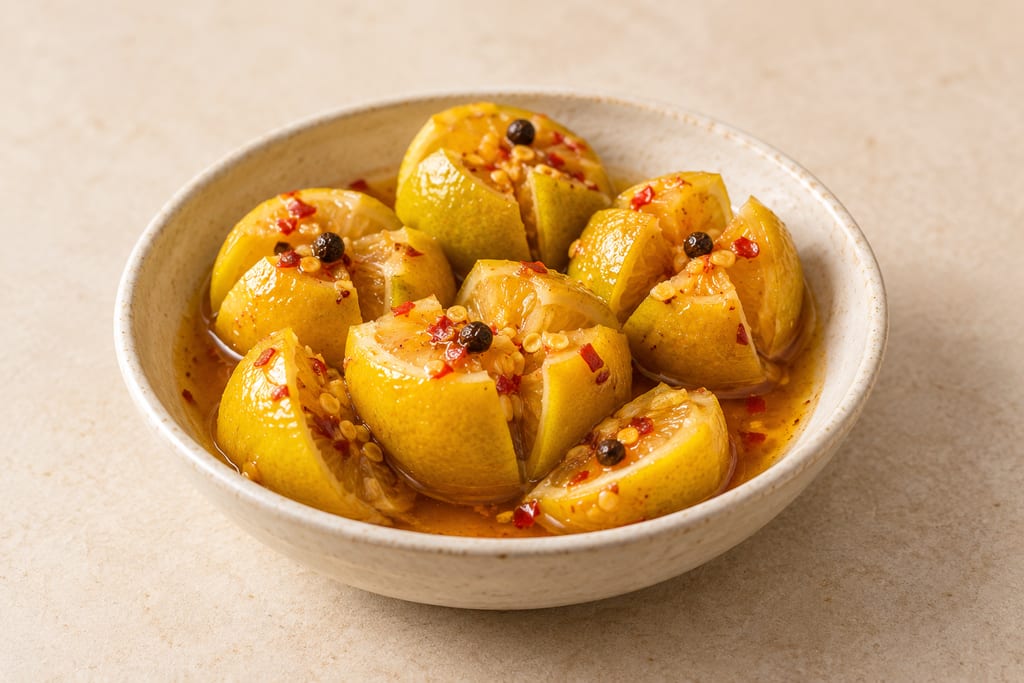
Achcharu is a family of Sri Lankan vinegar pickles made with mixed vegetables or seasonal fruit and a piquant spice dressing. This version is a quick, refrigerated, non-fermented mixed-vegetable pickle.
Appam, or hoppers, are South Indian and Sri Lankan rice pancakes made from a fermented coconut-and-rice batter and cooked in a curved pan to a crisp lacy rim and a soft, spongy centre.
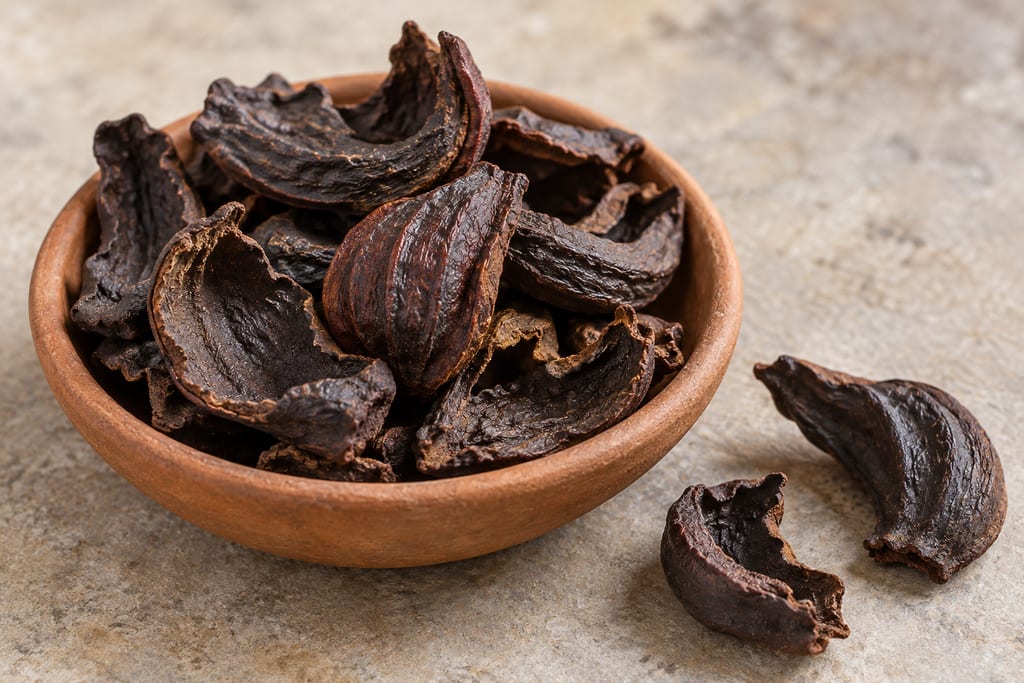
Goraka is the dried rind of Garcinia quaesita, a souring ingredient for Sri Lankan curries. Its drying is documented, but no complete household method is.
Afghan coriander chatni is a sharp, hot herb sauce with garlic and vinegar. A 2008 Afghanistan manual records green or red pepper and optional walnut; heat and household versions vary.
This cooked amba follows a Jewish Food Society recipe that simmers ripe mango with onion, garlic, mustard seed and warm spices into a tangy Middle Eastern condiment.
Australian green tomato pickles and relishes vary. This partial version follows ABC Western Victoria’s 2018 pickle recipe, not Beerenberg’s commercial formula. Sources document examples from 1944 onward, not a single origin.
Eliza Acton's Bengal receipt for chetney sauce: stoned raisins and a hard acid fruit pounded with brown sugar, ginger, salt, cayenne and garlic, then thinned with vinegar to the consistence of thick cream.
A spicy South African vegetable relish of onion, carrot, pepper, tomato, curry seasoning and beans, cooked briefly and served warm or cold beside pap and grilled meat.
A broad account of cooked chutney traditions: fruit or vegetables combined with sugar, spices and sometimes acid, often boiled into a thick condiment. This record is historical and process context, not a formula or storage recipe.
Community
No community contributions have been published for this entry yet.
Share what you made
Sign in to contribute. Published comments and photos are free to read.
The contributor says her mother often made this relish and that it is served with hoppers, kiribath or in a sandwich.
The page gives a five-to-six-serving formula and states 30 minutes total.
It gives a method of stirring the onion mixture in oil for 10–15 minutes, adding tamarind, frying until dark brown, then adding sugar and salt.
The source provides no storage duration or validated preservation process.
Cited in: What the relish is; How it is served; How the onions are cooked; What each ingredient does; Versions in the sources; Storage and handling; Reading the batch; What is still open
General leftover guidance says small amounts of hot food can be refrigerated or rapidly chilled; divide large portions into shallow containers and refrigerate leftovers within two hours (one hour when ambient temperature is above 90°F). This is general handling guidance, not a Seeni sambol-specific validation or shelf-life.