
Adrak / ginger murabba
Adrak murabba preserves young ginger in sugar syrup, a sweet South Asian preparation recorded in Indian cookery and food-processing sources.
 FermenteaWhere food goes to change
Spices and aromatics
Ginger is the aromatic rhizome of Zingiber officinale, used fresh, dried and preserved. Historical ginger wines sliced or bruised it to flavour a sugar-based ferment.
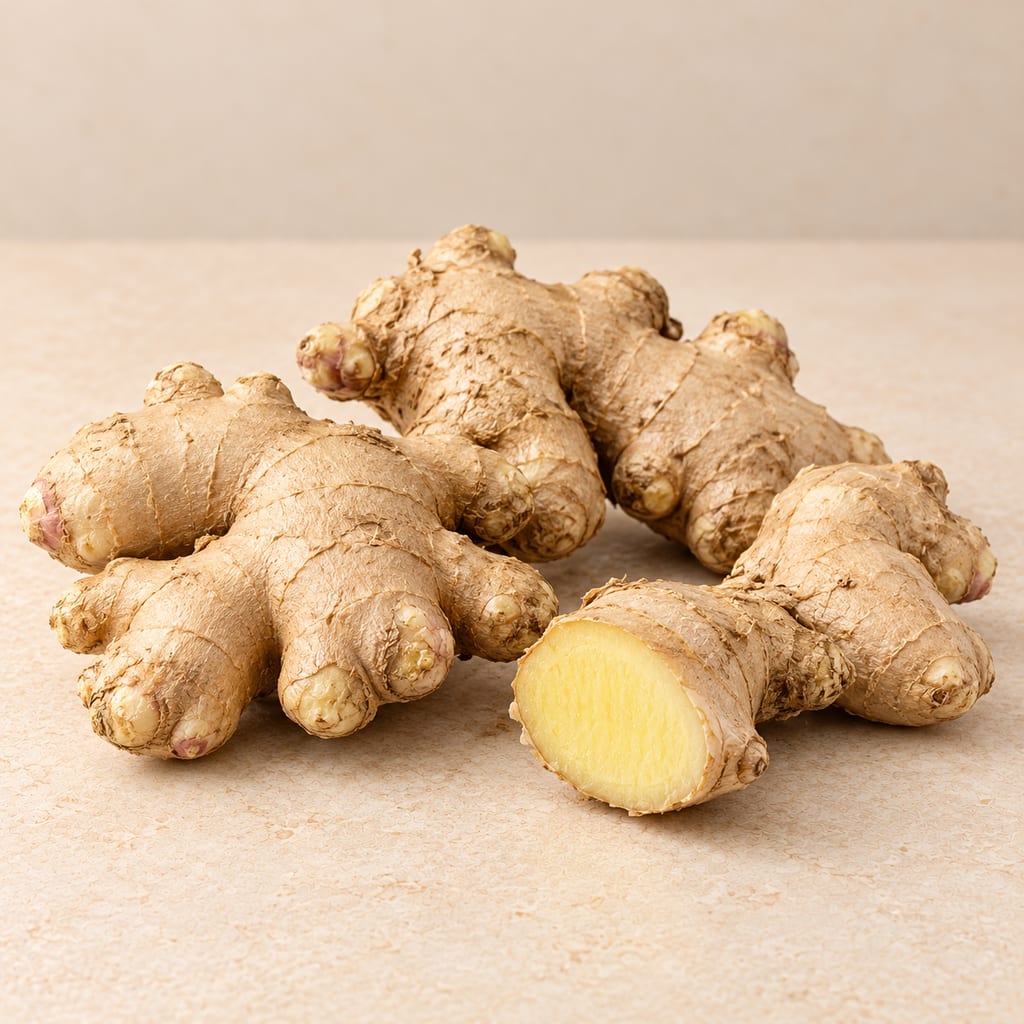
Ginger enters the kitchen as a knotted underground stem, not a root. The plant sends up grass-like shoots, about a metre tall by the time the crop is ready, from a branching rhizome. Under its thin brown skin the flesh is pale, juicy or fibrous depending on age and type. Cut fresh, it gives off a warm, lemony scent and a sharpness that seems to spread through the mouth rather than sit on the tongue. The plant is Zingiber officinale, in the same family as turmeric and cardamom, though each of them has its own character and kitchen life.
Ginger is a cultigen: it is unknown in the wild and has been multiplied for millennia by planting pieces of rhizome, so the place and date of its domestication are obscured. Botanical references give a broad range from the eastern Himalaya to south-central China, and an Oxford botanical profile calls India a possible origin on circumstantial evidence. What can be followed with more confidence is the movement. People migrating through south and southeast Asia carried it as flavouring and medicine; Arabian trade routes moved it west; it was commonly used in Rome, apparently from plantations in north-east Africa; and it was an important spice in Europe from as early as the thirteenth century. In the sixteenth century Iberian empires transported it to West Africa and then to Mexico and Jamaica, which made it the first Old World spice grown in the New World.
A first-century Greek medical work describes ginger as brought from Arabia and from the region called Troglodytike, eaten as a peppery aromatic and pickled because it spoilt readily. The passage is useful as a glimpse of how an ancient writer saw the spice, but it may be a later insertion into the text, so it cannot date ginger's first culinary use. The better-documented story starts later and is one of a perishable rhizome changing hands and forms along trade routes.
Ginger is not grown from seed. Growers plant pieces of rhizome about an inch deep and roughly 15 inches apart in well-drained soil enriched with organic matter; the plant likes moist, tropical conditions and a little shade, and sprouts after a few weeks of steady moisture. Florida extension guidance puts the time to fully developed rhizomes at about 8 to 10 months, and FAO's post-harvest compendium says the crop is dug when the leaves wither, between 6 and 12 months after planting. Time to maturity shifts with the soil and the cultivar.
The age at which ginger is dug decides what it becomes. For fresh use the rhizomes are lifted at about five months while they are tender, low in pungency and low in fibre; for preserving, at five to seven months; for drying or oil, at eight to nine months, when the leaves begin to yellow. Leaving the crop in the ground past full maturity may lower pungency and oil and raise fibre. Young ginger harvested just before flower spikes appear needs no peeling and tastes milder. Planting material is kept back longer still, until the leaves are completely dry.
Cultivars differ in yield, oil and fibre. More than 400 accessions are kept at the Indian Institute for Spice Research in Calicut, Kerala, and about 45 at the institute in Bogor, Indonesia; named selections from the Indian programme yield between roughly 11 and 23 tonnes of fresh rhizome per hectare, with essential oil between 1.6 and 2.4 percent. FAO listed India, China, Indonesia, Nigeria, the Philippines and Thailand as the main producers at the time of its 2002 review, noting that much ginger is eaten where it is grown or kept as planting stock, so the statistics are poor. India alone produced 232,510 tonnes on 70,910 hectares in 1996 to 1997. Fresh ginger for the United States came from Hawaii and from Brazil, Costa Rica, Ecuador, Guatemala, Honduras and Nicaragua.
The rhizome changes as it ages. Young ginger is tender, moist and mild, with skin that rubs away rather than needing a knife. It suits fresh cooking and preserving, where juiciness and delicacy are assets. Mature ginger is more fibrous and more pungent, and it is the material chosen for drying, grinding and distilling into oil. Cultivar, climate and handling after harvest all move these tendencies, so they are rules of thumb and not a guarantee for any single piece.
Dried ginger is sold by origin, and the names describe trade types rather than separate species. FAO's compendium lists Indian (Cochin and Calicut), Chinese, African (Nigeria and Sierra Leone), Jamaican and Australian gingers. Cochin has a light yellow colour and Calicut is more reddish-brown; both have a delicate, somewhat lemon-like odour. Indian and Jamaican ginger have a reputation for delicate flavour and light colour. African ginger is darker and richer in monoterpenes, which gives it a more pungent, camphoraceous aroma and makes it the usual choice for oil and oleoresin. Chinese dried ginger is whiter than the Indian, more fibrous and more bitter. Chinese ginger has also been the standard for ginger preserved in syrup, while Australia exports mainly candied rhizomes.
Dry-ginger processing explains the trade vocabulary. Traditionally the rhizomes are killed by ten minutes in boiling water, which stops enzymatic activity, and then sun-dried; ginger treated this way and scraped afterwards is called black ginger, and it is a preparation, not a second species. Peeled, scraped or sliced rhizomes dry faster, which limits mould growth and unwanted fermentation, though peeling removes some of the oil, which is concentrated near the skin, and so some pungency. Scraped and peeled ginger is sometimes soaked for two to three hours and then steeped for six hours in a 1.5 to 2 percent lime solution to give a bright, light colour; this is the bleached ginger of the trade. Dried ginger should reach 8 to 10 percent moisture and not exceed 12, with a weight loss of 60 to 70 percent. Sun-drying peeled rhizomes takes seven to nine days, while sliced ginger dries in five to six hours in a cross-flow drier, and hot-air drying should stay below 60 °C to avoid darkening.
Fresh ginger also becomes pastes and pickles. A traditional Indian ginger paste is made from 50 percent macerated ginger, 35 percent garlic and 15 percent salt, though that is one documented formulation and not a definition of ginger paste. In the kitchen the cut matters as much as the form: a thin slice gives up flavour slowly and can be lifted out, crushing exposes more tissue to water, fat or alcohol, and grated ginger spreads juice and fine fibre through a dish. Powder disperses readily with a more concentrated, less fresh character, so the forms should not be swapped by weight without tasting.
Ginger's scent and its sting come from different chemistry. Volatile compounds rise into the air and give fresh ginger its citrusy, green, resinous or woody notes; the essential oil, obtained by steam distillation of dried rhizome at 1.5 to 3 percent yield, is dominated by zingiberene at 20 to 37 percent, with ar-curcumene and several other sesquiterpenes. Citral, the lemony compound, is low in some Chinese oils at 1.9 to 4.3 percent and as high as 14 to 21 percent in certain Brazilian cultivars and up to 27 percent in Australian oils. Pungency, on the other hand, comes chiefly from less volatile phenolic compounds. Gingerols are the main group, with 6-gingerol the most abundant; shogaols and zingerone are degradation products of gingerol. Oxford's profile adds that these compounds are irritants, which is why the English verb to ginger up means to enliven.
Heat and drying change the balance. A controlled study of ginger heated in different ways measured the conversion of gingerols into shogaols, with the result depending on the type of heat, the temperature, the duration and whether the sample was fresh or dried. Its high-temperature treatments describe a chemical pathway and not a cooking schedule, but they explain why dried or cooked ginger is not simply fresh ginger with the water removed. Gingerols are also decomposed by the heat of steam distillation, so they are more concentrated in solvent-extracted oleoresin than in distilled oil. Storage matters: dried ginger kept at room temperature, 23 to 26 °C, lost up to 20 percent of its oleoresin after three months and its 6-gingerol content fell, whereas 10 to 15 °C is recommended.
The result in the kitchen is a spice with many registers. Fresh ginger gives soups, stir-fries, sauces and drinks a juicy lift; powder spreads warmth through doughs, spice mixtures and baking; young rhizome pickled in vinegar stays tender and bright, and rhizome preserved in syrup becomes a sweet, chewy confection. Fresh ginger is common in much Asian cooking and dried ginger in European cookery, but both regions have long used more than one form.
Ginger is rarely the food that ferments. It is an aromatic that flavours something else, and in the older recipes that something is sugar. In Moxon's ginger wine and Beeton's, sugar dissolved in water supplies the fermentable material, yeast converts it, and sliced or bruised ginger lends heat and a lemony fragrance to the finished drink. In ginger mead the fermentable base is honey. Because the rhizome is added for flavour, its quantity is small in some recipes, an ounce in fourteen quarts, and large in others, two pounds in nine gallons, and the method of extraction, from a brief boil of slices to a muslin bag left in the cask, does as much to set the strength as the weight.
Ginger is also at the centre of one of the best-studied home ferments. In 1891 and 1892 the botanist Harry Marshall Ward described the organism responsible for home-made ginger beer, which grows in jelly-like, semi-transparent masses resembling kephir grains but not identical to them. He concluded that it is mainly a symbiotic partnership of a specific yeast and a bacterium, comparable in structure to a lichen, and that natural samples usually also carry other yeasts, bacteria and moulds. That makes ginger beer a fermentation driven by a living, jelly-like culture of its own, where the wines above rely on a yeast-soaked toast to start the work.
Ginger has a second, quite different biochemical talent: it contains a protease, a protein-cutting enzyme, that clots milk. A 2023 study of a partly purified protease from ginger rhizome in Nepal found its best milk-clotting activity at pH 6.5 and 50 °C, and fresh cheese made with it had a higher yield and moisture content and a lower fat content than cheese made with rennet. This is enzyme action on milk protein, not fermentation, and it is a separate matter from the flavour that ginger lends to ferments.
Unwanted fermentation is also a hazard in ginger processing. During drying the rhizome is open to mould and fermentation, which is why it is scraped or sliced and dried quickly, and why dried ginger meant for distillation must be kept dry: mycotoxins from mould can pass into the oil.
Ginger has a documented place in both the drinks cupboard and the spice box. Elizabeth Moxon's English Housewifry, printed in 1764, gives a ginger wine made with fourteen quarts of water, three pounds of loaf sugar and one ounce of ginger sliced thin. The mixture boils for half an hour; after cooling to milk-warm, the recipe adds lemons, brandy and a yeast-covered toast, lets it work for a day, then moves it to a cask. It is ready to bottle after five days and to drink a week later. Thin slices and a short boil make a gentle extraction compared with later bruised-root recipes.
The same book gives a ginger mead of ten quarts of honey in thirty quarts of water, with hops and a quarter ounce of sliced ginger added in two portions. One portion boils with the honey liquor; the rest goes in after the liquor is strained and cooled. The mead is put into the cask toward the end of September and held for a year. Here honey is the fermentable base and ginger is the seasoning, so it is a mead flavoured with ginger and not a ginger wine under another name.
A century later, Isabella Beeton's ginger wine, recipe 1819 in her Book of Household Management of 1861, uses twelve ounces of bruised ginger in nine gallons of water, boiled with sugar and lemon rind for an hour. Yeast is stirred in when the liquor is nearly cold, raisins go in the next day, the cask is stirred daily for a fortnight, and brandy is added before the cask is stopped gradually. Her orange-wine directions include a no-boil treatment of a related kind: for a nine-gallon cask, two pounds of whole ginger are bruised and tied loosely in muslin with the sugar. The larger quantity belongs to a different base and method and is not a revision of the ginger-wine formula.
Gingerbread shows a third role. Beeton's rich sweetmeat nuts combine two ounces of ground ginger with treacle, clarified butter, brown sugar, candied citrus peel, coriander and caraway, then enough flour to make a paste. Her thick gingerbread uses one ounce of ginger with treacle, flour, allspice, butter, sugar, milk and eggs, and Sunderland gingerbread nuts call for freshly ground ginger with allspice and coriander. In each, dried ginger is a central spice among sweeteners, citrus and other aromatics, and there is no single canonical gingerbread flavour.
For fresh cooking, choose a firm, plump rhizome and avoid one that is shrivelled or soft. The skin and fibre grow more noticeable with age, so young ginger suits quick pickling and thin slicing, while mature rhizomes grate well into long-cooked dishes and sauces. Rinse fresh ginger under running water before peeling or cutting and dry it with a clean towel; food-safety guidance advises against soap or detergent, and rinsing is ordinary handling and not sterilisation.
Peel only as much as the preparation needs. A spoon scrapes the thin skin of young rhizomes, while a knife or peeler is quicker on older, irregular pieces. Slice across the grain when tenderness matters; mince, grate or bruise when the aim is to spread flavour. Bruising suits broths, infusions and the historical drinks above: it opens the tissue but leaves pieces large enough to remove.
Whole fresh rhizome keeps best cool and humid. In a trial on Hawaiian ginger, quality held for 28 weeks at 12.5 °C and 90 percent relative humidity, against 20 weeks at 22 °C and 70 percent, when water loss and fibre became the limit. Florida extension advice for a home crop is to let the skin dry and then keep the rhizomes in the refrigerator or freezer, thawing them as needed. Dried ginger belongs in a cool, dry place. Commercial ginger paste made experimentally in Hawaii kept only about eight weeks before flavour and colour faded, which is a reminder that the fresh character of the rhizome is its least stable part.
Candied ginger is an old preserve. Moxon's candying method starts with thick rhizomes soaked in water that is changed daily, then boiled, scraped, thinly sliced and layered with sugar before a final gentle cooking; the finished slices were kept dry as a sweetmeat. For ginger in syrup, use a product made for the purpose: powder cannot stand in for preserved slices, and sugared ginger changes both sweetness and texture.
As a food, ginger is generally well tolerated. The US National Center for Complementary and Integrative Health notes that ginger taken by mouth can cause abdominal discomfort, heartburn and diarrhoea, and mouth and throat irritation, advises anyone taking medicines to talk to a health care provider first, and says ginger supplements may be safe in pregnancy while little is known about breastfeeding.
The sources do not date the first culinary use of ginger, do not settle where it was first domesticated, and offer no continuous record from the ancient Mediterranean passage to modern trade. Production and trade figures here come from FAO's 2002 compendium and are historical. The sources used do not address allergic reactions to ginger. The 1764 and 1861 recipes are firm printed attestations of ginger in British household wines and sweetmeats, not evidence of how ginger was used elsewhere.
Source of Cochin and Calicut dried ginger and home of the Indian Institute for Spice Research collection; cultivation region, not a claim of ginger's origin.
Major producer and exporter of dried ginger and the standard source of ginger preserved in syrup; cultivation region, not a claim of origin.
Source of African ginger, darker and more pungent, preferred for oil and oleoresin.
Ginger carried there by Iberian empires; Jamaican ginger is a named, light-coloured, delicate trade type.
Exports mostly candied rhizomes; its oil is high in citral.
Adrak murabba preserves young ginger in sugar syrup, a sweet South Asian preparation recorded in Indian cookery and food-processing sources.
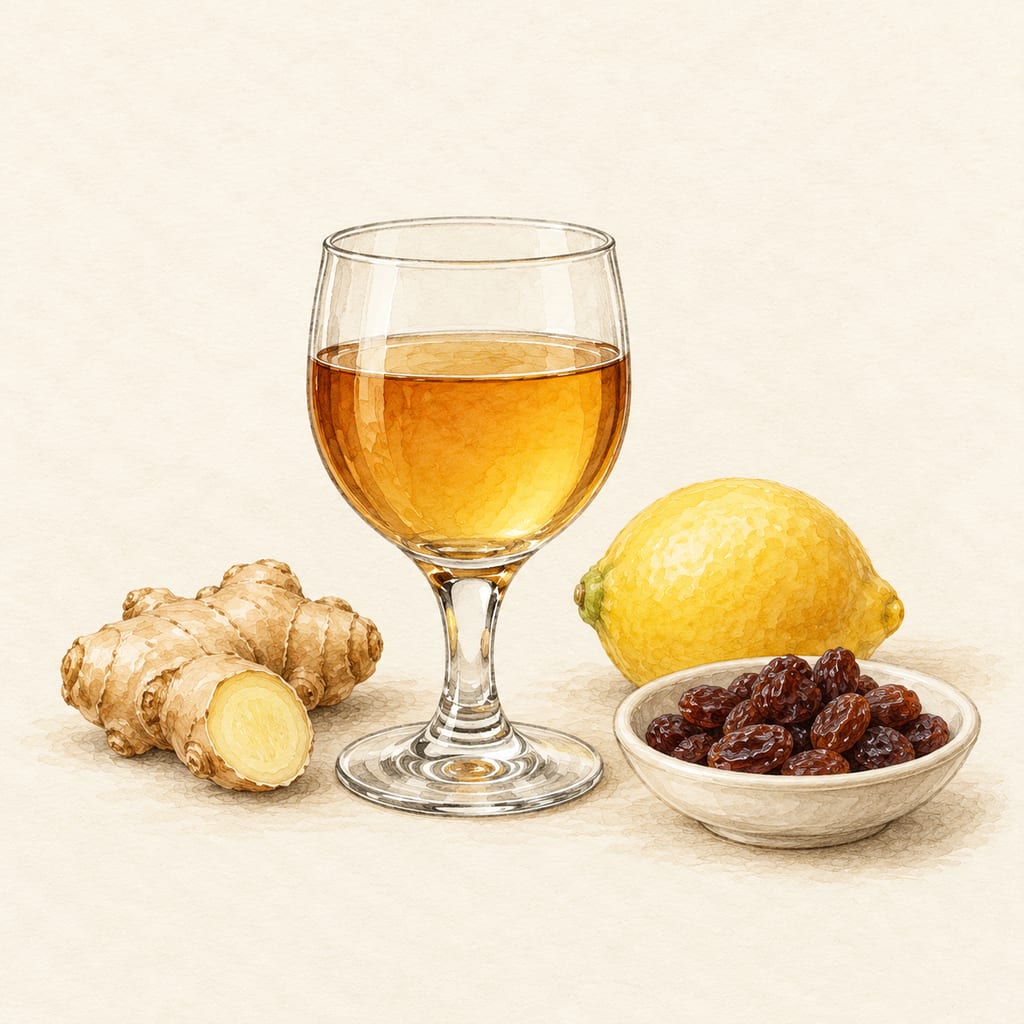
A Victorian household wine of boiled sugar, lemon and bruised ginger, worked on raisins in a cask for a fortnight and finished with brandy, made nine gallons at a time.
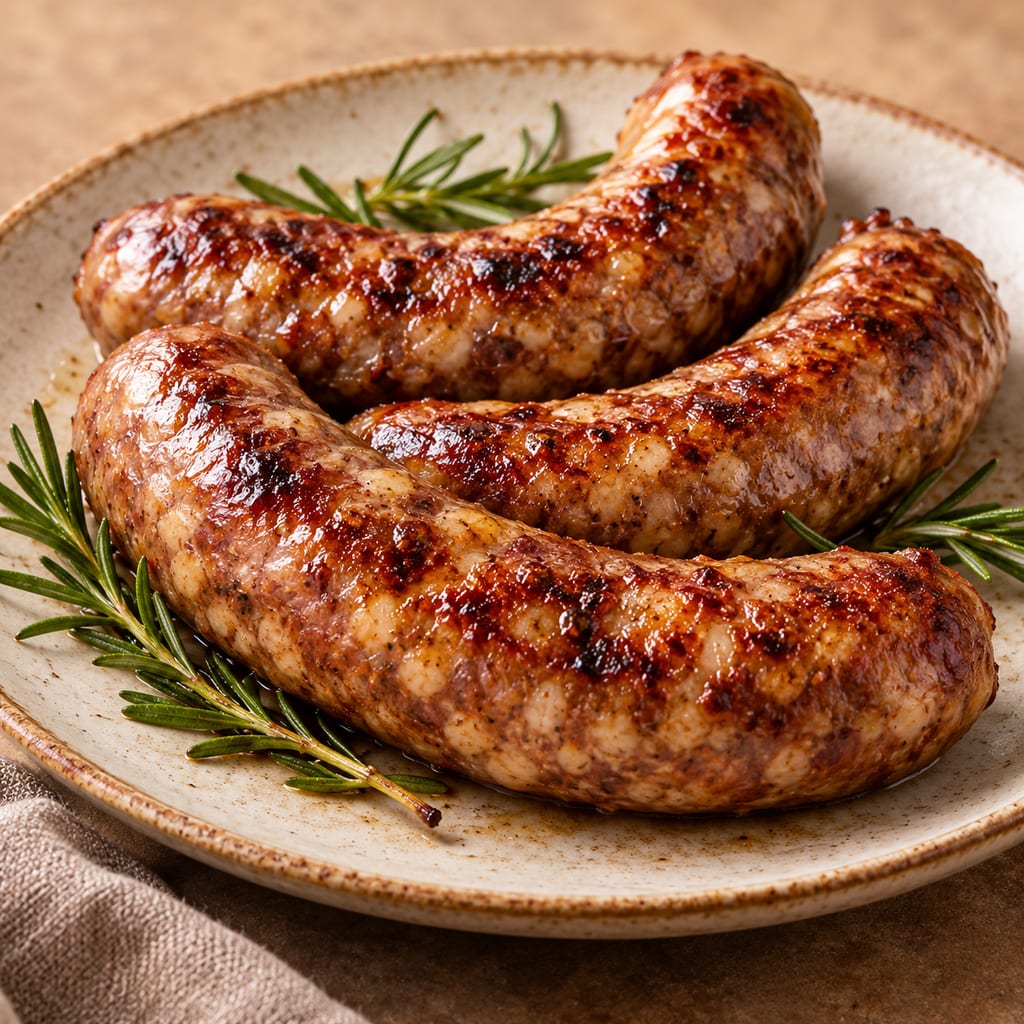
South Africa's spiced fresh sausage family, sold as masala, dhania or Punjab wors: cumin, ginger, garlic and chilli in place of the mild coriander-and-clove seasoning of boerewors.
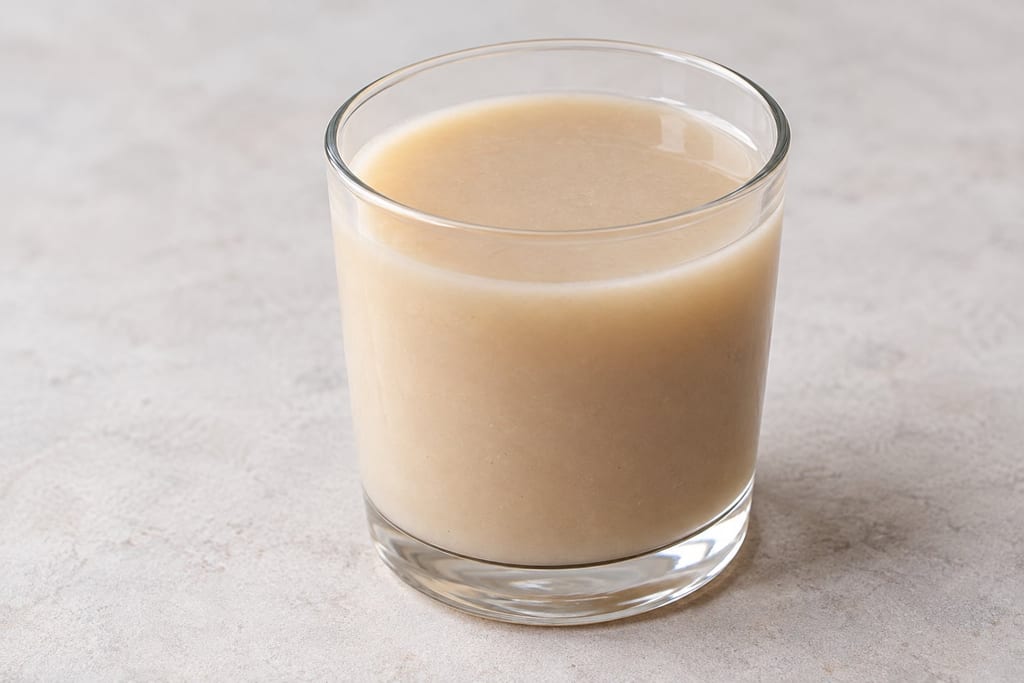
A thick, spiced northern Nigerian drink of pearl millet in which only part of the fermented slurry is cooked, so raw starch and gelatinised starch are recombined.
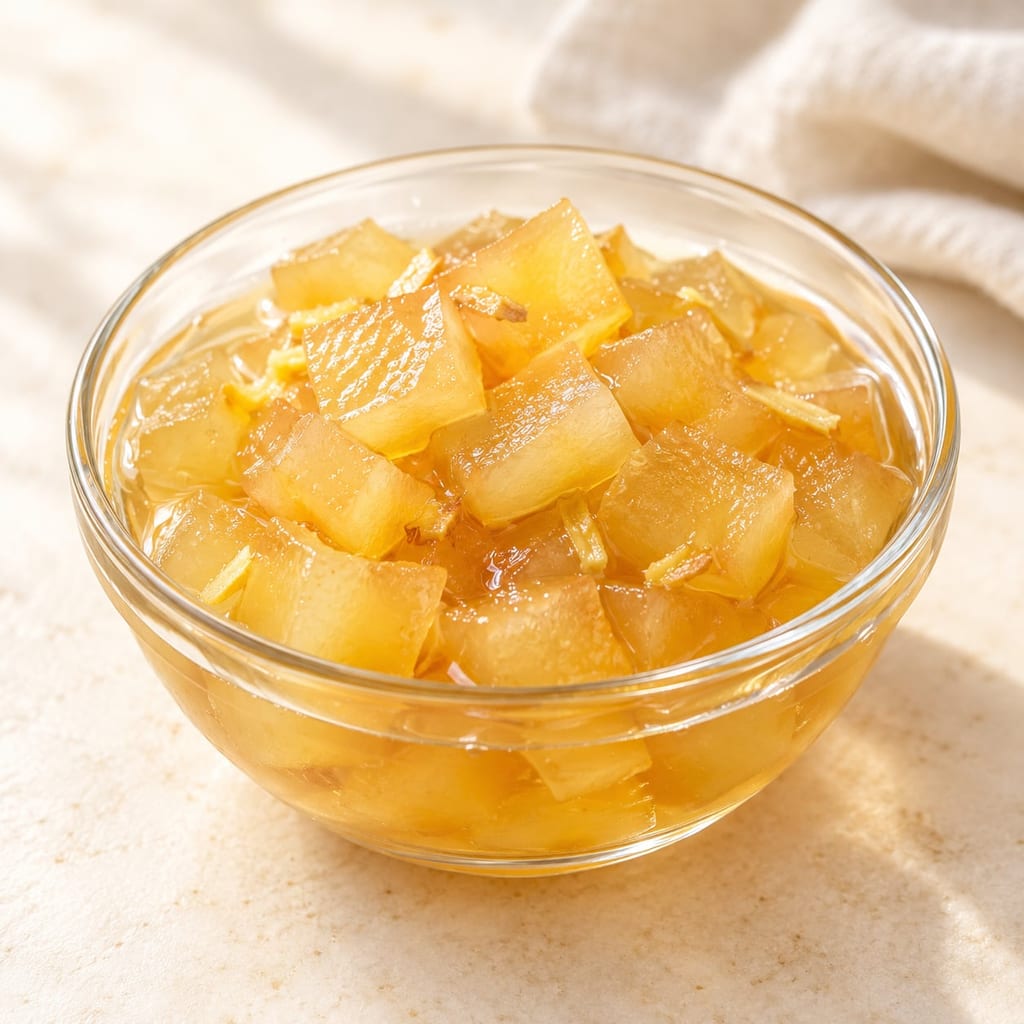
A measured, refrigerated prototype cooks ordinary watermelon’s white rind in lemon, ginger and sugar syrup. It is inspired by makataan konfyt but does not reproduce the traditional fruit or its lime-water treatment.
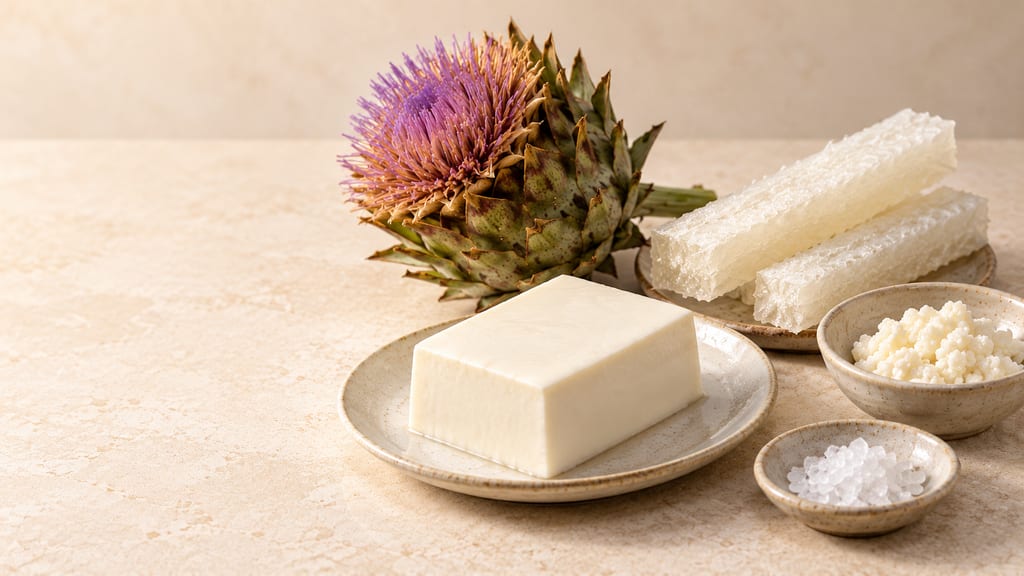
Cheese, tofu, agar, nixtamal and cured ham all begin with a liquid or soft food made to set, sour or keep. Rennet is one branch of that history, beside plant enzymes, acids, minerals, alkalis, gels, finings and curing salts.
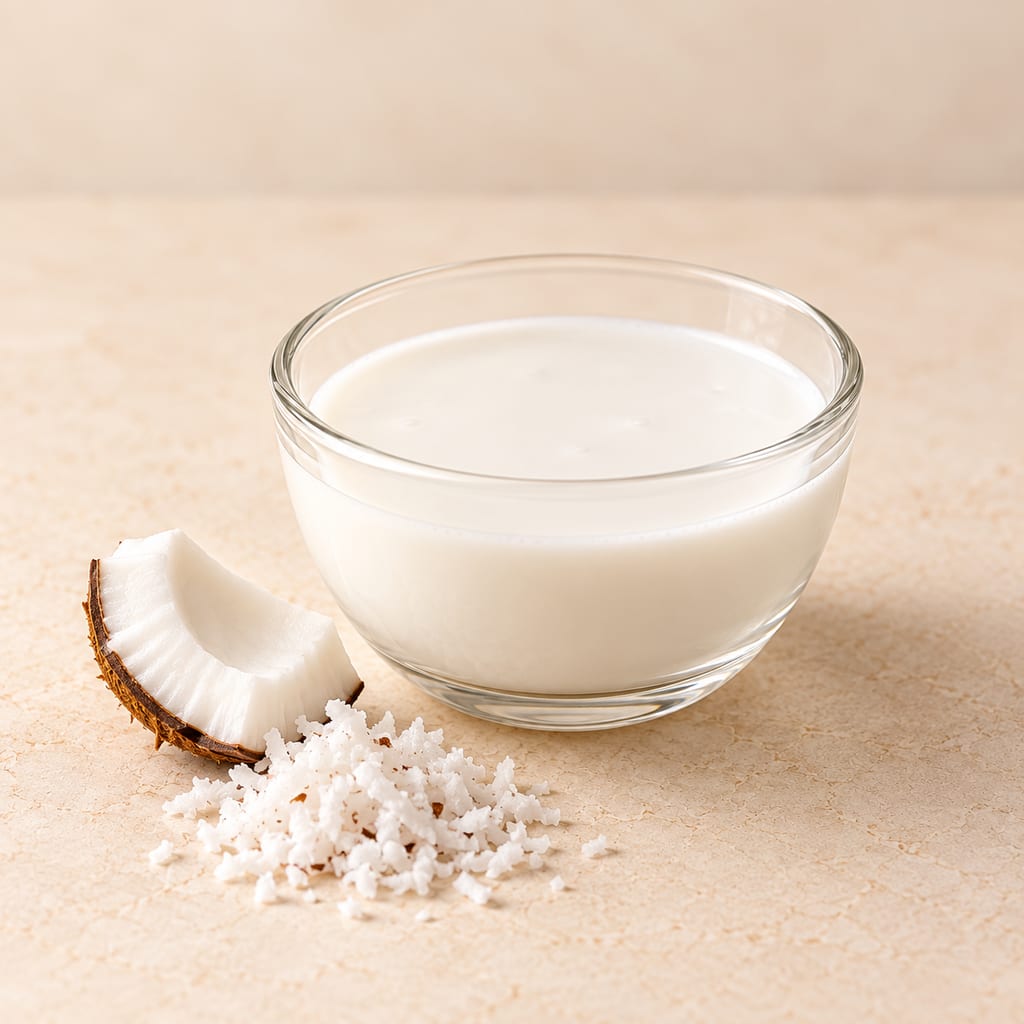
Coconut milk is an aqueous emulsion extracted from mature coconut kernel, sold fresh, packaged or reconstituted. It is distinct from the liquid naturally inside a coconut.
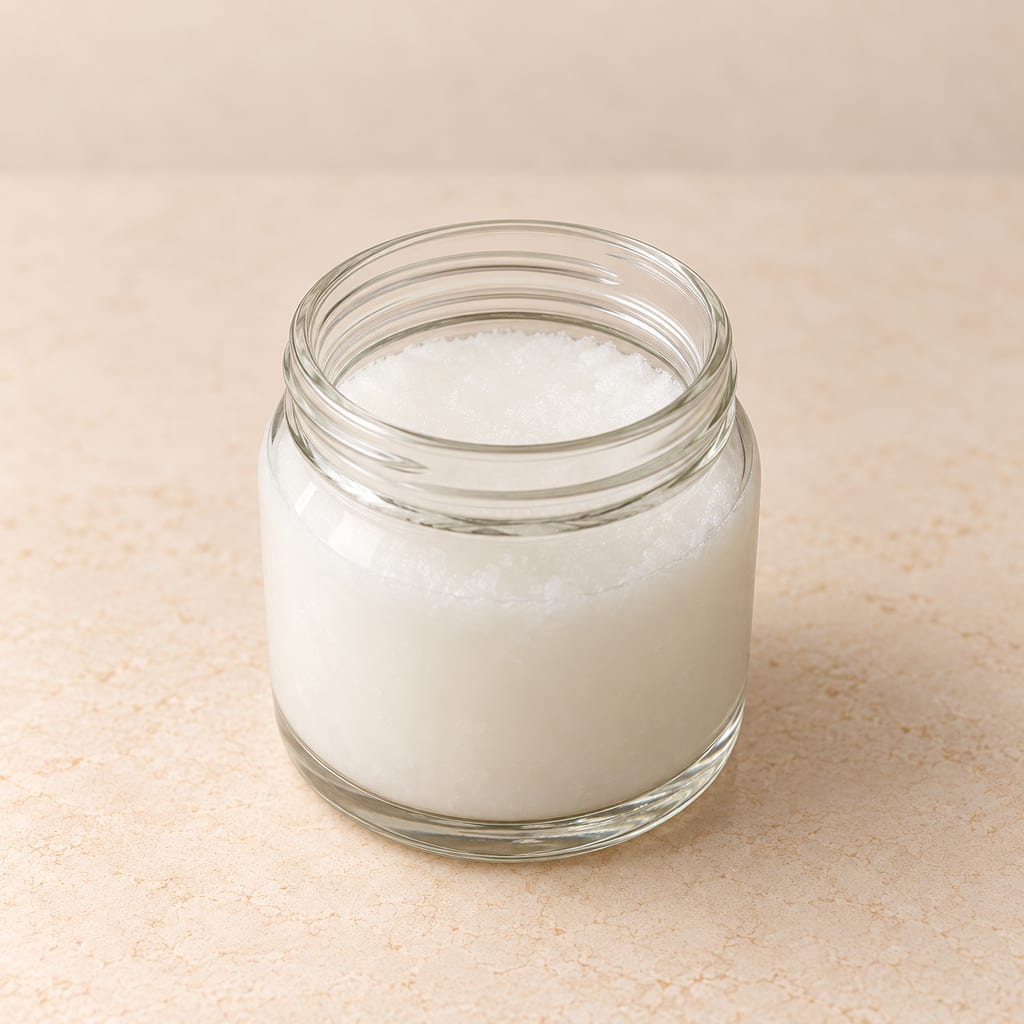
Fat pressed or separated from the kernel of a mature coconut: solid below about 25 °C, mostly saturated and half lauric acid, sold virgin, refined or hydrogenated.
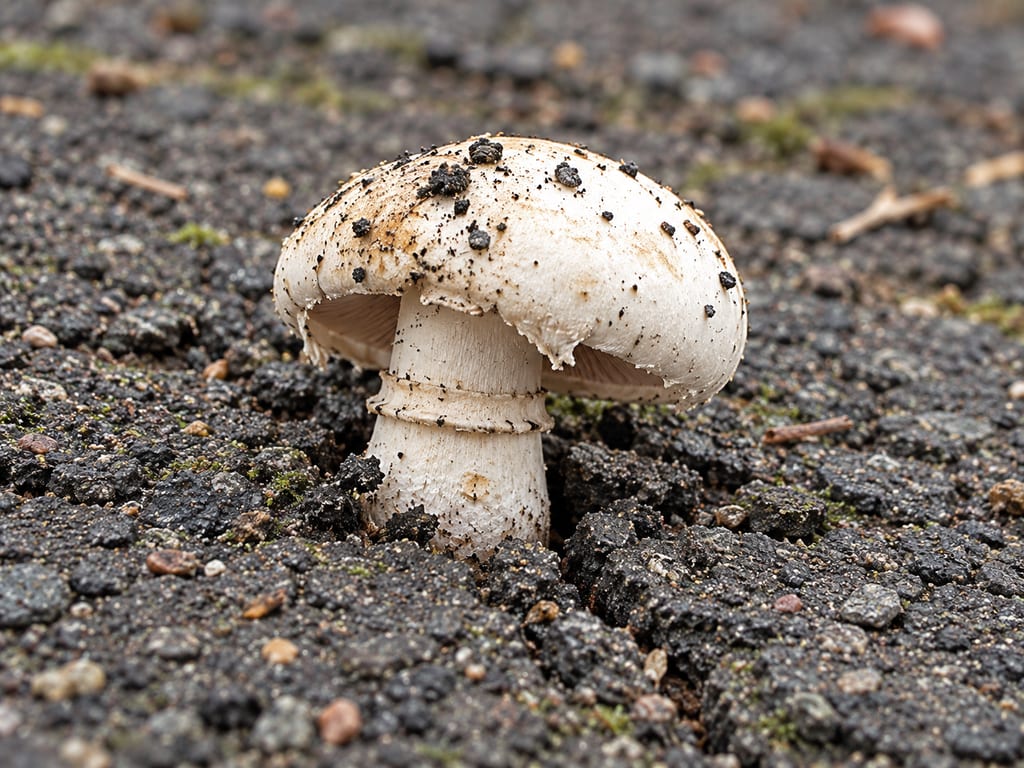
Agaricus bitorquis is a firm edible mushroom known for fruiting in hard, disturbed ground and for its persistent double ring. It is also cultivated in warmer conditions than the common button mushroom.
Rice flour is ground, non-waxy rice used in breads, batters and noodles. Its particle size, milling and rice variety shape how it absorbs water and sets when cooked.
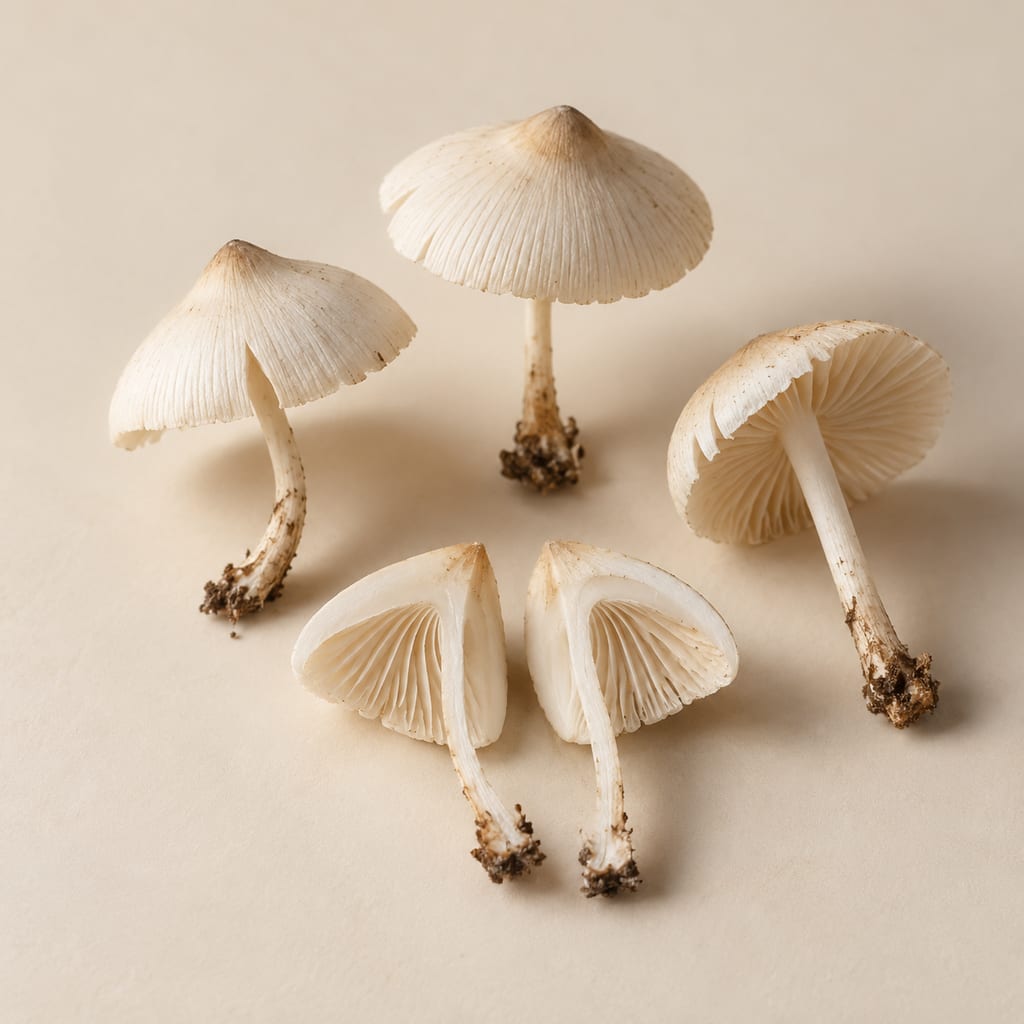
A small wild termite-associated mushroom recorded as food in parts of India and elsewhere. Its name has a taxonomic history, and some African records are treated cautiously because they may represent a different lineage.
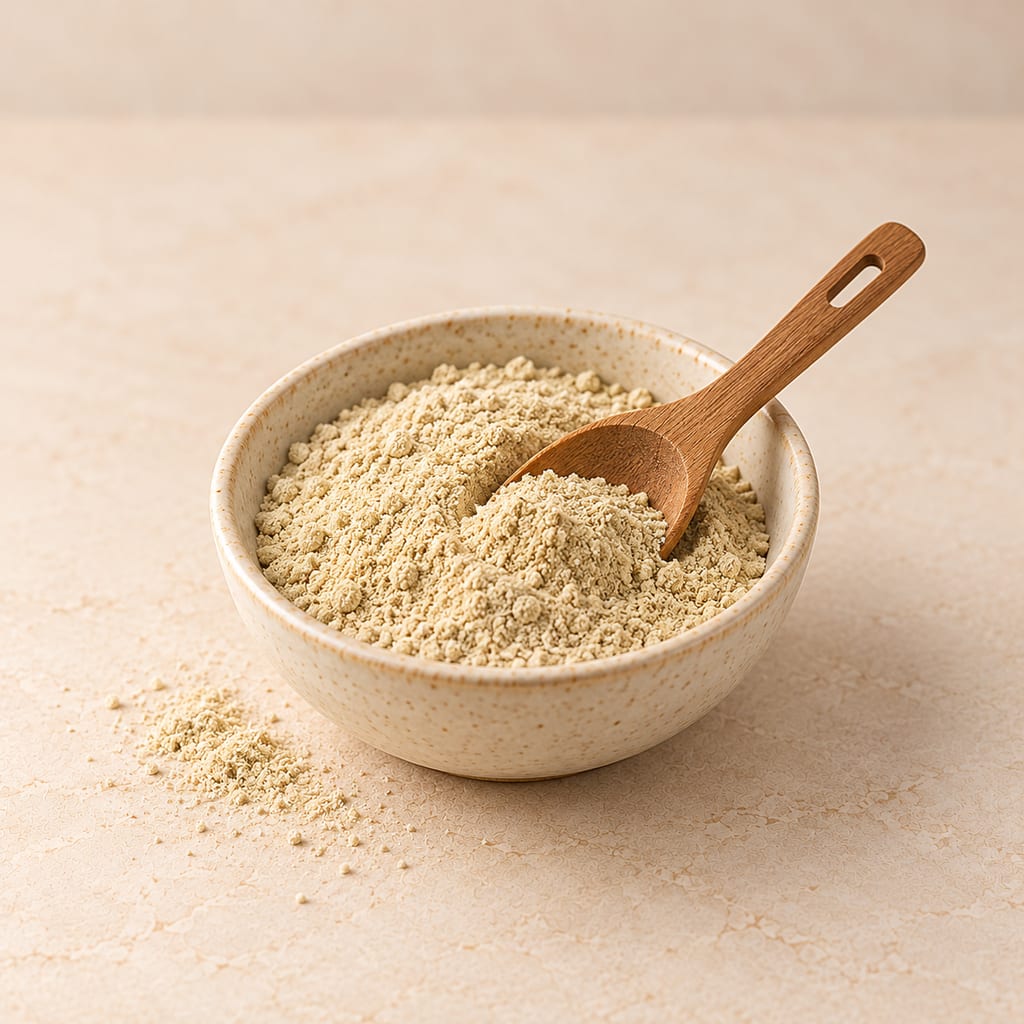
White pepper is the ripe fruit of Piper nigrum with its outer fruit wall retted or stripped away, leaving a pale, smooth peppercorn. It seasons pale sauces and soups and three linked cured sausages.
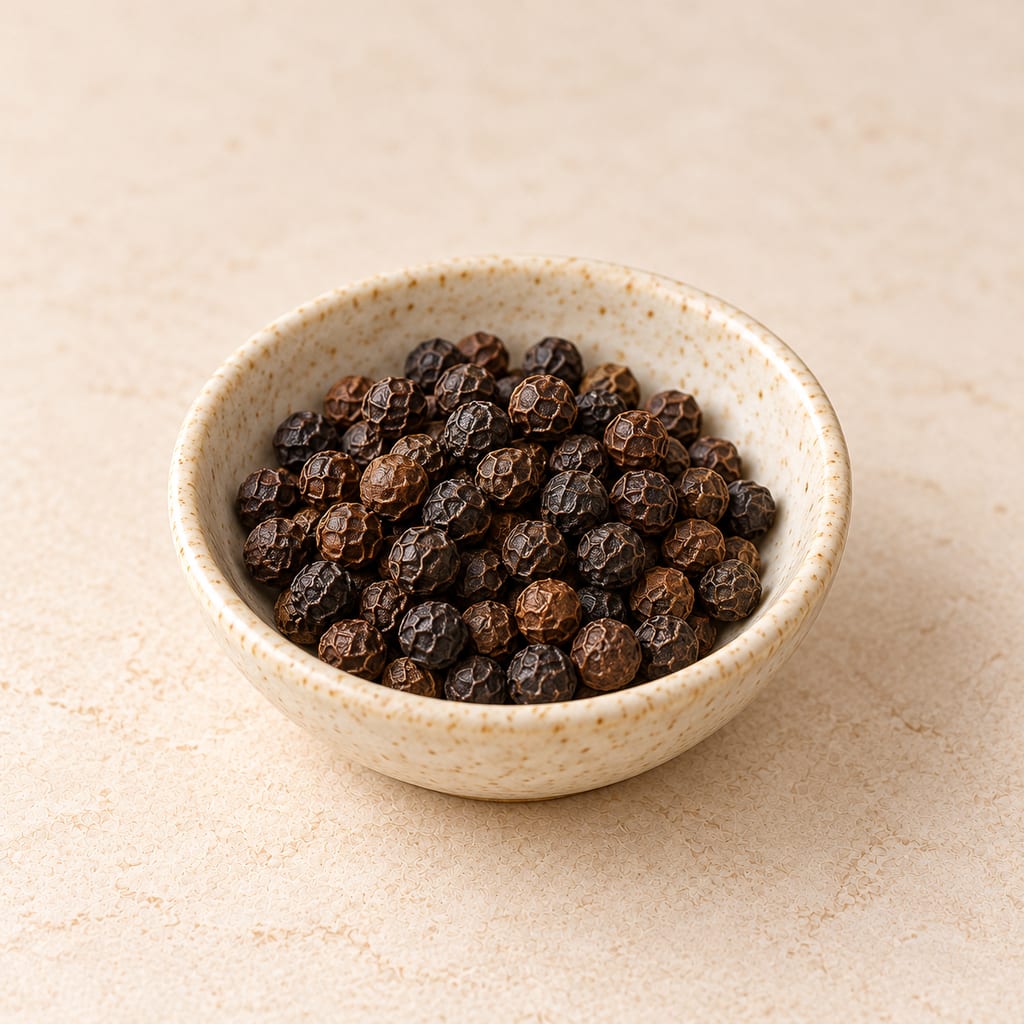
Whole peppercorns are the dried, uncracked berries of Piper nigrum, sold with their pungent seed intact. They season cured sausages such as Genoa-style salami and soppressata di Calabria beside a ground pepper.
No community contributions have been published for this entry yet.
Sign in to contribute. Published comments and photos are free to read.
Plants of the World Online, Royal Botanic Gardens, KewIdentity · Taxonomy
Zingiber officinale RoscoeAccepted name Zingiber officinale Roscoe; family Zingiberaceae
Native range uncertain; cultivated across tropical Asia, Africa and the Americas
Cited in: A rhizome carried across kitchens; Aroma, heat and the changing rhizome
University of Oxford HerbariaOrigin · History
Zingiber officinale — Plants 400Unknown in the wild and propagated asexually from rhizomes for millennia
Circumstantial evidence implies India may be the origin
Arabian trade routes moved ginger west; commonly used in Rome; important in Europe from the thirteenth century
Iberian empires carried ginger to West Africa, Mexico and Jamaica; first Old World spice grown in the New World
Gingerol, gingeridione and shogaol are the pungent irritant compounds
Cited in: A rhizome carried across kitchens; Aroma, heat and the changing rhizome; What remains unsettled
American Herbal Products AssociationHistory
Herbs in History: GingerAn ancient account reports ginger as an aromatic food, pickled because it was perishable
The Dioscorides ginger passage may be a later insertion
Cited in: A rhizome carried across kitchens; What remains unsettled
Food and Agriculture Organization of the United NationsProduction · Processing · Trade types · Storage
Ginger: Post-harvest Operations — Post-Production Management for Improved Market AccessRhizome dug 6 to 12 months after planting; harvest at 5, 5 to 7 and 8 to 9 months by end use
Trade types Cochin, Calicut, Chinese, African, Jamaican and Australian and their characteristics
Killing in boiling water for 10 minutes, scraping, lime bleaching, drying to 8 to 10 percent moisture, 60 to 70 percent weight loss, 60 °C limit
Gingerols, shogaols and zingerone; essential oil yield and composition; citral levels
Indian ginger paste of 50 percent ginger, 35 percent garlic and 15 percent salt
Storage of fresh ginger at 12.5 °C and 90 percent humidity for 28 weeks; dried ginger at 10 to 15 °C
India 232,510 t on 70,910 ha in 1996 to 1997; main producers India, China, Indonesia, Nigeria, the Philippines and Thailand
Cited in: How the crop is grown and harvested; Young, mature, fresh and dry; Aroma, heat and the changing rhizome; What ginger does in a ferment; Buying, preparing and keeping ginger
University of Florida IFAS ExtensionCultivation · Storage
GingerGrown from rhizome pieces, not seed; spacing about 15 inches
About 8 to 10 months to fully developed rhizomes
Young ginger harvested before flower spikes needs no peeling and is milder
After the skin dries, rhizomes can be refrigerated or frozen
Cited in: How the crop is grown and harvested; Buying, preparing and keeping ginger
Food Science and Biotechnology, Springer NatureChemistry
Heat-induced conversion of gingerols to shogaols in ginger as affected by heat type, sample type, temperature and timeGingerol-to-shogaol conversion depends on heat type, temperature, duration and fresh or dried sample
Cited in: Aroma, heat and the changing rhizome
Project Gutenberg transcriptionPrimary historical ginger wine and mead methods
English HousewifryGinger wine: 1 oz thin-sliced ginger per 14 qt water, 3 lb loaf sugar, half-hour boil; lemons, brandy, yeast toast; work one day, bottle after five days, drink one week later
Ginger mead: 1/4 oz ginger per 30 qt water and 10 qt honey, divided between boil and post-strain addition; cask held a year
Candied ginger method
Cited in: What ginger does in a ferment; Ginger in drink and bake; Buying, preparing and keeping ginger
Project Gutenberg transcriptionPrimary historical ginger wine and gingerbread methods
The Book of Household ManagementGinger wine 1819: 12 oz bruised ginger per 9 gal, boiled an hour with sugar and lemon rind; near-cold yeast; raisins; daily stirring for a fortnight; brandy and gradual closure
Orange-wine no-boil variant: 2 lb whole bruised ginger in a loose muslin bag
Gingerbread nuts, thick gingerbread and Sunderland nuts use ground ginger with different sweeteners, flours, citrus and spices
Cited in: What ginger does in a ferment; Ginger in drink and bake
U.S. Food and Drug AdministrationGeneral raw produce handling
7 Tips for Cleaning Fruits, VegetablesRinse raw produce under running water before peeling or cutting; do not use soap or detergent
Cited in: Buying, preparing and keeping ginger
Royal Society, Making Science catalogue (PP/18/13)Fermentation microbiology
The "ginger-beer plant", and the organisms composing it: a contribution to the study of fermentation-yeasts and bacteriaReceived 19 November 1891, read 17 December 1891
Jelly-like masses resembling kephir grains; a symbiotic pairing of a specific yeast and a bacterium comparable in structure to a lichen; natural samples also carry other yeasts, bacteria and moulds
Cited in: What ginger does in a ferment
National Center for Complementary and Integrative Health, National Institutes of HealthDietary context
GingerSide effects by mouth include abdominal discomfort, heartburn, diarrhoea and mouth and throat irritation
Supplements may be safe in pregnancy; little is known about breastfeeding; talk to a provider about medicines
Cited in: Buying, preparing and keeping ginger
Himalayan Journal of Science and Technology (Nepal Journals Online)Enzyme
Utilization of Partially Purified Milk Clotting Protease from Ginger Rhizome in the Manufacturing of Fresh CheeseGinger protease optimum pH 6.5 and 50 °C; fresh cheese with higher yield and moisture and lower fat than rennet cheese
Cited in: What ginger does in a ferment