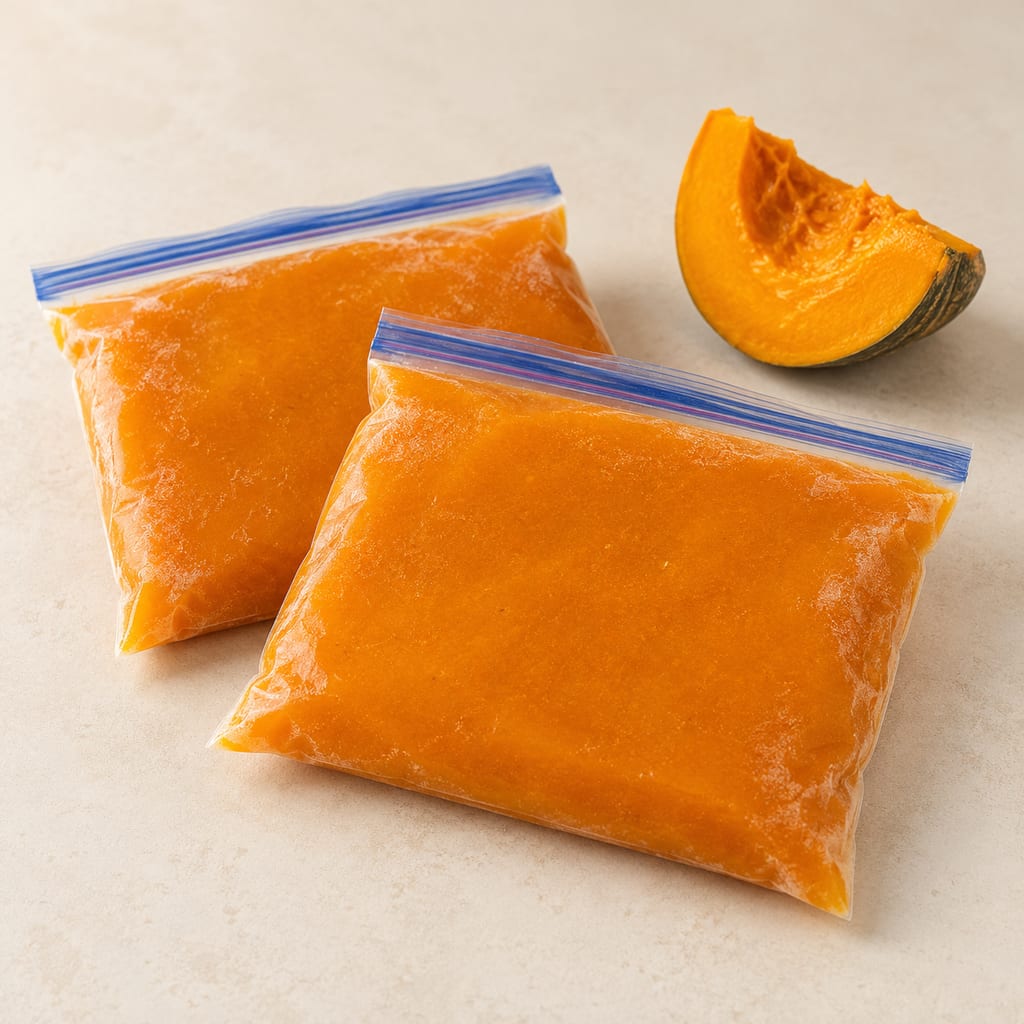
Frozen pumpkin purée
Cooked pumpkin mashed, cooled and frozen in portions: a plain base for pies, soups and baking without canning a dense purée.
 FermenteaWhere food goes to change
Modern method
Spiced freezer pumpkin butter: Freeze for winter; small fresh portion refrigerated up to 48 hours.
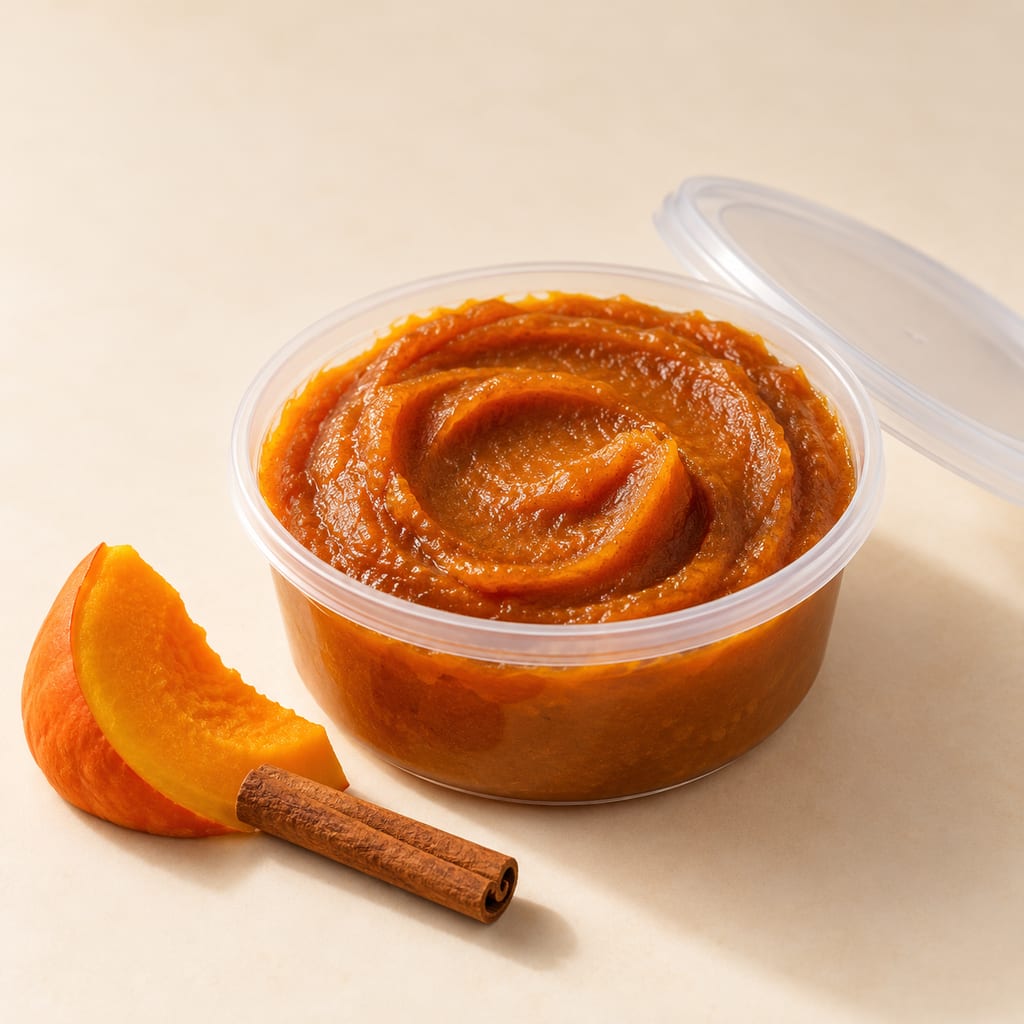
Pumpkin butter is a thick, sweet, spiced spread. The word butter describes its consistency: this version contains no dairy. It makes good use of cooked pumpkin that is too soft or fibrous for an attractive cube pickle. Freezing supplies the long-term preservation step; reducing a puree until it holds a spoon-mark does not establish that it can be bottled for a cupboard.
The quantities below retain the US volume measures in the University of California freezer recipe. A US cup is approximately 237 ml; a US pint is approximately 473 ml, not a British imperial pint.
Source yield: about five US half-pint freezer containers. Yield depends on the puree's initial moisture and the final reduction. Use containers designed for freezing, rather than an arbitrary narrow-necked glass jar.
The extension recipe gives up to one year in the freezer. Treat that as a quality and stock-rotation recommendation with continuous storage around -18°C, not permission to leave the product at room temperature. Thaw a small portion in the refrigerator and use within 24 hours of complete defrosting, following UK Food Standards Agency guidance. For a freshly made portion kept chilled rather than frozen, this collection uses the FSA's conservative 48-hour cooked-food handling rule.
The modest container size matters: it avoids repeatedly thawing and warming the whole autumn batch. A batch label should therefore describe the portion as well as the product, for example “pumpkin butter, 200 ml, frozen 1 November”.
The source permits adjustment of the spices. Because this is a freezer preparation, a cook can also develop a less sweet variant, but that becomes an adaptation with different taste, freezing behaviour and yield. None of these versions gains a home-canning schedule. NCHFP explains that puree thickness, acidity and water activity all affect the problem; a little apple juice or lemon juice does not supply a general solution.
For a plain pantry ingredient, use the separate tested pressure-canned cube recipe and make a small quantity of butter after opening. For a ready-made spread, freeze this preparation.
Cool in small portions and refrigerate within one to two hours at 5°C or below, aiming for 4°C. Use the fresh chilled portion within 48 hours. Freeze winter portions promptly at about −18°C in freezer-rated containers with expansion space. Thaw in the refrigerator and use within 24 hours of complete defrosting. These are conservative handling instructions, not a measured shelf life for this particular preserve. Sugar concentration, a jam-like set and a sealed lid do not establish a home-canning process.
Pumpkin butter is a thick, sweet, spiced spread. The word butter describes its consistency: this version contains no dairy. It makes good use of cooked pumpkin that is too soft or fibrous for an attractive cube pickle. Freezing supplies the long-term preservation step; reducing a puree until it holds a spoon-mark does not establish that it can be bottled for a cupboard.
Scaling: source batch only
Freezer at -18 C; refrigerate only the portion being used
Hazard sourceFreezer at -18 C; refrigerate only the portion being used
Control sourceFreezer at -18 C; refrigerate only the portion being used
Do not transfer a canning schedule from a different pumpkin preparation.
Geographical association of this documented version, not an asserted origin.
Cooked pumpkin mashed, cooled and frozen in portions: a plain base for pies, soups and baking without canning a dense purée.
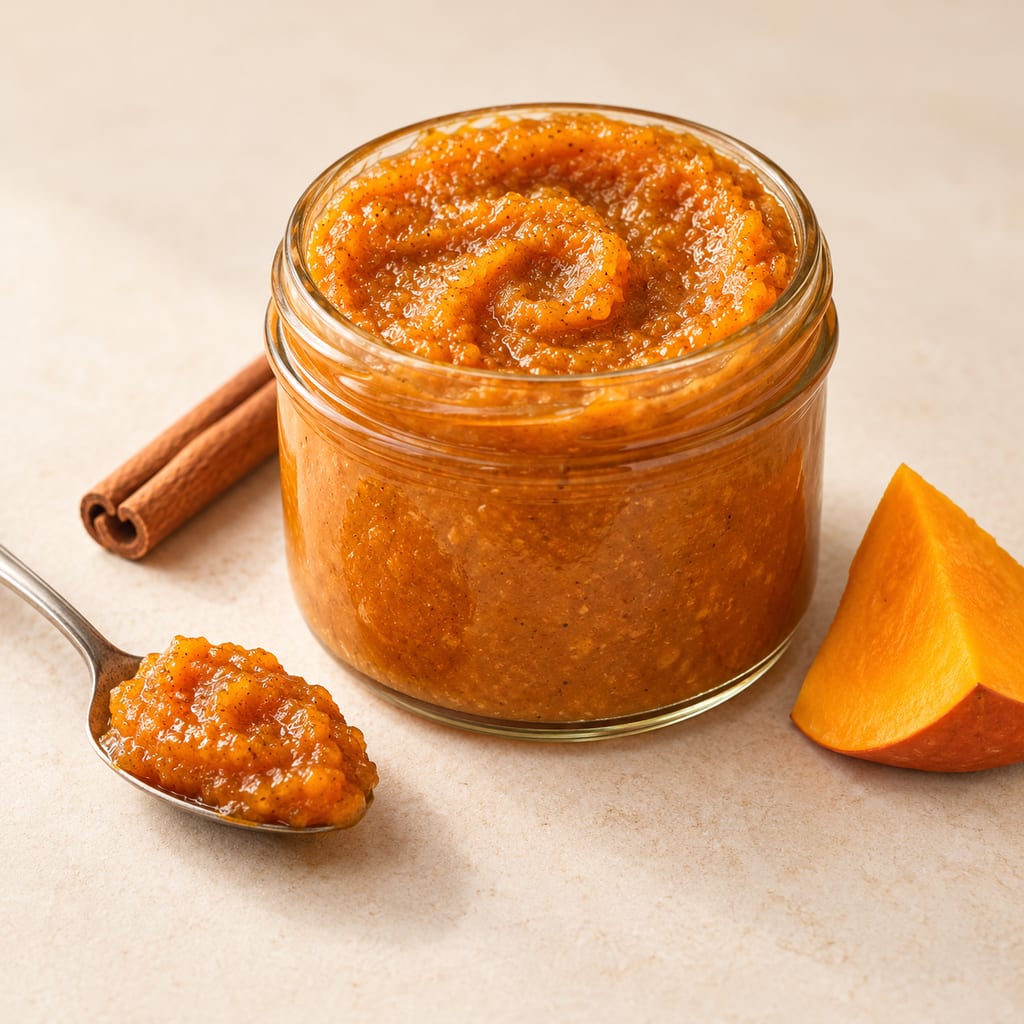
A smooth pumpkin spread cooked with apple juice, lemon and warm spices. Keep it refrigerated for up to seven days, or freeze for longer storage.
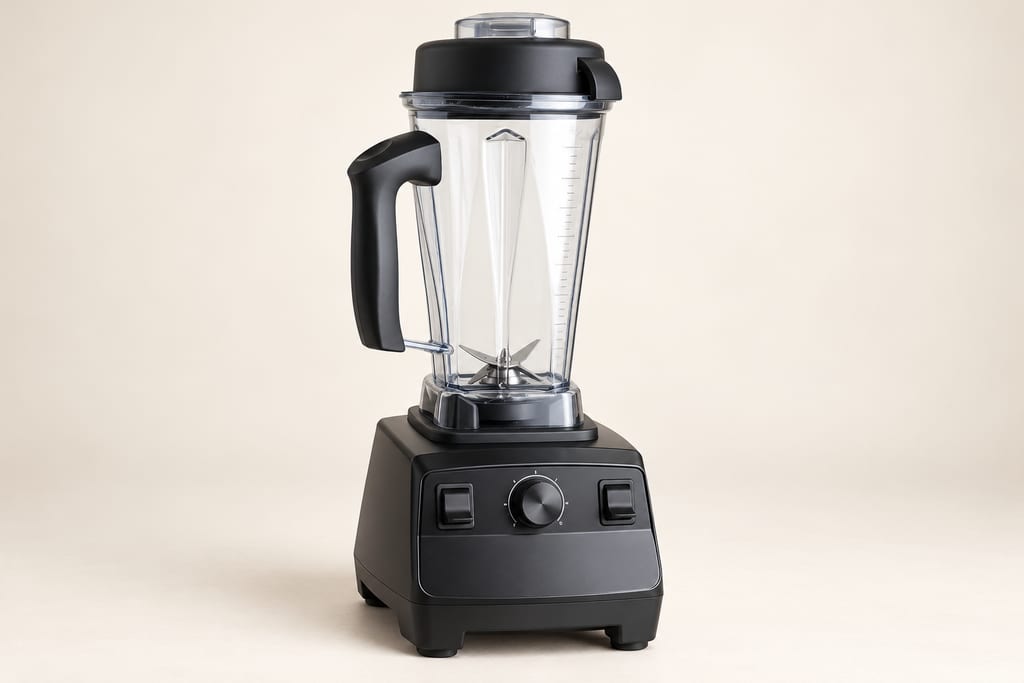
A food blender uses motor-driven blades to purée, emulsify, grind or disperse ingredients in a jar or directly in a pot. Countertop, personal and immersion forms differ in vessel and limits; food processors remain a separate tool family.
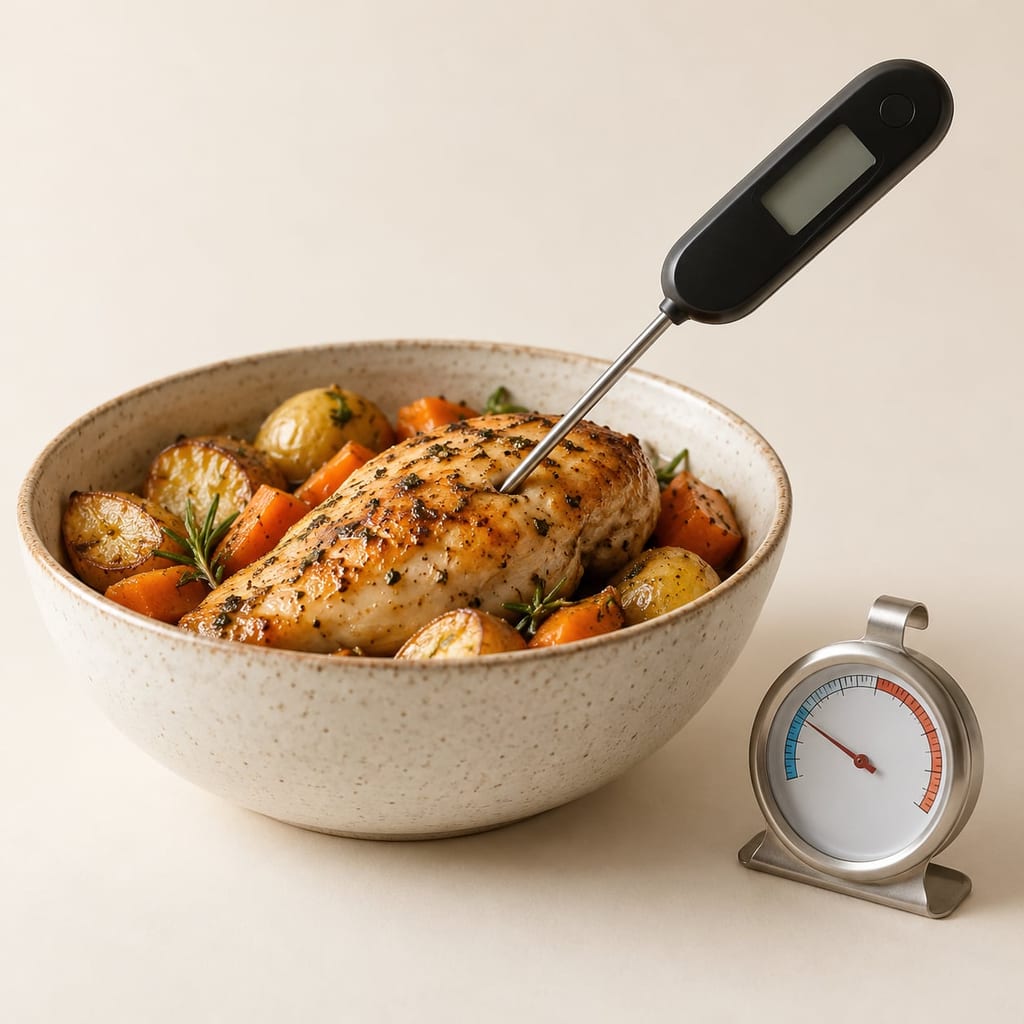
A food probe measures the temperature inside food at the probe tip; a refrigerator thermometer measures the cold storage environment. They answer different questions and cannot establish acidity or validate a preservation process.
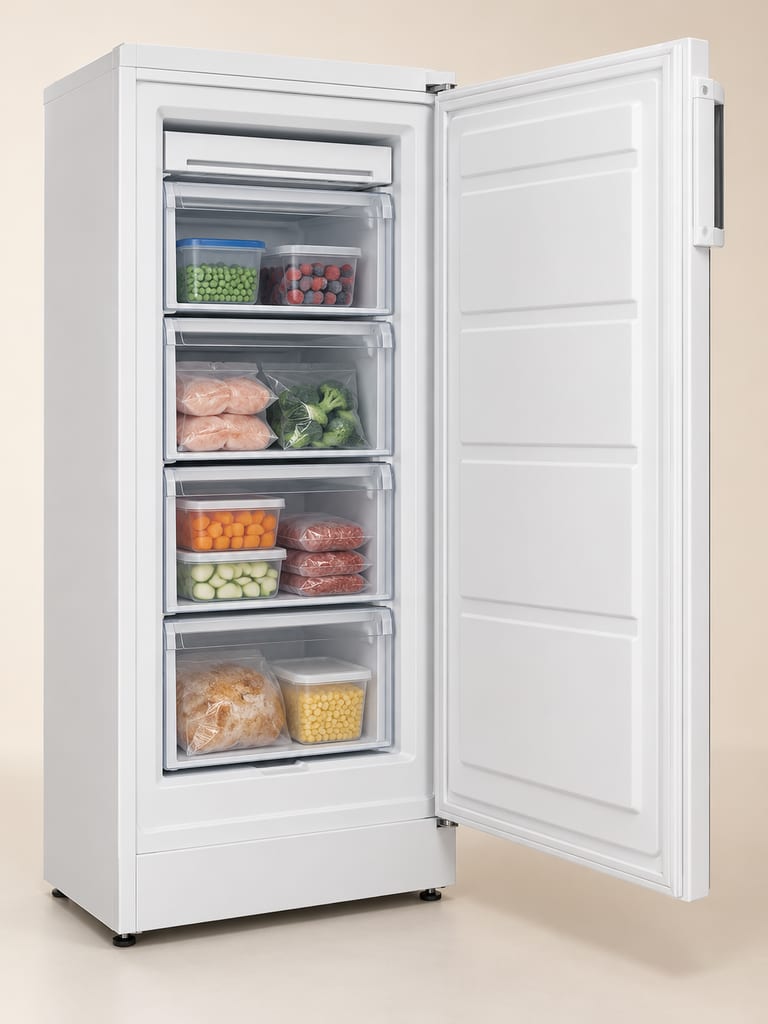
A household freezer holds food in a frozen state for storage and selected texture or separation work; its batch-storage role differs from industrial equipment that freezes individual pieces separately.
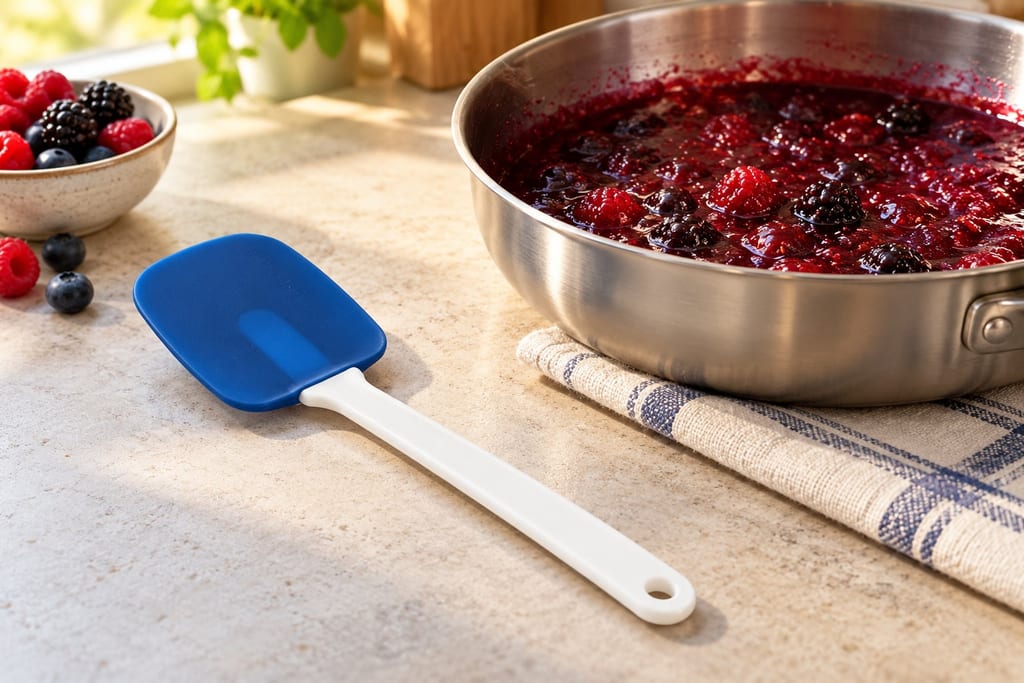
A hand utensil for stirring and scraping a pan of hot preserves. The supplied atlas lists a heatproof spatula for small trials but gives no blade material, dimensions, temperature rating or specific construction.
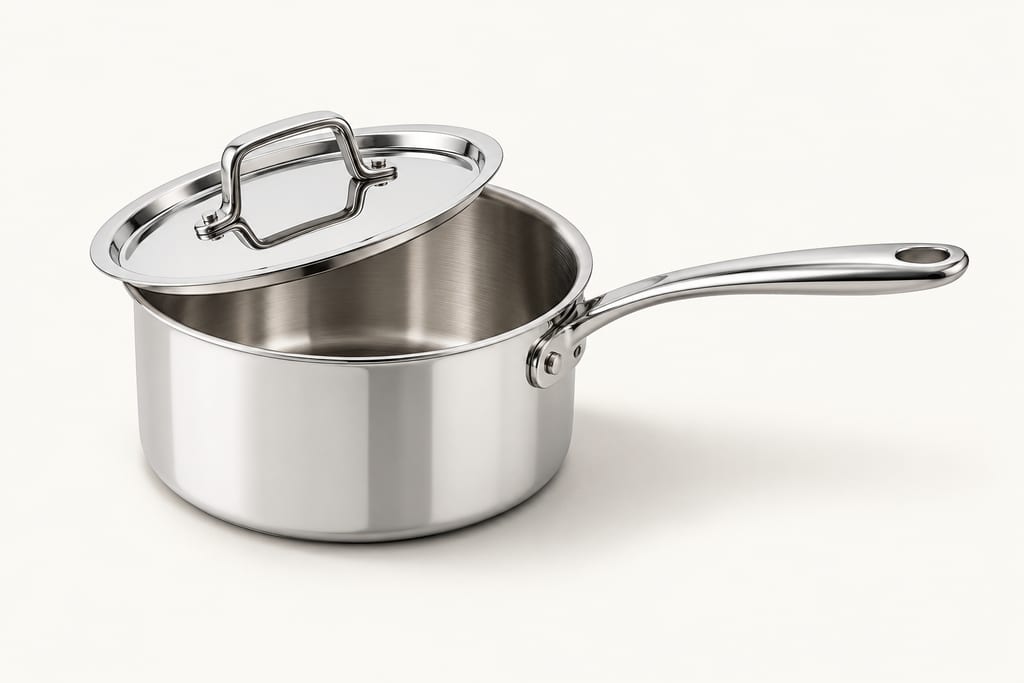
A modern, portable stovetop pan with a stainless-steel cooking surface for sauces and other small simmering jobs. Size, cladding, lid, compatibility and care vary by model.
An ordinary household refrigerator used to store selected fresh produce in vented crates or drawers, at low temperature and at a humidity chosen by the drawer. Not every crop benefits from cold.
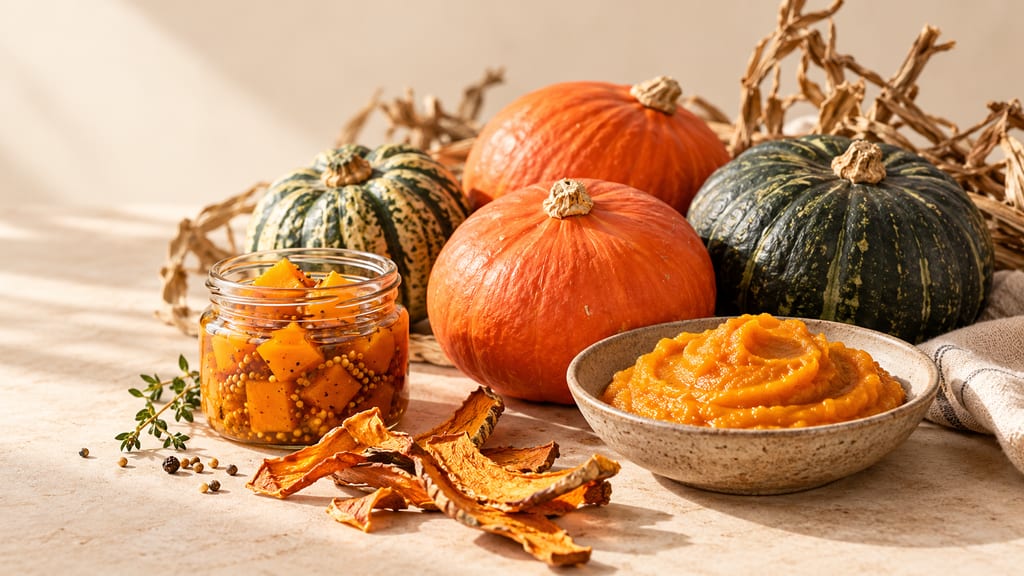
A full harvest-to-pantry guide to keeping pumpkins whole, drying and freezing them, and making pickles and sweet preserves around the world—with the exact distinction between tested canning and cold storage.
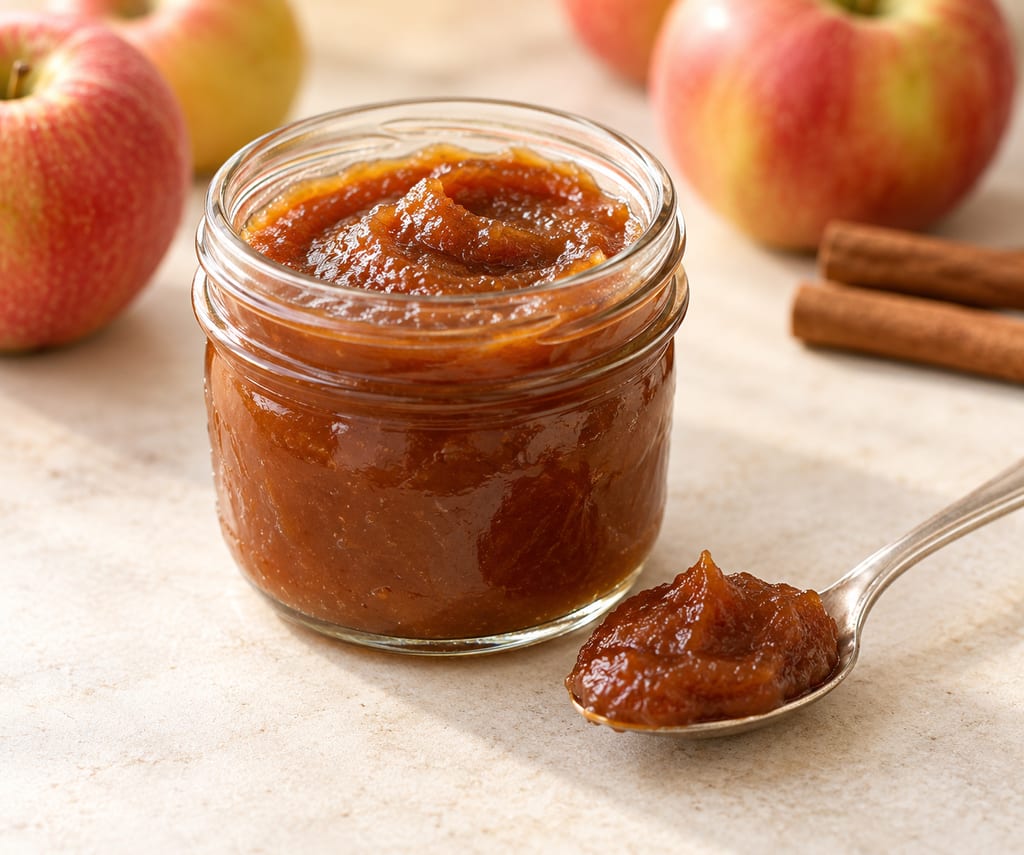
Apple butter is a smooth, concentrated apple preserve cooked with cider, vinegar, two sugars and spices, then hot-filled and processed in a boiling-water canner using the published jar-size and elevation schedule.
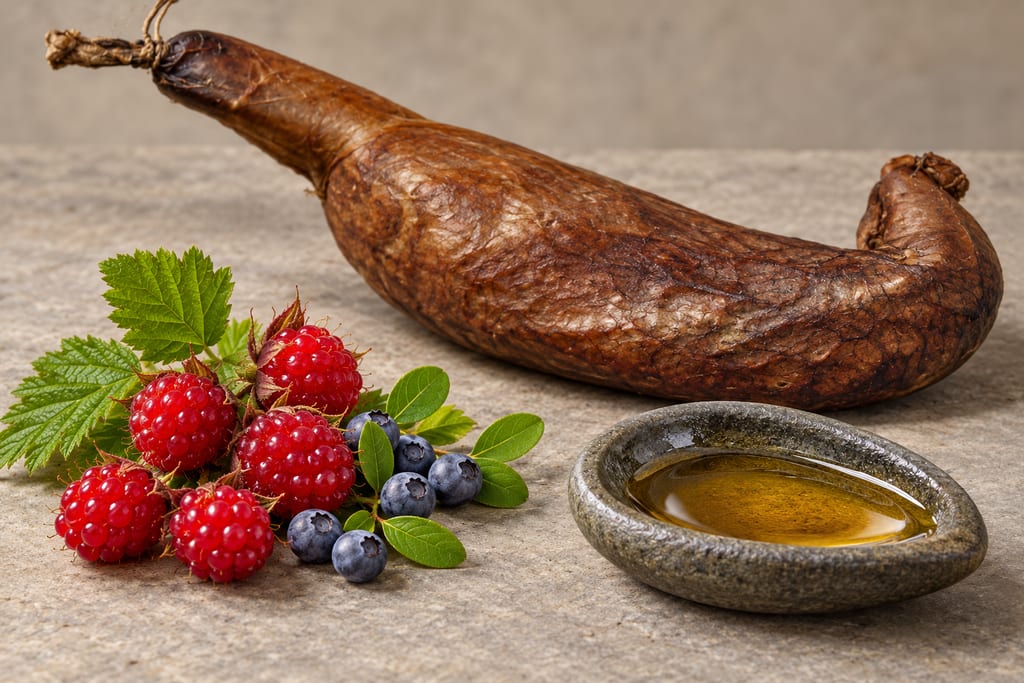
Berries, greens and fish eggs were kept in seal oil by Indigenous Alaskan communities. The oil seals the food from air, and the result depends on preparation and the surrounding conditions.
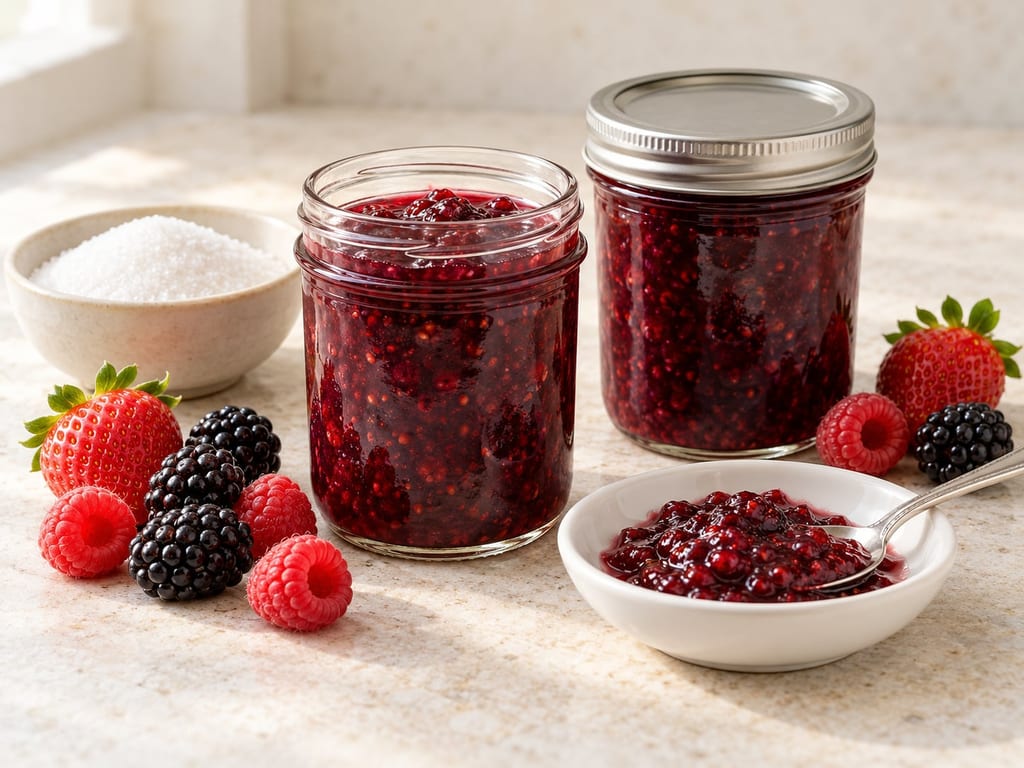
A NCHFP berry jam made without added pectin: crushed berries and sugar are cooked to the desired gel point, hot-filled into sterile half-pint or pint jars, and processed in a boiling-water canner.
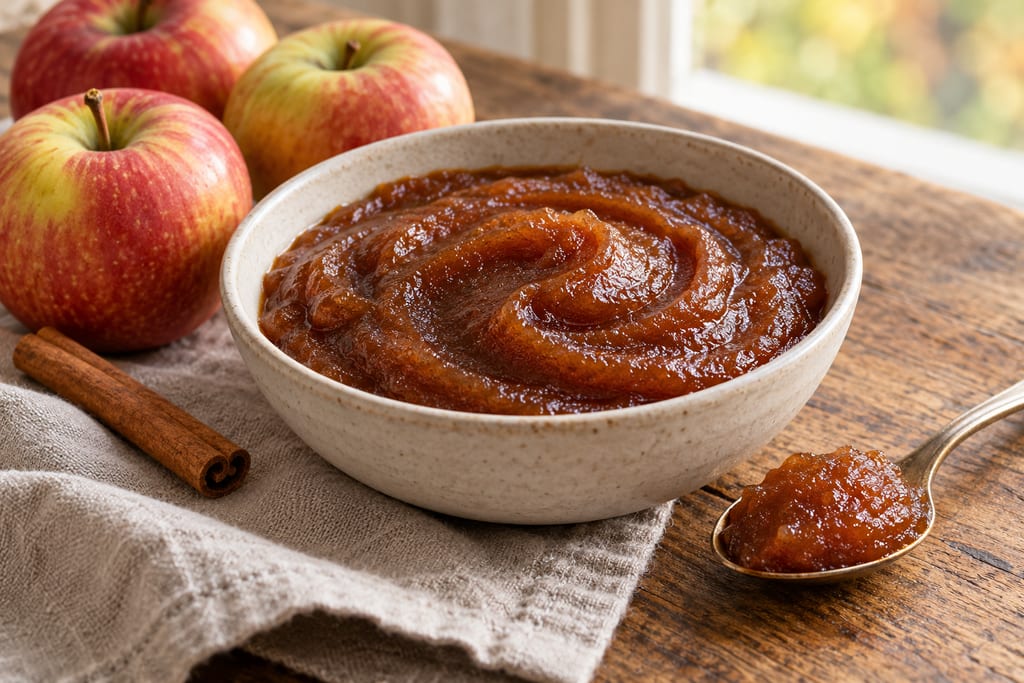
A smooth fruit pulp cooked down with sugar and spice until it holds its shape on a spoon, made by three documented routes in a slow cooker, a microwave or an electric multicooker.
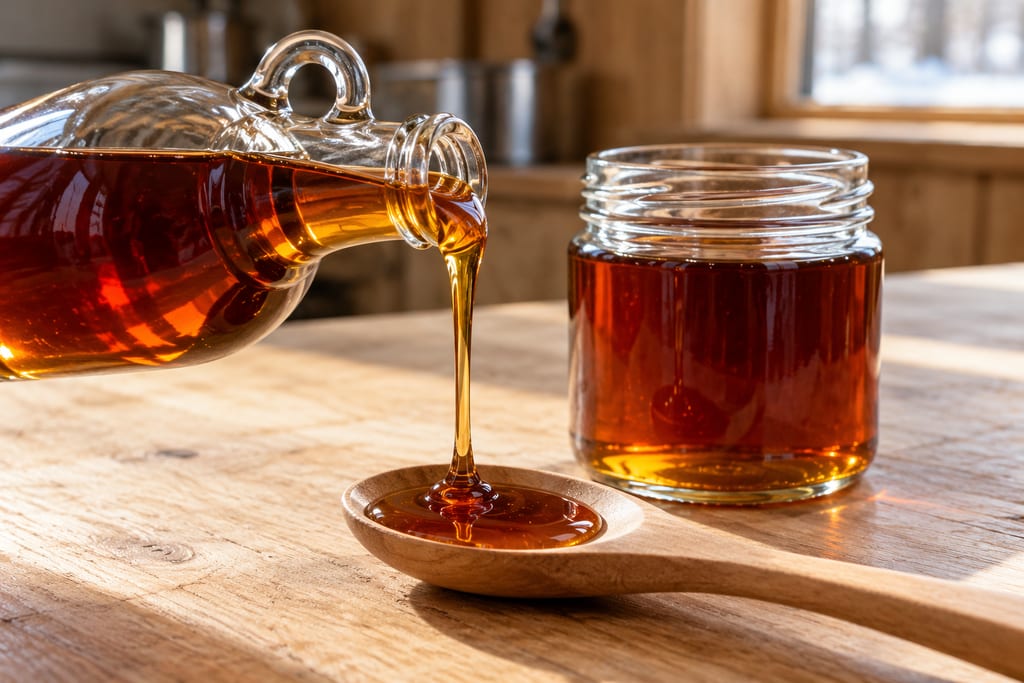
Maple sap of about two percent sugar boiled down in a shallow pan until it reaches syrup density, the sugar concentration the standard defines, then filtered hot and packed hot.
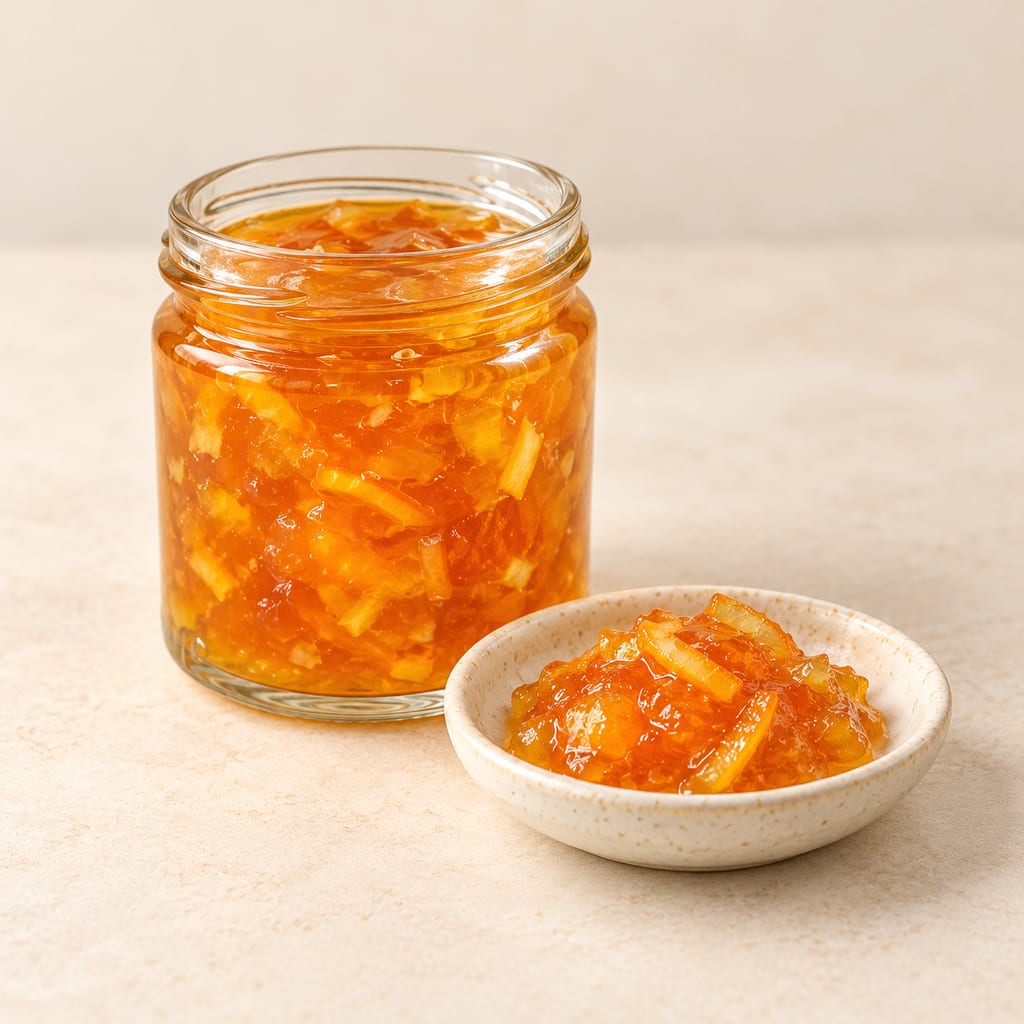
Orange marmalade suspends thin strips of citrus peel in a sweet gel. This navel-orange batch includes pulp and lemon and is preserved in a boiling-water canner.
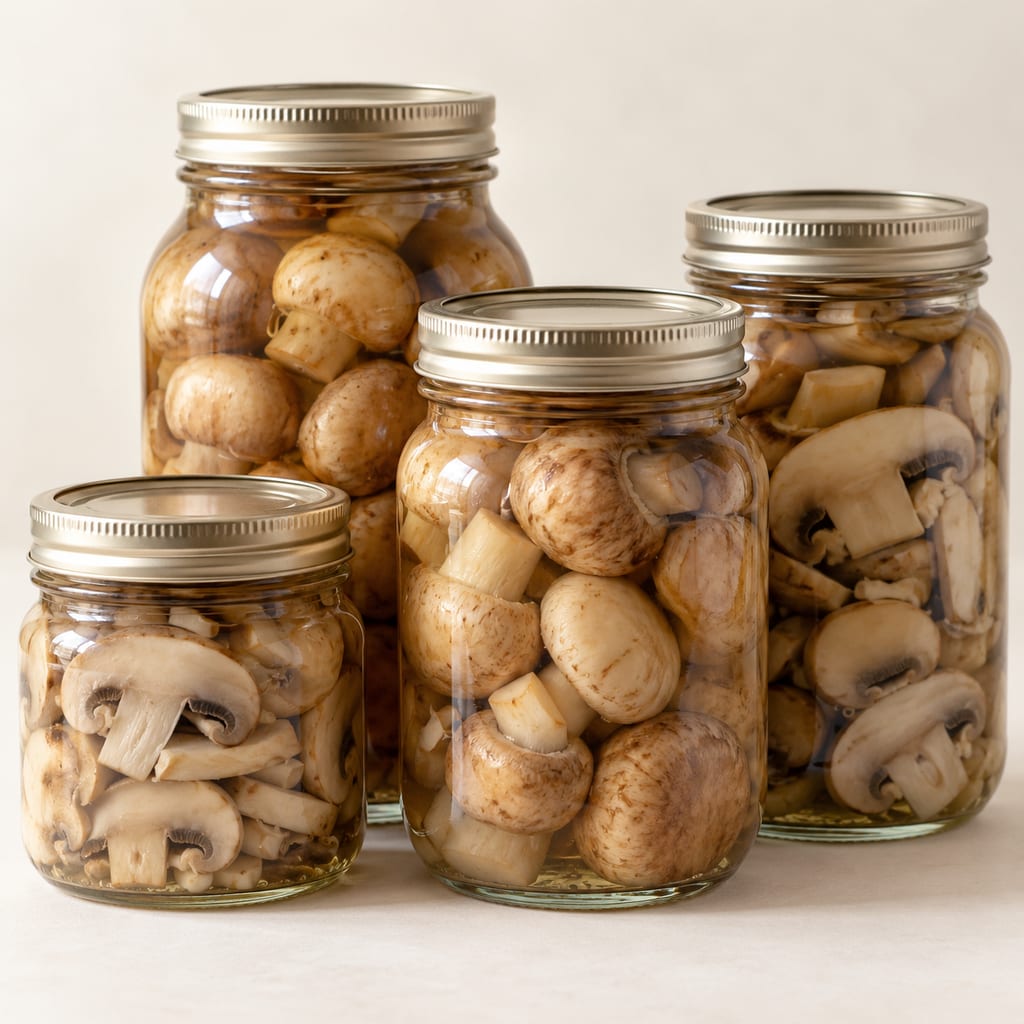
Whole or sliced domestic mushrooms packed hot in jars with fresh water and processed in a pressure canner, the tested home method for a low-acid vegetable.
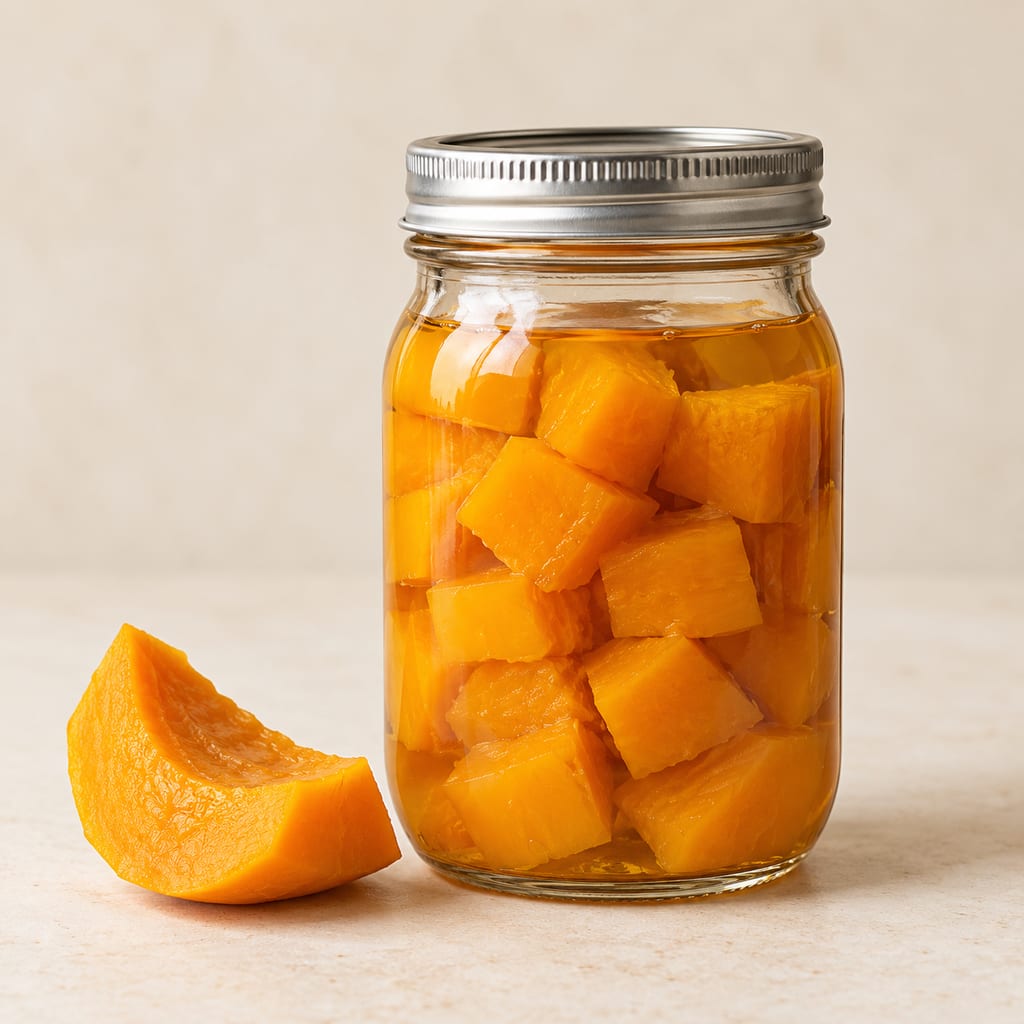
Plain pumpkin cubes hot-packed in water and pressure-canned for later cooking. The pieces stay intact during canning; mash them only after opening.
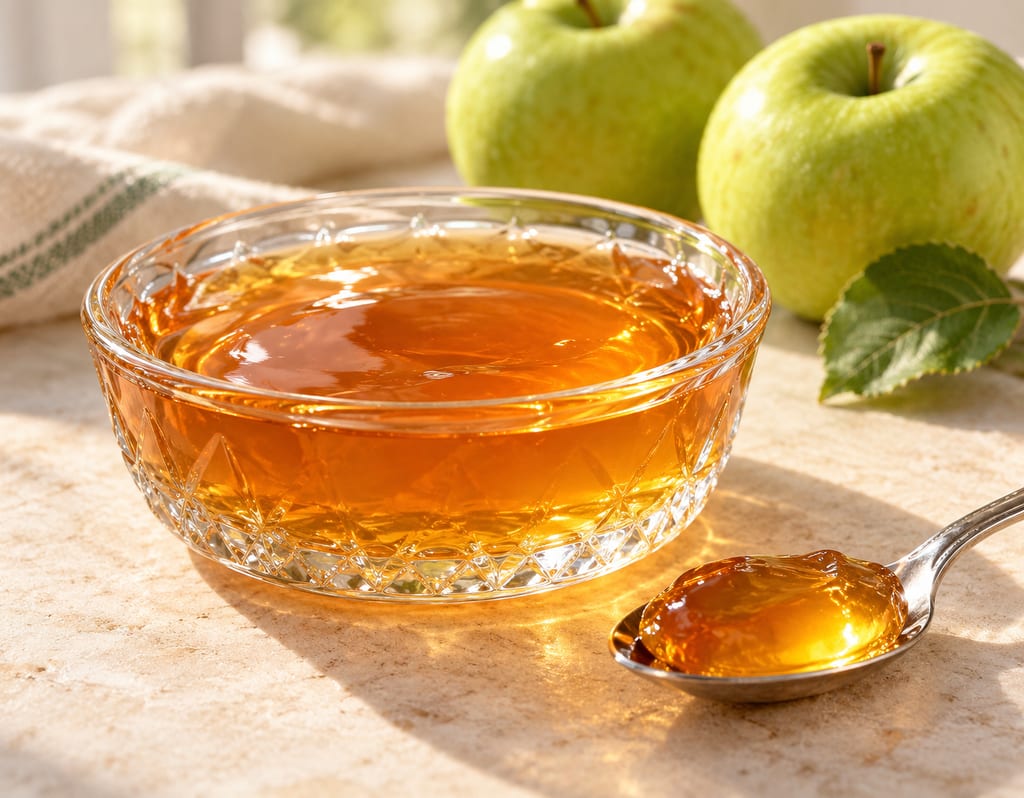
A clear jelly made from tart-apple juice, sugar and optional strained lemon juice. This batch uses a stated fruit-to-water preparation, gel endpoint, hot fill and altitude-adjusted boiling-water process.
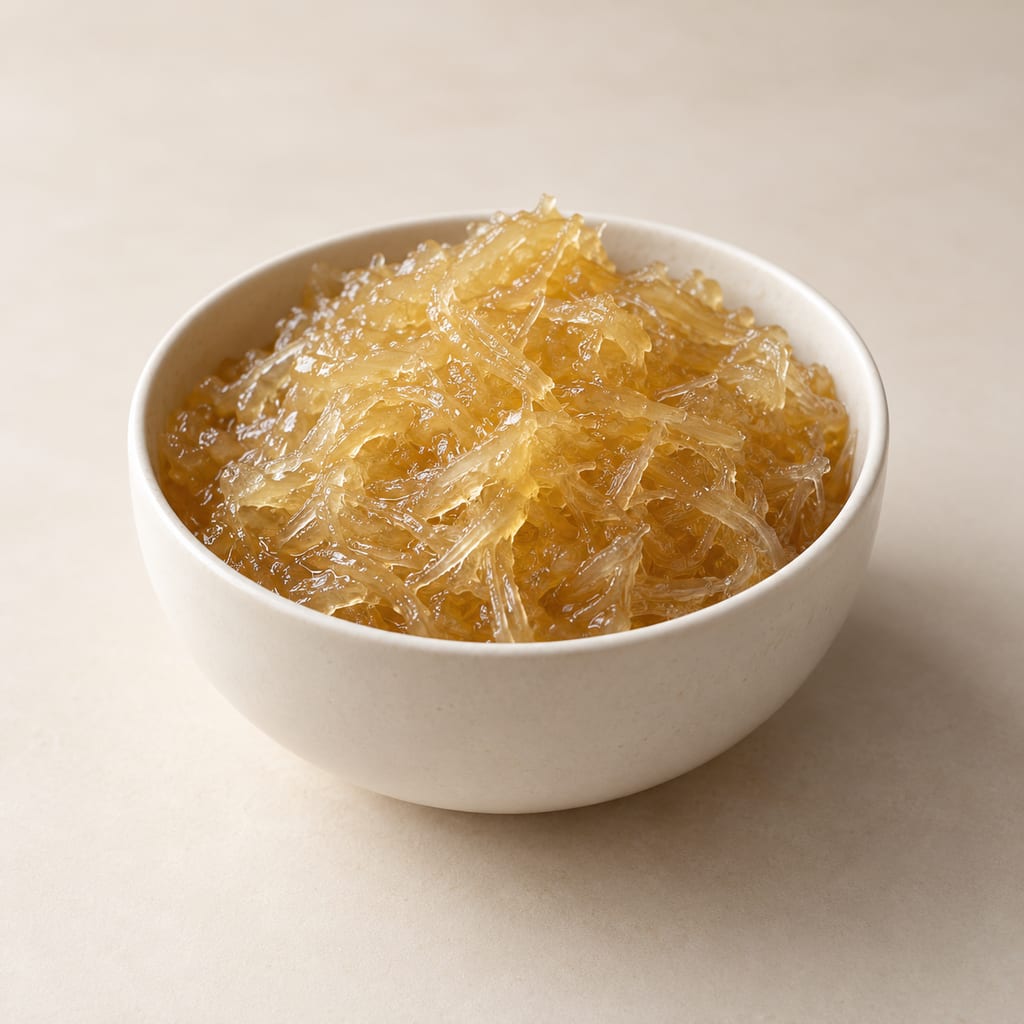
Fine strands of Cucurbita ficifolia cooked in an equal weight of sugar, then portioned for refrigerator or freezer storage. Ordinary orange pumpkin does not give the same fibres.
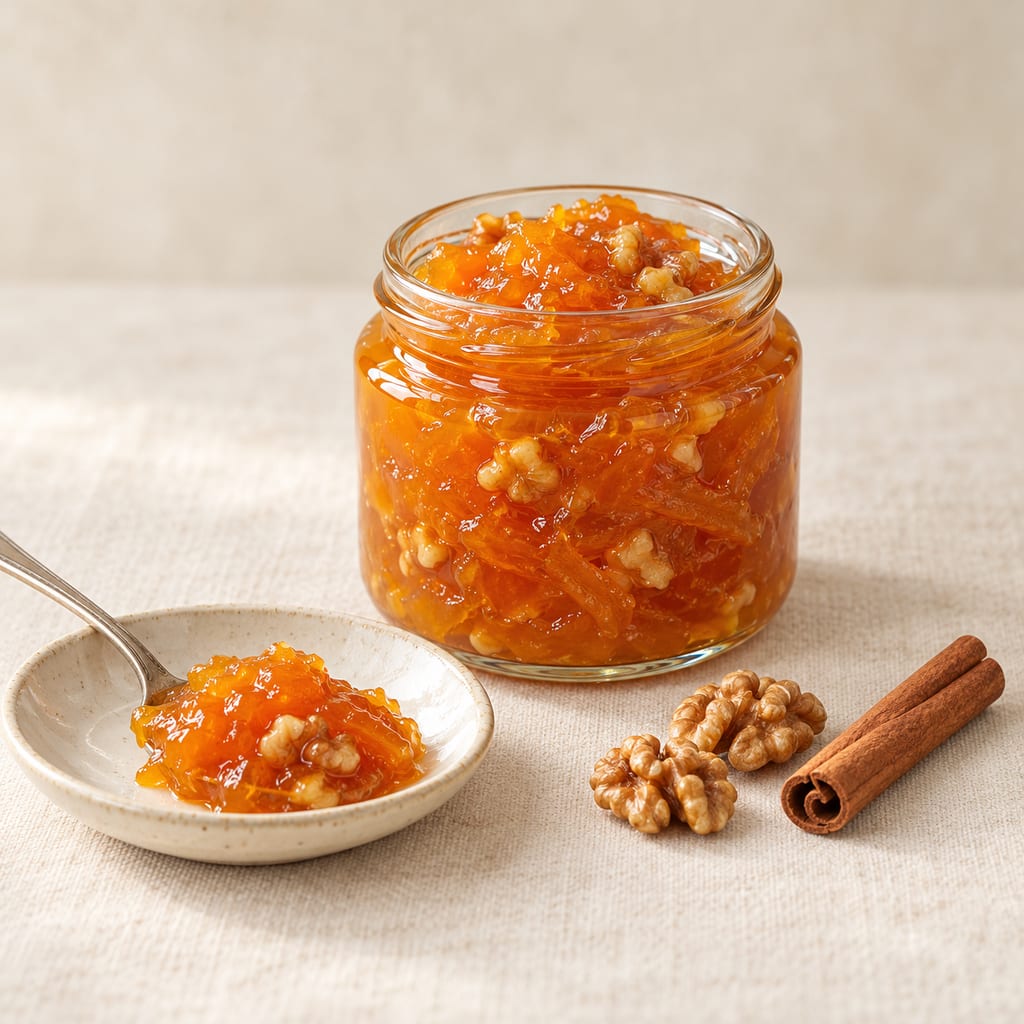
Portuguese pumpkin jam cooked with cinnamon and optional walnuts. A sweet spread to refrigerate or freeze, rather than a home-canned preserve.
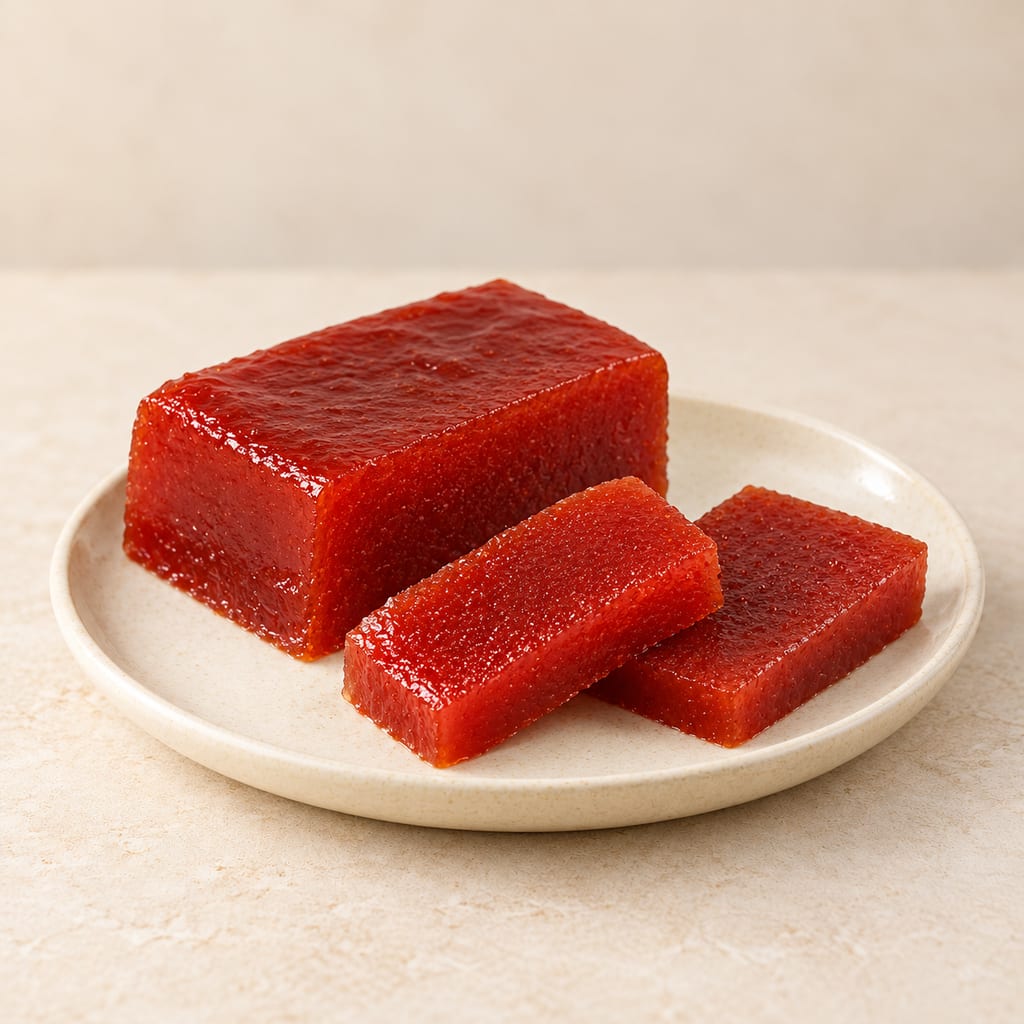
Dulce de membrillo is quince cooked with sugar into a firm paste for slicing. This family method softens the fruit in a pressure cooker, then blends it and leaves it to set.
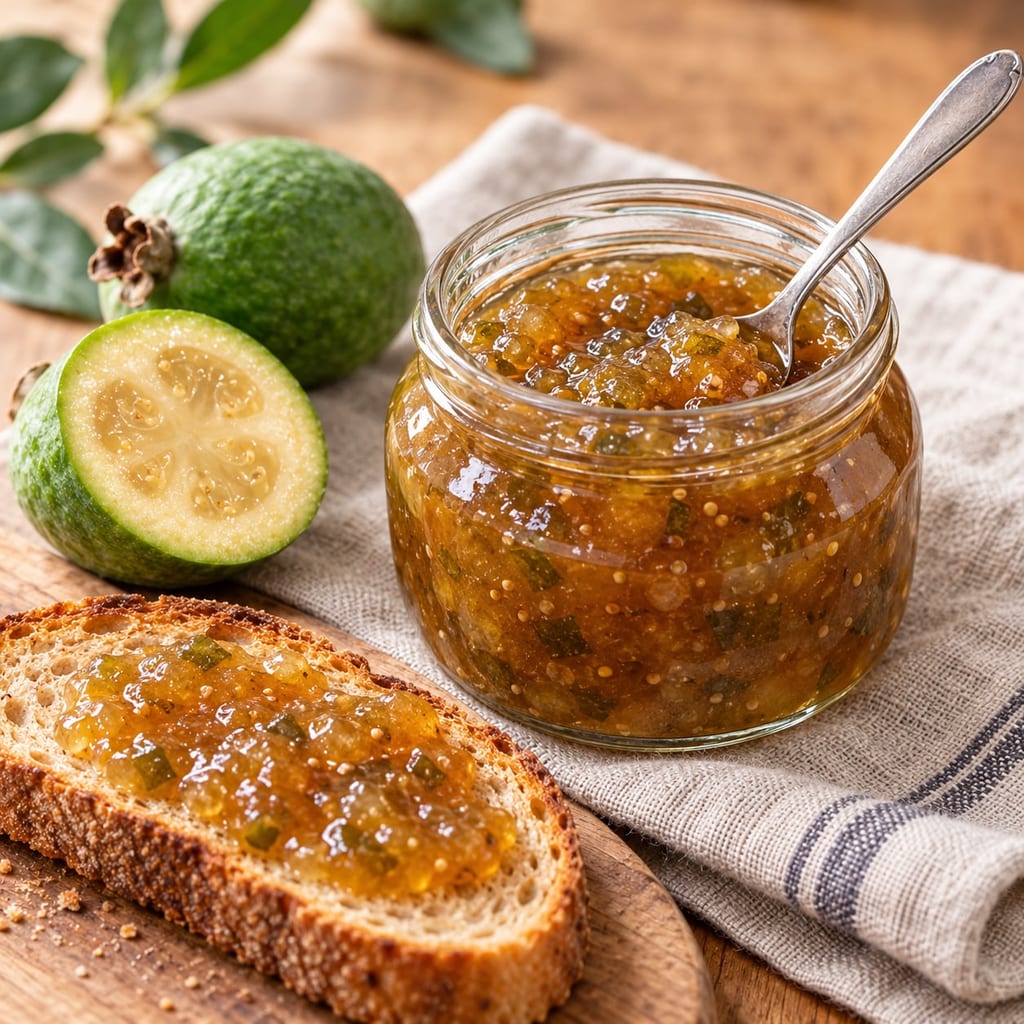
Blended whole feijoas simmer into a skin-on jam with lemon, sugar and vanilla. The skins remain for a more textured finish; keep this batch refrigerated or frozen because its method has no validated shelf-stable canning process.
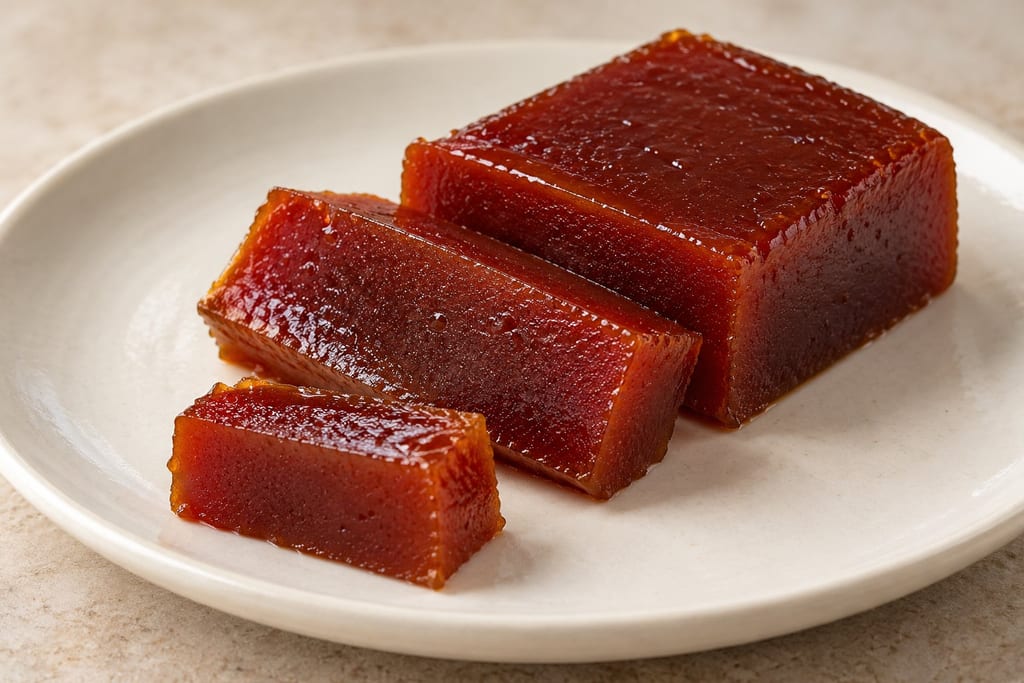
Cooked, sieved guava pulp is reduced with sugar and lime juice to a sliceable paste, then refrigerated. This adapted trial begins with prepared pulp and has no validated canning process or storage duration.

Jam is fruit cooked with enough sugar and concentration to reduce the water available to microbes. Jelly uses clarified juice and firmer fruit pastes lose still more moisture.
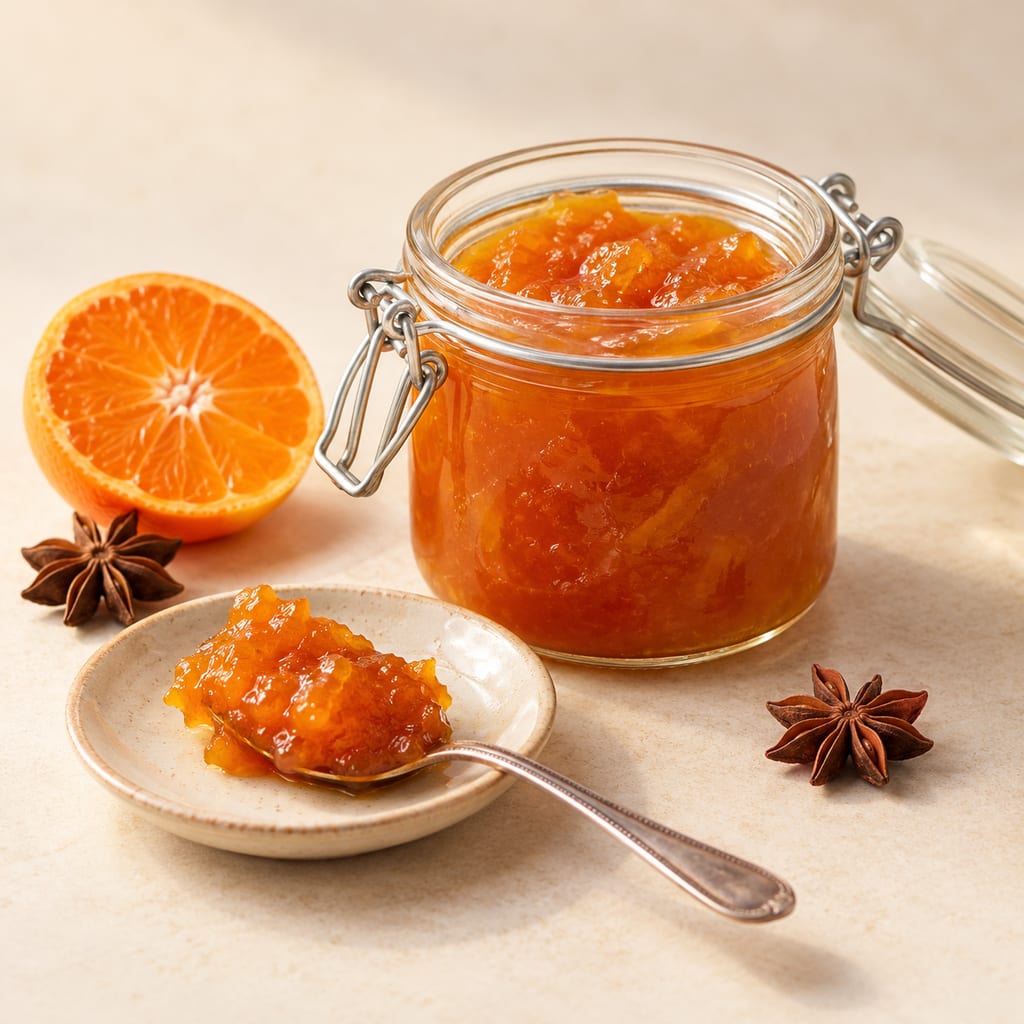
Portuguese pumpkin jam: Freeze for winter; small fresh portion refrigerated up to 48 hours.
No community contributions have been published for this entry yet.
Sign in to contribute. Published comments and photos are free to read.
ucanr.eduMethod · Context · Handling
UC Master Food Preservers: Freezer Pumpkin Butter and Other GoodiesDocumented preparation, regional context or preservation handling, with the limits stated in the text.
Cited in: The preserve; Ingredients; Storage; What can change, and what cannot
nchfp.uga.eduMethod · Context · Handling
NCHFP: Vegetables and fruits FAQs, pumpkin butter and pureeNo validated home pumpkin-butter process
Cited in: The preserve; Ingredients; Storage; What can change, and what cannot; Chilling and freezing this preserve
nchfp.uga.eduMethod · Context · Handling
National Center for Home Food Preservation. Containers for freezing.Documented preparation, regional context or preservation handling, with the limits stated in the text.
Cited in: The preserve; Ingredients; Storage; What can change, and what cannot
www.food.gov.ukMethod · Context · Handling
Food Standards Agency: Chilling, freezing and defrostingDocumented preparation, regional context or preservation handling, with the limits stated in the text.
Cited in: The preserve; Ingredients; Storage; What can change, and what cannot; Chilling and freezing this preserve
www.food.gov.ukMethod · Context · Handling
Food Standards Agency: Cooking your food, leftoversDocumented preparation, regional context or preservation handling, with the limits stated in the text.
Cited in: The preserve; Ingredients; Storage; What can change, and what cannot; Chilling and freezing this preserve