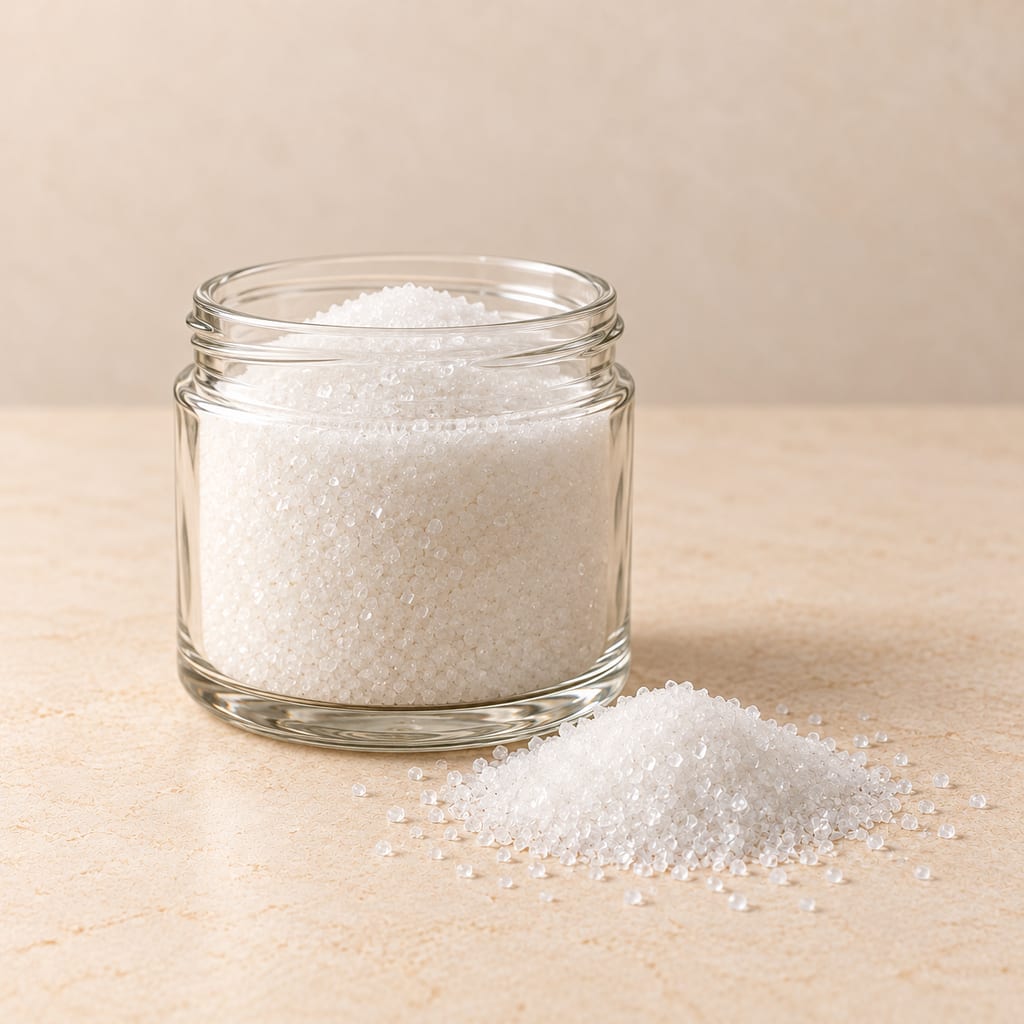
Sugar
Sugar is a family of sweeteners with different forms and food roles; refined white sucrose may come from cane or beet, while less refined forms add other flavours and moisture.
 FermenteaWhere food goes to change
Guava cheese · Guava paste
Cooked, sieved guava pulp is reduced with sugar and lime juice to a sliceable paste, then refrigerated. This adapted trial begins with prepared pulp and has no validated canning process or storage duration.
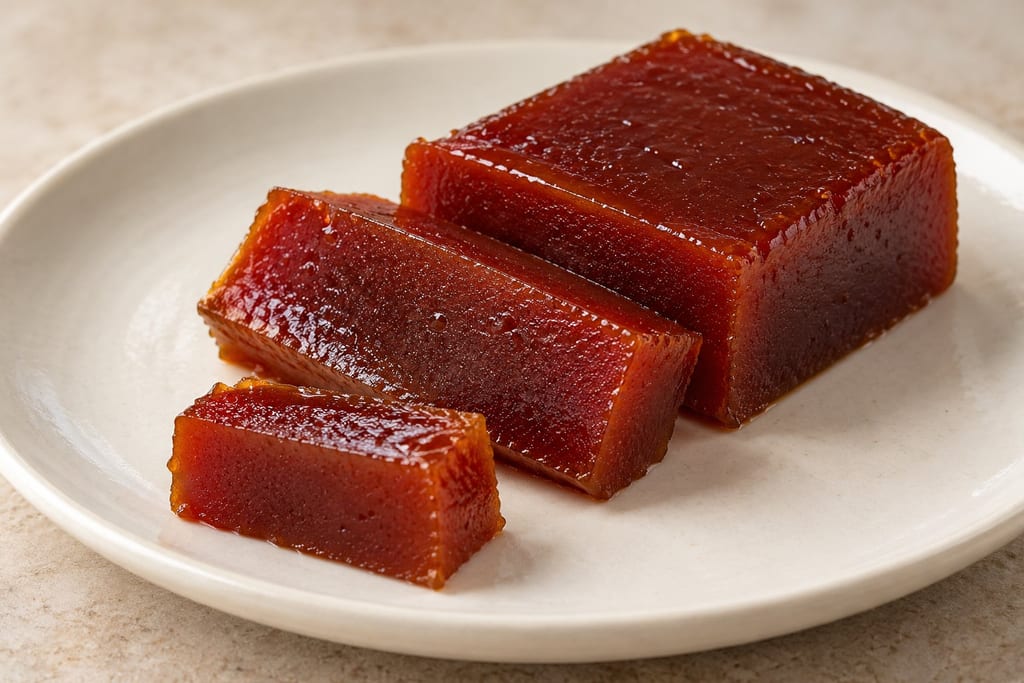
“Guava cheese” names a firm fruit confection, not a preparation made with dairy. In the Caribbean, guava cheese is cooked into a concentrated, cuttable sweet; Brazil's related goiabada family also includes firm guava paste, with goiabada cascão retaining pieces of fruit. Similar texture and ingredients connect these foods, but they do not establish one formula or one invention story.
The atlas labels this recipe an adapted trial for slicing. It starts with cooked, sieved, seedless pulp and gives a measured ratio of 1 kg pulp to 800 g sugar and 30 ml lime juice. That ratio belongs to the atlas adaptation; it is not a quantity set from either source recipe.
Combine the prepared pulp, sugar and lime juice in a wide heavy pan and reduce the mixture. Stir more carefully as it thickens so the dense paste does not catch on the pan. The atlas gives a practical texture check: a spoon drawn across the base should leave a clear track, and a cooled sample should become sliceable. If the sample remains soft, the batch can be used as a spread. These are consistency cues, not measured time, temperature, acidity or safety endpoints.
The adaptation does not explain how to prepare the cooked pulp from raw guavas. It gives no reduction time, final yield or scaling rule; leave those values open rather than estimating them.
Loop Barbados's 2013 household recipe uses 15 large guavas, 750 g sugar, the juice of one sour lime or lemon and three drops of red colouring. It boils and peels the fruit, removes the seeds, cooks the pulp to a ball-like mass, then rolls it out to cool and cut. Its airtight-tin suggestion is part of that separate household recipe; it does not validate the atlas ratio or a jar process for this trial.
Ralston's Brazilian goiabada cascão technical sheet describes a packaged commercial product made from guava pulp, fruit pieces, sugar and citric acid. The sheet reports pH 3.60–4.00 and 76–79 °Brix for that product and provides a commercial date and storage statement. Those measurements are not targets for this home adaptation, and its manufacturing and packaging details are not a home canning process.
Kraft Heinz's SURE.JELL guava jelly recipe uses prepared guava juice, pectin and a boiling-water-canner process. It is a different product and formulation; none of its ingredient amounts or processing steps are transferred to this paste.
Pour the paste into a lined shallow dish, cool it and refrigerate. The atlas describes this trial for refrigerator or freezer storage only. It gives no storage duration and does not supply a validated home-canning process. University of Minnesota Extension distinguishes cold-stored fruit spreads from shelf-stable canned products and directs readers to use research-based recipes for canning; its general guidance does not validate this formula.
Cut a firm batch to serve with cheese or use it to fill pastries and sandwich biscuits. A softer result works as a spread. A paste that looks firm or holds a slice has reached a texture target only; that appearance does not establish shelf stability.
Guava cheese in Barbados and goiabada in Brazil are related fruit-paste traditions, but the names do not identify one formula or a single origin. This atlas trial is an adaptation, not a protected-product specification.
Scaling: source batch only
The trial specifies refrigeration but gives no validated home-canning process, measured preservation endpoint or storage duration. The texture cues describe consistency, not safety.
Hazard sourceKeep this adaptation within its stated refrigerated or frozen scope. Do not treat the pan-track or cooled-sample texture cue as a safety test.
Control sourceThis adapted trial is for refrigerator or freezer storage only. It is not a shelf-stable canning recipe, and no storage duration is established.
The trial adapts a family using a Barbados household recipe and a Brazilian commercial specification as separate references; neither identifies where this exact trial was prepared.
Sugar is a family of sweeteners with different forms and food roles; refined white sucrose may come from cane or beet, while less refined forms add other flavours and moisture.
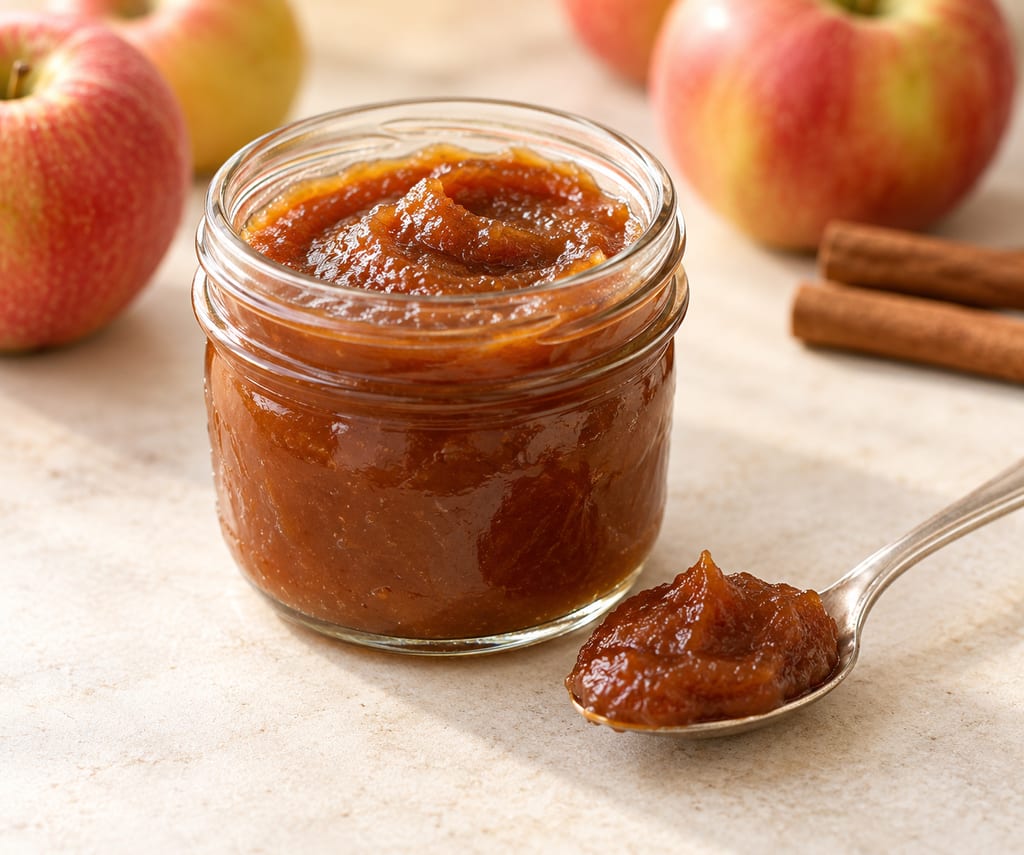
Apple butter is a smooth, concentrated apple preserve cooked with cider, vinegar, two sugars and spices, then hot-filled and processed in a boiling-water canner using the published jar-size and elevation schedule.
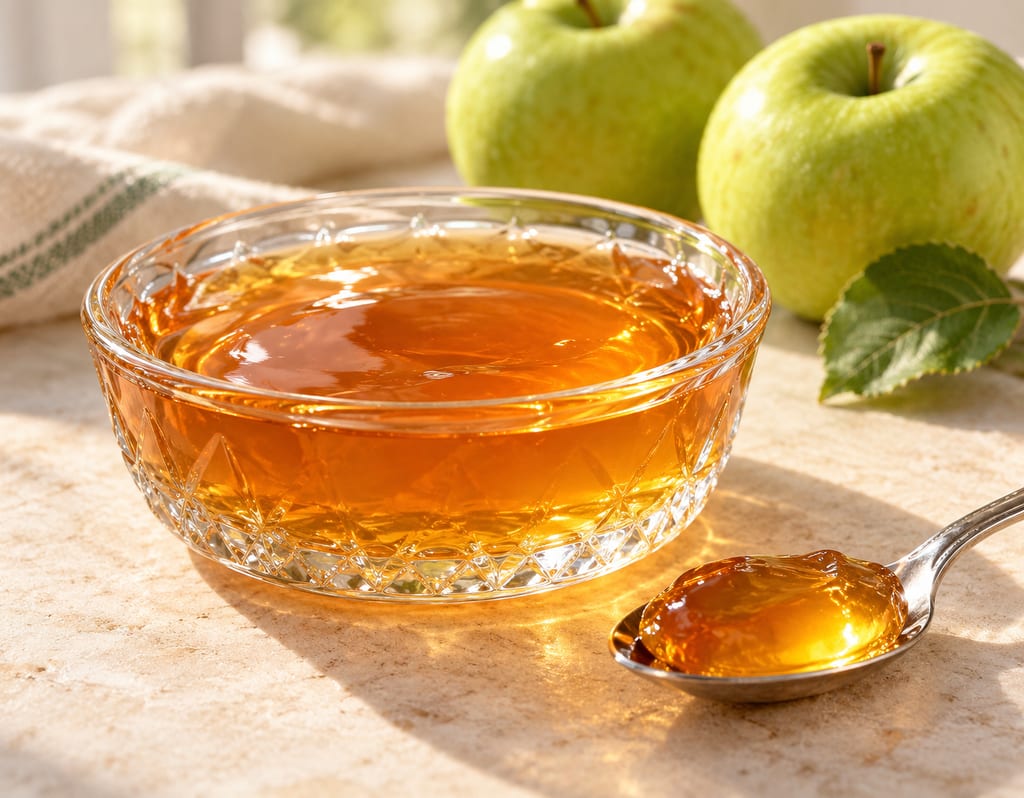
A clear jelly made from tart-apple juice, sugar and optional strained lemon juice. This batch uses a stated fruit-to-water preparation, gel endpoint, hot fill and altitude-adjusted boiling-water process.
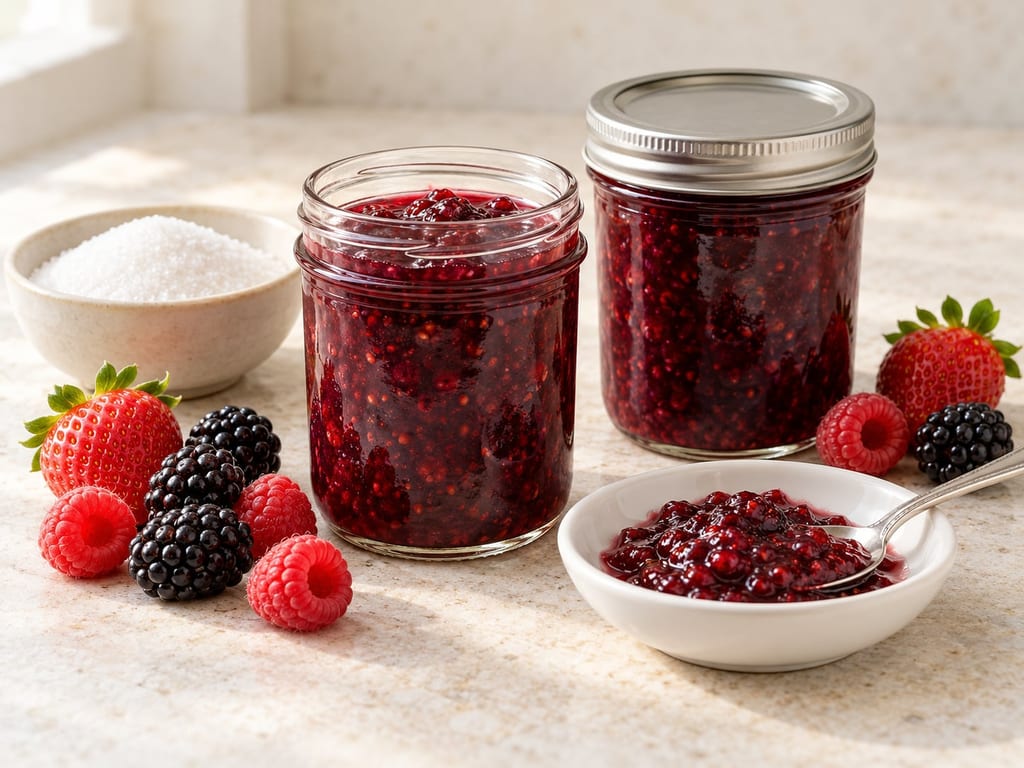
A NCHFP berry jam made without added pectin: crushed berries and sugar are cooked to the desired gel point, hot-filled into sterile half-pint or pint jars, and processed in a boiling-water canner.
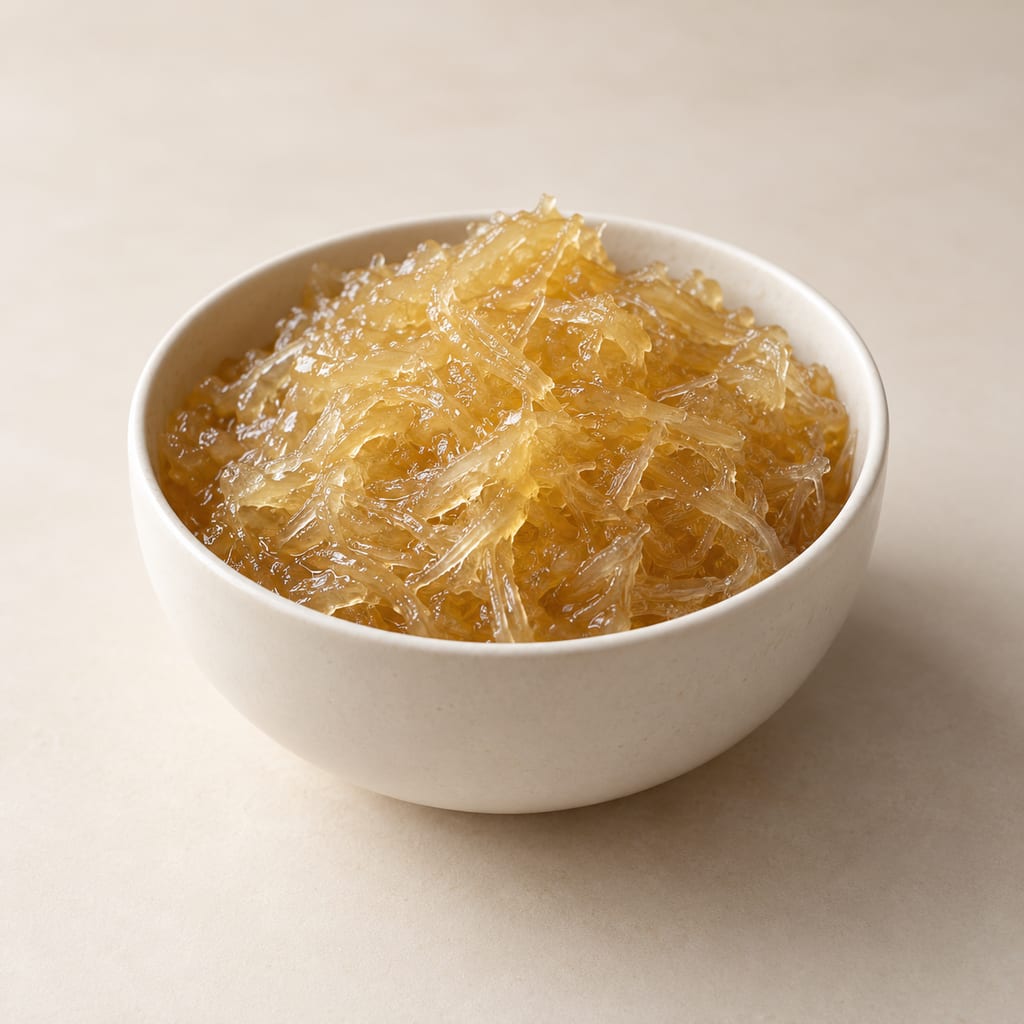
Fine strands of Cucurbita ficifolia cooked in an equal weight of sugar, then portioned for refrigerator or freezer storage. Ordinary orange pumpkin does not give the same fibres.
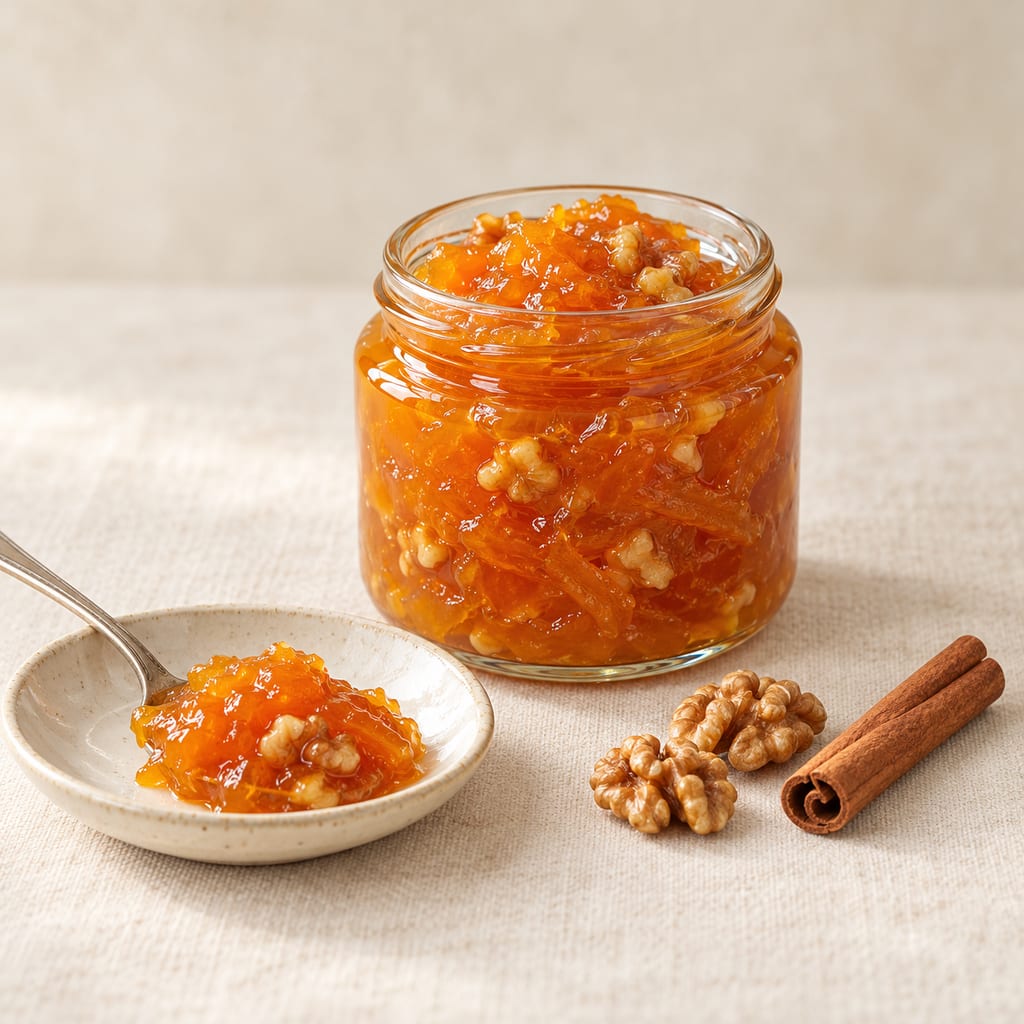
Portuguese pumpkin jam cooked with cinnamon and optional walnuts. A sweet spread to refrigerate or freeze, rather than a home-canned preserve.
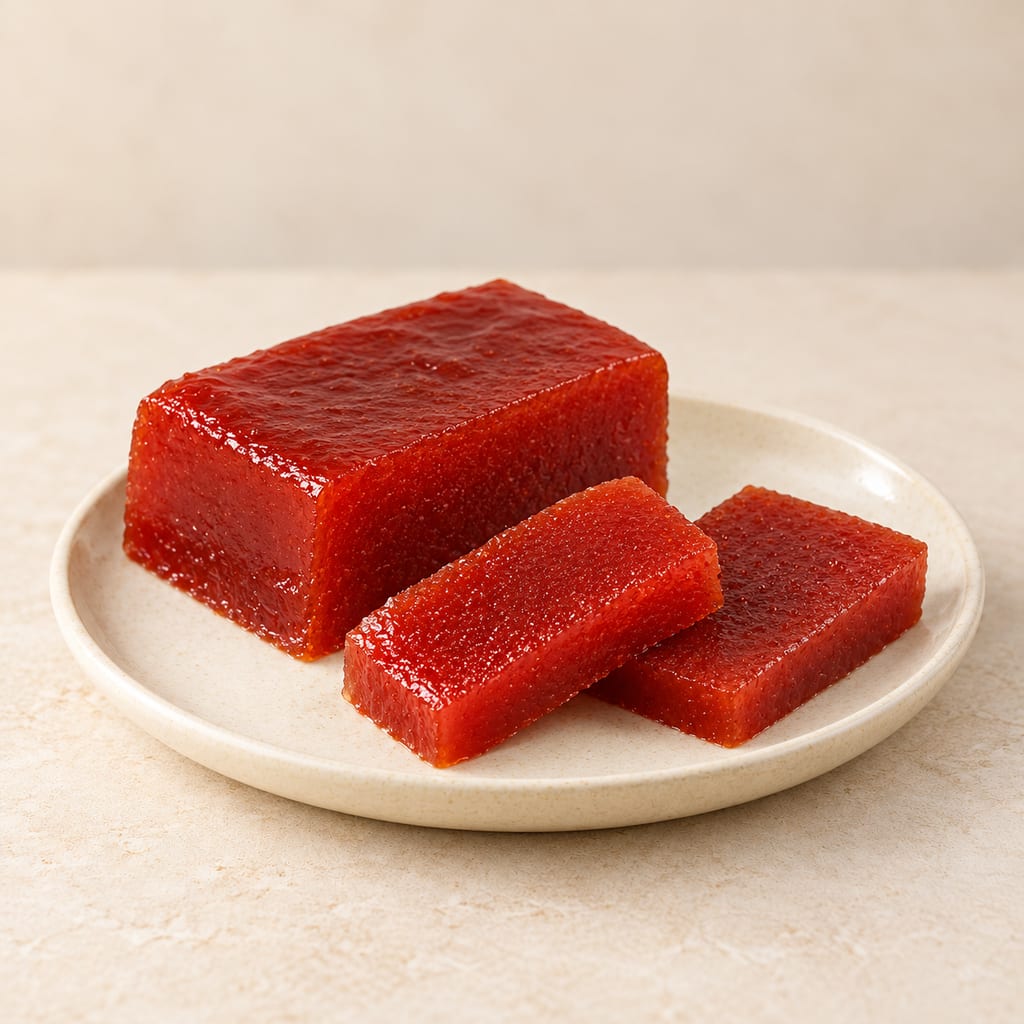
Dulce de membrillo is quince cooked with sugar into a firm paste for slicing. This family method softens the fruit in a pressure cooker, then blends it and leaves it to set.
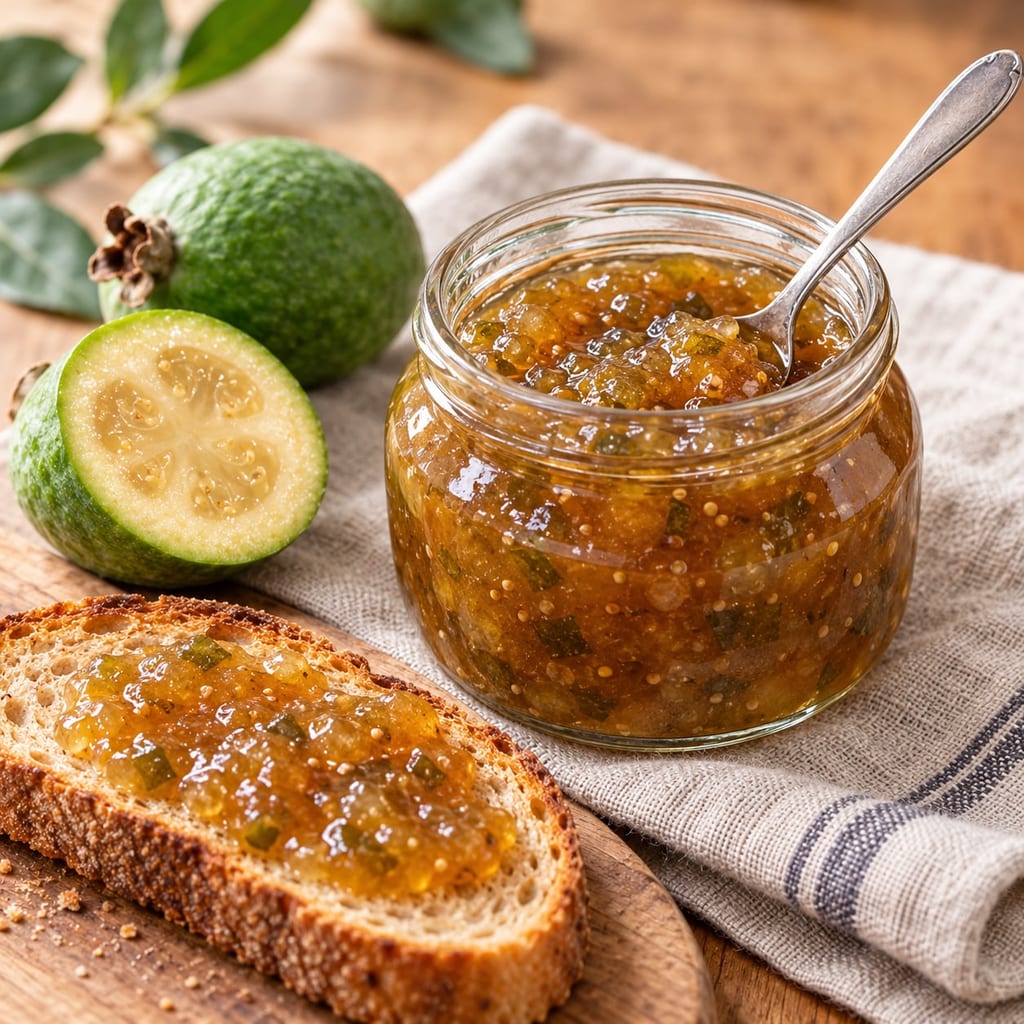
Blended whole feijoas simmer into a skin-on jam with lemon, sugar and vanilla. The skins remain for a more textured finish; keep this batch refrigerated or frozen because its method has no validated shelf-stable canning process.
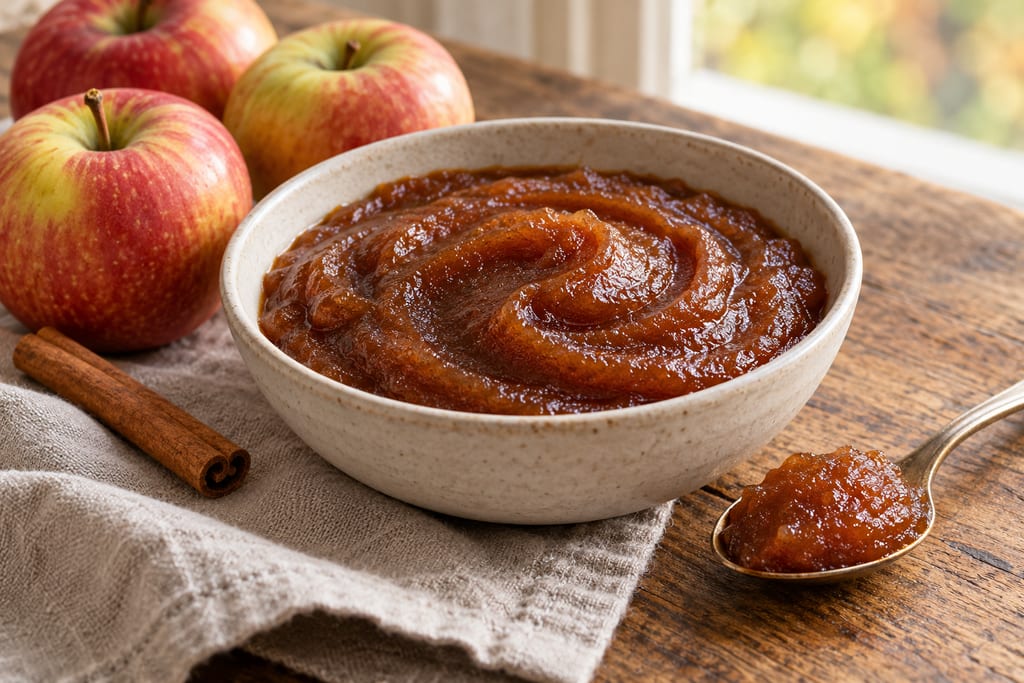
A smooth fruit pulp cooked down with sugar and spice until it holds its shape on a spoon, made by three documented routes in a slow cooker, a microwave or an electric multicooker.
No community contributions have been published for this entry yet.
Sign in to contribute. Published comments and photos are free to read.
Melanie and Kimberly, Loop BarbadosProcess · Inspiration · History
Cooking Bajan Style: Guava CheeseThe article dated 11 March 2013 identifies guava cheese as a Barbados/Caribbean fruit confection, not dairy cheese.
Its separate household formula uses 15 large guavas, 750 g sugar, juice of one sour lime or lemon and three drops red colouring. It boils, peels, deseeds, blends, stirs to a ball-like consistency, rolls out to cool and cut, and suggests an airtight tin.
These source quantities and storage wording are not used as the atlas trial's formula or as a validated jar process.
Cited in: A fruit paste, not a dairy cheese; A thickening trial; Different sources describe different batches; Cold storage and serving
Indústria Alimentícia Ralston Ltda.Variation · Food science · History
Ficha Técnica No. 044: Goiabada Cascão 30 gThe manufacturer's 2019 technical sheet, revised 2023, describes a packaged commercial guava paste made with guava pulp, guava pieces, sugar and citric acid.
It reports pH 3.60–4.00 and 76–79 °Brix for this product, and gives product-packaging, storage and validity information.
These industrial product specifications are not measured targets or validated controls for the atlas's home trial.
Cited in: A fruit paste, not a dairy cheese; A thickening trial; Different sources describe different batches
University of Minnesota ExtensionSafety · Storage
Preserving food at home: Fruit spreadsThe guidance distinguishes refrigerated or frozen fruit spreads from shelf-stable canned spreads and recommends research-based recipes for canning.
It provides general handling guidance; no exact canning process for this adapted guava paste is supplied or inferred.
Cited in: Cold storage and serving
Kraft Heinz / SURE-JELL KitchenVariation · Process
SURE.JELL Guava JellyThe separate guava jelly recipe uses prepared guava juice, sugar and SURE-JELL pectin, then directs a boiling-water-canner process.
This is a pectin jelly recipe, not a guava paste recipe, and its formula and processing directions do not apply to this trial.
Cited in: Different sources describe different batches