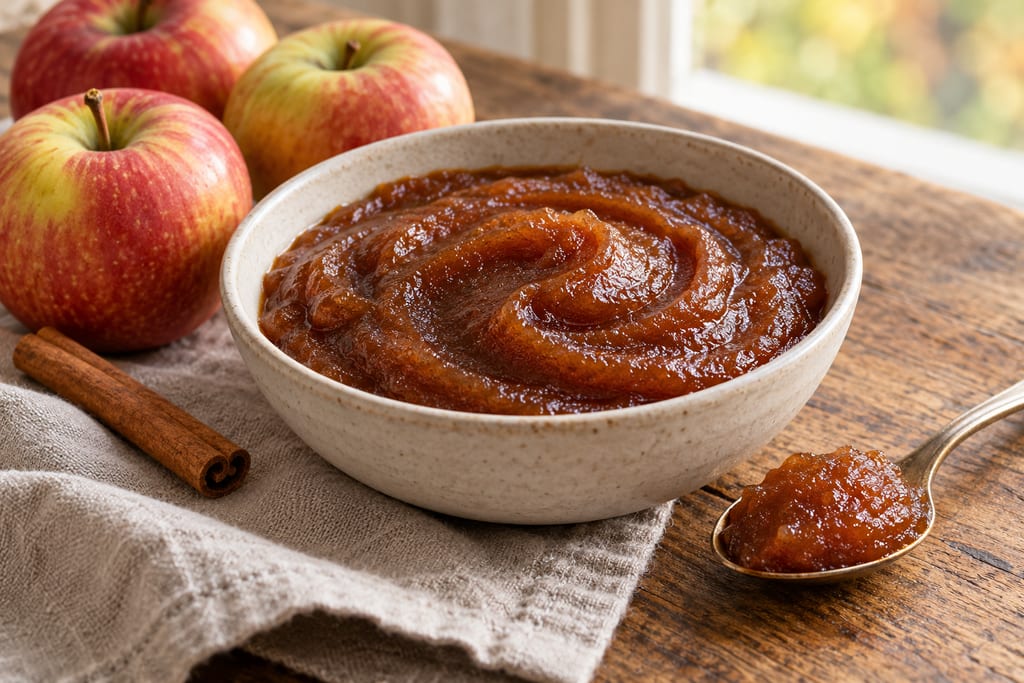
Fruit butter (appliance routes)
A smooth fruit pulp cooked down with sugar and spice until it holds its shape on a spoon, made by three documented routes in a slow cooker, a microwave or an electric multicooker.
 FermenteaWhere food goes to change
Apple butter
Apple butter is a smooth, concentrated apple preserve cooked with cider, vinegar, two sugars and spices, then hot-filled and processed in a boiling-water canner using the published jar-size and elevation schedule.
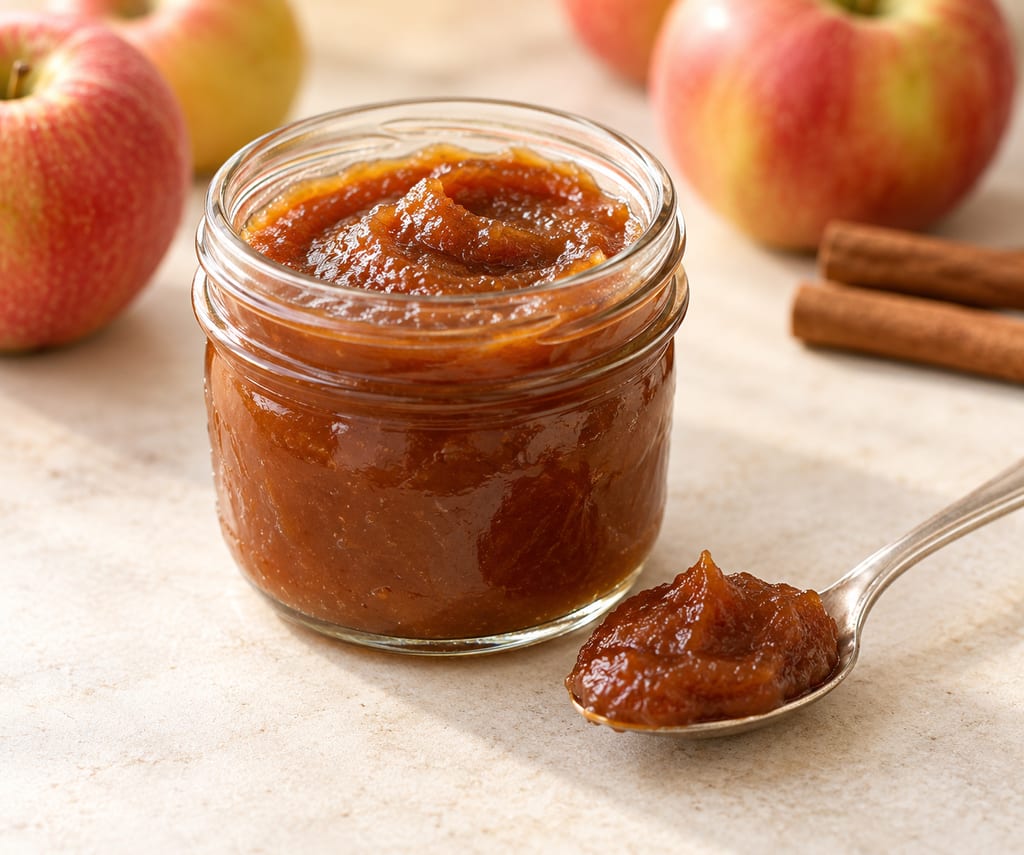
Apple butter is a smooth, concentrated apple purée. It contains no dairy butter. The NCHFP formulation softens apples in apple cider and vinegar, strains the cooked fruit, then reduces the pulp with two sugars and spices. It is a cooked fruit preserve, not a fermentation.
This record follows the National Center for Home Food Preservation’s USDA-derived tested recipe. Its purpose is narrower than a general account of every apple butter: these ingredients and this jar schedule belong together. The page reports an approximate yield of nine to ten pints, but does not provide a scaling rule or a different storage life for this particular batch.
The formula starts with eight pounds of apples. The NCHFP lists Jonathan, Winesap, Stayman, Golden Delicious and Macintosh, and allows other tasty apple varieties. Wash the fruit, remove the stems, quarter it and core it. The recipe gives no peeling instruction.
Two cups of apple cider and two cups of vinegar cook with the fruit. In this American source, “apple cider” means the unfermented apple beverage, as distinguished in the supplied atlas; vinegar is a separate, equally measured ingredient. Keep both quantities. The source does not authorize leaving out the vinegar, changing its amount, or substituting another liquid.
After straining, the pulp receives 2¼ cups white sugar and 2¼ cups packed brown sugar, plus two tablespoons ground cinnamon and one tablespoon ground cloves. Brown sugar is packed for measuring; the white sugar is not described as packed. The recipe does not offer a reduced-sugar version here, and ingredients from another apple-butter formula should not be blended into this one.
First, the quartered apples soften slowly in cider and vinegar. The recipe then sends the fruit through a colander, food mill or strainer. This separates the soft apple pulp from larger pieces and cores before the sweetened butter is cooked. The NCHFP does not require a particular one of those straining tools.
The strained pulp is cooked with both sugars and the spices, with frequent stirring. The source gives no fixed duration for either cooking stage: the apples cook until soft, while the pulp is reduced until it reaches the stated texture. A wide pan or a particular heat setting is not specified, so neither is added as a rule here.
Use the spoon test: take out a spoonful and hold it away from steam for two minutes. If the butter remains mounded on the spoon, it is done. A plate test is another option: spoon a small quantity onto a plate and look for liquid separating into a rim around the edge. No separated liquid rim means the butter is ready for canning.
These are the source's texture checks, not a measured temperature, soluble-solids value or independent safety test. Do not replace them with a guessed temperature or extend the recipe with an invented endpoint. The formula's processing schedule remains tied to the ingredients, hot fill and jar instructions on the same NCHFP page.
Hot-fill sterile half-pint or pint jars with ¼ inch headspace. Adjust the lids and process the hot pack in a boiling-water canner. For half-pint and pint jars, the NCHFP schedule is five minutes at 0–1,000 feet, ten minutes at 1,001–6,000 feet and fifteen minutes above 6,000 feet.
Quart jars use a separate schedule: ten minutes at 0–1,000 feet, fifteen minutes at 1,001–6,000 feet and twenty minutes above 6,000 feet. The recipe says quart jars do not need presterilizing; this does not make their processing times interchangeable with pint jars. Identify the jar size and elevation before selecting the source's time.
The companion UGA Extension canner instructions explain water coverage, maintaining a full boil, timing, jar handling and cooling. Follow those instructions along with the recipe. This page does not provide a pressure-canner alternative.
The atlas places this formula among its tested canning gateways. It separately describes apple butter and Pennsylvania German lattwaerrick as a wider historical food family. Those broader associations do not turn the NCHFP batch into a Pennsylvania household recipe or establish an origin for apple butter. The NCHFP page identifies its recipe as adapted from the USDA Complete Guide to Home Canning, Agriculture Information Bulletin No. 539, revised in 2015.
This is a source-specific, measured formula rather than a universal definition. Apple variety, quantities, vinegar, sugar, cooking, texture tests, headspace, jar size and elevation schedule stay connected as one published method. Do not omit ingredients, substitute a reduced-sugar formulation, change jar size without following the corresponding schedule, or borrow times from a different recipe.
Once prepared, apple butter is a sweet, spiced fruit spread. The NCHFP recipe page is focused on production and canning and does not give serving ideas, an after-opening interval or a storage duration. Those details are not supplied here.
The recipe gives a tested boiling-water canning pathway, but it is not a fermentation or a freely adaptable pantry recipe. Keep the formulation, jar preparation, hot fill, headspace and altitude-specific processing schedule together. If the cook needs a different fruit, sweetener, vinegar, jar size or batch scale, this exact schedule does not establish how to make that change.
The ingredient list is a single batch: eight pounds apples, four cups of combined liquid divided evenly between cider and vinegar, four and a half cups total sugar divided evenly between white and packed brown sugar, and three tablespoons of ground spice. The NCHFP estimates about nine to ten pints. That yield is approximate, and the recipe gives no instruction to multiply the ingredients or cooking duration for a larger batch.
Preserving that one formula matters because the amounts are written as a package with a specific processing schedule. The vinegar is not an optional seasoning in the recipe. The cider and vinegar enter together before the apples soften and before the fruit is strained. The later sugar and spice addition occurs only after milling. Changing the order, amount, or liquid means leaving this documented batch.
The recipe recommends Jonathan, Winesap, Stayman, Golden Delicious or Macintosh apples, while allowing other tasty apple varieties. It does not prescribe a single variety, a ripeness test, peeling, or a weight after coring. Start from the listed eight pounds before the stated washing, stem removal, quartering and coring.
Quarters soften in the two liquids, which lets the fruit pass through one of the listed straining tools. A colander, food mill or strainer are source alternatives; the recipe does not require a specific mesh, a blender, or an immersion blender. It also does not say to save the cores, add pectin or use the discarded material in another batch.
The process separates softening from concentration. First, cider and vinegar cook with the apple pieces until they are soft. The fruit is strained before sugar and spices are added. Then the pulp is cooked, with frequent stirring, until it reaches the spoon or plate cue. This order is the one attached to the NCHFP canning schedule.
The recipe names vinegar as an ingredient but does not report an acidity value or explain a measured role for each liquid. Do not infer that cider can replace vinegar, that a different vinegar can be used without checking the formulation, or that taste can confirm the process. The measured recipe keeps both liquids and their quantities exactly as listed.
The apple-butter schedule is for a boiling-water canner and a hot pack. UGA Extension's companion instructions describe a rack that keeps jars off the canner bottom, preheating canner water to 180°F for hot-packed foods, and covering the jar tops with water during processing. Read that canner guide before preparing the batch; the apple-butter recipe page refers new canners to the general directions.
Begin the processing timer after the canner water reaches a vigorous boil. Keep a complete boil for the full time. The UGA guide directs the user to bring the water back to a vigorous boil and restart the full original timer if boiling stops. This is canner-operation guidance, separate from the apple butter's spoon and plate tests.
After processing, the guide says to remove jars carefully, leave space between them and let them cool undisturbed for 12 to 24 hours. It directs users to refrigerate unsealed jars and use them first or follow recommended reprocessing guidance. It says to store sealed jars in a cool, dry place out of direct light. No specific storage duration is given on the apple-butter recipe page.
Half-pint and pint jars share one set of three elevation bands, while quart jars use another. At sea-level elevations through 1,000 feet, process half-pint or pint jars for five minutes and quart jars for ten. From 1,001 through 6,000 feet, process half-pint or pint jars for ten minutes and quart jars for fifteen. Above 6,000 feet, the times are fifteen and twenty minutes respectively.
The line between pint and quart is a real process distinction, not a serving suggestion. A quart jar does not use the pint time. The source also says quart jars need not be presterilized, while half-pint and pint jars are filled into sterile jars. Keep the jar preparation, ¼-inch headspace and matching time together when using the recipe.
The NCHFP page identifies this formula as adapted from the USDA Complete Guide to Home Canning, Agriculture Information Bulletin No. 539, revised 2015. That dates the cited publication lineage. It does not identify the first apple-butter recipe or the origin of the food.
The supplied atlas treats apple butter as one form of fruit butter: a cooked purée concentrated until smooth and spreadable, with no dairy butter. It also names Pennsylvania German lattwaerrick in a separate regional-history discussion. That is useful context for the wider family, but it does not make the national NCHFP gateway a Pennsylvania-specific recipe. This record stays with the exact NCHFP ingredients and canning process.
This is the USDA-derived tested formula published by the National Center for Home Food Preservation. The page identifies its source as the Complete Guide to Home Canning, Agriculture Information Bulletin No. 539, revised 2015. That publication lineage does not establish when apple butter or this formula originated. The broader atlas documents apple butter as a fruit-butter family and separately records the historical Pennsylvania German name lattwaerrick; those regional histories are not the location or provenance of this national NCHFP formula.
Scaling: source batch only
Cooking and processing jars expose the maker to hot fruit, steam and boiling water.
Hazard sourceFollow the NCHFP formula and its hot-pack schedule for the actual jar size and elevation; follow the cited UGA Extension boiling-water-canner instructions for canner operation.
Control sourceKeep the full vinegar quantity and use the stated jar-size and altitude schedule; do not substitute a schedule from another apple-butter formula.
A USDA-derived recipe published by the U.S. National Center for Home Food Preservation; this country-level publication does not claim a regional origin or universal apple-butter method.
A smooth fruit pulp cooked down with sugar and spice until it holds its shape on a spoon, made by three documented routes in a slow cooker, a microwave or an electric multicooker.
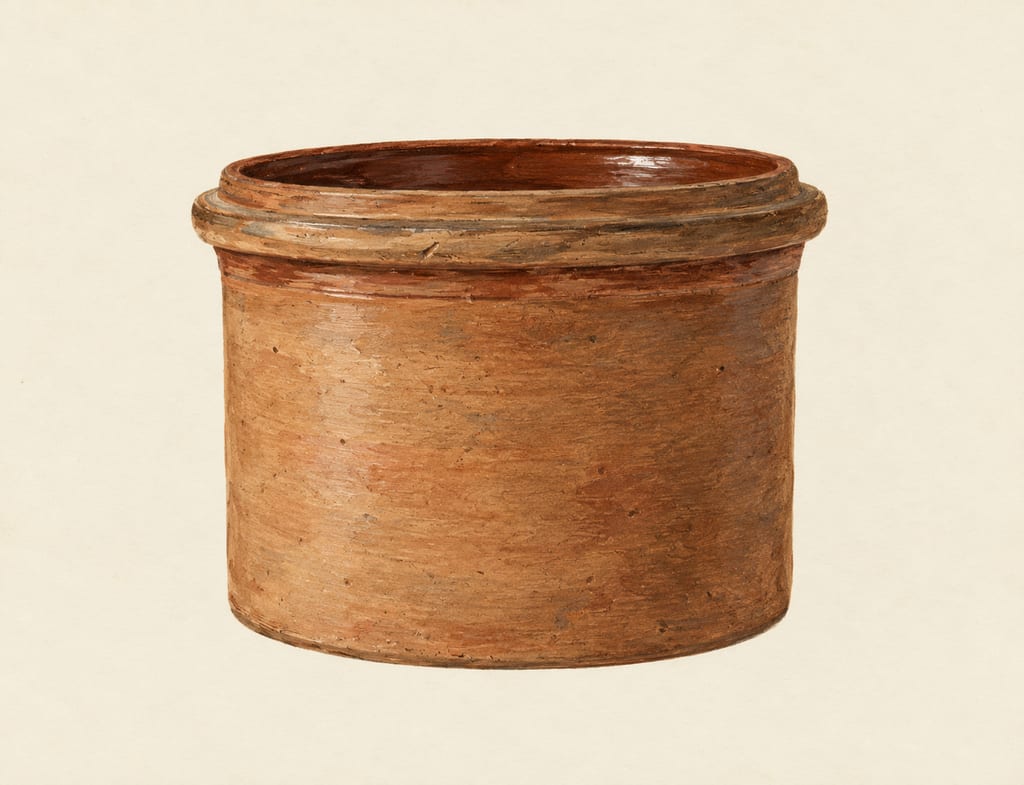
An earthenware storage pot named in an 1855 Pennsylvania German apple-butter account; later pottery writing describes a heavy-rimmed, internally glazed form.
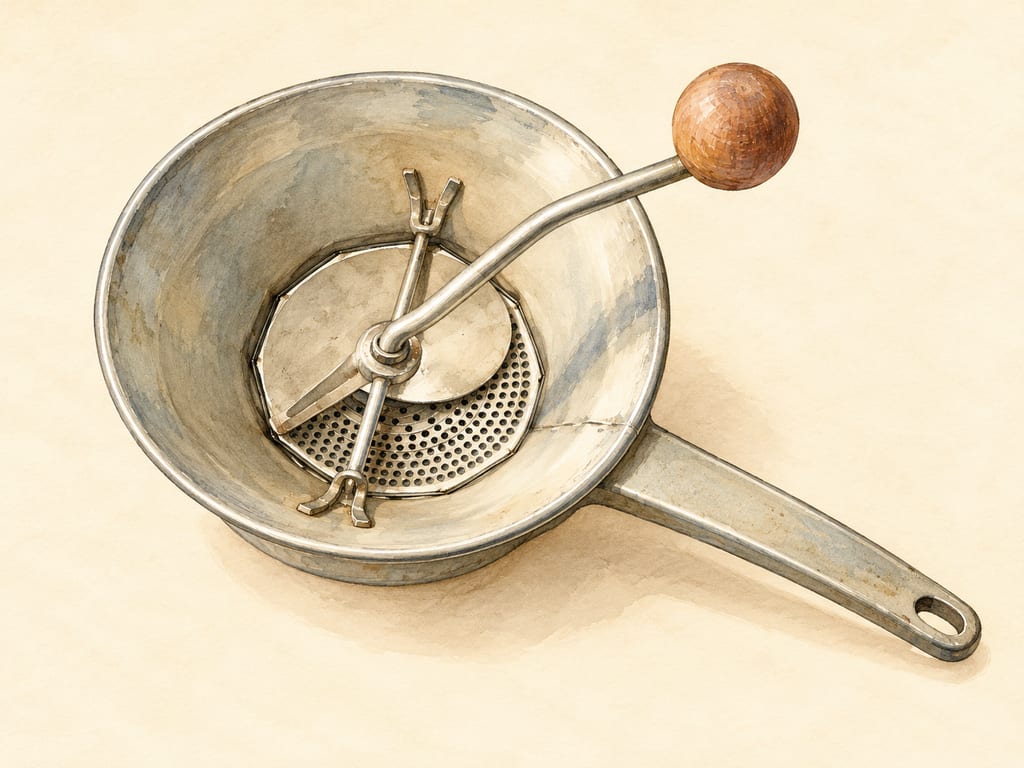
A hand-cranked food mill presses softened food across a perforated disk, producing a purée while keeping larger pieces in the chamber. Its exact shape and disk depend on the model.
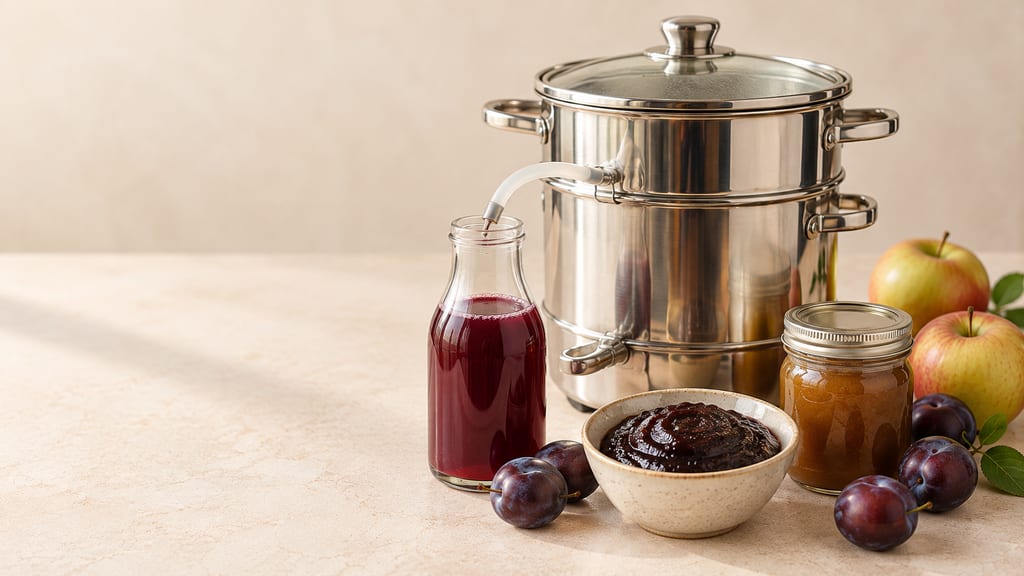
Fruit becomes juice, butter, paste or syrup in two moves: get the liquid out, then drive the water off. Steam juicers, slow cookers, microwaves and freezers each do one of those moves well, and none does both.
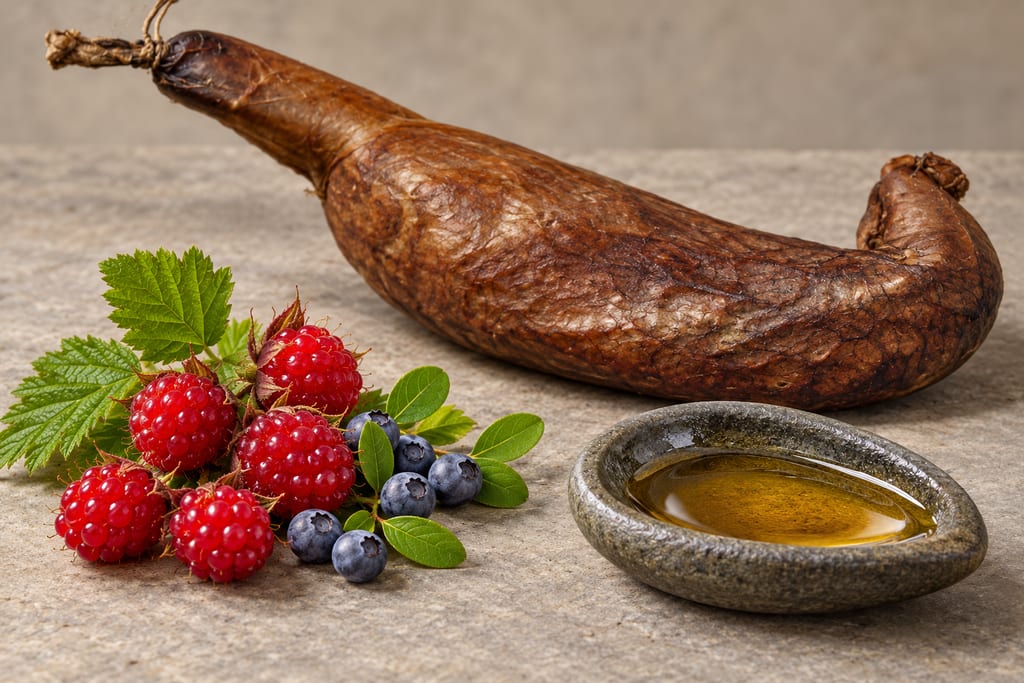
Berries, greens and fish eggs were kept in seal oil by Indigenous Alaskan communities. The oil seals the food from air, and the result depends on preparation and the surrounding conditions.
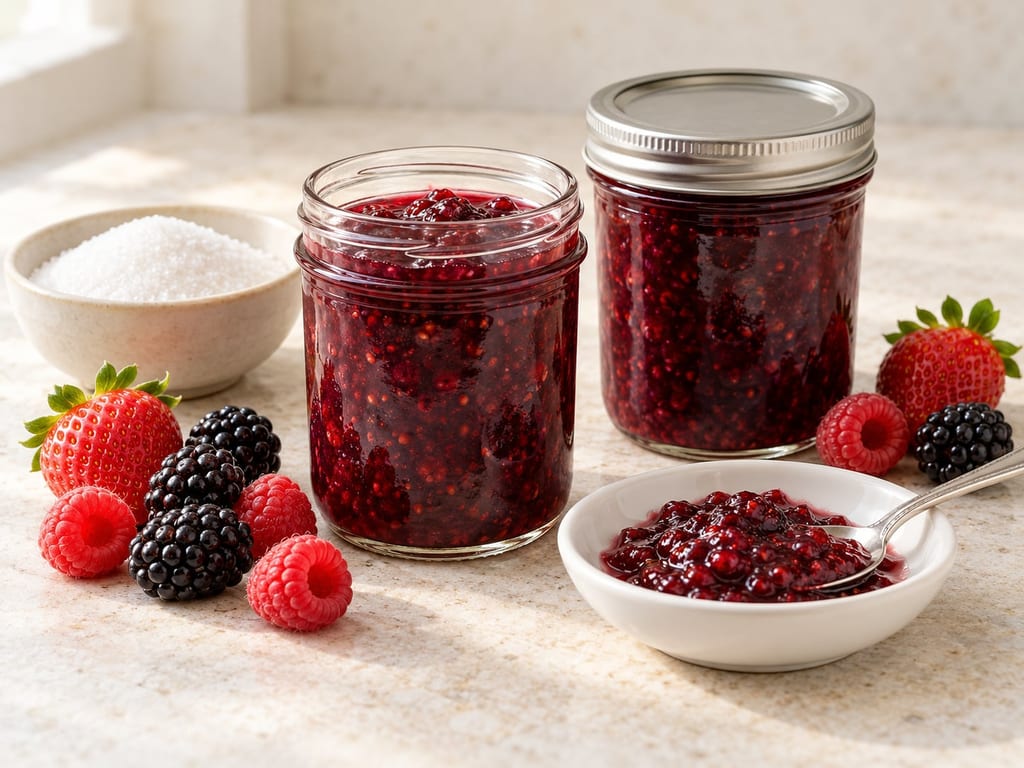
A NCHFP berry jam made without added pectin: crushed berries and sugar are cooked to the desired gel point, hot-filled into sterile half-pint or pint jars, and processed in a boiling-water canner.
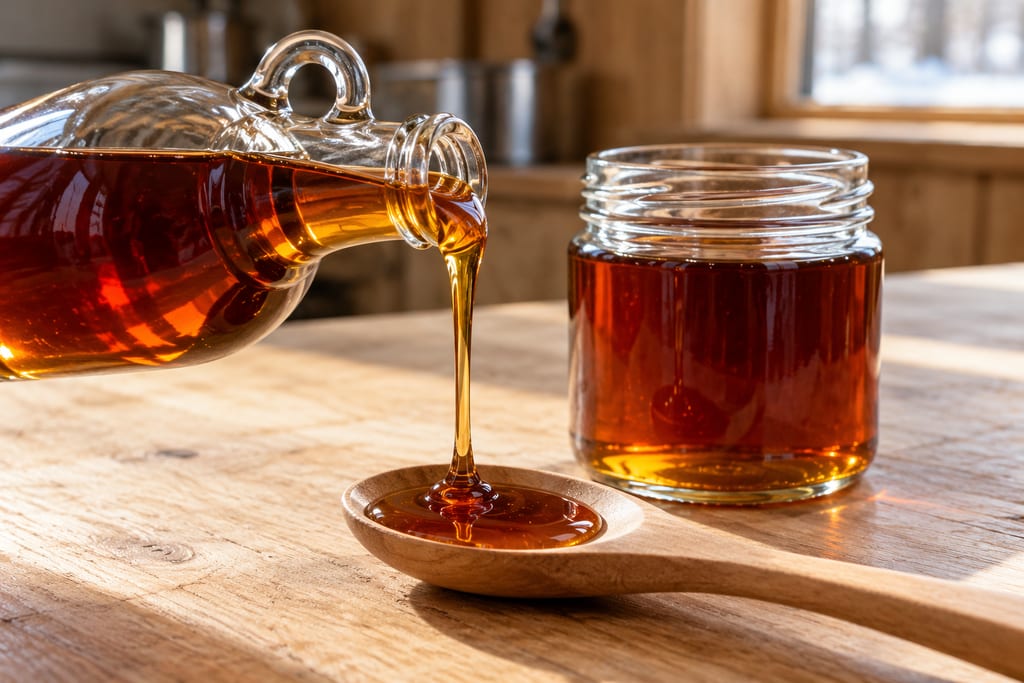
Maple sap of about two percent sugar boiled down in a shallow pan until it reaches syrup density, the sugar concentration the standard defines, then filtered hot and packed hot.
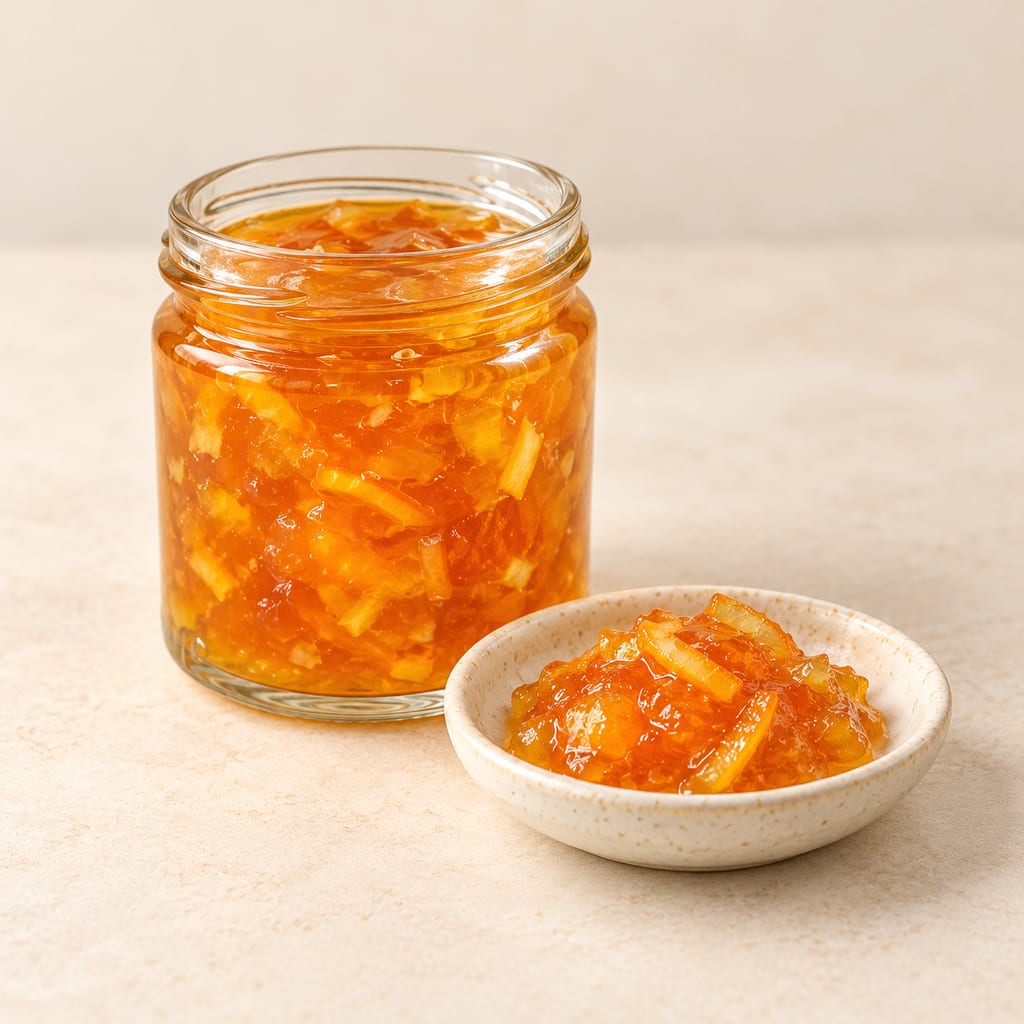
Orange marmalade suspends thin strips of citrus peel in a sweet gel. This navel-orange batch includes pulp and lemon and is preserved in a boiling-water canner.
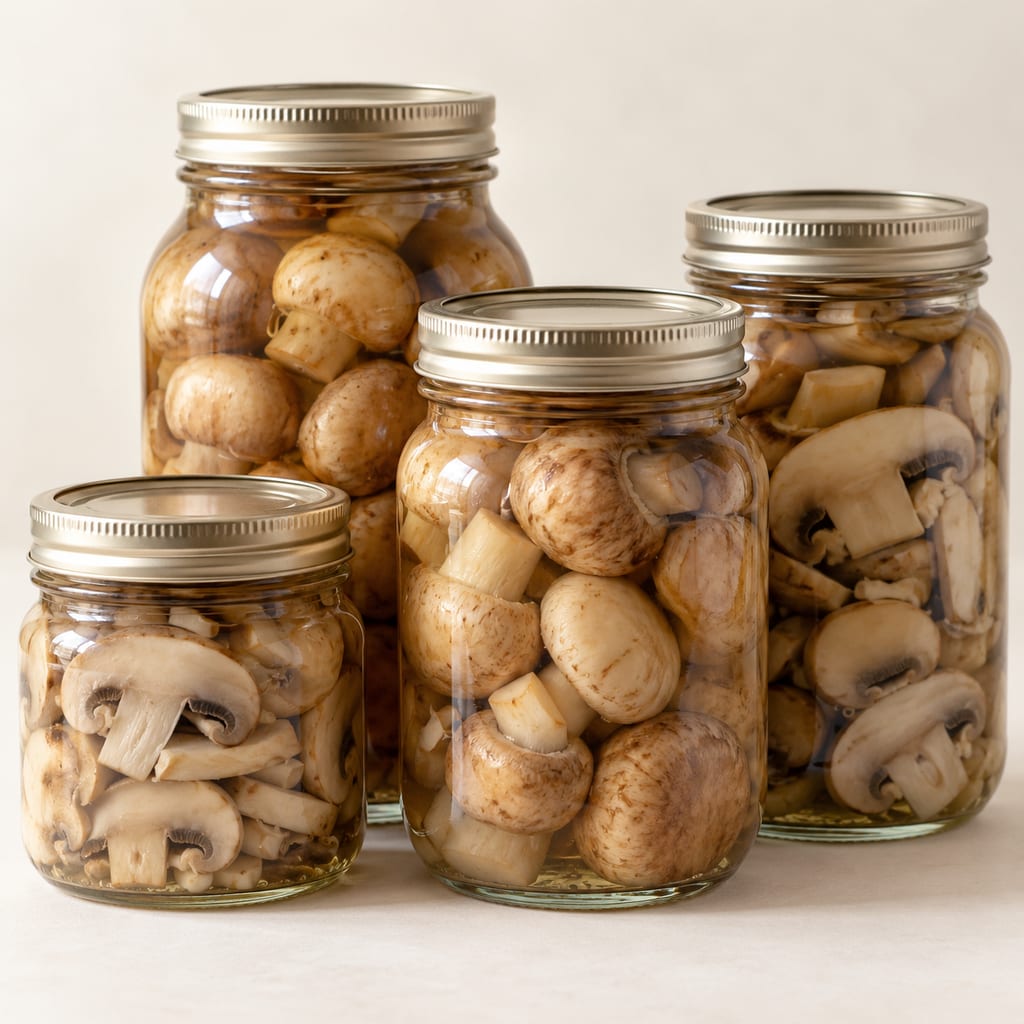
Whole or sliced domestic mushrooms packed hot in jars with fresh water and processed in a pressure canner, the tested home method for a low-acid vegetable.
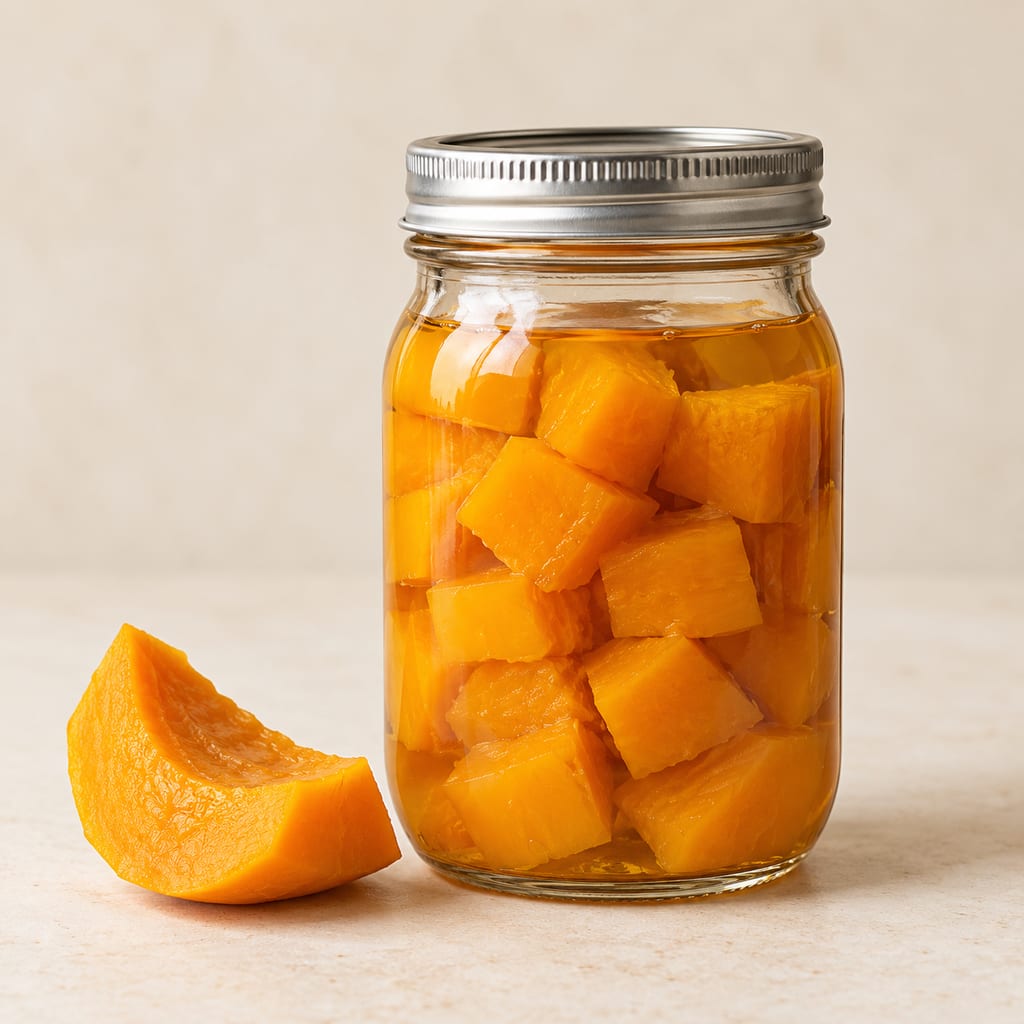
Plain pumpkin cubes hot-packed in water and pressure-canned for later cooking. The pieces stay intact during canning; mash them only after opening.
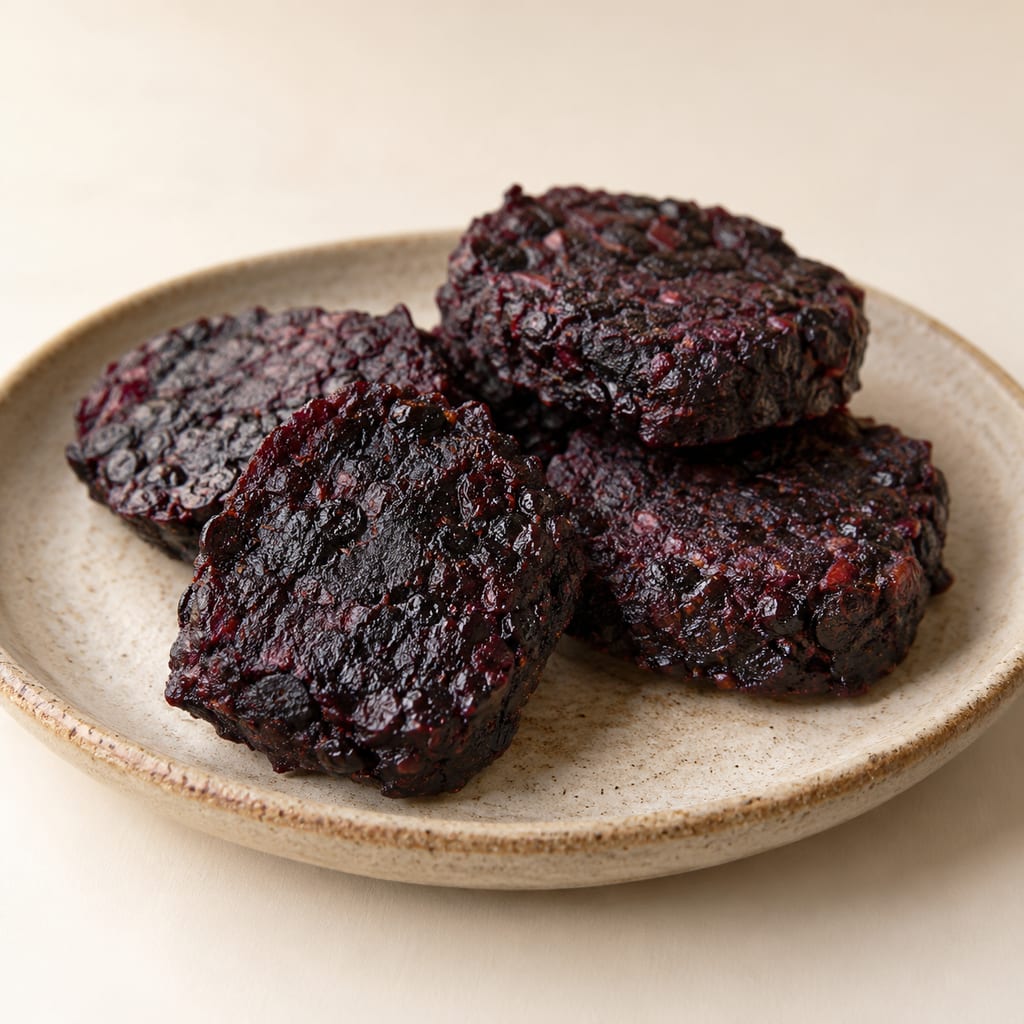
Salal berries pulped, formed into cakes and dried, a compact berry reserve of the northwestern American coast.
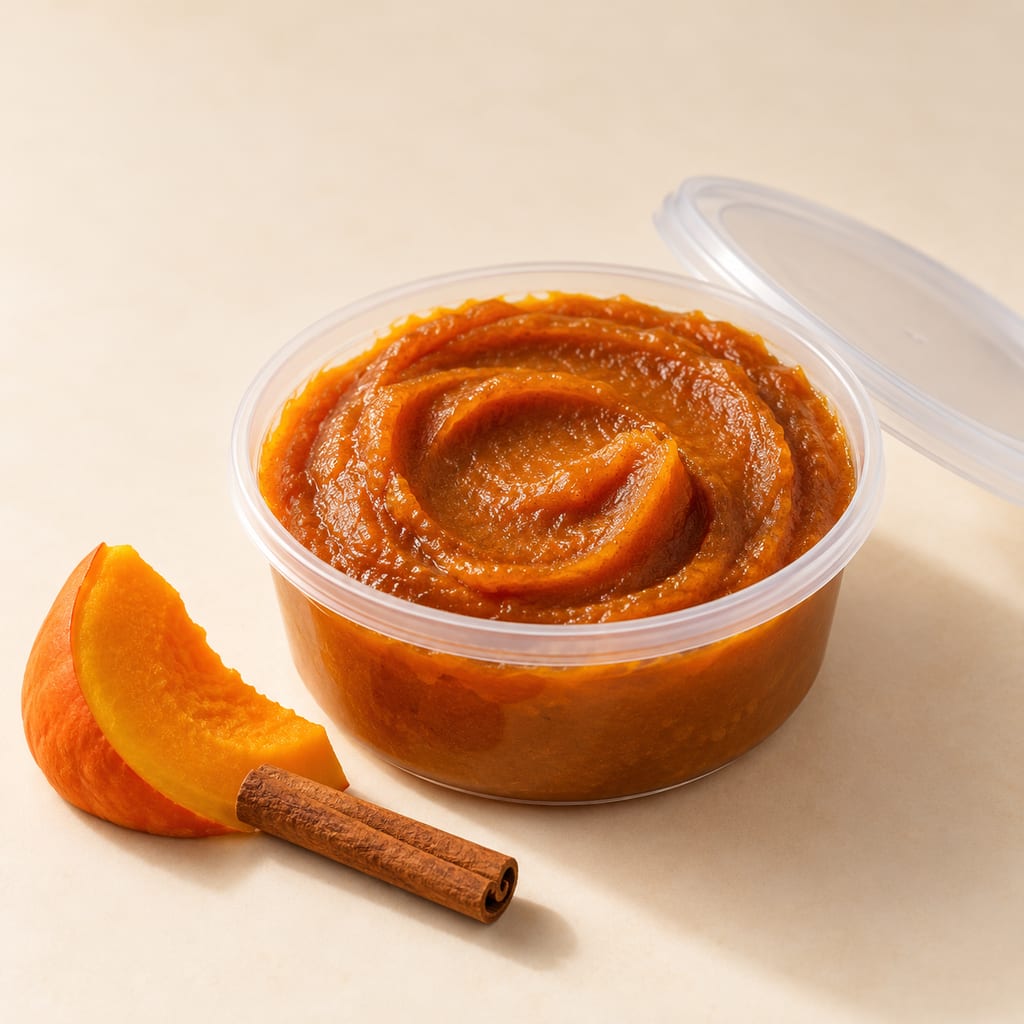
Spiced freezer pumpkin butter: Freeze for winter; small fresh portion refrigerated up to 48 hours.
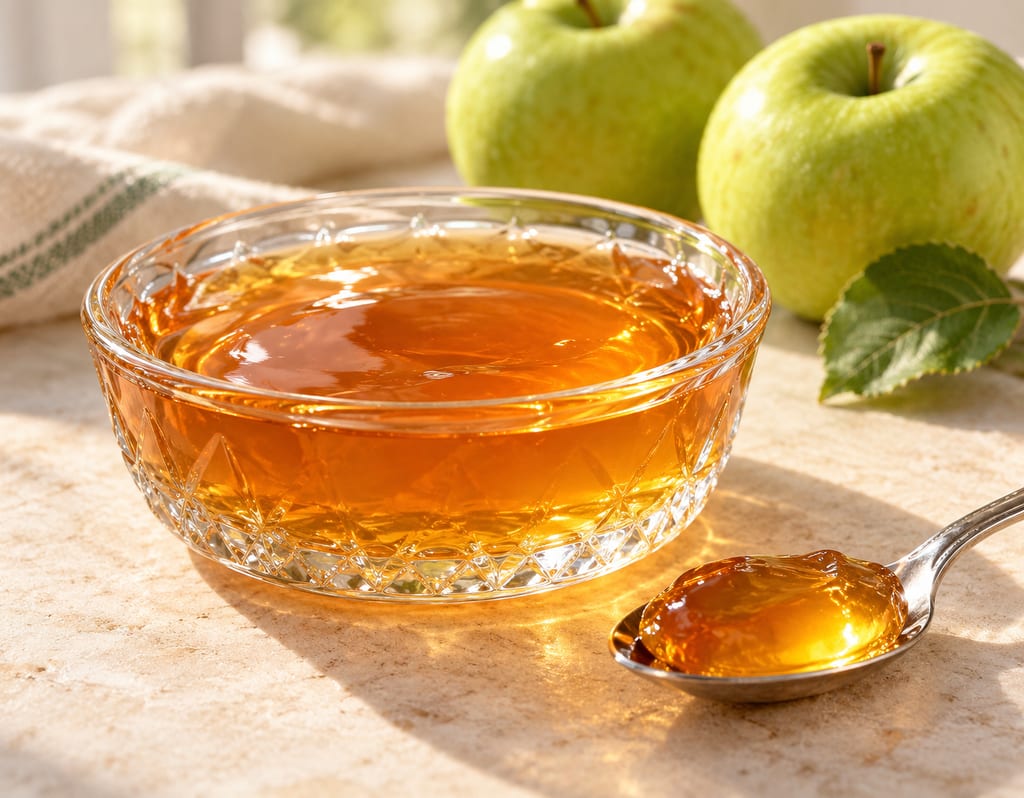
A clear jelly made from tart-apple juice, sugar and optional strained lemon juice. This batch uses a stated fruit-to-water preparation, gel endpoint, hot fill and altitude-adjusted boiling-water process.
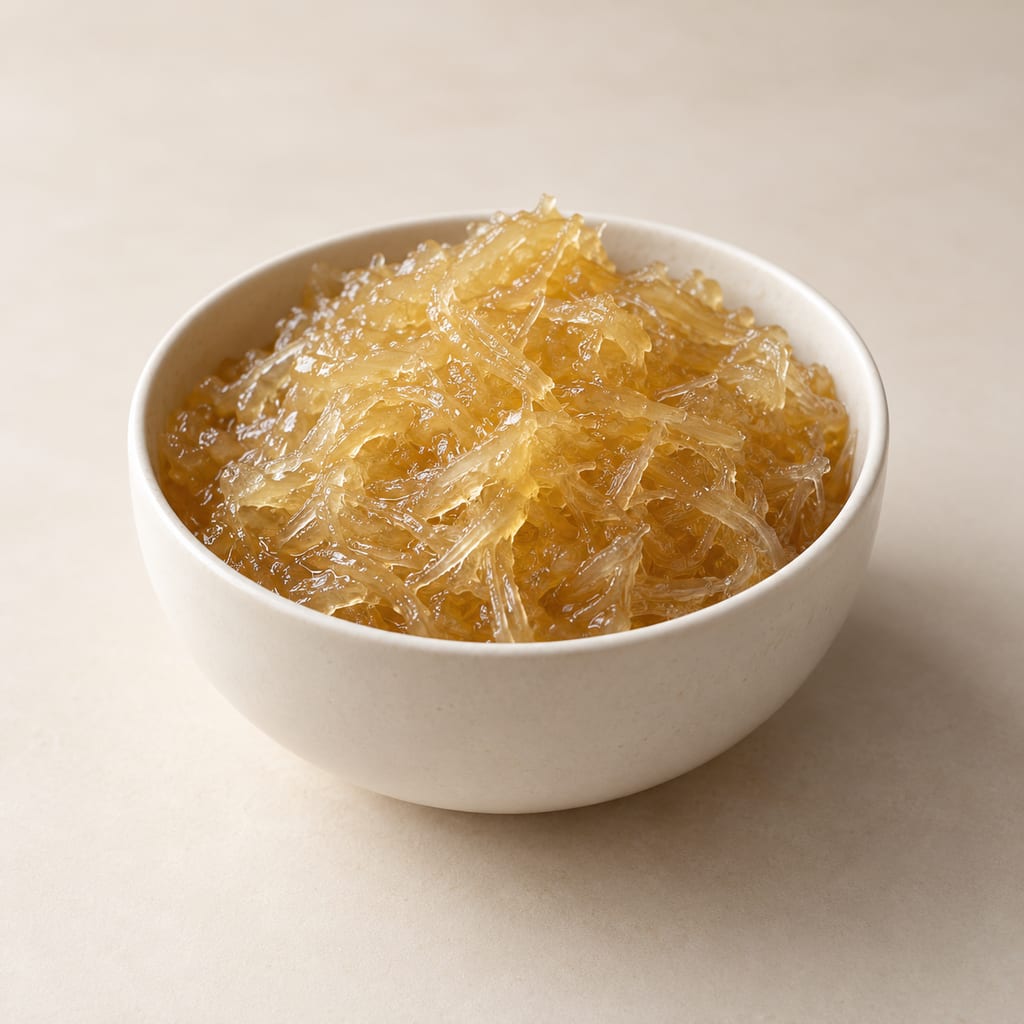
Fine strands of Cucurbita ficifolia cooked in an equal weight of sugar, then portioned for refrigerator or freezer storage. Ordinary orange pumpkin does not give the same fibres.
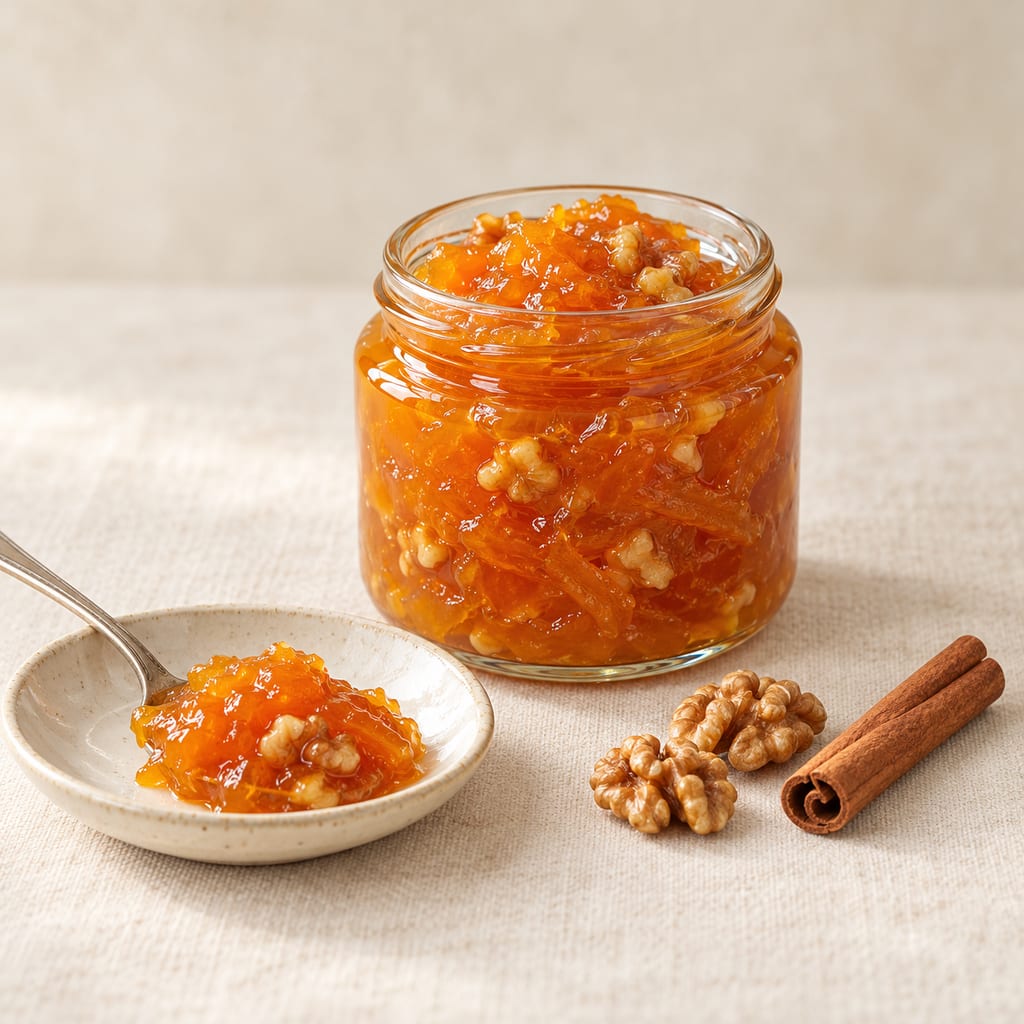
Portuguese pumpkin jam cooked with cinnamon and optional walnuts. A sweet spread to refrigerate or freeze, rather than a home-canned preserve.
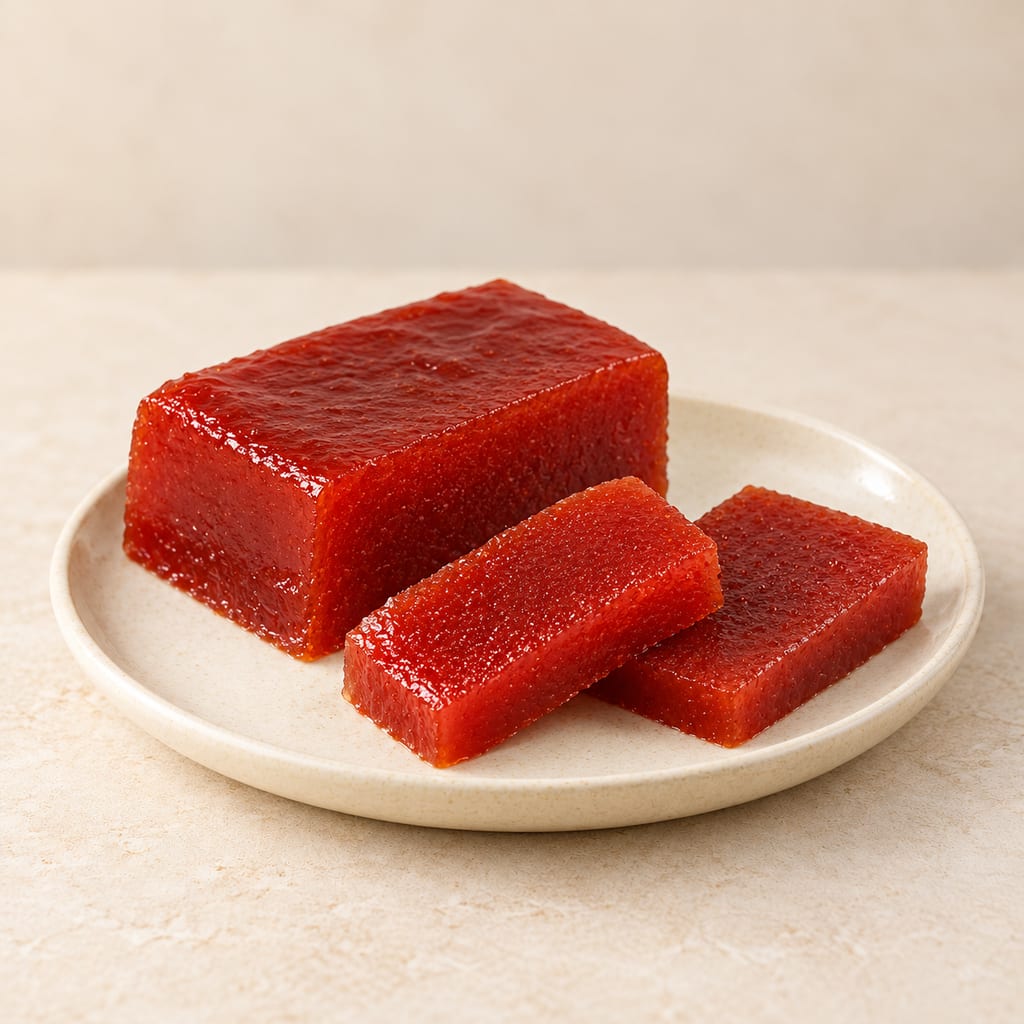
Dulce de membrillo is quince cooked with sugar into a firm paste for slicing. This family method softens the fruit in a pressure cooker, then blends it and leaves it to set.
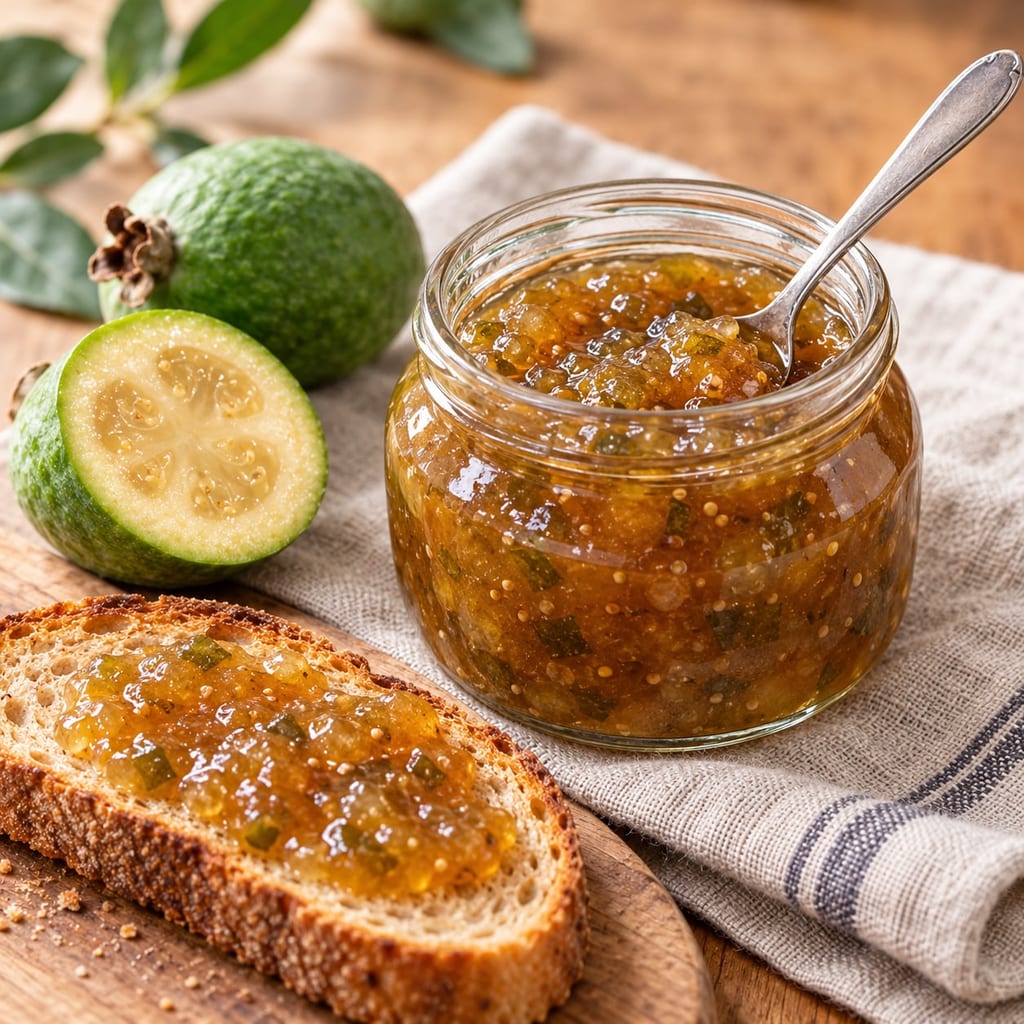
Blended whole feijoas simmer into a skin-on jam with lemon, sugar and vanilla. The skins remain for a more textured finish; keep this batch refrigerated or frozen because its method has no validated shelf-stable canning process.
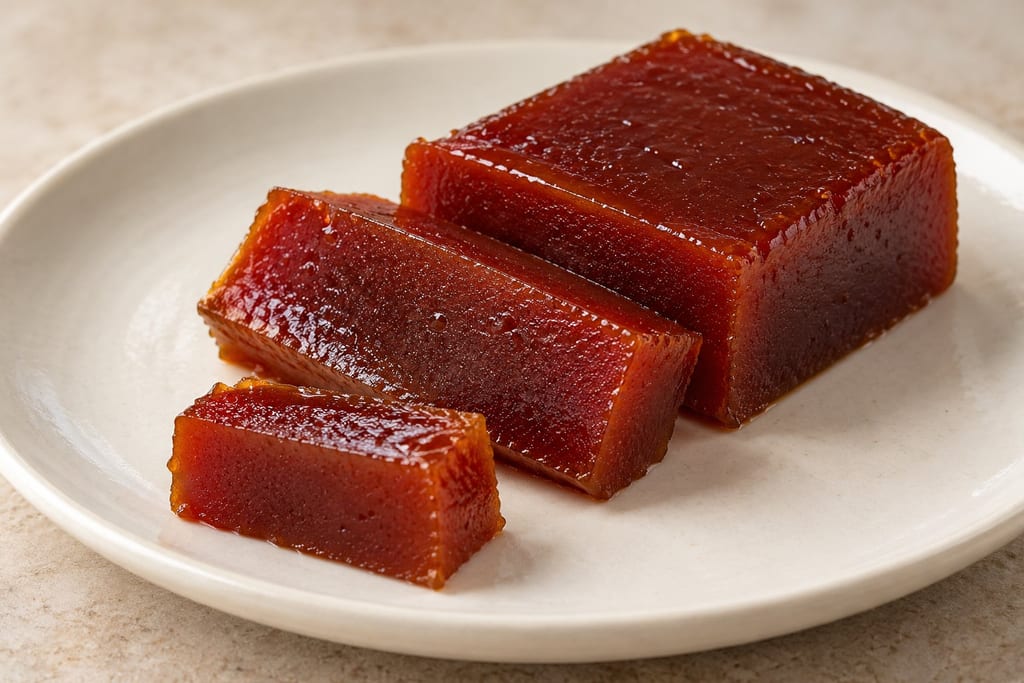
Cooked, sieved guava pulp is reduced with sugar and lime juice to a sliceable paste, then refrigerated. This adapted trial begins with prepared pulp and has no validated canning process or storage duration.

Jam is fruit cooked with enough sugar and concentration to reduce the water available to microbes. Jelly uses clarified juice and firmer fruit pastes lose still more moisture.
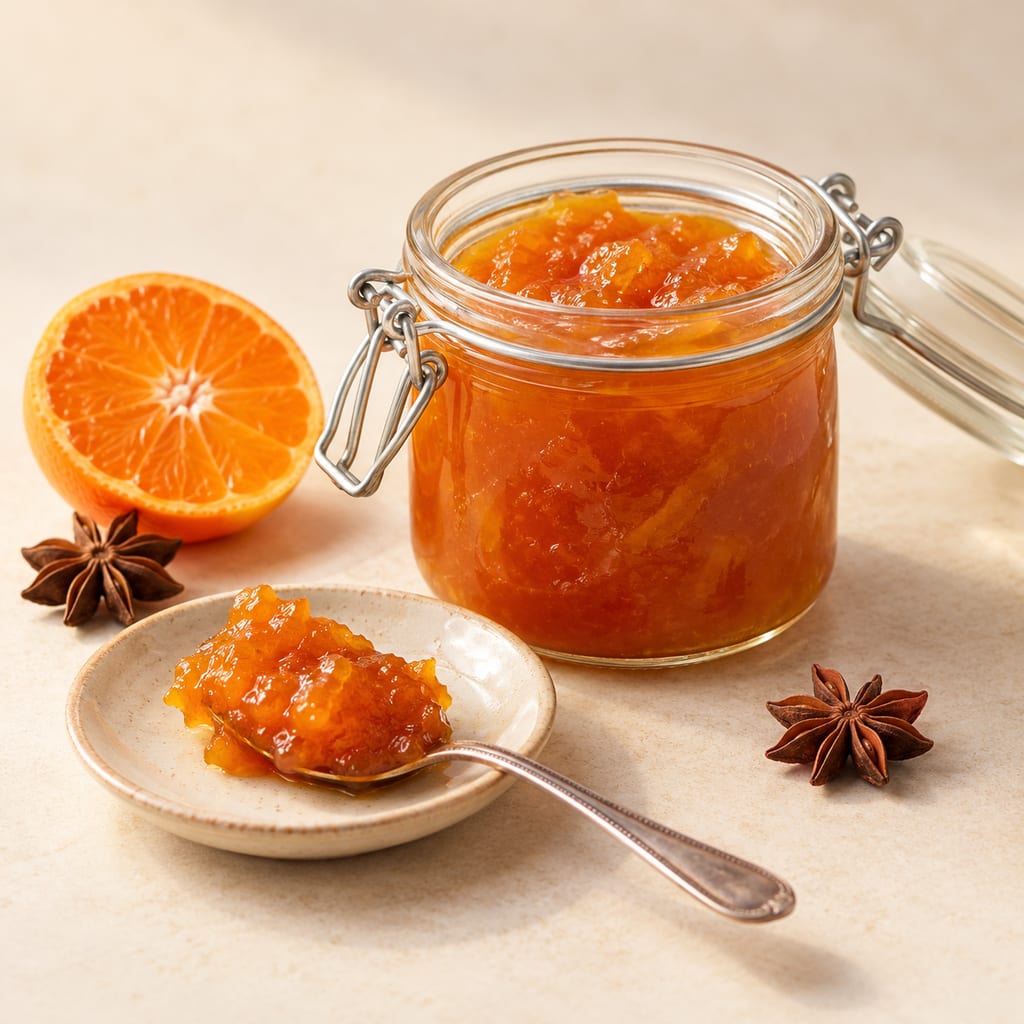
Portuguese pumpkin jam: Freeze for winter; small fresh portion refrigerated up to 48 hours.
No community contributions have been published for this entry yet.
Sign in to contribute. Published comments and photos are free to read.
National Center for Home Food Preservation, University of GeorgiaProcess · Safety
Apple ButterIngredient quantities and apple variety examples; 9 to 10 pint yield; slow cooking in cider and vinegar; straining; sugar and spice addition; spoon and plate doneness cues; hot-fill headspace; separate half-pint/pint and quart boiling-water schedules for three elevation bands; adapted from USDA Complete Guide to Home Canning revised 2015.
Cited in: A smooth apple preserve, not dairy butter; Apples, cider, vinegar and spice; Two cooking stages; Use the source's doneness test; Jar size and elevation change the schedule; A tested gateway, not every regional apple butter; Serving and limits; The measured batch and its yield; Choosing and preparing the fruit; What the liquid and sugar stages do; Keep jar size and elevation paired; A national tested method within a wider food family
University of Georgia Cooperative ExtensionEquipment safety
Using Boiling Water CannersSafe operation details for boiling-water canners, jar loading and removal, water coverage, maintaining the boil, restarting the timer if boiling stops, and cooling jars.
Cited in: Jar size and elevation change the schedule; A tested gateway, not every regional apple butter; Using the boiling-water canner