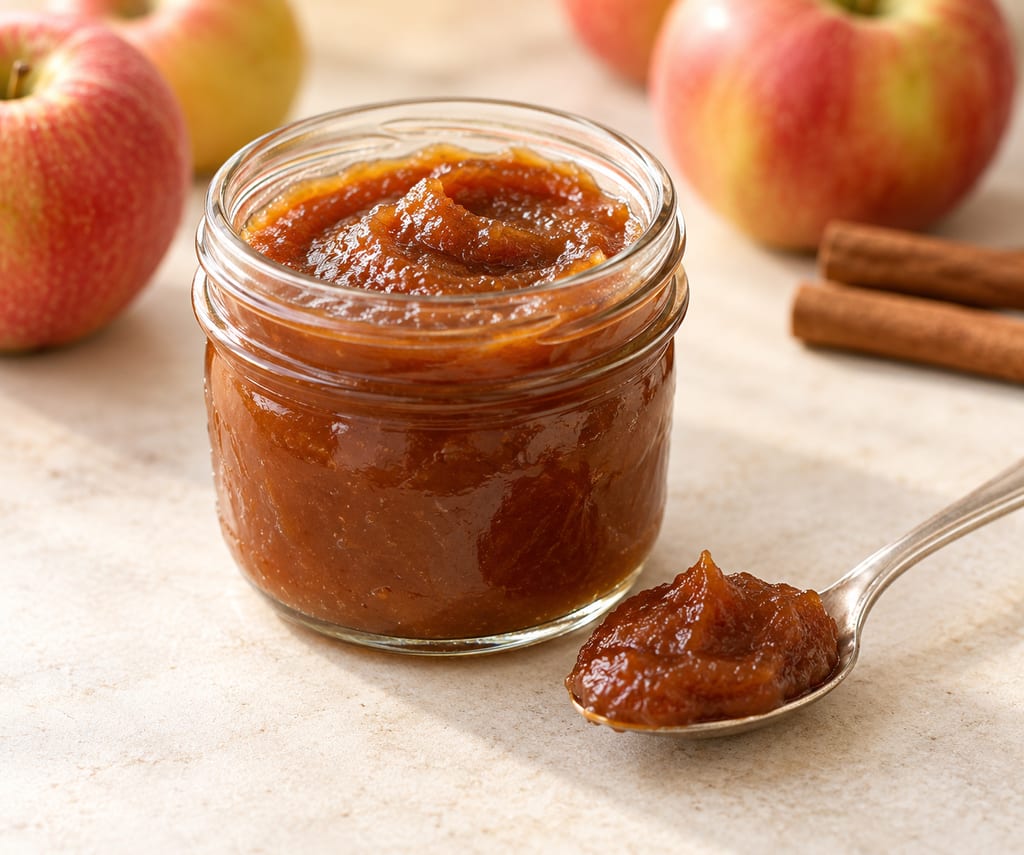
Apple butter, tested canning method
Apple butter is a smooth, concentrated apple preserve cooked with cider, vinegar, two sugars and spices, then hot-filled and processed in a boiling-water canner using the published jar-size and elevation schedule.
 FermenteaWhere food goes to change
Equipment · Hand-cranked food mills
food mill · moulin à légumes · Moulin-Légumes · food strainer
A hand-cranked food mill presses softened food across a perforated disk, producing a purée while keeping larger pieces in the chamber. Its exact shape and disk depend on the model.
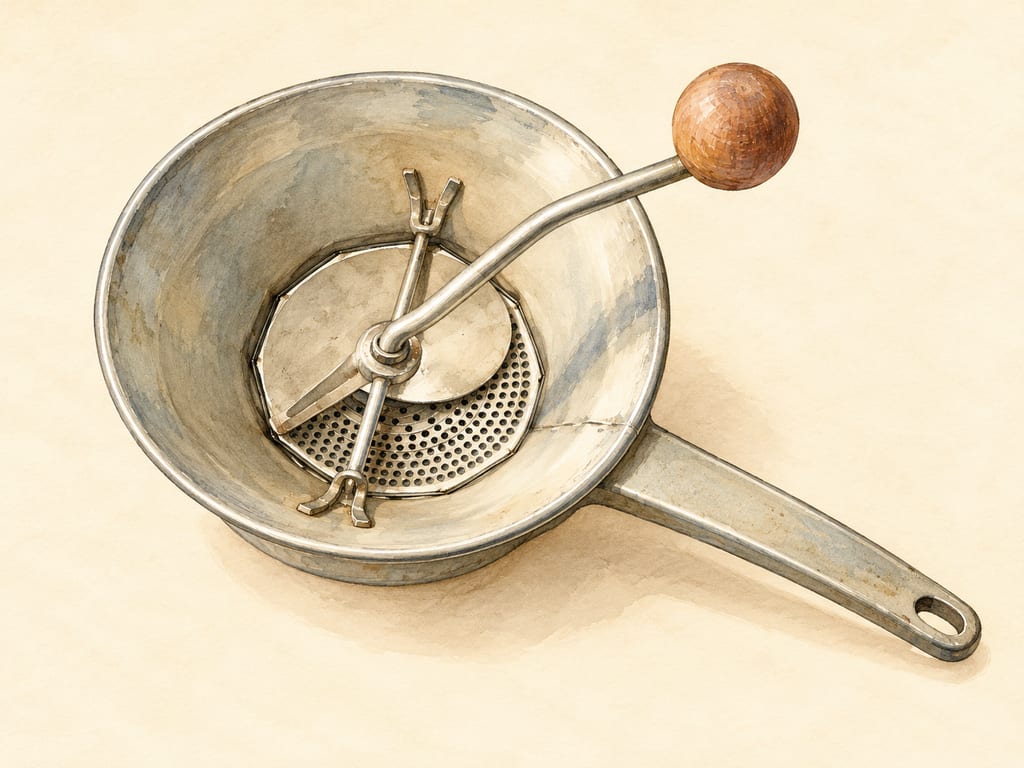
A hand-cranked food mill combines crushing and sieving in one tool. Soft food sits in a shallow bowl above a perforated disk. Turning the handle drives a blade or helical pressing surface across the disk, pushing the softer material through while larger pieces remain above it. A separate sieve needs food to be crushed first; the mill supplies the pressure as it works. The result depends on the food's softness and the opening size. A fine disk can hold back more coarse material than a wide-opening one, but a mill is not a guarantee that every skin or seed will be removed.
The 1933 U.S. patent for Jean Mantelet's masher describes a crank, spindle, helical compressing surface, sieve and vessel lugs that rest on a kitchen pot. It also documents more than one sieve geometry. Those details explain how the device works, but they describe a specific patented mechanism, not every model sold as a food mill.
The name Moulin-Légumes belongs to the French model associated with Jean Mantelet. France's national intellectual-property institute records his patent filing on 16 February 1932 and says the device was sold at fairs before mass production. The institute reports two million sales between 1933 and 1935; that figure is its historical account of this product, not a measure of all food mills.
A France Ministry of Culture catalogue documents a metal-and-wood Moulin-Légumes made in France between 1932 and 1956. It records one object's dimensions as 33 centimetres long, 15.5 centimetres high and 19 centimetres wide. These measurements belong to that specimen, not to the whole category. Across the Atlantic, Hennepin History Museum records that the Minneapolis-area Foley company introduced its own food mill in 1934. The sources show parallel commercial examples in France and the United States, without establishing who first used any broader kind of hand-operated sieve or masher.
The general idea stays simple, but construction does not. The patent shows different sieve shapes and a spring-loaded blade pressed against the sieve. The museum object provides a separate, visible example: a metal bowl and perforated plate, a long crank arm, a scraping blade and a wooden knob. Modern mills may use different metals, supports, removable disks and bowl sizes. Neither the artifact nor the patent supplies a single material specification for today's equipment.
A 2023 quick-start guide for two named commercial models describes fitting a chosen sieve into the rim, locking the crank assembly, placing cooked produce in the bowl and turning the crank over a pot or container. The guide lists several sieve openings for those two products. It is a useful modern comparison, not a universal instruction: each mill's supports, capacity, parts and cleaning directions should be checked against its own manual.
Food mills make a purée or strained base; they do not ferment, preserve or make a product shelf-stable by themselves. Their role in a fermentation kitchen is upstream: they can help prepare soft fruit or vegetables when a recipe calls for a smooth pulp. The Fermenta archive lists a mill after fruit softening in one proposed fruit-paste workflow, but it does not describe a particular model or prove that this is the only suitable tool. The related apple-butter page is still a candidate, so the link records a useful equipment relationship rather than a published method.
The central distinction is useful when choosing among a mill, a ricer, a blender or a sieve. A ricer pushes food through small holes with direct pressure; a blender cuts and circulates its contents; a sieve separates after the food has been broken down. A food mill uses a turning blade against a perforated surface and can leave larger pieces in its bowl. No device makes an untested preservation process safe. Follow the recipe's validated cooking, acidification, cooling or storage instructions independently of the tool.
France's national intellectual-property institute records Mantelet's patent filing on 16 February 1932. A Ministry of Culture catalogue records a Moulin-Légumes specimen from 1932–1956. Hennepin History Museum documents a U.S. maker, Foley, introducing a food mill in 1934.
The hand crank drives a metal pressing blade across the sieve; moving parts can pinch or cut during operation or handling.
Hazard sourceThis identifies the documented French model and specimen, not the origin of every food mill.
Apple butter is a smooth, concentrated apple preserve cooked with cider, vinegar, two sugars and spices, then hot-filled and processed in a boiling-water canner using the published jar-size and elevation schedule.
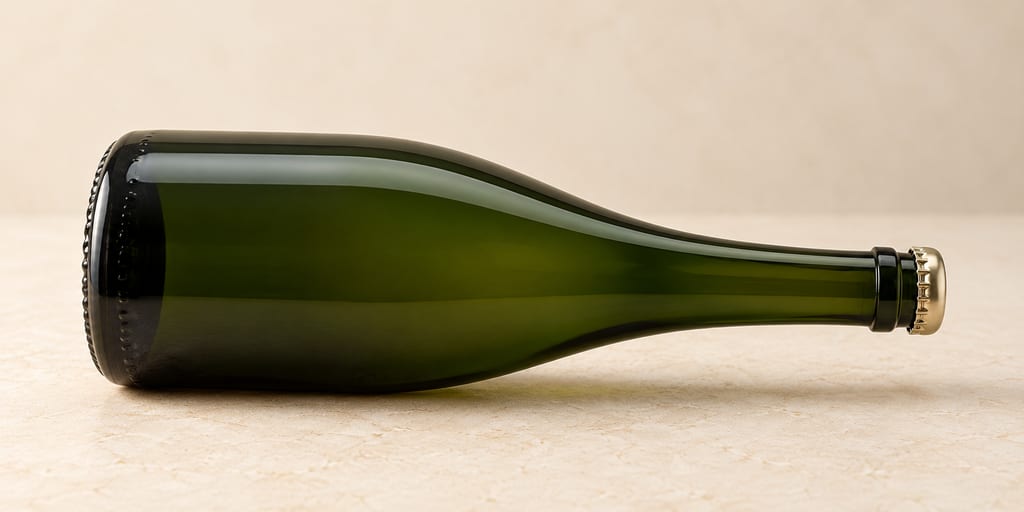
Champagne’s traditional-method bottle holds wine through its second fermentation and subsequent maturation on lees. At tirage it has a crown cap and internal insert; bottle formats and specifications vary.
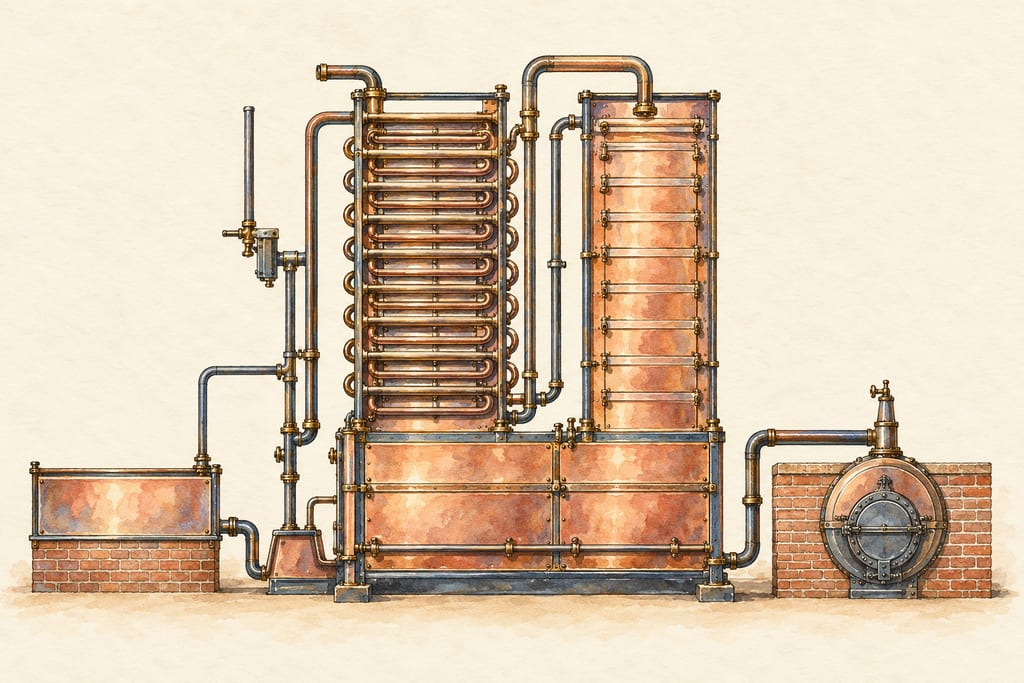
A column still is a distillation apparatus built around one or more vertical columns. Its continuous and rectifying designs appear in several spirits traditions, but materials and product character vary by installation.
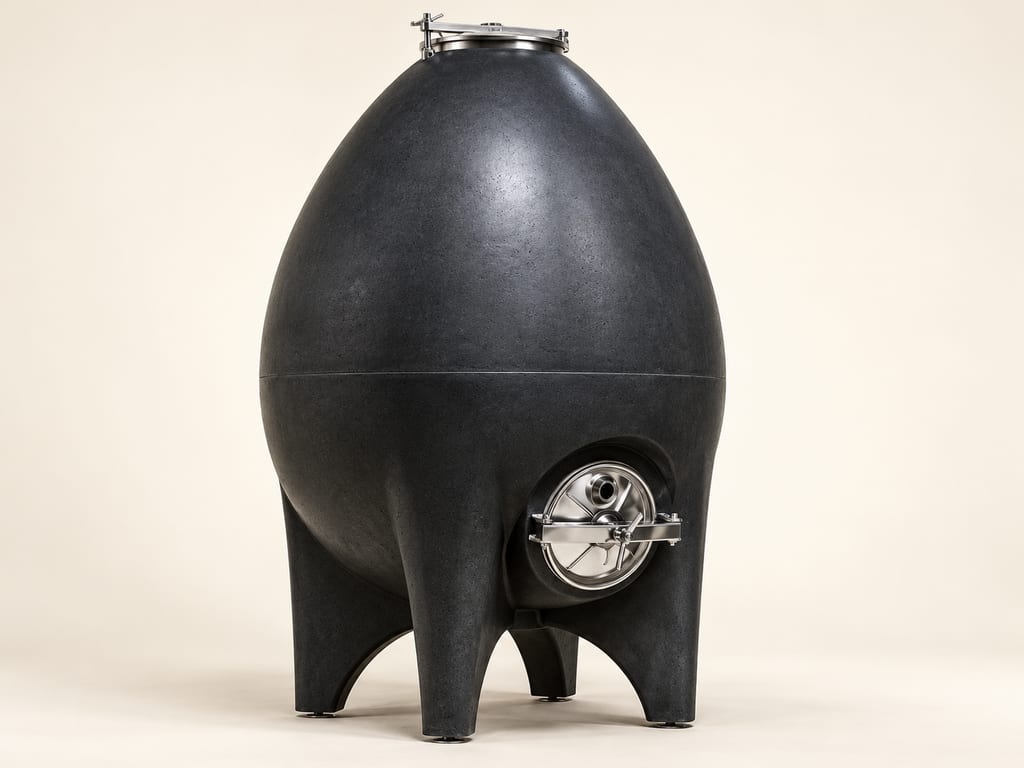
A modern ovoid concrete wine vat with smooth curved walls, made in several sizes and fitted according to model. Used for wine fermentation and maturation; support, access, cooling and interior treatment vary.
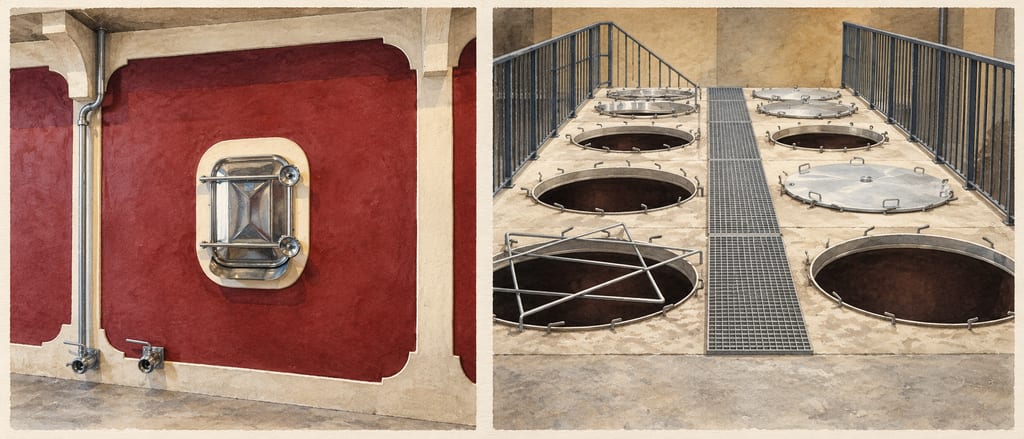
Concrete wine tanks are heavy, fixed vessels in rectangular, cylindrical and tapered forms. Their thermal response and wine contact depend on mix, wall construction and interior finish.
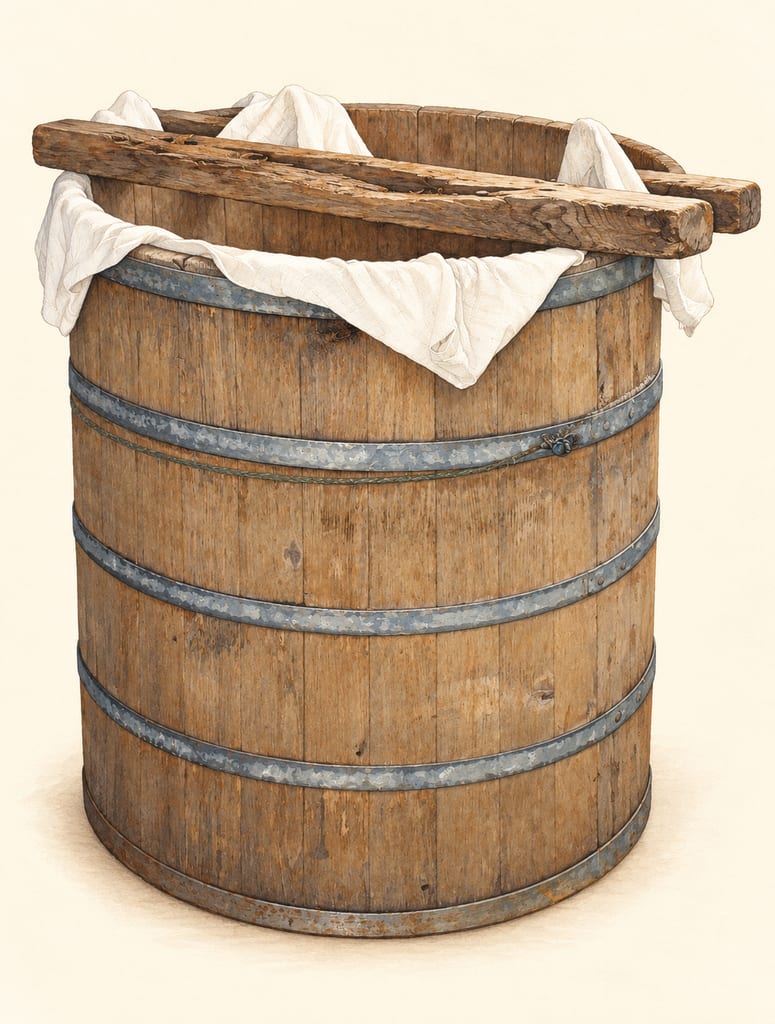
The gerle is a broad wooden vat used to receive and work milk for Salers cheese in its French AOP area. Its coopered form and microbial role are documented, but sources do not establish when this particular vessel first appeared.
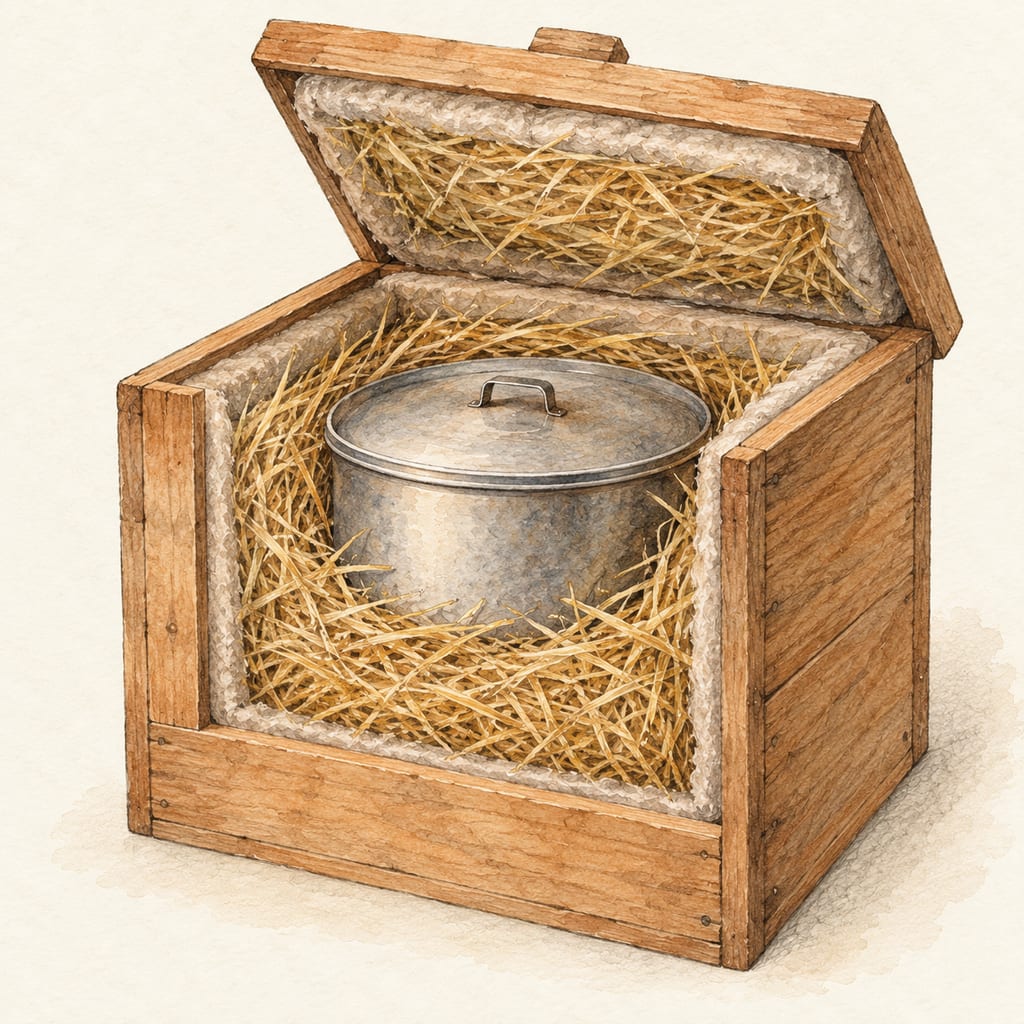
A haybox, also called a fireless or retained-heat cooker, is an insulated enclosure that lets a lidded pot finish cooking in heat already stored in the food after it leaves a stove. It generates no heat and is not a preservation method.
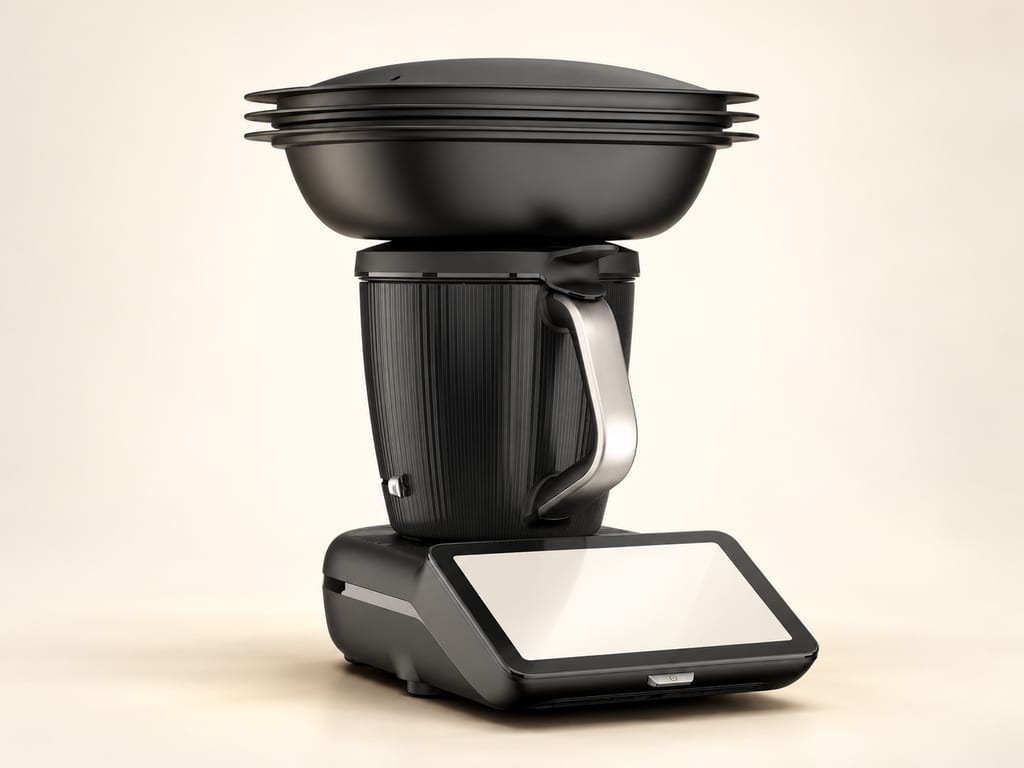
A modern electric countertop machine that heats, chops and stirs food in one mixing bowl. Cookidoo lists Thermomix models for making powidl and quince membrillo, although the full methods are not public on the pages reviewed.
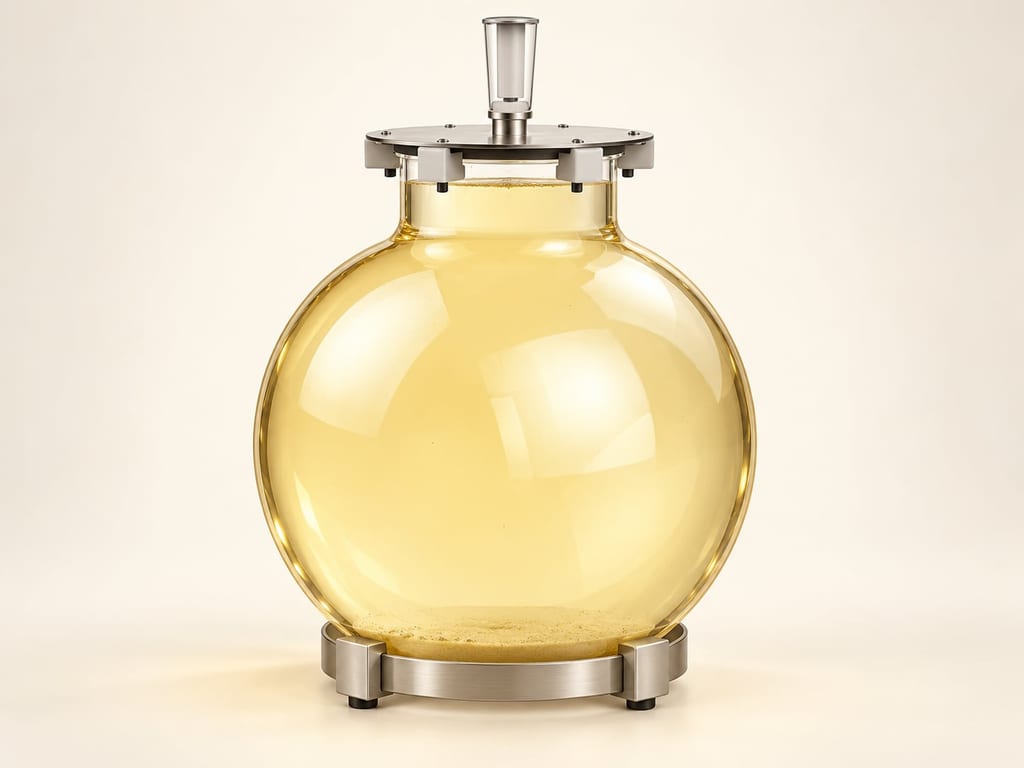
A large, transparent, spherical borosilicate-glass vat designed for modern wine fermentation and maturation. The 220-litre Wineglobe model has a wide neck, fitted lid and support; its use and fittings vary by model.

Soft, spreadable Calabrian pork sausage made with a great deal of red chilli and fatty pork, stuffed into natural casings, sometimes smoked and matured while staying soft.

A way to add independent temperature logging to an existing food dehydrator without changing its built-in controls or protections. It is a monitoring method, not a rewiring plan.

Pleurotus cystidiosus is the abalone mushroom, a cultivated oyster-type fungus with dark brown caps that grows more slowly and is more demanding than other Pleurotus species.

A dark, balanced vinegar from Emilia-Romagna made by combining cooked or concentrated grape must with wine vinegar, then acetifying and refining it in wood under a protected specification.

A living dairy inoculum that starts controlled cream fermentation, developing acidity and aroma before sour cream or cultured butter is finished.

A small electric incubator holds jars at a selected temperature for yogurt and other documented warm food preparations. Controls, capacity and vessel arrangement vary by model.

Adygean salt is a seasoned table salt associated with Adygea and the wider North Caucasian culinary tradition. Salt is blended with garlic and a variable selection of herbs and spices; the exact mix depends on the named style and maker.

The African Caesar-group mushroom, Amanita masasiensis, is a wild ectomycorrhizal species of central and southern African woodlands, eaten locally. The genus contains deadly poisonous species, so identification needs care.
No community contributions have been published for this entry yet.
Sign in to contribute. Published comments and photos are free to read.
Institut national de la propriété industrielle (INPI)History · Mechanism · Geography
Le Moulin-Légumes, il devenait pressant de l'inventer (1932)INPI records Jean Mantelet's Moulin-Légumes patent filing on 16 February 1932 and its commercial launch at fairs.
The article describes a rotating vegetable masher with a convex base and a sieve. It says two million examples sold between 1933 and 1935; this is attributed to INPI's historical account.
Cited in: A documented French design and its U.S. counterpart
United States Patent Office; digitized at Google PatentsForm · Mechanism · Design variants · Safety
US1921936A — MasherMantelet's patent describes a crank-driven spindle, helical pressing surface, sieve and a vessel that can sit on a kitchen pot.
The patent discusses flat and convex sieve forms and corresponding pressing surfaces; it describes design embodiments, not a standard for all modern mills.
Cited in: How the mill separates a soft food; What changes from one mill to another; A preparation tool, not a fermenter
Ministère de la Culture, Plateforme ouverte du patrimoine; Collections des musées de FranceArtifact · Materials · Dimensions · Geography · Image reference
Moulin à légumes — Joconde notice M0170004109The catalogue identifies a Moulin-Légumes made in France during 1932–1956 and records metal and wood.
It gives dimensions of 33 cm long, 15.5 cm high and 19 cm wide for this single specimen.
The linked photograph is credited to Ecomusée Creusot Montceau and Morgane Moello; its separate image reuse terms are not stated.
Cited in: A documented French design and its U.S. counterpart; What changes from one mill to another
Hennepin History MuseumHistory · Geography
Innovation in the Kitchen: Foley Manufacturing CompanyHennepin History Museum records that Foley Manufacturing Company introduced its food mill in 1934 and preserves an example in its collection. This is a U.S. example distinct from Mantelet's French product history.
Cited in: A documented French design and its U.S. counterpart
WebstaurantStoreModern operation · Handling
Food Mill Quick Start Guide, models 181FM5 and 181FM8The guide describes assembling a removable sieve and crank, milling cooked produce over a collecting container, and disassembling and hand-washing the named models.
Its specified capacities, sieve sizes and cleaning steps apply to those models only.
Cited in: What changes from one mill to another; A preparation tool, not a fermenter