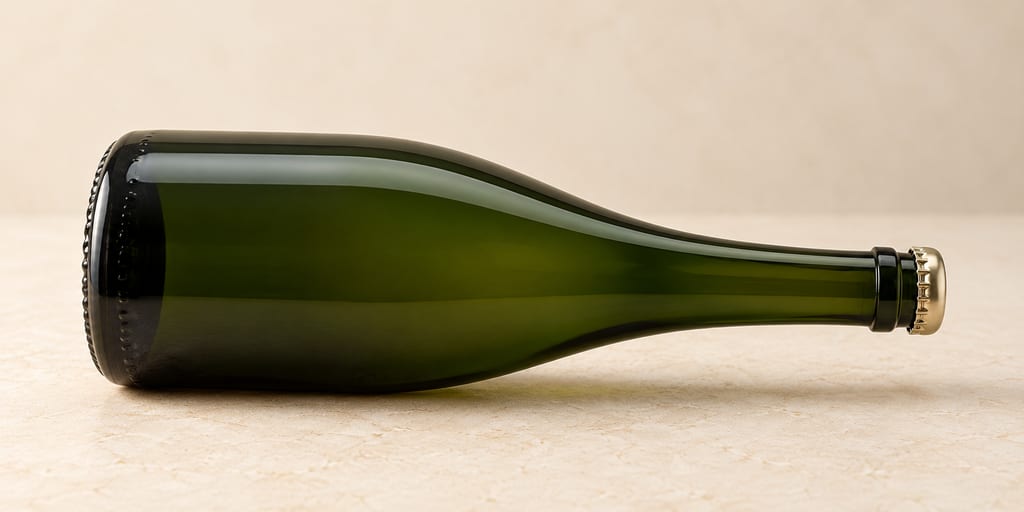
Bottle for secondary fermentation
Champagne’s traditional-method bottle holds wine through its second fermentation and subsequent maturation on lees. At tirage it has a crown cap and internal insert; bottle formats and specifications vary.
 FermenteaWhere food goes to change
Equipment · Retained-heat cookers
Hay box · Fireless cooker · Retained-heat cooker
A haybox, also called a fireless or retained-heat cooker, is an insulated enclosure that lets a lidded pot finish cooking in heat already stored in the food after it leaves a stove. It generates no heat and is not a preservation method.
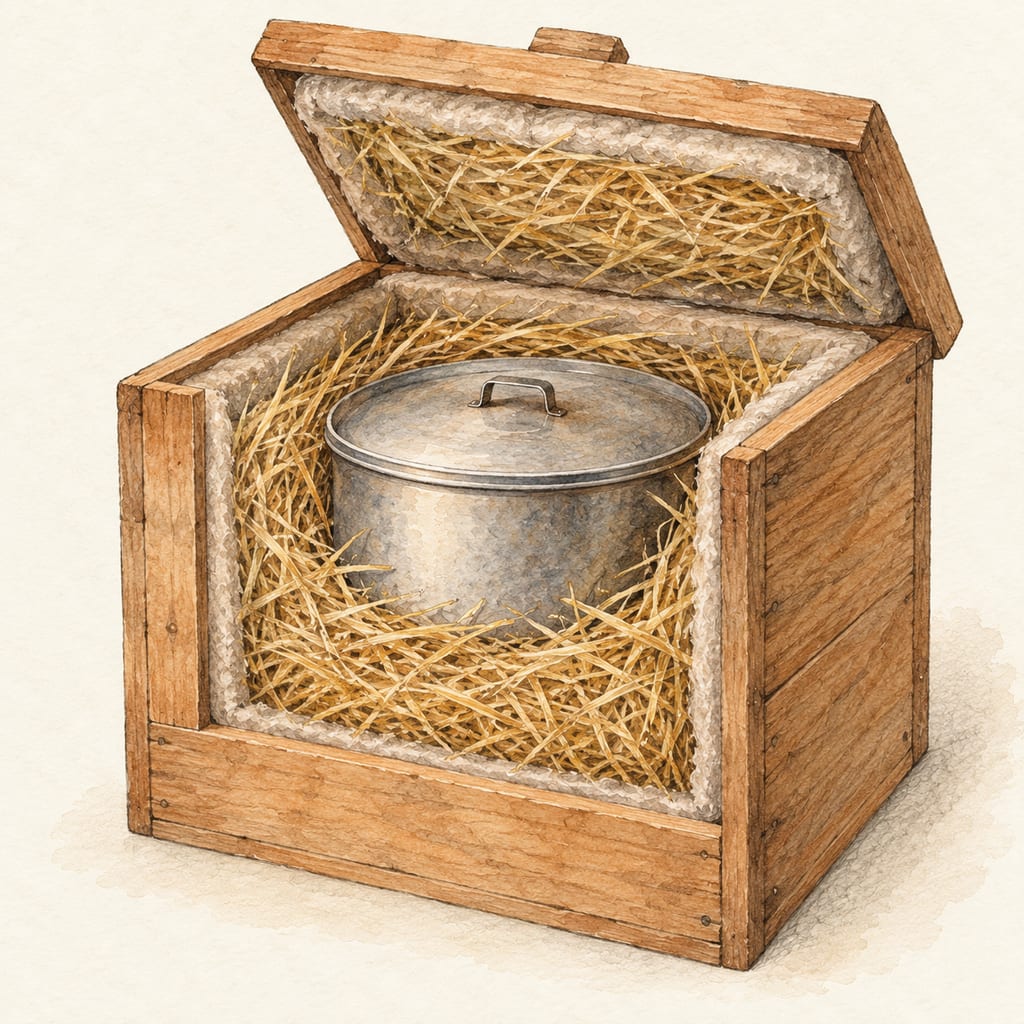
A haybox is a portable insulated enclosure for a pot that has already been heated. The name “fireless cooker” can mislead: the cooker does not create heat, and food cannot go into it cold and emerge cooked. Its task begins after a stove or fire has brought a covered pot and its contents up to heat.
An account of the 1867 Paris Exposition, published in 1868, describes a wooden box lined with felt and padding, with a fitted tin cooking vessel. After the pot was heated, it was transferred into the insulated nest and covered. This is an early recorded example, not proof that the cooker was invented in Paris. A later report attributed it to Norway, but its author explicitly presented that as a belief rather than a settled origin.
The useful shape is defined by the pot and the insulation around it: a close-fitting nest reduces the gaps through which warm air can move, while packing above the pot slows heat loss from the top. Early designs described in historical sources used wooden cases and felt or wool padding; hay gave the name “haybox,” and feathers, cork and paper also appear in accounts of changing designs. These descriptions are alternatives from particular sources, not a universal construction recipe.
The equipment changed with its setting. Early twentieth-century household instructions describe homemade cookers as well as commercial products, and an illustrated 1910 Acme model shows one manufactured form. A 2014 photograph from Kenya records a community group displaying locally made insulated baskets. The basket is a contemporary adaptation; it should not be mistaken for the reported wooden-and-felt exhibition model.
A pot carries thermal energy from the stove into the insulated enclosure. Heat continues to move from the hotter food and vessel toward cooler surroundings, but the packed enclosure slows that transfer. The food therefore cooks while its temperature declines; the insulation does not hold it at one fixed temperature. Tight lids, quick transfer and insulation both below and above the pot all help reduce heat loss in the documented arrangements.
Some early instructions add a heated soapstone or brick when a design needs more stored energy or longer cooking. That auxiliary hot mass is not part of every haybox. The temperature and time depend on the food, the amount in the pot, the pot itself, the packing and the enclosure. A 1917 USDA experiment reported one six-quart kettle packed in newspaper cooling from 212°F to 172°F after four hours and 155°F after eight. Those measurements describe that test only; they do not supply a universal timetable or a safety limit.
The historical U.S. sources describe household meals, cereals, legumes, dried fruit, soups and stews, along with military food carried for later service. Slow cooking suited foods that benefited from longer gentle heating, and the method could reduce time spent tending a stove. Because little water evaporates inside a closed cooker, the 1917 handbook notes that recipes may need less liquid than their ordinary stovetop versions. That is a source-specific practical observation, not a universal formula for every dish.
A field study published in 2026 reports current use of cloth and basket fireless cookers by households in districts of Tanzania's Arusha Region. Its tests and reported experiences concern those specific designs and communities. Together with the Kenyan training photograph, it shows that retained-heat cooking has contemporary local forms, while leaving each community's design and practice distinct.
The cooker finishes a meal; it does not make that meal shelf-stable. USDA food-safety guidance says cooked food held hot should remain at or above 140°F (60°C), verified with a food thermometer. A haybox's insulation performance varies, so the vessel's warmth or a historical cooking interval cannot show that a modern batch stayed at a safe temperature. Do not treat it as a canner, sterilizer or room-temperature storage device.
The original material descriptions also do not give a one-size-fits-all cleaning method or service life. For any present-day cooker, follow the maker's instructions for its materials and keep the insulation clean, dry and isolated from flame. A reproduced historical model is useful for understanding heat retention, not a validation of a particular cook time.
The cooker supplies no heat of its own; it only slows the loss of heat already present in a hot pot.
Source →Fireless cooking does not preserve the finished food. A historical cooking demonstration or elapsed time in the box is not a modern food-safety validation.
Source →Country-level attestation only; the report does not establish where the technology originated.
These sources document particular American instructions and uses, not an exclusive national tradition.
The source documents a contemporary basket form and training, not the older U.S. wooden-box construction.
Country-level association reflects the study's named districts; it does not describe all Tanzanian households.
Champagne’s traditional-method bottle holds wine through its second fermentation and subsequent maturation on lees. At tirage it has a crown cap and internal insert; bottle formats and specifications vary.
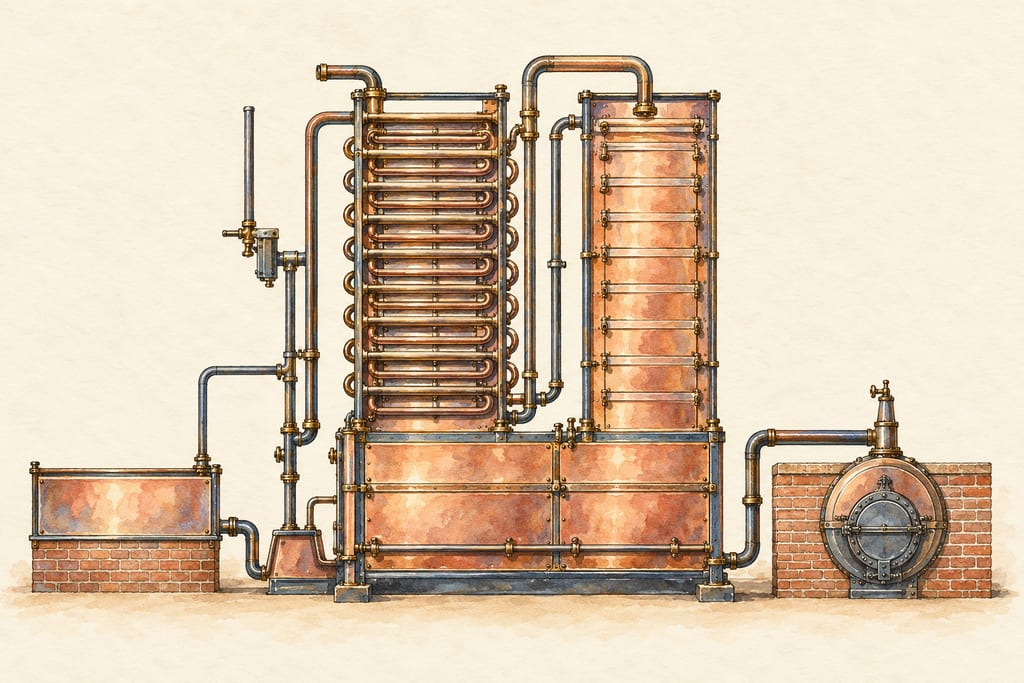
A column still is a distillation apparatus built around one or more vertical columns. Its continuous and rectifying designs appear in several spirits traditions, but materials and product character vary by installation.
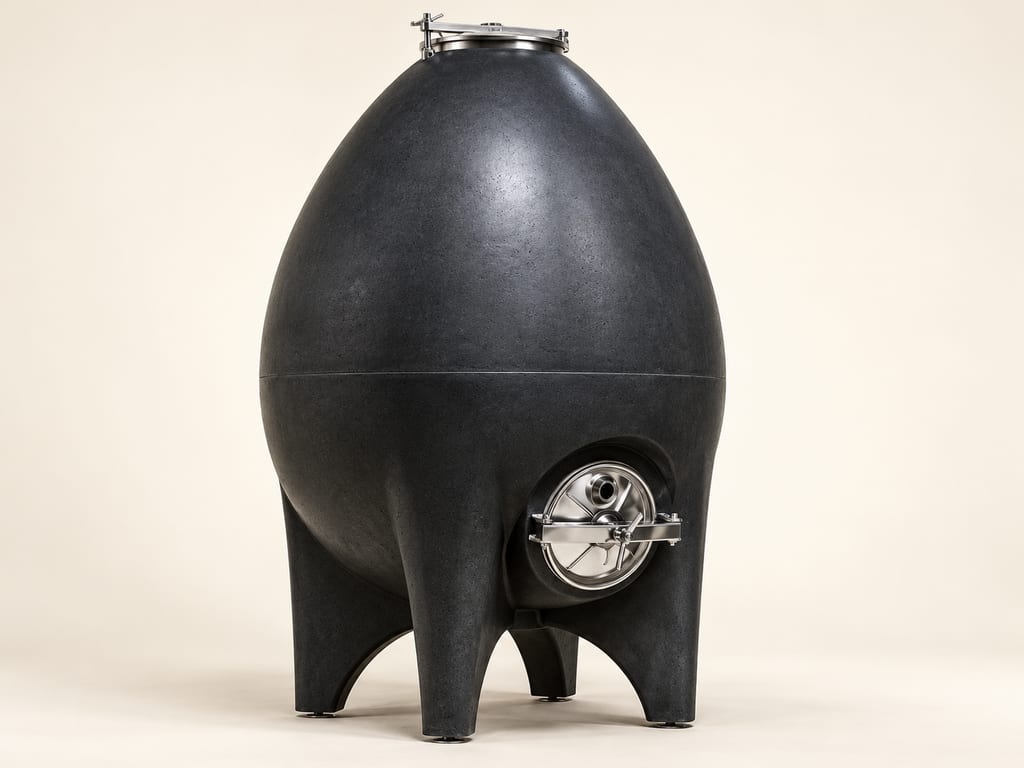
A modern ovoid concrete wine vat with smooth curved walls, made in several sizes and fitted according to model. Used for wine fermentation and maturation; support, access, cooling and interior treatment vary.
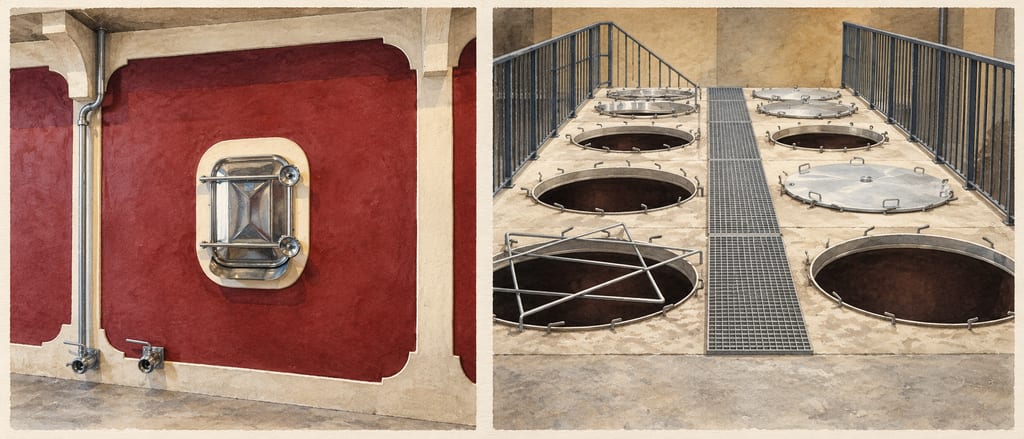
Concrete wine tanks are heavy, fixed vessels in rectangular, cylindrical and tapered forms. Their thermal response and wine contact depend on mix, wall construction and interior finish.
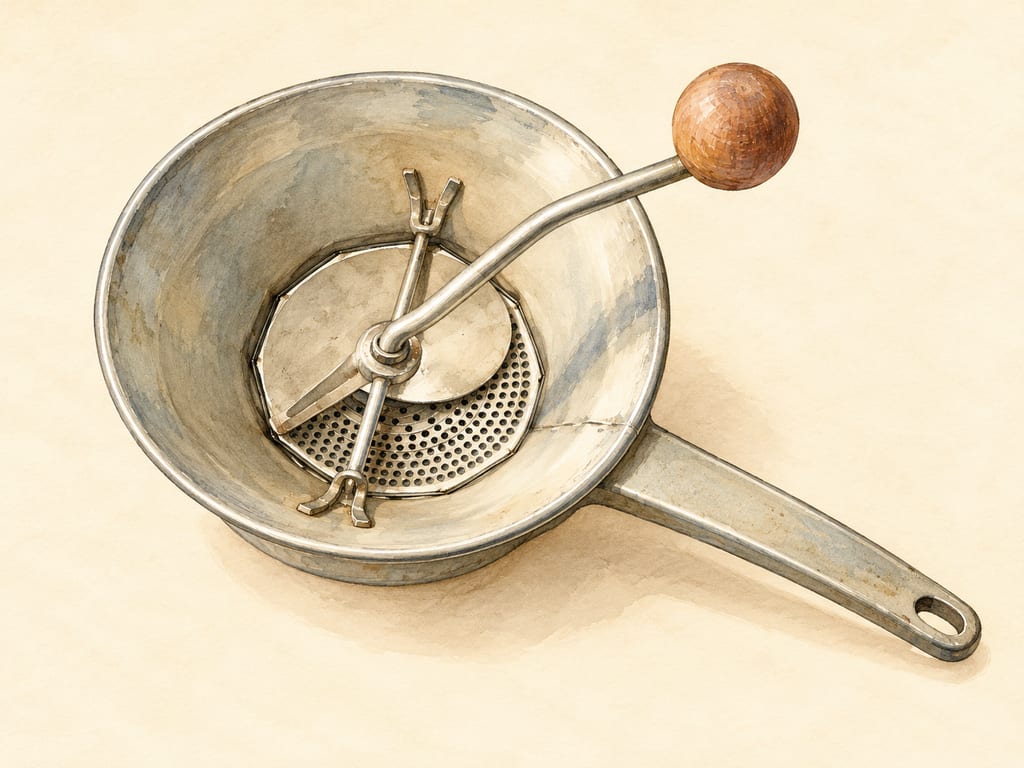
A hand-cranked food mill presses softened food across a perforated disk, producing a purée while keeping larger pieces in the chamber. Its exact shape and disk depend on the model.
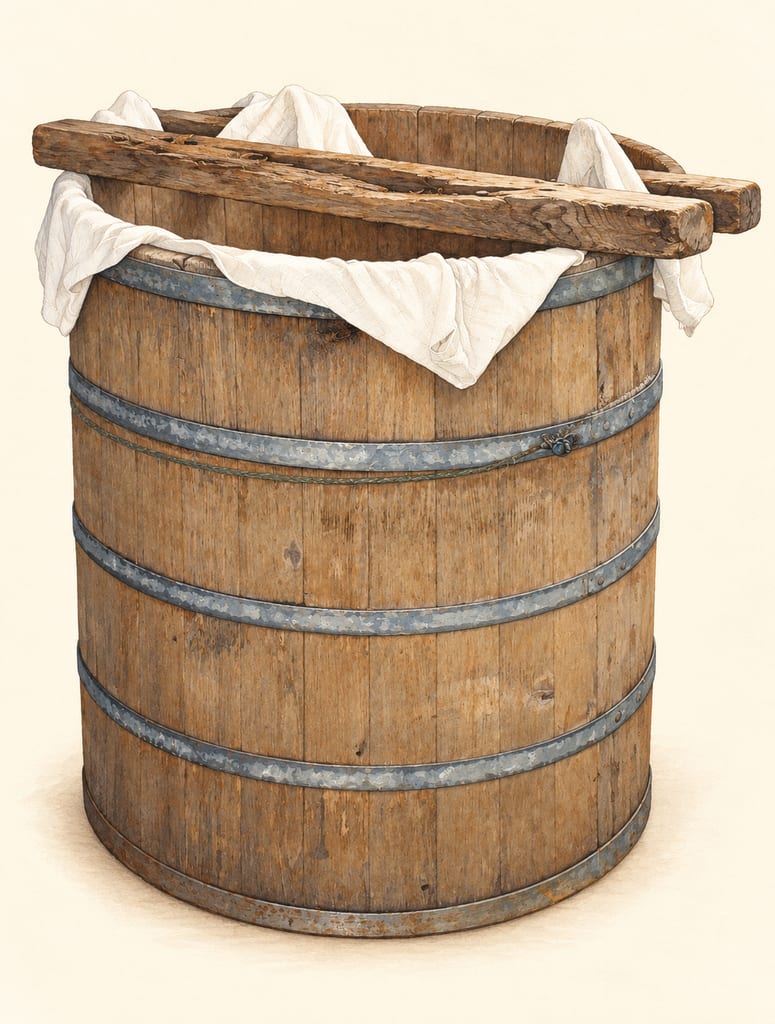
The gerle is a broad wooden vat used to receive and work milk for Salers cheese in its French AOP area. Its coopered form and microbial role are documented, but sources do not establish when this particular vessel first appeared.
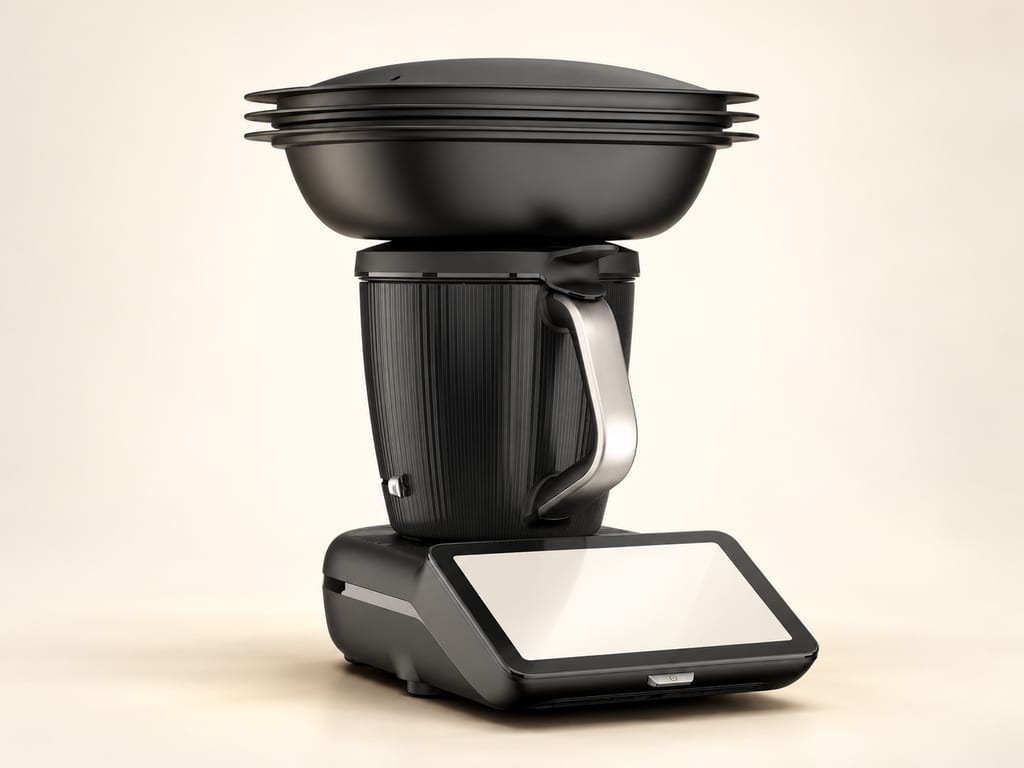
A modern electric countertop machine that heats, chops and stirs food in one mixing bowl. Cookidoo lists Thermomix models for making powidl and quince membrillo, although the full methods are not public on the pages reviewed.
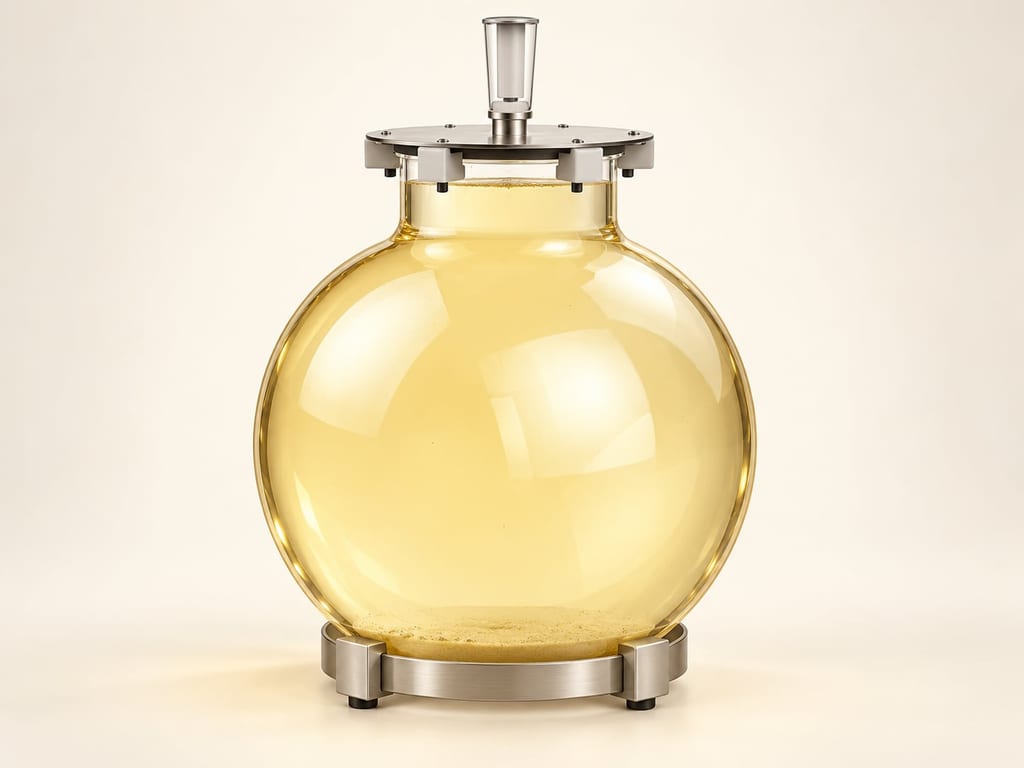
A large, transparent, spherical borosilicate-glass vat designed for modern wine fermentation and maturation. The 220-litre Wineglobe model has a wide neck, fitted lid and support; its use and fittings vary by model.

A Cap-Pelé boucanière is an Acadian herring-smoking building. The documented Willie Niles example is a one-storey wood-frame structure with a ridge smoke vent and interior bays for hanging fish-bearing cannes.

Achcharu is a family of Sri Lankan vinegar pickles made with mixed vegetables or seasonal fruit and a piquant spice dressing. This version is a quick, refrigerated, non-fermented mixed-vegetable pickle.

The acocote is a long, hollowed and dried gourd used to draw aguamiel from a mature maguey. It is a harvesting tool: the sap is transferred to a separate vessel before it ferments into pulque.

Adrak murabba preserves young ginger in sugar syrup, a sweet South Asian preparation recorded in Indian cookery and food-processing sources.

Parkia biglobosa seeds are fermented into regional West African seasonings, including nététou, iru, dawadawa and soumbala. The yellow fruit pulp is a separate food, and names and methods vary by place.

Japanese reddish-brown vinegar from sake lees matured about three years, turned to vinegar by acetic bacteria; the vinegar of Handa and Edomae sushi rice.

A refined common-wheat flour blended for a broad range of baking; its protein and behavior vary with wheat, milling and market.

The almond mushroom, Agaricus subrufescens, was cultivated in eastern North America in the 1800s, lost its market, and returned as a cultivated mushroom from Brazil, where it is grown under several names.
No community contributions have been published for this entry yet.
Sign in to contribute. Published comments and photos are free to read.
U.S. Department of Agriculture, National Agricultural LibraryHistorical overview · Design · Use · Safety
The Fireless CookerThe USDA NAL overview recounts a 1867 Paris Exposition apparatus, later changes in insulation materials, household and military uses, and contemporary fireless-cooker examples.
Its cited historical instructions describe preheating food, transferring the lidded pot into an insulated enclosure, and optional hot stones or bricks in some designs.
The NAL page cautions that its historical overview is not a recommendation for haybox use and quotes USDA hot-food holding guidance.
Cited in: A cooker that is not fireless; Boxes, nests and changing materials; How stored heat finishes the cooking; What cooks used them for; Cooking is not preservation
The Medical Heritage LibraryHistorical attestation · Design
Richmond Medical Journal, March 1868, Volume V, Number 1The 1868 account describes a wooden box about eighteen inches square, felt padding, a fitted tin cooking vessel, transfer after heating, and a tight enclosure, as a report of apparatus shown at the 1867 Paris Exposition.
Cited in: A cooker that is not fireless
U.S. Department of Agriculture, Food Thrift SeriesConstruction · Operation · Measurement
Fireless Cooker: How to Make a Satisfactory Device at Home at Low Cost—Directions for Its UseThe 1917 instructions describe a six-quart kettle cooling from 212°F to 172°F after four hours and 155°F after eight hours in one newspaper-packed cooker experiment; the values are design-specific.
The source says evaporation is limited in the cooker and cooking time depends on the food and heat retained.
Cited in: Boxes, nests and changing materials; How stored heat finishes the cooking; What cooks used them for
U.S. Department of Agriculture, Office of Home Economics, Farmers' Bulletin 771Construction · Operation
Homemade Fireless Cookers and Their UseThe 1919 bulletin describes heating food first, transferring a covered cooking vessel into an insulated receptacle, optional hot soapstone or brick in some designs, and hay-box variants.
Cited in: How stored heat finishes the cooking
ECHOcommunity.orgContemporary use · Geography
Integrating Fireless Cookers (Wonderbag Cookers) Into Clean Cooking Initiatives in East AfricaField research conducted in November 2025 in Monduli, Longido, Meru and Arusha districts records household use of cloth and basket fireless cookers in Tanzania.
Cited in: What cooks used them for
Wikimedia CommonsVisual form · Geography · Image
Display of fireless Cookstoves.jpgA photograph dated 22 October 2014 shows Kenyan community members displaying insulated fireless-cooker baskets made during a training; the file is CC BY-SA 4.0.
Cited in: Boxes, nests and changing materials; What cooks used them for
USDA Food Safety and Inspection ServiceFood safety
At what temperature should I hold hot foods?USDA FSIS states cooked or reheated food held hot should be kept at or above 140°F (60°C).
Cited in: Cooking is not preservation
Journal of the Association of Military Surgeons of the United StatesMilitary use · Historical attestation
Cooking without fireThe 1906 article describes the fireless cooker in military field use and summarizes an army cooking trial.