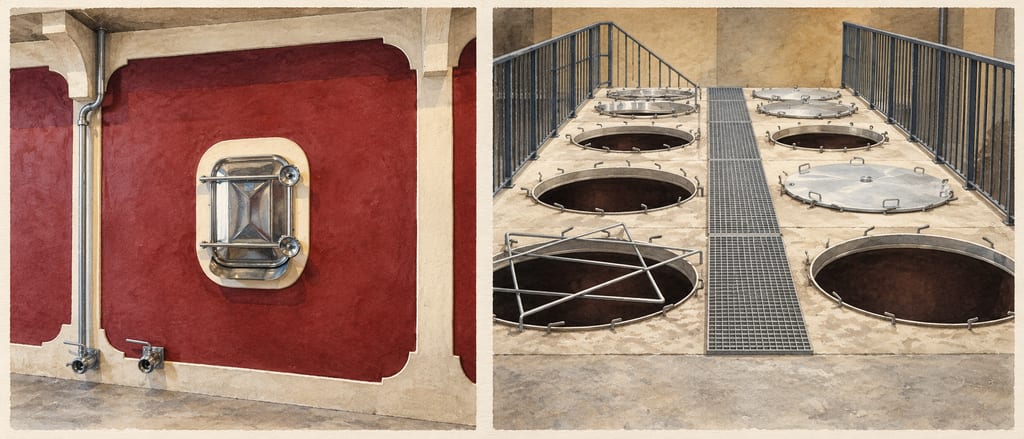
Concrete wine tank
Concrete wine tanks are heavy, fixed vessels in rectangular, cylindrical and tapered forms. Their thermal response and wine contact depend on mix, wall construction and interior finish.
 FermenteaWhere food goes to change
Equipment · Tanks and vats
Ovoid concrete wine vat · Concrete wine egg
A modern ovoid concrete wine vat with smooth curved walls, made in several sizes and fitted according to model. Used for wine fermentation and maturation; support, access, cooling and interior treatment vary.
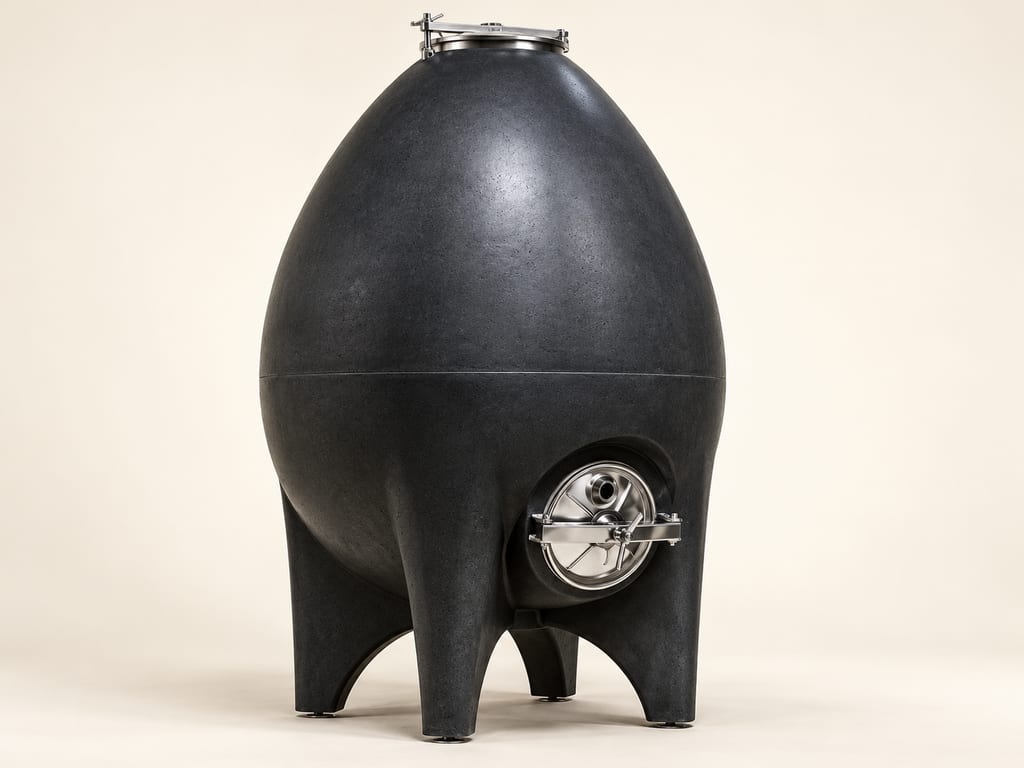
The concrete egg is a modern wine vat, not an ancient clay amphora. A 2019 account dates Michel Chapoutier's design work with French vat maker Nomblot to 2001. Older egg-shaped vessels existed in other materials, but their histories do not make this concrete design ancient. Today, specialist makers in France and the United States offer distinct concrete models, while wineries use them alongside steel and oak.
A concrete egg is a freestanding, vertically elongated ovoid tank with smooth curved walls and no sharp interior corners. The photographed King Estate example has a small top hatch, a low circular stainless clean-out fitting and an integrated footed support. That model was reported at 476 US gallons, 8 feet tall and 2.36 tons; these figures belong to that Sonoma Cast Stone unit, not to every concrete egg. Current manufacturers list models from compact 5 hL eggs to 38 hL versions, with custom fittings, supports, finishes and optional cooling varying by product.
Concrete's mass changes how quickly the vessel responds to cellar temperature, and the ovoid profile has no corners where liquid can settle in the way it might in a square tank. Winemakers and makers describe heat-driven circulation and lees suspension as advantages. These should be treated as process-dependent claims: the actual temperature gradient, fill level, wine and vessel construction matter, so the outline alone cannot promise self-stirring or a particular texture. The tank may be used for fermentation, maturation or both, depending on the model and the winemaker's plan.
Concrete recipes and interior treatments vary. Œuf de Beaune describes its own mix and publishes model-specific mass, volume and dimension details; other manufacturers may use different concrete, surface treatments and fittings. In a 2021 replicated Sauvignon Blanc comparison, 450 L oval concrete vessels without an inert lining showed the highest pH and lowest titratable acidity among the tested vessel groups. The study's authors considered the differences small relative to normal white-wine variability, and the result does not represent every concrete egg. Check wine-contact specifications and obtain the selected maker's exact installation, start-up and cleaning protocol. Several listed models weigh multiple tonnes when filled, so use their actual loaded weight in planning handling and placement.
A 2019 Decanter account dates Michel Chapoutier's design work with French vat maker Nomblot to 2001. Current maker catalogues and winery reports document continued production and use; this does not date ancient egg-shaped vessels made from other materials.
Œuf de Beaune lists individual models weighing 1.5–3.8 tonnes empty and 2.3–6.8 tonnes loaded; these figures show that exact-model lifting and support planning matter.
Hazard sourceConfirm the exact model's empty and filled mass and use the manufacturer's installation guidance when planning handling and cellar placement.
Control sourceA replicated 2021 Sauvignon Blanc trial used 450 L oval concrete vessels and found the wines from that uncoated concrete condition had the highest pH and lowest titratable acidity among the tested vessel conditions. The authors describe the measured differences as small relative to overall white-wine variability; this result does not establish the behavior of every egg or of lined models.
Source →Winery explanations of circulation and lees suspension describe observed or expected effects, not a universal performance guarantee.
Source →Œuf de Beaune says it produces its concrete vats in Burgundy; this is one maker's manufacturing location, not a universal origin.
King Estate identifies its 2017 concrete egg as manufactured in the United States by Sonoma Cast Stone.
King Estate documents the installed egg at its Oregon winery; no more precise location is needed for this use claim.
Concrete wine tanks are heavy, fixed vessels in rectangular, cylindrical and tapered forms. Their thermal response and wine contact depend on mix, wall construction and interior finish.
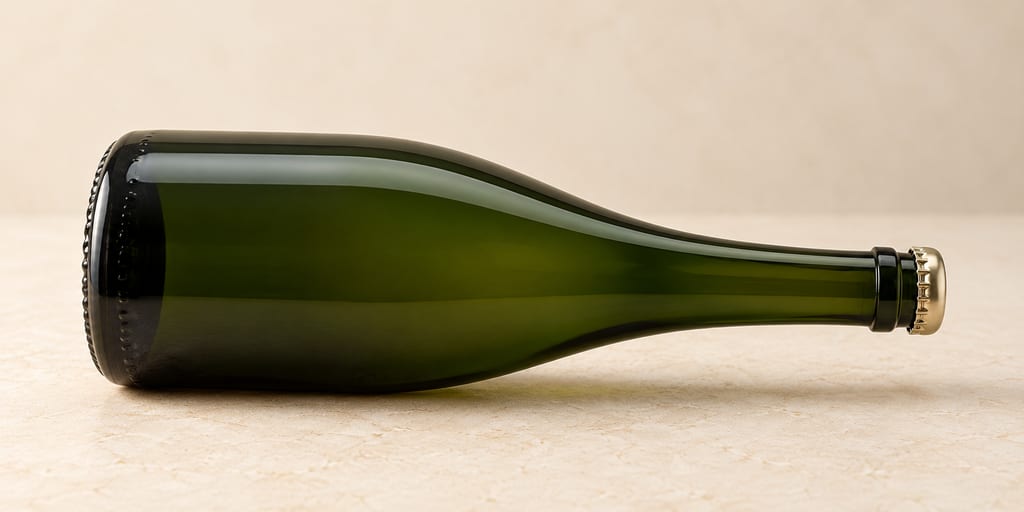
Champagne’s traditional-method bottle holds wine through its second fermentation and subsequent maturation on lees. At tirage it has a crown cap and internal insert; bottle formats and specifications vary.
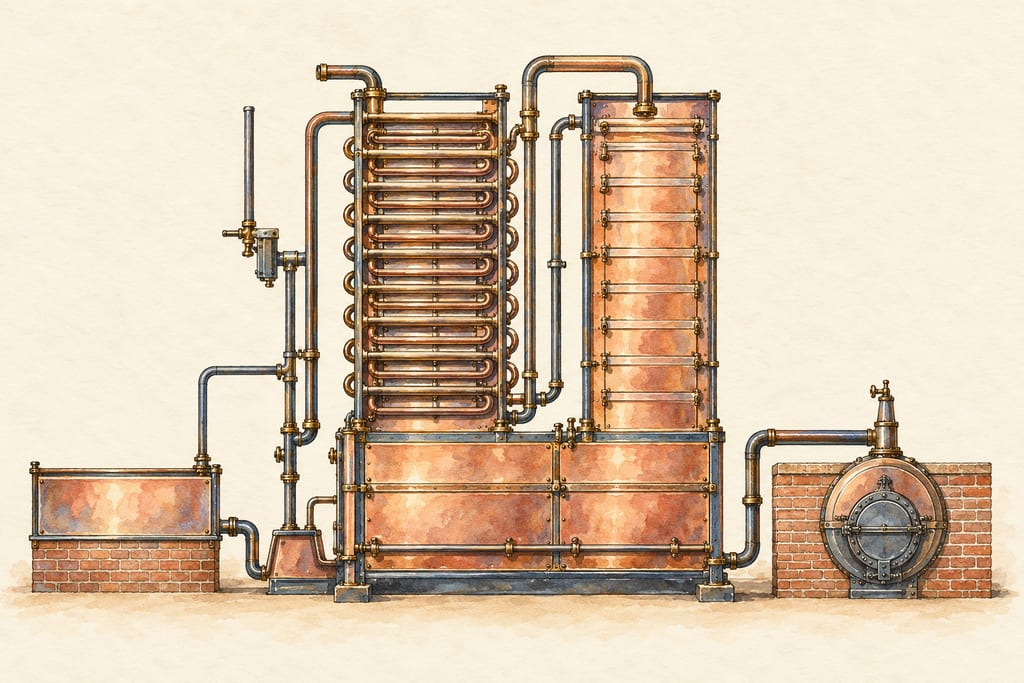
A column still is a distillation apparatus built around one or more vertical columns. Its continuous and rectifying designs appear in several spirits traditions, but materials and product character vary by installation.
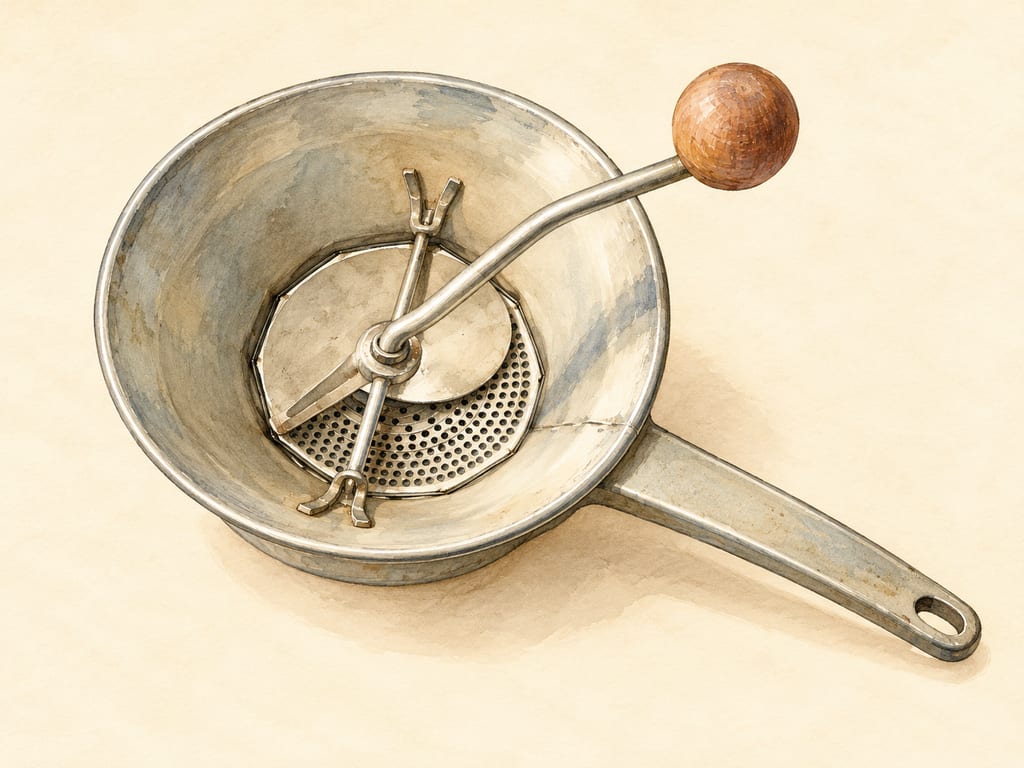
A hand-cranked food mill presses softened food across a perforated disk, producing a purée while keeping larger pieces in the chamber. Its exact shape and disk depend on the model.
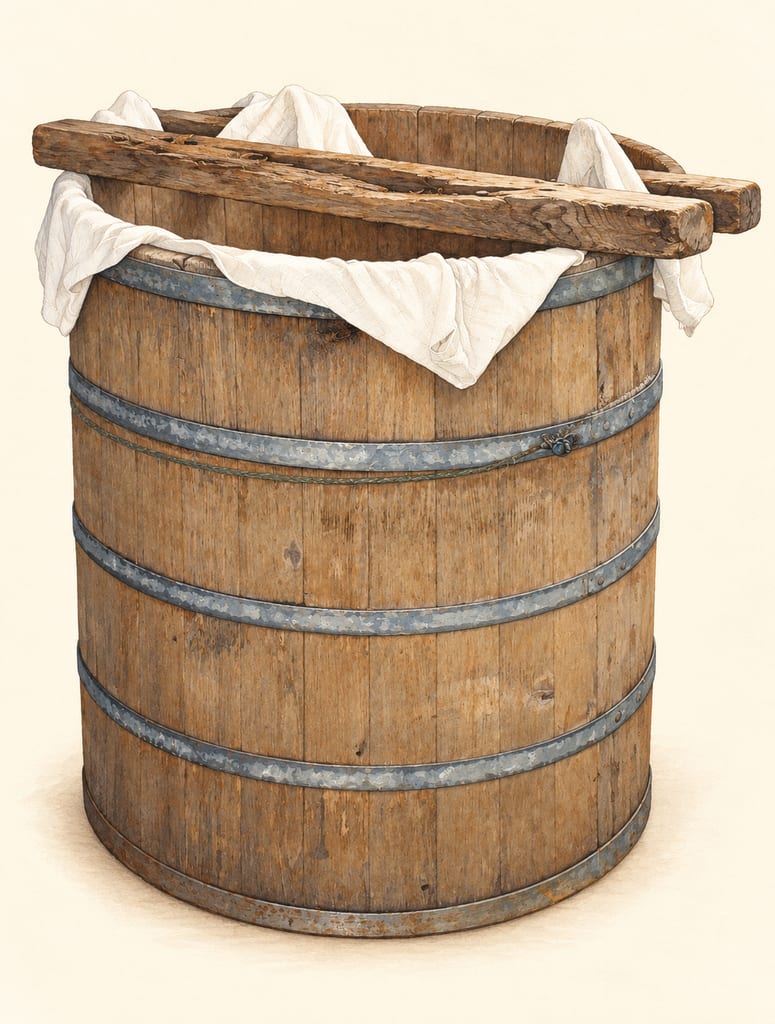
The gerle is a broad wooden vat used to receive and work milk for Salers cheese in its French AOP area. Its coopered form and microbial role are documented, but sources do not establish when this particular vessel first appeared.
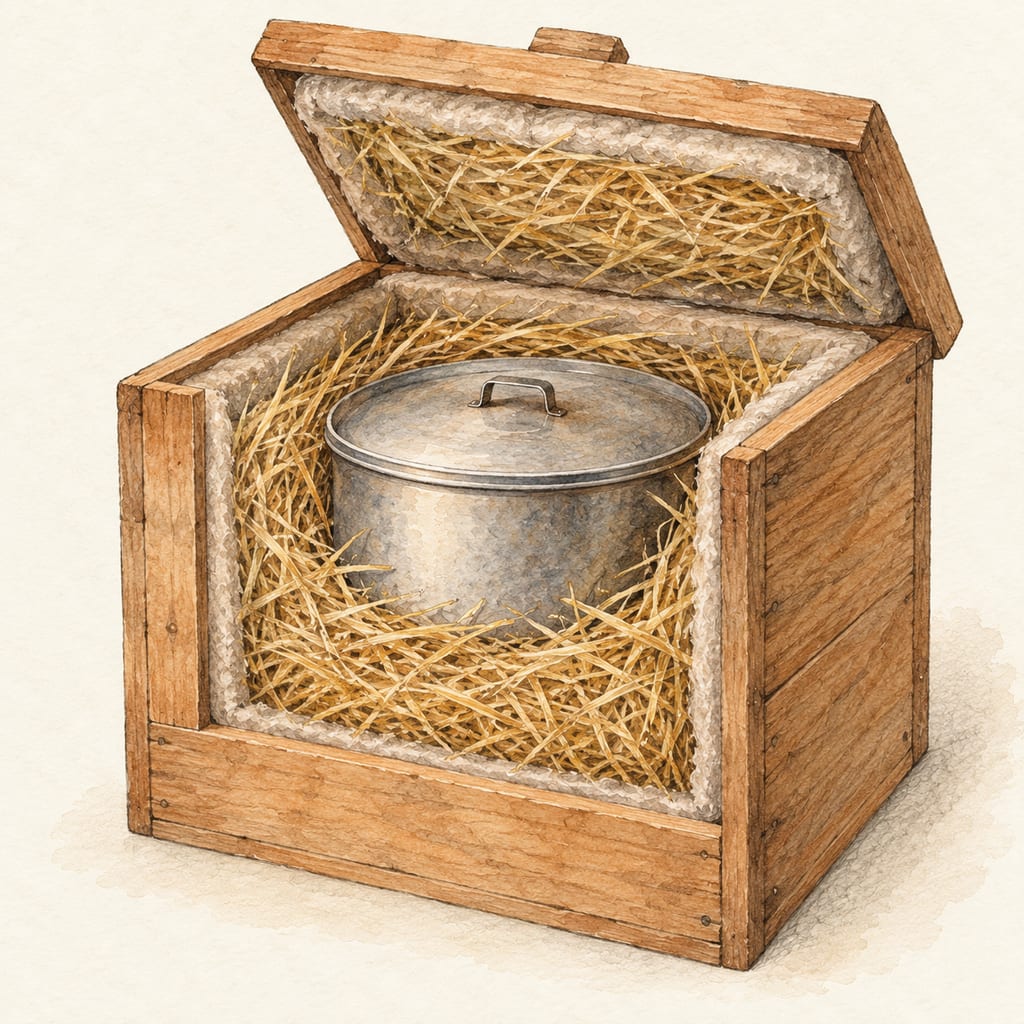
A haybox, also called a fireless or retained-heat cooker, is an insulated enclosure that lets a lidded pot finish cooking in heat already stored in the food after it leaves a stove. It generates no heat and is not a preservation method.
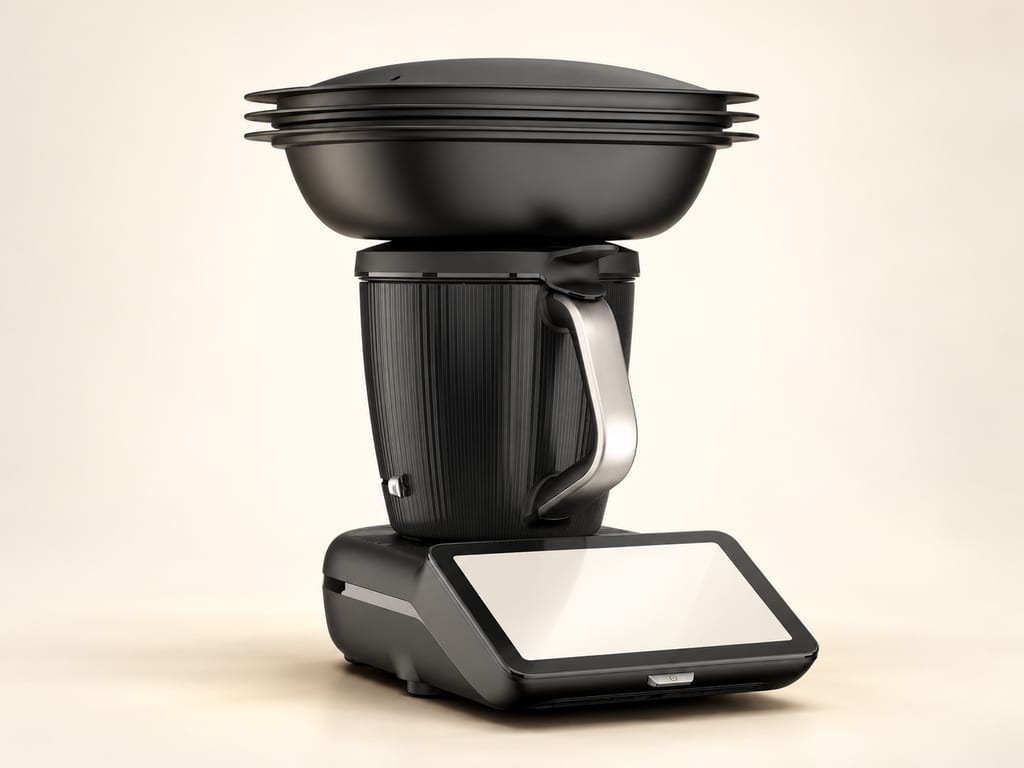
A modern electric countertop machine that heats, chops and stirs food in one mixing bowl. Cookidoo lists Thermomix models for making powidl and quince membrillo, although the full methods are not public on the pages reviewed.
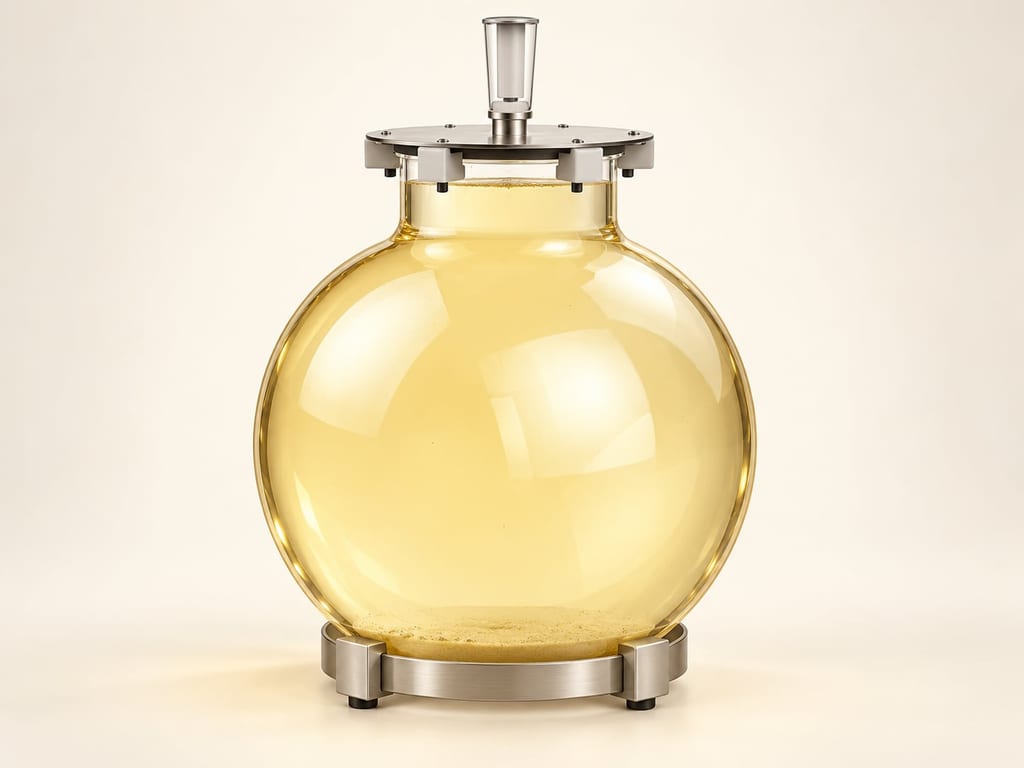
A large, transparent, spherical borosilicate-glass vat designed for modern wine fermentation and maturation. The 220-litre Wineglobe model has a wide neck, fitted lid and support; its use and fittings vary by model.
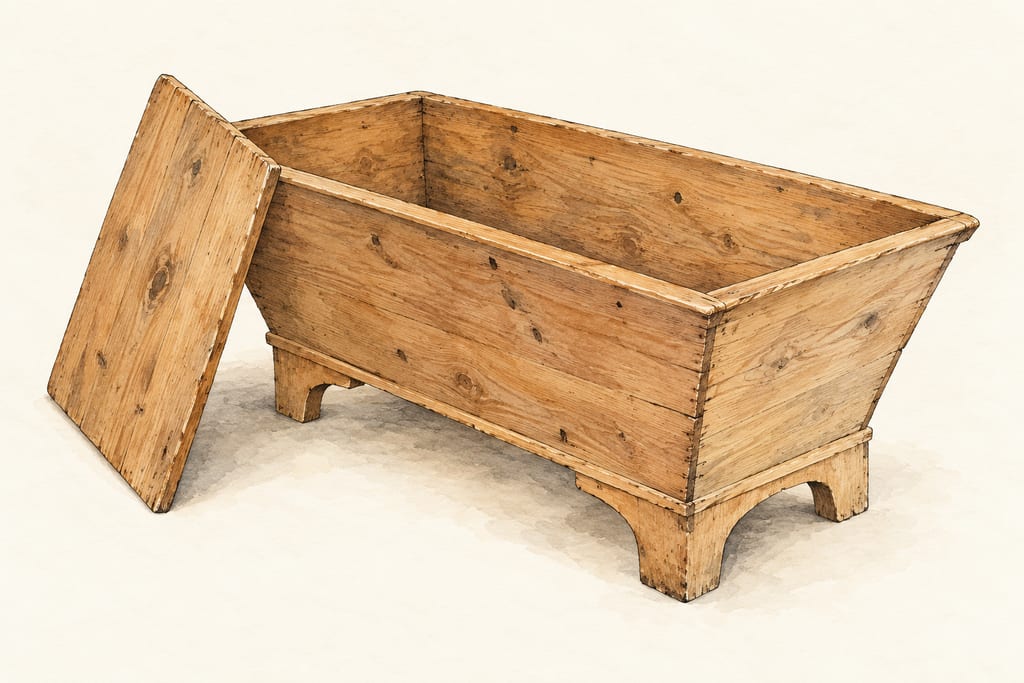
A French maie is a legged wooden chest for hand-kneading bread dough and, in some Auvergnat forms, storing the baked loaves. Its shape and materials vary by region.

Soft, spreadable Calabrian pork sausage made with a great deal of red chilli and fatty pork, stuffed into natural casings, sometimes smoked and matured while staying soft.

A way to add independent temperature logging to an existing food dehydrator without changing its built-in controls or protections. It is a monitoring method, not a rewiring plan.

Pleurotus cystidiosus is the abalone mushroom, a cultivated oyster-type fungus with dark brown caps that grows more slowly and is more demanding than other Pleurotus species.

A dark, balanced vinegar from Emilia-Romagna made by combining cooked or concentrated grape must with wine vinegar, then acetifying and refining it in wood under a protected specification.

A living dairy inoculum that starts controlled cream fermentation, developing acidity and aroma before sour cream or cultured butter is finished.

A small electric incubator holds jars at a selected temperature for yogurt and other documented warm food preparations. Controls, capacity and vessel arrangement vary by model.

Adygean salt is a seasoned table salt associated with Adygea and the wider North Caucasian culinary tradition. Salt is blended with garlic and a variable selection of herbs and spices; the exact mix depends on the named style and maker.

The African Caesar-group mushroom, Amanita masasiensis, is a wild ectomycorrhizal species of central and southern African woodlands, eaten locally. The genus contains deadly poisonous species, so identification needs care.
No community contributions have been published for this entry yet.
Sign in to contribute. Published comments and photos are free to read.
DecanterHistory · Form · Comparison
Concrete eggs in the winery – ask DecanterReports that Michel Chapoutier designed a concrete egg with French vat maker Nomblot in 2001, distinguishing the modern concrete design from ancient egg-shaped vessels made in other materials.
Describes 6 hL and 16 hL models in the reported early design and presents circulation and thermal stability as winery explanations rather than universal guarantees.
Cited in: History and scope; Wine contact and circulation
King Estate WineryDocumented use · Model specification · Reference photograph
Concrete Egg Wine Tank ArrivesReports a concrete egg by Sonoma Cast Stone installed at King Estate, Oregon, in 2017 for white wine; that model was reported as 476 US gallons, 8 ft high, with 7 in walls, weighing 2.36 tons.
The winery describes concrete porosity and natural convection as its observations about the vessel; those claims are scoped to its model and use.
Cited in: History and scope; Form and model variation
Œuf de BeauneManufacturer · Product range · Manufacturing geography
Œuf de Beaune – Concrete egg wine vatsManufacturer based in Burgundy describes concrete vats for vinification and ageing of white, red and rosé wines, production in Burgundy and four models with nominal capacities from 6.5 to 30 hL.
The manufacturer advertises ovoid shape and thermal inertia as its own design claims.
Cited in: History and scope
Œuf de BeauneProduct specification · Care and installation context
Our modelsMaker describes its own mix as limestone, clay, sand and gravel with spring water, and lists custom fittings including thermometer, drain, integrated coil and temperature-control connections.
The maker lists four specific model volumes, dimensions and empty/loaded weights and advertises guided installation and a start-up/cleaning protocol; these specifications apply to its own models.
Cited in: Form and model variation; Material, handling and care
Œuf de BeauneManufacturer design explanation
The conceptManufacturer states that its ovoid vats have no angles and that temperature changes in a cellar can resuspend lees; its language describes the maker's claimed mechanism rather than a universal result.
Cited in: Wine contact and circulation
Sonoma by SASManufacturer · Product specification · Comparison
EGG – 18 hL concrete wine tankManufacturer currently lists an 18 hL EGG and 5 hL MINI EGG, a 38 hL SUPER EGG, and advertises optional embedded cooling and adjustable supports; these show contemporary model variation, not universal fittings.
Manufacturer describes the ovoid form as encouraging circulation; that claim is attributed to the product maker.
Cited in: Form and model variation; Wine contact and circulation
Molecules (MDPI)Experimental comparison · Limits
Chemical and Physical Implications of the Use of Alternative Vessels to Oak Barrels during the Production of White WinesA replicated trial with 450 L uncoated oval concrete vessels, oval polyethylene tanks, clay jars and cylindrical stainless tanks fermenting the same Sauvignon Blanc juice found the concrete-condition wine had the highest pH and lowest titratable acidity among the tested groups.
The paper reports differences small relative to white-wine variability and discusses mineral release from uncoated concrete; results are specific to that wine, vessel set and process.
Cited in: Material, handling and care