Milk, curd and the world's dairy stores
Follow milk into cheese, cultured drinks, butter, dried curds and sweets: a journey through the animals, seasons and household decisions behind the world's dairy foods.
 FermenteaWhere food goes to change
Equipment · Tanks and vats
gerle
The gerle is a broad wooden vat used to receive and work milk for Salers cheese in its French AOP area. Its coopered form and microbial role are documented, but sources do not establish when this particular vessel first appeared.
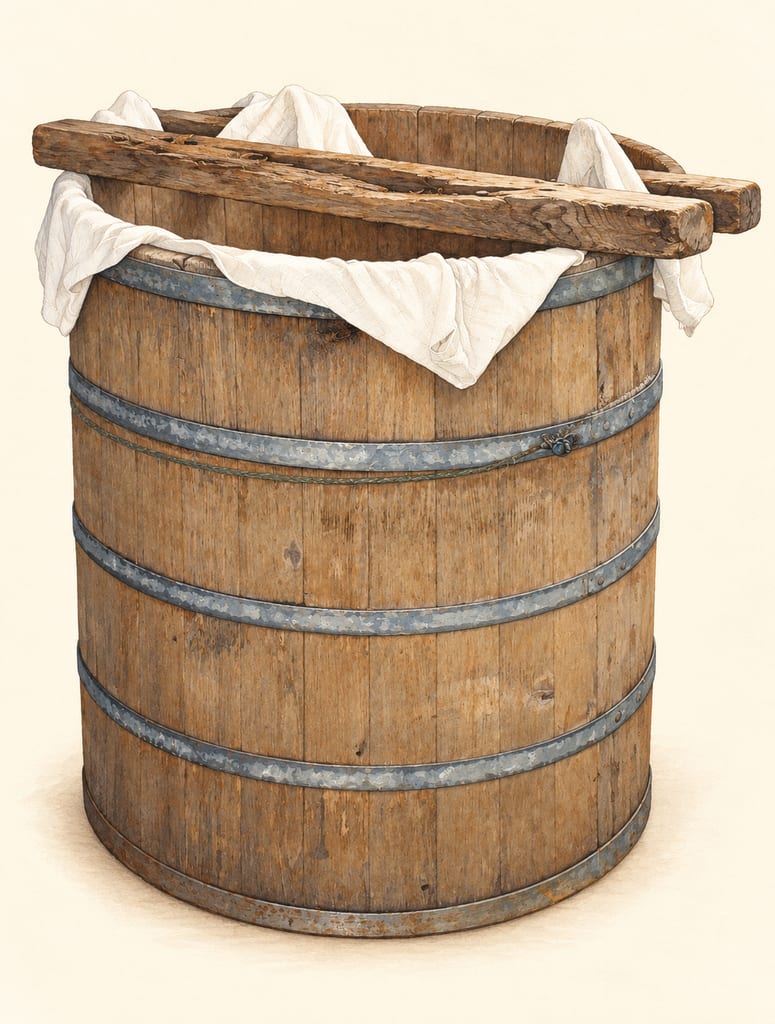
Gerle is the name used for the wooden milk-receiving vat in Salers cheesemaking. The published AOP specification describes it as a wooden vessel that may be cylindrical or truncated-conical, with variable capacity. The photograph of a gerle at the buron de la Reiche in Cantal shows one broad, nearly cylindrical example: upright staves, a wide mouth and several encircling hoops. It does not establish a standard height, diameter, hoop count or wood species for every vat.
The AOP Salers organization identifies chestnut and acacia as woods used for gerles. A report from April 2026 says a proposed replacement specification would narrow this to chestnut, but says the proposal was still being considered by INAO, with approval expected later. It is therefore important to distinguish the producer organization's documented chestnut-or-acacia tradition from a draft rule that had not yet taken effect.
The vessel is part of the process from milking: INAO says milk is received directly into the gerle and transformed there. The published specification further describes renneting in the gerle and cutting the curd there before whey is removed and the curd is gathered for further draining and pressing. In that sequence, the gerle is more than a container for storage; it is the first work vessel in a farm-made cheese process.
The form leaves a wide opening for handling milk and curd. The inspected Cantal photograph has cloth draped over the rim and two rough wooden bars laid across the mouth. These are features of that pictured object, not proof that every gerle has the same cover or bars. The available sources give no single standard capacity or dimensions, so the vessel should not be scaled from the photograph.
Repeated contact with milk and the vessel's wooden surface gives the gerle a specific microbiological role. The Salers producer organization describes natural inoculation of milk and says its contribution differs from one workshop to another. Didienne and colleagues studied vats from ten farms at multiple times over two years; their abstract reports four groups with different microbial profiles, linked to differences in milk-inoculation and washing practices.
In the same study, biofilms on experimental 40-litre gerles formed in less than a week and remained stable during the experiment. That result describes the tested vessels and conditions, not a universal timetable for every vat. Nor does the visible appearance of a gerle reveal the composition of its biofilm. The evidence supports describing the wood as a microbial contact surface, not assigning every flavour to a generic 'wood taste' or assuming that two vats behave identically.
The documented practice belongs to the Salers AOP area centred on the Cantal massif and extending into parts of Cantal, Aveyron, Corrèze, Haute-Loire and Puy-de-Dôme. This is a geography of recorded use, not a claim that the gerle was invented there or that similar wooden dairy vats elsewhere are the same equipment.
The research records farms washing with water or whey and using different inoculation approaches; it does not prescribe one care routine for all producers. The inspected sources also do not identify a universal maker, a standard capacity, or a dated first appearance of the gerle. The AOP's broader account of long cheesemaking traditions cannot by itself date this particular wooden vessel.
Current AOP sources describe use of the gerle, and a 2012 study examined farm gerles. No inspected source gives a dated first attestation for the vessel itself; broad antiquity claims about Salers cheese are not dates for the gerle.
The study found distinct microbial profiles among the ten farm gerles it sampled, so the name does not imply a uniform biofilm or identical inoculation outcome.
Source →The INAO identifies the AOP's area across these departments and places milk reception in a traditional wooden gerle; this records use, not invention or origin.
Follow milk into cheese, cultured drinks, butter, dried curds and sweets: a journey through the animals, seasons and household decisions behind the world's dairy foods.
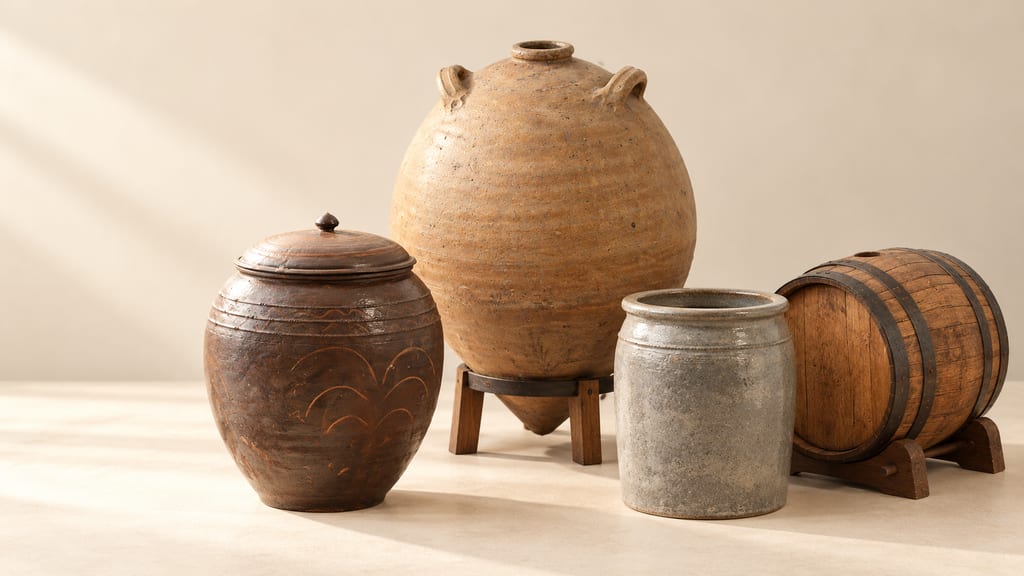
Jars, barrels, skins, leaves, pits and whole rooms decide much of what happens to fermented and cured food. This is how a container works on its contents, and how people in different places chose theirs.
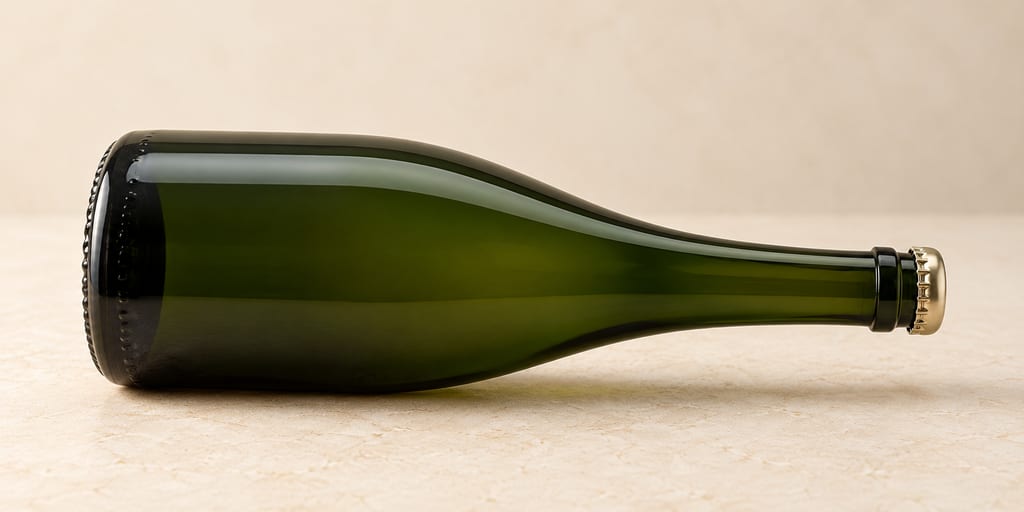
Champagne’s traditional-method bottle holds wine through its second fermentation and subsequent maturation on lees. At tirage it has a crown cap and internal insert; bottle formats and specifications vary.
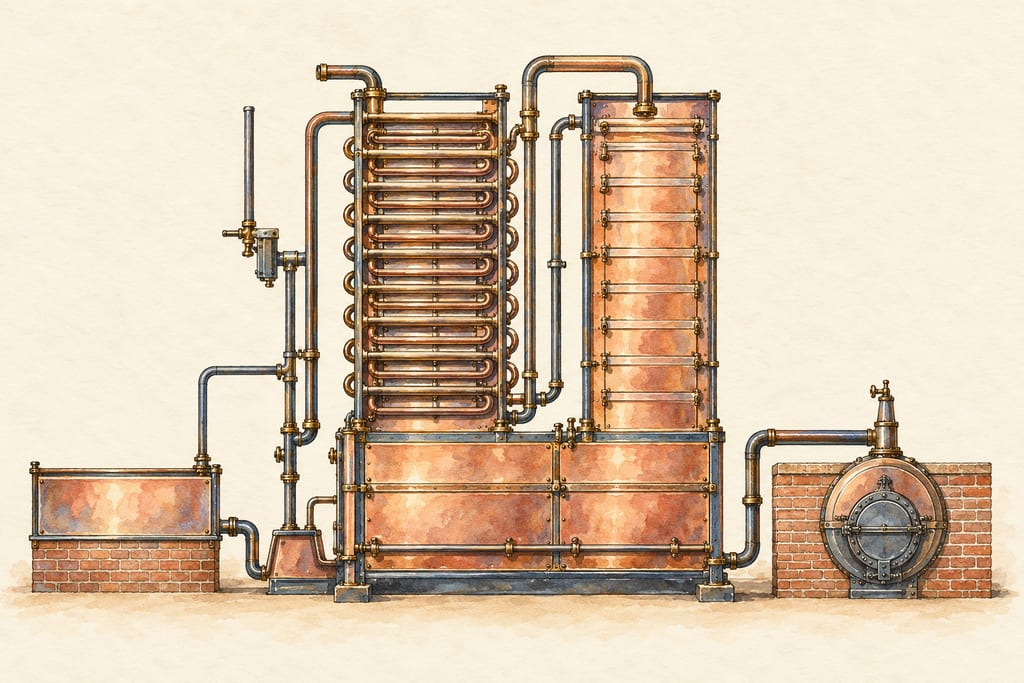
A column still is a distillation apparatus built around one or more vertical columns. Its continuous and rectifying designs appear in several spirits traditions, but materials and product character vary by installation.
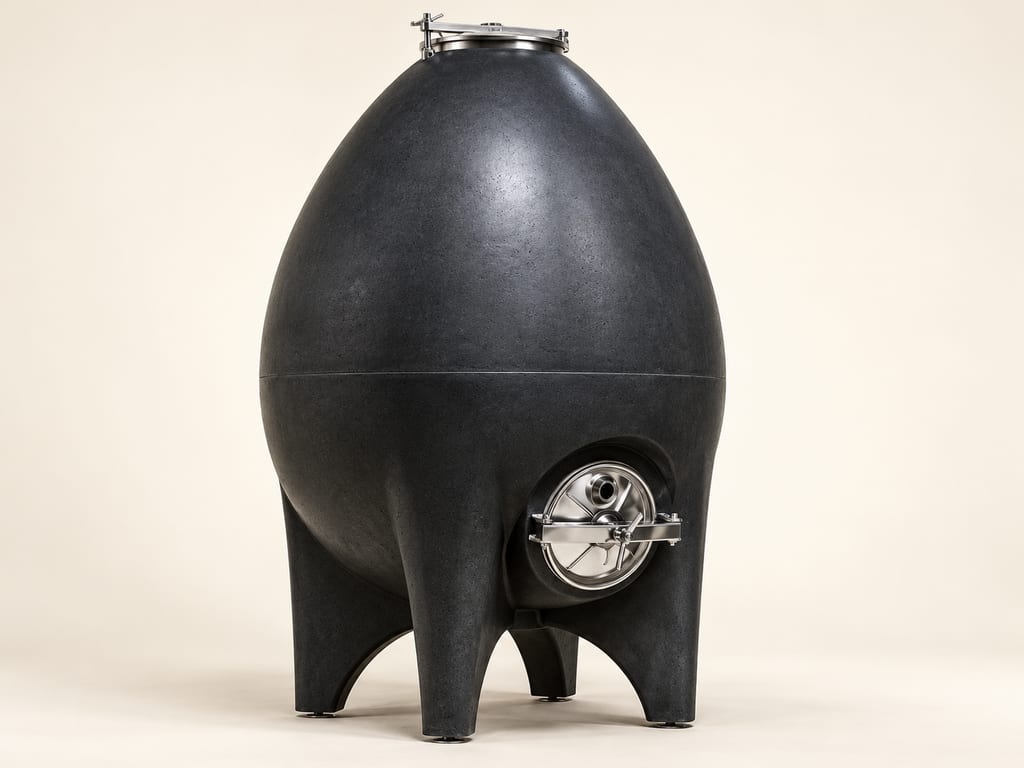
A modern ovoid concrete wine vat with smooth curved walls, made in several sizes and fitted according to model. Used for wine fermentation and maturation; support, access, cooling and interior treatment vary.
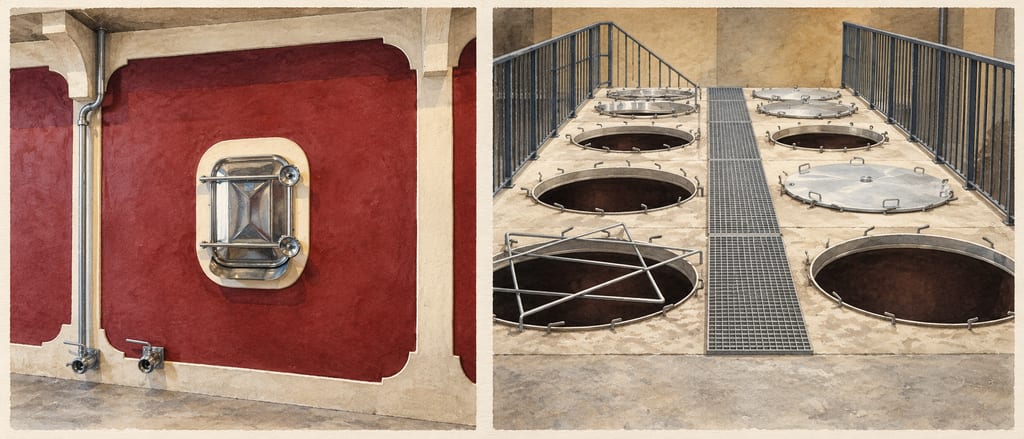
Concrete wine tanks are heavy, fixed vessels in rectangular, cylindrical and tapered forms. Their thermal response and wine contact depend on mix, wall construction and interior finish.
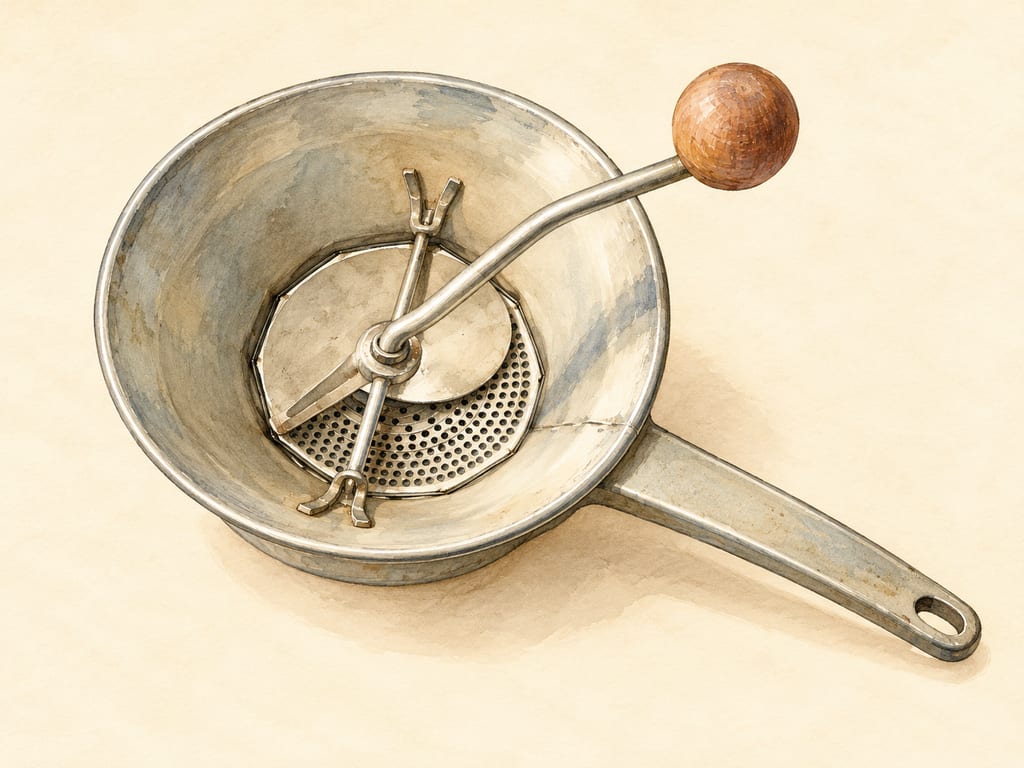
A hand-cranked food mill presses softened food across a perforated disk, producing a purée while keeping larger pieces in the chamber. Its exact shape and disk depend on the model.
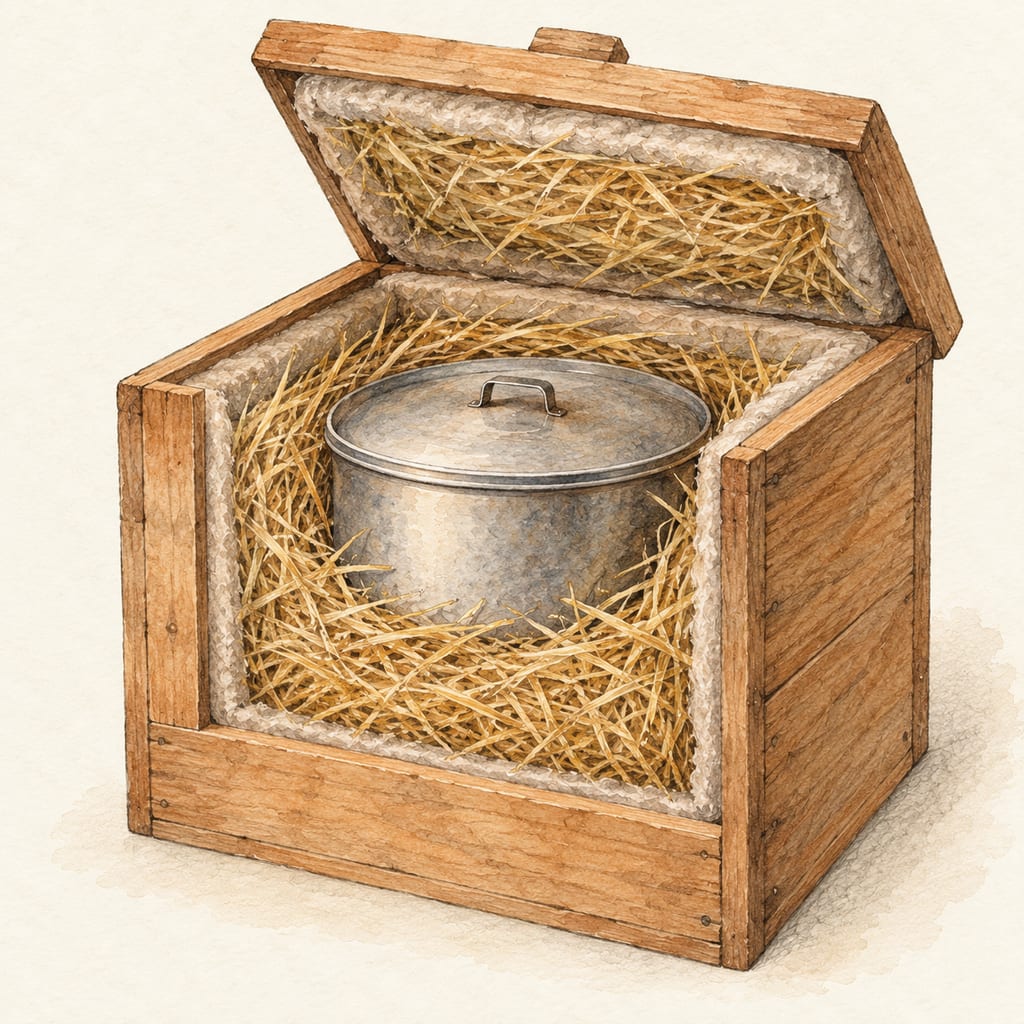
A haybox, also called a fireless or retained-heat cooker, is an insulated enclosure that lets a lidded pot finish cooking in heat already stored in the food after it leaves a stove. It generates no heat and is not a preservation method.

A modern electric countertop machine that heats, chops and stirs food in one mixing bowl. Cookidoo lists Thermomix models for making powidl and quince membrillo, although the full methods are not public on the pages reviewed.
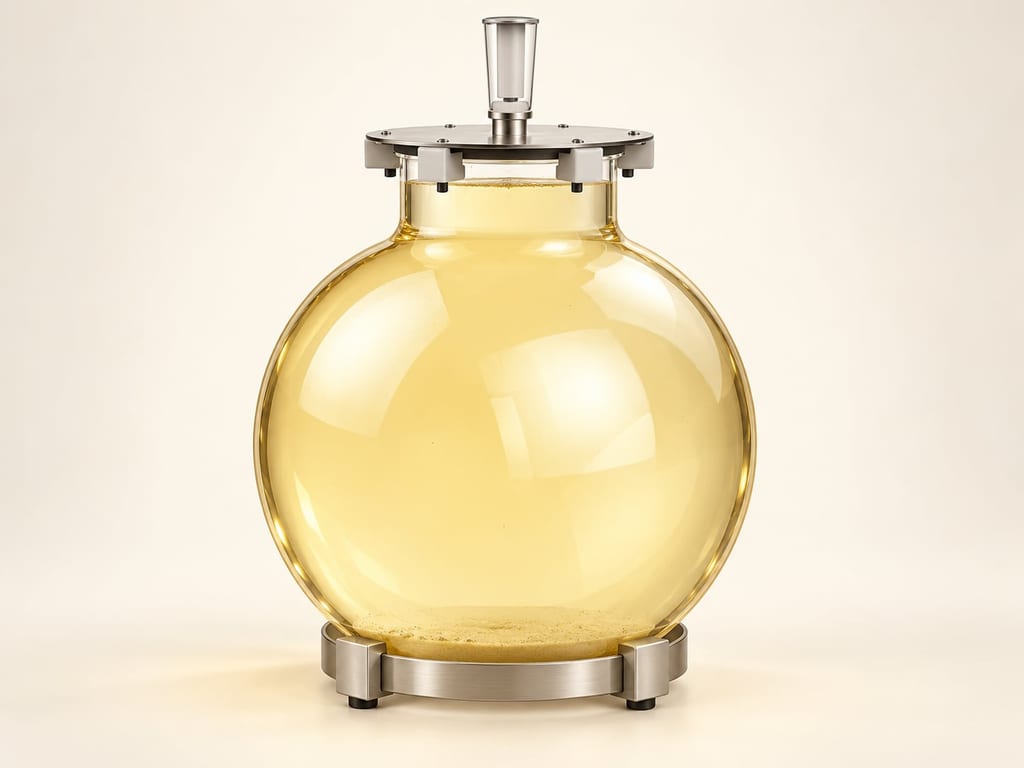
A large, transparent, spherical borosilicate-glass vat designed for modern wine fermentation and maturation. The 220-litre Wineglobe model has a wide neck, fitted lid and support; its use and fittings vary by model.
No community contributions have been published for this entry yet.
Sign in to contribute. Published comments and photos are free to read.
AOP SalersTraditional use · Material · Inoculation
La FabricationThe AOP Salers organization describes the gerle as a wooden receptacle receiving milk at milking.
It names chestnut or acacia and says natural inoculation varies between workshops.
Cited in: A broad coopered vat; A vessel with a microbial surface; Place, care and limits of the record
Institut national de l'origine et de la qualité (INAO)Form · Function · Geography · Process
SalersThe AOP page says milk is received during milking and transformed in a traditional wooden gerle.
The published rule describes a wooden cylindrical or truncated-conical gerle of variable capacity and use for curdling and cutting.
The AOP area spans the Cantal massif and parts of Cantal, Aveyron, Corrèze, Haute-Loire and Puy-de-Dôme.
Cited in: A broad coopered vat; Milk reception and early cheesemaking; Place, care and limits of the record
International Journal of Food Microbiology; PubMed recordMicrobial biofilm · Variation · Use
Characteristics of microbial biofilm on wooden vats ('gerles') in PDO Salers cheeseThe researchers studied gerles from ten Salers farms over at least four periods across two years and grouped them by microbial characteristics.
The farm groups differed in milk inoculation and washing practices.
In controlled 40 L experimental gerles, surface biofilms formed in less than a week and then remained stable.
Cited in: A vessel with a microbial surface; Place, care and limits of the record
Réussir Agriculture Massif centralCurrent specification status · Material
L’AOP salers à l’heure des nouveaux choixA report dated 2 April 2026 says a proposed replacement specification had been sent to INAO and expected approval in 2028 or 2029.
The draft would require chestnut; the report presents this as a proposal under review, not an adopted rule.
Cited in: A broad coopered vat
Wikimedia CommonsPhotographic form reference · Regional object
File:Salers-Gerle.jpgThe photographer describes the pictured gerle as used to collect milk before Salers cheese at the buron de la Reiche in Cantal.
The inspected photo shows a broad coopered wooden tub with metal hoops, cloth and wooden bars across the mouth.
Cited in: A broad coopered vat; Milk reception and early cheesemaking