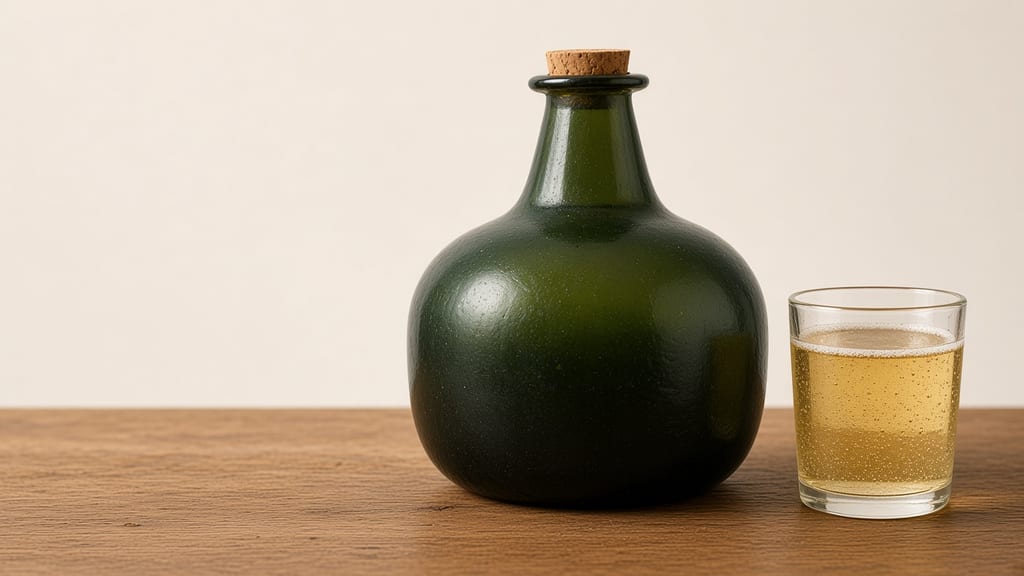
Seventeenth-century English bottled cider
A lightly sparkling cider bottled before it had finished fermenting, as Sir Paul Neile described it in 1664, with a measured modern method for safe bottle conditioning.
 FermenteaWhere food goes to change
Equipment · Bottles, carboys and demijohns
tirage bottle
Champagne’s traditional-method bottle holds wine through its second fermentation and subsequent maturation on lees. At tirage it has a crown cap and internal insert; bottle formats and specifications vary.
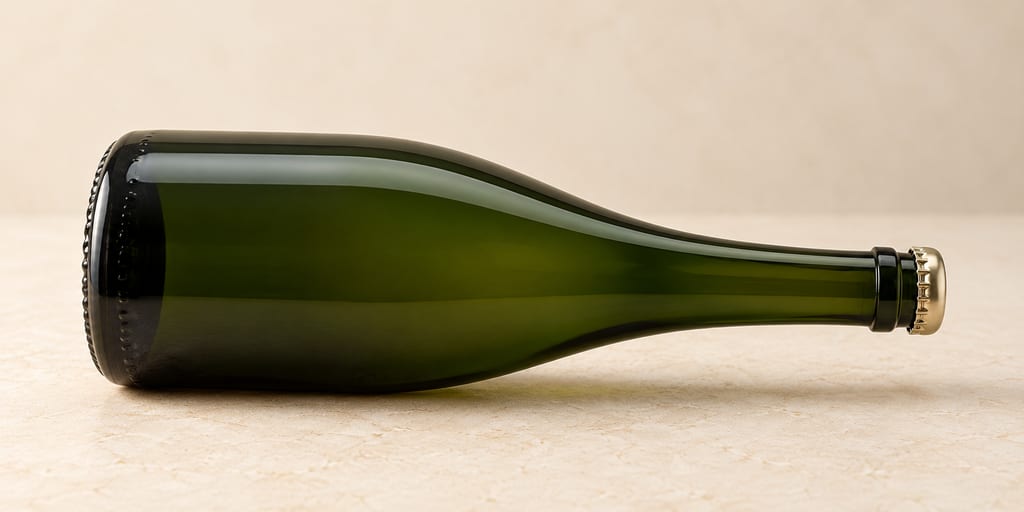
In the Champagne traditional method, the bottle is not simply the package applied after a wine is finished. It becomes the fermentation vessel. After the base wines are blended, the tirage stage adds a mixture of still wine, sugar and yeast, and the wine undergoes its second alcoholic fermentation inside a strong glass bottle. The Champagne trade body's production description says the wine is sold in the bottle where that fermentation took place.
For Champagne tirage, the official 2025 process sheet describes a polyethylene insert, often called a bidule, together with a crown cap. These are working closures for a stage before the familiar cork and wire cage used for the finished bottle. The bottle remains on its side for maturation; the sediment of multiplying yeast rests as lees inside it. This page focuses on that pressure-bearing vessel and the closure at tirage, not every bottle format used to serve sparkling wine.
Yeast consumes the added sugar and produces alcohol and carbon dioxide. Because the glass bottle and closure retain the gas, the second fermentation makes the wine sparkling instead of allowing its carbon dioxide to escape as it would from an open vessel. For its Champagne method, the 2025 process sheet gives a pressure of 6 bar at 20°C. That value belongs to this documented Champagne process; it is not a universal pressure rating for bottles sold for other uses.
After the second fermentation, the yeast cells die and break down in a process called autolysis. Their components interact slowly with the wine during maturation on lees, contributing to its later sensory development. This maturation is a separate stage from fermentation. Bottles are stored horizontally in cellars protected from light. The bottle, closure and orientation therefore make one package system: the glass wall contains pressure, the closure controls the exchange through the mouth, and the horizontal position keeps the wine in contact with the lees.
Comité Champagne traces the region's move to bottling wine for storage and transport to the late seventeenth century. Eighteenth-century bottle breakage exposed the risks of rising pressure; thicker glass followed. This is a regional Champagne history, not a claim that all sparkling wine bottles or all modern glass packaging descend from one identical design. The same trade-body source describes several bottle sizes, with 75 cl as the standard Champagne bottle.
The evidence here supports a glass bottle used for a specified method, its tirage closure, and horizontal maturation. It does not supply a universal bottle dimension, a safe working pressure for unrelated containers, or a home fermentation procedure. The Committee's current 20 bar design statement applies specifically to Champagne bottles; it must not be transferred to a visually similar bottle without the maker's own specification. For the same reason, a serving bottle with a cork and wire cage should not be mistaken for the initial tirage closure.
The Comité Champagne pressure and closure specifications apply to Champagne bottles and cannot be assigned to unrelated glass bottles by appearance alone.
Source →The source gives several bottle formats but no standard dimensions for this generic equipment item.
Source →This records sourced Champagne use and technical specifications; it does not claim the bottle form is exclusive to the region or identical in other sparkling wine traditions.
A lightly sparkling cider bottled before it had finished fermenting, as Sir Paul Neile described it in 1664, with a measured modern method for safe bottle conditioning.
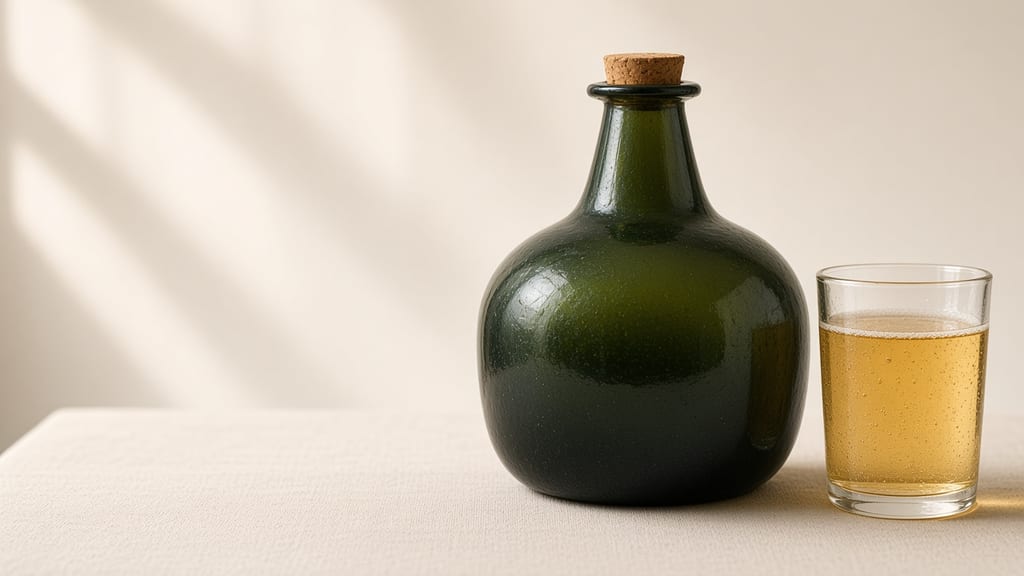
In the 1650s and 1660s English cider makers bottled cider with a little life left in it, sometimes with a lump of sugar, so it would mantle and sparkle in the glass, decades before Champagne sparkled on purpose.
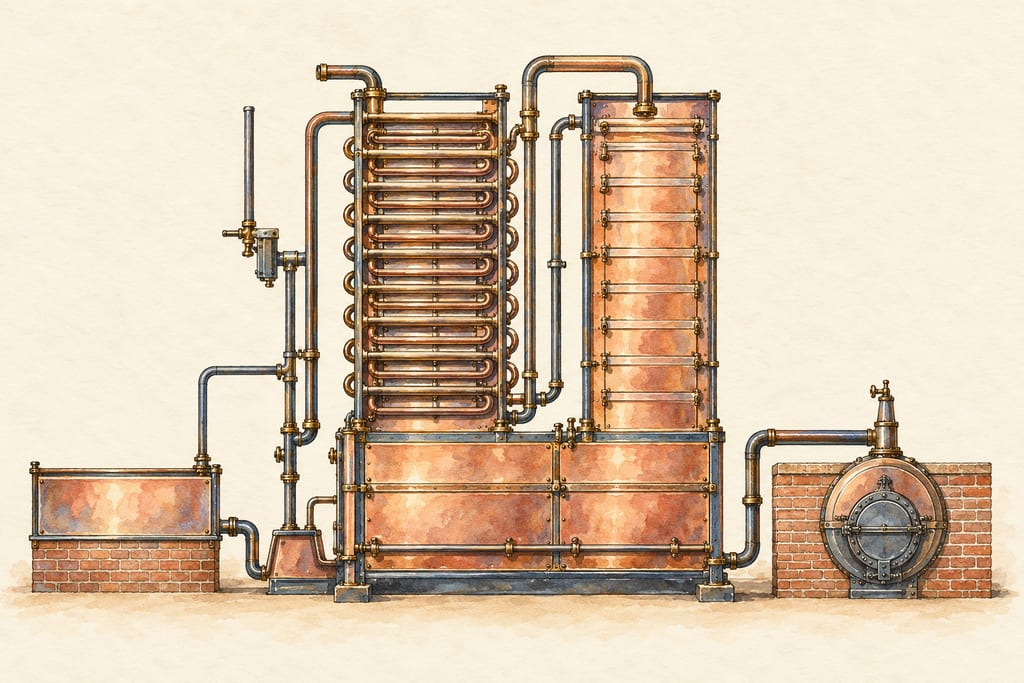
A column still is a distillation apparatus built around one or more vertical columns. Its continuous and rectifying designs appear in several spirits traditions, but materials and product character vary by installation.
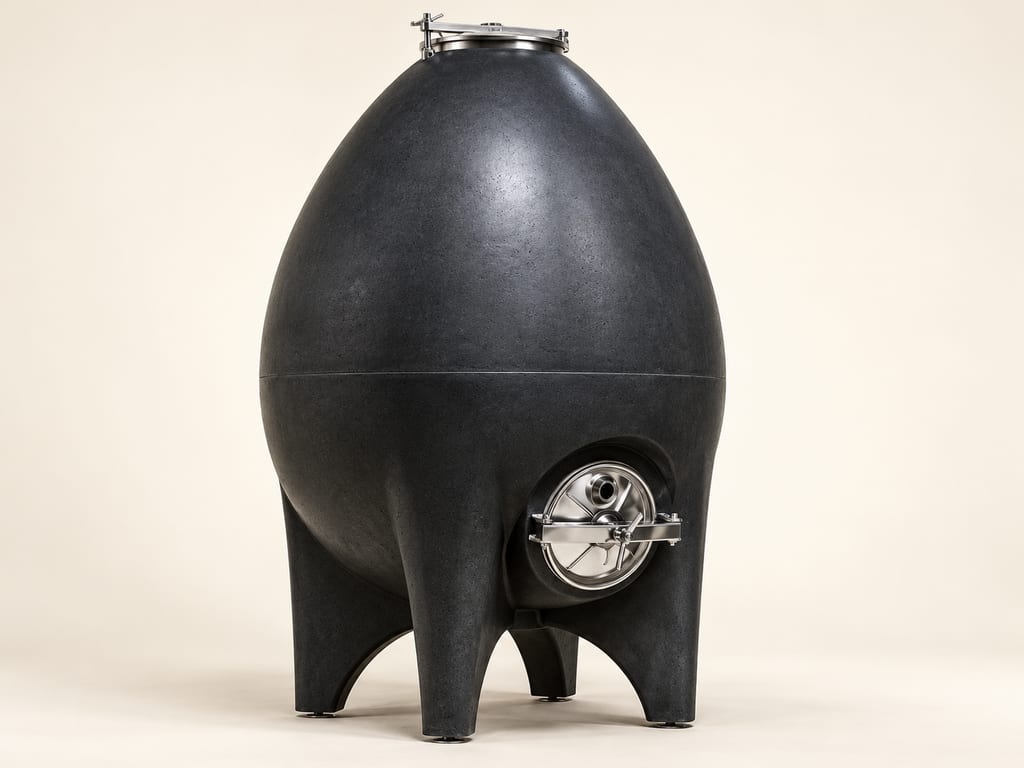
A modern ovoid concrete wine vat with smooth curved walls, made in several sizes and fitted according to model. Used for wine fermentation and maturation; support, access, cooling and interior treatment vary.
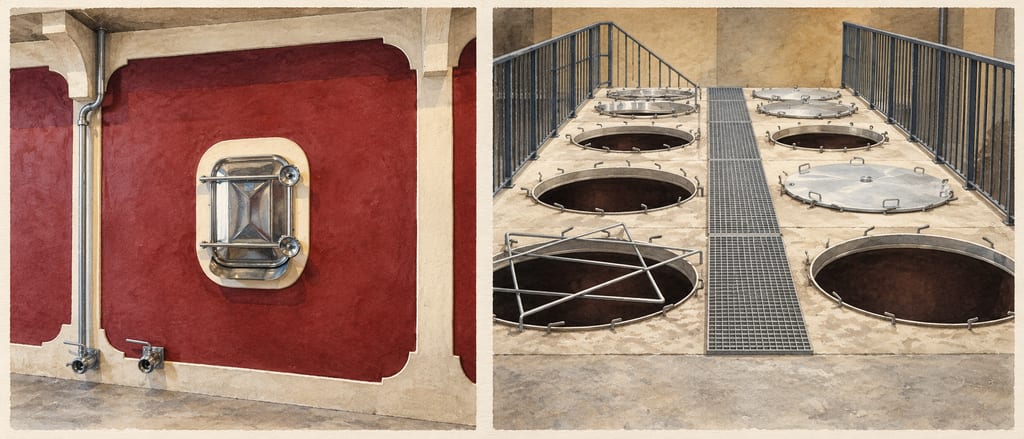
Concrete wine tanks are heavy, fixed vessels in rectangular, cylindrical and tapered forms. Their thermal response and wine contact depend on mix, wall construction and interior finish.
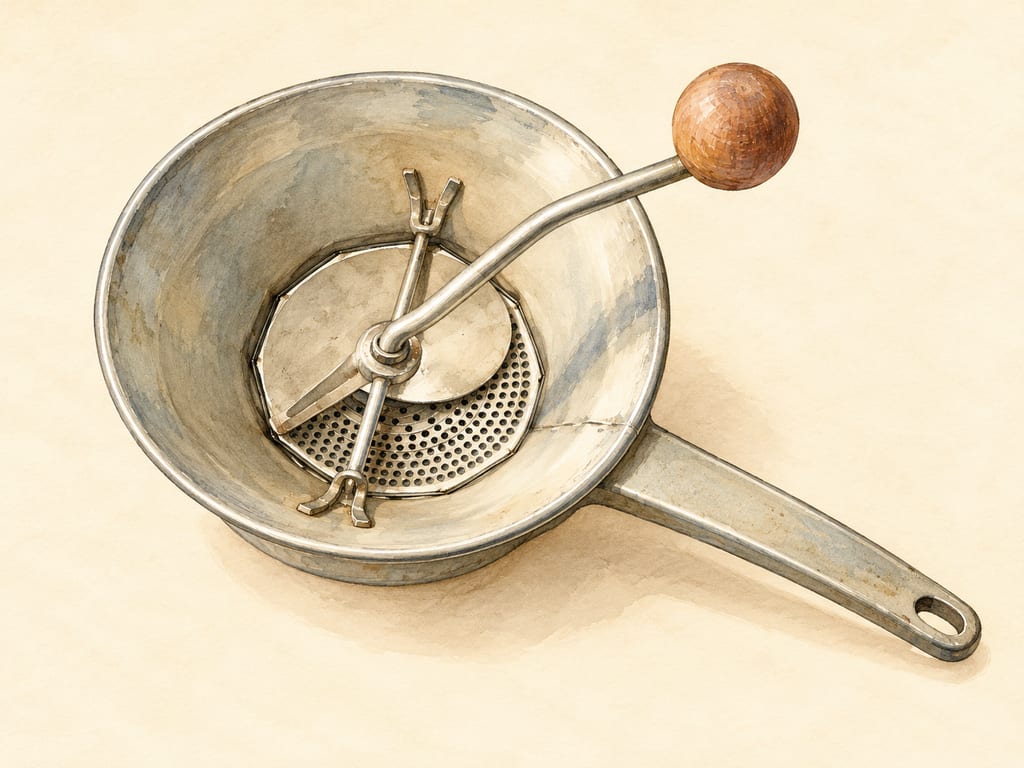
A hand-cranked food mill presses softened food across a perforated disk, producing a purée while keeping larger pieces in the chamber. Its exact shape and disk depend on the model.
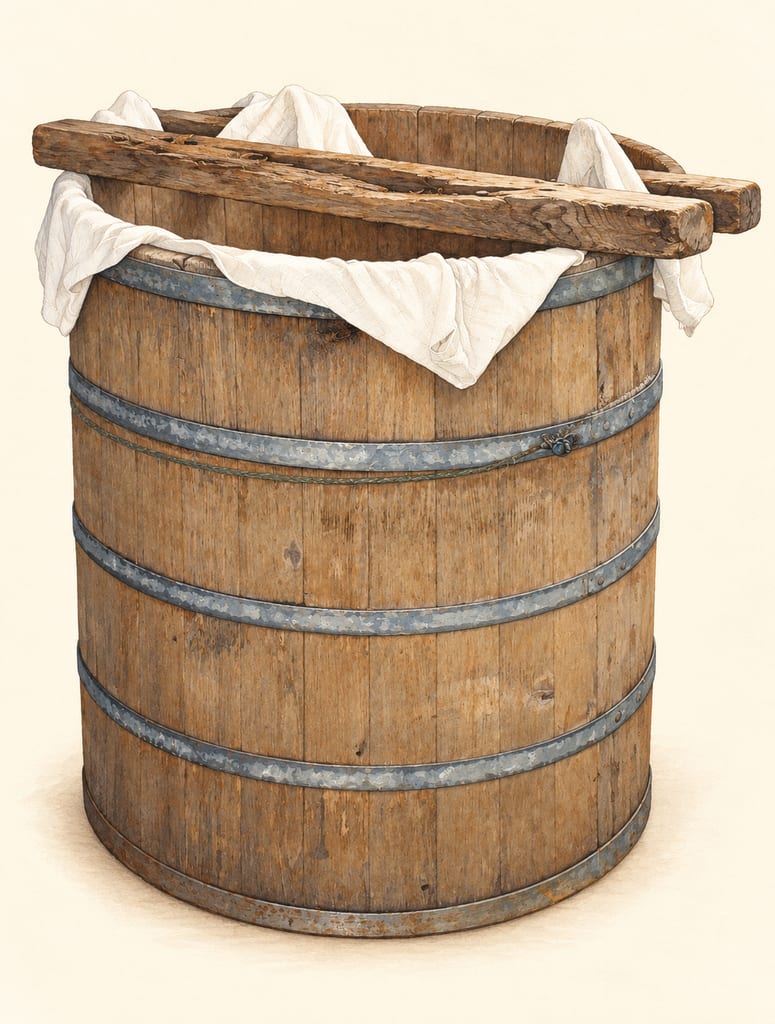
The gerle is a broad wooden vat used to receive and work milk for Salers cheese in its French AOP area. Its coopered form and microbial role are documented, but sources do not establish when this particular vessel first appeared.
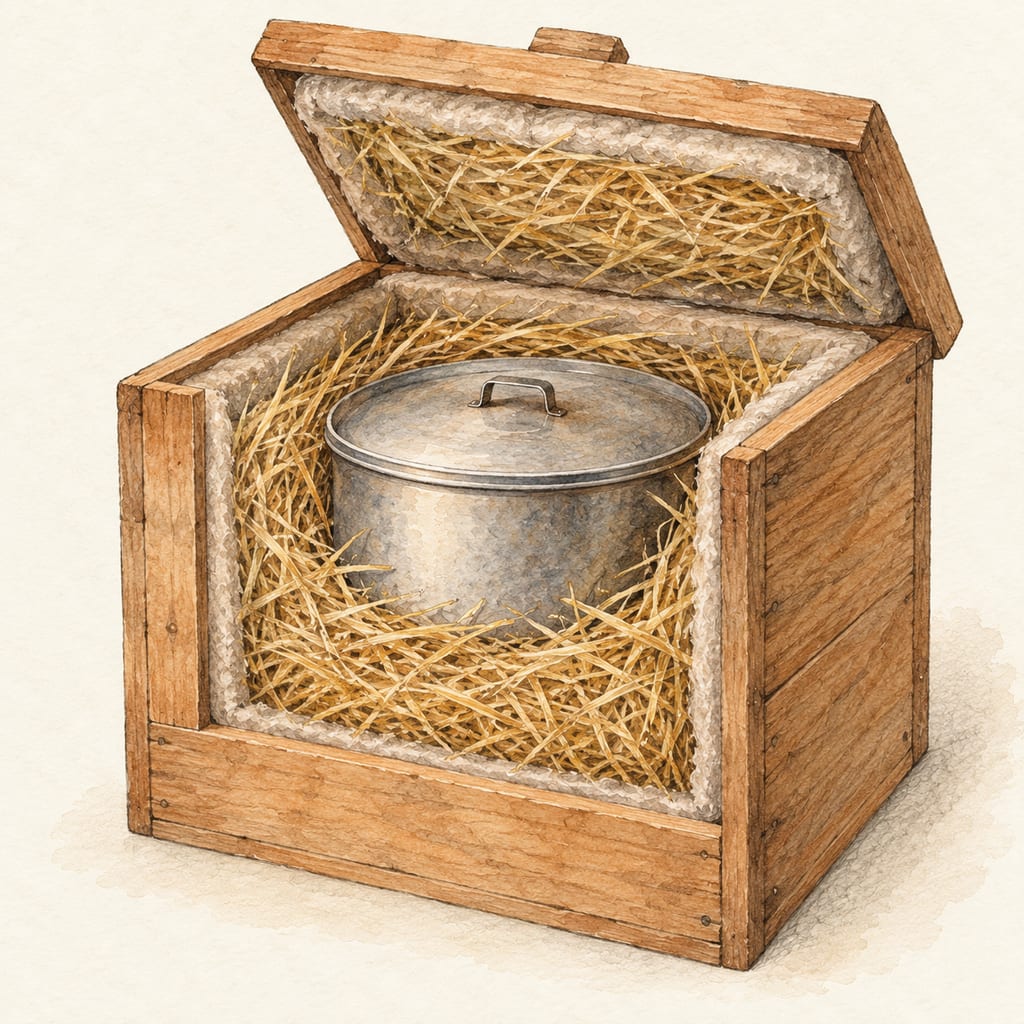
A haybox, also called a fireless or retained-heat cooker, is an insulated enclosure that lets a lidded pot finish cooking in heat already stored in the food after it leaves a stove. It generates no heat and is not a preservation method.
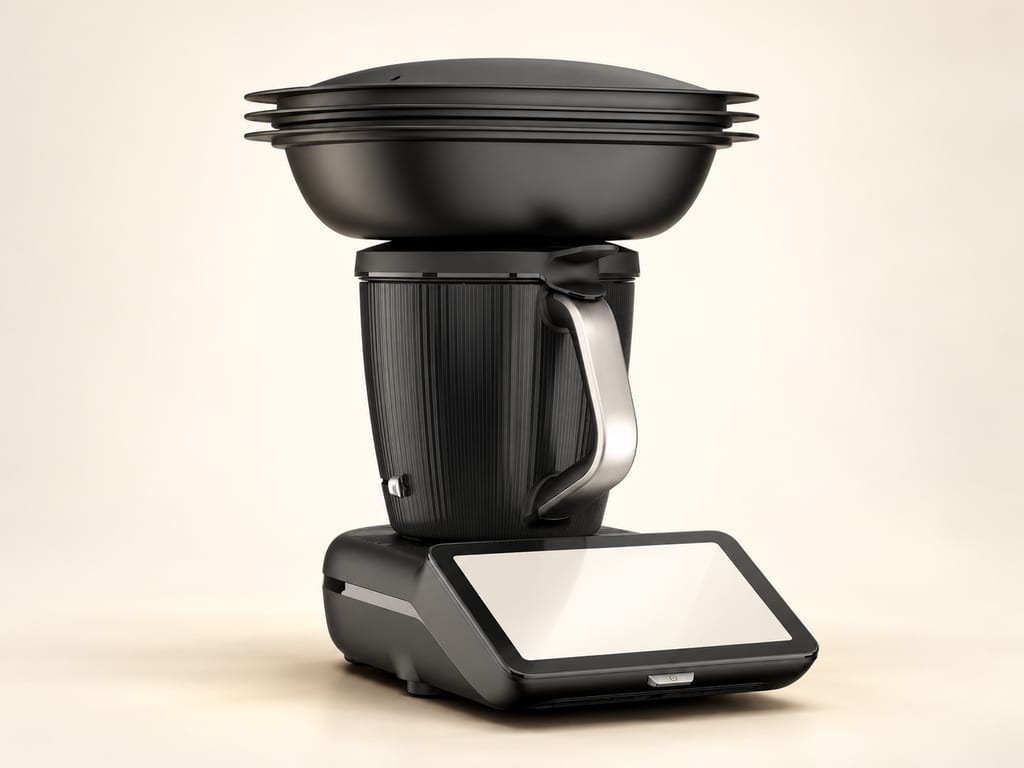
A modern electric countertop machine that heats, chops and stirs food in one mixing bowl. Cookidoo lists Thermomix models for making powidl and quince membrillo, although the full methods are not public on the pages reviewed.
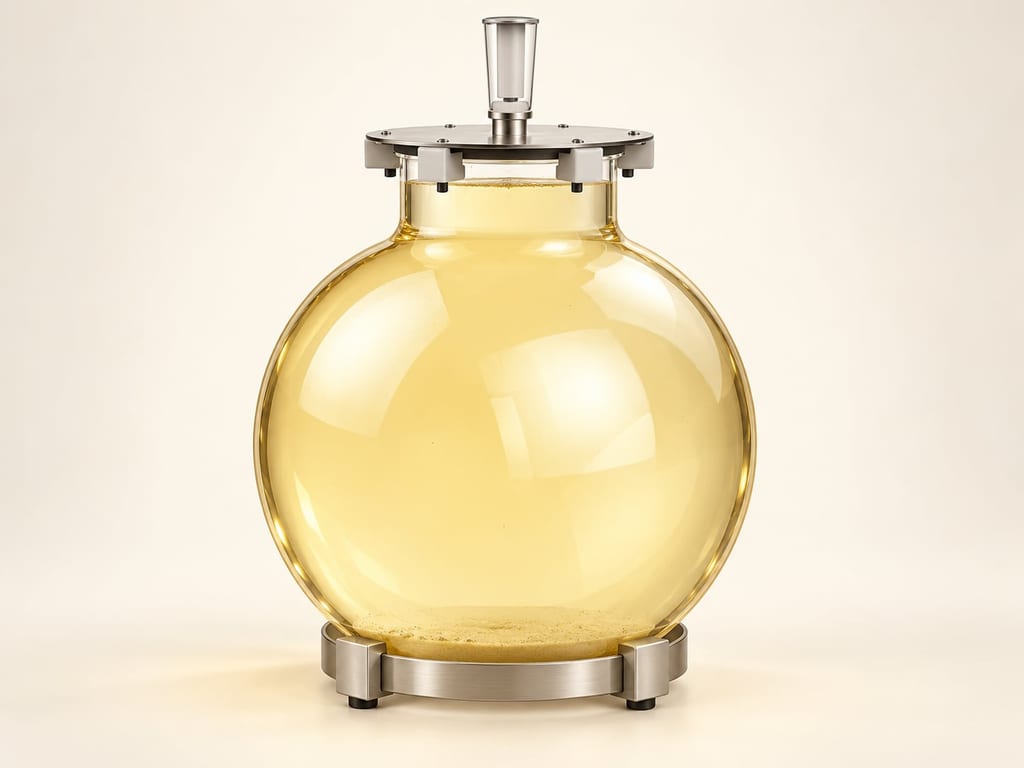
A large, transparent, spherical borosilicate-glass vat designed for modern wine fermentation and maturation. The 220-litre Wineglobe model has a wide neck, fitted lid and support; its use and fittings vary by model.

A gelling polysaccharide extracted from red seaweeds, sold as kanten strips or powder; it sets firm at a low concentration and stays solid until about 85 °C.

A Dominican table and seasoning condiment of sour orange juice, mixed with lime and salt and bottled raw; garlic, oregano or a hot pepper may be added for meat or a spicier bottle.

Cicerbita alpina is an alpine perennial whose tender shoots and leaves have been eaten raw or cooked. Sámi milk preparations and modern Carnian dishes are distinct uses, with serious identification and preservation limits.

Japanese skipjack tuna cooked, then repeatedly smoked and dried over a wood fire by the hand-fired tebiyama method into a hard block for shaving into dashi: the first stage of katsuobushi.

A Swedish-style spirit vinegar made by fermenting neutral alcohol with live vinegar bacteria, with a separate guide to commercial ättika strengths.

A yeast-raised wheat ring shaped from a firm dough, briefly boiled and baked. This source-batch formula gives a gently malted crust and a chewy crumb.

A warm dip of garlic, anchovy and olive oil, often enriched with butter, that Piedmont serves over a flame with raw and cooked vegetables and bread.

Bechamel is a white sauce of milk thickened with a butter and flour roux, one of the French mother sauces, and the base from which Mornay and other cheese and cream sauces are made.
No community contributions have been published for this entry yet.
Sign in to contribute. Published comments and photos are free to read.
Comité ChampagneFunction · Method · Geography
Bottling and second fermentationComité Champagne explains that tirage bottles the blended wine with a liqueur of still wine, sugar and yeast; yeast consumes sugar and releases alcohol and carbon dioxide.
The official page states the Champagne wine remains in the bottle where that fermentation occurred and is then stored horizontally for maturation.
The page says bottle quality and solidity matter for this second fermentation.
Cited in: The bottle becomes part of the fermentation; A Champagne history and specific limits
Comité ChampagneMaturation · Chemistry · Storage
Maturation on leesLees consist of yeast multiplied in the bottle during second fermentation; yeast dies and decomposes through autolysis.
The source describes Champagne bottles maturing in cellars protected from light, with small gas exchange through closure and glass container system.
The official page distinguishes maturation after second fermentation from the fermentation stage itself.
Cited in: Holding the gas and the lees
Comité ChampagneConstruction · Closure · Technical context
The Champagne making-process (2025)The 2025 Comité Champagne fact sheet describes Champagne tirage as bottling the blend with sugar, yeast and riddling agent, and gives a process pressure of 6 bar at 20°C.
It identifies the Champagne bottle as glass, and says an internal polyethylene bidule is usually combined with a crown cap at tirage; bottles are laid on their sides for ageing.
These details concern Champagne production, not a rating or use instruction for generic household bottles.
Cited in: The bottle becomes part of the fermentation; Holding the gas and the lees; A Champagne history and specific limits
Comité ChampagneHistory · Form · Capacity · Pressure
The Champagne bottleComité Champagne dates the adoption of bottling for Champagne to the late seventeenth century as makers sought to store and transport wine.
The source notes bottle breakage associated with excessive pressure in the eighteenth century and subsequent need for thicker glass.
The page describes Champagne bottle formats as varying and identifies 75 cl as the standard bottle size; it states today's Champagne bottles are designed to withstand 20 bar.
Cited in: A Champagne history and specific limits