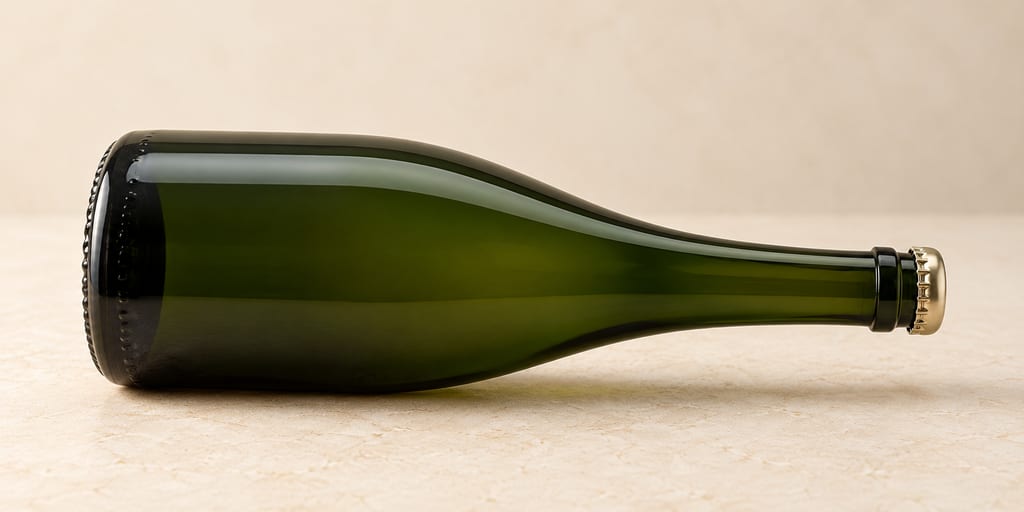
Bottle for secondary fermentation
Champagne’s traditional-method bottle holds wine through its second fermentation and subsequent maturation on lees. At tirage it has a crown cap and internal insert; bottle formats and specifications vary.
 FermenteaWhere food goes to change
Equipment · Distillation apparatus
A column still is a distillation apparatus built around one or more vertical columns. Its continuous and rectifying designs appear in several spirits traditions, but materials and product character vary by installation.
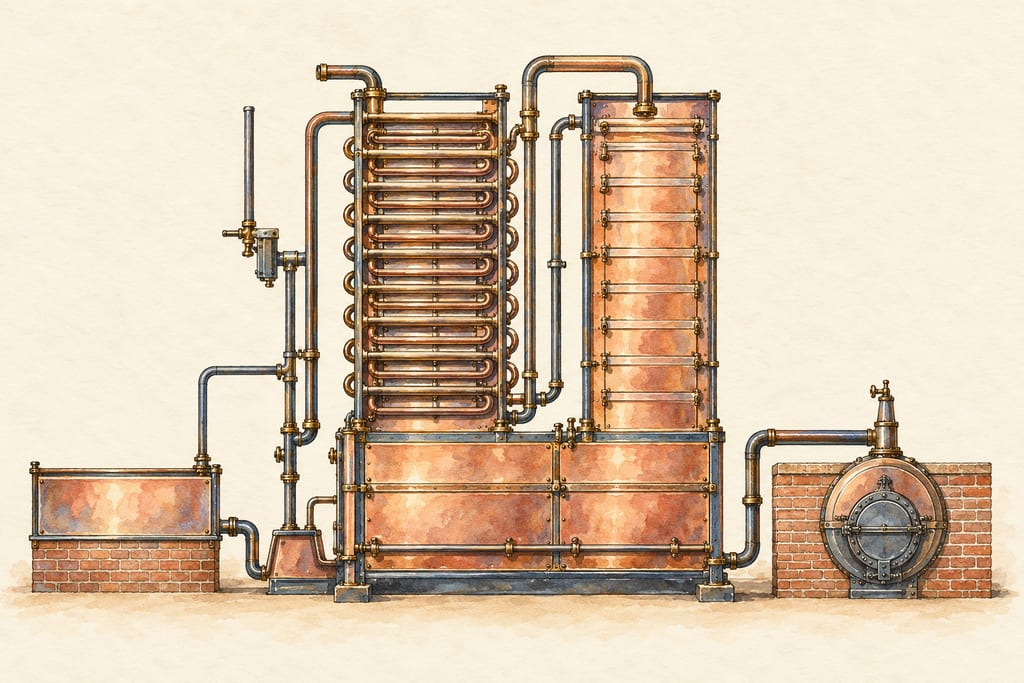
A column still is distillation equipment arranged around one or more upright columns. A 19th-century account of Aeneas Coffey's design distinguishes an analyzer from a rectifier; it describes vapour and liquid passing through plated sections as part of a continuous apparatus. The Science History Institute preserves a contemporary 1877 illustration of Coffey's patented still. These records document a specific industrial design lineage rather than the origin of every apparatus now called a column still.
The name covers varied plant. A photograph from Destilleriet Als in Denmark shows a 350-litre example with a substantial vessel and tall metal columns; Rhum J.M describes two traditional Creole copper columns. Neither example supplies a universal blueprint, size or material specification. Columns may be copper, stainless steel or combined with other equipment, depending on the installation.
Column equipment can support continuous distillation, unlike the familiar image of a pot still charged and emptied in separate batches. Coffey's 1830 patent is an attested milestone in commercially viable continuous distilling, not proof that every column plant follows an identical operating pattern. A column's internal plates or other contact arrangements permit repeated interaction between rising vapour and descending liquid; the historical sources explain this in relation to analyzer and rectifier designs, while a maker's production page is the best evidence for how a particular plant is run.
These distinctions matter because the apparatus alone does not tell a reader what the resulting spirit will taste like or how it is made. Angostura describes continuous columns in its rum production. Takamaka's Seychelles Rum Blanc is a product-specific blend: the producer says its molasses-based column rum is distilled up to 94% ABV and combined with a touch of high-ester pot-still rum. That claim belongs to this rum, not to all column distillation.
Producer documentation places column stills in several distinct settings. Rhum J.M describes two copper columns at its Martinique estate. Rockland's Ceylon Arrack account follows coconut flower sap as it ferments naturally into toddy and states that the fermented liquid is distilled in columns. In Georgia, Askaneli identifies a column still for its Chacha Platinum, a named grape spirit; the entry does not imply that every chacha producer uses the same plant.
Absolut describes continuous distillation for its vodka made in Åhus, Sweden. Angostura describes its own Trinidad and Tobago rum columns. The examples show the equipment's range, but they do not establish a single geographic birthplace or a universal recipe. The linked chacha, coconut arrack and white rum pages point to documented product contexts; they should be read as specific applications rather than evidence that every preparation uses the same model.
Copper is documented for Rhum J.M's columns and for the later double-column Coffey designs described in the historical account. Modern distillery photographs also show metal assemblies in which copper and stainless components appear together. That does not make either material mandatory across the category. The inspected sources give no general capacity, height, diameter, maintenance schedule or consumer acquisition route. The Danish photograph's 350-litre caption refers to that photographed example only.
Column stills are normally described as fixed distillery equipment rather than a kitchen vessel, and their manufacturers and operators specify their construction and care. The source set does not document one general cleaning routine or safety protocol, so this page does not prescribe one. The best way to understand any specific still is through its maker's technical documentation and the distillery's own account, while keeping the historical Coffey design distinct from modern installations.
An 1877 Philadelphia encyclopaedia preserves a diagram of Coffey's patented still; a historical account dates Coffey's patent to 1830 and describes the evolution of analyzer and rectifier columns. This marks an attested industrial design, not the invention of every column still.
A column still does not guarantee a neutral or uniform spirit: producers document distinct products and, in Takamaka Rum Blanc, a pot-still component alongside column-still rum.
Source →A single image or historic design cannot stand for all column stills; documented examples differ in material, number of columns and product purpose.
Source →A producer-specific use record, not a claim about all distilleries in the country.
Producer-specific documented use; this does not describe every Martinique distillery.
A named producer's use, not a national standard.
Applies to this product and blend only.
One product-level attestation, not all chacha.
Producer-specific documentation.
This is the photographed still's location, not an origin claim.
Champagne’s traditional-method bottle holds wine through its second fermentation and subsequent maturation on lees. At tirage it has a crown cap and internal insert; bottle formats and specifications vary.
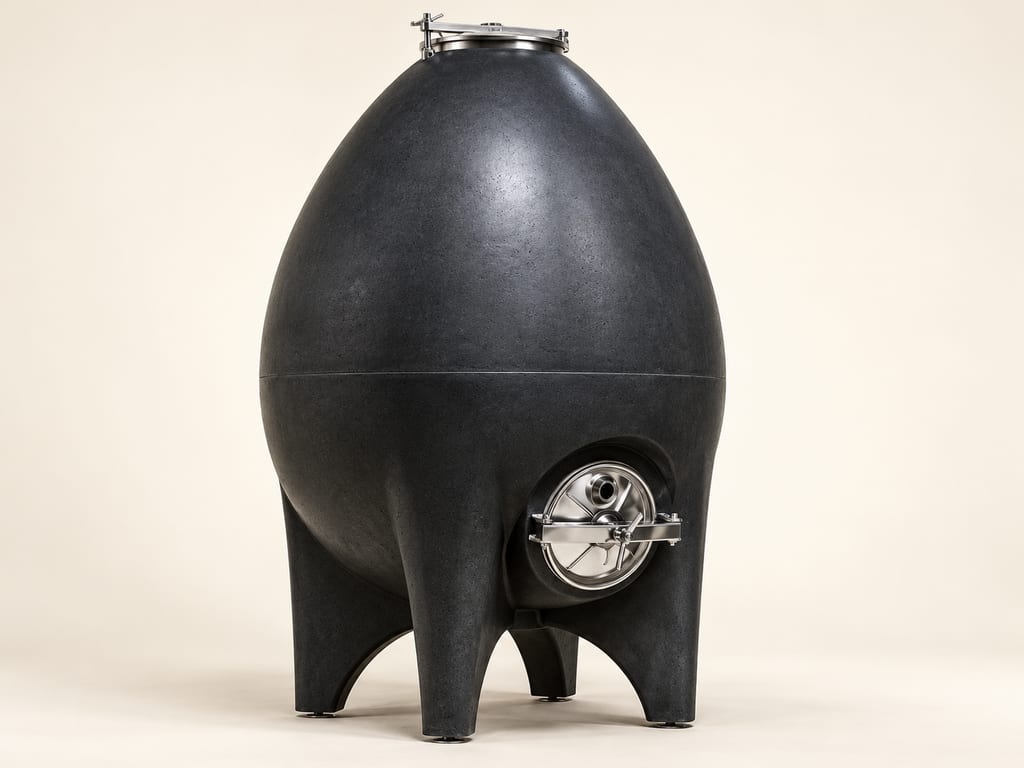
A modern ovoid concrete wine vat with smooth curved walls, made in several sizes and fitted according to model. Used for wine fermentation and maturation; support, access, cooling and interior treatment vary.
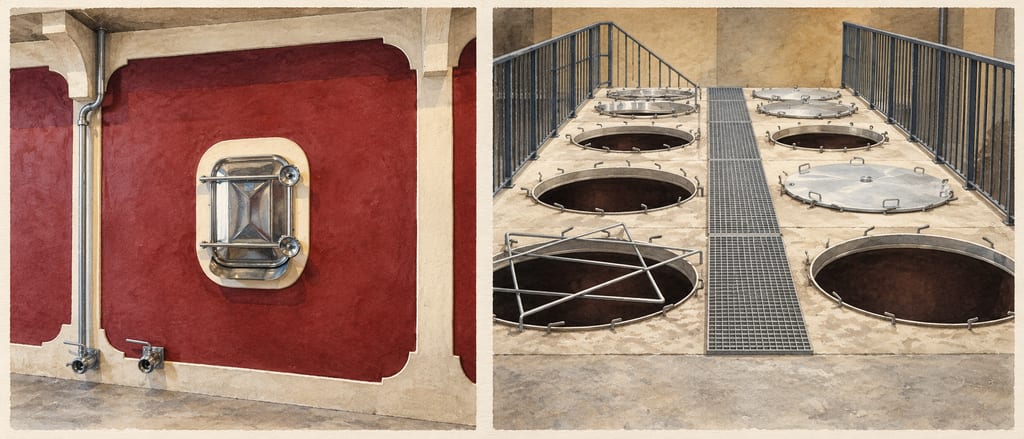
Concrete wine tanks are heavy, fixed vessels in rectangular, cylindrical and tapered forms. Their thermal response and wine contact depend on mix, wall construction and interior finish.
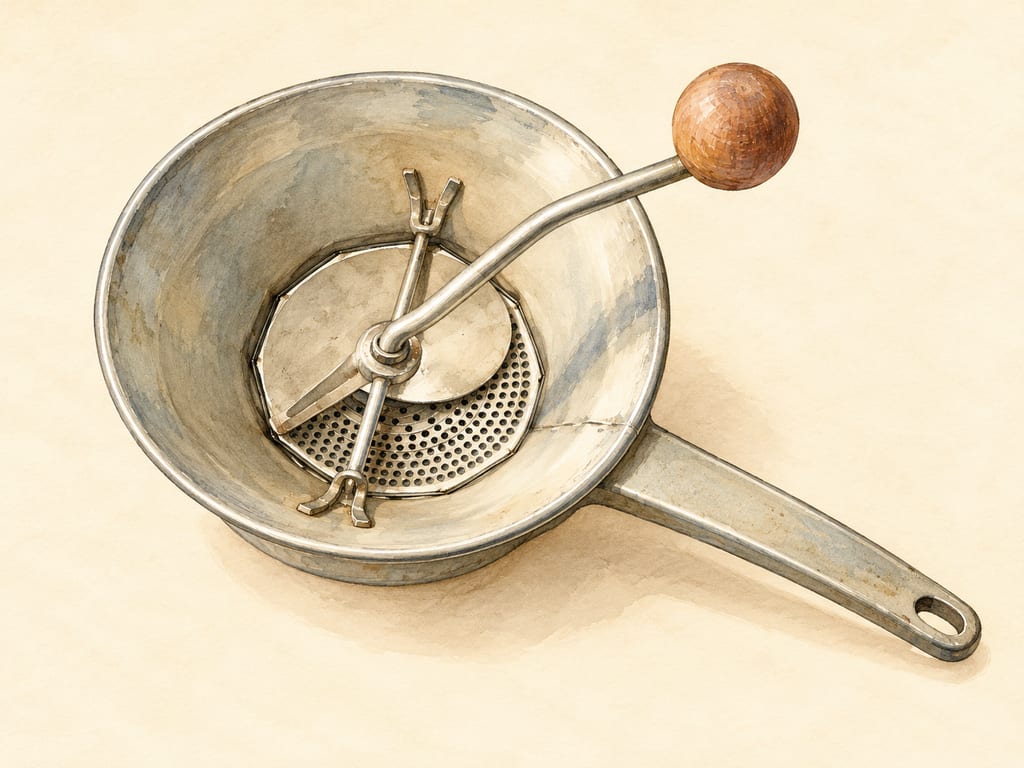
A hand-cranked food mill presses softened food across a perforated disk, producing a purée while keeping larger pieces in the chamber. Its exact shape and disk depend on the model.
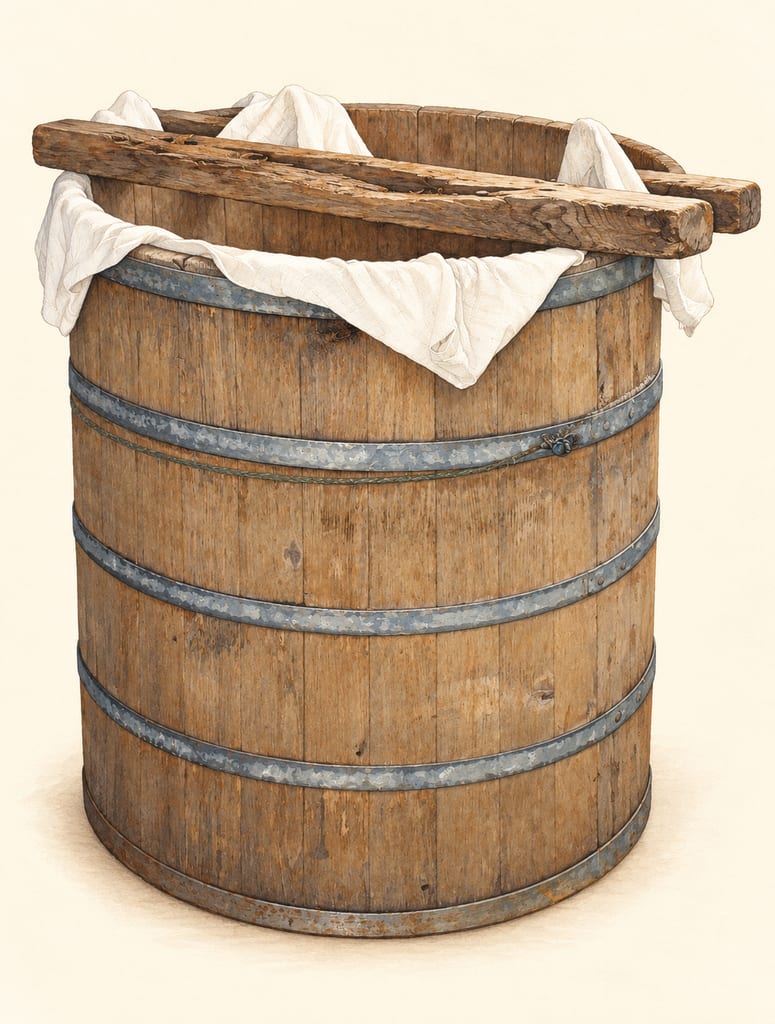
The gerle is a broad wooden vat used to receive and work milk for Salers cheese in its French AOP area. Its coopered form and microbial role are documented, but sources do not establish when this particular vessel first appeared.
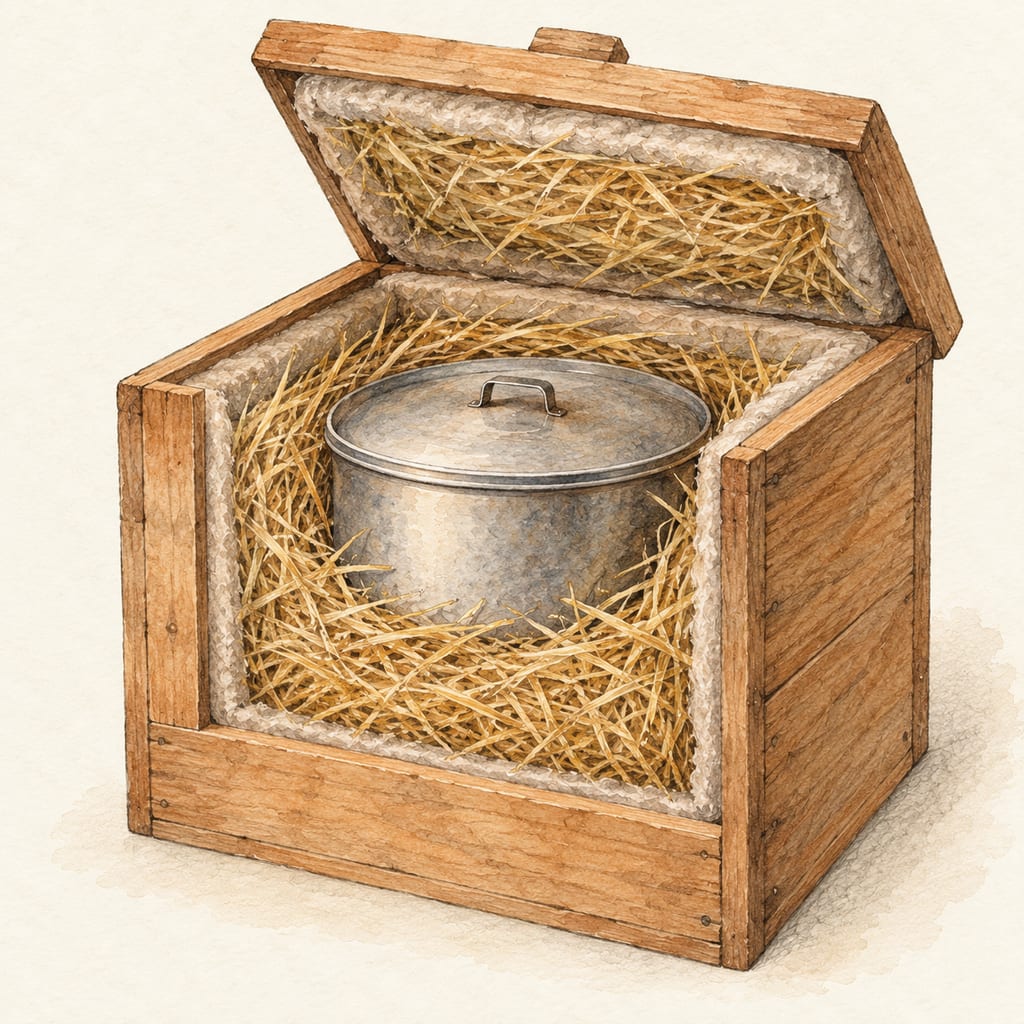
A haybox, also called a fireless or retained-heat cooker, is an insulated enclosure that lets a lidded pot finish cooking in heat already stored in the food after it leaves a stove. It generates no heat and is not a preservation method.
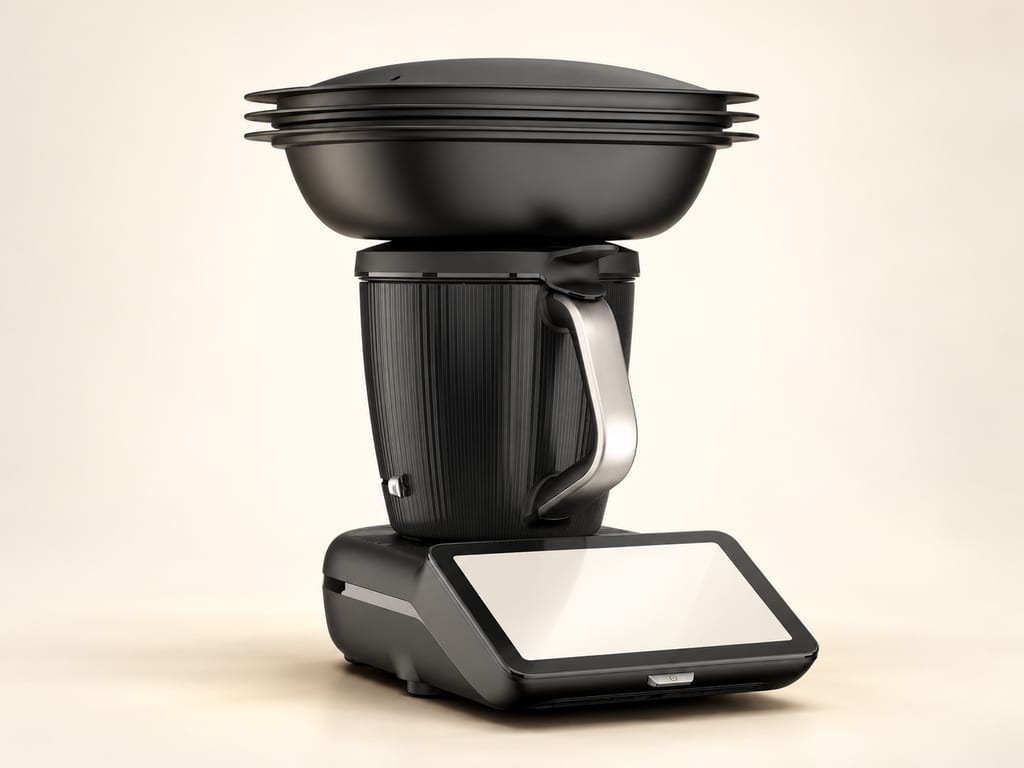
A modern electric countertop machine that heats, chops and stirs food in one mixing bowl. Cookidoo lists Thermomix models for making powidl and quince membrillo, although the full methods are not public on the pages reviewed.
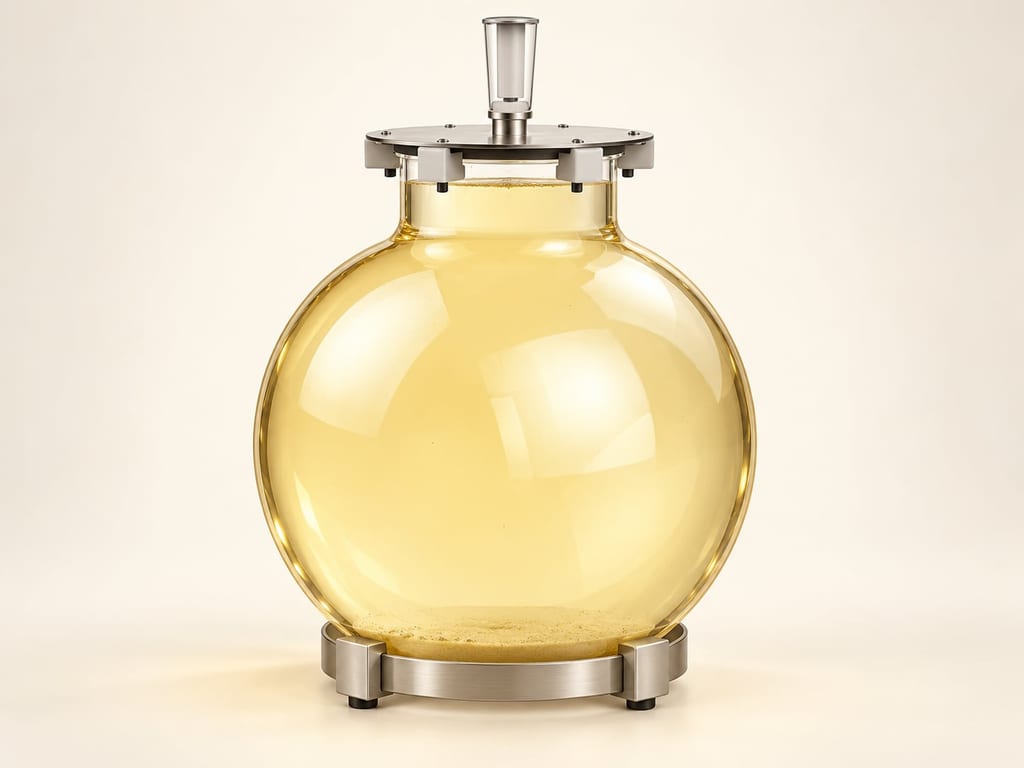
A large, transparent, spherical borosilicate-glass vat designed for modern wine fermentation and maturation. The 220-litre Wineglobe model has a wide neck, fitted lid and support; its use and fittings vary by model.

A Cap-Pelé boucanière is an Acadian herring-smoking building. The documented Willie Niles example is a one-storey wood-frame structure with a ridge smoke vent and interior bays for hanging fish-bearing cannes.

Achcharu is a family of Sri Lankan vinegar pickles made with mixed vegetables or seasonal fruit and a piquant spice dressing. This version is a quick, refrigerated, non-fermented mixed-vegetable pickle.

The acocote is a long, hollowed and dried gourd used to draw aguamiel from a mature maguey. It is a harvesting tool: the sap is transferred to a separate vessel before it ferments into pulque.

Adrak murabba preserves young ginger in sugar syrup, a sweet South Asian preparation recorded in Indian cookery and food-processing sources.

Parkia biglobosa seeds are fermented into regional West African seasonings, including nététou, iru, dawadawa and soumbala. The yellow fruit pulp is a separate food, and names and methods vary by place.

Japanese reddish-brown vinegar from sake lees matured about three years, turned to vinegar by acetic bacteria; the vinegar of Handa and Edomae sushi rice.

A refined common-wheat flour blended for a broad range of baking; its protein and behavior vary with wheat, milling and market.

The almond mushroom, Agaricus subrufescens, was cultivated in eastern North America in the 1800s, lost its market, and returned as a cultivated mushroom from Brazil, where it is grown under several names.
No community contributions have been published for this entry yet.
Sign in to contribute. Published comments and photos are free to read.
Science History Institute Digital Collections; Encyclopædia of Chemistry, Philadelphia, 1877History · Design
Coffey's still for the distillation of alcoholThe Institute catalogues an 1877 illustration of Aeneas Coffey's patented alcohol still and marks the image public domain.
Cited in: A column is a design family, not a single machine
The Oxford Companion to Spirits & Cocktails, Spirits & DistillingHistory · Design · Materials
Coffey, AeneasThe entry dates Coffey's patent to 1830 and describes the development from a single column to double analyzer and rectifier columns, including copper construction and plates.
Cited in: A column is a design family, not a single machine; Continuous operation and rectification; Materials, scale and what remains unknown
AngosturaUse · Process · Geography
The Art of Rum MakingAngostura documents continuous column distillation in its Trinidad and Tobago rum production and describes its own distillation range.
Cited in: Continuous operation and rectification; One apparatus, different spirit traditions
Rhum Agricole J.MUse · Materials · Geography
ProductionThe producer documents two traditional Creole copper columns for its Martinique rum production.
Cited in: A column is a design family, not a single machine; One apparatus, different spirit traditions; Materials, scale and what remains unknown
Ceylon Arrack / Rockland DistilleriesUse · Geography
ProcessThe producer documents column distillation of coconut-flower-sap arrack after toddy fermentation.
Cited in: One apparatus, different spirit traditions
Takamaka RumUse · Geography
Rum BlancThe producer describes its Rum Blanc as column-still molasses rum distilled up to 94%, with a touch of high-ester pot-still rum.
Cited in: Continuous operation and rectification
AskaneliUse · Geography
Askaneli Chacha PlatinumAskaneli states that Chacha Platinum is distilled in a column still; its product page lists its grape varieties and bottling strength.
Cited in: One apparatus, different spirit traditions
The Absolut CompanyUse · Geography
Absolut VodkaAbsolut documents Swedish winter wheat and continuous distillation for its vodka produced in Åhus.
Cited in: One apparatus, different spirit traditions
Wikimedia CommonsVisual reference · Geography · Materials
Column still from a distillery.jpgThe file description identifies a 350-litre column still at Destilleriet Als, Denmark, photographed in 2019; the image is licensed CC BY-SA 4.0.
Cited in: A column is a design family, not a single machine; Materials, scale and what remains unknown